Sabbath Day Thoughts — “Abiding in Christ” John 15:1-8
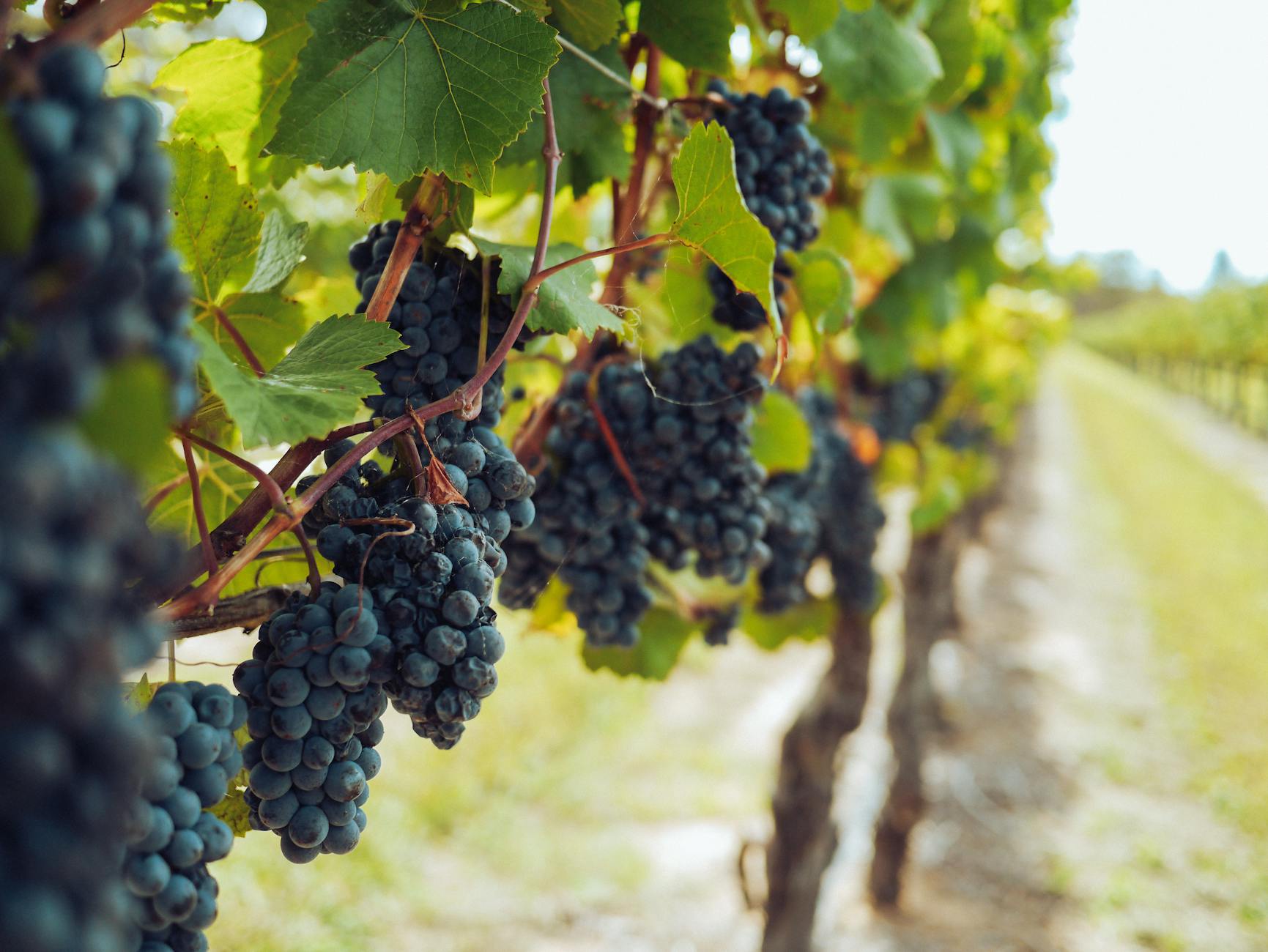
Last week, our gospel reading invited us to consider Jesus the Good Shepherd. This week, John’s gospel brings us another of Jesus’ bold statements of identity, “I am the true vine.” Herding sheep and tending a vineyard are tasks far removed from our daily experience, but these agricultural metaphors would have been familiar to Jesus’ listeners. In Jesus’ world, vineyards were an essential part of the landscape. Grapes were eaten as fresh fruit, dried into raisins, and mashed into jams. Grapes were turned into wine, sweet syrup, and vinegar. Vineyards passed from generation to generation within families. As fruit ripened, whole communities pitched in with all-hands-on-deck to bring in the harvest.
When Jesus told his disciples, “I am the vine, you are the branches,” he was alluding to grafting, a vineyard practice that is as important in the wine industry today as it was for first century vine growers. Brent Young, a viticulturalist at Jordan Vineyard and Winery in Sonoma, CA, gets animated when he describes the work of grafting new varieties of grape onto old root stock. First, old grape vines, which are well-established and especially suited to the soil, are cut off, leaving a stump that is allowed to freely bleed and weep for about a week. Then a specialized team is called in. The vinedressers move along the row of cut vines, scoring each stump with a sharp knife. Next, the vinedresser slips a few small budding branches or scions into the scores. The scions are then carefully wrapped to secure their new home in the old vine. Over the following weeks, something wonderful happens, the old root stock gives life to the new scion. It grows, branches, and eventually bears new fruit.
Jesus’s words, “I am the vine, you are the branches,” were meant to comfort and exhort his friends. As Jesus spoke, it was his last evening with the disciples. He had washed his friends’ feet and shared a special meal with them. Judas had already slipped away to betray him. The disciples needed a word of wisdom to guide them through the terror that would soon grip them. Jesus was the true vine, his life revealed God’s will and word for humanity. His death would demonstrate God’s limitless love. Soon the true vine would be cut down, yet the disciples could endure because Jesus was an essential part of them. He would always be with them and, grafted into him, they could put forth miraculous new life and branch out in his purpose.
In viticulture, if the budding scion that the vinedresser attaches to the root stock loses its connection, it withers and dies. Separated from the vine, no life-giving sap can nurture and sustain it. Likewise, Jesus reminded his friends that they would need to abide in him. The Greek word for abide that Jesus used here, meinate, means to stay or remain, to live, dwell, lodge. Abiding in Jesus means cultivating an ongoing, inward, personal bond with the Lord that imparts nurture, meaning, and purpose for our lives.
We long for the meaning and purpose that come with abiding in Christ. But unlike the viticulturalists at the Jordan Vineyard and Winery in Sonoma, we don’t have an expert team of vinedressers to ensure that we keep our connection with the lifegiving true vine of the Lord. I’d like to focus on three ways that we can abide in Jesus the true vine.
Abiding in Christ means feasting upon his words in scripture, whether listening to Sunday sermons, reading the Bible, or participating in Christian Education. The late Fred Craddock, who taught preaching and New Testament at Emory University, once shared that the most influential person in his life was his Sunday school teacher, Miss Emma Stone. She gave him his first Bible and taught him to memorize scripture verses, saying “Just put it in your heart.” Miss Stone taught Fred a verse for each letter of the alphabet. Years later, Craddock reflected upon the importance of those twenty-six verses of scripture that he learned as a child, saying “I can’t think of anything, anything in all my life that has made such a radical difference as those verses. The Spirit of God brings them to mind time and time again.”
We have likewise been sustained by the abiding promises of scripture. In our bleakest moments, we find ourselves praying with the words, “Yea though I walk through the valley of the shadow of death, I fear no evil, for thou art with me” (Psalm 23:4). When we’ve made a mess of things and lost our way, we hold to the promise that “God so loved the world that he gave his only begotten son so that whosoever believeth in him may not perish but have eternal life” (John 3:16). When we are feeling vulnerable or overwhelmed, we remember the words of the Apostle Paul, “I can do all things through Christ who strengthens me” (Phil. 4:13). What are the holy words that help you to abide in Christ?
We also abide through prayer. We all have stories of learning to pray. Sometimes we learn in church. Author and spiritual director Jane E. Vennard writes that although she came from a family of staunch church goers, they never prayed together. Yet every Sunday in church, she was inspired by the beautiful prayers of her pastor. He had survived childhood polio, which left him partially paralyzed, but on Sunday mornings he stood in the pulpit with the help of crutches, stretched out his arms, and lifted his face to pray with a look of pure joy. The beauty and ardor of those prayers inspired Jane to her own lifetime of prayerful connection with God.
Others among us learned to pray from family members. One woman tells the story of learning prayer from her German grandmother. Every night, she would run up the stairs to her grandmother’s room, climb into bed with her, and snuggle under the blanket while her grandmother prayed. An adult now, she says, “I don’t know what she was saying, but her words seemed full of love, just like her arms around me.”
We have similar stories of parents, grandparents, or caring friends who modeled for us a prayer-filled life. As we’ve grown, we’ve learned to make prayers of our own. We share table graces with our families. We recite the Lord’s Prayer each morning as a daily devotion. We find holy refreshment in centering prayer. We may even resort to what author Anne Lamott says are the only two prayers we will ever need to know, “Help me, help me, help me. Thank you, thank you, thank you.” How has prayer equipped you to abide in Christ?
Abiding in Christ comes naturally when we are part of a community that loves and serves the Lord. I think about this church’s United Presbyterian Women, women like Evelyn Outcalt, Anna Ferree, Jan Bristol, Carroll Dixon, and Gert Bickford. They were the heartbeat of this church for many years. Most of them were already in their eighties when I came to Saranac Lake almost two decades ago, yet they still gathered monthly for fellowship and spiritual friendship. They had been woven together by years of rummage sales and potlucks, births and celebrations, family tragedies and deaths. They were there for one another with prayers and casseroles, Hallmark cards and simple kindnesses. In that faithful fellowship, they knew the abiding presence of Jesus.
The UPW may be no more, but we continue to find Jesus in this church community. We abide in Christ as we gather each Sunday morning to praise and worship him. We abide in Christ with singing as harmonies are learned and voices blend to the glory of God. We abide in Christ when we grapple together with the big questions of faith in Bible and book studies. We abide in Christ with the fellowship of Coffee Hour, camp outs, and picnics. We abide as we merge our gifts for leadership and care as elders and deacons. How have we abided, growing closer to God and one another in the body of Christ?
Jesus taught his friends that as they abided in him, they would bear fruit. Our growing identity as branches of the true vine is revealed in fruitful works and ministries that reveal the love of Christ to others. When we are grafted into the true vine, we work together to serve others. We find ourselves teaching Sunday School, extending Coffee Hour hospitality, and cooking healthy meals for friends in tough times. When we are grafted into Christ, we serve our vulnerable neighbors. We grow produce in the church garden and share it at the Food Pantry. We pray fervently for folks in every kind of need with the prayer chain. We support neighbors in crisis with the Deacons’ Fund. We help vulnerable world neighbors, like the widows of Mzuzu, through the Women of Grace. As we abide in Christ, his ministry finds new life in us, and the world is blessed by that good fruit.
We may never be viticulturalists, but we have been grafted into the true vine. We are the branches. May we abide in Jesus with scripture, prayer, and the blessing of Christian community. And may we bear good fruit to the glory of God and for the good of our neighbors.
Resources
Jane E. Vennard. “Learning to Pray,” The Alban Institute at Duke Divinity School, July 24, 2006. Accessed online at alban.org.
Brent Young. “Field Grafting Grapevines,” wine education video, 2012. Jordan Vineyard & Winery. Accessed online at Field Grafting Grapevines | How Grapes are Grafted to Change Varieties | Wine Education Videos (youtube.com)
Robert M. Brearley. “Homiletical Perspective on John 15:1-11” in Feasting on the Gospels, John, vol. 2 (Louisville: Westminster John Knox Press), 2015.
Luis Menendez-Antuña. “Exegetical Perspective on John 15:1-11” in Feasting on the Gospels, John, vol. 2 (Louisville: Westminster John Knox Press), 2015. Karoline Lewis. “Commentary on John 15:1-8” in Preaching This Week, April 28, 2024. Accessed online at Commentary on John 15:1-8 – Working Preacher from Luther Seminary
John 15:1-8
15”I am the true vine, and my Father is the vinegrower. 2He removes every branch in me that bears no fruit. Every branch that bears fruit he prunes to make it bear more fruit. 3You have already been cleansed by the word that I have spoken to you. 4Abide in me as I abide in you. Just as the branch cannot bear fruit by itself unless it abides in the vine, neither can you unless you abide in me. 5I am the vine, you are the branches. Those who abide in me and I in them bear much fruit, because apart from me you can do nothing. 6Whoever does not abide in me is thrown away like a branch and withers; such branches are gathered, thrown into the fire, and burned. 7If you abide in me, and my words abide in you, ask for whatever you wish, and it will be done for you. 8My Father is glorified by this, that you bear much fruit and become my disciples.


 Joann White