True Abundance

Sabbath Day Thoughts — “True Abundance” John 10: 7-10

Plastic is perhaps the greatest pollution threat to our planet. In the past fifty years, it has become the primary material used in our packaging industry, replacing paper, cardboard, metal, and glass. One million plastic water bottles are purchased every minute worldwide. Five trillion plastic bags are used each year. 460 million tons of plastic are produced annually, and that production is anticipated to increase by one-third in the next five years.

Plastic is an environmental threat. Whether we bury plastic in landfills or dump it untreated into our waters, plastic is slow to biodegrade, taking twenty to five hundred years to decompose. A plastic bag buried in a landfill is estimated to take 1,000 years to breakdown. There is an estimated 75 to 199 million tons of plastic waste currently in our oceans, with a further 33 billion pounds of plastic entering the marine environment every single year. Ocean wildlife mistake plastic waste for prey. Unable to digest the plastic they eat, fish, turtles, and birds suffer internal injuries and starvation. A sperm whale that washed up at the Wakatobi National Park in Indonesia in December 2018 had more than a thousand pieces of plastic in its stomach.

When plastic biodegrades, it lingers in the environment as microplastics—tiny plastic particles less than five millimeters in size that make their way into water, farmland, and the food we eat. Studies have found that our personal annual consumption of microplastics is equivalent to eating 50 plastic bags per year or one credit card each week. The chemicals in these microplastics are linked to a bevy of health concerns, like reproductive problems, obesity, organ disease, developmental delays in children, and chronic inflammation.

Plastics sure are convenient. Just about everything—our breakfast yogurt, laundry detergent, shower gel, and ice cream—is neatly and durable packaged. But our dependence upon plastic is a problem for the planet, perilous to wildlife, and bad for our health. It’s a twenty-first century problem, yet I like to think that on this Care for Creation Sunday Jesus might have some first century wisdom to help us rethink our relationship with plastic.

In our reading from John’s gospel, Jesus characterized himself as the “good shepherd,” drawing upon a key metaphor from the Hebrew Bible. In Ezekiel 34, evil and corrupt kings were characterized as bad shepherds of the people, who ruled with force and harshness, scattering and destroying the flock. God promised to rescue the flock of Israel from their evil rulers. God would be Israel’s good shepherd. God would seek the lost, gather the scattered, and feed the people on rich pasture.

Jesus had seen some bad shepherding for the people of Israel. Herod Antipas, Herod Philip, and Pontius were all Roman appointed rulers. Their mission was to collect taxes to fill the emperor’s treasury and put down any whiff of rebellion. Instead of shepherding the people, they exploited them to line their own pockets and ensure their position and power. Even the chief priest in the temple was a Roman appointee, part of an elite class religious professionals who had controlled the worship life of Israel since the Roman invasion.

Jesus saw the suffering of his people at the hands of bad shepherds and longed to fulfill God’s plan to shepherd them. Jesus promised his friends “abundant” life. The Greek word that Jesus used for abundant is perisson. It means a life that is more, a life that is over and above what we have come to expect. An abundant life provides enough to meet our needs. Think of Jesus feeding the multitudes, welcoming outsiders, and healing the sick. Jesus’ abundance surpassed this, not in ways that would grant political power or bring fabulous wealth. Jesus wanted his followers to find more life, eternal life, in his Father’s Kingdom, a life that could not be bound by time or space or even death. Abundant life is blessed now as we live a balanced life with love for God and neighbor. Abundant life is blessed eternally as we anticipate that far brighter light on that far better shore. Abundant life is found in Christ the good shepherd.

One of the great challenges that we face in our world today is that we have forgotten what true abundance looks like. Jessica Maudlin, who heads the PCUSA’s Earth Care Congregations initiative and resources the ecumenical thinktank Creation Justice Ministries, cautions that we confuse true abundance with excess, with acquiring more stuff than we will ever use and consuming more than our world can sustain. Our excess is an idolatry that lulls us into thinking that we save ourselves when only God can do that. Our excess threatens the planet that has been entrusted to our care. Our excess is a failure to love our neighbors to come—the generations who must live with the legacy of what our excess leaves behind.

On this Care for Creation Sunday, Jesus might invite us to be reoriented, to trade our excess for his true abundance. It may not be easy. We begin by affirming that Jesus is our good shepherd, who has provided for us the blueprint for true abundance. As we rely upon the Lord instead of ourselves, we learn to shift our priorities from acquiring more and stockpiling excess to ensuring that there is enough for ourselves, our neighbors, and the wild world around us. We can follow Jesus by becoming better shepherds of our resources, so that the abundant life promised by the Lord is a promise for the planet and for generations to come.

I want to circle back to all those concerning facts about plastics that I mentioned at the start of this message because I think it’s a place where we need to—and can—make a difference. We can begin by reducing our plastic consumption. If you google the words “plastic footprint calculator,” you’ll find some useful web-based tools that will help you track how much plastic you use each year and guide you in thinking about ways to use less. Check it out. We can also purchase the new generation of bioplastics. Made from corn or bamboo, bioplastics are a little pricey, but they compost and biodegrade easily in landfills.

We can also move away from single-use plastics by reusing. Carry a water bottle or a reuseable coffee cup. Remember to keep a stash of cloth shopping bags in your car. Invest in a durable stainless-steel straw and skip the plastic straws used in convenience stores. Bring your own containers for leftovers when you dine out.

We can get better about recycling. Only 14% of plastics get recycled. You know what happens to the other 86%. Look for a trash service that recycles. Sort it yourself and make sure you get everything in the right receptacles at the transfer station. Did you know that you can now recycle plastic bags and wraps locally? The Women’s Civic Chamber is collecting clean, dry plastic bags. Partnering with Trex, a company that makes composite decking, they’ll turn our bags and wrappers into park benches. You can donate yours at collection bins at Nori’s, Woods and Waters, Kinney Drugs, and Harrietstown Town Hall. They started this in May and have already collected enough plastic—1,000 pounds—to make the first bench. Trex reclaims about a billion pounds of plastic each year.

We can also try removing the plastics that we find. Take a bag along on your neighborhood walk and pick up the trash. This morning as I took Gybi around the block, I picked up: a chip bag, a wrapper for Chips Ahoy, a single-use water bottle, a big bottle for Arnold Palmer (aka iced tea mixed with lemonade), a zip lock bag, a candy dispenser, and a plastic mini-basketball—and there were two plastic bags filled with poop from another dog (at least I hope it was a dog). If you are hitting the trail or paddling the waters, take care to ensure that everything that comes in with you goes back out—and pick up what others leave behind. And don’t forget that our fall highway clean-up will be scheduled in the coming weeks. We’ll be collecting trash along Rte. 186 in Lake Clear. There will be plenty of plastic: soda bottles, carry-out containers, masks, compact disks, diapers, and more. Sign up to help out and see who can collect the most plastic.

Well, my friends, an abundant life doesn’t need to include an abundance of plastic. It just needs the good shepherd. With our careful shepherding of resources, the abundant life promised by the Lord can be a promise for the planet and for generations to come. May it be so.

Resources

Aaron Marbone. “Building benches with plastic” in Adirondack Daily Enterprise, May 11, 2024. Accessed online at Building benches with plastic | News, Sports, Jobs – Adirondack Daily Enterprise

Jessica Maudlin, et al. “Plastic Jesus: Real Faith in a Synthetic World,” in Creation Justice Ministries, Earth Day Sunday 2024. Accessed online at Plastic Jesus – CREATION JUSTICE MINISTRIES

Statista. “Global Plastic Packaging Industry—statistics and facts.” Accessed online at statista.com

United Nations Environmental Program. “Our Planet Is Choking in Plastic,” an interactive  resource for individuals, schools, and teachers in UNEP Interactives, 2024. Accessed online at https://unep.org/interactives/beat-plastic-pollution.

–. Plastic Footprint Calculator. Plastic Bank. Accessed online at Plastic Footprint Calculator – Plastic Bank


John 10:7-10

So again Jesus said to them, “Very truly, I tell you, I am the gate for the sheep. All who came before me are thieves and bandits, but the sheep did not listen to them. I am the gate. Whoever enters by me will be saved and will come in and go out and find pasture. 10 The thief comes only to steal and kill and destroy. I came that they may have life and have it abundantly.
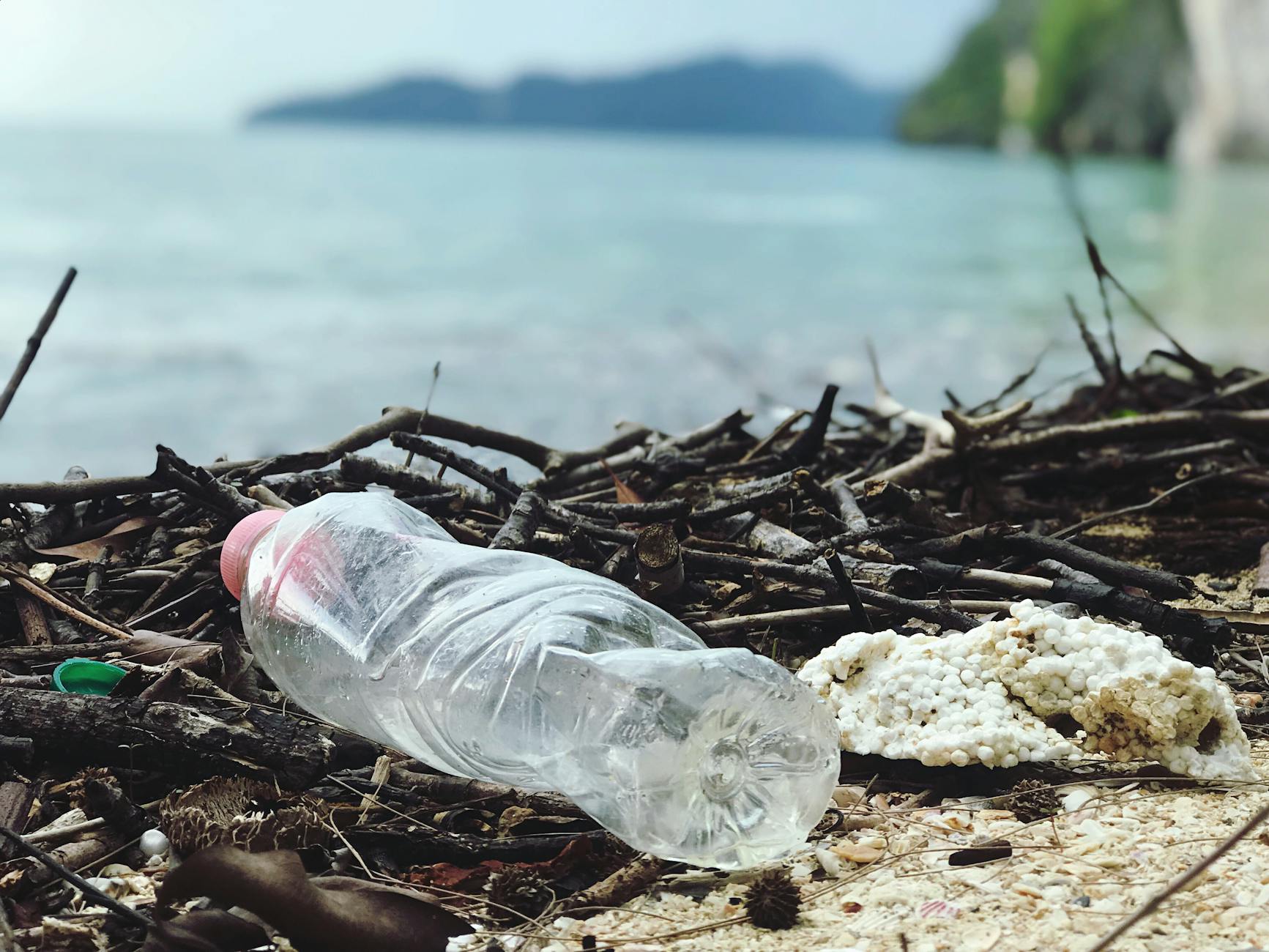


Photo by Catherine Sheila on Pexels.com

Come as a Child

Sabbath Day Thoughts — “Come as a Child” Mark 9:30-37

Perhaps the only positive outcome of the COVID-19 pandemic was a temporary decrease in the number of American children living in poverty. Federal economic security programs kept 53 million people above the poverty line in both 2020 and 2021. Child tax credits, increased food assistance, the extension of unemployment benefits, and three rounds of stimulus checks drove child poverty down to an all-time low of 5.2%. With the expiration of these programs in 2022, child poverty was again on the rise. According to the Annie E. Casie Foundation, 16% of American children now live in poverty. That’s 11.6 million kids. New York’s child poverty rates are among the worst in the nation. We rank forty-first out of the fifty states.

The likelihood of child poverty is higher here in the North Country. In Franklin County, 21.3% of our children live in poverty. Those numbers are higher for families of color. About 32% of racial ethnic children live below the federal poverty line. The impact of child poverty can last a lifetime. Impoverished families have less access to healthy food and quality medical care. A poverty diet is high in processed foods, fat, and carbohydrates. That’s a recipe for childhood obesity. Children in poverty are more likely to live in substandard housing, experience homelessness, and be exposed to crime and substance abuse in at-risk neighborhoods. Children in poverty have lower readiness when entering school and are more likely to have developmental challenges. Families in poverty live in chronic stress that leaves kids feeling anxious, depressed, and frightened.

When we further consider families who work in low wage jobs that lift them above the federal poverty threshold but don’t pay enough to meet monthly expenses, then we begin to see the enormity of the child poverty crisis. The Ouimette family of AuSable Forks is a case in point. William works for the town of Jay’s highway department and also serves as a volunteer firefighter. Miranda is a stay-at-home mom to their three kids between the ages of 6 and 9. William says, “It’s harder and harder for people just to get by on a job like working for the state or the town or anything now.” The Ouimettes struggle to pay for essential things like car repairs and new items for their kids. They fear they will be priced out of the home where their family has resided for generations.

Child poverty is nothing new. In Jesus’ day, 90% of people lived in poverty with little resource for rising above the circumstance of their birth. Within that impoverished time, children were particularly vulnerable. They were considered the lowest status members of society. Children lacked legal standing and protection as individuals and were instead deemed the property of their fathers. Indeed, children could be sold into slavery to settle a father’s debts. Although children were seen as a gift from God, a safeguard against extreme poverty in old age, children were expected to be unconditionally obedient and subject to the strict discipline of parents. The Book of Proverbs instructs, “Those who spare the rod hate their children, but those who love them are diligent to discipline them.” According to Exodus and Leviticus, the punishment for children who curse their parents or fail to honor them was death – judgment and stoning by the community. In the Gentile world, unwanted newborns were routinely exposed, left out in the open to die—or to be taken in by strangers and raised as slaves or prostitutes.

Given the low standing of children in the disciples’ world, we can imagine the shock that they felt when Jesus placed a child among them as someone to be welcomed and emulated. In today’s gospel reading, Jesus warned his friends of the suffering and death that would await him in Jerusalem. But along the way to Capernaum, instead of discussing better ways to protect Jesus and guard against betrayal, the twelve argued about who among them was the greatest. They compared genealogies and miracles, sermons and bank accounts, patrons and illustrious acquaintances, all in an effort to assert their personal worth. That child that Jesus held in his arms didn’t make any sense. Why would Jesus identify with a child? Why would he expect them to welcome and serve the lowest status person in the room?

Biblical scholar J.D.M. Derrett says that when Jesus scooped the little child up in his arms, Jesus was engaging in a symbolic act. In the Hebrew tradition, receiving or placing someone else’s child on your knee or in your embrace in front of the witnessing community was a rite of adoption.  We see this in the Book of Genesis, when the childless Sarah and Rebecca brought their servant women to their husbands to conceive children, insisting that those children would be born “on their knees” as rightful sons of the patriarchs. If J.D.M. Derrett is right, then Jesus was saying that the most vulnerable of people, like children, especially belong to Jesus. The disciples could not love and honor him without loving and honoring them.

Beyond that simple call to humble service, Jesus was reminding his friends, many of whom had left their families behind to follow him, that he had adopted them. They were his children. As his sons and daughters, they must demonstrate toward him the obedience, honor, and respect that they would a father. The disciples were meant to be brothers and sisters in Jesus’ family, not rivals for greatness. That tender embrace that the child found in Jesus’ arms reflected the love and support that the disciples found in Christ, who welcomed them, not because of their great achievements, but simply because he chose to love them, regardless of their status. In that unconditional love, they would find the courage and inspiration to be servants of all.

As messages go, today’s reading is clear. The “least of these” are deserving of the service and welcome that we would extend to the Lord. When we see vulnerable neighbors, we are to think of Jesus, responding with the sort of compassion and care that were the hallmark of Jesus’ earthly ministry. Beyond that, Jesus would have his followers see that in God’s Kingdom there is no us and them—no low-status children and high-status disciples. Rather, we are all God’s children. The social and psychological constructs that we create to assert our greatness—that separate rich from poor, have from have-nots, first world from third world—those constructs are false dichotomies. We are kin, all children of an infinitely loving God. We belong to one another, just as we belong to God.

If the pandemic taught us anything, it is that we can end childhood poverty. If we can lower the rate of childhood poverty to 5.2% in only two years, imagine what we could do if people really cared, if we had public policy that regarded vulnerable children the way that Jesus embraced that child. There is enough. We just lack the social and political will to make a lasting difference in the lives of families who need it most. We do not believe that every child is deserving of unconditional love and welcome. We pitch a paltry ten percent of our federal budget at programs that address poverty while income inequality in our nation—the gap between rich and poor—grows and grows and grows. Lord, have mercy upon us.

Jesus thinks his disciples can do better. We can do better. He imagines a world where no child lives in poverty. It’s a world where our most vulnerable neighbors are known and held, blessed and helped. It’s a world where disciples realize that true greatness is found not in our professional titles or advanced degrees, not in our big bank accounts or public accolades, not in our athletic prowess or our physical beauty. It’s a world where the greatest of all are servants of all. It’s a world that looks a lot like his Father’s Kingdom. He hopes that we will imagine that world, too. May it be so.

Resources

Danilo Trisi. “Government’s Pandemic Response Turned a Would-Be Poverty Surge into a Record Poverty Decline” in Center on Budget and Policy Priorities Reports, August 29, 2023. Accessed online at Government’s Pandemic Response Turned a Would-Be Poverty Surge Into a Record Poverty Decline | Center on Budget and Policy Priorities (cbpp.org)

Alek LaShomb. “Efforts to Address Child Poverty in New York’s North Country” in WCAX News, June 14, 2024. Accessed online at Efforts to address child poverty in New York’s North Country (wcax.com)

Courtney V. Buggs. “Commentary on Mark 9:30-37” in Preaching This Week, Sept. 22, 2024. Accessed online at Commentary on Mark 9:30-37 – Working Preacher from Luther Seminary

Micah D. Kiel. “Commentary on Mark 9:30-37” in Preaching This Week, Sept. 20, 2015. Accessed online at Commentary on Mark 9:30-37 – Working Preacher from Luther Seminary

C. Clifton Black. “Commentary on Mark 9:30-37” in Preaching This Week, Sept. 19, 2021. Accessed online at Commentary on Mark 9:30-37 – Working Preacher from Luther Seminary

Thomas P. Napoli. “New York Children in Need,” a report of the Office of the NYS Comptroller, May 2024. Accessed online at Report Titl (ny.gov)


Mark 9:30-37

30 They went on from there and passed through Galilee. He did not want anyone to know it, 31 for he was teaching his disciples, saying to them, “The Son of Man is to be betrayed into human hands, and they will kill him, and three days after being killed, he will rise again.” 32 But they did not understand what he was saying and were afraid to ask him. 33 Then they came to Capernaum, and when he was in the house he asked them, “What were you arguing about on the way?” 34 But they were silent, for on the way they had argued with one another who was the greatest. 35 He sat down, called the twelve, and said to them, “Whoever wants to be first must be last of all and servant of all.” 36 Then he took a little child and put it among them, and taking it in his arms he said to them, 37 “Whoever welcomes one such child in my name welcomes me, and whoever welcomes me welcomes not me but the one who sent me.”


Photo by Pixabay on Pexels.com

Speech Pathology (Taming the Tongue)

Sabbath Day Thoughts — “Speech Pathology” James 3:1-12

In the weekly Blast, I asked, “What is the most powerful part of the body?” Is it our brawny biceps? Our muscular legs that run up mountains? Our broad backs that shoulder heavy loads? According to the Apostle James, the most powerful part of the body is the tongue.

James may have a point. A review of 166 studies on the impact of verbal abuse on children found that the words of parents can have negative consequences that last a lifetime. Children who experience yelling, threats, belittling, humiliation, and name calling at home may be plagued by depression, aggression, conduct disorders, and anger. They are more likely to be abusive with siblings and other children and act out with delinquent behaviors at school and in community.   Verbal abuse has lasting impact upon a child’s health with increased rates of substance abuse, eating disorders, obesity, and heart disease.

Beyond the family, words can shape how we feel about our neighbors. With the rise of immigration to the United States from the Mediterranean, eastern Europe, and Asia in the late 19th century, there was a rise in anti-immigrant hate speech. Political pundits and yellow journalists alleged that these new arrivals were taking American jobs. They advanced false theories that immigrants were intellectually inferior, subhuman, criminal. In 1891 when the Chief of Police in New Orleans was found dead, the local immigrant community was blamed. Nineteen Sicilian-Americans were put on trial. Although they were found innocent, an angry mob of 10,000 broke into the jail, dragged eleven of the men from their cells, and lynched them.

In this digital age, our words can have far-reaching impact and destructive outcomes as misinformation, fake news, and big lies flood cyberspace. During the 2020 election cycle, Russian trolls sought to amplify mistrust in the American electoral process. They denigrated mail-in-voting, alleged irregularities in local elections, and made false accusations of voter fraud. These false claims were picked up by some mainstream media outlets. The goal of the Russians was to suppress voter turn-out, sow anxiety and distrust, and call into question our free and fair elections. It worked. In 2022, 56% of respondents to a CNN poll indicated that they have “little or no confidence” that elections represent the will of the people.

According to the Apostle James, the destructive power of the tongue is nothing new. Writing to first-century Christians across the Roman Empire, James compared our tongues to bits that control horses, rudders that guide sailing ships, and flames that can ignite a major conflagration. Bit, rudder, flame, the tongue. These little things can have dramatic impact for good or evil. It all depends on how you choose to use them.

James was revisiting and expanding an earlier teaching of his big brother Jesus. In the twelfth chapter of Matthew’s gospel, Jesus challenged his critics among the Pharisees: “How can you speak good things when you are evil?  For out of the abundance of the heart the mouth speaks.  The good person brings good things out of a good treasure, and the evil person brings evil things out of an evil treasure.  I tell you, on the day of judgment you will have to give an account for every careless word you utter; for by your words, you will be justified, and by your words, you will be condemned.”  Jesus understood that our words reveal our character, shape our lives in community, and impact our eternal relationship with God.

When James wrote his warning about the destructive power of the tongue, he had seen first-hand the consequences of irresponsible, manipulative, and destructive words. James had seen families torn apart as Israel’s traditionalists denigrated and rejected their Christian kin. James had witnessed false teachers who tried to convince Christians that they must undergo circumcision and observe the Torah. He had also seen angry and destructive words used to inspire anti-Christian persecution. James himself walked with a permanent limp from injuries he sustained when an angry mob, opposed to his gospel teaching, attacked him in the Temple. They severely beat him, threw him down a flight of stairs, and left him for dead. We can understand why James taught, “the tongue is placed among our members as a world of iniquity; it stains the whole body, sets on fire the cycle of life, and is itself set on fire by hell.”

James’ strong words and bold images are enough to make us bite our tongues. But I don’t believe that the apostle wanted to silence us. Rather, James hoped that his readers would use their words responsibly as sound teachers and good neighbors. After all, the tongue can tap into the good treasure of a faithful heart to create, build up, heal, and redeem. In Genesis, God is described as speaking the world into creation. “Let there be light!” In the prologue to John’s gospel, Jesus is described as the Word—God’s Word—made flesh, full of grace and truth, sent into the world to save it. Our words can be destructive, and yet they can also be powerfully good, constructive, faithful, and loving. We can build up what has been torn down.

If verbal abuse can undermine a child, then a judicious use of praise can build them up. Studies have found that a single word, like “Wow!”, or even a gesture, like a high five, can make kids feel good about themselves. Sincere praise can motivate a child to persevere in a tough task and inspire them to learn pro-social behaviors like helping, collaborating, and sharing positive feedback with others. Children who receive appropriate praise for hard work and progress are more likely to develop healthy self-esteem and less likely to suffer from depression.

What we have to say can also play a powerful role in building bridges in communities. We can counteract anti-immigrant hate speech by pointing to real-life examples, like our neighbors in Utica where 17,000 refugees have been resettled since 1979. Today, one in five Uticans is a refugee or child of refugees. They have come from all over the world: Myanmar, Afghanistan, Ukraine, Cambodia, Vietnam, the Balkans, and more. Downtown Utica is filled with international restaurants, churches, community centers, and businesses. The influx of immigrants has been credited with saving the dying rustbelt community. Filmmaker Loch Pillipps, who made the documentary film “Utica: The Last Refuge,” says, “There’s a big passion gap on this issue [of immigration]. The minority of people in this country who are against refugee resettlement are super loud. This is a really industrious population that figures out how to fix places up and make the community better. They saved this town.”

In the lead up to the contentious 2024 election, the words of the Apostle James are an encouragement to use our own words judiciously. That begins by learning from responsible journalism and not social media. In talking to those whose opinions may differ from our own, we can stick to facts and have responsible discussions that include listening as well as sharing our opinions. We can refrain from malicious gossip that vilifies those who disagree with us. We can let our votes do the talking, trusting that, despite what the Russians might have us believe, we live in the greatest democracy in the world where every vote counts. My friend the Rev. Scott Paul-Bonham cautions that we should also remember that in this highly divisive political climate, close to half of Americans will be greatly disappointed when the dust settles on the 2024 election. Can we respond to their despair with compassion, reaching out with kind words that build bridges and remind us that we belong to one another? It might sound like a difficult challenge, but I suspect that the Apostle James and his brother Jesus would tell us that we are up to it.

In the year before Roman soldiers destroyed the Jerusalem Temple, James was hauled before a kangaroo court by his opponents and ordered to deny the gospel. Knowing that he had at last come to the end of his journey, the aging, lame apostle shared the good news for the last time before being put to the sword. It is said that, even as he faced death, James spoke with such integrity and loving conviction that many who heard came to believe. Amen.

Resources

Gwen Dewar. “The effects of praise on kids: 10 Evidence-based tips for better outcomes” in Parenting Science, 2024. Accessed online at https://parentingscience.com/effects-of-praise/.

Gabriel R. Sanchez and Keesha Middlemass. “Misinformation is eroding the public’s confidence in democracy” in The Brookings Institute: Governance Studies Media Office, July 26, 2022. Accessed online at Misinformation is eroding the public’s confidence in democracy (brookings.edu)

Jules Struck. “‘They saved this town’: Refugees poured into Utica and cleared the rust from a dying industrial city” in Syracuse Magazine, May 27, 2022. Accessed online at ‘They saved this town’: Refugees poured into Utica and cleared the rust from a dying industrial city – syracuse.com

The Bronfenbrenner Center (Cornell University). “The Long-Term Underappreciated Damage of Verbal Abuse” in Psychology Today, October 10, 2023. Accessed online at https://www.psychologytoday.com

Library of Congress. “Under Attack: Immigration and Relocation in United States History” Classroom Materials. Accessed online at  Under Attack | Italian | Immigration and Relocation in U.S. History | Classroom Materials at the Library of Congress | Library of Congress

James Boyce. “Commentary on James 3:1-12” in Preaching This Week, Sept. 13, 2015. Accessed online at Commentary on James 3:1-12 – Working Preacher from Luther Seminary

Margaret Aymer. “Commentary on James 3:1-12” in Preaching This Week, Sept. 16, 2018. Accessed online at Commentary on James 3:1-12 – Working Preacher from Luther Seminary

Sandra Hack Polaski. “Commentary on James 3:1-12” in Preaching This Week, Sept. 16, 2012. Accessed online at Commentary on James 3:1-12 – Working Preacher from Luther Seminary


James 3:1-12

Not many of you should become teachers, my brothers and sisters, for you know that we who teach will face stricter judgment. For all of us make many mistakes. Anyone who makes no mistakes in speaking is mature, able to keep the whole body in check with a bridle. If we put bits into the mouths of horses to make them obey us, we guide their whole bodies. Or look at ships: though they are so large and are driven by strong winds, yet they are guided by a very small rudder wherever the will of the pilot directs. So also the tongue is a small member, yet it boasts of great exploits.

How great a forest is set ablaze by a such a small fire! And the tongue is a fire. The tongue is placed among our members as a world of iniquity; it stains the whole body, sets on fire the cycle of life, and is itself set on fire by hell. For every species of beast and bird, of reptile and sea creature, can be tamed and has been tamed by the human species, but no one can tame the tongue—a restless evil, full of deadly poison. With it we bless the Lord and Father, and with it we curse people, made in the likeness of God. 10 From the same mouth comes a blessing and a curse. My brothers and sisters, this ought not to be so. 11 Does a spring pour forth from the same opening both fresh and brackish water? 12 Can a fig tree, my brothers and sisters, yield olives or a grapevine figs? No more can salt water yield fresh.


Photo by Andrea Piacquadio on Pexels.com

Be Opened

Sabbath Day Thoughts — “Be Opened” Mark 7:24-37

When I came to Saranac Lake in January 2005, we needed a new sign for the church. The old sign was made many years ago by Skip’s Dad. The wooden boards were lovingly hand-routed and painted. But too many Adirondack winters had taken their toll. Session debated the size, shape, and color of the replacement sign. But what inspired most discussion was the message we included, which felt a little radical at the time, “All are welcome.”

When session decided to broadcast that message, we were remembering the years of conflict that we were leaving behind. We wanted to send a hopeful, healing message to the community, a message to inspire those who felt a little like outsiders to come on in. I know that it worked on at least one occasion. One Sunday, a couple of out-of-town visitors in full motorcycle gear joined us for worship. They wore black jackets, chaps, and big motorcycle boots. The back pew had never seen so much leather.  In visiting with them after the service, they said that they had wanted to go to church somewhere in Saranac Lake but felt a little uncomfortable about their appearance. They finally decided that any church that put “All are welcome” on the sign was their best bet for warm hospitality. I hope that we lived up to their expectations.

In Jesus’ day, religious traditionalists had strong opinions about who was and was not welcome, not only in church but also in God’s Kingdom. Mark’s seventh chapter explores this question of God’s acceptance and welcome. In the verses leading up to today’s reading, Jesus was under attack by the Pharisees and scribes. Those religious traditionalists looked at Jesus’ disciples, saw their failure to observe rituals of purity, like handwashing before eating, and decided that neither the disciples nor Jesus was holy enough. In their opinion, failure to keep the traditions of the elders rendered the disciples unclean and unwelcome in the eyes of God.

In some of the boldest teaching of his ministry, Jesus denounced this narrow-minded belief. Jesus argued that it is what comes out of a person that separates them from God and neighbor. God was less concerned about handwashing or a kosher diet and more concerned about idolatry, adultery, theft, hypocrisy, slander, and malice.

The two encounters in today’s gospel reading probably stretched even Jesus’ understanding of God’s welcome. After his clash with his opponents, Jesus withdrew to the seaside city of Tyre beyond the Galilee, seeking a quiet place to pray and find refreshment. But the word soon got out. It wasn’t long before there was a knock on the door. Jesus was beseeched for healing, and he wasn’t very happy about it.

The woman who implored Jesus to heal her child had three strikes against her.  She was a Gentile, outside the covenant between God and Israel. Not only was she a Gentile, she was the worst sort of Gentile—a Syro-Phoenician. The evilest woman in the Hebrew scriptures, Jezebel, was a Syro-Phoenician princess who brought idolatry and immorality to the reign of her Israelite husband King Ahab. What’s even worse, this woman was flouting the bounds of good behavior. In a time and place when women didn’t speak to men outside their family, she was on her knees, imploring a strange man to do her a favor. Utterly scandalous!  Jesus had every reason to say, “No.” Indeed, the Pharisees and scribes, with whom Jesus had recently argued, would have congratulated him on his good judgment. When Jesus called the woman a “dog,” he sounded a lot more like them than he did like the Jesus we know and love. Didn’t he?

The gospel might have stayed good news only for Jews if the Syro-Phoenician woman hadn’t challenged Jesus. She demanded just a few crumbs of God’s welcome for Gentile dogs, like her sick child. In response, we glimpse a shift in Jesus’ understanding. He sees that, in his Father’s Kingdom, this woman didn’t belong under the table, begging for table scraps. In his Father’s Kingdom, she had a place at the table, alongside the children of Israel. The proof of Jesus’ insight came immediately. Jesus blessed her for her bold speech, in Greek—her logos, her word, her wisdom—and he sent her home. There she found her child waiting, right as rain.

Perhaps Jesus struggled with the boldness of God’s welcome because he soon encountered another healing request that would have been out-of-bounds for scribes and Pharisees. As Jesus returned to Galilee, he traveled through the Decapolis, the ten city-states to the east of the sea.  These communities, planted three hundred years earlier when Alexander the Great claimed Israel for his empire, were largely Gentile and culturally Greek. When those Greek neighbors brought to Jesus a man who was hearing- and speech-impaired, Jesus didn’t rebuke them or call them dogs. Instead, the suffering man got a private audience. There was touching and spitting, speaking and sighing. Jesus’ word, “Ephphatha”—be opened—may have been part of the man’s healing experience, but perhaps it was also part of Jesus’ own healing experience—and a calling to all who would be his followers. “Ephphatha”—be opened. Don’t build fences or set limits on God’s love.

Mark’s seventh chapter is a great comfort to us. We, who have lived enough or have the depth of faith to acknowledge our personal sinfulness and brokenness, can rejoice in the promise that God loves and welcomes us, despite our painful pasts and our present mistakes. We are welcome, and there isn’t anything that we can do that will render us unlovable or irredeemable. Jesus has done the hard work on the cross so that even though our sins abound, his righteousness prevails. There is a place for us at the table. Thank you, Lord.

Yet Mark’s seventh chapter is a challenge to us. Part of our human sinfulness is that we always want to draw lines, create in-groups and out-groups. We see it in high school cliques. We see it in partisan politics. We even see it in our penchant to form factions within churches or denominations. There lurks within each of us the scribe or Pharisee, who keeps watch, rushes to judgment, and wants to limit God’s love. Today’s reading suggests that God invites us to get over ourselves and get out of God’s way so that healing may abound. God’s great longing is for a church and a world where no one feels like they have to beg for table scraps when it comes to God’s love and mercy.

I’m not sure that when session approved the words, “All are welcome,” for the sign out front that we thought we were making a bold theological statement, right out of the seventh chapter of Mark’s gospel. We just wanted folks to worship with us. We may have even wanted to send a friendly message to those who had left us, with whom we had quarreled so bitterly in the dark, divided days of our past. But perhaps when we chose that message, God was working on us. God was summoning us to open up, to see the immensity of God’s love and welcome.

I suspect that if Jesus were sitting in the back pew today, wearing his motorcycle leathers, he would remind us that God isn’t finished with us. There are other people out there whom God calls us to welcome, folks who will test our limits and make us feel uncomfortable. I bet they will have tattoos and body piercings. They’ll probably love people whom we don’t think they should love. I imagine that some of them will be developmentally disabled or mentally ill or physically impaired. They’ll probably have big, obnoxious placards in their front yards for candidates from that other political party. They’ll drive gas-guzzling Cadillac Escalades or energy-efficient Teslas. They’ll stand in line in front of us at Stewart’s and make us wait while they buy cigarettes and a billion lottery tickets. The’ll stumble up Broadway after a long night at the Rusty Nail.

Be opened, my friends. God’s love is bigger than we can imagine.

Resources

Alyce McKenzie. “Commentary on Mark 7:24-37” in Preaching This Week, Sept. 6, 2009. Accessed online at Commentary on Mark 7:24-37 – Working Preacher from Luther Seminary

Matt Skinner. “Commentary on Mark 7:24-37” in Preaching This Week, Sept. 9, 2012. Accessed online at Commentary on Mark 7:24-37 – Working Preacher from Luther Seminary

C. Clifton Black. “Commentary on Mark 7:24-37” in Preaching This Week, Sept. 5, 2012. Accessed online at Commentary on Mark 7:24-37 – Working Preacher from Luther Seminary

Courtney V. Buggs. “Commentary on Mark 7:24-37” in Preaching This Week, Sept. 8, 2024. Accessed online at Commentary on Mark 7:24-37 – Working Preacher from Luther Seminary

Joann White. “Everyone Gets Healed,” Sept. 9, 2012.


Mark 7:24-37

24 From there he set out and went away to the region of Tyre. He entered a house and did not want anyone to know he was there. Yet he could not escape notice, 25 but a woman whose little daughter had an unclean spirit immediately heard about him, and she came and bowed down at his feet. 26 Now the woman was a gentile, of Syrophoenician origin. She begged him to cast the demon out of her daughter. 27 He said to her, “Let the children be fed first, for it is not fair to take the children’s food and throw it to the dogs.” 28 But she answered him, “Sir, even the dogs under the table eat the children’s crumbs.” 29 Then he said to her, “For saying that, you may go—the demon has left your daughter.” 30 And when she went home, she found the child lying on the bed and the demon gone.

31 Then he returned from the region of Tyre and went by way of Sidon toward the Sea of Galilee, in the region of the Decapolis. 32 They brought to him a deaf man who had an impediment in his speech, and they begged him to lay his hand on him. 33 He took him aside in private, away from the crowd, and put his fingers into his ears, and he spat and touched his tongue. 34 Then looking up to heaven, he sighed and said to him, “Ephphatha,” that is, “Be opened.” 35 And his ears were opened, his tongue was released, and he spoke plainly. 36 Then Jesus ordered them to tell no one, but the more he ordered them, the more zealously they proclaimed it. 37 They were astounded beyond measure, saying, “He has done everything well; he even makes the deaf to hear and the mute to speak.”


Photo by Kevin Bidwell on Pexels.com