A Hopeful Beginning

Sabbath Day Thoughts — “A Hopeful Beginning” Luke 19:28-40

On Ash Wednesday, more than 300 prominent Christian leaders, including Presbyterians, released “A Call to Christians in a Crisis of Faith and Democracy.” It’s a boldly worded statement that characterizes this moment in history as a time of spiritual crisis in which we must affirm what we believe and whom we will serve. They are concerned about the conflation of church and state, the rise in racism, the targeting of immigrants, and the erosion of constitutional rights.

The Call to Christians insists that our allegiance as followers of Jesus must be to God—above any earthly kingdom or principality. It confronts the heretical beliefs of white Christian nationalism—the belief that America is a nation intended only for white Christians, whose beliefs and practices must be privileged. Instead, the statement asserts that the teachings of Jesus summon us to love all our neighbors and see in them the image of God. “As Christians,” the call reads, “We must never preach nationalism as discipleship, confuse American and Christian identities with whiteness, or mistake allegiance to modern-day Caesars for faithfulness to Christ.”

The “Call to Christians in a Crisis of Faith and Democracy” was not headline news on Wednesday. Top billing went to the movement of US military resources to the Middle East, and the Epstein files, and The Board of Peace and its plans for Gaza, and the President’s contention that he is not a racist, just ask Mike Tyson. Undoubtedly, some will embrace the call and feel it is about time that mainline faith leaders spoke up. Others will reject the call as a showy political act made by insignificant churches of declining influence. For those bold leaders, though, it was a clarifying statement in a time when there are harshly diverging beliefs about what it means to be Christian and how we are to relate to both empire and neighbor, especially our most vulnerable neighbors.

Our gospel reading today typically concludes the season of Lent, but this year, it gets our Lent started as I consider in the coming Sundays Jesus’ final week in Jerusalem. Often called the “Triumphal Entry” the Palm Sunday story usually starts Holy Week. It reflects tensions about what it means to be a person of faith and how we are to relate to earthly regimes and powerful institutions.

That first Palm Sunday was a collision of two kingdoms. The Passover Festival brought pilgrims from across Israel and around the empire to Jerusalem to remember God’s long-ago deliverance from bondage in Egypt. It was a time when Messianic expectations ran high. After all, if God could raise up Moses to lead the people to freedom, then even now God could be raising up a leader to face Rome head on and shape a changed future for the people. For the Romans, Passover was an inconvenience, a time to be on guard, prepared to quash any hint of rebellion.

In their book The Last Week: A Day-by-Day Account of Jesus’s Final Week in Jerusalem, New Testament scholars J.D. Crossan and Marcus Borg teach that Jesus’s Palm Sunday processional wasn’t the only parade that Sunday. The Roman procurator Pontius Pilate was on the road that day, too. Pilate and his followers streamed into the city from the east as Jesus and his followers came from the west. As he did each year at the Passover, Pilate left his seaside base in Caesarea Maritima and marched to Jerusalem to ensure peace.

Pilate was there at the behest of the emperor. He rode a war horse, decked out in royal livery. He was flanked by imperial standards that whipped and snapped in the wind. He led a legion of Roman soldiers, the finest fighting force in the world. Bright helmets glinted in the sun. Hobnailed sandals marched in cadence. Shields were strapped to left arms while swords hung from every belt. The message of Pilate’s parade was clear. Caesar ruled and there would be no resistance.

Jesus’ parade was different. His faith had called him to Jerusalem, even though he knew his entry to the Holy City would put him in peril. He came to fulfil the requirements of righteousness: to remember and give thanks for God’s Passover miracle. Instead of a war horse, Jesus rode a colt, the foal of a donkey, decked out in the homespun linen of a disciple’s robe. Instead of an army, Jesus was surrounded by peasants—farmers, fishermen, tradespeople, shopkeepers. Instead of the sound of marching feet and shouted commands, there was the singing of ancient pilgrim songs and the sounds of joy. “Blessed is the king who comes in the name of the Lord! Peace in heaven and glory in the highest!” Instead of an homage to Caesar, this was a celebration of another Kingdom, God’s Kingdom.

In Caesar’s kingdom, dominion was established through military conquest. A privileged few benefited at the expense of the many. Power was ensured with brute force, occupation, and crucifixion. In Caesar’s Kingdom, peace was achieved at any price—with widespread fear and deadly violence.

Jesus taught that God’s Kingdom, the Kingdom that he served, was always all around us, growing quietly in the midst of the world’s sorrow and celebration. His every action proclaimed that Kingdom. God’s Kingdom is revealed when hungry neighbors are fed, outsiders are accepted and welcomed, healing is available for all, and sinners find forgiveness. Peace is achieved when the other cheek is turned, enemies are loved, and the path of non-violence is chosen, even at great personal cost.

Two kingdoms collided on that first Palm Sunday. Those kingdoms would continue to be in terrible tension throughout that final week of Jesus’ earthly ministry. It was a hopeful beginning as pilgrims sang and proclaimed Jesus their messianic king. Yet that week would have a terrible end as Jesus hung upon a cross, murdered by the state, taunted by crowds who once sang his praises, shamed with the sign “King of the Jews.”

Two kingdoms stand in tension, just ask those 300 faith leaders who signed on to the “Call to Christians in a Crisis of Faith and Democracy.” It is tempting to serve the empire. Who doesn’t want to call the shots? Who doesn’t want power? Who wouldn’t like to silence their enemies? Who isn’t tempted by the big promises of lasting peace and prosperity. Does it really matter if the price of peace is the exploitation of the vulnerable, the exclusion of the stranger, the acceptance of the status quo, the death of the innocent? Does it truly matter if the super wealthy get even wealthier while others languish in generational poverty? The siren-song of the empire can be hard to resist, especially when the price of opposition may cost you everything, even your life.

The way of God’s Kingdom is hard, my friends. Jesus knew that. Retired Presbyterian minister David Bales argues that Jesus would never get elected today. Who would vote for someone who pronounced woes on the rich and expects us to love our enemies?  Who would follow someone who believed power and resources should be freely shared, even with the powerless? It is hard to accept a king who willingly suffers and serves. It is very hard to follow a king who expects us to do the same. The way of God’s Kingdom is hard, indeed.

Caesar’s Kingdom can leave us feeling hopeless and paralyzed, my friends. We stop following the Way of Jesus and we fail to resist the siren call of the empire because we fear that we make no difference. Prof. Insook Lee of New York Theological Seminary reminds us that a handful of well-intended people can create life-saving change. She tells the Legend of the Hundredth Monkey. Researchers used 10,000 monkeys to repopulate a remote island that had been used for nuclear testing. Everything seemed to be safe on the island, but coconut husks still bore traces of radioactivity. The scientists taught ten monkeys to wash their coconuts in a stream of fresh water and then released them on the island. Soon twelve monkeys were washing their coconuts, then twenty monkeys, next forty-seven. Something surprising happened. When the hundredth monkey began to wash his coconut, all ten thousand started washing their coconuts. That healthy intervention of washing coconuts proved to be infectious. The Kingdom that Jesus heralded can come. All we need are ten faithful people or 300 concerned clergy to call for change and believe it is possible.

In the coming weeks of Lent, we will follow Jesus through his final week in Jerusalem. He’ll be making his case for the Kingdom of God, even as the powers of Temple and empire conspire to bring him down. May we have ears to hear and the courage to take action. May we choose to serve Christ’s Kingdom.

Resources

“A Call to Christians in a Crisis of Faith and Democracy,” Feb. 18, 2026. Accessed online at https://acalltochristians.org/

Jim Wallis. “Faith and Freedom” in God’s Politics with Jim Wallis, Feb. 18, 2026. Accessed online at https://jimwallis.substack.com/p/faith-and-freedom

Eric Barreto. “Commentary on Luke 19:28-40” in Preaching This Week, Jan. 22, 2026. Accessed online at https://www.workingpreacher.org/preaching-series/sermon-series-jesuss-triumphal-entry-lukes-version

Insook Lee. “Pastoral Perspective on Luke 19:28-40” in Feasting on the Gospels, Luke, vol. 2. WJKP: Louisville, 2014.

David Bales. “Homiletical Perspective on Luke 19:28-40” in Feasting on the Gospels, Luke, vol. 2. WJKP: Louisville, 2014.

Matt Skinner. “Walking the Palm Sunday Path: A Lenten Sermon Series for 2026” in Preaching Series, January 21, 2026. Accessed online at https://www.workingpreacher.org/preaching-series/walking-the-palm-sunday-path-in-lent-a-sermon-series-for-2026


Luke 19:28-40

28 After Jesus had said this, he went on ahead, going up to Jerusalem. 29 As he approached Bethphage and Bethany at the hill called the Mount of Olives, he sent two of his disciples, saying to them, 30 “Go to the village ahead of you, and as you enter it, you will find a colt tied there, which no one has ever ridden. Untie it and bring it here. 31 If anyone asks you, ‘Why are you untying it?’ say, ‘The Lord needs it.’”

32 Those who were sent ahead went and found it just as he had told them. 33 As they were untying the colt, its owners asked them, “Why are you untying the colt?”

34 They replied, “The Lord needs it.”

35 They brought it to Jesus, threw their cloaks on the colt and put Jesus on it. 36 As he went along, people spread their cloaks on the road.

37 When he came near the place where the road goes down the Mount of Olives, the whole crowd of disciples began joyfully to praise God in loud voices for all the miracles they had seen:

38 “Blessed is the king who comes in the name of the Lord!”

“Peace in heaven and glory in the highest!”

39 Some of the Pharisees in the crowd said to Jesus, “Teacher, rebuke your disciples!”

40 “I tell you,” he replied, “if they keep quiet, the stones will cry out.”
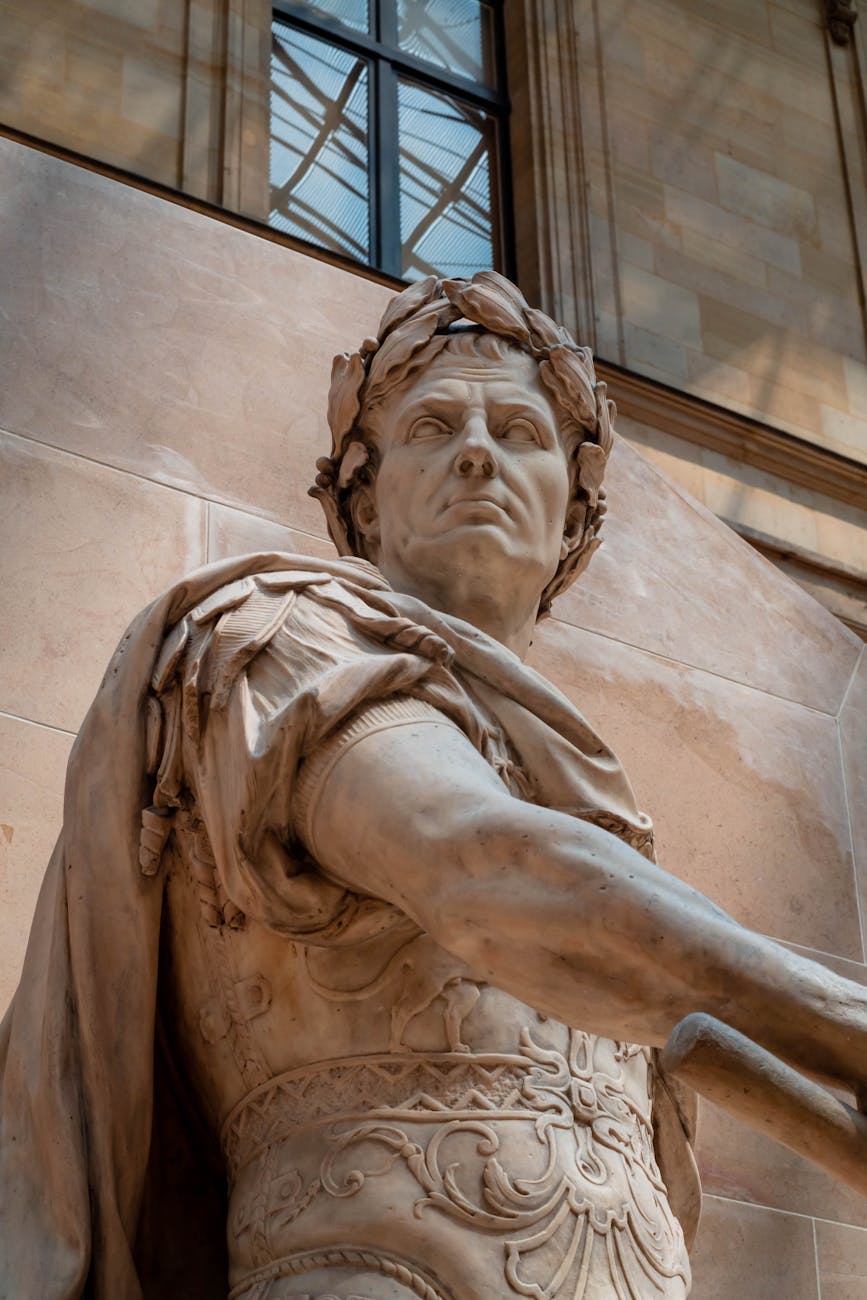

Photo by Alejandro Aznar on Pexels.com

Hidden Glory

Sabbath Day Thoughts — “Hidden Glory” Matthew 17:1-9

Have you seen the glory of Jesus lately?

In August 2012, visitors to Belfast City Cemetery were surprised to see an image resembling the face of Jesus on a tree stump. City Council workers had been out earlier in the year to trim trees in the western part of the overgrown cemetery. They cut a rogue tree sprouting by the tombstone of Rebecca Steven, who died in 1916. The stump left behind bears an uncanny resemblance to a bearded man, believed to be Jesus.

A number of people claim to have seen Jesus in images of the Cone Nebula, snapped by the Hubble Space Telescope. The nebula, found in the arm of Orion, resembles Jesus, cradling the lost sheep. The lamb rests at peace in his savior’s arms, Jesus’ hand is raised in blessing, and for those with the eyes of faith, the Cone Nebula is now known as the Jesus Christ Nebula.

In March 2015, a landslide in Colombia left behind an image of Jesus etched into a hill. The site was soon thronged by pilgrims. Local folks made a quick buck, charging worshipers for a glimpse of the Messiah. The phenomenon proved so popular that police had to be brought in to manage the crowds.

That Jesus. You never know where his glory is going to turn up next.

The disciples, of course, were up close and personal with Jesus all the time. They knew every line on his face and every gesture that his hands could make. They knew the way his eyes twinkled when he teased or smiled. They knew the way his brow creased when he was listening intently to someone’s story. But on the mountaintop that day, Peter, James, and John realized that maybe they had never really seen Jesus before, not like that. Jesus was suffused with light. God’s glory rippled, shone, and danced upon him and within him. The man was suffused with glory, a holy fire that burned but did not consume.

The disciples, who had chosen to follow Jesus for his visionary teaching, suddenly and clearly saw that Jesus was not so much the visionary as he was the vision. Flanked as Jesus was by heroes in the faith Moses and Elijah, the disciples realized that the same holy power that had been at work in them was at work in Jesus. God’s glory, right there in front of them, was still at work for the healing and redemption of the world. Gob smacked with wonder, Peter, James, and John rubbed their eyes and pondered how they had never noticed this before. Just in case the disciples didn’t get what was being revealed to them, God gave a shout from the heavens, “This is my Son, the Beloved; he pleases me so. Listen to him!” 

The moment passed, just as quickly as it came. Moses and Elijah vanished. The heavenly light disappeared. The voice of God fell silent. All that was left was Jesus, that familiar face looking concerned, those caring hands reaching out, offering comfort. All that was left was Jesus, saying, “Get up and do not be afraid.” As the disciples picked up their walking sticks and shouldered their backpacks, they must have struggled with the paradox that Jesus could be both suffused in holy glory and thoroughly grounded and earthy and real, like them. Somehow, God’s glory shone on the mountaintop and walked the earthly valley, in carpenter turned rabbi from Nazareth who loved to laugh and teach and eat and help and heal.

They didn’t talk about it, but years later, Peter would remember that moment and say, “Jesus received honor and glory from God the Father when that voice was conveyed to him by the Majestic Glory, saying, ‘This is my Son, my Beloved, with whom I am well pleased.’ We ourselves heard this voice come from heaven, while we were with him on the holy mountain. . .  You will do well to be attentive to this as to a lamp shining in a dark place, until the day dawns and the morning star rises in your hearts” (2 Peter 1:16-19).

We tend to scoff at the holy in the ordinary: the face of Jesus in a Belfast cemetery tree stump, the good shepherd in a nebula, the Messiah in a South American landslide. But Jesus had no trouble understanding that we live in a world that is infused with the holy. God’s glory appears in unlikely places, at unexpected times, and calls us to respond. This hidden glory comes to us in ways that can feel distinctly ordinary and even positively uncomfortable. Indeed, in Jesus’ final public teaching, recorded in Matthew 25, the Lord told his followers that even though he would soon be leaving them, he would still see them daily. Jesus would come in the guise of his little brothers and sisters, the needy, hungry, lonely, sick, imprisoned, and vulnerable people of our world (Matthew 25:31-46).

Leo Tolstoy told the story of a poor, widowed shoemaker Martin Aveditch. One night, Martin heard a holy voice as he slept, saying that on the very next day the Lord would come to visit. The excited shoemaker rose early, ready to welcome the Lord, watching the world from the window of his basement workshop. But all he saw was his neighbor Stepanich, shoveling snow. Matin invited Stepanich in, fed him, and shared about his vision and love for Jesus. Later after Stepanich had left, Martin saw a young mother, cradling a baby, neither dressed for the winter cold. “Come in,” Martin urged the young woman. He fed her, gave her money, and wrapped mother and child in warm clothes that had belonged to his late wife. He told them of his love for Jesus. Late in the day after his encounter with mother and child, Martin saw something distressing through his window. A young boy tried to steal an apple, dropped by an older woman. The woman was scolding and holding the boy by the hair. The child was screaming. Martin rushed into the street. With love and compassion, he implored the woman to forgive and the child to feel remorse and be forgiven. The fight ended, the boy carried the old woman’s bag, and the two, left arm in arm. That night, Martin the shoemaker was disappointed. All day, he had watched for the Lord, but he hadn’t come. A voice called from the shadows of the shoemaker’s basement. “Martin did you recognize me?” And out of the shadow stepped visions of his neighbor Stepanich, the poor woman with the baby, and the older woman and small boy. The glory of Christ had been hidden in the ordinary.

The glory of Christ is always near, hidden in plain sight, revealed in those who need us most. The late Mother Teresa was notorious for taking well-intended first world volunteers out into the slums of Calcutta. Pointing to a desperately ill beggar, left to die in the gutter, she would say, “The body of Christ for you.” A worker at a soup kitchen a mile and a half from the White House prepares for her weekly service with the prayer, “Lord, we know that you’ll be coming down the line today, so, Lord, help us to treat you well, help us to treat you well.” We like to imagine Jesus on the mountaintop, his glory plain to see. Can we see the glory that hides where help is needed most?

Have you seen the glory of Jesus lately? The Apostle Paul audaciously taught that through our faith, Christ makes a home in our hearts. The Christ within us equips us to follow him in the way of self-giving love. On a good day, Christ may even be seen and known through us in a world that is very much in need of his healing help. Again, Mother Teresa famously taught that Christ has no arms or legs or body now but ours. Whether or not the world sees that glory is up to us—it’s a constant challenge, a constant choice.

Farmer, poet, and activist Wendell Berry described the tension presented by our encounters with vulnerable people in one of my favorite poems, “The Guest.”

“Washed into the doorway

by the wake of traffic,

he wears humanity

like a third-hand shirt

-blackened with enough of

Manhattan’s dirt to sprout

a tree, or poison one.

His empty hand has led him

where he has come to.

Our differences claim us.

He holds out his hand,

in need of all that’s mine.

And so we’re joined, as deep

as son and father.  His life

is offered me to choose.

Shall I begin servitude to

him? Let this cup pass.

Who am I? But charity must

suppose, knowing better,

that this is a man fallen

among thieves, or come

to this strait by no fault

-that our difference

is not a judgment,

though I can afford to eat

and am made his judge.

I am, I nearly believe,

the Samaritan who fell

into the ambush of his heart

on the way to another place.

My stranger waits, his hand

held out like something to read,

as though its emptiness

is an accomplishment.

I give him a smoke and the price

of a meal, no more

-not sufficient kindness

or believable sham.

I paid him to remain strange

to my threshold and table,

to permit me to forget him-

knowing I won’t.  He’s the guest

of my knowing, though not asked.”

Berry’s poem begs the question, “Will the hidden glory of Jesus shine forth through us to a world in need?”

Have we seen the glory of Jesus lately? Atop Mt. Tabor with the disciples.

Have we seen the glory of Jesus lately? In a Belfast Cemetery, the Cone Nebula, a Colombian landslide.

Have we seen the glory of Jesus lately? In line at the food pantry, buying lottery tickets at Stewarts, walking slushy sidewalks without any socks.

Have we seen the glory of Jesus lately? In those who would be his disciples, seated next to us in the pews, looking back at us from the bathroom mirror?

Resources:

Eugene Park. “Commentary on Matthew 17:1-9” in Preaching this Week, Feb. 15, 2026. Accessed online at https://www.workingpreacher.org/commentaries/revised-common-lectionary/transfiguration-of-our-lord/commentary-on-matthew-171-9-7

Ronald J. Allen. “Commentary on Matthew 17:1-9” in Preaching this Week, Feb. 19, 2023. Accessed online at https://www.workingpreacher.org/commentaries/revised-common-lectionary/transfiguration-of-our-lord/commentary-on-matthew-171-9-6

David Lose. “Commentary on Matthew 17:1-9” in Preaching this Week, March 6, 2011. Accessed online at https://www.workingpreacher.org/commentaries/revised-common-lectionary/transfiguration-of-our-lord/commentary-on-matthew-171-9

“Belfast City Cemetery Phenomenon” https://www.youtube.com/watch?v=naT41gWoG8Q

“The Cone Nebula ~ Orion’s Jesus Nebula Neighbor” https://www.youtube.com/watch?v=WK0zdh-0-O0

Tessa Berenson Rogers. “Did the ‘Face of Jesus’ Appear in a Colombian Rockslide?” in Time, March 24, 2015. https://time.com/3755832/jesus-face-columbia/

Lyof Tolstoi. Where Love Is, There God Is Also. New York: Thomas Y. Crowell Company Publishers, 1887. https://www.gutenberg.org/files/38616/38616-h/38616-h.htm

Wendell Berry. “The Guest” in Collected Poems, 1957-1982. North Point Press, 1984.


Matthew 17:1-9

17 Six days later, Jesus took with him Peter and James and his brother John and led them up a high mountain, by themselves. And he was transfigured before them, and his face shone like the sun, and his clothes became bright as light. Suddenly there appeared to them Moses and Elijah, talking with him. Then Peter said to Jesus, “Lord, it is good for us to be here; if you wish, I will set up three tents here, one for you, one for Moses, and one for Elijah.” While he was still speaking, suddenly a bright cloud overshadowed them, and a voice from the cloud said, “This is my Son, the Beloved; with him I am well pleased; listen to him!” When the disciples heard this, they fell to the ground and were overcome by fear. But Jesus came and touched them, saying, “Get up and do not be afraid.” And when they raised their eyes, they saw no one except Jesus himself alone. As they were coming down the mountain, Jesus ordered them, “Tell no one about the vision until after the Son of Man has been raised from the dead.”


Photo by Little Visuals on Pexels.com

Repair and Restore

Sabbath Day Thoughts — “Repair and Restore” Isaiah 58:1-12

On December 4, 1967, Martin Luther King was in Atlanta for a press conference. Dr. King had come to Georgia to announce his newest initiative in the pursuit of American social justice, The Poor People’s Campaign. In recent years, his activism had taken him north to tackle the problems of racism and poverty endemic in our cities. He chose to live in solidarity with the poor, moving Coretta and their four children to a tiny walk-up apartment in the Lawndale neighborhood on the West-side of Chicago, a community better known by its local nickname “Slumdale.”  The entryway of the building where the Kings lived was used as a public toilet, and a hastily applied coat of paint couldn’t hide years of neglect that are the hallmark of low income, substandard housing. In Chicago, while peacefully demonstrating with an interracial group in Marquette Park, Dr. King was hit by a stone, hurled by an anonymous hate-filled hand. He had fewer friends in those days. Malcolm X had rejected his non-violent ethic as too soft and slow to wrest change from white oppressors. One-time white political allies, like LBJ, had come to see King’s radical commitment to the poor and his call for economic change as dangerous. When he stepped up to the microphone that night in Ebenezer Baptist Church, Dr. King looked tired and in need of a friend as he called the nation to “the total, direct, and immediate abolition of poverty.”

Dr. King, in his justice work across the United States, had come to understand that the problem of inequality and injustice is not just about race. It’s about economics. Even as visible lines of color were being crossed and overcome, invisible lines of hopelessness and want kept generations of Americans of all races bound in poverty and need. King saw neighbors “locked inside ghettos of material privation and spiritual debilitation” in urban ghettos, in southern shanties, in rural small towns. Everywhere there was a yawning chasm between prosperity’s children and those for whom the American Dream was unfulfilled, whose lives were defined by hunger, low wages, and substandard housing. 

With his Poor People’s Campaign, King resolved to bring Americans together across dividing lines of race to change the plight of the poor. He envisioned a massive, widespread campaign of civil disobedience aimed at the federal government. The poor and disenfranchised of our nation, and those who stood in solidarity with them, would march on Washington, DC, beginning in ten key cities and five rural areas. They would make a cross-country pilgrimage to the very seat of national power.  Once there, poor folk would peacefully demonstrate for economic reform by day and camp out in a massive tent city by night.  They would stay, as a visible witness to the breach in America’s social fabric, until change was enacted and the promise of dignity was made real for all. Dr. King saw this movement as a direct response to God’s challenge to care for poor and vulnerable neighbors. “It must not be just black people,” King told the press in December 1967, “it must be all poor people.  We must include American Indians, Puerto Ricans, Mexicans, and even poor whites.”

The plight of the poor and oppressed is nothing new. In our reading from the Hebrew Bible, God through the prophet Isaiah took Israel to task for their neglect of the poor.  “Is not this the fast that I choose: to loose the bonds of injustice, to undo the thongs of the yoke, to let the oppressed go free, and to break every yoke? Is it not to share your bread with the hungry, and bring the homeless poor into your house; when you see the naked, to cover them, and not to hide yourself from your own kin?”

Isaiah’s bold words were addressed to good church folks, Israelites who had returned from exile in Babylon. God the great liberator, who had long ago freed the people from Pharaoh’s yoke and led them through the Sinai wilderness into a land flowing with milk and honey, God had again been at work to free Israel from captivity. God had raised up Cyrus of Persia to topple the Babylonian empire and release Israel from bondage. A hurting people had crossed desert sands and through the Jordan’s muddy waters, returning home to their Promised Land. There, they began to repair the walls and repave the streets. Their rebuilding efforts were only outmatched by their piety. They worshipped and fasted, in penance and thanksgiving, seeking to be holy as God is holy. 

Yet as God looked at our Israelite ancestors, God saw something terribly wrong with the community. While some in Israel returned from exile to find prosperity and a promising future, others had found only want and privation. God brought liberation to Israel, yet there in the very land meant to be a blessing for all its citizens there was hunger, poverty, and oppression. Children went to bed hungry. Widows had no place to call home. People with disabilities begged in the streets. Despite their fasting and outward signs of piety, the Israelites had missed the point of what it really means to be a faithful people. They could not love God with worship and fasting if they did not love their neighbors, especially their hurting and at-risk neighbors.

Isaiah teaches us that it is only when we choose the fast of righteous living that we can be healed. It is only through care, compassion, and justice that a nation may mend the gaping holes in the fabric of society.  It is only by knowing that our well-being is inseparably bound to the well-being of all our neighbors that we begin to understand God’s vision for our world. As long as Israel endured as a land where want co-existed with plenty, the promise of the land would remain unfulfilled.  Sabbath day piety must be matched by week day action that feeds the hungry, houses the homeless, clothes the naked, and welcomes all God’s children into the bounty of the Promised Land. It is only then that we become repairers of the breach and restorers of the streets to live in. It is only then that our light shines.

58 years after Dr. King’s insistence that the breach in American society be healed, the chasm between rich and poor gapes wider than ever in our nation.  Nowhere is that more apparent than right here in the North Country where multi-million-dollar camps coexist with rusted out trailers, dirt-floored cabins, and substandard, tumble-down housing. In Franklin County, 23% of our children and 13% of our seniors live in poverty.  9,870 people in Franklin County live with food insecurity.  That means 9,870 people don’t have the economic resources to put enough food on the table each month to meet their basic nutritional needs. Those numbers do not include the recent cuts to SNAP benefits. Even families who live above the poverty line struggle. 80% of our children are eligible for federal nutrition programs.

We know the two Americas that Dr. King described, and we are challenged today to be repairers of the breach and restorers of the streets to live in. We are needed to stand in solidarity with the poor and oppressed and to share the time, talents, and wealth entrusted to us for the benefit of all God’s children. We may worship God on Sunday, but we also worship God on Monday and Tuesday and Wednesday and more when we reach out to care and make a helping difference in the lives of our at-risk neighbors. We are called to join God’s work of healing and transformation for our community, our nation, and our world.

We will never know how Dr. King’s Poor People’s Campaign would have changed of our nation. One month before the campaign was to be unleashed, five months after that press conference in Atlanta, an assassin’s bullet found Dr. King on the balcony of a Memphis motel, ending his life and cutting the Poor People’s Movement off at the knees.  Under the leadership of King’s old friend Ralph Abernethy, the Southern Christian Leadership Conference orchestrated a Poor People’s demonstration in Washington, DC. A tent city, Resurrection City, sprang up on the green lawn of the Lincoln Memorial. But after 40 days and 40 nights of non-violent direct action against a recalcitrant government, the movement crumbled, and the poor returned to their slums and tumble-down cabins, hopeless, silenced, and rejected. Dr. King’s great second phase in the Civil Rights Movement remained unfulfilled. The gap between rich and poor stood as a seemingly irreparable breach.

But the story doesn’t have to end there. Does it? Help and healing are more needed now than perhaps any time since Dr. King stood at the microphone in the Ebenezer Baptist Church. Over the last three and a half decades, the richest 1% of households in the United States have accumulated almost 1,000 times more wealth than the poorest 20% of Americans, and economic inequality is getting worse at a rapid pace. Our nation needs people of faith that love God and stand in solidarity with those who still wait for a seat at prosperity’s table. Are we with Dr. King? Are you with me? May we go forth to be repairers of the breach and restorers of the streets to live in.

Resources

Jonathan Alther, “King’s Final Years,” in Newsweek, Jan. 9, 2006

Josie Cox. “Income Inequality Is Surging In The U.S., New Oxfam Report Shows” in Forbes, Nov. 3, 2025. Accessed online at https://www.forbes.com/sites/josiecox/2025/11/03/income-inequality-is-surging-in-the-us-new-oxfam-report-shows/

Kevin Thurun, “On the Shoulders of King,” an editorial, in The Other Side, Jan-Feb 2003.

Martin Luther King, Jr.  The Papers of Martin Luther King, Jr., “Press Conference Announcing the Poor People’s Campaign,” Atlanta, GA, Dec. 4, 1967.

Statistics for Franklin County were obtained from Census Reporter and Feeding America online at https://censusreporter.org/profiles/05000US36033-franklin-county-ny/ and https://map.feedingamerica.org/county/2019/overall/new-york/county/franklin

Amy G. Oden. “Commentary on Isaiah 58:1-9a (9b-12)” in Preaching This Week, Feb. 9, 2014. Accessed online at https://www.workingpreacher.org/commentaries/revised-common-lectionary/fifth-sunday-after-epiphany/commentary-on-isaiah-581-9-10-12

Gregory Cuellar. “Commentary on Isaiah 58:1-9a (9b-12)” in Preaching This Week, Feb. 9, 2014. Accessed online at https://www.workingpreacher.org/commentaries/revised-common-lectionary/fifth-sunday-after-epiphany/commentary-on-isaiah-581-9a-9b-12-2


Photo by Flavia Jacquier on Pexels.com

Hunger and Thirst for Righteousness

Sabbath Day Thoughts — “Hunger and Thirst for Righteousness” Matthew 5:1-12

It’s February in Saranac Lake and all thoughts turn to Winter Carnival, our annual celebration of the season. Some of us are already hard at work on the shores of Lake Flower, building a palace that is certain to take our breath away. Others among us will soon be donning our bathing suits over our snow pants for the Blue Buns Wheel-a-Palooza, flexing our biceps by tossing the frying pan, sprinting toward the finish line in snowshoe or cross-country ski races, or boldly strutting our stuff in the Winter Carnival Parade.

We have a long tradition dating to 1907 of choosing a King and Queen for Winter Carnival. The very first king and queen, Dr. Edward Robinson Baldwin and his wife Mary, were Presbyterians. Later, from 1953 to 1970, we lured celebrities to Saranac Lake to serve as our royalty. Movie stars, singers, beauty queens, newscasters, and professional athletes all wore the crown and collected a tidy paycheck for doing so.

But in 1971, the Winter Carnival Committee resolved to again choose our royalty closer to home and use an entirely different set of criteria. Our first king of this new era, Chuck Pandolph, was an Olympic bobsledder, Marine Corps veteran of WWII and Korea, worked as a local policeman, captained the fire department, and was a member of the Elks Lodge, American Legion, and the Policemen’s Benevolent Association. He also owned and operated a favorite local restaurant—Chuck’s on Broadway. Ever since 1971, our royal choices reflect who we are as a community, a place that prizes service above status or celebrity.

In our reading from Matthew’s gospel, Jesus began his Sermon on the Mount with a pithy series of statements that we have long called the Beatitudes or blessings of the kingdom of God. Surrounded by his followers, Jesus took a seat on a hillside overlooking the Sea of Galilee. There he cast the vision for how his disciples should live. Jesus’ seaside sermon revealed the sort of community that he would have us forge here on earth. It’s a community that follows in his footsteps and anticipates a world where all will truly be on earth as it is in heaven.

At the heart of the Beatitudes are the words, “Blessed are those who hunger and thirst for righteousness for they shall be filled.” Jesus was using a Hebrew idiom here. When we “hunger and thirst” for something, it means that we desperately long for it. We desire it with our whole being.  We are consumed by its pursuit. In a world where many hunger and thirst for wealth, prestige, power, and possessions, Jesus expected his followers to hunger and thirst for something entirely different: righteousness.

In Hebrew, righteousness is zedaka. In the koine Greek of the first century, righteousness is dikaiosunae. In our Judeo-Christian tradition, righteousness is a way of living that honors both God and neighbor. Righteousness demands justice and social justice. It demands reconciliation that overcomes separation and alienation. It requires personal and communal piety. It entails charity—the loving kindness that cares for our most vulnerable neighbors. In his most essential of commands, Jesus summarized the requirements of righteousness by teaching that we must love God with our whole heart, mind, soul, and strength; and we must love our neighbors as ourselves. This is at the very core of what it means to be human. This is what it truly looks like to follow Jesus.

Whether Jesus was healing lepers or restoring sight to blind eyes, feeding multitudes or casting out demons, welcoming outsiders or forgiving sinners, teaching in the synagogue, making pilgrimage, worshiping, fasting, or humbling himself in prayer, the Lord showed us what it looks like to live a life that hungers and thirsts for righteousness. The early church went forth to do likewise. They worshiped in the Temple and in homes. They prayed for one another and for their neighbors. They fasted in repentance and feasted on the bread of life and cup of salvation. They shared their possessions to provide for all. Deacons like Stephen fed hungry widows and orphans. Apostles like Peter and John healed the sick and raised the dead. Disciples like Dorcas clothed those who were threadbare and naked. Paul collected gifts from the abundance of his Gentile churches to allay the suffering of famine victims in Jerusalem. Those righteous actions transformed communities even as they honored the teachings of Jesus.

Modern-day disciples continue to hunger and thirst for righteousness. Inspired by Jesus, we bring cans of soup and dollar bills for the soup pot on Souper Bowl Sunday, we share our time at the Food Pantry, or we get our hands in the dirt of the Community Garden to feed hungry neighbors. We share our caring as deacons with phone calls, cards, good cooking, and home visits. We pray for others and for our world with prayers of the people, the prayer chain, and in our daily disciplines of personal devotion. We seek a more just world, whether helping vulnerable neighbors in crisis with our deacons’ fund, accompanying refugees, housing the homeless at Samaritan and Beacon Houses, or holding vigil, week after week, for those who suffer seemingly endless violence in Ukraine. We build a lifelong relationship with God through Sunday worship and choir, Bible Study and Lenten Learning, confirmation and Sunday School. We trust that those faithful actions follow in the footsteps of Jesus. We dare to hope that in 135 years of ministry here in Saranac Lake we have made a difference, that we may have even nudged our community a little closer to God’s Kingdom.

Jesus taught that when we hunger and thirst for righteousness, we are filled. The Greek word for filled is teleos. When we are filled—when we are teleos—we are made complete, whole, perfect. To be teleos is to live fully and completely into the people whom God created us to be. I like to say that when we are teleos, we know that we are doing what God put us on earth to do. God is known, loved, and served. We are in right relationship with our families and neighbors. The needs of our community are seen and met. We are filled with a sense of purpose and our lives find authentic meaning. We know ourselves to be blessed, and in response we go forth to be a blessing to others. Blessed are we who hunger and thirst for righteousness, for we will be filled. Jesus’ Sermon on the Mount is a manifesto for faithful disciples, teaching us how we may build a kingdom here on earth that anticipates God’s Kingdom which is to come.

This week, Saranac Lake will crown a new king and queen. 2025 King Tim and Queen Patti will wrap velvet cloaks around the shoulders and place bejeweled crowns upon the heads of new royalty. We may not know who the new king and queen will be, but we can rest assured that they have lived lives of exemplary service to the community. They won’t be reigning over any earthly kingdom or principality, just a little mountain village where winters are long and we all get a little cabin fever, just a little mountain village where we know that our neighbors need us, and we are called to make a caring difference.

If we listen beyond the jokes and stories of coronation, if we listen beyond the songs and dance of the Rotary variety show, if we listen beyond the wheeze of bagpipes and the syncopated rhythms of lawn chair ladies, if we listen with the ear of our hearts in the coming days, we may even hear the drumbeat of another kingdom—the kingdom that Jesus would have us make. It will be soft and persistent. It can touch hearts and transform lives. It might even feel a lot like Winter Carnival on a cold blue-sky day when we marvel at the glory of God’s good creation and rejoice with one another, knowing in the very deepest sense of the word what it truly means to be the beloved community.

Resources

Raj Nadella. “Commentary on Matthew 5:1-12” in Preaching This Week, Nov. 1, 2020. Accessed online at https://www.workingpreacher.org/commentaries/revised-common-lectionary/all-saints-sunday/commentary-on-matthew-51-12

Osvaldo Vena. “Commentary on Matthew 5:1-12” in Preaching This Week, Nov. 5, 2023. Accessed online at https://www.workingpreacher.org/commentaries/revised-common-lectionary/all-saints-sunday/commentary-on-matthew-51-12-10

Warren Carter. “Commentary on Matthew 5:1-12” in Preaching This Week, Feb. 1, 2026. Accessed online at https://www.workingpreacher.org/commentaries/revised-common-lectionary/fourth-sunday-after-epiphany/commentary-on-matthew-51-12-11

Joann White. “Blessed Are Those Who Hunger and Thirst for Righteousness” in The Beatitudes, part 5, a Bible Study written for FPC Saranac Lake. March 20, 2013.


Matthew 5:1-12

When Jesus saw the crowds, he went up the mountain, and after he sat down, his disciples came to him. And he began to speak and taught them, saying:

“Blessed are the poor in spirit, for theirs is the kingdom of heaven.

“Blessed are those who mourn, for they will be comforted.

“Blessed are the meek, for they will inherit the earth.

“Blessed are those who hunger and thirst for righteousness, for they will be filled.

“Blessed are the merciful, for they will receive mercy.

“Blessed are the pure in heart, for they will see God.

“Blessed are the peacemakers, for they will be called children of God.

10 “Blessed are those who are persecuted for the sake of righteousness, for theirs is the kingdom of heaven.

11 “Blessed are you when people revile you and persecute you and utter all kinds of evil against you falsely on my account. 12 Rejoice and be glad, for your reward is great in heaven, for in the same way they persecuted the prophets who were before you.


Image source: https://saranaclakewintercarnival.com/ice-palace