Sabbath Day Thoughts — “What the Lord Needs” Matthew 21:1-11
Disciples have been seeking to discern what the Lord needs for centuries. It started with those four fishermen—Peter, Andrew, James, and John. There they were, tending their nets on the shore of Galilee when Jesus came along with his invitation, “Follow me.” According to Matthew’s gospel, they immediately discerned that what was needed was some radical obedience. They left their nets and old Zebedee behind and followed Jesus, all the way from Capernaum to that first Palm Sunday parade in Jerusalem.
Born in 1875, Albert Schweitzer hailed from that German-speaking area of France—Alsace Lorraine. He was a pastor’s kid and a prodigious talent from an early age. He was a remarkable musician, skilled in both playing and building pipe organs. He was also an outstanding student, earning doctorates in both theology and philosophy. It looked like Schweitzer would follow in his father’s footsteps in Alsace, but in 1904, he saw a pamphlet from a missionary society, seeking clergy to serve in Africa. This, Schweizer perceived, was what the Lord needed of him.
Not unlike the late Dr. Schweitzer, Tyler and Rochelle Holm are contemporary mission workers. Their calling to Africa began as church members, participating in short-term mission trips to the Synod of Livingstonia, Malawi. There, where one minister might serve 6,000 congregants, Tyler saw a church deeply in need of pastors. Rochelle saw the desperate need for clean water and improved sanitation. They wondered, could our short-term commitment become a long-term one? This, they concluded, was what the Lord needed of them.
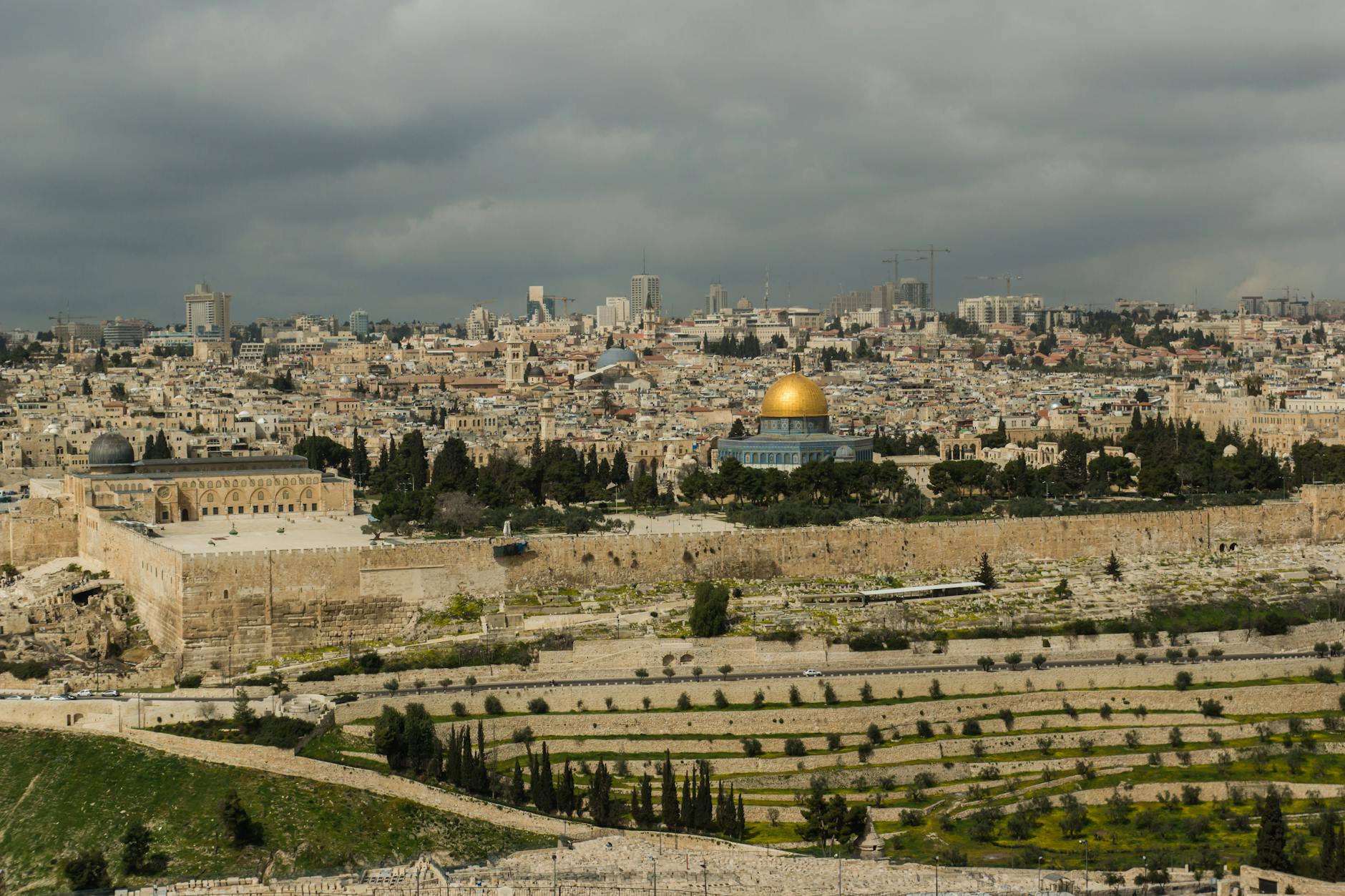
The Lord would need many things during that Holy Week in Jerusalem. The first order of business was a donkey, a Jenny with a colt in tow would fulfill his plans perfectly. In his entrance to the holy city, Jesus wanted to send a message about the kind of king he was and the kingdom he represented. Jesus would embody the messianic hopes of the Prophet Zechariah, who envisioned God’s king riding into Jerusalem astride a donkey to bring an end to war and establish peace for the nations. On Palm Sunday, Jesus astride a donkey was the Prince of Peace, who would lead the people in paths of peace.
Jesus needed two disciples to go get the donkey and colt. We can imagine that request didn’t go over well. A donkey was a valued piece of property, needed for transport and farmwork. This donkey had a dependent colt, a youngster still in need of mother’s milk. I imagine there was hesitancy and shuffling off feet, some careful rehearsing of what would be said to the donkey’s owner when they came to collect it. “Bring me the donkey,” that was what the Lord needed of them. The donkey’s owner, perhaps knowing Jesus or sensing a leading of the Holy Spirit, complied with their request. The rest was history.
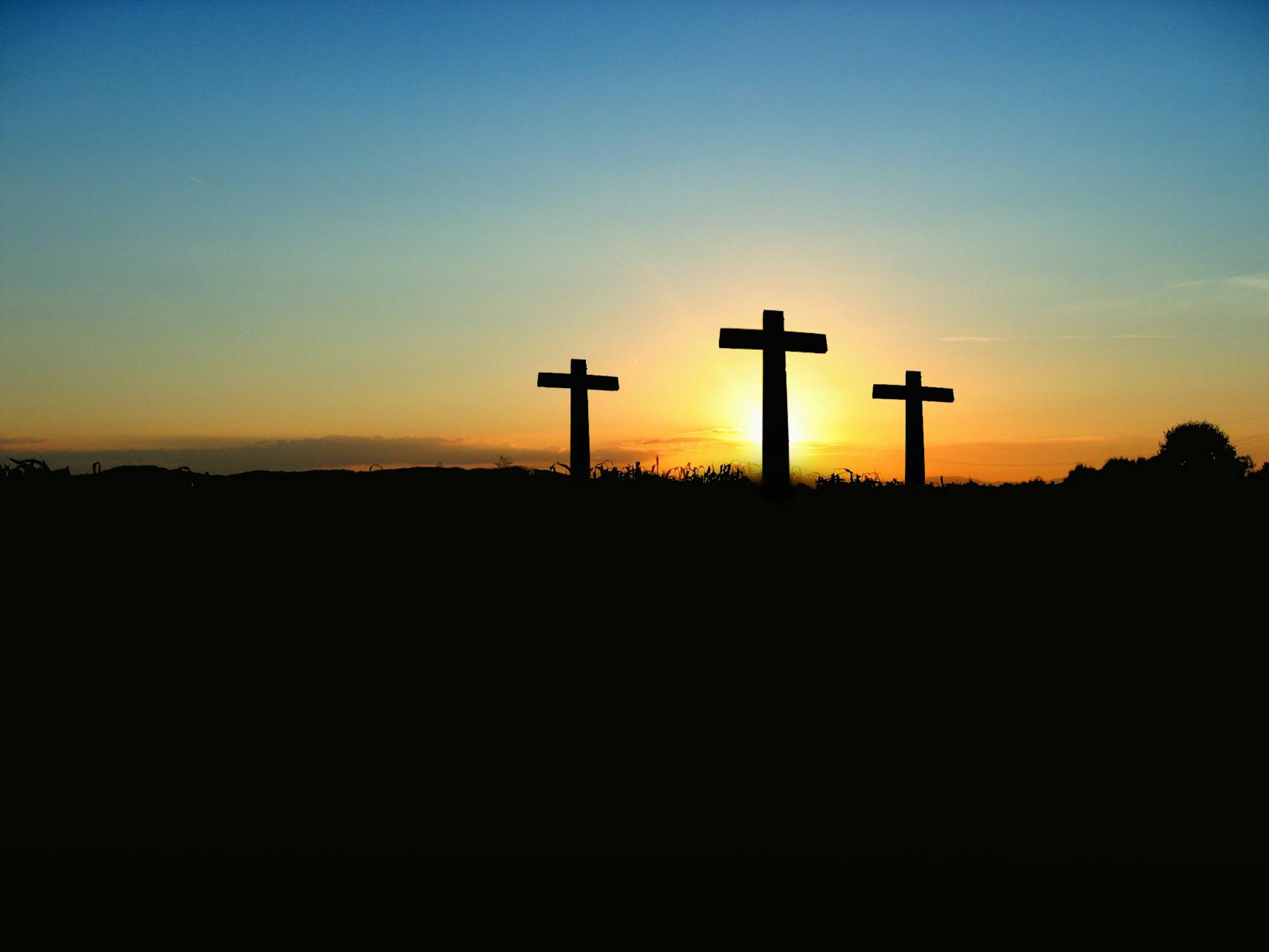
There were other things that Jesus needed that week. Most of those needs would go unmet. Jesus needed the insiders who controlled the temple to recognize his authority and welcome his teachings, but they rejected and planned to arrest him. Jesus needed the loyalty of Judas, but he would sell his rabbi for thirty pieces of silver. Jesus would need his inner circle of Peter, James, and John to watch and pray with him in the garden of Gethsemane, but they slept. Jesus would need his disciples to stand with him in peace when the guards came to arrest him, but some would resort to violence and all would run away. Jesus needed the Sanhedrin to rule with justice, but they chose to condemn him on trumped up charges in a midnight, kangaroo court. Jesus would need Pilate to fear God more than the emperor, but the procurator sent him to the cross.
Indeed, the only ones who provided what Jesus needed that week were the ones with the least power to do anything. Mary of Bethany anointed him in anticipation of his coming death. The women keened and grieved at the cross as the crowds taunted and the soldiers gambled for Jesus’ clothes. A dying criminal acknowledged Jesus’ kingdom, spoke in his defense, and accompanied the Lord in suffering and death. Oh, Jesus, to need so much and to be given so little. It breaks our hearts, as it must have broken yours.
Dorothee Soelle was a German theologian and poet, who taught for a decade at Union Theological Seminary in NYC. Soelle came of age during World War II and was deeply scarred by her experience of war and the inhumanity of the Holocaust. Her family sheltered in their home the Jewish mother of one of Dorothee’s classmates, yet her brother was killed while fighting for Germany on the eastern front. Dorothee developed a radical theology of devotion to God and resistance to evil in the world. She taught that when disciples cultivate a rich spiritual life, steeped in prayer and reflection, we are awakened to God’s will for the world. In other words, it is our spiritual life, our meditation upon the life of Christ, that informs us, here and now, about what Jesus needs.
According to Soelle, Jesus still needs us. In the life of the Spirit, we are pulled into engagement with all that opposes the Kingdom of God. For Soelle, this meant opposing earlier wars in the Middle East, standing with oppressed women, minorities, and children; standing against growing anti-immigrant sentiment; and naming what she called the “New Fascism”—the rise of authoritarian states. Against the advent of these evils, disciples are called to partner with God, proclaiming and seeking God’s Kingdom. As we take action, we dare to hope that God can take our efforts and use them for God’s purpose.
Dorothee put it this way in her poem “When He Came.”
“He needs you
that’s all there is to it
without you he’s left hanging
goes up in Dachau’s smoke
is sugar and spice in the baker’s hands
gets revealed in the next stock market crash
he’s consumed and blown away
used up
without you
Help him
that’s what faith is
he can’t bring it about
his kingdom
couldn’t then couldn’t later can’t now
not at any rate without you
and that is his irresistible appeal”
When we step out in response to what Jesus needs, our lives are transformed, even as we seek to nudge this world a little closer to the Kingdom of God. Albert Schweitzer, of course, learned that the missionary society would not send him to Africa as a pastor. He was too radical. Instead, he went back to school and studied medicine while his wife Helene trained as a nurse. They knew the Lord needed them. In 1913, they arrived at the mission station of Andende near Lambaréné. Their first “surgery” was set up in a former chicken coop. As the days passed, more and more men, women, and children came for treatment. Schweitzer fundraised across Europe and the United States to build the state-of-the-art Lambaréné Hospital, which is still operating in Gabon. He was awarded the Nobel Peace Prize in 1952.
Tyler and Rochelle Holm married in 2006 and went to Malawi as mission workers in 2007. Tyler puts his training as a pastor and scholar to work by teaching in the seminary of the University of Livingstonia. What began under Tyler’s leadership as a certificate program to equip lay people to lead in churches he has developed into a Master’s degree program. He is currently training about 200 Malawians to pastor churches desperately in need of leadership. Rochelle Holm uses her graduate training in public health to work in managing the University of Mzuzu’s Water and Sanitation Centre of Excellence. She is passionate about providing clean water and sanitation in northern Malawi and beyond, especially in tending to the particular needs of those who live with disabilities. A few years into their itinerancy, the Holms responded to the ubiquitous needs of Malawi’s many orphans by adopting their daughter Mphatso. Tyler and Rochele emphasize that their engagement in Malawi is driven by their sense of Christ’s calling. The Lord needs them.
The theologian and poet Dorothee Soelle died suddenly in 2004. Yet more than two decades later, her theology of piety and resistance speaks powerfully to a world that is once again embroiled in war in the Middle East, the oppression of vulnerable people, the surge in anti-immigrant hate, and the rise of authoritarian states. The Prince of Peace still longs to lead us in paths of peace, just as he did on that first Palm Sunday. Pray hard, Dorothee might counsel us. Pray hard, listen, and act. The Lord needs us.
Resources
Matt Skinner. “Walking the Palm Sunday Path: A Lenten Sermon Series for 2026” in Preaching Series, January 21, 2026. Accessed online at https://www.workingpreacher.org/preaching-series/walking-the-palm-sunday-path-in-lent-a-sermon-series-for-2026
Bill Tesch. “Matthew 21:1–11 – Jesus’s Triumphal Entry” in Preaching Series, Jan. 22, 2026. Accessed online at https://www.workingpreacher.org/preaching-series/palm-sunday-jesuss-triumphal-entry-matthews-version
Michael Kirby. “Pastor Perspective on Matthew 21:1-11” in Feasting on the Gospels, Matthew, vol. 2. Louisville: WJKP, 2013.
Nancy Hawkins. “Dorothee Soelle: Radical Christian, Mystic in Our Midst” in The Way, 44/3 (July 2005), 85-96.
Alois Prinz. “Albert Schweitzer: out of reverence for life” in Deutschland, Aug. 27, 2025. Accessed online at https://www.deutschland.de/en/topic/life/albert-schweitzer-nobel-laureate-gabon
Presbyterian Mission Agency. “Partner with Presbyterian World Mission in Malawi.” Accessed online at https://pma.pcusa.org/site_media/media/uploads/worldmission/malawi_flier_030716.pdf
–. “Whitworth M.A. in Theology alumnus serves in Malawi, Africa” in Whitworth University News, Oct. 17, 2013. Accessed online at https://news.whitworth.edu/2013/10/whitworth-ma-in-theology-alumnus-serves.html
Matthew 21:1-11
21 When they had come near Jerusalem and had reached Bethphage, at the Mount of Olives, Jesus sent two disciples, 2 saying to them, “Go into the village ahead of you, and immediately you will find a donkey tied and a colt with her; untie them and bring them to me. 3 If anyone says anything to you, just say this, ‘The Lord needs them.’ And he will send them immediately.” 4 This took place to fulfill what had been spoken through the prophet:
5 “Tell the daughter of Zion,
Look, your king is coming to you,
humble and mounted on a donkey,
and on a colt, the foal of a donkey.”
6 The disciples went and did as Jesus had directed them; 7 they brought the donkey and the colt and put their cloaks on them, and he sat on them. 8 A very large crowd spread their cloaks on the road, and others cut branches from the trees and spread them on the road. 9 The crowds that went ahead of him and that followed were shouting,
“Hosanna to the Son of David!
Blessed is the one who comes in the name of the Lord!
Hosanna in the highest heaven!”
10 When he entered Jerusalem, the whole city was in turmoil, asking, “Who is this?” 11 The crowds were saying, “This is the prophet Jesus from Nazareth in Galilee.”



 Joann White