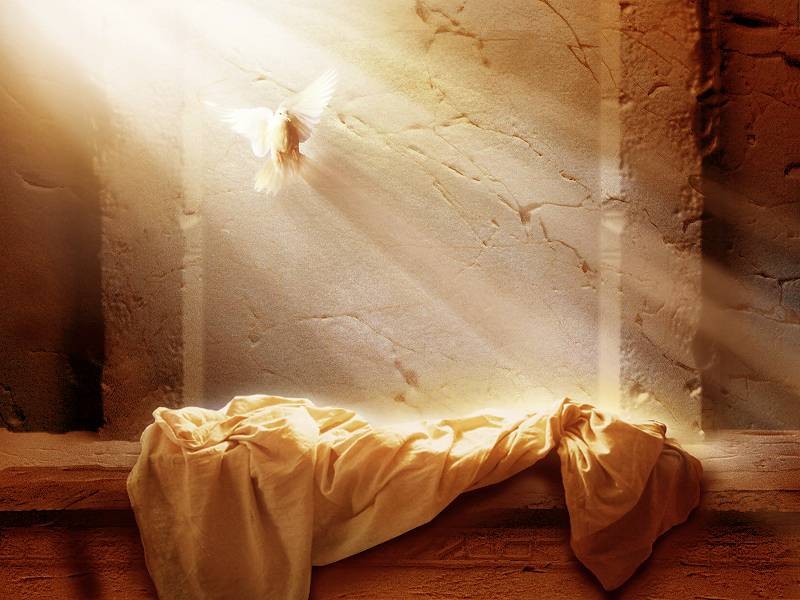
Blessing or Woe?

Sabbath Day Thoughts — “Blessing or Woe?” Luke 6:17-26

Wednesday afternoons are busy at Baldwin House. That’s when our neighbors with more month than money head to Grace Pantry. The pantry provides them with non-food necessities free of charge, items that we find essential that can’t be purchased with SNAP benefits. At Grace Pantry, new Moms pick up diapers and baby wipes. Other folks may need shampoo, toothpaste, or bath soap. Everyone needs toilet paper and paper towels. The volunteers at Grace Pantry report that both demand and costs have been on the rise, due to inflation, rent increases, and an economic recovery that hasn’t truly trickled down to the poor.

Two days a week, the Clint McCoy Feeding Center in Mzuzu, Malawi serves eighty local children a warm meal, meeting the nutritional need of kids who are malnourished. Lengthy droughts, followed by flooding rains, have caused food shortages in Malawi, and the AIDS epidemic has created a generation of orphans whose needs are too much for local villages. The feeding center provides a modest meal of fortified porridge and tea to youngsters who would otherwise not eat that day. As the meal is shared, the center rings with the laughter and joy of happy young voices. They sing songs, play simple games, and eat their fill.

Marge likes Tuesdays best because that’s the day her Meals on Wheels volunteer comes to visit. Marge isn’t hungry, but after her husband died, she stopped cooking. It’s a lot of work and it hardly seems worthwhile cooking for just one. Marge sits by the window alone and waits. She turns down the tv because she wants to be sure she hears the knock. A kind-hearted volunteer arrives with a big smile and takes time to share some sweet chitchat about the weather, family, and community news. When Marge tucks in to her dinner later, she is thankful for the food and even more so for her Meals on Wheels friend.

In our gospel lesson, Jesus descended the mountain and waded into the crowd that awaited him on the plain. There, he intentionally entered into the need and suffering of his world with healing and bold words of comfort. Jesus blessed the poor, hungry, grieving, and hated people of the community. In a first century world where affliction was typically attributed to sinfulness or a sign of affliction by God, Jesus’ words must have left the disciples scratching their heads. But for those who suffered, Jesus’ words were an assurance that God saw them, loved them, and longed for them to thrive.

If Jesus’ words of blessing stunned his followers, then his words of woe might have made them wonder what in the world Jesus was talking about. In those days, to be rich, filled with good things, joyful, and well-respected was a blessing not a woe. Your abundance and status were sure signs of a healthy relationship with God and a guarantee that you deserved every accolade that came your way. I suspect that we don’t like Jesus’ woes any more than his disciples did. After all, we may not be rich, but even the poorest people among us are comfortable and well-fed. We have plenty to laugh about. We can congratulate ourselves on our accomplishments and thank God for life’s sweetness. Where’s the harm in that?

In his paraphrase of the Bible, The Message, the late Rev. Dr. Eugene Peterson translated Jesus’ woes like this:

“It’s trouble ahead if you think you have it made. What you have is all you’ll ever get.

And it’s trouble ahead if you’re satisfied with yourself. Your self will not satisfy you for long.

And it’s trouble ahead if you think life’s all fun and games. There’s suffering to be met, and you’re going to meet it.

There’s trouble ahead when you live only for the approval of others, saying what flatters them, doing what indulges them. Popularity contests are not truth contests—look how many scoundrel preachers were approved by your ancestors! Your task is to be true, not popular.”

The trouble with our affluence, the trouble with our plenty, the trouble with our non-stop laughter, the trouble with our playing for the court of public opinion is that we can lose all perspective.  Instead of acknowledging our utter dependence upon God, we trust in our bank accounts, our stockpile of possessions, and all that good press we get. Woe to us when we believe money or things can solve all our problems.  Woe to us when we laugh while the world wails.  Woe to us when we find ourselves saying and doing unconscionable things to please the court of public opinion.

Historian and Bible scholar Justo Gonzalez read Jesus’ Sermon on the Plain and said, this is the “hard-hitting gospel.” This is the gospel that 2,000 years later still rings out as an urgent wake-up call. This is the gospel that makes us uncomfortable and calls us to change our ways if we wish to truly be part of God’s Kingdom. When Jesus comes to the plain, he levels with us, delivering a sucker punch that undermines everything that we think is right with the world.

Throughout his ministry, Jesus made the assurance of God’s love and presence a reality for those who were poor, hungry, grieving, and hated. From providing free healthcare to all comers to feeding the 5,000 with a marvelous multiplication of bread and fish, from restoring a widow’s only son to life to welcoming tax collectors, lepers, and demoniacs, Jesus was all about blessing the vulnerable people of his day. In those intentional actions, in that three-year object lesson of ministry, Jesus hoped that his disciples would begin to understand the beautiful topsy-turvy world that he longed to forge. Jesus believed we could make on earth a world that anticipates God’s Kingdom where blessing abounds for those who suffer and everybody is a neighbor, deserving of our care, time, love, and respect.

The disciples understood the values that Jesus hoped to impart in his blessings and woes. That’s why they chose to enter into the suffering of their world. We shouldn’t forget that the first office of the church—the role of deacon—was created to feed hungry widows. And the Apostle Paul solicited generous donations from his Gentile churches to feed the victims of famine in Judea. And Peter worked a miracle of resurrection, raising the Disciple Dorcas, so that she could resume her love and care for the impoverished widows of Joppa. In countless acts of care and generosity, those first Christians put God first and used the resources and authority at their disposal to be a blessing to those who needed it most.

More than any other gospel, Luke warns us of the dangers of our relative affluence, highlighting hard-hitting teachings from Jesus like the Sermon on the Plain. It’s tempting to turn the page and disregard what Jesus had to say, but the Lord had hope for we who have plenty. Jesus trusted that we would know what truly matters most. Jesus hoped we would follow him and those first disciples. We would put our resources to work in His purpose. We would dare to enter into the suffering of others and seek to build that world where everyone gets blessed. Lord, hasten the day.

This year, we will have three special offerings to benefit Grace Pantry, where our neighbors with more month than money pick up essential items, free of charge. In March, we’ll be collecting toothpaste and toothbrushes. In August, we’ll be looking for paper goods: toilet paper, paper towels, and napkins. In November, we’ll ask for donations of socks, which are one of the most sought-after resources at the pantry. Watch for the offering boxes at the side entrance and some Minutes for Mission from Pam Martin. Let’s bless our neighbors.

In May, we’ll remember the Women of Grace, whose ministries support the most vulnerable residents of Malawi, its impoverished widows and orphans. Their diverse efforts serve widows with cook stoves, metal roofs, sanitary outhouses, micro loans for small businesses, and sewing skills and supplies to supplement income. Their diverse efforts also serve orphans with literacy programs, books, and, of course, the Clint McCoy Feeding Cener, where 80 hungry children are fed twice weekly at the cost of about $250-a-month. Let’s bless our neighbors.

Every day, people who are grieving and lonely cross our paths. They live across the street in the DeChantal or up at Will Rogers. They need the skilled nursing of Elderwood or Mercy Care. They wait at home for Meals on Wheels delivery, cherishing the social interaction even more than the food. They are our family members: the aging aunt who never married, the grandpa who never recovered from the death of grandma, the college student who feels far from home. They may even come to church. Let’s open our eyes and bless our neighbors.

When the poor, hungry, grieving, and hated neighbors of our world get blessed, the transformation begins. Wool socks warm cold feet. African orphans rejoice. No one feels alone and unloved. The hard-hitting gospel becomes a call to action. As we dare to care and share and get involved, we remind our vulnerable neighbors that God sees them, loves them, and longs for them to thrive. As blessings abound, this world begins to look like the Kingdom that Jesus would have us serve. May it be so.

Resources

Susan Henrich. “Commentary on Luke 6:17-26” in Preaching This Week, Feb. 13, 2022. Accessed online at https://www.workingpreacher.org/commentaries/revised-common-lectionary/sixth-sunday-after-epiphany-3/commentary-on-luke-617-26-2

Mary Hinkle Shore. “Commentary on Luke 6:17-26” in Preaching This Week, Feb. 16, 2025. Accessed online at https://www.workingpreacher.org/commentaries/revised-common-lectionary/sixth-sunday-after-epiphany-3/commentary-on-luke-617-26-3

Keith Erickson. Theological Perspective on Luke 6:17-26 in Feasting on the Gospels, Luke. Vol. 1. Westminster John Knox Press, 2014.

Thomas Edward Frank. Pastoral Perspective on Luke 6:17-26 in Feasting on the Gospels, Luke. Vol. 1. Westminster John Knox Press, 2014.


Luke 6:17-26

17 He came down with them and stood on a level place with a great crowd of his disciples and a great multitude of people from all Judea, Jerusalem, and the coast of Tyre and Sidon. 18 They had come to hear him and to be healed of their diseases, and those who were troubled with unclean spirits were cured. 19 And everyone in the crowd was trying to touch him, for power came out from him and healed all of them.

Blessings and Woes

20 Then he looked up at his disciples and said:

“Blessed are you who are poor,
    for yours is the kingdom of God.
21 “Blessed are you who are hungry now,
    for you will be filled.
“Blessed are you who weep now,
    for you will laugh.

22 “Blessed are you when people hate you and when they exclude you, revile you, and defame you[a] on account of the Son of Man. 23 Rejoice on that day and leap for joy, for surely your reward is great in heaven, for that is how their ancestors treated the prophets.

24 “But woe to you who are rich,
    for you have received your consolation.
25 “Woe to you who are full now,
    for you will be hungry.
“Woe to you who are laughing now,
    for you will mourn and weep.

26 “Woe to you when all speak well of you, for that is how their ancestors treated the false prophets.


Photo by Kindel Media on Pexels.com

Catching People

Sabbath Day Thoughts — “Catching People” Luke 5:1-11

When it comes to vocation, we tend to think of people like me—clergy. We work through years of graduate studies. We learn biblical languages. We devote our lives to preaching the gospel. We live to lead churches and seek ways to be good news for our communities.

When it comes to vocation, we think of people who live the monastic life. They join religious communities and dedicate themselves to a holy purpose. Like Mother Teresa, they tend the poorest of the poor in slums around the world. Or, like Julian of Norwich, they live a cloistered life, apart from the public. They commit their days to prayer, contemplation, worship, and devotion to God.

When it comes to vocation, our thoughts turn to great Christian thinkers throughout history. We remember C.S. Lewis, who during the Second World War offered spiritual comfort to the people of Great Britain with faithful fireside chats, broadcast by BBC Radio. Or we think of Presbyterian author Ann Lamott, whose wry essays and autobiographical books about the life of faith offer inspiration and a healthy dose of humor.

When it comes to vocation, we don’t typically think of ourselves. We don’t have seminary degrees. We’ve never studied Hebrew and Greek, nor would we want to. Our lives are not cloistered. We don’t have the luxury of praying 24/7. We don’t inspire the worldwide web with our latest podcast. We don’t write books that rocket to the top of the New York Times bestseller list. We are who we are. Don’t talk to us about vocation.

Jesus might want to expand our understanding of vocation this morning. Take Simon Peter for example. In those days when you did what your father did, Peter didn’t have a priestly or scribal pedigree. He was a fisherman, someone who spent his time casting a dragnet into the Sea of Galilee, plucking from the depths a fishy harvest that provided for his family. He must have been pretty good at it, too—successful enough to own his own boats and nets, successful enough to have partners in his trade. Peter had the sort of everyday concerns that we deal with: taxes to pay, social conflicts between rival factions, and the political chaos that was first century Israel. If you asked anyone in the crowd that gathered on the lakeshore that morning to point to the person most likely to receive a special invitation to join Jesus in ministry, I doubt that anyone would have pointed to Simon Peter and his partners. But Jesus thought otherwise.

Jesus’ invitation for our lives often comes when we, like Peter, are minding our own business and caught up in everyday busyness. One day, we are sitting in our office when we read an advertisement printed on a brown paper lunch bag. It says, “Imagine if you couldn’t read this message.” We think about how much we love to read, how important it is for everything from school to work, from learning about current events to paying bills. Or One Thanksgiving, we take our aging mother to a community dinner. At the meal, we are impressed. The food is great and plentiful. The atmosphere is friendly and family like. An army of helpers make the dinner a warm and welcoming event. Or one year, we stop on our daily walk around the village to watch the IPW at work. We marvel at the teamwork – folks harvesting ice, moving blocks, guiding them into place, and slinging slush. All that volunteer effort makes an Ice Palace fit for a music legend. Our opportunities to serve find us all the time, whether we want them to or not.

Simon Peter’s story suggests that we can be resistant to our calling. Peter resisted the invitation to put out into deep water and lower his nets. Who could blame him? The man had plied his dragnets all night long without anything to show for it, and he knew that, this late in the day, fish in the Sea of Galilee would retreat into the cool depths, far from the reach of his nets. When Peter said to Jesus, “If you say so, I will let down the nets,” it sounded less like the fisherman was eagerly jumping to it and more like he was merely humoring the Lord. Even the abundant catch didn’t convince Peter to sign on as a disciple. It left him feeling inadequate and ill-equipped. On his knees in the bottom of the boat, amid the slippery, silvery catch, all Peter could stammer were all the reasons he couldn’t do the job, “Lord, you got the wrong guy, I am a sinful man.”

We, too, can think of every good reason to say, “No!” when the opportunity to love our neighbors and serve God’s Kingdom finds us. We are tired. We are too busy. We have other plans. If we say “yes” to Jesus, we might have to say “no” to something else, and we have FOMO—fear of missing out on what is just around the corner. We think we don’t have what it takes. We wonder what the neighbors might say. We’re just too sinful for all this vocation stuff. In some ways, all those excuses and worries have an element of truth. But Jesus isn’t looking for perfection. Jesus is looking for commitment, a humble “yes” to giving it a try.

When Simon Peter moved past his resistance to Jesus’ purpose for his life, he would become a blessing to the world around him. Peter’s abundant catch on the Sea of Galilee was an anticipation of the many, many people that Peter would help as he stepped up to his role as a disciple. Peter would bless Aeneas with mobility after years of paralysis. He would raise the disciple Dorcas to life after her sudden death. He would welcome even the Gentiles to God’s love by baptizing the Roman Centurion Cornelius and his family.

We, too, when we move past our resistance and dare to commit to the opportunity to serve God and neighbor, are a blessing to others. That paper bag invitation to consider the importance of literacy prompts us to help people discover the joy of reading. We tutor learning disabled adults who slipped through the cracks in public school. We mentor refugee kids who have escaped hunger or terror to find a new life in a new land. That Thanksgiving community meal inspires us to get involved. The next Thanksgiving, the whole family is making pies, serving meals, and sharing hospitality with neighbors that we didn’t even know we had. That pause at the Ice Palace in our daily walk leads to decades of commitment to the IPW. From sketching next year’s palace on a cocktail napkin to monitoring ice on Lake Flower, from working alongside our neighbors to delighting in the joy of visitors, we become a blessing.

Simon Peter’s story reminds us that in saying “yes” to Jesus we get blessed, even as we are a blessing. Peter would find a remarkable friendship with Jesus, who accepted and loved him just as he was. Peter would become first among the apostles, beloved by the early church and treasured by the tradition. Peter would find meaning and purpose that he had never dared to imagine, and he had the satisfaction of knowing that because he joined his purpose to the Lord’s mission, the world would never be the same.

We can trust that as we say “yes” to our opportunities to serve God and neighbor, we too will be blessed. My choice to tutor refugee children in Virginia would change how I looked at the world. It would set me on a path to support other refugees from Washington, DC to Chicago to Saranac Lake. In all those relationships, I assure you that I have been more blessed by others than they have been by me. I am certain that if we check in with our friends who volunteer at the Community Lunchbox, the Wednesday Community Supper, or the Thanksgiving Dinner at the Adult Center, they will wax poetic about the personal blessing of their commitment. Likewise, if you take time to inquire of any of our Ice Palace Workers, they will regale you with tales of laughter, community, and joy that have blessed them beyond measure in their years of service.

Jesus set Peter’s feet on the path of catching people. But on that fateful day on the lakeshore, it was Peter who got caught—caught up in God’s purpose for our world. When it comes to vocation, we tend to think of clergy people, monks and nuns, scholars and authors. But Simon Peter might encourage us to look in the mirror. Jesus has an invitation for us, my friends. He would like to catch us. May we say “yes” to his calling.

Resources

Abraham Smith. “Commentary on Luke 5:1-11” in Preaching This Week, Feb. 9, 2025. Accessed online at https://www.workingpreacher.org/commentaries/revised-common-lectionary/fifth-sunday-after-epiphany-3/commentary-on-luke-51-11-8

Pamela Cooper-White. “Pastoral Perspective on Luke 5:1-11” in Feasting on the Gospels: Luke Volume 1. Louisville: Westminster John Knox Press, 2014.

Ronald J. Allen. “Homiletical Perspective on Luke 5:1-11” in Feasting on the Gospels: Luke Volume 1. Louisville: Westminster John Knox Press, 2014.

Ronald J. Allen. “Commentary on Luke 5:1-11” in Preaching This Week, Feb. 10, 2019. Accessed online at https://www.workingpreacher.org/commentaries/revised-common-lectionary/fifth-sunday-after-epiphany-3/commentary-on-luke-51-11-4


Luke 5:1-11

Once while Jesus was standing beside the Lake of Gennesaret and the crowd was pressing in on him to hear the word of God, he saw two boats there at the shore of the lake; the fishermen had gotten out of them and were washing their nets. He got into one of the boats, the one belonging to Simon, and asked him to put out a little way from the shore. Then he sat down and taught the crowds from the boat. When he had finished speaking, he said to Simon, “Put out into the deep water and let down your nets for a catch.” Simon answered, “Master, we have worked all night long but have caught nothing. Yet if you say so, I will let down the nets.” When they had done this, they caught so many fish that their nets were beginning to burst. So they signaled their partners in the other boat to come and help them. And they came and filled both boats, so that they began to sink. But when Simon Peter saw it, he fell down at Jesus’s knees, saying, “Go away from me, Lord, for I am a sinful man!” For he and all who were with him were astounded at the catch of fish that they had taken, 10 and so also were James and John, sons of Zebedee, who were partners with Simon. Then Jesus said to Simon, “Do not be afraid; from now on you will be catching people.” 11 When they had brought their boats to shore, they left everything and followed him.


Image Source: https://www.adirondackdailyenterprise.com/news/local-news/2025/02/celebrate-good-times-come-on/

The Gospel We Don’t Want to Hear

Sabbath Day Thoughts — The Gospel We Don’t Want to Hear Luke 4:21-30

Cindy and Bud could use a miracle. They are sandwiched between generations, caring for aging parents and young children. Cindy is always taxiing kids to music lessons, driving to sporting events, or making cupcakes for a school party. Bud is always getting his parents to doctor’s appointments, tackling their home repairs, or unraveling problems with their finances. When Cindy and Bud’s youngest child ended up in the hospital, they were overwhelmed. They pray a lot, asking for help, resources, support, but those big life problems don’t go away.

Heather followed in the footsteps of her parents to become a teacher. She felt especially called to work with underserved and at-risk youth. But when Heather started work with Teach for America in an inner-city school, she found things practically impossible. Her classroom was chaotic. Absenteeism was rife. Fights were routine. Some students came to school hungry or in the same unwashed clothes that they had been wearing for weeks. She started the school year thinking she would do transformational work. Later, she just hoped that her students would pass. It has been lonely and stressful. She wishes things were different, but she thinks that would take a miracle.

Sam doesn’t understand why God doesn’t cure his wife’s rheumatoid arthritis. She lives with constant pain and has been through more surgeries than Sam can count. They have tried a healthy diet, exercise, heating pads, ice packs, supplements, alternative therapies, and prescription medications. Sometimes she seems to be in remission, but it never lasts. They pray about it and so does their church, but they are still waiting on their miracle.

Our gospel lesson today allows us to listen in as worshipers respond to Jesus’ first sermon in Nazareth. At first folks were thrilled to hear that Isaiah’s vision of good news for the poor, release to captives, healing for the sick, and a coming time of God’s Jubilee was being fulfilled in Jesus. They knew that Jesus had been up to some spectacular things in Capernaum, working miracles of healing and casting out demons. They were eager for Jesus to work his deeds of power right there in his hometown. “Come on, Jesus,” they implored him, “heal thyself. How about some miracles for your hometown crowd?”

But there were no miracles in Nazareth on that sabbath day. Instead, Jesus’ sermon headed in a direction that they didn’t want to hear. Faithful people in the hometown crowd don’t always get miracles. Jesus talked about the God’s mercy and grace flowing to unexpected places, beyond the bounds of the covenant community, even to traditional enemies of Israel—Naaman the Syrian leper getting a beautiful new birthday suit and the poor Phoenician widow at Zarephath finding relief from famine. Who wants to hear about God’s goodness flowing to unexpected places when you have a sick child, an incurable disease, or a personal crisis that has brought you to your knees. No miracles? Perhaps we can understand why people in Nazareth got so angry.

Why doesn’t everyone get a miracle? A 2023 Lifeway Survey found that an increasing number of churchgoers in the United States subscribe to beliefs associated with the prosperity gospel, sometimes called the “health and wealth gospel” or “name it and claim it” theology. Advocates of the prosperity gospel argue that God wills the financial prosperity and physical well-being of his people and that faith, positive speech, and donations to select Christian ministries can increase one’s material wealth and health. Gifted preacher Creflo Dollar tells us that the Lord is eager to bless his faithful ones with wealth.  Pastor Benny Hin says that God is ready to heal our incurable diseases and shower us with abundant health.  And the charismatic Joel Osteen says that the choice for Jesus can grant us our best life now. Health, wealth, and the best life ever. That’s the gospel we want to hear. With promises like that, it’s no wonder that these three men are multi-millionaires with thousands of followers.

I don’t begrudge prosperity preachers their health, wealth, and best lives now, but I might want to challenge them a bit. Because I have noticed that no matter how hard we pray, how much we give, or how faithful we are, we don’t always get the miracle we are asking for. Indeed, the most devout and faithful of people can find that their life circumstances are a far cry from wealthy, healthy, and best ever.  In fact, sometimes the utterly faithful choices that people make land them in difficult, stressful, no-win situations. That’s the way it is, and I suspect there are plenty of people who have been disappointed by the empty promises made from prosperity gospel pulpits.

What do we do when God doesn’t give us what we want? The peaceful assembly in Nazareth turned into a lynch mob, ready to throw Jesus down a gully and stone him to death.  Bible scholars tell us that if we take a step back and look at what happened in Nazareth, we can see that it foreshadowed what would happen throughout Jesus’ ministry—an initial welcome, appeals for miracles, followed soon afterward by angry rejection and violence. Jesus didn’t end up the victim of a Nazareth stoning; instead, he would find himself in Jerusalem, rejected, abandoned, and friendless, hanging from a cross while mocked and taunted. Where’s the health, wealth, and best life now in that calling?

Our ancestor in the Reformed tradition John Calvin taught that God is not transactional. Five fervent prayers and a healthy donation to the church does not earn us a miracle. God is sovereign, with the power, wisdom, and authority to do as God chooses. We want a world in which God builds a protective wall around the faithful and grants us a privileged life. But it doesn’t always work out that way. In Calvin’s words, for a time “the upright and deserving [are] tossed about by many adversaries, and even oppressed by the malice and iniquity of the impious” (Institutes 1.v.7). We all have days when we feel we are waiting on a miracle that doesn’t come. Yet Calvin also taught that God is loving, merciful, kind, and fatherly. Our help is found in the nearness of God, who came close to us in Jesus and preached to a hostile hometown crowd in Nazareth. We may be afflicted, but hope is found in God whose presence, according to Calvin, “takes root in the heart” (1.v.9) and “dwells by God’s very present power in each of us.”

God is with us in all the circumstances that make us want to pray for a miracle. God is present with the strength and courage to help us get out of bed in the morning and put one foot in front of the other. God is with people like Cindy and Bud, who are stretched thin with the care of their extended family. God is with people like Heather, whose vocational dreams don’t come true. God is with Sam as he supports his wife with chronic illness. The presence of the holy in the midst of days that feel downright unholy must sometimes be miracle enough.

Jesus was acutely aware of God’s support and presence. He was able to face hate and terrible adversity because he knew that he and the Father were one. Jesus made it his daily practice to slip away early in the morning or late in the evening to spend time with God. By attending to God’s presence, Jesus found the resources to meet the insatiable needs of the crowds and face the mounting attacks of his opponents. On the night of his arrest, in his anguished prayer time with God in the Garden of Gethsemane, Jesus found the resolve to even face the cross that his enemies had in store for him. Jesus didn’t get a miracle of deliverance, but he was able to see that God would be with him in his time of trial, and God would ultimately win the victory over sin and death.

Every faithful life, my friends, has times when we feel like we could use a miracle. May we remember that the Lord is with us with the strength, help, and courage to endure. May that be miracle enough.

Resources

Shively Smith. “Commentary on Luke 4:21-30” in Preaching This Week, Jan. 30, 2022. Accessed online at https://www.workingpreacher.org/commentaries/revised-common-lectionary/fourth-sunday-after-epiphany-3/commentary-on-luke-421-30-5

David S. Jacobsen. “Commentary on Luke 4:21-30” in Preaching This Week, Feb. 3, 2019. Accessed online at https://www.workingpreacher.org/commentaries/revised-common-lectionary/fourth-sunday-after-epiphany-3/commentary-on-luke-421-30-4

Matt Fitzgerald. “Homiletical Perspective on Luke 4:21-30” in Feasting on the Gospels: Luke 1. Westminster John Knox Press, 2014.

R. Alan Culpepper. “The Gospel of Luke” in The New Interpreter’s Bible, Volume IX. Abingdon Press, 1995.

Joe Carter. “9 Things You Should Know about the Prosperity Gospel” in The Gospel Coalition: Current Affairs, Sept. 2, 2023. Accessed online at https://www.thegospelcoalition.org/article/9-things-prosperity-gospel/


Luke 4:21-30

21 Then he began to say to them, “Today this scripture has been fulfilled in your hearing.” 22 All spoke well of him and were amazed at the gracious words that came from his mouth. They said, “Is this not Joseph’s son?” 23 He said to them, “Doubtless you will quote to me this proverb, ‘Doctor, cure yourself!’ And you will say, ‘Do here also in your hometown the things that we have heard you did at Capernaum.’ ” 24 And he said, “Truly I tell you, no prophet is accepted in his hometown. 25 But the truth is, there were many widows in Israel in the time of Elijah, when the heaven was shut up three years and six months and there was a severe famine over all the land, 26 yet Elijah was sent to none of them except to a widow at Zarephath in Sidon. 27 There were also many with a skin disease in Israel in the time of the prophet Elisha, and none of them was cleansed except Naaman the Syrian.” 28 When they heard this, all in the synagogue were filled with rage. 29 They got up, drove him out of the town, and led him to the brow of the hill on which their town was built, so that they might hurl him off the cliff. 30 But he passed through the midst of them and went on his way.


Photo by Pixabay on Pexels.com

Unity with Diversity

Sabbath Day Thoughts — “Unity with Diversity” 1 Cor. 12:12-31a

Americans have long been at odds over the issue of immigration. Anti-immigration sentiment caused violence on the streets of New York City in the 1850s. Gang leader “Bill the Butcher” Poole formed the Know-Nothing Party to oppose immigration, particularly that of Irish Catholics. At their peak in 1855, the Know-Nothings claimed the allegiance of forty-three members of Congress. In 1853, “Bill the Butcher” died after being shot by gang (and political party) rival John Morrissey, who of course, was Irish Catholic.

In 1875, the country passed the Page Act to eliminate immigration of women from China in an effort to prevent the settlement of Chinese families in our country. Seven years later, in 1882, we implemented the Chinese Exclusion Act, which prevented the immigration of Chinese laborers for ten years. The ban was renewed in 1892, and in 1902, lawmakers decided to make it permanent. Anti-Chinese sentiment in the country was violent. In 1885, twenty-eight Chinese laborers were massacred by white miners in Rock Springs, Wyoming. Many of those Chinese workers were burned alive in their homes. Two years later, in 1887, thirty-four Chinese workers were beaten or shot to death in Hells Canyon on the Snake River.

During the Great Depression, from 1929 until 1939, we thought it would be a good idea to “repatriate” Mexican Americans, sending them south of the border to Mexico. One third of all Mexican Americans in the United States were repatriated, an estimated one to two million people. Forty to sixty percent of them were US citizens. The deportation effort was fueled in part by the words of President Herbert Hoover, who characterized Mexicans as “criminal aliens” who unfairly competed with true Americans for jobs and services.

A sad and shameful aspect of our country during World War II was the internment of Japanese Americans. Following the Japanese attack on Pearl Harbor, President Franklin Roosevelt issued Executive Order 9066 calling for all people of Japanese descent—anyone 1/16th Japanese or more including US citizens, to be incarcerated in isolated camps. In March 1942, Army-directed removals began. Japanese-Americans were given six days to dispose of their belongings other than what they could carry and report to War Relocation Centers. More than 100,000 people were detained throughout the war, often in poor conditions with inadequate food or sanitation.

If our history tells us anything, it is that we have strong opinions about who belongs and who does not. Who we need and who we do not. We find it hard to welcome, accept, and trust our neighbors, especially if their religious convictions, language, appearance, customs, or skin color are different from our own. We have a hard time finding unity in our American diversity.

The Apostle Paul’s congregation in Corinth struggled to find unity in their diversity. Corinth was one of the most racially, ethnically, religiously, and economically diverse communities on the Mediterranean with residents from every corner of the Roman Empire. In the Corinthian church, there were factions and seemingly endless quarrels that threatened to split the assembly. They quarreled about whether it was better to have been evangelized by Paul or Apollos or Peter. They disputed which spiritual gifts were best. They couldn’t agree if it was appropriate to eat meat that had been purchased in pagan meat markets. They argued about whether people should wear head coverings in worship. They brought civil lawsuits against one another. They challenged Paul’s apostolic authority, questioning whether he had the right credentials to lead the church. They even fought about what we might presume would be their rite of greatest unity—the Lord’s Supper. Did they really have to wait for slaves to finish their household chores so that the whole church could partake together?

Paul’s purpose in writing to his Corinthian friends was to put an end to all the wrangling by reminding them of the unity they were called to in Christ. In today’s reading, Paul playfully painted the picture of a human body at war with itself: eye alienated from ear, ear at odds with nose, head dead set against feet, all those parts clamoring that they don’t want to belong to the same body. Paul pointedly reminded his Corinthian friends that every member, even the most vulnerable and least respectable, was a valuable part of the body. Indeed, when one member of the body was ailing, the whole body suffered. Anyone who has ever had a toothache or a back spasm can testify to that fact. Paul capped his argument by saying that his friends were members of a very particular body—Christ’s body.  I’m certain that the Corinthians were grieved when they realized that their fractious and alienating behavior was wounding and tearing Christ, who had suffered so terribly on the cross for them.

Paul longed for the members of the Corinthian church to be in unity, to understand that all their spiritual gifts, ideas, and natural abilities were needed for the body to be whole. Indeed, their individual well-being depended upon the honoring and sharing of one another’s contributions. It was in coming together in all their differences that they would grow into God’s best hope for humanity. Paul envisioned that all those church members, working together under the direction of the Holy Spirit, could embody Jesus, could make Christ’s living presence known to their neighbors in Corinth. Imagine that—the healing, helping, wise, prophetic, prayerful Jesus walking the streets of the city! What a blessing!

If the immigration controversies that are presently swirling in our country teach us anything, it’s that we haven’t changed all that much as a nation. Anti-Irish gangs, the Chinese Exclusion Act, forced repatriation of Americans of Mexican descent, internment of Japanese-American citizens, this is part of who we are. I think we are all in agreement that we don’t want open borders and foreign criminals on our streets, any more than we want American criminals running our communities. But when we get right down to it, calls for mass deportation are an old screed, hauled out every few years to divide us, to pitch us into opposing camps, to find a scapegoat for our latest ill. We are just doing what we always do. That’s not my opinion; that’s our unfortunate history.

I’d like to think that we can do better. If the Apostle Paul were to pick up his pen this morning, he might remind us that what speaks to the church can speak to the nation. Those among us who are white Anglo-Saxon Protestants have need of our Irish Catholic brothers and sisters. And the Irish need the Chinese. The Chinese need their Mexican neighbors, just as the Mexican needs his Japanese acquaintance. Our efforts to deny, denigrate, and alienate one another are just as foolish as the eye saying, “Get rid of that ear.” Wholeness is found, not in our all being cut from the same cloth. Wholeness is found in knowing that we belong to one another. Wholeness flourishes when our spicy differences are accepted and stirred into this unfinished experiment in nationhood. Wholeness is found when there is unity that honors our diversity. When we dare to honor and accept others, Christ is embodied. He walks among us still.

There may be hope for us as a nation yet. Bias against the Irish is practically unheard of anymore, and let’s face it, on St. Patty’s Day, everyone is Irish. During World War II, China and the United States were allies, which led to the long-awaited repeal of the ban on Chinese immigration and naturalization. The passage of the Magnusson Act in 1943 allowed Chinese immigrants to apply for citizenship and register to vote. In 1976, President Gerald Ford officially repealed Executive Order 9066, which targeted Japanese-Americans. In 1988, Congress issued a formal apology and passed the Civil Liberties Act awarding $20,000 each to over 80,000 Japanese Americans as reparations for their internment. In 2005, the state of California apologized for the 1930’s Mexican Repatriation Program, for the fundamental violations of civil liberties and constitutional rights. In 2012, Los Angeles County also issued an apology and installed a memorial at the site of one of the city’s first immigration raids. Slowly, slowly, we grow. Slowly, slowly, we find healing for the body.

If I were to read for us Paul’s second letter to the Corinthians this morning, we would hear that Paul’s argument about the body of Christ was convincing. The Corinthians repented of their fractious ways. They found unity amid their diversity and a renewed zeal for the gospel that made Paul proud. May the same be said for us.

Resources

Frank L. Crouch. “Commentary on 1 Cor. 12:12-31a” in Preaching This Week, Jan. 26, 2025. Accessed online at https://www.workingpreacher.org/commentaries/revised-common-lectionary/third-sunday-after-epiphany-3/commentary-on-1-corinthians-1212-31a-

Brian Peterson. “Commentary on 1 Cor. 12:12-31a” in Preaching This Week, Jan. 24, 2016. Accessed online at https://www.workingpreacher.org/commentaries/revised-common-lectionary/third-sunday-after-epiphany-3/commentary-on-1-corinthians-1212-31a-3

Melanie A. Howard. “Commentary on 1 Cor. 12:12-31a” in Preaching This Week, Jan. 23, 2022. Accessed online at https://www.workingpreacher.org/commentaries/revised-common-lectionary/third-sunday-after-epiphany-3/commentary-on-1-corinthians-1212-31a-5

Michael A. Smith. “No, We Are Not More Divided Than Ever” in Midwest Political Science Association Blog, June 6, 2022. Accessed online at https://www.mpsanet.org/no-we-are-not-more-divided-than-ever/

Dennis Wagner. “Mexican Repatriation in the 1930s” in State of the Union History, Nov. 10, 2017. Accessed online at https://www.stateoftheunionhistory.com/2017/11/1930-herbert-hoover-mexican.html

History.com Staff. “Chinese Exclusion Act” in History, August 24, 2018. Accessed online at https://www.history.com/topics/immigration/chinese-exclusion-act-1882

Amanda Onion, Missy Sullivan, Matt Mullen and Christian Zapata. “Japanese Internment Camps” in History, April 17, 2024. Accessed online at https://www.history.com/topics/world-war-ii/japanese-american-relocation


1 Corinthians 12:12-31a

12 For just as the body is one and has many members, and all the members of the body, though many, are one body, so it is with Christ. 13 For in the one Spirit we were all baptized into one body—Jews or Greeks, slaves or free—and we were all made to drink of one Spirit.

14 Indeed, the body does not consist of one member but of many. 15 If the foot would say, “Because I am not a hand, I do not belong to the body,” that would not make it any less a part of the body. 16 And if the ear would say, “Because I am not an eye, I do not belong to the body,” that would not make it any less a part of the body. 17 If the whole body were an eye, where would the hearing be? If the whole body were hearing, where would the sense of smell be? 18 But as it is, God arranged the members in the body, each one of them, as he chose. 19 If all were a single member, where would the body be? 20 As it is, there are many members yet one body. 21 The eye cannot say to the hand, “I have no need of you,” nor again the head to the feet, “I have no need of you.” 22 On the contrary, the members of the body that seem to be weaker are indispensable, 23 and those members of the body that we think less honorable we clothe with greater honor, and our less respectable members are treated with greater respect, 24 whereas our more respectable members do not need this. But God has so arranged the body, giving the greater honor to the inferior member, 25 that there may be no dissension within the body, but the members may have the same care for one another. 26 If one member suffers, all suffer together with it; if one member is honored, all rejoice together with it.

27 Now you are the body of Christ and individually members of it. 28 And God has appointed in the church first apostles, second prophets, third teachers, then deeds of power, then gifts of healing, forms of assistance, forms of leadership, various kinds of tongues. 29 Are all apostles? Are all prophets? Are all teachers? Do all work powerful deeds? 30 Do all possess gifts of healing? Do all speak in tongues? Do all interpret? 31 But strive for the greater gifts. And I will show you a still more excellent way.


Photo by fauxels on Pexels.com

To Carry the Gospel of Freedom

Sabbath Day Thoughts — “To Carry the Gospel of Freedom” Luke 4:16-21

On Easter Sunday 1963, Martin Luther King sat in a jail cell in Birmingham, Alabama. Dr. King had come to Birmingham at the request of the local Black community to call attention to their experience of injustice. Birmingham was known as the most segregated city in the nation. Local businesses blatantly displayed “whites only” signs, despite negotiations the prior summer to bring change. African Americans routinely experienced police brutality and injustice. The Commissioner of Public Safety was Theophilus Eugene “Bull” Connor, a white supremacist and ardent segregationist. Birmingham had even earned the nickname “Bombingham” because it had more unsolved bombings of Black churches and Black homes than any other community in the nation.

Dr. King didn’t preach a sermon that Easter Sunday. Instead, he wrote a public letter addressed to eight Alabama clergymen, who had published an appeal to the “Negroes” of their state, urging them to wait for change. With time on his hands and only God for a companion in his prison cell, Dr. King began to scribble his letter in the margins of the newspaper, he continued on scraps of paper smuggled to him by another Black inmate, and when he was finally able to see his attorney, he requisitioned his lawyer’s legal pad. The Letter from Birmingham Jail was a blueprint for non-violent direct action and a forceful defense of King’s protest campaign. It is now regarded as one of the greatest texts of the American civil rights movement, and it continues to inspire those who practice peaceful resistance in pursuit of justice.

Accused by white clergy of being an outside agitator come to Alabama to sow discontent, Dr. King argued in his letter that he had come to Birmingham because he was “compelled to carry the gospel of freedom,” just as Jesus carried the gospel from Nazareth to Jerusalem and the apostles carried the gospel to every corner of the Roman Empire. King was keenly aware of the interrelatedness of all communities, saying, “Injustice anywhere is a threat to justice everywhere,” whatever affects one directly touches us all indirectly. He could not turn his back on the people of Birmingham any more than Jesus could fail to confront the oppressive powers of his day.

Our reading from Luke’s gospel grants us a glimpse of Jesus in the early days of his ministry, sharing his gospel of freedom with his hometown crowd in Nazareth. Unrolling the scroll of Isaiah, Jesus found the spot where the prophet had written,

“The Spirit of the Lord is upon me,

because he has anointed me

to bring good news to the poor.

He has sent me to proclaim release to the captives

and recovery of sight to the blind,

to set free those who are oppressed.”

Next, Jesus sat down, as any first century rabbi would, to interpret the words of the Prophet Isaiah for the people of Nazareth.

When I’m teaching confirmation students about mission, we read this passage. I ask the learners, “Why this reading from Isaiah 61?” There are, after all, sixty-six chapters in Isaiah’s work, but Jesus deliberately chose to read this one. I suggest to the kids that this is Jesus’ mission statement. There in his hometown as he launched his public ministry, Jesus wanted people to know who he truly was and what God called him to do. In fact, as we continue to read Luke’s gospel, its one long revelation of how Jesus would pursue his mission by identifying with the poor and lowly, feeding the hungry, healing every sort of infirmity, setting folks free from the burdens of sin and death, confronting the oppressive powers of Temple and empire, and proving God’s great love for all people on the cross. Jesus saw his mission as a holy purpose for all people. In his parting words to his friends, he exhorted them to take his good news to all nations, so that God’s love and freedom might flourish among all people.

The great 16th century Protestant Reformer Martin Luther taught that the good news is often bad news (kakevangelium) before it is good news. In other words, Jesus’ mission to bring good news to the poor, presumes the reality of poverty. And the desire to bring release to captives points to people who are unfairly treated in the court of justice. Recovery of sight to the blind reveals the failures and shortcomings of traditional healing and the costliness that puts good medical care beyond the grasp of some. Setting the oppressed free presumes the reality of oppressors, the few who exploit power to dominate and control the vulnerable. The good news is bad news. It unmasks the sin of our world as we know it. And yet, even as we face the bad news head on, we trust that God is with us in the pursuit of love and justice, and with God, victory is certain. The good news is bad news before it is good news.

In his Letter from Birmingham Jail, Dr. King expressed his disappointment not only with the clergy who urged Black Americans to wait for their oppressors to grant them liberation, but also with the “white church.” Rev. King had anticipated that his fellow Christians would be on the frontlines with their Black neighbors in pursuit of good news to the poor, release for captives, and freedom from oppression. He lamented white churches that were more devoted to order than justice, who felt entitled to paternalistically set a time table for someone else’s freedom. King cautioned that, one day, society would need to repent of the appalling silence of “good people” as much as it did of the hateful words and actions of “bad” people. King’s peaceful demonstration in Birmingham had not created the hurtful, harmful division of Black and white. He had merely brought to the surface tensions that had long existed in Birmingham and the nation. King’s gospel of freedom had to be bad news for the status quo before it could be good news for all God’s people.

Jesus’ sermon in Nazareth and Dr. King’s Letter from Birmingham Jail continue to invite faithful people to join our purpose to God’s purpose and carry the gospel of freedom into the world. It’s a particular challenge for the white mainline church because it confronts us with the sins of our society and may even point to how we have unwittingly been complicit. One of the ways that we carry that challenging gospel of freedom is through the Presbyterian Peacemaking Program, which seeks wholeness for the global community by addressing poverty, violence, racism, climate change, and the crisis in immigration. Let me tell you about two innovative ministries that our donations have supported.

The first initiative is Loads of Love, which seeks to fulfill Jesus’ purpose of good news to the poor. It began with a woman named Linda, who was living with stage-4 cancer when she confessed to her pastor that she could no longer handle the laundry—the sheer volume of blankets and bedding caused by her illness. Financially strapped and already living on the edge, the expense of using coin-operated washers and driers was driving Linda’s family deeper into poverty. Linda’s predicament prompted her Presbytery to launch Loads of Love, which teams struggling families with local volunteers who can help. Rev. Carol Vickery says that her church’s laundry outreach has put them in touch with a world whose hardships they were unaware of. It comes as a shock (bad news) for people to realize how costly doing laundry can be and to know that people can’t use their SNAP benefits to buy detergent, cleaning supplies, or personal hygiene items. Loads of Love brings the good news of caring and dignity to struggling neighbors.

A second initiative is the vision of Joseph Russ, a Presbyterian Mission Worker in El Salvador, who has been instrumental in establishing a network of more than 50 churches, governmental agencies, and non-profits in the US and Central America that are seeking to alleviate the concerns of the immigration crisis. In 2014 when Russ went to El Salvador as a young adult, nearly 70,000 unaccompanied minors were turned away at the US-Mexico border. Many of those kids ended up in El Salvador, which was unable to handle the humanitarian crisis (bad news). Joseph and his partners in the International Red Cross now run a shelter program for internally displaced people and returnees with no place to go. The shelter reduces people’s exposure to violence and poverty and helps them find stability amid difficult and dangerous situations. The organization also seeks to address the root causes of poverty and violence in Central America that precipitate mass migration.

Our gifts to Presbyterian Peacemaking are one of the ways that we join our mission to Jesus’ and further the vision he set forth in that first sermon in Nazareth.

Four months after Dr. King wrote his Letter from Birmingham Jail, he was joined by 250,000 supporters in the March on Washington for Jobs and Freedom. Dr. King spoke last at the rally, his voice faltering and his way unclear until Ralph Abernethy shouted out, “Martin tell them about the dream.” The eloquent words that followed have long inspired us to pursue the beautiful kingdom where people of all races may come to the table of peace, freedom, and opportunity. After the march, the speakers travelled to the White House for a brief discussion with President Kennedy, who felt the day was a victory for him as well—bolstering the chances for the passage of his civil rights bill. The following February, The Civil Rights Act of 1964 was made the law of the land, despite the President’s assassination in November and a 72-day Senate filibuster. The act prohibited discrimination based on race, color, religion, sex, or national origin. It ended segregation in public schools, public accommodations, and federally funded programs. It ended unequal application of voter registration requirements and put an end to Jim Crow laws. The act also established the Equal Employment Opportunity Commission (EEOC).

I suspect that if Jesus and Dr. King were with us this morning, they would tell us that the gospel of freedom remains but a dream for some, especially in all the hurting and broken places of our nation and our world where faithful people prefer order to justice and the bad news prevails. May we dare to go forth with the gospel of freedom.

Resources

Scott O’Neill. “New PC(USA) mission network launches this week” in Presbyterian News Service, March 18, 2024. Accessed online at https://www.pcusa.org/news-storytelling/news/new-pcusa-mission-network-launches-week

Presbyterian Peacemaking. PEACE & GLOBAL WITNESS Leaders Guide, 2024. Accessed online at https://pcusa.org/sites/default/files/2024-11/PGW24%20Leaders%20Guide.pdf

David S. Jacobsen. “Commentary on John 4:16-21” in Preaching This Week, Jan. 27, 2019. Accessed online at https://www.workingpreacher.org/commentaries/revised-common-lectionary/third-sunday-after-epiphany-3/commentary-on-luke-414-21-4

Karoline Lewis. “Commentary on John 4:16-21” in Preaching This Week, Jan. 27, 2013. Accessed online at https://www.workingpreacher.org/commentaries/revised-common-lectionary/third-sunday-after-epiphany-3/commentary-on-luke-414-21

Martin Luther King, Jr. Why We Can’t Wait. New York: Penguin Putnam, 1963, 1964.


Luke 4:14-21

14 Then Jesus, in the power of the Spirit, returned to Galilee, and a report about him spread through all the surrounding region. 15 He began to teach in their synagogues and was praised by everyone. 16 When he came to Nazareth, where he had been brought up, he went to the synagogue on the Sabbath day, as was his custom. He stood up to read, 17 and the scroll of the prophet Isaiah was given to him. He unrolled the scroll and found the place where it was written:

18 “The Spirit of the Lord is upon me,
because he has anointed me
to bring good news to the poor.
He has sent me to proclaim release to the captives
and recovery of sight to the blind,
to set free those who are oppressed,
19 to proclaim the year of the Lord’s favor.”

20 And he rolled up the scroll, gave it back to the attendant, and sat down. The eyes of all in the synagogue were fixed on him. 21 Then he began to say to them, “Today this scripture has been fulfilled in your hearing.”


Image source: https://www.cnn.com/2013/04/16/us/king-birmingham-jail-letter-anniversary/index.html

God’s Wide Welcome

Sabbath Day Thoughts — “God’s Wide Welcome” Acts 8:4-8, 12, 14-17

On Thursday, the nation said goodbye to our 39th President, Jimmy Carter. The Carter Family was joined at the National Cathedral in Washington by the five living Presidents and dignitaries from around the world. The former peanut farmer and Navy nuclear engineer had started small, serving on the local school board and in the state legislature before rising to national prominence as the Georgia governor.  When the shadow of Watergate left Americans disillusioned with Washington insiders, we turned to Carter, the deeply ethical outsider, to reorient our political landscape.

The diplomatic highlight of Jimmy Carter’s presidency was his effort to achieve peace between Israel and Egypt. In twelve days of secret negotiations at Camp David in September 1978, Carter met with Israeli Prime Minister Menachim Begin and Egyptian President Anwar Sedat. The terms reached between the two nations, called the Camp David Accords, laid the groundwork for the Egypt-Israel Peace Treaty, which Carter witnessed in Washington the following March. The treaty notably made Egypt the first Arab country to officially recognize Israel. More than forty-five years later, the peace agreement between Egypt and Israel is still in effect.

Carter’s initiative in seeking peace was prompted, in part, by his faith. A staunch Christian, Carter saw in Begin and Sadat his brothers, all sons of a common ancestor, the biblical patriarch Abraham. If only their divides could be bridged, the world would be blessed by their kinship, and there would be hope for Middle East peace. Newspapers captured that beautiful promise of peace in a remarkable photo after the signing of the treaty. Begin, Carter, and Sadat stand facing one another, their hands extended to clasp across the circle, kind of like a Little League Team prepping for the big game with a hand sandwich and the cry, “Go team!” The joy on the three men’s faces is still palpable across the years.

When the evangelist Philip went down to Samaria, he may have felt a little like Jimmy Carter trying to bring Arabs and Israelis to the table of peace. When persecution against the early church surged in Jerusalem, Philip and his friends were forced to flee the city and seek another place to share their gospel. By any stretch of the imagination, though, Samaria was an unlikely location to start. Samaritans and Jews had been at odds for centuries. It had started more than a thousand years before when the Hebrew people split into the northern Kingdom of Israel and the southern kingdom of Judah. Samaritans traced their ancestry to the north while Jews looked to south. Both nations worshiped Yahweh and observed the teachings of the Torah, but the Samaritans worshiped God on their holy mountain Gerizim while the Jews believed that God could only be worshiped in the Temple in Jerusalem.

Relations between the neighbors hit a low point during the rule of the Maccabees. In the year 110BCE, the troops of the Jewish King and High Priest John Hyrcanus invaded Samaria, ascended Mt. Gerizim, and destroyed the Samaritan Temple. Later, around the time Jesus was born, Samaritans sneaked into the Jerusalem Temple and scattered human bones, desecrating the space. By the time of Jesus’ ministry, if you wanted to really insult someone, you would call them a Samaritan. That’s what Jesus’ opponents did in John 8:48, saying to the Lord, “You are a Samaritan and have a demon!” That’s some serious biblical trash talk.

Philip the evangelist must have been surprisingly openminded and wildly hopeful to want to test the Samaritan waters. Yet as he shared the good news of God’s love for all people, a love that was revealed in Jesus, something remarkable happened. The Book of Acts tells us that there was healing and joy. The dividing line between Jew and Samaritan vanished. Enemies became friends. Jewish and Samaritan sons and daughters of Abraham, who had long been estranged, found common ground. In the waters of baptism, they became a new sort of family, brothers and sisters, whose eyes had been opened to see that God’s love is big enough to welcome Jews and Samaritans. When the apostles in Jerusalem heard about it, they couldn’t believe it. They had to send Peter and John on a snoop mission to check it out. As the apostles laid hands upon the Samaritans and prayed, the Holy Spirit confirmed that the impossible was true. In Jesus Christ, all divisions had come to an end. Alleluia!

Our world continues to struggle with the sort of deep-seated division that plagued the Jews and Samaritans. We see it on the international stage, where Israeli bombs fall on Gaza and Lebanon, and Hezbollah and Houthi rockets seek to break through Israel’s Iron Dome. We see it in Ukraine, where this week Russian missiles killed at least 13 civilians in the southern city of Zaporizhzhia, and an increasingly beleaguered Ukrainian military lobs longer range rockets into Russia.

We see those deep-seated divisions on our national stage as we characterize one another as red states and blue states, and we have a hard time listening to our differing perspectives. We see it as those who are generational Americans look with suspicion on immigrants, questioning their work ethic, their values, and even their diets.

We have known deep-seated divisions in our personal lives. We like to put a lot of emotional and physical distance between ourselves and those who hurt us. We don’t like to hang out with folks when we find that their core beliefs are different from our own. We tend to avoid those who look different, whether they are covered with a landscape of tattoos or punctuated by multiple piercings, sporting the shaved head and jackboots of the neo-Nazi or wearing the bling-bling of the HipHop gangsta’.

The dividing lines are everywhere. Maintaining them is easy. We don’t have to destroy any sacred sites or scatter any bones to keep the walls up. All we have to do is accept the divisive narrative that is handed to us. All we have to do is harden our hearts and perpetuate the status quo. All we have to do is wash our hands of personal responsibility and forge a world of us and them.

I suspect that the reason that Philip could bridge the divide with the Samaritans was because Jesus did it first. When a Samaritan village refused to welcome Jesus, the disciples implored the Lord to call down fire from heaven to obliterate the community, but Jesus wouldn’t do it. Instead, as we read the gospels, we find Jesus healing a thankful Samaritan leper (Luke 17), offering the water of life to a marginal Samaritan woman (John 4), and shocking everybody by casting the hero of his most beloved parable as a Good Samaritan (Luke 10). Jesus, in his longing to restore the lost sheep of Israel, held out hope for the Samaritans. Perhaps he knew that through a shared trust in him the thousand-year divide between Jew and Samaritan could come to an end. Philip saw that, too. His willingness to step out in the footsteps of Jesus made a world-altering difference.

Jesus is always out ahead of us, my friends, bridging the divides. The question for those of us who call Jesus Lord is, “Do we have the courage to follow him?”

Our scripture reading today suggests that we can. If Philip could go to the Samaritans, if Jimmy Carter could prevail with Israel and Egypt, there is hope for us yet. God’s love is big enough for Jews and Samaritans. God’s love is big enough for Israel and Hezbollah, Russia and Ukraine, red states and blue states, native born and immigrant. God’s love is wide enough to overcome all those deep-seated divisions that mar our own lives. The enemy can become an ally. The differences can be overcome. The hurt can be healed. The stranger may even become a friend. But it won’t happen unless we take the risk: to step out in faith, trusting that Jesus is already there. Are you with Jesus? Are you with me?

At the Carter funeral on Thursday, Steve Ford, the son of former President Gerald Ford, was an unexpected eulogist. Jimmy Carter defeated Gerald Ford in the 1976 presidential election. Their political differences and the outcome of the election should have put an end to the relationship between the two men. It didn’t. In 1981, after Carter’s term in office had ended, Jimmy and Gerald traveled together to attend the funeral of assassinated Egyptian President Anwar Sadat. The two men bonded during the long plane trips, and their professional relationship grew into an enduring friendship. They were both Navy men, had three sons, and a strong faith that Ford was quieter about than Carter was. After that, Jimmy and Gerald spoke regularly, teamed up as co-leaders on dozens of projects, and decided together which events they’d attend and skip in tandem.

The two men made a pact: whoever lived the longest would speak at the other’s funeral. Carter kept his end of the bargain at Ford’s funeral in 2007. On Thursday, from beyond the grave, as Steve Ford read his father’s eulogy for his friend Jimmy, Gerald Ford kept his. Ford spoke about their ability to bridge the divide that once had separated them, saying, “According to a map, it’s a long way between Grand Rapids, Michigan and Plains, Georgia. But distances have a way of vanishing when measured in values rather than miles, and it was because of our shared values that Jimmy and I respected each other as adversaries even before we cherished one another as dear friends.”

May we, too, go forth to follow Jesus, Philip, Jimmy, and Gerald. Let us go forth to bridge those divides.

Resources

Jimmy Carter. The Blood of Abraham. University of Arkansas Press, 1985 (3rd ed. 2007).

Kayla Epstein. “In pictures: Handshakes, smiles and stares as five presidents meet at Carter’s funeral” in BBC News, January 9, 2025. Accessed online at https://www.bbc.com/news/articles/czjdjz3pdd0o.

Calvin Woodward. “Jimmy Carter had little use for the presidents club but formed a friendship for the ages with Ford” in The Associated Press, January 6, 2025. Accessed online at https://www.ap.org/news-highlights/spotlights/2025/jimmy-carter-had-little-use-for-the-presidents-club-but-formed-a-friendship-for-the-ages-with-ford/

Robert W. Wall. “Acts” in The New Interpreter’s Bible, vol. X. Nashville: Abingdon Press, 2002.

Pat McCloskey. “The Rift between Jews and Samaritans” in Ask a Franciscan, May 16, 2020. Accessed online at www.franciscanmedia.org

William Willimon. Acts, Interpretation Bible Commentary. Atlanta: John Knox Press, 1988.


Acts 8:4-8, 12, 14-17

Now those who were scattered went from place to place proclaiming the word. Philip went down to the city of Samaria and proclaimed the Messiah to them. The crowds with one accord listened eagerly to what was said by Philip, hearing and seeing the signs that he did, for unclean spirits, crying with loud shrieks, came out of many who were possessed, and many others who were paralyzed or lame were cured. So there was great joy in that city.

12 But when they believed Philip, who was proclaiming the good news about the kingdom of God and the name of Jesus Christ, they were baptized, both men and women. 

14 Now when the apostles at Jerusalem heard that Samaria had accepted the word of God, they sent Peter and John to them. 15 The two went down and prayed for them that they might receive the Holy Spirit 16 (for as yet the Spirit had not come[c] upon any of them; they had only been baptized in the name of the Lord Jesus). 17 Then Peter and John[d] laid their hands on them, and they received the Holy Spirit.


Photo credit: https://www.britannica.com/event/Camp-David-Accords#/media/1/91061/9162

The Light Shines in the Darkness

Sabbath Day Thoughts — “The Light Shines in the Darkness” John 1:1-18

This is Epiphany Sunday. Things are beginning to look a little less Christmassy around here. The Advent wreath with its Christmas Eve Christ Candle has been returned to its hiding place in the church basement. The wise men have arrived at the nativity set, but this week, they, along with the shepherd, Mary, Joseph, and the baby Jesus, will be wrapped up and boxed away. This is the last Sunday for our poinsettia tree in front of the Lord’s Table, so if you would like to take a plant out to bless someone in need of a little extra love, please do. Soon, the sanctuary greens will come down and the gingerbread houses in the Great Hall will be destined for the trash.

Our Christmas clean-ups are underway at home, too. All the company has gone. Lights and ornaments are being stripped from trees. Mom’s recipe for Christmas trifle has returned to the file box. Those Christmas gifts that didn’t quite fit have been returned or exchanged. The inflatable Santa has gone flaccid on the front lawn. It always feels a little sad, overfed, and wistful as we let go of that most festive of seasons and settle into the long winter’s darkness.

Our gospel reading this morning, also turns away from Christmas. We leave behind the birth stories that launch Matthew and Luke. Instead, we hear the first words of John, who makes an unusual beginning to his gospel. The Bible scholars refer to this morning’s reading as a prologue, a song, or a poem. No matter what you call it, John is definitely different. We meet Jesus, not as a holy infant so tender and mild, but as the eternal Word of God, wrapped in flesh, sent into the world to be life and light for all people.

John’s words sound mystical and magical to us, but John’s first century listeners would have felt at home with the gospel writer’s poetic flight of fancy. For Gentiles, John’s first words “In the beginning” (en Arche) would have spoken to the Greek philosophical belief that an organizing principle or word was the clue that held the universe together. For the Jews, John’s first words, “In the beginning” would have evoked the very first words of the Torah, Genesis 1:1, “In the beginning God created the heavens and the earth.” Gail O’Day, who wrote the book on John for the New Interpreter’s Bible, argues that today’s reading is John’s act of Midrash, a rabbinic teaching that casts the coming of Jesus as a continuation of God’s great work of creation.

It makes sense. In Genesis 1:3-5, God’s begins creation with the words, “Let there be light.” Then, God sees that the light is good and separates the light from the darkness. Centuries after the Torah was compiled, John casts Jesus as that creative Word and original light, saying, “What has come into being in him was life, and the life was the light of all people. The light shines in the darkness, and the darkness did not overtake it.” John’s midrash twist on the creation is that in Jesus, who is the Word, God chose to become flesh and enter into the darkness of our world.

There was plenty of darkness in John’s day. John’s homeland was an occupied territory, a vassal state of the Roman Empire. Most people lived in poverty while contending with imperial taxes. A failed crop meant hunger or even a turn as a debt slave. Illness and disability were often untreatable and could leave you labeled as “unclean” and unwelcome in the synagogue or Temple. Even the religious life of the people had become oppressive, with Temple taxes to pay and Roman appointed elite priests running the show. John’s community was so persecuted that they were forced to flee Israel for sanctuary on the far side of the Mediterranean, in what is now western Turkie.

We are no strangers to darkness. We know the darkness of violence: the interminable war in Ukraine and the ongoing slaughter of Gaza; the unthinkable acts of New Year’s terror in New Orleans and Las Vegas; women who are not safe in their homes and children who are bullied at school.  

We know the darkness of poverty and income inequality: children who depend on school lunches for their only hot meal of the day, two-income families who still cannot make ends meet, households that depend upon the Food Pantry or Grace Pantry, neighbors bankrupted by surgery or a lengthy stay in the hospital.

We know personal darkness: the grief that weighs us down, the family members who are estranged, the illness we can’t shake, the addiction that plagues us or our beloved ones. We feel alone in the dark, far from help and far from God.

The late Rev. Bob Woods once shared a story about a long-ago family road trip to Carlsbad Caverns National Park in New Mexico when his son and daughter were quite young. If you haven’t been there, the caverns are hidden beneath the Chihuahuan Desert, where more than 119 caves were formed when sulfuric acid dissolved the limestone. The caverns are spectacular, eerie, and populated by about 400,000 bats. Down into the caverns, the Woods family walked, guided by a park ranger. At the deepest point, the ranger turned off the light to demonstrate just how dark darkness can be. The little boy began to cry, frightened by the darkness, but his sister comforted him, “Don’t cry. Someone here knows how to turn the lights on.” The little boy felt better, the lights came back on, and the tour continued.

John’s poetic start to his gospel is a lot like those words of encouragement that the big sister spoke to her frightened little brother. Not only does someone know how to turn on the lights, someone has. Jesus has entered our world to shine light in the darkness. Jesus, the Word become flesh, reminds us that we can face the darkness because God is in it with us, shining light that can sustain us, shining light that cannot be overcome. Thanks be to God.

On this second Sunday after Christmas, we who have received Jesus, who trust in his name, who have become children of God, we have a mission. In Jesus, light shines in the darkness, and we are called to be bearers of that light. We are called to reach out to a world that waits in darkness with the good news that we are not alone and darkness does not have the final word.

If we are looking to shine light in the world’s darkness, we have come to the right place. When we bring our food offerings to the pack basket at the side entrance, lace up our sneakers for the CROP Walk, and collect cans of soup and dollars for the Souper Bowl of Caring, light shines in the darkness.

When we grow fresh, healthy produce in our Jubilee Garden, host a free farm stand at the food pantry, and bless our neighbors with bouquets of beautiful flowers, light shines in the darkness.

When we welcome children, teach Sunday School, host Parent’s Night Out, or have fun with the Youth Group, light shines in the darkness.

When we welcome refugees, visit folks who are homebound, and bless neighbors in crisis with the deacons’ fund, light shines in the darkness.

We shine light, trusting that God is more than a match for this world’s darkness.

This week, our Christmas clean-up will continue. Even those of us who wish we could keep the tree forever will be forced by the scourge of falling needles to give it the old heave-ho. We’ll clean out the refrigerator, parting with the last vestiges of our holiday feasts. We’ll step on the scale and decide that we really should try a little New Years restraint. We’ll say goodbye to Christmas, at least for now. But let’s hold on to the light. Shine, my friends, shine.

Resources

Karyn Wiseman. “Commentary on John 1:1-18” in Preaching This Week, Jan. 5, 2014. Accessed online at https://www.workingpreacher.org/commentaries/revised-common-lectionary/second-sunday-of-christmas/commentary-on-john-11-9-10-18-4

Cornelius Platinga. “Theological Perspective on John 1:1-18” in Feasting on the Gospels: John vol. 1. Westminster John Knox Press, 2015.

Philip D. Jamieson. “Pastoral Perspective on John 1:1-18” in Feasting on the Gospels: John vol. 1. Westminster John Knox Press, 2015.

Gail R. O’Day. “Exegetical Perspective on John 1:1-18” in Feasting on the Gospels: John vol. 1. Westminster John Knox Press, 2015.


John 1:1-18

In the beginning was the Word, and the Word was with God, and the Word was God. He was in the beginning with God. All things came into being through him, and without him not one thing came into being. What has come into being in him was life, and the life was the light of all people. The light shines in the darkness, and the darkness did not overtake it.

There was a man sent from God whose name was John. He came as a witness to testify to the light, so that all might believe through him. He himself was not the light, but he came to testify to the light. The true light, which enlightens everyone, was coming into the world.

10 He was in the world, and the world came into being through him, yet the world did not know him. 11 He came to what was his own, and his own people did not accept him. 12 But to all who received him, who believed in his name, he gave power to become children of God, 13 who were born, not of blood or of the will of the flesh or of the will of man, but of God.

14 And the Word became flesh and lived among us, and we have seen his glory, the glory as of a father’s only son, full of grace and truth. 15 (John testified to him and cried out, “This was he of whom I said, ‘He who comes after me ranks ahead of me because he was before me.’”) 16 From his fullness we have all received, grace upon grace. 17 The law indeed was given through Moses; grace and truth came through Jesus Christ. 18 No one has ever seen God. It is the only Son, himself God, who[f] is close to the Father’s heart, who has made him known.


Photo by Matheus Bertelli on Pexels.com

Poems for the Season of Christmas

Sabbath Day Thoughts — Verse for the First Sunday in Christmas

“O Lord, You Were Born” 

— Ann Weems 

Each year about this time I try to be sophisticated 

and pretend I understand the bored expressions 

relating to the “Christmas spirit.” 

I nod when they say “Put the Christ back in Christmas.” 

I say yes, yes, when they shout “Commercial” and 

“Hectic, hectic, hectic.” 

After all, I’m getting older, 

and I’ve heard it said, “Christmas is for children.” 

But somehow a fa-la-la keeps creeping out…. 

So I’ll say it: 

I love Christmas tinsel 

and angel voices that come from the beds upstairs 

and the Salvation Army bucket 

and all the wrappings and festivities and special warm feelings. 

I say it is good, 

giving, 

praising, 

celebrating. 

So hooray for Christmas trees 

and candlelight 

and the good old church pageant. 

Hooray for shepherd boys who forget their lines 

and Wise Men whose beards fall off 

and Mary who giggles. 

O Lord, you were born! 

O Lord, you were born! 

And that breaks in upon my ordered life like bugles blaring. 

and I sing “Hark, the Herald Angels” 

in the most unlikely places. 

You were born 

and I will celebrate! 

I rejoice for the carnival of Christmas! 

I clap for the pajama-clad cherubs 

and the Christmas cards jammed in the mail slot. 

I o-o-o-oh for the turkey 

and ah-h-h-h for the Christmas pudding 

and thank God for the alleluias I see in the faces of people 

I don’t know 

and yet know very well. 

O Lord, there just aren’t enough choirboys to sing what I feel. 

There aren’t enough trumpets to blow. 

O Lord, I want bells to peal! 

I want to dance in the streets of Bethlehem! 

I want to sing with the heavenly host! 

For unto us a Son was given 

and he was called God with Us. 

For those of us who believe, 

the whole world is decorated in love! 


“Christmas at Sea” 

—Robert Louis Stevenson 

The sheets were frozen hard, and they cut the naked hand; 

The decks were like a slide, where a seaman scarce could stand; 

The wind was a nor’wester, blowing squally off the sea; 

And cliffs and spouting breakers were the only things a-lee. 

They heard the surf a-roaring before the break of day; 

But ’twas only with the peep of light we saw how ill we lay. 

We tumbled every hand on deck instanter, with a shout, 

And we gave her the maintops’l, and stood by to go about. 

All day we tacked and tacked between the South Head and the North; 

All day we hauled the frozen sheets, and got no further forth; 

All day as cold as charity, in bitter pain and dread, 

For very life and nature we tacked from head to head. 

We gave the South a wider berth, for there the tide-race roared; 

But every tack we made we brought the North Head close aboard: 

So’s we saw the cliffs and houses, and the breakers running high, 

And the coastguard in his garden, with his glass against his eye. 

The frost was on the village roofs as white as ocean foam; 

The good red fires were burning bright in every ‘long-shore home; 

The windows sparkled clear, and the chimneys volleyed out; 

And I vow we sniffed the victuals as the vessel went about. 

The bells upon the church were rung with a mighty jovial cheer; 

For it’s just that I should tell you how (of all days in the year) 

This day of our adversity was blessed Christmas morn, 

And the house above the coastguard’s was the house where I was born. 

O well I saw the pleasant room, the pleasant faces there, 

My mother’s silver spectacles, my father’s silver hair; 

And well I saw the firelight, like a flight of homely elves, 

Go dancing round the china-plates that stand upon the shelves. 

And well I knew the talk they had, the talk that was of me, 

Of the shadow on the household and the son that went to sea; 

And O the wicked fool I seemed, in every kind of way, 

To be here and hauling frozen ropes on blessed Christmas Day. 

They lit the high sea-light, and the dark began to fall. 

“All hands to loose topgallant sails,” I heard the captain call. 

“By the Lord, she’ll never stand it,” our first mate Jackson, cried. 

…”It’s the one way or the other, Mr. Jackson,” he replied. 

She staggered to her bearings, but the sails were new and good, 

And the ship smelt up to windward just as though she understood. 

As the winter’s day was ending, in the entry of the night, 

We cleared the weary headland, and passed below the light. 

And they heaved a mighty breath, every soul on board but me, 

As they saw her nose again pointing handsome out to sea; 

But all that I could think of, in the darkness and the cold, 

Was just that I was leaving home and my folks were growing old. 


“The Sheep Herd” 

—Sister Mariella 

I am a shepherd—I have hated 

The smell of damp sheep in the rain, 

The pain 

Of clouted shoes on weary feet, 

The silly barking of watchdogs in the night, 

The blinding light 

Of summer suns on hillsides without shade. 

Nor anything I did not wish was not 

From hoar-frost on the meadow grass 

To dizzy stars that blinked on stupidly and bright. 

Last night 

I went with other men who tended sheep 

Over to Bethlehem to see— 

We did not know just what we’d come to see 

Who’d followed up a cloud of singing wings. 

Until we came to where a young girl held 

A little baby on her lap and smiled. 

She made me think of flowers, 

White flowers on long stems and blue night skies. 

Nothing happened— 

But today 

I have been shaken with the joy 

Of seeing hoar-frost wings 

Atilt upon tall grasses; the sun 

Upon the sheep, making their gray backs white 

And silvery 

Has hurt me with its beauty, and I heard 

The sound of the barking watchdogs break 

The tolling bells against the quiet hills. 


“Boxed” 

—Ann Weems 

I must admit to a certain guilt 

about stuffing the Holy Family into a box 

in the aftermath of Christmas. 

It’s frankly a time of personal triumph when, 

each Advent’s eve, I free them (and the others) 

from a year’s imprisonment 

boxed in the dark of our basement. 

Out they come, one by one, 

struggling through the straw, 

last year’s tinsel still clinging to their robes. 

Nevertheless, they appear, 

ready to take their place again 

in the light of another Christmas. 

The Child is first 

because he’s the one I’m most reluctant to box. 

Attached forever to his cradle, he emerges, 

apparently unscathed from the time spent upside down 

to avoid the crush of the lid. 

His mother, dressed eternally in blue, 

still gazes adoringly, 

in spite of the fact that 

her features are somewhat smudged. 

Joseph has stood for eleven months, 

holding valiantly what’s left of his staff, 

broken twenty Christmases ago 

by a child who hugged a little too tightly. 

The Wise Ones still travel, 

though not quite so elegantly, 

the standing camel having lost its back leg 

and the sitting camel having lost one ear. 

However, gifts intact, they are ready to move. 

The shepherds, walking or kneeling, 

sometimes confused with Joseph 

(who wears the same dull brown), 

tumble forth, followed by three sheep 

in very bad repair. 

There they are again, 

not a grand set surely, 

but one the children (and now the grandchildren) 

can touch and move about to reenact that silent night. 

When the others return, 

we will wind the music box on the back of the stable 

and light the Advent candles 

and go once more to Bethlehem. 

And this year, when it’s time to pack the figures away, 

we’ll be more careful that the Peace and Goodwill 

are not also boxed for another year! 


Ann Barr Weems was the daughter or a Presbyterian minister and the wife of a Presbyterian minister. She served as an elder with the Trinity Presbyterian Church in St. Louis. Ann was a noted writer, speaker, liturgist and worship leader. Among her seven published books or collections of poems, meant to be used in worship, in personal devotions, and in discussions, are Kneeling in Jerusalem, Kneeling in Bethlehem and the best-selling Psalms of Lament. She is also the author of the critically-acclaimed poem, “Balloons Belong in Church,” about her then four-year old son, Todd, who brought an orange balloon with pink stripes to church school one Sunday morning. Both poems shared here are from Kneeling in Bethlehem.

Robert Louis Stevenson was a Scottish novelist, essayist, poet, and travel writer. He spent time in Saranac Lake in pursuit of a cold air cure for tuberculosis. Lighthouse design was the family’s profession; Robert’s grandfather and uncles were all in the same field. His maternal grandfather, with whom he was quite close, was a Presbyterian minister. Stevenson once wrote, “Now I often wonder what I inherited from this old minister. I must suppose, indeed, that he was fond of preaching sermons, and so am I, though I never heard it maintained that either of us loved to hear them. Stevenson’s Christmas poem was first published in the Scots Observer, 1888.

Sister Mariella Gable was a Benedictine sister and an English professor at the College of Saint Benedict from 1928-73. She was also a Dante scholar, poet, editor and writer. She tirelessly promoted the cause of two then little-known authors, Flannery O’Connor and J.F. Powers, and introduced audiences in the United States to such Irish writers as Frank O’Connor, Sean O’Faolain, Mary Lavin, and Bryan MacMahon through her many essays and anthologies. “The Sheep Herd” was first published in 1946.


Photo by Elina Fairytale on Pexels.com

Jackie Carl Gets a New Name

Sabbath Day Thoughts — “Jackie Carl Gets a New Name” Isaiah 9:2-7 and Psalm 22:9-10

for Tillie Blackbear

“Jeezum Crow! That boy has gotten up to a lot of mischief over the years, but this takes the cake.” It was Ruth Underhill. Pastor Bob had gotten an emergency call, summoning him to Ruth’s farm, and it hadn’t taken much imagination to surmise that the “emergency” was related to Ruth’s grandson Jackie Carl. The boy just seemed to be made for trouble.

At the farm, Bob wasn’t surprised to see that Tubby Mitchell had also been summoned to respond to the crisis. Tubby sat at the kitchen table, studying his cup of black coffee, and while Ruth poured Bob his own cup, she launched into Jackie Carl’s latest escapade. It had involved the outside brick wall of the high school gym and a lot of spray paint. To Jackie Carl’s credit, the graffiti was not profane, just rude and wildly inappropriate.

“You name it, I’ve tried it,” Ruth continued, “Counseling, tough love, heart-to-hearts, prayer, bribery.” She threw up her hands. “Nothing works. Nothing!”

Now Bob was studying his coffee cup as assiduously as Tubby was. In the silence that followed, Bob could hear the kitchen clock ticking. Bob thought about all the trouble that Jackie Carl had gotten into over the years. When the boy was only in second grade, Bob suspected him of swiping the special comb that Eugenia Bergstrom used every Sunday to straighten the fringe on the altar cloth. An exhaustive search had eventually found it, tangled in the mane of a stuffed lion down in the Sunday school room. Then, there had been the time in middle school when Jackie Carl had blown out the exhaust system in his school bus by wedging an enormous potato into the tailpipe. Lately, Bob had heard about fights—two black eyes for the boy who had called Jackie Carl a red-headed loser. When Bob thought about it, the only time he’d seen Jackie Carl truly happy in the past year had been on the lacrosse field, the teenager’s lanky, freckled legs dashing down the field at a blistering pace, cradling the ball, dodging defenders, and launching a shot with a fierce intensity that made even the most steadfast of keepers shrink in fear.

Ruth wasn’t done. “I blame it on his father. We haven’t seen hide nor hair of him in five years. Five years! At least when he was in prison, we knew where he was. Why my daughter took up with him I’ll never understand. You know, the one time he did visit, he spent the whole time smoking cigarettes on the front porch and staring at his phone. He may have named the boy after himself, but he has never shown a lick of interest in the child.”

Tubby sadly nodded along. Tubby had been thinking, too. He remembered meeting the six-year-old Jackie Carl, all knobby knees, freckles, and carroty hair. The boy had called Tubby out of his grief for his dead son, and the two had forged a special bond as the boy tagged along to fish, camp, and hunt. Each morning of those trips, Tubby and Jackie Carl would begin the day by praying together the Haudenosaunee prayer of thanksgiving with its beautiful celebration of the unity of creation, “Now our minds are one.” For Tubby and his wife Irene, the boy had helped to heal the hole left in their hearts when Todd died in Iraq.

Tubby thought about himself, too, he’d lost his parents at a young age in a car accident, casualties of those days when addiction had been so prevalent on the reservation. Tubby knew there was a good chance that he would have ended up as wild and unsettled as Jackie Carl if it hadn’t been for his grandfather. The legendary wilderness guide had driven north to the reservation from his cabin outside the village and taken Tubby home with him. Tubby’s grandfather had always made sure that Tubby knew who he was, Tionatakwente of the Kanien’kehaka people, the great eastern door of the Iroquois confederacy, but Tubby suspected that Jackie Carl had no idea who he was. Tubby and Bob locked eyes across the table and an unspoken agreement passed between the two men.

Bob leaned forward, “How can we help, Ruth?”

This unlocked a shower of tears from Ruth, who could run her dairy farm with an iron fist but couldn’t tame her grandson. Between sobs, Ruth stammered, “I don’t know I don’t I don’t I don’t know.”

Tubby sighed and reached across the table to lay his hand on Ruth’s, “I’ve got an idea, Ruth. Let me talk to Irene about it.”

When Tubby opened the door to the cabin, he was greeted by the scent of balsam and baking. He had cut a six-foot Christmas tree and brought it home where Irene had worked her magic, winding it with lights, hanging ornaments, and topping it with an enormous God’s Eye that their son Tod had long ago made in Sunday school—bright yarn was woven around crossed sticks to remind them of God’s watchful care and protection. Irene was pulling a tray of Christmas cookies from the oven. Her cheeks were flushed and her long hair, bound by a red ribbon the nape of her neck, was shot through with gray.

Tubby leaned in to steal a too-hot cookie. He remembered the first time he saw Irene up on the reservation. He had known immediately that she would be his wife. Tubby wasn’t sure what his grandfather had said to the Clan Mother to convince her it would be ok for Irene to marry his grandson, but it worked. Their wedding day, when he had seen her in her ribbon skirt, shawl, and beaded moccasins, had been one of the happiest moments of his life. Tubby blew on his cookie.

“I’ve been thinking,” he said, venturing a cautious bite.

Irene raised her eyebrows. “Thinking? That’s always trouble.”

Tubby nodded, “It’s about Jackie Carl.”

Irene smiled indulgently. “Ah. More trouble.”

Tubby started again, “Well, it’s not just about Jackie Carl. It’s about Todd, too.” Irene’s brow creased, thinking about the beautiful son they had lost in Iraq. She waited for her husband to continue.

Tubby searched for the right words. “Irene, maybe kinship isn’t just about blood. Jackie Carl needs us. Maybe in ways that Todd never did. Ruth Underhill, she needs our help. Maybe God is calling us to something new.”

One by one, Irene transferred cookies to the cooling rack, plying her spatula until the baking sheet was empty. Christmas always made Irene think of Todd. Could there be that kind of space in her heart for someone else, especially someone who was so troubled? She thought of her own parents and elders on the reservation. They told long ago stories of the healing of families that followed times of war. Beloved ones lost in battle left a hole that was sometimes filled by others—even prisoners of war—who were adopted into the clan. Still today, it wasn’t unusual to expand families in unexpected ways.

Irene turned the thought over in her mind and picked up a cookie. She took a bite. Maybe the question shouldn’t be why but why not. Why not a hot-headed teen with fiery red hair? Irene put down her spatula, “Tionatakwente, are you asking if we should adopt Jackie Carl into the clan?”

Tubby looked expectant.

Irene nodded, “Well, I’d better call my Auntie. Lord knows, that boy sure could use a new name.”

Jackie Carl was no stranger to the res. As a boy at the Powwow, he had relished eating stew with thick chunks of venison, made tender by slow cooking. His small feet had shuffled along with the men as they moved to the rhythm of the Thunder Dance. Each year right after school let out, Tubby would drive them north to the St. Lawrence to fish for enormous Muskies that lurked in weeds and promised the fight of a lifetime. Jackie Carl had learned to love lacrosse on the res, the beauty of precision passing, the crack of stick against stick, the cry of “Aho!” when the ball swished into the back of the net. Last summer, Jackie Carl had helped Tubby as the firekeeper at the sweat, carefully passing super-heated rocks with a pitchfork from the fire to the pit at the center of the lodge.

Sometimes on the reservation, Jackie Carl forgot. He forgot that his father didn’t love him. He forgot that his mother had left him. He forgot that he felt angry and rootless on most days, despite his grandmother’s efforts to provide what his parents could not.

Jackie Carl had never been on the reservation for the Midwinter Ceremony. The five days of praying, eating, dancing, and games conflicted with school, but this year, Ruth Underhill made an exception, sending him north in the back seat of Tubby’s Kingcab. Irene had been cooking for the feast for days: golden rounds of Bannock, sweet cornmeal pudding, roasted squash mixed with butter and maple syrup, and vats of potato and macaroni salad. Just thinking about it made Jackie Carl’s stomach growl. On that first day, they had pulled up in front of an inauspicious looking ranch house. Tubby put the car in park, and Irene turned to the boy. “This is my Auntie’s house. She’s the Clan Mother. Are you ready?” Jackie Carl nodded, “Yep,” and they went inside.

A teen about Jackie Carl’s age answered the door, showed them where to leave their shoes, and pointed them toward a closed door, saying only, “They’re waiting.” Inside, it took Jackie Carl’s eyes a minute to adjust to the dark. Windows had been covered with blankets and the only light came from a low fire that burned in the fireplace. This must have been what it felt like in the longhouse, Jackie Carl thought. A circle of Kanien’kehaka people sat on the floor, but just enough room had been left for the three of them. Jackie Carl, Tubby, and Irene took a seat.

 At the head of the circle sat the oldest woman that Jackie Carl had ever seen. “Auntie,” Irene spoke up, “we bring you a gift.” She held out a pouch of tobacco, which was passed around the circle to the waiting matriarch. She gave it an appreciative sniff before mixing it with red willow bark and packing it into the bowl of a medicine pipe. The lit pipe slowly passed from neighbor to neighbor around the circle. To Jackie Carl, the silence of that room felt like an eternity, but for Tubby and Irene it felt like they were settling back into the ancient rhythms of their ancestors.

Finally, the Auntie spoke in Mohawk, then in English for Jackie Carl’s benefit. “What is it you seek, my children?”

Irene answered, “We’ve come to claim the right of adoption. The hole that was left in our clan when Todd was killed needs to be filled. We claim Jackie Carl, that he might have all the rights and status that would have been Todd’s.” There were sounds of affirmation around the circle, followed again by an appreciative silence.

At last, with what might have been a twinkle in her eye, the Auntie said, “It’s about time, Irene. What took you so long?”

The Auntie turned her bright eyes on Jackie Carl, “And what do you have to say about it, young man?”

Before she had even finished speaking, Jackie Carl was nodding, “Yes,” so filled with feeling that he could not find the words or trust his voice. Jackie Carl looked to Tubby and Irene, their faces filled with love, their eyes brimming with tears. Tubby placed a hand on Jackie Carl’s shoulder and for the first time in his life, the boy felt like he had a Dad.

“Very well!” the Auntie continued, “You need a name. A real name.” As if the name Jackie Carl had only been a placeholder for the true life that was about to unfold.

They sat once more in silence. The pipe was filled and passed around the circle again. After a long while, the Auntie spoke. Pointing first to the orange glow of the coals on the hearth and then to the carroty color of Jackie Carl’s hair, she said. “You, my child, are Atsila. That means fire.”

An appreciative chorus of “Aho” and laughter greeted her proclamation. “Atsila,” Jackie Carl tried the sound of his new name. It felt like the moment when the Muskie hits your line and you know you’ve hooked a big one. “Atsila.” It felt like the instant your lacrosse shot slips past the keeper and into the cage. “Atsila.” It felt like the sleepy peace that comes when your belly is full of Bannock, venison stew, and cornmeal pudding. “Atsila.” It felt like home.


Isaiah 9:2-7

The people who walked in darkness
    have seen a great light;
those who lived in a land of deep darkness—
    on them light has shined.
You have multiplied exultation;
    you have increased its joy;
they rejoice before you
    as with joy at the harvest,
    as people exult when dividing plunder.
For the yoke of their burden
    and the bar across their shoulders,
    the rod of their oppressor,
    you have broken as on the day of Midian.
For all the boots of the tramping warriors
    and all the garments rolled in blood
    shall be burned as fuel for the fire.
For a child has been born for us,
    a son given to us;
authority rests upon his shoulders,
    and he is named
Wonderful Counselor, Mighty God,
    Everlasting Father, Prince of Peace.
Great will be his authority,
    and there shall be endless peace
for the throne of David and his kingdom.
    He will establish and uphold it
with justice and with righteousness
    from this time onward and forevermore.
The zeal of the Lord of hosts will do this.

Psalm 22:9-10

Yet it was you who took me from the womb;
    you kept me safe on my mother’s breast.
10 On you I was cast from my birth,
    and since my mother bore me you have been my God.


Photo by Cody Hammer on Pexels.com

The Voice from the Margins

Sabbath Day Thoughts — “The Voice from the Margins” Luke 3:1-18

The Christmas preparations have been underway in the village for weeks. First, our lampposts were hung those giant sparkly snowflakes. Then, Berkely Green sprouted a bevy of Christmas trees. Salvation Army bell ringers with their red kettles are stationed at the post office and Kinney’s. Shopkeepers have decked their windows with lights and greens and tempting wares that we just might need to purchase for our beloved ones. Sparkle Village returned to the town hall with those wonderful one-of-a-kind crafts and gifts.

We have been preparing for Christmas at church, too. The Advent wreath has emerged from its basement lair to hang above the chancel and call us to worship weekly. Cherise has done yet another amazing job of greening our sanctuary and doors. Some of us are reading our way to Christmas. Perhaps you took home an Advent devotional, or you are gathering on Thursdays for lunch and book discussion. Scott and the choir have been hard at work on a spectacular anthem for Christmas Eve. The kids, under the direction of Ms. Kim, are preparing to delight us with a special play next week.

I know that there have been plenty of preparations on our home fronts, too. We may be working out final details on travel plans or preparing to welcome guests. Our front doors are sporting wreaths and our eves are dripping with Christmas lights. We are hanging favorite ornaments on our Christmas trees—candy canes, antique glass balls, and golden macaroni wreaths made by little hands long ago. We’ve been shopping, and if we are very organized, we are wrapping. If the baking hasn’t begun yet, it will soon—Christmas cookies, fruitcakes, panettone, stollen, and our favorite family recipes. If you are like me, there is joy in the preparation, a remembering of Christmases past and an anticipation of the holiday to come.

On this second Sunday in Advent, the gospel reading brings us John the Baptist, who gives us an earful about preparing the way of the Lord. When I served the Community Church in Morton Grove, I would tag along with my head of staff Michael Winters to attend a lectionary group. These were seasoned pastors who preached weekly and met to discuss the scripture and work on their sermons. The second Sunday of Advent was near, and we had just read together the reading I shared a minute ago—John the Baptist calling us a brood of vipers and exhorting us to repent. There was a long moment of silence following the reading, then Rev. Debbie spoke up, “Don’t you wish we only had to preach on John once a year for Baptism of the Lord Sunday in January? Who wants to hear about John at Christmas?”

John certainly wasn’t dressed for the holidays and his diet of locusts and wild honey hardly sounds like a tasty Christmas dinner. In 1457, Donatello cast a larger-than-life bronze statue of John the Baptist for the Cathedral in Siena, Italy. In Donatello’s imagination, John has unkempt hair and the burning eyes of a fanatic. He’s impossibly thin, a skeleton with skin, all lean muscle and sinew. He’s clothed in matted furs that part at the side to show bare flesh. His long, bony fingers extend, as if pointing the way to Christ, the stronger one who will follow. The statue is eerie, unsettling, discomforting. There is no bow big enough to dress John up and put him under our Christmas trees. Let’s face it, we would never invite John the Baptist to Christmas dinner because he would be certain to shout, wouldn’t wear a tie, and would probably smell like the wilderness he just rolled out of. No. At Christmas, we prefer the baby Jesus, the holy infant so tender and mild to the disconcertingly wild, wooly, and radical John.

The sermon that John gave doesn’t sound like something you want to read in a Christmas card. Let me channel my inner John . . .

Dear Brood of Vipers,

What is wrong with you?!

Don’t you know that God is coming? That’s right Yahweh, the great I AM. He’s really topped himself this time, dared to wrap himself in flesh and walk among us. He’s on the loose!

And you?! You’re oblivious! You just go on living large. It’s all about you, isn’t it?

And what about this world? God help us! Nation taking up arms against nation. Neighbor trash-talking neighbor. What about the poor, the orphan, the refugee, the folks who struggle to put food on the table or a roof over their heads?

Stop, people! Just stop. Turn it around before it’s too late. You need to remember who is really in charge around here and it’s not you. It’s God Almighty. So straighten up and fly right. Be prepared!

Got it? Good!

Yours truly,

John

On this second Sunday of Advent, the ill-mannered, ill-timed, wild-and-crazy John the Baptist breaks into our lives and throws a big fat monkey wrench into our Christmas customs and timeworn traditions. Truth be told, we need John. We need him to startle us out of our Christmas complacency and call us away from our ordinary lives to a time and place of awareness and anticipation. We need John to urge us to leave, if only for a little bit, our kitchens and Christmas trees, our on-line shopping and office parties, our school books and family festivities. We need John to remind us of the reason for the season and tell us what it really means to prepare the way of the Lord. We need John’s encouragement to repent (metanoia), to thoughtfully and honestly reflect upon our lives, redirect our actions and energies, and re-commit ourselves to God-centered living. We need John to remind us that, no matter what the circumstance of our lives may be, we can be redeemed and renewed. We can come back to God because every year at Christmas, we are reminded that God comes to us with help and healing and love beyond our wildest imaginings.

Our Advent book this year is Season’s Greetings, an imaginative collection of Christmas letters from those who were there at the first Christmas. The author, my friend Ruth Boling, invites us to imagine John as “one of those wacky inflatable air dancers outside a car dealership.” You know those annoying windsocks that rise and fall and gyrate in unexpected ways that captivate our attention? According to my friend Ruth, John says, “I’m here to do that. To get you and everyone else to stop racing around on your Christmas hamster wheels, to get you to take notice and to study what I—wacky inflatable air dancer—am pointing toward. Here, people of God, is the one you want to be chasing . . . Don’t be a hamster, or a lemming, or an idiot. See, here is the one who came to redeem and restore.” It’s Jesus.

In the coming weeks of Advent, the frenzied pace of our Christmas preparations will build to a crescendo. That Kanoodle Ultimate Champion game that we purchased online for our grandchildren will be backordered, and we’ll scramble for a last-minute gift. Grandma’s recipe for authentic German stollen will disappear, and we’ll spend hours trying unsuccessfully to duplicate her kitchen magic through guesswork. Our Christmas trees will dry up and shed boatloads of needles, and we’ll wake up in the middle of the night to worry that our house might burn down. Our children will grow SO excited that they will not sleep a wink on Christmas Eve, and neither will we.

Amid the crazy-hamster-wheel-joy of this Advent season, may we listen for the voice from the margins. The Baptizer still calls out in the wilderness. May the wild one summon us away from the holiday rush to quiet moments with God for reflection, redirection, and renewal. Prepare the way of the Lord, my friends, make his paths straight.

Resources

Troy Troftgruben. “Commentary on Luke 3:1-6” in Preaching This Week, Dec. 8, 2024. Accessed online at Commentary on Luke 3:1-6 – Working Preacher from Luther Seminary

David Lose. “Commentary on Luke 3:1-6” in Preaching This Week, Dec. 6, 2009. Accessed online at Commentary on Luke 3:1-6 – Working Preacher from Luther Seminary

Audrey West. “Commentary on Luke 3:1-6” in Preaching This Week, Dec. 5, 2021. Accessed online at Commentary on Luke 3:1-6 – Working Preacher from Luther Seminary

Ruth Boling. Season’s Greetings: Christmas Letters from Those Who Were There. Nashville: Upper Room books, 2024.


In the fifteenth year of the reign of Tiberius Caesar, when Pontius Pilate was governor of Judea, and Herod was ruler of Galilee, and his brother Philip ruler of the region of Ituraea and Trachonitis, and Lysanias ruler of Abilene, during the high priesthood of Annas and Caiaphas, the word of God came to John son of Zechariah in the wilderness. He went into all the region around the Jordan, proclaiming a baptism of repentance for the forgiveness of sins, as it is written in the book of the words of the prophet Isaiah,

“The voice of one crying out in the wilderness:
‘Prepare the way of the Lord;
    make his paths straight.
Every valley shall be filled,
    and every mountain and hill shall be made low,
and the crooked shall be made straight,
    and the rough ways made smooth,
and all flesh shall see the salvation of God.’ ”

John said to the crowds coming out to be baptized by him, “You brood of vipers! Who warned you to flee from the coming wrath? Therefore, bear fruits worthy of repentance, and do not begin to say to yourselves, ‘We have Abraham as our ancestor,’ for I tell you, God is able from these stones to raise up children to Abraham. Even now the ax is lying at the root of the trees; therefore every tree that does not bear good fruit will be cut down and thrown into the fire.”

10 And the crowds asked him, “What, then, should we do?” 11 In reply he said to them, “Whoever has two coats must share with anyone who has none, and whoever has food must do likewise.” 12 Even tax collectors came to be baptized, and they asked him, “Teacher, what should we do?” 13 He said to them, “Collect no more than the amount prescribed for you.” 14 Soldiers also asked him, “And we, what should we do?” He said to them, “Do not extort money from anyone by threats or false accusation, and be satisfied with your wages.”

15 As the people were filled with expectation and all were questioning in their hearts concerning John, whether he might be the Messiah, 16 John answered all of them by saying, “I baptize you with water, but one who is more powerful than I is coming; I am not worthy to untie the strap of his sandals. He will baptize you with the Holy Spirit and fire. 17 His winnowing fork is in his hand to clear his threshing floor and to gather the wheat into his granary, but the chaff he will burn with unquenchable fire.”

18 So with many other exhortations he proclaimed the good news to the people.


Donatello, John the Baptists, 1457, Duomo di Siena.