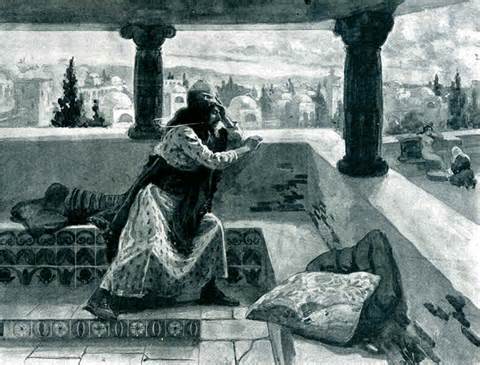
He who was seated on the throne said, “I am making all things new!” Then he said, “Write this down, for these words are trustworthy and true.”
—Revelation 21:5
We’re not the same. My church, like just about everything else, has been changed by the COVID-19 pandemic. It’s more than taking a break from congregational singing, missing friends who are still minding their social distance, and the presence of a camera in worship. You might even say that many churches have been hauled, sometimes kicking and screaming, into the twenty-first century. We have mastered new technology, found new ways to communicate, and grown adept at the use of social media. While much of what is familiar and comfortable persists, it’s a brave new world out there for churches. God is doing a new thing.
Recognizing that small churches need to change or will decline, the PC(USA) Synod of the Northeast has sponsored an innovative grant: Hybrid Outreach for Small Churches. Congregations in seven Presbyteries have been selected to work with a consultant for a year, who will coach them on reaching out in new ways. This church is blessed to be one of the seven churches chosen to participate.
Our consultant John Fong is a swirl of creativity, bold ideas, and encouragement. He also loves to laugh. John believes in evangelism for a new age that invites others to come along on our faith journey through simple acts of kindness and friendship.
If you are wondering what that might look like, consider our Palm Sunday Resurrection Gardens craft—church families and friends made table-top gardens that represent the events of Holy Week. Half of the people who made gardens at church or at home were members, and half were not, drawn into the life of the church through personal invitations and the power of Facebook. In fact, our Facebook post about the project went viral, reaching more than 2,000 people. Now, that’s some serious outreach.
I’m joined in our hybrid outreach work by Elder Chenelle Palyswiat and some of the church’s communication mavens—Peter Wilson, Anita Estling, and Duane Gould. We’ve got more projects in the pipeline, like a “Grow-a-Row” initiative to invite local gardeners to join us in growing veggies for the Food Pantry. We’re also planning a “Cookie Bomb.” Yes, it is just as exciting and delicious as it sounds. Just wait and see.
As we emerge from the chaos of pandemic, God is doing a new thing in and through us. It sounds like the work of the risen Lord, who promises to make all things new. May the Lord be doing new — and blessed — things for you and your faith community, too.
“Begin the Day”
—Ella Wheeler Wilcox
“Begin each morning with a talk to God,
And ask for your divine inheritance
Of usefulness, contentment, and success.
Resign all fear, all doubt, and all despair.
The stars doubt not, and they are undismayed,
Though whirled through space for countless centuries,
Sabbath Day Thoughts — “An Idle Tale” Luke 24:1-12
I was warned when I first came to Saranac Lake that I should NOT expect a full church on Easter. At the other three churches that I have served, Easter Sunday is a lot like Christmas Eve with people sitting shoulder-to-shoulder, belting out beloved hymns, and eagerly sharing “Alleluias!” But Saranac Lake? Not so much. Snowbirds have flown south for the winter to stay until May for fear of the dreaded Easter-snow. The two-week-long school break surrounds Easter, and families weary of winter and sick of mud season leave the North Country in stunning numbers to bask their alabaster flesh in the warm glow of Florida sun. The past few years have been complicated by COVID, sending us online instead of into the pews to celebrate the resurrection. On Easter Sunday, many of our friends are missing.
But this Easter, I’ve been thinking about those other people who are NOT in church—the unchurched. They may be like Brittney, a twenty-something young adult raised in church who never made an adult connection to a local congregation in her new community. On Easter morning, she is still in her jammies, reading a good book or facetiming with a college friend. The unchurched may be like Tim and Cindy, once faithful attenders at a Catholic Church until the clergy sexual abuse scandal shattered their trust in the institutional church. On Easter morning, they sleep in, read the New York Times, and have brunch. The unchurched may be like Mitchell. He has only been in church for weddings and funerals, occasions when he feels uncomfortable and out of place. On Easter morning, he is up early to watch soccer on tv. He wears the jersey of his favorite team, and from his man cave, his wife and children can hear the shouts of victory and the groans of defeat. For people like Brittney, Tim and Cindy, and Mitchell, Easter sounds like an idle tale—fantastic, mysterious, and hard to believe.
The women on that first Easter morning were accused of telling an idle tale. They traveled with Jesus from Galilee to Jerusalem for the Passover. They hoped that Jesus was the Messiah, the Holy One of Israel. Many of them had been helped and healed by his miraculous power. But on Friday they witnessed their rabbi being beaten, abused, and crucified. They heard his dying words. They saw the blood and water pour from his side. They watched while Joseph of Arimathea claimed the body, wrapped it in linen, and laid it in a newly cut tomb. They retreated to the place where they were staying to prepare the spices and ointments. They prayed and wept all through the sabbath day. Then, early in the deep dawn, when the sun was just a rosy hint lingering below the horizon, they gathered their precious oils and walked through the streets of the city to offer a final kindness to the man they loved, anointing his body for the grave.
At the tomb, the women expected death. Afterall, they had seen it with their own eyes. But something fantastic, mysterious, and hard to believe, awaited them. The stone was rolled away. The body was gone. While they inspected the grave, bowed down with grief and confusion, holy messengers burst in upon them, reminding them of Jesus’ promise of resurrection and challenging them with the question “Why do you look for the one who lives among the dead?”
Amid the women’s puzzlement and grief, a certainty began to glow like a spark rising from the ashes: Jesus is alive. In the mixed joy and terror of that belief, they ran through the streets of the waking city and burst into the room where the disciples were still rubbing sleep from their eyes. All of them began to speak their truth at once, voices rising and falling, alleluias ringing, tears flowing, “The Lord is risen! He is risen indeed!”
Perhaps we can forgive the disciples for presuming that what the women had to say was an “idle tale,” stuff and nonsense, a fevered delirium. After all, the men had just woken up. And they lived in a world where what women had to say couldn’t be admitted as evidence in a court of law. And according to Luke, there were a lot of women saying the same wild stuff: Mary Magdalene, Joanna, Mary the mother of James, and all those other women who had loved Jesus, provided for him from their purses, and traveled with him throughout his ministry. All that joy, excitement, and hope that flooded in upon the disciples’ grief and shame made no sense whatsoever. So, the men failed to remember what Jesus had promised and they refused to believe. They hushed the women and went back to their dark thoughts and bleak world.
Even if we think that the disciples were embarrassingly clueless on that first Easter morning, we get it. We expect death. We have buried our parents and our dear friends. Sometimes on a day when the world turns black, we bury a child. We know the death of relationships. Marriages grow cold. Friendships end in nonsensical arguments. Neighbors disconnect over perceived slights or differences of political opinion. We know the death of opportunity. The promotion never comes. The degree is never earned. The pink slip arrives when we’re too old to start over. We know death writ large on the world stage. Russia invades Ukraine. Our wild world fails with mass extinction. Hunger walks the land in Yemen, Sudan, and Afghanistan. We expect death, preoccupied by our dark thoughts and bleak world. On some days, we can be just as resistant as the disciples to the truth that the women spoke, all those years ago.
On Easter morning, an empty tomb, two holy messengers, and a group of faithful women dare to tell us that death does not have the final word. Don’t get me wrong. Death is real. Pain is fierce. Loss can be overwhelming. Some days, we are bowed down to the ground in grief. Yet, God in a lonely tomb in the pre-dawn dark of Easter morning broke the power of sin and death. All the evil, grief, and sin of this world cannot keep Jesus down. Love wins the day. Jesus rises. The tomb is empty. God brings life out of death and reconciliation out of division. New beginnings spring from impossible endings. It is fantastic, mysterious, and on some days, hard to believe. But that’s what God does. Alleluia!
That news is so good that it can be mistaken for an idle tale. But the truth is proven in the living. When we join those women in saying “Yes!” to what God has done in Jesus, we find the possibility of new life. We are changed, just as the women were changed. We rise up with the courage to live with love and reconciliation in a broken and dying world. We move beyond our grief. We reach out a hand in forgiveness. We ask to be forgiven. We make a fresh start. We call for peace. We care for the planet. We feed the hungry. We become hope for the hopeless and food for the hungry of heart. The world is waiting for an Easter transformation. That can only take shape if we dare to speak our truth to those who may dismiss us as bearers of idle tales.
So, let’s do it. Let’s reach out to the Brittney’s we know, those twenty-somethings who haven’t been back to church since they left home. Let’s remind them of the love, connection, and encouragement that are such a special part of being a church family.
Let’s reach out to friends like Tim and Cindy, alienated by the sexual misconduct of those who had been entrusted with their spiritual care. Let’s remind them that God’s heart breaks along with theirs and there are other churches where the love of God is practiced sincerely in word and deed.
Let’s reach out to the Mitchells of this world. They may never feel comfortable coming to church, but they may see Jesus. Every time we share the love of Christ with fresh produce for the Food Pantry, shallow wells for Africa, or a prayer shawl in a time of crisis, we bear a quiet and powerful witness to the transforming, unstoppable love of God and the truth of Easter. Someday, people like Mitchell might even be a little like the disciple Peter. They could turn off the Sunday morning sports and venture forth to see for themselves, to look at the evidence and be amazed, even if they aren’t yet willing to accept the truth.
We’ve got a tale to tell, my friends. Some call it idle, but we know better. What are we waiting for? Next Easter, we might just have a few more people in the pews. Alleluia!
But on the first day of the week, at early dawn, they came to the tomb, taking the spices that they had prepared. 2 They found the stone rolled away from the tomb, 3 but when they went in, they did not find the body. 4 While they were perplexed about this, suddenly two men in dazzling clothes stood beside them. 5 The women were terrified and bowed their faces to the ground, but the men said to them, “Why do you look for the living among the dead? He is not here, but has risen. 6 Remember how he told you, while he was still in Galilee, 7 that the Son of Man must be handed over to sinners, and be crucified, and on the third day rise again.” 8 Then they remembered his words, 9 and returning from the tomb, they told all this to the eleven and to all the rest. 10 Now it was Mary Magdalene, Joanna, Mary the mother of James, and the other women with them who told this to the apostles. 11 But these words seemed to them an idle tale, and they did not believe them. 12 But Peter got up and ran to the tomb; stooping and looking in, he saw the linen cloths by themselves; then he went home, amazed at what had happened.
April 24th is the Day of Remembrance for the Armenian Genocide. Beginning in 1915, inspired by nationalism and government scapegoating, Ottoman Turks drove ethnic Armenians from their homes and massacred them. Outside observers at the time described what was happening as “a massacre like none other,” “a massacre that changes the meaning of massacre.” Historians suggest that one million Armenian people were killed, often in unspeakably cruel ways. Those who weren’t murdered, were forcibly deported and marched to their deaths in the deserts of Syria. At the time, a number of influential people spoke out against these atrocities, including the British poet William Watson, who publicly decried England’s failure to come to the aid of the Armenian people. In his poem, “The Plague of Apathy,” Watson wrote,
“No tears are left; we have quickly spent that store!
Indifference like a dewless night hath come.
From wintry sea to sea the land lies numb.
With palsy of the spirit stricken sore,
The land lies numb from iron shore to shore.
The unconcerned, they flourish: loud are some,
And without shame. The multitude stand dumb.
The England that we vaunted is no more.
Only the witling’s sneer, the worldling’s smile,
The weakling’s tremors, fail him not who fain
Would rouse to heroic deed. And all the while,
A homeless people, in their mortal pain,
Toward one far and famous ocean isle
Stretch hands of prayer, and stretch those hands in vain.”
The willingness to passively stand by while mass murder is committed is endemic of the seventh deadly sin: sloth.
Sloth has been traditionally known in the Christian tradition as acedia, from the Greek word for failure to care. According to Thomas Aquinas, sloth is a “facetiousness” or “sluggishness” of the mind that keeps us from loving God and neighbor. Prayer and worship are too toilsome. Deeds of lovingkindness toward others are too much bother. While the other six deadly sins are sins of commission, sloth is a sin of omission. We fail to do what we know is right and best. Poet Dante Alighieri envisioned those who are slothful in the fourth circle of his inferno. There, in endless punishment for their failure to act in life, they are made to run eternally in death.
Nowadays, the word sloth is more likely to prompt images of a slow-moving South American mammal than a deadly sin. Better words for our contemporary understanding of sloth are apathy, laziness, procrastination, distraction, idleness, and “I don’t feel like it.” In her essay on sloth, English author Dorothy Sayer said, “It is the sin which believes in nothing, cares for nothing, seeks to know nothing, interferes with nothing, enjoys nothing, loves nothing, hates nothing, finds purpose in nothing, lives for nothing, and only remains alive because there is nothing it would die for.” When we are in the grip of sloth, we do not use our God-given gifts, and we fail to pursue God’s purpose. All our talent, all the difference that we could make in this world, simply goes to waste. C.S. Lewis in The Screwtape Letters wrote that sloth is “the safest way to Hell—the gradual, gentle slope, soft underfoot without sudden turnings, milestones, or signposts.”
Editor and theologian Brad Littlejohn warns that we live in the age of acedia, the age of sloth. Our love for God and neighbor has been usurped by “momentary pleasures, distractions, and stimulations.” We surf the internet rather than read a good book. We check our smartphones instead of enjoying the company of a friend or beloved one. On Sunday morning, we’d much rather sleep in than worship God. In the age of apathy, vulnerable minorities are stripped of voting rights without a public outcry, refugees languish in the no-man’s-land of camps, domestic violence goes unreported, and we lack the political will to stop school shootings.
Our scriptural paradigm of sloth takes place on the night of Jesus’ arrest. In the Garden of Gethsemane, Jesus, grieved and agitated, anticipates the evil that will soon befall him. He implores his most trusted of friends—Peter, James, and John. He asks them to watch with him, to pray for him in his distress. Yet, again and again and again, the disciples sleep. They leave Jesus to face his darkest hour on his own. They fail in empathy, care and even the most basic of courtesies. How lonely Jesus must have felt!
The remedy for our sloth is the virtue of diligence. We are diligent when we practice careful and persistent effort. Diligence is tenacity, consistency, perseverance, commitment, and dedication. When we are diligent, we make a constant and earnest effort to accomplish whatever we undertake, regardless of the circumstance. Diligence is the resolve to live each day with love for God and love for neighbor, not just as a spiritual disposition but as a course of action. We work toward what is right in the right way for the right reason. The mantra of the diligent person is, “When the going gets tough, the tough get going.”
We all know diligent people. They may be scrappy, like paralegal Erin Brokovich, who learned about groundwater contamination in a California town, and built a winning legal case against Pacific Gas and Electric. Diligent students may not have the highest IQ, but they often get the best grades because they are willing to work hard to learn and excel. Diligent workers are the kind of people we can entrust with a project and know that they will see it through to completion, even if they encounter big obstacles along the way.
Jesus believed in the importance of diligence, especially in our spiritual life. His Parable of the Widow and the Unjust Judge (Luke 18:1-8) is a lesson in diligence. Jesus described a vulnerable widow who had been denied justice. While most women would walk away, Jesus’ widow wouldn’t give up the fight. Her judge was thoroughly corrupt, but the widow was so relentlessly persistent that he eventually gave in, just to shut her up. Justice was served, only because the widow insisted. Jesus suggests that we need to bring that same relentless effort to our relationship with God.
We build diligence when we reignite our love for God with worship, prayer, spiritual reading, and meditation. We can also take time for appreciation and gratitude. Take a few moments each day to savor God’s blessings for us: the beauty of creation and the goodness of friends and family. We can ask the Holy Spirit to be at work within us, to kindle our hearts and imaginations, to give us eyes to see the neighbors whom Jesus would have us love.
Educators have learned that mutual support is vital for the formation of diligence. Students, who have the support, encouragement, and positive expectations of teachers, parents, and classmates, grow in diligence and excel in the school and beyond. Likewise, we can seek out the people we need in our corner, people who will help us to stick with it and hang tough.
Perhaps the most essential way to grow in diligence is to notice what distracts us and do something about it. Does too much nightly news shut you down and make you throw up your hands? Then limit what you watch and explore some different media outlets. Does your cellphone get in the way of quality time with family? Turn it off. Is social media driving your bus? Try fasting from your favorite apps for a day, a week, maybe even a month. When all else fails, we can simply pray that greatest of commandments: “Lord, show me how you would have me love you, love my neighbors, and maybe even love myself.”
Researchers say that diligence, when practiced consistently, is rewarding. When we use our God-given gifts and we pursue God’s call for our lives, we experience joy. We believe we have a purpose, and we feel that we are making a difference. That joy finds us, even when we encounter difficulties. In fact, as we meet and beat those challenges, we grow in our gifts and purpose. We feel more connected to God, and more connected to others. I want to get me some of that. How about you?
To circle back to the start of my message and William Watson’s condemnation of his nation’s sloth at the genocide of the Armenian people, I suspect that the next mass murder of humanity is going on even as I speak to you on this Maundy Thursday evening. It’s happening in the Tigray region of Ethiopia. It’s befalling the Karenni people in Myanmar. It could be happening in Ukraine. Perhaps it is unfolding on our city streets and in our public schools as we numbly hear news of yet another mass shooting. Let’s not let sloth get the better of us. Be diligent, my friends.
Matthew 26: 17-30, 36-46
17 On the first day of Unleavened Bread the disciples came to Jesus, saying, “Where do you want us to make the preparations for you to eat the Passover?” 18 He said, “Go into the city to a certain man, and say to him, ‘The Teacher says, My time is near; I will keep the Passover at your house with my disciples.’” 19 So the disciples did as Jesus had directed them, and they prepared the Passover meal.
20 When it was evening, he took his place with the twelve; 21 and while they were eating, he said, “Truly I tell you, one of you will betray me.” 22 And they became greatly distressed and began to say to him one after another, “Surely not I, Lord?” 23 He answered, “The one who has dipped his hand into the bowl with me will betray me. 24 The Son of Man goes as it is written of him, but woe to that one by whom the Son of Man is betrayed! It would have been better for that one not to have been born.” 25 Judas, who betrayed him, said, “Surely not I, Rabbi?” He replied, “You have said so.”
26 While they were eating, Jesus took a loaf of bread, and after blessing it he broke it, gave it to the disciples, and said, “Take, eat; this is my body.” 27 Then he took a cup, and after giving thanks he gave it to them, saying, “Drink from it, all of you; 28 for this is my blood of the covenant, which is poured out for many for the forgiveness of sins. 29 I tell you, I will never again drink of this fruit of the vine until that day when I drink it new with you in my Father’s kingdom.” 30 When they had sung the hymn, they went out to the Mount of Olives. 36 Then Jesus went with them to a place called Gethsemane; and he said to his disciples, “Sit here while I go over there and pray.” 37 He took with him Peter and the two sons of Zebedee, and began to be grieved and agitated. 38 Then he said to them, “I am deeply grieved, even to death; remain here, and stay awake with me.” 39 And going a little farther, he threw himself on the ground and prayed, “My Father, if it is possible, let this cup pass from me; yet not what I want but what you want.” 40 Then he came to the disciples and found them sleeping; and he said to Peter, “So, could you not stay awake with me one hour? 41 Stay awake and pray that you may not come into the time of trial; the spirit indeed is willing, but the flesh is weak.” 42 Again he went away for the second time and prayed, “My Father, if this cannot pass unless I drink it, your will be done.” 43 Again he came and found them sleeping, for their eyes were heavy. 44 So leaving them again, he went away and prayed for the third time, saying the same words. 45 Then he came to the disciples and said to them, “Are you still sleeping and taking your rest? See, the hour is at hand, and the Son of Man is betrayed into the hands of sinners. 46 Get up, let us be going. See, my betrayer is at hand.”
Monsignor Charles Pope leads a weekly Bible Study at the White House for President Biden. In more than thirty years of parish ministry, Charles Pope has spent a lot of time in the confessional, hearing sins and prescribing penance. Father Pope says that greed is the most under-reported of sins. We tend to think that everyone else is greedy, but we never think that we make too much money or have too much stuff. Faith leaders in the Protestant tradition say the same thing. Rev. Tim Keller, the well-known author and longtime pastor of Redeemer Presbyterian Church in Manhattan, relates that he once led a weekly Bible Study on the Seven Deadly Sins. The week that the study was least attended was the one when he taught about greed. Keller says, “Maybe the best sign of greed is that you aren’t willing to even admit the possibility that you are enslaved to it.”
Greed is the artificial, rapacious desire for and pursuit of wealth and possessions. Two of the Ten Commandments speak to greed: the prohibitions on stealing and covetousness. In the gospels, greed is the sin that Jesus most frequently spoke against, from his warning to tax collectors against collecting more than authorized (Lk 3:13) to his Parable of the Rich Fool, which reminds us that we can’t take it with us and we are truly fools if our worldly goods are more important than our relationship with God (Lk 12:13-21). Indeed, Jesus saw wealth as an idol, cautioning that we cannot serve God and Mammon.
Throughout the Christian tradition, we have been warned about the dangers of greed. Thomas Aquinas believed that greed is a three-fold sin. Greed is a sin against neighbor because one man’s riches cannot over-bound without another man being in need. Greed is a sin against the self because our “affections are disordered” by loving and delighting in material things. And greed is a sin against God because we scorn the eternal for our love of the temporal. Dante’s Inferno places greedy souls in the fourth Circle of Hell, where misers, hoarders, and spendthrifts eternally battle one another. Martin Luther was especially concerned with greed, calling those who are avaricious “money gluttons.” According to Luther, the greedy man “would have the whole world perish of hunger and thirst, misery and want, so far as in him lies, so that he may have all to himself, and everyone may receive from him as from God, and be his serfs forever.”
Our contemporary understanding of greed takes into account its destructive nature, as well as its acceptance. Psychologist Erich Fromm saw greed as “a bottomless pit which exhausts the person in an endless effort to satisfy the need without ever reaching satisfaction.” We may be blind to our own greed and the greed of others, thanks to our cultural context. We are constantly barraged by marketing that tells us that love is revealed in the gift of a diamond that is forever or a brand-new car with a big bow on top delivered on Christmas morning. Who doesn’t want to be loving? Only 2% of Americans think we are wealthy “upper class” people, but on a world stage, we are wealthy beyond the imagining of most.
We also tend to confuse our wants with our needs, and so the more we earn, the more we spend. Not many of us are like billionaire Warren Buffet who still lives in the same home in Omaha that he bought in 1958. Instead, more money means more expense, whether we are socking it away in our retirement nest egg, driving a better car, or moving into that nicer neighborhood. Our growing affluence isn’t necessarily good for others. A shocking 2008 study discovered the radical generosity of the poor. Researchers found that 60% of Americans who live in poverty give their money and time to help others while only 32% of people who live above the poverty line are willing to share. Author, editor, and theologian Brad Littlejohn teaches that greed is spiritually dangerous because it leads to a false sense of security and an inward-focused self-absorption that allows us to ignore the needs of others.
Our biblical paradigm for greed is Judas. In today’s gospel reading, the Lord would soon be arrested, tortured, and executed. But that night, Mary of Bethany did something beautiful. She anointed Jesus with precious oil of nard, all the way from the Himalayas, purchased at great price. It was a decadent act of generous love. The indignant Judas denounced Mary before the disciples. Although he claimed he was advocating on behalf of the poor, Luke tells us that Judas was greedy. The money spent on that costly anointing could have lined his pockets. Within the week, Judas would betray Jesus for thirty pieces of silver. He is the poster child for greed, alienated from his better self, robbing the poor, rejecting the love of Christ, and denying the authority of God.
We’ll be relieved to hear that the remedy for greed is not poverty. It’s generosity, the virtue of being liberal in giving. Jesus expected his followers to be generous. He instructed them to sell their possessions and give to the poor (Lk 12:33-34). Aristotle taught that generosity is the noble and appropriate mean between two opposing extremes—stinginess and wastefulness. Aquinas saw generosity as a dimension of agape (charitas), the generous love that Jesus taught us, the love that always gives in the best interest of the other. Martin Luther encouraged generosity, saying, “Possessions belong in your hands, not in your heart.”
Our biblical example of generosity is the poor widow. You may remember that during Holy Week, Jesus took a seat in the Temple to watch folks deposit their offering in the treasury. Many costly gifts were given, yet the gift that excited Jesus the most was two small coins (copper mites or leptons), given by an impoverished widow. The Lord praised her generosity, because it was an offering of all she had and all she was—her whole self (Lk 21:1-4). We remember that Jesus was likewise unfailingly generous, sharing freely of himself to heal, help, and feed his neighbors. Truly, Holy Week reminds us that Jesus made the greatest gift of all, laying down his life in the ultimate object lesson of God’s generous love for us.
The bad news is that Americans are not as generous as we like to think. 2/3 of us believe that it is important to be generous, yet about half of us give nothing at all to charity. Only 17% of Americans give habitually, building it into their budget. Only 16% of Americans make generosity part of their long-term plans, like estate planning and legacy gifts. The definitive survey on Christian giving by sociologists Smith, Emerson, and Herzog learned that adults who do not witness generosity as children, do not practice generosity as grown-ups. They also found that if American Christians gave in keeping with their income, they would give between $46-85 billion more each year—a generosity that could forever change our communities, where churches remain at the heart of helping vulnerable neighbors and transforming lives.
The good news is that generosity can be learned, cultivated, and grown. Sociologists point out that being consistently generous involves planning. It’s a habit that we can intentionally build into busy lives. This could involve making a formal financial pledge to the charitable concerns that we wish to support, or it could also look like putting dates for volunteering on the calendar. Studies have found that giving, both in treasure and time, grows when it is routinized and becomes a habit.
The social scientists say that we are in the right place to become more generous: church. Local churches are consistent “climates of giving,” places where financial gifts meet known community needs. We get personally involved in ministries, missions, and volunteer opportunities that reinforce the “virtuous cycle” of generosity. We find that being generous is rewarding because we see the difference that we make in the world, and we become part of a supportive, giving-oriented web of relationships that grows with time. Within churches, our teamwork builds caring, friendship, and generosity.
Generosity is also grown when we practice it in families and teach it to our children and grandchildren. Generous parents make for generous kids. The family that talks about the importance of generosity and practices it together by using those fish banks for OGHS or participating in the Souper Bowl of Caring or walking together in the CROP Walk, these families create a home environment where generosity becomes part of our mental make-up. Those generous kids grow up to believe that they can and will make a caring difference that can transform the world through their personal generosity.
When we get the better of our greed by growing our generosity, not only does the world become a better and more equitable place, we also return to right relationship with God and with neighbor. Prof. Will Mari of Louisiana State University, reminds us that it’s not just our stuff that is not our own, it’s our whole lives. Truly, all we have and all we are is God’s gracious gift. We find ultimate meaning when we devote ourselves to a generosity and service that is “good, godly, and healthy.” Generosity poises us to live the life that God would have us live — open to what may come. C.S. Lewis in a letter to his dear friend Arthur Greeves in Dec. 1943 wrote, “The great thing about life is to stop regarding all the unpleasant things [that come along] as interruptions of life. The truth is that what I call interruptions are real life—the life God is sending me day by day.” What is the life that God is sending to us?
God is so generous to us, my friends. May we live with open hands, open hearts, and open hours, sharing generously of ourselves to the glory of God and for the good of our neighbor.
Resources:
Will Mari. “The Only Bright Spot in American Giving” in Christianity Today, Nov. 30, 2017. Accessed online at christianitytoday.com.
Marika Suval. “Just How Generous Are Americans Really?” on Wisconsin Public Radio, March 9, 2016. Accessed online at www.wpr.org/listen/892341
W. Bradford Littlejohn. “The 7 Deadly Sins in a Digital Age: 3. Greed” in Reformation 21, Nov. 24, 2014. Accessed online at www.reformation21.org.
Charles Pope. “The Seven Deadly Sins: Greed” in Community in Mission, April 2, 2019. Accessed online at blog.adw.org
12 Six days before the Passover Jesus came to Bethany, the home of Lazarus, whom he had raised from the dead. 2 There they gave a dinner for him. Martha served, and Lazarus was one of those at the table with him. 3 Mary took a pound of costly perfume made of pure nard, anointed Jesus’ feet, and wiped them with her hair. The house was filled with the fragrance of the perfume. 4 But Judas Iscariot, one of his disciples (the one who was about to betray him), said, 5 “Why was this perfume not sold for three hundred denarii and the money given to the poor?” 6 (He said this not because he cared about the poor, but because he was a thief; he kept the common purse and used to steal what was put into it.) 7 Jesus said, “Leave her alone. She bought it so that she might keep it for the day of my burial. 8 You always have the poor with you, but you do not always have me.”
This is the fifth in a series on the Seven Deadly Sins.
For many people, an unexpected consequence of the pandemic has been unwanted weight gain. 42% of US adults have reported gaining an average of 29 pounds. What did we expect? We were homebound and stressed out. The gyms were closed, yoga and dance classes cancelled, and we stopped jogging with our buddy. We were ordering take-out and having groceries delivered. If only we hadn’t started baking sourdough bread and discovered the recipe for the Cheesecake Factory’s original cheesecake.
Obesity has been on the rise in the US for decades. In the year 2000, 30.5% of us were obese. By 2021, that statistic had swelled to 42.4% of us. All that weight puts us at increased risk for diabetes, stroke, heart attack, and cancer. The annual cost of obesity to our health care system is $147 billion. Weight loss is a growth industry, raking in $253 billion in 2021. According to a report in the New England Journal of Medicine, our weight problems won’t be improving any time soon. Unless we change, half of all Americans will be obese by 2029. One in four Americans will be severely obese, that’s more than 100 pounds overweight.
A parallel consequence of the pandemic has been an increase in world hunger. In 2021, 957 million people across 93 countries did not have enough to eat, a jump of 161 million people from before the advent of COVID-19. 239 million people are in need of life-saving humanitarian action. 21.3% of the world’s children suffer from stunted growth, due to chronic malnutrition. Hunger is a problem that cannot be solved by emergency food aid alone. We need a concerted global effort to develop sustainable food systems. There is more than enough food produced to feed everyone on the planet, but we have lacked the global will to ensure that everyone has enough.
Our Lenten consideration of the Seven Deadly Sins continues this morning with gluttony, from the Latin gluttire, to gulp down or swallow. Aristotle, in his Nicomachean Ethics, taught that gluttony is the unrestrained desire for food that harms the individual and prevents human flourishing. The Roman philosopher Cicero saw gluttony as a matter of wrong priorities, saying, “It is necessary to eat in order to live, not to live in order to eat.” The influential medieval theologian Thomas Aquinas saw gluttony as a moral wrong, an inordinate desire for food that adversely affects our spiritual life. Aquinas cast gluttony as a form of idolatry in which our god is the belly. Within the Christian tradition, we have seen over-indulgence in food as particularly egregious when it exists side-by-side with the hunger of our neighbors. Dante envisioned a special Hell for gluttons, lying in filthy, cold slush amid a never-ending icy rain while watched over by a giant stomach with three worm-like heads. Eeeew!
Contemporary thinking on gluttony invites us to consider the social, psychological, and spiritual context of the sin. In her book Glittering Vices, Prof. Rebecca DeYoung of Calvin College casts gluttony as a sin of self-gratification, an ultimate expression of “Me” culture in which it is all about us. The social sciences invite us to see how our human relationship with food has shifted over the course of centuries. Once upon a time, only the elite could over-indulge in food, but with the rise of the middle class, a well-stocked table was seen as a sign of vitality, prosperity, and success. Somewhere along the way, that sign of prosperity and success went off the rails. We eat for any number of reasons other than necessity. We eat out of boredom, stress, tiredness, and anger. Overeating can just be a habit. Or, we may have never learned proper portion sizes. Who belonged to the “Clean Plate Club” as a child or was told that there were starving children in India or China or Africa who would love to have our dinner? Professor Graham Tomlin of Oxford University suggests that beneath those social and psychological forces that promote gluttony, there is a deep spiritual need. We mistakenly use food to try to satisfy the deeper craving within us. The craving for God. What a poor, dissatisfying substitute.
Our biblical paradigm of gluttony is Jesus’ story of the Rich Man and Lazarus. The rich man feasts sumptuously every day, seemingly oblivious to the suffering of the neighbor who begs at his gate. Lazarus is poignantly described: starving, sick, too weak to keep the dogs from licking his festering sores. Death brings a great reversal. While the rich man suffers eternal torment, Lazarus is welcomed and comforted like a beloved child. We learn that the rich man was not unaware of his neighbor’s suffering—he recognizes Lazarus and knows his name. In life, the rich man simply chose to not see or assist his starving neighbor. Instead, he indulged his own lavish appetite. Jesus suggests that our unbridled consumption and our choice to be blind to the need of our neighbors creates a willful gap that allows suffering to flourish in this world, a gap that has eternal consequences for the life to come.
The remedy for gluttony is found in the virtue of temperance. Temperance is an antiquated word with negative connotations that spring from America’s failed experiment with Prohibition. Perhaps better words for temperance these days are moderation or self-discipline. Aristotle characterized temperance as finding the “Golden Mean”—doing the right thing in the right amount in the right way. Aquinas believed that we don’t need to abstain from the pleasure of good food, but we do need to make discerning choices about what and how we eat, shunning those pleasures that are “immoderate and contrary to reason.” In Paradise Lost, 17th century poet John Milton had the archangel Michael extoll the virtue of temperance which leads to a long and happy life.
“There is, said Michael, if thou will observe
The rule of not too much, by temperance taught
In what thou eat’st and drink’st, seeking from thence
Due nourishment, not gluttonous delight,
Till many years over thy head return:
So mai’st thou live, till like ripe Fruit thou drop
Into thy Mother’s lap, or be with ease
Gather’d, not harshly pluck’t, for death mature.”
Nowadays, advocates of Positive Psychology, which focuses on individual and societal well-being, teach that temperance is one of six core virtues that increase happiness when we build upon them. Temperate people develop the capacity to handle the complexity of life. They choose to face things calmly and insightfully. Temperance allows us to control our impulses and delay our gratification in pursuit of future goals. For Christians, temperance equips us to weather difficult times with grace, because we see the long view and trust that God is with us and change can come. Temperance finds its expression in us when we find a healthy moderation and balance in life, creating the right environment for us—and our neighbors—to thrive.
Our biblical model for temperance is Jesus. His critics may have alleged that he was a glutton and a drunkard, but Jesus made choices about food to serve the Kingdom of God. Jesus chose fasting in the wilderness as an act of spiritual preparation. Yet, the first miracle of his ministry was one of feasting. In Cana, the Lord turned water into wine to save the day at a wedding banquet. Jesus used meals to build community. He welcomed to the table outsiders, like sinners and tax collectors, and insiders, like Pharisees and disciples. Jesus was concerned about hungry people. He fed multitudes with meager resources and miracles of multiplication. Jesus gave us a holy meal, the Lord’s Supper, to remind us of his great love for us and the ultimate sacrifice that he would make for our sake on the cross. Jesus liked to eat, just like the rest of us, but he made intentional choices about where, when, and how he ate in order to achieve his mission and give glory to God. Now that’s temperance.
How might we follow Jesus in practicing temperance? We can be informed by scripture. The psalmist affirms that food is God’s good and generous providence: all creation looks to God “to give them their food in due season.” By God’s generous hand we “are filled with good things” (Psalm 104:27-28). We have a role to play as stewards of that generous providence of God, not only for ourselves, but also for the world around us. We remember that when the disciples wanted to send away hungry people, Jesus stopped them with the words, “You feed them” (Mark 6:37). Our personal concern with food needs to be a global concern for feeding a hungry world, for ensuring that Lazarus does not languish at our gate while we feast sumptuously. Changing our thinking about food can draw us closer to God and closer to our most vulnerable neighbors.
Changing our thinking about food can also change how we understand ourselves. Learning and implementing temperance in our personal relationship with food may feel harder, but the behavioral science surrounding weight loss tells us there is hope. We can set dietary goals and be accountable, even if that means keeping a food journal or finding a trusted friend to encourage us. We can be aware of what tempts us most and take time to notice when the craving kicks in. We can practice some selective abstinence from foods that are most likely to sabotage us, whether we stop buying the potato chips or we take a break from sugar during Lent. We can make better choices, cultivating an appetite for healthier foods. We can also look to things other than food for our personal satisfaction, like a good book, music, fellowship, scripture, nature, creativity, learning, prayer, or exercise. Healthy change is possible with the help of temperance, the Holy Spirt, and some hard work.
So, let’s give temperance a try. What do we have to lose other than the 29 pounds we gained during the pandemic and the hunger of 957 million of our world neighbors?
Lesley Lyle. “Developing Temperance” in Positive Psychology, March 2013. Accessed online at thepositivepsychologypeople.com.
Gernot Laganda. “2021 Is Going to Be a Bad Year for World Hunger” in Food Systems Summit. Accessed online at un.org
Kaia Hubbard. “The Pandemic Has Worsened the US Obesity Epidemic” in US News and World Report, Sept. 15, 2021. Accessed online at usnews.com
Aristotle. Nicomachean Ethics. Accessed online at virtuescience.com.
Thomas Aquinas. Summa Theologica. Accessed online at newadvent.org.
Francine Prose. “Seven Deadly Sins: Gluttony” from Gluttony (Oxford: Oxford U. Press, 2006). Accessed online at blog.oup.com.
CNN Staff. “Obesity in the US Fast Facts,” May 27, 2021. Accessed online at cnn.com.
Graham Tomlin. “Gluttony” in The Seven Deadly Sins (Oxford: Lion Hudson, 2014).
Kimberly Winston, “Gluttony and the Seven Deadly Sins” in Religion News Service, Nov. 22, 2016. Accessed online at religion news.com.
Luk 16:19-31
19 “There was a rich man who was dressed in purple and fine linen and who feasted sumptuously every day. 20 And at his gate lay a poor man named Lazarus, covered with sores, 21 who longed to satisfy his hunger with what fell from the rich man’s table; even the dogs would come and lick his sores. 22 The poor man died and was carried away by the angels to be with Abraham. The rich man also died and was buried. 23 In Hades, where he was being tormented, he looked up and saw Abraham far away with Lazarus by his side. 24 He called out, ‘Father Abraham, have mercy on me, and send Lazarus to dip the tip of his finger in water and cool my tongue; for I am in agony in these flames.’ 25 But Abraham said, ‘Child, remember that during your lifetime you received your good things, and Lazarus in like manner evil things; but now he is comforted here, and you are in agony. 26 Besides all this, between you and us a great chasm has been fixed, so that those who might want to pass from here to you cannot do so, and no one can cross from there to us.’ 27 He said, ‘Then, father, I beg you to send him to my father’s house— 28 for I have five brothers—that he may warn them, so that they will not also come into this place of torment.’ 29 Abraham replied, ‘They have Moses and the prophets; they should listen to them.’ 30 He said, ‘No, father Abraham; but if someone goes to them from the dead, they will repent.’ 31 He said to him, ‘If they do not listen to Moses and the prophets, neither will they be convinced even if someone rises from the dead.’”
“There’s just no accounting for happiness, or the way it turns up like a prodigal who comes back to the dust at your feet having squandered a fortune far away.
And how can you not forgive? You make a feast in honor of what was lost, and take from its place the finest garment, which you saved for an occasion you could not imagine, and you weep night and day to know that you were not abandoned, that happiness saved its most extreme form for you alone.
No, happiness is the uncle you never knew about, who flies a single-engine plane onto the grassy landing strip, hitchhikes into town, and inquires at every door until he finds you asleep midafternoon as you so often are during the unmerciful hours of your despair.
It comes to the monk in his cell. It comes to the woman sweeping the street with a birch broom, to the child whose mother has passed out from drink. It comes to the lover, to the dog chewing a sock, to the pusher, to the basketmaker, and to the clerk stacking cans of carrots in the night. It even comes to the boulder in the perpetual shade of pine barrens, to rain falling on the open sea, to the wineglass, weary of holding wine.”
in Claiming the Spirit Within, ed. Marilyn Sewell (Boston: Beacon Press, 1996). p. 119.
Jane Kenyon (1947-1995) grew up in Michigan but settled as a young adult in New Hampshire at the family farm of her husband, the poet and academic Donald Hall. Jane published four books of poetry in her too-short life. Her work is celebrated for her exploration of rural life, nature, and living with depression. She received the prestigious Hopwood Award at the University of Michigan and the PEN/Voelcker Award for Poetry. At the time of her death from leukemia in 1995, Kenyon was the Poet Laureate of New Hampshire.
“So he set off and went to his father. But while he was still far off, his father saw him and was filled with compassion; he ran and put his arms around him and kissed him.” — Luke 15:20
This is the fourth message in a Lenten Sermon Series on the Seven Deadly Sins.
We don’t often talk about lust in church. Passion and sexuality are God-given gifts, part of our essential being, and key to God’s best hope for the creation. They can be the crown and ultimate fulfillment of our most committed and caring relationships. Yet, when misused and expressed as lust, passion and sexuality can have destructive consequences.
Consider adultery. Until a few decades ago, adultery was still a criminal offense in many countries where Christianity is the dominant religion. Adultery is technically illegal in 21 states in the US. New York is one of the few states that considers cheating on your spouse to be a sin. Idaho, Massachusetts, Michigan, Oklahoma, and Wisconsin, among others, have felony charges against it. Most couples marry with the expectation of fidelity, and yet extramarital affairs persist. 22% of married men and 14% of married women have committed adultery. Adultery, as a breach of marital trust, is emotionally traumatic for both spouses. 17% of marriages that go through an incident of cheating end in divorce.
Lust among Millennials is expressed in hookup culture, which has replaced traditional dating on college campuses. In hookup culture, relationships are purely physical and very brief—a few minutes, a couple of hours, or overnight. Sexual intimacy is followed by no further communication or connection that could lead to attachment. Often, drinking is involved. One in three students characterize hookups as “traumatic” or “very difficult to handle.” One in ten students say that they have been sexually coerced or assaulted. Professor Lisa Wade of Tulane University says that hookup culture is “a punishing emotional landscape where caring for others or even simple courtesy seem inappropriate.”
The most prevalent expression of lust in our culture is pornography. More than 90% of young men report that they watch porn with some regularity. The world’s largest pornography website Pornhub reports that 90 billion videos are watched on their site every day by 64 million visitors. $3,000 is spent every minute. Research suggests that porn is bad for our committed relationships. A 2016 study by the University of Oklahoma found that divorce rates double when pornography enters the marriage. 56% of divorce cases cite obsessive interest in porn as a contributing factor.
According to Aristotle, lust is an irrational, insatiable desire for pleasure that increases the more it is exercised. Thomas Aquinas taught that lust is a “voluptuous emotion” that “unloosens the human spirit and sets aside all reason.” In his Inferno, Dante Alighieri portrayed unrepentant lustful souls in Hell, eternally buffeted and driven by the force of a whirlwind. From antiquity through the 19th century, artistic depictions of lust are typically female. Maybe we can blame it on Prudentius, who in the fifth century described the deadly sin of lust as “lavish of her ruined fame, loose-haired, wild-eyed, her voice a dying fall, lost in delight.”
In our modern understanding, we acknowledge the harmful unrestrained, sometimes escalating, sexual impulse of lust. Yet, we also recognize the interpersonal abuse of lust. Our Friday night hookup isn’t regarded as a person with social and emotional needs to be respected or reverenced. They are just a means to get our “rocks off” (as the Rolling Stones once said). Jesus understood this. That’s why he taught that when we look at others with lust, we have committed adultery in our hearts (Matthew 5:27-28). In lust, we dehumanize and objectify others, looking only for our self-satisfaction. Lust can also lead to the abuse of power. The #METOO Movement shined a spotlight on successful men, like Harvey Weinstein, who used their personal, professional power to coerce women into sex. In Old Hollywood, they called it the casting couch. Now, we know it’s rape.
Our biblical paradigm of lust is King David. While the younger men went off to war, the aging king let his eyes roam and his lust call the shots. He abused his power to use Bathsheba to gratify his needs. Then, when there were consequences, he hatched a series of plots to escape responsibility. Uriah was summoned home to sleep with his wife, but when the younger man proved too honorable, things got darker yet as the king engineered his death. David may not have shot the arrow that took Uriah’s life, but he was the murderer, nonetheless. History and Hollywood have suggested that Bathsheba was somehow to blame for the King’s lust. But we know better. I like to point out that the only sound we hear from Bathsheba in this terrible tale is her wailing of lamentation for the husband she loved.
We find the remedy for our lust in chastity. Chastity has gotten a bad rap, conjuring up images of prudish men and women with their shirts buttoned up and a withering gaze for anything flirty. So, perhaps I should begin with what chastity is NOT. Chastity is not abstinence, although in practicing chastity, we may make choices for abstinence at different times in our lives. Chastity is not sexual repression, pushing down within ourselves or punishing ourselves for our natural sexual impulses. Chastity is not refusing to think about or talk about sex, as if sex isn’t a normal, natural part of being human. Unfortunately, we tend to project all those unnatural, unhealthy qualities onto the virtue of chastity.
Aristotle taught that chastity uses rational principles to govern and bring into order our sexual desire. He saw it as a natural discipline to be learned and practiced, saying, “as the child should live according to the direction of his tutor, so the appetitive element (lust) should live according to rational principle.” In Christian thinking, chastity is more than just thinking our way past our sexual impulses. Robert Kruschwitz, a Senior Scholar at Baylor University, says, “Chastity is a habit of reverence for oneself and others that enables us to use our sexual powers intelligently in the pursuit of human flourishing and happiness.” I’ll break that down. In chastity, we are at peace with our bodies and our sexuality—we see their God-given nature. Then, we bring a loving reverence for ourselves and others to our intimacy. We honor ourselves as creatures made in the image of God (Gen. 1:26), and we revere the image of God in others. We bring love and respect to our intimate encounters for the sake of the other person’s good and ultimate happiness. In chastity, those sexual impulses that we all experience are governed by Christ’s great commandment that we love God—and we love others as we love ourselves. When we get right down to it, chastity is a choice to live in love. To bring agape to our sexuality.
Our biblical model of chastity is Joseph, the youngest son of Israel’s Patriarch Jacob (Genesis 39). After Joseph was sold into slavery by his jealous older brothers, he was bought by Potiphar, the Captain of the Egyptian Guard. Joseph served as Potiphar’s personal attendant, and the bond between the two men grew so close that Potiphar entrusted Joseph with his entire household. All was well that ended well until Potiphar’s wife cast her lusty gaze upon the well-built, handsome young Hebrew. She commanded Joseph, “Sleep with me!” Joseph refused the temptation, seeing that if he said “Yes,” he would betray the kindness and generosity of Potiphar and the love and goodness of God, who had blessed Joseph amid his misfortune.
We can push back against the harmful consequences of lust in our society by practicing the virtue of chastity. G.K. Chesterton taught that “chastity, like any value or virtue, is a positive thing that you gain, not something that you give up.” Indeed, this notion of chastity as a gift or quality earned after moral struggle dates back to the 13th century. Thomas Aquinas was said to have fought long against the temptation of lust. According to tradition, when Aquinas prevailed, the angels gave him a rope belt as a sign of his victory. Soon after his death, his followers began to wear chastity cords in hopes of a similar victory over lust. Aquinas’s chastity belt is preserved today at the Cathedral in Cheiri, Italy.
In the absence of Thomas Aquinas, chastity belts, and the intercession of angels, there are some steps that we can take to nurture our formation in chastity. We can acknowledge that lust and sexual urges are part of who we are. We can learn to recognize what our triggers are, whether it is loneliness, a work trip, porn, or a fraternity party with too much alcohol. We can be attentive to and mindful of our thoughts and physical state, and then we can choose not to act on those impulses. It helps to have a small circle of trusted, honest, confidential friends who can hold us accountable, with whom we can share our temptation and find encouragement. We can find role models who inspire us in the way of chastity at its best, whether it is Jesus or Thomas Aquinas or Captain America, who waited so long for his best-gal Peggy. We can also accept that chastity, like any other virtue, is one that we can fall from. Even Jimmy Carter admitted that he had felt lust and committed adultery in his heart. And yet we trust that even as we fall, the grace of our Lord Jesus is sufficient for us. We can begin again. Perhaps most important of all, we need to talk about lust and chastity with our children and grandchildren, who will one day find themselves in the midst of that emotionally punishing landscape of hookup culture.
Well, my friends, we’ve done it. We have talked about lust in church. The roof has not fallen in. Instead, we’ve taken an honest look at the world out there, where the God-given gifts of passion and sexuality have gotten misdirected into adultery, pornography, and hookups. Lust may abound, but so can chastity. Let’s choose chastity. Let’s make that reasoned, respectful, loving choice for ourselves. Let’s make it for the sake of others. Let’s teach it to our children. Amen.
Resources:
Lisa Wade. “The Rise of Hookup Culture on American College Campuses” in Scholars Strategy Network, August 25, 2017. Accessed online at scholars.org.
Alexandra Solomon. “What Hookup Culture Means for the Future of Millennial Love” in Psychotherapy Network, Oct. 5, 2020. Accessed online at psychotherapynetworker.org.
Content Team. “Adultery” in Legal Dictionary. Accessed online at legaldictionary,com.
David Schultz. “Divorce rates Double When People Start Watching Porn” in Science, August 26, 2016. Accessed online at science.org.
Content Team. “Porn Addiction” in Psychology Today. Accessed online at psychologytoday.com.
Robert B. Kruschwitz. “Chastity as a Virtue” in Christian Reflection, 2016. Accessed online at baylor.edu.
Adam Jeske. “The Seven Deadly Sins: Lust” in InterVarsity, March 15, 2014. Accessed online at intervarsity.org.
Aristotle. Nichomachean Ethics, Book 3, Ch. 12. Accessed online at virtuescience.com.
Thomas Aquinas. Summa Theologiae. Accessed online at newadvent.org.
2 Samuel 11:1-18, 22-27
11 In the spring of the year, the time when kings go out to battle, David sent Joab with his officers and all Israel with him; they ravaged the Ammonites, and besieged Rabbah. But David remained at Jerusalem.
2 It happened, late one afternoon, when David rose from his couch and was walking about on the roof of the king’s house, that he saw from the roof a woman bathing; the woman was very beautiful. 3 David sent someone to inquire about the woman. It was reported, “This is Bathsheba daughter of Eliam, the wife of Uriah the Hittite.” 4 So David sent messengers to get her, and she came to him, and he lay with her. (Now she was purifying herself after her period.) Then she returned to her house. 5 The woman conceived; and she sent and told David, “I am pregnant.”
6 So David sent word to Joab, “Send me Uriah the Hittite.” And Joab sent Uriah to David. 7 When Uriah came to him, David asked how Joab and the people fared, and how the war was going. 8 Then David said to Uriah, “Go down to your house, and wash your feet.” Uriah went out of the king’s house, and there followed him a present from the king. 9 But Uriah slept at the entrance of the king’s house with all the servants of his lord and did not go down to his house. 10 When they told David, “Uriah did not go down to his house,” David said to Uriah, “You have just come from a journey. Why did you not go down to your house?” 11 Uriah said to David, “The ark and Israel and Judah remain in booths; and my lord Joab and the servants of my lord are camping in the open field; shall I then go to my house, to eat and to drink, and to lie with my wife? As you live, and as your soul lives, I will not do such a thing.” 12 Then David said to Uriah, “Remain here today also, and tomorrow I will send you back.” So Uriah remained in Jerusalem that day. On the next day, 13 David invited him to eat and drink in his presence and made him drunk; and in the evening he went out to lie on his couch with the servants of his lord, but he did not go down to his house.
14 In the morning David wrote a letter to Joab, and sent it by the hand of Uriah. 15 In the letter he wrote, “Set Uriah in the forefront of the hardest fighting, and then draw back from him, so that he may be struck down and die.” 16 As Joab was besieging the city, he assigned Uriah to the place where he knew there were valiant warriors. 17 The men of the city came out and fought with Joab; and some of the servants of David among the people fell. Uriah the Hittite was killed as well. 18 Then Joab sent and told David all the news about the fighting; 22 So the messenger went and came and told David all that Joab had sent him to tell. 23 The messenger said to David, “The men gained an advantage over us, and came out against us in the field; but we drove them back to the entrance of the gate. 24 Then the archers shot at your servants from the wall; some of the king’s servants are dead; and your servant Uriah the Hittite is dead also.” 25 David said to the messenger, “Thus you shall say to Joab, ‘Do not let this matter trouble you, for the sword devours now one and now another; press your attack on the city and overthrow it.’ And encourage him.”
26 When the wife of Uriah heard that her husband was dead, she made lamentation for him. 27 When the mourning was over, David sent and brought her to his house, and she became his wife, and bore him a son. But the thing that David had done displeased the Lord.
Poem for a Tuesday — “The new song” by Sydney Carter
“Be faithful to the new song
thrusting through your
earth like a daffodil.
Be flexible
and travel with the rhythm.
Let your mind
be bent by what is coming:
making is
a way of being made
and giving birth
a way of being born.
You are the child
and father of a carol,
you are not
the only maker present.
How you make
is how you will be made.
Be gentle to
the otherness you carry,
broken by
the truth you cannot tell yet.
Mother and be
mothered by your burden.
Trust, and learn
to travel with the music.
in Sydney Carter. The Two-Way Clock: Poems (London: Stainer & Bell, 2000).
—
Sydney Carter (1915-2004) was an English poet, writer, and musician. He graduated from Balliol College, Oxford, in 1936. Carter’s commitment to pacifism led to his controversial stance as a conscientious objector during World War II. He was among 1,300 Quaker volunteers who served as drivers in the Friends’ Ambulance Unit, spending his war years in Greece, Palestine, and Egypt. Sydney Carter was best known for writing Lord Of The Dance in 1963, as an adaptation of the Shaker hymn Simple Gifts. He once said that he saw Christ as “the incarnation of the piper who is calling us. He dances that shape and pattern which is at the heart of our reality. By Christ, I mean not only Jesus; in other times and places, other planets, there may be other lords of the dance. But Jesus is the one I know of first and best. I sing of the dancing pattern in the life and words of Jesus.”
(quote from Carter’s obituary in The Guardian, March 16, 2004)
Sabbath Day Thoughts — “Wrath” Acts 7:54-8:3; 9:1-5
New York Police are investigating what looks like a case of road rage in Harlem on Tuesday. After a dispute between a motorcyclist and a driver, surveillance video shows motorcyclists surrounding the car and an argument ensuing. The 63-year-old driver and his 35-year-old son were pulled from the vehicle, thrown to the ground, kicked, and robbed.
Last week, Atlanta Braves outfielder Marcell Ozuna told his teammates he was sorry for an arrest last year on charges of aggravated assault by strangulation and battery after police officers said they witnessed him attacking his wife. Ozuna, who attended court-mandated counseling, says, “I learned how you treat a person, how you be a better person, how you be the best daddy, how you be a human being. You learn everything from that.” He hopes the public can forgive him.
In Fresno, a long-running feud between next-door-neighbors came to a head last month when a yard sale ended in violence. According to witnesses, the two men were having a heated argument outside their homes when one picked up a pellet gun and shot the other. When the police arrived, the shooter had walked away to cool down and the victim had broken his collar bone in a fall.
We all get angry. It’s part of how we are hardwired. Presented with threat, a part of our brain called the amygdala kicks into gear, telling us to fight or flee. Anger can get us out of dangerous situations or motivate us to change. Indeed, anger can be constructive, like Jesus turning over the tables in the Temple as a righteous protest against the exploitation of the poor. Yet, anger, especially when it is long-held, disproportionate, or explosive is destructive, for ourselves and others.
Theologians have long called our uncontrolled feelings of anger wrath. The Medieval philosopher Thomas Aquinas wrote that anger is a good and useful passion, but becomes evil when the order of reason is set aside. Aquinas described the daughters of wrath as “quarreling, swelling of the mind, contempt, derision, clamor, indignation, and blasphemy.” Poet and philosopher Dante Alighieri said that wrath is “the love of justice that has been perverted to revenge and spite.” In his Inferno, Dante imagined the eternal punishment for the wrathful: dismemberment while still alive. 16th century painter Hieronymus Bosch in his painting “The Seven Deadly Sins” depicted wrath as two drunken neighbors violently quarreling. One has clearly been hit over the head with a chair. The table is overturned, hats and cloaks are cast off, blades are drawn, and a long-suffering wife tries to intercede.
Our Biblical example of wrath is Saul, that’s the Apostle Paul before his come-to-Jesus moment. Saul saw himself as the ultimate defender of the Hebrew faith. He once described himself to the church in Philippi as “circumcised on the eighth day, a member of the people of Israel, of the tribe of Benjamin, a Hebrew born of Hebrews; as to the law, a Pharisee; as to zeal, a persecutor of the church; as to righteousness under the law, blameless” (Phil. 3:4-6). When the followers of Jesus demonstrated a new interpretation of the Torah, Paul got angry, and then his anger grew into hatred and violence. First, Saul sponsored the execution of the deacon Stephen. Then, he rounded up and imprisoned followers of Jesus in Jerusalem and Samaria. Next, unwilling to stop with the elimination of Christians in Israel, Saul traveled to the Roman province of Syria to launch a new program of persecution there. It would take an encounter with Jesus himself to turn things around for Saul.
In our own lives, wrath has physical and relational effects. When we are in the throes of wrath, our hearts race, our blood pressure spikes, and our blood courses with adrenaline and noradrenaline. We lose our capacity to monitor our emotions and actions. We lack objectivity. We are incapable of empathy, prudence, and thoughtfulness. Wrath behind the wheel of a car can escalate to road rage, yet it is also seen in speeding, tailgating, and flipping off another driver. Wrath can explode in marriages with acts of domestic violence, yet it is also revealed in that same fight that we have over and over again for years. We’re a little like the late comedian Phyllis Diller who quipped, “Don’t go to bed angry; stay up and fight!” Wrath between neighbors can devolve into a feud, but it can also look like someone with their anger button stuck on, who takes exception to anything and everything that someone else does. We feel so self-righteous about it, too. But it’s like author Ambrose Bierce once wrote, “Speak when you are angry and you will make the best speech you will ever regret.”
Although we all struggle with wrath, we have a powerful weapon for that spiritual battle: the virtue of patience. The Latin root of patience pati means to suffer or endure. According to Aquinas, a person is patient because she or he is able “to act in a praiseworthy manner by enduring things that hurt” without being unduly saddened or troubled by them. When we are patient, we keep control over the impulse that suddenly and naturally arises when something disagreeable happens to us. Patient people aren’t doormats or victims who allow themselves to be steamrolled in conflict. Rather, those who are patient choose to control themselves amid difficult circumstances for the sake of what is right – they trust that a way forward can be found with time and effort. You might even say that in patience we freely bear the small cross of facing someone’s anger and bad behavior for the common good that makes healing possible.
Our biblical model of patience is, of course, Jesus. Just look at his relationships with the two apostles who would become the lions of the early church. Remember Peter? Peter tried to talk Jesus out of the way of the cross. Peter would sleep through Jesus’ anguish in Gethsemane. Peter would resort to violence when the Temple guard arrived. And Peter would deny Jesus three times. Yet the long-suffering Jesus saw in Peter the gifts of leadership that the early church would need. With great patience, Jesus restored Peter to right relationship with the three-fold invitation to feed the flock that Jesus was entrusting to his care. Likewise, Saul, that Hebrew born of Hebrews, that greatest of persecutors, got turned around by Jesus on the Damascus Road. Thanks to the patience of Jesus, Saul was redeemed. Saul became Paul, the great evangelist to the Gentiles.
The bad news about patience is that these days there is less of it to go around. In 2012, UMass researchers Krishnan and Sitaraman determined in a study of 6.7 million internet users that we can lose patience in as little as two seconds. Buffering leads half of viewers to abandon videos in ten seconds. The faster our internet connection is, the more impatient we become. Scientists theorize that the rapid pace of technology is rewiring human brains to be less and less patient. Is it any wonder that road rage incidents in Texas have doubled in the last year? Jesus, take the wheel!
The good news about patience is that we can cultivate it. We can grow our capacity to stay patient amid all the experiences that can make us angry. A good place to begin is simply thinking before we speak. Whether we count to ten or we take a minute to gather our thoughts and make a reasoned response, a little time can keep us from responding in ways that hurt and escalate anger. We can also think about how we express ourselves. It’s okay to let people know we are angry, but we can do it in a non-confrontational way. Be clear and direct with statements that take personal responsibility for feelings. “I feel angry. . . I feel irritated . . . I feel frustrated . . .” Identify some possible solutions to the conflict and try to work toward a mutual agreement. Humor, not sarcasm, can deflate heightened tensions. “George, I’m angry that you chopped down the cherry tree. I may not ever win the Great British Baking Show, but you’ve set me back about fifteen years in my quest to bake the perfect cherry pie. What would you like to do to make this right?”
In addition to those strategies in the moment, we can use some simple skills that help us to manage the side-effects of our angry encounters. Take a walk. Give yourself a time-out. Listen to music. Write in your journal. Imagine yourself in a relaxing place. Not only do these practices relieve the physical effects of anger, they equip us to observe and reflect upon our own behavior. We begin to see that we can make different choices.
Finally, even when we are not able to successfully resolve our angry encounters, we can choose to not hold a grudge. The practice of forgiveness releases us from bitterness and creates the graced space where a relationship can find redemption. When we are clean out of forgiveness, we can always borrow some from Jesus, who had plenty of mercy for Peter, Paul, and for us.
Well, my friends, we all get angry. This week will bring a fresh batch of headlines about road rage, domestic violence, and community feuds. We’ll feel our hearts racing, blood pressure rising, and our tempers flaring when the car we are following stops dead at the intersection of Route 86 and Brandy Brook Avenue, or when someone forgets to put the trash out again, or when the neighbor hangs yet another banner airing their political opinions. But we can take a deep breath and have patience.
Resources:
CBS News Team. NYPD: Driver pulled from car, kicked and robbed by motorcyclists in possible road rage incident, CBS News, March 17, 2022. Accessed online at cbsnews.com.
Jake Seiner. “Ozuna addresses Braves after domestic violence ban ends” in AP News, March 14, 2022. Accessed online at apnews.com.
Nic Garcia. “Fresno man in hospital after being shot by neighbor, police say” in ABC30 Action News, Feb. 20, 2022. Accessed online at https://abc30.com
Thomas Aquinas. Summa Theologiae. Accessed online at newadvent.org.
Krishnan and Sitaraman. “Video Stream Quality Impacts Viewer Behavior,” Amherst: UMass, 2012. Accessed online at people.cs.umass.edu.
Adam R. Shannon. “The Sin of Anger” in The Seven Deadly Sins. Accessed online at deadlysins.com
Charles Pope. “The Seven Deadly Sins: Anger” in Catholic Standard, April 4, 2019. Accessed online at cathstan.org.
Christopher Muther. “Instant Gratification Is Making Us Perpetually Impatient” in The Boston Globe, Nov. 2, 2016.
Mayo Clinic Staff. “10 Tips to Tame Your Temper.” Accessed online at mayoclinic.org.
–. “Control Anger Before It Controls You” in Journal of the American Psychological Association, January 2005. Accessed online at APA.org.
Acts 7:54-8:3; 9:1-5
54 When the elders heard these things, they became enraged and ground their teeth at Stephen. 55 But filled with the Holy Spirit, he gazed into heaven and saw the glory of God and Jesus standing at the right hand of God. 56 “Look,” he said, “I see the heavens opened and the Son of Man standing at the right hand of God!” 57 But they covered their ears, and with a loud shout all rushed together against him. 58 Then they dragged him out of the city and began to stone him; and the witnesses laid their coats at the feet of a young man named Saul. 59 While they were stoning Stephen, he prayed, “Lord Jesus, receive my spirit.” 60 Then he knelt down and cried out in a loud voice, “Lord, do not hold this sin against them.” When he had said this, he died. 8 1 And Saul approved of their killing him. That day a severe persecution began against the church in Jerusalem, and all except the apostles were scattered throughout the countryside of Judea and Samaria. 2 Devout men buried Stephen and made loud lamentation over him. 3 But Saul was ravaging the church by entering house after house; dragging off both men and women, he committed them to prison. Then, Saul, still breathing threats and murder against the disciples of the Lord, went to the high priest 2 and asked him for letters to the synagogues at Damascus, so that if he found any who belonged to the Way, men or women, he might bring them bound to Jerusalem. 3 Now as he was going along and approaching Damascus, suddenly a light from heaven flashed around him. 4 He fell to the ground and heard a voice saying to him, “Saul, Saul, why do you persecute me?” 5 He asked, “Who are you, Lord?” The reply came, “I am Jesus, whom you are persecuting.”
This stone altar persists in the 8th-12th c. Church at Kildavnit (County Clare), roofless but still a place of prayer and remembrance. In this week when we marked St. Patrick’s Day, I remember my Irish ancestors, the Beattys, Dohertys, Ferrigans, McCaffreys, Shannons, Carlins, Boyles, and Murrays. Go raibh míle maith agat! (That you may have a thousand good things!)
“The Famine Year (The Stricken Land)” by Jane Wilde
“Weary men, what reap ye? – Golden corn for the stranger. What sow ye? – human corpses that wait for the avenger. Fainting forms, hunger–stricken, what see you in the offing? Stately ships to bear our food away, amid the stranger’s scoffing. There’s a proud array of soldiers – what do they round your door? They guard our masters’ granaries from the thin hands of the poor. Pale mothers, wherefore weeping -would to God that we were dead; Our children swoon before us, and we cannot give them bread.
Little children, tears are strange upon your infant faces, God meant you but to smile within your mother’s soft embraces. Oh! we know not what is smiling, and we know not what is dying; We’re hungry, very hungry, and we cannot stop our crying. And some of us grow cold and white – we know not what it means; But, as they lie beside us, we tremble in our dreams. There’s a gaunt crowd on the highway – are ye come to pray to man, With hollow eyes that cannot weep, and for words your faces wan?
No; the blood is dead within our veins – we care not now for life; Let us die hid in the ditches, far from children and from wife; We cannot stay and listen to their raving, famished cries – Bread! Bread! Bread! and none to still their agonies. We left our infants playing with their dead mother’s hand: We left our maidens maddened by the fever’s scorching brand: Better, maiden, thou were strangled in thy own dark–twisted tresses – Better, infant, thou wert smothered in thy mother’s first caresses.
We are fainting in our misery, but God will hear our groan: Yet, if fellow – men desert us, will He hearken from His Throne? Accursed are we in our own land, yet toil we still and toil; But the stranger reaps our harvest – the alien owns our soil. O Christ! how have we sinned, that on our native plains We perish houseless, naked, starved, with branded brow, like Cain’s? Dying, dying wearily, with a torture sure and slow – Dying, as a dog would die, by the wayside as we go.
One by one they’re falling round us, their pale faces to the sky; We’ve no strength left to dig them graves – there let them lie. The wild bird, if he’s stricken, is mourned by the others, But we – we die in a Christian land – we die amid our brothers, In the land which God has given, like a wild beast in his cave, Without a tear, a prayer, a shroud, a coffin or a grave. Ha! but think ye the contortions on each livid face ye see, Will not be read on judgement – day by eyes of Deity?
We are wretches, famished, scorned, human tools to build your pride, But God will take vengeance for the souls for whom Christ died. Now is your hour of pleasure – bask ye in the world’s caresses; But our whitening bones against ye will rise as witnesses, From the cabins and the ditches, in their charred, uncoffin’d masses, For the Angel of the Trumpet will know them as he passes. A ghastly, spectral army, before the great God we’ll stand, And arraign ye as our murderers, the spoilers of our land.”
Lady Jane Wilde (1821-1896) was an Irish poet, nationalist, and collector of folktales. She wrote under the penname of Esperanza. Her father died when she was three years old. Although largely self-educated, she is said to have mastered ten languages by the age of eighteen. When her husband died suddenly, she was left indigent. She lived with her older son in poverty, supplementing their meagre income by writing for fashionable magazines and producing books on Irish folklore. Her youngest son Oscar Fingal O’Flahertie Wills Wilde was the most popular British playwright of the 1890s but ran afoul of the morality of his day. In January 1896 as Lady Jane was dying, she appealed to visit Oscar at Reading Gaol, but her request was denied. Her “fetch” appeared in Oscar’s prison cell as she died at her home in Chelsea.
“He has filled the hungry with good things but has sent the rich away empty.” — Luke 1:53










 Joann White