“When I lay my head in my mother’s lap I think how day hides the stars, the way I lay hidden once, waiting inside my mother’s singing to herself. And I remember how she carried me on her back between home and the kindergarten, once each morning and once each afternoon.
I don’t know what my mother’s thinking.
When my son lays his head in my lap, I wonder: Do his father’s kisses keep his father’s worries from becoming his? I think, Dear God, and remember there are stars we haven’t heard from yet: They have so far to arrive. Amen, I think, and I feel almost comforted.
I’ve no idea what my child is thinking.
Between two unknowns, I live my life. Between my mother’s hopes, older than I am by coming before me, and my child’s wishes, older than I am by outliving me. And what’s it like? Is it a door, and good-bye on either side? A window, and eternity on either side? Yes, and a little singing between two great rests.”
L-Young Lee, “The Hammock,” in The New Bread Loaf Anthology of Contemporary American Poetry, ed. Michael Collier and Stanley Plumley (Hanover: University Press of New England, 1999), 153.
Sabbath Day Thoughts — Genesis 2:1-3 and Mark 6:30-34
This message was shared at the Island Chapel, an ecumenical summer church on an island in Upper Saranac Lake.
Is anyone here on vacation today? Is anyone retired, in that delightful, ongoing state of quasi-vacation? Does anyone wish they were on vacation this morning? We can all affirm the goodness of coming away to a quiet place to rest and renew.
When it comes to vacation destinations, the Adirondacks are about as good as it gets. We love the cool evenings when the magic carpet of the Milky Way stretches across the night sky and the sleeping is good. We delight in the clear waters, whether we take a skinny-dip, test our favorite fishing hole, or explore the back country in the kayak. We rejoice in the mountains: the thrill of downhill skiing, the accomplishment of climbing the 46, the alpenglow of summits set ablaze by the last rays of the setting sun.
I have read that the American use of the word “vacation” derives from the Adirondacks. The English go “on holiday,” but here in the states we “take vacations.” In the 19th century, residents of New York City and Boston vacated their hot, urban homes for the cool splendor of the Adirondacks. All that vacating coined the term vacation. Take a look out the window. Apart from the rain, it doesn’t get much better than this.
In our reading from Mark’s gospel, the disciples could have used an Adirondack getaway. Jesus had entrusted them with his power and authority. Then, he had sent them out in pairs, with meager resources, to minister to the villages of the Galilean countryside. Their mission had been even more successful than their best hopes. As they returned to Jesus, they told stories of sermons preached and prayers shared. They talked about miracles worked. The lame had walked. Blind eyes had found sight. Those troubled by oppressive spirits had found peace. There was great rejoicing.
Yet as Jesus listened to his friends, he saw the need for rest. They had been going flat-out for weeks now. Their voices were shot. They were sleep deprived. They were beginning to get on one another’s nerves. They couldn’t concentrate, and they weren’t making good decisions. The crowds pursued them. Longing for wholeness and healing, everyone wanted time with Jesus and his friends. It was so frantic that they couldn’t eat or attend to their bodies or hear themselves think.
Jesus knew exactly what was needed. He stopped his friends mid-story and said, “Come away with me to a quiet place and rest awhile.” Then, Jesus stood up and invited them to follow him. They walked down to the breakwater, climbed into the boat, cast off, and hoisted the sail.
We are all familiar with the toll that overwork and chronic busyness can take. Science tells us that it effects our bodies. Our stress level rises, increasing our heartrate and blood pressure. Our bodies are flooded with the stress hormone cortisol which makes us ready to fight or flee and piles on the belly flat. We are at increased risk for heart attack, diabetes, and stroke. Our brains don’t work as well when we are work-weary and stressed out. It’s hard to focus. Our creativity and resourcefulness plummet. It becomes difficult to make wise choices. Our feelings can be on edge. We are more likely to suffer from anxiety or depression. It’s easy to cry or lose our cool and blow up. Does any of this sound familiar?
To be whole and healthy people, we need vacation; we need rest. In fact, time set apart, free from work, is an essential part of God’s plan for creation. It’s right there in Genesis, in the foundational story of Judaism and Christianity. God spent six days creating everything. God launched the Big Bang and coalesced the stars and planets, shaped the continents and gathered the seas. God coaxed life out of the raw material of God’s very self, jellyfish and blackflies, elephants, octopi, and corgis. God brought humankind into being with the awareness of God and the task of caring for creation. Then, as the crowning achievement of creation, God chose to rest, not because God was weary—we are talking about God here—but because it was right and fitting to have a day set apart to savor and delight and be.
This keeping of sabbath is echoed in the fourth commandment, “Remember the sabbath day—to keep it holy.” Our sabbath rest honors God’s work in creation. It reorients us and reminds us who is really the boss. For Christians, our sabbath days and sabbatical times remind us that God creates and re-creates us. The sabbath is the day of resurrection, a celebration of the new life we find in Jesus, who called himself the Lord of the Sabbath. Bible scholar Walter Brueggemann teaches that when we enter into this intentional practice of observing sabbath and taking rest, we choose to participate in the tranquility of God. We return to the foundational rhythm that God ordained in the structure of creation. We live into the image of God in which we were made.
The science supports the scripture. Times of rest restore us and make us healthier people. All those critical numbers that shoot up with work-stress fall with rest. Blood pressure, heart rate, cortisone levels, all drop. Our brains function better. In fact, the spontaneous activity of a rested brain can suddenly solve problems that we thought were impossible. Our ability to concentrate is renewed. Even our emotional health finds healing and new possibility. Dr. Sarah Mednick, in her TED Talk “Give it Up for the Down State” says that the GDP would grow, businesses would thrive, and workers would be happier, healthier, and more productive if we incorporated more sabbath rest into our lives. An ideal work week would feature an intense Monday-Tuesday, a Wednesday half-day with an afternoon of rest, and a busy Thursday-Friday, followed by weekend downtime. Sign me up!
Finding time for a weekly day of sabbath or an afternoon of rest or a weeklong vacation isn’t always easy. We think we are indispensable. If we don’t do the work, who will? We aren’t crazy about giving up control. We find it hard to walk away. In fact, most Americans do not take the vacation time that they are allotted. I suspect that when Jesus called the disciples to come away, there were some foot-draggers. They looked back, wishing they could heal one more leper. They were afraid they would lose the direction of that killer sermon they were planning to preach. But when we refuse to rest, we deny the sovereignty of God, we reject the example set for us in creation, and we do our world a disservice as our gifts are dimmed and diminished by the fatigue and impairment that come with stress and overwork.
I hope I have made my case about the importance of rest. I also hope that your sabbath time includes some intentional God-time. Sing a song of rejoicing for the lotus that rises from the mucky lake bottom to bless your paddle. Take Jesus along on your trail walk. Tell him all your troubles and thank him for sabbath. Commune with God on the mountaintop, savoring the mystery and magic of the world spread out at your feet. Go to church. Every vacation, every rest, every time apart is an opportunity to be re-created in the hands of the ultimate Creator.
As I close, I’d like to return to Mark’s gospel. The way Mark tells it, it doesn’t sound like the disciples got much rest. They got in the boat. They crossed over. They found crowds of hurting people waiting on the other side. But I did a little research. If you have a favorable wind, sailing from Capernaum to the Gentile coast of the Decapolis takes a good six hours, longer if the winds are variable, longer still if you have calm. That means the disciples had a whole day of sailing with Jesus. How good would that be? They soaked in the quiet. They allowed the horizon to delight their eyes. Peter relaxed at the tiller and allowed his mind to roam. James and John stopped bickering. Andrew threw in a line and caught dinner for everyone. They all began to breathe with the rhythm of the breeze and the waves. At some point they realized that it wasn’t just Jesus in the boat with them. At one point, they knew that they were somehow sailing on, with, and into God. Someone sang a doxology of rejoicing, thankful for the wholeness that is found when we come away and rest awhile with the Lord. Amen.
Resources:
Thompson, Marjorie. Soul Feast: An Invitation to the Spiritual Life. Louisville: Westminster John Knox Press, 1995.
Bryant, Robert A. “Exegetical Perspective on Mark 6:30-34, 53-56” in Feasting on the Word, Year B, vol. 3. Louisville: John Knox Press, 2009.
Hasel, Gerhard. “Sabbath” in The Anchor Bible Dictionary. New York: Doubleday, 1992.
Cherry, Heather. “The Benefits of Resting and How to Unplug in a Busy World” in Forbes Magazine, Jan. 15, 2021. Accessed online at Forbes.com.
Mednick, Sara. “Give It Up for the Down State” in TEDx Talks, June 4, 2013.
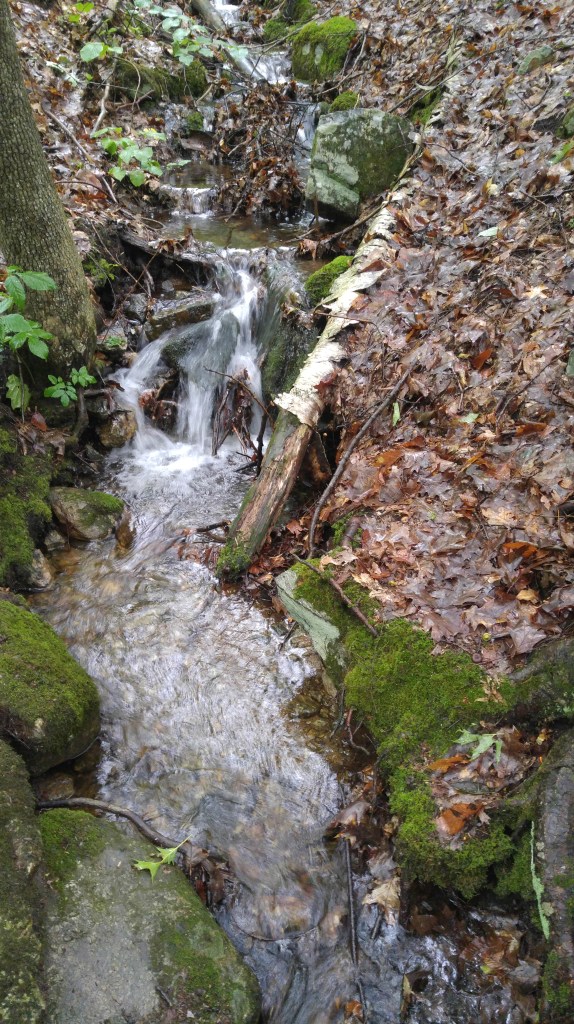
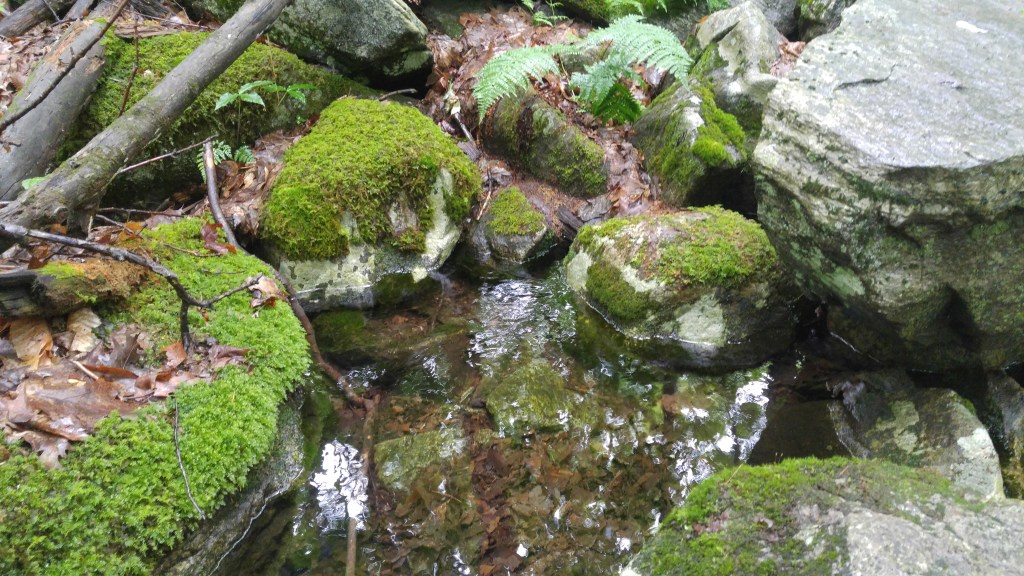
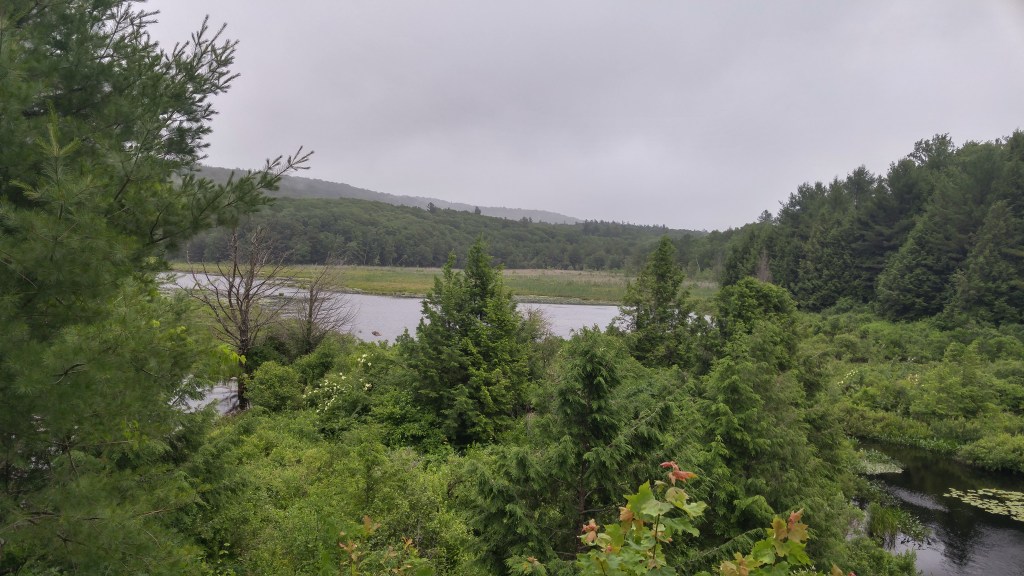
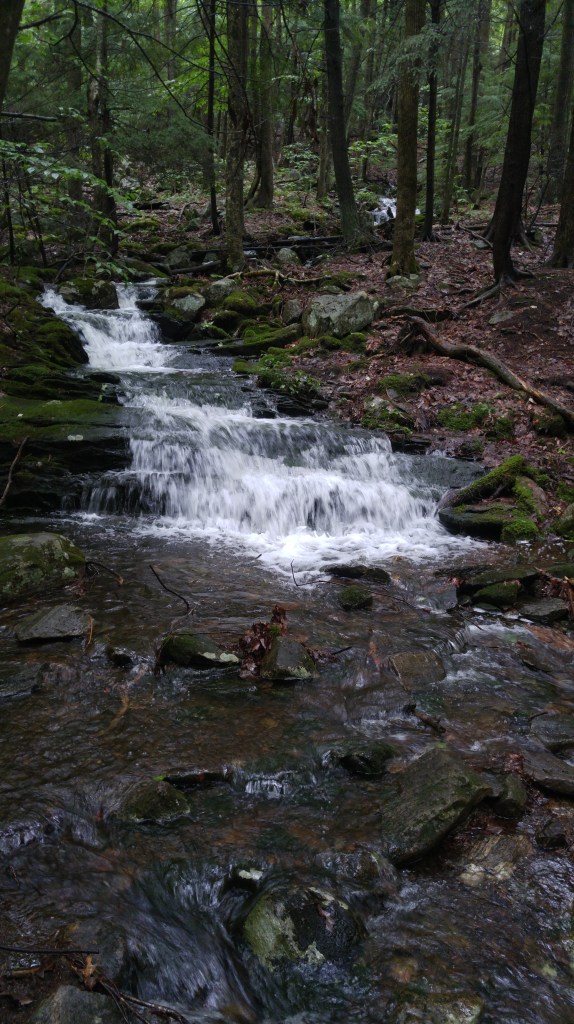
A few weeks ago, Duane and I were in the Berkshire Mountains of Massachusetts for a family wedding. It was a lovely occasion, made even lovelier by the chance to check out a local trail. The Basin Pond Trail in Lee has an interesting history. The Berkshires are the traditional home of the Mohican people, who were forced west, first to New York in the 1780s and later to Wisconsin in the 1820s. Twice efforts to dam the outlet of Basin Pond have led to disaster. In pursuit of water power to drive manufacturing, mill owners from East Lee built a dam in 1873. When the dam failed in 1886, flood waters destroyed twenty-five mills and countless homes downstream. Seven people were killed. In 1965, a second dam was built at the outlet by real estate developers for the construction of a resort community. Three years later when the second dam failed, twelve million gallons of water surged downstream and killed two people in their Cape Street homes. Today, the property is a peaceful refuge, owned and managed by the Berkshire Natural Resources Council. The 2.5 mile moderate trail crosses a network of streams and is a haven for beaver, moose, chipmunks, squirrels, and hermit thrush. For those who are into such things, the trail work is amazing. Click on the photos in the gallery below to enjoy the views.
“After she’s gone to camp, in the early evening I clear Liddy’s breakfast dishes from the rosewood table, and find a small crystallized pool of maple syrup, the grains standing there, round, in the night, I rub it with my fingertip as if I could read it, this raised dot of amber sugar, and this time, when I think of my father, I wonder why I think of my father, of the beautiful blood-red glass in his hand, or his black hair gleaming like a broken-open coal. I think I learned to love the little things about him because of all the big things I could not love, no one could, it would be wrong to. So when I fix on this image of resin or sweep together with the heel of my hand a pile of my son’s sunburn peels like insect wings, where I peeled his back the night before camp, I am doing something I learned early to do, I am paying attention to small beauties, whatever I have–as if it were our duty to find things to love, to bind ourselves to this world.”
in Claiming the Spirit Within. Ed. Marilyn Sewell. Boston: Beacon Press, 1996.
Our nation has a long tradition of people who have spoken hard truths to those in power. In 1777, Midshipman Samuel Shaw and Third Lieutenant Richard Marven blew the whistle on the torture of British prisoners of war by Commodore Esek Hopkins, the commander-in-chief of the Continental Navy. Commodore Hopkins was well-connected. His brother was the Governor of Rhode Island and a signer of the Declaration of Independence. In response to their truth-telling, Shaw and Marven were dismissed from the Navy, jailed, and slapped with a criminal libel suit in the Rhode Island courts. When the Continental Congress learned of the injustice afoot in Rhode Island, they unanimously enacted America’s first whistleblower protection law on June 30, 1778. Shaw and Marven were exonerated and Commodore Hopkins was censured for misconduct.
Perhaps the most notorious whistleblower of the twentieth century was Daniel Ellsberg, a military analyst with RAND Corporation. In 1971, Ellsberg and colleague Anthony Russo leaked a top-secret study—the Pentagon Papers. The study revealed a web of deception and misinformation about the war in Vietnam. The Kennedy, Johnson, and Nixon administrations had lied to Congress and the American people about the viability and success of the war effort. Ellsberg was charged with espionage. He would likely have been convicted if Nixon conspirators G. Gordon Liddy and Howard Hunt—The Whitehouse Plumbers—hadn’t burgled Ellsberg’s workplace, illegally tapped his phones, and plotted to have him dosed with LSD. When their efforts to quash Ellsberg’s truth telling were uncovered, the case against Ellsberg was dismissed.
Employees who speak hard truths in the workplace also face harassment and persecution. In 2010, Everett Stern was working as an anti-money laundering compliance officer with HSBC when he blew the whistle. Stern uncovered a massive, multi-national, money-laundering network at HSBC tied to terrorist groups in the Middle East. Stern sent numerous alerts to his supervisor about the problem, but his boss quashed every effort to stop the illegal wire transfers. Out of options, Stern made contact with the FBI and CIA. As the government noose tightened, Stern lost his job in October 2011. Blacklisted by the financial industry, Stern couldn’t find work. He resorted to waiting tables at PF Chang’s before eventually launching his own business in fraud detection. HSBC paid the federal government $1.92 billion in fines but never faced criminal prosecution for their actions.
John the Baptist knew all about the danger of speaking truth to power. As our reading from Mark’s gospel began, John was imprisoned at Machaerus, Herod Antipas’s mountaintop fortress and retreat. John was the only man in Israel with the chutzpah to call out Herod on his illicit marriage to Herodias. Herodias was Herod’s niece, the daughter of his brother Aristobulous, who had been murdered by their father Herod the Great. Herodias was also already married to his brother, Herod Philip I, who was very much alive and living as an ex-patriate in Rome. The incestuous and illicit union of Herod and Herodias was proscribed by the Torah. Leviticus eighteen and twenty expressly condemned their marriage. But not one priest, not one scribe, not one rabbi in Israel would confront the king about his sin. Everyone at Herod’s Feast knew that the king’s conduct was scandalous, an affront to the Torah, a sin against God, and an embarrassment to the nation.
They left it to John the Baptist, who was known for his blunt and fiery speech, to deliver the message that neither Herod nor Herodias wanted to hear. The Baptizer blew the whistle. He exposed the whole sordid scandal. His condemnation set tongues a-wagging and invited questions and scrutiny. As a result, John found himself a permanent guest of the king, confined to the dungeon at Machaerus, where he continued to denounce Herod and call for the king’s repentance. The king listened to the Baptizer with mixed fascination and fear.
Every message John preached from his prison cell was an opportunity for change. Herod could return to righteousness. He could make the choice for a holier life. Herod knew his guilt, and so did Herodias. As a woman in a deeply patriarchal world, John’s truth telling could lead to her banishment or execution. Rather than renounce her illegal marriage and return to her rightful husband, Herodias waited for the opportune moment when the whistleblower could be silenced, once and for all.
Being a whistleblower is risky business. We may not ever expose military misconduct or the abuse of Presidential power or corporate fraud and profiteering, but we all face moments when our moral sensibility tells us that something doesn’t smell right. Something is wrong. We know that if we remain silent, we will be complicit. Refusing to speak up, to say, “Stop. No.” is really a “Yes” because we have allowed wrong to go unchallenged. We know that if we speak out, there will be painful consequences for our lives: job loss, broken relationships, angry arguments, malicious gossip, outright rejection. Speaking the truth can be the hardest thing we ever do.
Although we may know the ethical challenge of being the whistleblower, we also know the shock and shame of having the whistle blown on us. We have heard hard truths that have confronted us with our bad behavior and sin. Our John the Baptist may have been the father who told us to swallow our pride, straighten up, and go home to the wife and kids. Our John the Baptist may have been the friends who confronted us about our addiction and insisted that we seek professional help. Our John the Baptist may have been the boss who noticed that we were cutting ethical corners and gave us the “Come to Jesus” speech. Our John the Baptist may have been the professor who caught us plagiarizing a paper and made us face the academic consequences for stealing someone else’s work.
We all know John. We have all had people in our lives who have cared enough to invite us to change, to be our better selves, to repent and begin again. Sometimes, we use the power at our disposal to silence them. We disconnect from the relationship. We tell them they are crazy. We deny we have a problem. We resort to threats and insults. Occasionally, we listen to them. Our lives take a new trajectory that isn’t easy, but it is right.
Herodias’s opportune moment came as her husband hosted a banquet to curry favor with his nobles, military commanders, and leading men of Galilee. The table was decked with delicacies. The wine flowed in abundance. The disturbing passion of the evening reached its crescendo as the daughter danced for her father’s pleasure. As Herod promised half his kingdom in reward for his daughter’s performance, Herodias knew she would get exactly what she wanted: John the Baptist’s head on a platter. When the tragic request is made to kill John, there is a graced moment, the king could have challenged his wife and risen to his better nature. He could have acknowledged his wrong and saved John’s life. But the moment passed and John’s fate was sealed in gory fashion.
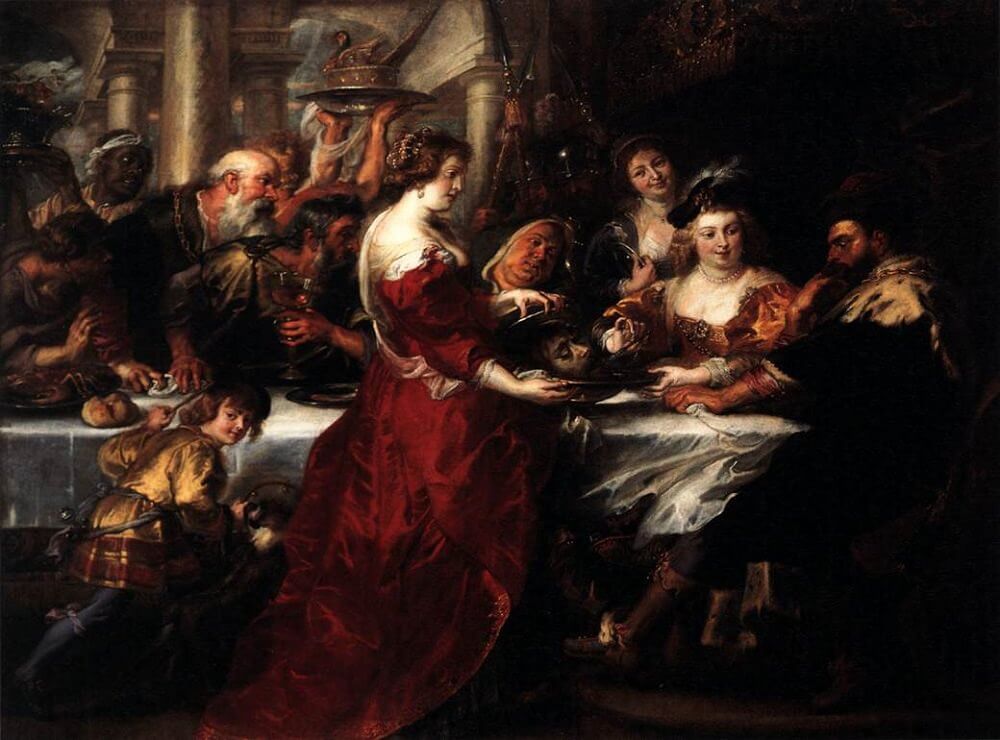
When the Flemish artist Peter Paul Reubens painted “Herod’s Feast” in the 1600s, he did so with bold color and sensuous detail. Reubens portrayed Herod’s daughter in a scarlet silken dress, bosom bulging, coquettishly lifting the cover on a silver platter bearing the bloodied head of John. A smirking Heodias, at the king’s side, plies a fork with her pinky finger lifted in elegant fashion, ready to poke John’s lifeless head or perhaps serve him up to her husband. Herod looks on, eyes bulging in horror, hands clenching the table cloth in guilt and remorse, barely holding it together. All around them, the party continues, guests feasting and drinking and gossiping, as if the death of the whistleblower were a foregone conclusion.
It’s a terrible story. It’s hard to hear that Herod would sooner take an innocent man’s life than admit his sin and make a change. We are appalled to think that a mother would manipulate her husband and her daughter to bring about a murder. John’s death anticipates the cross and the death of the innocent Jesus at the hands of a weak Pontius Pilate and an angry mob. When this passage pops up in the lectionary cycle, preachers are tempted to give it a pass. But it is a story worth attending to. John’s end questions our moral character. Will we stand up for truth, or will we fail to blow the whistle and live in guilty silence? John’s demise also ultimately confronts us with our own whistleblowers. We have all walked in Herod’s sandals. We have not always risen to our better natures when forced to listen to the message that we do not want to hear. We read of Herod’s Feast and John’s death, and we know our aversion to the hard truths and our reluctance to change, even when it is the right and holy thing to do.
Our John the Baptist blows the whistle. There is a graced moment – the potential for change and growth. Will we become our better selves, or will the prophet lose their head?
Resources: Black, Matthew. “The US passed the first whistleblower law in 1777” in History 101, Feb. 14, 2020. Accessed online at https://www.history101.com/the-us-passed-the-first-whistle-blower-law-in-history-in-1777/. Mullins, Lisa. “50 Years Ago, Daniel Ellsberg — Who Leaked The Pentagon Papers — Surrendered At Boston Federal Court” in WBUR News, June 28, 2021. Accessed online at https://www.wbur.org/news/2021/06/28/on-this-day-daniel-ellsberg-pentagon-papers-surrender-boston-federal-court Mollenkamp, Carrick and Brett Wolf. “Special Report: HSBC’s money-laundering crackdown riddled with lapses” in Reuters, July 30, 2012. Accessed online at https://www.reuters.com/article/us-hsbc-compliance-delaware-idUSBRE86C18H20120714 Hall, Douglas John. “Theological Perspective on Mark 6:14-29” in Feasting on the Word, Year B, Vol. 3. Louisville: Westminster John Knox Press, 2009. Yust, Karen Marie. “Pastoral Perspective on Mark 6:14-29” in Feasting on the Word, Year B, Vol. 3. Louisville: Westminster John Knox Press, 2009. Bryant, Robert A. “Exegetical Perspective on Mark 6:14-29” in Feasting on the Word, Year B, Vol. 3. Louisville: Westminster John Knox Press, 2009.
all who mourn over the loss of your appointed festivals,
which is a burden and reproach for you.
At that time I will deal
with all who oppressed you.
I will rescue the lame;
I will gather the exiles.
I will give them praise and honor
in every land where they have suffered shame.
At that time I will gather you;
at that time I will bring you home.
I will give you honor and praise
among all the peoples of the earth
when I restore your fortunes
before your very eyes,” says the Lord.
Playground. That word may evoke a swirl of memories: the first time you braved the slide, the creaking of the swing set as you pumped your legs in pursuit of altitude, the bone-jarring thump of the teeter-totter when your friend dismounted and you plummeted earthward. A number of years ago, I did community organizing in a hard-hit, diverse community. The playground spoke volumes about the marginal status of the community and its people. Seats were missing from the swings. Plastic horses had been stripped from the toddler rides, leaving behind sharp springs, rising up from cracked blacktop like a curious and dangerous crop. Hypodermic needles lurked beneath the slide. I never saw a child play there. Nowadays, I live just a few blocks away from a newly refurbished neighborhood park. Mornings might find young mothers parked on the benches, scrolling through social media feeds while their wee ones explore. Evenings welcome teens for pick-up basketball, shirts against skins, trash talk flying.
In her meditations on the twelve months of the year may i have this dance, Joyce Rupp suggests that July is the playground of God. Adirondackers might be inclined to agree. Hummingbirds hover in the garden, sipping nectar, bickering at the feeder, competing for sugar water. Fawns rise up on feeble legs to follow their mothers. They nurse, tails wagging with joy, like puppies. The cat sits on the screened porch, singing a throaty song to the birds outside and dreaming of the mischief that could be had if the door were left ajar. People get playful. They hike mountains to savor the view from the summit. They paddle canoes amid water lilies, hearts jumping at the slap of a beaver tail. If July is God’s playground, then we are all-in. All of creation—the two-leggeds, the four-leggeds, the finned, the feathery, the slithery—plays, delights, and rejoices in the goodness that is all around.
Have you ever thought what God might do on a playground—or what might inspire God to delight and rejoice like a child in Legoland? The Prophet Zephaniah invites us to imagine God singing and rejoicing over us. It’s right there in Zeph. 3:17, “The Lord your God is in your midst, a warrior who gives victory; God will rejoice over you with gladness, he will renew you in his love; he will rejoice over you with loud singing.” A different translation of verse seventeen puts it this way, “God will rejoice over you with happy song . . . God will dance with shouts of joy for you as on a day of festival.” Picture that.
When Zephaniah wrote those words, the Israelites didn’t have much to celebrate. In the early days of the reign of King Josiah (640-609 BCE), before the king grew up and enacted reform, violence and corruption were rife. Justice was sold to the highest bidder. The widow and orphan hungered. False gods were worshipped in hilltop shrines. Indeed, for three and a half chapters Zephaniah’s word of the Lord imparts a blistering tongue-lashing for a people who have lost their moral center. It hardly sounds like a day in the park—or on the playground. Yet God holds out hope for the people, the promise of the coming day when holy judgment will end, enemies will be turned away, and the disaster we seem hellbent on making will be averted.
It’s a paradox. We get things so wrong, and yet we are beloved and deserving of celebration and delight. It’s the truth proclaimed by Jesus. When Jesus told Zephaniah’s story, he described a son who treated his father as if he were as good as dead. After debasing himself in a profligate life, the son decided to try his luck with the father again—perhaps out of self-interest, perhaps in remorse. When the prodigal got within sight of home, he saw his father running down the road, tunic hitched up, legs flailing, a dust cloud in his wake. The lost son was welcomed, with hugs and tears and great rejoicing. In the party that followed, we can imagine the loud singing and the joyous dancing. Even so, God sings and dances over you. How good is that?
In an Adirondack summer, it is easy to imagine God singing and dancing in creation. Those raspberry sunsets are like celestial fireworks. The flowers shimmy on the verge in the morning breeze. Waves driven by the wind send whitecaps to rush your boat toward shore. The drama of a thunderstorm ignites the night and rattles the window panes. It’s a sensational, dazzling, sensory overload of a playground out there. In the midst of it, God sings and dances over us, delighting in us, simply because we are her children – in all our beauty, in all our frailty. She sure can throw a party. Let’s get out there on the playground and celebrate. Thanks be to God.
“The Playground of God”
by Joyce Rupp
“If I could share my treasures with you
I would constantly send you blessings
from the depths and beauty of each day.
I would seal your smile with sunshine;
I would leaf your walk of life
with the tenderest of greens
and the deepest of autumns.
I would catch at least three rainbows,
and set a seagull on each one
to sail you constant hellos
from the heart of the Transcendent.
I would whisper wonderings
from silent nooks of mountain tops
and the humming heart of the sea.
I would call for the deer
and all the tender animals
to run with you in happiness.
I would ask each tree
in her most majestic mood
to cover you with constant care.
I would breeze in billowy clouds
to share their rainy wanderings
when you need to feel washed new.
I would take you by the hand
and hold your heart near mine,
to let you hear the constant love
bounding forth from me.
and most of all
I would join my heart with yours
and have you share the path of love
that God has caused and carved
in the shadows of my soul.”
Rupp, Joyce. may i have this dance? Notre Dame: Ave Maria Press, 1992, 2007.
“14 For the whole law is summed up in a single commandment, “You shall love your neighbor as yourself.” 15 If, however, you bite and devour one another, take care that you are not consumed by one another.”–Galatians 5:14-15
We all grow up with rules, guidelines that keep us on the right path and help us to live within our families. My Jewish friend Nan was taught to keep the most important rule of all posted on the doorway of her home, right about shoulder height. There, within a small metal container called a mezuzah, is a tiny parchment scroll inscribed with the words from Deuteronomy 6, “Shema! Hear, O Israel, the Lord your God is One. You shall love the Lord your God with all your heart with all your soul with all your might.” If that sounds familiar, it’s because I say it in church, each first Sunday when we share the Lord’s Supper.
When I was teaching English to seminarians in Chicago, I noticed that many of my Korean students had the Ten Commandments posted in their homes, imitation stone tablets with the words of the commands carved, not in Hebrew, but in Korean. In fact, one student gave me my own miniature tablets as a thank you gift. I can’t read a word of it, of course, but I know what they say all the same.
Now you families out there, I know from visiting your homes that you have household rules, and I even know a couple of families who post their rules as gentle reminders. It’s mostly positive practical wisdom like “be kind, be helpful, do your homework.”
We even get into the whole rule-posting act at the church. In 2006, the Session developed the “Statement of Respectful Communication.” The statement encourages all to interact with mutual regard and common decency. Then in 2007, the Session developed a Covenant of Conduct that provides helpful guidance and support for how we air our grievances. Those yellow and green policy statements have been posted on the walls, for us and for those who use our well-used building, ever since.
In my home when I was growing up, one of our rules was “No Biting.” We must have been much wilder children than those of you who only need the guidance to be kind, be helpful, and do your homework. My brother, sister, and I are all two years apart in age. My brother Scotty, being the only boy and the oldest, had his own room. He liked to keep the door shut and posted with signs like, “Keep Out” and “No Girls Allowed.” The trouble was that my little sister Mary and I adored our big brother, and his efforts to carve out some boy space only left us all the more determined to find our way in.
It happened one day while Mary and I were invading his space. Perhaps driven wild by our girlish pestering, my brother bit me, right there on the forearm, not gently either. It left a big angry red ring and tiny puncture marks where his sharp little eyeteeth poked the skin.
Drawn by the screaming and wailing that soon followed, my mother rushed upstairs, wanting to know, “What’s all this about?”
“He bit me!” I cried, waving my arm in front of her face.
“Andrew Scott White,” my mother said. We all fell silent at that. And then my mother, that earthy farm girl, did something that no parenting guru in their right mind would ever recommend doing. “Give me your arm” she said. We were all looking a little worried, and I had completely forgotten my mortal wound.
Scott showed her his arm. And then, she bit it, not hard or mean, like he had bitten me, but enough to leave a big slobbery spot on it. Our mouths all dropped open. “Did you like that?” she asked my brother.
“No! It’s yucky,” he answered.
“That’s right,” she said. “No biting.” Not one of us ever bit the other again.
In his letter to the churches in Galatia, the Apostle Paul cautions Christians about the dangers of biting. Just a few years before, Paul and his good friend Barnabas had made a brave first missionary journey traveling through the Roman province of Galatia, in what is now Turkey, taking the good news of Jesus Christ to Jews and Gentiles alike. In Galatia, Paul had planted a series of Gentile house churches, fledgling communities of faith that grew and worked together to follow the Way of Jesus.
“Who is right?” the Galatians debate. Is it Paul with his promise that in Jesus Christ, God has done something new by welcoming Gentiles as Gentiles into the covenant of Abraham? Or is it these new teachers, who want to turn us into a bunch of proselytes and get us in compliance with the Torah? The debate grows heated in Galatia with factions forming and feuding. Soon the conflict is so explosive that Paul cautions, “If you bite and devour one another, take care that you are not consumed by one another.” It’s as if the Gentile Christians in Galatia have become like wild beasts, consumed in a deadly struggle that will undoubtedly destroy their churches.
Paul insists that God really doesn’t care whether or not we are circumcised or what we eat for dinner. What really matters to God is love. We are to love God and love one another as Christ has loved us. Love. That’s the law in a nutshell, the simplest, most beautiful, and most difficult path that we can choose to walk in life.
The path of love demands that we put an end to behaviors that exploit and demean others, like adultery, promiscuity, and pornography. The path of love insists that we stop the worship of false idols, like money, political party, our consumer culture, and celebrity. The path of love requires that we give up old bad habits that tear the fabric of our community, like racial hate, strife, jealousy, anger, quarrels, petty arguments, and factions. The path of love tells us that the abuse of drugs and alcohol is never a good way to go. The path of love is all about freely giving of ourselves for the up-building of our community. The path of love shines bright for all to see when we turn to one another with the qualities that Paul names in his letter to the Galatians: joy, peace, patience, kindness, generosity, faithfulness, gentleness, and self-control. Along the path of love, there is no biting.
Whether we care to admit it or not, we know a little bit about biting and nibbling on one another, even in church. We get prickly about whether the candles are straight in worship, and we can get downright grumpy over who uses the building, if they pay, and what kind of condition they leave it in — and don’t get me started on the kitchen. We know a little something about strife, jealousy, anger, quarrels, petty arguments, and factions.
It’s not just about being church, is it? It’s about our work places, our civic organizations, our classrooms, our homes. Love is always more important than being right, winning the argument, or getting our way. Wounding the spirit of our beloved ones is like taking a big bite. It breaks trust and tears down relationship. Wounds like that are hard to heal.
Neither Paul nor I are suggesting that we are called to be doormats for love’s sake. Rather, love must be the centering ethic that we choose for our relationships – and that naturally bids us to ponder well the role we play within the lives of others. Paul calls us to a better way. God really doesn’t care whether our candles are straight or crooked or lit. God probably doesn’t care whether we make all the best decisions about our building use. God probably really doesn’t give two hoots about the mess that gets left in the kitchen sink. What really matters to God is love. We are to love God and love one another as Christ has loved us.
Love. That’s the law in a nutshell, the simplest, most beautiful, and most difficult path that we can choose to walk. Let us walk that path together. The path of love is all about freely giving of ourselves for the up-building of others. It shines bright for all to see when we turn to one another with joy, peace, patience, kindness, generosity, faithfulness, gentleness, and self-control. Let us love God and love our neighbors as ourselves. No biting, my friends.
“Oppose my opponents, Lord; fight those who fight me. Take your shields–large and small–and come to my aid. Draw the spear and the javelin against my pursuers, and assure me: ‘I am your deliverance.'”
– Psalm 35:1-3
That David. He sure could write a poem – raw, intense, and gritty. From the verses that I share above, David goes on to further invoke God’s protection, judgment, and wrath against those who oppose him. Take a moment to read Psalm thirty-five. You’ll be glad you did. If you are familiar with scripture, the verses may evoke the painful difficulties of David’s life: from the wrath of King Saul to serving as a double agent with the Philistines, from the contempt of his wife Michal to the betrayal of his son Absalom. David needed a God who would be his shield.
I like the notion of God fighting for me, weighing into the fray and using a big shield to guard me while getting some powerful licks in against the “enemy.” The most poignant part of the psalm comes in verse twelve when it becomes clear that David wasn’t writing about adversaries on the battlefield. He was coping with everyday enemies, people for whom he had prayed, fasted, and cared deeply through times of hardship, sickness, or trouble. David’s compassion was rewarded with mockery, betrayal, and ridicule. He must have felt terribly alone.
We may not face the same difficulties that David did, but his words stir within us memories of old hurts and betrayals: the colleague who took credit for our hard work, the sibling who drove a wedge in our family harmony, the spouse who walked out the door, the friend who broke our trust and spilled our secrets in harmful, hurtful ways. Those difficulties may not be personal; they may be systemic. The playing field isn’t level for people of color. Women still struggle for equal pay and professional opportunity. Grey hair and crow’s feet may render us invisible in a culture that prizes youth. Of course, “enemies” can be figurative: the silent spread of cancer, the slow creep of age, the pain of past abuse. What or who are the “enemies” that press in upon you today?
I am grateful to know that God–who chose to walk among us in Jesus–is with me in all those difficult circumstances. The Lord is with you in all that makes you say, “Woe!” I like to imagine that on the days when I, like David, feel terribly alone, God’s mighty shield surrounds me. Active in battle and always victorious, the Lord parries, thrusts, and repels. The Lord, mighty in battle, is more than a match for all those “enemies” that preoccupy our thoughts and fill us with woe.
I suspect that Psalm 35 inspired Patrick of Ireland in the fifth century to write the prayer that has become known as the lorica or “St. Patrick’s Breastplate.” The word lorica is Latin. It alludes to the body armor worn by Roman soldiers to protect them in battle. Patrick knew enemies. He dedicated his life to sharing the gospel with the very people who had enslaved him for six years. The prayer, like a magic spell woven around the body, invokes God’s powerful protection. It has long been used as a “Prayer Upon Arising,” a morning prayer to invoke the help of God for the day to come. As you go forth into your day, may you remember the words of Psalm 35–and Patrick of Ireland. The Lord is fighting for you.
Blest be the tie!
Joann White
“St. Patrick’s Breastplate”
I bind unto myself today The strong Name of the Trinity, By invocation of the same, The Three in One and One in Three.
I bind this day to me for ever. By power of faith, Christ’s incarnation; His baptism in the Jordan river; His death on Cross for my salvation; His bursting from the spicèd tomb; His riding up the heavenly way; His coming at the day of doom;* I bind unto myself today.
I bind unto myself the power Of the great love of the cherubim; The sweet ‘well done’ in judgment hour, The service of the seraphim, Confessors’ faith, Apostles’ word, The Patriarchs’ prayers, the Prophets’ scrolls, All good deeds done unto the Lord, And purity of virgin souls.
I bind unto myself today The virtues of the starlit heaven, The glorious sun’s life-giving ray, The whiteness of the moon at even, The flashing of the lightning free, The whirling wind’s tempestuous shocks, The stable earth, the deep salt sea, Around the old eternal rocks.
I bind unto myself today The power of God to hold and lead, His eye to watch, His might to stay, His ear to hearken to my need. The wisdom of my God to teach, His hand to guide, His shield to ward, The word of God to give me speech, His heavenly host to be my guard.
Against the demon snares of sin, The vice that gives temptation force, The natural lusts that war within, The hostile men that mar my course; Or few or many, far or nigh, In every place and in all hours, Against their fierce hostility, I bind to me these holy powers.
Against all Satan’s spells and wiles, Against false words of heresy, Against the knowledge that defiles, Against the heart’s idolatry, Against the wizard’s evil craft, Against the death wound and the burning, The choking wave and the poisoned shaft, Protect me, Christ, till Thy returning.
Christ be with me, Christ within me, Christ behind me, Christ before me, Christ beside me, Christ to win me, Christ to comfort and restore me. Christ beneath me, Christ above me, Christ in quiet, Christ in danger, Christ in hearts of all that love me, Christ in mouth of friend and stranger.
I bind unto myself the Name, The strong Name of the Trinity; By invocation of the same. The Three in One, and One in Three, Of Whom all nature hath creation, Eternal Father, Spirit, Word: Praise to the Lord of my salvation, Salvation is of Christ the Lord.
“Write the vision; make it plain on tablets, so that a runner may read it. For there is still a vision for the appointed time; it speaks of the end, and does not lie. If it seems to tarry, wait for it; it will surely come, it will not delay.” —Habakuk 2:2-3
I’ve been writing for most of my life. My fourth grade teacher Mrs. Carter read my first efforts at poetry and accused me of copying. In the sixth grade, I won a Young Author award for my mystery The Churchyard Phantom, the story of a girl detective who cracks a diamond smuggling ring run out of the local church. I have kept a journal for most of my adult life as a tool for reflection, prayer, and spiritual growth. For the past two decades, much of my writing has been for the church: sermons, newsletter articles, prayers, reports, and the weekly Blast. At some point, I figured out that writing is one of the things that God put me on earth to do, and I’ve tried to use my gift to honor and serve the Lord ever since.
As our Adirondack summer unfurls, I am thrilled and a little terrified to share about the latest twists in my writing journey. As I type, my first book has gone to print. Last fall, I decided that I really didn’t need a literary agent. Instead, I would send my manuscript out to a few publishing houses. Much to my surprise, the first publisher bit. My book, Blest Be the Tie, is a collection of 24 interwoven fables of faith, set in the Adirondacks. The stories are grounded in a fictitious Presbyterian church, shepherded by our old friend (my male alter-ego) Pastor Bob. Blest Be the Tie is available now through the publisher (wipfandstock.com) or on Amazon. In the next few weeks, we’ll have copies available for purchase at church, too. These we will be able to sell at a 20% discount (the perk of being an author). If you would like to pre-order copies, give a call and let us know. One of these days, we’ll have a book release party to properly celebrate.
Also this summer, I have embarked on Doctor of Ministry studies with Pittsburgh Theological Seminary in Creative Writing and Public Theology. This innovative new program features traditional theological studies, as well as courses in the craft of writing, taught by professional authors in diverse fields: poetry, literary non-fiction, narrative journalism, memoir, short stories, writing for children, blogs, podcasts, and more. I’m eager to try new modes of writing that will reach beyond the walls of the church with the love of Jesus Christ. The objectives of the three-year program are to hone writing skills in a variety of genres, deepen my theological understanding, develop a vocational identity as a public theologian, and write a publishable manuscript. The reading for my first class has been challenging and mind-blowingly good from authors Toni Morrison, Willie James Jennings, Tracy K. Smith, and Serene Jones.
Perhaps this post about how I am using my gifts to grow as a public theologian, author, and servant of the Kingdom of God has got you thinking about your gifts. How is Jesus calling you to use your abilities to reach out and bless the world?
Blest be the tie! Joann
“blessing the boats” —Lucille Clifton
may the tide that is entering even now the lip of our understanding carry you out beyond the face of fear may you kiss the wind then turn from it certain that it will love your back may you open your eyes to water water waving forever and may you in your innocence sail through this to that
(from Blessing the Boats: New and Selected Poems 1998-2000. Rochester: BOA Editions, 2000)
This lovely poem was shared as a benediction by the awesome Rev. Dr. Mary O’Shan Overton,










 Joann White