The Reckoning

Sabbath Day Thoughts — “The Reckoning” 2 Sam. 11:26-12:13a

We are constantly judging others. It is part of how we are hardwired as human beings, a legacy of the days when determining the safety or danger of any given situation could mean the difference between life and death. Researchers at Dartmouth and New York Universities determined that the human brain begins to label people as trustworthy or untrustworthy in a split second, even before we have time to consciously analyze what we see.

Our natural tendency to judge others is further shaped by our context. Children raised in families with critical parents learn to judge, sorting people into a ranked hierarchy from excellent to good to adequate to “you should be embarrassed by that effort.” Similarly, students, who cut their teeth in hyper-competitive schools and universities, can be ruthless in assigning value to the efforts of their classmates. We want that gold star for ourselves.

Psychologists suggest that our innate need to judge finds further reinforcement from the mental payoff that we reap. Finding others inadequate boosts our own sense of self-esteem and competency. We think, “At least I’m better than that!” Carl Jung, whose work was so formative for analytical psychology, formulated that there is a deeper and darker motivation behind our need to judge. Jung argued that we refuse to see what we do not like about ourselves, but at a deeper level, we still need to deal with those qualities and actions. So, we project those flaws onto others. We dislike and even hate in others that part of ourselves that we have denied and disowned.

In our reading from 2 Samuel, King David rushed to judgment when the Prophet Nathan told him a story of injustice. Last week, we heard the story of David’s abuse of power. While the armies of Israel waged war against the Ammonites, David stayed home and got up to no good. First, he violated and impregnated Bathsheba. Then, he had her husband Uriah murdered to cover up the sin. As today’s reading began, David thought all the mischief had been managed. He had even appeared generous and magnanimous by taking the widowed Bathsheba into the royal household and making her a wife.

There was only one problem—and it was a big one. God was a witness. God knew that the king had coveted his neighbor’s wife, committed adultery, borne false witness, and staged a murder. God didn’t like what God had seen, so a holy messenger, the Prophet Nathan, was called to confront David with his sin.

It was deftly done. David as king spent part of his day hearing the disputes of his people and rendering judgments. Nathan stood in line in the judgment hall and waited. When his turn came, he told a sad story of the abuse of power. We heard it—the rich man stole and killed the beloved pet of his impoverished neighbor without a second thought to the lamb’s suffering or the neighbor’s grief. David, who had not acknowledged the abuse and injustice of his own actions, rushed to judgment as he heard those actions attributed to another. “This man deserves to die!” the king proclaimed, unwittingly passing judgment on himself.

It’s a story that makes us want to pass our own judgments. How disappointed we are in David, who has proven that he is just as capable of misusing his authority as the last king, Saul. It’s a story that uncomfortably reveals that David is both sinner and saint. He is a rapist, murderer, liar, and predator. Yet, David is also Israel’s champion, a war hero, a poet, the anointed one, and a man with a heart for God. Humanity is complex, with the potential for so much good—and so much evil. It’s a fact that undergirds the salvation story of scripture. It stretches from God’s warning to Cain in the Garden of Eden, saying, “Sin is at your door. Its desire is to master you, but you must rule over it” (Gen. 4:7). It stretches to the cross, where Jesus took on the sin of the world so that we could be reconciled to God and one another. We are all sinners and saints.

David’s response to the parable of the ewe lamb reflects his inability to see and accept his own moral failure. We, too, find it easier to see the sins of others than to recognize our own faults. We lament and demonstrate against the humanitarian crisis in Gaza even as we arm the Israeli Defense Force. We rail against illegal immigration at our southern border even as we tank bi-partisan efforts to address the problem. We judge our neighbor’s addiction to drugs or alcohol while we soothe our anxiety with too much food or pornography or shopping ‘til we drop. Everyone is a judge. Everyone is a critic. Everyone has an inner troll, waiting to drop the bomb of condemnation on anyone other than ourselves. There’s a reason that Jesus cautioned the Pharisees when they judged his ministry and his disciples, saying that they would be better served attending to the plank in their own eye than casting aspersions against the crumb in the eye of their neighbor.

Nathan’s parable serves as a reminder that, not only are we sinner and saint, not only are we more eager to judge the fault of others than to confess our own failings, but we are also all subject to holy judgment. It’s a disquieting contention of scripture that there will be a Day of Judgment when we will be deemed sheep or goats, saints or sinners. David thought the mischief was managed. We think no one knows our sin. But God sees and God knows. In fact, our sins against one another are also sins against God. Nathan said it best in telling David, “Why have you despised the word of the Lord?” Indeed, according to the Ten Commandments, David’s sins of adultery and murder were a violation of Israel’s covenant with God and punishable by death. David knew this. That’s why when he was publicly confronted with his crimes, he confessed, “I have sinned against the Lord.” He threw himself upon the mercy of his eternal judge.

There is a lot of bad news in our scripture today: we are all both sinners and saints, we judge others and fail to accept our shortcomings, and we will one day face judgment. And yet there is good news. The good news is that God is merciful and abounding in steadfast love. When David finally faced facts, Nathan offered God’s mercy, saying, “God has taken away your sin; you will not die.” There would, of course, be consequences that sprang from David’s unjust actions. We all know what it is like to face the music of owning up to what we have done, whether we want to or not. Yet we can trust that God chooses to forgive. There is mercy for us.

We, who are hardwired to judge and have painfully experienced the judgment of others, struggle to trust in the mercy of our God. That steadfast love only becomes real for us when we remember what God has done for us in Jesus of Nazareth. The life of Jesus is an extended metaphor for the limitless love and incomparable mercy of God. In Jesus, we know that God loves us enough to become flesh, live among us, and teach us the better way of the kingdom. In Jesus, we learned that God loves us enough to generously forgive frail disciples, formidable opponents, and even the executioners who nailed him to a cross and gambled for his clothes. Who is in a position to condemn us? Only Jesus. As we celebrate the Lord’s Supper today and partake of the body and blood of our Lord, we remember that God would sooner die than be parted from us. The mercy of our Lord abounds for us. Thanks be to God.

Perhaps we come closest to Jesus and to embodying his Kingdom when we dare to allow God’s mercy to flow through us to others. When we rise above our instinct to judge, when we stop projecting onto others what we loathe in ourselves, when we understand that we are all in need of a savior, it is then that the Kingdom comes alive in life changing ways. We find the wherewithal to truly love our neighbor, and we place our hearts on the altar of God’s love where we are helped and healed and made new. May we go forth to love more and to judge less.

Resources

Dana Harron. “Why Do We Judge Other People?” in Psychology Today, Oct. 21, 2021. Accessed online at https://www.psychologytoday.com/us/blog/living-eating-disorders/202110/why-do-we-judge-other-people

Visweswaran Balasubramanian. “Psychology of Judging – what it reveals about us” in Linked In Pulse, Dec. 8, 2020. Accessed online at https://www.linkedin.com/pulse/psychology-judging-what-reveals-us-visweswaran-balasubramanian/

Dhuvra Koranne. “The Psychology of Judging Others” in Mind Voyage, Nov. 8, 2023. Accessed online at The Psychology of Judging Others | Mind Voyage

Alexandra Sifferlin. “Our Brains Immediately Judge People” in Time Magazine, August 6, 2014. Accessed online at https://time.com/3083667/brain-trustworthiness/

Ted A. Smith. “Commentary on 2 Sam. 11:26-12:13a” in Preaching This Week, August 2, 2009. Accessed online at Commentary on 2 Samuel 11:26—12:13a – Working Preacher from Luther Seminary

Ralph Klein. “Commentary on 2 Sam. 11:26-12:13a” in Preaching This Week, August 2, 2015. Accessed online at Commentary on 2 Samuel 11:26—12:13a – Working Preacher from Luther Seminary

Roger Nam. “Commentary on 2 Sam. 11:26-12:13a” in Preaching This Week, August 4, 2024. Accessed online at Commentary on 2 Samuel 11:26—12:13a – Working Preacher from Luther Seminary


2 Samuel 11:26—12:13a

26When the wife of Uriah heard that her husband was dead, she made lamentation for him. 27When the mourning was over, David sent and brought her to his house, and she became his wife, and bore him a son. But the thing that David had done displeased the Lord,

12and the Lord sent Nathan to David. He came to him, and said to him, “There were two men in a certain city, the one rich and the other poor. 2The rich man had very many flocks and herds; 3but the poor man had nothing but one little ewe lamb, which he had bought. He brought it up, and it grew up with him and with his children; it used to eat of his meager fare, and drink from his cup, and lie in his bosom, and it was like a daughter to him. 4Now there came a traveler to the rich man, and he was loath to take one of his own flock or herd to prepare for the wayfarer who had come to him, but he took the poor man’s lamb, and prepared that for the guest who had come to him.” 5Then David’s anger was greatly kindled against the man. He said to Nathan, “As the Lord lives, the man who has done this deserves to die; 6he shall restore the lamb fourfold, because he did this thing, and because he had no pity.” 7Nathan said to David, “You are the man! Thus says the Lord, the God of Israel: I anointed you king over Israel, and I rescued you from the hand of Saul; 8I gave you your master’s house, and your master’s wives into your bosom, and gave you the house of Israel and of Judah; and if that had been too little, I would have added as much more. 9Why have you despised the word of the Lord, to do what is evil in his sight? You have struck down Uriah the Hittite with the sword, and have taken his wife to be your wife, and have killed him with the sword of the Ammonites. 10Now therefore the sword shall never depart from your house, for you have despised me, and have taken the wife of Uriah the Hittite to be your wife. 11Thus says the Lord: I will raise up trouble against you from within your own house; and I will take your wives before your eyes, and give them to your neighbor, and he shall lie with your wives in the sight of this very sun. 12For you did it secretly; but I will do this thing before all Israel, and before the sun.” 13David said to Nathan, “I have sinned against the Lord.” Nathan said to David, “Now the Lord has put away your sin; you shall not die.


Photo by Alesia Kozik on Pexels.com

The Tangled Web

Sabbath Day Thoughts — “The Tangled Web” 2 Samuel 11:1-15

The abuse of power is the misuse of our authority. We may oppress other people or coerce them to do wrong. It can happen in politics, in the workplace, or even in our own homes. The 18th century French philosopher Montesquieu, who was the first to formulate the separation of powers in government, once wrote, “Constant experience shows us that every man invested with power is apt to abuse it, and to carry his authority as far as it will go.”

On the American political front, perhaps the most notorious late-twentieth-century example of abuse of power was Watergate. In 1972, President Richard Nixon and his reelection committee engaged in illegal clandestine operations and got caught. On June 17th of that year, five burglars were arrested by plainclothes police officers in the Democratic National Headquarters on the sixth floor of the Watergate office building. The team was planting listening devices and photographing files. In the investigation that followed, forty government officials were indicted. Eight went to jail, including White House staff members HR Haldeman and John Erlichman, as well as Attorney General John Mitchell. When tape recordings linked the President to the burglary and cover-up, Nixon resigned, saying that he no longer had “a strong enough political base” with which to govern.

Power is abused in the workplace. 41.4% of workers say that they have experienced psychological aggression and bullying on the job. We’ve had bosses who intentionally embarrass workers, mock their mistakes, spread stories, shout, blame, and threaten. It may go so far as sabotaging someone’s career or manipulating co-workers to join in the abuse, creating a toxic workplace. Does any of this sound uncomfortably familiar? In one study, more than half of women reported that they have been victims of unwanted sexual behavior at work. That’s an unfortunate reality that was long kept quiet until the #MeToo movement made it headline news. Powerful people in the entertainment industry, like Harvey Weinstein and Bill Cosby, have lost high-profile court cases for sexually exploiting vulnerable women.

Our scripture reading this morning is all about the abuse of power. When the Israelites demanded a king, God warned them of the consequences (1 Sam. 8). Sounding a lot like Montesquieu, God had cautioned that a king would lord it over them: take their sons and deploy them in endless battles, take their daughters “to become perfumers, cooks, and bakers,” take the best of their harvest, vineyards, slaves, and livestock. Despite this, the people clamored for a king to rule over them. Things hadn’t gone so well with the first king, Saul, but then Samuel anointed David, the shepherd boy with a heart for God.

At first, it seemed that the Lord had been overly pessimistic about human nature. David proved his loyalty to Israel and God. He defeated Goliath. He led the Israelite troops in their defeat of their enemies. He lamented the deaths of Saul and Jonathan. He earned the loyalty and respect of all twelve tribes. He sang and danced with holy joy before the Ark of the Covenant.

Yet as our reading begins, we encounter a middle-aged David. The bored king used his royal privilege to remain behind while Joab and the army lay siege to Rabbah. Unable to sleep, David spent an evening spying on his neighbors from the roof of his palace. He saw a young woman, Bathsheba, engaged in the ritual bath of purification that was practiced by observant women after their monthly cycle. Enthralled by Bathsheba’s beauty, the king sent guards to bring her to the palace where he sexually exploited her and then threw her away, sending her back to home.  David believed that his power and her shame would force her to keep the secret of his abuse. When the violated Bathsheba later sent word that she was pregnant, David further exploited his power with the proxy murder of Uriah, after the man proved to be so righteous that he would not break his vow of celibacy for battle, even when pressured to do so by his king.

It’s a terrible story. As it reaches its inevitable conclusion, David feels that all the mischief has been managed. He shows no signs of remorse. And the pregnant Bathsheba ends up married to the man who raped her and murdered her husband, a man who already had eight wives and concubines, as well as sexual access to all the servants, slaves, and prostitutes of his kingdom.

It’s interesting to look at the history of interpretation for this story. Scholars and preachers have portrayed Bathsheba as a scheming seductress, who wantonly induces the king’s desire. They have also suggested that this is a simple case of temptation, that the beauty of Bathsheba overcame the king’s better judgment, and one mistake led to another. We have even been subjected to a Hollywood retelling that casts David and Bathsheba as star-crossed lovers whose irresistible affections set into motion tragic events. Let’s be honest. Those ways of looking at the story are all ways of blaming the victim, of making the righteous Bathsheba responsible for the sexual assault that she endured when David’s guards showed up at her door to take her into custody.

Some things never change. Police and District Attorneys will tell you how very difficult it is to prosecute rape cases. Victims are characterized as promiscuous sluts. Their clothing or demeanor is said to have been “just asking for it.” And the victims themselves struggle with the shame of making public their experience of abuse—even as they are re-traumatized by cross-examination, publicity, and innuendo in the court of public opinion.

The story of David’s actions also reveals that the abuse of power has multiple victims. Bathsheba is obviously wronged. But so are the guards who must collect and deliver Bathsheba on the king’s orders. They know what will happen when she is left alone in the company of the king, without a father or husband to protect her. General Joab is caught in David’s terrible web. He must engineer the death of Uriah, a valiant and loyal soldier under his command, or face the consequences of disobeying a direct order from his king. Even the Ammonites, Israel’s enemies, are implicated as they are used to fire the arrows that will bring to fruition David’s murderous scheme.

Abuses of power have many victims. President Richard Nixon’s bid to ensure his continued power may have targeted the DNC, but look at all the people who were caught in his tangled web: the five Cuban ex-patriots who enacted the burglary, the forty White House officials who were indicted, the eight men who went jail because they acted on the President’s orders, and ultimately the American people whose trust in free and fair elections was undermined by the realities of political intrigue and abuse.

The same is true in our workplaces. Executives who exploit their power to dip into the corporate till exploit the trust of their board, rob their shareholders, and draw their families into their malfeasance. Workplace bullies harm not only the colleagues they abuse, but also their co-workers who are coopted into shunning the victim, covering up for the boss’s sins, or perpetrating their own abuse in a jobsite that becomes dog-eat-dog. Workers who are sexually harassed are wronged—and so are their spouses or their boyfriends or girlfriends, so are their children.

Perhaps what is most disturbing about how we have historically responded to stories like the one we are considering today is that it reveals our tendency to want to protect those who are in power, especially if their power serves our own interest. We blame Bathsheba instead of David. We give the pilfering CEO a golden parachute, and they move on to their next six-figure job where they do the same thing. We make excuses for the rage-a-holic boss, saying he’s just having a bad day, or she is going through a rough time at home, or look at how productive they are, making money for the company. We justify the antics of favorite politicians, thinking that while we don’t like what they say or do, at least they will ensure that the policies we prefer will be enacted.

In our summer sermon series, David has been our hero in the faith, but this week, as the power he wields goes to his head, David becomes our anti-hero. Indeed, his actions are the antithesis of our Lord Jesus, who came with the power of God almighty and chose to use that holy power to help and heal. Instead of lording it over the people, Jesus lived with and for the people, showing them the better way of love. And when he ran afoul of the powers of empire and temple, Jesus revealed the limitless breadth of that love, surrendering his power and laying down his life on the cross for us. Jesus set an example that continues to call us to responsibly use the authority that has been placed in our hands.

It is time for us to stop enabling abusers. It is time for us to honestly look at biblical stories like David and Bathsheba. It is time for us to honestly look at political and workplace misconduct and name those actions for what they truly are: abuses of power. It really is that simple. May we go forth to hold power responsibly and demand that others do the same.

Resources

Manuela Priesemuth. “Time’s Up for Toxic Workplaces” in Harvard Business Review, June 19, 2020. Accessed online at https://hbr.org/2020/06/times-up-for-toxic-workplaces

Coline de Silans. “Power tripping: what to do when someone misuses their authority at work,” in Welcome to the Jungle, Sept. 22, 2020. Accessed online at https://www.welcometothejungle.com/en/articles/preventing-power-tripping-abuse-at-work

Rick Perlstein. “Watergate Scandal” in Britannica, July 24, 2024. Accessed online at https://www.britannica.com/event/Watergate-Scandal

Richard W. Nysse. “Commentary on 2 Sam. 11:1-15” in Preaching This Week, July 26, 2009. Accessed online at  Commentary on 2 Samuel 11:1-15 – Working Preacher from Luther Seminary

Gennifer Brooks. “Commentary on 2 Sam. 11:1-15” in Preaching This Week, July 29, 2018. Accessed online at Commentary on 2 Samuel 11:1-15 – Working Preacher from Luther Seminary

Timothy L. Adkins-Jones. “Commentary on 2 Sam. 11:1-15” in Preaching This Week, July 25, 2021. Accessed online at Commentary on 2 Samuel 11:1-15 – Working Preacher from Luther Seminary

Wil Gafney. “Commentary on 2 Sam. 11:1-15” in Preaching This Week, July 26, 2015. Accessed online at Commentary on 2 Samuel 11:1-15 – Working Preacher from Luther Seminary


2 Samuel 11:1-15

11 In the spring when kings march out to war, David sent Joab with his officers and all Israel. They destroyed the Ammonites and besieged Rabbah, but David remained in Jerusalem.

One evening David got up from his bed and strolled around on the roof of the palace. From the roof he saw a woman bathing—a very beautiful woman. So David sent someone to inquire about her, and he reported, “This is Bathsheba, daughter of Eliam and wife of Uriah the Hittite.”

David sent messengers to get her, and when she came to him, he slept with her. Now she had just been purifying herself from her uncleanness. Afterward, she returned home. The woman conceived and sent word to inform David: “I am pregnant.”

David sent orders to Joab: “Send me Uriah the Hittite.” So Joab sent Uriah to David. When Uriah came to him, David asked how Joab and the troops were doing and how the war was going. Then he said to Uriah, “Go down to your house and wash your feet.” So Uriah left the palace, and a gift from the king followed him. But Uriah slept at the door of the palace with all his master’s servants; he did not go down to his house.

10 When it was reported to David, “Uriah didn’t go home,” David questioned Uriah, “Haven’t you just come from a journey? Why didn’t you go home?”

11 Uriah answered David, “The ark, Israel, and Judah are dwelling in tents, and my master Joab and his soldiers are camping in the open field. How can I enter my house to eat and drink and sleep with my wife? As surely as you live and by your life, I will not do this!”

12 “Stay here today also,” David said to Uriah, “and tomorrow I will send you back.” So Uriah stayed in Jerusalem that day and the next. 13 Then David invited Uriah to eat and drink with him, and David got him drunk. He went out in the evening to lie down on his cot with his master’s servants, but he did not go home.

14 The next morning David wrote a letter to Joab and sent it with Uriah. 15 In the letter he wrote:

Put Uriah at the front of the fiercest fighting, then withdraw from him so that he is struck down and dies.


Photo by Andrea Piacquadio on Pexels.com

Facing the Giant

Sabbath Day Thoughts — “Facing the Giant” 1 Samuel 17

Giant stories are as old as humanity.  In that most ancient of epics The Odyssey, Homer tells the tale of Polyphemus, the gigantic, one-eyed, man-eating son of Poseidon.  As Odysseus and his crew voyaged home from the sack of Troy, they were captured by the monstrous Polyphemus. The giant ate them two at a time until the wily Odysseus outwitted Polyphemus, blinding his foe and making an escape.

Closer to home, the Algonquin people of the northern US and Canada have long told the story of the Wendigo, a giant humanoid with a heart of ice. You know the Wendigo is near by the foul smell of rotting meat and an unseasonable chill in the air. The Wendigo has an insatiable desire for human flesh. He stalks and eats people, tearing their skin with sharp claws and feasting with yellowed fangs.

When I lived in Oregon, I was told to be on the lookout for Bigfoot. The hairy, smelly, fifteen-foot-tall giant moved silently through the forest, leaving behind footprints up to 24” long and 8” wide. Spanish explorers first reported accounts of Bigfoot in the 1500s. More recently, the giant was blamed for an attack on gold prospectors on Mt. St. Helen in 1924 and the death of three migrant workers in the 1990s. A local group near the Siskiyou National Forest built a trap for the giant with reinforced concrete walls and a metal door that slid shut when sprung. They caught several bears, but no Bigfoot. When I saw the trap while hiking the Collings Mountain Trail, it was filled with empty beer cans. Either high school partiers have made it a favorite hang-out or Bigfoot has a taste for Budweiser.

Giants are huge, overwhelming, and deadly. When facing the giant, we are terrified, ready to run for our lives or paralyzed by fear. In facing the giant, we feel outmatched and hopeless. We know that we are in for the fight of our lives—and there’s a good chance that when the battle ends, we’ll be eaten.

David faced off against the Philistine giant Goliath of Gath, a hardened warrior, nearly ten-feet-tall. His armor was impregnable. A massive bronze helmet shielded his head. 125 pounds of chainmail protected his torso. Elaborate bronze grieves covered his legs. He brandished an enormous curved bronze scimitar, a massive spear with a lethal twenty-pound iron head, and a great sword—sharp enough to cut a man’s head off. For forty mornings and evenings, Goliath strode onto the field of battle and issued his terrible challenge to the Israelites—meet me in mortal combat, man-to-man, winner take all. 

The Israelites saw the mighty Goliath, heard his challenge, and were “dismayed and greatly afraid.” Their hearts raced, their knees knocked, and their bowels loosened. It was all they could do not to turn tail and run. Giants can do that to us.

We may not face Polyphemus or Bigfoot, the Wendigo or Goliath, but we all face giants. Our giants are challenges that feel ten-feet-tall. They’re problems that are huge, overwhelming, and deadly. We all have times when we feel like a frightened child, facing a monster who can eat us alive.

We face the giant of family dysfunction. Our family may look good on the outside, but we know what goes on behind closed doors. We know the harsh and hurtful words that have been spoken. We know the mortal wounds to our heart of hearts. We know the deep, dark secrets, that we guard with our lives: domestic violence, mental illness, and sexual abuse.

We know the giants of our own making, giants that grow from our choices, misguided values, or the intense pressures of our society. We wrestle with the giant of addiction to alcohol or prescription drugs, gambling or cigarettes. We struggle with workplace giants—the mind-numbing work we cannot leave; the beastly boss who threatens and bullies; the soul-stealing ethical corners we cut to find a better bottom line. We battle with the giant of debt, born of greed, over-consumption, student loans, or simply keeping up with the Joneses.

We know the giants who invade. These are the giants who come uninvited, armed with catastrophe, the giants of accident, injury, and disability. We battle the giants of chronic disease: diabetes and COPD, heart trouble and arthritis. We tremble before the giant of cancer that multiplies uninvited within our bodies in a silent deadly tide.

We all have giants. We stand before them, feeling like those Israelites did as Goliath called them to a fight to the death, winner take all. Our giants inspire fear, hopelessness, and despair. The giant bellows its challenge and our hearts race and guts churn. We’re ready to run and hide because the odds seem good that we’ll soon be eaten.

When Goliath issued his challenge for the eighty-first time, David heard. Instead of feeling overwhelmed by Goliath, David took action. He offered his service as Israel’s champion. There was only one problem. David was the least likely person in the Valley of Elah to take on a giant—just a boy, all peach fuzz, baby fat, and gangly arms and legs. He had never been in combat before. And those stories he told about battling lions and bears with his bare hands—they sound like exaggerations at best or as Hebrew scholar John Holbert suggests, “egregious lies.”

When Saul tried to suit the boy up with the proper armor to give him a fighting chance, the kid couldn’t even walk. So, David went into battle armed only with the rustic weapons that he used to keep his flock safe—his staff, a sling shot, and five stones. As the gigantic Goliath and little David faced off at the line of battle, talking trash to one another, the Philistines rubbed their hands thinking of the spoils of war, while the whole host of Israel prepared for the worst.

Then, the impossible happened. When Goliath lumbered out, brandishing his weapons of death, David ran to meet his enemy.The stone he slung found the only chink in the giant’s impregnable armor. Goliath crumbled to the ground. Before you could say Polyphemus or Bigfoot, Wendigo or Goliath, David used the giant’s own sword to cut off his huge head, and it was the Philistines—not the Israelites—who ran for their lives.

That David, he knew how to face the giant. He has a few lessons to teach us. Are we ready?

To start with, we must face the giant. Even though we don’t want to, even though every bone in our body shouts NO, face the giant we must. Because if we don’t, then we pass on to the next generation a legacy of family dysfunction.  If we don’t, our addiction destroys our health and our family. If we don’t, the stress of our toxic workplace causes a heart attack that robs us of our retirement.  If we don’t, our health declines as we deny our diagnosis, light another cigarette, help ourselves to that slice of cake, or ignore the blood in our stool. Refusing to face the giant limits us to a life of fear in which we are either paralyzed or on the run. If we won’t face the giant, then we aren’t really free to live because the giant is the one who drives our bus.

David’s second lesson in giant killing is that we don’t have to be a hero to face the giant. We don’t need to be the biggest and strongest. We don’t need to have the best and most glorious resources at our fingertips—the bronze helmet, the coat of mail, the king’s sword. When we face the giant, we feel inadequate—all peach fuzz and baby fat. But God has given us gifts and abilities that can be effective in taking on giants. If you ask a friend to name your gifts, they’ll come up with a lengthy list—persistence, moral courage, honesty, faith, friends, a voice that can speak the truth, the ability to ask for help. God gives us the gifts and the grit to take a stand. Believe it, my friends.

David’s third lesson in giant killing is that when we face trouble, we must call on the name of the Lord. In facing our giants, we think it’s all up to us. We roll up our sleeves, stiffen our upper lip, and wade into battle alone. Our self-reliance is a little like Goliath, relying on his brute strength and impressive weapons. Look where that got him. We forget that the most valuable resources in facing our giants are spiritual. We can wade into battle with the name of the great God of Israel upon our lips, the God who does not save by sword and spear. We can place our giants squarely in the hands of the almighty God, who wins the victory, even over death. We can trust that through Jesus the powers of sin and evil have already been defeated, the battle has been won for us. That doesn’t mean we’ll be instantly delivered from all that frightens and holds us captive, yet it does mean that we can face trouble head-on with confidence because the Lord is more than a match for our giants. Can I get an, “Amen”?

Everyone knows a few giant stories, don’t we? Giants are huge, overwhelming, and deadly. Facing the giant, we feel outmatched and hopeless, like we are in for the fight of our lives. It’s a good thing we’ve had some lessons in giant killing from David this morning. May we go forth to face our giants. May we trust in our God-given gifts and abilities. May we remember that God is always at work. With the Lord’s help, there is no giant that we cannot face. Thanks be to God.

Resources

John C. Holbert. “In the Name of YHWH” in Opening the Old Testament, 2005. Accessed online at In The Name Of YHWH? Reflections On 1 Samuel 17:1A, 4-11, 19-23, 32-39 (patheos.com)

Ralph W. Klein. “Commentary on 1 Samuel 17” in Preaching This Week, June 21, 2009. Accessed online at https://www.workingpreacher.org/commentaries/revised-common-lectionary/ordinary-12-2/commentary-on-1-samuel-171-4-11-19-23-32-49-2

Samuel Giere, Jr. “Commentary on 1 Samuel 17” in Preaching This Week, June 24, 2012. Accessed online at Commentary on 1 Samuel 17:[1a, 4-11, 19-23] 32-49 – Working Preacher from Luther Seminary

Roger Nam. “Commentary on 1 Samuel 17” in Preaching This Week, June 21, 2015. Accessed online at Commentary on 1 Samuel 17:[1a, 4-11, 19-23] 32-49 – Working Preacher from Luther Seminary


1 Samuel 17:[1a, 4-11, 19-23] 32-49

17Now the Philistines gathered their armies for battle; 4And there came out from the camp of the Philistines a champion named Goliath, of Gath, whose height was six cubits and a span. 5He had a helmet of bronze on his head, and he was armed with a coat of mail; the weight of the coat was five thousand shekels of bronze. 6He had greaves of bronze on his legs and a javelin of bronze slung between his shoulders. 7The shaft of his spear was like a weaver’s beam, and his spear’s head weighed six hundred shekels of iron; and his shield-bearer went before him. 8He stood and shouted to the ranks of Israel, “Why have you come out to draw up for battle? Am I not a Philistine, and are you not servants of Saul? Choose a man for yourselves, and let him come down to me. 9If he is able to fight with me and kill me, then we will be your servants; but if I prevail against him and kill him, then you shall be our servants and serve us.” 10And the Philistine said, “Today I defy the ranks of Israel! Give me a man, that we may fight together.” 11When Saul and all Israel heard these words of the Philistine, they were dismayed and greatly afraid. 19Now Saul, and they, and all the men of Israel, were in the valley of Elah, fighting with the Philistines. 20David rose early in the morning, left the sheep with a keeper, took the provisions, and went as Jesse had commanded him. He came to the encampment as the army was going forth to the battle line, shouting the war cry. 21Israel and the Philistines drew up for battle, army against army. 22David left the things in charge of the keeper of the baggage, ran to the ranks, and went and greeted his brothers. 23As he talked with them, the champion, the Philistine of Gath, Goliath by name, came up out of the ranks of the Philistines, and spoke the same words as before. And David heard him.] 32David said to Saul, “Let no one’s heart fail because of him; your servant will go and fight with this Philistine.” 33Saul said to David, “You are not able to go against this Philistine to fight with him; for you are just a boy, and he has been a warrior from his youth.” 34But David said to Saul, “Your servant used to keep sheep for his father; and whenever a lion or a bear came, and took a lamb from the flock, 35I went after it and struck it down, rescuing the lamb from its mouth; and if it turned against me, I would catch it by the jaw, strike it down, and kill it. 36Your servant has killed both lions and bears; and this uncircumcised Philistine shall be like one of them, since he has defied the armies of the living God.” 37David said, “The Lord, who saved me from the paw of the lion and from the paw of the bear, will save me from the hand of this Philistine.” So Saul said to David, “Go, and may the Lord be with you!” 38Saul clothed David with his armor; he put a bronze helmet on his head and clothed him with a coat of mail. 39David strapped Saul’s sword over the armor, and he tried in vain to walk, for he was not used to them. Then David said to Saul, “I cannot walk with these; for I am not used to them.” So David removed them. 40Then he took his staff in his hand, and chose five smooth stones from the wadi, and put them in his shepherd’s bag, in the pouch; his sling was in his hand, and he drew near to the Philistine. 41The Philistine came on and drew near to David, with his shield-bearer in front of him. 42When the Philistine looked and saw David, he disdained him, for he was only a youth, ruddy and handsome in appearance. 43The Philistine said to David, “Am I a dog, that you come to me with sticks?” And the Philistine cursed David by his gods. 44The Philistine said to David, “Come to me, and I will give your flesh to the birds of the air and to the wild animals of the field.” 45But David said to the Philistine, “You come to me with sword and spear and javelin; but I come to you in the name of the Lord of hosts, the God of the armies of Israel, whom you have defied. 46This very day the Lord will deliver you into my hand, and I will strike you down and cut off your head; and I will give the dead bodies of the Philistine army this very day to the birds of the air and to the wild animals of the earth, so that all the earth may know that there is a God in Israel, 47and that all this assembly may know that the Lord does not save by sword and spear; for the battle is the Lord’s and he will give you into our hand.” 48When the Philistine drew nearer to meet David, David ran quickly toward the battle line to meet the Philistine. 49David put his hand in his bag, took out a stone, slung it, and struck the Philistine on his forehead; the stone sank into his forehead, and he fell face down on the ground.


Photo by Gratisography on Pexels.com

Dance Like No One Is Watching

Sabbath Day Thoughts — “Dance Like No One Is Watching” 2 Sam. 6:1-5, 12b-19

In his first letter to Timothy, the Apostle Paul described God as eternal, immortal, and invisible, beyond the full understanding of us, mere mortals. Yet, we have all had moments when we have sensed that we are truly in the presence of the holy. During my first year in seminary, I often worshipped at the Rockefeller Chapel of the University of Chicago. The chapel is more cathedral than church, a cavernous stone space with soaring gothic architecture and somber-hued stained glass in shades of grey, blue, and purple. High above the chancel, though, is the “Light and Fire” window, a dazzling multi-colored stained-glass window, a gift of the class of 1928. Five tongues of flame surge forth from a swirling center of white and yellow, which seems to pulse against a sea of blues. To me, it looked like the moment that God sent creation hurtling across the multiverse with a big bang, or perhaps the burning bush that beckoned to Moses, or the light of Pentecost breaking forth upon waiting disciples. It invited me to a place of reverent awe, to a glimpse of the creator who lies both within and beyond creation.

I know some of you have similarly sensed the holy in creativity. You have been drawn into deep contemplation by Michelangelo’s Sistine Chapel ceiling where the hand of God reaches forth to the waking Adam. Or, you have heard the voice of angels while listening Bach’s St. Matthew Passion in the heart-rending aria “Lord, Have Mercy on Me,” Erbarma Dich.

For others, the nearness of God is sensed in family and human connection. We know there is a God in the wonder of love and the mystery of two made one, who somehow become so much more. We marvel at the numinous in the birth of a baby or the sweet scent of our child’s neck when they reach up to embrace us as we tuck them into bed. We feel something holy when all the generations gather at the holiday dinner table and harmony abounds.

For many of us who call the Adirondacks home, we know the Creator in the creation. As I was writing this message, I looked out the window of my home study to see birch leaves rippling in the summer breeze and a blue heron flying above, wide wings languidly moving, long legs trailing elegantly behind. Praise the Lord. We have glimpsed God on the mountaintop with the Cascade chain of lakes stretched out at our feet, or while paddling our canoes on still waters to the scold of the kingfisher, or while pulling over to watch the sunset’s ebb over Lake Colby.

We may even feel the presence of God right here, in these pews that curve like an embrace. We feel the nearness of God in the sharing of joys and concerns and the offering of prayers. We sense God’s love in the love of a church family that blesses us with compassion in grief and hot meals in times of recovery. We know the faithfulness of God in the remembrance of those who have sat in these pews long before us and in the anticipation of those who will one day follow us.

God is, indeed, eternal, immortal, and invisible, beyond the full understanding of us, mere mortals. Yet we are not strangers to the holy. We all have stories that we could tell.

For our Israelite ancestors, God was known in the Ark of the Covenant. Built in accordance with the instructions that God imparted to Moses on Mt. Sinai, the ark was an acacia wood box, overlaid with finely wrought gold, that held the stone tablets of the Ten Commandments (Ex. 37:1-9). It was topped by the mercy seat – two golden cherubim with wings outstretched to meet in the middle. There, the Israelites believed, the eternal, immortal, and invisible God was enthroned.

The ark traveled with the Hebrew people through the wilderness, led them over Jordan, and circled the walls of Jericho until they came tumbling down. The ark was carried into battle, unleashing destructive power against the enemies of Israel. So powerful was the ark that, when it was captured by the Philistines, it continued to fight—unleashing a wave of plague so merciless that the Philistines gave the ark back. As peace found Israel, the ark’s military adventures came to an end, and it rested in a tent sanctuary, all but forgotten by the people.

David had ruled the united tribes for seven years. Together, they had finally won a decisive battle against the Philistines and were acknowledged as a growing military and economic power on the stage of the ancient Near East. The crafty David had forged alliances by adding wives and concubines to his growing royal retinue. He had fathered seventeen sons, and we’ll never know how many daughters. The City of David, Jerusalem, shone as a light on a hill, a symbol of just how far those former slaves had come since leaving behind the bondage of Egypt.

Today’s reading gives us a feeling for the gratitude that David felt. On the threshold of middle age, David took stock of his rise from youngest son and shepherd boy to the leader of a mighty nation.  David knew that he had God to thank. And in a moment of deep spiritual understanding, David realized that the Ark of the Covenant must be at the center of the life of Israel. Only the ark could be a visible reminder that all they had and all that they were as a nation came from God alone, eternal, immortal, invisible, omnipotent.

So, David traded his royal robes for the simple linen ephod (loin cloth) of the humblest of priests, and he led the people in an ecstatic rite of worship to bring the Ark of the Covenant from the forgotten margins of history to the very heart of the nation. With gratitude and awe, David poured out his soul, lifting his voice in song and allowing his feet to find the rhythm of praise. Soon, all of Israel followed along in a dizzying parade of thanksgiving. The blood of sacrifice was poured out, in seemingly endless libation. It was a scandalous, over-the-top, decadent display, so impassioned that it made the queen blush when, ten miles into the parade, she saw her battle-scarred husband, sweat-soaked, blood-spattered, nearly-naked, hobbling along and croaking songs of praise. The scripture says that everyone got blessed and fed. They returned to their homes remembering the goodness of God and the rightness of their thanks and praise.

We no longer have the Ark of the Covenant at the center of Jerusalem as a reminder of all that God has done for us. Some say it was carried off in the Babylonian invasion, when the Lord left Israel to the consequence of their sin and disobedience. Others say that it was hidden by priests somewhere, deep below the holy city and will one day be unearthed. Fans of Indiana Jones winkingly argue that the ark is in permanent storage, crated and long-forgotten in a government warehouse. Our assurance that God is with us no longer comes from the ark. It’s found in our Lord Jesus, who promised his disciples that he would always be with us, even to the end of time. It’s found in the Holy Spirit, who fills us with the sacred awareness that allows us to see beyond the ordinary to the extraordinary.

David’s story is a powerful reminder to remember that all we have and all we are is a gift from God. The almighty, eternal, immortal, invisible, and only wise God is everywhere and all the time. God continues to claim God’s place at the center of our hearts and our lives. Our ancestors in the Reformed Faith affirmed this in 1648, when they wrote the first question and answer to the Westminster Shorter Catechism, “What is the chief end of humanity? Our chief end is to glorify God, and to enjoy God forever.” Indeed, the Reformers saw in our worship, here and now, a dim anticipation of the endless rejoicing that we will one day know in that far brighter light, on that far better shore.

May we hear David’s invitation to praise and give thanks for all that the Lord has done for us. We don’t have to strip down to our linen ephod. We don’t have to dance like no one is watching. We don’t have to sing ourselves hoarse. We don’t have to offer up bloody sacrifices. We don’t have to scandalize the neighbors.

Instead, we can take the time to notice, name, and rejoice in the goodness of God that finds us every day. We can shed tears of joy and reverence in listening to music that makes our spirit soar. We can hold the littlest member of the family close and dance around the living room. We can raise our arms at the mountain summit or the paddle’s end and wiggle our fingers in the jazz hands of joy or pump our fist in the acknowledgement of majesty. We can make a point of singing a daily doxology to the Lord, who sits enthroned upon the cherubim and finds a home in our hearts.

Let’s take time this week to praise and delight in the Lord, shifting God from the forgotten corners of our lives to the very center of our being, right where God belongs.

Resources

Richard Nysse. “Commentary on 2 Sam. 6:1-5, 12b-19” in Preaching This Week, July 12, 2009. Accessed online at Commentary on 2 Samuel 6:1-5, 12b-19 – Working Preacher from Luther Seminary

Samuel Giere. “Commentary on 2 Sam. 6:1-5, 12b-19” in Preaching This Week, July 15, 2018. Accessed online at Commentary on 2 Samuel 6:1-5, 12b-19 – Working Preacher from Luther Seminary

Amy G. Oden. “Commentary on 2 Sam. 6:1-5, 12b-19” in Preaching This Week, July 11, 2021. Accessed online at Commentary on 2 Samuel 6:1-5, 12b-19 – Working Preacher from Luther Seminary

Klaus-Peter Adam. “Commentary on 2 Sam. 6:1-5, 12b-19” in Preaching This Week, July 14, 2024. Accessed online at Commentary on 2 Samuel 6:1-5, 12b-19 – Working Preacher from Luther Seminary


2 Samuel 6:1-5, 12b-19

6David again gathered all the chosen men of Israel, thirty thousand. 2David and all the people with him set out and went from Baale-judah, to bring up from there the ark of God, which is called by the name of the Lord of hosts who is enthroned on the cherubim. 3They carried the ark of God on a new cart, and brought it out of the house of Abinadab, which was on the hill. Uzzah and Ahio, the sons of Abinadab, were driving the new cart 4with the ark of God; and Ahio went in front of the ark. 5David and all the house of Israel were dancing before the Lord with all their might, with songs and lyres and harps and tambourines and castanets and cymbals. 12It was told King David, “The Lord has blessed the household of Obed-edom and all that belongs to him, because of the ark of God.” So, David went and brought up the ark of God from the house of Obed-edom to the city of David with rejoicing; 13and when those who bore the ark of the Lord had gone six paces, he sacrificed an ox and a fatling. 14David danced before the Lord with all his might; David was girded with a linen ephod. 15So David and all the house of Israel brought up the ark of the Lord with shouting, and with the sound of the trumpet. 16As the ark of the Lord came into the city of David, Michal daughter of Saul looked out of the window and saw King David leaping and dancing before the Lord; and she despised him in her heart. 17They brought in the ark of the Lord, and set it in its place, inside the tent that David had pitched for it; and David offered burnt offerings and offerings of well-being before the Lord. 18When David had finished offering the burnt offerings and the offerings of well-being, he blessed the people in the name of the Lord of hosts, 19and distributed food among all the people, the whole multitude of Israel, both men and women, to each a cake of bread, a portion of meat, and a cake of raisins. Then all the people went back to their homes.


“Light and Fire,” Rockefeller Memorial Chapel, University of Chicago

Shepherd of the People

Sabbath Day Thoughts — “Shepherd of the People” 2 Sam. 5:1-5, 9-10

It took me a decade after my undergraduate degree, to figure out that God was calling me to seminary. Raised in a conservative Baptist tradition that denied the spiritual authority of women, I had never seen someone like me preach or teach adult Sunday School until I was a young adult, out church shopping in Washington, DC. I’ll never forget the Sunday morning when I saw Associate Pastor Alice Anderson on the chancel of the New York Avenue Presbyterian Church. I had an instant sense of kinship and recognition, as if God were saying, “Hey, have I got a job for you.”

Even so, when I started my Master of Divinity program, I wasn’t willing to commit to being a pastor. I had been involved in New York Avenue’s ministry to homeless neighbors, so I thought God might be calling me to church-based mission and outreach. When I was required to do field studies in my second year of seminary, working part-time in a church for a year, those plans took a different turn.

I found a great church with an active homeless shelter for my field studies. There I imagined I could learn a lot about the spiritual and practical needs of vulnerable neighbors while checking that whole church-experience-thing off my list of degree requirements. I had never even spoken in a worship service before I served Lincoln Park Presbyterian Church, but suddenly, I was expected to teach the adult Sunday School class, lead worship every Sunday, and take turns preaching. That would have made the heads of my long-ago Baptist Sunday School teachers spin.

It happened after my first sermon. I wish I could tell you what scripture I chose or what I said, but I can tell you that it was delivered in a voice that folks had to lean forward to hear. Somehow, it connected. My senior pastor and the committee that was mentoring me told me that I needed to rethink my calling. “Sure,” they said, “you could do a lot of good as an outreach worker in a non-profit or a large church, but have you really thought about how much good you could do as a pastor?” They pointed to the sermon I had delivered and said, “Joann, we believe you are meant to preach the gospel.”

Our reading from Second Samuel describes the affirmation that David received from the people, an invitation to kingship that would lead to forty years of national leadership. Seven years earlier, King Saul and his son Jonathan had died in battle with the Philistines. While the southern tribes of Judah and Simeon had acclaimed David their King, the ten northern tribes had limped along with Saul’s remaining son Ishbaal as king until he was assassinated, sending the north into two years of political chaos.

It had been more than two decades since God had instructed Samuel to anoint the shepherd boy David.  David had patiently waited. Even when Saul’s affection for him shifted to jealousy, rage, and death threats, David had refrained from asserting his claim to the monarchy. He had been unwilling to divide the nation and unwilling to bear arms against his former mentor Saul, who long ago had also been anointed as the Messiah.

Yahweh had chosen David as the future king, David knew in himself the gifts for leadership and courage, but would the people agree? The ten northern tribes had been so closely aligned with Saul, could they accept David as Messiah and king?

Often, we need other people to affirm our gifts. We may have a sense of our purpose. We may have some ideas about what we are good at, how our natural abilities and our interests bring us a sense of proficiency, achievement, and even joy. But it’s when others sit up and take notice that it begins to all come together for us.

Today’s reading describes such a moment in the life of David. As all the tribes came to Hebron, they affirmed their kinship, naming David their own flesh and blood. They also acknowledged his gifts for leadership, a leadership unlike Saul’s. While the late king had ruled over the people, David had served with the people.

David had “led them out” to battle and brought them back to safety. The Hebrew verb for “lead out” יָצָא was commonly used to describe a general leading an army, but it was also used for a shepherd leading a flock out to seek fresh grazing and clean water. Through the political chaos that followed Saul’s death, the northern tribes had seen from a distance that David was doing what was needed to lead the people of Judah. David was both a shrewd military strategist who kept the Philistines at bay and a provident sovereign, who tended to the humanitarian needs of his people.

The elders of Israel saw and named David’s gifts. They affirmed the long-ago anointing that David had received at the hands of the Prophet Samuel. A covenant was made between David and the people. The oil of anointing was again poured out on the thirty-year-old David. Yahweh and the people saw that David had what it would take to be king of Israel.

This practice of seeing and naming the gifts of others is authentically biblical. Jesus recognized Peter’s gifts for leadership and said, “Upon this rock I will build my church” (Matt. 16:18). When sister Martha wanted Mary back in the kitchen, Jesus affirmed Mary’s gifts as a disciple, saying, “Mary has chosen the best part, which shall not be taken away from her” (Luke 10:42). The Apostle Paul acknowledged not only the spiritual leadership of Prisca and Aquila but also the faithful risks they took to save his very life (Rom. 16:3-4). Like those saints in the Lincoln Park Presbyterian Church, who challenged me to change my path and pastor a church, faithful people have long noticed and named the ways that God is at work in others, inviting us to use our abilities in service to God’s Kingdom.

We can grow in our ability to notice and name the gifts and abilities of others. Dr. Becky Bailey, award-winning author and educator, encourages teachers to notice and name ten positive behaviors in their grade school classrooms daily. It’s simple habit to form. “Emily, you scooted over so Jon would have more space in the circle. That was helpful!” “Jason, you shared your snack with Robin when she forgot hers. That was kind. Thank you!” Noticing and naming is a win/win discipline. Children are affirmed in their abilities, and just by listening to their teacher’s example, children learn to notice and name the gifts of their peers.

Even if we haven’t had awesome teachers or guardians who practiced this sort of everyday affirmation, there is hope for us yet. Becky Bailey says that we can cultivate the habit for ourselves. Try starting the day with ten pennies in your right pocket. Then pay attention, noticing and naming the good things you see in others. For each person you affirm, slip a penny from the right pocket to the left. If you aren’t sure what to pay attention to, consider physical gifts, like singing, working hard, or fixing things. Consider head gifts, like knowledge, problem solving, questioning, or organizing. Consider heart gifts, like welcoming people, listening, or caregiving.  The goal is to have all ten pennies in the left pocket by the end of the day. If you don’t make it, you can try again tomorrow.

When we notice and name the gifts of others, we become a little like those elders from the twelve tribes of Israel, who saw that David had what was needed to be the shepherd of the people. When we affirm the God-given gifts of others, we encourage them to grow, using the fullness of who they are, not only for their personal fulfillment but also for the good of the community. I invite us to raid our piggy banks. Slip ten pennies into your right pocket tomorrow morning, then pay attention. Notice and name, letting people know the good things you see.

When those folks at Lincoln Park Presbyterian Church noticed and named my gifts for worship leadership and preaching, I wasn’t convinced. It would take time, the affirmation of the next two churches I served, a preaching prize, and success as a pastor for youth and families. Twenty-five years later, I know they were right. This is where I was always meant to be all along.

Thanks be to God for those who take the time to notice and name. May we go forth to do the same.

Resources

Ralph W. Klein. “Commentary on 2 Sam. 5:1-5, 9-10” in Preaching This Week, July 5, 2009. Accessed online at Commentary on 2 Samuel 5:1-5, 9-10 – Working Preacher from Luther Seminary

David G. Garber, Jr. “Commentary on 2 Sam. 5:1-5, 9-10” in Preaching This Week, July 5, 2015. Accessed online at Commentary on 2 Samuel 5:1-5, 9-10 – Working Preacher from Luther Seminary

Amy G. Oden. “Commentary on 2 Sam. 5:1-5, 9-10” in Preaching This Week, July 4, 2021. Accessed online at Commentary on 2 Samuel 5:1-5, 9-10 – Working Preacher from Luther Seminary

Alphonetta Wines. “Commentary on 2 Sam. 5:1-5, 9-10” in Preaching This Week, July 8, 2018. Accessed online at Commentary on 2 Samuel 5:1-5, 9-10 – Working Preacher from Luther Seminary

Jenny Spencer. “Creating the Habit of Noticing” in Conscious Discipline, Aug. 1, 2017. Accessed online at https://consciousdiscipline.com/creating-the-habit-of-noticing/

John O-Brien and Beth Mount. “Naming Gifts” in Inclusion Alberta, 2019. Accessed online at https://inclusionalberta.org/fms-online-guide/naming-gifts/


2 Samuel 5:1-5, 9-10

5Then all the tribes of Israel came to David at Hebron, and said, “Look, we are your bone and flesh. 2For some time, while Saul was king over us, it was you who led out Israel and brought it in. The Lord said to you: It is you who shall be shepherd of my people Israel, you who shall be ruler over Israel.” 3So all the elders of Israel came to the king at Hebron; and King David made a covenant with them at Hebron before the Lord, and they anointed David king over Israel. 4David was thirty years old when he began to reign, and he reigned forty years. 5At Hebron he reigned over Judah seven years and six months; and at Jerusalem he reigned over all Israel and Judah thirty-three years. 9David occupied the stronghold and named it the city of David. David built the city all around from the Millo inwards. 10And David became greater and greater, for the Lord, the God of hosts, was with him.


Photo by Pixabay on Pexels.com

Stronger Than Lions

Sabbath Day Thoughts — “Stronger Than Lions” 2 Sam. 1:1, 17-27

What do you have to say about your enemy?

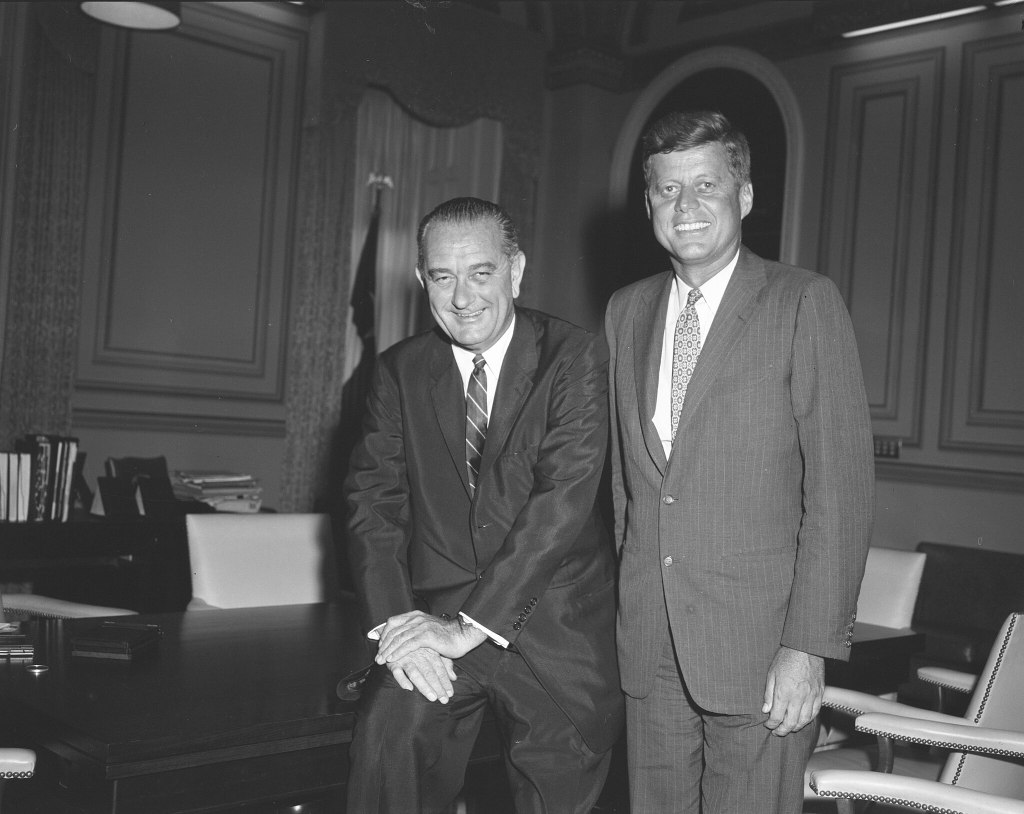
The relationship between President John F. Kennedy and his Vice President Lyndon Johnson was notoriously tense. Kennedy’s liberal supporters were shocked when their candidate announced LBJ would be his running mate. Compared to Kennedy and his crew of Ivy League-educated youngsters, LBJ was an old-school street-brawler, a plain-speaking deal-maker who took calculated risks to push his political agenda. Johnson, generally, got what he wanted, giving anyone who stood in his way what journalists would call “the treatment.” This was a one-on-one verbal offensive that employed “supplication, accusation, cajolery, exuberance, scorn, tears, complaint, and the hint of threat”—sometimes all of these together— to win someone to his cause.

In the White House, Kennedy’s staff were at times openly contemptuous of Johnson, especially the president’s brother, Attorney General Robert F. Kennedy. They made fun of LBJ’s down-home, earthy manner. Congressman Tip O’Neill recalled that the Kennedy brothers “had a disdain for Johnson that they didn’t even try to hide…. They actually took pride in snubbing him.” First Lady Jackie Kennedy would later state that, shortly after winning the White House, her husband and his brother conspired to scuttle Johnson’s political future and keep him out of any future run for the presidency.

For his part, Johnson bridled at being sidelined by the President, who denied his requests for workspace adjacent to the oval office and oversight on national security matters. Johnson saw himself as the far-superior politician, unfairly characterized as an illiterate, rude, crude bumpkin. He got even by telling tales about the Kennedy’s checkered political past, including the evening that he sat in on the phone call that President Franklin Roosevelt made to JFK’s father Joe, firing him from his appointment as Ambassador to the United Kingdom. Later, when President, Johnson would pass a law forbidding the appointment of family members to cabinet level positions, known as the nepotism provision; Johnson called it the “Bobby Kennedy law.” Ouch.

Our scripture reading this morning has David singing the praises of his political rival King Saul. It’s one of the earliest psalms of the Bible and would have originally been set to music and sung with accompaniment, perhaps with the harp or horns or percussion.  David celebrated the skill of Saul and his son Jonathan in battle, remembering how they worked to unite Israel and transform it from a weak tribal confederacy to a national power to be reckoned with.  Until their tragic deaths on Mt. Gilboa, their weapons of war—Saul’s sword and Jonathan’s bow—were ever at work against Israel’s powerful enemies like the Philistines.  David celebrated the prosperity that Saul brought to Israel—the thriving trade that clothed Israel’s women with crimson and decked them out with gold jewelry.  Saul had given everything for his nation, three of his beloved sons and even his life. David wove all that praise together, uniting it with the repeated refrain, “How the mighty have fallen.”

To write those words of praise, David had to rise above his complex relationship with Saul.  David served as Saul’s champion against Goliath; he had been a soldier in Saul’s army.  David had lived at Saul’s royal court, under his protection.  Saul had even made David family by marrying David to his daughter, the Princess Michal.  Saul had been David’s king and mentor, yet Saul had also been David’s rival and enemy.  Like Saul, David had been anointed by the Prophet Samuel as Israel’s messiah.  As David’s star was rising in Israel, Saul’s star was setting—and Saul knew it.  David’s success inspired Saul’s jealousy, paranoia, rage, and death threats.  By the time David sang, “O, how the mighty have fallen,” he had been on the outs with Saul for decades. David, the once-trusted champion, had become public enemy number one. That’s a lot to rise above when it’s time to write a memorial.

Centuries later, Jesus, known as the Son of David, challenged his followers to love their enemies and pray for those who persecuted them (Matt. 5:44). Anyone, even a tax collector or Gentile, can love the people who love them. Yet Jesus taught that when we love our enemies, we truly become children of our Father in heaven. In our choice for love, we embody the God who loves us on our worst day and chooses to forgive in us what we label unforgiveable in others. This mind-blowing, humbling choice for love was, of course, best revealed in Jesus, who prayed for the forgiveness of his executioners, welcomed a thief to join him in paradise, and called to discipleship followers who would fail him miserably when he needed them most. Jesus knew, God knows, that when we choose to practice this sort of selfless love, we make a changed future possible, a future where enemies become friends.

Perhaps in David’s words of praise, we have a foretaste of what Jesus would embody. David could have skipped the praise, seized power, and erased the memory of Saul.  Instead, he got out his harp and wrote those lovely verses of homage and celebration.  He ordered the psalm to be taught to the people of Judah and included in the Book of Jashar – a collection of national songs.  In rising above the mixed-feelings he had for Saul and writing a fitting lament for the loss of a gifted but troubled king, David called his fledgling nation to unity, holding together those fragile tribal alliances.  David allowed the example of Saul and Jonathan, stronger than lions, to call the people of Israel to heroic deeds in fighting outside enemies.  David used the self-sacrifice of Saul and Jonathan to promote self-sacrifice on behalf of the nation.  The friendship of David and Jonathan—across dividing lines of national politics—served as a role model for collaboration and bridge building. David’s memorial held Israel together and challenged them to grow into the nation that God had created them to be. 

On November 22, 1963, when President Kennedy was assassinated by Lee Harvey Oswald in Dallas, Texas, Vice President Johnson was sworn in as the nation’s 36th president, aboard Air Force One at Dallas Love Field. A shell-shocked Jackie Kennedy stood at his side. Five days later, on November 27, Johnson addressed a joint session of Congress, a speech that was broadcast on national television. His words, part-eulogy, part-call-to-action, were later named the “Let Us Continue” address. It wasn’t easy to write—it took nine drafts. LBJ called Kennedy the “greatest leader of our time,” and said that American dreams had been vitalized by his drive and dedication. He called Americans to unity and the pursuit of our best ideals. Johnsons said no eulogy could more eloquently honor the President’s legacy than to pass the Civil Rights bill for which Kennedy had fought. “We have talked long enough in this country about equal rights,” Johnson said, “We have talked for 100 years or more. Yes, it’s time to write the next chapter—and to write it in the book of law.”

Like David, like Jesus’s instruction to love our enemies, Johnson’s words created the graced space for a nation to find unity and healing.  Johnson asked all Americans for their help, saying: “An assassin’s bullet has thrust upon me the awesome burden of the Presidency. I am here today to say I need your help; I cannot bear this burden alone.” Johnson’s “Let Us Continue” speech was interrupted by applause thirty-four times. The newly-sworn-in President closed his remarks with words from “America the Beautiful,” “America, America, God shed His grace on thee, and crown thy good with brotherhood from sea to shining sea.” Immediately thereafter, efforts began to push through the Civil Rights Act, which succeeded, despite considerable resistance from Southern politicians, in July 1964.

What do we have to say about our enemies? We live in an age when it is all too common to shun, criticize, shame, or belittle those whose opinions and convictions differ from our own. Yet history, scripture, and the rule of love suggest that we can make different choices. May we, like David, rise above our mixed and hurt feelings to choose a better way. May we dare to cast the vision for a future where enemies become friends, love prospers, and we grow into the nation that God calls us to become.

Resources

ABC News. “Jacqueline Kennedy Reveals That JFK Feared an LBJ Presidency” in ABCNews: Politics, Sept. 8, 2011. Accessed online at https://abcnews.go.com/Politics/Jacqueline_Kennedy/jacqueline-kennedy-reveals-jfk-feared-lbj-presidency/story?id=14477930

JONATHAN MARTIN and JOHN F. HARRIS. “Caro revives Kennedy-Johnson feud” in Politico, May 13, 2012. Accessed online at https://www.politico.com/story/2012/05/caro-revives-kennedy-johnson-feud-076234.

ALLEN MCDUFFEE. “WHY THE KENNEDYS COULDN’T STAND LYNDON B. JOHNSON” in Grunge, January 11, 2021. Accessed online at https://www.grunge.com/310120/why-the-kennedys-couldnt-stand-lyndon-b-johnson/

Andrew Glass. “LBJ calls on Congress to pass civil rights legislation, Nov. 27, 1963” in Politico, Nov. 27, 2018. Accessed online at https://www.politico.com/story/2018/11/27/lbj-calls-on-congress-to-pass-civil-rights-legislation-nov-27-1963-1012624

Lyndon B. Johnson. (November 27, 1963). Peters, Gerhard; Woolley, John T. (eds.). “Address Before a Joint Session of the Congress”. Lyndon Baines Johnson Library and Museum. The American Presidency Project. Retrieved June 29, 2024.

Roger Nam. “Commentary on 2 Samuel 1:1, 17-27” in Preaching This Week, June 30, 2024. Accessed online at Commentary on 2 Samuel 1:1, 17-27 – Working Preacher from Luther Seminary

David G. Garber, Jr. “Commentary on 2 Samuel 1:1, 17-27” in Preaching This Week, June 28, 2015. Accessed online at Commentary on 2 Samuel 1:1, 17-27 – Working Preacher from Luther Seminary

Samuel Giere. “Commentary on 2 Samuel 1:1, 17-27” in Preaching This Week, July 1, 2012. Accessed online at Commentary on 2 Samuel 1:1, 17-27 – Working Preacher from Luther Seminary


2 Samuel 1:1, 17-27

1After the death of Saul, when David had returned from defeating the Amalekites, David remained two days in Ziklag.

17David intoned this lamentation over Saul and his son Jonathan. 18(He ordered that The Song of the Bow be taught to the people of Judah; it is written in the Book of Jashar.) He said: 19Your glory, O Israel, lies slain upon your high places! How the mighty have fallen! 20Tell it not in Gath, proclaim it not in the streets of Ashkelon; or the daughters of the Philistines will rejoice, the daughters of the uncircumcised will exult. 21You mountains of Gilboa, let there be no dew or rain upon you, nor bounteous fields! For there the shield of the mighty was defiled, the shield of Saul, anointed with oil no more. 22From the blood of the slain, from the fat of the mighty, the bow of Jonathan did not turn back, nor the sword of Saul return empty. 23Saul and Jonathan, beloved and lovely! In life and in death they were not divided; they were swifter than eagles, they were stronger than lions. 24O daughters of Israel, weep over Saul, who clothed you with crimson, in luxury, who put ornaments of gold on your apparel. 25How the mighty have fallen in the midst of the battle! Jonathan lies slain upon your high places. 26I am distressed for you, my brother Jonathan; greatly beloved were you to me; your love to me was wonderful, passing the love of women. 27How the mighty have fallen, and the weapons of war perished!


Frank Muto, Public domain, via Wikimedia Commons

A Heart for the Lord

Sabbath Day Thoughts — “A Heart for the Lord” 1 Samuel 15:34-6:13

I’ve presided at more than 120 funerals since coming to Saranac Lake in 2005. That averages out to half-a-dozen or so each year. Some of those services have been for church members or friends of the church. Some have been for community members who have come to see me as their pastor. Some have been for complete strangers. All have felt the need for Christian burial and a celebration of life before the Lord.

In obituaries, eulogies, or the sort of spontaneous sharing that often accompanies the time of death, many things are celebrated about the loved one who has died. We hear stories about athletic achievement, workplace accomplishments, good grades, and advanced degrees. We praise intelligence, ingenuity, and special talents. We are certain to note titles earned, awards and prizes garnered, and times of leadership in the community. We celebrate a host of children and grandchildren, beauty, great smiles, and even good hair. For us, these are the marks of a blessed and well-lived life.

Our reading from First Samuel suggests that God may see things a little differently. It was the earliest days of the Israelite monarchy. The Prophet Samuel had advocated for God to anoint a king to gather together the twelve tribes of Israel and shape them into a powerful nation. God Almighty had resisted at first. After all, wasn’t God alone king over the people (1 Sam. 8:7)? But God relented, and the oil of blessing had been poured out upon Saul, a son of an influential family of the northern tribe of Benjamin. Saul looked the part: handsome, prophetic, a head taller than anyone else. People looked at Saul and said, “That boy! He is one impressive young man!”

But over Saul’s forty-two years of kingship, God ultimately saw things differently. It all came to a crisis over their neighbors the Amalekites. God had instructed Saul to wage holy war, utterly destroying the Amalekites, just as the Amalekites had tried to destroy the Hebrew people during their vulnerable years as wilderness wanderers. Yet, Saul preserved the life of the Amalekite king, saved the choicest livestock and best plunder, and then erected a monument to himself atop Mt. Carmel. When confronted with his pride and disobedience, Saul lied. It was time for a new leader.

The reluctant Samuel was dispatched to the household of Jesse of Bethlehem, who had an abundance of sons. What followed sounds a little like an Ancient Near East beauty contest. A parade of seven eligible sons was brought before the prophet. Eliab, the oldest, was tall and handsome, like Saul. Abindadab came next, perhaps a great huntsman and provider, followed by Shamah, perhaps the smartest man in all of Bethlehem. Each of the seven sons was impressive; each had the prophet reaching for his flask of anointing oil. But God said “No.”

God had different priorities for leadership, qualities not necessarily revealed in external beauty, strength, or intelligence. God saw the heart (lev). In the Hebrew understanding, the heart embodied and directed the whole person. Our soul, mind, body, feelings, will, conscience, and character were all believed to originate in the heart. God wanted a king with a heart for God. Regardless of their accomplishments, those first seven sons didn’t have what it would take.

David was considered so inconsequential that he wasn’t even invited to the party that day. Instead, he was off in the fields, tending his father’s sheep. When David arrived, he must have looked unlikely—just a ruddy shepherd boy, small and insignificant, in a dirty tunic and bare feet. As soon as Samuel laid eyes on David, the Lord spoke, “Get up, Samuel! This is the one. Anoint him.” At last, here was the son who would have a heart for God.

It’s a story that gets us thinking about our own hearts. We no longer attribute to the heart the qualities and abilities that our ancestors in the faith did, but I think we can surmise what God was looking for in David.

When we have a heart for God, we don’t get caught up in the externals. We’re not worried about being the most beautiful or popular. We’re not preoccupied with being the best athlete, the top of the class, or the person who dies with the biggest bank account. We aren’t driven by pride, the compulsion to please others, or an appetite for the limelight.

When we have a heart for God, we listen for God’s wisdom and leading. We take it to the Lord in prayer. We feast upon God’s word. We praise God in worship. We prioritize God in our lives, making the Lord the center of our professional identity, our families, even our civic engagement.

When we have a heart for God, we become obedient, even when the ways of God are at odds with the siren call of the world. It’s an ethical commitment to honesty—no cutting corners. It’s a moral call to integrity in our relationships. It’s the willingness to surrender our purpose to God’s purpose, to know that it isn’t always about us, and we won’t always get what we want. Instead, we choose to love God and love neighbor with all our heart, mind, soul and strength.

When we have a heart for God, we find our pattern, our role model, in Jesus of Nazareth, the Son of David. From the world’s perspective, Jesus didn’t have what it took to be God’s anointed one. He was from a humble community and of questionable birth. He labored long years as a carpenter, not a Torah scholar. He didn’t have a home, a college degree, a big bank account, or a mega-church. He was an itinerant preacher, who identified with the last, the least, the hungry, the vulnerable, the demon-possessed, the child. Yet the very heart of God beat within his chest, calling us to lives of love and humble service.

On February 4, 1968, Martin Luther King preached the message “Drum Major Instinct” from the pulpit of the Ebenezer Baptist Church in Atlanta, GA. Looking at the life of Christ, King concluded that everyone can be great, not through outstanding natural abilities or our impressive accomplishments but rather through our capacity to follow Jesus. King said, “Everybody can be great, because everybody can serve. You don’t have to have a college degree to serve. You don’t have to make your subject and your verb agree to serve. You don’t have to know about Plato and Aristotle to serve. You don’t have to know Einstein’s theory of relativity to serve. You don’t have to know the second theory of thermodynamics in physics to serve. You only need a heart full of grace, a soul generated by love.”

We only need a heart like David’s, a heart like Jesus’, a heart like Dr. King’s: a heart for God.

It’s important to note that having a heart for God doesn’t mean we are perfect, impeccable paragons of virtue who never stray from righteousness. David notoriously abused power and failed as a father. Dr. King was accused of plagiarism and strayed from his marriage. But their hearts for God brought them around to the humility that saw themselves for what they were, sought forgiveness, and did what was needed to begin again. We aren’t perfect, either, but we have the good sense to grab onto God’s good grace and hold tight. Don’t we?

At the conclusion of King’s sermon, given only two months before his assassination in April 1968, Dr. King imagined his funeral and what he hoped people would say about him. He didn’t name his doctoral degree, his pivotal role in the Montgomery bus boycott, his founding of the Student Non-violent Coordinating Committee, his march on Selma, his Poor People’s Campaign, or even his Nobel Peace Prize. On the contrary, King hoped that someone would mention his efforts to serve others, to love people—even when they were hate-filled, to feed hungry people, to minister to fundamental human needs, to visit those in prison, to be alongside Jesus in in love, justice, truth, and commitment to others.

This morning, as the Prophet Samuel pours out the oil of anointing upon a ragamuffin shepherd boy who would one day be Israel’s greatest king, we are invited to imagine what God sees in us. What would we like people to say about us at our funerals? We don’t have to be head and shoulders above the rest. We don’t have to be the oldest son or the brainiest daughter. We don’t need to be a hero on the gridiron or a flash of brilliance on the ice. We don’t need to be homecoming queen or carnival king. All we need is a heart for God.

Resources

Martin Luther King. “Drum Major Instinct” delivered February 4, 1968 at the Ebenezer Baptist Church, Atlanta, GA. Stanford: The Martin Luther King, Jr. Research and Education Institute. Accessed online at “Drum Major Instinct” | The Martin Luther King, Jr. Research and Education Institute (stanford.edu)

Beth E. Elness-Hanson. “Commentary on 1 Samuel 15:34-6:13” in Preaching This Week, June 16, 2024. Accessed online at Commentary on 1 Samuel 15:34—16:13 – Working Preacher from Luther Seminary

Roger Nam. “Commentary on 1 Samuel 15:34-6:13” in Preaching This Week, June 14, 2015. Accessed online at Commentary on 1 Samuel 15:34—16:13 – Working Preacher from Luther Seminary

Klaus-Peter Adam. “Commentary on 1 Samuel 15:34-6:13” in Preaching This Week, June 13, 2021. Accessed online at Commentary on 1 Samuel 15:34—16:13 – Working Preacher from Luther Seminary

Ralph w. Klein. “Commentary on 1 Samuel 15:34-6:13” in Preaching This Week, June 14, 2009. Accessed online atCommentary on 1 Samuel 15:34—16:13 – Working Preacher from Luther Seminary


1 Samuel 15:34—16:13

34Then Samuel went to Ramah; and Saul went up to his house in Gibeah of Saul. 35Samuel did not see Saul again until the day of his death, but Samuel grieved over Saul. And the Lord was sorry that he had made Saul king over Israel.

16The Lord said to Samuel, “How long will you grieve over Saul? I have rejected him from being king over Israel. Fill your horn with oil and set out; I will send you to Jesse the Bethlehemite, for I have provided for myself a king among his sons.” 2Samuel said, “How can I go? If Saul hears of it, he will kill me.” And the Lord said, “Take a heifer with you, and say, ‘I have come to sacrifice to the Lord.’ 3Invite Jesse to the sacrifice, and I will show you what you shall do; and you shall anoint for me the one whom I name to you.” 4Samuel did what the Lord commanded, and came to Bethlehem. The elders of the city came to meet him trembling, and said, “Do you come peaceably?” 5He said, “Peaceably; I have come to sacrifice to the Lord; sanctify yourselves and come with me to the sacrifice.” And he sanctified Jesse and his sons and invited them to the sacrifice.

6When they came, he looked on Eliab and thought, “Surely the Lord’s anointed is now before the Lord.” 7But the Lord said to Samuel, “Do not look on his appearance or on the height of his stature, because I have rejected him; for the Lord does not see as mortals see; they look on the outward appearance, but the Lord looks on the heart.” 8Then Jesse called Abinadab, and made him pass before Samuel. He said, “Neither has the Lord chosen this one.” 9Then Jesse made Shammah pass by. And he said, “Neither has the Lord chosen this one.” 10Jesse made seven of his sons pass before Samuel, and Samuel said to Jesse, “The Lord has not chosen any of these.” 11Samuel said to Jesse, “Are all your sons here?” And he said, “There remains yet the youngest, but he is keeping the sheep.” And Samuel said to Jesse, “Send and bring him; for we will not sit down until he comes here.” 12He sent and brought him in. Now he was ruddy, and had beautiful eyes, and was handsome. The Lord said, “Rise and anoint him; for this is the one.” 13Then Samuel took the horn of oil, and anointed him in the presence of his brothers; and the spirit of the Lord came mightily upon David from that day forward. Samuel then set out and went to Ramah.


Photo by cottonbro studio on Pexels.com

Welcome to the Family

Sabbath Day Thoughts — “Welcome to the Family” Mark 3:20-35

In October of 1892, the Presbytery of Champlain received an unusual gift: Johnson’s Island, a one-acre rocky isle in Upper Saranac Lake. The island was the dream of three of Plattsburgh’s biggest movers and shakers. Chief among them was Smith Weed, the one-time President of Plattsburgh and six-time state assemblyman, known for smoking as many as nine cigars in a day. Smith hoped to enlist the Champlain Presbytery in launching an ecumenical summer chapel to serve both visitors and year ‘round residents to the lake. There was a big string attached to the gift: the Presbytery would need to build a church on Johnson’s Island within the year. The trustees of the Presbytery met the challenge. After all, they were on a building streak, launching little mission churches across the Adirondacks, having begun with our church—this very sanctuary—in 1890. Soon Johnson’s Island had a new name, Chapel Island, and in 1893 the little summer church was christened the Island Chapel.

My introduction to the Island Chapel came in 2005, not long after my arrival at this church. The late John Fitch called me up and persuaded me to trade this pulpit on a summery Sunday for the one at the Island Chapel. John and Anne were longtime servants to the ministry there. In fact, as soon as the Fitches had returned from sunny Florida, the ice was out, and the water was warm enough, John had me out in their Crisscraft, circumnavigating Chapel Island. Most years, I preach at the Island Chapel. And when John, and then Newt Greiner, retired from the role of Clergy Coordinator, they drafted me to do the job for seven years. I found it fascinating that I could find folks to preach on Chapel Island for the ten Sundays of summer faster than I could find one minister to supply the pulpit on any one given Sunday in Saranac Lake.

Over the years, things have changed. In 1956, a picnic fire on Chapel Island bloomed into a major conflagration that consumed the original Victorian chapel. A new Adirondack-style structure rose from the ashes in 1958. With the decline of North Country population and the closing of small churches, the Presbytery of Champlain was forced to join forces with the St. Lawrence Presbytery to form the Presbytery of Northern New York in the 1960s. Yet things have stayed the same, the ecumenical ministry that shares the love of Christ on Chapel Island continues. Indeed, in 2014, the ministry received a Tauny Award for their longstanding commitment to living local cultural heritage. But even good things sometimes need to change. Three years ago, the Presbytery of Northern New York realized that their declining resources meant they could no longer sponsor the Island Chapel.

Change can be hard, whether we are talking about modern day churches or we are considering the changes that Jesus brought to his first century world. As Jesus healed, forgave sins, and preached the good news of God’s Kingdom, he faced increasing opposition. Last week, we learned of powerful enemies rising among the Pharisees and followers of King Herod. This week, we heard the story of two further conflicts, one with Jesus’ family and the other with scribes from the Temple in Jerusalem.

Let’s start with Jesus’s kin. It must have been tough for them when Jesus announced he was trading his carpenter’s hammer for a rabbi’s tallith.  In the first century, sons followed in their father’s footsteps. Mother Mary and the siblings had a host of expectations for Jesus as the oldest son, expectations that he was not fulfilling. Jesus belonged in Nazareth, running the family business.  He should have been out bidding on jobs and teaching his brothers building skills.  He should have been caring for his widowed mother and arranging marriages for his younger sisters. In addition to those failed expectations, Jesus had made enemies of powerful people who controlled the political and religious landscape of Israel.  Messing with King Herod, the Pharisees, and the scribes—was he crazy?

The family thought they were doing the right thing when they knocked on the door of the house where Jesus was staying, intent on restraining him.  The Greek word that Mark uses for restrain—krateo—means to lay hands on, seize, and forcibly detain someone. Mary and the siblings loved Jesus, so they were going to take him home, restore the right order, and keep him safe. The only problem, of course, was that Jesus had a higher calling, a different sort of family obligation to his heavenly Father. That holy purpose superseded any claim that the Nazareth clan could make. Discerning the intent of his family to derail his mission and God’s purpose, Jesus wisely declined their invitation.

In the midst of this family feud, Jesus had the biggest Bible scholars of the day on his back. The scribes didn’t like what Jesus taught, they didn’t care for the rabble who hung on his every word, and they couldn’t explain Jesus’s amazing miracles.  So, they decided to discredit him, accusing him of being in league with the devil. If Jesus sounded put out by this in our reading, it’s because the scribes were making the unforgiveable mistake of saying that God is the devil. Yikes! It’s this sort of essential difference of understanding that would split the family of first century Judaism. Traditionalists, who denied the new thing that God was doing in Jesus, would ultimately reject and cast out those who saw the holy power of Jesus and trusted that he was Messiah and Lord.

Over and against the cultural and religious expectations of kinfolk and scribes, Jesus described a new sort of family that would supplant the ties of Temple and blood. It’s the family of faith. Anyone who does the will of God, anyone who serves God’s Kingdom, can become a member. As Jesus looked around the home where he was staying, he saw men and women devoted to loving God and neighbor. They were like sisters and brothers. When Jesus was under attack by those powerful opponents, when he was at odds with his kin, he turned to God and his friends in the faith. There he found the support and encouragement that he would need to persevere in a gospel ministry that would ultimately send him to the cross. In the long years to follow, Jesus’ followers would likewise depend upon this new notion of kinship, as they faced rejection by families and persecution by Temple and empire.

At this church, we know the beauty and goodness of a family of faith, don’t we? Look around. These are the people who are in our corner when we feel at odds with the world. They show up with hot dishes when we are bouncing back from big surgeries or big losses. They give us a call when they haven’t seen us in a while. They get down on their knees and pray for us. They teach our children. They feed us in Coffee Hour. They join us in wrestling with the big questions of scripture and faith. They walk with us for CROP Walk, Sermons on the Trail, and through the darkest valley. Thank goodness for the family of faith!

Today we welcome to our family of faith our friends who minister at the Island Chapel. Last summer, as they came to grips with the Presbytery’s decision to part ways, I was visited by Ross Whaley and Will Main, who have served the Island Chapel for years. They wondered, would our church be willing and able to come alongside them as sisters and brothers in faith to fill the gap that was being left behind by the Presbytery? Our Session and the executive committee for the Island Chapel appointed a taskforce to discern together what a shared ministry might look like.

Thank you to Anita Estling, Pam Martin, Kim Weems, David Fitch, Will and Leslie Main, Ross Whaley, and Pam Werner, who served with me on the taskforce. We zoomed a lot. We thought about the finer points of Presbyterian polity. We developed a memorandum of understanding. We sought appropriate insurance, titles, and registrations. We dreamed about the Island Chapel finding in this church a new sponsor and supporter for their good news. We dreamed of this church embracing the Island Chapel as an ecumenical summer outreach ministry. We think we’ve got it figured out. Today, with a time of commissioning, we welcome and celebrate our sisters and brothers from Chapel Island.

Change can be hard, whether we are considering the changes that Jesus brought to his first century world, or we are speaking of the shifting networks of support that come in dwindling twenty-first century mainline denominations. Yet change can be a blessing as we follow Jesus and serve God’s Kingdom. As we celebrate a new kinship between the First Presbyterian Church of Saranac Lake and the Island Chapel ministry, may we find the same sort of support, encouragement, and holy purpose that Jesus and his friends found in one another. Welcome to the family. Amen.

Resources

C. Clifton Black. “Commentary on Mark 3:20-35” in Preaching This Week, June 9, 2024. Accessed online at Commentary on Mark 3:20-35 – Working Preacher from Luther Seminary.

James Boyce. “Commentary on Mark 3:20-35” in Preaching This Week, June 7, 2015. Accessed online at Commentary on Mark 3:20-35 – Working Preacher from Luther Seminary.

Matt Skinner. “Commentary on Mark 3:20-35” in Preaching This Week, June 7, 2015. Accessed online at Commentary on Mark 3:20-35 – Working Preacher from Luther Seminary

Wikipedia Contributors. “Smith Mead Weed” in Wikipedia, The Free Encyclopedia, January 12,  2024. Accessed online at https://en.wikipedia.org/w/index.php?title=Smith_Mead_Weed&oldid=1195036261

Nathan Ovalle. “Lost in history: Smith Weed’s legacy fading with time” in The Press Republican, Dec. 14, 2014. Accessed online at Lost in history: Smith Weed’s legacy fading with time | Local News | pressrepublican.com

Seaway Abstract Corporation. “Abstract of Title to An Island, Town of Harrietstown, Franklin County #978” December 10, 1985.


Mark 3:20-35

20and the crowd came together again, so that they could not even eat. 21When his family heard it, they went out to restrain him, for people were saying, “He has gone out of his mind.” 22And the scribes who came down from Jerusalem said, “He has Beelzebul, and by the ruler of the demons he casts out demons.” 23And he called them to him, and spoke to them in parables, “How can Satan cast out Satan? 24If a kingdom is divided against itself, that kingdom cannot stand. 25And if a house is divided against itself, that house will not be able to stand. 26And if Satan has risen up against himself and is divided, he cannot stand, but his end has come. 27But no one can enter a strong man’s house and plunder his property without first tying up the strong man; then indeed the house can be plundered.

28“Truly I tell you, people will be forgiven for their sins and whatever blasphemies they utter; 29but whoever blasphemes against the Holy Spirit can never have forgiveness, but is guilty of an eternal sin”— 30for they had said, “He has an unclean spirit.”

31Then his mother and his brothers came; and standing outside, they sent to him and called him. 32A crowd was sitting around him; and they said to him, “Your mother and your brothers and sisters are outside, asking for you.” 33And he replied, “Who are my mother and my brothers?” 34And looking at those who sat around him, he said, “Here are my mother and my brothers! 35Whoever does the will of God is my brother and sister and mother.”


Heart Trouble

Sabbath Day Thoughts — “Heart Trouble” Mark 2:23-3:6

Sunday mornings at the New York Avenue Presbyterian Church in Washington, DC can feel like a curious collision of reverent worship and human need. The church, just a couple of blocks from the White House, is in an area of the city with a burgeoning homeless population. The benches in the tiny triangle park outside the church are a favorite overnight sleeping spot. A mentally ill woman pushing a shopping cart inspects the trash for thrown away treasures. A down and out neighbor scrounges for cigarette butts on the sidewalk.

Before I went to seminary, when I was a young adult member of the church, I was often panhandled on my way into worship, “Sister, can you give a man a little help?” During worship, when the children and those feeling a little childlike were invited to the front of the sanctuary, there would always be at least one adult participant—Larry, a developmentally disabled man from a local residence who lived with mental illness. One Sunday, during Dr. Craig’s sermon, someone was snoring. It was loud—so loud that those of us in the pews spent the better part of the message craning our necks to see one of our homeless brothers, stretched out in a side pew. On another day, Dr. Craig told us that as he was locking up the church to head home, he fell, tripping over a homeless man who was sleeping in a corner of the doorway.

Churches are sacred places, built to glorify God with our worship and praise. Churches are serving places, where neighbors in need find “a little help.” Sometimes finding that right balance of worship and service can be tough.

Our reading from Mark’s gospel tells of two Sabbath controversies. First, Jesus was challenged by the Pharisees for the Sabbath day behavior of his disciples. As Jesus’s hungry friends walked through the fields, they plucked ears of barley, rolled them between their hands to remove the chaff, and ate the ripe grain. Next, Jesus was in the synagogue on the sabbath day when he noticed a man with a helpless, withered hand. Jesus provocatively asked his critics, “Is it lawful to do good on the sabbath?” Then, answering his own question, Jesus healed. The useless hand grew hale and able.

Jesus and the Pharisees clearly had a difference of opinion when it came to interpreting what scripture had to say about sabbath observance. We tend to poke fun at the Pharisees, but Prof. Clif Black, who teaches at Princeton Seminary, reminds us that the Pharisees, a reform movement in first century Judaism, were well-regarded as upstanding and devout people. They were dedicated to “superlative” obedience to scripture in all walks of life. They liked things done decently and in order—that sounds downright Presbyterian.

The Pharisees had two problems with Jesus’s friends in the grain field. For one, they were traveling on the sabbath. For another, it was a slippery slope from gleaning to harvesting – if you let people glean on the sabbath, who knows what sort of work could happen next. And that man with the problem hand? More work. The man and Jesus should have had the good sense to wait until the sabbath was over to get their healing on. Jesus, with his disregard for their sabbath piety, put the whole community at risk. They needed to be holy as God is holy, and that meant their strict observance of the Torah.

Jesus disagreed. He looked at the big picture. Jesus considered God’s intent in instituting the sabbath as part of the rhythm of creation. God certainly didn’t need to rest after bringing the world into being, but humanity? We would need rest. In imparting the ten commandments, God mandated sabbath so that the people might be gratefully reoriented in God, might deepen their relationship with the one who created us—and deepen our connection to one another. What a radical gift for former slaves, who had never known the blessing of unfettered leisure! Sabbath should inspire our profound gratitude and reverence, yet it also helps and heals us. It promotes our wholeness. We might even say that on the sabbath day we are re-created.

“The sabbath was made for humankind, and not humankind for the sabbath,” Jesus taught. The choice to relieve someone’s hunger, the choice to end the suffering and disability of a neighbor, these beautiful, compassionate acts honored God’s original intent for the sabbath, every bit as much as the reverent worship of the Pharisees. Unfortunately, Jesus’s opponents were so invested in their own perspective that they could not hear Jesus or allow their hard hearts to be moved with compassion. Instead, only 79 verses into Mark’s gospel, Jesus’s adversaries began to conspire to discredit and silence him.

I am told that the New York Avenue Presbyterian Church struggled to find that right balance between sabbath day reverence and sabbath day service. In the early 80’s federal funding for mental health services saw big cuts, transferring responsibility for formerly institutionalized people to states that just weren’t ready.  The streets of cities like Washington soon teemed with folks who could not care for themselves. As the church’s triangle park became a de facto mini homeless settlement, they wondered, what do we do? Close the park? Work with law enforcement to encourage homeless neighbors to find someplace else to be on Sunday morning? Open up the church’s Lincoln Room for bagels and a gospel hymn sing?

The hymn sing won out, but still there was a weekly struggle to find enough volunteers to handle the loud, needy, and stinky mess that comes along with homeless neighbors. Members left the church. Those who stayed wondered if new people, who weren’t homeless, would ever come, would ever labor alongside them. They weren’t Pharisees, but they were Presbyterians with a longing for order and a good uninterrupted Sunday sermon. It wasn’t easy.

I think Jesus knew that faithful people would always live with this tension between our desire for holiness and the calling to meet the needs of our neighbors. That’s why his great command is an imperative to do both – love God and love neighbor. God is glorified by our overflowing love and heartfelt worship. Yet God is also glorified when we open our hearts and turn to the world with compassion, when we seek to make a helping, healing difference in the lives of those who need it most. We need both – worship and service. When we get it right, we are drawn ever deeper into the beauty of God and into the spirit of Jesus, who challenged his followers to see him in our neighbors who most need our love and care, every day of the week.

Sundays at this church aren’t quite like Sunday mornings in downtown Washington. I bet no one panhandled you on the way in. My old friend Larry doesn’t sit on the chancel with me for children’s time. While someone may fall asleep during the service, it won’t be because they spent last night sleeping on a subway grate. Yet we are mindful this morning of the need of our world. If you came in the side entrance, you saw the overflowing donation of paper goods for families that depend on Grace Pantry. You saw the pack basket that collects our Food Pantry gifts for hungry neighbors. You may have even noticed the learning stations in the sanctuary and Great Hall about the work of the Holm family to bring the gospel and sanitation to our Malawi neighbors. They may not be sleeping in the pews, but our vulnerable neighbors are with us this morning, and we can choose to make a helping difference. Today, we glorify God with our worship—and God will be glorified, too, as we love those who hunger and thirst for wholeness, good news, and good food.

If those Pharisees and Herodians had only wrapped their hearts around what Jesus was trying to teach them about the sabbath, they would have gotten blessed. So blessed! On that Sunday morning at the New York Avenue Presbyterian Church, when the homeless brother was snoring loudly through Dr. Craig’s sermon, the ushers in their blue blazers and ties marshalled forces in the narthex, devising a plan to wake the guy up. The very wise Dr. Craig stopped preaching and he waylaid their efforts. “Please, folks,” he said from the pulpit, “I’m sure it is the safest and warmest that the man has been all week.” As Dr. Craig’s words sank in, we realized that we had just heard the real sermon for that Sunday. We all thought about how truly blessed we were, to have homes and a church home, to have more than enough, to have people who love us, to have a wise pastor who called us to our better selves. It was one of those graced moments when we found the right balance between worship and service. It was one of those graced moments when we glimpsed Jesus, who told us he would come to us in our vulnerable neighbors. I can’t say for sure, but I suspect that God was, indeed, glorified.

Resources:

C. Clifton Black. “Commentary on Mark 2:23-3:6” in Preaching This Week, June 2, 2024. Accessed online at Commentary on Mark 2:23—3:6 – Working Preacher from Luther Seminary

Matt Skinner. “Commentary on Mark 2:23-3:6” in Preaching This Week, June 3, 2018. Accessed online at Commentary on Mark 2:23—3:6 – Working Preacher from Luther Seminary

John Wilkinson. “Theological Perspective on Mark 3:1-6” in Feasting of the Gospels: Mark. Louisville: Westminster John Knox Press, 2014.

William R. Herzog II. “Homiletical Perspective on Mark 3:1-6” in Feasting of the Gospels: Mark. Louisville: Westminster John Knox Press, 2014.


Mark 2:23—3:6

23One sabbath he was going through the grainfields; and as they made their way his disciples began to pluck heads of grain. 24The Pharisees said to him, “Look, why are they doing what is not lawful on the sabbath?” 25And he said to them, “Have you never read what David did when he and his companions were hungry and in need of food? 26He entered the house of God, when Abiathar was high priest, and ate the bread of the Presence, which it is not lawful for any but the priests to eat, and he gave some to his companions.” 27Then he said to them, “The sabbath was made for humankind, and not humankind for the sabbath; 28so the Son of Man is lord even of the sabbath.”

3Again he entered the synagogue, and a man was there who had a withered hand. 2They watched him to see whether he would cure him on the sabbath, so that they might accuse him. 3And he said to the man who had the withered hand, “Come forward.” 4Then he said to them, “Is it lawful to do good or to do harm on the sabbath, to save life or to kill?” But they were silent. 5He looked around at them with anger; he was grieved at their hardness of heart and said to the man, “Stretch out your hand.” He stretched it out, and his hand was restored. 6The Pharisees went out and immediately conspired with the Herodians against him, how to destroy him.


The Pearl of Scotland

Sabbath Day Thoughts — “The Pearl of Scotland” Isaiah 6:1-8

Let me tell you two stories.

Margaret never wanted to be a queen. She was the granddaughter of Edmund Ironside, one of the last Saxon kings of England. Amid the struggle for succession that followed Edmund’s death, Margaret’s father Edward was sent to the protection of King Stephen of Hungary. When Margaret was only nine, the family returned to England, where the king, childless and aging, had resolved to adopt Edward as his heir. But within days of their return to English soil, Edward fell mysteriously ill and died. For the next twelve years, Margaret was a dependent of the royal court until her brother Harold could inherit the crown. Margaret had little appetite for court with its pomp, intrigue, and power. Instead, she led a quiet and devout life, finding comfort in prayer, the study of scripture, and meditating upon the life of Christ. She was befriended by a fellow exile, Malcolm of Scotland, whose father had been murdered by the usurper Macbeth.

Isaiah never wanted to be a prophet. Young Isaiah was worshipping in the Temple, surrounded by songs and prayers, sacrifice and incense, when he saw a vision of the heavenly throne room. So limitless was God that the Temple could barely contain the hem of God’s robe.  In a flash of spiritual insight, Isaiah realized that his earthly worship was only a dim echo of heavenly rejoicing. Six-winged seraphs thundered God’s praise, shouting “Holy, holy, holy!” Amid the overwhelming sanctity of the heavenly and earthly throne rooms, Isaiah heard an undeniable voice. The Triune God called, saying to him, “Whom shall I send?”

Margaret’s calling came in the year 1066 when she was twenty-one. William the Conqueror laid claim to the English throne and defeated the British at the Battle of Hastings. Margaret, with her mother and siblings, fled north and boarded a boat, intent on returning to the safety of Hungary. But as the boat got underway, a mighty wind blew them off course, driving them ever further north until they ran aground in the broad estuary where the Forth River empties into the North Sea. There, they learned that providence had brought them to an old friend: Malcolm of Scotland. Now king, Malcolm was widowed with a young son. By all accounts, when Malcolm again saw Margaret, he fell head-over-heels in love. Here was his new queen, sent to him by God. Within days, Malcolm proposed, but the exiled princess turned down the royal invitation.

When God asked, “Whom shall I send?”, Isaiah was reluctant to answer the call. Confronted by the earthshaking holiness of God almighty, Isaiah felt only his frailty and unworthiness. Every false or self-serving statement that Isaiah had ever spoken rang in his ears, forcing him to confess the painful truth of his sinfulness, “I am a man of unclean lips, and I live among a people of unclean lips.” But the reluctant Isaiah soon learned that God could work with that. A coal, plucked from the fire of the heavenly throne room, touched Isaiah’s lips, and his sins were refined by the holy fire. Isaiah’s overweening sense of unworthiness was replaced by a compulsion to speak God’s word to the people.

When the exiled Princess Margaret declined Malcolm’s proposal, the Scottish King persisted. He granted Margaret’s family his protection, and they came to live in his castle at Dunfermline. There Margaret saw a royal court far removed from the pomp and intrigue of England. Malcolm was illiterate. His subjects lived in poverty. Margaret’s love for the king began as she read to him from the New Testament, and she learned of his passion to improve the lives of his people. Margaret and Malcolm heard in the words of Jesus, an imperative to serve the “least of these.” More than three years after that fateful wind blew her north to Scotland, Margaret finally said, “Yes,” to Malcolm. She came to see that her royal marriage would allow her to serve two kingdoms, one earthly, the other heavenly.

Isaiah’s words of prophecy held a similar concern for the vulnerable of the land. He had seen the face of poverty and the indifference of the rich. They had failed to honor the words of God, ignored the plight of the widow and orphan, denied justice to the foreign worker, and ground the face of the poor into the dust. The prophet spoke God’s judgment against the Kingdom of Judah, pleading with them to repent. Time was short, Isaiah warned, but they could still learn to do good: to seek justice, rescue the oppressed, defend the orphan, and plead for the widow (Is. 1:17). If they failed, God would bring judgment against the people of Israel. Babylon would rise. Judah would be conquered and taken into exile.

Margaret and Malcolm had a happy, fruitful marriage. The exiled princess, now a queen, became the mother of eight children and the mother of the Scottish people. She saw herself as a steward, entrusted by God with the care of a nation. Each morning, Margaret left the palace at Dunfermline with her New Testament tucked under her arm. She took a seat on a rock outside the royal residence to receive guests who came to her for counsel, prayer, and help. The queen fed nine orphans every morning with her own silver spoon. Each evening, Margaret and Malcolm opened their table to 24 of their poorest neighbors. They instituted a series of feast days, in keeping with the church calendar, when 300 of their most vulnerable subjects were banqueted with royal splendor. Motivated by the love of Christ, they built schools and churches, opened hospitals and hostels, and rebuilt Iona Abbey, which had fallen into ruin. They instituted sabbath laws, giving workers a weekly day of rest. Margaret had special concern for prisoners and exiles. She bought the freedom of English and Irish slaves, returning them to their homelands.

When Isaiah’s prophecy was fulfilled and Judah fell to Babylonian invaders, Isaiah’s call shifted as the no-longer-powerful people of Judah became as vulnerable as the poor they had once oppressed. Isaiah spoke God’s words of consolation to a hurting people, “Comfort, comfort my people, says your God.  Speak tenderly to Jerusalem” (Isaiah 40:1).  Years later as the exiles returned home, Isaiah went with them, prophesying about God’s plans for a new beginning for the humbled nation, speaking God’s promise, “For I will create a new heaven and a new earth; the past events will not be remembered or come to mind” (Isaiah 65:17). Perhaps Isaiah’s greatest legacy, though, was the lasting impact that he would have upon all who pursue God’s call to serve the last and the least. When Jesus preached to his hometown crowd in Nazareth, he opened the scroll to the words of the prophet Isaiah and read words that were fulfilled in his ministry, “The Spirit of the Lord is upon me, because he has anointed me to bring good news to the poor. He has sent me to proclaim release to the captives and recovery of sight to the blind, to let the oppressed go free, to proclaim the year of the Lord’s favor.”

In 1093, when King Malcolm and their oldest son were killed in a skirmish with Norman invaders, Queen Margaret, hearing the news in Edinburgh, fell sick. She died three days later; some say of a broken heart. But Margaret and Malcolm’s youngest son, David, would become Scotland’s most beloved king, pursuing his father’s royal rule and his mother’s passion for the least of these. One hundred and fifty years after Margaret’s death, those who remembered her life and legacy began to advocate for her canonization as a saint. The trouble was that she didn’t fit the traditional mold of sainthood. She was a devoted wife and the happy mother of a large family. She worked no miracles, other than the everyday miracle of loving her people and advocating ceaselessly for their health, justice, and care. The arbiters of sainthood in Rome came up with four posthumous miracles for Margaret, all related to her tomb and bones. Today Margaret is reverenced as the patron saint of service to the poor, learning, large families, mothers, and all those who are raising children. Margaret’s greater legacy is felt whenever we, who have privilege by virtue of our birth, education, or wealth, choose to generously use our resources for the good of our vulnerable neighbors.

In his biography of Margaret, her friend and confessor Bishop Turgot of St. Andrews, noted that the name Margaret derives from the Greek word Margaron, meaning pearl. Turgot wrote, “She was called Margaret, and in the sight of God she showed herself to be a pearl, precious in faith and works. She was indeed a pearl to you, to me, to all of us, yea, to Christ Himself, and being Christ’s she is all the more ours now that she has left us, having been taken to the Lord. . . and now she shines in her place among the jewels of the Eternal King.” Margaret has been known as the Pearl of Scotland ever since.

Resources:

Turgot, Bishop of St. Andrew’s. “Life of St. Margaret Queen of Scotland.” trans. Theodericus Monk of Durham and William Forbes-Leith. Edinburgh: William Paterson Press, 1884. Accessed online at https://archive.org/details/lifeofstmargaret00turguoft/lifeofstmargaret00turguoft/page/n9/mode/2up

Clerk of Oxford. “St Margaret of Scotland,” June 10, 2012. Accessed online at https://aclerkofoxford.blogspot.com/2012/06/st-margaret-of-scotland.html

Griffiths, Paul James. “Queen Margaret: the Pearl of Scotland” in The Middle Ages, May 7, 2021. Accessed online at https://www.christianheritageedinburgh.org.uk

Floyd, Michael. “Exegetical Perspective on Isaiah 6:1-8” in Feasting on the Word, Year B Vol. 2.  Louisville: Westminster John Knox Press, 2009.

Ramsey Jr., G. Lee. “Homiletical Perspective on Isaiah 6:1-8” in Feasting on the Word, Year B Vol. 2.  Louisville: Westminster John Knox Press, 2009.


Isaiah 6:1-8

6In the year that King Uzziah died, I saw the Lord sitting on a throne, high and lofty; and the hem of his robe filled the temple. 2Seraphs were in attendance above him; each had six wings: with two they covered their faces, and with two they covered their feet, and with two they flew. 3And one called to another and said: “Holy, holy, holy is the Lord of hosts; the whole earth is full of his glory.” 4The pivots on the thresholds shook at the voices of those who called, and the house filled with smoke.

5And I said: “Woe is me! I am lost, for I am a man of unclean lips, and I live among a people of unclean lips; yet my eyes have seen the King, the Lord of hosts!” 6Then one of the seraphs flew to me, holding a live coal that had been taken from the altar with a pair of tongs. 7The seraph touched my mouth with it and said: “Now that this has touched your lips, your guilt has departed and your sin is blotted out.” 8Then I heard the voice of the Lord saying, “Whom shall I send, and who will go for us?” And I said, “Here am I; send me!”


Santa Margarida da Escócia – Basílica de São Patrício, Montreal (Canadá) – Foto: Gustavo Kralj