Cold Water

Sabbath Day Thoughts — “Cold Water” Matthew 10:40-42

“That’s some good ice tea.”  It was James, in his polyester sport coat, pointy collared shirt, and freshly shined spats.  James fancied himself to be the heir apparent to James Brown.  Every so often during our Wednesday evening gatherings at the New York Avenue church, James would break into song and share his funkiest moves, feet shuffling almost too fast to be seen, body spinning then dropping into a split before popping back up, like magic. 

James had offered his appreciation for the tea in the general direction of the tea makers, Connie and me.  I was filling cups with the sweet, lemony tea, while Connie was perched on a chair, working on her latest crochet creation. The week before, I had cleaned out my yarn stash and brought Connie a big bag of odds and ends and never completed projects. If James thought he could compete with that for Connie’s attention, he had another think coming. 

“Hey,” James ventured again, “Hey, Connie! I said that’s some good ice tea.” But Connie only rolled her eyes as if to say, “He’s crazy.”  And he was.  In fact, everyone was, in one way or another, both the guests and the hosts at the 729 Club where I volunteered. 

“Connie!” I chided.  She gave me a baleful look and put down her crochet hook. 

“You are welcome, James,” she smiled as sugary sweet as the tea.  That made James so happy that he did a little spin and bow, every bit as deft and debonair as the Godfather of Soul himself.

“And whoever gives even a cup of cold water to one of these little ones…”

“I’d like some of that brown stuff,” it was a softly spoken request.  I turned away from the sink where I had been washing dishes and peered into the dim light behind me.  I spied him near the open back door, swaying a little bit, looking like he was about to bolt off into the dark.  I was on the reservation for my cross-cultural quarter of seminary studies.  My host was Sally Big Bear, a local spiritual leader, and this was her youngest brother, Habob.  I’d seen him around the edges of things but had never heard him speak.  Like many of the young adults on Rosebud, he struggled with addiction.

“I’d like some of that brown stuff,” Habob repeated, no eye contact, but his body language told me he was talking about the sheet cakes that rested on the kitchen counter.  Earlier, after dinner, Sally had parceled out pieces of cake to the large extended family that had come for the meal – sons and daughters, children, grandchildren, aunties, uncles, neighbors, and even seminarians. 

“Brown stuff?” I puzzled, looking at the crumby remnants, and picking up a knife.  “Chocolate?”

Habob’s brow furrowed, “No, not chocolate. The brown stuff?” He asked again, hopeful. 

That’s when I saw it, more beige than brown, crowned with a frothy brown sugar and coconut icing.  “Ah!  Spice cake!”  I cut a large slab, balanced it on a paper plate and shrouded it in a cocoon of saran wrap.  “For you!” I said, holding it out with two hands, and Habob received it with the same sort of reverence that a child reserves for a favorite toy or stuffed animal. 

“Hmmm. Brown stuff!  Thanks!” he mumbled before slipping out into the South Dakota darkness with his treasure.

About three o’clock the next day we heard news that too many families get on the reservation.  Habob had been found dead in the abandoned house where he lived with other addicts.

“And whoever gives even a cup of cold water to one of these little ones….”

“Lady, can you help my dog?” It was Johnny Wayne, the seven-year-old grandson of Mr. Robert.  So far, Johnny Wayne had impressed us with his ability to cuss and cheat in bike races.  I was in eastern Kentucky with my Youth Group.  We were putting a new foundation under the back of Mr. Robert’s house. I’d spent most of the afternoon digging a ditch to lay drain tile to divert the water that would pour off Robert’s roof and under his home.  Now, I was drinking cold water, as much as I could get, and sitting on the front porch taking a break. 

“Lady, can you help my dog?” Johnny Wayne wanted to know.  She was a big red pit bull mix with a saggy belly that told me she had had more than one litter of pups. 

“What’s wrong?” I ventured warily. 

“She’s got ticks.”  Johnny Wayne wasn’t kidding.  From ears to tail, Rosie was littered with ticks, more than I had ever seen, little and big, making a meal of her. 

I confess that ticks repulse me.  They’re like little insect vampires, dropping from trees or jumping out of the grass to make our lives miserable.  And while I am a dog lover, I try to steer clear of anything that looks remotely like a pit bull.  My reluctance must have been written all over my face as I said, “Wow.  I’m not sure what you want me to do about that, Johnny Wayne.” 

The little boy tried again.  “C’mon, please!  Help her.  How would you like to be covered in ticks?”

I wouldn’t, and that’s when I realized that Johnny Wayne was good not only at swearing and cheating but also at getting grown-ups to do what he needed them to do. 

“Ok.” I relented and spent the next thirty minutes picking ticks off Rosie.  She rolled right over, as if she had known me all her life, while Johnny Wayne told me stories of all the good things that he was going to do with his father when he got out of prison.

“And whoever gives even a cup of cold water to one of these little ones….”

There was a big cardboard box, right on the stoop, blocking my way to the front door when I got home from work.  I’d had the “brilliant” idea to leave a well-paying job back east and test the waters of a career change by serving as a VISTA, Volunteer in Service to America.  Now, I was a volunteer coordinator and health educator, working out of the Jackson County, Oregon, Health Department.  That meant I spent all my time touting the benefits of WIC and the Oregon Health Plan while trying to convince women to get prenatal care and immunize their children, all for a princely monthly stipend of $600, which did not go far in a community where just renting a room cost about $350.  I ate a lot of rice and beans that year.

Taped to the top of the cardboard box was a note written in easily recognizable, large wobbly letters, “For Joann.”  The handwriting belonged to Ivan, a Vietnam vet who suffered from PTSD.  I’m not really sure how I had met Ivan.  He belonged to the Seventh Day Adventist Church in town, and sometimes he would join me on Sunday afternoons for hikes up in the mountains or drives down to the coast, activities which he felt a young woman should not be doing on her own. 

A box from Ivan could hold a lot of things – tracts touting the benefits of being an Adventist, pumice stones that he picked up along the banks of the Rogue River, or maybe some great thrift store find, like a Rubik’s Cube or a jigsaw puzzle, missing a few pieces.  But this night, when I dragged the box inside and popped it open, I found that it was full of vegetables.  There were cucumbers and tomatoes, big leafy collard greens, onions, and zucchini squash big enough to double for baseball bats.  Move over beans and rice, I had just hit the fresh produce jackpot!

When I called Ivan later to thank him for his kindness, I learned that he had grown the vegetables in a little garden plot that he had down at the Adventist church.  I could just picture him that summer, patiently pulling weeds, watering, and harvesting.  It was without question one of the kindest things that anyone had ever done for me.  But why me? I wanted to know. Ivan’s answer was heartwarming and humbling all at the same time, “Joann, the Lord would want me to do something good for you.”

“And whoever gives even a cup of cold water to one of these little ones in the name of a disciple – truly I tell you, none of these will lose their reward.”

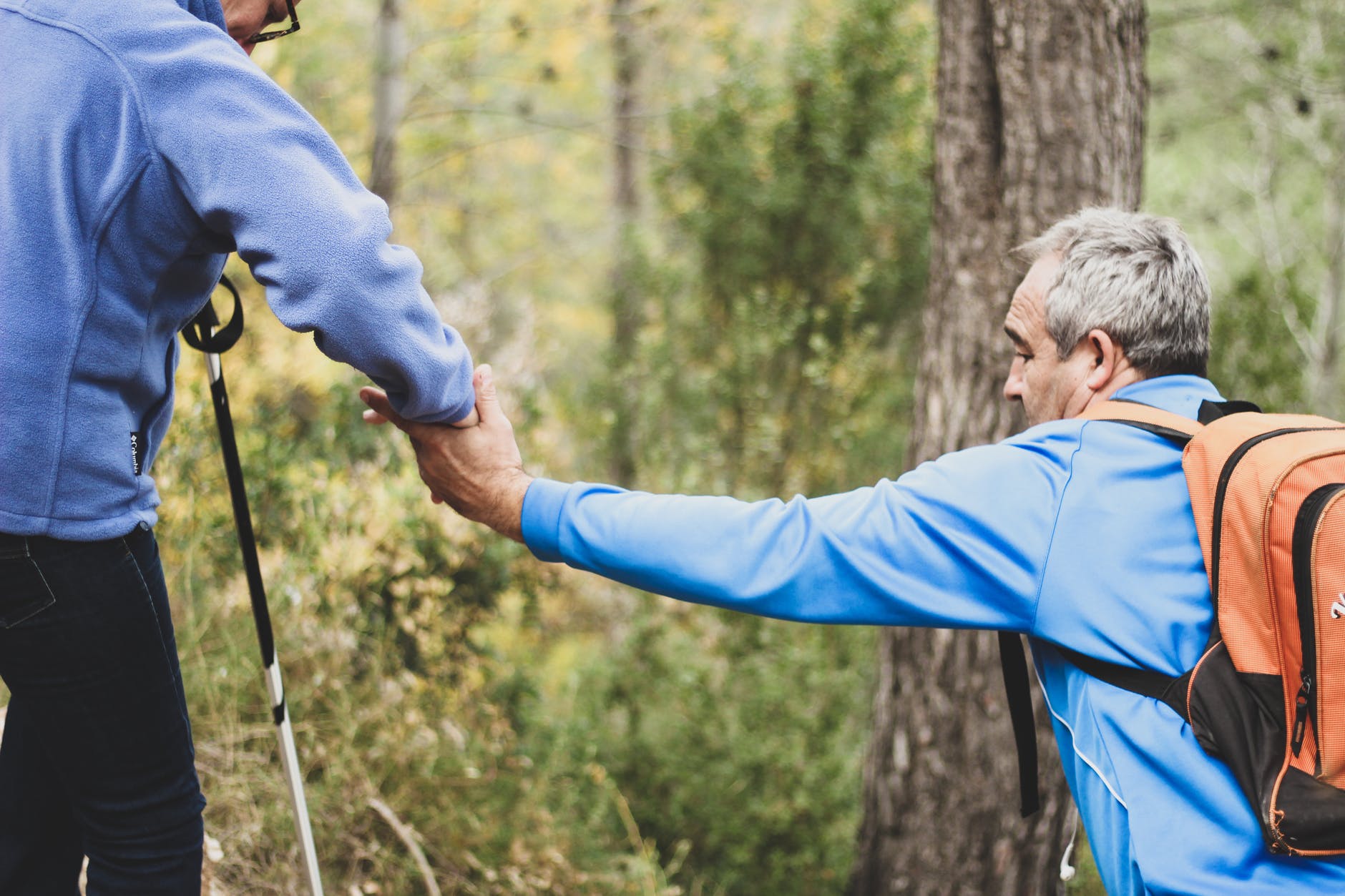
Jesus taught his followers about the importance of simple acts of kindness that we can share in the course of our everyday living.  When Jesus sent his disciples out on their gospel mission, he knew that they would depend upon the kindness of strangers.  Jesus also taught that when we extend hospitality to our vulnerable neighbors, the little ones of our world, we are really caring for him.  Hospitality, given and received, grants us a foretaste of the world that God would have us forge.  It’s a kingdom where all are welcomed, loved, and cared for.  It’s a world where James will spin Connie around the dance floor, and Habob will tuck into a second slice of spice cake.  Johnny Wayne will play ball with his Daddy, Rosie will be free from ticks, and the tables of the poor will abound with fresh-picked produce.  I want to be a part of that world.  How about you?


Matthew 10:40-42

40 “Whoever welcomes you welcomes me, and whoever welcomes me welcomes the one who sent me. 41 Whoever welcomes a prophet in the name of a prophet will receive a prophet’s reward, and whoever welcomes a righteous person in the name of a righteous person will receive the reward of the righteous, 42 and whoever gives even a cup of cold water to one of these little ones in the name of a disciple—truly I tell you, none of these will lose their reward.”

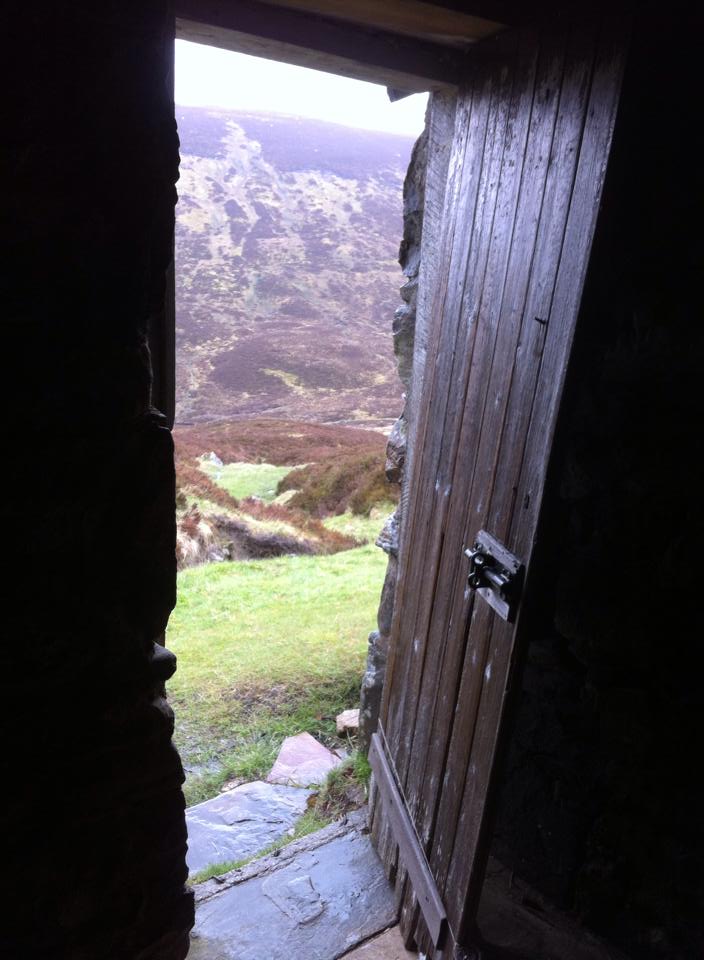

Photo by Sohel Patel on Pexels.com

Seasoned

Poem for a Tuesday — “Seasoned” by Joann White

Who is coming up from the wilderness, leaning on the one she loves? — Song of Songs 8:5

This old love is different,

not like the fire that

once brought us together. It

is in the shared delight

of bodies in motion, stiff

joints easing, legs finding the

right rhythm to fall in

step. It is in the

thrill of winter snow under

June boots and the soft

whomp of a well-aimed snowball.

I’ve learned it is in

the painstaking quest for the

perfect path, the testing of

rocks to ford a stream,

the map and compass ramble

to plot our course, the

patient return, this way you

say, certain and vulnerable, pointing

to contour lines threaded with

tenuous tracks. It is in

the trust to follow, despite

fear. It is in companionable

silence, sheltering from rain in

a shepherd’s bothy reeking of

coal fires spent and inked

with graffiti of hikers past.

Rising together to descend, hand

reaches for hand, palm against

palm, warm hearts slowly beat

the tempo that lasts.


This is the third poem in a series that I wrote in response to Kore-ada Hirokazu’s stunning film after life. It explores the memory that I might choose to live in for eternity, a day of rough hill walking through the heart of Scotland and over the shoulder of Schiehallion. This poem responds to the question, “When did you give or receive the most love?” I’ll share the last poem in the series next Tuesday.


The view from Hendrick’s Bothy.

The Unexpected Neighbor

Sabbath Day Thoughts — “The Unexpected Neighbor” Luke 10:25-37

Louella Fletcher could really tell a story, and she had been spinning them all afternoon.  Bob said a prayer and bid her goodbye.  Louella walked with him out to the porch.  As the sun had dropped, afternoon flurries had intensified into huge, fast-falling flakes.  A smooth blanket of snow surrounded the house, and Bob’s Subaru was shrouded in white. 

“Say, Bob,” Louella said, holding onto his arm, “Maybe you should have dinner with us and spend the night.  We’re awful remote, and I don’t like the look of this.” 

Bob thought about Marge and Paul back home, waiting dinner for him.  He remembered his meeting, first thing in the morning.  “Thanks, Louella, but I’ll be ok.  I’ve got all-wheel drive.” 

Louella looked as if she was on the edge of another story or a word of warning, but she shrugged and gave Bob a hug, “You take care now, pastor.  Be safe.”

Bob inched along, wipers thumping, defroster rushing, headlights barely making a dent in the snowy darkness.  He hesitated at the pointy corner where the main road swept to the right and the seasonal road climbed to the left.  The main road was likely to be better driving, but the seasonal road shaved a good ten miles off what was proving to be a long, slow trip. “O, what the hay,” Bob said, “I imagine the Subaru and I can handle a seasonal road.”  The car slowly toiled up, up, up, to the top of Hotchkiss Hill. 

At the summit, Bob felt a surge of relief that soon shifted to concern.  He had never noticed how sharp the descent was, no switchbacks, no guardrails, and certainly no lights way out here. Feeling like a kid on a carnival ride, all fear, butterflies, and acid reflux, he steered the car onward.  About half-way down the slope, building speed, deepening snow, and an unfortunate tap on the breaks got the rear end of the Subaru slaloming back and forth.  “Sweet Jesus!” Bob prayed as the car spun out of control, down into the dark, headlights flashing past huge trees.  With a grinding thump, the Subaru scooted off the road and into a ditch.  The rear end settled against a big white pine with a bone-jarring crack.  The wipers stopped, the defroster fell silent, and the headlights went dark. 

Bob thanked the Lord he was still alive and fished out his cellphone.  His joy at the digital glow gave way to disappointment—no signal.  Bob fished a headlamp, two handwarmers, and a granola bar out of the glovebox.  He opened the warmers, gave them a shake, and slipped them into his gloves.  He strapped on the headlamp over his hat.  Then, he turned up the collar on his coat and stepped out into more than a foot of snow. The temperature was dropping and the wind was picking up. He debated turning back to Louella’s, but if the Subaru couldn’t handle the snowy track, then his boots surely wouldn’t.  It was miles and miles to town, but if he was lucky, someone might come along and help.

Petey Freudenberg was on his way home from a day of meetings at the DEC.  The ranger was more at home in the woods than in an office.  He resented days like this, hours spent listening to policy wonks who wouldn’t know a mink from a fisher. As Petey’s headlights swept the darkness ahead, he glumly thought that this would be the last day he could get away with taking the shortcut on the seasonal road.  It would be impassable in a matter of hours. 

Not too far from the bottom of Hotchkiss Hill, Petey saw the willow-the-wisp of a headlamp, dancing along the shoulder. “Durned yuppies,” he muttered under his breath, “Come up here from the city and think they’ll have a little fun snowshoeing through a blizzard.”  This imbecile took the prize, even gave him a big wave and a yell before Petey dropped the truck into low and surged off up the hill and into the night.

By the time Rhonda LaMott came along in her rig, Bob’s headlamp had failed, first growing slowly dimmer and then blinking out entirely.  His trail boots really weren’t meant for this sort of weather and his feet were wet and numb.  He brushed the snow from his coat and hat and ducked his head against the weather.

Rhonda had just finished plowing at the QuikMart.  Folks had been resistant to a woman clearing snow—said it wasn’t ladylike.  But Rhonda was good and incredibly dependable. She was headed home for the evening, but she would be back in town first thing to clear away the drifts.  Rhonda was thinking about hot chocolate when she caught a glimpse of something moving on the shoulder.  It was big and lumbering through the snow.  A moose?  A man?

About fifty yards past it, Rhonda slowed to a standstill and eyed her rearview mirror.  A woman on her own in the middle of the Hotchkiss bog wasn’t safe.  She checked her door locks and peered into the dark.  Whatever it was, it was bellowing now and running in her direction.  “Jeezum Crow!” Rhonda cursed.  With her heart rising into her throat, Rhoda slid the rig into gear and sent up a shower of snow as she floored it, not daring to look back.

Now Bob was really worried. His boots squelched with melted snow.  At this rate, he might have to walk all night to make it to civilization.  He quickened his pace, fished the granola bar from his pocket, and took an incredibly stale bite.  At the top of a rise, Bob paused and patted his breast pocket for his phone.  He never did find out if he was back in range.  Bob turned out every pocket with the sickening realization that his cell must have fallen out when he ran after the plow.  He squinted back down the road and cursed his stupidity. In Bob’s overactive imagination, he saw headlines, “Local pastor freezes to death in November blizzard” or “Winter storm claims victim” or “Local church mourns pastor.”

About a half mile down the road, Bob stopped, pushed his hat up, and cupped his hands behind his ears to listen.  There it was—jingling, like Santa’s sleigh or something else, something that told him that he was out in the middle of a full-fledged snow emergency: tire chains.  He strained his eyes in the dark and glimpsed two dim beams, slowly growing brighter behind him.  He heard the chugga, chugga, chugga of a big diesel engine.  It was now or never.  Bob took a deep breath and stepped out in the middle of the road with his hands up.

Bob had never met Chester Perkins, but he had heard stories.  No one was certain exactly where Chester lived, but he was definitely off the grid.  Some said he was an anti-social hermit.  Others thought he was related to Big Foot.  Everyone agreed that he smelled bad.  Chester had seen the reflective gleam of a tail light in an empty car in the ditch at the bottom of Hotchkiss Hill, and he’d been prowling up the seasonal road in his rusted-out F-350 ever since. Maybe someone hadn’t had the good sense to stay put and wait out the storm.  Chester thought about the three toes he had lost to frostbite in the big storm of ‘93. Some poor fool might need help. 

The F-350 creaked to a stop about a foot away from Bob, who wasn’t certain which would be worse, getting run over or dying from exposure.  Chester opened the truck door and shouted through the gap, “What are you waiting for?  Get in!”  While Bob’s numb hands fumbled for a grip on the passenger door, Chester kicked it wide open.  He reached out a strong arm and hauled Bob up onto the bench seat.

Bob didn’t know what the source of the odor was, but it smelled bad in the truck, like dead things, body odor, and bean burritos.  As Bob gagged and struggled into the seat belt, Chester passed a jar. “Drink that up, son.” Something fiery and potent, maybe moonshine, blazed down Bob’s throat and kindled warmth in his chest. 

Chester pointed to Bob’s sodden boots.  “Get those off,” he ordered and then passed Bob a furry pelt that looked suspiciously like it had come from a large dog.  “Wrap your feet in this.” Bob did, his feet looking white and waxy in the dashboard light. 

“Alright then, eat this.”  Chester handed Bob a tough, salty chunk of jerky.  Bob briefly wondered what sort of meat it could be but figured it was safe when Chester broke off a big hunk and began gnawing on some himself. 

Chester dropped the truck into first and they crept toward town.  “Where to?” he wanted to know.

“If you could take me to the manse at the Presbyterian Church, I’d be so grateful,” Bob answered, still finding it hard to believe that he just might make it out of this alive.  They rode on for a few miles in silence. 

Chester gave Bob a sidelong glance, “Man of God, huh? I never been to church.”  Bob wasn’t sure how to respond to that.  Certainly, if Chester had ever come to church, it would have been an unforgettable occasion. 

With a sweep of his arm that took in the wind, snow, night, forest, darkness, Chester said, “This is my god.”

Bob nodded, thinking that Chester’s god had almost gotten the better of him that evening. 

Maybe it was the moonshine, or the warmth of the animal skin on his feet, or the chugging of the truck that did it.  Bob’s head fell to his chest, and the next thing he knew, they were in town, parked in front of the manse. Every light in the house was on, and Bob could see into the kitchen, where Marge looked like she was shouting into the telephone. 

Bob pulled on his boots and turned to Chester, “I think you saved my life.  How can I ever repay you?”

“No trouble,” Chester answered, “but it wouldn’t hurt if you promised to never do that again.”

“I promise, I really do,” Bob answered, shaking Chester’s grimy hand and knowing the grace of miraculous second chances and improbable saviors.

Chester chugged off into the night while Bob waved from the top step.  Marge opened the front door, “Thank God! You’re home, Bob! We’ve been worried sick. Who was that?”

Bob reached an arm around Marge and watched as taillights disappeared at the end of the block.  “Marge, that was a neighbor, a true-blue neighbor. Thank God, indeed.”


Photo by Nathan Moore on Pexels.com

A Wind from God

Poem for a Tuesday — “A Wind from God” by Joann White

In the beginning God created the heavens and the earth. — Genesis 1:1

There comes a point

in every climb when

the need for breath

and the ache of

legs push aside every

unneeded thought.  There is

no room for the

church I carry, the

mistakes I’ve made, the

lies I’ve told, the

truth I cannot speak,

the years of too

little love, the children

I never had, the

future I fear. Emptied,

I simply am rocks

beneath boots, snow reaching

down from Meall Liath,

lambs suckling with wagging

tails, the fairy mountain

hidden by mist, the

shielings of my ancestors,

red deer watching wary,

oily water oozing from

yards-deep peat. God breathes

in me and I

am recreated, a new

Eve, utterly insignificantly at

home in the web

that has been woven.


This is the second poem in a series that I wrote in response to Kore-ada Hirokazu’s stunning film after life. It explores the memory that I might choose to live in for eternity, a day of rough hill walking through the heart of Scotland and over the shoulder of Schiehallion. This poem responds to the question, “When did you best know your place amid creation?” I’ll share the subsequent poems on the next two Tuesdays.


Shieling remnant in the shadow of Schiehallion.

Helped and Healed

Sabbath Day Thoughts — “Helped and Healed” 2 Kings 5:1-14

We can find it hard to ask for help. Blame it on our American independence.  We generally think we know best, and we don’t like other people telling us what we should or should not be doing. It’s a deeply held American belief that we can be self-made men or self-made women.  That phrase was coined in 1842 by Senator Henry Clay to describe individuals whose success lay within the individuals themselves, not with outside conditions. Needing help? That can sound downright un-American.

Naaman needed help.  The Syrian General was a mighty man of valor.  He wielded absolute authority over his troops.  He won victory after victory for his country. He commanded the respect of his king.  He amassed untold wealth and acquired a retinue of servants. Naaman even had the favor of the Hebrew God Yahweh, who gave him victory after victory.

But Naaman couldn’t do it all.  Naaman suffered from tzara áth—leprosy.  He had skin lesions and eruptions. In the biblical world, Naaman’s disease rendered him an unclean social outcast, separated from God and neighbors We know that Naaman’s leprosy was bad enough that the household talked about it, and we can surmise that the men whom Naaman commanded did, too. It was bad enough that Naaman and his wife worried about it—and it seems that they had given up hope on finding a cure.  In fact, no one on earth could cure leprosy.  Only God could do that.

We all need help sometimes. The COVID-19 pandemic made us acutely aware of that. We needed help at church.  Thank goodness that our Resource Presbyter David Bennett came by that first week when things shut down and gave Duane and me a crash course in livestreaming.  I can’t begin to say how thankful I am for all the help that Scott and Karen gave me in troubleshooting technical issues and providing music.  How about Gaelle serving week after week as our greeter and COVID screener?  Many hands helped to set up a worship space in the Great Hall and to eventually move us back into the sanctuary.  Help was needed and help abounded.  Thanks be to God.

COVID made us all realize that we needed help at home, too.  Perhaps someone helped you shop for groceries or brought food in when you tested positive.  Our crafty friends got out their sewing machines and stitched up masks for us.  When we couldn’t figure out how to Zoom, thank goodness for those techy people who got us online and in touch.  When there wasn’t any toilet paper, sanitizing wipes, or bleach on the store shelves, neighbors reached into their stashes and shared what was needed. The mass vulnerability of the COVID pandemic turned us to one another in search of help and in willingness to provide it.

Naaman got help.  It started with the most vulnerable member of the household: a young Hebrew slave girl.  She saw the affliction of Naaman and felt compassion. She cared enough to go to her mistress with the hope of a cure.  If only Naaman would go see the Prophet Elisha!  That started a cascade of helping actions.  Naaman’s wife persuaded the general to seek help from his king.  The king wrote a letter of support and loaded up the travel wagons with treasure.  After a momentary meltdown, King Jehoram of Israel sent Naaman to Elisha.  And Elisha stepped up to say that he was the man for the job.

But all those offers of help almost came to no avail.  At Elisha’s house, the mighty man of valor expected an impressive ritual, the prophet in flowing robes, waving his arms, chanting incantations, and touching Naaman’s wounds.  Instead, the front door opened, a servant came out, and Naaman was instructed to bathe seven times in the Jordan, where the murky waters were brown as dirt.  Feeling hurt and disrespected, Naaman prepared to turn around and head home.

Beyond the mutual need of the COVID pandemic, it can be hard for us to ask for help. Nora Bouchard, author of Mayday! Asking for Help in Times of Need, writes that we are hardwired to want to do things our way.  It’s there from the moment that our toddler tells us, “Me do it, Mommy!” to the moment they leave the nest and don’t call home nearly as often as we would like.  We could also be reluctant to ask for help because we do not want to be perceived as needy or vulnerable.  Among the most influential forces in our willingness—or reluctance— to seek help is the attitude that we experienced in our families of origin. Were our bids for help encouraged and answered or were they ignored?  Were we treated like a whiny cry baby? Did someone take advantage of our need for assistance?  If help was hard to come by growing up, then we may have particular trouble asking for help now.  Our wiring, our self-perception, and our formation can all get in the way of asking for the help we need.

We might be more likely to ask for help if we remembered that Jesus asked for help. If you read the gospel lection for today (Luke 10:1-11, 16-20), then you were reminded that Jesus sent seventy disciples on ahead of him in pairs to every place where he himself intended to go. The Lord could have done it all by himself. But Jesus saw the rightness of asking for help and the wisdom of pairing up buddies so that they could help one another.  Jesus also sent them out with minimal resources—no purse, no bag, no sandals. As those vulnerable disciples moved from community to community, sharing the gospel, they depended upon the help of others.  It was in the giving and receiving of help that the beloved community of the first Christians took shape.

It might also inspire us, as independent-minded Americans, to remember on this Independence Day weekend that even our founding fathers and mothers needed help.  It’s questionable whether we would have won the Revolutionary War without the help of our French allies.  Starting in 1775, France became a secret supporter of the revolutionary cause, providing us with engineers to build fortifications, as well as uniforms, arms, and ammunition to equip the Continental Army.  French aid to the colonies came to more that 1.3 billion livres (that’s about $13 billion), crippling their own economy.  At the turning point of the war, at Saratoga in 1777, 90% of American troops carried French rifles and all of our gunpowder came from France.

What might asking for help look like for us?  I like to begin with prayer and inviting others to pray for me.  We could also start small with help for a minor problem, rather than waiting for something to morph into crisis.  We can trust that the Lord has brought people into our lives who will want to help us, just as the Lord did for Naaman.  If those folks can’t help us, they may know someone who can.  We could also consider having a support team, a little like the people who were in our COVID bubbles but permanent.  These are the people with whom we can feel safe asking for help and extending ourselves in help.  There is help out there if we are willing to ask.

Naaman got the help that he needed. Using a tenderness of language that suggests real affection, the servants interceded, saying to Naaman, “Father, if the prophet had commanded you to do something difficult, you would have done it.  Why not try something simple?”  Maybe this healing process really could work. They had come so far.  Wasn’t it worth a try?

Down Naaman went to the shores of Jordan.  He stripped off his uniform and everyone got a look at his scabby skin.  Then he waded down into the chocolaty brown water.  It rose to his ankles and knees.  It surged above his waist and chest.  He grimaced, held his breath, and dunked his head.  Seven times Naaman went down.  Seven times he came up, sputtering.  At some point, Naaman noticed that he was no longer the same.  Help had led to healing.  The mighty man of valor walked out of the river with skin as soft and supple as a young boy. Alleluia!

Help—both holy and human—abounds for the asking.

Resources:

Walter Brueggemann. Knox Preaching Guides: 2 Kings, ed. John H. Hayes, (Atlanta: John Knox Press, 1982).

Lisa Fierenz. “Why Asking for Help Is Hard to Do,” in Psychology Today, April 5, 2017. Accessed online at http://www.psychologytoday.com.

L. Daniel Hawk. “Commentary on 2 Kings 5:1-14” in Preaching This Week, July 3, 2022. Accessed online at www.workingpreacher.org.

Brian C. Jones. “Commentary on 2 Kings 5:1-14” in Preaching This Week, July 7, 2019. Accessed online at www.workingpreacher.org.

Suzanne McGee. “5 Ways the French Helped Win the American Revolution” in History, Sept. 9, 2020. Accessed online at www.history.com.

Cory Stieg. “Everyone Needs Help During the Coronavirus Pandemic” in CNBC: Health and Wellness, April 22, 2020. Accessed online at http://www.cnbc.com

W. Dennis Tucker. “Commentary on 2 Kings 5:1-14” in Preaching This Week, Feb. 15, 2009. Accessed online at http://www.workingpreacher.org.


2 Kings 5:1-14

Naaman, commander of the army of the king of Aram, was a great man and in high favor with his master, because by him the Lord had given victory to Aram. The man, though a mighty warrior, suffered from leprosy. 2Now the Arameans on one of their raids had taken a young girl captive from the land of Israel, and she served Naaman’s wife. 3She said to her mistress, “If only my lord were with the prophet who is in Samaria! He would cure him of his leprosy.” 4So Naaman went in and told his lord just what the girl from the land of Israel had said. 5And the king of Aram said, “Go then, and I will send along a letter to the king of Israel.” He went, taking with him ten talents of silver, six thousand shekels of gold, and ten sets of garments. 6He brought the letter to the king of Israel, which read, “When this letter reaches you, know that I have sent to you my servant Naaman, that you may cure him of his leprosy.” 7When the king of Israel read the letter, he tore his clothes and said, “Am I God, to give death or life, that this man sends word to me to cure a man of his leprosy? Just look and see how he is trying to pick a quarrel with me.” 8But when Elisha the man of God heard that the king of Israel had torn his clothes, he sent a message to the king, “Why have you torn your clothes? Let him come to me, that he may learn that there is a prophet in Israel.” 9So Naaman came with his horses and chariots, and halted at the entrance of Elisha’s house. 10Elisha sent a messenger to him, saying, “Go, wash in the Jordan seven times, and your flesh shall be restored and you shall be clean.” 11But Naaman became angry and went away, saying, “I thought that for me he would surely come out, and stand and call on the name of the Lord his God, and would wave his hand over the spot, and cure the leprosy! 12Are not Abana and Pharpar, the rivers of Damascus, better than all the waters of Israel? Could I not wash in them, and be clean?” He turned and went away in a rage. 13But his servants approached and said to him, “Father, if the prophet had commanded you to do something difficult, would you not have done it? How much more, when all he said to you was, ‘Wash, and be clean’?” 14So he went down and immersed himself seven times in the Jordan, according to the word of the man of God; his flesh was restored like the flesh of a young boy, and he was clean.


Photo by Roman Carey on Pexels.com

Orchids Galore!

On a recent visit to the Steel City, I visited the renowned Phipps Conservatory. Gifted to the City of Pittsburgh in 1893 by Henry Phipps, the botanical garden is a showcase for stunning orchid and bonsai collections. Born to British immigrants in 1839, Phipps earned a fortune as a partner with childhood friend Andrew Carnegie in the Carnegie Steel Corporation. Phipps was a pioneering philanthropist, believing that those who have achieved great wealth should give back for the public good. In addition to his gift of the Phipps Conservatory for the people of Pittsburgh, he funded the Phipps Institute for the Study, Treatment and Prevention of Tuberculosis at the University of Pennsylvania and The Henry Phipps Psychiatric Clinic at Johns Hopkins Hospital, the first inpatient facility in the United States for the mentally ill constructed as part of an acute care hospital. If you are an orchid enthusiast as I am (albeit a frustrated orchid grower), you’ll enjoy these photos.


“Globe in hand, Grace slowly approached the big orchid, white and fragile and absolutely gorgeous. She very carefully slid the globe over it, and as she was doing so, she put her face into the center of the open flower, smiling as the breathtaking fragrance washed over her–luscious and nectared, candied apricots, airy notes of strange spice.”
― Jeffrey Stepakoff, The Orchard

Full Scottish Breakfast

Poem for a Tuesday — “Full Scottish Breakfast” by Joann White

Lord, you are my portion and my cup of blessing; you hold my future. — Psalm 16:5

Below the thatched

roof in Fortingall

our eyes meet

above the table.

It’s too much.

Tattie scones dipped

in sunny yolks

milky black tea

crispy streaky bacon

black pudding more

than we want

or need and

who eats beans

for breakfast anyway?

We push our

food around the

plate, lace up

our boots, and

step out to

be fed by this glorious day.


This is the initial poem — a prelude — to a series that I wrote in response to Kore-ada Hirokazu’s stunning film after life. It explores the memory that I might choose to live in for eternity, a day of rough hill walking through the heart of Scotland and over the shoulder of Schiehallion. I’ll share the subsequent poems on the next three Tuesdays.


Image credit: https://scottishscran.com/what-is-a-full-scottish-breakfast/

No Turning Back

Sabbath Day Thoughts — “No Turning Back” Luke 9:51-62

When it comes to understanding our higher purpose as human beings, author, psychologist, and wilderness guide Bill Plotkin teaches that each of us is born to occupy a specific ecological niche—that’s econiche for short.  Each of us is blessed with gifts, abilities, and aptitudes that are intended to fulfil a particular function in our families, communities, and beyond.  You might even say that we are each created with a God-given purpose.  By living faithfully and courageously, we grow fully into the people whom God created us to be.

Take my econiche, for example.  I like to say that I am doing what God put me on earth to do: serving as a pastor and spiritual leader.  I also feel that I am fulfilling that function where God calls me to be—right here in Saranac Lake.  I believe that God called me to marriage with Duane, who has been a wonderful encourager and conversation partner for my life and ministry.  A few years ago, I began to hear God calling me to use my writing to reach beyond the walls of the church and the limits of Saranac Lake.  When I chose to live into that expanded econiche, doors opened: a book, a doctoral program, and an article in a literary journal this month.

Bill Plotkin writes that we are “each born to take a specific place within the earth community, to fill an individual ecological niche in the greater web of life.”  We each have a holy purpose that serves the planet.  Our personal growth and discovery of our econiche is part of God’s plan.  It’s a fulfillment of our purpose and a blessing to the world around us.  What is your econiche?

In today’s lesson from Luke’s gospel, Jesus resolved to travel to Jerusalem.  Along the way, Jesus would share some of his most profound teachings and work some of his most compelling acts of healing. He would do all this while knowing what awaited him in Jerusalem: betrayal, arrest, conviction, torture, and death.  Jesus knew his econiche.  He knew the redemptive purpose that God put him on earth to serve and he “set his face” to fulfill it.

As Jesus embarked on that fateful journey, he was not alone.  He was accompanied by “the women,” his inner circle of disciples, and other unnamed followers.  Drawn by Jesus’ wise instruction or in search of a healing miracle, people came to see what Jesus was all about.  According to Luke, some who came felt that God’s will for their life—their econiche—was to be a disciple.  Indeed, in today’s lesson, Jesus was approached by three would-be disciples.  All expressed interest in following Jesus, but there seemed to be impediments to answering that calling.

The first would-be disciple sounded eager.  He promised to follow Jesus wherever he might go.  Yet Jesus cautioned that following him would not be easy. Foxes have dens, birds of the air go home to roost, but, at times, Jesus and his friends would have no place to lay their heads. Being a disciple would bring opposition from Samaritan villages, scandalized Pharisees, and plotting priests and scribes.  Jesus and his friends would make enemies.  Discipleship would sometimes feel unsafe and inhospitable, lonely and under-supported.  If this would-be disciple was going to answer the call, then he would need to be ready to face adversity.

If we are to grow into our God-given purpose—our econiche, then we need to be prepared to work through difficulty and adversity along the way.  Benjamin Franklin was 10-years-old when his parents could no longer afford to send him to school.  The resourceful Franklin resolved to teach himself.  He read voraciously, studying late into the night with poor lighting after working all day as a printer’s apprentice. Franklin’s self-directed study equipped him for life as a patriot, scientist, and diplomat.  He was an editor and signer of the Declaration of Independence, the inventor of the lightning rod and bifocals, and the American ambassador to France from 1776 to 1785.  

A second would-be disciple approached Jesus.  This man wished to join the Lord on the journey to Jerusalem, but he first wanted to bury his father. First century Jewish tradition taught that at the death of a patriarch a mourning period of seven days followed the burial.  If the dead man were of high status in the community, that mourning period could extend to thirty days.  This would-be disciple wished to follow Jesus, but it would be a while before he was available.  Jesus’ response, “Let the dead bury the dead, but you go share the good news of the Kingdom,” sounds harsh. Some Bible scholars say this is hyperbole, an exaggerated rhetoric that makes a point.  Clearly, Jesus is saying that discipleship takes unwavering commitment that is willing to set aside time-worn traditions.

Fulfilling God’s purpose for our lives may likewise demand that we make tough choices that depart from traditions and expectations.  Those of you who are older among us remember the days when the only career options available to women were mothering, teaching, nursing, or being a clerical worker.  Judith von Seldeneck’s parents thought she would make a great secretary – and she was, serving as the personal secretary to Sen. Walter Mondale in the 1960s.  But Judith had different ideas about her purpose. She attended law school—one of only two women in her class.  Then, as more and more women began to enter the workforce, Judith found her niche: helping women find jobs.  The business that she launched, Diversified Search Group, is now a global leader in executive recruitment, with offices in fourteen cities across the US and global affiliates around the world. 

A third would-be disciple approached Jesus. He hoped to follow the Lord, but first he wished to go back home and take his leave.  Jesus sensed that this man’s past would have a powerful hold upon him. Like a distracted farmer who plows a crooked and shallow furrow, this man would always look back.  He would not have the focus and commitment for discipleship.  His preoccupation with the past would be a roadblock to moving ahead.

To grow into the people whom God calls us to be, we may sometimes need to leave something behind.  This may include false beliefs about ourselves and patterns of behavior that are a stumbling block to our growth.  In his book How Not to Be Afraid, author, storyteller, and peacemaker Gareth Higgins writes that many of us subject ourselves to “harsher judgment than that which we direct to people we might even consider enemies.  We have likely judged ourselves worthy of public flogging more times than we can remember.” To move forward and grow into God’s purpose for our lives, we may need to leave behind our critical inner voice, or our failures, or even traumatic experiences that have kept us stuck.  Sometimes, it’s the shame of our past mistakes or our feelings of sinfulness that hold us back because we fail to extend to ourselves the grace that Jesus so generously extended to others. 

The research of author and professor Brene Brown has found that eighty-five percent of men and women interviewed could recall a school incident from their childhood that was so shaming that it changed how they thought of themselves as people and learners. What made those findings even more haunting was that approximately half of those recollections were what Brown calls “creativity scars.” The research participants could point to a specific incident where they were told or shown that they weren’t good writers, artists, musicians, dancers, or creators.  Our potential is stifled when we accept the criticism of others as part of our self-understanding.

Making peace with the past so that we can move into the future takes prayer, reflection, and healing work.  We may need a wise mentor, a caring friend, a listening pastor, or a good counselor to help us see that our past does not have to determine our future. Indeed, it is in our healing and growing that we discern and cultivate strengths and gifts that will serve us and the world around us. Like Rumpelstiltskin spinning straw into gold, those personal pains that once held us back can be transformed, equipping us richly to serve in the struggles of others.  If we refuse to let go of the past, if we won’t take the risk of stepping out to follow Jesus and pursue our higher purpose, then we fail ourselves and the role we are meant to serve in God’s Kingdom goes unfulfilled.

What I find most fascinating about today’s reading is that we don’t get to see the choices that those would-be disciples made. Did they rise to move into that beautiful, if daunting, path of discipleship?  Or, did they despair at the possibility of discomfort, cling too closely to outdated traditions, and let their pasts get the better of them? Call me an optimist, but I like to think they found their econiche.  Those would-be disciples chose Jesus, chose growth, chose to become the people whom God was calling them to become.  I like to think that they were blessed in that—and that they went on to become a blessing for others.

May we do the same.


Resources:

Brené Brown. “The Most Dangerous Stories We Make Up” excerpted from Rising Strong, July 27, 2015. Accessed online at brenebrown.com.

Chris Crisman. “Women’s work: 12 stories of female success and struggle in male-dominated fields | Perspective” in The Philadelphia Inquirer, March 7, 2020. Accessed online at inquirer.com.

Mikeal Parsons. “Commentary on Luke 9:51-62” in Preaching This Week, June 26, 2016. Accessed online at workingpreacher.org.

Marilynn Salmon. “Commentary on Luke 9:51-62” in Preaching This Week, June 27, 2010. Accessed online at workingpreacher.org.

Michael Rogness. “Commentary on Luke 9:51-62” in Preaching This Week, June 30, 2013. Accessed online at workingpreacher.org.

David Lose. “Out of Control” in Dear Working Preacher, June 24, 2013. Accessed online at workingpreacher.org.


Luke 9:51-62

51When the days drew near for him to be taken up, he set his face to go to Jerusalem. 52And he sent messengers ahead of him. On their way they entered a village of the Samaritans to make ready for him; 53but they did not receive him, because his face was set toward Jerusalem. 54When his disciples James and John saw it, they said, “Lord, do you want us to command fire to come down from heaven and consume them?” 55But he turned and rebuked them. 56Then they went on to another village. 57As they were going along the road, someone said to him, “I will follow you wherever you go.” 58And Jesus said to him, “Foxes have holes, and birds of the air have nests; but the Son of Man has nowhere to lay his head.” 59To another he said, “Follow me.” But he said, “Lord, first let me go and bury my father.” 60But Jesus said to him, “Let the dead bury their own dead; but as for you, go and proclaim the kingdom of God.” 61Another said, “I will follow you, Lord; but let me first say farewell to those at my home.” 62Jesus said to him, “No one who puts a hand to the plow and looks back is fit for the kingdom of God.”


Photo by Kindel Media on Pexels.com

St. Francis and the Sow

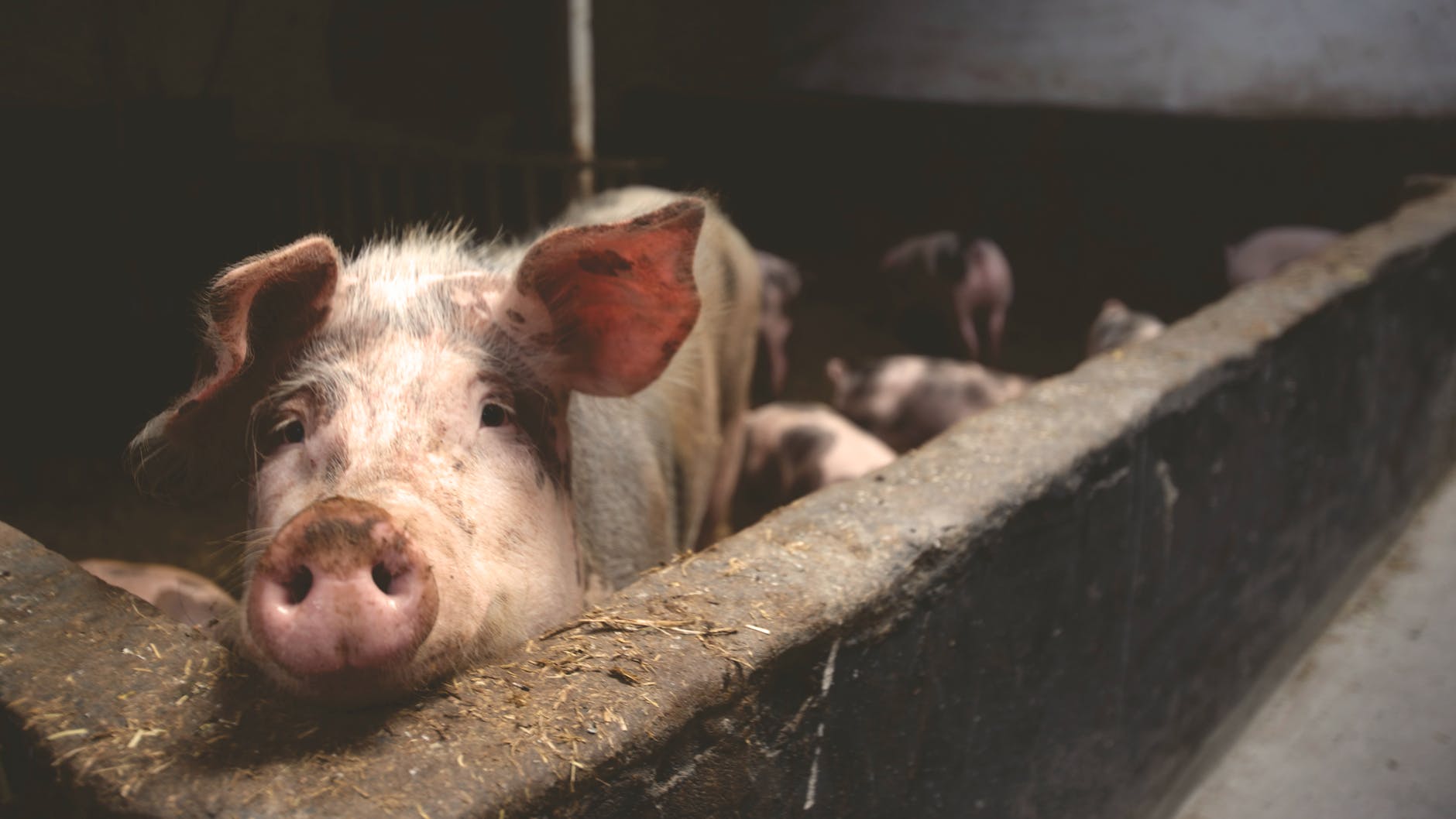
Poem for a Friday — “St. Francis and the Sow” by Galway Kinnell

“The bud

stands for all things,

even for those things that don’t flower,

for everything flowers, from within, of self-blessing;   

though sometimes it is necessary

to reteach a thing its loveliness,

to put a hand on its brow

of the flower

and retell it in words and in touch

it is lovely

until it flowers again from within, of self-blessing;   

as Saint Francis

put his hand on the creased forehead

of the sow, and told her in words and in touch   

blessings of earth on the sow, and the sow   

began remembering all down her thick length,   

from the earthen snout all the way

through the fodder and slops to the spiritual curl of the tail,   

from the hard spininess spiked out from the spine   

down through the great broken heart

to the sheer blue milken dreaminess spurting and shuddering   

from the fourteen teats into the fourteen mouths sucking and blowing beneath them:

the long, perfect loveliness of sow.”

in Americans’ Favorite Poems, ed. Robert Pinsky and Maggie Dietz. New York: W.W. Norton & Co., 2000.

From the Poetry Foundation: “Galway Kinnell was an award-winning poet best known for poetry that connects the experiences of daily life to much larger poetic, spiritual, and cultural forces. Often focusing on the claims of nature and society on the individual, Kinnell’s poems explore psychological states in precise and sonorous free verse. Critic Morris Dickstein called Kinnell ‘one of the true master poets of his generation.”’ Kinnell’s Collected Poems was awarded the Pulitzer Prize and the National Book Award.

Photo by Matthias Zomer on Pexels.com