Unprepared

Sabbath Day Thoughts — “Unprepared” Matthew 3:1-12

It was finals week. An entire semester’s worth of work depended upon some big tests. I was cramming for my exams, making the most of reading week. I felt good about my impending tests. Then, I suddenly realized that there was one exam that I was completely unprepared for. I don’t know how it escaped my attention, but there on my schedule was a course that I had overlooked for an entire semester. I hadn’t gone to class. I didn’t know the professor. I hadn’t read the books. How could I possibly pass that test? Like all college students, I began to panic. What if I stayed awake all night and skimmed the reading? I didn’t own the books! Could I borrow someone’s notes? I didn’t know who was in the class! It did not look good. I was unprepared.

Perhaps you have had that nightmare or something like it. I’m told that many professions are plagued by their version of the school dream. The contractor dreams of an overlooked job that must be done immediately. The caterer has a nightmare about a huge wedding that never made it onto their calendar. The business manager dreams of a surprise audit. I can testify that the pastor’s nightmare entails going to a new church on Sunday morning and discovering that you are expected to preach, and when you look down, you notice that you are naked.

Psychologists tell us that these dreams are typically provoked by unresolved anxiety or feelings of inadequacy. When we are stressed and overwhelmed, our brains work overtime to cope, even in our sleep. We awaken with our hearts pounding, feeling sweaty and gripped with self-critical worry. The experts say we should pay attention to dreams like this. It could be a wake-up call from our subconscious, telling us to attend to a particular issue, make a big decision, or change our course of action.

I bet John the Baptist had school dreams. He was born to prepare the way of the Lord, but the more John tried to live into his calling, the more he noticed that the folks who came out to the Judean Wilderness to hear him preach were totally unprepared. The messiah was coming with his baptism of fire and his winnowing fork in hand! God’s great redemption of humankind was about to unfold! But the people, they were eating, drinking and being merry, as if they had all the time in the world and could not be bothered to do their homework.

Even the piety experts, the Pharisees and Sadducees, were slackers. They may have been savants on the requirements of the Torah, but as far as John was concerned, they were a brood of vipers. They talked a good game about loving the Lord, but their actions spoke louder than words. The righteous deeds that were typically born of a transformed heart—like caring for vulnerable widows and orphans, feeding the hungry, and loving their neighbors—those deeds were nowhere to be seen. Where was the good fruit?! “Repent!” John cried, trying to infect his listeners with enough of his anxiety and urgency to inspire them to turn their lives around.

We aren’t strangers to anxiety in this Christmas season. No other time of the year is so steeped in preparation and timeworn tradition. There’s a lot to do, and we’ve got to get it done before Christmas Day. Our to-do list is as long as our arm: gifts to buy and the tree to decorate, cookies to bake and old family recipes to duplicate, packages to wrap and charitable giving to do, parties to attend and guests to host. Every year, right about this time, we wonder, “How will we ever get it all done?” As I talk about the Christmas juggernaut that is bearing down upon us, arriving in exactly eighteen days, perhaps you are feeling a little infected with John the Baptist’s anxiety, perhaps you are feeling like you just woke up from a bad school dream.

Our seasonal Study Group is reading Advent in Plain Sight by Jill Duffield. In our reading from Thursday, Dr. Duffield recounted attending a small group meeting at church a number of years ago when she was a young adult.  Their pastor asked them what they thought about Advent. The responses focused on the baby Jesus, the infant so tender and mild. Folks were thankful for the incarnation, the breaking of barriers between heaven and earth, the confidence that God is with us—Emmanuel! I’m sure everyone in the group had that good feeling you get when you know the answer to the question that the professor asks in class.

But right about then, the pastor went a little John-the-Baptist on them. He blurted out, “No one ever thinks of the Second Coming!” It’s true. In this Advent season, we look back, remembering and giving thanks for the baby Jesus. But Advent means coming. We are also called to look ahead, to anticipate the ultimate fulfillment of the great redemption that God has begun in Jesus. We are talking about End Times, Judgment Day, the Kingdom of God, the apocalypse. We’re talking about the inevitable fact that each of us, one day, will meet our maker. The ultimate final exam awaits us all—and we don’t have much say about when that will happen. Are our hearts pounding? Are we feeling a little sweaty and gripped with self-critical anxiety? Then John the Baptist and I have achieved our mission.

We are really good at preparing for the baby Jesus, aren’t we? Just look around the church—the purple paraments, the greens, the Advent Wreath, the Christmas tree in the Great Hall. But on the second Sunday of Advent, John the Baptist shows up, like a bad school dream, and he thinks we are unprepared. John wants us to temper our nostalgic looking back with some prophetic looking ahead. He calls us once again to prepare the way of the Lord, to live today as if Jesus were coming tomorrow, to bear fruit worthy of our repentance.

For John the Baptist’s listeners on the banks of the Jordan, all those years ago, preparing the way of the Lord began with a change of heart. They heard the truth of John’s words and knew they could do better. They returned to God, wading into the waters of the Jordan in an outward sign of their inward repentance. I like to think that their watery rite was followed by some fruitful living. They were kinder to their families. They prayed fervently, worshipped ardently, and feasted on God’s word. They lived with a renewed compassion, service, and love for the world around them that can only come from a life lived with God.

On this second Sunday of Advent, we, too, can have a change of heart. We can draw near to God even as God draws near to us. 18 days and counting. We won’t be wading in the Jordan, but amid all our Christmas preparations, I trust that we’ll find the quiet moment today to commit our purpose to God’s purpose. We’ll resolve to love the Lord our God with all our heart, mind, soul, and strength, and we’ll go forth to love our neighbors as ourselves. We’ll bear fruit worthy of that repentance. The basket at the side entrance will fill with cans of corn for the ecumenical holiday boxes for neighbors in need. Our shallow well gifts will provide clean drinking water for many villages in sub-Saharan Africa. We’ll invite a hurting friend to attend the Longest Night Service with us this Wednesday. We’ll set an extra place at the Christmas dinner table for someone who might otherwise be alone. When that final exam comes, we’ll be ready.

Prepare the way of the Lord, my friends, make his paths straight.

Resources:

Adam England. “What Does It Mean When You Dream about Being Back in School?” in Very Well Mind, Oct. 30, 2025. Accessed online at verywellmind.com.

Catherine Sider Hamilton. “Commentary on Matthew 3:1-12” in Preaching This Week, Dec. 7, 2025. Accessed online at https://www.workingpreacher.org/commentaries/revised-common-lectionary/second-sunday-of-advent/commentary-on-matthew-31-12-7

Arland J. Hultgren. “Commentary on Matthew 3:1-12” in Preaching This Week, Dec. 8, 2013. Accessed online at https://www.workingpreacher.org/commentaries/revised-common-lectionary/second-sunday-of-advent/commentary-on-matthew-31-12-3

Stanley Saunders. “Commentary on Matthew 3:1-12” in Preaching This Week, Dec. 9, 2007. Accessed online at https://www.workingpreacher.org/commentaries/revised-common-lectionary/second-sunday-of-advent/commentary-on-matthew-31-12-6

James Boyce. “Commentary on Matthew 3:1-12” in Preaching This Week, Dec. 4, 2022. Accessed online at https://www.workingpreacher.org/commentaries/revised-common-lectionary/second-sunday-of-advent/commentary-on-matthew-31-12-2


Matthew 3:1-12

1 In those days John the Baptist appeared in the wilderness of Judea, proclaiming, “Repent, for the kingdom of heaven has come near.” This is the one of whom the prophet Isaiah spoke when he said,

“The voice of one crying out in the wilderness:
‘Prepare the way of the Lord;
    make his paths straight.’ ”

Now John wore clothing of camel’s hair with a leather belt around his waist, and his food was locusts and wild honey. Then Jerusalem and all Judea and all the region around the Jordan were going out to him, and they were baptized by him in the River Jordan, confessing their sins.

But when he saw many of the Pharisees and Sadducees coming for his baptism, he said to them, “You brood of vipers! Who warned you to flee from the coming wrath? Therefore, bear fruit worthy of repentance, and do not presume to say to yourselves, ‘We have Abraham as our ancestor,’ for I tell you, God is able from these stones to raise up children to Abraham. 10 Even now the ax is lying at the root of the trees; therefore every tree that does not bear good fruit will be cut down and thrown into the fire.

11 “I baptize you with water for repentance, but the one who is coming after me is more powerful than I, and I am not worthy to carry his sandals. He will baptize you with the Holy Spirit and fire. 12 His winnowing fork is in his hand, and he will clear his threshing floor and will gather his wheat into the granary, but the chaff he will burn with unquenchable fire.”

Photo by Tara Winstead on Pexels.com

Come, Let Us Walk in the Light

Sabbath Day Thoughts — “Come, Let Us Walk in the Light” Isaiah 2:1-5

It was a tough Thanksgiving for Sharon and Tim. Family gathered from far and wide. The food was delicious. Laughter sounded around the table. Everyone cheered and jeered in goodhearted rivalry as the Detroit Lions took on the Green Bay Packers. It was a special day. But Sharon and Tim couldn’t help but think about who was not there. Kyle, their oldest son, doesn’t come to Thanksgiving or Christmas or any of those special family gatherings anymore. It started with a rift over Kyle’s decision to quit school and the division seems to grow wider with the years.

For Henry, the best part about the long Thanksgiving weekend is not going to the office. His workplace has become increasingly polarized along the dividing lines of our national political landscape. His MAGA colleagues rejoice in every tweet that emerges from the oval office while the progressives cheer for their champion from across Lake Champlain Bernie Sanders. Henry tries to stay out of it, but he has found that he has few friends. He’d quit, but he needs the paycheck, and good jobs are hard to find, especially in the Adirondacks.

Jen has been thinking about her former best friend Cynthia. Friends since high school, Jen and Cynthia had a Black Friday tradition. They would rise early, take the Northway south, and do their Christmas shopping at the Colonie Center. After crossing everyone off their gift list, they would enjoy an early dinner at the Cheesecake Factory before heading home, the car filled with presents and the Christmas music blaring on the stereo. But when Cynthia married someone whom Jen didn’t like, the two had a falling out that never healed. Jen misses their friendship and Black Friday tradition.

The Thanksgiving holiday makes us aware of the ways that we have been blessed. God has been so good to us. Yet Thanksgiving and the coming Christmas holiday also draw our attention to the painful holes, protracted conflicts, and disappointing absences in our lives. We long for wholeness, for the peace that only Jesus can bring. We long to walk in his light.

The Prophet Isaiah knew that sense of longing. In his decades-long ministry, Isaiah endured the turbulent rule of four kings: Uzziah, Jotham, Ahaz, and Hezekiah.  Judah’s leaders were a selfish and short-sighted lot, more concerned with preserving their personal power than honoring God or protecting the people. They failed to defend the orphan or hear the pleas of widows. They ground the face of the poor into the dust. God expected justice from Judah’s rulers, but saw only bloodshed. Judah’s kings played dangerous games of shifting alliances between the reigning superpowers of their day. First, King Ahaz conspired with the Assyrians to undermine and overthrow his kin in the Northern Kingdom. Then, Hezekiah formed a secret alliance with Egypt. When Hezekiah’s double dealing came to light, the Assyrian armies rolled over Judah. Forty-six fortified cities were destroyed, and Jerusalem was encircled. Hezekiah and his people were imprisoned within a city under siege.

Into this time of suffering and violence, Isaiah shared God’s radically hopeful vision of Jerusalem. Instead of laying siege to Jerusalem, the nations of the world made a holy pilgrimage to the city. The roads thronged with people: rich and poor, young and old, sinners and saints. They walked in worn sandals. They rode opulently saddled camels. They strode with the vigor of youth. They leaned on canes and limped with the creaky joints of age. They carried babies on their hips. They sang songs of peace, “I ain’t gonna study war no more” and “Imagine all the people living life in peace.” Sounds of excitement, laughter, and hope could be heard along the way. Neighbor called to neighbor, “Come, let us go up to Jerusalem! Let us learn from God.”

When they reached the holy city, the people found that it was not ruled by Uzziah, Jotham, Ahaz, or Hezekiah. On the contrary, God was sovereign there, and God was cleaning house, ending years of injustice and oppression, judging between the nations and arbitrating for the people. There was peace and a new beginning for all God’s children. Jerusalem’s center of industry was no longer the privileged elite who built fortunes on the backs of the poor. Now, the most sought-after tradespeople were the blacksmiths. Their forges glowed red-hot, night and day. Their hammers rang out and sparks rose up in fiery showers as they beat the instruments of death into the tools of life. Swords became plowshares, spears became pruning hooks. Tanks turned to combines. AK-47s, Kalashnikovs, and Uzis transformed to hoes, rakes, and cultivators. What a lovely luminous vision held out to people living in dark times! O house of Jacob!  Come, let us walk in the light of the Lord!

As we hear Isaiah’s prophecy, we feel a terrible tension between what is and what could be, between the corruption and political intrigue of ancient Judah and God’s holy hope for Jerusalem. We know, too, the tension of Isaiah’s vision for our own lives and times, the tension between the brokenness of our families, workplaces, and friendships and the ways that God would have us live. Isaiah’s vision is a powerful and enduring invitation to faithful people to be grounded in and directed by God, to choose once and for all to walk in God’s light, to live into God’s good vision for a healed world where differences are overcome by an irresistible, holy love.

This Sunday, as we remember Isaiah’s vision and begin the season of Advent, anticipating the light of Christ that shines in our world’s darkness, we are invited to be agents of Isaiah’s vision of peace and transformation in our own communities and within our own families. This is the really hard part. Change begins here, within our heart of hearts, as we allow God’s love and grace to heal old hurts and turn us to one another with a spirit of forgiveness and forbearance. To walk in the light, we must first allow it to shine within us and transform us. Then, we must be willing to allow that light to shine through us to our neighbors, knowing that we are one and all God’s beloved children. 

There is the famous story of a wise old Rabbi who taught his students by asking them questions.  “How can a person tell when the darkness ends and the day begins?” he asked. After thinking a moment, one student replied, “It is when there is enough light to see an animal in the distance and be able to tell if it is a sheep or a goat.” Another student ventured, “It is when there is enough light to see a tree and tell if it is a fig or an oak tree.” The old Rabbi smiled and gently said, “No. It is when you can look into a man’s face and recognize him as your brother. For if you cannot recognize in another’s face the face of your brother or sister, the darkness has not yet begun to lift, and the light has not yet come.”  Come, let us walk in the light.

On this first Sunday of Advent, perhaps we could follow in Isaiah’s footsteps and cast our own vision of the world that we can make if only we will choose to walk in the light. It will be a world where we love God and we love one another as we love ourselves. It will be a world where we will even dare to love our enemies and pray for those who have persecuted us. It will be a world where we will turn the other cheek, go the extra mile, and forgive as we have been forgiven. The sharp barbs of our personal criticisms will be transformed to words of encouragement and praise. The battle lines of our political landscape will unravel at the table of peace. The sticks of insults hurled and stones of promises broken will fall powerless at the feet of unstoppable love. We will truly see one another as brothers, sisters all.

It’s a world where family rifts will come to an end, and Sharon and Tim will share Thanksgiving dinner with Kyle. It’s a world where toxic politics are set aside in favor of the common good, and Henry will like his job again. It’s a world where friendships endure despite personal differences, and Jen and Cynthia will celebrate the conclusion of their Black Friday shopping over a piece of Godiva Chocolate Cheesecake. It’s a world where we put God at the center of it all, and we learn to live by the words that Jesus taught. Can we dare to dream it?

O house of Jacob!  Come, let us walk in the light of the Lord!

Resources

Corinne Carvalho. “Commentary on Isaiah 2:1-5” in Preaching This Week, Nov. 30, 2025. Accessed online at https://www.workingpreacher.org/commentaries/revised-common-lectionary/first-sunday-of-advent/commentary-on-isaiah-21-5-7

Joel Kemp. “Commentary on Isaiah 2:1-5” in Preaching This Week, Nov. 27, 2022. Accessed online at https://www.workingpreacher.org/commentaries/revised-common-lectionary/first-sunday-of-advent/commentary-on-isaiah-21-5-6

Anathea Portier-Young. “Commentary on Isaiah 2:1-5” in Preaching This Week, Nov. 28, 2010. Accessed online at https://www.workingpreacher.org/commentaries/revised-common-lectionary/first-sunday-of-advent/commentary-on-isaiah-21-5

Fred Gaiser. “Commentary on Isaiah 2:1-5” in Preaching This Week, Dec. 2, 2007. Accessed online at https://www.workingpreacher.org/commentaries/revised-common-lectionary/first-sunday-of-advent/commentary-on-isaiah-21-5-2

The traditional story of the wise rabbi is from Dennis Bratcher “Hope!” www.cresourcei.org


Isaiah 2:1-5

The word that Isaiah son of Amoz saw concerning Judah and Jerusalem.

In days to come
    the mountain of the Lord’s house
shall be established as the highest of the mountains
    and shall be raised above the hills;
all the nations shall stream to it.
    Many peoples shall come and say,
“Come, let us go up to the mountain of the Lord,
    to the house of the God of Jacob,
that he may teach us his ways
    and that we may walk in his paths.”
For out of Zion shall go forth instruction
    and the word of the Lord from Jerusalem.
He shall judge between the nations
    and shall arbitrate for many peoples;
they shall beat their swords into plowshares
    and their spears into pruning hooks;
nation shall not lift up sword against nation;
    neither shall they learn war any more.
O house of Jacob,
    come, let us walk
in the light of the Lord!


Photo by Thilipen Rave Kumar on Pexels.com

The Voice from the Margins

Sabbath Day Thoughts — “The Voice from the Margins” Luke 3:1-18

The Christmas preparations have been underway in the village for weeks. First, our lampposts were hung those giant sparkly snowflakes. Then, Berkely Green sprouted a bevy of Christmas trees. Salvation Army bell ringers with their red kettles are stationed at the post office and Kinney’s. Shopkeepers have decked their windows with lights and greens and tempting wares that we just might need to purchase for our beloved ones. Sparkle Village returned to the town hall with those wonderful one-of-a-kind crafts and gifts.

We have been preparing for Christmas at church, too. The Advent wreath has emerged from its basement lair to hang above the chancel and call us to worship weekly. Cherise has done yet another amazing job of greening our sanctuary and doors. Some of us are reading our way to Christmas. Perhaps you took home an Advent devotional, or you are gathering on Thursdays for lunch and book discussion. Scott and the choir have been hard at work on a spectacular anthem for Christmas Eve. The kids, under the direction of Ms. Kim, are preparing to delight us with a special play next week.

I know that there have been plenty of preparations on our home fronts, too. We may be working out final details on travel plans or preparing to welcome guests. Our front doors are sporting wreaths and our eves are dripping with Christmas lights. We are hanging favorite ornaments on our Christmas trees—candy canes, antique glass balls, and golden macaroni wreaths made by little hands long ago. We’ve been shopping, and if we are very organized, we are wrapping. If the baking hasn’t begun yet, it will soon—Christmas cookies, fruitcakes, panettone, stollen, and our favorite family recipes. If you are like me, there is joy in the preparation, a remembering of Christmases past and an anticipation of the holiday to come.

On this second Sunday in Advent, the gospel reading brings us John the Baptist, who gives us an earful about preparing the way of the Lord. When I served the Community Church in Morton Grove, I would tag along with my head of staff Michael Winters to attend a lectionary group. These were seasoned pastors who preached weekly and met to discuss the scripture and work on their sermons. The second Sunday of Advent was near, and we had just read together the reading I shared a minute ago—John the Baptist calling us a brood of vipers and exhorting us to repent. There was a long moment of silence following the reading, then Rev. Debbie spoke up, “Don’t you wish we only had to preach on John once a year for Baptism of the Lord Sunday in January? Who wants to hear about John at Christmas?”

John certainly wasn’t dressed for the holidays and his diet of locusts and wild honey hardly sounds like a tasty Christmas dinner. In 1457, Donatello cast a larger-than-life bronze statue of John the Baptist for the Cathedral in Siena, Italy. In Donatello’s imagination, John has unkempt hair and the burning eyes of a fanatic. He’s impossibly thin, a skeleton with skin, all lean muscle and sinew. He’s clothed in matted furs that part at the side to show bare flesh. His long, bony fingers extend, as if pointing the way to Christ, the stronger one who will follow. The statue is eerie, unsettling, discomforting. There is no bow big enough to dress John up and put him under our Christmas trees. Let’s face it, we would never invite John the Baptist to Christmas dinner because he would be certain to shout, wouldn’t wear a tie, and would probably smell like the wilderness he just rolled out of. No. At Christmas, we prefer the baby Jesus, the holy infant so tender and mild to the disconcertingly wild, wooly, and radical John.

The sermon that John gave doesn’t sound like something you want to read in a Christmas card. Let me channel my inner John . . .

Dear Brood of Vipers,

What is wrong with you?!

Don’t you know that God is coming? That’s right Yahweh, the great I AM. He’s really topped himself this time, dared to wrap himself in flesh and walk among us. He’s on the loose!

And you?! You’re oblivious! You just go on living large. It’s all about you, isn’t it?

And what about this world? God help us! Nation taking up arms against nation. Neighbor trash-talking neighbor. What about the poor, the orphan, the refugee, the folks who struggle to put food on the table or a roof over their heads?

Stop, people! Just stop. Turn it around before it’s too late. You need to remember who is really in charge around here and it’s not you. It’s God Almighty. So straighten up and fly right. Be prepared!

Got it? Good!

Yours truly,

John

On this second Sunday of Advent, the ill-mannered, ill-timed, wild-and-crazy John the Baptist breaks into our lives and throws a big fat monkey wrench into our Christmas customs and timeworn traditions. Truth be told, we need John. We need him to startle us out of our Christmas complacency and call us away from our ordinary lives to a time and place of awareness and anticipation. We need John to urge us to leave, if only for a little bit, our kitchens and Christmas trees, our on-line shopping and office parties, our school books and family festivities. We need John to remind us of the reason for the season and tell us what it really means to prepare the way of the Lord. We need John’s encouragement to repent (metanoia), to thoughtfully and honestly reflect upon our lives, redirect our actions and energies, and re-commit ourselves to God-centered living. We need John to remind us that, no matter what the circumstance of our lives may be, we can be redeemed and renewed. We can come back to God because every year at Christmas, we are reminded that God comes to us with help and healing and love beyond our wildest imaginings.

Our Advent book this year is Season’s Greetings, an imaginative collection of Christmas letters from those who were there at the first Christmas. The author, my friend Ruth Boling, invites us to imagine John as “one of those wacky inflatable air dancers outside a car dealership.” You know those annoying windsocks that rise and fall and gyrate in unexpected ways that captivate our attention? According to my friend Ruth, John says, “I’m here to do that. To get you and everyone else to stop racing around on your Christmas hamster wheels, to get you to take notice and to study what I—wacky inflatable air dancer—am pointing toward. Here, people of God, is the one you want to be chasing . . . Don’t be a hamster, or a lemming, or an idiot. See, here is the one who came to redeem and restore.” It’s Jesus.

In the coming weeks of Advent, the frenzied pace of our Christmas preparations will build to a crescendo. That Kanoodle Ultimate Champion game that we purchased online for our grandchildren will be backordered, and we’ll scramble for a last-minute gift. Grandma’s recipe for authentic German stollen will disappear, and we’ll spend hours trying unsuccessfully to duplicate her kitchen magic through guesswork. Our Christmas trees will dry up and shed boatloads of needles, and we’ll wake up in the middle of the night to worry that our house might burn down. Our children will grow SO excited that they will not sleep a wink on Christmas Eve, and neither will we.

Amid the crazy-hamster-wheel-joy of this Advent season, may we listen for the voice from the margins. The Baptizer still calls out in the wilderness. May the wild one summon us away from the holiday rush to quiet moments with God for reflection, redirection, and renewal. Prepare the way of the Lord, my friends, make his paths straight.

Resources

Troy Troftgruben. “Commentary on Luke 3:1-6” in Preaching This Week, Dec. 8, 2024. Accessed online at Commentary on Luke 3:1-6 – Working Preacher from Luther Seminary

David Lose. “Commentary on Luke 3:1-6” in Preaching This Week, Dec. 6, 2009. Accessed online at Commentary on Luke 3:1-6 – Working Preacher from Luther Seminary

Audrey West. “Commentary on Luke 3:1-6” in Preaching This Week, Dec. 5, 2021. Accessed online at Commentary on Luke 3:1-6 – Working Preacher from Luther Seminary

Ruth Boling. Season’s Greetings: Christmas Letters from Those Who Were There. Nashville: Upper Room books, 2024.


In the fifteenth year of the reign of Tiberius Caesar, when Pontius Pilate was governor of Judea, and Herod was ruler of Galilee, and his brother Philip ruler of the region of Ituraea and Trachonitis, and Lysanias ruler of Abilene, during the high priesthood of Annas and Caiaphas, the word of God came to John son of Zechariah in the wilderness. He went into all the region around the Jordan, proclaiming a baptism of repentance for the forgiveness of sins, as it is written in the book of the words of the prophet Isaiah,

“The voice of one crying out in the wilderness:
‘Prepare the way of the Lord;
    make his paths straight.
Every valley shall be filled,
    and every mountain and hill shall be made low,
and the crooked shall be made straight,
    and the rough ways made smooth,
and all flesh shall see the salvation of God.’ ”

John said to the crowds coming out to be baptized by him, “You brood of vipers! Who warned you to flee from the coming wrath? Therefore, bear fruits worthy of repentance, and do not begin to say to yourselves, ‘We have Abraham as our ancestor,’ for I tell you, God is able from these stones to raise up children to Abraham. Even now the ax is lying at the root of the trees; therefore every tree that does not bear good fruit will be cut down and thrown into the fire.”

10 And the crowds asked him, “What, then, should we do?” 11 In reply he said to them, “Whoever has two coats must share with anyone who has none, and whoever has food must do likewise.” 12 Even tax collectors came to be baptized, and they asked him, “Teacher, what should we do?” 13 He said to them, “Collect no more than the amount prescribed for you.” 14 Soldiers also asked him, “And we, what should we do?” He said to them, “Do not extort money from anyone by threats or false accusation, and be satisfied with your wages.”

15 As the people were filled with expectation and all were questioning in their hearts concerning John, whether he might be the Messiah, 16 John answered all of them by saying, “I baptize you with water, but one who is more powerful than I is coming; I am not worthy to untie the strap of his sandals. He will baptize you with the Holy Spirit and fire. 17 His winnowing fork is in his hand to clear his threshing floor and to gather the wheat into his granary, but the chaff he will burn with unquenchable fire.”

18 So with many other exhortations he proclaimed the good news to the people.


Donatello, John the Baptists, 1457, Duomo di Siena.

The Kingdom Comes

Sabbath Day Thoughts — “The Kingdom Comes” Luke 21:25-36

Italian Renaissance painter Sandro Botticelli believed that the end of the world was coming in the year 1504. You can spy his apocalyptic vision in his painting of Jesus’ birth, The Mystical Nativity. The painting has all the usual things we expect in a manger scene—joyful angels, an adoring Mary and Joseph, reverent shepherds, and curious barnyard beasts, but it also bears the disturbing depiction of small winged devils escaping under rocks or shot through with arrows. Botticelli explained his strange vision in an epigraph at the top of his work, “I, Sandro, painted this picture at the end of the year 1500 in the troubles of Italy in the. . . second woe of the Apocalypse in the loosing of the devil for three and a half years. . . we shall see him trodden down as in this picture.”

New England residents thought the end was near on May 19, 1780 when the skies turned strangely dark. According to one witness, “People [came] out wringing their hands and howling, the Day of Judgment is come.” The Connecticut legislature, which was in session when the sky blackened, feared the apocalypse was imminent and moved for adjournment, but one legislator, Abraham Davenport, responded: “The day of judgment is either approaching, or it is not. If it is not, there is no cause of an adjournment; if it is, I choose to be found doing my duty. I wish therefore that candles may be brought.” The “Dark Day,” as it came to be known, ended at midnight, when the stars once again became visible in the night sky. Historians suspect that the darkness was caused by an ill-timed confluence of smoke from forest fires and heavy fog.

When Halley’s Comet reappeared in 1910, it induced an end-of-the-world panic. Chicago’s Yerkes Observatory announced that it had detected a poisonous gas called cyanogen in the comet’s tail. The New York Times reported that the noted French astronomer, Camille Flammarion believed the gas “would impregnate that atmosphere and possibly snuff out all life on the planet.” Panic ensued. People rushed to purchase gas masks and “comet pills.” The Atlanta Constitution reported that people in Georgia were preparing safe rooms and covering keyholes with paper. One man armed himself with a gallon of whiskey and requested that friends lower him to the bottom of a dry well, 40 feet deep. After the comet passed, the headline of the Chicago Tribune lamely announced, “We’re Still Here.”

Our gospel reading on this first Sunday of Advent is downright apocalyptic. Sounding a lot like an Old Testament prophet, Jesus warned his listeners of a coming Day of Judgment. There would be signs in the heavens, chaos among the nations, and tumult upon the waters. Amid the discord and disruption, Jesus called his followers to vigilance, saying: stand up, raise your head, be on guard, pray. 

When Jesus stood in the Temple court sounding so prophetic, he was in the midst of a different holiday season—the Passover. From across the Roman Empire, people had come to Jerusalem to remember that God had once delivered them from the bondage of Egypt. With plagues of frogs and gnats, darkness, disease, and death, God had bested Pharaoh, and Moses had led the people forth to freedom. That Passover week, Jesus and his friends remembered God’s deliverance with the sacrifice of a lamb, the singing of psalms, and the sharing of a final Passover seder.

The courts of the Temple were filled with politically-charged tension as Passover memories faced the everyday reality of Jesus’ listeners. Israel was again in bondage, a vassal state of the Roman Empire. A legion of Roman soldiers had ridden out of Caesarea and up to Jerusalem amid the Passover pilgrims. Any dreams of Jewish freedom would be promptly and brutally quashed. It may have been Passover, but the local leaders served the emperor’s purpose, not God’s purpose. As that week continued, this would become increasingly clear as the Temple authorities conspired to arrest and condemn the Lord.

Given the context in which Jesus spoke, his promise of the coming of the Son of Man with power and great glory took on a hopeful tone for his listeners. Jesus was assuring the people that it was God, not Rome, who had ultimate authority. God, who delivered their ancestors from slavery in Egypt was still at work and would one day bring all things to completion in the Kingdom of God. The people needed to live today as if that Kingdom were coming tomorrow, alert and on guard, standing tall with heads up.

On this first Sunday in Advent, we puzzle over Jesus’ apocalyptic promise. We smile, perhaps a bit condescendingly, at the long history of apocalypticism—Sandro Botticelli’s Mystical Nativity with winged devils pinned to the earth by heavenly bolts, New Englanders terrified on the Dark Day, Americans plying gas masks and “comet pills” to ward off the end that was surely coming with Halley’s Comet. But if we are honest, we’ll admit that we are not strangers to apocalyptic worry.

We fear the end is near. Vladimir Putin will push the nuclear button in his prolonged war against Ukraine, unleashing a tide of atomic death to threaten the planet. Israel, Hamas, and Iran have set the stage for Armageddon, years of unstoppable, unwinnable war in the Middle East. Our addiction to fossil fuels will bring worldwide ecological catastrophe. The bitter divisions and bizarre turns of American politics herald an end to democracy and our nation as we know it. We faint with fear and foreboding of what is coming upon the world.

Our apocalyptic worries may be deeply personal. The death of a beloved one feels like the end of our world. A terrifying diagnosis convinces us that Judgment Day is near. Money troubles fill us with cataclysmic worry and woe. Estrangement in our families puts an end to future plans. It feels a lot like the apocalypse out there. We are confused and shaken, uncertain and frightened.

And so, on the first Sunday in Advent, we need Jesus to remind us that God has the last word. When Jesus made that promise, his friends would soon feel that their world was coming to an end. Temple guards would take Jesus into custody. He would be tried on trumped up charges, handed over to the Romans, and condemned to death on a cross. For three days, it would feel like the end of the world, that Rome and death and sin had the last word. Yet on Easter morning, they learned, once and for all, that God’s love is always stronger than death, always stronger than all the apocalyptic fears that our world may wield.

In Jesus’ life, death, and rising, God launched a revolution of self-giving love that continues to ripple through the corridors of time. The Kingdom comes even when the Romans rule the land. The Kingdom comes when Renaissance Italy feels like the devil has been loosed for 3 ½ years. The Kingdom comes on Dark Days. The Kingdom comes when the sky is falling. The Kingdom comes despite the machinations of scheming despots. The Kingdom comes as the bombs fall. The Kingdom comes amid global warming. The Kingdom comes in political chaos. The Kingdom comes even when our lives are wracked by personal pain, grief, and loss. The Son of Man comes with power and glory.

On this first Sunday in Advent, we remember that the Kingdom comes, and we can be a part of it—if we will only stand up, raise our heads, and go forth to love today as if the world were ending tomorrow. Lutheran theologian Philip Hefner, who taught for many years at the Lutheran Seminary in Chicago, taught that humankind is created to be co-creators. God grants us the agency, freedom, and creative capacity to join our purpose to God’s purpose. If Hefner is right, then we have a part to play in the coming of God’s Kingdom. Our choice to stand up, raise our heads, roll up our sleeves, and go forth with love is a choice for the Kingdom. And as we dare to love our God and our neighbors and even our enemies when it feels like the world is coming to an end, the Kingdom comes a little bit in each of us and in those whose lives we touch.

So maybe Abraham Davenport got it right on that Dark Day in 1780, and he said, “The day of judgment is either approaching, or it is not. If it is not, there is no cause of an adjournment; if it is, I choose to be found doing my duty. I wish therefore that candles may be brought.” The world may or may not be coming to an end, but there is work still for us to do. May we stand up and raise our heads. May we love today as if the Kingdom were coming tomorrow.

Resources

Mark Strauss. “Ten Notable Apocalypses That (Obviously) Didn’t Happen” in Smithsonian Magazine, Nov. 12, 2009.

Drew Rick-Miller. “Created Co-Creators” in Science for the Church, July 9, 2019. Accessed online at Created Co-Creators – Science for the Church – Ministry Resources 

David Lose. “Commentary on Luke 21:25-36” in Preaching This Week, Nov. 29, 2009. Accessed online at Commentary on Luke 21:25-36 – Working Preacher from Luther Seminary

Mary Beth Dinkler. “Commentary on Luke 21:25-36” in Preaching This Week, Dec. 2, 2018. Accessed online at Commentary on Luke 21:25-36 – Working Preacher from Luther Seminary

Troy Troftgruben. “Commentary on Luke 21:25-36” in Preaching This Week, Dec. 1, 2024. Accessed online at Commentary on Luke 21:25-36 – Working Preacher from Luther Seminary


Luke 21:25-36

25 “There will be signs in the sun, the moon, and the stars and on the earth distress among nations confused by the roaring of the sea and the waves. 26 People will faint from fear and foreboding of what is coming upon the world, for the powers of the heavens will be shaken. 27 Then they will see ‘the Son of Man coming in a cloud’ with power and great glory. 28 Now when these things begin to take place, stand up and raise your heads, because your redemption is drawing near.” 29 Then he told them a parable: “Look at the fig tree and all the trees; 30 as soon as they sprout leaves you can see for yourselves and know that summer is already near. 31 So also, when you see these things taking place, you know that the kingdom of God is near. 32 Truly I tell you, this generation will not pass away until all things have taken place. 33 Heaven and earth will pass away, but my words will not pass away. 34 “Be on guard so that your hearts are not weighed down with dissipation and drunkenness and the worries of this life and that day does not catch you unexpectedly, 35 like a trap. For it will come upon all who live on the face of the whole earth. 36 Be alert at all times, praying that you may have the strength to escape all these things that will take place and to stand before the Son of Man.”


By Sandro Botticelli – National Gallery, London, Public Domain, https://commons.wikimedia.org/w/index.php?curid=39054778

Messengers

Sabbath Day Thoughts — “Messengers” Mark 1:1-8

When we want to send a message, we pick up our phones and tap out a text. We may even resort to a phone call. For longer messages, we’ll sit down at the computer to send an email. All those modes of communication get the message out instantaneously. If we are old school, we might pick up a pen and write a letter, carefully seal it in an envelope, apply a stamp, and drop it off at the post office, trusting that our snail mail will reach its destination across the country in a matter of days.

To send a message in the ancient near east, you needed a messenger, someone who would carry your words to their intended destination. Messengers traveled long distances on important purposes, sometimes at great risk.

There were royal messengers. In the fifth century BC, the Persian Emperor Darius developed the Royal Road, a network of mounted couriers called the Angarium. They efficiently transmitted imperial messages from Susa in modern-day Iran to Sardis in modern day Turkey. Like the pony express, the mounted messengers of the Angarium worked in relays. They reportedly could make the 1,677-mile journey in nine days, a journey that would take ninety days on foot. The Greek historian Herodotus was so impressed that he wrote, “There is nothing in the world that travels faster than these Persian couriers.” “Neither snow nor rain nor heat nor gloom of night stays these couriers from the swift completion of their appointed rounds.” If those words sound familiar, it is because they are sometimes quoted as the unofficial slogan of the United States Postal Service. 

The Romans expanded this early postal system with engineering work that forged lasting roadways along ancient trade routes that dated back thousands of years. The Romans employed military messengers who brought news to and from the battlefield. A messenger with good news carried a laurel wreath, heralding victory. A messenger with bad news attached a feather to his spear, indicating the need for haste. In the year four, when Gaius Caesar, the heir to the Roman throne, died in Lycia, a military messenger bore the news home. Bad weather forced the courier to travel the 1,345 miles overland. His journey took thirty-six days, averaging more than thirty-seven miles a day.

Of course, scripture tells us that there were religious messengers in the ancient world. When God’s word came to the prophets, they felt compelled to speak uncomfortable or surprising truths to humanity. God sent the reluctant Jonah to Nineveh to preach repentance. God sent the Prophet Elijah to trouble King Ahab and Queen Jezebel by denouncing their idolatry. Messengers from God never knew what to expect. In Jonah’s case, his tough message was welcomed and the whole city returned to right living. In Elijah’s case, he spent most of his life on the run or battling the prophets of Baal. It’s a whole lot easier to tap out a text, make a call, send an email, or resort to snail mail. Isn’t it?

Mark’s gospel bypasses our beloved stories of Jesus’s birth.  There is no babe in a manger. No shepherds guarding their flocks by night. No wise ones from the east bearing royal gifts. Instead, Mark gives us a messenger: John.

Like a royal messenger, John conveyed a message from the Kingdom of God to the people of occupied Israel. Mark introduces John with the words of the Prophet Isaiah, “The voice of one crying out in the wilderness: Prepare the way of the Lord, make his paths straight.” When Isaiah first spoke those words, they heralded coming liberation for the Hebrew people. God would soon bring Israel’s time of exile in Babylon to an end, and the Israelites would return to their promised land. It may be lost on us, but to the Israelites, John’s introduction sounded like a promise of coming freedom from Roman occupation.

John’s urgency was that of a military messenger. The battle between good and evil had been won in heaven, but the battle was coming to an earthly battlefield. The one coming after John would confront the forces of empire and temple. Those forces would send God’s champion to his death on a cross. But just when it seemed that the forces of darkness had won the battle, a resurrection miracle would win the victory for God and for us.

John was also a religious messenger. With a camel-hide tunic, unappetizing diet of locusts and honey, and tense message, John fit the description of an Old Testament Prophet, like Elijah, who was expected to return to herald the Messiah. John brought good and bad news, a laurel wreath and the feather. The good news was that the messiah was coming. The bad news was that the people weren’t ready. They needed to repent, to turn their lives around and return to God.

John visits us every Advent. He’s the messenger who stirs a little bah humbug into our Christmas cheer. God sends John into the midst of our shopping and baking, our parties and pageants. John reminds us that we are meant to serve another Kingdom. That Kingdom is coming, whether we are ready or not. John is a timely reminder that our holiday preparations are always best when tempered by our spiritual preparation. John invites us to turn things around, to be centered in God with worship, prayer, study and the desire to be good news for the world around us.

The Apostle Paul characterized Christians as messengers. Paul and his friends would make at least four missionary journeys across the Roman Empire, covering thousands of miles by foot or by sea. In the course of those travels, Paul suffered stoning, beatings, imprisonment, shipwreck, and rejection. In the course of those travels, Paul also established more than twenty churches and launched a tide of caring and good news that today spans the globe.  In his second letter to the church in Corinth, Paul wrote, “We are messengers for Christ. God is using us to call people. So, we are standing here for Christ and begging people, ‘Come back to God’” (2 Cor. 5:20-21). It’s a message worthy of John the Baptist. It’s a message worthy of the second Sunday of Advent.

What might it look like for us to be messengers? I’m not suggesting that we put on John’s camel pelt and dine on locusts and honey. I’m not recommending that we saddle up and ride the Royal Road from Susa to Sardis. We don’t need to tie a laurel wreath or a feather to our spear and rush off with news from the battlefield. But I do believe that the world needs messengers. The world needs faithful people who will listen for God’s voice and speak God’s word. I’d like to suggest three messages that the world needs to hear.

The first message is that we are loved. In this hectic holiday season, not everyone is merry. Christmas for some of us raises painful memories of holidays past. Or, it may make us mindful of who will not be at Christmas dinner: the beloved ones lost to death, the family scattered across the miles, the son deployed to the middle east. Some of us may not feel we have much to celebrate this year: we’re sick, we’re broke, we’re depressed, we’re alone. Amid the merry Christmases, there will be blue Christmases. We are called to bear the message that God chose to be born into our suffering with limitless love. We can share that message with cards and calls, dinner invitations and small gifts, or by welcoming a neighbor to our Longest Night Service on Friday.

The second message worth bearing this Christmas is that God longs for peace on earth. Amid the falling bombs in Gaza, as rebel fighting intensifies in Congo, and the war in Ukraine grinds on amid worsening humanitarian conditions, God longs for peace. The angels heralded Jesus’s birth with the words, “Peace on earth. Good will among all people.” The risen Lord greeted his grieving disciples with the word, “Peace.” The biblical understanding of peace, shalom, means wholeness in body, mind, and spirit. We are messengers of peace when reconciliation puts an end to our family feud, when we bridge divides in community conflicts, and when we walk the tough path of bi-partisan work. We share the message of peace by standing against hate, working to stem the tide of gun violence, and seeking equal justice for all.

The third message that God might have us bear this holiday season is that we are not alone. The heavenly kingdom comes in the midst of this troubled world. Jesus proclaimed that the Kingdom is all around us. God is here. Christ is alive and still at work in the life of the world. The Rev. Tracy Daub, author of our Advent Study Holy Disruption, reminds us that Jesus works within the world’s chaos. Daub uses the story of Jesus stilling the storm on the Sea of Galilee to remind us that amid the forces of chaos that disrupt our lives, Jesus is powerfully on our side. We remind those around us of the presence of Christ when we share an Advent devotional, or invite a friend to a worship service, or we serve Christ in our vulnerable neighbors.

On this second Sunday of Advent, John the Baptist strides out of the wilderness and reminds us that the world needs messengers. The world needs faithful people who will listen for God’s voice and speak God’s word. We are loved. God longs for peace. We are not alone. How will we share the message this Advent, my friends?

Resources

Paul S. Berge. “Commentary on Mark 1:1-8” in Preaching This Week, Dec. 7, 2008. Accessed online at workingpreacher.org.

Mark Alan Powell. “Commentary on Mark 1:1-8” in Preaching This Week, Dec. 7, 2014. Accessed online at workingpreacher.org.

Karoline Lewis. “Commentary on Mark 1:1-8” in Preaching This Week, Dec. 4, 2011. Accessed online at workingpreacher.org.

Barry J. Beitzel. “Travel and Communication” in The Anchor Bible Dictionary, ed. David Noel Friedman, vol. 6 (New York: Bantam, Doubleday, Dell, 1992).

Tracy S. Daub. Holy Disruption (Louisville: Westminster John Knox Press, 2022).


Mark 1:1-8

1The beginning of the good news of Jesus Christ, the Son of God.

2As it is written in the prophet Isaiah,

“See, I am sending my messenger ahead of you, who will prepare your way;
3the voice of one crying out in the wilderness:‘ Prepare the way of the Lord, make his paths straight,’”

4John the baptizer appeared in the wilderness, proclaiming a baptism of repentance for the forgiveness of sins. 5And people from the whole Judean countryside and all the people of Jerusalem were going out to him, and were baptized by him in the river Jordan, confessing their sins. 6Now John was clothed with camel’s hair, with a leather belt around his waist, and he ate locusts and wild honey. 7He proclaimed, “The one who is more powerful than I is coming after me; I am not worthy to stoop down and untie the thong of his sandals. 8I have baptized you with water; but he will baptize you with the Holy Spirit.”


Photo by Andrea Piacquadio on Pexels.com

No One Knows

Sabbath Day Thoughts — “No One Knows” Mark 13:24-37

Christians have been trying to determine the date of the second coming ever since the first coming.

Irenaeus, the second century Bishop of Lyon, was an influential leader of the early church.  He believed that the world was created 5,500 years before Christ, and creation would come to an end after 6,000 years. According to Irenaeus, the Son of Man would return with great power and glory in the year 500. He was wrong.

In the seventeenth century, the English mathematician, physicist, astronomer, alchemist, and theologian Sir Isaac Newton believed that the number “1260” had particular significance in the prophetic books of the Bible. Newton theorized that the world would come to an end in the year 2060; that’s 1,260 years after the creation of the Holy Roman Empire. Proponents of Newton’s theory abandoned his point of view in 1806 when the last Holy Roman Emperor, Francis II of the House of Habsburg-Lorraine, abdicated his title and released all Imperial states and officials from their oaths and obligations to the empire.

William Miller was a 19th century American Baptist minister. He proclaimed that the Lord would return on October 22, 1844. His teaching was wildly popular, launching a religious movement known as Millerism. When Miller’s world-ending prophecy failed, his followers called it the Great Disappointment. Hiram Edson, who would go on to establish the Seventh Day Adventist Church, said, “Our fondest hopes and expectations were blasted, and such a spirit of weeping came over us as I never experienced before… We wept, and wept, till the day dawn.”

Jesus warned his followers that “no one knows” when the fateful return of the Son of Man will come. Neither the angels in heaven, nor the Son, but only the Father knows. Bible scholars like to call today’s reading from the thirteenth chapter of Mark’s gospel the “Little Apocalypse.”  As Jesus spoke these scary words, he was surrounded by his disciples.  From the Mount of Olives, they looked across the Kidron Valley to the Holy City of Jerusalem and the splendor of the Temple.  Jesus anticipated the sack of the city and the destruction of the Holy of Holies by the Romans in just a few decades, during the Jewish Rebellion against the empire.  In a coming world that would feel like the heavens were falling and the very fabric of creation was coming apart at the seams, Jesus knew that his followers would need purpose and a long view of God’s work in the world if they were going to endure.

To guide his disciples through the dark days to come, Jesus told a parable. He described a wealthy landowner preparing to depart on a long journey. Before leaving, he entrusted the care of his property to his slaves, knowing that each would be busy with his work until the watchful doorkeeper heralded the master’s return. In the first century world of the Mediterranean, slaves were essential in managing estates.  Cleaning house, tending animals, working fields, preparing meals, nurturing children, keeping accounts, and producing wine and olive oil, all depended upon the work of slaves.  Slaves were considered a part of the landowner’s family. In fact, the Latin word for the extended household of landowners and slaves together was familias—family. The intimacy and affection of the familias is preserved to this day in the ruins of Pompeii, which was destroyed by the eruption of Mt. Vesuvius in the year seventy-nine.  There we can read the words of a prayer inscribed on the walls of a household shrine, asking God for the safe return of a beloved master from a journey.

When we consider that social and historical context of slaves, masters, and the familias, we see that in today’s reading, Jesus was characterizing himself as the landowner. His arrest and execution were imminent. Before the week was out, Jesus would be betrayed, convicted, tortured, and executed. Although Jesus would rise and promise to come again in glory, for the disciples it would feel as if Jesus had gone on a very long journey, with no end in sight. In the coming years of watching and waiting, Jesus hoped that his friends would continue to faithfully and conscientiously serve him.  Just as a familias anticipated a master’s impending return with loyalty and service, the disciples would need to keep the faith and keep up the good work.  He trusted his friends to preach the gospel, heal the sick, tend to the vulnerable, and pray always for his speedy return, saying, “Maranatha!”  Come soon, Lord!

Many of us struggle with today’s reading because it is apocalyptic in tone – there is a sense of the immediacy of the Day of Judgment and a nearness of the return of Jesus in glory. Let’s face it. Almost 2,000 years is a long wait. We’re not feeling especially vigilant this Advent. For most of us, we are pretty comfortable with the way things are here and now. We have three square meals a day. We have enough, maybe more than enough. We live in safety in a beautiful part of the world. It’s not a problem for us that the second coming seems to be slow in arriving.

That attitude shifts, though, when we stir some chaos and pain into the recipe of our lives. Just ask the Christians in Gaza and the West Bank. They are praying, “Come, Lord Jesus.” Just ask the neighbor whose spouse has died a few weeks before Christmas—they would like to tear open the heavens so that God might come down. Just ask the friend who is reeling with that unexpected, bleak diagnosis, she wouldn’t mind seeing the Son of Man coming in glory. While we wait for the Second Coming, there are plenty of little apocalypses. There is an abundance of those frightening and unwanted world-changing, life-threatening, perspective-altering events. Those little apocalypses leave us longing for the Lord to be here now.

The Rev. Tracy Daub, who wrote our book study for Advent Holy Disruption, reminds us that the world-changing work of the End Times has already begun. We saw it in Jesus, who showed us what it looks like to live with compassion, forgiveness, inclusion, and love. Jesus called for an essential reordering of our world, an in-breaking of God’s Kingdom, that is yet to be fully realized. That’s where we find ourselves, between the two Advents, the first and second coming. Our work as members of Jesus’ familias is to serve the Kingdom that is “already but not yet.”

What is the work that the Master would have us do in this waiting time? It looks a lot like what Jesus and his faithful servants did. It’s feeding the hungry and welcoming the outsider. It’s forgiving those who have wronged us and praying for those who feel short on hope. It’s sharing the good news with the everyday words and actions of our lives. It’s working for a world where Israelis and Palestinians break bread together. It’s inviting to supper that mournful neighbor who feels lost in grief. It’s holding the hand and walking alongside the friend who feels lousy. We live with bold hope and compassionate love. And if we are very faithful servants of the Master, this world may even sense the coming of the Son of Man as we work with hope and love amid the little apocalypses of our world.

Frank J. Tipler, who teaches math and physics at Tulane University, published a book in 2007 called The Physics of Christianity. In the first chapter, Tipler maintains that the Second Coming of Christ will occur within 50 years—by 2057. I suspect that Tipler, like Irenaeus, Sir Isaac Newton, and William Miller, will be proven wrong by the passage of time. After all, Jesus told us, we “do not know when the time will come.”

We do know that while we wait there is work to be done. Let’s get busy, my friends. Amen.

Resources

Buggs, Courtney.  “Commentary on Mark 13:24-37” in Preaching This Week, Nov. 29, 2020.  Accessed online at workingpreacher.org.

Daub, Tracy S. Holy Disruption: Discovering Advent in the Gospel of Mark, (Louisville: Westminster John Knox Press, 2002).

Siker, Judy Yates. “Exegetical Perspective on Mark 13:24-27” in Feasting on the Word, Year B, vol. 1. Louisville: Westminster John Knox Press, 2008.

Sheldon, Natasha. “Roman Domestic Slavery” accessed online at Ancient History and Archaeology.com.


Mark 13:24-37

24“But in those days, after that suffering,

the sun will be darkened,and the moon will not give its light,
25and the stars will be falling from heaven,and the powers in the heavens will be shaken.

26Then they will see ‘the Son of Man coming in clouds’ with great power and glory. 27Then he will send out the angels, and gather his elect from the four winds, from the ends of the earth to the ends of heaven.

28“From the fig tree learn its lesson: as soon as its branch becomes tender and puts forth its leaves, you know that summer is near. 29So also, when you see these things taking place, you know that he is near, at the very gates. 30Truly I tell you, this generation will not pass away until all these things have taken place. 31Heaven and earth will pass away, but my words will not pass away.

32“But about that day or hour no one knows, neither the angels in heaven, nor the Son, but only the Father. 33Beware, keep alert; for you do not know when the time will come. 34It is like a man going on a journey, when he leaves home and puts his slaves in charge, each with his work, and commands the doorkeeper to be on the watch. 35Therefore, keep awake—for you do not know when the master of the house will come, in the evening, or at midnight, or at cockcrow, or at dawn, 36or else he may find you asleep when he comes suddenly. 37And what I say to you I say to all: Keep awake.”


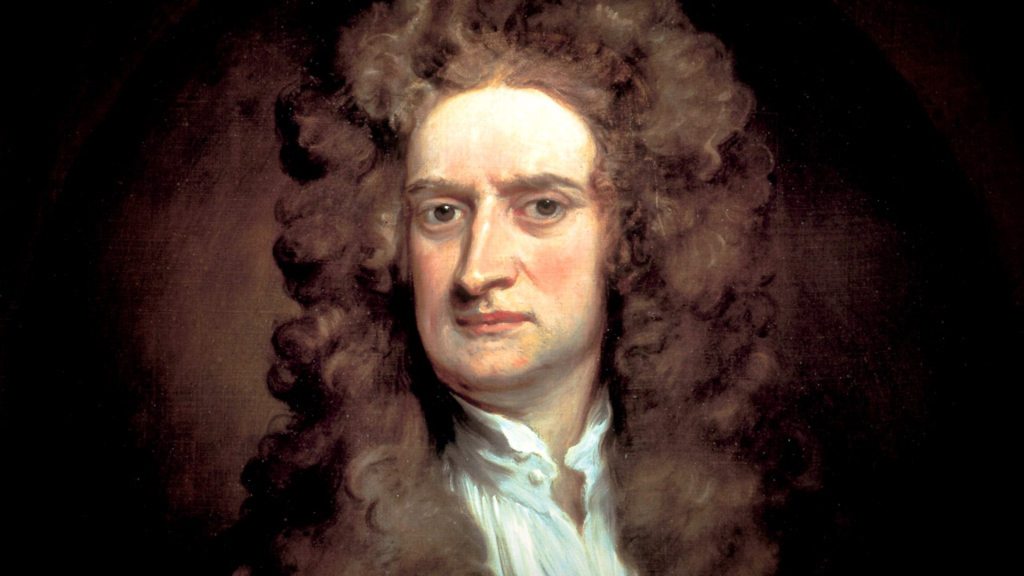
Portrait of Sir Isaac Newton by Godfrey Kneller, 1702. Public domain, via Wikimedia Commons.

Not What You Expected

Sabbath Day Thoughts — “Not What You Expected” Matthew 11:2-12

On a high bluff rising 3,500 feet above the surrounding desert, sixteen miles southeast of where the Jordan River empties into the Dead Sea, stood the hilltop fortress of Machaerus.  In the year 40BC, Herod the Great saw the strategic importance of the site.  From Machaerus, eastern invaders from Arabia could be easily spotted and signal fires ignited to warn fortifications to the west at Masada, Herodion, and Jerusalem.  Herod built a lavish palace and fortified compound atop the bluff.  A walled garden, elaborate Roman baths, ornate living quarters, two dining rooms, and carefully tiled mosaic floors were surrounded by massive stone walls with watch towers that soared ninety feet above the ramparts. Roman naturalist and philosopher Pliny the Elder described the stronghold as the most strongly fortified place in all of Judea, a statement supported by its name.  Machaerus means “the sword” or “the edge of the knife.”

John the Baptist came to Machaerus as a prisoner. His prophecy of the coming Messiah and his criticism of the bigamy of the king’s wife had made him powerful enemies.  At Machaerus, John was likely held captive in an empty cistern, an enormous underground vault cut from the bedrock and lined with plaster.  Dark and windowless, the cistern would have been a miserable place to live in isolation.  There John brooded on his thoughts and prophesied to the echoing walls.  We know from scripture that the king feared John and the queen hated him.  When Oscar Wilde wrote the libretto for the Opera Salome, he imagined the king peering into the dungeon, both fascinated and horrified by the prophet imprisoned within.

By the time John sent word to Jesus in our reading from Matthew’s gospel, the prophet had been imprisoned for two years.  It was clear to John that, unless the king were overthrown, he would never walk out of Machaerus alive.  Back when Jesus had come to him at the River Jordan, John was convicted that the Messiah had finally come.  So certain was he that he refused at first to baptize Jesus, declining the honor on the basis that he was unworthy of the task (Matt. 3).  But two years in Machaerus can change a man, begin to break him, and rattle his faith.  Where was the fire and brimstone that John had imagined the Messiah would bring?  Where was the conquering army that the Messiah would lead?  Would the Messiah allow John, who had prepared the way of the Lord, to die in prison?

John the Baptist was not alone in his anticipation of a different kind of Messiah.  Some sects of first century Judaism, like the Sadducees, didn’t believe in a Messiah at all.  The Essenes at Qumran, on the other hand, believed there would be two Messiahs: one a military leader and the other a sage and teacher of the law. Most who looked for the Messiah agreed that the “coming one” would be a king like David.  This warrior king would unite the Israelites, put an end to the foreign occupation, and usher in an era of peace, independence, and prosperity.

Jesus failed to meet the messianic expectations of John the Baptist, the Essenes, and pretty much everyone else.  In the response that Jesus shared with John’s messengers, Jesus described the actions that the Prophet Isaiah said would be the sign of the coming Messiah (Isaiah 29, 35, 61).  The ears of the deaf would be opened. The blind would see. Newfound mobility would come to the lame.  The mute would speak.  The brokenhearted would find comfort. And the poor would be blessed with good news.  Instead of insisting on his messianic identity, Jesus urged John to simply take a look at what he was doing.  In Jesus’s ministry, the long-promised work of the Messiah was already underway in compassionate acts of mercy, forgiveness, and love.  “Consider the evidence,” Jesus was saying to John, “And please don’t be offended that I am not what you expected.”

We don’t need to be imprisoned in a mountaintop fortress like John, to feel that we need a Messiah. New Testament scholar Ronald J. Allen teaches that John the Baptist’s query, “Are you the one who is to come?” is the most important question of this Advent season.  We all need a savior, but like our ancestors in the faith, our longings and expectations for “the one who is to come” may or may not be met by Jesus.

We want a Messiah who will ride in on a white horse and free us from the enmity and bitter division of our political landscape.  We want a Messiah who will take away our grief and put a “don’t worry, be happy” smile upon our faces.  We want a Messiah who will smite our enemies, reinforce our world view, and describe a God who is created in our own image. We want a Messiah who will fix our marriage for us, make our children behave, and give us a nice pay raise.  We want a Messiah who will save us in the way we want, when we want it to happen, and that had better be sooner than later. 

If the Messiah doesn’t give us what we want, we just may take offense.  We say, “He’s not the real deal. God wouldn’t work in that way. God wouldn’t love those people.  This so-called Messiah isn’t worth our prayers, our devotion, or our Sunday mornings.” The Messiah comes on his own terms, with compassion, healing, forgiveness, and love, but we would rather sit in the dark prison of our disappointed expectations. 

We don’t know what happened when John’s disciples made the long journey back from Galilee to Machaerus and shared what Jesus had to say. I suspect that they shared with John not only the words that Jesus had spoken, but also the signs and wonders that they saw unfolding in Jesus’s ministry.  They talked about the demon-possessed man in Capernaum who had found his right mind with Jesus’s help.  They described the beautiful healed skin of the leper whom Jesus had touched. They shared the wisdom of the Sermon on the Mount and the exhortation to love God and neighbor. They shook their heads over the mystery of outsiders being welcomed, sinners forgiven, and fresh starts for hurting lives.  There was so much good news, even if it wasn’t the message that John wanted to hear.

I like to think that when John was executed not long afterward, he was at peace.  The gospels and the Jewish historian Flavius Josephus tell us that John was beheaded in the year 32, the year before Jesus would himself run afoul of Herod and Pilate and find himself in prison, facing execution.  God had confounded all John’s expectations, but this Jesus, this unorthodox Messiah, was a sign that God’s Kingdom and power were always at work in the midst of this hurting and broken world.  This unlikely Messiah and the improbable Kingdom would always grow within the kingdoms of the world, finding fresh expression wherever faithful people would follow the way of Jesus and commit to lives of mercy, compassion, and boundless love.  On this Advent Sunday when we light the candle of joy, I like to imagine that Jesus’s assurance brought John quiet joy amid the darkness of Machaerus. I like to imagine that we too can find joy in that assurance, regardless of the trials of our lives and our world.

In the year 66CE, Herod’s kingdom fell when Jewish rebels revolted and seized the fortress of Machaerus.  It took the Romans four years to put down the rebellion. In the year 70CE, they destroyed Jerusalem. Then, the Roman legion of Lucilius Bassus was assigned to exterminate the last rebel holdouts at Herodion, Massada, and Machaerus.  The Romans arrived at the Edge of the Knife in the year 72CE, set up camp, and began to build an immense earthen ramp to accommodate their siege engines and breach the stronghold’s walls.  When they saw the inevitability of their defeat, the rebels surrendered.  They were allowed to leave and disappeared into the trans-Jordan wilderness and the mists of history.  The Romans destroyed Machaerus, tearing down the impressive towers and stone walls, leaving behind only the dim outlines of its once mighty foundations. 

The kingdoms of man rise and fall: Herod, the rebels, the Romans. Yet the Kingdom of God persists whenever we surrender our false expectations and follow the Messiah with mercy, compassion, and boundless love.  Blessed are we when we do not take offense.

Resources:

Stanley Saunders. “Commentary on Matthew 11:2-12” in Preaching This Week, Dec.  11, 2022.  Accessed online at workingpreacher.org.

Ronald J. Allen. “Commentary on Matthew 11:2-12” in Preaching This Week, Dec. 11, 2016.  Accessed online at workingpreacher.org.

Arland Hultgren. “Commentary on Matthew 11:2-12” in Preaching This Week, Dec. 15, 2013.  Accessed online at workingpreacher.org.

James Boyce. “Commentary on Matthew 11:2-12” in Preaching This Week, Dec. 16, 2007.  Accessed online at workingpreacher.org.

Markus Milligan. “Machaerus–The Palace Fortress of King Herod” in Heritage Daily, Dec. 28, 2020. Accessed online at https://www.heritagedaily.com/2020/12/machaerus-the-palace-fortress-of-king-herod/136596

Biblical Archaeology Society Staff. “Machaerus: Beyond the Beheading of John the Baptist” in Bible History Daily, June 28, 2022. Accessed online at https://www.biblicalarchaeology.org/daily/biblical-sites-places/biblical-archaeology-sites/machaerus-beyond-the-beheading-of-john-the-baptist/

Saeb Rawashdeh. “Lost biblical fortress of Machaerus restored after 50 years of excavations” in The Jordan Times, March 14, 2019. Accessed online at http://www.jordantimes.com/news/local/lost-biblical-fortress-machaerus-restored-after-50-years-excavations

Pat McCarthy. “Machaerus” in See the Holy Land: Jordan. Accessed online at https://www.seetheholyland.net/machaerus/


Matthew 11:2-11

2When John heard in prison what the Messiah was doing, he sent word by his disciples 3and said to him, “Are you the one who is to come, or are we to wait for another?” 4Jesus answered them, “Go and tell John what you hear and see: 5the blind receive their sight, the lame walk, the lepers are cleansed, the deaf hear, the dead are raised, and the poor have good news brought to them. 6And blessed is anyone who takes no offense at me.”

7As they went away, Jesus began to speak to the crowds about John: “What did you go out into the wilderness to look at? A reed shaken by the wind? 8What then did you go out to see? Someone dressed in soft robes? Look, those who wear soft robes are in royal palaces. 9What then did you go out to see? A prophet? Yes, I tell you, and more than a prophet. 10This is the one about whom it is written, ‘See, I am sending my messenger ahead of you, who will prepare your way before you.’ 11Truly I tell you, among those born of women no one has arisen greater than John the Baptist; yet the least in the kingdom of heaven is greater than he.


Photo by Eva Lacroix on Pexels.com

The Promise of Peace

Sabbath Day Thoughts — “The Promise of Peace” Isaiah 11:1-9

On this second Sunday in Advent, we light the candle of peace.  Yet peace feels hard to come by this year. Tensions are high on the Korean Peninsula as Kim Jong Un escalates weapons testing and the South responds with further sanctions. In Ukraine, as troops recover territory once occupied by Russian invaders, they discover a trail of human rights abuses left behind.  All the while, the Russian missiles fall, destroying Ukraine’s power and energy infrastructure as winter approaches.

We long for peace within our nation.  We are wearied by the polarization that casts our political rivals as mortal enemies.  We are heartbroken by the continuing tide of gun violence.  611 mass shootings this year have wounded 3,179 people and taken 637 lives. We are frightened by the rise in hate.  Last month’s shooting in Colorado Springs is the most recent attack in growing violence against our LGBTQ neighbors.  Dark memories of the Holocaust stir amid a surge of antisemitic rhetoric by celebrities, athletes, and politicians.

We long for peace in our homes. Christmas reminds us of the wounds that every family bears.  Our thoughts brush up against our estranged kin, once a part of our holiday joy and now a painful memory of alienation.  As we put on a good show for the gathered clan, we may struggle in marriages grown strained and distant.  We’ll face long-held patterns of family dysfunction: our drunken uncle, the harshly critical parent, the debt-burdened shopaholic. 

We light the candle of peace this morning, longing for the peace of our world, our nation, and our homes.

In the 8th century BC, when Isaiah spoke God’s promise of a coming king and a transformed world, the Hebrew people were far from peace.  The Assyrian Empire was ascendant, marching out of the north like a swarm of locusts.  They excelled at war, having mastered the art of forging iron weapons that were far superior to the bronze-age armaments of their enemies. The armies of Assyria had engineering units to set up ladders and ramps, fill in moats, and dig tunnels to breach walled cities. They were among the first to build chariots, which provided greater mobility and protection on the battlefield.  One by one, the cities of the ancient near east fell to the advancing Assyrian tide.

On a national front, the Israelites knew little of peace. David may have united the twelve tribes of Israel, but within a few generations, the alliance had crumbled.  The Hebrew people had divided into two nations, the Kingdom of Israel to the north and the Kingdom of Judah to the south.  They were often at odds, allying with greater powers on the world stage to the detriment of one another. As the Assyrian army drew near, Judah refused the call to arms to help their northern brothers.  City by city, the Kingdom of Israel fell and its people were defeated and deported.

According to the Prophet Isaiah, peace was hard to find on the home front.  In oracle after oracle, the prophet denounced a people who “called evil good and good evil” (5:20). They worshipped false gods.  They loved graft and chased after bribes. They failed to defend the rights of the fatherless and refused to give justice to widows (1:23).

Over and against this backdrop of conflict and division, the Prophet Isaiah described the peace that would prevail when the Messiah came and the priorities of God’s Kingdom prevailed. According to Isaiah, on that glorious day the nation would be ruled with wisdom, understanding, and fear of the Lord. Righteousness would abound and justice would be served. In a wonderful act of rhetorical exaggeration, Isaiah cast the vision of a new Eden unfolding as the peaceable human kingdom overflowed to all creation.  Wolf and lamb, calf and lion, all would live in harmony.

Isaiah reminded the Hebrew people that God’s longing for our world is peace with justice and righteousness for all.  Isaiah held out the hope that when God’s people choose to live in accord with God’s will, they can flourish.  It’s a vision that must have sounded like music to the ears of Isaiah’s listeners.  It’s a bold picture of peaceful possibility that continues to speak to our imaginations, here and now. 

When the early church read the words of the Prophet Isaiah, they recognized Jesus in Isaiah’s description of the Messiah.  Jesus, with his deep wisdom and keen understanding of God’s law, Jesus with his deep piety and reverence, Jesus with his care for the sick and heart for the outsider, Jesus would embody those character traits of Isaiah’s coming king.  Jesus would embrace peace by welcoming strangers, sinners, and enemies. He would walk the path of non-violence, turning the other cheek to his accusers and praying for his executioners.  As those first Christians carried the Way of Jesus out into the Roman Empire, they knew that the peaceable kingdom persisted whenever wisdom and understanding, piety and love of the Lord were shared and embraced.

On the second Sunday of Advent, Isaiah’s promise of the coming king and his peaceable kingdom remind us that the gap between the world that we have made for ourselves and the world that God would have us make can be bridged.  We can choose to live in accord with God’s promise of peace.  Indeed, when we live with faith and integrity as followers of Jesus, we invite God’s future into our present.  The peaceable kingdom awaits those who would serve it even now.

We can strive for the peace of our world.  We may not be able to bring Russia and Ukraine to the bargaining table, but we have worked for world peace all year long.  We have been seeking a path to bring an at-risk Afghan family from Kabul to America. We have provided much-needed care and support for vulnerable infants at the Crisis Care Nursery in Mzuzu. Through CROP Walk, we have sought to address the root causes of hunger around the globe with the programs of Church World Service.  This Christmas, we will bless our African neighbors with the gift of clean water as we receive a special offering for the Shallow Well program of Marion Medical Mission.  These are the things that make for world peace.

We can strive for the peace of our nation.  We may not be able to break the rancor and gridlock of Washington, but we can choose to make a personal difference for good.  We can refuse to call those whose opinions differ from ours “enemies.” Our dialog can be grounded in mutual respect, and we can keep the lines of communication open, even when we disagree.  We can practice non-violence and call on our elected officials to enact responsible gun legislation.  We can stand with vulnerable minorities and speak out against hateful speech that incites violence. These are the things that make for a more peaceful nation.

We can strive for the peace of our families.  This could be the year that we let bygones be bygones and reconcile with our estranged kin.  We can remember that God is at the heart of our marriage covenant and seek together to reclaim that holy center for our shared life.  We can meet those intractable family dysfunctions with love, openness, and a desire for change. Stop filling the glass of your drunken uncle.  Beg to differ with that hyper-critical parent.  Give your family shopaholic a copy of Bill McKibben’s book Hundred Dollar Holiday and encourage them to resist the relentless onslaught of commercials and catalogs that try to say Christmas is only Christmas if it comes from a store. These are the things that make for a more peaceful family.

This morning, we light the candle of peace and choose to live in accord with God’s promise of the peaceable kingdom.  Can you imagine it with me? 

The Spirit of the Lord shall rest upon us, with wisdom and understanding,

counsel and strength, knowledge and a healthy fear of the Lord.

Nation shall not lift up sword against nation.

Ukraine and Russia, Saudi Arabia and Yemen, North and South Korea, all will come to the table of peace. 

The hungry shall be filled, refugees will be welcomed, vulnerable babies will be blessed,

and clean water shall flow down in an unstoppable tide.

Ears will be opened. Truth will be spoken. Democrats will break bread with Republicans,

Libertarians will find common cause with Progressives, and the DC gridlock shall come to an end. 

We’ll beat our guns into ploughshares, trade our hate speech for songs of praise, and all God’s people will know safety and dignity.

There will be a balm in Gilead for the healing of our families. 

We’ll reach out with a willingness to forgive and be forgiven, and the hatchet of enmity will be forever buried. 

We’ll renew our vows and honor our children.  We’ll love more.  We’ll forgive often.  We’ll judge less.

The land will be as full of the knowledge of the Lord as the sea is filled with water,

and all will be well in these holy mountains,

and all God’s people will say,

“Amen.”

Resources

Eli J. Finkel and Cynthia S. Wang. “The Political Divide in America Goes Beyond Polarization and Tribalism” Kellogg Insight, April 20, 2022. Accessed online at https://insight.kellogg.northwestern.edu/

National Geographic Society. “Assyrian Empire.” In National Geographic Resource Library, May 20, 2022. Accessed online at https://education.nationalgeographic.org/

Fred Gaiser. “Commentary on Isaiah 11:1-9” in Preaching This Week, Dec. 9, 2007. Accessed online at https://www.workingpreacher.org/

Barbara Lundblad. “Commentary on Isaiah 11:1-9” in Preaching This Week, Dec. 8, 2013. Accessed online at https://www.workingpreacher.org/

Michael Chan. “Commentary on Isaiah 11:1-9” in Preaching This Week, Dec. 4, 2016. Accessed online at https://www.workingpreacher.org/


Isaiah 11:1-9

11A shoot shall come out from the stump of Jesse, and a branch shall grow out of his roots. 2The spirit of the Lord shall rest on him, the spirit of wisdom and understanding, the spirit of counsel and might, the spirit of knowledge and the fear of the Lord. 3His delight shall be in the fear of the Lord. He shall not judge by what his eyes see or decide by what his ears hear; 4but with righteousness he shall judge the poor, and decide with equity for the meek of the earth; he shall strike the earth with the rod of his mouth, and with the breath of his lips he shall kill the wicked. 5Righteousness shall be the belt around his waist, and faithfulness the belt around his loins. 6The wolf shall live with the lamb, the leopard shall lie down with the kid, the calf and the lion and the fatling together, and a little child shall lead them. 7The cow and the bear shall graze, their young shall lie down together; and the lion shall eat straw like the ox. 8The nursing child shall play over the hole of the asp, and the weaned child shall put its hand on the adder’s den. 9They will not hurt or destroy on all my holy mountain; for the earth will be full of the knowledge of the Lord as the waters cover the sea.


Photo by Jonathan Meyer on Pexels.com

Your Lord Is Coming

Sabbath Day Thoughts “Your Lord Is Coming” Matthew 24:36-44

The Christmas preparations are underway.  No sooner had the Thanksgiving dishes been washed than the Black Friday shopping began. We can’t wait for Sparkle Village crafts next weekend.  We are hanging wreaths purchased to benefit the Youth Center, the holiday decorations are emerging from their attic lair, and our Nutcracker or holiday concert tickets have been purchased.  We are emerging from our COVID cloud and seeking a little holiday normalcy.

Here at the church, the signs of a new liturgical year are evident. The paraments have gone purple, the Advent devotionals are ready for your perusal, and the Advent wreath has a first purple candle glowing. The church calendar is bristling with Advent Study and kid’s pageant, special services and an evening of music and storytelling.  It’s beginning to feel a lot more like Christmas than it has since 2019.

 Not everyone is ready or eager for Christmas this year. In fact, these Advent weeks of preparation and anticipation may feel at odds with inner feelings of loss, fear, or even hopelessness for some. Some of us are mourning the loss of beloved ones.  We are bitterly and painfully aware of who will not be at the holiday table this year.  Some of us are living with big health concerns that leave us feeling lousy and a little cranky and not in the mood for all the falalalalalalalala. Others of us are feeling the pinch of inflation and economic hardship. We wonder if we can afford a merry Christmas without taking on a mountain of debt.  For some of us, this year’s holiday season confronts us with grief, uncertainty, and perhaps even hopelessness.

When Jesus first shared the unsettling words of our gospel reading, his disciples were gathered around him on the Mount of Olives.  They looked out across the Kidron Valley to see the Temple, perched at the apex of Jerusalem.  The Passover was near.  Jesus had been teaching and preaching some powerful sermons on the southern teaching steps of the Temple, and already it was clear that things weren’t going to go so well that week.  Powerful enemies were plotting to kill Jesus.  Just that afternoon, Jesus had given his opponents the perfect reason to sign the warrant for his arrest by foretelling the destruction of the Temple by the Romans. 

Jesus’ friends welcomed the apocalyptic words that he shared in today’s reading from Matthew’s gospel.  They would have felt comforted by the promise of God’s coming kingdom.  The disciples were powerless against Rome, Herod, and the Temple, but the promise of the Son of Man coming in glory to prevail over the powers of this world must have stirred hope in their hearts.  God had a plan and would ultimately prevail.

Nowadays, hope might not be the first thing we feel when we hear Jesus’ promise of an unexpected Second Coming.  It sounds scary, like a zombie apocalypse or a scene out of that Christian fantasy series “Left Behind.”  Some of our discomfort stems from the images that Jesus used to describe the advent of the Son of Man: destructive flood waters, mysterious disappearances, and thieves breaking into our homes.  Any one of those metaphors might set our hearts racing, but sandwich all three together to make a point, and it’s downright frightening.  It’s important to remember that Jesus was using a first century teaching style called hyperbole; he was ratcheting up the rhetoric to stress the importance of his point.

Jesus knew what awaited him at the end of the week – arrest, trial, abuse, and execution.  He also knew what his friends would undergo in the days and years to come. They would be persecuted: driven from Jerusalem, thrown out of the synagogues, and viewed with increasing hostility by the Roman Empire.  Most would lose their lives for the sake of the gospel: stoned, beheaded, beaten, or crucified.  As Jesus’ friends questioned when he’d be coming back in glory, Jesus realized that the greatest danger his friends would face in the difficult times to come was hopelessness.  Overwhelmed by the powerful forces that would oppose them, they could forget the promise that Jesus would return. 

In the years to come, it would be imperative that they remember that God wasn’t finished.  God had a plan and God would be with them in all the chaos, rejection, and persecution to follow.  On some days, the promise that Christ would come again would be the only thing that kept his friends from giving up, going home, and abandoning the gospel.  That apocalyptic promise encouraged the disciples to be vigilant and faithful no matter what.

That biblical-historical context of Jesus’s words to his disciples sounds completely disconnected from the world of our Advent and Christmas preparations.  Today’s reading is at odds with the world out there, where the shopping and partying juggernaut has left the station.  It’s also at odds with our world in here, where we are eagerly counting down the Sundays until Christmas and chomping at the bit to ditch the Advent hymns and sing some Christmas carols.

But Jesus’s apocalyptic promise might be exactly what those among us who are hurting need to hear. We who mourn hear in the assurance of Jesus’s second coming the reminder that God has won the victory over death.  On the far side of the grave, we will rise. We can trust that we will again hear our name on the lips of the beloved one whom we so dearly miss. When the Son of Man comes at that unexpected hour, our mourning will turn to dancing.

Those who struggle with illness and disability find in Jesus’s apocalyptic promise the comfort of God’s unstoppable power and final victory. We may feel completely powerless in a healthcare system that treats us like a disease, rather than a person. Yet God is always and ultimately all-powerful.  In the end, we are in God’s hands, not the hands of hospital, doctor, or hospice worker, and God’s hands are the very best place to be.  When the Son of Man comes at that unexpected hour, our healing will abound.

For those of us who feel the financial pinch of an uncertain economy and rising inflation, Jesus’s promise of his presence may bring the reorienting perspective that we need to step off the Christmas express. Jesus, who was born into poverty and lived with a radical simplicity, won’t mind a bit if we forego the shopping extravaganza and instead celebrate his birth with simple, heartfelt gifts that are given with great love. Perhaps it is only when we celebrate a Christmas of want that we begin to know the enormity of God’s great and loving gift to us in Jesus. When the Son of Man comes at that unexpected hour, the simple values and limitless love of the Kingdom will prevail.

At the end of Jesus’s apocalyptic discourse is the Parable of the Sheep and Goats (Matt. 25:31-46).  The Lord reminds his friends that, in this time between his first coming and his second coming, he would come to us daily.  He comes in our neighbors who hunger and thirst.  He is known in those who live in poverty and struggle as outsiders.  He is seen in those who cope with illness or languish in prison.  Jesus cautions that how we will fare in that promised second coming will be bound up in how we loved the hidden Jesus, who walks among us even now.

For I was hungry

and you gave Me something to eat;

I was thirsty

and you gave Me something to drink;

I was a stranger and you took Me in;

I was naked and you clothed Me;

I was sick and you took care of Me;

I was in prison and you visited Me.’

‘Come, you who are blessed by My Father, inherit the kingdom prepared for you.”

In this Advent season, Jesus would put us to work. His apocalyptic words invite us to turn away, at least for a bit, from the decorating and baking, the buying and partying. It’s an encouragement to turn with understanding and compassion to those among us who yearn for the second coming, who are hurting and grieved, sick and disabled, broke and oppressed. In our love and care, perhaps we can impart a foretaste of that glorious apocalyptic day when every tear shall be dried and the eternal alleluia shall resound across the heavens.  May it be so.

Resources:

Matt Skinner. “Advent Attentiveness” in Dear Working Preacher, Nov. 20, 2022.  Accessed online at workingpreacher.org.

James Boyce. “Commentary on Matthew 24:36-44” in Preaching This Week, Dec. 2, 2007. Accessed online at workingpreacher.org.

Arland Hultgren. “Commentary on Matthew 24:36-44” in Preaching This Week, Dec. 1, 2013. Accessed online at workingpreacher.org.

O. Wesley Allen, Jr. “Commentary on Matthew 24:36-44” in Preaching This Week, Dec. 1, 2019. Accessed online at workingpreacher.org.


Matthew 24:36-44

36“But about that day and hour no one knows, neither the angels of heaven, nor the Son, but only the Father. 37For as the days of Noah were, so will be the coming of the Son of Man. 38For as in those days before the flood they were eating and drinking, marrying and giving in marriage, until the day Noah entered the ark, 39and they knew nothing until the flood came and swept them all away, so too will be the coming of the Son of Man. 40Then two will be in the field; one will be taken and one will be left. 41Two women will be grinding meal together; one will be taken and one will be left. 42Keep awake therefore, for you do not know on what day your Lord is coming. 43But understand this: if the owner of the house had known in what part of the night the thief was coming, he would have stayed awake and would not have let his house be broken into. 44Therefore you also must be ready, for the Son of Man is coming at an unexpected hour.


Photo by George Becker on Pexels.com

Call Me Blessed

Sabbath Day Thoughts — “Call Me Blessed” Luke 1:39-55

Ma kara!  What was the meaning of this?!

The messenger had disappeared with a snap.  The place where he had stood seemed to pulse with an invisible energy.  The air had a whiff of ozone, like the Judean desert after the crack of heat lightening.

I shook my head and looked around.   Down below, some goats were foraging in the thicket next to the wadi.  Up above near the caves, chickens were scratching the packed earth by the bread oven.  No one seemed to know or care that I had just met Gabriel himself, the messenger of God Almighty, holy be his name.  The angel had left me with more questions than answers.  Had our prayers been answered?  Was God sending the Messiah?

I know that I had said yes, but as I walked home, my head filled with second guesses.  Nazareth was an unlikely hometown for a Messiah.  Here half-naked toddlers clung to their mother’s skirts and gnawed breadcrusts to sooth teething.  The Holy One of Israel should be born in a palace, wrapped in silks, tended by a legion of nannies.  The Messiah should be born to a princess, and I was a village girl with dirt under my fingernails from weeding the garden.  Had Gabriel really spoken, or had too much sun stirred my overactive imagination?

At home, my Ama greeted me with a smile.  “Ah, Mary!  It’s about time.  We’ve had news of our cousin Elisabeth.  At last, she is to bear a child.”

My eyes grew wide.  It was just as the messenger had said.  For as long as I could remember, we had prayed for Elisabeth, that God might open her womb.  But years had passed, and there was no child.  The skin at the corner of her eyes had creased in a web of fine lines, and still there was no child.  Her hair had begun to gray and the shoulders of her husband Zechariah rounded with age, and still there was no child.  Hers was the most hopeless of cases.  Yet my Ama was telling me the impossible: a baby was on the way.  I was needed.  In the morning, I would depart for Hebron with my uncle, my dohd, Joash.  There I would help Elisabeth until the child was born.

If Elisabeth was with child, then anything was possible.  I looked down at my flat stomach with my brow creased in wonder.  I should tell my Ama.

“But Ama . . .” I began.  She brushed my words aside.

“Not a word, Mary.  You are going to Hebron and that is final.  You would just be underfoot here, mooning over Joseph anyway.  This will be good for you.”

Joseph may have been the best future-husband ever, but I didn’t think he would take kindly to my news.  Maybe getting out of town was a good idea.

Early in the morning, before the sun had risen, Joash came with his two donkeys.  A slight man with a scraggly beard and bright eyes that took in everything, Joash was my mother’s youngest brother.  He was a trader of spices and opobalsam.  Twice each year, he traveled to Jericho at the edge of the Arabian desert.  Always he returned with fragrant treasures that he swapped for what was needed: eggs, flour, cheese, linen.  He also came with news of our people, news that often made my mother weep or turned my father’s eyes dark with rage.

Dohd Joash gave me a hug and went in to see my parents.  I waited in the courtyard, scratching his donkeys and wondering how long it would take us to make the eighty-mile trip.  Before long, Joash was back.  He handed me a sack of rags and some day-old bread from my Ama.  “Tuck these into your pack, Mary,” he said and handed me the lead for one of the donkeys.  Apparently, we were walking.  This would take a while.

Later that morning as ha shemesh neared the middle of his journey across the sky, we stopped in the no-man’s-land between Galilee and Samaria.  “Mary,” Joash instructed, “Take your sack of rags and bread and leave it there.”

He pointed to a broad rock, like a table, about fifty yards from the roadside.  It seemed ridiculous, but I did what I was told.  A movement in the brush caught my eye and made me scurry back to the safety of my dohd.  Before we left, I saw a dozen lepers at the rock, stick figures swathed in stained bandages, pawing through my sack with fingerless hands.  Such a terrible, lonely life!  “Can’t they be helped?”  I asked my uncle.

Joash gave a sad sigh and a little shrug. “Perhaps when the Messiah comes.”

On the third evening, at the edge of Shechem in the shadows of Mt. Ebal and Mt. Gerizim, we stopped at the tax collector’s booth.

“Ah, Joash!  I see you are again on your way to Jericho,” the tax collector greeted us.  He was a fat man with grease in his beard and a gold tooth.  Beside his booth was a pen where some listless sheep and goats were attended by a scrawny, barefoot boy in a filthy, hand-me-down tunic.  His enormous eyes looked dull.

My uncle shared news of the Galilee while the tax collector greedily eyed the two donkeys.  Once the pleasantries were over, the tax collector got down to business.  “Ah, Joash!  What is a man to do?  Every year, Herod expects more of me.  I regretfully inform you that the toll has doubled.  Such a sad state of affairs.”  The two men haggled until they reached a compromise, then my uncle pressed a gold coin into his well-fleshed palm and we left.

As soon as we were out of earshot, I wanted to know, “How can he treat his child like that, Dohd?  Did you see how thin and miserable the boy was?”

My Uncle Joash raised a quizzical eyebrow.  “His child?  Your parents really need to get you out more, Mary.  That boy was a slave.”  My shock prompted my uncle to put a comforting arm around my shoulder.

“But uncle,” I asked, “To treat a child like this, surely this is something only the Gentiles do?  Who can stop such a thing?”

A bitter look crossed my uncle’s face.  He turned back to his donkey, “Perhaps when the Messiah comes, Mary.”

When we reached Alexandrium, we contended with even worse.  In the Decapolis city of Alexandrium, the Israelites, Samaritans, and Gentiles mix.  They don’t especially like one another, but there is mutual advantage in trade.  Before we reached the city walls, my uncle stopped.  He tucked my head scarf protectively across my face.  In a voice so stern that I dared not disobey he instructed, “Stay close and do not look up.”  I stood in my uncle’s shadow as we passed a small company of Roman soldiers sprawling in the shade and we entered the city gates.

In the middle of the market, we were stopped.  I recognized some of the soldiers who had sized us up as we passed.  They pushed and hassled my uncle.  Where was he going?  What was his business?  Was he a friend of the emperor?  At the same time, two men edged between me and my dohd’s protective shadow.  For every step they took toward me, I took a step back.  Within moments, I would be gone, lost in the crowd. 

“What have we here?” a soldier asked, plucking the scarf from my face with a practiced hand.  He cupped my chin and tipped my face up, as if assessing my value. 

Before I could shout “Dai!”  Enough!  He snatched his hand back with a curse, as if it had been burned.  He shook his head and pushed me back to my uncle.  “Leave them!” he ordered, backing away.

My uncle dried my anxious tears and tucked my scarf back across my face.  “You were born under a lucky star, Mary.  Do you have any idea how fortunate you are that they changed their minds?  Such is our lot until the Messiah comes.”

I know that Gabriel had called my blessed, and my Dohd Joash had said that I was lucky, but I hardly felt so.  In fact, every day that we traveled, I felt worse.  At first, my small breasts began to hurt and swell.  Then, I began to feel fatigue, so weary in the evenings that I was asleep within moments of lying down.  That day, I had felt queasy upon waking.  The smoke from the fire roiled my gut and made my head swim.  If this was blessed, then I wasn’t sure I wanted it.

The more I saw of Israel, the more I wondered what any child born to me could ever do to help.  Our people needed saving in more ways than I could count—from sickness, greed, corruption, poverty, occupation.  It would take more than an army of babies full-grown to bring that sort of change.  As we came to the edge of Hebron and looked for the home of Elizabeth and Zechariah, my thoughts were bleak.  It would take God Almighty himself, blessed be his name, to turn things upside down.

I watered the donkeys and gave them some grain while Joash went in to speak with Zechariah.  As I neared the door, Elisabeth rushed out, looking expectant and joyous.  She pulled me close and hugged me to her round belly.  I could feel her unborn child kicking and wriggling between us.  Suddenly, Elisabeth gave a cry and held her tummy.  She looked at me with keen eyes.  I sensed that somehow, she knew.  She knew my fear and worry and doubt.  She knew my truth.

The words she said next were like a healing balm for my troubled heart, “Would you look at us?  You, too young.  Me, too old.  We are filled with the promises of God.  It may not feel like it right now, Mary, but you are blessed.”

She reached over and rested her hand on my stomach, “And blessed is this child within you.”

And in that moment, it seemed anything was possible.  God Almighty, holy be his name, could set Israel aright.  The proud could be humbled; the lowly lifted up.  The rich sent away empty; the poor filled.  A peasant girl from Nazareth could give birth to the Messiah.  Why not?


“Visitation” (In the predella: Episodes from the Infancy of Christ)
Mariotto Albertinelli (Florence 1474 – 1515), The Uffizi Gallery

Luke 1:39-55

39 In those days Mary set out and went with haste to a Judean town in the hill country, 40 where she entered the house of Zechariah and greeted Elizabeth. 41 When Elizabeth heard Mary’s greeting, the child leaped in her womb. And Elizabeth was filled with the Holy Spirit 42 and exclaimed with a loud cry, “Blessed are you among women, and blessed is the fruit of your womb. 43 And why has this happened to me, that the mother of my Lord comes to me? 44 For as soon as I heard the sound of your greeting, the child in my womb leaped for joy. 45 And blessed is she who believed that there would be a fulfillment of what was spoken to her by the Lord.”

46 And Mary said,

“My soul magnifies the Lord,
47     and my spirit rejoices in God my Savior,
48 for he has looked with favor on the lowliness of his servant.
    Surely, from now on all generations will call me blessed;
49 for the Mighty One has done great things for me,
    and holy is his name.
50 His mercy is for those who fear him
    from generation to generation.
51 He has shown strength with his arm;
    he has scattered the proud in the thoughts of their hearts.
52 He has brought down the powerful from their thrones,
    and lifted up the lowly;
53 he has filled the hungry with good things,
    and sent the rich away empty.
54 He has helped his servant Israel,
    in remembrance of his mercy,
55 according to the promise he made to our ancestors,
    to Abraham and to his descendants forever.”


Siskin Green perform “The Canticle of the Turning,” based on the Magnificat, filmed for BBC Scotland’s Reflections at the Quay.