The Kingdom Comes

Sabbath Day Thoughts — “The Kingdom Comes” Luke 21:25-36

Italian Renaissance painter Sandro Botticelli believed that the end of the world was coming in the year 1504. You can spy his apocalyptic vision in his painting of Jesus’ birth, The Mystical Nativity. The painting has all the usual things we expect in a manger scene—joyful angels, an adoring Mary and Joseph, reverent shepherds, and curious barnyard beasts, but it also bears the disturbing depiction of small winged devils escaping under rocks or shot through with arrows. Botticelli explained his strange vision in an epigraph at the top of his work, “I, Sandro, painted this picture at the end of the year 1500 in the troubles of Italy in the. . . second woe of the Apocalypse in the loosing of the devil for three and a half years. . . we shall see him trodden down as in this picture.”

New England residents thought the end was near on May 19, 1780 when the skies turned strangely dark. According to one witness, “People [came] out wringing their hands and howling, the Day of Judgment is come.” The Connecticut legislature, which was in session when the sky blackened, feared the apocalypse was imminent and moved for adjournment, but one legislator, Abraham Davenport, responded: “The day of judgment is either approaching, or it is not. If it is not, there is no cause of an adjournment; if it is, I choose to be found doing my duty. I wish therefore that candles may be brought.” The “Dark Day,” as it came to be known, ended at midnight, when the stars once again became visible in the night sky. Historians suspect that the darkness was caused by an ill-timed confluence of smoke from forest fires and heavy fog.

When Halley’s Comet reappeared in 1910, it induced an end-of-the-world panic. Chicago’s Yerkes Observatory announced that it had detected a poisonous gas called cyanogen in the comet’s tail. The New York Times reported that the noted French astronomer, Camille Flammarion believed the gas “would impregnate that atmosphere and possibly snuff out all life on the planet.” Panic ensued. People rushed to purchase gas masks and “comet pills.” The Atlanta Constitution reported that people in Georgia were preparing safe rooms and covering keyholes with paper. One man armed himself with a gallon of whiskey and requested that friends lower him to the bottom of a dry well, 40 feet deep. After the comet passed, the headline of the Chicago Tribune lamely announced, “We’re Still Here.”

Our gospel reading on this first Sunday of Advent is downright apocalyptic. Sounding a lot like an Old Testament prophet, Jesus warned his listeners of a coming Day of Judgment. There would be signs in the heavens, chaos among the nations, and tumult upon the waters. Amid the discord and disruption, Jesus called his followers to vigilance, saying: stand up, raise your head, be on guard, pray. 

When Jesus stood in the Temple court sounding so prophetic, he was in the midst of a different holiday season—the Passover. From across the Roman Empire, people had come to Jerusalem to remember that God had once delivered them from the bondage of Egypt. With plagues of frogs and gnats, darkness, disease, and death, God had bested Pharaoh, and Moses had led the people forth to freedom. That Passover week, Jesus and his friends remembered God’s deliverance with the sacrifice of a lamb, the singing of psalms, and the sharing of a final Passover seder.

The courts of the Temple were filled with politically-charged tension as Passover memories faced the everyday reality of Jesus’ listeners. Israel was again in bondage, a vassal state of the Roman Empire. A legion of Roman soldiers had ridden out of Caesarea and up to Jerusalem amid the Passover pilgrims. Any dreams of Jewish freedom would be promptly and brutally quashed. It may have been Passover, but the local leaders served the emperor’s purpose, not God’s purpose. As that week continued, this would become increasingly clear as the Temple authorities conspired to arrest and condemn the Lord.

Given the context in which Jesus spoke, his promise of the coming of the Son of Man with power and great glory took on a hopeful tone for his listeners. Jesus was assuring the people that it was God, not Rome, who had ultimate authority. God, who delivered their ancestors from slavery in Egypt was still at work and would one day bring all things to completion in the Kingdom of God. The people needed to live today as if that Kingdom were coming tomorrow, alert and on guard, standing tall with heads up.

On this first Sunday in Advent, we puzzle over Jesus’ apocalyptic promise. We smile, perhaps a bit condescendingly, at the long history of apocalypticism—Sandro Botticelli’s Mystical Nativity with winged devils pinned to the earth by heavenly bolts, New Englanders terrified on the Dark Day, Americans plying gas masks and “comet pills” to ward off the end that was surely coming with Halley’s Comet. But if we are honest, we’ll admit that we are not strangers to apocalyptic worry.

We fear the end is near. Vladimir Putin will push the nuclear button in his prolonged war against Ukraine, unleashing a tide of atomic death to threaten the planet. Israel, Hamas, and Iran have set the stage for Armageddon, years of unstoppable, unwinnable war in the Middle East. Our addiction to fossil fuels will bring worldwide ecological catastrophe. The bitter divisions and bizarre turns of American politics herald an end to democracy and our nation as we know it. We faint with fear and foreboding of what is coming upon the world.

Our apocalyptic worries may be deeply personal. The death of a beloved one feels like the end of our world. A terrifying diagnosis convinces us that Judgment Day is near. Money troubles fill us with cataclysmic worry and woe. Estrangement in our families puts an end to future plans. It feels a lot like the apocalypse out there. We are confused and shaken, uncertain and frightened.

And so, on the first Sunday in Advent, we need Jesus to remind us that God has the last word. When Jesus made that promise, his friends would soon feel that their world was coming to an end. Temple guards would take Jesus into custody. He would be tried on trumped up charges, handed over to the Romans, and condemned to death on a cross. For three days, it would feel like the end of the world, that Rome and death and sin had the last word. Yet on Easter morning, they learned, once and for all, that God’s love is always stronger than death, always stronger than all the apocalyptic fears that our world may wield.

In Jesus’ life, death, and rising, God launched a revolution of self-giving love that continues to ripple through the corridors of time. The Kingdom comes even when the Romans rule the land. The Kingdom comes when Renaissance Italy feels like the devil has been loosed for 3 ½ years. The Kingdom comes on Dark Days. The Kingdom comes when the sky is falling. The Kingdom comes despite the machinations of scheming despots. The Kingdom comes as the bombs fall. The Kingdom comes amid global warming. The Kingdom comes in political chaos. The Kingdom comes even when our lives are wracked by personal pain, grief, and loss. The Son of Man comes with power and glory.

On this first Sunday in Advent, we remember that the Kingdom comes, and we can be a part of it—if we will only stand up, raise our heads, and go forth to love today as if the world were ending tomorrow. Lutheran theologian Philip Hefner, who taught for many years at the Lutheran Seminary in Chicago, taught that humankind is created to be co-creators. God grants us the agency, freedom, and creative capacity to join our purpose to God’s purpose. If Hefner is right, then we have a part to play in the coming of God’s Kingdom. Our choice to stand up, raise our heads, roll up our sleeves, and go forth with love is a choice for the Kingdom. And as we dare to love our God and our neighbors and even our enemies when it feels like the world is coming to an end, the Kingdom comes a little bit in each of us and in those whose lives we touch.

So maybe Abraham Davenport got it right on that Dark Day in 1780, and he said, “The day of judgment is either approaching, or it is not. If it is not, there is no cause of an adjournment; if it is, I choose to be found doing my duty. I wish therefore that candles may be brought.” The world may or may not be coming to an end, but there is work still for us to do. May we stand up and raise our heads. May we love today as if the Kingdom were coming tomorrow.

Resources

Mark Strauss. “Ten Notable Apocalypses That (Obviously) Didn’t Happen” in Smithsonian Magazine, Nov. 12, 2009.

Drew Rick-Miller. “Created Co-Creators” in Science for the Church, July 9, 2019. Accessed online at Created Co-Creators – Science for the Church – Ministry Resources 

David Lose. “Commentary on Luke 21:25-36” in Preaching This Week, Nov. 29, 2009. Accessed online at Commentary on Luke 21:25-36 – Working Preacher from Luther Seminary

Mary Beth Dinkler. “Commentary on Luke 21:25-36” in Preaching This Week, Dec. 2, 2018. Accessed online at Commentary on Luke 21:25-36 – Working Preacher from Luther Seminary

Troy Troftgruben. “Commentary on Luke 21:25-36” in Preaching This Week, Dec. 1, 2024. Accessed online at Commentary on Luke 21:25-36 – Working Preacher from Luther Seminary


Luke 21:25-36

25 “There will be signs in the sun, the moon, and the stars and on the earth distress among nations confused by the roaring of the sea and the waves. 26 People will faint from fear and foreboding of what is coming upon the world, for the powers of the heavens will be shaken. 27 Then they will see ‘the Son of Man coming in a cloud’ with power and great glory. 28 Now when these things begin to take place, stand up and raise your heads, because your redemption is drawing near.” 29 Then he told them a parable: “Look at the fig tree and all the trees; 30 as soon as they sprout leaves you can see for yourselves and know that summer is already near. 31 So also, when you see these things taking place, you know that the kingdom of God is near. 32 Truly I tell you, this generation will not pass away until all things have taken place. 33 Heaven and earth will pass away, but my words will not pass away. 34 “Be on guard so that your hearts are not weighed down with dissipation and drunkenness and the worries of this life and that day does not catch you unexpectedly, 35 like a trap. For it will come upon all who live on the face of the whole earth. 36 Be alert at all times, praying that you may have the strength to escape all these things that will take place and to stand before the Son of Man.”


By Sandro Botticelli – National Gallery, London, Public Domain, https://commons.wikimedia.org/w/index.php?curid=39054778

No One Knows

Sabbath Day Thoughts — “No One Knows” Mark 13:24-37

Christians have been trying to determine the date of the second coming ever since the first coming.

Irenaeus, the second century Bishop of Lyon, was an influential leader of the early church.  He believed that the world was created 5,500 years before Christ, and creation would come to an end after 6,000 years. According to Irenaeus, the Son of Man would return with great power and glory in the year 500. He was wrong.

In the seventeenth century, the English mathematician, physicist, astronomer, alchemist, and theologian Sir Isaac Newton believed that the number “1260” had particular significance in the prophetic books of the Bible. Newton theorized that the world would come to an end in the year 2060; that’s 1,260 years after the creation of the Holy Roman Empire. Proponents of Newton’s theory abandoned his point of view in 1806 when the last Holy Roman Emperor, Francis II of the House of Habsburg-Lorraine, abdicated his title and released all Imperial states and officials from their oaths and obligations to the empire.

William Miller was a 19th century American Baptist minister. He proclaimed that the Lord would return on October 22, 1844. His teaching was wildly popular, launching a religious movement known as Millerism. When Miller’s world-ending prophecy failed, his followers called it the Great Disappointment. Hiram Edson, who would go on to establish the Seventh Day Adventist Church, said, “Our fondest hopes and expectations were blasted, and such a spirit of weeping came over us as I never experienced before… We wept, and wept, till the day dawn.”

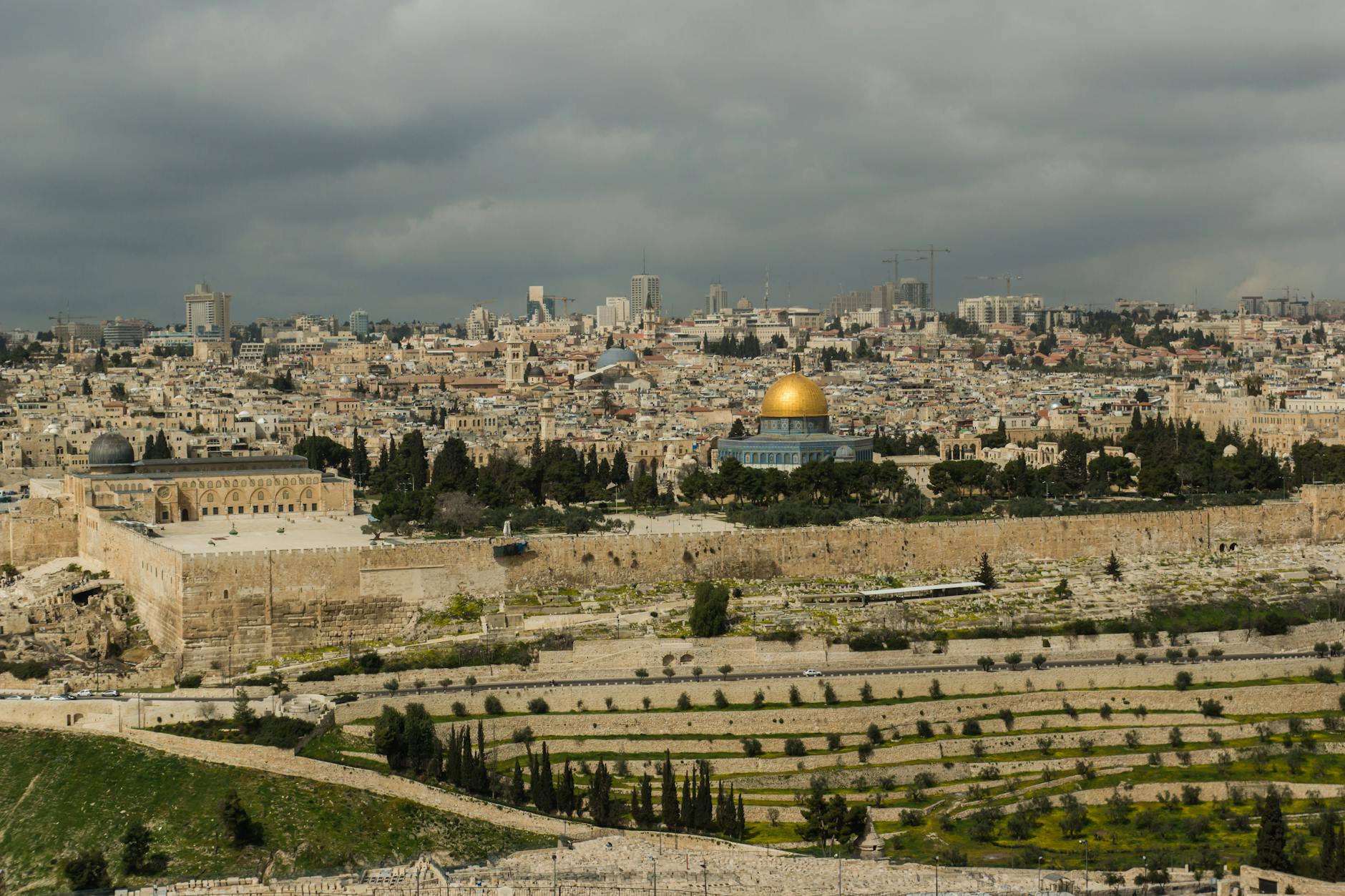
Jesus warned his followers that “no one knows” when the fateful return of the Son of Man will come. Neither the angels in heaven, nor the Son, but only the Father knows. Bible scholars like to call today’s reading from the thirteenth chapter of Mark’s gospel the “Little Apocalypse.”  As Jesus spoke these scary words, he was surrounded by his disciples.  From the Mount of Olives, they looked across the Kidron Valley to the Holy City of Jerusalem and the splendor of the Temple.  Jesus anticipated the sack of the city and the destruction of the Holy of Holies by the Romans in just a few decades, during the Jewish Rebellion against the empire.  In a coming world that would feel like the heavens were falling and the very fabric of creation was coming apart at the seams, Jesus knew that his followers would need purpose and a long view of God’s work in the world if they were going to endure.

To guide his disciples through the dark days to come, Jesus told a parable. He described a wealthy landowner preparing to depart on a long journey. Before leaving, he entrusted the care of his property to his slaves, knowing that each would be busy with his work until the watchful doorkeeper heralded the master’s return. In the first century world of the Mediterranean, slaves were essential in managing estates.  Cleaning house, tending animals, working fields, preparing meals, nurturing children, keeping accounts, and producing wine and olive oil, all depended upon the work of slaves.  Slaves were considered a part of the landowner’s family. In fact, the Latin word for the extended household of landowners and slaves together was familias—family. The intimacy and affection of the familias is preserved to this day in the ruins of Pompeii, which was destroyed by the eruption of Mt. Vesuvius in the year seventy-nine.  There we can read the words of a prayer inscribed on the walls of a household shrine, asking God for the safe return of a beloved master from a journey.

When we consider that social and historical context of slaves, masters, and the familias, we see that in today’s reading, Jesus was characterizing himself as the landowner. His arrest and execution were imminent. Before the week was out, Jesus would be betrayed, convicted, tortured, and executed. Although Jesus would rise and promise to come again in glory, for the disciples it would feel as if Jesus had gone on a very long journey, with no end in sight. In the coming years of watching and waiting, Jesus hoped that his friends would continue to faithfully and conscientiously serve him.  Just as a familias anticipated a master’s impending return with loyalty and service, the disciples would need to keep the faith and keep up the good work.  He trusted his friends to preach the gospel, heal the sick, tend to the vulnerable, and pray always for his speedy return, saying, “Maranatha!”  Come soon, Lord!

Many of us struggle with today’s reading because it is apocalyptic in tone – there is a sense of the immediacy of the Day of Judgment and a nearness of the return of Jesus in glory. Let’s face it. Almost 2,000 years is a long wait. We’re not feeling especially vigilant this Advent. For most of us, we are pretty comfortable with the way things are here and now. We have three square meals a day. We have enough, maybe more than enough. We live in safety in a beautiful part of the world. It’s not a problem for us that the second coming seems to be slow in arriving.

That attitude shifts, though, when we stir some chaos and pain into the recipe of our lives. Just ask the Christians in Gaza and the West Bank. They are praying, “Come, Lord Jesus.” Just ask the neighbor whose spouse has died a few weeks before Christmas—they would like to tear open the heavens so that God might come down. Just ask the friend who is reeling with that unexpected, bleak diagnosis, she wouldn’t mind seeing the Son of Man coming in glory. While we wait for the Second Coming, there are plenty of little apocalypses. There is an abundance of those frightening and unwanted world-changing, life-threatening, perspective-altering events. Those little apocalypses leave us longing for the Lord to be here now.

The Rev. Tracy Daub, who wrote our book study for Advent Holy Disruption, reminds us that the world-changing work of the End Times has already begun. We saw it in Jesus, who showed us what it looks like to live with compassion, forgiveness, inclusion, and love. Jesus called for an essential reordering of our world, an in-breaking of God’s Kingdom, that is yet to be fully realized. That’s where we find ourselves, between the two Advents, the first and second coming. Our work as members of Jesus’ familias is to serve the Kingdom that is “already but not yet.”

What is the work that the Master would have us do in this waiting time? It looks a lot like what Jesus and his faithful servants did. It’s feeding the hungry and welcoming the outsider. It’s forgiving those who have wronged us and praying for those who feel short on hope. It’s sharing the good news with the everyday words and actions of our lives. It’s working for a world where Israelis and Palestinians break bread together. It’s inviting to supper that mournful neighbor who feels lost in grief. It’s holding the hand and walking alongside the friend who feels lousy. We live with bold hope and compassionate love. And if we are very faithful servants of the Master, this world may even sense the coming of the Son of Man as we work with hope and love amid the little apocalypses of our world.

Frank J. Tipler, who teaches math and physics at Tulane University, published a book in 2007 called The Physics of Christianity. In the first chapter, Tipler maintains that the Second Coming of Christ will occur within 50 years—by 2057. I suspect that Tipler, like Irenaeus, Sir Isaac Newton, and William Miller, will be proven wrong by the passage of time. After all, Jesus told us, we “do not know when the time will come.”

We do know that while we wait there is work to be done. Let’s get busy, my friends. Amen.

Resources

Buggs, Courtney.  “Commentary on Mark 13:24-37” in Preaching This Week, Nov. 29, 2020.  Accessed online at workingpreacher.org.

Daub, Tracy S. Holy Disruption: Discovering Advent in the Gospel of Mark, (Louisville: Westminster John Knox Press, 2002).

Siker, Judy Yates. “Exegetical Perspective on Mark 13:24-27” in Feasting on the Word, Year B, vol. 1. Louisville: Westminster John Knox Press, 2008.

Sheldon, Natasha. “Roman Domestic Slavery” accessed online at Ancient History and Archaeology.com.


Mark 13:24-37

24“But in those days, after that suffering,

the sun will be darkened,and the moon will not give its light,
25and the stars will be falling from heaven,and the powers in the heavens will be shaken.

26Then they will see ‘the Son of Man coming in clouds’ with great power and glory. 27Then he will send out the angels, and gather his elect from the four winds, from the ends of the earth to the ends of heaven.

28“From the fig tree learn its lesson: as soon as its branch becomes tender and puts forth its leaves, you know that summer is near. 29So also, when you see these things taking place, you know that he is near, at the very gates. 30Truly I tell you, this generation will not pass away until all these things have taken place. 31Heaven and earth will pass away, but my words will not pass away.

32“But about that day or hour no one knows, neither the angels in heaven, nor the Son, but only the Father. 33Beware, keep alert; for you do not know when the time will come. 34It is like a man going on a journey, when he leaves home and puts his slaves in charge, each with his work, and commands the doorkeeper to be on the watch. 35Therefore, keep awake—for you do not know when the master of the house will come, in the evening, or at midnight, or at cockcrow, or at dawn, 36or else he may find you asleep when he comes suddenly. 37And what I say to you I say to all: Keep awake.”


Portrait of Sir Isaac Newton by Godfrey Kneller, 1702. Public domain, via Wikimedia Commons.

Lamps Lit

Sabbath Day Thoughts — “Lamps Lit” Matthew 25:1-13

We don’t like to wait. It can make us feel grouchy, frustrated, annoyed, and bored. Americans spend an average of thirty-two minutes waiting at the doctor’s office, twenty-eight minutes waiting at airport security, and twenty-one minutes waiting for our significant other to get ready to go out. All that waiting adds up. As a nation, Americans spend thirty-seven billion hours waiting in line each year. The bad news is that New York state has the longest waiting times in the country. A survey of twenty-five New York communities found that our average wait time in stores is six minutes and fifty-one seconds. That sounds about right. The worse news is that our patience is growing shorter as digital technology, like smart phones and on-demand streaming services, lead us to expect instant gratification. The average person grows frustrated after waiting sixteen seconds for a webpage to load or twenty-five seconds for a traffic signal to change. Does any of this sound familiar?

Our gospel reading today reveals that the struggle to wait isn’t limited to twenty-first century New York. Jesus told this parable of the Ten Bridesmaids to his disciples as they gathered one evening on the Mt. of Olives, overlooking Jerusalem.  It was the final week of Jesus’ earthly life.  Powerful enemies in Jerusalem were conspiring to bring about his arrest and execution.  Jesus knew what awaited him at the end of the week, even if his friends were unwilling to accept it.  And so, he told a story of a wedding banquet too long in coming and bridesmaids who missed out on the celebration.

In Jesus’s day, when a young girl reached marriageable age, her parents would seek an appropriate bridegroom.  First, a contract, stating terms of the dowry, would be agreed upon.  Then, at the end of a year-long engagement, the bridegroom would collect his bride, paying her parents the bride price and bringing his new wife home to the house of his father.  On the blessed night of the wedding, bridesmaids waited at the father’s house.  With lamps lit, they would go forth singing and rejoicing, leading the couple to the marriage tent, where their wedding vows would be consecrated.  After the wedding, a festive weeklong party began.

In Jesus’ story, the wedding party didn’t go according to plan. The groom was delayed. As the long hours dragged on after dark and the bridesmaids waited, they fell asleep and their lamps burned low.  When the shout at last went up, “The bridegroom is near!”, the maids rose to tend their flames, but only half the girls had anticipated the wait and brought extra oil.  While five maids went out with glowing lamps to rejoice with the wedding party, the others ran off to bang on the door of the local oil merchant.  When they returned to the father’s house, it was too late. The door was closed and there would be no late entries.

This is not my favorite parable. For one thing, it takes a lot of explaining. For another, I’d like to soften its sharp edges.  Let there be a super-abundance of oil to share.  Let the bridegroom throw open the doors and welcome the latecomers to the party. But Jesus knew that his story required sharp and uncomfortable edges to get our attention. We can bet that every disciple who listened to Jesus on the Mt. of Olives sat up straight and opened their ears.

In Jesus’ day, the wedding feast was a common metaphor for the beautiful feast of the Kingdom of God that would come at the end times.  Jesus’s friends knew Jesus was the bridegroom, the Messiah, sent to usher in a new age of righteousness and holy living.  But there would be no wedding feast that week.  Instead of a wedding procession of joyful bridesmaids with lamps aglow, there would be a funeral procession.  Jesus, beaten, bloody, and broken, would be paraded through the streets to his brutal execution.

Jesus hoped that his friends would live with a sense of urgent patience, even after he would be taken from them. God’s Kingdom would come, even after long delay. Jesus hoped his friends would live like those five wise bridesmaids, well-equipped and ready to serve, even if the shout went up at midnight. The disciples, who listened to Jesus and looked out across the Kidron Valley to the holy city, glowing with the light of thousands of household lamps, would have heard Jesus’ story as a bold exhortation to wait with patience and vigilance through the long years to come.

One of the great challenges of preaching this parable is that people like us don’t have a sense of expectant urgency when it comes to Judgment Day. We leave that to the evangelicals, and even they don’t do it very well. We don’t wake up each morning, wondering if this is it, if the Lord will come in glory. We struggle to have a teaching like this feel relevant and useful for faithful living. We don’t like to wait six minutes and fifty-one seconds at the grocery. We can’t be bothered to waste our time looking at the apocalyptic clock, waiting for it to strike midnight.

But what if this parable isn’t just about Judgment Day? After all, in Matthew’s gospel, Jesus begins his ministry with the warning that the Kingdom of Heaven has come near. Professor Dirk Lange, who serves as assistant general secretary at the Lutheran World Federation, teaches that Jesus’s return is a “now” event. Let me explain. The appearance of the risen Lord on the Emmaus Road was a true experience of Christ’s return. Our monthly celebration of the Lord’s Supper is an ongoing wedding banquet with Jesus at the table. The vulnerable people whom we encounter—Jesus called them the least of these, his little brothers and sisters—they are an ongoing revelation of the Jesus who walks among us, inviting our compassion and help. Perhaps the question for our faithful waiting isn’t, “Is this the Day of Judgement?” Our question is better phrased, “How will I see Jesus today? Will I be ready to serve him? Will my lamp be lit?”

I’m going to suggest three ways that we can keep our lamps lit in this waiting time. Are you ready?

We begin by spending daily time with Jesus. We place him at the center of our lives with a faithful pattern of prayer and devotion. We deepen our understanding through reading scripture and spiritual writing. We praise him through worship and song. Those daily attentions in this waiting time assure us that the Lord is always with us, if only we will attend.

We can also take the time to see the Jesus who is revealed in vulnerability in the world around us. We see him at the Food Pantry picking up his monthly box. She awaits our visit in the corridors of assisted living and nursing homes.  He’s learning about Jesus in Sunday School.  She looks out her window and watches us head to church, wondering if we will ever invite her to join us. The bridegroom is near if we will only have eyes to see him.

Jesus’s parable suggests that it is not enough for us to patiently wait. We also need to be prepared for action. The wise bridesmaids heard the cry and leapt up to trim their wicks, fill their lamps, and greet the bridegroom. Will we shine our light before others (Mt. 5:16)? Carla Works, a New Testament scholar at Wesley Theological Seminary, says that, “To live in vigilance means for disciples to do the tasks that they have been appointed in preparation for the Master’s coming.” We know what we are called to do, but will we do it? Will we feed hungry people? Will we visit those who need our love? Will we teach Sunday School? Will we invite a friend or neighbor to church? Are our lamps lit? How will we greet the bridegroom?

I suspect that even if we heed Jesus’s difficult teaching, we still won’t like waiting. We’ll still grow grouchy, frustrated, annoyed, and bored as we wait in line at the grocery store. That’s because researchers say that the human attention span is a whopping eight seconds, one second shorter than that of a goldfish. But our waiting can be transformed as we pray for others and take time to attend to the hidden Jesus who walks among us still. Perhaps this world can look a little more like the promised Kingdom of Heaven if we keep our lamps lit and shine that light before others.

Resources

“How Much Time of an Average Life Is Spent Waiting?” in Reference, Science and Technology, April 3, 2020. Accessed online at https://www.reference.com/science-technology/much-time-average-life-spent-waiting-7b315c05172d2b4d

John Anderer. “Hurry up! Modern patience thresholds lower than ever before, technology to blame” in Study Finds, Sept. 3, 2019. Accessed online at https://studyfinds.org/hurry-up-modern-patience-thresholds-lower-than-ever-before-survey-finds/

Carla Works, “Commentary on Matthew 25:1-13” in Preaching This Week, Nov. 6, 2023. Accessed online at workingpreacher.org.

Dirk Lange, “Commentary on Matthew 25:1-13” in Preaching This Week, Nov. 9, 2008. Accessed online at workingpreacher.org. Greg Carey, “Commentary on Matthew 25:1-13” in Preaching This Week, Nov. 9, 2014. Accessed online at workingpreacher.org.


Matthew 25:1-13

“Then the kingdom of heaven will be like this. Ten bridesmaids took their lamps and went to meet the bridegroom. 2Five of them were foolish, and five were wise. 3When the foolish took their lamps, they took no oil with them; 4but the wise took flasks of oil with their lamps. 5As the bridegroom was delayed, all of them became drowsy and slept. 6But at midnight there was a shout, ‘Look! Here is the bridegroom! Come out to meet him.’ 7Then all those bridesmaids got up and trimmed their lamps. 8The foolish said to the wise, ‘Give us some of your oil, for our lamps are going out.’ 9But the wise replied, ‘No! there will not be enough for you and for us; you had better go to the dealers and buy some for yourselves.’ 10And while they went to buy it, the bridegroom came, and those who were ready went with him into the wedding banquet; and the door was shut. 11Later the other bridesmaids came also, saying, ‘Lord, lord, open to us.’ 12But he replied, ‘Truly I tell you, I do not know you.’ 13Keep awake therefore, for you know neither the day nor the hour.


Photo by Bhargava Marripati on Pexels.com

Your Lord Is Coming

Sabbath Day Thoughts “Your Lord Is Coming” Matthew 24:36-44

The Christmas preparations are underway.  No sooner had the Thanksgiving dishes been washed than the Black Friday shopping began. We can’t wait for Sparkle Village crafts next weekend.  We are hanging wreaths purchased to benefit the Youth Center, the holiday decorations are emerging from their attic lair, and our Nutcracker or holiday concert tickets have been purchased.  We are emerging from our COVID cloud and seeking a little holiday normalcy.

Here at the church, the signs of a new liturgical year are evident. The paraments have gone purple, the Advent devotionals are ready for your perusal, and the Advent wreath has a first purple candle glowing. The church calendar is bristling with Advent Study and kid’s pageant, special services and an evening of music and storytelling.  It’s beginning to feel a lot more like Christmas than it has since 2019.

 Not everyone is ready or eager for Christmas this year. In fact, these Advent weeks of preparation and anticipation may feel at odds with inner feelings of loss, fear, or even hopelessness for some. Some of us are mourning the loss of beloved ones.  We are bitterly and painfully aware of who will not be at the holiday table this year.  Some of us are living with big health concerns that leave us feeling lousy and a little cranky and not in the mood for all the falalalalalalalala. Others of us are feeling the pinch of inflation and economic hardship. We wonder if we can afford a merry Christmas without taking on a mountain of debt.  For some of us, this year’s holiday season confronts us with grief, uncertainty, and perhaps even hopelessness.

When Jesus first shared the unsettling words of our gospel reading, his disciples were gathered around him on the Mount of Olives.  They looked out across the Kidron Valley to see the Temple, perched at the apex of Jerusalem.  The Passover was near.  Jesus had been teaching and preaching some powerful sermons on the southern teaching steps of the Temple, and already it was clear that things weren’t going to go so well that week.  Powerful enemies were plotting to kill Jesus.  Just that afternoon, Jesus had given his opponents the perfect reason to sign the warrant for his arrest by foretelling the destruction of the Temple by the Romans. 

Jesus’ friends welcomed the apocalyptic words that he shared in today’s reading from Matthew’s gospel.  They would have felt comforted by the promise of God’s coming kingdom.  The disciples were powerless against Rome, Herod, and the Temple, but the promise of the Son of Man coming in glory to prevail over the powers of this world must have stirred hope in their hearts.  God had a plan and would ultimately prevail.

Nowadays, hope might not be the first thing we feel when we hear Jesus’ promise of an unexpected Second Coming.  It sounds scary, like a zombie apocalypse or a scene out of that Christian fantasy series “Left Behind.”  Some of our discomfort stems from the images that Jesus used to describe the advent of the Son of Man: destructive flood waters, mysterious disappearances, and thieves breaking into our homes.  Any one of those metaphors might set our hearts racing, but sandwich all three together to make a point, and it’s downright frightening.  It’s important to remember that Jesus was using a first century teaching style called hyperbole; he was ratcheting up the rhetoric to stress the importance of his point.

Jesus knew what awaited him at the end of the week – arrest, trial, abuse, and execution.  He also knew what his friends would undergo in the days and years to come. They would be persecuted: driven from Jerusalem, thrown out of the synagogues, and viewed with increasing hostility by the Roman Empire.  Most would lose their lives for the sake of the gospel: stoned, beheaded, beaten, or crucified.  As Jesus’ friends questioned when he’d be coming back in glory, Jesus realized that the greatest danger his friends would face in the difficult times to come was hopelessness.  Overwhelmed by the powerful forces that would oppose them, they could forget the promise that Jesus would return. 

In the years to come, it would be imperative that they remember that God wasn’t finished.  God had a plan and God would be with them in all the chaos, rejection, and persecution to follow.  On some days, the promise that Christ would come again would be the only thing that kept his friends from giving up, going home, and abandoning the gospel.  That apocalyptic promise encouraged the disciples to be vigilant and faithful no matter what.

That biblical-historical context of Jesus’s words to his disciples sounds completely disconnected from the world of our Advent and Christmas preparations.  Today’s reading is at odds with the world out there, where the shopping and partying juggernaut has left the station.  It’s also at odds with our world in here, where we are eagerly counting down the Sundays until Christmas and chomping at the bit to ditch the Advent hymns and sing some Christmas carols.

But Jesus’s apocalyptic promise might be exactly what those among us who are hurting need to hear. We who mourn hear in the assurance of Jesus’s second coming the reminder that God has won the victory over death.  On the far side of the grave, we will rise. We can trust that we will again hear our name on the lips of the beloved one whom we so dearly miss. When the Son of Man comes at that unexpected hour, our mourning will turn to dancing.

Those who struggle with illness and disability find in Jesus’s apocalyptic promise the comfort of God’s unstoppable power and final victory. We may feel completely powerless in a healthcare system that treats us like a disease, rather than a person. Yet God is always and ultimately all-powerful.  In the end, we are in God’s hands, not the hands of hospital, doctor, or hospice worker, and God’s hands are the very best place to be.  When the Son of Man comes at that unexpected hour, our healing will abound.

For those of us who feel the financial pinch of an uncertain economy and rising inflation, Jesus’s promise of his presence may bring the reorienting perspective that we need to step off the Christmas express. Jesus, who was born into poverty and lived with a radical simplicity, won’t mind a bit if we forego the shopping extravaganza and instead celebrate his birth with simple, heartfelt gifts that are given with great love. Perhaps it is only when we celebrate a Christmas of want that we begin to know the enormity of God’s great and loving gift to us in Jesus. When the Son of Man comes at that unexpected hour, the simple values and limitless love of the Kingdom will prevail.

At the end of Jesus’s apocalyptic discourse is the Parable of the Sheep and Goats (Matt. 25:31-46).  The Lord reminds his friends that, in this time between his first coming and his second coming, he would come to us daily.  He comes in our neighbors who hunger and thirst.  He is known in those who live in poverty and struggle as outsiders.  He is seen in those who cope with illness or languish in prison.  Jesus cautions that how we will fare in that promised second coming will be bound up in how we loved the hidden Jesus, who walks among us even now.

For I was hungry

and you gave Me something to eat;

I was thirsty

and you gave Me something to drink;

I was a stranger and you took Me in;

I was naked and you clothed Me;

I was sick and you took care of Me;

I was in prison and you visited Me.’

‘Come, you who are blessed by My Father, inherit the kingdom prepared for you.”

In this Advent season, Jesus would put us to work. His apocalyptic words invite us to turn away, at least for a bit, from the decorating and baking, the buying and partying. It’s an encouragement to turn with understanding and compassion to those among us who yearn for the second coming, who are hurting and grieved, sick and disabled, broke and oppressed. In our love and care, perhaps we can impart a foretaste of that glorious apocalyptic day when every tear shall be dried and the eternal alleluia shall resound across the heavens.  May it be so.

Resources:

Matt Skinner. “Advent Attentiveness” in Dear Working Preacher, Nov. 20, 2022.  Accessed online at workingpreacher.org.

James Boyce. “Commentary on Matthew 24:36-44” in Preaching This Week, Dec. 2, 2007. Accessed online at workingpreacher.org.

Arland Hultgren. “Commentary on Matthew 24:36-44” in Preaching This Week, Dec. 1, 2013. Accessed online at workingpreacher.org.

O. Wesley Allen, Jr. “Commentary on Matthew 24:36-44” in Preaching This Week, Dec. 1, 2019. Accessed online at workingpreacher.org.


Matthew 24:36-44

36“But about that day and hour no one knows, neither the angels of heaven, nor the Son, but only the Father. 37For as the days of Noah were, so will be the coming of the Son of Man. 38For as in those days before the flood they were eating and drinking, marrying and giving in marriage, until the day Noah entered the ark, 39and they knew nothing until the flood came and swept them all away, so too will be the coming of the Son of Man. 40Then two will be in the field; one will be taken and one will be left. 41Two women will be grinding meal together; one will be taken and one will be left. 42Keep awake therefore, for you do not know on what day your Lord is coming. 43But understand this: if the owner of the house had known in what part of the night the thief was coming, he would have stayed awake and would not have let his house be broken into. 44Therefore you also must be ready, for the Son of Man is coming at an unexpected hour.


Photo by George Becker on Pexels.com