Unity with Diversity

Sabbath Day Thoughts — “Unity with Diversity” 1 Cor. 12:12-31a

Americans have long been at odds over the issue of immigration. Anti-immigration sentiment caused violence on the streets of New York City in the 1850s. Gang leader “Bill the Butcher” Poole formed the Know-Nothing Party to oppose immigration, particularly that of Irish Catholics. At their peak in 1855, the Know-Nothings claimed the allegiance of forty-three members of Congress. In 1853, “Bill the Butcher” died after being shot by gang (and political party) rival John Morrissey, who of course, was Irish Catholic.

In 1875, the country passed the Page Act to eliminate immigration of women from China in an effort to prevent the settlement of Chinese families in our country. Seven years later, in 1882, we implemented the Chinese Exclusion Act, which prevented the immigration of Chinese laborers for ten years. The ban was renewed in 1892, and in 1902, lawmakers decided to make it permanent. Anti-Chinese sentiment in the country was violent. In 1885, twenty-eight Chinese laborers were massacred by white miners in Rock Springs, Wyoming. Many of those Chinese workers were burned alive in their homes. Two years later, in 1887, thirty-four Chinese workers were beaten or shot to death in Hells Canyon on the Snake River.

During the Great Depression, from 1929 until 1939, we thought it would be a good idea to “repatriate” Mexican Americans, sending them south of the border to Mexico. One third of all Mexican Americans in the United States were repatriated, an estimated one to two million people. Forty to sixty percent of them were US citizens. The deportation effort was fueled in part by the words of President Herbert Hoover, who characterized Mexicans as “criminal aliens” who unfairly competed with true Americans for jobs and services.

A sad and shameful aspect of our country during World War II was the internment of Japanese Americans. Following the Japanese attack on Pearl Harbor, President Franklin Roosevelt issued Executive Order 9066 calling for all people of Japanese descent—anyone 1/16th Japanese or more including US citizens, to be incarcerated in isolated camps. In March 1942, Army-directed removals began. Japanese-Americans were given six days to dispose of their belongings other than what they could carry and report to War Relocation Centers. More than 100,000 people were detained throughout the war, often in poor conditions with inadequate food or sanitation.

If our history tells us anything, it is that we have strong opinions about who belongs and who does not. Who we need and who we do not. We find it hard to welcome, accept, and trust our neighbors, especially if their religious convictions, language, appearance, customs, or skin color are different from our own. We have a hard time finding unity in our American diversity.

The Apostle Paul’s congregation in Corinth struggled to find unity in their diversity. Corinth was one of the most racially, ethnically, religiously, and economically diverse communities on the Mediterranean with residents from every corner of the Roman Empire. In the Corinthian church, there were factions and seemingly endless quarrels that threatened to split the assembly. They quarreled about whether it was better to have been evangelized by Paul or Apollos or Peter. They disputed which spiritual gifts were best. They couldn’t agree if it was appropriate to eat meat that had been purchased in pagan meat markets. They argued about whether people should wear head coverings in worship. They brought civil lawsuits against one another. They challenged Paul’s apostolic authority, questioning whether he had the right credentials to lead the church. They even fought about what we might presume would be their rite of greatest unity—the Lord’s Supper. Did they really have to wait for slaves to finish their household chores so that the whole church could partake together?

Paul’s purpose in writing to his Corinthian friends was to put an end to all the wrangling by reminding them of the unity they were called to in Christ. In today’s reading, Paul playfully painted the picture of a human body at war with itself: eye alienated from ear, ear at odds with nose, head dead set against feet, all those parts clamoring that they don’t want to belong to the same body. Paul pointedly reminded his Corinthian friends that every member, even the most vulnerable and least respectable, was a valuable part of the body. Indeed, when one member of the body was ailing, the whole body suffered. Anyone who has ever had a toothache or a back spasm can testify to that fact. Paul capped his argument by saying that his friends were members of a very particular body—Christ’s body.  I’m certain that the Corinthians were grieved when they realized that their fractious and alienating behavior was wounding and tearing Christ, who had suffered so terribly on the cross for them.

Paul longed for the members of the Corinthian church to be in unity, to understand that all their spiritual gifts, ideas, and natural abilities were needed for the body to be whole. Indeed, their individual well-being depended upon the honoring and sharing of one another’s contributions. It was in coming together in all their differences that they would grow into God’s best hope for humanity. Paul envisioned that all those church members, working together under the direction of the Holy Spirit, could embody Jesus, could make Christ’s living presence known to their neighbors in Corinth. Imagine that—the healing, helping, wise, prophetic, prayerful Jesus walking the streets of the city! What a blessing!

If the immigration controversies that are presently swirling in our country teach us anything, it’s that we haven’t changed all that much as a nation. Anti-Irish gangs, the Chinese Exclusion Act, forced repatriation of Americans of Mexican descent, internment of Japanese-American citizens, this is part of who we are. I think we are all in agreement that we don’t want open borders and foreign criminals on our streets, any more than we want American criminals running our communities. But when we get right down to it, calls for mass deportation are an old screed, hauled out every few years to divide us, to pitch us into opposing camps, to find a scapegoat for our latest ill. We are just doing what we always do. That’s not my opinion; that’s our unfortunate history.

I’d like to think that we can do better. If the Apostle Paul were to pick up his pen this morning, he might remind us that what speaks to the church can speak to the nation. Those among us who are white Anglo-Saxon Protestants have need of our Irish Catholic brothers and sisters. And the Irish need the Chinese. The Chinese need their Mexican neighbors, just as the Mexican needs his Japanese acquaintance. Our efforts to deny, denigrate, and alienate one another are just as foolish as the eye saying, “Get rid of that ear.” Wholeness is found, not in our all being cut from the same cloth. Wholeness is found in knowing that we belong to one another. Wholeness flourishes when our spicy differences are accepted and stirred into this unfinished experiment in nationhood. Wholeness is found when there is unity that honors our diversity. When we dare to honor and accept others, Christ is embodied. He walks among us still.

There may be hope for us as a nation yet. Bias against the Irish is practically unheard of anymore, and let’s face it, on St. Patty’s Day, everyone is Irish. During World War II, China and the United States were allies, which led to the long-awaited repeal of the ban on Chinese immigration and naturalization. The passage of the Magnusson Act in 1943 allowed Chinese immigrants to apply for citizenship and register to vote. In 1976, President Gerald Ford officially repealed Executive Order 9066, which targeted Japanese-Americans. In 1988, Congress issued a formal apology and passed the Civil Liberties Act awarding $20,000 each to over 80,000 Japanese Americans as reparations for their internment. In 2005, the state of California apologized for the 1930’s Mexican Repatriation Program, for the fundamental violations of civil liberties and constitutional rights. In 2012, Los Angeles County also issued an apology and installed a memorial at the site of one of the city’s first immigration raids. Slowly, slowly, we grow. Slowly, slowly, we find healing for the body.

If I were to read for us Paul’s second letter to the Corinthians this morning, we would hear that Paul’s argument about the body of Christ was convincing. The Corinthians repented of their fractious ways. They found unity amid their diversity and a renewed zeal for the gospel that made Paul proud. May the same be said for us.

Resources

Frank L. Crouch. “Commentary on 1 Cor. 12:12-31a” in Preaching This Week, Jan. 26, 2025. Accessed online at https://www.workingpreacher.org/commentaries/revised-common-lectionary/third-sunday-after-epiphany-3/commentary-on-1-corinthians-1212-31a-

Brian Peterson. “Commentary on 1 Cor. 12:12-31a” in Preaching This Week, Jan. 24, 2016. Accessed online at https://www.workingpreacher.org/commentaries/revised-common-lectionary/third-sunday-after-epiphany-3/commentary-on-1-corinthians-1212-31a-3

Melanie A. Howard. “Commentary on 1 Cor. 12:12-31a” in Preaching This Week, Jan. 23, 2022. Accessed online at https://www.workingpreacher.org/commentaries/revised-common-lectionary/third-sunday-after-epiphany-3/commentary-on-1-corinthians-1212-31a-5

Michael A. Smith. “No, We Are Not More Divided Than Ever” in Midwest Political Science Association Blog, June 6, 2022. Accessed online at https://www.mpsanet.org/no-we-are-not-more-divided-than-ever/

Dennis Wagner. “Mexican Repatriation in the 1930s” in State of the Union History, Nov. 10, 2017. Accessed online at https://www.stateoftheunionhistory.com/2017/11/1930-herbert-hoover-mexican.html

History.com Staff. “Chinese Exclusion Act” in History, August 24, 2018. Accessed online at https://www.history.com/topics/immigration/chinese-exclusion-act-1882

Amanda Onion, Missy Sullivan, Matt Mullen and Christian Zapata. “Japanese Internment Camps” in History, April 17, 2024. Accessed online at https://www.history.com/topics/world-war-ii/japanese-american-relocation


1 Corinthians 12:12-31a

12 For just as the body is one and has many members, and all the members of the body, though many, are one body, so it is with Christ. 13 For in the one Spirit we were all baptized into one body—Jews or Greeks, slaves or free—and we were all made to drink of one Spirit.

14 Indeed, the body does not consist of one member but of many. 15 If the foot would say, “Because I am not a hand, I do not belong to the body,” that would not make it any less a part of the body. 16 And if the ear would say, “Because I am not an eye, I do not belong to the body,” that would not make it any less a part of the body. 17 If the whole body were an eye, where would the hearing be? If the whole body were hearing, where would the sense of smell be? 18 But as it is, God arranged the members in the body, each one of them, as he chose. 19 If all were a single member, where would the body be? 20 As it is, there are many members yet one body. 21 The eye cannot say to the hand, “I have no need of you,” nor again the head to the feet, “I have no need of you.” 22 On the contrary, the members of the body that seem to be weaker are indispensable, 23 and those members of the body that we think less honorable we clothe with greater honor, and our less respectable members are treated with greater respect, 24 whereas our more respectable members do not need this. But God has so arranged the body, giving the greater honor to the inferior member, 25 that there may be no dissension within the body, but the members may have the same care for one another. 26 If one member suffers, all suffer together with it; if one member is honored, all rejoice together with it.

27 Now you are the body of Christ and individually members of it. 28 And God has appointed in the church first apostles, second prophets, third teachers, then deeds of power, then gifts of healing, forms of assistance, forms of leadership, various kinds of tongues. 29 Are all apostles? Are all prophets? Are all teachers? Do all work powerful deeds? 30 Do all possess gifts of healing? Do all speak in tongues? Do all interpret? 31 But strive for the greater gifts. And I will show you a still more excellent way.


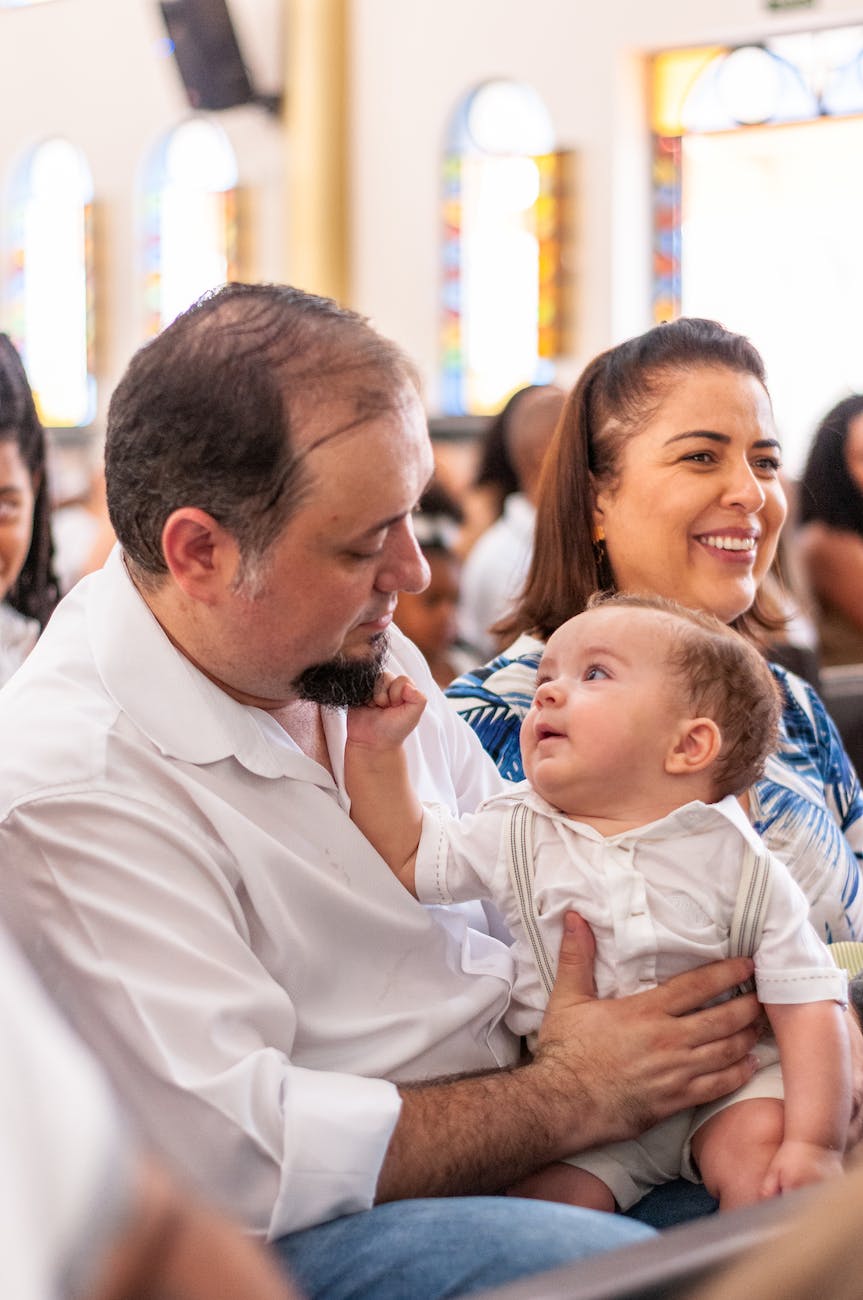
Photo by fauxels on Pexels.com

Sighs Too Deep for Words

Sabbath Day Thoughts — “Sighs Too Deep for Words” Romans 8:26-39

Monica has given up on praying. She’s a single Mom with two young children. She works two jobs to try to cover the bills. She tends to little ones, including her own, at a local daycare during the week. She minds the register at the Quikmart on the weekends. Her ex plays games with his child support payments, so she is almost always on the verge of a financial crisis. Monica has prayed for better work. She has prayed that her ex would change. She has prayed that the landlord will be patient and that her children won’t know how stressed and worried she truly is. Monica believes in God. She just isn’t sure that God believes in her.

Fred isn’t sure what to pray for or how to pray these days. He lost his longtime job when the boss caught him drinking again. Then last month, he got pulled over for a DWI—and it wasn’t the first. The judge ruled that Fred could either spend some time in jail or try a residential treatment program for his alcoholism. It isn’t as if Fred hasn’t tried to quit drinking before. He has even had a few stretches of sobriety, but he always ends up right back where he started, defeated, ashamed, and drinking. His wife has had it and his friends are worried.

Lori and Phil used to pray together, but that was before Lori’s parents moved in. When Lori’s Dad broke his hip, the social worker at the hospital said that the two could no longer live on their own.  Her Mom has Alzheimer’s disease. Her once sunny disposition is now often angry and confused. Lori left work to care for her parents. Each week brings a new round of doctor visits and healthcare expenses.  Not long ago, her Mom wandered off while working in the garden and the police brought her home. Lori and Phil feel like they are failing as caregivers. They know things will only get worse, and they are too tired and overwhelmed to even know what to pray for.

We all have times when we feel that we are clean out of prayers. We have worried God for years about the same concern. We get overwhelmed by circumstances beyond our control. We are not our better selves and the burden of our bad behavior feels like a wedge between us and the holy. We wonder if God hears us. We question if God cares about us. We fear that God doesn’t love us.

Paul’s letter to the church in Rome suggests that those first Christians in the imperial city also found it hard to pray. We know that the Roman church found a start in the Jewish community there. The origin of the Jewish colony at Rome dated to the year 63 BCE, when General Pompei, after the capture of Jerusalem, brought back a large number of prisoners of war who were sold as slaves. Those who earned their freedom lived in the poorest quarters of the city where they served as peddlers, shopkeepers, domestic workers, and tradespeople. We know that when Christian teachers came to Rome, it split the Jewish community into two camps: traditionalists and those who believed that Jesus is Lord. The conflict between the two parties was so bitter that in the year 49 CE, Emperor Claudius expelled the Jews from the city, just to keep the peace.

The circumstance of the Christian community certainly needed prayer: exile, poverty, infighting, and imperial persecution. Yet the Roman Christians, perhaps worn out and hopeless, struggled to pray. Paul, in the verses leading up to today’s reading, describes the Romans as groaning, as if with the terrible birth pangs of a woman in labor, as they waited, short on hope and long on fear, for the coming of God’s Kingdom.

The Apostle Paul assured his friends that even when they could not find the words to pray, God knew their circumstance. The Holy Spirit, whom Jesus had promised would be their advocate and comforter, was at work within them. With sighs too deep for words, the Spirit interceded, bridging the gap between heaven and earth, even when they could not. God knew and God cared. It might have felt impossible for them to imagine, but all things would work together for their good.

When our spiritual ancestor John Calvin read Paul’s words to the church in Rome, he made the connection between the suffering of the Roman Christians and the suffering of Christ. In the neighborly and imperial persecution that the Romans daily endured, they knew something of the experience of Jesus. They personally identified with a Savior who was condemned by powerful enemies and persecuted even to the point of death on the cross. As they identified with Christ in his suffering, Jesus was with them in theirs.

Calvin wrote, “There is then no reason for anyone to complain that the bearing of their cross is beyond their own strength, since we are sustained by a celestial power. . .. The Spirit takes on himself a part of the burden, by which our weakness is oppressed; so that he not only helps and [sustains] us, but lifts us up; as though he went under the burden with us.” Far from being separated from God, the Roman church was united with Christ, who, by the power of the Holy Spirit, shouldered their burdens with them and for them.

I’m sure that Paul’s words sounded every bit as comforting and reassuring to the church in Rome as they do to us. In all our times of careworn sorrow, in all our places of overwhelming need, in all our frailty and failure, we are not alone. The Spirit is here, praying within us. Jesus is alongside us, bearing the load.

Paul assures us this morning that nothing can separate us from the love of God, a love that was most fully expressed in the suffering of Christ. Not hardship or distress or persecution; not famine or indigence or peril or sword. Not single parenthood or low-paying jobs. Not deadbeat dads or having more month than money. Not alcohol or meth or opiates. Not lost jobs or strained marriages. Not DWIs or court-mandated rehab. Not growing years and declining health. Not broken hips or Alzheimer’s. Not the mounting costs of doctors or the inadequacy of senior care in the Adirondacks. Nothing. That’s right nothing can separate us from the love of God. In all these things, in all these everyday challenges that can leave us feeling at a loss for words, at a loss for prayer, we are more than conquerors through Jesus, whose Spirit prays within us. Thanks be to God.

I like to think that Paul’s words encouraged the people in Rome. In Paul’s reassurance of the work of the Holy Spirit and the love of God, their groans became language.  The Romans found the courage to pray for themselves and pray for one another. How else could the Roman church transform within a few centuries from a frightened and persecuted sect of Judaism to the most powerful religious center in the empire?

As we go forth into this week, we will be certain to meet others who do not have the wherewithal to pray. They are stressed-out parents and over-worked professionals. They struggle with addiction or mental illness. They just got a tough diagnosis. They are reeling with grief. They feel alone and separated from God.  Perhaps this morning, we could take our leading from the Holy Spirit. We could pray with them and for them, even if we simply draw near with the love of Christ and our sighs too deep for words. May it be so.

Resources

Anna Bowden. “Commentary on Romans 8:26-39” in Preaching This Week, July 30, 2023. Accessed online at workingpreacher.org.

Israel Kumundzandu. “Commentary on Romans 8:26-39” in Preaching This Week, July 30, 2017. Accessed online at workingpreacher.org.

Mary Hinkle Shore. “Commentary on Romans 8:26-39” in Preaching This Week, July 26, 2020. Accessed online at workingpreacher.org.

George Edmundson. “The Church in Rome in the First Century,” Lecture 1 of The Bampton Lectures, Oxford University. London: Longmans, Green and Company, 2013.

John Calvin. Commentary on Romans. Accessed online at https://biblehub.com/commentaries/calvin/.


Romans 8:26-39

26Likewise the Spirit helps us in our weakness; for we do not know how to pray as we ought, but that very Spirit intercedes with sighs too deep for words. 27And God, who searches the heart, knows what is the mind of the Spirit, because the Spirit intercedes for the saints according to the will of God. 28We know that all things work together for good for those who love God, who are called according to his purpose.

29For those whom he foreknew he also predestined to be conformed to the image of his Son, in order that he might be the firstborn within a large family. 30And those whom he predestined he also called; and those whom he called he also justified; and those whom he justified he also glorified.

31What then are we to say about these things? If God is for us, who is against us? 32He who did not withhold his own Son, but gave him up for all of us, will he not with him also give us everything else? 33Who will bring any charge against God’s elect? It is God who justifies. 34Who is to condemn? It is Christ Jesus, who died, yes, who was raised, who is at the right hand of God, who indeed intercedes for us. 35Who will separate us from the love of Christ? Will hardship, or distress, or persecution, or famine, or nakedness, or peril, or sword? 36As it is written, “For your sake we are being killed all day long; we are accounted as sheep to be slaughtered.” 37No, in all these things we are more than conquerors through him who loved us. 38For I am convinced that neither death, nor life, nor angels, nor rulers, nor things present, nor things to come, nor powers, 39nor height, nor depth, nor anything else in all creation, will be able to separate us from the love of God in Christ Jesus our Lord.


Photo by Ric Rodrigues on Pexels.com

The Good Treasure

Sabbath Day Thoughts — “The Good Treasure” 2 Tim. 1:1-14

For most of us, our faith was formed by the guidance, influence, and instruction of others.

Country music superstar Dolly Parton speaks openly and authentically of her faith.  The fourth of twelve children, born in a one-room cabin in Eastern Tennessee, Parton remembers daily times of prayer and Bible reading with her mother Avie Lee, who was the daughter of a pastor.  Every Sunday morning, Avie Lee and her brood would head to her father’s little mountain church house, where Parton began singing and playing guitar at the age of six.  Although Dolly’s family was what she called “dirt-poor”, she says, “We grew up believing that through God all things are possible.”

Academy Award winning actor Denzell Washington is widely known as a man of faith.  His belief was grounded in the witness of his father, a Pentecostal minister and gospel singer.  Denzell may be known for making Hollywood hits, but growing up, his father limited the family’s film viewing to movies based on Bible stories, like The Ten Commandments.  He also encouraged Denzell to read the Bible daily, a discipline that Washington continues to practice.  Denzell’s faith has kept him grateful and humble in an industry where fame can go to your head.  Washington says, “[I] understand where the gift comes from.  It’s not mine; it’s been given to me by the grace of God.”

Francis Collins is the former head of the National Institutes of Health and director of the Human Genome Project.  Not raised in a family of faith, Collins was an atheist until he encountered a cardiac patient during his medical studies.  An older woman who lived with chronic pain and serious health challenges, she was consistently sunny and upbeat.  She spoke about her faith with Collins on more than one occasion until asking him, “So what about you?  What do you believe?” That prompted Collins to do some research.  On the recommendation of a Methodist pastor, Francis began some spiritual reading, including Mere Christianity by C.S. Lewis.  Taking what he knew of science and looking at it through the lens of Christianity led to belief for Collins who looks at creation and says, “God must be an amazing physicist and mathematician.”

Many of us have similar stories.  The faith that sustains us got its start in the witness of a parent or grandparent.  The seed of faith was planted in the weekly discipline of going to church, the creative efforts of a Sunday School teacher, the prayers of a friend, the spiritual wisdom of a mentor, or the inspiring witness of a co-worker.  How did you discover the good treasure of the gospel?

In his second letter to Timothy, the Apostle Paul reminds his young friend of the faith he found in the spiritual leadership of his grandmother Lois and his mother Eunice.  We don’t know much about Lois or Eunice, but the fact that as women their names are remembered in that deeply patriarchal time says a lot.  Timothy came from Lystra where Paul planted a church on his first missionary journey.  We can imagine that Eunice and Lois were important leaders in that young church, fanning the flames of the gospel in a thoroughly pagan world.  We can trust that as a youth Timothy attended church, shared in family prayers, and learned of God’s great love for him.  Lois and Eunice must have sensed that Timothy would have a holy purpose for his life.  The name Timothy, Timόtheos in Greek, means “honoring God.”

Paul’s letter also reveals that the apostle considered himself to be a spiritual father to Timothy, whom he called his “beloved child.” From Eunice to Lois to Paul, Timothy found belief through the good instruction and faithful witness of those who loved him.  As Paul wrote these words, reminding Timothy of the faith that had been imparted to him, Paul was in prison, having stood trial and been condemned to death for his faith. Paul knew that his days were numbered. If the gospel were to continue to go forth across the empire, Paul would need a spiritual heir, someone like Timothy, who would hold to the standard of good teaching, keep the faith, and guard the good treasure that had been entrusted to him.

Scripture and tradition tell us that Timothy found courage and perseverance in his faith.  The zealous young disciple acted as Paul’s scribe and co-author of the books of 2 Corinthians, Philippians, Colossians, 1 and 2 Thessalonians, and Philemon. He accompanied Paul on his missionary journeys, and when Paul was in prison, Timothy represented Paul at Corinth and Philippi. For a time, Timothy was also imprisoned for the faith.  Church tradition teaches that after Paul’s death, Timothy served as bishop of the church at Ephesus, an important seaport on the west coast of Asia Minor.  But in the year 97, Timothy ran afoul of a pagan group celebrating the feast of Catagogion, a festival in which they carried images of their gods about the streets. The pagan revelers beat Timothy with clubs.  Two days later, he died.

We may not be Timothy, but we can all testify to the power of our faith.  The good treasure of the gospel that has been imparted to us by others has been powerful.  It has held our marriages together through dry times.  It has prompted us to be better parents.  We have prayed our way through workplace woes and health crises. The good treasure of faith has been the lifeline through our dark nights of the soul.  We have faced the death of beloved ones, and we contemplate our own mortality, with confidence because we have faith; we trust that Jesus has prepared a place for us in his Father’s House. Thank goodness for those who have cared enough plant those gospel seeds in us, who ensured that we know we are beloved children of God through Jesus Christ.

Sometimes, the seeds of faith that are planted in us by others can prompt us to do remarkable things. 

Dolly Parton says that she believes her music is more ministry than job.  She has multiple best-selling country gospel recordings, and since 2019, she has collaborated to record hit records with contemporary Christian artists For King & Country, Zach Williams, and the Swedish duo Galantis.  Dolly’s faith, however, has found its greatest expression in her efforts to promote children’s literacy.  Her literacy program, Dolly Parton’s Imagination Library, mails one book per month to each enrolled child from the time of their birth until they enter kindergarten. Currently, over 1,600 local communities provide Dolly’s Imagination Library to almost 850,000 children each month around the world.

Denzell Washington feels the call to speak of his faith to a younger generation that needs God to negotiate these morally complex times.  In his 2015 commencement address at Willard University, Washington advised students that the most important lesson in life is to “put God first” and have the heart to serve others around them.  Denzell says that he is here “to serve, help, and provide.” He has been the national spokesperson for the Boys & Girls Clubs of America since 1993. With his family, he has launched the Gifted Scholars Program in Neurosciences.  This innovative endeavor provides scholarships and fellowships for studies and research in brain science.  A supporter of veterans, Washington also funded new housing for disabled Iraq War vets when he learned that there was no place for them to stay at Fort Sam Huston when they came for treatment. 

Francis Collins, the world-renowned geneticist whose journey to faith was prompted by the tough questions of a patient, has been a leader in bridging the so-called divide between science and faith.  He sees the laboratory as a place of worship that gives a glimpse of the mind of God.  His 2006 bestselling book The Language of God: A Scientist Presents Evidence for Belief describes how his work on the Human Genome Project was like seeing the language that God uses to speak us into creation. In 2007, Collins established the BioLogos Foundation. The foundation addresses the escalating culture war between science and faith, seeking dialog and harmony between the two. In 2020, Collins was awarded the Templeton Prize for harnessing the power of the sciences to explore the deepest questions of the universe and humankind’s place and purpose within it.

Lois, Eunice, Paul, Timothy, Dolly, Denzell, Francis Collins, those are some inspiring witnesses, aren’t they?  Their little—and big—efforts to live as people of faith and integrity are inspiring.  This morning, may we find in their good examples the invitation to do some faith sharing of our own. Nurture the belief of the children in your life. Challenge the youth you know to put God first. Use your gifts and abilities to share God’s love.  Build bridges that expand imaginations and lead to harmony between the secular and spiritual. Lois, Eunice, Paul, Timothy, Dolly, Denzell, Francis Collins—and you—those are some inspiring witnesses. Guard the good treasure entrusted to you.  Amen.

Resources:

AKM Adam. “Commentary on 2 Tim. 1:1-14” in Preaching This Week, Oct. 1, 2010. Accessed online at https://www.workingpreacher.org/commentaries/revised-common-lectionary/ordinary-27-3/commentary-on-2-timothy-11-14

John Frederick. “Commentary on 2 Tim. 1:1-14” in Preaching This Week, Oct. 2, 2016. Accessed online at https://www.workingpreacher.org/commentaries/revised-common-lectionary/ordinary-27-3/commentary-on-2-timothy-11-14

Matt Skinner. “Commentary on 2 Tim. 1:1-14” in Preaching This Week, Oct. 6, 2013. Accessed online at https://www.workingpreacher.org/commentaries/revised-common-lectionary/ordinary-27-3/commentary-on-2-timothy-11-14

Sara Kettler. “Why Dolly Parton Has Devoted Her Life to Helping Children Read” in Biography, April 13, 2020. https://www.biography.com/news/dolly-parton-imagination-library

Lesli White. “The Real Reason Dolly Parton Started Making Christian Music” in Beliefnet. https://www.beliefnet.com/entertainment/music/the-reason-dolly-parton-makes-christian-music.aspx

Denzell Washington. “Commencement Speech, Dillard University” https://www.youtube.com/watch?v=ROiNPUwg9bQ&t=70s

Manuela Cardiga. “Denzel Washington Is a Devoted Christian — inside His Relationship with God” in Amomama News, Aug 20, 2020.

Templeton Prize. “Francis Collins Awarded 2020 Templeton Prize,” May 20, 2020. https://www.templetonprize.org/francis-collins-awarded-2020-templeton-prize/

Templeton Prize. “Dr. Francis Collins: Harmony – Life at the Intersection of Science & Faith,” Sept. 24, 2020. https://www.youtube.com/watch?v=FYvi8qwp7Og


2 Tim. 1:1-14

Paul, an apostle of Christ Jesus by the will of God, for the sake of the promise of life that is in Christ Jesus,

To Timothy, my beloved child:

Grace, mercy, and peace from God the Father and Christ Jesus our Lord.

3 I am grateful to God—whom I worship with a clear conscience, as my ancestors did—when I remember you constantly in my prayers night and day. 4 Recalling your tears, I long to see you so that I may be filled with joy. 5 I am reminded of your sincere faith, a faith that lived first in your grandmother Lois and your mother Eunice and now, I am sure, lives in you. 6 For this reason I remind you to rekindle the gift of God that is within you through the laying on of my hands, 7 for God did not give us a spirit of cowardice but rather a spirit of power and of love and of self-discipline.

Do not be ashamed, then, of the testimony about our Lord or of me his prisoner, but join with me in suffering for the gospel, in the power of God, who saved us and called us with a holy calling, not according to our works but according to his own purpose and grace, and this grace was given to us in Christ Jesus before the ages began, 10 but it has now been revealed through the appearing of our Savior Jesus Christ, who abolished death and brought life and immortality to light through the gospel. 11 For this gospel I was appointed a herald and an apostle and a teacher, 12 and for this reason I suffer as I do. But I am not ashamed, for I know the one in whom I have put my trust, and I am sure that he is able to guard the deposit I have entrusted to him. 13 Hold to the standard of sound teaching that you have heard from me, in the faith and love that are in Christ Jesus. 14 Guard the good treasure entrusted to you, with the help of the Holy Spirit living in us.


Photo by Dayvison de Oliveira Silva on Pexels.com

“Beyond the Dead End”

Sabbath Day Thoughts — “Beyond the Dead End” Acts 16:6-15

We can imagine the Apostle Paul’s disappointment. The Jerusalem Council blessed his mission to the Gentiles. He left Antioch with big plans: to revisit the churches he had planted on his last missionary journey and then push on into new territory. But 750 miles into Paul’s second journey, it appeared that he was at a dead end.  First, the Holy Spirit had turned him around in Asia, and then, the Spirit of Jesus had blocked his way in Bithynia.  750 miles on foot, that’s a long way to go on a dead-end road.

As Paul retreated to the busy seaport of Troas on the Aegean, he must have felt frustrated and grieved.  He had gotten all the proper permissions.  He had the best intentions. And still, it was a no-go.  Even worse, he had dragged friends along on his folly: Silas, Timothy, and Luke.  As the team bedded down for the night, Paul was certainly puzzled—maybe even a little angered—by God, who had called him to this great missionary purpose, yet thwarted his efforts at every new turn.  It seemed that he had come to the end of the road.

We know how it feels to hit a dead end.  We have been there in our personal lives.  We’ve spent years in relationships with significant others who would never commit. We have had broken friendships that will never be mended. We have had family problems that just never get resolved.

We have hit dead ends in the workplace. Armed with a degree in our field of study, we step into a first job and find it is not at all what we had hoped or wanted.  We’ve worked long years for businesses that fail. We’ve done our very best for our boss and still the promotion never comes.

Sometimes we hit a dead end with our bodies, our physical health. There’s the natural progression of age—we no longer have the legs for mountain climbing or the eyesight for fine needlework. Or a difficult diagnosis can have life-changing consequences, like medications with debilitating side-effects or doctor’s appointments rob us of our days off.  Sometimes, our dead end leaves us hoping for a medical miracle.

We don’t like dead ends.  At the dead end, we feel like failures and are filled with “if onlys.” If only I had apologized. If only I had accepted that other job. If only I had taken better care of myself when I was younger. At the dead end, we may wonder if we have wasted our best efforts.  At the dead end, we may question God’s purpose and even God’s presence.

Paul must have felt a lot like that when he and his friends turned in for the night in Troas, lacking direction and wondering where to go. That night, Paul found new vision.  A Greek man, a Macedonian from the heart of the old Greek Empire of Alexander the Great, spoke to Paul.  He pleaded for Paul’s help, calling the apostle to come over, to cross the Aegean Sea.  The apostle awoke with the conviction that the message was from God almighty, who was calling him in an entirely new direction. 

After sharing his vision with Silas, Timothy, and Luke, they all agreed, “Macedonia, here we come!” At first light, the men went down to the waterfront.  They booked passage for Neapolis, the port city of Macedonia.  As they set sail, a promising tailwind pushed them on to their destination in record time.  As Paul and his friends stood on the deck with the wind at their backs and the ocean spray in their faces, it must have felt like a holy affirmation of their new direction.

On some days, it can feel hard to imagine that a fresh start awaits on the far side of our dead ends. It’s difficult to see past grief and heartache, pain and loss, doubts and fears. Dead ends really do feel lousy. Yet, dead ends can be turning points or unexpected twists in a journey that continues.  Sometimes, when we take stock at the dead end, we find that we have grown through our experience. There is wisdom that comes with failure, insight gleaned from our dashed dreams, fresh understanding that grants patience when circumstances are beyond our control.  We may not have a spectacular midnight vision from the Lord, but newness and possibility can emerge from the ash heap of our dead ends.

There is life for us beyond the dead ends in our personal lives. On the far-side of the dead end, we may find a new relationship or discover joy in the freedom of being unattached. We make new friends, tend those kinships better, and keep healthier boundaries. We find the possibility for peace, even when our family stays stuck.  We may choose to make a family of our own with those who accept us as we are and support us in our growth.

There is possibility for us beyond the dead ends we find in the workplace. Beyond the dead end, we take the time to discern our gifts and learn how God would have us use those abilities in meaningful and productive ways.  Or, we find a new job with different, more meaningful responsibilities, colleagues, and learning experiences. Or, we realize that life isn’t about a paycheck. We find fulfillment beyond the unfulfilling workplace in our families, pass times, and service to the community.

There are fresh starts for us beyond the dead ends of growing age and failing health.  Indeed, the dead end of diminishing ability can lead to new interests.  We trade the tennis racquet for the pickleball paddle.  We trade mountain climbing for trail walking.  On the far side of the dead end, we learn to live with that diagnosis. We replace the burgers and fries with grilled salmon and a fresh, leafy salad – and we may even learn to like it.  We find the support we need to accept our limits in small groups and the prayers of faithful friends.  Even when we must acknowledge the finitude of our days—the dead end that we will all one day meet, we savor the time we have, drink each day to the last drop, and trust that with God, there is always an eternal more that awaits us in that far brighter light on that far better shore

The Apostle Paul had one more twist on his missionary journey.  He spent some days in Philippi without any success to speak of.  On the Sabbath morning when he left the city and headed down to the river in search of an informal synagogue, he was probably wondering about the wisdom of this “new direction.”  There had been no Macedonian man waiting to greet him. On the contrary, it was the Gentile woman Lydia, an affluent merchant of imperial cloth, whom he found, gathered with her household at the riverside to pray and meditate upon the Word.

Paul let go of his expectations and followed the Spirit’s lead.  He shared the good news of Jesus and God’s love that is stronger than death.  And Lydia followed the Spirit’s lead, too, with open ears, open heart, and an open home.  Imagine the rejoicing on that riverbank, the shouts of “Alleluia!” “Amen!” and “Thanks be to God!” as Lydia was baptized, and Paul’s first church beyond the dead end was planted. Now, that’s what I call a new beginning.

Paul’s story speaks to us, we who have languished in the cul-de-sac of dead ends and second-guessed our new beginnings.  Paul reminds us that our path and our purpose ultimately belong to God and we are never alone on the journey.  We can trust that the Spirit is at work in us, just as it is at work in others.  God’s Spirit opens ears, opens hearts, and opens the way to the future that God holds ready.  Beyond our dead ends, the Spirit beckons to us, “Come over.”

Resources:

Eric Barreto. “Commentary on Acts 16:9-15” in Preaching This Week, May 9, 2010.  Accessed online at workingpreacher.org.

Brian Peterson. “Commentary on Acts 16:9-15” in Preaching This Week, May 5, 2013.  Accessed online at workingpreacher.org.

Jennifer Kaalund. “Commentary on Acts 16:9-15” in Preaching This Week, May 26, 2019.  Accessed online at workingpreacher.org.

Megan McDonough. “Dead Ends Are New Beginnings.” Accessed online at wholebeinginstitute.com.

Dixie Somers. “7 Dead Ends in Life and How to Avoid Them.” Accessed online at lifehack.org.


Acts 16:6-15

6 They went through the region of Phrygia and Galatia, having been forbidden by the Holy Spirit to speak the word in Asia. 7 When they had come opposite Mysia, they attempted to go into Bithynia, but the Spirit of Jesus did not allow them; 8 so, passing by Mysia, they went down to Troas. 9 During the night Paul had a vision: there stood a man of Macedonia pleading with him and saying, “Come over to Macedonia and help us.” 10 When he had seen the vision, we immediately tried to cross over to Macedonia, being convinced that God had called us to proclaim the good news to them.
11 We therefore set sail from Troas and took a straight course to Samothrace, the following day to Neapolis, 12 and from there to Philippi, which is a leading city of the district of Macedonia and a Roman colony. We remained in this city for some days. 13 On the Sabbath day we went outside the gate by the river, where we supposed[b] there was a place of prayer, and we sat down and spoke to the women who had gathered there. 14 A certain woman named Lydia, a worshiper of God, was listening to us; she was from the city of Thyatira and a dealer in purple cloth. The Lord opened her heart to listen eagerly to what was said by Paul. 15 When she and her household were baptized, she urged us, saying, “If you have judged me to be faithful to the Lord, come and stay at my home.” And she prevailed upon us.


Photo by Ana Arantes on Pexels.com

The Choice for Joy

Sabbath Day Thoughts — “The Choice for Joy” Philippians 4:4-7

This Sunday has long been known as Gaudete Sunday.  That name derives from ancient Latin words that began our worship on the third Sunday of Advent, long before the Protestant Reformation of the sixteenth century.  I’m talking about Paul’s exhortation to the church in Philippi.  Gaudete in Domino semper, rejoice in the Lord always.

In the days when Advent was closely observed as a season of repentance, fasting was eased on this Sunday as Christians anticipated the joyful celebration of the birth of Jesus and his triumphant return in glory.  These days, the only reminders of that celebratory observance are the name Gaudete or Joy Sunday and the pink candle on our Advent wreath.  The pink is a softening of the season’s penitential purple.

“Rejoice in the Lord always!  Again, I will say rejoice.”  The theme of this Sunday may feel like a jarring, dissonant message for some this morning.  As we acknowledged in our midweek service of the Longest Night, the joy of Christmas may feel at odds with our personal feelings of sorrow, pain, and hardship.

Burt won’t be merry this Christmas.  His wife Lois died last summer.  This year on Christmas Day, there won’t be a salty, savory ham baking in the oven.  Nor will there be a platter of deviled eggs or a sticky, sweet pecan pie.  This year, the kids and grandkids won’t be coming home for the holiday dinner.  Burt has a big, painful hole in his life.  All Burt can feel is the emptiness and sorrow in his heart.

Kristin is struggling this Christmas.  The kids will be spending the day with their father and his new wife—and they’re expecting a baby.  While her kids are unwrapping presents from Santa, Kristin will have a second cup of coffee and watch one of those Hallmark Christmas movies.  Kristin wonders how her “happily ever after” ended with adultery and divorce.  She feels lonely, betrayed, and defeated.

Joanie and Curt don’t have much to celebrate this year.  Their small business was a casualty of COVID-19.  They have found other work, but it may take years to pay off their mountain of debt.  This year instead of shopping, they’re making special gifts for the kids and upcycling some used toys and clothes.  All the same, Santa won’t have much under the tree.  Joanie and Curt feel stressed, disappointed, and powerless.

“Rejoice in the Lord always!  Again, I will say rejoice.”  That’s what the Apostle Paul said to his friends in Philippi.  Bible scholars tell us that the circumstances of the Philippian church were hardly joyful.  Their Greco-Roman neighbors viewed them with suspicion.  In fact, Paul and Silas had been driven out of their community by prosperous merchants who said they were bad for business.  The young church needed Paul’s leadership, but his return to Philippi had been long delayed.  When news came that Paul was in the imperial prison, the Philippians sent Epaphroditis to Rome to provide support.  Then, came the news that Epaphroditus was sick—near death.  We can imagine the worry and concern of the Philippians as they waited and feared the worst.  It must have felt to some felt like a jarring and dissonant message when Epaphroditus finally returned, bearing Paul’s epistle with the exhortation to rejoice always.

We don’t like it when folks make light of our suffering.  It feels like a gut punch when we are lost in grief and someone assures us that our loved one passed because God needed another angel.  We feel like failures when a more skilled or experienced friend offers to help—after our plans have come to ruin.  Early in my tenure here, I was approached by an older woman who had been a member of the church as a child.  When her father divorced her mother—a scandalous turn of events in that day and age, Rev. Gurley, our pastor at the time, told the bereft wife and children that all would be better when they met a “nice guy.”  Poor Reverend Gurley was well-intended, but his words felt like gall in the ears of those he had sought to comfort.  Almost seventy years later, the anger and hurt of the daughter was still palpable as she told me her story.

It’s important to note that the Apostle Paul wasn’t speaking platitudes or empty promises to his friends in Philippi.  He wasn’t making light of their struggle and fear.  On the contrary, Paul believed that joy was a core characteristic of the Christian life in all circumstances, and he modeled that for others.  The Book of Acts tells us that when Paul and Silas were imprisoned in Philippi, they sang songs of faith and prayed—much to the amazement of their jailor.  When Paul described to the Corinthians the difficulties of his service for Jesus, Paul said he was “grieving yet always rejoicing” (2 Cor. 6:10).  Even as Paul wrote to the Philippians, his end was near.  Condemned to death for the sake of the gospel, Paul had appealed his case to the emperor himself—and everyone knew that would not go well.  Despite every adverse circumstance, Paul lived in joy and hoped that others would, too.

The secret to Paul’s joy was its source.  Paul rejoiced in the Lord.  This wasn’t the fleeting, superficial feeling of happiness that comes when everything goes our way.  Rather, Paul’s joy was found in the knowledge that he belonged to God, who loved him enough to enter the world’s darkness and die for his salvation.  Paul trusted in God’s love in every circumstance.  He boldly wrote to the church in Rome that God’s love was always victorious, saying, “I am convinced that neither death, nor life, nor angels, nor rulers, nor things present, nor things to come, nor powers, nor height, nor depth, nor anything else in all creation, will be able to separate us from the love of God in Christ Jesus our Lord.”  Paul’s joy in the Lord sustained him through rejection, persecution, beatings, stoning, shipwreck, imprisonment, and even the shadow death because he knew that he belonged to God both in this world and the world that is to come.  Now that was something to rejoice in.

Henri Nouwen, one of the finest pastoral theologians of the twentieth century, taught that joy is a choice.  Sounding a lot like the Apostle Paul, Nouwen wrote in his 1994 book Here and Now that “Joy is the experience of knowing that you are unconditionally loved and that nothing—sickness, failure, emotional distress, oppression, war, or even death—can take that love away.”  Nouwen saw joy as a spiritual discipline, the daily choice to remember our belovedness and to live in the light of God’s unquenchable love for us.  This joy is ours always, regardless of what is going on in our lives.

Nouwen himself used daily quiet times of prayer to reflect upon his life and attend to his mood.  In that stillness, in the choice to remember the love of God revealed in Jesus, Nouwen’s world would change.  Worry, stress, irritability, and sorrow would give way to joy.  In Nouwen’s words, the daily choice for joy transformed him from a “victim,” overwrought by the pain and challenge of life, to “victor,” resting in the eternal goodness of God.  Joy can be ours for the choosing.

The choice for joy that Paul and Henri Nouwen described might seem like a dry theological assertion or an unlikely turn of events if we didn’t see it in action.  We have all encountered folks who knew tremendous adversity and grief yet continued to shine light for the world around them.  I think about Anna Ferree, who lost her two sons in tragic accidents.  After their deaths, a friend asked Anna for help with watching her children.  Before she knew it, Anna had a daycare in her home.  There Anna provided love and support for many of Saranac Lake’s children.  Anna still mourned the loss of her sons, yet she chose to make a helping and healing difference in the lives of local families.  There were story times and naps, snacks and tea parties, play time and even prayer time.  Anna saw her experience as a vocation, a gift from God who called her from sorrow to joy. 

We all know people like Anna.  The mother who raised three incredibly successful kids alone.  The dad who never misses a Little League game, despite his battle with cancer.  The older brother who skips college and works hard to provide the resources for others to get an education.  They do the impossible with grace.  We all know folks who have shown us an inner strength and remarkable faith that chooses joy, despite the odds.

Beyond the difficulties and problems that every life holds, there is cause for joy on this Gaudete Sunday, a joy that is both holy and improbable.  When we stand fast in God’s love and make the choice for joy, we can be bowed down by grief, like the recently widowed Burt, and yet we can rejoice.  We can struggle with broken, dysfunctional families, like Kristin alone on Christmas Day, and yet we can rejoice.  We can know hardship and failure, like Joanie and Curt who lost their business, and still we can rejoice.  Joy is ours because we are beloved.  Amid adversity, we belong to God who has overcome the grief and sorrow, pain and problems of this world.

May we rejoice in the Lord always.  Again, I will say rejoice.


Resources:

Holly Hearon. “Commentary on Philippians 4:4-7” in Preaching This Week, Dec. 16, 2008.  Accessed online at workingpreacher.org.

Carla Works. “Commentary on Philippians 4:4-7” in Preaching This Week, Dec. 21, 2021.  Accessed online at workingpreacher.org.

Michael Joseph Brown. “Commentary on Philippians 4:4-7” in Preaching This Week, Dec. 13, 2009.  Accessed online at workingpreacher.org.

Henri Nouwen. Here and Now. New York: The Crossroad Publishing Company, 2006.


4 “Rejoice in the Lord always; again I will say, Rejoice. 5 Let your gentleness be known to everyone. The Lord is near. 6 Do not worry about anything, but in everything by prayer and supplication with thanksgiving let your requests be made known to God. 7 And the peace of God, which surpasses all understanding, will guard your hearts and your minds in Christ Jesus. — Philippians 4:4-7


Photo by David Orsborne on Pexels.com

“Live in Love”

Sabbath Day Thoughts – “Live in Love” – Ephesians 4:25-5:2

We need love. The groundbreaking research of behavioral scientists like Harry Harlow and John Bowles determined that humans have a hard-wired biological need to experience love. Their findings revealed that babies who are deprived of contact comfort and love during the first six months of life suffer long-lasting harm. Even into adulthood, they can experience psychological damage that increases the likelihood of depression, anxiety, and difficulty in relationships. We also need to give love. Each of us has an innate need to love and care for others. It’s what compels us to pinch the cheeks of babies, say “Aww!” when we see a cute puppy, or make a generous donation to the Crisis Care Nursery when we hear about those at-risk orphans. It’s safe to say that God created us with the intent of giving and receiving love.

No one was better versed in the importance of love for human development than broadcaster and Presbyterian minister Fred Rogers. Once a lonely child himself with respiratory issues, Fred was sensitive to the insecurities and needs of children. The love and affirmation of his grandfather, the original Mr. McFeely, helped Fred through those early years. As the grown-up Fred saw the vapid humor and violence of children’s television, he thought, surely, we can do better. He resolved to use tv to encourage kids to know that they mattered. From 1968 until 2001, his show “Mr. Roger’s Neighborhood” was broadcast nationally on public television. In 895 episodes, Mr. Rogers was all about love. Fred said, “Knowing that we can be loved exactly as we are gives us all the best opportunity for growing into the healthiest people.”

The Apostle Paul, in his letter to the Ephesians also emphasized the importance of love. The apostle spent more than two years in the busy Aegean port of Ephesus sharing the good news, spending five hours daily in the lecture hall of Tyrannus, relating the story and teachings of Jesus. All that gospel, coupled with extraordinary miracles, made for a vibrant and growing church. In summarizing the Way of Jesus, Paul exhorted his friends to “live in love.” He began by describing all the things that love is not: dishonesty, harbored anger, thievery, malicious gossip, and slander. Wise pastor that he was, Paul knew that these behaviors undermine the fabric of a community.

We can attest to the truth of Paul’s teaching. Dr. Ramani Durvasula, author of Should I Stay or Should I Go? says that dishonesty undermines trust, the primary connective tissue of a relationship. Without trust and the sense of safety that it brings, our relationships cannot grow in a healthy manner. Likewise, Dr. Randi Gunther cautions that unresolved anger can sabotage our connections with those we care about, whether our anger manifests as nitpicking, withdrawal, snapping, or tantrums. Once we are in an angry interaction, we can rapidly go from friends to adversaries, unable to see beyond our emotional survival. We resort to distance for our emotional safety and resist working through the conflict to get at the underlying feelings and concerns. We also all know from personal experience how painful it is to be targeted by gossip. It spreads lies, tarnishes reputations, and ruins relationships. Dishonesty, harbored anger, and sins of speech, when these destructive behaviors become endemic to a family, community, or church, they create an unsafe emotional space where no one truly feels welcomed, accepted, or loved.

Paul expected better of the Ephesians—and us. He reminds us that our true purpose is agape, the generous, other-interested love that acts out of concern for the well-being of others. Dr. Jaime Clark-Soles, who teaches at Southern Methodist University, describes agape as “kenotic love,” from the Greek word kenosis, which means to “pour out.” In agape we pour out ourselves in the best interest of others. There isn’t anything in it for us. Agape is self-sacrificing, forgiving, and kind.

Agape is a healer and a community builder. A Penn State study considered the effect of feeling loved upon individuals. They asked subjects to report the brief experiences of love and connection that they had in everyday life: a caring text, a meaningful interaction with a friend, a sweet kindness from a family member, the random niceness of strangers. The researchers learned that the subjects who had more experiences of love and connection also had significantly higher levels of psychological well-being, including feelings of optimism and purpose.

Fred Rogers didn’t need a scientific study to tell him that. He simply believed that all people feel better and are happier when loved. In his testimony before a Senate panel in 1969, Rogers described the ethic that undergirded his children’s programming, saying, “I give an expression of care every day to each child, to help him realize that he is unique. I end the program by saying, ‘You’ve made this day a special day, by just your being you. There’s no person in the whole world like you, and I like you, just the way you are.’ And I feel that if we… can only make it clear that feelings are mentionable and manageable, we will have done a great service for mental health. I think that it’s much more dramatic that two men [be portrayed] working out their feelings of anger — much more dramatic than showing… gunfire. I’m constantly concerned about what our children are seeing.”

Like Fred Rogers, we instinctively know the power of kindness and love to build-up one another, but we sometimes struggle to be loving. We get really angry. Sometimes it is justified. We can be less than honest or may resort to lies because we don’t want to hurt someone’s feelings, we don’t want to represent ourselves in a bad light, or we want to try to stay in control of a situation where we feel out of our depth. We can use language in ways that hurt, whether we speak rashly, raise our voices, betray a confidence, or put someone down so that we can feel better about who we are. We hear Paul’s wise exhortation to “live in love,” but it isn’t always easy.

We are only able to forge the capacity to be a people who live in agape when we consider the example of Jesus. His life was a long unfolding of agape. In agape, Jesus chose to heal hurting people on the sabbath day, even when the scribes insisted that he was violating the Torah. In agape, Jesus welcomed sinners, scandalizing the Pharisees. In agape, Jesus was crucified, taking on the sin of the world and reconciling us to God and one another. In agape, Jesus forgave even his executioners as they nailed him to the cross and gambled for his robe. Jesus poured out his life in “kenotic love.” It is when we ponder the enormity of what Jesus has done for us that we begin to understand agape. It is in following Jesus, what Paul described as being “imitators” of Jesus, that agape begins to take shape in our lives. We care, we share kindness, we forgive, we learn to live in love.

Researchers say that agape is good for us. Dr. Raj Raganathan, who teaches at the University of Texas, has found that when we express love and compassion for others, it makes us happier. In a study, students were given a gift of either $5 or $20 with the instruction that they could do with it as they wish, either spending it on themselves or spending it on someone else. The study found that those students who chose to spend their windfall on others grew happier than those who kept it for themselves, regardless of whether they were spending $5 or $20. That desire to love and care that each of us is born with brings happiness when it is generously exercised. Our agape helps others, and yet we benefit, too. I suspect that Jesus and the Apostle Paul knew that, too.

In one of his last public addresses, Fred Rogers delivered the commencement speech for Dartmouth University’s Class of 2002. Mr. Rogers shared one of his favorite stories, seeking to impart the ethic of other-interested love and care that he hoped those best and brightest of young people would embrace. The story was about the Seattle Special Olympics. There were nine “differently-abled” contestants for the hundred-yard dash. They assembled at the starting line and at the sound of the gun, they took off. But not long afterward, one little boy stumbled and fell. He hurt his knee and began to cry. The other eight children heard him crying, slowed down, turned around, and ran back to him. One little girl with Down Syndrome bent down and kissed the boy, saying, “This’ll make it better”. And the little boy got up. Then, all the runners linked their arms and joyfully walked to the finish line together. Everyone in the crowd stood up, clapped, whistled, and cheered for a long, long time. Mr. Rogers said that deep down we know that what matters in this life is more than winning for ourselves. What really matters is helping others win, too. Even if it means slowing down and changing our course now and then. He went on to quote Anicius Manlius Severinus Boethius, the last of the great Roman philosophers, who said, “Oh happy race of mortals, if your hearts are ruled, as is the universe, by love.”

Sisters and brothers, let us live in love.

Resources:
Clark-Soles, Jaime. “Exegetical Perspective on Eph. 4:25-5:2” in Feasting on the Word, Year B. vol. 3. Louisville: Westminster John Knox Press, 2009.
Gunther, Randi. “How Anger Affects Intimate Relationships” in Psychology Today, August 30, 2019. Accessed online at psychologytoday.com.
Ward, Richard F. “Homiletical Perspective on Eph. 4:25-5:2” in Feasting on the Word, Year B. vol. 3. Louisville: Westminster John Knox Press, 2009.
–. “Fred Rogers” in Biography. Accessed online at biography.com.
Penn State. “Feeling Loved in Everyday Life Linked with Improved Well-being” in Science Daily, Nov. 25, 2019. Accessed online at sciencedaily.com.
Rogers, Fred. “Dartmouth College Commencement Speech, 2002 in Rev Speech to Text Services. Accessed online at https://www.rev.com/blog/transcripts/fred-rogers-mr-rogers-commencement-speech-transcript-2002-at-dartmouth-college.
Raghnathan, Raj. “The Need to Love” in Psychology Today, Jan. 8, 2014. Accessed online at psychologytoday.com.
–. “About Fred” in Fred Rogers Center for Early Learning and Children’s Media at St. Vincent College. Accessed online at https://www.fredrogerscenter.org/about-fred.


Why Mister Rogers Took Pictures of the People He Met - Biography
Image accessed online at https://www.biography.com/news/why-mister-rogers-took-pictures-people-new-friends

“Rejoice Always”

A Memorial Reflection in Celebration of the Life of the Rev. Richard F. Stone

“Rejoice always!
Pray constantly.
Give thanks in everything,
for this is God’s will for you in Christ Jesus.
Don’t stifle the Spirit.
Don’t despise prophecies,
but test all things.
Hold on to what is good.
Stay away from every kind of evil. Now may the God of peace Himself sanctify you completely. And may your spirit, soul, and body be kept sound and blameless for the coming of our Lord Jesus Christ. He who calls you is faithful, who also will do it.”

– 1 Thessalonians 5:16-24


Rejoice always? Rejoice while the delta variant surges across the unvaccinated heartland and we return to our masks. Hunh?  Rejoice while Republicans and Democrats debate whether January sixth was an armed insurrection or a reverent, if illicit, tour of the Capitol.  Hmmm.  Rejoice while Simone Beils struggles with the stress of athletic excellence and bows out of Olympic events that she once mastered with ease.  Really?  Rejoice while we gather in sorrow.  Rejoice as we miss a beloved husband, father, pastor, and friend.  Rejoice as we sense a Dick Stone-shaped hole in our hearts.  I’m not so sure.

“Rejoice always.”  When the Apostle Paul wrote that exhortation to his beloved flock in Thessalonica, they didn’t feel that they had much to celebrate.  Thessalonica was a culturally Greek city, where a bevy of Greco-Roman gods were worshipped.  In fact, Thessalonica was a haven for the Imperial Cult.  The Roman senate had declared the emperor the newest of gods and mandated that all should worship, sacrifice, and give generously to the emperor to ensure their personal wellbeing and the good of the empire.  Thessalonica was an unlikely place to plant a church, especially a community that heralded as the Messiah a man convicted and crucified for insurrection against the empire: Jesus of Nazareth. 

Paul first came to Thessalonica after spending time in jail in Philippi.  In Thessalonica, Paul found a kind and generous welcome among the Greeks, who had eager ears to hear his good news of a God who loves us enough to take on flesh and live among us and show us the way of salvation.  They marveled at the Christ, who loves us enough to die for us, who promises that God’s holy love is eternal, who is always eager to welcome us—no matter what—both here and now and in that far brighter light on that far better shore.  Not everyone in Thessalonica welcomed Paul or his gospel.  He met with violent resistance from the synagogue and was driven out of the city.  But Paul’s tender followers persisted in Thessalonica, experiencing the sort of scorn and persecution that had led Paul to flee for his life.  In the refuge of Athens, Paul heard of his little flock’s trouble, so he wrote to them saying, “Rejoice always.”

Paul reminded his people that joy isn’t found in the superficial circumstances of our lives: the masks and the virus positivity rate, the incessant squabbles of partisan politics and the false, hateful brotherhood of white supremacy, the thrill of Olympic gold and the euphoria we find when everything is coming up roses.  Joy is found in God’s love that was revealed to us in Jesus, a love that walks with us through the long days of our lives and holds for us the promise of salvation.  Paul cast a joyous vision of the fulfillment of joy to come, writing to his persecuted friends, “For the Lord Himself will descend from heaven with a shout, with the archangel’s voice, and with the trumpet of God, and the dead in Christ will rise first. Then we who are still alive will be caught up together with them in the clouds to meet the Lord in the air and so we will always be with the Lord” (1 Thess. 4:16-17).  Although we know persecution, although we know grief and hardship, we have a holy welcome and an imperishable inheritance.  In that truth there is abundant joy, enough to make us want to “rejoice always!”

My friend and colleague Dick Stone knew the joy of which Paul wrote, the joy that we choose, even when it feels like life is giving us more lemons than we can possibly squeeze into lemonade.  Dick found joy in the Lord.  Jesus was his shepherd, friend and constant companion.  Dick found the quiet joy of prayer and meditation.  He feasted on the Word, whether tackling seminary studies at Princeton, prepping for his weekly sermons, or meeting with the ecumenical clergy.  Dick expressed his love and joy for the Lord in a life devoted to God’s service.  There was joy in serving the saints of Bellona, Hornell, and Canton.  There was joy in caring for vulnerable neighbors through the Church and Community Program that he worked to establish in Canton.  There was joy in providing clean water for African villages through the shallow well initiative of the Marion Medical Mission.  It’s hard to believe, but there was joy in moderating the Presbytery of Northern New York.

Dick found joy in Jeanne, his partner in life, love, and ministry.  They forged a family and a home together in sunshine and, at times, in sorrow.  Especially in retirement, the two were inseparable.  You might have seen them strolling the village on a Thursday evening Art Walk, or sharing a lunch out at a local eatery, or seated next to one another in a pew, worshipping the God who brought them joy. 

How grateful Dick was that the circle of joy and love that he shared with Jeanne spilled over to a new generation.  Lisa, Mark, and Kirk were the apple of his eye.  He loved and was proud of you and the strong, independent, successful adults that you have become.  He delighted in those grandchildren.  Dick acknowledged that he struggled with the challenge of being a pastor and a family man.  As he prepared to retire from his 30-year pastorate in Canton, Dick told a local reporter, “I’ve said to my children many, many times, ‘All I ask of you is to believe I tried to do the best I could at that time in my life.  I might have been dead wrong, but please believe that I tried my best.’”

Dick lived with good cheer, faithfulness and a modicum of rejoicing – even when it may not have seemed that there was much to rejoice about.  On the third Sunday of Advent in 1996, after the untimely death of Kirk, Dick returned to leadership in Canton, to lead the people he loved in worship.  I can only begin to imagine the ponderous weight of climbing into the pulpit on that Sunday with a broken heart, still reeling with grief.  The theme he chose for worship that day?  “Rejoice always!” 

Jeanne shared with me Dick’s sermon notes for that message.  Those of you who knew Dick’s penmanship can imagine how indecipherable those notes truly are.  But I was able to make out that Dick began that message as I did this one, with all the reasons that joy seems like a bad and unlikely choice.  I may not have been able to read Dick’s handwriting, but I know that he went on to claim the hope that Paul held out to his friends in Thessalonica.  Dick trusted that, in every circumstance, even the most bitter of family tragedies, God was with him.  Dick knew that God can take all our loss and tears and grief and bless it, redeem it, and summon from it a miracle of new life.  Dick believed that death is the ultimate healer.  There is a far brighter light on that far better shore where the unbridled joy of the Kingdom of God awaits.  If God is for us, who can be against us?  Again, we will say rejoice.

We who love Dick can find solace in the very promise that Dick trusted.  No life is without sorrow, from the persecution of the Thessalonians to the grief that we share this afternoon.  Yet amid the tears there is joy.  Listen!  The archangel has called.  The trumpet has sounded.  Dick, God’s good and faithful servant, has risen with unbridled joy to meet the Lord he so dearly loves.  One glorious day, we shall all be caught up together.  “Rejoice always!”  Again, I will say, rejoice!


Photo by Pavel Danilyuk on Pexels.com