Torn Open

Sabbath Day Thoughts — “Torn Open” Mark 1:4-11

Elena Bernal was not looking forward to the holidays. The sixty-six-year-old was widowed three years ago in December. Home feels quiet and lonely now, especially at Christmas. Elena breaks down in tears, just thinking about her loss. “We grew up together,” she says of her late husband, “We met in middle school. I miss him so much.”

The world is in the midst of a loneliness epidemic. A Meta-Gallup poll released in October conducted in 142 countries found that one quarter of the world’s population reports feeling very or fairly lonely. The statistics are even higher in the United States. In May, the Surgeon General Dr. Vivek Murthy released a report indicating that half of Americans report experiencing loneliness.

There are a number of reasons for our national surge in loneliness. In this post-pandemic world, more people are working and learning remotely. We’re communicating more remotely, too, with Facetime and Zoom replacing meetings, visits, and face-to-face gatherings. Larger societal changes further contribute to the problem of loneliness. The social media boom, which presents a distorted, idealized vision of the daily life of others, has us scrolling on our phones rather than picking up our phones to make a call to our friends and family. More of us live alone these days. In 1960, only 13% of Americans lived by themselves. Today that number has more than doubled to 29% of us. We may feel it is tougher to form genuine connections, too. In 1972, 45% of us trusted our neighbors. In the midst of the increasing political and social division of our nation, only about 30% of us now say that our neighbors are trustworthy.

Loneliness is bad for our health. It puts us at increased risk for depression, anxiety, addiction, self-harm, and even suicide. The Surgeon General’s report indicates that loneliness increases the risk of premature death by 26%. It’s worse for us than obesity or inactivity. Dr. Murthy compares loneliness to smoking fifteen cigarettes a day. It increases our risk of heart disease by 29%, our risk of stroke by 32%, and among the elderly, the risk of dementia doubles. Feelings of loneliness have seen the greatest increase among those aged 19 to 29. Half of young adults say that in the last week no one had taken more than a few moments to reach out to them or express any sort of genuine care.

If the Meta-Gallup poll and the US Surgeon General are right, then addressing the epidemic of loneliness and isolation is critical to the world’s well-being.

I suspect that there were feelings of loneliness and isolation at play in the crowds who came to hear the fiery preaching of John the Baptist. John spoke boldly of existential loneliness, the alienation and isolation that come when we feel that we are separated from God and our neighbors. In fact, John proclaimed a bold message of repentance, of returning to right relationship with God and community.

Jesus came to the muddy banks of the River Jordan.  He took a seat among the crowds and listened to what John had to say.  Throngs of pilgrims, the whole Judean countryside, had come to gawk at John and listen to his bold exhortation. If we listen up this morning, we can almost hear the rough voice of the Baptizer, the song of the river, and the murmuring of the entranced crowds. Compelled by the power of John’s message, Jesus kicked off his sandals, set aside his staff, bag, and traveling cloak.  He waded into the gritty Jordan to John’s side, and he was baptized. 

We’re told that when Jesus emerged from the river, something extraordinary happened.  The sky was torn open (sxizomenous).  In the Hebrew understanding of the world, the sky was a solid dome, the firmament, established by God at creation.  The Israelites believed that we lived on this side of the firmament while God was on the other. Separate. Holy. Distant. Apart. The Prophet Isaiah gives us a feeling for this separation between God and humanity. When the Israelites lived in exile in Babylon, Isaiah cried out to God, “O, that you would tear open the heavens and come down!” (Isaiah 64:1).  At Jesus’ baptism, God tore open the heavens. God entered into the world to reshape it through this humble carpenter from Galilee.

Jesus went forth from his baptism to live a torn-open life, a life marked by compassion and a willingness to be vulnerable with and for others. He identified with those who lived as outsiders. He called fishermen, tax collectors, and peasants to be his disciples. He broke bread with sinners. Jesus advocated for the powerless – welcoming women to his ministry and blessing the children. Jesus healed, ending the physical, social, and spiritual isolation of lepers, demoniacs, and the disabled. The torn-open Jesus confronted empire and Temple, those who wielded brutal power over others, with the promise of a coming Kingdom where power would be used to help and to heal.

Jesus’s choice for a torn-open life was most clearly revealed in his death on the cross. Even as he underwent unimaginable suffering, he thought of others. He welcomed a repentant thief to paradise. He prayed for God to forgive his executioners. Let’s face it. On the cross, Jesus was literally torn open. Nails brutally pierced his hands and feet. A spear was thrust through his side and into his vital organs.  It’s messy and brutal and awful. And we learn the lengths that God will go for our sake, the limitless love of a torn-open God.

At the moment of Christ’s death, we are reminded of his baptism. The curtain in the Temple that sequestered the holy of holies was torn open from top to bottom. We do not hear God’s voice speaking from the heavens, “This is my Son the Beloved;” rather, a Roman soldier at the foot of the cross, who witnessed the compassion and dignity with which Jesus died, pronounced, “Surely, this man was God’s son.” In living a torn-open life, Jesus granted us a vision of the world that God would have us make. It’s a world where faithful people choose to make a difference by facing head-on all that has separated us from God and one another. It’s world where we trust that on the far side of the world’s worst, new life will rise, and we have a role to play in that new creation.

Michael Rogness, who taught preaching for many years at Luther Seminary, likes to point out that to be baptized is to follow Jesus. We, who were sprinkled as infants, confirmed as teens, or chose baptism as adults, have embarked on a life of discipleship. That doesn’t mean that we are perfect or exceptionally pious, walk on water or know every chapter and verse of scripture. Rather, discipleship is that choice for a torn-open life of compassion and caring. It prompts us to feed hungry neighbors, welcome strangers, embrace those who feel like outsiders, and bless children. The torn-open life is a calling to help, to heal, and to love. Always love.

Our choice to follow Jesus in this torn-open life may be the antidote for the world’s epidemic of loneliness. According to the Surgeon General, social connection is the most important tool in overcoming social isolation. Human beings who are embedded in a web of concerned and caring individuals thrive. Our interest and caring for others are as essential to our well-being—and theirs—as the air we breathe and the food we eat. Medical science confirms that the world becomes healthier, physically and mentally, when people are respected and valued, looked after and look out for. Our loving care and interest in others, our choice to be torn open, changes us and changes others. Loneliness ends. We find meaning, purpose, motivation, and hope. We begin to see the world that Jesus would have us make, where the barriers that separate us from our neighbors and disconnect us from God are torn open.

Elena Bernal’s Christmas was a lot better than she expected. She accepted an invitation to attend Christmas lunch at the Serving Seniors Wellness Center in Cortez Hills where she lives. Serving Seniors is a nonprofit organization that is dedicated to helping low-income seniors. They provide nutritious food, but they believe the social interaction and hospitality that are shared when they break bread together is even more important. Elena ran into an old friend Gwendolyn King at the lunch. The two women visited and shared news as they enjoyed a traditional holiday meal. Alan Busteed, looking dapper in a three-piece suit, moved from table to table playing carols on his violin and taking requests. As Elena left, she was given a Christmas present and a $10 gift card. It was nice, really nice.

The Serving Seniors Wellness Center has a banner that hangs above the buffet. It reads, “Remember, you are a citizen of the world, and everybody needs you. You’ll find happiness in the giving of yourself.” If you ask me, it sounds a lot like a torn-open life.

Resources

Tammy Murga. “Christmas Day can be lonely, quiet for many. Serving Seniors made it a fun one for these San Diegans,” in The San Diego Union-Tribune, Dec. 25, 2023. Accessed online at https://www.sandiegouniontribune.com/

Dr. Vivek Murthy, Julianne Holt-Lunstad, et al. Our Epidemic of Loneliness and Isolation: The Surgeon General’s Advisory on the Healing Effects of Social Connection and Community. Washington, DC: Office of the Surgeon General, May 2, 2023. Accessed online at https://www.hhs.gov/sites/default/files/surgeon-general-social-connection-advisory.pdf

Paul S. Berge. “Commentary on Mark 1:4-11” in Preaching This Week, January 8, 2012. Accessed online at workingpreacher.org.

Michael Rogness. “Commentary on Mark 1:4-11” in Preaching This Week, January 8, 2012. Accessed online at workingpreacher.org.

Adrianna Rodriguez. “Americans Are Lonely and It’s Killing Them” in USA Today, Dec. 24, 2023. Accessed online at https://www.usatoday.com.

Theresa Coleman. “2023: The Year of the Loneliness Epidemic” in The Week Magazine, December 9, 2023. Accessed online at https://theweek.com.


Mark 1:4-11

4John the baptizer appeared in the wilderness, proclaiming a baptism of repentance for the forgiveness of sins. 5And people from the whole Judean countryside and all the people of Jerusalem were going out to him, and were baptized by him in the river Jordan, confessing their sins. 6Now John was clothed with camel’s hair, with a leather belt around his waist, and he ate locusts and wild honey. 7He proclaimed, “The one who is more powerful than I is coming after me; I am not worthy to stoop down and untie the thong of his sandals. 8I have baptized you with water; but he will baptize you with the Holy Spirit.” 9In those days Jesus came from Nazareth of Galilee and was baptized by John in the Jordan. 10And just as he was coming up out of the water, he saw the heavens torn apart and the Spirit descending like a dove on him. 11And a voice came from heaven, “You are my Son, the Beloved; with you I am well pleased.”


Photo by Pixabay on Pexels.com

My Beloved

Sabbath Day Thoughts — “My Beloved” Matthew 3:13-17

Researchers have found that the most important thing we can do to have healthy, happy, caring children is to love them.  Brain scans conducted over time at Washington University in St. Louis indicate that children with loving and supportive parents experience greater growth in the hippocampus.  That’s the region deep within the brain that is essential for memory, learning, and handling stress, all crucial factors in creating adaptive, resourceful human beings. 

Parental love is also critical for the development of self-esteem. Richard Filson and Mary Zielinski conducted landmark research in the 1980s at the University of Albany.  They learned that the most significant factor in a child’s development of healthy self-esteem is parental love and support.  Regardless of the child’s ability or aptitude, encouragement, attention, and constancy of love equipped children with a sense of competence and resilience.

Love is good for the health of our children.  Researchers at UCLA have found that children who experience low levels of love and affection, especially those who are abused, are at significant health risk, not only throughout childhood but also later in life.  Children who feel at-risk and little loved are exposed to toxic levels of stress that can affect every system in the body. Adults who emerge from an unloving nest are at increased risk for heart disease, stroke, diabetes, and mental illness.

Dr. Barbara Frederickson of UNC Chapel Hill has determined that the experience of a loving childhood makes us better people.  Love enhances the social awareness of our children and their feelings of connection to others.  Well-loved children are more likely to have healthy relationships and feelings of oneness with others.  Children who have early loving relationships with their parents grow up to be more compassionate adults, better able to share love, empathy, and caring with those around them.

The social and scientific evidence is clear, children thrive on love.  They need our attention and praise.  They need our encouragement and kindness.  They need our willingness to engage, teach, and support. Our capacity to love our children makes a huge difference in every aspect of their lives.  When you consider the implications, our nurture and care have a powerful impact not only upon the child, but also upon our world.

In our gospel lesson today, we hear the voice of God, calling from the heavens as Jesus emerges from the waters of his baptism.  God sounds a lot like a good parent, doing all those things that it has taken researchers 2,000 years, countless hours of observation, and plenty of brain scans to figure out.  God says, “This is my Son, the Beloved. I take delight in him.” 

That theophany is a holy affirmation that Jesus belongs to God—God’s child, specially loved, a source of joy, deserving of praise.  As Jesus was baptized in the muddy Jordan, he hadn’t even begun his ministry.  Not one sermon had been preached.  Not one miracle had been worked—no lepers or paralytics healed, no demons cast out or blind eyes opened.  Jesus had not changed the water into wine, walked on water, stilled the storm, or multiplied the loaves and fish.  All that ministry and mission would lie ahead of him. 

Truly, in the eyes of the first century world, Jesus hadn’t done a darned thing to deserve God’s love.  On the banks of the Jordan stood a poor pious carpenter from a backwater town in Galilee.  But apparently Jesus didn’t have to do anything to earn God’s love.  God’s limitless and overflowing love was simply there in abundance, sailing down from the heavens, calling over the waters.  I like to think that as Jesus basked in that holy love, he found that he was filled with love, and he longed for his neighbors to also know their belovedness.

If, as all four gospels suggest, Jesus’ baptism is the point of departure from which his ministry would spring, then the most important faith lesson that we can ever learn is that we are loved.  Yet we live in a world where many of us are estranged from the belovedness that all the researchers say we need to thrive, grow, and be whole.

We may come from families where our parents were too stressed out, worn out, or down and out to share the sort of open and abundant love that researchers believe we need as children.  In our experience, love may be conditional, dependent upon the neatness of our room, the grades on our report card, or how well we perform on the athletic field.  Our love and trust may have been ill-used by a hyper-critical parent, or a significant other who has broken our heart, or a best friend who betrayed our confidence.  We may feel little love from our peers in a society where the measure of our worth isn’t determined by how God sees us, but by the size of our paycheck, the car we drive, or the title we bear.  Sometimes, we feel unloved because we haven’t been very loving ourselves, and we can’t imagine that others would still love us.  We’ve hurt others, sinned, or rejected God’s love for us. 

Life and personal experience wear us down, leaving us alienated and estranged, forgetful that we are beloved.  We fail to understand that God’s love is always there for us.  In our baptisms, God whispers to each of us, “You are my beloved child.  I take delight in you.”

The love of God that surrounded Jesus at his baptism was the great and driving force of his ministry. Jesus was all about love. He taught his friends to, “Love the Lord your God with all your heart, mind, soul, and strength; and love your neighbor as yourself.”  On the night of his arrest, Jesus instructed his disciples that they must love one another as he had loved them.  Jesus reached out to the world, his every act a miracle of love.  He dared to love those who were little loved: the sinner, the outcast, the Samaritan, the Roman slave, the uppity women.  You might even say that Jesus poured himself out in love, God’s holy love shining through him to heal and redeem our broken world.  Truly, the beloved son gave his life, so that we might know that God loves us enough to die for us. God’s love is always there for us in abundance, sailing down from the heavens, calling over the waters of our own baptisms, living and breathing in Jesus Christ. Thanks be to God.

If we page ahead to the end of Matthew’s gospel, we hear the risen Lord giving a final great commandment to his friends, “Go therefore and make disciples of all nations, baptizing them in the name of the Father, and of the Son, and of the Holy Spirit.”  The theologians and masters of church doctrine like to debate what Jesus really meant with his imperative for Christians to go out there and baptize.  They teach that in baptism we are cleansed of our sins, grafted into the body of Christ, and sealed with the Holy Spirit. Those are good things to know.

But as your local theologian on this Baptism of the Lord Sunday, I believe it could be a whole lot simpler. 

I like to think that the Lord’s great commandment to go forth and baptize was all about love. In this world where too many people know too little love, Jesus wanted folks to know the immeasurable love of God that he experienced as he stood in the waters of the River Jordan and heard that holy voice, claiming, affirming, and loving him.  Jesus longed for the world to know God’s love, for the world to know his love. If they followed his great commission, then the disciples could be a little like spiritual parents, going forth to make that much-needed holy love known to a world hungry for it. The Lord envisioned baptism, like an unstoppable tide of love, sweeping over our world, from 1st century Palestine, across the Roman Empire, and down through the centuries to this day. 

On this baptism of the Lord Sunday, allow me to act in loco parentis.  May we hear the holy words that we all need to have healthy brains and bodies, sound self-esteem, and caring relationships.  This is God’s promise for you, “You are my beloved child. I take delight in you.”

Resources:

Karyn Wiseman. “Commentary on Matthew 3:13-17” in Preaching This Week, Jan. 12, 2014. Accessed online at workingpreacher.org.

Warren Carter. “Commentary on Matthew 3:13-17” in Preaching This Week, Jan. 8, 2017. Accessed online at workingpreacher.org.

Stephanie Crowder. “Commentary on Matthew 3:13-17” in Preaching This Week, Jan. 12, 2020. Accessed online at workingpreacher.org.

Jim Dryden. “Mom’s Love Good for Child’s Brain” in The Source, Washington University in St. Louis. Jan. 30, 2012. Accessed online at https://source.wustl.edu.

Ronald B. Filson and Mary Zielinski. “Children’s Self-Esteem and Parental Support” in the Journal of Marriage and Family, vol. 51, no. 3. August 1989, pp. 727-735. Accessed online at www.jstor.org.

Enrique Rivero. “Lack of Parental Warmth, Abuse in Childhood Linked to Multiple Health Risks in Adulthood” in UCLA Newsroom, Sept. 30, 2013. Accessed online at https://newsroomucla.edu.

Maryam Abdullah. “With Kids, Love Is in the Little Things” in Greater Good Magazine: Science-based Insights for a Meaningful Life. June 18, 2019. Accessed online at greatergood.berkeley.edu.


Matthew 3:13-17

13Then Jesus came from Galilee to John at the Jordan, to be baptized by him. 14John would have prevented him, saying, “I need to be baptized by you, and do you come to me?” 15But Jesus answered him, “Let it be so now; for it is proper for us in this way to fulfill all righteousness.” Then he consented. 16And when Jesus had been baptized, just as he came up from the water, suddenly the heavens were opened to him and he saw the Spirit of God descending like a dove and alighting on him. 17And a voice from heaven said, “This is my Son, the Beloved, with whom I am well pleased.”
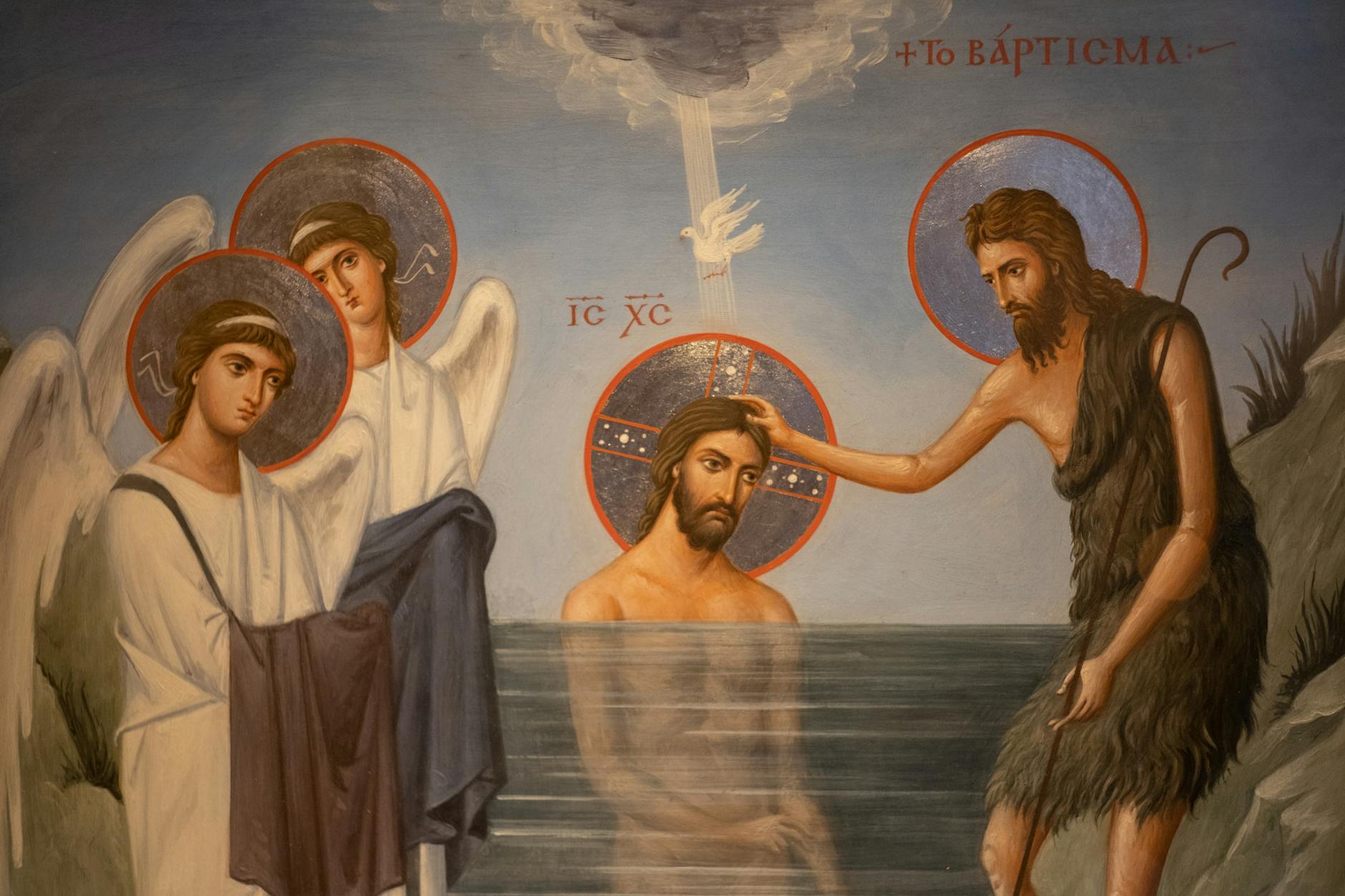

Photo by Photography Maghradze PH on Pexels.com

“Precious in God’s Sight”

Sabbath Day Thoughts — Isaiah 43:1-7

Curt lost his job on the assembly line, not long before the pandemic.  His employer made a big investment in new technology, and Curt’s work went robotic.  He found a new job, no problem, but it pays less, and the benefits aren’t as good.  Curt has a good ten years until retirement, so he now has a second part-time job to help with bills.  Curt always saw himself as a company man, but now he’s not sure who he is.

Monica was recently diagnosed with breast cancer.  She’s a busy single parent with a full-time job and kids in middle school.  She has surgery ahead, followed by chemo and radiation.  Thankfully, her aging parents are on-hand to help out.  Monica puts on a brave face, but when she is alone, she is filled with fear and doubt.  Some days, it’s overwhelming.

George and Katherine met in their senior year of high school.  George says it was love at first sight.  Katherine said he wore her down.  They married when they were only twenty.  Over the years, they dreamed about one day being snowbirds, buying a little retirement place in Florida or Arizona.  But then Katherine got COVID, early in the pandemic.  George couldn’t even be with her when she died.  Now George feels like his dreams died along with Katherine.  The future feels uncertain, lonely, and scary.

We all have times when life serves up a double-helping of unwanted change, crisis, or tragedy.  The proverbial rug is pulled out from under our feet.  We wonder who we are now, how we will cope, and what the future will bring.  We grieve and lament.  We question and worry.  We fear and doubt.  We wrestle with big existential questions.  We wonder, “Where are you God?”  “Don’t you love me?”  “How can I possibly go on?”

The people of Israel were well-versed in unwanted change, crisis, and tragedy.  They were a conquered nation, living in exile in Babylon.  They had seen the defeat of their army.  They had watched as their city walls were breached.  They had witnessed their fields and homes being burned.  They had watched helplessly as their Temple was destroyed.  They had endured the countless unspeakable tragedies that always accompany war, the things that no one wants to talk about or remember.

Cut off from the land that they had loved, exiled from a way of life that had brought them meaning and purpose, mourning untold death and destruction, the Israelites asked themselves big questions.  Who are we? How can we cope? Do we have a future?  Beneath those big questions were sacred and existential queries that kept them up at night, questions that we know well.  Where is God? Does God love us? Can we be redeemed?

Our reading from the Prophet Isaiah allows us to listen in on a holy and intimate conversation.  God almighty speaks to the people of Israel.  God speaks to those exiles who feel they are going down for the third time amid a raging flood, who fear they are being consumed by unquenchable fires.  God speaks words of promise and consolation, saying “I have redeemed you.  I know you.  You are mine.  I will be with you.  You are precious in my sight.”  Those holy promises must have sounded to the exiles like water in the desert, a lifeline amid the raging seas, a healing balm for the gaping wounds of hardship and loss. 

Scripture tells us that God kept those promises.  God raised up King Cyrus of Persia.  His armies toppled mighty Babylon.  Then, Cyrus did the unthinkable.  He set the people of Israel free and gave them the resources to go home and rebuild.  From the north and the south, from the east and the west, God called the people home to the land that they loved.  They endured 500 miles of desert heat.  They forded the waters of the Jordan.  They returned.  Ruined homes were rebuilt.  Fields choked with weeds and brambles were cleared.  Neglected orchards were pruned and became fruitful.  City walls rose again.

It wasn’t easy.  It took time.  It was hard work.  But the people knew who they were and whose they were.  They were precious and beloved children of the one true God.  They found hope in the promises.  They trusted that God was with them in all their hardship and heartache.  One day, the people gathered to worship in the shadow of a new Temple and wept with gratitude and humility for all that God had done for them.

On Baptism of the Lord Sunday, we remember the promises of God.  We remember the promises made long ago to those lonely and hurting exiles.  We remember the promises of Jesus’ baptism.  As our Lord emerged from the Rover Jordan, a voice from the heavens thundered, “This is my Beloved Son.  I find in him my delight.” 

Today we trust that those promises belong to us.  The promises belong to those who were sprinkled as infants in the care of parents and congregation.  The promises belong to those baptized as adolescents, who claimed Jesus as our Lord and savior as we were confirmed.  The promises belong to those who came later to the fount of every blessing, who came to faith as adults and laid claim to their belonging and redemption.  The promises belong to each of us.

If we listen with the ear of our heart, today our biggest questions find an answer.   God says, “I have redeemed you.  I know you.  You are mine.  I love you.  You are precious in my sight.”  God’s promises are for us, my friends.  Can you hear it?

When we live with the assurance that we are welcomed, loved, and will never be alone, we find the wherewithal to stand amid the flood and come through the fiery trial.  It isn’t easy.  It doesn’t feel good.  It takes time.  It’s hard work.  Somehow, like Curt, we are able to endure hard times at work.  Like Monica, we find strength for those challenges to our health.  Like George, we discover comfort in the midst of grief and unspeakable loss.  We trust that there is redemption for us, even when we are exiled and cut off from our better selves.

We return today to the waters where it all began.  We lay claim to those holy promises, and we find what is needed.  We remember who we are and to whom we belong.  Amid our worry and big questions, despite our fear and uncertainty, through the grief and anguish, hope is found and a way is made.  We are precious in God’s sight, beloved sons and daughters of an infinite and intimate God. 

Resources:

W. Carter Lester. “Pastoral Perspective on Isaiah 43:1-7” in Feasting on the Word, year C, vol. 1. Louisville: Westminster John Knox Press, 2009.

Kathleen M. O’Connor. “Exegetical Perspective on Isaiah 43:1-7” in Feasting on the Word, year C, vol. 1. Louisville: Westminster John Knox Press, 2009.

Valerie Bridgeman Davis. “Homiletical Perspective on Isaiah 43:1-7” in Feasting on the Word, year C, vol. 1. Louisville: Westminster John Knox Press, 2009.

PCUSA Office of Theology and Worship. “Baptism of the Lord” in Book of Common Worship. Louisville: Westminster John Knox Press, 2018.


Isaiah 43:1-7

But now thus says the Lord,
    he who created you, O Jacob,
    he who formed you, O Israel:
Do not fear, for I have redeemed you;
    I have called you by name, you are mine.
When you pass through the waters, I will be with you;
    and through the rivers, they shall not overwhelm you;
when you walk through fire you shall not be burned,
    and the flame shall not consume you.
For I am the Lord your God,
    the Holy One of Israel, your Savior.
I give Egypt as your ransom,
    Ethiopia and Seba in exchange for you.
Because you are precious in my sight,
    and honored, and I love you,
I give people in return for you,
    nations in exchange for your life.
Do not fear, for I am with you;
    I will bring your offspring from the east,
    and from the west I will gather you;
I will say to the north, “Give them up,”
    and to the south, “Do not withhold;
bring my sons from far away
    and my daughters from the end of the earth—
everyone who is called by my name,
    whom I created for my glory,
    whom I formed and made.”


Photo by sane sravan on Pexels.com