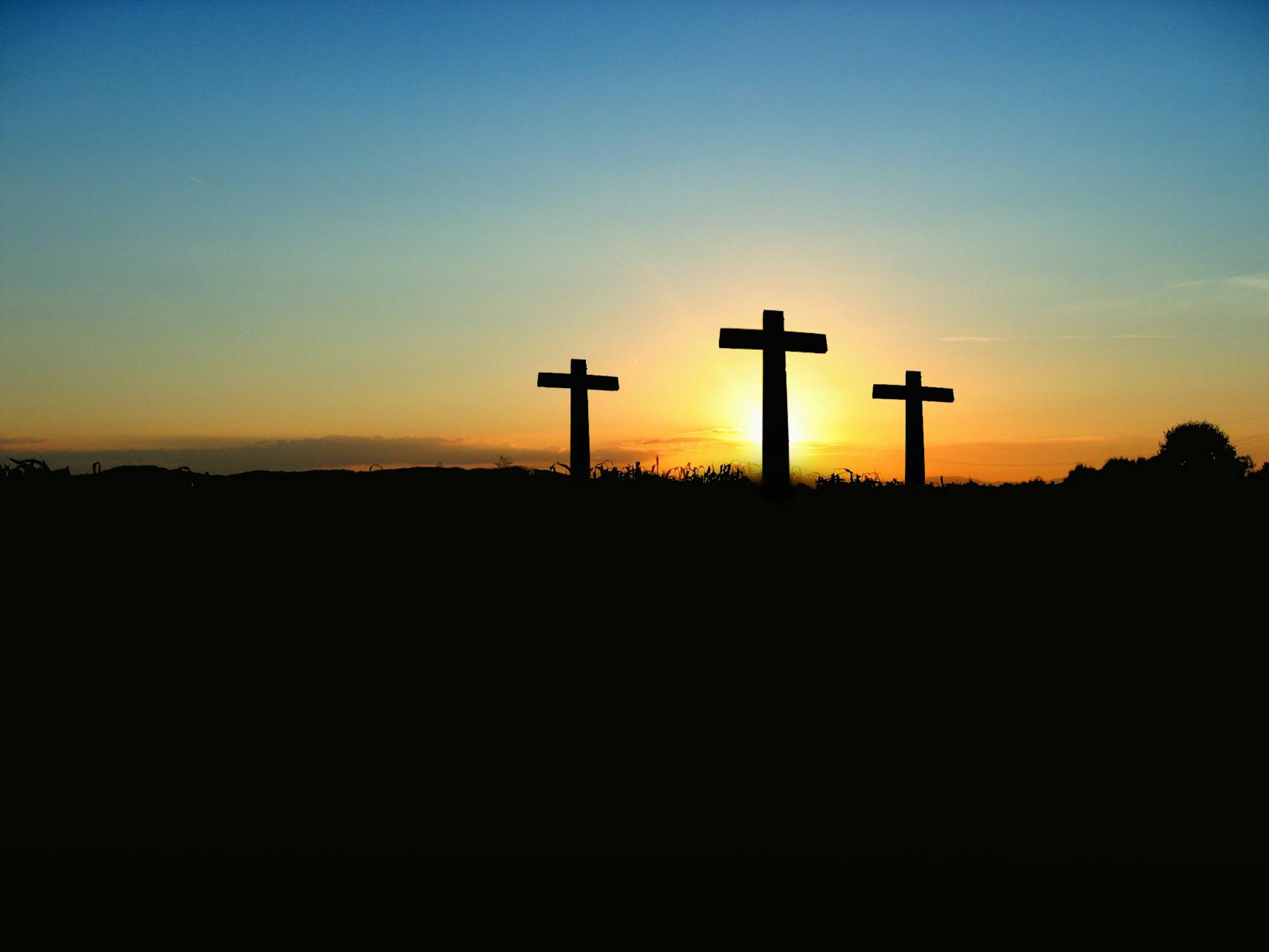
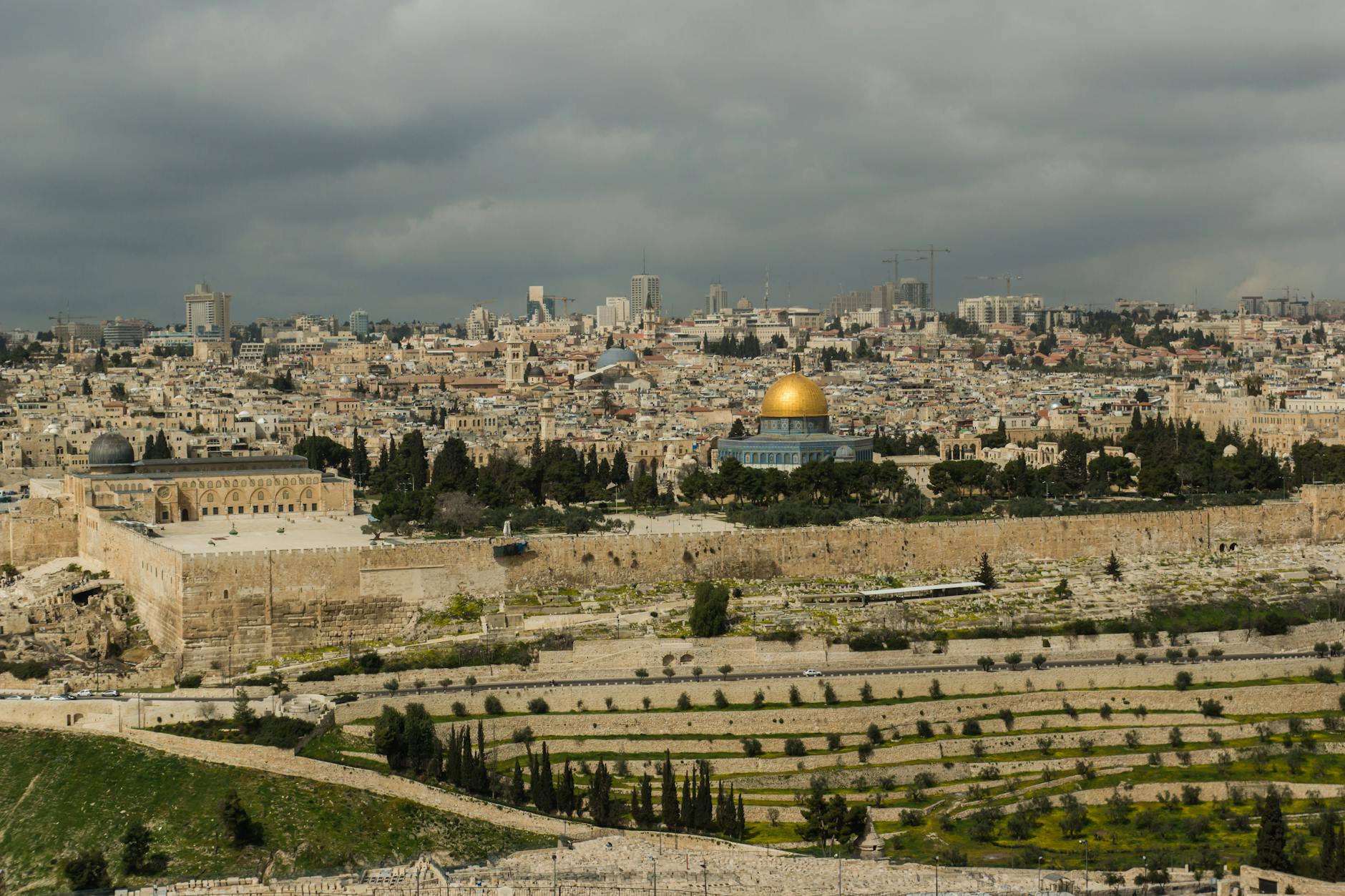
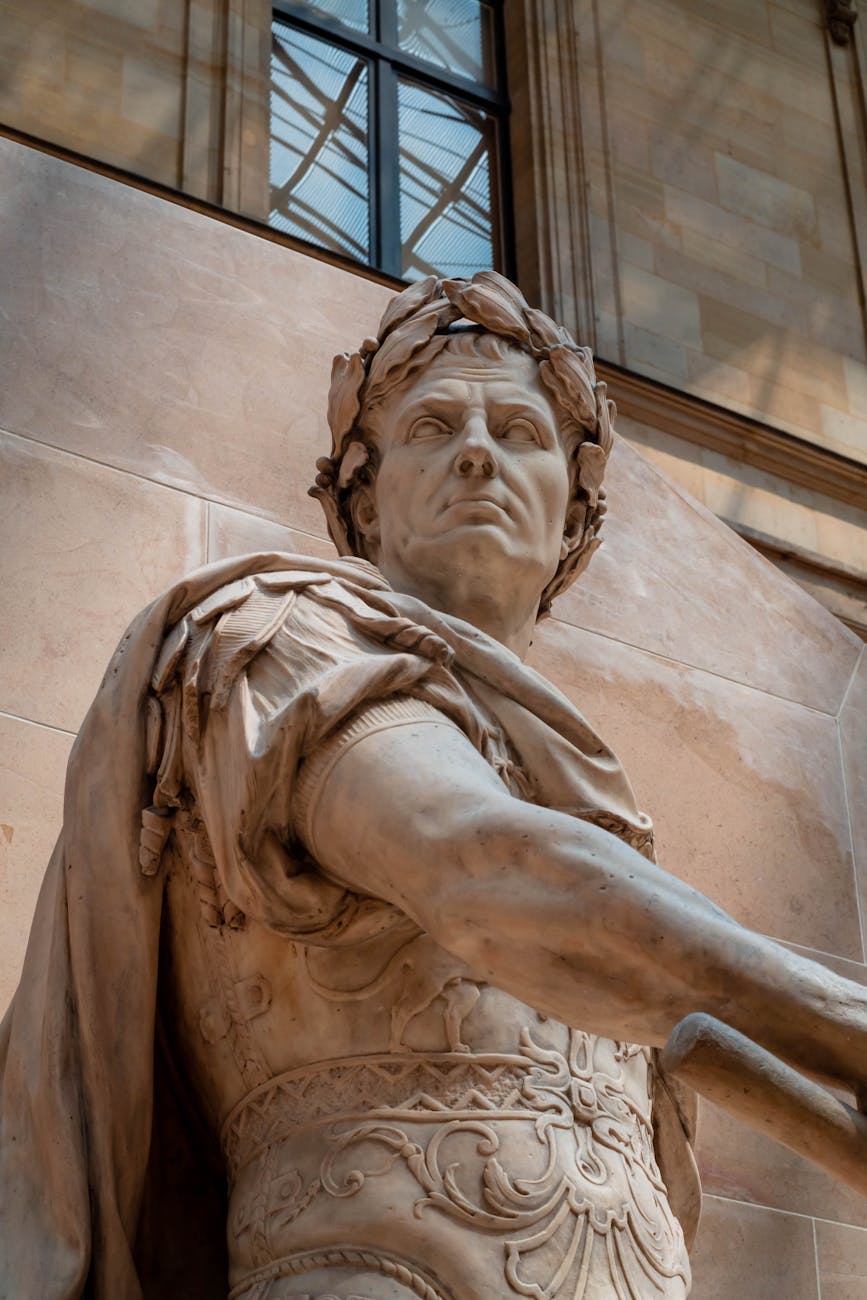
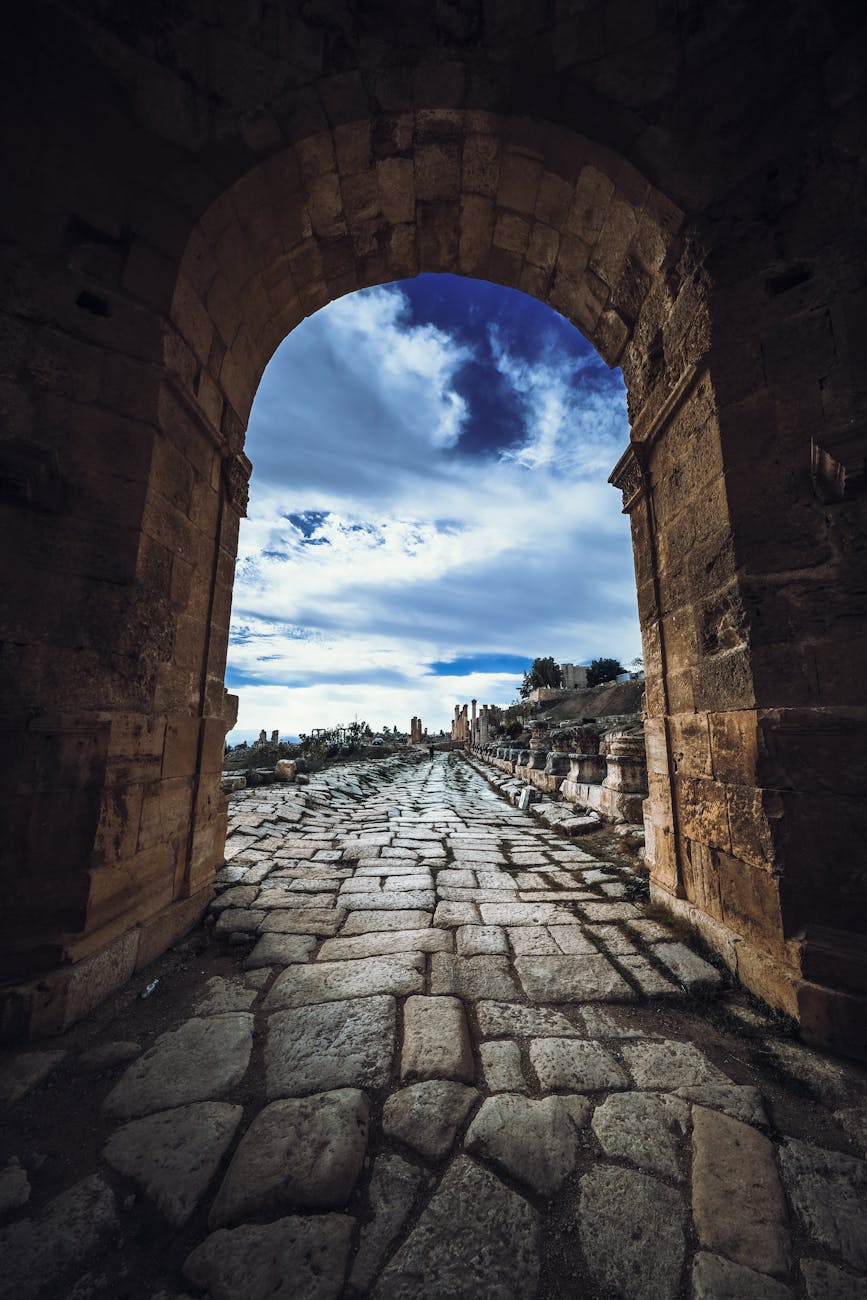
Come and See

Sabbath Day Thoughts — “Come and See” John 1:35-42

Let me tell you a story.

The news swam up the river, all the way from Bethany beyond the Jordan. A prophet came, striding out of the wilderness, his beard grown long, his hair a tangle of knots. His eyes burned and his voice boomed above the muddy waters. He stood knee deep in the Jordan with mixed hope and judgment. The Messiah was coming he promised, with fire and the Holy Spirit. And the urgency of his voice and the conviction of his message had us dreaming of change, of a world free of the Romans and Herod and tax collectors.

So, we, like almost everyone who cared about such things in those days, went to hear him. We paid the hired men to run our boats. We kissed our wives and walked out of the green Galilee and down into the red and brown hills of the wilderness, where the Jordan narrows to a silvery sliver bordered by reeds, north of the Salt Sea. We were baptized by John, and we lingered, listening day after day to his words, so sharp and bold.

When he arrived, we thought he didn’t look like a Messiah, at least no Messiah that we had ever imagined. John embraced him like a kinsman, and the two talked with heads close together, like brothers or children sharing a secret or revolutionaries. As he turned to leave, John said to us, “Behold the lamb of God!” We looked with the greatest of doubts from John to this stranger, who even now was vanishing into the crowd. Then, John nodded at us and shooed us away with a wave of his hand, as if to say, “What are you waiting for?” We looked at one another and shrugged. It couldn’t hurt to look.

We followed at a distance. We noticed that he looked a lot like one of us. He had the strong shoulders of a worker. He wore homespun linen. His face was tanned by the sun. His forearms rippled with muscles that spoke of long years of work, perhaps in a quarry or as a builder. When we edged closer, we could hear that he was humming a folksong.

Beyond the crowd that pressed in around John on the banks of the Jordan, a woman stopped him. She held a listless infant in her arms. Its head lolled. Its eyes were rolling and half-opened. Its face had an unnatural paleness. “Rabbi, Rabbi!” She haled him with a quavering voice. She held her infant out to him like a rag doll. He stopped and took the child, cradling it against his chest. He bounced and swayed from side to side, as a mother soothing a colicky infant would, and he bent his head to whisper into the little one’s ear. Then, he handed the child back and continued his walk.

As we followed him, we heard a disturbance behind us. It was the mother. “Healed” she called out. “My baby is healed.” We turned to see her holding out her child and wondered if it was, in fact, the same baby. Now, its eyes were bright and neck was strong. Within its swaddling clothes, little legs were kicking, as if the infant, too, wanted to join us in following the rabbi.

When we turned back to follow, the rabbi was right behind us. We jumped in alarm, feeling like we had been caught. He looked us over with an appraising gaze, taking our measure, and asked, “What are you looking for?”

What were we looking for? Certainly, we were looking for the Messiah, but these are not words to be lightly spoken; these are words that can make you enemies; these are words that can land you in jail or on a cross. “Rabbi,” we deflected with reddened faces, “Where are you staying?” After all, getting a good look at his shul and his people might be a good idea. He smiled and waved us to walk with him, “Come and see.”

It was a walk. On the way, sitting in the shade of the well where the herdsmen come at daybreak and sunset to water their sheep and goats, we saw an old man. He was a shepherd, long past his prime. His face was as leathery and wrinkled as a Medjul date. His eyes had gone milky-blind from a lifetime spent squinting in the wilderness sun. Lying at his side was a sheepdog, almost as weathered and decrepit-looking as his master. The man’s head swung around in our direction at the sound of our footsteps, and he called out a greeting, “Shalom.”

The rabbi squatted down in the dust next to the man. He listened with kindness to a sad story of aging eyes, lost ability, and long days spent in the shadow of the well until the flocks returned, now guided by much younger men. As the shepherd spoke, this rabbi scrabbled his fingers in the dirt, scooping up the dust. Next, he spat into his hand, more than once, and stirred with his index finger to make a fine paste. “Here, brother,” he said to the man, pressing the paste over his blind eyes and tipping his wrinkled face to the sun. “When it dries,” the rabbi said, “Wash.”

My friend and I looked at one another as if this were the craziest thing we had ever heard, but this rabbi was already striding away from the well. We followed, questioning our every step, but when we were a hundred yards off, we heard the dog barking. We turned and shielded our eyes against the sun. There at the well, the dog was capering like a puppy and the old blind man was shaking the water and mud from his eyes. He looked up and around and began to shout, “Alleluia! Alleluia! I, I can see!” We shook our heads and hustled after the rabbi.

What can we say about where the rabbi was staying? It did not have a scriptorium and ritual baths like the Essenes. It didn’t even have the stone columns and cool interior of a synagogue. Honestly, it really wasn’t even a shul. It was a house, a Beth Ab, the sprawling compound of an extended family of peasants, built around a central courtyard. A shout of welcome summoned the entire household. They surrounded the rabbi, greeting him with kisses and hugs that spoke of great love. As he took a seat in the shade beneath a canopy of palm fronds, we were offered dippers of cool water and fresh bread slathered with yogurt cheese and honey.

A young boy in tears stood before the rabbi and extended his cupped hands. There lay a sparrow, its soft and still cloud of feathers spoke of death. The rabbi took the bird into his hands, held it to his mouth, and puffed the smallest of breaths. When he opened his hands, the bird flew off. This was greeted with gasps of surprise and peals of laughter.

What can I say about his teaching? He didn’t unroll scrolls of the Torah and drone on, like the scribes. He didn’t cite the traditions of the elders, like the Pharisees. He didn’t hold forth, like our old rabbi back in Capernaum. He didn’t address only the men. Women and children, too, gathered at his feet and waited for his words. He told stories, plucking from the world around us holy truths. The birds of the air became a sign of our great worth in God’s sight. A wedding feast became the heavenly kingdom. Seed sown by a farmer reminded us that our ability to hear God’s word is always up to us. My mind came alive and a fire burned in my heart. I wanted him to never stop speaking because every word was somehow drawing me deeper into the mystery of God.

The sun was arcing toward the west when he stood and stretched. The women went off to check their cookpots. The men watered and milked their flocks. The children began to play hide and seek. Our new rabbi looked at us from across the courtyard. He scanned the sky and sniffed the wind, apprising the weather. “Tomorrow, we go north,” he called, “I hear there is a wedding in Cana.” He waved us off, as if knowing that we would soon be back.

As we left the compound, my friend and I looked at one another. His eyes were bright and his cheeks were flushed with the same fire that flamed within me. We did not say it, but we shared one thought. At last, he had come. This was God’s Messiah. If we hurried, we could return to the Jordan, tell our friends, pack our gear, and be back by sunrise. We hiked up our robes and ran with the sun at our backs and our shadows racing before us.


John 1:35-42

35 The next day John again was standing with two of his disciples, 36 and as he watched Jesus walk by he exclaimed, “Look, here is the Lamb of God!” 37 The two disciples heard him say this, and they followed Jesus. 38 When Jesus turned and saw them following, he said to them, “What are you looking for?” They said to him, “Rabbi” (which translated means Teacher), “where are you staying?” 39 He said to them, “Come and see.” They came and saw where he was staying, and they remained with him that day. It was about four o’clock in the afternoon. 40 One of the two who heard John speak and followed him was Andrew, Simon Peter’s brother. 41 He first found his brother Simon and said to him, “We have found the Messiah” (which is translated Anointed). 42 He brought Simon to Jesus, who looked at him and said, “You are Simon son of John. You are to be called Cephas” (which is translated Peter).


Photo by Francesco Ungaro on Pexels.com

Be Loved

Sabbath Day Thoughts — “Be Loved” Matthew 3:13-17

Baptism of the Lord Sunday often gets ministers thinking about baptisms they have been involved with over the years. One of my most memorable baptisms was during the height of the pandemic. A local neighbor, who was often down on his luck and suffered from serious mental illness, stopped by my office regularly for pastoral care or help from the deacons’ fund. I’ll call him Fred (not his real name). As the COVID lockdown ground on and Fred became increasingly isolated, he asked if I would baptize him.

In our tradition, baptism is typically done in the midst of Sunday worship with the pastor, the person being baptized, and the whole congregation participating in the rite. Could we baptize when we couldn’t even gather for worship? Could I welcome Fred into a congregation that had never met him face-to-face or contended with his odd behaviors? I also suspected that Fred had been baptized before and, for church purposes, he didn’t need any further sprinkling. Yet I also recognized that Fred’s baptismal request was about more than a sacramental action.

I said, “Yes,” and the session approved. We livestreamed the service so that anyone who wished could join us virtually. There were only 4 of us in the Great Hall of the church for the baptism: me, Fred, Duane, and one of Fred’s friends, who responded to every element of the brief baptismal service with loud choruses of “Praise the Lord!” and “Thank you, Jesus!” and “Hallelujah!” It was memorable. Perhaps more than any other baptism, I was keenly aware that this baptism was about love. Fred, who struggled and suffered so profoundly with mental illness, needed to know that God loved him.

In our gospel lesson today, we heard the voice of God, thundering from the heavens as Jesus emerged from the waters of his baptism. God said, “This is my Son, the Beloved, with whom I am well pleased.” We’ve heard this story so often that we never stop to think that as Jesus emerged from the muddy Jordan, he hadn’t even begun his ministry. He hadn’t preached a single sermon. He hadn’t cleansed any lepers or healed any paralytics. He hadn’t cast out any demons or restored sight to blind eyes. He hadn’t changed the water to wine or multiplied the loaves and the fish. All those praiseworthy actions were yet to unfold. 

In the eyes of the world, Jesus hadn’t done a darn thing to deserve God’s love. He was just a poor, pious carpenter from a backwater town in Galilee. But Jesus didn’t have to do a single thing to earn God’s love. God’s love was simply there, in abundance, sailing down from the heavens, thundering over the waters. As the newly baptized Jesus basked in that holy love, he was filled with love. He longed for his neighbors to know their belovedness and to live as God’s beloved people.

The love that God pronounced over Jesus in his baptism became the driving force of his ministry. Rabbi Jesus taught that faithful living is really all about love, saying, “Love the Lord your God with all your heart, mind, soul, and strength; and love your neighbor as yourself.”  Jesus instructed his disciples that they must love one another as he had loved them. Jesus reached out to the world with God’s love, his every act a miracle of love: healing the sick, forgiving the sinner, welcoming outcasts, teaching women, blessing children, speaking tough truth to power, and raising the dead to new life. Jesus poured himself out in love.

Indeed, the beloved son gave his life, so that we might know that we are all God’s beloved children. We don’t have to do a darn thing to earn God’s love. It’s simply there for us, in abundance, sailing down from the heavens, thundering over the waters of our own baptisms, living and breathing in Jesus Christ.

Many of us go through life out of touch with our belovedness. At times, it is because we are not loved very well by others. We grow up in families where love is conditional. It all depends on how attractive we are, how neat we keep our room, how good our report card is, or how well we perform on the athletic field. Sometimes we have personal experiences where our love and trust are ill-used. Those entrusted with our care abuse us. The one to whom we gave our heart breaks it. The friend who held our confidence betrays it. At other times, we forget our belovedness because we live in a society where the measure of our worth isn’t determined by how God sees us, but by the size of our paycheck, the car we drive, the title we bear, the color of our skin, our gender, or our convictions. And then there are the times when we lose our sense of being beloved because we haven’t been very loving.  We’ve hurt others; we’ve committed sins; we’ve rejected God’s love. Life and personal experience wear us down, leaving us alienated and estranged, forgetful that we are beloved. We fail to realize that God’s love is simply there for us, always there for us. God whispers to each of us, “You are my beloved child. With you I am well pleased.”

The late Henri Nouwen spent much of his life as an educator, teaching at Notre Dame, Yale, and Harvard, but Nouwen eventually left his vocation as an educator to share his life with people who lived with intellectual and physical disabilities at the L’Arche Daybreak Community in Toronto. In his book The Life of the Beloved, Nouwen described his encounter with Janet, a developmentally disabled woman who struggled to know her belovedness. One day, Janet came to Nouwen, saying, “Henri, can you bless me?” He responded by making a little cross on her forehead. She said, “Henri, it doesn’t work. No, that is not what I mean.” Embarrassed, Nouwen said, “I gave you a blessing.” She said, “No, I want to be blessed.” Nouwen kept thinking, “What does she mean?”

They had a little worship service at the Daybreak Community. All the residents were gathered there. After the service Henri told his little congregation, “Janet wants a blessing.” He was wearing his alb, a white robe with long sleeves, and Janet came forward and said, “I want to be blessed.” Janet put her head against Henri’s chest, and he spontaneously put his arms around her and held her. Looking right into Janet’s eyes, Henri said, “Blessed are you, Janet. You know how much we love you. You know how important you are. You know what a good woman you are.”  Janet looked back and said, “Yes, yes, yes, I know,” and suddenly all sorts of energy seemed to return to her as feelings of alienation and sadness left her. She realized that she was beloved and blessed.

When Janet went back to her seat, others said, “I want that kind of blessing, too.”  The residents, one by one, came to Father Nouwen and he embraced and blessed them. John, a big, burly, able-bodied staff member said, “Henri, can I have a blessing, too?” Nouwen put his hands on John’s shoulders and said, “John, you are blessed. You are a good person. God loves you. We love you. You are important.”

Henri Nouwen learned from his neighbors at L’Arche that we all need to be loved. We all need to be assured of our belovedness. As followers of Christ, we are called to remind others that they are precious and beloved. We share God’s love with one another, and that holy love becomes the driving force of our life’s ministry. We become a blessing for our families, our church, and our community. The love of God that surrounds us in our baptisms is meant to move through us. Our every act can become a small miracle of love that brings healing, welcome, forgiveness, good news, and new life to our broken world.

My buddy Fred, whom I baptized in that unorthodox-pandemic-livestreamed sacrament, seemed happier and more at peace after his baptism. Aware of his isolation, I would pick up Chinese food from time to time and walk up to Fred’s apartment for lunch with him. We talked a lot about Jesus and what it means to be loved and how hard it is to live with mental illness. About a year after his baptism, Fred suffered a grand mal seizure and died alone in his apartment. I am confident that he knew that he was loved and that he was welcomed home with the words, “You are my beloved Son.”

My friends, we are beloved, and we don’t have to do a darn thing to earn that love.  God’s love is simply there for us, a holy blessing that surrounds us, sailing down from the heavens, thundering in the waters of our baptism, echoed in the voice of the beloved community.  May we go forth in love to be a blessing to others.

Resources:

Eric Barreto. “Commentary on Matthew 3:13-17” in Preaching This Week, Jan. 9, 2011. Accessed online at https://www.workingpreacher.org/commentaries/revised-common-lectionary/baptism-of-our-lord/commentary-on-matthew-313-17-7

Diane Chen. “Commentary on Matthew 3:13-17” in Preaching This Week, Jan. 8, 2023. Accessed online at https://www.workingpreacher.org/commentaries/revised-common-lectionary/baptism-of-our-lord/commentary-on-matthew-313-17-6

Kari Alldredge. “Commentary on Matthew 3:13-17” in Preaching This Week, Jan. 11, 2026. Accessed online at https://www.workingpreacher.org/commentaries/revised-common-lectionary/baptism-of-our-lord/commentary-on-matthew-313-17-7

Henri Nouwen. The Life of the Beloved. Crossroad Publishing Company, 1992.


Matthew 3:13-17

13 Then Jesus came from Galilee to John at the Jordan, to be baptized by him. 14 John would have prevented him, saying, “I need to be baptized by you, and do you come to me?” 15 But Jesus answered him, “Let it be so now, for it is proper for us in this way to fulfill all righteousness.” Then he consented. 16 And when Jesus had been baptized, just as he came up from the water, suddenly the heavens were opened to him and he saw God’s Spirit descending like a dove and alighting on him. 17 And a voice from the heavens said, “This is my Son, the Beloved, with whom I am well pleased.”


Photo by Ron Lach on Pexels.com

Follow the Star

Sabbath Day Thoughts — “Follow the Star” Rev. Dr. Joann White

No characters in the birth story of Jesus have drawn more attention and speculation than the Magi. Conditioned by years of Christmas pageants, carol singing, and Hollywood movies, we can tell you stories about the Wise Ones that are more fantasy than fact. Bible scholars say that there are multiple myths about the Magi that preachers really ought to confront.

Myth buster #1: The Magi weren’t kings. We have long labeled the wise ones as “three kings.” When it’s time for the children’s Christmas play, we swathe our kids in plush fabrics, top them with a gold crown, put a fancy box in their hands, and “Voila!” The three kings ride again. But the title Magi means astrologer. Magi is a word we borrow from Persia, where Magi served as scientists or scholars who advised the royal court. The Magi believed that the movements of the heavens anticipated and revealed actions afoot within earthly principalities. When they saw a curious star rising, they hypothesized that a new king was rising among the Hebrew people. They traveled to Israel to test their hypothesis and act as emissaries from a neighboring nation.

Myth buster #2: The Magi didn’t arrive on Christmas Eve. Every nativity set depicts the wise ones, right behind the shepherds, patiently waiting their turn to give their fabulous gifts. But the Magi probably didn’t even see their portentous star until the birth pangs were well underway. They then conferred with the Persian court, drafted a retinue, organized an overland caravan, and traveled about 1,200 miles to Israel, presumably by camel. Scholars say that eighteen to twenty-four months would have elapsed. The shepherds had long since gone back to their flocks. Mary and Joseph weren’t in a stable; they were in a home. And the baby Jesus was walking and running, climbing and playing with other children, feeding himself and stringing together words, like “More milk.”

Myth buster #3: There probably weren’t three Magi. Matthew’s gospel simply tells us that wise ones from the east came in search of the child born king of the Jews. There could have been two Magi—or two dozen. The presumption that they were three comes from the three gifts: gold, frankincense, and myrrh. The first mention of “three” Magi didn’t appear until the sixth century when a manuscript called the Excerpta Latina Barbari collected popular myths and traditions about the birth of Jesus, even naming the wise ones Caspar, Melchior, and Balthazar. By the 9th century, those names were widely recognized in Europe and found their way into church traditions. By the 14th century, the Magi had back stories: Melchior was an elderly white man from Europe. He brought the gold. Caspar was a young beardless man from Asia. He brought the frankincense. Balthazar was Black from Africa. He carried the myrrh. If you inspect the Magi in our nativity set at the side entrance, you’ll see that 14th century supposition still shaping our perspective today.

If you are like me, it may feel disappointing to learn that the wonderful details that lend our Christmas story texture and pomp may have questionable basis in what really went down. But when we peel back the myths of tradition and look at the story that Matthew actually tells, we find some deeper spiritual truths that can guide us into the New Year and deepen our relationship with the Lord. I’d like to suggest three truths that we learn from the Magi that can supplant those three myths that I just busted. Are we ready?

Truth #1: Jesus calls us to step out in faith. The Magi could have simply noted that star and reported it as a curiosity in their dealings with the royal court. But when the Magi saw the star, they sensed that it was a must-see phenomenon. They couldn’t stay put. They stepped out in faith, leaving behind what felt familiar and comfortable. They believed that what had been disclosed to them in the heavens would have deep meaning and significance for their lives.

Wise ones still step out in faith. When God calls through a star or a Sunay morning message, a verse of scripture or a mission project, a book study or a holy conversation, we could write it off, but we don’t. We trust that God has a purpose for our lives, even if we aren’t sure where that will take us. We find ourselves trying new things and getting uncomfortable. We draw closer to the Lord and to those who are with us on the journey.

Truth #2: The faith journey takes time, persistence, and intention. I have ridden a camel twice. I can tell you that camels are big, smelly, have a mind of their own, and the ride is not comfortable. I can’t imagine being the Magi, journeying 1,200 miles for months on camelback, stepping out in faith in pursuit of the promise of a star. How fortunate we are that our faith journeys aren’t nearly so rigorous!

Yet, our journeys still demand our time, persistence, and intention. Our lives begin to move to the rhythm of our faith. There is the commitment of weekly worship, daily prayer, and spiritual reading as we deepen our relationship with God. We find ourselves practicing with the choir, feasting on the Word in weekly Bible Study, rolling up our sleeves at Beacon House, or volunteering at the Food Pantry. At some point, our lives become the faith journey, a journey of love for God and one another.

Truth #3: The faith journey will take us to unexpected places and change how we see the world. The Magi didn’t find what they expected. At Herod’s palace in Jerusalem, there was no royal child swathed in silks and surrounded by luxury. It took the guidance of scripture to direct them onward to Bethlehem. There, they found the holy in the ordinary, a peasant child suffused with the presence of God. Matthew tells us that the court astrologers fell to their knees in humility to worship. They left Bethlehem as changed people, seeking another way home.

Our faith will prompt us to do things and go places that we never imagined. It will shift our perspective along the way. Just ask our confirmation kids. They found themselves feeding hungry people, advocating for LGBTQ neighbors, and seeking to boost literacy for children in Malawi. Just ask Jan and Ted, who retired early and began a multi-year effort to care for refugees with Jubilee Partners. Our faith journeys take us to hospital rooms to accompany folks in health crisis and to nursing homes to share the good news of Christmas carols. Our faith takes us to the community garden to grow healthy produce for the food pantry or to a monthly knitting circle where we knit and purl God’s love into prayer shawls and baby blankets. Along the way, we are changed. Like the wise ones, we learn that the welcome of Christ and the love of God are for all people, even Persian astrologers, even us.

The Magi followed a star on their journey. Today we have each been given a star word, which can serve as a guide for the coming year. Our words are meant to lead, inspire, and challenge us. Keep your word someplace special and visible, so that it can be seen throughout the year: on the dining table, the dashboard of your car, your office bulletin board, your bathroom mirror, peaking out of your wallet. Throughout the year, consider how the word is at work in your life—it just might bring you comfort, discomfort, a new spiritual discipline, or a surprising insight.

You can start by asking questions about your star word. How do I feel about my word? How does this word connect to my life? What is one way I can live into my word in the coming week? What scripture, quote, or song might help me focus on my word? How might this word equip me to know Jesus better and grow closer to God? You may not like your word at first. My word for 2026 is obedience. Thanks a lot, Holy Spirit! But I am already finding insight and understanding that has brought that word to relevance and life. Keep me posted on how your word speaks to you.

I’d like to close with a blessing as we remember the Magi and receive our star words. Let us pray. “As stars have guided wise ones for centuries, may our words guide us in the year ahead. By the radiance of our stars and the power of the Holy Spirit, may we live with deeper intention and greater attention. May we find the holy in delightfully unexpected places. May we worship with joy, give with gratitude, and follow the new way home that God will provide” (Iona Dickinson).

Resources

–. “The Names of the Magi: Origin and History” in European Catholics (in English), Jan. 6, 2025. Accessed online at https://catholicus.eu/en/the-names-of-the-magi-origin-and-history/

Iona Dickinson. “Epiphany Preaching: Star Words” in “Worship,” Dec. 4, 2023. Accessed online at https://www.workingpreacher.org/worship/star-words.

Warren Carter. “Commentary on Matthew 2:1-12” in Preaching This Week, Jan. 6, 2026. Accessed online at https://www.workingpreacher.org/commentaries/revised-common-lectionary/epiphany-of-our-lord/commentary-on-matthew-21-12-15

Diane Chen. “Commentary on Matthew 2:1-12” in Preaching This Week, Jan. 6, 2023. Accessed online at https://www.workingpreacher.org/commentaries/revised-common-lectionary/epiphany-of-our-lord/commentary-on-matthew-21-12-12

Audrey West. “Commentary on Matthew 2:1-12” in Preaching This Week, Jan. 6, 2024. Accessed online at https://www.workingpreacher.org/commentaries/revised-common-lectionary/epiphany-of-our-lord/commentary-on-matthew-21-12-13


Matthew 2:1-12

2 In the time of King Herod, after Jesus was born in Bethlehem of Judea, magi[a] from the east came to Jerusalem, 2 asking, “Where is the child who has been born king of the Jews? For we observed his star in the east[b] and have come to pay him homage.” 3 When King Herod heard this, he was frightened, and all Jerusalem with him, 4 and calling together all the chief priests and scribes of the people, he inquired of them where the Messiah[c] was to be born. 5 They told him, “In Bethlehem of Judea, for so it has been written by the prophet:

6 ‘And you, Bethlehem, in the land of Judah,
are by no means least among the rulers of Judah,
for from you shall come a ruler
who is to shepherd[d] my people Israel.’ ”

7 Then Herod secretly called for the magi[e] and learned from them the exact time when the star had appeared. 8 Then he sent them to Bethlehem, saying, “Go and search diligently for the child, and when you have found him, bring me word so that I may also go and pay him homage.” 9 When they had heard the king, they set out, and there, ahead of them, went the star that they had seen in the east,[f] until it stopped over the place where the child was. 10 When they saw that the star had stopped,[g] they were overwhelmed with joy. 11 On entering the house, they saw the child with Mary his mother, and they knelt down and paid him homage. Then, opening their treasure chests, they offered him gifts of gold, frankincense, and myrrh. 12 And having been warned in a dream not to return to Herod, they left for their own country by another road.

Footnotes
2.1 Or astrologers
2.2 Or at its rising
2.4 Or the Christ
2.6 Or rule
2.7 Or astrologers
2.9 Or at its rising
2.10 Gk — saw the star


Photo by Pixabay on Pexels.com

Banjo Cheer

Sabbath Day Thoughts — “Banjo Cheer” by John Douglas

“Banjo Cheer”

by John Douglas

“Banjo Cheer” was written by John Douglas. It first appeared in the December 1911 issue of The Cadenza, a string instrument magazine of the time. This reading was shared by Dr. Joann with accompaniment on the banjo by Duane Keith Gould.

A banjo plays “Come, Thou Long-Expected Jesus.”

Christmas seems to be a good and appropriate time to discourse on banjo cheer, for of all the instruments, the banjo is par-excellence the one most strikingly adapted to moments of comfortable joviality. Happy is he who with the magic light of the open fire shining on his face, and the cracking of nuts sounding in his ears, can nurse his old “‘jo” and draw from its strings the lovely strains of “Come, Thou Long Expected Jesus.”

The banjo falls silent.

Talking about banjo cheer, my biggest experience of it happened some fifteen years ago in Northwest Canada, a few miles above Medicine Hat. As a solitary homesteader with only a horse for company and the nearest neighbor nine miles away, I set out one Christmas eve to visit the homestead of a friend, some good distance across the snow blanketed prairie. My horse, unfortunately, had gone lame, so I was forced to walk to my friend’s home, a decidedly foolish thing to do in the far North West in the dead of winter, with the skies portending snow. I had not traveled more than five miles when the wind began to rise. The thermometer stood, no doubt, at about nine below zero, and it was destined to go lower before the morning.

Soon, snow began to fall, and near my journey’s end, I found myself in as blinding a blizzard as ever struck the land. I felt the piercing cold all the more keenly on account of the storming wind, and I became afraid that I would never see the end of my trip. I staggered blindly forward in what I thought was the right direction, but at the end of an hour I had to acknowledge that I was hopelessly lost.

In the darkness, the raging blizzard, and the stinging cold, I began to feel stupid and tired. I began to long to take a rest that I knew would be dangerous to me when I suddenly ran head-first into what was clearly a straw stack. I was very thankful for this piece of luck, for I could burrow into the stack to windward and thus save my precious life.

The stack might be only fifty yards away from some settler’s cabin, or it might be half a mile away. The straw stacks are left wherever the threshing is done. I knew better than to go wandering in search of something I could not see, and it was not long before I had burrowed into the huge pile of straw—eight feet or more. Sheltered now completely from the wind, I lay and listened to the raging of the storm without. By kicking my feet together and beating my hands vigorously, I managed to keep from actually becoming frozen.

Banjo begins to play softly.

Towards morning, I must have slept. I dreamt I was at home with my old banjo on my knee, and somehow it seemed to be playing itself in a light ethereal tone. Then, I became aware of something pricking my face. It was the straw! I open my eyes and saw that the sun was shining brightly outside the stack, and yes, but no, I must be still dreaming. Was that a real banjo I heard?

Faintly to be sure, but a banjo never-the-less, it must be.

I scrambled out of the stack, and there but a few yards away, stood a sod shanty and a stable. And sure enough, as I stumbled forward through snowdrifts coming faintly to my ears, I heard the dear old melody of “O Come, All Ye Faithful.” It was a banjo, a good old banjo, a real one. Truly this was banjo cheer par excellence.

Banjo plays “O Come, All Ye Faithful.”

Yes, perhaps you can get good cheer out of other mediums, but for banjoists, it is a banjo every time. So saying, we wish everyone a right merry Christmas.


image source: https://www.facebook.com/photo/?fbid=550912380405435&set=a.550912360405437

Unprepared

Sabbath Day Thoughts — “Unprepared” Matthew 3:1-12

It was finals week. An entire semester’s worth of work depended upon some big tests. I was cramming for my exams, making the most of reading week. I felt good about my impending tests. Then, I suddenly realized that there was one exam that I was completely unprepared for. I don’t know how it escaped my attention, but there on my schedule was a course that I had overlooked for an entire semester. I hadn’t gone to class. I didn’t know the professor. I hadn’t read the books. How could I possibly pass that test? Like all college students, I began to panic. What if I stayed awake all night and skimmed the reading? I didn’t own the books! Could I borrow someone’s notes? I didn’t know who was in the class! It did not look good. I was unprepared.

Perhaps you have had that nightmare or something like it. I’m told that many professions are plagued by their version of the school dream. The contractor dreams of an overlooked job that must be done immediately. The caterer has a nightmare about a huge wedding that never made it onto their calendar. The business manager dreams of a surprise audit. I can testify that the pastor’s nightmare entails going to a new church on Sunday morning and discovering that you are expected to preach, and when you look down, you notice that you are naked.

Psychologists tell us that these dreams are typically provoked by unresolved anxiety or feelings of inadequacy. When we are stressed and overwhelmed, our brains work overtime to cope, even in our sleep. We awaken with our hearts pounding, feeling sweaty and gripped with self-critical worry. The experts say we should pay attention to dreams like this. It could be a wake-up call from our subconscious, telling us to attend to a particular issue, make a big decision, or change our course of action.

I bet John the Baptist had school dreams. He was born to prepare the way of the Lord, but the more John tried to live into his calling, the more he noticed that the folks who came out to the Judean Wilderness to hear him preach were totally unprepared. The messiah was coming with his baptism of fire and his winnowing fork in hand! God’s great redemption of humankind was about to unfold! But the people, they were eating, drinking and being merry, as if they had all the time in the world and could not be bothered to do their homework.

Even the piety experts, the Pharisees and Sadducees, were slackers. They may have been savants on the requirements of the Torah, but as far as John was concerned, they were a brood of vipers. They talked a good game about loving the Lord, but their actions spoke louder than words. The righteous deeds that were typically born of a transformed heart—like caring for vulnerable widows and orphans, feeding the hungry, and loving their neighbors—those deeds were nowhere to be seen. Where was the good fruit?! “Repent!” John cried, trying to infect his listeners with enough of his anxiety and urgency to inspire them to turn their lives around.

We aren’t strangers to anxiety in this Christmas season. No other time of the year is so steeped in preparation and timeworn tradition. There’s a lot to do, and we’ve got to get it done before Christmas Day. Our to-do list is as long as our arm: gifts to buy and the tree to decorate, cookies to bake and old family recipes to duplicate, packages to wrap and charitable giving to do, parties to attend and guests to host. Every year, right about this time, we wonder, “How will we ever get it all done?” As I talk about the Christmas juggernaut that is bearing down upon us, arriving in exactly eighteen days, perhaps you are feeling a little infected with John the Baptist’s anxiety, perhaps you are feeling like you just woke up from a bad school dream.

Our seasonal Study Group is reading Advent in Plain Sight by Jill Duffield. In our reading from Thursday, Dr. Duffield recounted attending a small group meeting at church a number of years ago when she was a young adult.  Their pastor asked them what they thought about Advent. The responses focused on the baby Jesus, the infant so tender and mild. Folks were thankful for the incarnation, the breaking of barriers between heaven and earth, the confidence that God is with us—Emmanuel! I’m sure everyone in the group had that good feeling you get when you know the answer to the question that the professor asks in class.

But right about then, the pastor went a little John-the-Baptist on them. He blurted out, “No one ever thinks of the Second Coming!” It’s true. In this Advent season, we look back, remembering and giving thanks for the baby Jesus. But Advent means coming. We are also called to look ahead, to anticipate the ultimate fulfillment of the great redemption that God has begun in Jesus. We are talking about End Times, Judgment Day, the Kingdom of God, the apocalypse. We’re talking about the inevitable fact that each of us, one day, will meet our maker. The ultimate final exam awaits us all—and we don’t have much say about when that will happen. Are our hearts pounding? Are we feeling a little sweaty and gripped with self-critical anxiety? Then John the Baptist and I have achieved our mission.

We are really good at preparing for the baby Jesus, aren’t we? Just look around the church—the purple paraments, the greens, the Advent Wreath, the Christmas tree in the Great Hall. But on the second Sunday of Advent, John the Baptist shows up, like a bad school dream, and he thinks we are unprepared. John wants us to temper our nostalgic looking back with some prophetic looking ahead. He calls us once again to prepare the way of the Lord, to live today as if Jesus were coming tomorrow, to bear fruit worthy of our repentance.

For John the Baptist’s listeners on the banks of the Jordan, all those years ago, preparing the way of the Lord began with a change of heart. They heard the truth of John’s words and knew they could do better. They returned to God, wading into the waters of the Jordan in an outward sign of their inward repentance. I like to think that their watery rite was followed by some fruitful living. They were kinder to their families. They prayed fervently, worshipped ardently, and feasted on God’s word. They lived with a renewed compassion, service, and love for the world around them that can only come from a life lived with God.

On this second Sunday of Advent, we, too, can have a change of heart. We can draw near to God even as God draws near to us. 18 days and counting. We won’t be wading in the Jordan, but amid all our Christmas preparations, I trust that we’ll find the quiet moment today to commit our purpose to God’s purpose. We’ll resolve to love the Lord our God with all our heart, mind, soul, and strength, and we’ll go forth to love our neighbors as ourselves. We’ll bear fruit worthy of that repentance. The basket at the side entrance will fill with cans of corn for the ecumenical holiday boxes for neighbors in need. Our shallow well gifts will provide clean drinking water for many villages in sub-Saharan Africa. We’ll invite a hurting friend to attend the Longest Night Service with us this Wednesday. We’ll set an extra place at the Christmas dinner table for someone who might otherwise be alone. When that final exam comes, we’ll be ready.

Prepare the way of the Lord, my friends, make his paths straight.

Resources:

Adam England. “What Does It Mean When You Dream about Being Back in School?” in Very Well Mind, Oct. 30, 2025. Accessed online at verywellmind.com.

Catherine Sider Hamilton. “Commentary on Matthew 3:1-12” in Preaching This Week, Dec. 7, 2025. Accessed online at https://www.workingpreacher.org/commentaries/revised-common-lectionary/second-sunday-of-advent/commentary-on-matthew-31-12-7

Arland J. Hultgren. “Commentary on Matthew 3:1-12” in Preaching This Week, Dec. 8, 2013. Accessed online at https://www.workingpreacher.org/commentaries/revised-common-lectionary/second-sunday-of-advent/commentary-on-matthew-31-12-3

Stanley Saunders. “Commentary on Matthew 3:1-12” in Preaching This Week, Dec. 9, 2007. Accessed online at https://www.workingpreacher.org/commentaries/revised-common-lectionary/second-sunday-of-advent/commentary-on-matthew-31-12-6

James Boyce. “Commentary on Matthew 3:1-12” in Preaching This Week, Dec. 4, 2022. Accessed online at https://www.workingpreacher.org/commentaries/revised-common-lectionary/second-sunday-of-advent/commentary-on-matthew-31-12-2


Matthew 3:1-12

1 In those days John the Baptist appeared in the wilderness of Judea, proclaiming, “Repent, for the kingdom of heaven has come near.” This is the one of whom the prophet Isaiah spoke when he said,

“The voice of one crying out in the wilderness:
‘Prepare the way of the Lord;
    make his paths straight.’ ”

Now John wore clothing of camel’s hair with a leather belt around his waist, and his food was locusts and wild honey. Then Jerusalem and all Judea and all the region around the Jordan were going out to him, and they were baptized by him in the River Jordan, confessing their sins.

But when he saw many of the Pharisees and Sadducees coming for his baptism, he said to them, “You brood of vipers! Who warned you to flee from the coming wrath? Therefore, bear fruit worthy of repentance, and do not presume to say to yourselves, ‘We have Abraham as our ancestor,’ for I tell you, God is able from these stones to raise up children to Abraham. 10 Even now the ax is lying at the root of the trees; therefore every tree that does not bear good fruit will be cut down and thrown into the fire.

11 “I baptize you with water for repentance, but the one who is coming after me is more powerful than I, and I am not worthy to carry his sandals. He will baptize you with the Holy Spirit and fire. 12 His winnowing fork is in his hand, and he will clear his threshing floor and will gather his wheat into the granary, but the chaff he will burn with unquenchable fire.”


Photo by Tara Winstead on Pexels.com

Come, Let Us Walk in the Light

Sabbath Day Thoughts — “Come, Let Us Walk in the Light” Isaiah 2:1-5

It was a tough Thanksgiving for Sharon and Tim. Family gathered from far and wide. The food was delicious. Laughter sounded around the table. Everyone cheered and jeered in goodhearted rivalry as the Detroit Lions took on the Green Bay Packers. It was a special day. But Sharon and Tim couldn’t help but think about who was not there. Kyle, their oldest son, doesn’t come to Thanksgiving or Christmas or any of those special family gatherings anymore. It started with a rift over Kyle’s decision to quit school and the division seems to grow wider with the years.

For Henry, the best part about the long Thanksgiving weekend is not going to the office. His workplace has become increasingly polarized along the dividing lines of our national political landscape. His MAGA colleagues rejoice in every tweet that emerges from the oval office while the progressives cheer for their champion from across Lake Champlain Bernie Sanders. Henry tries to stay out of it, but he has found that he has few friends. He’d quit, but he needs the paycheck, and good jobs are hard to find, especially in the Adirondacks.

Jen has been thinking about her former best friend Cynthia. Friends since high school, Jen and Cynthia had a Black Friday tradition. They would rise early, take the Northway south, and do their Christmas shopping at the Colonie Center. After crossing everyone off their gift list, they would enjoy an early dinner at the Cheesecake Factory before heading home, the car filled with presents and the Christmas music blaring on the stereo. But when Cynthia married someone whom Jen didn’t like, the two had a falling out that never healed. Jen misses their friendship and Black Friday tradition.

The Thanksgiving holiday makes us aware of the ways that we have been blessed. God has been so good to us. Yet Thanksgiving and the coming Christmas holiday also draw our attention to the painful holes, protracted conflicts, and disappointing absences in our lives. We long for wholeness, for the peace that only Jesus can bring. We long to walk in his light.

The Prophet Isaiah knew that sense of longing. In his decades-long ministry, Isaiah endured the turbulent rule of four kings: Uzziah, Jotham, Ahaz, and Hezekiah.  Judah’s leaders were a selfish and short-sighted lot, more concerned with preserving their personal power than honoring God or protecting the people. They failed to defend the orphan or hear the pleas of widows. They ground the face of the poor into the dust. God expected justice from Judah’s rulers, but saw only bloodshed. Judah’s kings played dangerous games of shifting alliances between the reigning superpowers of their day. First, King Ahaz conspired with the Assyrians to undermine and overthrow his kin in the Northern Kingdom. Then, Hezekiah formed a secret alliance with Egypt. When Hezekiah’s double dealing came to light, the Assyrian armies rolled over Judah. Forty-six fortified cities were destroyed, and Jerusalem was encircled. Hezekiah and his people were imprisoned within a city under siege.

Into this time of suffering and violence, Isaiah shared God’s radically hopeful vision of Jerusalem. Instead of laying siege to Jerusalem, the nations of the world made a holy pilgrimage to the city. The roads thronged with people: rich and poor, young and old, sinners and saints. They walked in worn sandals. They rode opulently saddled camels. They strode with the vigor of youth. They leaned on canes and limped with the creaky joints of age. They carried babies on their hips. They sang songs of peace, “I ain’t gonna study war no more” and “Imagine all the people living life in peace.” Sounds of excitement, laughter, and hope could be heard along the way. Neighbor called to neighbor, “Come, let us go up to Jerusalem! Let us learn from God.”

When they reached the holy city, the people found that it was not ruled by Uzziah, Jotham, Ahaz, or Hezekiah. On the contrary, God was sovereign there, and God was cleaning house, ending years of injustice and oppression, judging between the nations and arbitrating for the people. There was peace and a new beginning for all God’s children. Jerusalem’s center of industry was no longer the privileged elite who built fortunes on the backs of the poor. Now, the most sought-after tradespeople were the blacksmiths. Their forges glowed red-hot, night and day. Their hammers rang out and sparks rose up in fiery showers as they beat the instruments of death into the tools of life. Swords became plowshares, spears became pruning hooks. Tanks turned to combines. AK-47s, Kalashnikovs, and Uzis transformed to hoes, rakes, and cultivators. What a lovely luminous vision held out to people living in dark times! O house of Jacob!  Come, let us walk in the light of the Lord!

As we hear Isaiah’s prophecy, we feel a terrible tension between what is and what could be, between the corruption and political intrigue of ancient Judah and God’s holy hope for Jerusalem. We know, too, the tension of Isaiah’s vision for our own lives and times, the tension between the brokenness of our families, workplaces, and friendships and the ways that God would have us live. Isaiah’s vision is a powerful and enduring invitation to faithful people to be grounded in and directed by God, to choose once and for all to walk in God’s light, to live into God’s good vision for a healed world where differences are overcome by an irresistible, holy love.

This Sunday, as we remember Isaiah’s vision and begin the season of Advent, anticipating the light of Christ that shines in our world’s darkness, we are invited to be agents of Isaiah’s vision of peace and transformation in our own communities and within our own families. This is the really hard part. Change begins here, within our heart of hearts, as we allow God’s love and grace to heal old hurts and turn us to one another with a spirit of forgiveness and forbearance. To walk in the light, we must first allow it to shine within us and transform us. Then, we must be willing to allow that light to shine through us to our neighbors, knowing that we are one and all God’s beloved children. 

There is the famous story of a wise old Rabbi who taught his students by asking them questions.  “How can a person tell when the darkness ends and the day begins?” he asked. After thinking a moment, one student replied, “It is when there is enough light to see an animal in the distance and be able to tell if it is a sheep or a goat.” Another student ventured, “It is when there is enough light to see a tree and tell if it is a fig or an oak tree.” The old Rabbi smiled and gently said, “No. It is when you can look into a man’s face and recognize him as your brother. For if you cannot recognize in another’s face the face of your brother or sister, the darkness has not yet begun to lift, and the light has not yet come.”  Come, let us walk in the light.

On this first Sunday of Advent, perhaps we could follow in Isaiah’s footsteps and cast our own vision of the world that we can make if only we will choose to walk in the light. It will be a world where we love God and we love one another as we love ourselves. It will be a world where we will even dare to love our enemies and pray for those who have persecuted us. It will be a world where we will turn the other cheek, go the extra mile, and forgive as we have been forgiven. The sharp barbs of our personal criticisms will be transformed to words of encouragement and praise. The battle lines of our political landscape will unravel at the table of peace. The sticks of insults hurled and stones of promises broken will fall powerless at the feet of unstoppable love. We will truly see one another as brothers, sisters all.

It’s a world where family rifts will come to an end, and Sharon and Tim will share Thanksgiving dinner with Kyle. It’s a world where toxic politics are set aside in favor of the common good, and Henry will like his job again. It’s a world where friendships endure despite personal differences, and Jen and Cynthia will celebrate the conclusion of their Black Friday shopping over a piece of Godiva Chocolate Cheesecake. It’s a world where we put God at the center of it all, and we learn to live by the words that Jesus taught. Can we dare to dream it?

O house of Jacob!  Come, let us walk in the light of the Lord!

Resources

Corinne Carvalho. “Commentary on Isaiah 2:1-5” in Preaching This Week, Nov. 30, 2025. Accessed online at https://www.workingpreacher.org/commentaries/revised-common-lectionary/first-sunday-of-advent/commentary-on-isaiah-21-5-7

Joel Kemp. “Commentary on Isaiah 2:1-5” in Preaching This Week, Nov. 27, 2022. Accessed online at https://www.workingpreacher.org/commentaries/revised-common-lectionary/first-sunday-of-advent/commentary-on-isaiah-21-5-6

Anathea Portier-Young. “Commentary on Isaiah 2:1-5” in Preaching This Week, Nov. 28, 2010. Accessed online at https://www.workingpreacher.org/commentaries/revised-common-lectionary/first-sunday-of-advent/commentary-on-isaiah-21-5

Fred Gaiser. “Commentary on Isaiah 2:1-5” in Preaching This Week, Dec. 2, 2007. Accessed online at https://www.workingpreacher.org/commentaries/revised-common-lectionary/first-sunday-of-advent/commentary-on-isaiah-21-5-2

The traditional story of the wise rabbi is from Dennis Bratcher “Hope!” www.cresourcei.org


Isaiah 2:1-5

The word that Isaiah son of Amoz saw concerning Judah and Jerusalem.

In days to come
    the mountain of the Lord’s house
shall be established as the highest of the mountains
    and shall be raised above the hills;
all the nations shall stream to it.
    Many peoples shall come and say,
“Come, let us go up to the mountain of the Lord,
    to the house of the God of Jacob,
that he may teach us his ways
    and that we may walk in his paths.”
For out of Zion shall go forth instruction
    and the word of the Lord from Jerusalem.
He shall judge between the nations
    and shall arbitrate for many peoples;
they shall beat their swords into plowshares
    and their spears into pruning hooks;
nation shall not lift up sword against nation;
    neither shall they learn war any more.
O house of Jacob,
    come, let us walk
in the light of the Lord!


Photo by Thilipen Rave Kumar on Pexels.com

Jesus, Remember Us

Sabbath Day Thoughts — “Jesus, Remember Us” Luke 23:33-43

The world has known many kings.

During Jesus’ earthly ministry, the Roman Emperor was Tiberias Julius Caesar Augustus. Born to an ancient Roman noble family, Tiberias rose to power as a military man. Under his leadership, the Roman armies extended the boundaries of the empire north, conquering the Germanic tribes and pushing all the way to the North Sea. Tiberias’s personal life was scandalous, marked by stories of sexual misconduct and excessive drinking. He succeeded his father-in-law Julius Caesar, inheriting a significant portion of the vast imperial treasury, a fortune that he multiplied twenty times over in his 24-year-reign. He held onto power by executing political rivals. Despite his power and riches, Pliny the elder described Tiberias as “the gloomiest of men.”

Herod Antipas was the Roman-appointed king of Galilee and Perea, east of the Jordan. Herod built an impressive capital city on the Sea of Galilee and named it Tiberias after his friend the emperor. In a world where most people lived in tiny two-room dry stone huts, Herod had no fewer than five opulent royal residences from the Roman-style palace at Tiberias to the mountaintop desert fortress of Machaerus, where Herod had John the Baptist imprisoned and beheaded.  In a time when the average daily wage was one denarius, Herod was paid the imperial sum of 1,200,000 denarii-a-year to rule on behalf of the Romans, collect taxes, and ruthlessly keep the peace. Like his mentor Tiberias, Herod’s personal life was marked by lavish parties and excessive drinking, as well as an incestuous marriage to Herodias, who was both his niece and his brother’s wife.

Kings continue to rule around the world. This week, the White House played host to the Saudi Crown Prince Mohammad bin Salman, known to his friends as MBS. The Saudi crown prince is fabulously rich with a fortune estimated at $25 billion dollars, amassed from control of oil resources and a wide net of strategic investments. In a 2017 purge, MBS invited his political rivals to a lavish party at the Riyadh Ritz Carlton, where he arrested them all on charges of corruption. His luxury lifestyle includes a superyacht, the Serene, valued at $500 million and a French palace, the Chateau Louis IV, which rivals Versailles. It’s said that MBS has been an architect of the decade-long War in Yemen, which has left that nation in humanitarian crisis. He is also believed to have ordered the 2018 assassination of Washington Post journalist and Saudi dissident Jamal Khasoggi, who was detained, murdered, and dismembered with a bone saw at the king’s behest.

The watchwords of these earthly kings are power, wealth, and self-interest.

On this final Sunday of the church year, we are asked to ponder Christ the King. The Christ we encounter today has none of the absolute power of Tiberias or the imperial paycheck of Herod. He doesn’t own a superyacht or a French palace. Jesus was betrayed by one of his most trusted companions. His followers abandoned him. He was falsely accused and unjustly condemned of blasphemy and sedition. He was badly beaten and cruelly scourged. The bruised and bloody Jesus was paraded through the streets of the city behind a placard bearing the inscription “King of the Jews,” an example of what happens to those who threaten the authority of Tiberias and Herod. At the place they called The Skull, Jesus was stripped, nailed to a cross, and left to die as soldiers gambled and a crowd looked on. To ensure that Jesus was thoroughly humiliated, his executioners suspended him between two known criminals. And as Jesus hanged there, broken, bleeding, and dying, he was scoffed at, mocked, and derided. Even so, Jesus found the strength and the courage to rise above his pain, and seek a path that his royal contemporaries couldn’t begin to imagine. Jesus prayed for his executioners and persecutors, “Father, forgive them; for they do not know what they are doing.” The first watchword in the court of the crucified king is forgiveness.

Three times the dying Jesus was taunted by those around him. The leaders, who orchestrated his execution, scoffed, ““He saved others; let him save himself.” The soldiers mocked, “If you are the King of the Jews, save yourself!” Even one of the thieves repeatedly derided Jesus, “Are you not the Messiah? Save yourself and us!” But the salvation that Jesus offers our world takes place through the cross and not apart from it. Jesus chooses death on a cross because he would sooner save us than save himself. Jesus dies so that we might live, so that we might see that God would sooner die than be parted from us. The second watchword in the court of the crucified king is self-giving love.

Only one person on Golgotha that fateful day saw who Jesus truly was. Luke doesn’t give the repentant criminal dying on the cross next to Jesus a name, but tradition says that he was called Dismas. Although we don’t have a list of his criminal acts, in the 4th century, John Chrysostom taught that Dismas was a desert bandit, who robbed and killed unwary travelers. In the 5th century, Gregory the Great said that Dismas was both thief and murderer, guilty of killing his brother.  By his own admission, Dismas was no saint. “We have been condemned justly,” he called out to his criminal colleague who derided Jesus, “We are getting what we deserve for our deeds.” The dying Dismas saw his shattered life for what it was and knew that he was fast approaching an awful, irredeemable end. Even as his breath grew ragged and his vision dimmed, Dismas dared to hope that Jesus, this different kind of king, could work a miracle for him. Half prayer, half gallows plea, Dismas asked “Jesus, remember me, when you come into your kingdom.”

The dying king turned to his reprobate neighbor. Even though the selfish, sinful actions of Dismas’ long criminal career were abundantly self-evident, Jesus looked into all the broken bits of Dismas’ life and found the grace to love him and extend God’s mercy. “Truly, I tell you,” Jesus promised, “Today you will be with me in Paradise.”  I imagine that Dismas wept to learn that in Jesus’ kingdom no life is so broken that it cannot be held and healed, loved and redeemed. We are not desert bandits, but there is a little bit of Dismas in each of us. We know the broken bits of our life, the bad choices, the harsh words, the failures to love. In the mercy that Dismas finds, we dare to hope that there is mercy for us. The third watchword in the court of the crucified king is mercy.

The world has known many kings. On this final Sunday of the church year, we are challenged to affirm who our king is. Whose watchwords will we embrace and put into practice? Will we pursue the way of Tiberias, Herod, MBS, and much of the world, prioritizing power, wealth, and our own selfish interest? Or will we take our place in the court of the crucified king? Will we follow Jesus and practice forgiveness, self-giving love, and mercy?

After the death of his son Drusus under mysterious circumstances, Tiberias left Rome and reigned from the Isle of Capri. There he became increasingly depressed and paranoid. When Tiberius’s righthand man Sejanus was caught in a plot to usurp him, Tiberias cleaned house, executing many who were implicated in the scheme. According to Tacitus, “There lay, singly or in heaps, the unnumbered dead, of every age and sex, the illustrious with the obscure. Kinsfolk and friends were not allowed to be near them, to weep over them, or even to gaze on them too long.” Tiberius died in the year 37, at the age of 78. Seneca wrote that the emperor died of natural causes, but rumors flew that he had been poisoned by his successor Caligula, starved, and smothered with a pillow. Tiberias was so loathed by the people that, after his death, mobs filled the streets of Rome yelling, “To the Tiber with Tiberius!”— a fate reserved for criminals were thrown into the river and denied burial or cremation.

Herod Antipas’s hold on power began to slip in the year 36 after an expensive and failed war with the neighboring kingdom of the Nabateans. When his patron Tiberias died and Caligula rose to power, Herod found himself out of favor with the imperial family. Caligula accused Herod of plotting with the Persian King Artibanus to throw off the yoke of the empire. In the summer of the year 39, Herod Antipas was stripped of his title, wealth, and territory. He was exiled to Gaul on the western frontier where he died the same year. The historian Cassius Dio believed that Caligula had him killed.

We don’t know what the future holds for the Crown Prince Mohammad bin Salman. We can trust that if his political rivals or the abject poor of his kingdom or the Yemeni rebels or the Iranians have anything to do with it, it won’t be pretty.

On the third day, the crucified king rose from tomb. God’s love conquered the powers of sin and death. God’s Kingdom overcame the earthly principalities of Herod and Tiberias. Of Jesus’ reign, there shall be no end. He has 2.3 billion followers in the world today. His rule is honored and his name is glorified whenever we go forth to live by his watchwords of forgiveness, self-giving love, and mercy. Jesus, remember us.

Resources

Kendra A. Mohn. “Commentary on Luke 23:33-43” in Preach This Week, Nov. 23, 2025. Accessed online at https://www.workingpreacher.org/commentaries/revised-common-lectionary/christ-the-king-3/commentary-on-luke-2333-43-6

Gilberto Ruiz. “Commentary on Luke 23:33-43” in Preach This Week, Nov. 20, 2016. Accessed online at https://www.workingpreacher.org/commentaries/revised-common-lectionary/christ-the-king-3/commentary-on-luke-2333-43-2

Patrick J. Willson. “Homiletical Perspective on Luke 23:33-43” in Feasting on the Word, Year C, Vol. 4. Westminster John Knox Press, 2013.

Nancy Lynne Westfield. “Pastoral Perspective on Luke 23:33-43” in Feasting on the Word, Year C, Vol. 4. Westminster John Knox Press, 2013.

“Herod Antipas” in The Anchor Bible Dictionary, Vol. 3. New York: Doubleday, 1992.

“Tiberias” in The Anchor Bible Dictionary, Vol. 6. New York: Doubleday, 1992.

“Mohammad bin Salman: royal power, oil, money, and a controversial legacy” in Finance Monthly, https://www.finance-monthly.com/mohammed-bin-salmans-net-worth-2025-royal-power-oil-money-and-a-controversial-legacy/


Luke 23:33-43

33 When they came to the place that is called The Skull, they crucified Jesus there with the criminals, one on his right and one on his left. [[34 Then Jesus said, “Father, forgive them, for they do not know what they are doing.”]] And they cast lots to divide his clothing. 35 And the people stood by watching, but the leaders scoffed at him, saying, “He saved others; let him save himself if he is the Messiah of God, his chosen one!” 36 The soldiers also mocked him, coming up and offering him sour wine 37 and saying, “If you are the King of the Jews, save yourself!” 38 There was also an inscription over him, “This is the King of the Jews.” 39 One of the criminals who were hanged there kept deriding[e] him and saying, “Are you not the Messiah? Save yourself and us!” 40 But the other rebuked him, saying, “Do you not fear God, since you are under the same sentence of condemnation? 41 And we indeed have been condemned justly, for we are getting what we deserve for our deeds, but this man has done nothing wrong.” 42 Then he said, “Jesus, remember me when you come in[g] your kingdom.” 43 He replied, “Truly I tell you, today you will be with me in paradise.”


A Peaceable Kingdom

Sabbath Day Thoughts — “A Peaceable Kingdom” Isaiah 65:17-25

Edward Hicks was a Quaker sign painter born in Pennsylvania in 1780. He is acknowledged as one of America’s greatest folk artists. In 1820, when Edward was forty years old, he painted Isaiah’s vision of “The Peaceable Kingdom.” Against a green landscape and blue skies, a primitive looking infant, swaddled in gauzy cloth, sits between a pointy-horned ox and a lounging lion. The ox and the lion munch on hay. Nearby, a wooly lamb cozies up to a placid wolf. Two goats and a leopard look like best friends. It’s a wistful vision of a new creation, a world where violence has come to an end, where all God’s creatures live in peace, abundance, and safety.

This morning, the world is far from that bucolic vision of the peaceable kingdom. It’s day 1,361 of the war in Ukraine. Fierce fighting is ongoing in Zaporizihia, amid adverse weather conditions. In response to ongoing Russian aggression, Ukraine has targeted drone and missile strikes on key Russian oil facilities to disrupt Russian supply lines and military operations. On Friday night, Russia launched a blistering assault on Ukraine, killing at least six people and injuring 35 as 430 drones and 18 missiles rained down through the night sky. It’s estimated that Russian military casualties in the war have topped 1,000,000 personnel while Ukraine’s deaths and injuries are near 450,000. An estimated 45,000 Ukrainian civilians have been caught in the crossfire, about 3,000 of those children. We long for a peaceable kingdom.

Yemen has been locked in civil war for more than a decade. In September 2014, Houthi forces took control of the capital, Sanaa, following widespread discontent with the Saudi-backed government. A coalition, led by Saudi Arabia, stepped in, using air strikes to try to restore the former Yemeni government. Al Qaeda and ISIS fighters soon saw the conflict as a way to advance their regional ambitions, so they have carried out attacks against both factions. In the shadows, the Iranians pull the strings. Israel has been drawn into the conflict, killing the Yemeni Prime Minister in an August airstrike. In just the first three years of the war, more than 85,000 children died of starvation. A decade of war has left Yemen’s infrastructure in ruins and its people exhausted. Close to 20 million people in Yemen depend on aid simply to survive. Nearly five million are homeless, pushed from one place to another by violence and disaster. We long for a peaceable kingdom.

In our reading from the Prophet Isaiah, we hear God’s promise of a peaceable kingdom. The Israelites had returned to Jerusalem after fifty years of exile in Babylon. They were refugees returning to a homeland that was broken and scarred by war. Ancestral property rights were gone. Vineyards and fields had gone wild. Food was scarce. Disease was rampant. Neighbors, who had not gone into exile, were hostile and suspicious. Roads were unsafe. The Temple was in ruins. In a devastated land that once flowed with milk and honey, the people’s safety and security hung upon the mercy of a foreign king. A foreign-appointed government had replaced the once mighty kingship of David. The lives of the remnant of Israel were so filled with death, grief, hunger, and despair that they began to wonder. Is God with us? Has God forsaken us and sent us home to live as a broken people in a broken land?

Into this time of uncertainty and fear, Isaiah spoke words of prophetic promise, a beautiful vision of a fresh start in a new Jerusalem where weeping will cease and children will thrive. It was a bold vision of long life, good homes, and abundant harvests. It was a faithful promise of abiding love and prayers answered from generation to generation.  It was a holy vision of peace for all creation, of a new Eden where the wolf and the lamb shall feed together, the lion shall eat straw like the ox, and God’s holy mountain will be free of hurt and destruction. God promised the people an everlasting shalom, the peace and wholeness that we find when we are in right relationship with God, neighbor, and even within ourselves.

I imagine that as the people listened, their eyes filled with tears and their hearts with longing. They remembered that God is with them, always with them. They found the courage to persevere and seek the future that God held ready for them. They rolled up their sleeves and worked the fallow fields. They shared what little they had, so that everyone had enough. They gathered at the Temple, worshipped amid the ruins, and dreamed of a new sanctuary. They reached out to their suspicious neighbors with kindness and patience, setting aside their tribalism to work toward a shared future. It wasn’t exactly the peaceable kingdom, but it held the promise of it.

This morning, we may not be caught up in the ground-shaking artillery fire of Zaporizihia, or the mass homelessness and hunger of Yemen, or the despair of Israelite refugees returning to a broken land, but we, too, long for a peaceable kingdom. We mourn the casualties in Ukraine, the devastation of Gaza, and the threat of war with Venezuela. We are grieved by the fracture of longstanding alliances and friendships between nations. We are frightened by the seemingly intractable polarization of our political landscape. We despair over the lack of respect or even common courtesy in our public discourse. In this land of plenty, we are shocked by widespread food insecurity and the millions of neighbors who teeter on the brink of economic crisis. We long for a peaceable kingdom.

As the holidays draw near, we acknowledge that we long for peace closer to home. We want peace for our families; we dream of a holiday table where every place is occupied, every tummy is full, the conversation is merry, and the love abounds. We need God’s peace to find a spirit of tolerance and acceptance, to heal our hardheartedness and unwillingness to accept one another as we are. We long for God’s forgiveness that will be a balm for old wounds and long-held grudges. We pray for God’s courage and grace to name and heal from incidents of abuse. And when we take the time to be quiet, to go deeper, we admit that we need God’s peace in our hearts, so that we may forgive ourselves as we have forgiven others, love without strings attached, and accept what cannot be changed. We long for a peaceable kingdom.

This morning, may we hear anew God’s promise through the Prophet Isaiah of the new heavens and new earth, of the peaceable kingdom where ancient enmities come to an end, where the lion lies down with the lamb. May we remember that God is with us, always with them. We may make a mess of our world, but future is always in God’s hands, and the vision is one of peace.

If we listen with the ears of our hearts, we may even hear God’s vision that peace begins with us. We are not the architects of the peaceable kingdom, but we can be the artists, painting peace with the brushstrokes of lives lived in faith and love. Let’s roll up our sleeves and join God in the work of shalom. We cannot arbitrate ceasefires for Ukraine and Yemen, yet we can pray for their peace. We can demand better and more peaceful ways for those who govern. We can reach out to neighbors with kindness and patience, setting aside tribalism to work toward a shared future. We can share what we have, so that everyone has enough. We can dare to heal our families, reaching out with love, even if our best efforts fall short. Let’s extend to others and to ourselves the grace that has been so freely shared with us in Jesus. It won’t be the peaceable kingdom, but with God’s help our lives may begin to hold the promise of it. Let’s take a moment to commit ourselves to take one action in the coming week that can prosper peace.

The Quaker painter Edward Hicks painted “The Peaceable Kingdom” more than a hundred times in the last twenty years of his life, as if by repeatedly painting the promise of the kingdom he could hasten its coming. Over the years, Hicks’ Bucks County surroundings began to be represented in his paintings. The Delaware River wound through the background. Little girls entered the picture, breaking the gender barrier and joining the Christ child in his peaceful romp with the wild beasts. In the distance, William Penn and his Quaker friends, clad in somber shades of gray and black, passed a peace pipe with Lenni Lenape tribesmen in bright blankets, feathers, and wampum. Hicks painted to cast a prophetic vision of harmony and plenty, an end to violence and bloodshed, a setting aside of oppression for women and people of color. It’s as if Hicks trusted that if he could share Isaiah’s vision in ways that spoke to his world, folks would understand and change would come. It wouldn’t be the peaceable kingdom, but with God’s help there would be the promise of it.

We may not be America’s greatest folk artists, but Isaiah’s vision of the peaceable kingdom still sparks the imagination of God’s people. May we go forth to seek that kingdom with the broad brushstrokes of lives lived in pursuit of peace.

Resources

Carolyn J. Sharp. “Commentary on Isaiah 65:17-25” in Preaching This Week, Nov. 14, 2010. Accessed online at Commentary on Isaiah 65:17-25 – Working Preacher from Luther Seminary

Garrett Galvin. “Commentary on Isaiah 65:17-25” in Preaching This Week, Nov. 14, 2010. Accessed online at Commentary on Isaiah 65:17-25 – Working Preacher from Luther Seminary

John Braostoski. “Hicks’s Peaceable Kingdom,” Friends Journal, February 2000. Hicks’s Peaceable Kingdom – Friends Journal

James C. Reynolds and Steffie Banatvala. “Inside Putin’s campaign of terror in Kyiv: Why Russia keeps bombarding the capital” In The Independent, Nov. 14, 2025. Accessed online at Inside Putin’s campaign of terror in Kyiv: Why Russia keeps bombarding the capital | The Independent

Lyndal Rowlands and News Agencies. “Russia-Ukraine war: List of key events, day 1,357” in Aljazeera, Nove. 12, 2025. Accessed online at Russia-Ukraine war: List of key events, day 1,357 | Russia-Ukraine war News | Al Jazeera

Statista Research Department. “Number of civilian casualties in Ukraine during Russia’s invasion verified by OHCHR from February 24, 2022 to July 31, 2025,” Statista, Sept. 25, 2025. Accessed online at Ukraine civilian war casualties 2025| Statista

Othman Belbeisi. “Yemen: Ten Years of War, a Lifetime of Loss” in UN News, March 26, 2025. Accessed online at Yemen: Ten Years of War, a Lifetime of Loss | UN News


Isaiah 65:17-25

For I am about to create new heavens
    and a new earth;
the former things shall not be remembered
    or come to mind.
18 But be glad and rejoice forever
    in what I am creating,
for I am about to create Jerusalem as a joy
    and its people as a delight.
19 I will rejoice in Jerusalem
    and delight in my people;
no more shall the sound of weeping be heard in it
    or the cry of distress.
20 No more shall there be in it
    an infant who lives but a few days
    or an old person who does not live out a lifetime,
for one who dies at a hundred years will be considered a youth,
    and one who falls short of a hundred will be considered accursed.
21 They shall build houses and inhabit them;
    they shall plant vineyards and eat their fruit.
22 They shall not build and another inhabit;
    they shall not plant and another eat,
for like the days of a tree shall the days of my people be,
    and my chosen shall long enjoy the work of their hands.
23 They shall not labor in vain
    or bear children for calamity,[a]
for they shall be offspring blessed by the Lord—
    and their descendants as well.
24 Before they call I will answer,
    while they are yet speaking I will hear.
25 The wolf and the lamb shall feed together;
    the lion shall eat straw like the ox,
    but the serpent—its food shall be dust!
They shall not hurt or destroy
    on all my holy mountain,
            says the Lord.


“The Peaceable Kingdom” Edward Hicks, 1832. From the collection of the Abby Aldrich Rockefeller Folk Art Center (United States)

Blest Be the Tie — half off!

Are you looking for a Christmas gift for a favorite reader? How about a relevant read for your church’s book group? Do you have a heart for small churches? Wipf and Stock is offering my story collection Blest Be the Tie at half off through November 30. Use the code CONFSHIP when placing your order. Media mail shipping is also free. Such a deal!

Here is a link to the publisher. You can then search for “Joann White” or “Blest Be the Tie.”

Because He Lives

Sabbath Day Thoughts — “Because He Lives” Luke 20:27-38

A very zealous, soul-winning, young preacher came upon a farmer working in his field. Being concerned about the farmer’s soul, the preacher asked, “Are you laboring in the vineyard of the Lord, my good man?”

Continuing his work, not even looking at the preacher, the farmer replied, “Naw, these are soybeans.”

“No, no, no. You don’t understand,” said the young man. “I’m asking are you a Christian?”

With the same amount of interest as his previous answer the farmer said, “Nope my name is Jones. You must be lookin’ for Jim Christian. He lives a mile south of here.”

The determined young preacher tried again, asking the farmer, “Are you lost?”

“Naw! I’ve lived here all my life,” answered the farmer.

Finally, the frustrated preacher threw up his hands, “Are you prepared for the resurrection?”

Now this caught the farmer’s attention, and he asked, “When’s it gonna’ be?”

Thinking he was finally making some headway, the young preacher replied, “It could be today, tomorrow, or the next day.”

The farmer stopped. He took a handkerchief from his back pocket and wiped his brow. “Well, don’t mention it to my wife. She don’t get out much, and she’ll wanna’ go all three days.”

The resurrection is a strange subject for a joke, but that’s exactly what the Sadducees were up to. As they challenged Jesus, he was teaching in the courts of the Temple. Earlier that week, Jesus made a triumphal entry to the city, surrounded by jubilant crowds who were captivated by his dynamic teaching. Jesus cleansed the Temple, turning the tables on money changers and driving out the animal vendors. Then, Jesus settled into a residency on the teaching steps, where his opponents tried their best to discredit him.

The Sadducees were the ruling elite of the temple, having controlled the religious practice of Israel for hundreds of years. The first century Jewish historian Josephus wrote that the Sadducees were filthy rich. They were little-loved by the people, but they preserved their power through wealth and collaboration with the Roman Empire. The Sadducees didn’t like Jesus. They questioned his lowly origins, they feared his appeal to the crowds, and they really didn’t like his disruption of the money changing and animal sales that enriched the Temple’s coffers. They needed to discredit Jesus quickly and embarrass him in front of his adoring crowds.

The question that the Sadducees posed for Rabbi Jesus sounds puzzling and archaic. Unlike Jesus, the Sadducees didn’t believe in the resurrection. They said it wasn’t mentioned in the Torah, thus it couldn’t be part of God’s plan for humanity.  So, the Sadducees turned to the traditional practice of levirate marriage to make a mockery of the very notion of the resurrection. In levirate marriage, a childless widow would be married to her late husband’s brother. The children, who were born of the levirate marriage, were considered the offspring of the late husband. This preserved the husband’s name and the right of inheritance for a future generation. Levirate marriage was also a protection for widows. It stopped the practice of discarding a childless widow, returning her to her father’s house or turning her out into the streets to fend for herself. According to the levirate tradition, the husband’s family must provide for childless widows, ensuring their safety and well-being. The Sadducees’ question imagines a woman who is widowed, time and time again, passed from brother to brother to brother to brother to brother to brother to brother. If there is, indeed a life eternal, the Sadducees ask, whose wife will she be? It’s a bawdy, lewd joke that imagines an infinitely grieving woman passed from brother to brother for all eternity.

Rabbi Jesus dismantled their rude joke in two simple moves. First, he pointed to the practice of levirate marriage. According to Jesus, in the resurrection (in the Kingdom to come), the entire patriarchal structure, which makes the possessing of women as property possible, would be set aside. Girl children won’t be the property of fathers to be traded away in an economic transaction. Women won’t be the sexual property of husbands. Childless widows won’t be at risk for homelessness and exploitation. In God’s Kingdom, our kinship, worth, and life is found in God. We are all God’s children, children of the resurrection, children of a Kingdom where there will no longer be the power of patriarchy. Then, to close his argument, Jesus referenced one of the most foundational stories of the Torah, Moses’ encounter with God at the burning bush. Quoting Exodus 3:6, Jesus noted that God Almighty “is” the God of Abraham, Isaac, and Jacob. God’s relationship with those patriarchs is living and eternal. Indeed, although we are mortal, we find eternal life in our infinite God. It was a microphone-drop-moment. The Sadducees left, bested on their home field. The questions stopped, but the plot to end Jesus’ life found new urgency.

The clash with the Sadducees might have gone undocumented if God hadn’t added a big exclamation point to Jesus’ argument. On Friday of that week, Jesus was arrested by the Temple guards—those minions of the Sadducees. The Chief Priests Annas and Caiaphas, both Sadducees, argued before the Sanhedrin that Jesus was a heretic, and it would be better for one man to die—putting an end to the Messianic rising that followed him—than for the nation to endure the wrath of Rome that was surely coming. We all know what happened next: torture, humiliation, the agony of the cross, and death. On Friday, it felt like the Sadducees had won the argument, after all. But on Sunday, there was a second microphone-drop-moment. God had the last word. God’s resurrection overcame the sin and death of this world. Jesus rose. Because he lives, we trust that we, too, shall live. Thanks be to God.

In light of that Easter morning resurrection miracle, today’s arcane reading from scripture finds deep meaning and powerful relevance for today’s world. It begins with the hope that we find in the resurrection. We choose to love and live in God. And there is nothing in this world that can separate us from the love of God that was made known to us in Jesus. Because God chose to send a son into the world to live and die and rise, we can trust that we are children of the resurrection. Because Jesus lives, we also shall live in that resurrection realm, the Kingdom to come.

Jesus also helps us to see that the Kingdom to come is good news for anyone who has ever been left out, made to feel “less than,” or suffered because of who they are. The sinful practices and oppressive traditions of this world will come to an end and have no place in God’s plans for our future. In the resurrection, there is no place for patriarchy. In the resurrection, there is no place for gender oppression. In the resurrection, there is no place for racial hate. In the resurrection, there is no fear of the foreigner. In the resurrection, there is no poverty or injustice. In the resurrection world to come, we will all be precious, beloved, children of the resurrection. And we will rejoice!

If we accept the promise of the resurrection and the vision that Jesus cast for the Kingdom to come, then today’s reading becomes a call to action. It’s a call to stand against the forces of this world that control, mock, and delight in the suffering of others. It’s a call to live in ways that begin to shape communities that feel like an anticipation of that coming Kingdom. We have hope. We love without limits. We seek justice. We serve our at-risk neighbors.  We follow in the footsteps of the risen Lord.

In 1971, Gloria and Bill Gaither wrote one of the most treasured gospel hymns, “Because He Lives.” The Gaithers were going through tough times. They had left their jobs as public school teachers to become music ministers. But Bill had been sick and depressed. Gloria was expecting their third child. The Vietnam War was underway. Assassination had taken the lives of Martin Luther King and Robert F. Kennedy. Drug abuse was on the rise. Racial injustice persisted. Riots had devastated vulnerable inner-city communities. The world felt chaotic. Gloria Gaither says that she struggled with bringing a third child into a world that felt far from God’s Kingdom. On New Years Eve in the darkness and quiet of their living room, Gloria suddenly felt released from it all as she sensed the reassuring presence of the risen Lord. Fear left. Joy returned. Gloria knew she could have that baby and face the future with trust because Jesus lives, and God can conquer the chaos that touches our days. In response, Gloria wrote the words of what would become the Gospel Song of the Year for 1974.

“Because He lives, I can face tomorrow,

Because He lives, all fear is gone;

Because I know, He holds the future.

And life is worth the living just

Because He lives.”

Gloria’s words and the promise of the resurrection still minister to people everywhere. Live in hope, my friends. Because he lives, we too shall live.


Resources:

David Lose. “Commentary on Luke 20:27-38” in Preaching This Week, Nov. 7, 2010. Accessed online at Commentary on Luke 20:27-38 – Working Preacher from Luther Seminary

Kendra A. Mohn. “Commentary on Luke 20:27-38” in Preaching This Week, Nov. 9, 2025. Accessed online at Commentary on Luke 20:27-38 – Working Preacher from Luther Seminary

Richard Swanson. “Commentary on Luke 20:27-38” in Preaching This Week, Nov. 10, 2013. Accessed online at Commentary on Luke 20:27-38 – Working Preacher from Luther Seminary

Nancy Lynne Westfield. “Pastoral Perspective on Luke 20:27-38” in Feasting on the Word, Year C, vol. 4. Louisville: Westminster John Knox Press, 2020.

Patrick J. Wilson. “Homiletical Perspective on Luke 20:27-38” in Feasting on the Word, Year C, vol. 4. Louisville: Westminster John Knox Press, 2020.

C. Michael Hawn. “History of Hymns: ‘Because He Lives.’” Discipleship Ministries, The United Methodist Church, June 20, 2013. Accessed online at Discipleship Ministries | History of Hymns: “Because He Lives”

Bill and Gloria Gaither. “Because He Lives.” Bing Videos

The opening joke about the resurrection is from Upjoke: Jokes for Every Topic. ↑UPJOKE↑ – Jokes For Every Topic


Luke 20:27-38

27 Some Sadducees, those who say there is no resurrection, came to him 28 and asked him a question: “Teacher, Moses wrote for us that if a man’s brother dies leaving a wife but no children, the man shall marry the widow and raise up children for his brother. 29 Now there were seven brothers; the first married a woman and died childless; 30 then the second 31 and the third married her, and so in the same way all seven died childless. 32 Finally the woman also died. 33 In the resurrection, therefore, whose wife will the woman be? For the seven had married her.”

34 Jesus said to them, “Those who belong to this age marry and are given in marriage, 35 but those who are considered worthy of a place in that age and in the resurrection from the dead neither marry nor are given in marriage. 36 Indeed, they cannot die anymore, because they are like angels and are children of God, being children of the resurrection. 37 And the fact that the dead are raised Moses himself showed, in the story about the bush, where he speaks of the Lord as the God of Abraham, the God of Isaac, and the God of Jacob. 38 Now he is God not of the dead but of the living, for to him all of them are alive.”


Image source: https://medium.com/@kipakcho/jesus-examined-29691938b718