Stronger Than Lions

Sabbath Day Thoughts — “Stronger Than Lions” 2 Sam. 1:1, 17-27

What do you have to say about your enemy?

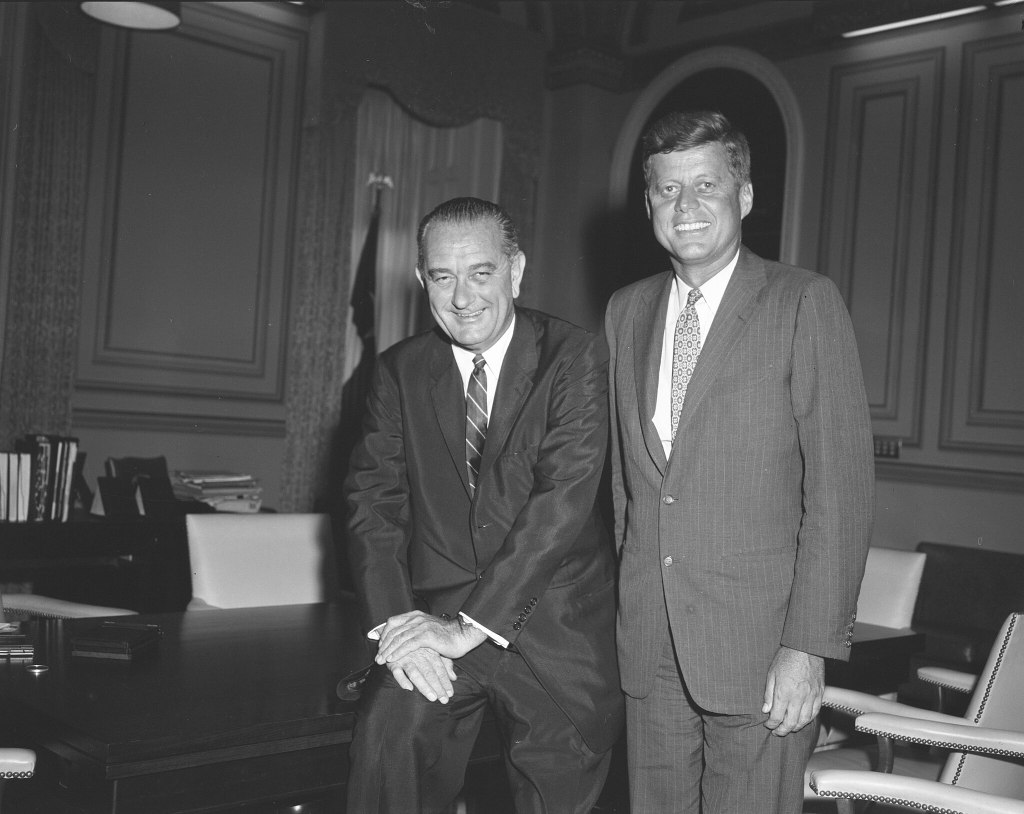
The relationship between President John F. Kennedy and his Vice President Lyndon Johnson was notoriously tense. Kennedy’s liberal supporters were shocked when their candidate announced LBJ would be his running mate. Compared to Kennedy and his crew of Ivy League-educated youngsters, LBJ was an old-school street-brawler, a plain-speaking deal-maker who took calculated risks to push his political agenda. Johnson, generally, got what he wanted, giving anyone who stood in his way what journalists would call “the treatment.” This was a one-on-one verbal offensive that employed “supplication, accusation, cajolery, exuberance, scorn, tears, complaint, and the hint of threat”—sometimes all of these together— to win someone to his cause.

In the White House, Kennedy’s staff were at times openly contemptuous of Johnson, especially the president’s brother, Attorney General Robert F. Kennedy. They made fun of LBJ’s down-home, earthy manner. Congressman Tip O’Neill recalled that the Kennedy brothers “had a disdain for Johnson that they didn’t even try to hide…. They actually took pride in snubbing him.” First Lady Jackie Kennedy would later state that, shortly after winning the White House, her husband and his brother conspired to scuttle Johnson’s political future and keep him out of any future run for the presidency.

For his part, Johnson bridled at being sidelined by the President, who denied his requests for workspace adjacent to the oval office and oversight on national security matters. Johnson saw himself as the far-superior politician, unfairly characterized as an illiterate, rude, crude bumpkin. He got even by telling tales about the Kennedy’s checkered political past, including the evening that he sat in on the phone call that President Franklin Roosevelt made to JFK’s father Joe, firing him from his appointment as Ambassador to the United Kingdom. Later, when President, Johnson would pass a law forbidding the appointment of family members to cabinet level positions, known as the nepotism provision; Johnson called it the “Bobby Kennedy law.” Ouch.

Our scripture reading this morning has David singing the praises of his political rival King Saul. It’s one of the earliest psalms of the Bible and would have originally been set to music and sung with accompaniment, perhaps with the harp or horns or percussion.  David celebrated the skill of Saul and his son Jonathan in battle, remembering how they worked to unite Israel and transform it from a weak tribal confederacy to a national power to be reckoned with.  Until their tragic deaths on Mt. Gilboa, their weapons of war—Saul’s sword and Jonathan’s bow—were ever at work against Israel’s powerful enemies like the Philistines.  David celebrated the prosperity that Saul brought to Israel—the thriving trade that clothed Israel’s women with crimson and decked them out with gold jewelry.  Saul had given everything for his nation, three of his beloved sons and even his life. David wove all that praise together, uniting it with the repeated refrain, “How the mighty have fallen.”

To write those words of praise, David had to rise above his complex relationship with Saul.  David served as Saul’s champion against Goliath; he had been a soldier in Saul’s army.  David had lived at Saul’s royal court, under his protection.  Saul had even made David family by marrying David to his daughter, the Princess Michal.  Saul had been David’s king and mentor, yet Saul had also been David’s rival and enemy.  Like Saul, David had been anointed by the Prophet Samuel as Israel’s messiah.  As David’s star was rising in Israel, Saul’s star was setting—and Saul knew it.  David’s success inspired Saul’s jealousy, paranoia, rage, and death threats.  By the time David sang, “O, how the mighty have fallen,” he had been on the outs with Saul for decades. David, the once-trusted champion, had become public enemy number one. That’s a lot to rise above when it’s time to write a memorial.

Centuries later, Jesus, known as the Son of David, challenged his followers to love their enemies and pray for those who persecuted them (Matt. 5:44). Anyone, even a tax collector or Gentile, can love the people who love them. Yet Jesus taught that when we love our enemies, we truly become children of our Father in heaven. In our choice for love, we embody the God who loves us on our worst day and chooses to forgive in us what we label unforgiveable in others. This mind-blowing, humbling choice for love was, of course, best revealed in Jesus, who prayed for the forgiveness of his executioners, welcomed a thief to join him in paradise, and called to discipleship followers who would fail him miserably when he needed them most. Jesus knew, God knows, that when we choose to practice this sort of selfless love, we make a changed future possible, a future where enemies become friends.

Perhaps in David’s words of praise, we have a foretaste of what Jesus would embody. David could have skipped the praise, seized power, and erased the memory of Saul.  Instead, he got out his harp and wrote those lovely verses of homage and celebration.  He ordered the psalm to be taught to the people of Judah and included in the Book of Jashar – a collection of national songs.  In rising above the mixed-feelings he had for Saul and writing a fitting lament for the loss of a gifted but troubled king, David called his fledgling nation to unity, holding together those fragile tribal alliances.  David allowed the example of Saul and Jonathan, stronger than lions, to call the people of Israel to heroic deeds in fighting outside enemies.  David used the self-sacrifice of Saul and Jonathan to promote self-sacrifice on behalf of the nation.  The friendship of David and Jonathan—across dividing lines of national politics—served as a role model for collaboration and bridge building. David’s memorial held Israel together and challenged them to grow into the nation that God had created them to be. 

On November 22, 1963, when President Kennedy was assassinated by Lee Harvey Oswald in Dallas, Texas, Vice President Johnson was sworn in as the nation’s 36th president, aboard Air Force One at Dallas Love Field. A shell-shocked Jackie Kennedy stood at his side. Five days later, on November 27, Johnson addressed a joint session of Congress, a speech that was broadcast on national television. His words, part-eulogy, part-call-to-action, were later named the “Let Us Continue” address. It wasn’t easy to write—it took nine drafts. LBJ called Kennedy the “greatest leader of our time,” and said that American dreams had been vitalized by his drive and dedication. He called Americans to unity and the pursuit of our best ideals. Johnsons said no eulogy could more eloquently honor the President’s legacy than to pass the Civil Rights bill for which Kennedy had fought. “We have talked long enough in this country about equal rights,” Johnson said, “We have talked for 100 years or more. Yes, it’s time to write the next chapter—and to write it in the book of law.”

Like David, like Jesus’s instruction to love our enemies, Johnson’s words created the graced space for a nation to find unity and healing.  Johnson asked all Americans for their help, saying: “An assassin’s bullet has thrust upon me the awesome burden of the Presidency. I am here today to say I need your help; I cannot bear this burden alone.” Johnson’s “Let Us Continue” speech was interrupted by applause thirty-four times. The newly-sworn-in President closed his remarks with words from “America the Beautiful,” “America, America, God shed His grace on thee, and crown thy good with brotherhood from sea to shining sea.” Immediately thereafter, efforts began to push through the Civil Rights Act, which succeeded, despite considerable resistance from Southern politicians, in July 1964.

What do we have to say about our enemies? We live in an age when it is all too common to shun, criticize, shame, or belittle those whose opinions and convictions differ from our own. Yet history, scripture, and the rule of love suggest that we can make different choices. May we, like David, rise above our mixed and hurt feelings to choose a better way. May we dare to cast the vision for a future where enemies become friends, love prospers, and we grow into the nation that God calls us to become.

Resources

ABC News. “Jacqueline Kennedy Reveals That JFK Feared an LBJ Presidency” in ABCNews: Politics, Sept. 8, 2011. Accessed online at https://abcnews.go.com/Politics/Jacqueline_Kennedy/jacqueline-kennedy-reveals-jfk-feared-lbj-presidency/story?id=14477930

JONATHAN MARTIN and JOHN F. HARRIS. “Caro revives Kennedy-Johnson feud” in Politico, May 13, 2012. Accessed online at https://www.politico.com/story/2012/05/caro-revives-kennedy-johnson-feud-076234.

ALLEN MCDUFFEE. “WHY THE KENNEDYS COULDN’T STAND LYNDON B. JOHNSON” in Grunge, January 11, 2021. Accessed online at https://www.grunge.com/310120/why-the-kennedys-couldnt-stand-lyndon-b-johnson/

Andrew Glass. “LBJ calls on Congress to pass civil rights legislation, Nov. 27, 1963” in Politico, Nov. 27, 2018. Accessed online at https://www.politico.com/story/2018/11/27/lbj-calls-on-congress-to-pass-civil-rights-legislation-nov-27-1963-1012624

Lyndon B. Johnson. (November 27, 1963). Peters, Gerhard; Woolley, John T. (eds.). “Address Before a Joint Session of the Congress”. Lyndon Baines Johnson Library and Museum. The American Presidency Project. Retrieved June 29, 2024.

Roger Nam. “Commentary on 2 Samuel 1:1, 17-27” in Preaching This Week, June 30, 2024. Accessed online at Commentary on 2 Samuel 1:1, 17-27 – Working Preacher from Luther Seminary

David G. Garber, Jr. “Commentary on 2 Samuel 1:1, 17-27” in Preaching This Week, June 28, 2015. Accessed online at Commentary on 2 Samuel 1:1, 17-27 – Working Preacher from Luther Seminary

Samuel Giere. “Commentary on 2 Samuel 1:1, 17-27” in Preaching This Week, July 1, 2012. Accessed online at Commentary on 2 Samuel 1:1, 17-27 – Working Preacher from Luther Seminary


2 Samuel 1:1, 17-27

1After the death of Saul, when David had returned from defeating the Amalekites, David remained two days in Ziklag.

17David intoned this lamentation over Saul and his son Jonathan. 18(He ordered that The Song of the Bow be taught to the people of Judah; it is written in the Book of Jashar.) He said: 19Your glory, O Israel, lies slain upon your high places! How the mighty have fallen! 20Tell it not in Gath, proclaim it not in the streets of Ashkelon; or the daughters of the Philistines will rejoice, the daughters of the uncircumcised will exult. 21You mountains of Gilboa, let there be no dew or rain upon you, nor bounteous fields! For there the shield of the mighty was defiled, the shield of Saul, anointed with oil no more. 22From the blood of the slain, from the fat of the mighty, the bow of Jonathan did not turn back, nor the sword of Saul return empty. 23Saul and Jonathan, beloved and lovely! In life and in death they were not divided; they were swifter than eagles, they were stronger than lions. 24O daughters of Israel, weep over Saul, who clothed you with crimson, in luxury, who put ornaments of gold on your apparel. 25How the mighty have fallen in the midst of the battle! Jonathan lies slain upon your high places. 26I am distressed for you, my brother Jonathan; greatly beloved were you to me; your love to me was wonderful, passing the love of women. 27How the mighty have fallen, and the weapons of war perished!

Frank Muto, Public domain, via Wikimedia Commons

Climate Change and the Cornerstone

Sabbath Day Thoughts -“Climate Change and the Cornerstone” Mark 12:1-12

The numbers are in. Worldwide, this February was the warmest February on record. Across Europe, ski resorts closed when snow melted to mud from France to Bosnia to Italy. Wildfires, spurred by record heat, killed 133 people in Chile. In Tokyo, the cherry blossoms were out a full month earlier. When the numbers are confirmed in a couple of weeks by the U.S. National Oceanic and Atmospheric Administration, this February will mark the ninth consecutive month in which the temperature record has been broken. The world is warming.

We don’t need to travel to Bosnia, Chile, or Tokyo, to affirm that climate change is real. Consider Lake Champlain. Matthew Vaughan, chief scientist with the Lake Champlain Basin Program, reports that from 1816 until 1950 the lake froze over almost every winter. Now, the lake freezes about once in four years. By 2050, we can expect the lake to freeze only once in a decade. The last time the lake froze was five years ago in March 2019. That’s bad news for our cold-water fish, like lake trout and Atlantic salmon. It’s bad news for swimmers, boaters, and wildlife, too, as toxic bacterial and algae blooms increase with the warming water.

Here in the Tri-Lakes we are feeling the changes. No snow meant no Winter Fun Day this year. How crummy is that?! Warming winters have brought a surge in ticks and tick-borne illness, like Lyme Disease and anaplasmosis. Heavy rain, characterized by a storm of two inches or more, is falling more frequently. Last year, we saw record-breaking rain in the summer and road closures from flooding in the winter. This past week, we saw hazy skies as smoke swept south from Canada, which in the past year has recorded record-setting wildfires fires in Alberta, British Columbia, the Northwest Territories, Nova Scotia, Ontario, and Quebec.

If you are like me, you live here because it is glorious. We love our little corner of God’s good earth. In fact, we feel amazingly close to God in all this beauty. But, let’s face it, the good earth is changing, and it has us worried.

Our reading from Mark’s gospel tells the worrisome story of some wicked tenants who occupy a vineyard and refuse to honor the claims of the vineyard owner. As Jesus related this story, he was in Jerusalem for the Passover. Things weren’t going so well. Sure, he had made a triumphal entry to the city, but it got complicated fast. Scandalized by the corruption and greed that he saw in the Temple courts, Jesus had turned over tables and disrupted business. That made him some powerful enemies. Chief priests, scribes, and elders confronted Jesus and challenged his authority. Soon the minions of Herod would try to entrap him with questions about paying taxes, and the religious and economic elite of Jerusalem—the Sadducees—would be in his face with questions about the resurrection.

Jesus answered his critics with this tough, exaggerated story of judgment. A landowner lovingly planted a beautiful vineyard and entrusted his good creation to tenants before going away on a long journey. From the start, there was trouble. The tenants held the absentee landlord in contempt and seemed to think the vineyard existed to serve their own economic interests. Any landowner in his right mind would have evicted the tenants and called in the law to teach them a painful, violent lesson. But Jesus described a landowner who didn’t know when to quit. Merciful to the point of foolishness, he repeatedly sent servants, prophets, messengers—even a beloved son—to confront the tenants with the truth and return them to the right path. But sending those messengers didn’t work in the story any more than it would work that Passover week in Jerusalem. As Jesus spoke about the violence that the beloved son encountered in the vineyard, Jesus was alluding to the violence that he soon would endure: Jesus himself outside the walls of the city, nailed to a cross, and breathing his last. As Jesus concluded his parable, he invited his critics to pass judgment. Mark says that they knew that Jesus was talking about them; they were behaving like wicked, greedy tenants, holding God in contempt, bent on rejecting and murdering the beloved son.

Eric Baretto, who teaches New Testament at Luther Seminary in St. Paul, teaches that parables, especially parables of judgment like this one, are meant to shock the conscience—kind of like when your parents used to give you the “Come to Jesus” talk. We listen to this parable and we side with the vineyard owner. We are outraged by the treatment of the messengers and the son. But the shock to our conscience is that we are actually the tenants, profiting from the vineyard, denying and abusing anyone who confronts us with uncomfortable truth, treating God with contempt.

Nowhere does this feel more uncomfortably true than when we consider our warming planet, this glorious vineyard that has been entrusted to our care. It is a scientific fact that we are the cause of the increased greenhouse gas emissions that are warming our planet. NASA reports that the four major gases that contribute to the Greenhouse Effect are all driven by human activity. Carbon dioxide is generated by burning fossil fuels and deforestation. Methane is emitted by the livestock we eat. It comprises seventy to ninety percent of the natural gas we burn, and it leaks from fossil fuel production and transportation. Nitrous oxide is released during fertilizer production and use, as well as in the burning of vegetation. Chlorofluorocarbons do not exist in nature—they are entirely of industrial origin: refrigerants, solvents, and spray-can propellants. We are the problem. We’ve been bad tenants, feeling entitled to profit from the planet. We don’t heed the warning cry of the prophetic voices that call for change. Jesus might caution us that Judgment Day is coming.

Jesus followed his tough parable by quoting Psalm 118: the stone that the builders rejected would become the cornerstone. In other words, even though all those powerful critics would reject Jesus, God would have the last word. The cornerstone is the first stone set during the building process. Every stone in a structure is set in relation to the cornerstone. In the ancient world, it was believed that the position of stars and planets regulated life, fortune, and success; therefore, cornerstones were commonly placed facing the Northeast because it was thought that this location would bring harmony and prosperity to the building and its owners. A ceremonial ritual marked the placement of the cornerstone. Builders would place a sacrifice, such as wine, grain, water, or even blood, atop the cornerstone and dedicate it to their gods. Jesus’ words about the cornerstone tell us that his death would be the offering that would mark the building of something new. He would be the cornerstone, because he had been and would always be aligned with God’s creative intention when the world was first spoken into being.

Jesus’ allusion to the cornerstone was a hard-to-hear invitation to critics to not be so hasty in their rejection of him. It was an uncomfortable reminder that God is the great architect and builder of their world. Not the chief priests, scribes, and elders, not the Herodians or even the Sadducees. God Almighty had a plan that they could either honor or reject, building their lives around the cornerstone or choosing to go their own way at great peril and impending judgment.

Perhaps this morning, Jesus’ words about the vineyard and the cornerstone can serve as an invitation to us. We can continue to exploit our planet for personal profit at great peril to ourselves and our children and grandchildren—and all creation. Or, we can be reoriented in our custody of the vineyard that God has entrusted to our care. We can trade our wicked tenancy for a faithful reverence. We can work to honor the beauty and balance, the vulnerability and limit, of a world created from the very stuff of God.

What might it look like for us to faithfully tend the Lord’s vineyard? Dr. Janel Hanrahan, associate professor of atmospheric sciences at Northern Vermont University, has devoted her professional life to studying the effects of our warming world on the Great Lakes and Lake Champlain. She says there is plenty to worry about out there. But “the best thing about climate change is that humans are the cause. So that means that we also have a huge role in what happens moving forward.”

Even simple measures taken in our own homes can reduce our greenhouse gas emissions and make us better stewards of the planet. Bring your own reusable cup or coffee mug instead of using single use plastics or disposable paper products. Change up the lighting by replacing inefficient bulbs with high quality LEDs that use a fraction of the energy. Turn down the thermostat by two degrees, cutting energy use and saving three to five percent on the heating bill. Wash clothes in cold water. Most of the energy used in doing a load of laundry comes from warming the water itself. Bike more, walk more, and drive less. Eat less meat and dairy. Use your voice. Write, call, or visit government representatives about environmental issues—like Caroline Dodd did this past week, participating in the Adirondack Park Lobby Day in Albany.

This vineyard we inhabit isn’t ours. It belongs to God, who shaped it with great patience and infinite love over billions of years. We can honor that—or reject it at great peril to the planet and all creation. We can choose to adopt simple everyday measures that tread lightly on the earth. We can model this good tenancy for our children. We can share it with our neighbors. We can demand it of our elected officials. We can lay the cornerstone for a future where we fulfill God’s expectation that we will care well for the vineyard. May it be so.

Resources:

Eric Baretto. “Exegetical Commentary on Mark 12:1-12” in Feasting on the Gospels: Mark. Louisville: Westminster John Knox Press, 2014.

Chloe Bennett. “First installment of state climate assessment points to a warming Adirondacks” in The Adirondack Explorer, Jan. 18, 2024. Accessed online at https://www.adirondackexplorer.org/stories/state-climate-report-adirondacks

Brianna Borghi. “Why Lake Champlain isn’t freezing over as often as it used to” in NBC 5 News, Feb. 23, 2024. Accessed online at https://www.mynbc5.com/article/why-lake-champlain-isnt-freezing-over-as-often-as-it-used-to/39194456

Jake Spring. “Spring came early: February likely warmest on record amid climate change” in Reuters, Feb. 29, 2024. Accessed online at https://www.reuters.com/business/environment/spring-came-early-february-likely-warmest-record-amid-climate-change-2024-02-29/

Kat Kerlin. “18 Simple Things You Can Do About Climate Change” in Climate Change, Jan. 8, 2019. Accessed online at https://climatechange.ucdavis.edu/climate/what-can-i-do/18-simple-things-you-can-do-about-climate-change

NASA. “The Causes of Climate Change: Human activities are driving the global warming trend observed since the mid-20th century.” Accessed online at  https://climate.nasa.gov/causes/#:~:text=Human%20Activity%20Is%20the%20Cause,air%20to%20make%20CO2.

Dean Thompson. “Homiletical Commentary on Mark 12:1-12” in Feasting on the Gospels: Mark. Louisville: Westminster John Knox Press, 2014.

Bill Whittaker. “The Little-Known Purpose of the Cornerstone,” July 24, 2019. Accessed online at https://www.billwarch.com/blog/the-little-known-purpose-of-the-cornerstone/


Mark 12:1-12 [13-17]

12Then he began to speak to them in parables. “A man planted a vineyard, put a fence around it, dug a pit for the wine press, and built a watchtower; then he leased it to tenants and went to another country. 2When the season came, he sent a slave to the tenants to collect from them his share of the produce of the vineyard. 3But they seized him, and beat him, and sent him away empty-handed. 4And again he sent another slave to them; this one they beat over the head and insulted. 5Then he sent another, and that one they killed. And so it was with many others; some they beat, and others they killed. 6He had still one other, a beloved son. Finally he sent him to them, saying, ‘They will respect my son.’ 7But those tenants said to one another, ‘This is the heir; come, let us kill him, and the inheritance will be ours.’ 8So they seized him, killed him, and threw him out of the vineyard. 9What then will the owner of the vineyard do? He will come and destroy the tenants and give the vineyard to others. 10Have you not read this scripture:

‘The stone that the builders rejectedhas become the cornerstone;
11this was the Lord’s doing,and it is amazing in our eyes’?”

12When they realized that he had told this parable against them, they wanted to arrest him, but they feared the crowd. So they left him and went away.


Photo by Centre for Ageing Better on Pexels.com

Real Authority

Sabbath Day Thoughts — “Real Authority” Mark 1:21-28

“Let’s get out of here! Floor it!” My friend Amy yelled in my ear. She had a death grip on my arm that would leave finger-shaped bruises.

I sat there frozen while Dr. Spahr tapped on my driver’s side window.

Dr. Spahr was the ultimate authority at CB West. At a time when dress codes were changing and administrators wore khakis, button down shirts, and blue blazers, Principal Spahr always wore a suit, black or charcoal. His somber neckties popped against starched white shirts. His thick, black-framed glasses might be considered hipster nowadays, but back then, they were seriously old school and uncool. He rarely smiled. He prowled the hallways with a ninja-like stealth that would catch you unaware. A trip to Dr. Spahr’s office could result in detention, suspension, or worse.

You did not want to run into Dr. Spahr when you were up to mischief, especially when you were on school property on a weekend night like we were. There was a collective gasp of anguish from my friends when I rolled down the car window. We were doomed.

Our reading from Mark’s gospel establishes Jesus as the new authority in Capernaum. Jesus was reading and interpreting scripture as a guest teacher at the synagogue on the sabbath day. The excellence of his words impressed everyone. Then, when an unclean spirit spoke out in the midst of the congregation, Jesus silenced it and demonstrated even more authority, driving the demon out of the afflicted man and setting him free. It was a synagogue assembly that no one would forget – great preaching and a miraculous healing, all thanks to Jesus who demonstrated a new and unprecedented authority.

The amazement of the people of Capernaum seems a little naïve to us. After all, we’ve been reading Mark’s gospel. We know that at Jesus’s baptism God spoke from the heavens saying, “This is my Son the Beloved.” And when Jesus was walking along the lakeshore, all he had to do was invite those fishermen to join him and they left everything behind. We expect great things from Jesus when he enters the synagogue. But those people in Capernaum? Not so much.

Those low expectations may have stemmed from the fact that there were plenty of “authorities” in Jesus’ day, but Jesus wasn’t one of them. There was a Roman garrison at Capernaum, and the centurion in charge controlled his men and the village. He wielded authority that came from the empire, with foreign occupation and the threat of violence.

Regional power was held by Herod Antipas, the Roman-appointed tetrarch of Galilee and Perea. Herod held authority to rule and collect taxes to support his kingdom and his emperor, oppressing and imprisoning those who might ask questions or resist his demands.

When it came to matters of religion, all eyes turned to the Temple in Jerusalem.  There, priests held an authority that passed from father to son through the long generations. Standing in the middle between the people and God Almighty, a priest could pronounce you clean or unclean, offer sacrifices to atone for your sins, exclude you from the community of the righteous, or welcome you back home.

And when it came to scripture, authority was best left to the scribes, scholars who spent a lifetime studying the Hebrew Bible and memorizing the long history of biblical interpretation known as the traditions of the elders. The scribe’s authority derived from their eloquence, encyclopedic knowledge, and the prestige of the rabbis with whom they had apprenticed.

Roman commanders, client kings, priests, and scribes, these were the voices of authority for the people who had gathered for worship on that Sabbath morning in Capernaum. Yet one sermon from Jesus and one act of healing had people buzzing. Here was a new authority that made them sit up and notice. Here was an authority unlike any they had seen before.

Perhaps the buzz was about the big difference between how Jesus used his power and how all those first century authorities exercised their power. Jesus didn’t use his authority to exert control or curry political favor. He didn’t use his power to amass a fortune or build an impressive reputation. He didn’t use his authority to elevate himself above others or establish his unparalleled expertise. Instead, that sabbath day in Capernaum revealed that Jesus would use his power for others. He reminded those worshippers of God’s great love for God’s people. He chose to reach out with compassion in response to suffering.  In God’s Kingdom, these are the hallmarks of real authority: to speak in ways that make the love of God known and to act in ways that bring healing and wholeness to others. This is the heart of the ministry that God would empower Jesus to pursue.

This is the sixth time that I have preached on this passage. That’s the blessing and challenge of years of experience. I often like to focus on the choice we face when we read this story, the same choice that those worshippers in Capernaum faced. Will we recognize Jesus’ authority for our lives? Will we build a life around him, placing the Lord at the center of our families and workplaces, our civic commitments and even the choices we make in the voting booth. It isn’t an easy thing to do, because it requires us to make some tough decisions about all those other authorities out there, the ones that would like to run our show. Year in and year out, I see this congregation making the tough choice to put God at the center, establishing the priorities that Jesus hoped his first listeners would make.

This time through the lectionary cycle, I have been thinking beyond our choice to affirm Jesus as Lord to questions about our own authority. Whether we are parents or grandparents, teachers or managers, community leaders or healthcare providers, elders or deacons, we have each been entrusted with authority. We choose daily how we will use the power that is at our disposal. Will we make God’s love known? Will we act with compassion to ease the suffering of others? I think these are the most essential questions in the life of faithful people. The choice for love, the practice of compassion, I think this is the heart of the ministry that God would empower us to pursue.

At the start of this message, I left myself rolling down the car window to face the authority of the totally terrifying Dr. Spahr. What kind of principal hangs out at school on a Saturday evening just to spoil the shenanigans of high school pranksters? He was even wearing his suit! Out of the corner of my eye, I saw a can of spray paint roll out from under the passenger seat—a fact that the eagle-eyed Dr. Spahr would be sure to notice.

Dr. Spahr recognized me right away. We went to the same church, and my Mom had taught at the high school for a number of years. Once the window was down, the conversation went something like this.

Dr. Spahr: Why, Joann! What are you doing on school property in the middle of a Saturday night?

Everyone in the car: Nothing!

We were busted. There was no getting around it. I saw a future of detentions ahead of me. If the spray paint was brought into evidence, we were talking suspension. If it became known that although I was in the driver’s seat, I did not have a driver’s license, then who knew what horrors awaited me.

I must have looked pretty pitiful. I was an honors student, but things weren’t great at home, and Dr. Spahr knew it. The acrimony between my parents was showing up in some unfortunate ways in us kids. I wasn’t the only case in point. My brother had been in the dreaded office of Dr. Spahr twice that year, once for fighting and another time for setting off a fire extinguisher in a hallway (which was probably also related to fighting). That really did result in a suspension. My goose was cooked.

Dr. Spahr gave me a long hard look. He peered off into the night through those thick black glasses. He was clearly weighing his options. Finally, he sighed and patted the driver’s side door. “You girls go home,” he said. “I don’t want to hear about any more trouble.” He looked pointedly at what had rolled out from under the seat. We wasted no time, dropping the car into gear and driving off into the dark.

I’ve thought about Dr. Spahr over the years, all that authority at CB West. On at least one Saturday night, he helped a teenager know the love of God and the compassion that Jesus would have us extend to one another.

Resources:

Paul S. Berge. “Commentary on Mark 1:21-28” in Preaching This Week, Jan. 29, 2012. Accessed online at Home – Working Preacher from Luther Seminary

Matt Skinner. “Commentary on Mark 1:21-28” in Preaching This Week, Feb. 1, 2015. Accessed online at Home – Working Preacher from Luther Seminary

Stephen Hultgren. “Commentary on Mark 1:21-28” in Preaching This Week, Feb. 1, 2009. Accessed online at Home – Working Preacher from Luther Seminary

David S. Jacobsen. “Commentary on Mark 1:21-28” in Preaching This Week, Jan. 28, 2024. Accessed online at Home – Working Preacher from Luther Seminary


Mark 1:21-28

21They went to Capernaum; and when the sabbath came, he entered the synagogue and taught. 22They were astounded at his teaching, for he taught them as one having authority, and not as the scribes. 23Just then there was in their synagogue a man with an unclean spirit, 24and he cried out, “What have you to do with us, Jesus of Nazareth? Have you come to destroy us? I know who you are, the Holy One of God.” 25But Jesus rebuked him, saying, “Be silent, and come out of him!” 26And the unclean spirit, convulsing him and crying with a loud voice, came out of him. 27They were all amazed, and they kept on asking one another, “What is this? A new teaching—with authority! He commands even the unclean spirits, and they obey him.” 28At once his fame began to spread throughout the surrounding region of Galilee.