True Abundance

Sabbath Day Thoughts — “True Abundance” John 10: 7-10

Plastic is perhaps the greatest pollution threat to our planet. In the past fifty years, it has become the primary material used in our packaging industry, replacing paper, cardboard, metal, and glass. One million plastic water bottles are purchased every minute worldwide. Five trillion plastic bags are used each year. 460 million tons of plastic are produced annually, and that production is anticipated to increase by one-third in the next five years.

Plastic is an environmental threat. Whether we bury plastic in landfills or dump it untreated into our waters, plastic is slow to biodegrade, taking twenty to five hundred years to decompose. A plastic bag buried in a landfill is estimated to take 1,000 years to breakdown. There is an estimated 75 to 199 million tons of plastic waste currently in our oceans, with a further 33 billion pounds of plastic entering the marine environment every single year. Ocean wildlife mistake plastic waste for prey. Unable to digest the plastic they eat, fish, turtles, and birds suffer internal injuries and starvation. A sperm whale that washed up at the Wakatobi National Park in Indonesia in December 2018 had more than a thousand pieces of plastic in its stomach.

When plastic biodegrades, it lingers in the environment as microplastics—tiny plastic particles less than five millimeters in size that make their way into water, farmland, and the food we eat. Studies have found that our personal annual consumption of microplastics is equivalent to eating 50 plastic bags per year or one credit card each week. The chemicals in these microplastics are linked to a bevy of health concerns, like reproductive problems, obesity, organ disease, developmental delays in children, and chronic inflammation.

Plastics sure are convenient. Just about everything—our breakfast yogurt, laundry detergent, shower gel, and ice cream—is neatly and durable packaged. But our dependence upon plastic is a problem for the planet, perilous to wildlife, and bad for our health. It’s a twenty-first century problem, yet I like to think that on this Care for Creation Sunday Jesus might have some first century wisdom to help us rethink our relationship with plastic.

In our reading from John’s gospel, Jesus characterized himself as the “good shepherd,” drawing upon a key metaphor from the Hebrew Bible. In Ezekiel 34, evil and corrupt kings were characterized as bad shepherds of the people, who ruled with force and harshness, scattering and destroying the flock. God promised to rescue the flock of Israel from their evil rulers. God would be Israel’s good shepherd. God would seek the lost, gather the scattered, and feed the people on rich pasture.

Jesus had seen some bad shepherding for the people of Israel. Herod Antipas, Herod Philip, and Pontius were all Roman appointed rulers. Their mission was to collect taxes to fill the emperor’s treasury and put down any whiff of rebellion. Instead of shepherding the people, they exploited them to line their own pockets and ensure their position and power. Even the chief priest in the temple was a Roman appointee, part of an elite class religious professionals who had controlled the worship life of Israel since the Roman invasion.

Jesus saw the suffering of his people at the hands of bad shepherds and longed to fulfill God’s plan to shepherd them. Jesus promised his friends “abundant” life. The Greek word that Jesus used for abundant is perisson. It means a life that is more, a life that is over and above what we have come to expect. An abundant life provides enough to meet our needs. Think of Jesus feeding the multitudes, welcoming outsiders, and healing the sick. Jesus’ abundance surpassed this, not in ways that would grant political power or bring fabulous wealth. Jesus wanted his followers to find more life, eternal life, in his Father’s Kingdom, a life that could not be bound by time or space or even death. Abundant life is blessed now as we live a balanced life with love for God and neighbor. Abundant life is blessed eternally as we anticipate that far brighter light on that far better shore. Abundant life is found in Christ the good shepherd.

One of the great challenges that we face in our world today is that we have forgotten what true abundance looks like. Jessica Maudlin, who heads the PCUSA’s Earth Care Congregations initiative and resources the ecumenical thinktank Creation Justice Ministries, cautions that we confuse true abundance with excess, with acquiring more stuff than we will ever use and consuming more than our world can sustain. Our excess is an idolatry that lulls us into thinking that we save ourselves when only God can do that. Our excess threatens the planet that has been entrusted to our care. Our excess is a failure to love our neighbors to come—the generations who must live with the legacy of what our excess leaves behind.

On this Care for Creation Sunday, Jesus might invite us to be reoriented, to trade our excess for his true abundance. It may not be easy. We begin by affirming that Jesus is our good shepherd, who has provided for us the blueprint for true abundance. As we rely upon the Lord instead of ourselves, we learn to shift our priorities from acquiring more and stockpiling excess to ensuring that there is enough for ourselves, our neighbors, and the wild world around us. We can follow Jesus by becoming better shepherds of our resources, so that the abundant life promised by the Lord is a promise for the planet and for generations to come.

I want to circle back to all those concerning facts about plastics that I mentioned at the start of this message because I think it’s a place where we need to—and can—make a difference. We can begin by reducing our plastic consumption. If you google the words “plastic footprint calculator,” you’ll find some useful web-based tools that will help you track how much plastic you use each year and guide you in thinking about ways to use less. Check it out. We can also purchase the new generation of bioplastics. Made from corn or bamboo, bioplastics are a little pricey, but they compost and biodegrade easily in landfills.

We can also move away from single-use plastics by reusing. Carry a water bottle or a reuseable coffee cup. Remember to keep a stash of cloth shopping bags in your car. Invest in a durable stainless-steel straw and skip the plastic straws used in convenience stores. Bring your own containers for leftovers when you dine out.

We can get better about recycling. Only 14% of plastics get recycled. You know what happens to the other 86%. Look for a trash service that recycles. Sort it yourself and make sure you get everything in the right receptacles at the transfer station. Did you know that you can now recycle plastic bags and wraps locally? The Women’s Civic Chamber is collecting clean, dry plastic bags. Partnering with Trex, a company that makes composite decking, they’ll turn our bags and wrappers into park benches. You can donate yours at collection bins at Nori’s, Woods and Waters, Kinney Drugs, and Harrietstown Town Hall. They started this in May and have already collected enough plastic—1,000 pounds—to make the first bench. Trex reclaims about a billion pounds of plastic each year.

We can also try removing the plastics that we find. Take a bag along on your neighborhood walk and pick up the trash. This morning as I took Gybi around the block, I picked up: a chip bag, a wrapper for Chips Ahoy, a single-use water bottle, a big bottle for Arnold Palmer (aka iced tea mixed with lemonade), a zip lock bag, a candy dispenser, and a plastic mini-basketball—and there were two plastic bags filled with poop from another dog (at least I hope it was a dog). If you are hitting the trail or paddling the waters, take care to ensure that everything that comes in with you goes back out—and pick up what others leave behind. And don’t forget that our fall highway clean-up will be scheduled in the coming weeks. We’ll be collecting trash along Rte. 186 in Lake Clear. There will be plenty of plastic: soda bottles, carry-out containers, masks, compact disks, diapers, and more. Sign up to help out and see who can collect the most plastic.

Well, my friends, an abundant life doesn’t need to include an abundance of plastic. It just needs the good shepherd. With our careful shepherding of resources, the abundant life promised by the Lord can be a promise for the planet and for generations to come. May it be so.

Resources

Aaron Marbone. “Building benches with plastic” in Adirondack Daily Enterprise, May 11, 2024. Accessed online at Building benches with plastic | News, Sports, Jobs – Adirondack Daily Enterprise

Jessica Maudlin, et al. “Plastic Jesus: Real Faith in a Synthetic World,” in Creation Justice Ministries, Earth Day Sunday 2024. Accessed online at Plastic Jesus – CREATION JUSTICE MINISTRIES

Statista. “Global Plastic Packaging Industry—statistics and facts.” Accessed online at statista.com

United Nations Environmental Program. “Our Planet Is Choking in Plastic,” an interactive  resource for individuals, schools, and teachers in UNEP Interactives, 2024. Accessed online at https://unep.org/interactives/beat-plastic-pollution.

–. Plastic Footprint Calculator. Plastic Bank. Accessed online at Plastic Footprint Calculator – Plastic Bank


John 10:7-10

So again Jesus said to them, “Very truly, I tell you, I am the gate for the sheep. All who came before me are thieves and bandits, but the sheep did not listen to them. I am the gate. Whoever enters by me will be saved and will come in and go out and find pasture. 10 The thief comes only to steal and kill and destroy. I came that they may have life and have it abundantly.
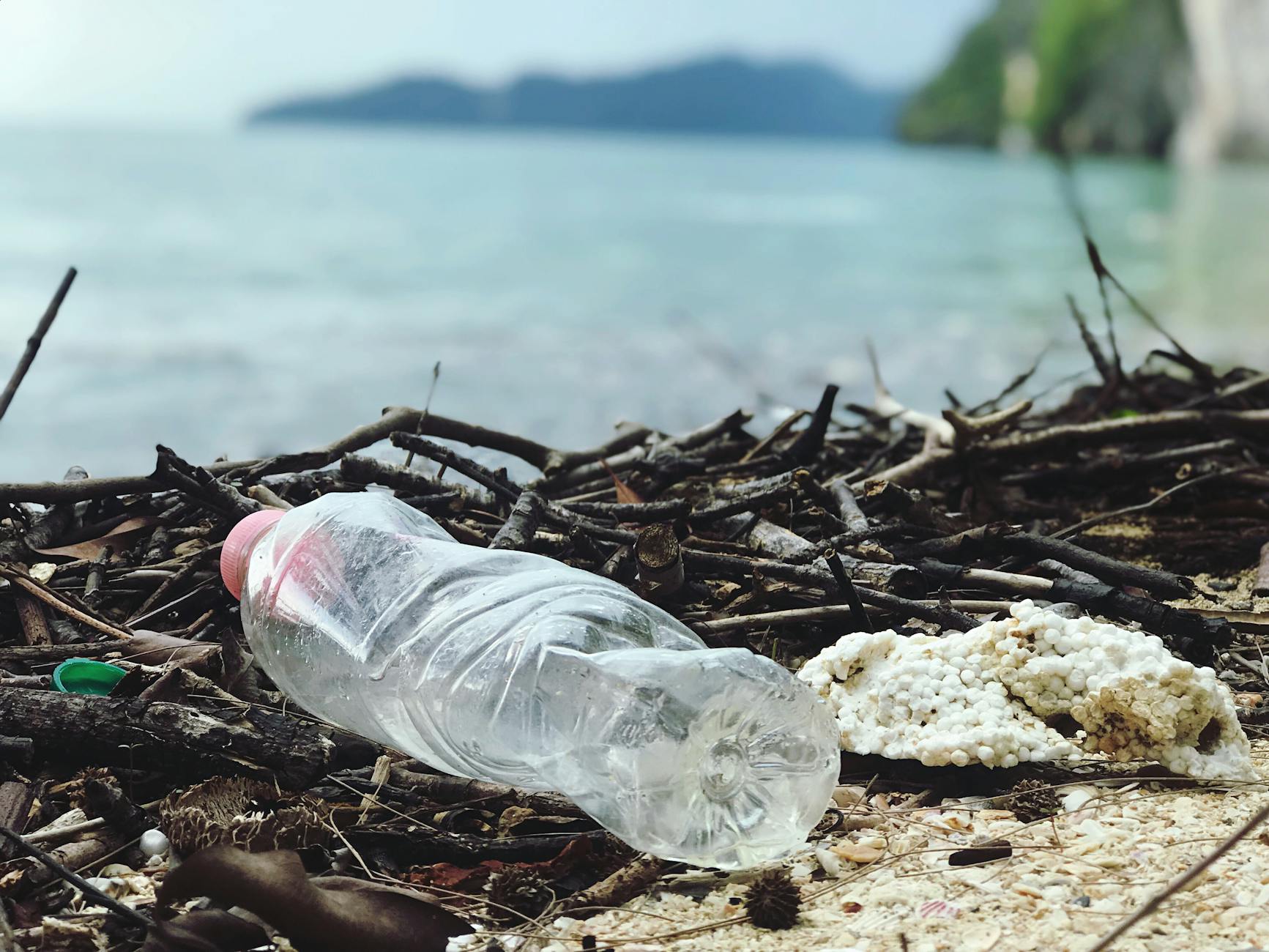

Photo by Catherine Sheila on Pexels.com

Climate Change and the Cornerstone

Sabbath Day Thoughts -“Climate Change and the Cornerstone” Mark 12:1-12

The numbers are in. Worldwide, this February was the warmest February on record. Across Europe, ski resorts closed when snow melted to mud from France to Bosnia to Italy. Wildfires, spurred by record heat, killed 133 people in Chile. In Tokyo, the cherry blossoms were out a full month earlier. When the numbers are confirmed in a couple of weeks by the U.S. National Oceanic and Atmospheric Administration, this February will mark the ninth consecutive month in which the temperature record has been broken. The world is warming.

We don’t need to travel to Bosnia, Chile, or Tokyo, to affirm that climate change is real. Consider Lake Champlain. Matthew Vaughan, chief scientist with the Lake Champlain Basin Program, reports that from 1816 until 1950 the lake froze over almost every winter. Now, the lake freezes about once in four years. By 2050, we can expect the lake to freeze only once in a decade. The last time the lake froze was five years ago in March 2019. That’s bad news for our cold-water fish, like lake trout and Atlantic salmon. It’s bad news for swimmers, boaters, and wildlife, too, as toxic bacterial and algae blooms increase with the warming water.

Here in the Tri-Lakes we are feeling the changes. No snow meant no Winter Fun Day this year. How crummy is that?! Warming winters have brought a surge in ticks and tick-borne illness, like Lyme Disease and anaplasmosis. Heavy rain, characterized by a storm of two inches or more, is falling more frequently. Last year, we saw record-breaking rain in the summer and road closures from flooding in the winter. This past week, we saw hazy skies as smoke swept south from Canada, which in the past year has recorded record-setting wildfires fires in Alberta, British Columbia, the Northwest Territories, Nova Scotia, Ontario, and Quebec.

If you are like me, you live here because it is glorious. We love our little corner of God’s good earth. In fact, we feel amazingly close to God in all this beauty. But, let’s face it, the good earth is changing, and it has us worried.

Our reading from Mark’s gospel tells the worrisome story of some wicked tenants who occupy a vineyard and refuse to honor the claims of the vineyard owner. As Jesus related this story, he was in Jerusalem for the Passover. Things weren’t going so well. Sure, he had made a triumphal entry to the city, but it got complicated fast. Scandalized by the corruption and greed that he saw in the Temple courts, Jesus had turned over tables and disrupted business. That made him some powerful enemies. Chief priests, scribes, and elders confronted Jesus and challenged his authority. Soon the minions of Herod would try to entrap him with questions about paying taxes, and the religious and economic elite of Jerusalem—the Sadducees—would be in his face with questions about the resurrection.

Jesus answered his critics with this tough, exaggerated story of judgment. A landowner lovingly planted a beautiful vineyard and entrusted his good creation to tenants before going away on a long journey. From the start, there was trouble. The tenants held the absentee landlord in contempt and seemed to think the vineyard existed to serve their own economic interests. Any landowner in his right mind would have evicted the tenants and called in the law to teach them a painful, violent lesson. But Jesus described a landowner who didn’t know when to quit. Merciful to the point of foolishness, he repeatedly sent servants, prophets, messengers—even a beloved son—to confront the tenants with the truth and return them to the right path. But sending those messengers didn’t work in the story any more than it would work that Passover week in Jerusalem. As Jesus spoke about the violence that the beloved son encountered in the vineyard, Jesus was alluding to the violence that he soon would endure: Jesus himself outside the walls of the city, nailed to a cross, and breathing his last. As Jesus concluded his parable, he invited his critics to pass judgment. Mark says that they knew that Jesus was talking about them; they were behaving like wicked, greedy tenants, holding God in contempt, bent on rejecting and murdering the beloved son.

Eric Baretto, who teaches New Testament at Luther Seminary in St. Paul, teaches that parables, especially parables of judgment like this one, are meant to shock the conscience—kind of like when your parents used to give you the “Come to Jesus” talk. We listen to this parable and we side with the vineyard owner. We are outraged by the treatment of the messengers and the son. But the shock to our conscience is that we are actually the tenants, profiting from the vineyard, denying and abusing anyone who confronts us with uncomfortable truth, treating God with contempt.

Nowhere does this feel more uncomfortably true than when we consider our warming planet, this glorious vineyard that has been entrusted to our care. It is a scientific fact that we are the cause of the increased greenhouse gas emissions that are warming our planet. NASA reports that the four major gases that contribute to the Greenhouse Effect are all driven by human activity. Carbon dioxide is generated by burning fossil fuels and deforestation. Methane is emitted by the livestock we eat. It comprises seventy to ninety percent of the natural gas we burn, and it leaks from fossil fuel production and transportation. Nitrous oxide is released during fertilizer production and use, as well as in the burning of vegetation. Chlorofluorocarbons do not exist in nature—they are entirely of industrial origin: refrigerants, solvents, and spray-can propellants. We are the problem. We’ve been bad tenants, feeling entitled to profit from the planet. We don’t heed the warning cry of the prophetic voices that call for change. Jesus might caution us that Judgment Day is coming.

Jesus followed his tough parable by quoting Psalm 118: the stone that the builders rejected would become the cornerstone. In other words, even though all those powerful critics would reject Jesus, God would have the last word. The cornerstone is the first stone set during the building process. Every stone in a structure is set in relation to the cornerstone. In the ancient world, it was believed that the position of stars and planets regulated life, fortune, and success; therefore, cornerstones were commonly placed facing the Northeast because it was thought that this location would bring harmony and prosperity to the building and its owners. A ceremonial ritual marked the placement of the cornerstone. Builders would place a sacrifice, such as wine, grain, water, or even blood, atop the cornerstone and dedicate it to their gods. Jesus’ words about the cornerstone tell us that his death would be the offering that would mark the building of something new. He would be the cornerstone, because he had been and would always be aligned with God’s creative intention when the world was first spoken into being.

Jesus’ allusion to the cornerstone was a hard-to-hear invitation to critics to not be so hasty in their rejection of him. It was an uncomfortable reminder that God is the great architect and builder of their world. Not the chief priests, scribes, and elders, not the Herodians or even the Sadducees. God Almighty had a plan that they could either honor or reject, building their lives around the cornerstone or choosing to go their own way at great peril and impending judgment.

Perhaps this morning, Jesus’ words about the vineyard and the cornerstone can serve as an invitation to us. We can continue to exploit our planet for personal profit at great peril to ourselves and our children and grandchildren—and all creation. Or, we can be reoriented in our custody of the vineyard that God has entrusted to our care. We can trade our wicked tenancy for a faithful reverence. We can work to honor the beauty and balance, the vulnerability and limit, of a world created from the very stuff of God.

What might it look like for us to faithfully tend the Lord’s vineyard? Dr. Janel Hanrahan, associate professor of atmospheric sciences at Northern Vermont University, has devoted her professional life to studying the effects of our warming world on the Great Lakes and Lake Champlain. She says there is plenty to worry about out there. But “the best thing about climate change is that humans are the cause. So that means that we also have a huge role in what happens moving forward.”

Even simple measures taken in our own homes can reduce our greenhouse gas emissions and make us better stewards of the planet. Bring your own reusable cup or coffee mug instead of using single use plastics or disposable paper products. Change up the lighting by replacing inefficient bulbs with high quality LEDs that use a fraction of the energy. Turn down the thermostat by two degrees, cutting energy use and saving three to five percent on the heating bill. Wash clothes in cold water. Most of the energy used in doing a load of laundry comes from warming the water itself. Bike more, walk more, and drive less. Eat less meat and dairy. Use your voice. Write, call, or visit government representatives about environmental issues—like Caroline Dodd did this past week, participating in the Adirondack Park Lobby Day in Albany.

This vineyard we inhabit isn’t ours. It belongs to God, who shaped it with great patience and infinite love over billions of years. We can honor that—or reject it at great peril to the planet and all creation. We can choose to adopt simple everyday measures that tread lightly on the earth. We can model this good tenancy for our children. We can share it with our neighbors. We can demand it of our elected officials. We can lay the cornerstone for a future where we fulfill God’s expectation that we will care well for the vineyard. May it be so.

Resources:

Eric Baretto. “Exegetical Commentary on Mark 12:1-12” in Feasting on the Gospels: Mark. Louisville: Westminster John Knox Press, 2014.

Chloe Bennett. “First installment of state climate assessment points to a warming Adirondacks” in The Adirondack Explorer, Jan. 18, 2024. Accessed online at https://www.adirondackexplorer.org/stories/state-climate-report-adirondacks

Brianna Borghi. “Why Lake Champlain isn’t freezing over as often as it used to” in NBC 5 News, Feb. 23, 2024. Accessed online at https://www.mynbc5.com/article/why-lake-champlain-isnt-freezing-over-as-often-as-it-used-to/39194456

Jake Spring. “Spring came early: February likely warmest on record amid climate change” in Reuters, Feb. 29, 2024. Accessed online at https://www.reuters.com/business/environment/spring-came-early-february-likely-warmest-record-amid-climate-change-2024-02-29/

Kat Kerlin. “18 Simple Things You Can Do About Climate Change” in Climate Change, Jan. 8, 2019. Accessed online at https://climatechange.ucdavis.edu/climate/what-can-i-do/18-simple-things-you-can-do-about-climate-change

NASA. “The Causes of Climate Change: Human activities are driving the global warming trend observed since the mid-20th century.” Accessed online at  https://climate.nasa.gov/causes/#:~:text=Human%20Activity%20Is%20the%20Cause,air%20to%20make%20CO2.

Dean Thompson. “Homiletical Commentary on Mark 12:1-12” in Feasting on the Gospels: Mark. Louisville: Westminster John Knox Press, 2014.

Bill Whittaker. “The Little-Known Purpose of the Cornerstone,” July 24, 2019. Accessed online at https://www.billwarch.com/blog/the-little-known-purpose-of-the-cornerstone/


Mark 12:1-12 [13-17]

12Then he began to speak to them in parables. “A man planted a vineyard, put a fence around it, dug a pit for the wine press, and built a watchtower; then he leased it to tenants and went to another country. 2When the season came, he sent a slave to the tenants to collect from them his share of the produce of the vineyard. 3But they seized him, and beat him, and sent him away empty-handed. 4And again he sent another slave to them; this one they beat over the head and insulted. 5Then he sent another, and that one they killed. And so it was with many others; some they beat, and others they killed. 6He had still one other, a beloved son. Finally he sent him to them, saying, ‘They will respect my son.’ 7But those tenants said to one another, ‘This is the heir; come, let us kill him, and the inheritance will be ours.’ 8So they seized him, killed him, and threw him out of the vineyard. 9What then will the owner of the vineyard do? He will come and destroy the tenants and give the vineyard to others. 10Have you not read this scripture:

‘The stone that the builders rejectedhas become the cornerstone;
11this was the Lord’s doing,and it is amazing in our eyes’?”

12When they realized that he had told this parable against them, they wanted to arrest him, but they feared the crowd. So they left him and went away.


Photo by Centre for Ageing Better on Pexels.com

A New Earth

Sabbath Day Thoughts: “A New Earth” Isaiah 65:17-25

When it comes to climate change, the Adirondacks may not be at the top of our list of regions most impacted by our warming earth.

We are more likely to think of island nations like the Maldives, an archipelago in the Indian Ocean that rises only 2.4 meters above sea level at its high point.  As sea level rises with the melting of glaciers and polar ice caps, the Maldives are in peril.  In 2015, the charismatic young President of the Maldives drew world attention to his nation’s plight by holding his first cabinet meeting underwater.  According to the Intergovernmental Panel on Climate Change (IPCC), by 2010, sea levels will potentially rise 100 centimeters, covering almost the entire nation.

When it comes to climate change, we think of polar bears, the poster-child for the impact of global warming on our animal species.  Climate projections anticipate that, before mid-century, we could have a nearly ice-free Arctic in the summer.  Polar bears rely heavily on sea ice for traveling, hunting, mating, resting, and in some areas, for dens where cubs are birthed and nurtured.  Studies have linked the demise of sea ice with a 40% decline in the number of polar bears in northeast Alaska and Canada.  Will the bears survive a warming Arctic?

In the lower forty-eight states, we tend to think of the south when it comes to the impact of global warming.  Our warmer, wetter world has caused a surge in powerful tropical storms that have pounded the Gulf states and beyond.  Hurricane Ida made landfall in Louisiana in August, second only to Hurricane Katrina as the most damaging and intense hurricane to hit the U.S., with maximum winds of 150 mph.  As Ida moved north, so did its destructive power.  The storm caused catastrophic flooding across northeastern states.  Ida caused $50.1 billion in damages.  In the storm’s aftermath, 95 Americans had been killed—33 deaths in Louisiana and 9 more across the southland, 30 in New Jersey, 18 in New York, and 5 in Pennsylvania.

Island nations sinking into the sea, polar bears threatened with extinction, massive storms inflicting heavy property damage and loss of life.  This is often the face of climate change on the evening news.  Yet we might be surprised to learn that the Adirondacks are being profoundly affected by our warming world.

Researchers at SUNY Plattsburgh report that the Adirondacks are warming at a rate that is twice as fast as the rest of the planet.  The global average temperature has increased 1.8 degrees over the past 30 years, but in Lake Placid, that increase has doubled to 3.6 degrees.  That means that our fall is longer than it once was.  Our spring comes earlier.  We have more winter warm-ups.  Ask anyone who grew up in Saranac Lake and they will tell you that winter isn’t what it used to be.

The Adirondacks sit at the southern edge of the great boreal forest that stretches north across Canada to the Arctic.  As our weather warms, that boreal forest will creep north as native plants and trees can’t take the relative heat.  It’s already happening.  It’s already having a big impact on our wild creatures.  The National Audubon Society reports that we are seeing a dramatic decline in our northern boreal birds, like gray jays, Bicknell’s thrush, spruce grouse, and the black-backed woodpecker.  We are also seeing a decline in fish.  Brook trout, lake trout, salmon, and round whitefish all need cold water to thrive.  An EPA report anticipates that brook trout fishing could disappear from the Adirondacks by the year 2100.  As the Adirondacks continue to warm, the animals of the boreal forest will migrate north in search of habitat.  Can we imagine the park without moose, bobcats, fishers, pine martens, and loons?  Unless there is collective action to limit the amount of carbon in our atmosphere, that will be the Adirondack Park that we leave to our children and grandchildren.  It’s a sobering possibility.

In our scripture lesson, the Prophet Isaiah shares God’s promise of a new heaven and a new earth.  The people who first heard Isaiah’s prophecy were likewise living with the impact of their actions upon the good land that God had entrusted to their care.  The Israelites had returned home from decades of captivity in Babylon.  Their land, which had once flowed with milk and honey, had been devastated by foreign invasion and decades of war.  When the Babylonian army had rolled across Israel, they had destroyed everything in their path.  Every fortified city from Dan in the north to Beersheba in the south had been conquered and flattened.  Jerusalem was hardly recognizable: its protective walls breached and pulled down, its homes in ruins, its Temple burned to the ground.  The reality was so overwhelming, that people didn’t know where to begin.  That may be how we feel about the reality of climate change.

In the midst of the people’s despair, God spoke a vision of hope.  God, who had created heaven and earth, would create again, a new world of harmony and abundance.  God’s word to the Prophet Isaiah is a sweet and joyous promise of long life, rebuilt homes, fruitful vineyards, simple abundance, and good health.  God anticipates a healed relationship between humanity and the holy: before we even begin to pray, God will hear and respond.  God anticipates a healed relationship between humanity and all creatures, great and small.  All will dwell peaceably, free from harm and the threat of destruction.  Isiah’s promise is so sweet, that we hear it and we want it for ourselves.  We want it for the generations to come.

It’s a promise that reveals God’s best hope for us.  Indeed, in the Book of Revelation, John of Patmos described God’s coming Kingdom as Isaiah did, as a new heaven and a new earth, a new Jerusalem in right relationship with God.  Humanity gets things so wrong.  The ancient Israelites bring death to the land by exploiting its bounty, oppressing one another, and waging endless wars in pursuit of wealth and national greatness.  We, with our unbridled consumption and short-sighted pursuit of prosperity, pump the atmosphere full of greenhouse gases that trap ultraviolet rays and turn up the heat.  Our world is suffering.  Creation is groaning.  And in the middle of the mess that we have made, God dares to dream that things can be different.  There can be a fresh start, a new earth.

What might it look like for us to claim Isaiah’s vision, to begin living in ways that give us a foretaste of the coming Kingdom that God will one day bring to completion?  Jerry Jenkins, the leading expert on climate change in the Adirondacks, says that we can personally start to mitigate climate change with simple thrift.  Don’t buy new stuff: reduce, re-use, recycle.

We can make changes at home.  If we dial back the thermostat by two degrees, we can not only reduce our household carbon emissions, but also save as much as 5% on our heating bill.  We can turn off un-needed lights.  We can replace energy-wasting lightbulbs with high-quality LED bulbs that last a long time, consume less electricity, and save lots of money, year in and year out.  We can use native plants in our flower gardens to attract pollinators, like bees, butterflies, and hummingbirds.

We can change our habits.  We can bring our own re-useable bottle or mug wherever we go.  We can drive less—plan our trips into town, walk to nearby destinations, or ride our bikes instead of hopping in the car.  We can cut down on food waste by eating leftovers.  We can eat less meat—those concentrated animal feeding operations, where cattle and pork are warehoused in close proximity and force-fed, are massive emitters of methane, a greenhouse gas.

If we are in a position to make big ticket investments, we can consider purchasing a hybrid car.  We could add a solar array to our homes to begin moving off the grid.  We could invest in a renewable heat source.  Burn wood pellets.  Go geo-thermal. 

These are simple steps that each of us can embrace.  You can give them a try, even if you deny the truth of climate science.  What’s to lose?  These simple actions are good for us, good for the planet, and they save money.  Who doesn’t want to save money?

William Janeway of the Adirondack Council envisions a day when the Adirondack Park will be “energy neutral.”  We’ll preserve our wild beauty and ecological integrity.  We’ll be a world-class natural resource and a premier tourism destination.  We’ll be a model for the world to see of a “climate-smart, public-private conservation landscape.”  The stakes are huge.  Our failure to take action could have dire consequences for our children and grandchildren.  Jerry Jenkins cautions that if we do not slow the course of human-caused climate change, “We may be the last generation to see the big bogs and the boreal creatures.”  Would our children ever forgive us?

May we find in Isaiah’s vision of the new heaven and the new earth the holy will to make a better future for our park and our planet.


Resources

–. “Peril and Promise” on Mountain Lakes Journal, May 21, 2019.

Craig, Gewndolyn. “Adirondacks Affected by Warming Climate in a Number of Ways” in The Post Start, October 13, 2018.  Accessed online at www.poststar.com.

Foderaro, Lisa. “Savoring Bogs and Moss, Fearing They’ll Vanish as the Adirondacks Warm” in The New York Times, Dec. 11, 2011.  Accessed online at www.nytimes.com

Kerlin, Kat. “18 Simple Things You Can Do about Climate Change” in UC Davis: Science and Health. January 8, 2019.  Accessed online at www.climatechange.ucdavis.edu

Mann, Brian. “Effects of Climate Change on the Adirondacks” on North Country Public Radio, Feb. 25, 2019.  Accessed online at www.ncpr.org

Rivera, Nelson. “Homiletical Perspective on Isaiah 65:17-25” in Feasting on the Word, Year C, vol. 4. Louisville: Westminster John Knox Press, 2010.

Johns, Mary Eleanor. “Pastoral Perspective on Isaiah 65:17-25” in Feasting on the Word, Year C, vol. 4. Louisville: Westminster John Knox Press, 2010.


Photo by David Keindel on Pexels.com