Speech Pathology (Taming the Tongue)

Sabbath Day Thoughts — “Speech Pathology” James 3:1-12

In the weekly Blast, I asked, “What is the most powerful part of the body?” Is it our brawny biceps? Our muscular legs that run up mountains? Our broad backs that shoulder heavy loads? According to the Apostle James, the most powerful part of the body is the tongue.

James may have a point. A review of 166 studies on the impact of verbal abuse on children found that the words of parents can have negative consequences that last a lifetime. Children who experience yelling, threats, belittling, humiliation, and name calling at home may be plagued by depression, aggression, conduct disorders, and anger. They are more likely to be abusive with siblings and other children and act out with delinquent behaviors at school and in community.   Verbal abuse has lasting impact upon a child’s health with increased rates of substance abuse, eating disorders, obesity, and heart disease.

Beyond the family, words can shape how we feel about our neighbors. With the rise of immigration to the United States from the Mediterranean, eastern Europe, and Asia in the late 19th century, there was a rise in anti-immigrant hate speech. Political pundits and yellow journalists alleged that these new arrivals were taking American jobs. They advanced false theories that immigrants were intellectually inferior, subhuman, criminal. In 1891 when the Chief of Police in New Orleans was found dead, the local immigrant community was blamed. Nineteen Sicilian-Americans were put on trial. Although they were found innocent, an angry mob of 10,000 broke into the jail, dragged eleven of the men from their cells, and lynched them.

In this digital age, our words can have far-reaching impact and destructive outcomes as misinformation, fake news, and big lies flood cyberspace. During the 2020 election cycle, Russian trolls sought to amplify mistrust in the American electoral process. They denigrated mail-in-voting, alleged irregularities in local elections, and made false accusations of voter fraud. These false claims were picked up by some mainstream media outlets. The goal of the Russians was to suppress voter turn-out, sow anxiety and distrust, and call into question our free and fair elections. It worked. In 2022, 56% of respondents to a CNN poll indicated that they have “little or no confidence” that elections represent the will of the people.

According to the Apostle James, the destructive power of the tongue is nothing new. Writing to first-century Christians across the Roman Empire, James compared our tongues to bits that control horses, rudders that guide sailing ships, and flames that can ignite a major conflagration. Bit, rudder, flame, the tongue. These little things can have dramatic impact for good or evil. It all depends on how you choose to use them.

James was revisiting and expanding an earlier teaching of his big brother Jesus. In the twelfth chapter of Matthew’s gospel, Jesus challenged his critics among the Pharisees: “How can you speak good things when you are evil?  For out of the abundance of the heart the mouth speaks.  The good person brings good things out of a good treasure, and the evil person brings evil things out of an evil treasure.  I tell you, on the day of judgment you will have to give an account for every careless word you utter; for by your words, you will be justified, and by your words, you will be condemned.”  Jesus understood that our words reveal our character, shape our lives in community, and impact our eternal relationship with God.

When James wrote his warning about the destructive power of the tongue, he had seen first-hand the consequences of irresponsible, manipulative, and destructive words. James had seen families torn apart as Israel’s traditionalists denigrated and rejected their Christian kin. James had witnessed false teachers who tried to convince Christians that they must undergo circumcision and observe the Torah. He had also seen angry and destructive words used to inspire anti-Christian persecution. James himself walked with a permanent limp from injuries he sustained when an angry mob, opposed to his gospel teaching, attacked him in the Temple. They severely beat him, threw him down a flight of stairs, and left him for dead. We can understand why James taught, “the tongue is placed among our members as a world of iniquity; it stains the whole body, sets on fire the cycle of life, and is itself set on fire by hell.”

James’ strong words and bold images are enough to make us bite our tongues. But I don’t believe that the apostle wanted to silence us. Rather, James hoped that his readers would use their words responsibly as sound teachers and good neighbors. After all, the tongue can tap into the good treasure of a faithful heart to create, build up, heal, and redeem. In Genesis, God is described as speaking the world into creation. “Let there be light!” In the prologue to John’s gospel, Jesus is described as the Word—God’s Word—made flesh, full of grace and truth, sent into the world to save it. Our words can be destructive, and yet they can also be powerfully good, constructive, faithful, and loving. We can build up what has been torn down.

If verbal abuse can undermine a child, then a judicious use of praise can build them up. Studies have found that a single word, like “Wow!”, or even a gesture, like a high five, can make kids feel good about themselves. Sincere praise can motivate a child to persevere in a tough task and inspire them to learn pro-social behaviors like helping, collaborating, and sharing positive feedback with others. Children who receive appropriate praise for hard work and progress are more likely to develop healthy self-esteem and less likely to suffer from depression.

What we have to say can also play a powerful role in building bridges in communities. We can counteract anti-immigrant hate speech by pointing to real-life examples, like our neighbors in Utica where 17,000 refugees have been resettled since 1979. Today, one in five Uticans is a refugee or child of refugees. They have come from all over the world: Myanmar, Afghanistan, Ukraine, Cambodia, Vietnam, the Balkans, and more. Downtown Utica is filled with international restaurants, churches, community centers, and businesses. The influx of immigrants has been credited with saving the dying rustbelt community. Filmmaker Loch Pillipps, who made the documentary film “Utica: The Last Refuge,” says, “There’s a big passion gap on this issue [of immigration]. The minority of people in this country who are against refugee resettlement are super loud. This is a really industrious population that figures out how to fix places up and make the community better. They saved this town.”

In the lead up to the contentious 2024 election, the words of the Apostle James are an encouragement to use our own words judiciously. That begins by learning from responsible journalism and not social media. In talking to those whose opinions may differ from our own, we can stick to facts and have responsible discussions that include listening as well as sharing our opinions. We can refrain from malicious gossip that vilifies those who disagree with us. We can let our votes do the talking, trusting that, despite what the Russians might have us believe, we live in the greatest democracy in the world where every vote counts. My friend the Rev. Scott Paul-Bonham cautions that we should also remember that in this highly divisive political climate, close to half of Americans will be greatly disappointed when the dust settles on the 2024 election. Can we respond to their despair with compassion, reaching out with kind words that build bridges and remind us that we belong to one another? It might sound like a difficult challenge, but I suspect that the Apostle James and his brother Jesus would tell us that we are up to it.

In the year before Roman soldiers destroyed the Jerusalem Temple, James was hauled before a kangaroo court by his opponents and ordered to deny the gospel. Knowing that he had at last come to the end of his journey, the aging, lame apostle shared the good news for the last time before being put to the sword. It is said that, even as he faced death, James spoke with such integrity and loving conviction that many who heard came to believe. Amen.

Resources

Gwen Dewar. “The effects of praise on kids: 10 Evidence-based tips for better outcomes” in Parenting Science, 2024. Accessed online at https://parentingscience.com/effects-of-praise/.

Gabriel R. Sanchez and Keesha Middlemass. “Misinformation is eroding the public’s confidence in democracy” in The Brookings Institute: Governance Studies Media Office, July 26, 2022. Accessed online at Misinformation is eroding the public’s confidence in democracy (brookings.edu)

Jules Struck. “‘They saved this town’: Refugees poured into Utica and cleared the rust from a dying industrial city” in Syracuse Magazine, May 27, 2022. Accessed online at ‘They saved this town’: Refugees poured into Utica and cleared the rust from a dying industrial city – syracuse.com

The Bronfenbrenner Center (Cornell University). “The Long-Term Underappreciated Damage of Verbal Abuse” in Psychology Today, October 10, 2023. Accessed online at https://www.psychologytoday.com

Library of Congress. “Under Attack: Immigration and Relocation in United States History” Classroom Materials. Accessed online at  Under Attack | Italian | Immigration and Relocation in U.S. History | Classroom Materials at the Library of Congress | Library of Congress

James Boyce. “Commentary on James 3:1-12” in Preaching This Week, Sept. 13, 2015. Accessed online at Commentary on James 3:1-12 – Working Preacher from Luther Seminary

Margaret Aymer. “Commentary on James 3:1-12” in Preaching This Week, Sept. 16, 2018. Accessed online at Commentary on James 3:1-12 – Working Preacher from Luther Seminary

Sandra Hack Polaski. “Commentary on James 3:1-12” in Preaching This Week, Sept. 16, 2012. Accessed online at Commentary on James 3:1-12 – Working Preacher from Luther Seminary


James 3:1-12

Not many of you should become teachers, my brothers and sisters, for you know that we who teach will face stricter judgment. For all of us make many mistakes. Anyone who makes no mistakes in speaking is mature, able to keep the whole body in check with a bridle. If we put bits into the mouths of horses to make them obey us, we guide their whole bodies. Or look at ships: though they are so large and are driven by strong winds, yet they are guided by a very small rudder wherever the will of the pilot directs. So also the tongue is a small member, yet it boasts of great exploits.

How great a forest is set ablaze by a such a small fire! And the tongue is a fire. The tongue is placed among our members as a world of iniquity; it stains the whole body, sets on fire the cycle of life, and is itself set on fire by hell. For every species of beast and bird, of reptile and sea creature, can be tamed and has been tamed by the human species, but no one can tame the tongue—a restless evil, full of deadly poison. With it we bless the Lord and Father, and with it we curse people, made in the likeness of God. 10 From the same mouth comes a blessing and a curse. My brothers and sisters, this ought not to be so. 11 Does a spring pour forth from the same opening both fresh and brackish water? 12 Can a fig tree, my brothers and sisters, yield olives or a grapevine figs? No more can salt water yield fresh.


Photo by Andrea Piacquadio on Pexels.com

Welcome to the Family

Sabbath Day Thoughts — “Welcome to the Family” Mark 3:20-35

In October of 1892, the Presbytery of Champlain received an unusual gift: Johnson’s Island, a one-acre rocky isle in Upper Saranac Lake. The island was the dream of three of Plattsburgh’s biggest movers and shakers. Chief among them was Smith Weed, the one-time President of Plattsburgh and six-time state assemblyman, known for smoking as many as nine cigars in a day. Smith hoped to enlist the Champlain Presbytery in launching an ecumenical summer chapel to serve both visitors and year ‘round residents to the lake. There was a big string attached to the gift: the Presbytery would need to build a church on Johnson’s Island within the year. The trustees of the Presbytery met the challenge. After all, they were on a building streak, launching little mission churches across the Adirondacks, having begun with our church—this very sanctuary—in 1890. Soon Johnson’s Island had a new name, Chapel Island, and in 1893 the little summer church was christened the Island Chapel.

My introduction to the Island Chapel came in 2005, not long after my arrival at this church. The late John Fitch called me up and persuaded me to trade this pulpit on a summery Sunday for the one at the Island Chapel. John and Anne were longtime servants to the ministry there. In fact, as soon as the Fitches had returned from sunny Florida, the ice was out, and the water was warm enough, John had me out in their Crisscraft, circumnavigating Chapel Island. Most years, I preach at the Island Chapel. And when John, and then Newt Greiner, retired from the role of Clergy Coordinator, they drafted me to do the job for seven years. I found it fascinating that I could find folks to preach on Chapel Island for the ten Sundays of summer faster than I could find one minister to supply the pulpit on any one given Sunday in Saranac Lake.

Over the years, things have changed. In 1956, a picnic fire on Chapel Island bloomed into a major conflagration that consumed the original Victorian chapel. A new Adirondack-style structure rose from the ashes in 1958. With the decline of North Country population and the closing of small churches, the Presbytery of Champlain was forced to join forces with the St. Lawrence Presbytery to form the Presbytery of Northern New York in the 1960s. Yet things have stayed the same, the ecumenical ministry that shares the love of Christ on Chapel Island continues. Indeed, in 2014, the ministry received a Tauny Award for their longstanding commitment to living local cultural heritage. But even good things sometimes need to change. Three years ago, the Presbytery of Northern New York realized that their declining resources meant they could no longer sponsor the Island Chapel.

Change can be hard, whether we are talking about modern day churches or we are considering the changes that Jesus brought to his first century world. As Jesus healed, forgave sins, and preached the good news of God’s Kingdom, he faced increasing opposition. Last week, we learned of powerful enemies rising among the Pharisees and followers of King Herod. This week, we heard the story of two further conflicts, one with Jesus’ family and the other with scribes from the Temple in Jerusalem.

Let’s start with Jesus’s kin. It must have been tough for them when Jesus announced he was trading his carpenter’s hammer for a rabbi’s tallith.  In the first century, sons followed in their father’s footsteps. Mother Mary and the siblings had a host of expectations for Jesus as the oldest son, expectations that he was not fulfilling. Jesus belonged in Nazareth, running the family business.  He should have been out bidding on jobs and teaching his brothers building skills.  He should have been caring for his widowed mother and arranging marriages for his younger sisters. In addition to those failed expectations, Jesus had made enemies of powerful people who controlled the political and religious landscape of Israel.  Messing with King Herod, the Pharisees, and the scribes—was he crazy?

The family thought they were doing the right thing when they knocked on the door of the house where Jesus was staying, intent on restraining him.  The Greek word that Mark uses for restrain—krateo—means to lay hands on, seize, and forcibly detain someone. Mary and the siblings loved Jesus, so they were going to take him home, restore the right order, and keep him safe. The only problem, of course, was that Jesus had a higher calling, a different sort of family obligation to his heavenly Father. That holy purpose superseded any claim that the Nazareth clan could make. Discerning the intent of his family to derail his mission and God’s purpose, Jesus wisely declined their invitation.

In the midst of this family feud, Jesus had the biggest Bible scholars of the day on his back. The scribes didn’t like what Jesus taught, they didn’t care for the rabble who hung on his every word, and they couldn’t explain Jesus’s amazing miracles.  So, they decided to discredit him, accusing him of being in league with the devil. If Jesus sounded put out by this in our reading, it’s because the scribes were making the unforgiveable mistake of saying that God is the devil. Yikes! It’s this sort of essential difference of understanding that would split the family of first century Judaism. Traditionalists, who denied the new thing that God was doing in Jesus, would ultimately reject and cast out those who saw the holy power of Jesus and trusted that he was Messiah and Lord.

Over and against the cultural and religious expectations of kinfolk and scribes, Jesus described a new sort of family that would supplant the ties of Temple and blood. It’s the family of faith. Anyone who does the will of God, anyone who serves God’s Kingdom, can become a member. As Jesus looked around the home where he was staying, he saw men and women devoted to loving God and neighbor. They were like sisters and brothers. When Jesus was under attack by those powerful opponents, when he was at odds with his kin, he turned to God and his friends in the faith. There he found the support and encouragement that he would need to persevere in a gospel ministry that would ultimately send him to the cross. In the long years to follow, Jesus’ followers would likewise depend upon this new notion of kinship, as they faced rejection by families and persecution by Temple and empire.

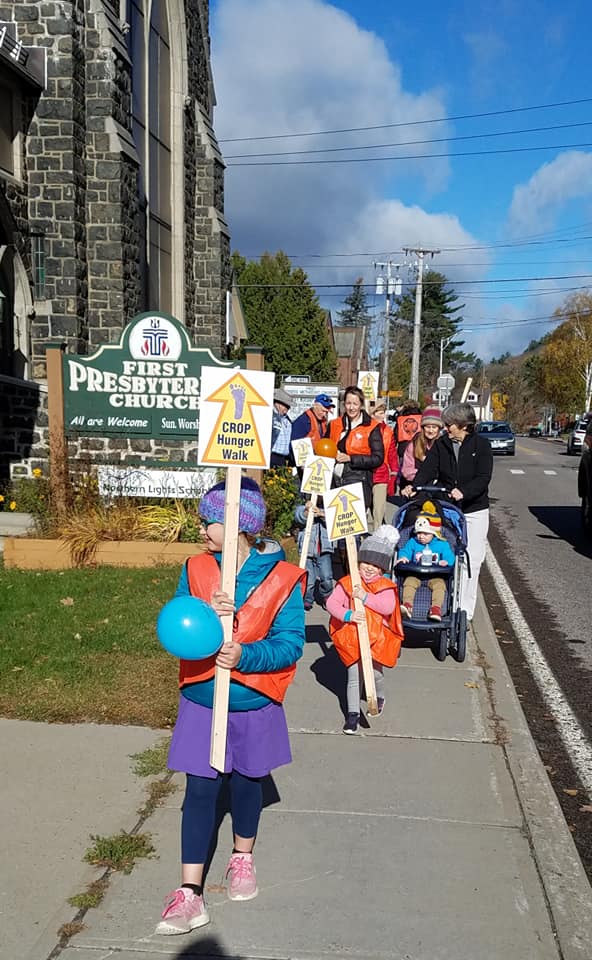
At this church, we know the beauty and goodness of a family of faith, don’t we? Look around. These are the people who are in our corner when we feel at odds with the world. They show up with hot dishes when we are bouncing back from big surgeries or big losses. They give us a call when they haven’t seen us in a while. They get down on their knees and pray for us. They teach our children. They feed us in Coffee Hour. They join us in wrestling with the big questions of scripture and faith. They walk with us for CROP Walk, Sermons on the Trail, and through the darkest valley. Thank goodness for the family of faith!

Today we welcome to our family of faith our friends who minister at the Island Chapel. Last summer, as they came to grips with the Presbytery’s decision to part ways, I was visited by Ross Whaley and Will Main, who have served the Island Chapel for years. They wondered, would our church be willing and able to come alongside them as sisters and brothers in faith to fill the gap that was being left behind by the Presbytery? Our Session and the executive committee for the Island Chapel appointed a taskforce to discern together what a shared ministry might look like.

Thank you to Anita Estling, Pam Martin, Kim Weems, David Fitch, Will and Leslie Main, Ross Whaley, and Pam Werner, who served with me on the taskforce. We zoomed a lot. We thought about the finer points of Presbyterian polity. We developed a memorandum of understanding. We sought appropriate insurance, titles, and registrations. We dreamed about the Island Chapel finding in this church a new sponsor and supporter for their good news. We dreamed of this church embracing the Island Chapel as an ecumenical summer outreach ministry. We think we’ve got it figured out. Today, with a time of commissioning, we welcome and celebrate our sisters and brothers from Chapel Island.

Change can be hard, whether we are considering the changes that Jesus brought to his first century world, or we are speaking of the shifting networks of support that come in dwindling twenty-first century mainline denominations. Yet change can be a blessing as we follow Jesus and serve God’s Kingdom. As we celebrate a new kinship between the First Presbyterian Church of Saranac Lake and the Island Chapel ministry, may we find the same sort of support, encouragement, and holy purpose that Jesus and his friends found in one another. Welcome to the family. Amen.

Resources

C. Clifton Black. “Commentary on Mark 3:20-35” in Preaching This Week, June 9, 2024. Accessed online at Commentary on Mark 3:20-35 – Working Preacher from Luther Seminary.

James Boyce. “Commentary on Mark 3:20-35” in Preaching This Week, June 7, 2015. Accessed online at Commentary on Mark 3:20-35 – Working Preacher from Luther Seminary.

Matt Skinner. “Commentary on Mark 3:20-35” in Preaching This Week, June 7, 2015. Accessed online at Commentary on Mark 3:20-35 – Working Preacher from Luther Seminary

Wikipedia Contributors. “Smith Mead Weed” in Wikipedia, The Free Encyclopedia, January 12,  2024. Accessed online at https://en.wikipedia.org/w/index.php?title=Smith_Mead_Weed&oldid=1195036261

Nathan Ovalle. “Lost in history: Smith Weed’s legacy fading with time” in The Press Republican, Dec. 14, 2014. Accessed online at Lost in history: Smith Weed’s legacy fading with time | Local News | pressrepublican.com

Seaway Abstract Corporation. “Abstract of Title to An Island, Town of Harrietstown, Franklin County #978” December 10, 1985.


Mark 3:20-35

20and the crowd came together again, so that they could not even eat. 21When his family heard it, they went out to restrain him, for people were saying, “He has gone out of his mind.” 22And the scribes who came down from Jerusalem said, “He has Beelzebul, and by the ruler of the demons he casts out demons.” 23And he called them to him, and spoke to them in parables, “How can Satan cast out Satan? 24If a kingdom is divided against itself, that kingdom cannot stand. 25And if a house is divided against itself, that house will not be able to stand. 26And if Satan has risen up against himself and is divided, he cannot stand, but his end has come. 27But no one can enter a strong man’s house and plunder his property without first tying up the strong man; then indeed the house can be plundered.

28“Truly I tell you, people will be forgiven for their sins and whatever blasphemies they utter; 29but whoever blasphemes against the Holy Spirit can never have forgiveness, but is guilty of an eternal sin”— 30for they had said, “He has an unclean spirit.”

31Then his mother and his brothers came; and standing outside, they sent to him and called him. 32A crowd was sitting around him; and they said to him, “Your mother and your brothers and sisters are outside, asking for you.” 33And he replied, “Who are my mother and my brothers?” 34And looking at those who sat around him, he said, “Here are my mother and my brothers! 35Whoever does the will of God is my brother and sister and mother.”


Heart Trouble

Sabbath Day Thoughts — “Heart Trouble” Mark 2:23-3:6

Sunday mornings at the New York Avenue Presbyterian Church in Washington, DC can feel like a curious collision of reverent worship and human need. The church, just a couple of blocks from the White House, is in an area of the city with a burgeoning homeless population. The benches in the tiny triangle park outside the church are a favorite overnight sleeping spot. A mentally ill woman pushing a shopping cart inspects the trash for thrown away treasures. A down and out neighbor scrounges for cigarette butts on the sidewalk.

Before I went to seminary, when I was a young adult member of the church, I was often panhandled on my way into worship, “Sister, can you give a man a little help?” During worship, when the children and those feeling a little childlike were invited to the front of the sanctuary, there would always be at least one adult participant—Larry, a developmentally disabled man from a local residence who lived with mental illness. One Sunday, during Dr. Craig’s sermon, someone was snoring. It was loud—so loud that those of us in the pews spent the better part of the message craning our necks to see one of our homeless brothers, stretched out in a side pew. On another day, Dr. Craig told us that as he was locking up the church to head home, he fell, tripping over a homeless man who was sleeping in a corner of the doorway.

Churches are sacred places, built to glorify God with our worship and praise. Churches are serving places, where neighbors in need find “a little help.” Sometimes finding that right balance of worship and service can be tough.

Our reading from Mark’s gospel tells of two Sabbath controversies. First, Jesus was challenged by the Pharisees for the Sabbath day behavior of his disciples. As Jesus’s hungry friends walked through the fields, they plucked ears of barley, rolled them between their hands to remove the chaff, and ate the ripe grain. Next, Jesus was in the synagogue on the sabbath day when he noticed a man with a helpless, withered hand. Jesus provocatively asked his critics, “Is it lawful to do good on the sabbath?” Then, answering his own question, Jesus healed. The useless hand grew hale and able.

Jesus and the Pharisees clearly had a difference of opinion when it came to interpreting what scripture had to say about sabbath observance. We tend to poke fun at the Pharisees, but Prof. Clif Black, who teaches at Princeton Seminary, reminds us that the Pharisees, a reform movement in first century Judaism, were well-regarded as upstanding and devout people. They were dedicated to “superlative” obedience to scripture in all walks of life. They liked things done decently and in order—that sounds downright Presbyterian.

The Pharisees had two problems with Jesus’s friends in the grain field. For one, they were traveling on the sabbath. For another, it was a slippery slope from gleaning to harvesting – if you let people glean on the sabbath, who knows what sort of work could happen next. And that man with the problem hand? More work. The man and Jesus should have had the good sense to wait until the sabbath was over to get their healing on. Jesus, with his disregard for their sabbath piety, put the whole community at risk. They needed to be holy as God is holy, and that meant their strict observance of the Torah.

Jesus disagreed. He looked at the big picture. Jesus considered God’s intent in instituting the sabbath as part of the rhythm of creation. God certainly didn’t need to rest after bringing the world into being, but humanity? We would need rest. In imparting the ten commandments, God mandated sabbath so that the people might be gratefully reoriented in God, might deepen their relationship with the one who created us—and deepen our connection to one another. What a radical gift for former slaves, who had never known the blessing of unfettered leisure! Sabbath should inspire our profound gratitude and reverence, yet it also helps and heals us. It promotes our wholeness. We might even say that on the sabbath day we are re-created.

“The sabbath was made for humankind, and not humankind for the sabbath,” Jesus taught. The choice to relieve someone’s hunger, the choice to end the suffering and disability of a neighbor, these beautiful, compassionate acts honored God’s original intent for the sabbath, every bit as much as the reverent worship of the Pharisees. Unfortunately, Jesus’s opponents were so invested in their own perspective that they could not hear Jesus or allow their hard hearts to be moved with compassion. Instead, only 79 verses into Mark’s gospel, Jesus’s adversaries began to conspire to discredit and silence him.

I am told that the New York Avenue Presbyterian Church struggled to find that right balance between sabbath day reverence and sabbath day service. In the early 80’s federal funding for mental health services saw big cuts, transferring responsibility for formerly institutionalized people to states that just weren’t ready.  The streets of cities like Washington soon teemed with folks who could not care for themselves. As the church’s triangle park became a de facto mini homeless settlement, they wondered, what do we do? Close the park? Work with law enforcement to encourage homeless neighbors to find someplace else to be on Sunday morning? Open up the church’s Lincoln Room for bagels and a gospel hymn sing?

The hymn sing won out, but still there was a weekly struggle to find enough volunteers to handle the loud, needy, and stinky mess that comes along with homeless neighbors. Members left the church. Those who stayed wondered if new people, who weren’t homeless, would ever come, would ever labor alongside them. They weren’t Pharisees, but they were Presbyterians with a longing for order and a good uninterrupted Sunday sermon. It wasn’t easy.

I think Jesus knew that faithful people would always live with this tension between our desire for holiness and the calling to meet the needs of our neighbors. That’s why his great command is an imperative to do both – love God and love neighbor. God is glorified by our overflowing love and heartfelt worship. Yet God is also glorified when we open our hearts and turn to the world with compassion, when we seek to make a helping, healing difference in the lives of those who need it most. We need both – worship and service. When we get it right, we are drawn ever deeper into the beauty of God and into the spirit of Jesus, who challenged his followers to see him in our neighbors who most need our love and care, every day of the week.

Sundays at this church aren’t quite like Sunday mornings in downtown Washington. I bet no one panhandled you on the way in. My old friend Larry doesn’t sit on the chancel with me for children’s time. While someone may fall asleep during the service, it won’t be because they spent last night sleeping on a subway grate. Yet we are mindful this morning of the need of our world. If you came in the side entrance, you saw the overflowing donation of paper goods for families that depend on Grace Pantry. You saw the pack basket that collects our Food Pantry gifts for hungry neighbors. You may have even noticed the learning stations in the sanctuary and Great Hall about the work of the Holm family to bring the gospel and sanitation to our Malawi neighbors. They may not be sleeping in the pews, but our vulnerable neighbors are with us this morning, and we can choose to make a helping difference. Today, we glorify God with our worship—and God will be glorified, too, as we love those who hunger and thirst for wholeness, good news, and good food.

If those Pharisees and Herodians had only wrapped their hearts around what Jesus was trying to teach them about the sabbath, they would have gotten blessed. So blessed! On that Sunday morning at the New York Avenue Presbyterian Church, when the homeless brother was snoring loudly through Dr. Craig’s sermon, the ushers in their blue blazers and ties marshalled forces in the narthex, devising a plan to wake the guy up. The very wise Dr. Craig stopped preaching and he waylaid their efforts. “Please, folks,” he said from the pulpit, “I’m sure it is the safest and warmest that the man has been all week.” As Dr. Craig’s words sank in, we realized that we had just heard the real sermon for that Sunday. We all thought about how truly blessed we were, to have homes and a church home, to have more than enough, to have people who love us, to have a wise pastor who called us to our better selves. It was one of those graced moments when we found the right balance between worship and service. It was one of those graced moments when we glimpsed Jesus, who told us he would come to us in our vulnerable neighbors. I can’t say for sure, but I suspect that God was, indeed, glorified.

Resources:

C. Clifton Black. “Commentary on Mark 2:23-3:6” in Preaching This Week, June 2, 2024. Accessed online at Commentary on Mark 2:23—3:6 – Working Preacher from Luther Seminary

Matt Skinner. “Commentary on Mark 2:23-3:6” in Preaching This Week, June 3, 2018. Accessed online at Commentary on Mark 2:23—3:6 – Working Preacher from Luther Seminary

John Wilkinson. “Theological Perspective on Mark 3:1-6” in Feasting of the Gospels: Mark. Louisville: Westminster John Knox Press, 2014.

William R. Herzog II. “Homiletical Perspective on Mark 3:1-6” in Feasting of the Gospels: Mark. Louisville: Westminster John Knox Press, 2014.


Mark 2:23—3:6

23One sabbath he was going through the grainfields; and as they made their way his disciples began to pluck heads of grain. 24The Pharisees said to him, “Look, why are they doing what is not lawful on the sabbath?” 25And he said to them, “Have you never read what David did when he and his companions were hungry and in need of food? 26He entered the house of God, when Abiathar was high priest, and ate the bread of the Presence, which it is not lawful for any but the priests to eat, and he gave some to his companions.” 27Then he said to them, “The sabbath was made for humankind, and not humankind for the sabbath; 28so the Son of Man is lord even of the sabbath.”

3Again he entered the synagogue, and a man was there who had a withered hand. 2They watched him to see whether he would cure him on the sabbath, so that they might accuse him. 3And he said to the man who had the withered hand, “Come forward.” 4Then he said to them, “Is it lawful to do good or to do harm on the sabbath, to save life or to kill?” But they were silent. 5He looked around at them with anger; he was grieved at their hardness of heart and said to the man, “Stretch out your hand.” He stretched it out, and his hand was restored. 6The Pharisees went out and immediately conspired with the Herodians against him, how to destroy him.


In the Power of the Spirit

Sabbath Day Thoughts — “In the Power of the Spirit” Acts 2:1-13

The Adirondack spring has pounced upon us. After months of grey skies and mixed precipitation, the ice is out, the earth has thawed, and for some of us, our thoughts turn to gardening. Here at the church, our Jubilee Gardeners are thinking about the fresh vegetables that we’ll grow for the Food Pantry this summer. Yesterday morning, six of us gathered at the Community Garden to prepare the church’s beds for planting. There were weeds to pull and compost to spread. There were pole bean towers to string and a snow pea trellis to set up. We even sowed a few cold-hardy seeds.

Fourteen years ago this month, we had the organizing meeting for our Jubilee Garden project. It started with a fall book group. We read Shane Claiborne’s inspiring first book Irresistible Revolution, which tells the compelling story of Shane’s community The Simple Way. Inspired by a stint as a volunteer in Calcutta with Mother Teresa, Shane decided to try life in a blighted neighborhood in Northeast Philadelphia, living among the poor and working at the grassroots to meet community needs. Shane challenges Christians to find an impossible dream, to consider how the Spirit may be calling them to come alongside hurting neighbors in ways that make a difference. We wondered how God wanted to use us right here in Saranac Lake. We prayed about it.

By the spring, several of us felt that the Spirit was calling us to garden. Jan and Ted Gaylord had learned about organic gardening while they served at Jubilee Partners, and others among us were avid home gardeners, ever on the quest for the elusive Adirondack tomato. Our timing was perfect. A new community garden was starting on Old Lake Colby Road, where we secured two big plots. Our mission would be to grow fresh vegetables and bright flowers for the hungry and the hungry-of-heart. Soon, we had dirt beneath our fingernails and plenty of blackfly bites. We built raised beds and filled them with a fertile mix of topsoil and composted chicken manure. We planted, watered, weeded, and waited for the harvest.

In our reading from the Acts of the Apostles, the disciples were waiting and praying for the vision and power to launch an impossible dream. Then, on Pentecost, ten days after Jesus’ Ascension, came the rush of a violent wind. It filled the entire house where they waited. Tongues of holy fire flickered and danced among the people, resting upon each of them. As the Spirit filled them, they began to preach, all at once, in every language under the sun—speaking with boldness and joy about God’s deeds of awesome power. Before they knew it, the Spirit drove them out into the street, where pilgrims from every corner of the empire listened in bewilderment, wondering how a bunch of backwater Galileans could suddenly become such gifted cross-cultural communicators. Those who heard the Spirit-filled Apostles didn’t know whether to marvel or sneer, to shout “Alleluia!” or say, “Get lost!” But if we were to keep reading, past the end of our lection, we would see that the “Alleluias” won the day.  3,000 people were baptized and welcomed to the church.

When we hear the very familiar story of Pentecost, we like to focus on the sensational details: violent wind, tongues of flame, the sound of many languages, the astonishment of the crowd. But this year, I’ve been thinking less about the special effects and more about the disciples. Ten days earlier, they were anxious and visionless, waiting in Jerusalem to find out what was next. They hadn’t always excelled in their discipleship. They longed for greatness, expressed big doubts, and were generally cluelessness. They slept when they should have been praying. They ran away when the guards came to take Jesus into custody. Don’t forget Peter’s three denials. But when the Holy Spirit filled the disciples on Pentecost, they were galvanized in Christ’s purpose. On Pentecost, the disciples went from fearful failed followers to a dynamic force for good, propelled in God’s purpose by the power of the Holy Spirit.

In her book Sailboat Church: Helping Your Church Rethink Its Mission and Practice, former moderator of the General Assembly Joan Gray points out that the boat was the earliest symbol for the church. In the first century, there were two types of boats: rowboats and sailboats. Rowboats are driven by human power. Sailboats harness wind power. Joan Gray says that on Pentecost the Holy Spirit moved the disciples along as the wind moves a sailboat. The Spirit drew together a diverse group of men and women into a strong, unified community, capable of unexpected good. If the disciples had trusted in their own limited power to bring about God’s purpose, it would have been a recipe for failure; there would be no church. But with the Spirit’s help, great things could unfold.

Presbyterians tend to think that the Spirit doesn’t work with the bold force of Pentecost anymore, but Joan Gray says it does. The question facing every congregation is, “Will we row or will we sail?” If we row, we trust in our own strength, wisdom, and abilities to achieve our ministry. That’s a recipe for burnout and dwindling resources. I suspect that some of us, over the years, have known how that feels. But if we choose to be a sailboat church, if we trust that God’s Spirit can guide and empower us, then we find that we are able to do more than we ever could have dreamed. Pentecost begs the question, “Keep rowing or let the wind fill your sails?” I don’t know about you, but I’d much rather hoist the sail than man the oars.

What does sailboat ministry look like? I think our garden project is a good example. Fourteen years ago, the Holy Spirit took our prayer and discernment and launched us on a continuing adventure that has blessed us and our neighbors. A little like those who sneered at the disciples on Pentecost, not everyone thought our impossible dream was a good idea. In fact, when I approached the board of the Food Pantry, they said no one who comes to the pantry would eat our vegetables. Then, they told us that they wouldn’t distribute what we grew because they would just be throwing out a lot of rotting produce, week after week. If our impossible dream was going to happen, we would have to host our own free farm stand, outside the food pantry, on Saturday mornings. It was disappointing, but we didn’t let that dump the wind from our sails.

As we got underway, there were blessings that told us we were on the right path. It was a hot, sunny summer, and the harvest was wildly abundant. Those food pantry patrons loved the fresh produce. On most mornings, we ran out, and when we didn’t, folks at church on Sunday were eager to relieve us of our abundance. Some weeks, we even had extra to share at the DeChantal or Lake Flower Apartments. Hosting our own farm stand was the biggest blessing of all. We made new friends. Some came to the pantry week in and week out. They told us their stories. Others came in times of crisis. They told us their stories, too. All expressed appreciation for our care and concern, our willingness to meet them where they were at with the good news of fresh produce, God’s love, and an occasional fervent prayer.

Over the past fourteen years of gardening, the Spirit has continued to fill our sails in ways that we never could have imagined. We developed a close relationship with the Food Pantry, those same people who sneered at our impossible dream. In fact, a number of our members now serve on the board of directors. That growing bond found fresh expression as we welcomed the pantry to a beautiful new space in our building, where the number of people who are served has doubled. Beyond the Food Pantry, we’ve connected with local gardeners and commercial growers who sometimes contribute their own veggies to our efforts. The latest dynamic of our garden mission isn’t about the veg. It’s the flowers. Last summer, we sent an abundance of bouquets out into the community every Sunday to bless our homes and our neighbors. 

I’m not saying that the garden isn’t hard work. We’ve had aching backs. We’ve been bitten by bugs. We’ve struggled with slugs. But by the power of the Holy Spirit, we have been blessed and been a blessing, more than we ever could have imagined when we first dreamed our impossible dream.

Shane Claiborne, who wrote The Irresistible Revolution and inspired our gardening efforts, says that the Spirit is always calling Christians to new dreams. Beyond his community organizing in NE Philly, Shane has launched initiatives that address some of the most significant moral issues of our time: toxically partisan politics, gun violence, Christian nationalism, and the death penalty. If Shane were with us this Pentecost, he might ask us, “What’s next?” How does the Spirit continue to call us to come alongside hurting neighbors in ways that make a difference?

Come, Holy Spirit, come! Fill our sails, and send us forth in your purpose.

Resources:

Joan Gray. Sailboat Church: Helping Your Church Rethink Its Mission and Practice. Louisville: Westminster John Knox Press, 2014.

Shane Claiborne. The Irresistible Revolution: Living as an Ordinary Radical. New York: Harper Collins, 2006.

Frank L. Crouch. “Commentary on Acts 2:1-21” in Preaching This Week, May 24, 2015. Accessed online at Commentary on Acts 2:1-21 – Working Preacher from Luther Seminary

Amy G. Oden. “Commentary on Acts 2:1-21” in Preaching This Week, June 9, 2019. Accessed online at Commentary on Acts 2:1-21 – Working Preacher from Luther Seminary

Debra J. Mumford. “Commentary on Acts 2:1-21” in Preaching This Week, May 31, 2020. Accessed online at Commentary on Acts 2:1-21 – Working Preacher from Luther Seminary


Acts 2:1-13

2When the day of Pentecost had come, they were all together in one place. 2And suddenly from heaven there came a sound like the rush of a violent wind, and it filled the entire house where they were sitting. 3Divided tongues, as of fire, appeared among them, and a tongue rested on each of them. 4All of them were filled with the Holy Spirit and began to speak in other languages, as the Spirit gave them ability.

5Now there were devout Jews from every nation under heaven living in Jerusalem. 6And at this sound the crowd gathered and was bewildered, because each one heard them speaking in the native language of each. 7Amazed and astonished, they asked, “Are not all these who are speaking Galileans? 8And how is it that we hear, each of us, in our own native language? 9Parthians, Medes, Elamites, and residents of Mesopotamia, Judea and Cappadocia, Pontus and Asia, 10Phrygia and Pamphylia, Egypt and the parts of Libya belonging to Cyrene, and visitors from Rome, both Jews and proselytes, 11Cretans and Arabs—in our own languages we hear them speaking about God’s deeds of power.” 12All were amazed and perplexed, saying to one another, “What does this mean?” 13But others sneered and said, “They are filled with new wine.”


Photo by Pixabay on Pexels.com

A Time to Wait

Sabbath Day Thoughts — “A Time to Wait” Acts 1:1-11

for all the Moms out there

Waiting isn’t easy. Just ask any Mom. She waited through nine months of pregnancy. The first trimester brought big changes. Breasts tender. Taste and smell heightened. Early morning nausea. Hormone-induced mood swings, headaches, and even acne. Don’t forget the digestive challenges – bloating, gas, and constipation.

The second trimester was better. But, oh, the appetite! Eating for two or sending the spouse out for late-night ice cream and pickles. The leg cramps, stuffy nose, and heartburn kicked in. An ever-growing abdomen turned an innie bellybutton into an outie. Big ligaments in hips, groin, and abdomen stretched uncomfortably to accommodate the growing womb. The stretch marks appeared, no matter how much cocoa butter was applied.

The third trimester was the homestretch. The baby’s kicks felt like an internal tap dance. Sleep was hard to come by. Every restroom was a welcome pitstop. The wall of exhaustion followed even simple efforts, like walking the dog or shopping for groceries. Braxton Hicks contractions launched a torrent of worry—is this it? We won’t even go into the final week or the actual delivery. Suffice it to say that Moms can affirm the words of the late rocker Tom Petty, “The waiting is the hardest part.”

In today’s reading from the Acts of the Apostles, Jesus told his followers to wait in Jerusalem for the promise of the Father. Jesus didn’t even give his friends a timeline. He just told them to stay put and wait for God to take action.

I’m sure that the disciples didn’t like the prospect of waiting any more than a pregnant woman does. In the forty days since the resurrection, Jesus had been with his friends, interpreting the scriptures, and helping them to see his suffering and death as part of God’s ultimate plan for salvation.  Jesus’ friends had gotten accustomed to having the risen Lord around. Perhaps they even hoped he would stay forever. That’s why they asked, “Is this the time when you will restore the kingdom to Israel?” They hoped that Jesus would use his holy power to rout the Romans and restore David’s Kingdom. Jesus put a damper on their hopes and ambition.  The only power the apostles would get was the holy power that the Spirit would bring. Until the Spirit’s arrival, they needed to stay put and wait – without him.

According to our reading, as Jesus ascended to the Father, the disciples stood around looking up. The Bible scholars like to say that the exaltation of Jesus’ ascension vindicates the humiliation of the crucifixion. But for the disciples, I suspect that watching their friend disappear felt just as frightening and uncomfortable as it was exhilarating and awe-inspiring. Returning to the upper room and waiting for an unspecified period of time for the next big thing may have made the disciples feel as restless and anxious as a Mom in her thirty-ninth week of pregnancy.

Of course, we don’t like waiting any more than our pregnant Moms or the post-Ascension disciples did. To be human is to wait. There’s the incidental waiting of every day: for the microwave to finish cooking the popcorn, for the cashier to ring us through at the Grand Union, for the last night of frost so that we can plant the garden. And there is tougher waiting: for responses to our college applications, for our savings to reach that perfect point for retirement, for the doctor to call with test results. Then there’s existential waiting: We wait for the nations to beat their swords into plowshares; We wait for the world to wake up to the growing climate crisis; we wait (like the disciples) for the coming Kingdom, when we shall at last live into God’s perfect plan for creation. To live is to wait, even though we don’t like it very much, even though it can make us impatient and frustrated, annoyed and angry.

We don’t like to hear that waiting is part of God’s plan. Scripture is filled with stories of folks forced to wait, not very patiently. Abram and Sarai were a couple of childless Arameans when God told them to head to Israel so that God could make a great nation of them. God didn’t tell them that they would both be old as dirt and good as dead by the time baby Isaac arrived. When God led the Israelites out of slavery in Egypt, the people had visions of soon settling in a land of milk and honey. No one told them it would take forty years to get there. David, who would become Israel’s greatest king, may have been anointed for leadership as a shepherd boy, but he would be a grizzled veteran of many battles before he would wear the crown. The Hebrew people had to wait through half a century of exile in Babylon. That’s why Isaiah had to remind them, “Those who wait on the Lord shall renew their strength. They shall rise up on wings like eagles; they shall run and not grow weary; they shall walk and not grow faint.”

If waiting is part of God’s plan, then it stands to reason that it must have a purpose. Maybe Abram and Sarai needed to be that old before they trusted God to provide. The Israelites needed forty years in the wilderness to learn those ten commandments and leave the ways of Egypt behind. David needed all those years of struggle and persecution to unite the tribes of Israel into a mighty nation. The exiles needed a long time-out from the Promised Land to understand the generosity of God and the goodness of a life lived in righteousness.

So, when the disciples were told to wait without Jesus for what God would do next, the most discerning among them may have thought, “Aha! There’s a reason for this.” If we were to continue to read in the Acts of the Apostles, we’d learn that the disciples followed Jesus’ instruction to return to Jerusalem. They headed to the upper room where they were staying. There they did a lot of praying, along with the women. They realized that, without Judas, they weren’t complete. They needed a twelfth disciple. After much debate and the casting of lots, they chose Mathias.

We can trust that there were other things that happened in those ten days of waiting. There were shared meals and the goodness of community. There was the telling of memories and the joy that came with remembering all that Jesus had said and done. They realized that without God’s will and work, they would never fill those big sandals, but they trusted that somehow God could be at work to make them more. By day ten, they had stopped being disciples and they had become something new. Something poised on the edge of action. The waiting was hard, but it was important.

On this Mother’s Day, the Moms among us can testify to both the challenges of those nine months of pregnancy and the importance of the waiting time. Yes, their bodies needed to change to prepare for the monumental task of giving birth. Yet those nine months were also filled with dreaming and planning. There was news to share, first with that inner circle of family and confidantes and then with others. There was work to do: a nursery to prepare, clothes to buy, little sweaters to knit, the huge supply of diapers to squirrel away. There were childbirth classes, lessons learned from their own mothers, and all the doctor’s visits. There was the deepening bond of marriage as the two who had been made one would soon become a family. There were prayers, many, many prayers. Somewhere along the way, those women stopped being whom they had always been. They changed; they transformed into something more. They became Moms. The waiting was hard, but it was important.

We don’t like waiting any more than our pregnant Moms or the post-Ascension disciples did, but I think the convergence of Mother’s Day and Ascension Sunday can help us to see our waiting times in a new light. As we do, we just may feel a little less impatient and frustrated, annoyed and angry. Yes, the waiting is the hardest part; yet, maybe we need to wait. Maybe we aren’t ready yet. There may be a lesson we have still to learn, a self-understanding that is yet to develop, a worldview that we cannot see, a God-view that is yet to be disclosed. One day, we’ll get it. We’ll trust more and grumble less, knowing that God is faithful. We’ll be transformed, even as we wait. We’ll grow—slowly, achingly, beautifully—into the people God created us to be. May it be so.

Resources

Nicole Harris. “Your Pregnancy Symptoms Week by Week” in Parents, October 23, 2022. Accessed online at Your Pregnancy Symptoms Week by Week (parents.com)

Kristi Walker. “What Does It Mean to Wait on the Lord?” in Christianity.com, June 24, 2022. Accessed online at What Does it Mean to Wait on the Lord? (christianity.com)

Frank L. Crouch. “Commentary on Acts 1:1-11” in Preaching This Week, May 5, 2016. Accessed online at Commentary on Acts 1:1-11 – Working Preacher from Luther Seminary

F. Scott Spencer. “Commentary on Acts 1:1-11” in Preaching This Week, May 9, 2024. Accessed online at Commentary on Acts 1:1-11 – Working Preacher from Luther Seminary

William Barclay. Acts 1:1-11 in The Acts of the Apostles (The New Daily Bible Study). Louisville: Westminster John Knox Press, 2015.


Acts 1:1-11

1In the first book, Theophilus, I wrote about all that Jesus did and taught from the beginning 2until the day when he was taken up to heaven, after giving instructions through the Holy Spirit to the apostles whom he had chosen. 3After his suffering he presented himself alive to them by many convincing proofs, appearing to them during forty days and speaking about the kingdom of God. 4While staying with them, he ordered them not to leave Jerusalem, but to wait there for the promise of the Father. “This,” he said, “is what you have heard from me; 5for John baptized with water, but you will be baptized with the Holy Spirit not many days from now.”

6So when they had come together, they asked him, “Lord, is this the time when you will restore the kingdom to Israel?” 7He replied, “It is not for you to know the times or periods that the Father has set by his own authority. 8But you will receive power when the Holy Spirit has come upon you; and you will be my witnesses in Jerusalem, in all Judea and Samaria, and to the ends of the earth.” 9When he had said this, as they were watching, he was lifted up, and a cloud took him out of their sight. 10While he was going and they were gazing up toward heaven, suddenly two men in white robes stood by them. 11They said, “Men of Galilee, why do you stand looking up toward heaven? This Jesus, who has been taken up from you into heaven, will come in the same way as you saw him go into heaven.”


Photo by Jonathan Borba on Pexels.com

Abiding in Christ

Sabbath Day Thoughts — “Abiding in Christ” John 15:1-8

Last week, our gospel reading invited us to consider Jesus the Good Shepherd. This week, John’s gospel brings us another of Jesus’ bold statements of identity, “I am the true vine.” Herding sheep and tending a vineyard are tasks far removed from our daily experience, but these agricultural metaphors would have been familiar to Jesus’ listeners. In Jesus’ world, vineyards were an essential part of the landscape. Grapes were eaten as fresh fruit, dried into raisins, and mashed into jams. Grapes were turned into wine, sweet syrup, and vinegar. Vineyards passed from generation to generation within families. As fruit ripened, whole communities pitched in with all-hands-on-deck to bring in the harvest.

When Jesus told his disciples, “I am the vine, you are the branches,” he was alluding to grafting, a vineyard practice that is as important in the wine industry today as it was for first century vine growers. Brent Young, a viticulturalist at Jordan Vineyard and Winery in Sonoma, CA, gets animated when he describes the work of grafting new varieties of grape onto old root stock. First, old grape vines, which are well-established and especially suited to the soil, are cut off, leaving a stump that is allowed to freely bleed and weep for about a week. Then a specialized team is called in. The vinedressers move along the row of cut vines, scoring each stump with a sharp knife. Next, the vinedresser slips a few small budding branches or scions into the scores. The scions are then carefully wrapped to secure their new home in the old vine. Over the following weeks, something wonderful happens, the old root stock gives life to the new scion. It grows, branches, and eventually bears new fruit.

Jesus’s words, “I am the vine, you are the branches,” were meant to comfort and exhort his friends. As Jesus spoke, it was his last evening with the disciples. He had washed his friends’ feet and shared a special meal with them. Judas had already slipped away to betray him. The disciples needed a word of wisdom to guide them through the terror that would soon grip them. Jesus was the true vine, his life revealed God’s will and word for humanity. His death would demonstrate God’s limitless love. Soon the true vine would be cut down, yet the disciples could endure because Jesus was an essential part of them. He would always be with them and, grafted into him, they could put forth miraculous new life and branch out in his purpose.

In viticulture, if the budding scion that the vinedresser attaches to the root stock loses its connection, it withers and dies. Separated from the vine, no life-giving sap can nurture and sustain it. Likewise, Jesus reminded his friends that they would need to abide in him. The Greek word for abide that Jesus used here, meinate, means to stay or remain, to live, dwell, lodge. Abiding in Jesus means cultivating an ongoing, inward, personal bond with the Lord that imparts nurture, meaning, and purpose for our lives.

We long for the meaning and purpose that come with abiding in Christ. But unlike the viticulturalists at the Jordan Vineyard and Winery in Sonoma, we don’t have an expert team of vinedressers to ensure that we keep our connection with the lifegiving true vine of the Lord. I’d like to focus on three ways that we can abide in Jesus the true vine.

Abiding in Christ means feasting upon his words in scripture, whether listening to Sunday sermons, reading the Bible, or participating in Christian Education. The late Fred Craddock, who taught preaching and New Testament at Emory University, once shared that the most influential person in his life was his Sunday school teacher, Miss Emma Stone. She gave him his first Bible and taught him to memorize scripture verses, saying “Just put it in your heart.” Miss Stone taught Fred a verse for each letter of the alphabet. Years later, Craddock reflected upon the importance of those twenty-six verses of scripture that he learned as a child, saying “I can’t think of anything, anything in all my life that has made such a radical difference as those verses. The Spirit of God brings them to mind time and time again.”

We have likewise been sustained by the abiding promises of scripture. In our bleakest moments, we find ourselves praying with the words, “Yea though I walk through the valley of the shadow of death, I fear no evil, for thou art with me” (Psalm 23:4). When we’ve made a mess of things and lost our way, we hold to the promise that “God so loved the world that he gave his only begotten son so that whosoever believeth in him may not perish but have eternal life” (John 3:16). When we are feeling vulnerable or overwhelmed, we remember the words of the Apostle Paul, “I can do all things through Christ who strengthens me” (Phil. 4:13). What are the holy words that help you to abide in Christ?

We also abide through prayer. We all have stories of learning to pray. Sometimes we learn in church. Author and spiritual director Jane E. Vennard writes that although she came from a family of staunch church goers, they never prayed together. Yet every Sunday in church, she was inspired by the beautiful prayers of her pastor. He had survived childhood polio, which left him partially paralyzed, but on Sunday mornings he stood in the pulpit with the help of crutches, stretched out his arms, and lifted his face to pray with a look of pure joy. The beauty and ardor of those prayers inspired Jane to her own lifetime of prayerful connection with God.

Others among us learned to pray from family members. One woman tells the story of learning prayer from her German grandmother. Every night, she would run up the stairs to her grandmother’s room, climb into bed with her, and snuggle under the blanket while her grandmother prayed. An adult now, she says, “I don’t know what she was saying, but her words seemed full of love, just like her arms around me.”

We have similar stories of parents, grandparents, or caring friends who modeled for us a prayer-filled life. As we’ve grown, we’ve learned to make prayers of our own. We share table graces with our families. We recite the Lord’s Prayer each morning as a daily devotion. We find holy refreshment in centering prayer. We may even resort to what author Anne Lamott says are the only two prayers we will ever need to know, “Help me, help me, help me. Thank you, thank you, thank you.” How has prayer equipped you to abide in Christ?

Abiding in Christ comes naturally when we are part of a community that loves and serves the Lord. I think about this church’s United Presbyterian Women, women like Evelyn Outcalt, Anna Ferree, Jan Bristol, Carroll Dixon, and Gert Bickford. They were the heartbeat of this church for many years. Most of them were already in their eighties when I came to Saranac Lake almost two decades ago, yet they still gathered monthly for fellowship and spiritual friendship. They had been woven together by years of rummage sales and potlucks, births and celebrations, family tragedies and deaths. They were there for one another with prayers and casseroles, Hallmark cards and simple kindnesses. In that faithful fellowship, they knew the abiding presence of Jesus.

The UPW may be no more, but we continue to find Jesus in this church community. We abide in Christ as we gather each Sunday morning to praise and worship him. We abide in Christ with singing as harmonies are learned and voices blend to the glory of God. We abide in Christ when we grapple together with the big questions of faith in Bible and book studies. We abide in Christ with the fellowship of Coffee Hour, camp outs, and picnics. We abide as we merge our gifts for leadership and care as elders and deacons. How have we abided, growing closer to God and one another in the body of Christ?

Jesus taught his friends that as they abided in him, they would bear fruit. Our growing identity as branches of the true vine is revealed in fruitful works and ministries that reveal the love of Christ to others. When we are grafted into the true vine, we work together to serve others. We find ourselves teaching Sunday School, extending Coffee Hour hospitality, and cooking healthy meals for friends in tough times. When we are grafted into Christ, we serve our vulnerable neighbors. We grow produce in the church garden and share it at the Food Pantry. We pray fervently for folks in every kind of need with the prayer chain. We support neighbors in crisis with the Deacons’ Fund. We help vulnerable world neighbors, like the widows of Mzuzu, through the Women of Grace. As we abide in Christ, his ministry finds new life in us, and the world is blessed by that good fruit.

We may never be viticulturalists, but we have been grafted into the true vine. We are the branches. May we abide in Jesus with scripture, prayer, and the blessing of Christian community. And may we bear good fruit to the glory of God and for the good of our neighbors.


Resources

Jane E. Vennard. “Learning to Pray,” The Alban Institute at Duke Divinity School, July 24, 2006. Accessed online at alban.org.

Brent Young. “Field Grafting Grapevines,” wine education video, 2012. Jordan Vineyard & Winery. Accessed online at Field Grafting Grapevines | How Grapes are Grafted to Change Varieties | Wine Education Videos (youtube.com)

Robert M. Brearley. “Homiletical Perspective on John 15:1-11” in Feasting on the Gospels, John, vol. 2 (Louisville: Westminster John Knox Press), 2015.

Luis Menendez-Antuña. “Exegetical Perspective on John 15:1-11” in Feasting on the Gospels, John, vol. 2 (Louisville: Westminster John Knox Press), 2015. Karoline Lewis. “Commentary on John 15:1-8” in Preaching This Week, April 28, 2024. Accessed online at Commentary on John 15:1-8 – Working Preacher from Luther Seminary


John 15:1-8

15”I am the true vine, and my Father is the vinegrower. 2He removes every branch in me that bears no fruit. Every branch that bears fruit he prunes to make it bear more fruit. 3You have already been cleansed by the word that I have spoken to you. 4Abide in me as I abide in you. Just as the branch cannot bear fruit by itself unless it abides in the vine, neither can you unless you abide in me. 5I am the vine, you are the branches. Those who abide in me and I in them bear much fruit, because apart from me you can do nothing. 6Whoever does not abide in me is thrown away like a branch and withers; such branches are gathered, thrown into the fire, and burned. 7If you abide in me, and my words abide in you, ask for whatever you wish, and it will be done for you. 8My Father is glorified by this, that you bear much fruit and become my disciples.


Photo by Grape Things on Pexels.com

The End Is the Beginning

Sabbath Day Thoughts — “The End Is the Beginning” Mark 13:1-8, 24-37

Sometimes the end is the beginning.

Glenn was a young boy when he was terribly injured by a fire at school. Doctors warned his parents that Glenn would likely die, and even if he did survive, the burns to his lower body were so significant that he would be severely handicapped. When he was eventually discharged from the hospital, Glenn had no motor function in his lower body. He was confined to a wheelchair, his thin legs unable to walk.

Kris was a successful thirty-one-year-old actress and photographer, with a growing portfolio of film, advertising, and stage acting credits. She was living her dream when she woke up feeling like she had been hit by a truck. The doctor thought she was having gallbladder trouble—too much rich food and good wine, but tests said otherwise. On Valentine’s Day 2003, Kris was diagnosed with a rare, incurable sarcoma, stage four cancer that was attacking her liver and lungs.

Edward grew up loving the outdoors. His earliest memories were of hiking, rock climbing, and sailing with his father, who was an avid adventurer. By the time he was a teenager, Edward had learned to sky dive and earned a blackbelt in Shotokan karate. After college, he climbed big mountains in Nepal, before enlisting in the military as a paratrooper. In 1996, while on a training mission in Kenya, Edward’s parachute failed to fully open. He survived the fall by landing on the pack on his back, but three vertebrae were crushed by the impact, ending his career as a paratrooper.

Jesus knew his ministry was coming to an end. It was his final week in Jerusalem. The critics attacked him daily, seeking to discredit his teaching. The Romans, always concerned by the threat of insurrection at Passover, were looking for an excuse to set a public example of what happens to dissidents. The chief priests and scribes were plotting Jesus’ arrest and execution. Before the week was out, Jesus would be dead. His followers would scatter, mourning their dashed dreams and failed hopes.

The words that Jesus spoke in today’s lesson from Mark have long been called the little apocalypse. Those frightening images of war, earthquake, famine, the sun going dark, the stars falling from the sky, sound like the end of the world. They sound like the inner chaos and the outer tumult that would soon engulf Jesus’ friends. Their hopes and dreams and messianic expectations were coming to an end. But according to Jesus, God wasn’t finished with them yet. Amid the chaos, uncertainty, and fear, the Kingdom would come. The Son of Man drew near. Indeed, the fearful events of the coming days would be but the birth pangs of a new creation.

We’ve all had times when we felt we were at the end. A marriage begun with the greatest of love grows cold, distant, and dissolves in divorce. The workplace that brought us professional fulfillment and put food on the table hands us a pink slip. Our kid makes some bad choices and winds up alienated from us and in a world of trouble. The doctor gives us that difficult diagnosis, the one that makes our heart skip a beat. No one escapes those unexpected and unwanted “ends” that leave us mourning our dashed dreams and failed expectations. When we are at the end, it is hard to have hope for tomorrow. It’s hard to know what to do. With our plans for the future on permanent hold, we cannot return to the way things used to be, and we cannot imagine how we might move ahead.

Jesus knew that his followers would need words of encouragement to guide them through the days to come when his arrest and crucifixion would feel like the worst end imaginable to their beautiful dream of discipleship. So, he told them the parable of a man going on a journey, who left his slaves in charge of the household. Not knowing the date or time of their master’s homecoming, the servants were called to live with vigilance, as if their master were returning tomorrow. In the years to come, the disciples would need to keep hope alive by working together, encouraging and supporting one another, trusting that although the beautiful dream of Jesus’ earthly ministry had come to an end, God was up to something new and they could be a part of it, showing up each day and doing what was expected of them.

Fred Rogers was notorious for saving quips and quotes that he found inspiring. His wife Joanne said that he clipped them out of newspapers or magazines or copied them from books and kept them in his wallet, next to his neatly folded bills, or in the pages of his planner. After Fred’s death, Joanne and his friends at their production company Family Communications Incorporated were asked to compile a volume of their favorite quotes from Fred, the words that had made them sit up and pay attention or that had struck a chord with Fred’s viewers on “Mr. Roger’s Neighborhood.” The resulting book, The World According to Mr. Rogers, was an instant bestseller, filled with the sort of practical wisdom and kindness that Fred so embodied. One of my favorite quotes from Fred is “Often when you think you’re at the end of something, you’re at the beginning of something else. I’ve felt that many times. My hope for all of us is that the ‘miles we go before we sleep’ will be filled with all the feelings that come from deep caring—delight, sadness, joy, wisdom—and that in all the endings of our life, we will be able to see the new beginnings.” It reminds me of Jesus with his disciples on the Mount of Olives, knowing that his friends’ world was about to end, hoping that they would understand that God would make a new beginning.

The disciples did, indeed, learn that the end can be the beginning. On the far side of Good Friday, there was an Easter Sunday miracle. Jesus rose. He sent his friends forth into the world with the good news of a love that is stronger than death. Yes, life brings endings, but sometimes the end can be the beginning.

I want to circle back to the people I mentioned at the beginning of this message, people who experienced lifechanging, unwanted endings. Glenn, who was terribly injured by a fire at school, decided that he didn’t want to live his life in a wheelchair. One day, left alone in the yard, he overturned his chair, dragged himself over to the fence, pulled himself up, and tried to walk. He did this every day, slowly regaining the ability to stand and walk haltingly. He began to walk to school and eventually to run. He went to college and made the track team. In February 1934, in Madison Square Garden, Glenn Cunningham ran the world’s fastest mile.

Kris Carr, who received that frightening cancer diagnosis, decided that even if her disease was incurable, she would learn to live with it to the best of her ability. She read up on the power of healthy nutrition, exercise, a good support network, clean living, meditation and prayer to help in treating cancer. In fact, she became an expert in the lifestyle that physicians now understand is essential in fighting cancer. Kris decided to share that learning with others. She has written nine NY Times bestselling books and been the subject of the documentary “Crazy Sexy Cancer.” Kris says that her most treasured accomplishment is being able to help people take back their health and feel more empowered. Two decades after her diagnosis, Kris is still going strong.

Edward, who crushed three vertebrae in a parachuting accident, spent eighteen months in intensive rehabilitation.  He recovered and went on to become one of the youngest climbers ever to reach the summit of Mount Everest. Better known by his family knick-name “Bear,” he went on to star in seven seasons of the Discovery Channel’s series “Man vs. Wild,” which became one of the most-watched shows on the planet, reaching an estimated 1.2 billion viewers. Bear Grylls describes his Christian faith as the “backbone” of his life, saying, “You can’t keep God out. He’s all around us, if we’re just still enough to listen.”

Just as the disciples—and Glenn, Kris, and Bear—learned, I trust that we, too, will see that our ends just may be beginnings. On the far side of our loss and chaos, on the far side of our dashed dreams and withered hopes, new life stirs. It may not be easy. It may feel slow in coming. But even now God is at work. God is always up to something new, and we can be a part of it. May it be so.

Resources

–. “He suffered severe leg burns as a kid but that didn’t stop Cunningham from winning an Olympic medal” in Scroll, June 15, 2020. Accessed online at https://scroll.in/field/964606/he-suffered-severe-leg-burns-as-a-kid-but-that-didnt-stop-cunningham-from-winning-an-olympic-medal

Glenn Cunningham, the child who was told would never walk again (youtube.com)

Kris Carr. “Celebrating a Decade Thriving with Cancer” in HuffPost, Feb. 21, 2013. https://www.huffpost.com/entry/living-with-cancer_b_2663548

https://kriscarr.com/about#

John Cole. “Pastoral Perspective on Mark 13:1-8” in Feasting on the Gospels: Mark. Louisville: Westminster John Knox Press, 2014.

Ira Brent Driggers. “Commentary on Mark 13:1-8, 24-37” in Preaching This Week (Narrative Lectionary), March 17, 2024. Accessed online at https://www.workingpreacher.org/commentaries/narrative-lectionary/end-of-the-age-2/commentary-on-mark-131-8-24-37-3

Bear Grylls. Mud Sweat and Tears. London and New York: William Morrow, 2013.

Fred Rogers. The World According to Mr. Rogers. New York: Hyperion, 2004.

Lisa Stein. “Living with Cancer: Kris Carr’s Story” in Scientific American, July 16, 2008. https://www.scientificamerican.com/article/living-with-cancer-kris-carr/


Mark 13:1-8, 24-37

13As he came out of the temple, one of his disciples said to him, “Look, Teacher, what large stones and what large buildings!” 2Then Jesus asked him, “Do you see these great buildings? Not one stone will be left here upon another; all will be thrown down.”

3When he was sitting on the Mount of Olives opposite the temple, Peter, James, John, and Andrew asked him privately, 4“Tell us, when will this be, and what will be the sign that all these things are about to be accomplished?” 5Then Jesus began to say to them, “Beware that no one leads you astray. 6Many will come in my name and say, ‘I am he!’ and they will lead many astray. 7When you hear of wars and rumors of wars, do not be alarmed; this must take place, but the end is still to come. 8For nation will rise against nation, and kingdom against kingdom; there will be earthquakes in various places; there will be famines. This is but the beginning of the birthpangs.

24“But in those days, after that suffering,

the sun will be darkened,and the moon will not give its light,
25and the stars will be falling from heaven,and the powers in the heavens will be shaken.

26Then they will see ‘the Son of Man coming in clouds’ with great power and glory. 27Then he will send out the angels, and gather his elect from the four winds, from the ends of the earth to the ends of heaven.

28“From the fig tree learn its lesson: as soon as its branch becomes tender and puts forth its leaves, you know that summer is near. 29So also, when you see these things taking place, you know that he is near, at the very gates. 30Truly I tell you, this generation will not pass away until all these things have taken place. 31Heaven and earth will pass away, but my words will not pass away.

32“But about that day or hour no one knows, neither the angels in heaven, nor the Son, but only the Father. 33Beware, keep alert; for you do not know when the time will come. 34It is like a man going on a journey, when he leaves home and puts his slaves in charge, each with his work, and commands the doorkeeper to be on the watch. 35Therefore, keep awake—for you do not know when the master of the house will come, in the evening, or at midnight, or at cockcrow, or at dawn, 36or else he may find you asleep when he comes suddenly. 37And what I say to you I say to all: Keep awake.”


Photo by Ana Arantes on Pexels.com

Christ the Savior Is Born!

Sabbath Day Thoughts — “Christ the Savior Is Born” Luke 2:1-7

Every Christmas Eve, we host a family-friendly service of worship at church for the children and those feeling a bit childlike. This Christmas, we shared the stories of the Angel Gabriel, the shepherds Reuben and Simka, and the Wise Ones. Merry Christmas, my friends!

“The Most Important Message”

As told by Gabriel

Greetings, favored ones! Do I have a story to tell you! Whew! Let me catch my breath. I just flew in from the great beyond.

(Takes a seat in the rocker and pretends to take a big drink from a goblet).

That’s much better. How very nice to meet you! I’m the Angel Gabriel, God’s finest messenger. Whenever there is important news to share, you can count on me to get the word out.

Many, many years ago, God had the most important message of all to share. It was a very difficult time in the life of the Hebrew people. King Herod was in charge and he had to be the greediest and the grouchiest king ever. He loved to build fancy palaces, and who do you think had to pay for them? The people! Herod got richer and richer, but the people got poorer and poorer.

The people dreamed of the day when a true king would come to Israel. In fact, God had long ago promised to send a special child who would grow up to be their king.  This child would speak God’s words to the people. This child would teach them how to love God and love one another.  This child would be holy.  The people so longed for the birth of this child that they used to sing about it,

Sings: “O come, O come, Emmanuel, and ransom captive Israel…”

Do you know what Emmanuel means?  It means “God with us.”  This special child to be born to the Hebrew people would remind them that God was with them, even when their lives felt very hard.

One day, God knew that the time was right for this special baby to be born.  Of course, there was only one messenger who could carry news that important: me!

God said, “Gabriel, I have an extra special mission for you.  Go to the village of Nazareth in Galilee.  There you will find a young woman named Mary.”

I have to say that when I heard I had to go to Nazareth, I wondered if God had the right destination. Nazareth! You know what they say about Nazareth: can anything good come from there? It was just a poor and sleepy little village, filled with farmers and carpenters and shepherds. And how would I find the right Mary?   It had to be the most popular name for girls in all of Israel. 

I must have looked like I was confused because God smiled at me. My heart got all warm, my halo began to glow, and I just knew that God had it all figured out. 

God said, “Go to young Mary, who is engaged to the carpenter Joseph, who is descended from the house of King David.  Tell her that I have chosen her from among all the women in Israel to bear a holy child.” 

Well, I was ready to fly off right away, but God stopped me and said, “Gabriel, don’t forget to tell Mary that her baby boy will be the Messiah. She is to name him Jesus because he will save the people from their sins.”

So off I went to Nazareth.  The village was even more miserable than I remembered.  It didn’t seem like a very promising place for the Messiah to be born, but God always knows what God is doing.  Even humble beginnings can lead to great things. 

In Nazareth, I found Mary.  Her mother had sent her to the well to collect water for her family. I must have been a very surprising sight.  Mary looked ready to run away, but I told her, “Do not be afraid, Mary, for you have found favor with God.”  That got her attention.

Mary wasn’t much more than a girl, but as I looked into her eyes, I could tell that she was very special.  She was kind and generous. She liked to laugh, and she was very patient with her little brothers and sisters. Best of all, Mary loved God with all her heart.  I knew she was just right for the special mission that God had given her, so I told her, the Holy Spirit would be at work within her and she would give birth to the holy child that the people had longed for all through the long years.

Even though it sounded a little scary and really impossible to have such a special baby, Mary thought hard about the message that I had given her from God.  Then she gave the answer that God was counting on, “Here I am, Lord.  I’m ready to be the mother of that special child.”  Do you remember what that child would be named?

(wait as if to hear the name Jesus)

Right you are!  Jesus!

Well, you know me—God’s finest messenger. Time to deliver some more important news. Gotta go, but I have arranged for some special people to come and tell you all about the birth of that special child Jesus. 

Shalom, my friends!

The Shepherds Hear Good News”

2 shepherds are seated at the campfire.  One sings,

“Go tell it on the mountain, over the hills and everywhere;

Go tell it on the mountain that Jesus Christ is born!”

Reuben:  Hey, we’ve got company!  Come on over, watch out for the lambs.  Take a seat by our campfire. 

Simka:  Did Gabriel send you? I bet you want to hear the story about that special night.  The night when the skies were filled with choirs of angels. They sang for us, sharing good news of great joy.

Reuben:  Those holy sounds are still ringing in my ears. 

Simka: Allow me to introduce myself.  I’m Simka, a shepherd by trade. 

Reuben:  And I’m Reuben.  We tend sheep and goats.  We spend most of our time with the flocks. 

Simka: We have to keep them moving so that they find green grass to nibble, clean water to drink, shade from the noonday sun, and shelter for the night. 

Reuben: (brandishes his staff) Sometimes, I have to keep them safe, too – protect them from wild dogs or even lions. 

Simka: It’s hard work being a shepherd – it takes patience and bravery.  At night, we shepherds bring our flocks together. 

Reuben: We light a small fire, share a meal, tell stories, and take turns watching the animals.  Can’t you just imagine us with the other shepherds at the campfire with our flocks gathered around us? 

Simka: Well, the story that we’re about to tell you is the best story ever.  I know because I was there.

Reuben: So was I!  One night, on the hills just outside of Bethlehem, we were spending the night with our flocks.

Simka: It was dark and quiet on the hillside – just like every night. Then suddenly, there was a great light, shining and sparkling in the sky.  

(Gestures to the sky, pointing to where the angels appeared.)

Reuben: We looked up and saw an angel, a messenger from the Lord. The glory of God shone down upon us, all shimmery and beautiful and good. 

Simka: We were so amazed that we were also very frightened. Nothing like this had ever happened to us before, and we didn’t know whether to cry or laugh or run away – or maybe all three!

Reuben:  The angel could see just how frightened and uncertain we were, so the angel said to us, (speaks in a loud angel voice) “Don’t be afraid. I bring you good news which will be a great joy to all people. Today, in the town of Bethlehem, a Savior has been born, Christ the Lord. This will be the sign for you: you will find the baby wrapped in swaddling clothes and lying in a manger.” 

Simka:  Suddenly, there was a huge crowd of heaven’s angels with the first angel.  They filled the whole sky with their light and their wonderful song, “Glory to God in the highest and peace to God’s people on earth.”  The memory of those angel voices still gives me the shivers!

Reuben: When the angels had left and gone back to the heavens, we looked at one another in amazement.  We pinched ourselves to make sure that we were really awake. 

Simka: Then, we began to wonder.  Could this baby be THE BABY?  You know, the special baby that God had promised to our people, a baby who was God’s child, who would grow up to be a great king for our people. 

Reuben: There was only way to find out. We had to go to Bethlehem and see for ourselves. We left our sheep on the hillside and hurried into the village.

Simka: When we got to Bethlehem, we looked around until we found Mary and Joseph in the stable.  And there he was! The baby Jesus was lying in the manger.

Reuben: It was just as the angel had promised!  This was our newborn king!  Seeing him filled us with hope. We celebrated and told Mary and Joseph all the things that the angels had said about the child.

Simka: Even the animals seemed to find joy and peace in the presence of the baby. I think even the camels were smiling! As wereturned to our flocks, we were filled with joy.  We sang and praised God at the top of our lungs. 

Reuben: The villagers thought we had stopped at the tavern for a libation, but we were just filled with the Holy Spirit.  God had sent a holy child who would be the savior of our people. 

Simka:  Do you know who that child was?

(cups her hand to her ear and waits to hear, “Jesus.”)

That’s right, Jesus!  Holy be his name!

Reuben sings:

“Go tell it on the mountain, over the hills and everywhere;

Go tell it on the mountain that Jesus Christ is born!”

The Wise Ones Seek the Newborn King

Props: a Bible Atlas, bincoulars

The Scene: Two wise men stand at the front of the sanctuary.  One is pondering a Bible Atlas.  The other scans the horizon with the binoculars.

Balthazar (with Atlas):  I wonder what happened to Melchior.  We sent him over to Blue Moon more than an hour ago for bagels and coffee.  I’m hungry!

Caspar (with binoculars):  You know his sense of direction. I bet he got lost.

Balthazar: Hey, Caspar, put those binoculars down. We’ve got company.

Caspar: Greetings honored guests!  (bows humbly)  I’m Caspar, the youngest and most handsome of the Magi. If only Melchior had returned, we would invite you to share breakfast with us.

Balthazar (grandly):  Allow me to introduce myself.  I am Balthazar, the wisest of the Magi.  Give me a star chart and a telescope and I can take you from one end of the Milky Way to the other – and back. 

Caspar:  I am only a young and humble learner, yet even I can tell you the secret language of the heavens.  (Listens carefully.)  Ah!  Alpha Centauri just ordered brunch!  Hey! She ordered lox for her bagels! Why didn’t I think of that? I hear the lox is so good at Blue Moon, too!

Balthazar (rolls eyes):  We have spent many, many years learning the mysteries of the heavens. Great Kings call on us for advice.  They wouldn’t so much as launch a ship or build a palace without checking with us first to see if it was in the stars. 

Caspar:  As long as you’re here and we’re waiting for Melchior with the coffee, allow us to tell you about our greatest journey ever.  Back in our homeland Persia, we saw a star.  (points to the heavens) 

Balthazar (stands extra tall with importance):  This was a special star, the star of a king. The heavens were telling us that a child was to be born who would be the king of the Jews!  God had promised this child to the people from of old – a Messiah, a Prince of Peace who would lead the people in paths of peace. 

Caspar:  Like a beacon, the star called us across the desert sands to Israel:  (speaking with the voice of the star) “Balthazar, Caspar, Melchior!  Come, come to Israel to see the little tiny Hebrew King!”

Balthazar (rolls eyes):  So, we left Persia with a great caravan to meet and worship the newborn king.  We brought special treasures, gifts to honor the baby king. 

Caspar:  Gold! Hah, hah!  A king’s ransom!

Balthazar:  Frankincense!  A fragrant offering fit for the holiest of children!

Caspar:  Myrrh! Ooh-hooo! The rarest of oils to anoint the greatest of kings!

Balthazar:  At last, our caravan came to Jerusalem, the holy city.  We stopped at King Herod’s Palace, seeking the newborn king.  But alas!  Herod the Great new nothing of our Messiah.

Caspar:  He was very interested, though, in what we had to say. 

Balthazar:  Herod gave us directions to Bethlehem, the city of David.  Long ago, the Hebrew prophets had foretold that from Bethlehem the true heir of King David would one day arise.

Caspar:  That Herod, what a great guy!  He even wanted us to come back when we found the little king so that he could give him a special present.

Balthazar:  Across the miles from Jerusalem to Bethlehem, we rode our camels through shepherd’s fields and olive groves.  Ahead of us in the night sky, rode the star of wonder.  It led us to the strangest of places.

Caspar:  You see, we believed that we would find the holy child in a great palace, swaddled in silks and tended by an army of nannies.  But God had something different in mind. 

Balthazar:  We found the little king in the humblest of homes.  He had been born in a stable, surrounded by camels, sheep, goats, chickens, and oxen!  His mother was the youngest of maids, not much more than a girl.  Her husband Joseph was a humble craftsman, a carpenter by trade.

Caspar (in awe):  Yet the star stopped and shone its beautiful light upon that humble dwelling, upon that tender babe.  The heavens had brought us to the Lord of the Universe!

Balthazar (confessing):  Even I, the mighty Balthazar – the wisest of the Magi – was overcome by the wonder of that moment and the holiness of the child.

Caspar:  We fell to our knees in worship.  Then we shared our royal gifts.

Balthazar:  We would have stayed in Bethlehem forever to worship him.  Yet we were warned in a dream to leave, to return home by another way.

Caspar:  The heavens told us to avoid King Herod at all costs!  It seems he wasn’t such a nice guy after all.

Balthazar:  Returning by another way brought us to your lovely village, honored guests.

Caspar:  Hey!  I think I smell coffee!  (points to the back of the church) Look!  It’s Melchior.  Hey, can you go back and add lox to my order!

(The Wise Men depart with singing)

“Star of wonder, Star of night, Star with royal beauty bright,

westward leading, still proceeding, guide us to thy perfect light!”


Luke 2:1-20

2In those days a decree went out from Emperor Augustus that all the world should be registered. 2This was the first registration and was taken while Quirinius was governor of Syria. 3All went to their own towns to be registered. 4Joseph also went from the town of Nazareth in Galilee to Judea, to the city of David called Bethlehem, because he was descended from the house and family of David. 5He went to be registered with Mary, to whom he was engaged and who was expecting a child. 6While they were there, the time came for her to deliver her child. 7And she gave birth to her firstborn son and wrapped him in bands of cloth, and laid him in a manger, because there was no place for them in the inn. 8In that region there were shepherds living in the fields, keeping watch over their flock by night. 9Then an angel of the Lord stood before them, and the glory of the Lord shone around them, and they were terrified. 10But the angel said to them, “Do not be afraid; for see—I am bringing you good news of great joy for all the people: 11to you is born this day in the city of David a Savior, who is the Messiah, the Lord. 12This will be a sign for you: you will find a child wrapped in bands of cloth and lying in a manger.” 13And suddenly there was with the angel a multitude of the heavenly host, praising God and saying, 14“Glory to God in the highest heaven, and on earth peace among those whom he favors!”[ 15When the angels had left them and gone into heaven, the shepherds said to one another, “Let us go now to Bethlehem and see this thing that has taken place, which the Lord has made known to us.” 16So they went with haste and found Mary and Joseph, and the child lying in the manger. 17When they saw this, they made known what had been told them about this child; 18and all who heard it were amazed at what the shepherds told them. 19But Mary treasured all these words and pondered them in her heart. 20The shepherds returned, glorifying and praising God for all they had heard and seen, as it had been told them.]


Photo by Vinu00edcius Vieira ft on Pexels.com

No One Knows

Sabbath Day Thoughts — “No One Knows” Mark 13:24-37

Christians have been trying to determine the date of the second coming ever since the first coming.

Irenaeus, the second century Bishop of Lyon, was an influential leader of the early church.  He believed that the world was created 5,500 years before Christ, and creation would come to an end after 6,000 years. According to Irenaeus, the Son of Man would return with great power and glory in the year 500. He was wrong.

In the seventeenth century, the English mathematician, physicist, astronomer, alchemist, and theologian Sir Isaac Newton believed that the number “1260” had particular significance in the prophetic books of the Bible. Newton theorized that the world would come to an end in the year 2060; that’s 1,260 years after the creation of the Holy Roman Empire. Proponents of Newton’s theory abandoned his point of view in 1806 when the last Holy Roman Emperor, Francis II of the House of Habsburg-Lorraine, abdicated his title and released all Imperial states and officials from their oaths and obligations to the empire.

William Miller was a 19th century American Baptist minister. He proclaimed that the Lord would return on October 22, 1844. His teaching was wildly popular, launching a religious movement known as Millerism. When Miller’s world-ending prophecy failed, his followers called it the Great Disappointment. Hiram Edson, who would go on to establish the Seventh Day Adventist Church, said, “Our fondest hopes and expectations were blasted, and such a spirit of weeping came over us as I never experienced before… We wept, and wept, till the day dawn.”

Jesus warned his followers that “no one knows” when the fateful return of the Son of Man will come. Neither the angels in heaven, nor the Son, but only the Father knows. Bible scholars like to call today’s reading from the thirteenth chapter of Mark’s gospel the “Little Apocalypse.”  As Jesus spoke these scary words, he was surrounded by his disciples.  From the Mount of Olives, they looked across the Kidron Valley to the Holy City of Jerusalem and the splendor of the Temple.  Jesus anticipated the sack of the city and the destruction of the Holy of Holies by the Romans in just a few decades, during the Jewish Rebellion against the empire.  In a coming world that would feel like the heavens were falling and the very fabric of creation was coming apart at the seams, Jesus knew that his followers would need purpose and a long view of God’s work in the world if they were going to endure.

To guide his disciples through the dark days to come, Jesus told a parable. He described a wealthy landowner preparing to depart on a long journey. Before leaving, he entrusted the care of his property to his slaves, knowing that each would be busy with his work until the watchful doorkeeper heralded the master’s return. In the first century world of the Mediterranean, slaves were essential in managing estates.  Cleaning house, tending animals, working fields, preparing meals, nurturing children, keeping accounts, and producing wine and olive oil, all depended upon the work of slaves.  Slaves were considered a part of the landowner’s family. In fact, the Latin word for the extended household of landowners and slaves together was familias—family. The intimacy and affection of the familias is preserved to this day in the ruins of Pompeii, which was destroyed by the eruption of Mt. Vesuvius in the year seventy-nine.  There we can read the words of a prayer inscribed on the walls of a household shrine, asking God for the safe return of a beloved master from a journey.

When we consider that social and historical context of slaves, masters, and the familias, we see that in today’s reading, Jesus was characterizing himself as the landowner. His arrest and execution were imminent. Before the week was out, Jesus would be betrayed, convicted, tortured, and executed. Although Jesus would rise and promise to come again in glory, for the disciples it would feel as if Jesus had gone on a very long journey, with no end in sight. In the coming years of watching and waiting, Jesus hoped that his friends would continue to faithfully and conscientiously serve him.  Just as a familias anticipated a master’s impending return with loyalty and service, the disciples would need to keep the faith and keep up the good work.  He trusted his friends to preach the gospel, heal the sick, tend to the vulnerable, and pray always for his speedy return, saying, “Maranatha!”  Come soon, Lord!

Many of us struggle with today’s reading because it is apocalyptic in tone – there is a sense of the immediacy of the Day of Judgment and a nearness of the return of Jesus in glory. Let’s face it. Almost 2,000 years is a long wait. We’re not feeling especially vigilant this Advent. For most of us, we are pretty comfortable with the way things are here and now. We have three square meals a day. We have enough, maybe more than enough. We live in safety in a beautiful part of the world. It’s not a problem for us that the second coming seems to be slow in arriving.

That attitude shifts, though, when we stir some chaos and pain into the recipe of our lives. Just ask the Christians in Gaza and the West Bank. They are praying, “Come, Lord Jesus.” Just ask the neighbor whose spouse has died a few weeks before Christmas—they would like to tear open the heavens so that God might come down. Just ask the friend who is reeling with that unexpected, bleak diagnosis, she wouldn’t mind seeing the Son of Man coming in glory. While we wait for the Second Coming, there are plenty of little apocalypses. There is an abundance of those frightening and unwanted world-changing, life-threatening, perspective-altering events. Those little apocalypses leave us longing for the Lord to be here now.

The Rev. Tracy Daub, who wrote our book study for Advent Holy Disruption, reminds us that the world-changing work of the End Times has already begun. We saw it in Jesus, who showed us what it looks like to live with compassion, forgiveness, inclusion, and love. Jesus called for an essential reordering of our world, an in-breaking of God’s Kingdom, that is yet to be fully realized. That’s where we find ourselves, between the two Advents, the first and second coming. Our work as members of Jesus’ familias is to serve the Kingdom that is “already but not yet.”

What is the work that the Master would have us do in this waiting time? It looks a lot like what Jesus and his faithful servants did. It’s feeding the hungry and welcoming the outsider. It’s forgiving those who have wronged us and praying for those who feel short on hope. It’s sharing the good news with the everyday words and actions of our lives. It’s working for a world where Israelis and Palestinians break bread together. It’s inviting to supper that mournful neighbor who feels lost in grief. It’s holding the hand and walking alongside the friend who feels lousy. We live with bold hope and compassionate love. And if we are very faithful servants of the Master, this world may even sense the coming of the Son of Man as we work with hope and love amid the little apocalypses of our world.

Frank J. Tipler, who teaches math and physics at Tulane University, published a book in 2007 called The Physics of Christianity. In the first chapter, Tipler maintains that the Second Coming of Christ will occur within 50 years—by 2057. I suspect that Tipler, like Irenaeus, Sir Isaac Newton, and William Miller, will be proven wrong by the passage of time. After all, Jesus told us, we “do not know when the time will come.”

We do know that while we wait there is work to be done. Let’s get busy, my friends. Amen.

Resources

Buggs, Courtney.  “Commentary on Mark 13:24-37” in Preaching This Week, Nov. 29, 2020.  Accessed online at workingpreacher.org.

Daub, Tracy S. Holy Disruption: Discovering Advent in the Gospel of Mark, (Louisville: Westminster John Knox Press, 2002).

Siker, Judy Yates. “Exegetical Perspective on Mark 13:24-27” in Feasting on the Word, Year B, vol. 1. Louisville: Westminster John Knox Press, 2008.

Sheldon, Natasha. “Roman Domestic Slavery” accessed online at Ancient History and Archaeology.com.


Mark 13:24-37

24“But in those days, after that suffering,

the sun will be darkened,and the moon will not give its light,
25and the stars will be falling from heaven,and the powers in the heavens will be shaken.

26Then they will see ‘the Son of Man coming in clouds’ with great power and glory. 27Then he will send out the angels, and gather his elect from the four winds, from the ends of the earth to the ends of heaven.

28“From the fig tree learn its lesson: as soon as its branch becomes tender and puts forth its leaves, you know that summer is near. 29So also, when you see these things taking place, you know that he is near, at the very gates. 30Truly I tell you, this generation will not pass away until all these things have taken place. 31Heaven and earth will pass away, but my words will not pass away.

32“But about that day or hour no one knows, neither the angels in heaven, nor the Son, but only the Father. 33Beware, keep alert; for you do not know when the time will come. 34It is like a man going on a journey, when he leaves home and puts his slaves in charge, each with his work, and commands the doorkeeper to be on the watch. 35Therefore, keep awake—for you do not know when the master of the house will come, in the evening, or at midnight, or at cockcrow, or at dawn, 36or else he may find you asleep when he comes suddenly. 37And what I say to you I say to all: Keep awake.”


Portrait of Sir Isaac Newton by Godfrey Kneller, 1702. Public domain, via Wikimedia Commons.