Sabbath Day Thoughts — “Dressed for Success” Matthew 22:1-14
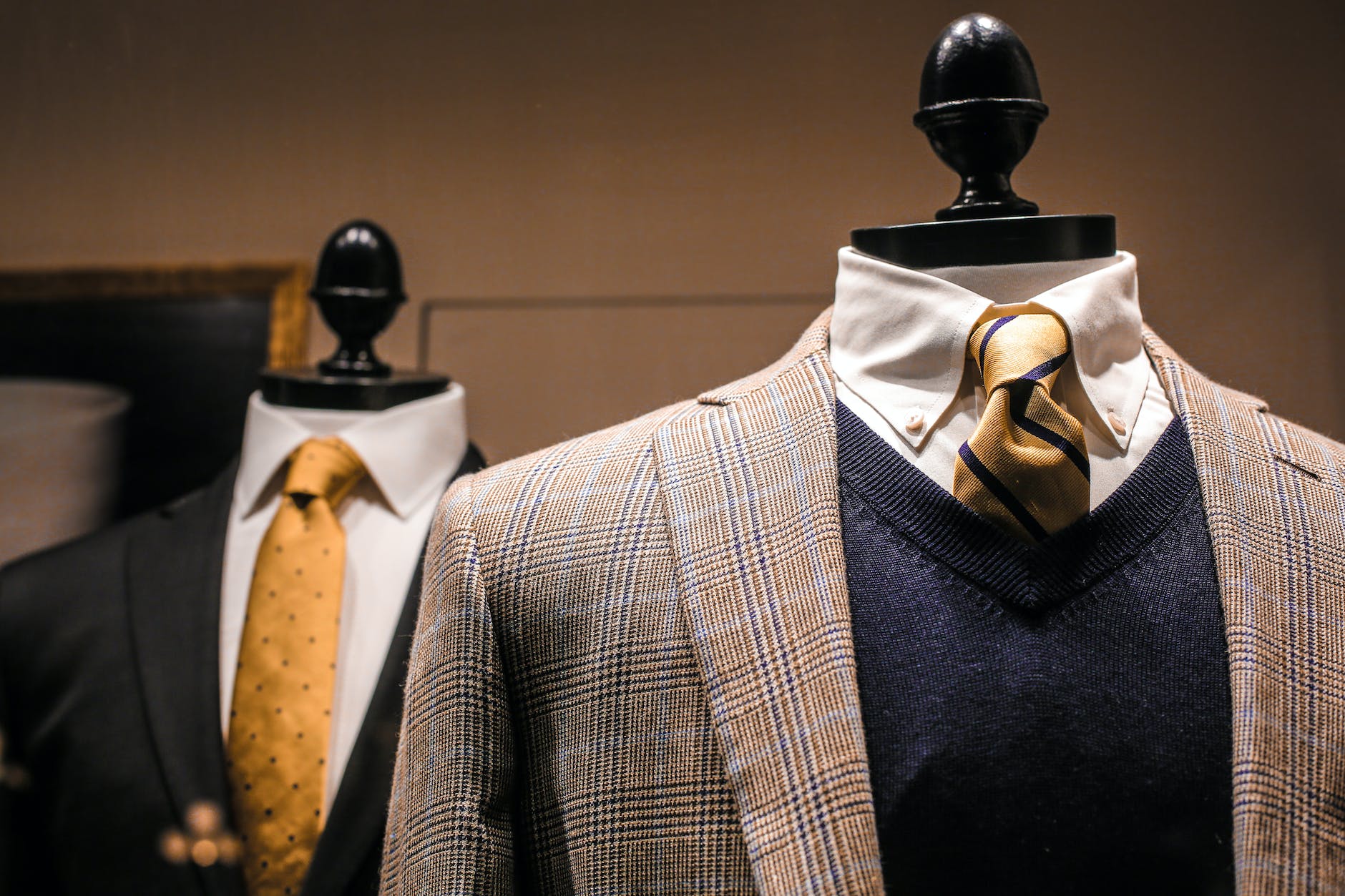
They say that “clothes make the man.” In his 1905 short story “The Czar’s Soliloquy,” Mark Twain wrote that, “without his clothes a man would be nothing at all; the clothes do not merely make the man, the clothes are the man; without them, he is a cipher, a vacancy, a nobody, a nothing.” Twain wasn’t the first to believe that we must dress for success. The first century Roman Rhetorician and scholar Quintilian first coined the proverb “vestis virum facit” (clothes make the man). Quintilian taught that to “dress within the formal limits and with an air gives men . . . authority.” Way back when Quintilian wrote that, it wasn’t new. Eight centuries earlier, the Greek poet Homer wrote that what we wear can give us a fine report in the estimation of others. His hero Odysseus was unrecognizable while clothed as a beggar, but he had “the air of the gods who dwell in the wide heaven” when reclothed in his princely attire.
Twain, Quintilian, and Homer were on to something. We are constantly sending one another silent cues about who we are and how we should be treated through our clothing, grooming, and attitude. Indeed, social scientists have found that we suffer from representative bias. We take a look and tend to make quick assessments of one another. The man in the Armani suit and silk tie with his leather briefcase is clearly a businessman. The woman with glasses in the lab coat, stethoscope draped around her neck, must be a doctor. The young, bearded man in Carhartt pants, flannel shirt, and hiking boots must be a wilderness rec student. The woman in the black robe, rainbow stole, and white collar has got to be the pastor. Representative bias is like a cognitive shortcut. It saves us the effort of asking questions and making reasoned assessments.
In our parable from Matthew’s gospel, a guest gets in serious trouble for failing to wear the appropriate attire to the wedding feast for the King’s son. It’s a tough tale that the Bible scholars have fun debating. Dr. Lance Pap of Brite Divinity Schools calls it a “bizarre little story.” Raj Nadella of Columbia Theological Seminary says this is a parable with “strange aspects.” And Ira Driggers from the Lutheran Theological Southern Seminary claims that this is one story that you won’t find in your children’s Sunday School curriculum. It’s a reading that leaves a pastor like me scratching my head and asking, “Why did I think this would be a good passage to preach on?” We have to take a deep dive into history and scripture before the story begins to make sense. Warning! We are about to wade in some deep waters.
We begin by considering first century weddings. In the ancient Near East, weddings were a source of rejoicing for the whole community. Even within small villages, families would celebrate the wedding of a son by inviting neighbors to a week-long festival of good food, music, and dancing. A royal wedding would have been a truly decadent affair, with fine food, wine, entertainers, and unbridled rejoicing for everyone in the kingdom. An invitation to that event would have been a highly prized sign of great social standing.
Contrary to those norms for first century weddings, when the king in Jesus’s story sent out the invitations, the guests refused to show. What an affront to the royal honor! A second invitation, personally delivered by the king’s servants with a mouth-watering description of the menu, was violently rejected, too. This was an act of treason! First, the king quelled the rebellion, then the wedding was back on. This time, the king invited everyone to attend, good and bad alike. Finally, in a further plot twist, we learn that one of the party guests dishonored the host by showing up without his wedding robe. The ill-clad guest was ejected from the festivities to weep in the darkness outside.
In telling that uncomfortable parable, Jesus was confronting powerful adversaries, the Chief Priests and elders, who had interrupted his teaching in the Temple courts to question his authority. Those religious leaders took one look at Jesus’s broad carpenter’s shoulders and rough callused hands. They heard his Galilean accent. They noticed his simple leather sandals and homespun linen tunic. Their representative bias kicked in. They didn’t see a rabbi. They didn’t see the most insightful Torah scholar of their day. They didn’t see the Messiah. They definitely didn’t see the Son of God. They saw a troublemaker.
With his bizarre little story, Jesus sought to move his critics past their bias to a startling new understanding. “Don’t you know who I am?” Jesus was saying, “The bridegroom is here. The Kingdom is all around us. God’s party is in full swing, right in front of your noses. You’ve got your invitation. Why don’t you come on in, and celebrate?”
Now, we still have to make sense of that poor guest who was ejected for violating the dress code. In a world where we can wear shorts to church, sportscoats are no longer required at nice restaurants, and even Congress has relaxed its standards to accommodate hoodies and sweatpants, we really don’t have a problem with people dressing as they please. To make sense of the whole weird scenario, we need to widen our lens and look elsewhere in scripture.
The Apostle Paul in his Letter to the Ephesians used apparel as a metaphor for the resources we need to face the spiritual battle of daily living. Paul wrote, “take up the whole armor of God. . . belt your waist with truth and put on the breastplate of righteousness. and lace up your sandals in preparation for the gospel of peace. With all of these, take the shield of faith, with which you will be able to quench all the flaming arrows of the evil one. Take the helmet of salvation and the sword of the Spirit, which is the word of God” (Eph. 6:13-17). Paul believed that we must make a daily, intentional effort to ground and clothe ourselves in our faith in Jesus. That party guest may have accepted the invitation to the wedding feast, but he was just kicking tires and testing the water. He didn’t want to do what was needed to obey the king and acknowledge the authority of the son.
I think the Apostle James makes it even easier to understand. In the second chapter of his epistle, James cautions that “faith without works is dead” (James 2:26). When we trust in Jesus, it changes us and our actions. We find ourselves following in his footsteps – welcoming outsiders, helping vulnerable neighbors, feeding hungry people, seeking to forgive, and even praying for our enemies. In Jesus’s parable, the guest was at the wedding, but he wasn’t clothed in righteousness. He demonstrated none of the changed behaviors that become second nature when our faith is rock solid and Jesus is Lord. In fact, if we page ahead to the Book of Revelation 19:8, we are told that the righteous ones, who live according to God’s ways and rejoice in God’s Kingdom forever, they will wear wedding robes.
Given all that historical and biblical context, this complex parable boils down to some simple questions for us. Are we dressed for success? Do we take time daily to clothe ourselves in Christ and take up that whole armor of God? If God were to take a look at our works, would they reflect the changed heart and transformed mind that are so much a part of following Jesus?
The good news is that we don’t have to do anything to garner that much-desired invitation to the party that God is throwing. All are welcome. We dress the part when we exhibit the love for God and the love for neighbor that Jesus endorsed. When we feast upon God’s word in scripture, when we take it to the Lord in prayer, when we worship and sing songs of praise, we are dressed for success. When we join in the CROP Walk, when we take a bouquet of flowers to someone who needs love, when we share our testimony or serve as an elder or deacon, we are dressed for success. We are sending out those silent cues about who we are and how we should be treated. We are representing as followers of Jesus and guests at the wedding. Don’t we want to be there for the celebration? I do!
The heavenly party is on, my friends. The musicians are tuning up for the wedding march. From the kitchen wafts the savory smell of the fatted calf, roasted to perfection. The garlands have been hung, the doors are open, the table is set, the wedding cake is iced, and the champagne is chilled. There is a place card on the table with our name on it. Jesus says, “How about it friends? Put on your party clothes, break out the boogie shoes, and join me for the celebration.”
Resources
Alexander Atkins. “What is the Origin of ‘Clothes Make the Man’?” Medium. October 22, 2017. Accessed online at https://alex-65670.medium.com/what-is-the-origin-of-clothes-make-the-man-7f75e070bf45
Sarah C. Newcomb. “Do the Clothes Make the Man?” in Psychology Today, March 9, 2018. Accessed online at https://www.psychologytoday.com/us/blog/loaded/201803/do-the-clothes-make-the-man
Ira Brent Driggers. “Commentary on Matthew 22:1-14” in Preaching This Week, October 12, 2008. Accessed online at workingpreacher.com.
Lance Pape. “Commentary on Matthew 22:1-14” in Preaching This Week, October 12, 2014. Accessed online at workingpreacher.com.
Raj Nadella. “Commentary on Matthew 22:1-14” in Preaching This Week, October 11, 2020. Accessed online at workingpreacher.com.
Matthew 22:1-14
22 Once more Jesus spoke to them in parables, saying: 2 “The kingdom of heaven may be compared to a king who gave a wedding banquet for his son. 3 He sent his slaves to call those who had been invited to the wedding banquet, but they would not come. 4 Again he sent other slaves, saying, ‘Tell those who have been invited: Look, I have prepared my dinner, my oxen and my fat calves have been slaughtered, and everything is ready; come to the wedding banquet.’ 5 But they made light of it and went away, one to his farm, another to his business, 6 while the rest seized his slaves, mistreated them, and killed them. 7 The king was enraged. He sent his troops, destroyed those murderers, and burned their city. 8 Then he said to his slaves, ‘The wedding is ready, but those invited were not worthy. 9 Go therefore into the main streets, and invite everyone you find to the wedding banquet.’ 10 Those slaves went out into the streets and gathered all whom they found, both good and bad, so the wedding hall was filled with guests. 11 But when the king came in to see the guests, he noticed a man there who was not wearing a wedding robe, 12 and he said to him, ‘Friend, how did you get in here without a wedding robe?’ And he was speechless. 13 Then the king said to the attendants, ‘Bind him hand and foot, and throw him into the outer darkness, where there will be weeping and gnashing of teeth.’ 14 For many are called, but few are chosen.”
 Joann White