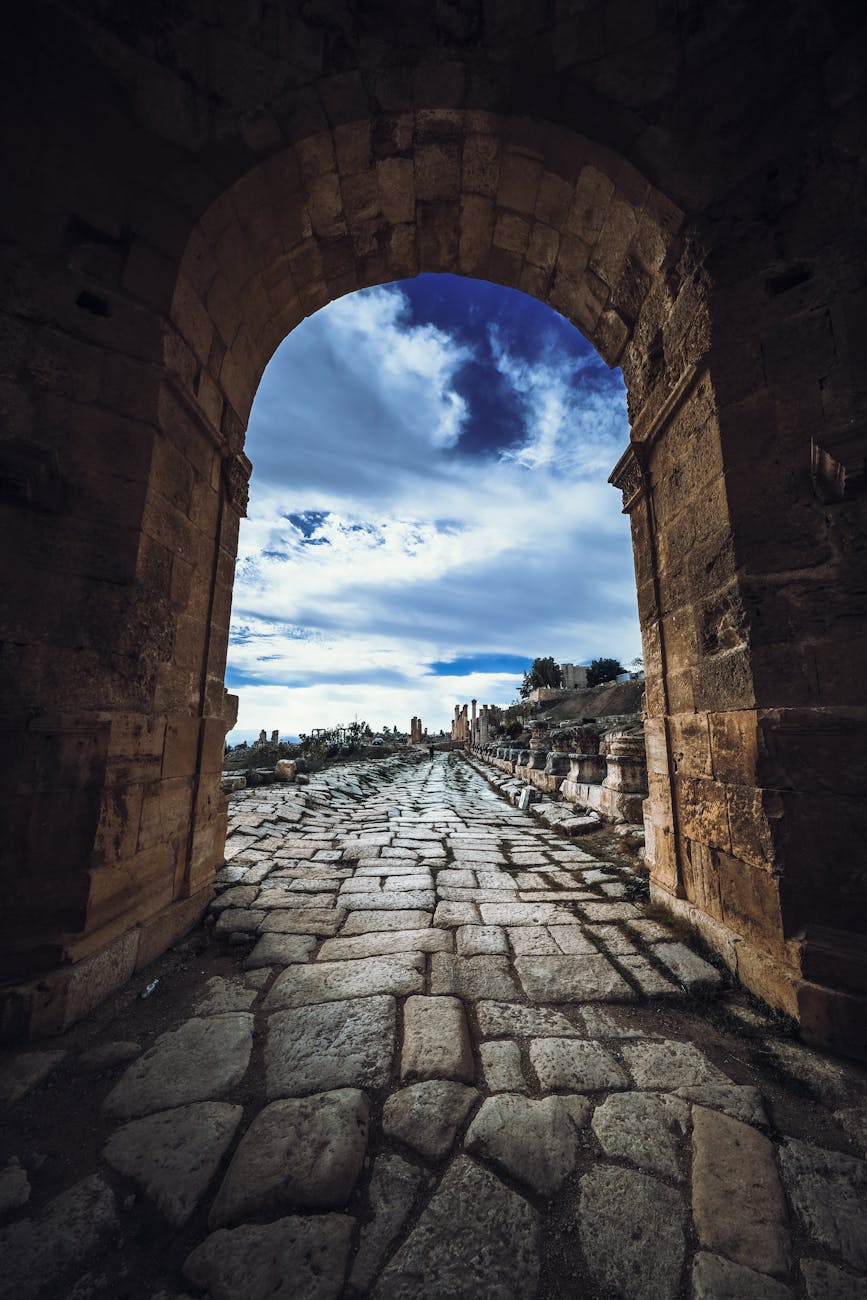
Building Projects

Sabbath Day Thoughts — “Building Projects” Luke 14:25-32

The National Monument of Scotland was never completed. Plans for the memorial atop Carleton Hill in Edinburgh were drawn up more than 200 years ago with the intention of honoring Scotland’s fallen heroes of the Napoleonic War. A massive pillared court, like the Parthenon in Athens, would contain a church, as well as catacombs for the burial of the country’s most significant leaders. By 1822 a foundation was laid, but by 1829, construction ground to a halt, due to insufficient funds. An effort to revive the project in the 1850s likewise failed. The city council eventually became the owners of the partially-finished monument, known as “Edinburgh’s Disgrace.” All that survives of the original grand plans are an immense foundation and twelve colossal Doric columns.

The Cathedral of St. John the Divine in New York City was never completed. One of the largest churches in the world, St. John’s is perched at the top of a flight of wide steps atop one of the highest hills in Manhattan. Standing in front of the massive building, you’ll notice a squat, square, unfinished tower on the south side, but no matching tower on the north. Initial work on the cathedral proceeded from 1892 but competing architectural visions slowed construction. Building efforts stalled entirely at the beginning of World War II and the congregation’s priorities shifted. They saw growing social needs in their community, like poverty, homelessness, and hunger, and they questioned whether they should continue to pour funds into construction. Work resumed in 1979 but stalled in 1997. Today, building efforts focus on preservation and basic improvements at a cost of about $11 million dollars a year. The cathedral is known by the nickname “St. John the Unfinished.”

Closer to home, Boldt Castle, located on Heart Island in the St. Lawrence, was never completed. In 1900, George Boldt, the proprietor of the Waldorf Astoria Hotel, hired 300 laborers to construct a 120-room Rhineland-style castle for his beloved wife Louise. Four years after construction began, Louise suddenly died. The heartbroken husband abandoned the project and never set foot on the island again. For seventy-five years, the site sat abandoned and unfinished until in 1977 the Thousand Islands Bridge Authority acquired the property and opened it for visitors.

In our reading from Luke’s gospel, Jesus used hyperbole— a form of argument that embraces exaggeration—to make a point. Jesus cautioned his disciples about the cost of discipleship with dire-sounding words about family alienation, incomplete building projects, and unwinnable wars. The Lord was on his way to Jerusalem for that fateful final Passover. He was accompanied by large crowds of would-be disciples. The expectations of the crowd about what would go down in Jerusalem were radically different from what Jesus knew would unfold. The crowds thought they would have a ringside seat for healing miracles and earthshaking preaching. Many must have hoped that Jesus would bring change to the religious establishment ensconced in the Temple. Some were hoping for regime change, thinking that Jesus would be a militaristic Messiah, like the Maccabees, who could cast out their Roman overlords. No one wanted to hear that a cross awaited Jesus in Jerusalem. No one wanted to hear that crosses could await many who dared to follow the Lord.

All of Jesus’ apostles would know persecution and eleven of the twelve would face execution. James the Son of Zebedee would be the first, beheaded by the Romans in the year 44. Andrew was crucified on an x-shaped cross in the Greek city of Patras in the year 60. Peter was crucified upside down four years later during the persecution of Christians by the Emperor Nero. Jude was crucified in Persia. Thomas was run through with spears in India. Matthew was impaled and beheaded in Ethiopia. You see my point. The only apostle to die a natural death was John the Beloved, but he and his church were persecuted so harshly that they were forced to flee Israel for the far side of the Mediterranean in what is now western Turkey. Discipleship was costly, indeed, for Jesus’ followers.

It’s hard to know what to do with scripture readings like the one we have today. As first world Christians, not one of us is likely to be executed for our beliefs. Not one of us will be so persecuted for our love of Jesus that we will be forced to flee our homeland. Trey Clark, who teaches preaching at Fuller Seminary says that when we hear Jesus’ words about family alienation and impending oppression or victimization, we are more likely to say “Ouch” than “Amen.” So how do we make sense of it for people here and now?

The circumstances of our lives are very different from Jesus’ first century followers. Taking up our cross and losing our life for the sake of Jesus Christ may look more like death by a thousand paper cuts than a state sponsored execution. Losing our life for Christ involves recognizing that our true purpose and fulfillment are not found in worldly desires but in serving God and others. Authentic discipleship requires a willingness to deny ourselves and take up our cross daily. By embracing the Way of Jesus, we die to self, but we find true life and purpose. The Apostle Paul, who would lose his head for the sake of the gospel, put it this way, “I have been crucified with Christ and I no longer live, but Christ lives in me. The life I now live in the body, I live by faith in the Son of God, who loved me and gave himself for me.” There are millions of everyday folks out there, like you and me, who may not have literally died for Jesus’s sake, but they show singular commitment and deep allegiance by following the Lord in costly ways. Jesus lives in them.  

I would like to celebrate those thousand paper cuts, the everyday ways that I see people denying themselves and taking up their cross for the sake of the gospel. I’ll name just a few and you can respond with an “Amen!” or an “Ouch!”

We could spend our Sunday mornings paddling our canoe or hitting the trail, doing a home improvement project or having a second cup of coffee, but we choose to come to church and worship our awesome God, and we carry the cross.

We could spend our Wednesday evenings watching Jeopardy and Wheel of Fortune, but we make a joyful noise to the Lord with choir or meet with the deacons or come out for Committee Night, and we carry the cross.

In a world where income inequality is accepted, even as it grows and grows, we could ignore the need of our neighbors, but we share our food offerings and donate two cents a meal for hunger programs, we grow veggies in our Jubilee Garden to share at the Food Pantry and cook lunch for the Community Lunch Box, and we carry the cross.

Living in the remote beauty of the Adirondacks, we could close our eyes to the suffering and injustice of our world, but we advocate for the war weary people of Ukraine, and write letters for the starving children of Gaza, we accompany vulnerable refugees and support the widows and children of Mzuzu Malawi, and we carry the cross.

I could say more, but you see my point. We carry the cross. We die to self and live for Jesus, and when we follow the Lord, yielding our will to God’s will, Jesus lives in us.

Our deaths by a thousand paper cuts begin to build something. It isn’t the National Monument of Scotland, better known as Edinburgh’s disgrace. It isn’t the Cathedral of St. John the Divine, aka St. John the Unfinished. It isn’t even Boldt Castle, although New York State has poured millions of our tax dollars into making the castle an accessible tourist destination. Our deaths by a thousand papercuts build a world that looks like Christ’s Kingdom, where the stranger is welcomed, the hungry are fed, the sick and lonely are visited, and God is glorified. That’s a building project that I want to see through to completion. How about you?

Let’s pick up our crosses, my friends. There is building work to be done.

Resources

E. Trey Clark. “Commentary on Luke 14:25-33” in Preaching This Week, Sept. 7, 2025. Accessed online at https://www.workingpreacher.org/commentaries/revised-common-lectionary/ordinary-23-3/commentary-on-luke-1425-33-6

Radhika Jhamaria. “15 Famous Unfinished Projects in Architectural History” in Rethinking the Future. Accessed online at https://www.re-thinkingthefuture.com/architects-lounge/a1289-15-famous-unfinished-projects-in-architectural-history-2/

Ellen Newman. “New York City’s St. John the Unfinished” in Hidden in Plain Sight, July 11, 2019. Accessed online at https://hidden-insite.com/2019/07/08/new-york-citys-st-john-the-unfinished/

Jenna Intersemone. “Massive Building Projects That Were Never Finished” in House Digest, Dec. 7, 2021. Accessed online at https://www.housedigest.com/663379/massive-building-projects-that-were-never-finished/ Edinburgh

Jack Wellman. “How Did the 12 Apostles Die?” in What Christians Want to Know. https://www.whatchristianswanttoknow.com/how-did-the-12-apostles-die-a-bible-study/


Luke 14:25-32

25 Now large crowds were traveling with him, and he turned and said to them, 26 “Whoever comes to me and does not hate father and mother, wife and children, brothers and sisters, yes, and even life itself, cannot be my disciple. 27 Whoever does not carry the cross and follow me cannot be my disciple. 28 For which of you, intending to build a tower, does not first sit down and estimate the cost, to see whether he has enough to complete it? 29 Otherwise, when he has laid a foundation and is not able to finish, all who see it will begin to ridicule him, 30 saying, ‘This fellow began to build and was not able to finish.’ 31 Or what king, going out to wage war against another king, will not sit down first and consider whether he is able with ten thousand to oppose the one who comes against him with twenty thousand? 32 If he cannot, then while the other is still far away, he sends a delegation and asks for the terms of peace. 


Photo by Ron Lach on Pexels.com

Blessing or Woe?

Sabbath Day Thoughts — “Blessing or Woe?” Luke 6:17-26

Wednesday afternoons are busy at Baldwin House. That’s when our neighbors with more month than money head to Grace Pantry. The pantry provides them with non-food necessities free of charge, items that we find essential that can’t be purchased with SNAP benefits. At Grace Pantry, new Moms pick up diapers and baby wipes. Other folks may need shampoo, toothpaste, or bath soap. Everyone needs toilet paper and paper towels. The volunteers at Grace Pantry report that both demand and costs have been on the rise, due to inflation, rent increases, and an economic recovery that hasn’t truly trickled down to the poor.

Two days a week, the Clint McCoy Feeding Center in Mzuzu, Malawi serves eighty local children a warm meal, meeting the nutritional need of kids who are malnourished. Lengthy droughts, followed by flooding rains, have caused food shortages in Malawi, and the AIDS epidemic has created a generation of orphans whose needs are too much for local villages. The feeding center provides a modest meal of fortified porridge and tea to youngsters who would otherwise not eat that day. As the meal is shared, the center rings with the laughter and joy of happy young voices. They sing songs, play simple games, and eat their fill.

Marge likes Tuesdays best because that’s the day her Meals on Wheels volunteer comes to visit. Marge isn’t hungry, but after her husband died, she stopped cooking. It’s a lot of work and it hardly seems worthwhile cooking for just one. Marge sits by the window alone and waits. She turns down the tv because she wants to be sure she hears the knock. A kind-hearted volunteer arrives with a big smile and takes time to share some sweet chitchat about the weather, family, and community news. When Marge tucks in to her dinner later, she is thankful for the food and even more so for her Meals on Wheels friend.

In our gospel lesson, Jesus descended the mountain and waded into the crowd that awaited him on the plain. There, he intentionally entered into the need and suffering of his world with healing and bold words of comfort. Jesus blessed the poor, hungry, grieving, and hated people of the community. In a first century world where affliction was typically attributed to sinfulness or a sign of affliction by God, Jesus’ words must have left the disciples scratching their heads. But for those who suffered, Jesus’ words were an assurance that God saw them, loved them, and longed for them to thrive.

If Jesus’ words of blessing stunned his followers, then his words of woe might have made them wonder what in the world Jesus was talking about. In those days, to be rich, filled with good things, joyful, and well-respected was a blessing not a woe. Your abundance and status were sure signs of a healthy relationship with God and a guarantee that you deserved every accolade that came your way. I suspect that we don’t like Jesus’ woes any more than his disciples did. After all, we may not be rich, but even the poorest people among us are comfortable and well-fed. We have plenty to laugh about. We can congratulate ourselves on our accomplishments and thank God for life’s sweetness. Where’s the harm in that?

In his paraphrase of the Bible, The Message, the late Rev. Dr. Eugene Peterson translated Jesus’ woes like this:

“It’s trouble ahead if you think you have it made. What you have is all you’ll ever get.

And it’s trouble ahead if you’re satisfied with yourself. Your self will not satisfy you for long.

And it’s trouble ahead if you think life’s all fun and games. There’s suffering to be met, and you’re going to meet it.

There’s trouble ahead when you live only for the approval of others, saying what flatters them, doing what indulges them. Popularity contests are not truth contests—look how many scoundrel preachers were approved by your ancestors! Your task is to be true, not popular.”

The trouble with our affluence, the trouble with our plenty, the trouble with our non-stop laughter, the trouble with our playing for the court of public opinion is that we can lose all perspective.  Instead of acknowledging our utter dependence upon God, we trust in our bank accounts, our stockpile of possessions, and all that good press we get. Woe to us when we believe money or things can solve all our problems.  Woe to us when we laugh while the world wails.  Woe to us when we find ourselves saying and doing unconscionable things to please the court of public opinion.

Historian and Bible scholar Justo Gonzalez read Jesus’ Sermon on the Plain and said, this is the “hard-hitting gospel.” This is the gospel that 2,000 years later still rings out as an urgent wake-up call. This is the gospel that makes us uncomfortable and calls us to change our ways if we wish to truly be part of God’s Kingdom. When Jesus comes to the plain, he levels with us, delivering a sucker punch that undermines everything that we think is right with the world.

Throughout his ministry, Jesus made the assurance of God’s love and presence a reality for those who were poor, hungry, grieving, and hated. From providing free healthcare to all comers to feeding the 5,000 with a marvelous multiplication of bread and fish, from restoring a widow’s only son to life to welcoming tax collectors, lepers, and demoniacs, Jesus was all about blessing the vulnerable people of his day. In those intentional actions, in that three-year object lesson of ministry, Jesus hoped that his disciples would begin to understand the beautiful topsy-turvy world that he longed to forge. Jesus believed we could make on earth a world that anticipates God’s Kingdom where blessing abounds for those who suffer and everybody is a neighbor, deserving of our care, time, love, and respect.

The disciples understood the values that Jesus hoped to impart in his blessings and woes. That’s why they chose to enter into the suffering of their world. We shouldn’t forget that the first office of the church—the role of deacon—was created to feed hungry widows. And the Apostle Paul solicited generous donations from his Gentile churches to feed the victims of famine in Judea. And Peter worked a miracle of resurrection, raising the Disciple Dorcas, so that she could resume her love and care for the impoverished widows of Joppa. In countless acts of care and generosity, those first Christians put God first and used the resources and authority at their disposal to be a blessing to those who needed it most.

More than any other gospel, Luke warns us of the dangers of our relative affluence, highlighting hard-hitting teachings from Jesus like the Sermon on the Plain. It’s tempting to turn the page and disregard what Jesus had to say, but the Lord had hope for we who have plenty. Jesus trusted that we would know what truly matters most. Jesus hoped we would follow him and those first disciples. We would put our resources to work in His purpose. We would dare to enter into the suffering of others and seek to build that world where everyone gets blessed. Lord, hasten the day.

This year, we will have three special offerings to benefit Grace Pantry, where our neighbors with more month than money pick up essential items, free of charge. In March, we’ll be collecting toothpaste and toothbrushes. In August, we’ll be looking for paper goods: toilet paper, paper towels, and napkins. In November, we’ll ask for donations of socks, which are one of the most sought-after resources at the pantry. Watch for the offering boxes at the side entrance and some Minutes for Mission from Pam Martin. Let’s bless our neighbors.

In May, we’ll remember the Women of Grace, whose ministries support the most vulnerable residents of Malawi, its impoverished widows and orphans. Their diverse efforts serve widows with cook stoves, metal roofs, sanitary outhouses, micro loans for small businesses, and sewing skills and supplies to supplement income. Their diverse efforts also serve orphans with literacy programs, books, and, of course, the Clint McCoy Feeding Cener, where 80 hungry children are fed twice weekly at the cost of about $250-a-month. Let’s bless our neighbors.

Every day, people who are grieving and lonely cross our paths. They live across the street in the DeChantal or up at Will Rogers. They need the skilled nursing of Elderwood or Mercy Care. They wait at home for Meals on Wheels delivery, cherishing the social interaction even more than the food. They are our family members: the aging aunt who never married, the grandpa who never recovered from the death of grandma, the college student who feels far from home. They may even come to church. Let’s open our eyes and bless our neighbors.

When the poor, hungry, grieving, and hated neighbors of our world get blessed, the transformation begins. Wool socks warm cold feet. African orphans rejoice. No one feels alone and unloved. The hard-hitting gospel becomes a call to action. As we dare to care and share and get involved, we remind our vulnerable neighbors that God sees them, loves them, and longs for them to thrive. As blessings abound, this world begins to look like the Kingdom that Jesus would have us serve. May it be so.

Resources

Susan Henrich. “Commentary on Luke 6:17-26” in Preaching This Week, Feb. 13, 2022. Accessed online at https://www.workingpreacher.org/commentaries/revised-common-lectionary/sixth-sunday-after-epiphany-3/commentary-on-luke-617-26-2

Mary Hinkle Shore. “Commentary on Luke 6:17-26” in Preaching This Week, Feb. 16, 2025. Accessed online at https://www.workingpreacher.org/commentaries/revised-common-lectionary/sixth-sunday-after-epiphany-3/commentary-on-luke-617-26-3

Keith Erickson. Theological Perspective on Luke 6:17-26 in Feasting on the Gospels, Luke. Vol. 1. Westminster John Knox Press, 2014.

Thomas Edward Frank. Pastoral Perspective on Luke 6:17-26 in Feasting on the Gospels, Luke. Vol. 1. Westminster John Knox Press, 2014.


Luke 6:17-26

17 He came down with them and stood on a level place with a great crowd of his disciples and a great multitude of people from all Judea, Jerusalem, and the coast of Tyre and Sidon. 18 They had come to hear him and to be healed of their diseases, and those who were troubled with unclean spirits were cured. 19 And everyone in the crowd was trying to touch him, for power came out from him and healed all of them.

Blessings and Woes

20 Then he looked up at his disciples and said:

“Blessed are you who are poor,
    for yours is the kingdom of God.
21 “Blessed are you who are hungry now,
    for you will be filled.
“Blessed are you who weep now,
    for you will laugh.

22 “Blessed are you when people hate you and when they exclude you, revile you, and defame you[a] on account of the Son of Man. 23 Rejoice on that day and leap for joy, for surely your reward is great in heaven, for that is how their ancestors treated the prophets.

24 “But woe to you who are rich,
    for you have received your consolation.
25 “Woe to you who are full now,
    for you will be hungry.
“Woe to you who are laughing now,
    for you will mourn and weep.

26 “Woe to you when all speak well of you, for that is how their ancestors treated the false prophets.


Photo by Kindel Media on Pexels.com

Come as a Child

Sabbath Day Thoughts — “Come as a Child” Mark 9:30-37

Perhaps the only positive outcome of the COVID-19 pandemic was a temporary decrease in the number of American children living in poverty. Federal economic security programs kept 53 million people above the poverty line in both 2020 and 2021. Child tax credits, increased food assistance, the extension of unemployment benefits, and three rounds of stimulus checks drove child poverty down to an all-time low of 5.2%. With the expiration of these programs in 2022, child poverty was again on the rise. According to the Annie E. Casie Foundation, 16% of American children now live in poverty. That’s 11.6 million kids. New York’s child poverty rates are among the worst in the nation. We rank forty-first out of the fifty states.

The likelihood of child poverty is higher here in the North Country. In Franklin County, 21.3% of our children live in poverty. Those numbers are higher for families of color. About 32% of racial ethnic children live below the federal poverty line. The impact of child poverty can last a lifetime. Impoverished families have less access to healthy food and quality medical care. A poverty diet is high in processed foods, fat, and carbohydrates. That’s a recipe for childhood obesity. Children in poverty are more likely to live in substandard housing, experience homelessness, and be exposed to crime and substance abuse in at-risk neighborhoods. Children in poverty have lower readiness when entering school and are more likely to have developmental challenges. Families in poverty live in chronic stress that leaves kids feeling anxious, depressed, and frightened.

When we further consider families who work in low wage jobs that lift them above the federal poverty threshold but don’t pay enough to meet monthly expenses, then we begin to see the enormity of the child poverty crisis. The Ouimette family of AuSable Forks is a case in point. William works for the town of Jay’s highway department and also serves as a volunteer firefighter. Miranda is a stay-at-home mom to their three kids between the ages of 6 and 9. William says, “It’s harder and harder for people just to get by on a job like working for the state or the town or anything now.” The Ouimettes struggle to pay for essential things like car repairs and new items for their kids. They fear they will be priced out of the home where their family has resided for generations.

Child poverty is nothing new. In Jesus’ day, 90% of people lived in poverty with little resource for rising above the circumstance of their birth. Within that impoverished time, children were particularly vulnerable. They were considered the lowest status members of society. Children lacked legal standing and protection as individuals and were instead deemed the property of their fathers. Indeed, children could be sold into slavery to settle a father’s debts. Although children were seen as a gift from God, a safeguard against extreme poverty in old age, children were expected to be unconditionally obedient and subject to the strict discipline of parents. The Book of Proverbs instructs, “Those who spare the rod hate their children, but those who love them are diligent to discipline them.” According to Exodus and Leviticus, the punishment for children who curse their parents or fail to honor them was death – judgment and stoning by the community. In the Gentile world, unwanted newborns were routinely exposed, left out in the open to die—or to be taken in by strangers and raised as slaves or prostitutes.

Given the low standing of children in the disciples’ world, we can imagine the shock that they felt when Jesus placed a child among them as someone to be welcomed and emulated. In today’s gospel reading, Jesus warned his friends of the suffering and death that would await him in Jerusalem. But along the way to Capernaum, instead of discussing better ways to protect Jesus and guard against betrayal, the twelve argued about who among them was the greatest. They compared genealogies and miracles, sermons and bank accounts, patrons and illustrious acquaintances, all in an effort to assert their personal worth. That child that Jesus held in his arms didn’t make any sense. Why would Jesus identify with a child? Why would he expect them to welcome and serve the lowest status person in the room?

Biblical scholar J.D.M. Derrett says that when Jesus scooped the little child up in his arms, Jesus was engaging in a symbolic act. In the Hebrew tradition, receiving or placing someone else’s child on your knee or in your embrace in front of the witnessing community was a rite of adoption.  We see this in the Book of Genesis, when the childless Sarah and Rebecca brought their servant women to their husbands to conceive children, insisting that those children would be born “on their knees” as rightful sons of the patriarchs. If J.D.M. Derrett is right, then Jesus was saying that the most vulnerable of people, like children, especially belong to Jesus. The disciples could not love and honor him without loving and honoring them.

Beyond that simple call to humble service, Jesus was reminding his friends, many of whom had left their families behind to follow him, that he had adopted them. They were his children. As his sons and daughters, they must demonstrate toward him the obedience, honor, and respect that they would a father. The disciples were meant to be brothers and sisters in Jesus’ family, not rivals for greatness. That tender embrace that the child found in Jesus’ arms reflected the love and support that the disciples found in Christ, who welcomed them, not because of their great achievements, but simply because he chose to love them, regardless of their status. In that unconditional love, they would find the courage and inspiration to be servants of all.

As messages go, today’s reading is clear. The “least of these” are deserving of the service and welcome that we would extend to the Lord. When we see vulnerable neighbors, we are to think of Jesus, responding with the sort of compassion and care that were the hallmark of Jesus’ earthly ministry. Beyond that, Jesus would have his followers see that in God’s Kingdom there is no us and them—no low-status children and high-status disciples. Rather, we are all God’s children. The social and psychological constructs that we create to assert our greatness—that separate rich from poor, have from have-nots, first world from third world—those constructs are false dichotomies. We are kin, all children of an infinitely loving God. We belong to one another, just as we belong to God.

If the pandemic taught us anything, it is that we can end childhood poverty. If we can lower the rate of childhood poverty to 5.2% in only two years, imagine what we could do if people really cared, if we had public policy that regarded vulnerable children the way that Jesus embraced that child. There is enough. We just lack the social and political will to make a lasting difference in the lives of families who need it most. We do not believe that every child is deserving of unconditional love and welcome. We pitch a paltry ten percent of our federal budget at programs that address poverty while income inequality in our nation—the gap between rich and poor—grows and grows and grows. Lord, have mercy upon us.

Jesus thinks his disciples can do better. We can do better. He imagines a world where no child lives in poverty. It’s a world where our most vulnerable neighbors are known and held, blessed and helped. It’s a world where disciples realize that true greatness is found not in our professional titles or advanced degrees, not in our big bank accounts or public accolades, not in our athletic prowess or our physical beauty. It’s a world where the greatest of all are servants of all. It’s a world that looks a lot like his Father’s Kingdom. He hopes that we will imagine that world, too. May it be so.

Resources

Danilo Trisi. “Government’s Pandemic Response Turned a Would-Be Poverty Surge into a Record Poverty Decline” in Center on Budget and Policy Priorities Reports, August 29, 2023. Accessed online at Government’s Pandemic Response Turned a Would-Be Poverty Surge Into a Record Poverty Decline | Center on Budget and Policy Priorities (cbpp.org)

Alek LaShomb. “Efforts to Address Child Poverty in New York’s North Country” in WCAX News, June 14, 2024. Accessed online at Efforts to address child poverty in New York’s North Country (wcax.com)

Courtney V. Buggs. “Commentary on Mark 9:30-37” in Preaching This Week, Sept. 22, 2024. Accessed online at Commentary on Mark 9:30-37 – Working Preacher from Luther Seminary

Micah D. Kiel. “Commentary on Mark 9:30-37” in Preaching This Week, Sept. 20, 2015. Accessed online at Commentary on Mark 9:30-37 – Working Preacher from Luther Seminary

C. Clifton Black. “Commentary on Mark 9:30-37” in Preaching This Week, Sept. 19, 2021. Accessed online at Commentary on Mark 9:30-37 – Working Preacher from Luther Seminary

Thomas P. Napoli. “New York Children in Need,” a report of the Office of the NYS Comptroller, May 2024. Accessed online at Report Titl (ny.gov)


Mark 9:30-37

30 They went on from there and passed through Galilee. He did not want anyone to know it, 31 for he was teaching his disciples, saying to them, “The Son of Man is to be betrayed into human hands, and they will kill him, and three days after being killed, he will rise again.” 32 But they did not understand what he was saying and were afraid to ask him. 33 Then they came to Capernaum, and when he was in the house he asked them, “What were you arguing about on the way?” 34 But they were silent, for on the way they had argued with one another who was the greatest. 35 He sat down, called the twelve, and said to them, “Whoever wants to be first must be last of all and servant of all.” 36 Then he took a little child and put it among them, and taking it in his arms he said to them, 37 “Whoever welcomes one such child in my name welcomes me, and whoever welcomes me welcomes not me but the one who sent me.”


Photo by Pixabay on Pexels.com

A Time to Wait

Sabbath Day Thoughts — “A Time to Wait” Acts 1:1-11

for all the Moms out there

Waiting isn’t easy. Just ask any Mom. She waited through nine months of pregnancy. The first trimester brought big changes. Breasts tender. Taste and smell heightened. Early morning nausea. Hormone-induced mood swings, headaches, and even acne. Don’t forget the digestive challenges – bloating, gas, and constipation.

The second trimester was better. But, oh, the appetite! Eating for two or sending the spouse out for late-night ice cream and pickles. The leg cramps, stuffy nose, and heartburn kicked in. An ever-growing abdomen turned an innie bellybutton into an outie. Big ligaments in hips, groin, and abdomen stretched uncomfortably to accommodate the growing womb. The stretch marks appeared, no matter how much cocoa butter was applied.

The third trimester was the homestretch. The baby’s kicks felt like an internal tap dance. Sleep was hard to come by. Every restroom was a welcome pitstop. The wall of exhaustion followed even simple efforts, like walking the dog or shopping for groceries. Braxton Hicks contractions launched a torrent of worry—is this it? We won’t even go into the final week or the actual delivery. Suffice it to say that Moms can affirm the words of the late rocker Tom Petty, “The waiting is the hardest part.”

In today’s reading from the Acts of the Apostles, Jesus told his followers to wait in Jerusalem for the promise of the Father. Jesus didn’t even give his friends a timeline. He just told them to stay put and wait for God to take action.

I’m sure that the disciples didn’t like the prospect of waiting any more than a pregnant woman does. In the forty days since the resurrection, Jesus had been with his friends, interpreting the scriptures, and helping them to see his suffering and death as part of God’s ultimate plan for salvation.  Jesus’ friends had gotten accustomed to having the risen Lord around. Perhaps they even hoped he would stay forever. That’s why they asked, “Is this the time when you will restore the kingdom to Israel?” They hoped that Jesus would use his holy power to rout the Romans and restore David’s Kingdom. Jesus put a damper on their hopes and ambition.  The only power the apostles would get was the holy power that the Spirit would bring. Until the Spirit’s arrival, they needed to stay put and wait – without him.

According to our reading, as Jesus ascended to the Father, the disciples stood around looking up. The Bible scholars like to say that the exaltation of Jesus’ ascension vindicates the humiliation of the crucifixion. But for the disciples, I suspect that watching their friend disappear felt just as frightening and uncomfortable as it was exhilarating and awe-inspiring. Returning to the upper room and waiting for an unspecified period of time for the next big thing may have made the disciples feel as restless and anxious as a Mom in her thirty-ninth week of pregnancy.

Of course, we don’t like waiting any more than our pregnant Moms or the post-Ascension disciples did. To be human is to wait. There’s the incidental waiting of every day: for the microwave to finish cooking the popcorn, for the cashier to ring us through at the Grand Union, for the last night of frost so that we can plant the garden. And there is tougher waiting: for responses to our college applications, for our savings to reach that perfect point for retirement, for the doctor to call with test results. Then there’s existential waiting: We wait for the nations to beat their swords into plowshares; We wait for the world to wake up to the growing climate crisis; we wait (like the disciples) for the coming Kingdom, when we shall at last live into God’s perfect plan for creation. To live is to wait, even though we don’t like it very much, even though it can make us impatient and frustrated, annoyed and angry.

We don’t like to hear that waiting is part of God’s plan. Scripture is filled with stories of folks forced to wait, not very patiently. Abram and Sarai were a couple of childless Arameans when God told them to head to Israel so that God could make a great nation of them. God didn’t tell them that they would both be old as dirt and good as dead by the time baby Isaac arrived. When God led the Israelites out of slavery in Egypt, the people had visions of soon settling in a land of milk and honey. No one told them it would take forty years to get there. David, who would become Israel’s greatest king, may have been anointed for leadership as a shepherd boy, but he would be a grizzled veteran of many battles before he would wear the crown. The Hebrew people had to wait through half a century of exile in Babylon. That’s why Isaiah had to remind them, “Those who wait on the Lord shall renew their strength. They shall rise up on wings like eagles; they shall run and not grow weary; they shall walk and not grow faint.”

If waiting is part of God’s plan, then it stands to reason that it must have a purpose. Maybe Abram and Sarai needed to be that old before they trusted God to provide. The Israelites needed forty years in the wilderness to learn those ten commandments and leave the ways of Egypt behind. David needed all those years of struggle and persecution to unite the tribes of Israel into a mighty nation. The exiles needed a long time-out from the Promised Land to understand the generosity of God and the goodness of a life lived in righteousness.

So, when the disciples were told to wait without Jesus for what God would do next, the most discerning among them may have thought, “Aha! There’s a reason for this.” If we were to continue to read in the Acts of the Apostles, we’d learn that the disciples followed Jesus’ instruction to return to Jerusalem. They headed to the upper room where they were staying. There they did a lot of praying, along with the women. They realized that, without Judas, they weren’t complete. They needed a twelfth disciple. After much debate and the casting of lots, they chose Mathias.

We can trust that there were other things that happened in those ten days of waiting. There were shared meals and the goodness of community. There was the telling of memories and the joy that came with remembering all that Jesus had said and done. They realized that without God’s will and work, they would never fill those big sandals, but they trusted that somehow God could be at work to make them more. By day ten, they had stopped being disciples and they had become something new. Something poised on the edge of action. The waiting was hard, but it was important.

On this Mother’s Day, the Moms among us can testify to both the challenges of those nine months of pregnancy and the importance of the waiting time. Yes, their bodies needed to change to prepare for the monumental task of giving birth. Yet those nine months were also filled with dreaming and planning. There was news to share, first with that inner circle of family and confidantes and then with others. There was work to do: a nursery to prepare, clothes to buy, little sweaters to knit, the huge supply of diapers to squirrel away. There were childbirth classes, lessons learned from their own mothers, and all the doctor’s visits. There was the deepening bond of marriage as the two who had been made one would soon become a family. There were prayers, many, many prayers. Somewhere along the way, those women stopped being whom they had always been. They changed; they transformed into something more. They became Moms. The waiting was hard, but it was important.

We don’t like waiting any more than our pregnant Moms or the post-Ascension disciples did, but I think the convergence of Mother’s Day and Ascension Sunday can help us to see our waiting times in a new light. As we do, we just may feel a little less impatient and frustrated, annoyed and angry. Yes, the waiting is the hardest part; yet, maybe we need to wait. Maybe we aren’t ready yet. There may be a lesson we have still to learn, a self-understanding that is yet to develop, a worldview that we cannot see, a God-view that is yet to be disclosed. One day, we’ll get it. We’ll trust more and grumble less, knowing that God is faithful. We’ll be transformed, even as we wait. We’ll grow—slowly, achingly, beautifully—into the people God created us to be. May it be so.

Resources

Nicole Harris. “Your Pregnancy Symptoms Week by Week” in Parents, October 23, 2022. Accessed online at Your Pregnancy Symptoms Week by Week (parents.com)

Kristi Walker. “What Does It Mean to Wait on the Lord?” in Christianity.com, June 24, 2022. Accessed online at What Does it Mean to Wait on the Lord? (christianity.com)

Frank L. Crouch. “Commentary on Acts 1:1-11” in Preaching This Week, May 5, 2016. Accessed online at Commentary on Acts 1:1-11 – Working Preacher from Luther Seminary

F. Scott Spencer. “Commentary on Acts 1:1-11” in Preaching This Week, May 9, 2024. Accessed online at Commentary on Acts 1:1-11 – Working Preacher from Luther Seminary

William Barclay. Acts 1:1-11 in The Acts of the Apostles (The New Daily Bible Study). Louisville: Westminster John Knox Press, 2015.


Acts 1:1-11

1In the first book, Theophilus, I wrote about all that Jesus did and taught from the beginning 2until the day when he was taken up to heaven, after giving instructions through the Holy Spirit to the apostles whom he had chosen. 3After his suffering he presented himself alive to them by many convincing proofs, appearing to them during forty days and speaking about the kingdom of God. 4While staying with them, he ordered them not to leave Jerusalem, but to wait there for the promise of the Father. “This,” he said, “is what you have heard from me; 5for John baptized with water, but you will be baptized with the Holy Spirit not many days from now.”

6So when they had come together, they asked him, “Lord, is this the time when you will restore the kingdom to Israel?” 7He replied, “It is not for you to know the times or periods that the Father has set by his own authority. 8But you will receive power when the Holy Spirit has come upon you; and you will be my witnesses in Jerusalem, in all Judea and Samaria, and to the ends of the earth.” 9When he had said this, as they were watching, he was lifted up, and a cloud took him out of their sight. 10While he was going and they were gazing up toward heaven, suddenly two men in white robes stood by them. 11They said, “Men of Galilee, why do you stand looking up toward heaven? This Jesus, who has been taken up from you into heaven, will come in the same way as you saw him go into heaven.”


Photo by Jonathan Borba on Pexels.com

Start Where You Are At

Sabbath Day Thoughts — “Start Where You Are At” Luke 24:36b-48

Krista comes to church on Sunday mornings feeling worn out. She works full-time. She and her husband are raising three very busy school-age children. Last year, Krista’s Mom died unexpectedly. Krista has been helping her father prepare to sell their family home. Krista is constantly on the move. Working, grocery shopping, cooking, and taxying children to extra-curricular activities. Cleaning out the attic at her Dad’s place, running a yard sale, and making many runs to the dump. She misses her Mom.

Charlie comes to church on Sunday mornings feeling stressed out. It’s his only day off from a job that gets bigger every year. So many people depend upon him. His boss expects him to work miracles of productivity and profit, even when he is desperately short-staffed. His colleagues count on him to cast the vision and manage the team. With a big mortgage and kids soon headed to college, his family needs the substantial paycheck. At some point, a job that once felt interesting and fulfilling began to feel like a recipe for burnout, and there doesn’t seem to be much that he can do about it.

Rita and Nate come to church on Sunday morning feeling worried and afraid. Retired now, they are committed to a legion of community concerns: volunteering at the soup kitchen, caring for pets at the animal shelter, helping out for Winter Carnival, and more. Being retired, they spend a LOT of time together, more than ever before in the course of their long marriage. Between annoying habits and differing opinions, it isn’t always easy. Now, one of them has a health crisis. They are on a long journey through the scary, inhospitable realm of healthcare. It feels overwhelming.

Luke tells us how the disciples felt on Easter evening: filled with fear and doubt. They had made a Passover journey to Jerusalem with their friend and rabbi Jesus, whom they believed to be the Messiah. They entered the city feeling hopeful, triumphant even. Yet, their week had taken a foreboding and sinister turn. Tension mounted, day by day.  Powerful opponents waited in the Temple courts to challenge Jesus’ authority, seeking to entrap and discredit him. When they could not best Jesus with deceitful words, they put a price on his head. For thirty pieces of silver, one of them had betrayed him. A kiss sent Jesus to the cross while everyone ran for their lives, all love and loyalty forgotten. Beyond fear and doubt, Jesus’ friends were filled with despair, grief, and the bitter self-recrimination that comes when we know that we have failed those whom we love most.

They were ready to give up and go home, slipping out of the city in anonymous pairs as soon as the time was right. But Easter morning brought confusion and anxiety. Some of the women returned from the gravesite, telling a curious tale of an empty tomb and heavenly messengers. “He is risen!” cried Mary Magdalene, trying to shake them from the stupor of grief, but they could not listen and did not believe. Later, Cleopas and his companion returned with an equally implausible story of Jesus on the road, opening the scriptures to them and sharing an evening meal. In our reading from Luke’s gospel, the disciples had their own terrifying encounter with the risen Lord. Despite the locked door and the secrecy of their location, Jesus found them and stood among them with the greeting of peace.

When Lucy Lind Hogan, who taught at Wesley Seminary in Washington for many years, teaches about today’s scripture reading, she likes to use five “e” words: encounter, explanation, eating, enlightenment, and exit. It begins with encounter, that sudden appearance and shocking greeting of peace in the upper room. Then there is an explanation: visible wounds are shown and touched to assuage fear and doubt. Next comes the eating; after all, Jesus loved to break bread with all kinds of people, even fearful, failed disciples. As Jesus patiently used the Hebrew scripture to reveal that his suffering, death, and resurrection were all part of God’s plan for the Messiah and the salvation of the world, the disciples found enlightenment. Their minds were opened and they understood. Lastly, Jesus vanished, making an exit, but not before giving his friends a mission that would bring meaning and purpose to their lives.

When we come to church on Sunday mornings, our experience is a lot like the disciples on that first Easter evening. We come filled with a weight of experience and feeling. Like Krista, we may be worn-out, stretched thin, and grieved. Like Charlie, we may be stressed-out, over-worked, and under-supported. Like Rita and Nate, we may feel worried and afraid, ill-equipped to face the crises that come, especially as we age. Take a look around. There’s a lot going on inside us on Sunday mornings. We come to church hoping for whatever it may be that we need to send us back out there into a new week.

Somehow on Sunday mornings at church, we find those five “e’s” of Easter evening. We encounter Jesus. He’s here in the smiles, handshakes, and hugs of those who worship alongside us. We feel his mercy and grace as we confess our sins and know that we are forgiven. Through scripture read, the word proclaimed, and the sharing or prayers, we find our explanation and grow in understanding. At least once a month, we eat with Jesus, breaking the bread and lifting the cup that are his body and blood for us. As worship ends, we go forth enlightened. Even though we arrive feeling worn-out, burned-out, or down and out, we trust that we are loved and we are not alone. As we make our exit, the risen Christ walks with us into a new week, and we find what is needed to begin again. Thanks be to God.

Jesus hoped that his friends would go forth from Easter evening with the willingness to do for others what he had done for them. There was a world of people out there who needed his mission, and the Lord trusted that the men and women who followed him would go forth in his purpose. There were outsiders who needed to be welcomed and children who could use a blessing. There were sick people longing for healing. There were sinners who dreamed of forgiveness, and everywhere so many people needed to know that God loved and accepted them in all their frailty. The disciples could handle that mission. They could simply start where they were at, right there in Jerusalem, extending to one another the mercy that Jesus had extended to them and trusting that Jesus would be known through their witness.

Perhaps we can follow in the footsteps of the disciples this morning. Redeemed and renewed by the risen Lord, we can start where we are at, simply carrying the love, grace, and peace that we find on Sunday mornings out there, to a world that is worn-out, stressed-out, and down and out. For us, taking the love of Christ and the good news of repentance and forgiveness to all nations might look like sharing the faith with Bible stories for our children and grandchildren or inviting a neighbor to come to church.  We can tell the story with more than words. We can share it with helping hands and caring thoughts, inviting someone who struggles to join us for a home-cooked meal or meet us for a cup of coffee.  We can sow the seeds of Christ’s love by choosing to love our hard to love neighbors with patience and compassion. We can bear witness that healing and forgiveness are always possible with God, when we dare to let go of old hurts and allow the past to be the past. We share the hope of new life and the life eternal as we help others begin again – whether that new beginning comes after divorce, or as a new career path is undertaken, or as the slow tide of grief that comes with loss ebbs and flows.  How will we start where we are at? How will we pursue Christ’s mission this week?

I trust that as we go forth in Jesus’s purpose, the world will begin to feel a little less burned-out, stressed-out, down and out — and so will we. People like Krista, who are stretched thin and weighed down by grief, will find helping hands and solace for sadness. People like Charlie, caught in big workplace commitments, will find conversation partners who listen, encourage, and help them to set healthier boundaries. Friends who are struggling, like Rita and Nate, will find caring presence, good advice, and timely help with healthcare and counseling resources. As we pray alongside others and remind them that God is powerful when we are not, we can trust that Christ’s mission continues. The world will know those five “e’s” of Easter evening and experience the blessing we find on Sunday mornings. May it be so.

Resources

Michael Joseph Brown. “Commentary on Luke 24:36b-48” in Preaching This Week, April 14, 2024. Accessed online at Commentary on Luke 24:36b-48 – Working Preacher from Luther Seminary

Lucy Lind Hogan. “Commentary on Luke 24:36b-48” in Preaching This Week, April 22, 2012. Accessed online at Commentary on Luke 24:36b-48 – Working Preacher from Luther Seminary

Jacob Myers. “Commentary on Luke 24:36b-48” in Preaching This Week, April 19, 2015. Accessed online at Commentary on Luke 24:36b-48 – Working Preacher from Luther Seminary


Luke 24:36b-48

36While they were talking about this, Jesus himself stood among them and said to them, “Peace be with you.” 37They were startled and terrified, and thought that they were seeing a ghost. 38He said to them, “Why are you frightened, and why do doubts arise in your hearts? 39Look at my hands and my feet; see that it is I myself. Touch me and see; for a ghost does not have flesh and bones as you see that I have.” 40And when he had said this, he showed them his hands and his feet. 41While in their joy they were disbelieving and still wondering, he said to them, “Have you anything here to eat?” 42They gave him a piece of broiled fish, 43and he took it and ate in their presence. 44Then he said to them, “These are my words that I spoke to you while I was still with you—that everything written about me in the law of Moses, the prophets, and the psalms must be fulfilled.” 45Then he opened their minds to understand the scriptures, 46and he said to them, “Thus it is written, that the Messiah is to suffer and to rise from the dead on the third day, 47and that repentance and forgiveness of sins is to be proclaimed in his name to all nations, beginning from Jerusalem. 48You are witnesses of these things.


Photo by Brett Sayles on Pexels.com

The End Is the Beginning

Sabbath Day Thoughts — “The End Is the Beginning” Mark 13:1-8, 24-37

Sometimes the end is the beginning.

Glenn was a young boy when he was terribly injured by a fire at school. Doctors warned his parents that Glenn would likely die, and even if he did survive, the burns to his lower body were so significant that he would be severely handicapped. When he was eventually discharged from the hospital, Glenn had no motor function in his lower body. He was confined to a wheelchair, his thin legs unable to walk.

Kris was a successful thirty-one-year-old actress and photographer, with a growing portfolio of film, advertising, and stage acting credits. She was living her dream when she woke up feeling like she had been hit by a truck. The doctor thought she was having gallbladder trouble—too much rich food and good wine, but tests said otherwise. On Valentine’s Day 2003, Kris was diagnosed with a rare, incurable sarcoma, stage four cancer that was attacking her liver and lungs.

Edward grew up loving the outdoors. His earliest memories were of hiking, rock climbing, and sailing with his father, who was an avid adventurer. By the time he was a teenager, Edward had learned to sky dive and earned a blackbelt in Shotokan karate. After college, he climbed big mountains in Nepal, before enlisting in the military as a paratrooper. In 1996, while on a training mission in Kenya, Edward’s parachute failed to fully open. He survived the fall by landing on the pack on his back, but three vertebrae were crushed by the impact, ending his career as a paratrooper.

Jesus knew his ministry was coming to an end. It was his final week in Jerusalem. The critics attacked him daily, seeking to discredit his teaching. The Romans, always concerned by the threat of insurrection at Passover, were looking for an excuse to set a public example of what happens to dissidents. The chief priests and scribes were plotting Jesus’ arrest and execution. Before the week was out, Jesus would be dead. His followers would scatter, mourning their dashed dreams and failed hopes.

The words that Jesus spoke in today’s lesson from Mark have long been called the little apocalypse. Those frightening images of war, earthquake, famine, the sun going dark, the stars falling from the sky, sound like the end of the world. They sound like the inner chaos and the outer tumult that would soon engulf Jesus’ friends. Their hopes and dreams and messianic expectations were coming to an end. But according to Jesus, God wasn’t finished with them yet. Amid the chaos, uncertainty, and fear, the Kingdom would come. The Son of Man drew near. Indeed, the fearful events of the coming days would be but the birth pangs of a new creation.

We’ve all had times when we felt we were at the end. A marriage begun with the greatest of love grows cold, distant, and dissolves in divorce. The workplace that brought us professional fulfillment and put food on the table hands us a pink slip. Our kid makes some bad choices and winds up alienated from us and in a world of trouble. The doctor gives us that difficult diagnosis, the one that makes our heart skip a beat. No one escapes those unexpected and unwanted “ends” that leave us mourning our dashed dreams and failed expectations. When we are at the end, it is hard to have hope for tomorrow. It’s hard to know what to do. With our plans for the future on permanent hold, we cannot return to the way things used to be, and we cannot imagine how we might move ahead.

Jesus knew that his followers would need words of encouragement to guide them through the days to come when his arrest and crucifixion would feel like the worst end imaginable to their beautiful dream of discipleship. So, he told them the parable of a man going on a journey, who left his slaves in charge of the household. Not knowing the date or time of their master’s homecoming, the servants were called to live with vigilance, as if their master were returning tomorrow. In the years to come, the disciples would need to keep hope alive by working together, encouraging and supporting one another, trusting that although the beautiful dream of Jesus’ earthly ministry had come to an end, God was up to something new and they could be a part of it, showing up each day and doing what was expected of them.

Fred Rogers was notorious for saving quips and quotes that he found inspiring. His wife Joanne said that he clipped them out of newspapers or magazines or copied them from books and kept them in his wallet, next to his neatly folded bills, or in the pages of his planner. After Fred’s death, Joanne and his friends at their production company Family Communications Incorporated were asked to compile a volume of their favorite quotes from Fred, the words that had made them sit up and pay attention or that had struck a chord with Fred’s viewers on “Mr. Roger’s Neighborhood.” The resulting book, The World According to Mr. Rogers, was an instant bestseller, filled with the sort of practical wisdom and kindness that Fred so embodied. One of my favorite quotes from Fred is “Often when you think you’re at the end of something, you’re at the beginning of something else. I’ve felt that many times. My hope for all of us is that the ‘miles we go before we sleep’ will be filled with all the feelings that come from deep caring—delight, sadness, joy, wisdom—and that in all the endings of our life, we will be able to see the new beginnings.” It reminds me of Jesus with his disciples on the Mount of Olives, knowing that his friends’ world was about to end, hoping that they would understand that God would make a new beginning.

The disciples did, indeed, learn that the end can be the beginning. On the far side of Good Friday, there was an Easter Sunday miracle. Jesus rose. He sent his friends forth into the world with the good news of a love that is stronger than death. Yes, life brings endings, but sometimes the end can be the beginning.

I want to circle back to the people I mentioned at the beginning of this message, people who experienced lifechanging, unwanted endings. Glenn, who was terribly injured by a fire at school, decided that he didn’t want to live his life in a wheelchair. One day, left alone in the yard, he overturned his chair, dragged himself over to the fence, pulled himself up, and tried to walk. He did this every day, slowly regaining the ability to stand and walk haltingly. He began to walk to school and eventually to run. He went to college and made the track team. In February 1934, in Madison Square Garden, Glenn Cunningham ran the world’s fastest mile.

Kris Carr, who received that frightening cancer diagnosis, decided that even if her disease was incurable, she would learn to live with it to the best of her ability. She read up on the power of healthy nutrition, exercise, a good support network, clean living, meditation and prayer to help in treating cancer. In fact, she became an expert in the lifestyle that physicians now understand is essential in fighting cancer. Kris decided to share that learning with others. She has written nine NY Times bestselling books and been the subject of the documentary “Crazy Sexy Cancer.” Kris says that her most treasured accomplishment is being able to help people take back their health and feel more empowered. Two decades after her diagnosis, Kris is still going strong.

Edward, who crushed three vertebrae in a parachuting accident, spent eighteen months in intensive rehabilitation.  He recovered and went on to become one of the youngest climbers ever to reach the summit of Mount Everest. Better known by his family knick-name “Bear,” he went on to star in seven seasons of the Discovery Channel’s series “Man vs. Wild,” which became one of the most-watched shows on the planet, reaching an estimated 1.2 billion viewers. Bear Grylls describes his Christian faith as the “backbone” of his life, saying, “You can’t keep God out. He’s all around us, if we’re just still enough to listen.”

Just as the disciples—and Glenn, Kris, and Bear—learned, I trust that we, too, will see that our ends just may be beginnings. On the far side of our loss and chaos, on the far side of our dashed dreams and withered hopes, new life stirs. It may not be easy. It may feel slow in coming. But even now God is at work. God is always up to something new, and we can be a part of it. May it be so.

Resources

–. “He suffered severe leg burns as a kid but that didn’t stop Cunningham from winning an Olympic medal” in Scroll, June 15, 2020. Accessed online at https://scroll.in/field/964606/he-suffered-severe-leg-burns-as-a-kid-but-that-didnt-stop-cunningham-from-winning-an-olympic-medal

Glenn Cunningham, the child who was told would never walk again (youtube.com)

Kris Carr. “Celebrating a Decade Thriving with Cancer” in HuffPost, Feb. 21, 2013. https://www.huffpost.com/entry/living-with-cancer_b_2663548

https://kriscarr.com/about#

John Cole. “Pastoral Perspective on Mark 13:1-8” in Feasting on the Gospels: Mark. Louisville: Westminster John Knox Press, 2014.

Ira Brent Driggers. “Commentary on Mark 13:1-8, 24-37” in Preaching This Week (Narrative Lectionary), March 17, 2024. Accessed online at https://www.workingpreacher.org/commentaries/narrative-lectionary/end-of-the-age-2/commentary-on-mark-131-8-24-37-3

Bear Grylls. Mud Sweat and Tears. London and New York: William Morrow, 2013.

Fred Rogers. The World According to Mr. Rogers. New York: Hyperion, 2004.

Lisa Stein. “Living with Cancer: Kris Carr’s Story” in Scientific American, July 16, 2008. https://www.scientificamerican.com/article/living-with-cancer-kris-carr/


Mark 13:1-8, 24-37

13As he came out of the temple, one of his disciples said to him, “Look, Teacher, what large stones and what large buildings!” 2Then Jesus asked him, “Do you see these great buildings? Not one stone will be left here upon another; all will be thrown down.”

3When he was sitting on the Mount of Olives opposite the temple, Peter, James, John, and Andrew asked him privately, 4“Tell us, when will this be, and what will be the sign that all these things are about to be accomplished?” 5Then Jesus began to say to them, “Beware that no one leads you astray. 6Many will come in my name and say, ‘I am he!’ and they will lead many astray. 7When you hear of wars and rumors of wars, do not be alarmed; this must take place, but the end is still to come. 8For nation will rise against nation, and kingdom against kingdom; there will be earthquakes in various places; there will be famines. This is but the beginning of the birthpangs.

24“But in those days, after that suffering,

the sun will be darkened,and the moon will not give its light,
25and the stars will be falling from heaven,and the powers in the heavens will be shaken.

26Then they will see ‘the Son of Man coming in clouds’ with great power and glory. 27Then he will send out the angels, and gather his elect from the four winds, from the ends of the earth to the ends of heaven.

28“From the fig tree learn its lesson: as soon as its branch becomes tender and puts forth its leaves, you know that summer is near. 29So also, when you see these things taking place, you know that he is near, at the very gates. 30Truly I tell you, this generation will not pass away until all these things have taken place. 31Heaven and earth will pass away, but my words will not pass away.

32“But about that day or hour no one knows, neither the angels in heaven, nor the Son, but only the Father. 33Beware, keep alert; for you do not know when the time will come. 34It is like a man going on a journey, when he leaves home and puts his slaves in charge, each with his work, and commands the doorkeeper to be on the watch. 35Therefore, keep awake—for you do not know when the master of the house will come, in the evening, or at midnight, or at cockcrow, or at dawn, 36or else he may find you asleep when he comes suddenly. 37And what I say to you I say to all: Keep awake.”


Photo by Ana Arantes on Pexels.com

Teambuilding

Sabbath Day Thoughts — “Teambuilding” Mark 1:14-20

Teambuilding began in the United States in the early twentieth century. The early behavioral psychologist Elton Mayo conducted a series of experiments to determine if workplaces could be changed to increase productivity and yield greater profits. Dr. Mayo tested his theories at Hawthorne Works, a large factory complex of the Western Electric Company in Cicero, Illinois. Hawthorne employed 45,000 workers, mass-producing telephone equipment. The factory had a diverse workforce: Czech immigrants, longtime working-class Chicagoans, and African Americans who had migrated north from the deep south.

Dr. Mayo began his testing by changing the physical environment of workers. He altered lighting and manipulated the humidity of the workplace, but physical changes had little or no affect. Next, he expanded the study to observe social and emotional factors that might have an impact upon workers, like their interactions with managers and co-workers. Dr. Mayo hit paydirt.

Building relationships between leaders and workers inspired feelings of teamwork. Leaders saw their role as providing vital support for teammates. Workers developed a sense of responsibility to colleagues. All that led to positive changes in employee performance. Not only were workers more productive, but they also had a greater sense of satisfaction in the workplace. Bonds nurtured at work also led to diverse, lasting friendships in the community.

The experiments revolutionized industry and launched a century of teambuilding efforts. Today teambuilding is a core concept of organizational development and management. Teambuilding exercises are an integral part of training for the US Army, professional athletics, and corporate, as well as non-profit, workplaces.

Jesus knew the importance of building a team to follow and work alongside him in ministry.  In our reading from Mark’s gospel, Jesus began his own teambuilding.  As Jesus walked the shores of the Sea of Galilee, he noticed brothers Peter and Andrew casting their fishing nets.  Jesus saw something he liked. He called them to follow him. Immediately, they joined him.  Just a little farther along the shoreline, Jesus ran into another set of brothers—James and John, mending nets with their father Zebedee.  Soon they, too, had joined the team, leaving their family and fishing boat behind. There would be other disciples: Philip, Bartholomew, Matthew, Thomas, Little James, Thaddeus, Simon, and Judas. Eventually, there would be twelve disciples serving in what scholars call the “inner circle” of Jesus’ ministry.

For sixteen centuries, faithful people described what Jesus did with the disciples as a summoning to vocation—where vocation meant the calling to a consecrated, religious life, as a priest or nun. With the Protestant Reformation, all that changed. First Martin Luther and then John Calvin taught that all Christians have a vocation or calling to use our God-given gifts in our secular workplaces and in the congregations that we affiliate with. The minister who preaches the gospel has a calling, but so do the musicians who enhance our worship and the Sanctus workers who dust the pews. Team Jesus calls us all.

The disciples made a diverse group. Perhaps the only thing they had in common was their shared heritage as Israelites. Peter, Andrew, James, and John earned their living on the Sea of Galilee, casting nets or towing dragnets to yield a harvest of freshwater fish. Matthew was, of course, a tax collector. He straddled the uncomfortable gap between the ruling elite and the everyday people, collecting taxes from his neighbors to finance Herod’s building projects or pay for the Roman occupation. The name Bartholomew means Son of the Furrows (or fields). He was a farmer. Simon, often called Simon the Zealot, was a bit of a radical, affiliated with the resistance group that would eventually revolt against the Roman occupation. Jesus knew it would take a variety of people to build his team and serve the Kingdom.

Our team has diversity, too. We serve (or have served) in schools as teachers, counselors, and administrators. We are healers: nurses, doctors, researchers, and home health aides. We are civil servants who have served the APA, DEC, or our local governments. We are businesspeople, running small businesses, programming computers, or sharing our expertise as consultants. Somehow those differing vocations have found a spiritual home and shared purpose right here.

The disciples on Team Jesus had differing gifts. Peter was a leader: the first to know that Jesus was the Messiah, the first to retreat to Galilee after the crucifixion, and the first to avow his love when the risen Lord found him on the lakeshore a second time. Philip had the gift of reaching out; no sooner had he found Jesus than he was inviting his friend Nathanael to come and see this rabbi who just might be the Messiah. Thomas asked the big questions, but he also had the gift of loyalty: he followed Jesus to Jerusalem, even when he expected the worst. John had the gift of love, laying his head upon the Lord’s breast in companionable silence and standing at the foot of the cross with the women. It would take a variety of gifts to achieve Jesus’ purpose. All were valued and needed.

We, too, are a people of differing gifts. We may be richly blessed with musical gifts. Or, we may we have a passion for learning and studying scripture. We may have the patience to teach and work with children. We have gifts for good cooking, yummy baking, and warm hospitality. We care–our warm sympathy overflows for folks in tough times. We are generous, sharing of our resources and money. In the sharing of our differing gifts, churches like this thrive, and Jesus is known.

Somehow, Jesus forged the diverse and differently gifted disciples into a team that would change the world. There were some teambuilding exercises along the way. They learned to depend upon one another when he sent them out in pairs to teach and heal. They learned to trust in his power and presence when their boat was rocked by a rising storm. They learned that they could feed hungry people by sharing their meager resources and believing that with Jesus just a little could be enough. Jesus built his team to minister at his side, but even more so, he built a team that, in the long years to come, could minister even when he wasn’t right there, telling them what to do.

Team Jesus was wildly successful, with productivity and profits far outpacing the biggest dreams of Dr. Elton Mayo and those early twentieth century captains of industry. Peter would appoint himself chief among apostles to the Hebrew people, but the Holy Spirit had bigger things in mind. From the household of the Roman Centurion Cornelius in Caesarea Maritime to the household of the emperor in Rome, Peter would lead the charge of the early church into new territory. John would plant a church in Israel whose loving bonds would survive terrible persecution. John would successfully lead his congregation into exile, from Israel across the Mediterranean to western Turkey. There he would write at least three letters that we continue to cherish today, and his memories of Jesus would eventually be recorded in the Gospel that bears his name. Bartholomew never went back to farming. He teamed up with his fellow disciple Thaddeus to venture as far as India with the gospel message. Along the way, they planted the seeds of faith in Armenia, which became the first Christian nation in the year 301. Simon the Zealot left behind his political aspirations. He traveled to Egypt and North Africa and planted churches from Cairo to Alexandria to Cyrene. Some traditions say that Simon traveled on to Spain and then Britain where he shared about his life with Jesus until he lost his own life, crucified by the Romans in the year 61CE. What a team! They took the good news from one end of the Roman Empire to the other—and beyond.

Our team may not travel as far afield in the Lord’s purpose, but our differing gifts have been shared in ways that have made a life-changing difference for others. The good news that we share with our children in Sunday School, Youth Group, and confirmation provides a foundation of faith that will sustain them as they go off to school, embark on professional endeavors, and start families of their own. Our passion for feeding hungry people has motivated us to grow bushel upon bushel of beans at the Jubilee Garden, fill the pack basket with monthly food offerings, create a permanent home for the Saranac Lake Food Pantry, and make a dent in global hunger through CROP Walk and Church World Service. Our commitment to caring makes a loving difference. It prompts deacons to reach out to homebound friends, inspires prayer chain warriors to pray fervently, sends us forth with summer bouquets for folks who need love, and equips us to comfort families at the time of death. What a team! We are good news for a world still deeply in need of the love and mercy of Jesus.

As the New Year unfolds, so will the teambuilding efforts of the world around us. The army will build cohesiveness among recruits by inviting them to work together to carry super heavy loads that can’t be handled alone or by dropping units off in the middle of nowhere with orders to return to base forthwith. Athletic managers will build trust and mutual respect among their professional athletes by giving them each a few clues, locking them together in an escape room, and giving them an hour to get out. Titans of industry will hope to unlock productivity and profits by scheduling teambuilding retreats for their employees. Participants will try exchanging warm fuzzies (compliments), meditating, and facing the physical challenge of a ropes course.

I suspect that Jesus will continue to build his team right here at the First Presbyterian Church. He’ll inspire us to welcome diversity. He’ll celebrate our differing gifts. He’ll delight as we get busy in his purpose. Go, Team Jesus!

Resources

Michael Rogness. Commentary on Mark 1:14-20” in Preaching This Week, Jan. 25, 2015. Accessed online at workingpreacher.org.

Cynthia Briggs Kittredge. “Commentary on Mark 1:14-20” in Preaching This Week, Jan. 21, 2018. Accessed online at workingpreacher.org.

Alicia Vargas. “Commentary on Mark 1:14-20” in Preaching This Week, Jan. 21, 2024. Accessed online at workingpreacher.org.

Feli Oliveros. “What is Team Building? How to Build Stronger, Cohesive Teams in 2023” in Talkshop, July 29, 2023. Accessed online at https://gusto.com

Angela Robinson. “History of Team Building” in teambuilding, Sept. 27, 2022. Accessed online at https://teambuilding.com.


Mark 1:14-20

14Now after John was arrested, Jesus came to Galilee, proclaiming the good news of God, 15and saying, “The time is fulfilled, and the kingdom of God has come near; repent, and believe in the good news.” 16As Jesus passed along the Sea of Galilee, he saw Simon and his brother Andrew casting a net into the sea—for they were fishermen. 17And Jesus said to them, “Follow me and I will make you fish for people.” 18And immediately they left their nets and followed him. 19As he went a little farther, he saw James son of Zebedee and his brother John, who were in their boat mending the nets. 20Immediately he called them; and they left their father Zebedee in the boat with the hired men, and followed him.


Photo by Quang Nguyen Vinh on Pexels.com

Slow Call

Sabbath Day Thoughts — “Slow Call” Luke 5:1-11

When Matthew and Mark remembered the day that Jesus called those first disciples, it was an all-at-once experience.  Jesus saw the fishermen, Peter, Andrew, James, and John, on the lakeshore.  He invited them to a life of discipleship with the words, “Follow me.”  Then, the four mariners embarked on a new life of discipleship, leaving Father Zebedee behind in the boat.

Luke remembered things differently.  About once every six years, the lectionary brings us today’s reading to expand our understanding of Jesus’s call and the disciples’ response.  According to Luke, that transformation from fisherman to disciple didn’t happen all-at-once.  It took the better part of a day and required some persistent effort on the part of the Lord.

Peter and his friends had been out on the lake at night and into the early morning hours, casting their drag nets in the hope of an abundant catch.  In Peter’s day, fishing on the Sea of Galilee was strictly monitored.  People like Peter, Andrew, James, and John, whose families had plied these waters for generations, purchased an annual imperial fishing license.  That fee was significant—equivalent to about one-third of their average annual catch.  A series of fishless nights, like the one they had just had, meant hardship for hard-working people like Simon Peter.

The men were mending their nets and dreaming of breakfast and a nap, when Jesus came along.  Last week, Jesus may have been preaching in the backwater of Nazareth, but this week, Jesus was followed by a large crowd.  There was so much pushing, jostling, and vying for position that preaching from the lakeshore was proving to be hazardous.  A boat was needed to push out into the shallows where Jesus could safely preach while the multitude took a seat along the breakwater.

That’s where Simon Peter came in.  Just the other week, Jesus had impressed Peter by healing his mother-in-law.  Despite that, we can imagine the inner struggle as Simon Peter weighed committing his day and his boat to Jesus against heading home for some much-needed rest.  Perhaps feeling like he was doing Rabbi Jesus a favor, the fisherman invited Jesus onboard.

That back-and-forth of request and response continued.  As Jesus finished his preaching and dispersed the crowd, he made a second, questionable request of Simon Peter.  “Put out into deep water and let down your nets.”  In Peter’s response, we hear exasperation.  Who was the expert on fishing?  It wasn’t Jesus.  In fact, the Lord had a lot of nerve, expecting Peter to gather his crew, load his nets, and row halfway across the lake.  This time when Peter complied, he made it clear that he was half-heartedly following orders, simply out of respect for Jesus as a rabbi.

It wasn’t until Peter was standing knee-deep in a miraculous haul of fish that he changed his mind about Jesus and decided that the Lord was worth following.  That improbable catch confounded every law of nature on the Sea of Galilee.  All those fish in that place at that time of day made it clear to the fishermen that God Almighty was in their midst and in need of their service.  The third time was the charm.

This story with its growing awareness of who Jesus is and the claim that he has upon our lives feels authentic.  It definitely feels more in keeping with our own faith journeys than that spectacular, all-at-once, wholehearted commitment that Matthew and Mark described the disciples making.  Most of us aren’t pastors or missionaries, who quickly discern the call to walk away from what is comfortable and familiar to live a radical life of discipleship.  For most of us, our calling takes time—and persistence on the part of the Lord.

Our journey to discipleship often begins at the initiative of someone else.  As infants, our parents or grandparents make the choice for Jesus for us and we are baptized or dedicated.  All we have to do is look cute and not put up too much fuss when the water starts to fly.  Our family, congregation, and pastor make the promises for us.  We may be placed on the way to Jesus as little ones, but we are no disciples.

A second calling to obedience and discipleship may come our way at confirmation.  With the pastor, our mentor, and our classmates, we read scripture, ponder what it would mean for us to be followers of Jesus, and even begin to wrap our own language around our faith.  But that doesn’t make us disciples.  Indeed, according to the statisticians at Lifeway Research, 66% of young people between the ages of eighteen and twenty-two will drop out of church.  Relocation, college, or the increasing demands of the workplace cause them to lose their connection to the church and the community that formed their faith.

Sometimes, like Peter, we need to be knee-deep in a miracle before we will make Jesus our priority.  Do any of these quiet miracles sound familiar?

We find the blessing of love and we realize that, if that love is going to last, we will need God at the very heart of the relationship.  We know we need the Lord.

Our first child is born and in the wonder of that perfect little life entrusted to our care, we dedicate ourselves to the Lord.

We are broken by grief, illness, or hardship, and Jesus touches us with grace and strength that bring us on through and we want more of that.

We see ourselves as we truly are, unclean lips and all.  Yet as we break the bread and lift the cup, we learn that the Lord loves us enough to die for us and we are truly forgiven. We come to the Lord in humility and gratitude.

One day, knee-deep in those everyday wonders, we hitched our wagon to Jesus, and we’ve been following him along the Way ever since.  When did you choose to truly follow Jesus?

We may not leave everything behind—family, community, and possessions—to follow Jesus, but our choice for discipleship changes us.  Jesus takes a central place in our lives.  He shapes what we do on Sunday mornings.  He directs the way we relate to our families.  He determines how we conduct ourselves in the community.  Our behavior changes.  We dare to forgive as we have been forgiven.  We stop attaching strings to our love.  We begin to notice at-risk neighbors and we seek to make a caring difference.  We start to hunger for worship, prayer, the Word, and Christian fellowship.

One day, we realize that Jesus has done it.  We have become his disciples.  The Lord has worn us down with that back and forth, call and response, that he once shared with Simon Peter, all those years ago on the shores of Galilee.  Thanks be to God for that slow call to discipleship and the Lord’s patience with people like Simon Peter, with people like us.  Amen.

Resources:

Gay L. Byron. “Exegetical Perspective on Luke 4:21-30” in Feasting on the Word, Year C. vol. 1.  Louisville: Westminster John Knox Press, 2009.

Aaron Earls. “Most Teenagers Drop Out of Church When They Become Young Adults” in Lifeway Research, January 15, 2019. Accessed online at lifewayresearch.com.

Howard K. Gregory. “Pastoral Perspective on Luke 4:21-30” in Feasting on the Word, Year C. vol. 1.  Louisville: Westminster John Knox Press, 2009.


Luke 5:1-11

As the crowd was pressing in on Jesus to hear God’s word, He was standing by Lake Gennesaret. 2 He saw two boats at the edge of the lake; the fishermen had left them and were washing their nets. 3 He got into one of the boats, which belonged to Simon, and asked him to put out a little from the land. Then He sat down and was teaching the crowds from the boat. 4 When He had finished speaking, He said to Simon, “Put out into deep water and let down[c] your nets for a catch.” 5 “Master,” Simon replied, “we’ve worked hard all night long and caught nothing! But at Your word, I’ll let down the nets.” 6 When they did this, they caught a great number of fish, and their nets[e] began to tear. 7 So they signaled to their partners in the other boat to come and help them; they came and filled both boats so full that they began to sink. 8 When Simon Peter saw this, he fell at Jesus’ knees and said, “Go away from me, because I’m a sinful man, Lord!” 9 For he and all those with him were amazed at the catch of fish they took, 10 and so were James and John, Zebedee’s sons, who were Simon’s partners. “Don’t be afraid,” Jesus told Simon. “From now on you will be catching people!” 11 Then they brought the boats to land, left everything, and followed Him.


Photo by Taryn Elliott on Pexels.com