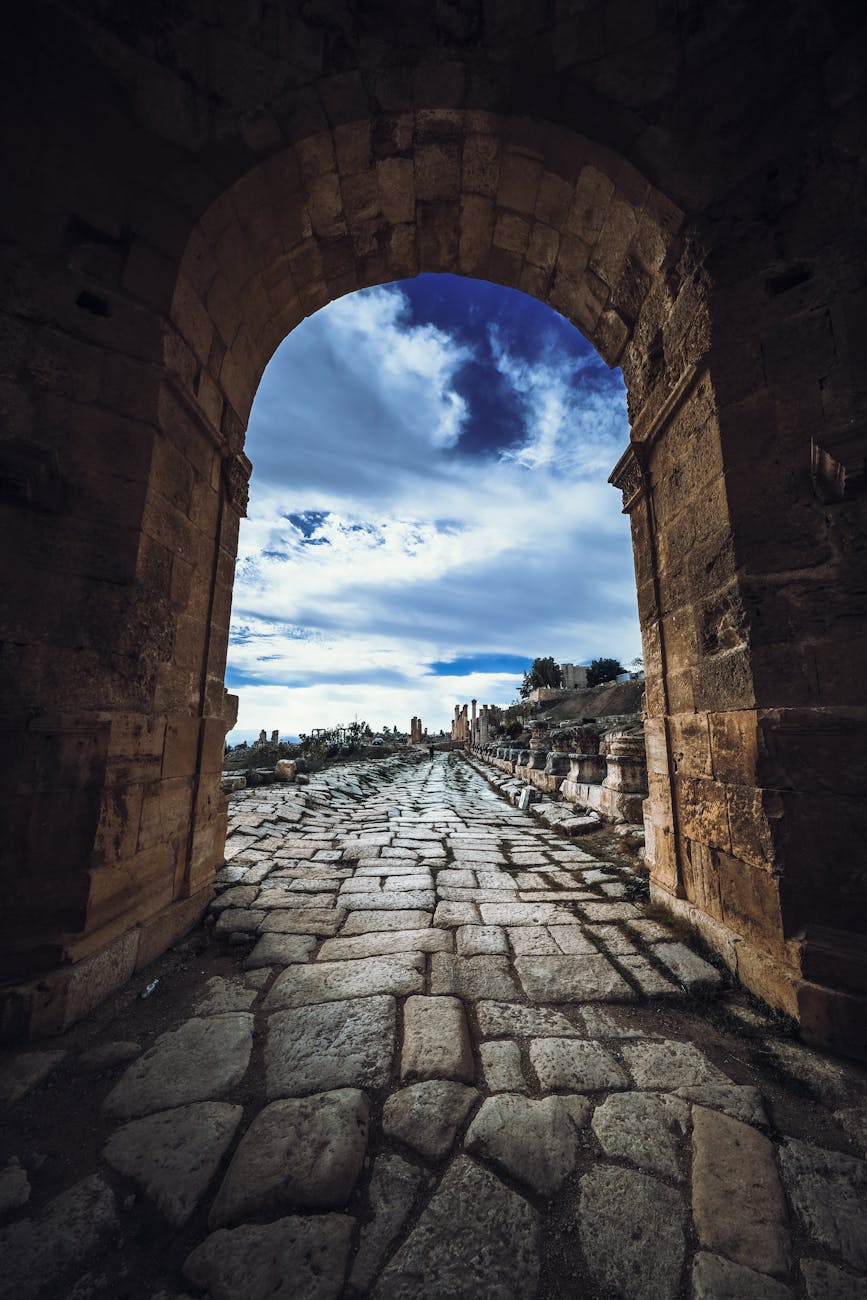
Building Projects

Sabbath Day Thoughts — “Building Projects” Luke 14:25-32

The National Monument of Scotland was never completed. Plans for the memorial atop Carleton Hill in Edinburgh were drawn up more than 200 years ago with the intention of honoring Scotland’s fallen heroes of the Napoleonic War. A massive pillared court, like the Parthenon in Athens, would contain a church, as well as catacombs for the burial of the country’s most significant leaders. By 1822 a foundation was laid, but by 1829, construction ground to a halt, due to insufficient funds. An effort to revive the project in the 1850s likewise failed. The city council eventually became the owners of the partially-finished monument, known as “Edinburgh’s Disgrace.” All that survives of the original grand plans are an immense foundation and twelve colossal Doric columns.

The Cathedral of St. John the Divine in New York City was never completed. One of the largest churches in the world, St. John’s is perched at the top of a flight of wide steps atop one of the highest hills in Manhattan. Standing in front of the massive building, you’ll notice a squat, square, unfinished tower on the south side, but no matching tower on the north. Initial work on the cathedral proceeded from 1892 but competing architectural visions slowed construction. Building efforts stalled entirely at the beginning of World War II and the congregation’s priorities shifted. They saw growing social needs in their community, like poverty, homelessness, and hunger, and they questioned whether they should continue to pour funds into construction. Work resumed in 1979 but stalled in 1997. Today, building efforts focus on preservation and basic improvements at a cost of about $11 million dollars a year. The cathedral is known by the nickname “St. John the Unfinished.”

Closer to home, Boldt Castle, located on Heart Island in the St. Lawrence, was never completed. In 1900, George Boldt, the proprietor of the Waldorf Astoria Hotel, hired 300 laborers to construct a 120-room Rhineland-style castle for his beloved wife Louise. Four years after construction began, Louise suddenly died. The heartbroken husband abandoned the project and never set foot on the island again. For seventy-five years, the site sat abandoned and unfinished until in 1977 the Thousand Islands Bridge Authority acquired the property and opened it for visitors.

In our reading from Luke’s gospel, Jesus used hyperbole— a form of argument that embraces exaggeration—to make a point. Jesus cautioned his disciples about the cost of discipleship with dire-sounding words about family alienation, incomplete building projects, and unwinnable wars. The Lord was on his way to Jerusalem for that fateful final Passover. He was accompanied by large crowds of would-be disciples. The expectations of the crowd about what would go down in Jerusalem were radically different from what Jesus knew would unfold. The crowds thought they would have a ringside seat for healing miracles and earthshaking preaching. Many must have hoped that Jesus would bring change to the religious establishment ensconced in the Temple. Some were hoping for regime change, thinking that Jesus would be a militaristic Messiah, like the Maccabees, who could cast out their Roman overlords. No one wanted to hear that a cross awaited Jesus in Jerusalem. No one wanted to hear that crosses could await many who dared to follow the Lord.

All of Jesus’ apostles would know persecution and eleven of the twelve would face execution. James the Son of Zebedee would be the first, beheaded by the Romans in the year 44. Andrew was crucified on an x-shaped cross in the Greek city of Patras in the year 60. Peter was crucified upside down four years later during the persecution of Christians by the Emperor Nero. Jude was crucified in Persia. Thomas was run through with spears in India. Matthew was impaled and beheaded in Ethiopia. You see my point. The only apostle to die a natural death was John the Beloved, but he and his church were persecuted so harshly that they were forced to flee Israel for the far side of the Mediterranean in what is now western Turkey. Discipleship was costly, indeed, for Jesus’ followers.

It’s hard to know what to do with scripture readings like the one we have today. As first world Christians, not one of us is likely to be executed for our beliefs. Not one of us will be so persecuted for our love of Jesus that we will be forced to flee our homeland. Trey Clark, who teaches preaching at Fuller Seminary says that when we hear Jesus’ words about family alienation and impending oppression or victimization, we are more likely to say “Ouch” than “Amen.” So how do we make sense of it for people here and now?

The circumstances of our lives are very different from Jesus’ first century followers. Taking up our cross and losing our life for the sake of Jesus Christ may look more like death by a thousand paper cuts than a state sponsored execution. Losing our life for Christ involves recognizing that our true purpose and fulfillment are not found in worldly desires but in serving God and others. Authentic discipleship requires a willingness to deny ourselves and take up our cross daily. By embracing the Way of Jesus, we die to self, but we find true life and purpose. The Apostle Paul, who would lose his head for the sake of the gospel, put it this way, “I have been crucified with Christ and I no longer live, but Christ lives in me. The life I now live in the body, I live by faith in the Son of God, who loved me and gave himself for me.” There are millions of everyday folks out there, like you and me, who may not have literally died for Jesus’s sake, but they show singular commitment and deep allegiance by following the Lord in costly ways. Jesus lives in them.  

I would like to celebrate those thousand paper cuts, the everyday ways that I see people denying themselves and taking up their cross for the sake of the gospel. I’ll name just a few and you can respond with an “Amen!” or an “Ouch!”

We could spend our Sunday mornings paddling our canoe or hitting the trail, doing a home improvement project or having a second cup of coffee, but we choose to come to church and worship our awesome God, and we carry the cross.

We could spend our Wednesday evenings watching Jeopardy and Wheel of Fortune, but we make a joyful noise to the Lord with choir or meet with the deacons or come out for Committee Night, and we carry the cross.

In a world where income inequality is accepted, even as it grows and grows, we could ignore the need of our neighbors, but we share our food offerings and donate two cents a meal for hunger programs, we grow veggies in our Jubilee Garden to share at the Food Pantry and cook lunch for the Community Lunch Box, and we carry the cross.

Living in the remote beauty of the Adirondacks, we could close our eyes to the suffering and injustice of our world, but we advocate for the war weary people of Ukraine, and write letters for the starving children of Gaza, we accompany vulnerable refugees and support the widows and children of Mzuzu Malawi, and we carry the cross.

I could say more, but you see my point. We carry the cross. We die to self and live for Jesus, and when we follow the Lord, yielding our will to God’s will, Jesus lives in us.

Our deaths by a thousand paper cuts begin to build something. It isn’t the National Monument of Scotland, better known as Edinburgh’s disgrace. It isn’t the Cathedral of St. John the Divine, aka St. John the Unfinished. It isn’t even Boldt Castle, although New York State has poured millions of our tax dollars into making the castle an accessible tourist destination. Our deaths by a thousand papercuts build a world that looks like Christ’s Kingdom, where the stranger is welcomed, the hungry are fed, the sick and lonely are visited, and God is glorified. That’s a building project that I want to see through to completion. How about you?

Let’s pick up our crosses, my friends. There is building work to be done.

Resources

E. Trey Clark. “Commentary on Luke 14:25-33” in Preaching This Week, Sept. 7, 2025. Accessed online at https://www.workingpreacher.org/commentaries/revised-common-lectionary/ordinary-23-3/commentary-on-luke-1425-33-6

Radhika Jhamaria. “15 Famous Unfinished Projects in Architectural History” in Rethinking the Future. Accessed online at https://www.re-thinkingthefuture.com/architects-lounge/a1289-15-famous-unfinished-projects-in-architectural-history-2/

Ellen Newman. “New York City’s St. John the Unfinished” in Hidden in Plain Sight, July 11, 2019. Accessed online at https://hidden-insite.com/2019/07/08/new-york-citys-st-john-the-unfinished/

Jenna Intersemone. “Massive Building Projects That Were Never Finished” in House Digest, Dec. 7, 2021. Accessed online at https://www.housedigest.com/663379/massive-building-projects-that-were-never-finished/ Edinburgh

Jack Wellman. “How Did the 12 Apostles Die?” in What Christians Want to Know. https://www.whatchristianswanttoknow.com/how-did-the-12-apostles-die-a-bible-study/


Luke 14:25-32

25 Now large crowds were traveling with him, and he turned and said to them, 26 “Whoever comes to me and does not hate father and mother, wife and children, brothers and sisters, yes, and even life itself, cannot be my disciple. 27 Whoever does not carry the cross and follow me cannot be my disciple. 28 For which of you, intending to build a tower, does not first sit down and estimate the cost, to see whether he has enough to complete it? 29 Otherwise, when he has laid a foundation and is not able to finish, all who see it will begin to ridicule him, 30 saying, ‘This fellow began to build and was not able to finish.’ 31 Or what king, going out to wage war against another king, will not sit down first and consider whether he is able with ten thousand to oppose the one who comes against him with twenty thousand? 32 If he cannot, then while the other is still far away, he sends a delegation and asks for the terms of peace. 


Photo by Ron Lach on Pexels.com

Blessing or Woe?

Sabbath Day Thoughts — “Blessing or Woe?” Luke 6:17-26

Wednesday afternoons are busy at Baldwin House. That’s when our neighbors with more month than money head to Grace Pantry. The pantry provides them with non-food necessities free of charge, items that we find essential that can’t be purchased with SNAP benefits. At Grace Pantry, new Moms pick up diapers and baby wipes. Other folks may need shampoo, toothpaste, or bath soap. Everyone needs toilet paper and paper towels. The volunteers at Grace Pantry report that both demand and costs have been on the rise, due to inflation, rent increases, and an economic recovery that hasn’t truly trickled down to the poor.

Two days a week, the Clint McCoy Feeding Center in Mzuzu, Malawi serves eighty local children a warm meal, meeting the nutritional need of kids who are malnourished. Lengthy droughts, followed by flooding rains, have caused food shortages in Malawi, and the AIDS epidemic has created a generation of orphans whose needs are too much for local villages. The feeding center provides a modest meal of fortified porridge and tea to youngsters who would otherwise not eat that day. As the meal is shared, the center rings with the laughter and joy of happy young voices. They sing songs, play simple games, and eat their fill.

Marge likes Tuesdays best because that’s the day her Meals on Wheels volunteer comes to visit. Marge isn’t hungry, but after her husband died, she stopped cooking. It’s a lot of work and it hardly seems worthwhile cooking for just one. Marge sits by the window alone and waits. She turns down the tv because she wants to be sure she hears the knock. A kind-hearted volunteer arrives with a big smile and takes time to share some sweet chitchat about the weather, family, and community news. When Marge tucks in to her dinner later, she is thankful for the food and even more so for her Meals on Wheels friend.

In our gospel lesson, Jesus descended the mountain and waded into the crowd that awaited him on the plain. There, he intentionally entered into the need and suffering of his world with healing and bold words of comfort. Jesus blessed the poor, hungry, grieving, and hated people of the community. In a first century world where affliction was typically attributed to sinfulness or a sign of affliction by God, Jesus’ words must have left the disciples scratching their heads. But for those who suffered, Jesus’ words were an assurance that God saw them, loved them, and longed for them to thrive.

If Jesus’ words of blessing stunned his followers, then his words of woe might have made them wonder what in the world Jesus was talking about. In those days, to be rich, filled with good things, joyful, and well-respected was a blessing not a woe. Your abundance and status were sure signs of a healthy relationship with God and a guarantee that you deserved every accolade that came your way. I suspect that we don’t like Jesus’ woes any more than his disciples did. After all, we may not be rich, but even the poorest people among us are comfortable and well-fed. We have plenty to laugh about. We can congratulate ourselves on our accomplishments and thank God for life’s sweetness. Where’s the harm in that?

In his paraphrase of the Bible, The Message, the late Rev. Dr. Eugene Peterson translated Jesus’ woes like this:

“It’s trouble ahead if you think you have it made. What you have is all you’ll ever get.

And it’s trouble ahead if you’re satisfied with yourself. Your self will not satisfy you for long.

And it’s trouble ahead if you think life’s all fun and games. There’s suffering to be met, and you’re going to meet it.

There’s trouble ahead when you live only for the approval of others, saying what flatters them, doing what indulges them. Popularity contests are not truth contests—look how many scoundrel preachers were approved by your ancestors! Your task is to be true, not popular.”

The trouble with our affluence, the trouble with our plenty, the trouble with our non-stop laughter, the trouble with our playing for the court of public opinion is that we can lose all perspective.  Instead of acknowledging our utter dependence upon God, we trust in our bank accounts, our stockpile of possessions, and all that good press we get. Woe to us when we believe money or things can solve all our problems.  Woe to us when we laugh while the world wails.  Woe to us when we find ourselves saying and doing unconscionable things to please the court of public opinion.

Historian and Bible scholar Justo Gonzalez read Jesus’ Sermon on the Plain and said, this is the “hard-hitting gospel.” This is the gospel that 2,000 years later still rings out as an urgent wake-up call. This is the gospel that makes us uncomfortable and calls us to change our ways if we wish to truly be part of God’s Kingdom. When Jesus comes to the plain, he levels with us, delivering a sucker punch that undermines everything that we think is right with the world.

Throughout his ministry, Jesus made the assurance of God’s love and presence a reality for those who were poor, hungry, grieving, and hated. From providing free healthcare to all comers to feeding the 5,000 with a marvelous multiplication of bread and fish, from restoring a widow’s only son to life to welcoming tax collectors, lepers, and demoniacs, Jesus was all about blessing the vulnerable people of his day. In those intentional actions, in that three-year object lesson of ministry, Jesus hoped that his disciples would begin to understand the beautiful topsy-turvy world that he longed to forge. Jesus believed we could make on earth a world that anticipates God’s Kingdom where blessing abounds for those who suffer and everybody is a neighbor, deserving of our care, time, love, and respect.

The disciples understood the values that Jesus hoped to impart in his blessings and woes. That’s why they chose to enter into the suffering of their world. We shouldn’t forget that the first office of the church—the role of deacon—was created to feed hungry widows. And the Apostle Paul solicited generous donations from his Gentile churches to feed the victims of famine in Judea. And Peter worked a miracle of resurrection, raising the Disciple Dorcas, so that she could resume her love and care for the impoverished widows of Joppa. In countless acts of care and generosity, those first Christians put God first and used the resources and authority at their disposal to be a blessing to those who needed it most.

More than any other gospel, Luke warns us of the dangers of our relative affluence, highlighting hard-hitting teachings from Jesus like the Sermon on the Plain. It’s tempting to turn the page and disregard what Jesus had to say, but the Lord had hope for we who have plenty. Jesus trusted that we would know what truly matters most. Jesus hoped we would follow him and those first disciples. We would put our resources to work in His purpose. We would dare to enter into the suffering of others and seek to build that world where everyone gets blessed. Lord, hasten the day.

This year, we will have three special offerings to benefit Grace Pantry, where our neighbors with more month than money pick up essential items, free of charge. In March, we’ll be collecting toothpaste and toothbrushes. In August, we’ll be looking for paper goods: toilet paper, paper towels, and napkins. In November, we’ll ask for donations of socks, which are one of the most sought-after resources at the pantry. Watch for the offering boxes at the side entrance and some Minutes for Mission from Pam Martin. Let’s bless our neighbors.

In May, we’ll remember the Women of Grace, whose ministries support the most vulnerable residents of Malawi, its impoverished widows and orphans. Their diverse efforts serve widows with cook stoves, metal roofs, sanitary outhouses, micro loans for small businesses, and sewing skills and supplies to supplement income. Their diverse efforts also serve orphans with literacy programs, books, and, of course, the Clint McCoy Feeding Cener, where 80 hungry children are fed twice weekly at the cost of about $250-a-month. Let’s bless our neighbors.

Every day, people who are grieving and lonely cross our paths. They live across the street in the DeChantal or up at Will Rogers. They need the skilled nursing of Elderwood or Mercy Care. They wait at home for Meals on Wheels delivery, cherishing the social interaction even more than the food. They are our family members: the aging aunt who never married, the grandpa who never recovered from the death of grandma, the college student who feels far from home. They may even come to church. Let’s open our eyes and bless our neighbors.

When the poor, hungry, grieving, and hated neighbors of our world get blessed, the transformation begins. Wool socks warm cold feet. African orphans rejoice. No one feels alone and unloved. The hard-hitting gospel becomes a call to action. As we dare to care and share and get involved, we remind our vulnerable neighbors that God sees them, loves them, and longs for them to thrive. As blessings abound, this world begins to look like the Kingdom that Jesus would have us serve. May it be so.

Resources

Susan Henrich. “Commentary on Luke 6:17-26” in Preaching This Week, Feb. 13, 2022. Accessed online at https://www.workingpreacher.org/commentaries/revised-common-lectionary/sixth-sunday-after-epiphany-3/commentary-on-luke-617-26-2

Mary Hinkle Shore. “Commentary on Luke 6:17-26” in Preaching This Week, Feb. 16, 2025. Accessed online at https://www.workingpreacher.org/commentaries/revised-common-lectionary/sixth-sunday-after-epiphany-3/commentary-on-luke-617-26-3

Keith Erickson. Theological Perspective on Luke 6:17-26 in Feasting on the Gospels, Luke. Vol. 1. Westminster John Knox Press, 2014.

Thomas Edward Frank. Pastoral Perspective on Luke 6:17-26 in Feasting on the Gospels, Luke. Vol. 1. Westminster John Knox Press, 2014.


Luke 6:17-26

17 He came down with them and stood on a level place with a great crowd of his disciples and a great multitude of people from all Judea, Jerusalem, and the coast of Tyre and Sidon. 18 They had come to hear him and to be healed of their diseases, and those who were troubled with unclean spirits were cured. 19 And everyone in the crowd was trying to touch him, for power came out from him and healed all of them.

Blessings and Woes

20 Then he looked up at his disciples and said:

“Blessed are you who are poor,
    for yours is the kingdom of God.
21 “Blessed are you who are hungry now,
    for you will be filled.
“Blessed are you who weep now,
    for you will laugh.

22 “Blessed are you when people hate you and when they exclude you, revile you, and defame you[a] on account of the Son of Man. 23 Rejoice on that day and leap for joy, for surely your reward is great in heaven, for that is how their ancestors treated the prophets.

24 “But woe to you who are rich,
    for you have received your consolation.
25 “Woe to you who are full now,
    for you will be hungry.
“Woe to you who are laughing now,
    for you will mourn and weep.

26 “Woe to you when all speak well of you, for that is how their ancestors treated the false prophets.


Photo by Kindel Media on Pexels.com

Unlikely Heroes

Sabbath Day Thoughts — “Unlikely Heroes” Mark 12:38-44

On December fourth, the eastern New York region of the American Red Cross will hold their “real heroes” celebration. It’s an annual dinner that honors Central and Northern New York residents whose acts of heroism or volunteerism have assisted those in need within their communities. It’s a feel-good evening of fun, food, and fundraising that honors everyday people who do extraordinary things.

This year, the Adult Good Samaritans Hero Award goes to four people who saw a car veer off the road and into a retention pond in the town of Clay. Tom Drumm and Lasaros Milian swam to the submerged car, removed the driver, and brought her to safety. Then, once on shore, Judy Kilpatrick and D. Paul Waltz provided further aid until emergency responders arrived.

The Community Impact Hero Award will go to Syracuse Mayor Ben Walsh. To stem the tide of gun violence in the city, Walsh pledged one million dollars of the city’s budget to meeting the crisis head-on. He created the Mayor’s Office to Reduce Gun Violence. The office has implemented a coordinated strategy to work with residents, law enforcement, and other community stakeholders. The innovative effort includes the Safer Streets initiative, which works directly with gang members to keep them out of trouble.

The Disaster Services Hero Award goes to two women: Melissa Roy and Danielle Martin. They coordinate the Community Schools Program for the City of Rome. Like our local Community Schools Program, Melissa and Danielle work year ‘round with at-risk families to ensure that students are fed, cared for, and successful in school, equipping them to become productive, engaged, and healthy citizens. When an EF4 Tornado tore through Rome on July 17, leaving a swath of destruction through south Rome and into the downtown, Melissa and Danielle worked non-stop alongside the Red Cross to feed the community and distribute much-needed supplies.

These unlikely heroes have shown courage, dedication, and character through their selfless acts to assist their neighbors.

Our gospel lesson this week introduced us to an unlikely hero. Jesus and his followers were in Jerusalem for that fateful, final Passover celebration. While visiting the Temple, the Lord took a break from teaching to do some people watching. Jesus’ friends must have been surprised by what he noticed.

First, Jesus considered some of the wealthiest and most influential people in the Temple courts: the scribes. These experts in the Torah played an important role in the life of Israel. They were highly educated to equip them to interpret the scriptures. They served as judges, rendering justice in Israel’s courts. They were also spiritual leaders, whose authority was passed down in families from generation to generation. Who wouldn’t want to be a scribe—privileged by birth, literate, wealthy, and respected? As they strode through the Temple courts in their costly robes and blessed the people with their flowery prayers, the scribes had the respect and adulation of the pilgrims who had come from across the Roman Empire for the Passover.

Jesus, however, wasn’t impressed. As only he could, Jesus saw beyond the fine clothes and eloquence to the very heart of the scribes, and he didn’t like what he saw. In a patriarchal world where women did not have property or inheritance rights, widows depended on the fairness and generosity of their husband’s heir to provide for them as they aged. In cases of neglect or abuse, a case could be brought before the scribes for justice. Or, in a case where there was no clear heir, property could be held in trust by the scribes, until a minor boy child reached adulthood. Although the scribes were well-versed in the Bible’s imperative to care for their vulnerable neighbors, Jesus saw that these Torah-experts were enriching themselves at the widows’ expense, devouring their houses by taking bribes, making biased rulings, and spending for their own benefit what they held in trust. Jesus’ indictment of the powerful and well-respected scribes would have shocked his listeners.

If the disciples were surprised by Jesus’ scorn for the Scribes, then they would have been even more amazed by his praise for the poor widow at the Temple’s Treasury, outside the Court of the Women. The Mishnah tells us that the treasury consisted of thirteen large metal boxes with an unusual shape, broad at the bottom and very narrow at the top, a bit like an inverted funnel, a shape that ensured that you couldn’t reach a hand down in to take money out.  In those days long before paper money, a large gift of coins dropped into the narrow mouth of the treasury made a loud noise as it rattled down to the bottom. A small gift dropped into the treasury made very little sound.

The gift Jesus’ widow made was very, very small. She gave two lepton, two tiny coins, worth 1/64th of the daily wage for a laborer. In today’s economy, where a day laborer earns $14.54 an hour, this woman’s gift was worth $1.82. In the grand scheme of Temple economics, the widow’s gift was practically worthless. Yet, Jesus saw into the widow’s heart and realized that she had made an extraordinary gift. In Greek, the words Jesus used for her offering are holon ton bion autaes, it literally means that she gave “her whole life.” She dedicated her time, her talents, her leptons, all she had and all that she would ever be to God. It was a gesture of radical love and trust, an offering of tremendous gratitude in the midst of loss and grief.  She gave her very self to the Lord.

I know it has been a tough week for many of us. Last week, I asked us to remember that, no matter what the outcome of the election would be, half of us would be disappointed. I reminded us that God is with us in the chaos and encouraged us to be gentle with one another. This week, my phone and computer have blown up with calls, texts, emails, and messages from folks, far and wide, who are deeply dismayed. I hear you, especially those who feel that the “scribes” have won the day to the detriment of the “poor widows” of our nation.

On Wednesday, I went to the local Department of Social Services. They facilitate assistance to people in need. I was accompanying an incredibly hardworking neighbor, who provides for a large, extended family. They had lost their SNAP benefits because they worked too much overtime. Sitting in that sterile, institutional office, across the desk from an overworked and under-resourced social worker, I pondered the crumbs that we throw to the poor. I couldn’t help but realize how incredibly privileged I am. I have more education than most people would probably ever want. I own a home. I never worry about whether I can put food on the table, if I have clothes to wear, or if I can repair my used car. I imagine that most of us are like me. Whether we like it or not, our lives, in terms of material resources, bear a closer resemblance to the scribe than they do the poor widow of today’s reading. What a terrible privilege and awesome responsibility that is!

I’ve been thinking about those real heroes, the ones that the Red Cross will honor on December fourth. They don’t fly or have superpowers. They don’t wear red capes and tights. I suspect they are a lot like us—ordinary people who dare to care and respond. Tom, Lasaros, Judy, and Paul saw someone in trouble and sprang into action. Ben Walsh had the gumption to seek to stem the tide of gun violence in his city. Melissa and Danielle’s hearts were touched by neighbors in crisis, and they walked into the breach left by the tornado with food and support.

If the 2024 election and the deep divides in our nation call us to anything, it is to do as much good as we can right where we are, to use the privilege, power, or authority entrusted to us to make a positive, caring, righteous difference in our world. We can be unlikely heroes, like the widow, like those Red Cross honorees. We can give holon ton bion autaes, our whole lives, to the Lord. We can make a difference in the lives of our neighbors, especially those who do not benefit from the advantages that are ours. Are you with me?

When Jesus called his friends over to celebrate the poor widow, I’m sure he was thinking of another gift, a heroic gift, soon to be made. The widow’s gift anticipated the offering that the Jesus himself would make. Within days, Jesus would be arrested and unjustly tried, tortured and condemned to death. Within days, the beaten and bloody Jesus would be marched through the streets of Jerusalem to his execution. Within days, he would hang on the cross, flanked by criminals, jeered at by spectators. Within days, Jesus would give his very life—holon ton bion autaes—for the redemption of our world.

May we dare to be unlikely heroes.

Resources

Jon Moss. “Syracuse anti-violence program making progress, more needs to be done, officials say” in Syracuse.com, June 5, 2024. Accessed online at Syracuse anti-violence program making progress, more needs to be done, officials say – syracuse.com

Sean I. Mills. “Worst tornado in 40 years to hit Oneida County; survey team outlines path, destruction” in Daily Sentinel, July 18, 2024. Worst tornado in 40 years to hit Oneida County; survey team outlines path, destruction | News | romesentinel.com

Micah D. Kiel. “Commentary on Mark 12:38-44” in Preaching This Week, Nov. 11, 2012. Accessed online at Commentary on Mark 12:38-44  – Working Preacher from Luther Seminary

Henry Langknecht. “Commentary on Mark 12:38-44” in Preaching This Week, Nov. 8, 2009. Accessed online at Commentary on Mark 12:38-44  – Working Preacher from Luther Seminary

Karoline Lewis. “Whole Life Living” in Dear Working Preacher, Nov. 1, 2015. Accessed online at Whole Life Living – Working Preacher from Luther Seminary


Mark 12:38-44

38 As he taught, he said, “Beware of the scribes, who like to walk around in long robes and to be greeted with respect in the marketplaces 39 and to have the best seats in the synagogues and places of honor at banquets! 40 They devour widows’ houses and for the sake of appearance say long prayers. They will receive the greater condemnation.” 41 He sat down opposite the treasury and watched the crowd putting money into the treasury. Many rich people put in large sums. 42 A poor widow came and put in two small copper coins, which are worth a penny. 43 Then he called his disciples and said to them, “Truly I tell you, this poor widow has put in more than all those who are contributing to the treasury. 44 For all of them have contributed out of their abundance, but she out of her poverty has put in everything she had, all she had to live on.”


Photo by Klaus Nielsen on Pexels.com

Come as a Child

Sabbath Day Thoughts — “Come as a Child” Mark 9:30-37

Perhaps the only positive outcome of the COVID-19 pandemic was a temporary decrease in the number of American children living in poverty. Federal economic security programs kept 53 million people above the poverty line in both 2020 and 2021. Child tax credits, increased food assistance, the extension of unemployment benefits, and three rounds of stimulus checks drove child poverty down to an all-time low of 5.2%. With the expiration of these programs in 2022, child poverty was again on the rise. According to the Annie E. Casie Foundation, 16% of American children now live in poverty. That’s 11.6 million kids. New York’s child poverty rates are among the worst in the nation. We rank forty-first out of the fifty states.

The likelihood of child poverty is higher here in the North Country. In Franklin County, 21.3% of our children live in poverty. Those numbers are higher for families of color. About 32% of racial ethnic children live below the federal poverty line. The impact of child poverty can last a lifetime. Impoverished families have less access to healthy food and quality medical care. A poverty diet is high in processed foods, fat, and carbohydrates. That’s a recipe for childhood obesity. Children in poverty are more likely to live in substandard housing, experience homelessness, and be exposed to crime and substance abuse in at-risk neighborhoods. Children in poverty have lower readiness when entering school and are more likely to have developmental challenges. Families in poverty live in chronic stress that leaves kids feeling anxious, depressed, and frightened.

When we further consider families who work in low wage jobs that lift them above the federal poverty threshold but don’t pay enough to meet monthly expenses, then we begin to see the enormity of the child poverty crisis. The Ouimette family of AuSable Forks is a case in point. William works for the town of Jay’s highway department and also serves as a volunteer firefighter. Miranda is a stay-at-home mom to their three kids between the ages of 6 and 9. William says, “It’s harder and harder for people just to get by on a job like working for the state or the town or anything now.” The Ouimettes struggle to pay for essential things like car repairs and new items for their kids. They fear they will be priced out of the home where their family has resided for generations.

Child poverty is nothing new. In Jesus’ day, 90% of people lived in poverty with little resource for rising above the circumstance of their birth. Within that impoverished time, children were particularly vulnerable. They were considered the lowest status members of society. Children lacked legal standing and protection as individuals and were instead deemed the property of their fathers. Indeed, children could be sold into slavery to settle a father’s debts. Although children were seen as a gift from God, a safeguard against extreme poverty in old age, children were expected to be unconditionally obedient and subject to the strict discipline of parents. The Book of Proverbs instructs, “Those who spare the rod hate their children, but those who love them are diligent to discipline them.” According to Exodus and Leviticus, the punishment for children who curse their parents or fail to honor them was death – judgment and stoning by the community. In the Gentile world, unwanted newborns were routinely exposed, left out in the open to die—or to be taken in by strangers and raised as slaves or prostitutes.

Given the low standing of children in the disciples’ world, we can imagine the shock that they felt when Jesus placed a child among them as someone to be welcomed and emulated. In today’s gospel reading, Jesus warned his friends of the suffering and death that would await him in Jerusalem. But along the way to Capernaum, instead of discussing better ways to protect Jesus and guard against betrayal, the twelve argued about who among them was the greatest. They compared genealogies and miracles, sermons and bank accounts, patrons and illustrious acquaintances, all in an effort to assert their personal worth. That child that Jesus held in his arms didn’t make any sense. Why would Jesus identify with a child? Why would he expect them to welcome and serve the lowest status person in the room?

Biblical scholar J.D.M. Derrett says that when Jesus scooped the little child up in his arms, Jesus was engaging in a symbolic act. In the Hebrew tradition, receiving or placing someone else’s child on your knee or in your embrace in front of the witnessing community was a rite of adoption.  We see this in the Book of Genesis, when the childless Sarah and Rebecca brought their servant women to their husbands to conceive children, insisting that those children would be born “on their knees” as rightful sons of the patriarchs. If J.D.M. Derrett is right, then Jesus was saying that the most vulnerable of people, like children, especially belong to Jesus. The disciples could not love and honor him without loving and honoring them.

Beyond that simple call to humble service, Jesus was reminding his friends, many of whom had left their families behind to follow him, that he had adopted them. They were his children. As his sons and daughters, they must demonstrate toward him the obedience, honor, and respect that they would a father. The disciples were meant to be brothers and sisters in Jesus’ family, not rivals for greatness. That tender embrace that the child found in Jesus’ arms reflected the love and support that the disciples found in Christ, who welcomed them, not because of their great achievements, but simply because he chose to love them, regardless of their status. In that unconditional love, they would find the courage and inspiration to be servants of all.

As messages go, today’s reading is clear. The “least of these” are deserving of the service and welcome that we would extend to the Lord. When we see vulnerable neighbors, we are to think of Jesus, responding with the sort of compassion and care that were the hallmark of Jesus’ earthly ministry. Beyond that, Jesus would have his followers see that in God’s Kingdom there is no us and them—no low-status children and high-status disciples. Rather, we are all God’s children. The social and psychological constructs that we create to assert our greatness—that separate rich from poor, have from have-nots, first world from third world—those constructs are false dichotomies. We are kin, all children of an infinitely loving God. We belong to one another, just as we belong to God.

If the pandemic taught us anything, it is that we can end childhood poverty. If we can lower the rate of childhood poverty to 5.2% in only two years, imagine what we could do if people really cared, if we had public policy that regarded vulnerable children the way that Jesus embraced that child. There is enough. We just lack the social and political will to make a lasting difference in the lives of families who need it most. We do not believe that every child is deserving of unconditional love and welcome. We pitch a paltry ten percent of our federal budget at programs that address poverty while income inequality in our nation—the gap between rich and poor—grows and grows and grows. Lord, have mercy upon us.

Jesus thinks his disciples can do better. We can do better. He imagines a world where no child lives in poverty. It’s a world where our most vulnerable neighbors are known and held, blessed and helped. It’s a world where disciples realize that true greatness is found not in our professional titles or advanced degrees, not in our big bank accounts or public accolades, not in our athletic prowess or our physical beauty. It’s a world where the greatest of all are servants of all. It’s a world that looks a lot like his Father’s Kingdom. He hopes that we will imagine that world, too. May it be so.

Resources

Danilo Trisi. “Government’s Pandemic Response Turned a Would-Be Poverty Surge into a Record Poverty Decline” in Center on Budget and Policy Priorities Reports, August 29, 2023. Accessed online at Government’s Pandemic Response Turned a Would-Be Poverty Surge Into a Record Poverty Decline | Center on Budget and Policy Priorities (cbpp.org)

Alek LaShomb. “Efforts to Address Child Poverty in New York’s North Country” in WCAX News, June 14, 2024. Accessed online at Efforts to address child poverty in New York’s North Country (wcax.com)

Courtney V. Buggs. “Commentary on Mark 9:30-37” in Preaching This Week, Sept. 22, 2024. Accessed online at Commentary on Mark 9:30-37 – Working Preacher from Luther Seminary

Micah D. Kiel. “Commentary on Mark 9:30-37” in Preaching This Week, Sept. 20, 2015. Accessed online at Commentary on Mark 9:30-37 – Working Preacher from Luther Seminary

C. Clifton Black. “Commentary on Mark 9:30-37” in Preaching This Week, Sept. 19, 2021. Accessed online at Commentary on Mark 9:30-37 – Working Preacher from Luther Seminary

Thomas P. Napoli. “New York Children in Need,” a report of the Office of the NYS Comptroller, May 2024. Accessed online at Report Titl (ny.gov)


Mark 9:30-37

30 They went on from there and passed through Galilee. He did not want anyone to know it, 31 for he was teaching his disciples, saying to them, “The Son of Man is to be betrayed into human hands, and they will kill him, and three days after being killed, he will rise again.” 32 But they did not understand what he was saying and were afraid to ask him. 33 Then they came to Capernaum, and when he was in the house he asked them, “What were you arguing about on the way?” 34 But they were silent, for on the way they had argued with one another who was the greatest. 35 He sat down, called the twelve, and said to them, “Whoever wants to be first must be last of all and servant of all.” 36 Then he took a little child and put it among them, and taking it in his arms he said to them, 37 “Whoever welcomes one such child in my name welcomes me, and whoever welcomes me welcomes not me but the one who sent me.”


Photo by Pixabay on Pexels.com

In the Power of the Spirit

Sabbath Day Thoughts — “In the Power of the Spirit” Acts 2:1-13

The Adirondack spring has pounced upon us. After months of grey skies and mixed precipitation, the ice is out, the earth has thawed, and for some of us, our thoughts turn to gardening. Here at the church, our Jubilee Gardeners are thinking about the fresh vegetables that we’ll grow for the Food Pantry this summer. Yesterday morning, six of us gathered at the Community Garden to prepare the church’s beds for planting. There were weeds to pull and compost to spread. There were pole bean towers to string and a snow pea trellis to set up. We even sowed a few cold-hardy seeds.

Fourteen years ago this month, we had the organizing meeting for our Jubilee Garden project. It started with a fall book group. We read Shane Claiborne’s inspiring first book Irresistible Revolution, which tells the compelling story of Shane’s community The Simple Way. Inspired by a stint as a volunteer in Calcutta with Mother Teresa, Shane decided to try life in a blighted neighborhood in Northeast Philadelphia, living among the poor and working at the grassroots to meet community needs. Shane challenges Christians to find an impossible dream, to consider how the Spirit may be calling them to come alongside hurting neighbors in ways that make a difference. We wondered how God wanted to use us right here in Saranac Lake. We prayed about it.

By the spring, several of us felt that the Spirit was calling us to garden. Jan and Ted Gaylord had learned about organic gardening while they served at Jubilee Partners, and others among us were avid home gardeners, ever on the quest for the elusive Adirondack tomato. Our timing was perfect. A new community garden was starting on Old Lake Colby Road, where we secured two big plots. Our mission would be to grow fresh vegetables and bright flowers for the hungry and the hungry-of-heart. Soon, we had dirt beneath our fingernails and plenty of blackfly bites. We built raised beds and filled them with a fertile mix of topsoil and composted chicken manure. We planted, watered, weeded, and waited for the harvest.

In our reading from the Acts of the Apostles, the disciples were waiting and praying for the vision and power to launch an impossible dream. Then, on Pentecost, ten days after Jesus’ Ascension, came the rush of a violent wind. It filled the entire house where they waited. Tongues of holy fire flickered and danced among the people, resting upon each of them. As the Spirit filled them, they began to preach, all at once, in every language under the sun—speaking with boldness and joy about God’s deeds of awesome power. Before they knew it, the Spirit drove them out into the street, where pilgrims from every corner of the empire listened in bewilderment, wondering how a bunch of backwater Galileans could suddenly become such gifted cross-cultural communicators. Those who heard the Spirit-filled Apostles didn’t know whether to marvel or sneer, to shout “Alleluia!” or say, “Get lost!” But if we were to keep reading, past the end of our lection, we would see that the “Alleluias” won the day.  3,000 people were baptized and welcomed to the church.

When we hear the very familiar story of Pentecost, we like to focus on the sensational details: violent wind, tongues of flame, the sound of many languages, the astonishment of the crowd. But this year, I’ve been thinking less about the special effects and more about the disciples. Ten days earlier, they were anxious and visionless, waiting in Jerusalem to find out what was next. They hadn’t always excelled in their discipleship. They longed for greatness, expressed big doubts, and were generally cluelessness. They slept when they should have been praying. They ran away when the guards came to take Jesus into custody. Don’t forget Peter’s three denials. But when the Holy Spirit filled the disciples on Pentecost, they were galvanized in Christ’s purpose. On Pentecost, the disciples went from fearful failed followers to a dynamic force for good, propelled in God’s purpose by the power of the Holy Spirit.

In her book Sailboat Church: Helping Your Church Rethink Its Mission and Practice, former moderator of the General Assembly Joan Gray points out that the boat was the earliest symbol for the church. In the first century, there were two types of boats: rowboats and sailboats. Rowboats are driven by human power. Sailboats harness wind power. Joan Gray says that on Pentecost the Holy Spirit moved the disciples along as the wind moves a sailboat. The Spirit drew together a diverse group of men and women into a strong, unified community, capable of unexpected good. If the disciples had trusted in their own limited power to bring about God’s purpose, it would have been a recipe for failure; there would be no church. But with the Spirit’s help, great things could unfold.

Presbyterians tend to think that the Spirit doesn’t work with the bold force of Pentecost anymore, but Joan Gray says it does. The question facing every congregation is, “Will we row or will we sail?” If we row, we trust in our own strength, wisdom, and abilities to achieve our ministry. That’s a recipe for burnout and dwindling resources. I suspect that some of us, over the years, have known how that feels. But if we choose to be a sailboat church, if we trust that God’s Spirit can guide and empower us, then we find that we are able to do more than we ever could have dreamed. Pentecost begs the question, “Keep rowing or let the wind fill your sails?” I don’t know about you, but I’d much rather hoist the sail than man the oars.

What does sailboat ministry look like? I think our garden project is a good example. Fourteen years ago, the Holy Spirit took our prayer and discernment and launched us on a continuing adventure that has blessed us and our neighbors. A little like those who sneered at the disciples on Pentecost, not everyone thought our impossible dream was a good idea. In fact, when I approached the board of the Food Pantry, they said no one who comes to the pantry would eat our vegetables. Then, they told us that they wouldn’t distribute what we grew because they would just be throwing out a lot of rotting produce, week after week. If our impossible dream was going to happen, we would have to host our own free farm stand, outside the food pantry, on Saturday mornings. It was disappointing, but we didn’t let that dump the wind from our sails.

As we got underway, there were blessings that told us we were on the right path. It was a hot, sunny summer, and the harvest was wildly abundant. Those food pantry patrons loved the fresh produce. On most mornings, we ran out, and when we didn’t, folks at church on Sunday were eager to relieve us of our abundance. Some weeks, we even had extra to share at the DeChantal or Lake Flower Apartments. Hosting our own farm stand was the biggest blessing of all. We made new friends. Some came to the pantry week in and week out. They told us their stories. Others came in times of crisis. They told us their stories, too. All expressed appreciation for our care and concern, our willingness to meet them where they were at with the good news of fresh produce, God’s love, and an occasional fervent prayer.

Over the past fourteen years of gardening, the Spirit has continued to fill our sails in ways that we never could have imagined. We developed a close relationship with the Food Pantry, those same people who sneered at our impossible dream. In fact, a number of our members now serve on the board of directors. That growing bond found fresh expression as we welcomed the pantry to a beautiful new space in our building, where the number of people who are served has doubled. Beyond the Food Pantry, we’ve connected with local gardeners and commercial growers who sometimes contribute their own veggies to our efforts. The latest dynamic of our garden mission isn’t about the veg. It’s the flowers. Last summer, we sent an abundance of bouquets out into the community every Sunday to bless our homes and our neighbors. 

I’m not saying that the garden isn’t hard work. We’ve had aching backs. We’ve been bitten by bugs. We’ve struggled with slugs. But by the power of the Holy Spirit, we have been blessed and been a blessing, more than we ever could have imagined when we first dreamed our impossible dream.

Shane Claiborne, who wrote The Irresistible Revolution and inspired our gardening efforts, says that the Spirit is always calling Christians to new dreams. Beyond his community organizing in NE Philly, Shane has launched initiatives that address some of the most significant moral issues of our time: toxically partisan politics, gun violence, Christian nationalism, and the death penalty. If Shane were with us this Pentecost, he might ask us, “What’s next?” How does the Spirit continue to call us to come alongside hurting neighbors in ways that make a difference?

Come, Holy Spirit, come! Fill our sails, and send us forth in your purpose.

Resources:

Joan Gray. Sailboat Church: Helping Your Church Rethink Its Mission and Practice. Louisville: Westminster John Knox Press, 2014.

Shane Claiborne. The Irresistible Revolution: Living as an Ordinary Radical. New York: Harper Collins, 2006.

Frank L. Crouch. “Commentary on Acts 2:1-21” in Preaching This Week, May 24, 2015. Accessed online at Commentary on Acts 2:1-21 – Working Preacher from Luther Seminary

Amy G. Oden. “Commentary on Acts 2:1-21” in Preaching This Week, June 9, 2019. Accessed online at Commentary on Acts 2:1-21 – Working Preacher from Luther Seminary

Debra J. Mumford. “Commentary on Acts 2:1-21” in Preaching This Week, May 31, 2020. Accessed online at Commentary on Acts 2:1-21 – Working Preacher from Luther Seminary


Acts 2:1-13

2When the day of Pentecost had come, they were all together in one place. 2And suddenly from heaven there came a sound like the rush of a violent wind, and it filled the entire house where they were sitting. 3Divided tongues, as of fire, appeared among them, and a tongue rested on each of them. 4All of them were filled with the Holy Spirit and began to speak in other languages, as the Spirit gave them ability.

5Now there were devout Jews from every nation under heaven living in Jerusalem. 6And at this sound the crowd gathered and was bewildered, because each one heard them speaking in the native language of each. 7Amazed and astonished, they asked, “Are not all these who are speaking Galileans? 8And how is it that we hear, each of us, in our own native language? 9Parthians, Medes, Elamites, and residents of Mesopotamia, Judea and Cappadocia, Pontus and Asia, 10Phrygia and Pamphylia, Egypt and the parts of Libya belonging to Cyrene, and visitors from Rome, both Jews and proselytes, 11Cretans and Arabs—in our own languages we hear them speaking about God’s deeds of power.” 12All were amazed and perplexed, saying to one another, “What does this mean?” 13But others sneered and said, “They are filled with new wine.”


Photo by Pixabay on Pexels.com

Abiding in Christ

Sabbath Day Thoughts — “Abiding in Christ” John 15:1-8

Last week, our gospel reading invited us to consider Jesus the Good Shepherd. This week, John’s gospel brings us another of Jesus’ bold statements of identity, “I am the true vine.” Herding sheep and tending a vineyard are tasks far removed from our daily experience, but these agricultural metaphors would have been familiar to Jesus’ listeners. In Jesus’ world, vineyards were an essential part of the landscape. Grapes were eaten as fresh fruit, dried into raisins, and mashed into jams. Grapes were turned into wine, sweet syrup, and vinegar. Vineyards passed from generation to generation within families. As fruit ripened, whole communities pitched in with all-hands-on-deck to bring in the harvest.

When Jesus told his disciples, “I am the vine, you are the branches,” he was alluding to grafting, a vineyard practice that is as important in the wine industry today as it was for first century vine growers. Brent Young, a viticulturalist at Jordan Vineyard and Winery in Sonoma, CA, gets animated when he describes the work of grafting new varieties of grape onto old root stock. First, old grape vines, which are well-established and especially suited to the soil, are cut off, leaving a stump that is allowed to freely bleed and weep for about a week. Then a specialized team is called in. The vinedressers move along the row of cut vines, scoring each stump with a sharp knife. Next, the vinedresser slips a few small budding branches or scions into the scores. The scions are then carefully wrapped to secure their new home in the old vine. Over the following weeks, something wonderful happens, the old root stock gives life to the new scion. It grows, branches, and eventually bears new fruit.

Jesus’s words, “I am the vine, you are the branches,” were meant to comfort and exhort his friends. As Jesus spoke, it was his last evening with the disciples. He had washed his friends’ feet and shared a special meal with them. Judas had already slipped away to betray him. The disciples needed a word of wisdom to guide them through the terror that would soon grip them. Jesus was the true vine, his life revealed God’s will and word for humanity. His death would demonstrate God’s limitless love. Soon the true vine would be cut down, yet the disciples could endure because Jesus was an essential part of them. He would always be with them and, grafted into him, they could put forth miraculous new life and branch out in his purpose.

In viticulture, if the budding scion that the vinedresser attaches to the root stock loses its connection, it withers and dies. Separated from the vine, no life-giving sap can nurture and sustain it. Likewise, Jesus reminded his friends that they would need to abide in him. The Greek word for abide that Jesus used here, meinate, means to stay or remain, to live, dwell, lodge. Abiding in Jesus means cultivating an ongoing, inward, personal bond with the Lord that imparts nurture, meaning, and purpose for our lives.

We long for the meaning and purpose that come with abiding in Christ. But unlike the viticulturalists at the Jordan Vineyard and Winery in Sonoma, we don’t have an expert team of vinedressers to ensure that we keep our connection with the lifegiving true vine of the Lord. I’d like to focus on three ways that we can abide in Jesus the true vine.

Abiding in Christ means feasting upon his words in scripture, whether listening to Sunday sermons, reading the Bible, or participating in Christian Education. The late Fred Craddock, who taught preaching and New Testament at Emory University, once shared that the most influential person in his life was his Sunday school teacher, Miss Emma Stone. She gave him his first Bible and taught him to memorize scripture verses, saying “Just put it in your heart.” Miss Stone taught Fred a verse for each letter of the alphabet. Years later, Craddock reflected upon the importance of those twenty-six verses of scripture that he learned as a child, saying “I can’t think of anything, anything in all my life that has made such a radical difference as those verses. The Spirit of God brings them to mind time and time again.”

We have likewise been sustained by the abiding promises of scripture. In our bleakest moments, we find ourselves praying with the words, “Yea though I walk through the valley of the shadow of death, I fear no evil, for thou art with me” (Psalm 23:4). When we’ve made a mess of things and lost our way, we hold to the promise that “God so loved the world that he gave his only begotten son so that whosoever believeth in him may not perish but have eternal life” (John 3:16). When we are feeling vulnerable or overwhelmed, we remember the words of the Apostle Paul, “I can do all things through Christ who strengthens me” (Phil. 4:13). What are the holy words that help you to abide in Christ?

We also abide through prayer. We all have stories of learning to pray. Sometimes we learn in church. Author and spiritual director Jane E. Vennard writes that although she came from a family of staunch church goers, they never prayed together. Yet every Sunday in church, she was inspired by the beautiful prayers of her pastor. He had survived childhood polio, which left him partially paralyzed, but on Sunday mornings he stood in the pulpit with the help of crutches, stretched out his arms, and lifted his face to pray with a look of pure joy. The beauty and ardor of those prayers inspired Jane to her own lifetime of prayerful connection with God.

Others among us learned to pray from family members. One woman tells the story of learning prayer from her German grandmother. Every night, she would run up the stairs to her grandmother’s room, climb into bed with her, and snuggle under the blanket while her grandmother prayed. An adult now, she says, “I don’t know what she was saying, but her words seemed full of love, just like her arms around me.”

We have similar stories of parents, grandparents, or caring friends who modeled for us a prayer-filled life. As we’ve grown, we’ve learned to make prayers of our own. We share table graces with our families. We recite the Lord’s Prayer each morning as a daily devotion. We find holy refreshment in centering prayer. We may even resort to what author Anne Lamott says are the only two prayers we will ever need to know, “Help me, help me, help me. Thank you, thank you, thank you.” How has prayer equipped you to abide in Christ?

Abiding in Christ comes naturally when we are part of a community that loves and serves the Lord. I think about this church’s United Presbyterian Women, women like Evelyn Outcalt, Anna Ferree, Jan Bristol, Carroll Dixon, and Gert Bickford. They were the heartbeat of this church for many years. Most of them were already in their eighties when I came to Saranac Lake almost two decades ago, yet they still gathered monthly for fellowship and spiritual friendship. They had been woven together by years of rummage sales and potlucks, births and celebrations, family tragedies and deaths. They were there for one another with prayers and casseroles, Hallmark cards and simple kindnesses. In that faithful fellowship, they knew the abiding presence of Jesus.

The UPW may be no more, but we continue to find Jesus in this church community. We abide in Christ as we gather each Sunday morning to praise and worship him. We abide in Christ with singing as harmonies are learned and voices blend to the glory of God. We abide in Christ when we grapple together with the big questions of faith in Bible and book studies. We abide in Christ with the fellowship of Coffee Hour, camp outs, and picnics. We abide as we merge our gifts for leadership and care as elders and deacons. How have we abided, growing closer to God and one another in the body of Christ?

Jesus taught his friends that as they abided in him, they would bear fruit. Our growing identity as branches of the true vine is revealed in fruitful works and ministries that reveal the love of Christ to others. When we are grafted into the true vine, we work together to serve others. We find ourselves teaching Sunday School, extending Coffee Hour hospitality, and cooking healthy meals for friends in tough times. When we are grafted into Christ, we serve our vulnerable neighbors. We grow produce in the church garden and share it at the Food Pantry. We pray fervently for folks in every kind of need with the prayer chain. We support neighbors in crisis with the Deacons’ Fund. We help vulnerable world neighbors, like the widows of Mzuzu, through the Women of Grace. As we abide in Christ, his ministry finds new life in us, and the world is blessed by that good fruit.

We may never be viticulturalists, but we have been grafted into the true vine. We are the branches. May we abide in Jesus with scripture, prayer, and the blessing of Christian community. And may we bear good fruit to the glory of God and for the good of our neighbors.


Resources

Jane E. Vennard. “Learning to Pray,” The Alban Institute at Duke Divinity School, July 24, 2006. Accessed online at alban.org.

Brent Young. “Field Grafting Grapevines,” wine education video, 2012. Jordan Vineyard & Winery. Accessed online at Field Grafting Grapevines | How Grapes are Grafted to Change Varieties | Wine Education Videos (youtube.com)

Robert M. Brearley. “Homiletical Perspective on John 15:1-11” in Feasting on the Gospels, John, vol. 2 (Louisville: Westminster John Knox Press), 2015.

Luis Menendez-Antuña. “Exegetical Perspective on John 15:1-11” in Feasting on the Gospels, John, vol. 2 (Louisville: Westminster John Knox Press), 2015. Karoline Lewis. “Commentary on John 15:1-8” in Preaching This Week, April 28, 2024. Accessed online at Commentary on John 15:1-8 – Working Preacher from Luther Seminary


John 15:1-8

15”I am the true vine, and my Father is the vinegrower. 2He removes every branch in me that bears no fruit. Every branch that bears fruit he prunes to make it bear more fruit. 3You have already been cleansed by the word that I have spoken to you. 4Abide in me as I abide in you. Just as the branch cannot bear fruit by itself unless it abides in the vine, neither can you unless you abide in me. 5I am the vine, you are the branches. Those who abide in me and I in them bear much fruit, because apart from me you can do nothing. 6Whoever does not abide in me is thrown away like a branch and withers; such branches are gathered, thrown into the fire, and burned. 7If you abide in me, and my words abide in you, ask for whatever you wish, and it will be done for you. 8My Father is glorified by this, that you bear much fruit and become my disciples.


Photo by Grape Things on Pexels.com

Start Where You Are At

Sabbath Day Thoughts — “Start Where You Are At” Luke 24:36b-48

Krista comes to church on Sunday mornings feeling worn out. She works full-time. She and her husband are raising three very busy school-age children. Last year, Krista’s Mom died unexpectedly. Krista has been helping her father prepare to sell their family home. Krista is constantly on the move. Working, grocery shopping, cooking, and taxying children to extra-curricular activities. Cleaning out the attic at her Dad’s place, running a yard sale, and making many runs to the dump. She misses her Mom.

Charlie comes to church on Sunday mornings feeling stressed out. It’s his only day off from a job that gets bigger every year. So many people depend upon him. His boss expects him to work miracles of productivity and profit, even when he is desperately short-staffed. His colleagues count on him to cast the vision and manage the team. With a big mortgage and kids soon headed to college, his family needs the substantial paycheck. At some point, a job that once felt interesting and fulfilling began to feel like a recipe for burnout, and there doesn’t seem to be much that he can do about it.

Rita and Nate come to church on Sunday morning feeling worried and afraid. Retired now, they are committed to a legion of community concerns: volunteering at the soup kitchen, caring for pets at the animal shelter, helping out for Winter Carnival, and more. Being retired, they spend a LOT of time together, more than ever before in the course of their long marriage. Between annoying habits and differing opinions, it isn’t always easy. Now, one of them has a health crisis. They are on a long journey through the scary, inhospitable realm of healthcare. It feels overwhelming.

Luke tells us how the disciples felt on Easter evening: filled with fear and doubt. They had made a Passover journey to Jerusalem with their friend and rabbi Jesus, whom they believed to be the Messiah. They entered the city feeling hopeful, triumphant even. Yet, their week had taken a foreboding and sinister turn. Tension mounted, day by day.  Powerful opponents waited in the Temple courts to challenge Jesus’ authority, seeking to entrap and discredit him. When they could not best Jesus with deceitful words, they put a price on his head. For thirty pieces of silver, one of them had betrayed him. A kiss sent Jesus to the cross while everyone ran for their lives, all love and loyalty forgotten. Beyond fear and doubt, Jesus’ friends were filled with despair, grief, and the bitter self-recrimination that comes when we know that we have failed those whom we love most.

They were ready to give up and go home, slipping out of the city in anonymous pairs as soon as the time was right. But Easter morning brought confusion and anxiety. Some of the women returned from the gravesite, telling a curious tale of an empty tomb and heavenly messengers. “He is risen!” cried Mary Magdalene, trying to shake them from the stupor of grief, but they could not listen and did not believe. Later, Cleopas and his companion returned with an equally implausible story of Jesus on the road, opening the scriptures to them and sharing an evening meal. In our reading from Luke’s gospel, the disciples had their own terrifying encounter with the risen Lord. Despite the locked door and the secrecy of their location, Jesus found them and stood among them with the greeting of peace.

When Lucy Lind Hogan, who taught at Wesley Seminary in Washington for many years, teaches about today’s scripture reading, she likes to use five “e” words: encounter, explanation, eating, enlightenment, and exit. It begins with encounter, that sudden appearance and shocking greeting of peace in the upper room. Then there is an explanation: visible wounds are shown and touched to assuage fear and doubt. Next comes the eating; after all, Jesus loved to break bread with all kinds of people, even fearful, failed disciples. As Jesus patiently used the Hebrew scripture to reveal that his suffering, death, and resurrection were all part of God’s plan for the Messiah and the salvation of the world, the disciples found enlightenment. Their minds were opened and they understood. Lastly, Jesus vanished, making an exit, but not before giving his friends a mission that would bring meaning and purpose to their lives.

When we come to church on Sunday mornings, our experience is a lot like the disciples on that first Easter evening. We come filled with a weight of experience and feeling. Like Krista, we may be worn-out, stretched thin, and grieved. Like Charlie, we may be stressed-out, over-worked, and under-supported. Like Rita and Nate, we may feel worried and afraid, ill-equipped to face the crises that come, especially as we age. Take a look around. There’s a lot going on inside us on Sunday mornings. We come to church hoping for whatever it may be that we need to send us back out there into a new week.

Somehow on Sunday mornings at church, we find those five “e’s” of Easter evening. We encounter Jesus. He’s here in the smiles, handshakes, and hugs of those who worship alongside us. We feel his mercy and grace as we confess our sins and know that we are forgiven. Through scripture read, the word proclaimed, and the sharing or prayers, we find our explanation and grow in understanding. At least once a month, we eat with Jesus, breaking the bread and lifting the cup that are his body and blood for us. As worship ends, we go forth enlightened. Even though we arrive feeling worn-out, burned-out, or down and out, we trust that we are loved and we are not alone. As we make our exit, the risen Christ walks with us into a new week, and we find what is needed to begin again. Thanks be to God.

Jesus hoped that his friends would go forth from Easter evening with the willingness to do for others what he had done for them. There was a world of people out there who needed his mission, and the Lord trusted that the men and women who followed him would go forth in his purpose. There were outsiders who needed to be welcomed and children who could use a blessing. There were sick people longing for healing. There were sinners who dreamed of forgiveness, and everywhere so many people needed to know that God loved and accepted them in all their frailty. The disciples could handle that mission. They could simply start where they were at, right there in Jerusalem, extending to one another the mercy that Jesus had extended to them and trusting that Jesus would be known through their witness.

Perhaps we can follow in the footsteps of the disciples this morning. Redeemed and renewed by the risen Lord, we can start where we are at, simply carrying the love, grace, and peace that we find on Sunday mornings out there, to a world that is worn-out, stressed-out, and down and out. For us, taking the love of Christ and the good news of repentance and forgiveness to all nations might look like sharing the faith with Bible stories for our children and grandchildren or inviting a neighbor to come to church.  We can tell the story with more than words. We can share it with helping hands and caring thoughts, inviting someone who struggles to join us for a home-cooked meal or meet us for a cup of coffee.  We can sow the seeds of Christ’s love by choosing to love our hard to love neighbors with patience and compassion. We can bear witness that healing and forgiveness are always possible with God, when we dare to let go of old hurts and allow the past to be the past. We share the hope of new life and the life eternal as we help others begin again – whether that new beginning comes after divorce, or as a new career path is undertaken, or as the slow tide of grief that comes with loss ebbs and flows.  How will we start where we are at? How will we pursue Christ’s mission this week?

I trust that as we go forth in Jesus’s purpose, the world will begin to feel a little less burned-out, stressed-out, down and out — and so will we. People like Krista, who are stretched thin and weighed down by grief, will find helping hands and solace for sadness. People like Charlie, caught in big workplace commitments, will find conversation partners who listen, encourage, and help them to set healthier boundaries. Friends who are struggling, like Rita and Nate, will find caring presence, good advice, and timely help with healthcare and counseling resources. As we pray alongside others and remind them that God is powerful when we are not, we can trust that Christ’s mission continues. The world will know those five “e’s” of Easter evening and experience the blessing we find on Sunday mornings. May it be so.

Resources

Michael Joseph Brown. “Commentary on Luke 24:36b-48” in Preaching This Week, April 14, 2024. Accessed online at Commentary on Luke 24:36b-48 – Working Preacher from Luther Seminary

Lucy Lind Hogan. “Commentary on Luke 24:36b-48” in Preaching This Week, April 22, 2012. Accessed online at Commentary on Luke 24:36b-48 – Working Preacher from Luther Seminary

Jacob Myers. “Commentary on Luke 24:36b-48” in Preaching This Week, April 19, 2015. Accessed online at Commentary on Luke 24:36b-48 – Working Preacher from Luther Seminary


Luke 24:36b-48

36While they were talking about this, Jesus himself stood among them and said to them, “Peace be with you.” 37They were startled and terrified, and thought that they were seeing a ghost. 38He said to them, “Why are you frightened, and why do doubts arise in your hearts? 39Look at my hands and my feet; see that it is I myself. Touch me and see; for a ghost does not have flesh and bones as you see that I have.” 40And when he had said this, he showed them his hands and his feet. 41While in their joy they were disbelieving and still wondering, he said to them, “Have you anything here to eat?” 42They gave him a piece of broiled fish, 43and he took it and ate in their presence. 44Then he said to them, “These are my words that I spoke to you while I was still with you—that everything written about me in the law of Moses, the prophets, and the psalms must be fulfilled.” 45Then he opened their minds to understand the scriptures, 46and he said to them, “Thus it is written, that the Messiah is to suffer and to rise from the dead on the third day, 47and that repentance and forgiveness of sins is to be proclaimed in his name to all nations, beginning from Jerusalem. 48You are witnesses of these things.


Photo by Brett Sayles on Pexels.com

Teambuilding

Sabbath Day Thoughts — “Teambuilding” Mark 1:14-20

Teambuilding began in the United States in the early twentieth century. The early behavioral psychologist Elton Mayo conducted a series of experiments to determine if workplaces could be changed to increase productivity and yield greater profits. Dr. Mayo tested his theories at Hawthorne Works, a large factory complex of the Western Electric Company in Cicero, Illinois. Hawthorne employed 45,000 workers, mass-producing telephone equipment. The factory had a diverse workforce: Czech immigrants, longtime working-class Chicagoans, and African Americans who had migrated north from the deep south.

Dr. Mayo began his testing by changing the physical environment of workers. He altered lighting and manipulated the humidity of the workplace, but physical changes had little or no affect. Next, he expanded the study to observe social and emotional factors that might have an impact upon workers, like their interactions with managers and co-workers. Dr. Mayo hit paydirt.

Building relationships between leaders and workers inspired feelings of teamwork. Leaders saw their role as providing vital support for teammates. Workers developed a sense of responsibility to colleagues. All that led to positive changes in employee performance. Not only were workers more productive, but they also had a greater sense of satisfaction in the workplace. Bonds nurtured at work also led to diverse, lasting friendships in the community.

The experiments revolutionized industry and launched a century of teambuilding efforts. Today teambuilding is a core concept of organizational development and management. Teambuilding exercises are an integral part of training for the US Army, professional athletics, and corporate, as well as non-profit, workplaces.

Jesus knew the importance of building a team to follow and work alongside him in ministry.  In our reading from Mark’s gospel, Jesus began his own teambuilding.  As Jesus walked the shores of the Sea of Galilee, he noticed brothers Peter and Andrew casting their fishing nets.  Jesus saw something he liked. He called them to follow him. Immediately, they joined him.  Just a little farther along the shoreline, Jesus ran into another set of brothers—James and John, mending nets with their father Zebedee.  Soon they, too, had joined the team, leaving their family and fishing boat behind. There would be other disciples: Philip, Bartholomew, Matthew, Thomas, Little James, Thaddeus, Simon, and Judas. Eventually, there would be twelve disciples serving in what scholars call the “inner circle” of Jesus’ ministry.

For sixteen centuries, faithful people described what Jesus did with the disciples as a summoning to vocation—where vocation meant the calling to a consecrated, religious life, as a priest or nun. With the Protestant Reformation, all that changed. First Martin Luther and then John Calvin taught that all Christians have a vocation or calling to use our God-given gifts in our secular workplaces and in the congregations that we affiliate with. The minister who preaches the gospel has a calling, but so do the musicians who enhance our worship and the Sanctus workers who dust the pews. Team Jesus calls us all.

The disciples made a diverse group. Perhaps the only thing they had in common was their shared heritage as Israelites. Peter, Andrew, James, and John earned their living on the Sea of Galilee, casting nets or towing dragnets to yield a harvest of freshwater fish. Matthew was, of course, a tax collector. He straddled the uncomfortable gap between the ruling elite and the everyday people, collecting taxes from his neighbors to finance Herod’s building projects or pay for the Roman occupation. The name Bartholomew means Son of the Furrows (or fields). He was a farmer. Simon, often called Simon the Zealot, was a bit of a radical, affiliated with the resistance group that would eventually revolt against the Roman occupation. Jesus knew it would take a variety of people to build his team and serve the Kingdom.

Our team has diversity, too. We serve (or have served) in schools as teachers, counselors, and administrators. We are healers: nurses, doctors, researchers, and home health aides. We are civil servants who have served the APA, DEC, or our local governments. We are businesspeople, running small businesses, programming computers, or sharing our expertise as consultants. Somehow those differing vocations have found a spiritual home and shared purpose right here.

The disciples on Team Jesus had differing gifts. Peter was a leader: the first to know that Jesus was the Messiah, the first to retreat to Galilee after the crucifixion, and the first to avow his love when the risen Lord found him on the lakeshore a second time. Philip had the gift of reaching out; no sooner had he found Jesus than he was inviting his friend Nathanael to come and see this rabbi who just might be the Messiah. Thomas asked the big questions, but he also had the gift of loyalty: he followed Jesus to Jerusalem, even when he expected the worst. John had the gift of love, laying his head upon the Lord’s breast in companionable silence and standing at the foot of the cross with the women. It would take a variety of gifts to achieve Jesus’ purpose. All were valued and needed.

We, too, are a people of differing gifts. We may be richly blessed with musical gifts. Or, we may we have a passion for learning and studying scripture. We may have the patience to teach and work with children. We have gifts for good cooking, yummy baking, and warm hospitality. We care–our warm sympathy overflows for folks in tough times. We are generous, sharing of our resources and money. In the sharing of our differing gifts, churches like this thrive, and Jesus is known.

Somehow, Jesus forged the diverse and differently gifted disciples into a team that would change the world. There were some teambuilding exercises along the way. They learned to depend upon one another when he sent them out in pairs to teach and heal. They learned to trust in his power and presence when their boat was rocked by a rising storm. They learned that they could feed hungry people by sharing their meager resources and believing that with Jesus just a little could be enough. Jesus built his team to minister at his side, but even more so, he built a team that, in the long years to come, could minister even when he wasn’t right there, telling them what to do.

Team Jesus was wildly successful, with productivity and profits far outpacing the biggest dreams of Dr. Elton Mayo and those early twentieth century captains of industry. Peter would appoint himself chief among apostles to the Hebrew people, but the Holy Spirit had bigger things in mind. From the household of the Roman Centurion Cornelius in Caesarea Maritime to the household of the emperor in Rome, Peter would lead the charge of the early church into new territory. John would plant a church in Israel whose loving bonds would survive terrible persecution. John would successfully lead his congregation into exile, from Israel across the Mediterranean to western Turkey. There he would write at least three letters that we continue to cherish today, and his memories of Jesus would eventually be recorded in the Gospel that bears his name. Bartholomew never went back to farming. He teamed up with his fellow disciple Thaddeus to venture as far as India with the gospel message. Along the way, they planted the seeds of faith in Armenia, which became the first Christian nation in the year 301. Simon the Zealot left behind his political aspirations. He traveled to Egypt and North Africa and planted churches from Cairo to Alexandria to Cyrene. Some traditions say that Simon traveled on to Spain and then Britain where he shared about his life with Jesus until he lost his own life, crucified by the Romans in the year 61CE. What a team! They took the good news from one end of the Roman Empire to the other—and beyond.

Our team may not travel as far afield in the Lord’s purpose, but our differing gifts have been shared in ways that have made a life-changing difference for others. The good news that we share with our children in Sunday School, Youth Group, and confirmation provides a foundation of faith that will sustain them as they go off to school, embark on professional endeavors, and start families of their own. Our passion for feeding hungry people has motivated us to grow bushel upon bushel of beans at the Jubilee Garden, fill the pack basket with monthly food offerings, create a permanent home for the Saranac Lake Food Pantry, and make a dent in global hunger through CROP Walk and Church World Service. Our commitment to caring makes a loving difference. It prompts deacons to reach out to homebound friends, inspires prayer chain warriors to pray fervently, sends us forth with summer bouquets for folks who need love, and equips us to comfort families at the time of death. What a team! We are good news for a world still deeply in need of the love and mercy of Jesus.

As the New Year unfolds, so will the teambuilding efforts of the world around us. The army will build cohesiveness among recruits by inviting them to work together to carry super heavy loads that can’t be handled alone or by dropping units off in the middle of nowhere with orders to return to base forthwith. Athletic managers will build trust and mutual respect among their professional athletes by giving them each a few clues, locking them together in an escape room, and giving them an hour to get out. Titans of industry will hope to unlock productivity and profits by scheduling teambuilding retreats for their employees. Participants will try exchanging warm fuzzies (compliments), meditating, and facing the physical challenge of a ropes course.

I suspect that Jesus will continue to build his team right here at the First Presbyterian Church. He’ll inspire us to welcome diversity. He’ll celebrate our differing gifts. He’ll delight as we get busy in his purpose. Go, Team Jesus!

Resources

Michael Rogness. Commentary on Mark 1:14-20” in Preaching This Week, Jan. 25, 2015. Accessed online at workingpreacher.org.

Cynthia Briggs Kittredge. “Commentary on Mark 1:14-20” in Preaching This Week, Jan. 21, 2018. Accessed online at workingpreacher.org.

Alicia Vargas. “Commentary on Mark 1:14-20” in Preaching This Week, Jan. 21, 2024. Accessed online at workingpreacher.org.

Feli Oliveros. “What is Team Building? How to Build Stronger, Cohesive Teams in 2023” in Talkshop, July 29, 2023. Accessed online at https://gusto.com

Angela Robinson. “History of Team Building” in teambuilding, Sept. 27, 2022. Accessed online at https://teambuilding.com.


Mark 1:14-20

14Now after John was arrested, Jesus came to Galilee, proclaiming the good news of God, 15and saying, “The time is fulfilled, and the kingdom of God has come near; repent, and believe in the good news.” 16As Jesus passed along the Sea of Galilee, he saw Simon and his brother Andrew casting a net into the sea—for they were fishermen. 17And Jesus said to them, “Follow me and I will make you fish for people.” 18And immediately they left their nets and followed him. 19As he went a little farther, he saw James son of Zebedee and his brother John, who were in their boat mending the nets. 20Immediately he called them; and they left their father Zebedee in the boat with the hired men, and followed him.


Photo by Quang Nguyen Vinh on Pexels.com

Stumbling Blocks

Sabbath Day Thoughts — “Stumbling Blocks” Matthew 16:21-28

What gets in the way of following Jesus? Faithful people have been debating that for years.

In his first miracle, Jesus may have changed the water into wine, but there are a number of Christian traditions that teach that alcohol and faith are incompatible. Mennonites, Amish, Seventh Day Adventists, Holiness Pentecostals, Wesleyans, the Church of the Nazarene, and a number of Baptist denominations expect their members to practice temperance. The Rev. Jerry Falwell Sr. was well-known as a teetotaler and banned student drinking when he founded Liberty College in the early 1970s. Falwell saw alcohol as a dangerous stumbling block to faithful living, perhaps because his father, Carey Falwell, had been a bootlegger who shot and killed his own brother during a drunken argument.

Some Christian traditions have seen dancing as incompatible with the life of faith. For the first five centuries of Christianity, the church opposed dancing. According to early church leaders and theologians, dance incited idolatry, lust, and damnation. Christians were expected to distinguish themselves from pagans and set an example of pious behavior amid a Greco-Roman culture where dancing was an important part of religious life. Augustine condemned pagan worship for “the rustling of dancers, the loud, immodest laughter of the theater; and voluptuous pleasures that maintained perpetual excitement.” Even Presbyterians took a long time to warm up to dancing. In 1649, the Scots Presbyterian Assembly voiced concern about the “scandall and abuse that arises thorow promiscuous dancing.” They recommended that Presbyteries exert care and diligence in disciplining dancers. Offenders could be fined or made to stand in the “place of repentance” at the front of the church, where they were rebuked during the sermon.

While Catholic churches are well-known for their Bingo and raffle fundraisers, Protestants have long seen gambling as a stumbling block. In the Protestant tradition, games of chance have historically been condemned as an abdication of responsible stewardship and an illicit opportunity for gain that comes at the expense and suffering of others, often the poor. Gambling can also be enslaving. Between 1% and 2% of the U.S. adult population, or 2 to 4 million adults, are compulsive gamblers who struggle with big losses and big debt. Another 3% to 5%, or 5 to 9 million people, will, at some point in their lives, report that their gambling has become problematic. As recently as 2000, the PCUSA reaffirmed its opposition to organized and institutional forms of gambling, and it called upon Presbyterians to refuse to participate in such gambling as a matter of faith and to join efforts to regulate, restrict, and eliminate it.

What gets in the way of following Jesus Christ? Drinking, dancing, gambling? Stumbling blocks abound. Just ask the disciple Peter.

In the verses leading up to today’s reading from Matthew’s gospel, Peter affirmed Jesus as the Messiah and Son of the living God.  For Peter, the title Messiah was packed with promise.  The Messiah was a charismatic leader and military strategist like David, who united the tribes of Israel and defeated the Philistines.  The Messiah was a king like Solomon, who ruled with wisdom and amassed untold wealth and countless concubines.  The Messiah was someone like Judas Maccabeus, who defeated Israel’s Greek occupiers, cleansed the Temple, and purged the nation of foreign influence.  When Peter affirmed Jesus as Messiah, Peter anticipated big changes for Israel.  Peter dreamed of a nation where Jesus ruled instead of Herod.  The yoke of the Roman Empire would be broken, and the purity of religious leadership would be restored.

With expectations like that, it’s little wonder that when Jesus warned his friends of the betrayal, suffering, and death that awaited the Messiah, Peter refused to believe it.  Peter pulled Jesus aside and tried to change his mind.  “Come on, man. A life lived in fidelity to God’s word could never bring such pain!  Surely, God would never allow his Messiah to suffer!  The cross? What’s wrong with you, Lord.” 

But Jesus refused to listen. Indeed, Jesus’ response to Peter’s well-intended counsel was harsh, “Get behind me, Satan! You are a stumbling block to me; for you are setting your mind not on divine things but on human things.”   Peter, who moments earlier had been lauded as the rock upon which a church would be built, learned that his expectations of worldly power, wealth, and military might were a stumbling block.

When it comes to discipleship, the Christian tradition has devoted much energy and enthusiasm to decrying those moral stumbling blocks that keep us from following Jesus, like drinking, dancing, gambling, and more. At its best, that focus on moral stumbling blocks has prized holiness and a life lived in devotion to God.  At its worst, our preoccupation with moral stumbling blocks has made us judge, jury, and executioner of our neighbors. Our attention to the sins of others may even give us feelings of moral superiority and self-righteousness. We imagine that our purity earns us a seat at the table and place in the kingdom to come.  Without question, drinking, dancing, and gambling, when they preoccupy our lives and capture our hearts, are a danger. But I don’t think they are what Jesus had in mind when he brought Peter up short and called him a stumbling block.

Instead, Jesus characterized our stumbling-blocks as a failure to follow.  Peter’s words were a stumbling block because they exhorted Jesus to not follow God’s will for the Messiah. In Matthew’s gospel, discipleship is following. After all, Jesus called his friends with the words, opiso mou, “Follow me.”  Discipleship, following God’s will for humanity, found a blueprint in the life of Jesus. He associated with society’s outcasts. He healed those who were deemed unclean, untouchable, and unwelcome. He cared deeply about feeding hungry people. He spoke uncomfortable truths to power. He taught women and cherished children. If anyone wanted to be a disciple, all they had to do was follow Jesus, even though the cost to prosperity or social standing might be steep, even though it might take people like Peter to the cross.

I suspect that for most of us, our drinking, dancing, and gambling are not what gets in the way of following Jesus. Nor do we share Peter’s assumption that following the Messiah should lead to wealth, influence, political powerful, or military might, although there are plenty of adherents to a prosperity gospel that continues to teach that lie. Instead, our stumbling blocks are mundane and prevalent. We fail to follow because we are busy. We live over-committed, mile-a-minute lives that leave little time for the essentials of discipleship like prayer, worship, and service. If we aren’t too busy, we may think we are ill-equipped or insignificant. We think we don’t have the right words for prayer, we don’t have the right gifts to serve, or the Lord doesn’t need us or want what we have to offer. If we aren’t swept up in busyness or convinced that we don’t matter, we may be frightened about what following entails. It could change our values. It could threaten our priorities. It would get us out of our comfort zone. It might put us face-to-face with people whom we would prefer to keep at a distance. What gets in the way of following Jesus? What keeps us from living discipled lives?

As tough as this scripture lesson may be, there is good news for us this morning. First of all, although Jesus was bound for the cross and most of his disciples would face crucifixion or execution, no one worshipping here today is going to be crucified. That’s something to be celebrated in a world where Christians continue to face persecution and even death for their belief. Next, when we follow Jesus in a life of discipleship, we can trust that he is on the road with us. He is out there ahead of us, showing us what is needed and making a way. Following brings us closer to Jesus, now and forever. A last point, when we follow Jesus in his Way of welcoming, helping, healing, speaking truth, and living in love, we begin to embody his Kingdom, and we make it come alive, here and now. We are transformed, and so is the world around us. We begin to see the Son of Man coming in his Kingdom, just as Jesus promised his disciples all those years ago when he invited them to pick up a cross and follow him. The coming Kingdom, that’s something I’d like to see. How about you?

As we go forth into this week, there will be stumbling blocks—drinking, dancing, games of chance, busyness, inadequacy, fear. May we dare follow Jesus. Amen.

Resources:

Bob Smietana. “Report: Jerry Falwell injured in fall while drinking according to 911 call” in Religion News Service, September 17, 2020. Accessed online at https://religionnews.com/2020/09/17/report-jerry-falwell-injured-in-fall-while-drinking-according-to-911-call-libertyuniversity/

Kathryn Dickason. “Why Christianity put away its dancing shoes – only to find them again centuries later” in The Conversation. Accessed online at https://theconversation.com/why-christianity-put-away-its-dancing-shoes-only-to-find-them-again-centuries-later-156369

“Why don’t we dance?” in Christianity, Stack Exchange Network, May 2012. Accessed online at https://christianity.stackexchange.com/questions/7061/why-dont-we-dance

Presbyterian Mission Agency. “Gambling” in What We Believe: Social Issues. Accessed online at https://www.presbyterianmission.org/what-we-believe/social-issues/gambling/

Richard Ward. “Commentary on Matthew 16:21-28” in Preaching This Week, Sept. 2, 2023. Accessed online at workingpreacher.org.

Audrey West. “Commentary on Matthew 16:21-28” in Preaching This Week, August, 30, 2020. Accessed online at workingpreacher.org


Matthew 16:21-28

21From that time on, Jesus began to show his disciples that he must go to Jerusalem and undergo great suffering at the hands of the elders and chief priests and scribes, and be killed, and on the third day be raised. 22And Peter took him aside and began to rebuke him, saying, “God forbid it, Lord! This must never happen to you.” 23But he turned and said to Peter, “Get behind me, Satan! You are a stumbling block to me; for you are setting your mind not on divine things but on human things.”

24Then Jesus told his disciples, “If any want to become my followers, let them deny themselves and take up their cross and follow me. 25For those who want to save their life will lose it, and those who lose their life for my sake will find it. 26For what will it profit them if they gain the whole world but forfeit their life? Or what will they give in return for their life? 27“For the Son of Man is to come with his angels in the glory of his Father, and then he will repay everyone for what has been done. 28Truly I tell you, there are some standing here who will not taste death before they see the Son of Man coming in his kingdom.”


Photo by Laker on Pexels.com

Farewell Blessing

Sabbath Day Thoughts — “Farewell Blessing” Luke 24:44-53

The language of blessing is deeply ingrained in our culture. Even children who have never attended Sunday School learn from an early age that when someone sneezes, they should respond with a simple “Bless you.” In the Middle Ages, that blessing may have been shared to ward off the bubonic plague, but nowadays, those words have passed into the repertoire of polite things to say in company.

We may use the phrase “You have been blessed” as an acknowledgment of the good things in someone’s life, from good health to the birth of a grandchild. We raise a fiftieth anniversary glass to the celebration of a long and happy marriage with the words, “You have been blessed!” And in the world of professional basketball, whether the Celtics, Heat, Lakers or Nuggets win the championship, we’ll hear athletes rejoicing with the words, “We have been blessed.”

I have also noticed that we use the language of blessing when someone makes a well-intended effort that falls short. The late Dot Shene was visually impaired, but she never let that slow her down in the kitchen. One Christmas, she gave me a loaf of her famous (or should that be infamous) cheese bread. As Dot handed me the loaf, the late Norma Neese stood behind her, giving me a look that said, “Don’t eat it!” Sure enough, the well-intended loaf was a curious mix of gooey under-baking, caustic lumps of baking soda, and wads of cheese. Bless Dot’s little heart!

There was a lot of blessing going on in our reading from Luke’s gospel. First, the risen Lord revealed to his disciples how his ministry, death, and resurrection were anticipated in the Hebrew scriptures. Then, they journeyed outside Jerusalem and over the Mt. of Olives to Bethany. There Jesus took his leave, promising that, although he was returning to the Father, he would soon send a holy helper to be with them always.  As Jesus ascended, he blessed his disciples. They responded by blessing God, praising and worshipping Jesus and God Almighty, right there in Bethany and in the coming days in the Jerusalem Temple.

The biblical understanding of blessing has nothing to do with sneezing, professional basketball, or good intentions. On the contrary, the Hebrew word for blessing—barak—is all about relationship. Blessing is a statement of favorable relationship between two parties. It could be two people, two nations, God and an individual (like Abraham), or God and a chosen people (like Israel). Blesing, barak, is found in the goodness and benefit that prospers when two parties come together with mutual concern and regard.

All blessing begins with God, who has chosen to be in relationship. God, who is sovereign and all-powerful, didn’t need to create the world, but God did. Genesis 1 wraps language around God’s choice for relationship. God spoke words that forged the earth and its creatures, from fish to birds to wild animals to humankind. After each act of creation, God proclaimed God’s work to be good—and then God blessed it.  All creation was forged to be in relationship with the Creator.

In Genesis 12, God called Abraham and Sarah to leave their home in Haran and travel to a new land. God promised to bless them, to travel with them and be in relationship with them. God said, “I will make of you a great nation, and I will bless you and make your name great, so that you will be a blessing. . . in you all the families of the earth shall be blessed.” This is the pattern that God established in Genesis. God blesses us and sends us forth to bless others – to be in good, loving, mutual, beneficial relationship with the neighbors we meet on life’s journey.

Jesus’ parting blessing in our reading from Luke’s gospel was a reminder of the disciples’ relationship with God through him, yet it also brought to mind that charge to Abraham and Sarah—to be the blessing of others. Jesus didn’t call his followers to a Promised Land where only the children of Abraham would be welcomed and blessed. Rather, Jesus sent his followers from Jerusalem out to “all nations.” Blessing would be found in loving God and in loving neighbor. That’s the great commandment, and it is all about blessing. The Book of Acts reveals that many, who were once considered outsiders to God’s love, were blessed as the disciples went forth to “all nations.” Samaritans, Ethiopians, Romans, Syrians, Greeks, all would be welcomed, accepted, helped, healed, and fed.

This church takes seriously the calling to be a blessing to others, even as we are blessed by God’s love for us. One of the most gratifying ways that I have seen that blessing unfold in my time in Saranac Lake has been in our deepening relationship with the Food Pantry. We began with the pack basket at the side entrance and the invitation to donate canned- and dry goods. We expanded with the 2-cents-a-meal offering and the annual Souper Bowl Sunday that the kids lead. We have seen an increasing number of church members share their time and love at the Food Pantry, whether they are putting together food boxes on Saturday mornings, responding to emergency calls for food, or serving on the Board of Directors. Then, we got the bright idea to supplement the food that the pantry offers its patrons by providing fresh vegetables, and so our Jubilee Garden was born.  Finally, when it was time to renovate the basement, we saw the unique opportunity to provide the Food Pantry with a new and improved permanent home in the heart of the village. Yesterday, as I visited with Anne Cooney at the pantry, she assured me that in the new location downstairs, the number of people who are coming to the pantry has doubled. Now, that is a blessing!

Jesus knew, as he sent his disciples forth to bless the world, that they themselves would be blessed. When the disciples reached out and shared God’s love, there would be goodness and joy for them, too.  Strangers would become friends. Outsiders would be welcomed in. Church families would provide the nurture and support that were needed in times of rejection and persecution. There would be shared meals, helping hands, and plenty of laughter. Those blessed by their love of God would be a blessing to others and somehow find themselves feeling blessed more than they thought possible.  

One of my seminary professors Claude-Marie called this phenomenon “Mission in Reverse.” As a young adult, Claude-Marie traveled from her native France to South Africa, where she served as a missionary in Lesotho and Soweto at the height of Apartheid. It was a daunting mission for the young French woman, but she found joy in meeting families, teaching children, and learning a strange new language that included clicks and pops. Her advocacy for her black parishioners led to her eventual arrest and torture by the powerful and secretive South African Bureau of State Security, yet even so decades later, Claude-Marie still rejoices in remembering the goodness of those relationships with the Sotho and Zulu people.

We have experienced this “mission in reverse,” finding blessing and delight as we reach out and bless others. Those among us who volunteer at the food pantry or grow vegetables at the garden can testify about that. In fact, I’d like to invite us to a little celebration of the blessings. I’ll share some of the ways that we have felt blessed in our ministry, and we’ll all respond with the words, “We are blessed.”

Our relationships with fellow volunteers have deepened, and we have found new appreciation for one another’s gifts. We are blessed!

We have made new friends on Saturday mornings among our neighbors in need, rejoicing together in the little victories and sorrowing together through times of hardship. We are blessed!

We have known the sweetness of working the earth. We are blessed!

We have celebrated the advent of earth worms and the texture of soil that is just right for planting—moist and cohesive, a little like good chocolate cake. We are blessed!

At the garden, we have gotten to know people of all ages, many of whom have never set foot in a church, and perhaps never will. We are blessed!

We have marveled at fiery radishes, prolific zucchini, an abundance of beans, and the treasure of Adirondack tomatoes.  We are blessed!

Best of all, we have felt that we are living into God’s purpose, that the blessing we have found in God’s love for us shines through to the world around us. We are blessed!

On this Ascension Sunday, we are indeed blessed, my friends. Let us go forth to live as a blessing to others.

Resources:

Kent Harold Richards. “Bless/Blessing” in The Anchor Bible Dictionary, Vol. 1, New York: Doubleday, 1992. Pages 753-755.

Greg Carey. “Commentary on Luke 24:44-53” in Preaching This Week, May 18, 2023. Accessed online at workingpreacher.org.

Jennifer Kaalund, “Commentary on Luke 24:44-53” in Preaching This Week, May 21, 2020. Accessed online at workingpreacher.org.

Troy Troftgruben. “Commentary on Luke 24:44-53” in Preaching This Week, May 14, 2015. Accessed online at workingpreacher.org.


Luke 24:44-53

44 Then he said to them, “These are my words that I spoke to you while I was still with you—that everything written about me in the law of Moses, the prophets, and the psalms must be fulfilled.” 45 Then he opened their minds to understand the scriptures, 46 and he said to them, “Thus it is written, that the Messiah is to suffer and to rise from the dead on the third day 47 and that repentance and forgiveness of sins is to be proclaimed in his name to all nations, beginning from Jerusalem. 48 You are witnesses of these things. 49 And see, I am sending upon you what my Father promised, so stay here in the city until you have been clothed with power from on high.” 50 Then he led them out as far as Bethany, and, lifting up his hands, he blessed them. 51 While he was blessing them, he withdrew from them and was carried up into heaven. 52 And they worshiped him and returned to Jerusalem with great joy, 53 and they were continually in the temple blessing God.


Photo by Binyamin Mellish on Pexels.com