The End Is the Beginning

Sabbath Day Thoughts — “The End Is the Beginning” Mark 13:1-8, 24-37

Sometimes the end is the beginning.

Glenn was a young boy when he was terribly injured by a fire at school. Doctors warned his parents that Glenn would likely die, and even if he did survive, the burns to his lower body were so significant that he would be severely handicapped. When he was eventually discharged from the hospital, Glenn had no motor function in his lower body. He was confined to a wheelchair, his thin legs unable to walk.

Kris was a successful thirty-one-year-old actress and photographer, with a growing portfolio of film, advertising, and stage acting credits. She was living her dream when she woke up feeling like she had been hit by a truck. The doctor thought she was having gallbladder trouble—too much rich food and good wine, but tests said otherwise. On Valentine’s Day 2003, Kris was diagnosed with a rare, incurable sarcoma, stage four cancer that was attacking her liver and lungs.

Edward grew up loving the outdoors. His earliest memories were of hiking, rock climbing, and sailing with his father, who was an avid adventurer. By the time he was a teenager, Edward had learned to sky dive and earned a blackbelt in Shotokan karate. After college, he climbed big mountains in Nepal, before enlisting in the military as a paratrooper. In 1996, while on a training mission in Kenya, Edward’s parachute failed to fully open. He survived the fall by landing on the pack on his back, but three vertebrae were crushed by the impact, ending his career as a paratrooper.

Jesus knew his ministry was coming to an end. It was his final week in Jerusalem. The critics attacked him daily, seeking to discredit his teaching. The Romans, always concerned by the threat of insurrection at Passover, were looking for an excuse to set a public example of what happens to dissidents. The chief priests and scribes were plotting Jesus’ arrest and execution. Before the week was out, Jesus would be dead. His followers would scatter, mourning their dashed dreams and failed hopes.

The words that Jesus spoke in today’s lesson from Mark have long been called the little apocalypse. Those frightening images of war, earthquake, famine, the sun going dark, the stars falling from the sky, sound like the end of the world. They sound like the inner chaos and the outer tumult that would soon engulf Jesus’ friends. Their hopes and dreams and messianic expectations were coming to an end. But according to Jesus, God wasn’t finished with them yet. Amid the chaos, uncertainty, and fear, the Kingdom would come. The Son of Man drew near. Indeed, the fearful events of the coming days would be but the birth pangs of a new creation.

We’ve all had times when we felt we were at the end. A marriage begun with the greatest of love grows cold, distant, and dissolves in divorce. The workplace that brought us professional fulfillment and put food on the table hands us a pink slip. Our kid makes some bad choices and winds up alienated from us and in a world of trouble. The doctor gives us that difficult diagnosis, the one that makes our heart skip a beat. No one escapes those unexpected and unwanted “ends” that leave us mourning our dashed dreams and failed expectations. When we are at the end, it is hard to have hope for tomorrow. It’s hard to know what to do. With our plans for the future on permanent hold, we cannot return to the way things used to be, and we cannot imagine how we might move ahead.

Jesus knew that his followers would need words of encouragement to guide them through the days to come when his arrest and crucifixion would feel like the worst end imaginable to their beautiful dream of discipleship. So, he told them the parable of a man going on a journey, who left his slaves in charge of the household. Not knowing the date or time of their master’s homecoming, the servants were called to live with vigilance, as if their master were returning tomorrow. In the years to come, the disciples would need to keep hope alive by working together, encouraging and supporting one another, trusting that although the beautiful dream of Jesus’ earthly ministry had come to an end, God was up to something new and they could be a part of it, showing up each day and doing what was expected of them.

Fred Rogers was notorious for saving quips and quotes that he found inspiring. His wife Joanne said that he clipped them out of newspapers or magazines or copied them from books and kept them in his wallet, next to his neatly folded bills, or in the pages of his planner. After Fred’s death, Joanne and his friends at their production company Family Communications Incorporated were asked to compile a volume of their favorite quotes from Fred, the words that had made them sit up and pay attention or that had struck a chord with Fred’s viewers on “Mr. Roger’s Neighborhood.” The resulting book, The World According to Mr. Rogers, was an instant bestseller, filled with the sort of practical wisdom and kindness that Fred so embodied. One of my favorite quotes from Fred is “Often when you think you’re at the end of something, you’re at the beginning of something else. I’ve felt that many times. My hope for all of us is that the ‘miles we go before we sleep’ will be filled with all the feelings that come from deep caring—delight, sadness, joy, wisdom—and that in all the endings of our life, we will be able to see the new beginnings.” It reminds me of Jesus with his disciples on the Mount of Olives, knowing that his friends’ world was about to end, hoping that they would understand that God would make a new beginning.

The disciples did, indeed, learn that the end can be the beginning. On the far side of Good Friday, there was an Easter Sunday miracle. Jesus rose. He sent his friends forth into the world with the good news of a love that is stronger than death. Yes, life brings endings, but sometimes the end can be the beginning.

I want to circle back to the people I mentioned at the beginning of this message, people who experienced lifechanging, unwanted endings. Glenn, who was terribly injured by a fire at school, decided that he didn’t want to live his life in a wheelchair. One day, left alone in the yard, he overturned his chair, dragged himself over to the fence, pulled himself up, and tried to walk. He did this every day, slowly regaining the ability to stand and walk haltingly. He began to walk to school and eventually to run. He went to college and made the track team. In February 1934, in Madison Square Garden, Glenn Cunningham ran the world’s fastest mile.

Kris Carr, who received that frightening cancer diagnosis, decided that even if her disease was incurable, she would learn to live with it to the best of her ability. She read up on the power of healthy nutrition, exercise, a good support network, clean living, meditation and prayer to help in treating cancer. In fact, she became an expert in the lifestyle that physicians now understand is essential in fighting cancer. Kris decided to share that learning with others. She has written nine NY Times bestselling books and been the subject of the documentary “Crazy Sexy Cancer.” Kris says that her most treasured accomplishment is being able to help people take back their health and feel more empowered. Two decades after her diagnosis, Kris is still going strong.

Edward, who crushed three vertebrae in a parachuting accident, spent eighteen months in intensive rehabilitation.  He recovered and went on to become one of the youngest climbers ever to reach the summit of Mount Everest. Better known by his family knick-name “Bear,” he went on to star in seven seasons of the Discovery Channel’s series “Man vs. Wild,” which became one of the most-watched shows on the planet, reaching an estimated 1.2 billion viewers. Bear Grylls describes his Christian faith as the “backbone” of his life, saying, “You can’t keep God out. He’s all around us, if we’re just still enough to listen.”

Just as the disciples—and Glenn, Kris, and Bear—learned, I trust that we, too, will see that our ends just may be beginnings. On the far side of our loss and chaos, on the far side of our dashed dreams and withered hopes, new life stirs. It may not be easy. It may feel slow in coming. But even now God is at work. God is always up to something new, and we can be a part of it. May it be so.

Resources

–. “He suffered severe leg burns as a kid but that didn’t stop Cunningham from winning an Olympic medal” in Scroll, June 15, 2020. Accessed online at https://scroll.in/field/964606/he-suffered-severe-leg-burns-as-a-kid-but-that-didnt-stop-cunningham-from-winning-an-olympic-medal

Glenn Cunningham, the child who was told would never walk again (youtube.com)

Kris Carr. “Celebrating a Decade Thriving with Cancer” in HuffPost, Feb. 21, 2013. https://www.huffpost.com/entry/living-with-cancer_b_2663548

https://kriscarr.com/about#

John Cole. “Pastoral Perspective on Mark 13:1-8” in Feasting on the Gospels: Mark. Louisville: Westminster John Knox Press, 2014.

Ira Brent Driggers. “Commentary on Mark 13:1-8, 24-37” in Preaching This Week (Narrative Lectionary), March 17, 2024. Accessed online at https://www.workingpreacher.org/commentaries/narrative-lectionary/end-of-the-age-2/commentary-on-mark-131-8-24-37-3

Bear Grylls. Mud Sweat and Tears. London and New York: William Morrow, 2013.

Fred Rogers. The World According to Mr. Rogers. New York: Hyperion, 2004.

Lisa Stein. “Living with Cancer: Kris Carr’s Story” in Scientific American, July 16, 2008. https://www.scientificamerican.com/article/living-with-cancer-kris-carr/


Mark 13:1-8, 24-37

13As he came out of the temple, one of his disciples said to him, “Look, Teacher, what large stones and what large buildings!” 2Then Jesus asked him, “Do you see these great buildings? Not one stone will be left here upon another; all will be thrown down.”

3When he was sitting on the Mount of Olives opposite the temple, Peter, James, John, and Andrew asked him privately, 4“Tell us, when will this be, and what will be the sign that all these things are about to be accomplished?” 5Then Jesus began to say to them, “Beware that no one leads you astray. 6Many will come in my name and say, ‘I am he!’ and they will lead many astray. 7When you hear of wars and rumors of wars, do not be alarmed; this must take place, but the end is still to come. 8For nation will rise against nation, and kingdom against kingdom; there will be earthquakes in various places; there will be famines. This is but the beginning of the birthpangs.

24“But in those days, after that suffering,

the sun will be darkened,and the moon will not give its light,
25and the stars will be falling from heaven,and the powers in the heavens will be shaken.

26Then they will see ‘the Son of Man coming in clouds’ with great power and glory. 27Then he will send out the angels, and gather his elect from the four winds, from the ends of the earth to the ends of heaven.

28“From the fig tree learn its lesson: as soon as its branch becomes tender and puts forth its leaves, you know that summer is near. 29So also, when you see these things taking place, you know that he is near, at the very gates. 30Truly I tell you, this generation will not pass away until all these things have taken place. 31Heaven and earth will pass away, but my words will not pass away.

32“But about that day or hour no one knows, neither the angels in heaven, nor the Son, but only the Father. 33Beware, keep alert; for you do not know when the time will come. 34It is like a man going on a journey, when he leaves home and puts his slaves in charge, each with his work, and commands the doorkeeper to be on the watch. 35Therefore, keep awake—for you do not know when the master of the house will come, in the evening, or at midnight, or at cockcrow, or at dawn, 36or else he may find you asleep when he comes suddenly. 37And what I say to you I say to all: Keep awake.”


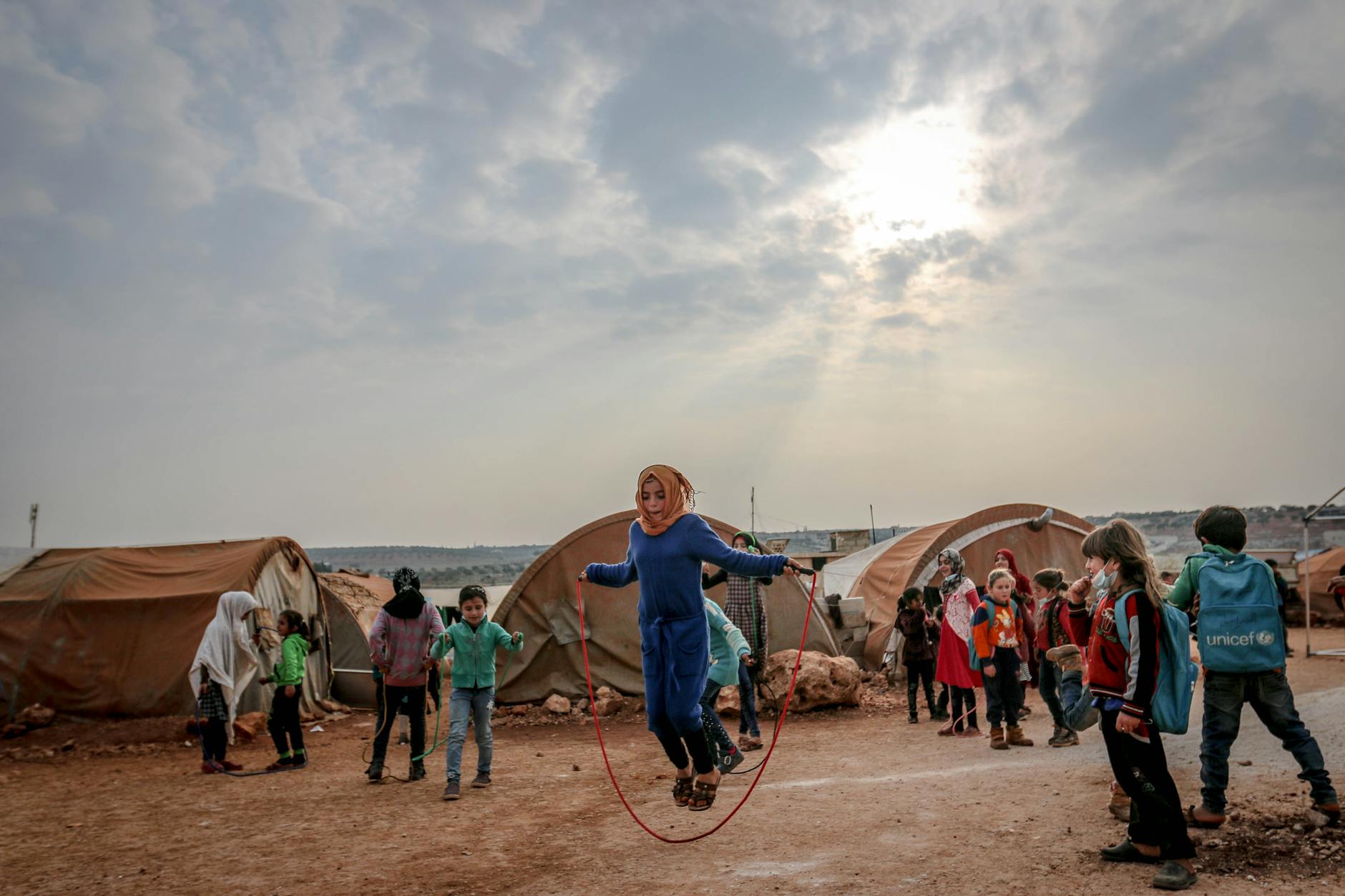
Photo by Ana Arantes on Pexels.com

Quiet Time

Sabbath Day Thoughts — “Quiet Time” Mark 1:29-39

The evidence is in. Prayer is good for us. Dr. Andrew Newberg, the author of How God Changes Our Brains: Breakthrough Findings from a Leading Neuroscientist has found that twelve minutes of personal reflection and prayer has a profound impact on our brains. Prayer enhances our neuroplasticity, the brain’s capacity to grow and develop at all ages. It also increases blood flow to the frontal lobes and anterior cingulate cortex, those areas of our brain that are essential for our fundamental cognitive processes, including motivation, decision making, learning, cost-benefit calculation, as well as conflict and error monitoring. You might even say that a robust prayer life boosts brain health and equips us to learn, grow, and develop as people.

Prayer isn’t just good for the brain; it’s good for the whole body. It’s good for our heart and lungs. Prayer reduces our heart rate, synchronizes our breath and heartbeat, and has been clinically proven to reduce blood pressure. Prayer benefits our endocrine system, too. It stimulates the body’s production of helpful hormones, like melatonin to regulate sleep, serotonin to boost our mood, and oxytocin, that feel-good hormone that we experience when we snuggle a child or a puppy. Prayer may also keep us healthy and promote healing. Studies have found a correlation between prayer and an increase in our body’s immune response.

Prayer may even help us in the workplace. It has the power to reduce stress levels and curb anxiety. Prayer can make us less reactive to criticism and the negative moods of others. It enhances our critical thinking and even gives our self-esteem a boost. Neuroscientist Andrew Newberg, says he isn’t sure if God exists. He can’t prove that in a lab, but he can prove that our belief and prayerful engagement with God are fundamentally good for us in body, mind, and spirit.

Jesus didn’t need a neuroscientist to tell him that prayer was good for him. Today’s reading from the first chapter of Mark continues the story that we began last week of a very full day of ministry in Capernaum. First, Jesus wowed worshippers by teaching. He made the scriptures come alive in ways that felt authentic and authoritative. Then, Jesus helped a man who had been troubled by an unclean spirit, healing and restoring him to his right mind.

Jesus had earned an afternoon of sabbath, but as soon as they entered Peter’s house, he learned that someone was sick. Peter’s mother-in-law was in bed with a fever, an illness that in the first century could be life-threatening at worst and a crisis for sharing hospitality at best. Undeterred by the report of illness, Jesus went to the woman’s bedside and, in a private moment of compassion, lifted her up, a minor miracle that left the woman eager to serve the Lord.

You know how people like to talk. It wasn’t long before word had spread from one side of Capernaum to the other. So, at sunset as the sabbath ended, the door to Peter’s house was thronged by folks in need of every sort of healing and deliverance.

What comes next is important. We might expect Jesus to rest up and sleep late. We might expect him to enjoy a leisurely breakfast with his new disciples, cooked up by that doting mother-in-law. We might expect him to take a victory lap in Capernaum, checking in on all those people he helped. But Jesus doesn’t do any of those things. Rather, we find him in a deserted place, spending some quiet time with God in prayer.

Those prayerful times of retreat would become characteristic of Jesus’ ministry. Even before he preached his first sermon or worked his first miracle, Jesus spent forty days in the wilderness, communing with God. Before naming the inner circle of his disciples, Jesus spent an all-nighter in prayerful discernment. After feeding the 5,000, Jesus sent his friends ahead and lagged behind for some private prayer time. On the night of his arrest, Jesus would pray, face down in the garden of Gethsemane, pleading with God for the strength to face the cross. Even while dying, Jesus prayed, asking God to forgive his executioners. Jesus was a man of prayer, and he encouraged his friends to do likewise. He hoped his friends would see that God was with them on the journey and with God they would find the courage and grace to meet each day. He even gave us a simple formula for talking to God that we use every Sunday: the Lord’s Prayer.

We know all this. We know that Jesus was the ultimate prayer warrior. We know that the Lord taught his followers to pray. We probably even know that prayer is good for us. Yet we struggle with cultivating a practice and discipline of prayer. Our spiritual forefather John Calvin taught that this is part of the legacy of our total depravity and original sin – that we are incapable of doing good until the Spirit moves within us.

I’m not so sure about Calvin’s conclusion. I am more inclined to agree with author and prayer expert Richard Foster, who compares our reluctance to find the quiet time to be with God to walking through a shopping mall with a two-year-old, something he did one day with a dear friend. The little boy was in one of those fuming and fussy moods that frustrates every parent. The dad tried everything to quiet the child, but nothing worked. At last, he scooped the boy up and held him close to his heart and began to sing a silly, made-up, off-tune song. “I love you! I’m so glad you are my boy. You make me happy. I like the way you laugh.” On and on he sang. The child relaxed and was soothed. When they got to the car later, the father buckled his son into the car seat and the little boy said, “Sing it to me again, Daddy. Sing it to me again.” Foster says that our resistance and God’s persistence are like this. Prayer is “to be gathered up into the arms of the Father and allow[ing] him to sing his love song over us.”

We need to find that daily time to rest in the arms of God, to listen to the heartbeat of the Almighty, and know that we are beloved. We can do what Jesus did, find the quiet moments that can be carved out of even the busiest and most productive of days. Jesus liked to retreat to his quiet places in the morning, while the world was hushed and the sun was a promise on the horizon. That might be your quiet time, too. Or, you may wish to find a quiet place on your lunchbreak to turn away from the rush of your day and turn to those waiting arms of the Almighty. Perhaps you are a night owl. Your thoughts turn to God as the shadows lengthen and the busy day ends. Morning, noon, or night, we are invited to find the quiet time to pray, listen, and be soothed.

Researchers have found a further benefit to prayer. It’s not only good for us; it’s good for others. Researchers at Florida State University determined that prayer helps our marriages. It shifts us from being at odds with one another and reminds us that we are on the same team. Husbands and wives who pray report greater relationship satisfaction. As someone who is celebrating their eighteenth anniversary today, I say, “Who doesn’t want that?” Just twelve minutes of personal reflection and prayer each day are enough to strengthen the neural circuit in our brain that enhances social awareness and empathy. Prayer grants us a heightened sense of compassion and eases negative emotions that we feel about others. Those who reap the greatest mental and physical benefit from prayer are the people who approach God in prayer like Jesus did, looking to the Almighty as our guide, partner, and collaborator on this life’s journey. With God’s help we find the refreshment and balance that are needed to step back into the world for positive action. Dr. Paul Hokemeyer writes that “prayer is the fuel that lights the fire of action.”

When the disciples finally caught up with Jesus in his quiet place, the Lord was refreshed and ready for action. In his prayerful time with his heavenly Father, he discerned that God was calling him onward. There were other people and places in need of his good news and healing love. One sermon at a time, one miracle at a time, one shared meal at a time, one caring interaction at a time, he would draw this fuming and fussy world into the arms of his heavenly parent, so that others might know that they are beloved. May we do the same.

Resources:

Andrade, Chittaranjan. “Prayer and healing: A medical and scientific perspective on randomized controls” in NIH National Library of Medicine, Oct-Dec 2009. Accessed online at https://www.ncbi.nlm.nih.gov/pmc/articles.

Beebe, Dr. Gayle D. “How Faith and Prayer Benefit the Brain” in Westmont Magazine, Spring 2012. Accessed online at https://westmont.edu

Bernstein, Elizabeth. “The Science of Prayer” in The Wall Street Journal, May 17, 2020. Accessed online at www.wsj.com

Foster, Richard. Prayer: Finding the Heart’s True Home, San Francisco: Harper, 1992.

Skinner, Matthew. “Commentary on Mark 1:29-39” in Preaching This Week, Feb. 8, 2015. Accessed online at https://www.workingpreacher.org

Spector, Nicole. “This Is Your Brain on Prayer and Meditation” in Today: Wellness, Oct. 20, 2017. Accessed online at https://www.nbcnews.com/


Mark 1:29-39

29As soon as they left the synagogue, they entered the house of Simon and Andrew, with James and John. 30Now Simon’s mother-in-law was in bed with a fever, and they told him about her at once. 31He came and took her by the hand and lifted her up. Then the fever left her, and she began to serve them. 32That evening, at sundown, they brought to him all who were sick or possessed with demons. 33And the whole city was gathered around the door. 34And he cured many who were sick with various diseases and cast out many demons; and he would not permit the demons to speak, because they knew him. 35In the morning, while it was still very dark, he got up and went out to a deserted place, and there he prayed. 36And Simon and his companions hunted for him. 37When they found him, they said to him, “Everyone is searching for you.” 38He answered, “Let us go on to the neighboring towns, so that I may proclaim the message there also; for that is what I came out to do.” 39And he went throughout Galilee, proclaiming the message in their synagogues and casting out demons.


Photo by Anna Shvets on Pexels.com

Teambuilding

Sabbath Day Thoughts — “Teambuilding” Mark 1:14-20

Teambuilding began in the United States in the early twentieth century. The early behavioral psychologist Elton Mayo conducted a series of experiments to determine if workplaces could be changed to increase productivity and yield greater profits. Dr. Mayo tested his theories at Hawthorne Works, a large factory complex of the Western Electric Company in Cicero, Illinois. Hawthorne employed 45,000 workers, mass-producing telephone equipment. The factory had a diverse workforce: Czech immigrants, longtime working-class Chicagoans, and African Americans who had migrated north from the deep south.

Dr. Mayo began his testing by changing the physical environment of workers. He altered lighting and manipulated the humidity of the workplace, but physical changes had little or no affect. Next, he expanded the study to observe social and emotional factors that might have an impact upon workers, like their interactions with managers and co-workers. Dr. Mayo hit paydirt.

Building relationships between leaders and workers inspired feelings of teamwork. Leaders saw their role as providing vital support for teammates. Workers developed a sense of responsibility to colleagues. All that led to positive changes in employee performance. Not only were workers more productive, but they also had a greater sense of satisfaction in the workplace. Bonds nurtured at work also led to diverse, lasting friendships in the community.

The experiments revolutionized industry and launched a century of teambuilding efforts. Today teambuilding is a core concept of organizational development and management. Teambuilding exercises are an integral part of training for the US Army, professional athletics, and corporate, as well as non-profit, workplaces.

Jesus knew the importance of building a team to follow and work alongside him in ministry.  In our reading from Mark’s gospel, Jesus began his own teambuilding.  As Jesus walked the shores of the Sea of Galilee, he noticed brothers Peter and Andrew casting their fishing nets.  Jesus saw something he liked. He called them to follow him. Immediately, they joined him.  Just a little farther along the shoreline, Jesus ran into another set of brothers—James and John, mending nets with their father Zebedee.  Soon they, too, had joined the team, leaving their family and fishing boat behind. There would be other disciples: Philip, Bartholomew, Matthew, Thomas, Little James, Thaddeus, Simon, and Judas. Eventually, there would be twelve disciples serving in what scholars call the “inner circle” of Jesus’ ministry.

For sixteen centuries, faithful people described what Jesus did with the disciples as a summoning to vocation—where vocation meant the calling to a consecrated, religious life, as a priest or nun. With the Protestant Reformation, all that changed. First Martin Luther and then John Calvin taught that all Christians have a vocation or calling to use our God-given gifts in our secular workplaces and in the congregations that we affiliate with. The minister who preaches the gospel has a calling, but so do the musicians who enhance our worship and the Sanctus workers who dust the pews. Team Jesus calls us all.

The disciples made a diverse group. Perhaps the only thing they had in common was their shared heritage as Israelites. Peter, Andrew, James, and John earned their living on the Sea of Galilee, casting nets or towing dragnets to yield a harvest of freshwater fish. Matthew was, of course, a tax collector. He straddled the uncomfortable gap between the ruling elite and the everyday people, collecting taxes from his neighbors to finance Herod’s building projects or pay for the Roman occupation. The name Bartholomew means Son of the Furrows (or fields). He was a farmer. Simon, often called Simon the Zealot, was a bit of a radical, affiliated with the resistance group that would eventually revolt against the Roman occupation. Jesus knew it would take a variety of people to build his team and serve the Kingdom.

Our team has diversity, too. We serve (or have served) in schools as teachers, counselors, and administrators. We are healers: nurses, doctors, researchers, and home health aides. We are civil servants who have served the APA, DEC, or our local governments. We are businesspeople, running small businesses, programming computers, or sharing our expertise as consultants. Somehow those differing vocations have found a spiritual home and shared purpose right here.

The disciples on Team Jesus had differing gifts. Peter was a leader: the first to know that Jesus was the Messiah, the first to retreat to Galilee after the crucifixion, and the first to avow his love when the risen Lord found him on the lakeshore a second time. Philip had the gift of reaching out; no sooner had he found Jesus than he was inviting his friend Nathanael to come and see this rabbi who just might be the Messiah. Thomas asked the big questions, but he also had the gift of loyalty: he followed Jesus to Jerusalem, even when he expected the worst. John had the gift of love, laying his head upon the Lord’s breast in companionable silence and standing at the foot of the cross with the women. It would take a variety of gifts to achieve Jesus’ purpose. All were valued and needed.

We, too, are a people of differing gifts. We may be richly blessed with musical gifts. Or, we may we have a passion for learning and studying scripture. We may have the patience to teach and work with children. We have gifts for good cooking, yummy baking, and warm hospitality. We care–our warm sympathy overflows for folks in tough times. We are generous, sharing of our resources and money. In the sharing of our differing gifts, churches like this thrive, and Jesus is known.

Somehow, Jesus forged the diverse and differently gifted disciples into a team that would change the world. There were some teambuilding exercises along the way. They learned to depend upon one another when he sent them out in pairs to teach and heal. They learned to trust in his power and presence when their boat was rocked by a rising storm. They learned that they could feed hungry people by sharing their meager resources and believing that with Jesus just a little could be enough. Jesus built his team to minister at his side, but even more so, he built a team that, in the long years to come, could minister even when he wasn’t right there, telling them what to do.

Team Jesus was wildly successful, with productivity and profits far outpacing the biggest dreams of Dr. Elton Mayo and those early twentieth century captains of industry. Peter would appoint himself chief among apostles to the Hebrew people, but the Holy Spirit had bigger things in mind. From the household of the Roman Centurion Cornelius in Caesarea Maritime to the household of the emperor in Rome, Peter would lead the charge of the early church into new territory. John would plant a church in Israel whose loving bonds would survive terrible persecution. John would successfully lead his congregation into exile, from Israel across the Mediterranean to western Turkey. There he would write at least three letters that we continue to cherish today, and his memories of Jesus would eventually be recorded in the Gospel that bears his name. Bartholomew never went back to farming. He teamed up with his fellow disciple Thaddeus to venture as far as India with the gospel message. Along the way, they planted the seeds of faith in Armenia, which became the first Christian nation in the year 301. Simon the Zealot left behind his political aspirations. He traveled to Egypt and North Africa and planted churches from Cairo to Alexandria to Cyrene. Some traditions say that Simon traveled on to Spain and then Britain where he shared about his life with Jesus until he lost his own life, crucified by the Romans in the year 61CE. What a team! They took the good news from one end of the Roman Empire to the other—and beyond.

Our team may not travel as far afield in the Lord’s purpose, but our differing gifts have been shared in ways that have made a life-changing difference for others. The good news that we share with our children in Sunday School, Youth Group, and confirmation provides a foundation of faith that will sustain them as they go off to school, embark on professional endeavors, and start families of their own. Our passion for feeding hungry people has motivated us to grow bushel upon bushel of beans at the Jubilee Garden, fill the pack basket with monthly food offerings, create a permanent home for the Saranac Lake Food Pantry, and make a dent in global hunger through CROP Walk and Church World Service. Our commitment to caring makes a loving difference. It prompts deacons to reach out to homebound friends, inspires prayer chain warriors to pray fervently, sends us forth with summer bouquets for folks who need love, and equips us to comfort families at the time of death. What a team! We are good news for a world still deeply in need of the love and mercy of Jesus.

As the New Year unfolds, so will the teambuilding efforts of the world around us. The army will build cohesiveness among recruits by inviting them to work together to carry super heavy loads that can’t be handled alone or by dropping units off in the middle of nowhere with orders to return to base forthwith. Athletic managers will build trust and mutual respect among their professional athletes by giving them each a few clues, locking them together in an escape room, and giving them an hour to get out. Titans of industry will hope to unlock productivity and profits by scheduling teambuilding retreats for their employees. Participants will try exchanging warm fuzzies (compliments), meditating, and facing the physical challenge of a ropes course.

I suspect that Jesus will continue to build his team right here at the First Presbyterian Church. He’ll inspire us to welcome diversity. He’ll celebrate our differing gifts. He’ll delight as we get busy in his purpose. Go, Team Jesus!

Resources

Michael Rogness. Commentary on Mark 1:14-20” in Preaching This Week, Jan. 25, 2015. Accessed online at workingpreacher.org.

Cynthia Briggs Kittredge. “Commentary on Mark 1:14-20” in Preaching This Week, Jan. 21, 2018. Accessed online at workingpreacher.org.

Alicia Vargas. “Commentary on Mark 1:14-20” in Preaching This Week, Jan. 21, 2024. Accessed online at workingpreacher.org.

Feli Oliveros. “What is Team Building? How to Build Stronger, Cohesive Teams in 2023” in Talkshop, July 29, 2023. Accessed online at https://gusto.com

Angela Robinson. “History of Team Building” in teambuilding, Sept. 27, 2022. Accessed online at https://teambuilding.com.


Mark 1:14-20

14Now after John was arrested, Jesus came to Galilee, proclaiming the good news of God, 15and saying, “The time is fulfilled, and the kingdom of God has come near; repent, and believe in the good news.” 16As Jesus passed along the Sea of Galilee, he saw Simon and his brother Andrew casting a net into the sea—for they were fishermen. 17And Jesus said to them, “Follow me and I will make you fish for people.” 18And immediately they left their nets and followed him. 19As he went a little farther, he saw James son of Zebedee and his brother John, who were in their boat mending the nets. 20Immediately he called them; and they left their father Zebedee in the boat with the hired men, and followed him.


Photo by Quang Nguyen Vinh on Pexels.com

Torn Open

Sabbath Day Thoughts — “Torn Open” Mark 1:4-11

Elena Bernal was not looking forward to the holidays. The sixty-six-year-old was widowed three years ago in December. Home feels quiet and lonely now, especially at Christmas. Elena breaks down in tears, just thinking about her loss. “We grew up together,” she says of her late husband, “We met in middle school. I miss him so much.”

The world is in the midst of a loneliness epidemic. A Meta-Gallup poll released in October conducted in 142 countries found that one quarter of the world’s population reports feeling very or fairly lonely. The statistics are even higher in the United States. In May, the Surgeon General Dr. Vivek Murthy released a report indicating that half of Americans report experiencing loneliness.

There are a number of reasons for our national surge in loneliness. In this post-pandemic world, more people are working and learning remotely. We’re communicating more remotely, too, with Facetime and Zoom replacing meetings, visits, and face-to-face gatherings. Larger societal changes further contribute to the problem of loneliness. The social media boom, which presents a distorted, idealized vision of the daily life of others, has us scrolling on our phones rather than picking up our phones to make a call to our friends and family. More of us live alone these days. In 1960, only 13% of Americans lived by themselves. Today that number has more than doubled to 29% of us. We may feel it is tougher to form genuine connections, too. In 1972, 45% of us trusted our neighbors. In the midst of the increasing political and social division of our nation, only about 30% of us now say that our neighbors are trustworthy.

Loneliness is bad for our health. It puts us at increased risk for depression, anxiety, addiction, self-harm, and even suicide. The Surgeon General’s report indicates that loneliness increases the risk of premature death by 26%. It’s worse for us than obesity or inactivity. Dr. Murthy compares loneliness to smoking fifteen cigarettes a day. It increases our risk of heart disease by 29%, our risk of stroke by 32%, and among the elderly, the risk of dementia doubles. Feelings of loneliness have seen the greatest increase among those aged 19 to 29. Half of young adults say that in the last week no one had taken more than a few moments to reach out to them or express any sort of genuine care.

If the Meta-Gallup poll and the US Surgeon General are right, then addressing the epidemic of loneliness and isolation is critical to the world’s well-being.

I suspect that there were feelings of loneliness and isolation at play in the crowds who came to hear the fiery preaching of John the Baptist. John spoke boldly of existential loneliness, the alienation and isolation that come when we feel that we are separated from God and our neighbors. In fact, John proclaimed a bold message of repentance, of returning to right relationship with God and community.

Jesus came to the muddy banks of the River Jordan.  He took a seat among the crowds and listened to what John had to say.  Throngs of pilgrims, the whole Judean countryside, had come to gawk at John and listen to his bold exhortation. If we listen up this morning, we can almost hear the rough voice of the Baptizer, the song of the river, and the murmuring of the entranced crowds. Compelled by the power of John’s message, Jesus kicked off his sandals, set aside his staff, bag, and traveling cloak.  He waded into the gritty Jordan to John’s side, and he was baptized. 

We’re told that when Jesus emerged from the river, something extraordinary happened.  The sky was torn open (sxizomenous).  In the Hebrew understanding of the world, the sky was a solid dome, the firmament, established by God at creation.  The Israelites believed that we lived on this side of the firmament while God was on the other. Separate. Holy. Distant. Apart. The Prophet Isaiah gives us a feeling for this separation between God and humanity. When the Israelites lived in exile in Babylon, Isaiah cried out to God, “O, that you would tear open the heavens and come down!” (Isaiah 64:1).  At Jesus’ baptism, God tore open the heavens. God entered into the world to reshape it through this humble carpenter from Galilee.

Jesus went forth from his baptism to live a torn-open life, a life marked by compassion and a willingness to be vulnerable with and for others. He identified with those who lived as outsiders. He called fishermen, tax collectors, and peasants to be his disciples. He broke bread with sinners. Jesus advocated for the powerless – welcoming women to his ministry and blessing the children. Jesus healed, ending the physical, social, and spiritual isolation of lepers, demoniacs, and the disabled. The torn-open Jesus confronted empire and Temple, those who wielded brutal power over others, with the promise of a coming Kingdom where power would be used to help and to heal.

Jesus’s choice for a torn-open life was most clearly revealed in his death on the cross. Even as he underwent unimaginable suffering, he thought of others. He welcomed a repentant thief to paradise. He prayed for God to forgive his executioners. Let’s face it. On the cross, Jesus was literally torn open. Nails brutally pierced his hands and feet. A spear was thrust through his side and into his vital organs.  It’s messy and brutal and awful. And we learn the lengths that God will go for our sake, the limitless love of a torn-open God.

At the moment of Christ’s death, we are reminded of his baptism. The curtain in the Temple that sequestered the holy of holies was torn open from top to bottom. We do not hear God’s voice speaking from the heavens, “This is my Son the Beloved;” rather, a Roman soldier at the foot of the cross, who witnessed the compassion and dignity with which Jesus died, pronounced, “Surely, this man was God’s son.” In living a torn-open life, Jesus granted us a vision of the world that God would have us make. It’s a world where faithful people choose to make a difference by facing head-on all that has separated us from God and one another. It’s world where we trust that on the far side of the world’s worst, new life will rise, and we have a role to play in that new creation.

Michael Rogness, who taught preaching for many years at Luther Seminary, likes to point out that to be baptized is to follow Jesus. We, who were sprinkled as infants, confirmed as teens, or chose baptism as adults, have embarked on a life of discipleship. That doesn’t mean that we are perfect or exceptionally pious, walk on water or know every chapter and verse of scripture. Rather, discipleship is that choice for a torn-open life of compassion and caring. It prompts us to feed hungry neighbors, welcome strangers, embrace those who feel like outsiders, and bless children. The torn-open life is a calling to help, to heal, and to love. Always love.

Our choice to follow Jesus in this torn-open life may be the antidote for the world’s epidemic of loneliness. According to the Surgeon General, social connection is the most important tool in overcoming social isolation. Human beings who are embedded in a web of concerned and caring individuals thrive. Our interest and caring for others are as essential to our well-being—and theirs—as the air we breathe and the food we eat. Medical science confirms that the world becomes healthier, physically and mentally, when people are respected and valued, looked after and look out for. Our loving care and interest in others, our choice to be torn open, changes us and changes others. Loneliness ends. We find meaning, purpose, motivation, and hope. We begin to see the world that Jesus would have us make, where the barriers that separate us from our neighbors and disconnect us from God are torn open.

Elena Bernal’s Christmas was a lot better than she expected. She accepted an invitation to attend Christmas lunch at the Serving Seniors Wellness Center in Cortez Hills where she lives. Serving Seniors is a nonprofit organization that is dedicated to helping low-income seniors. They provide nutritious food, but they believe the social interaction and hospitality that are shared when they break bread together is even more important. Elena ran into an old friend Gwendolyn King at the lunch. The two women visited and shared news as they enjoyed a traditional holiday meal. Alan Busteed, looking dapper in a three-piece suit, moved from table to table playing carols on his violin and taking requests. As Elena left, she was given a Christmas present and a $10 gift card. It was nice, really nice.

The Serving Seniors Wellness Center has a banner that hangs above the buffet. It reads, “Remember, you are a citizen of the world, and everybody needs you. You’ll find happiness in the giving of yourself.” If you ask me, it sounds a lot like a torn-open life.

Resources

Tammy Murga. “Christmas Day can be lonely, quiet for many. Serving Seniors made it a fun one for these San Diegans,” in The San Diego Union-Tribune, Dec. 25, 2023. Accessed online at https://www.sandiegouniontribune.com/

Dr. Vivek Murthy, Julianne Holt-Lunstad, et al. Our Epidemic of Loneliness and Isolation: The Surgeon General’s Advisory on the Healing Effects of Social Connection and Community. Washington, DC: Office of the Surgeon General, May 2, 2023. Accessed online at https://www.hhs.gov/sites/default/files/surgeon-general-social-connection-advisory.pdf

Paul S. Berge. “Commentary on Mark 1:4-11” in Preaching This Week, January 8, 2012. Accessed online at workingpreacher.org.

Michael Rogness. “Commentary on Mark 1:4-11” in Preaching This Week, January 8, 2012. Accessed online at workingpreacher.org.

Adrianna Rodriguez. “Americans Are Lonely and It’s Killing Them” in USA Today, Dec. 24, 2023. Accessed online at https://www.usatoday.com.

Theresa Coleman. “2023: The Year of the Loneliness Epidemic” in The Week Magazine, December 9, 2023. Accessed online at https://theweek.com.


Mark 1:4-11

4John the baptizer appeared in the wilderness, proclaiming a baptism of repentance for the forgiveness of sins. 5And people from the whole Judean countryside and all the people of Jerusalem were going out to him, and were baptized by him in the river Jordan, confessing their sins. 6Now John was clothed with camel’s hair, with a leather belt around his waist, and he ate locusts and wild honey. 7He proclaimed, “The one who is more powerful than I is coming after me; I am not worthy to stoop down and untie the thong of his sandals. 8I have baptized you with water; but he will baptize you with the Holy Spirit.” 9In those days Jesus came from Nazareth of Galilee and was baptized by John in the Jordan. 10And just as he was coming up out of the water, he saw the heavens torn apart and the Spirit descending like a dove on him. 11And a voice came from heaven, “You are my Son, the Beloved; with you I am well pleased.”


Photo by Pixabay on Pexels.com