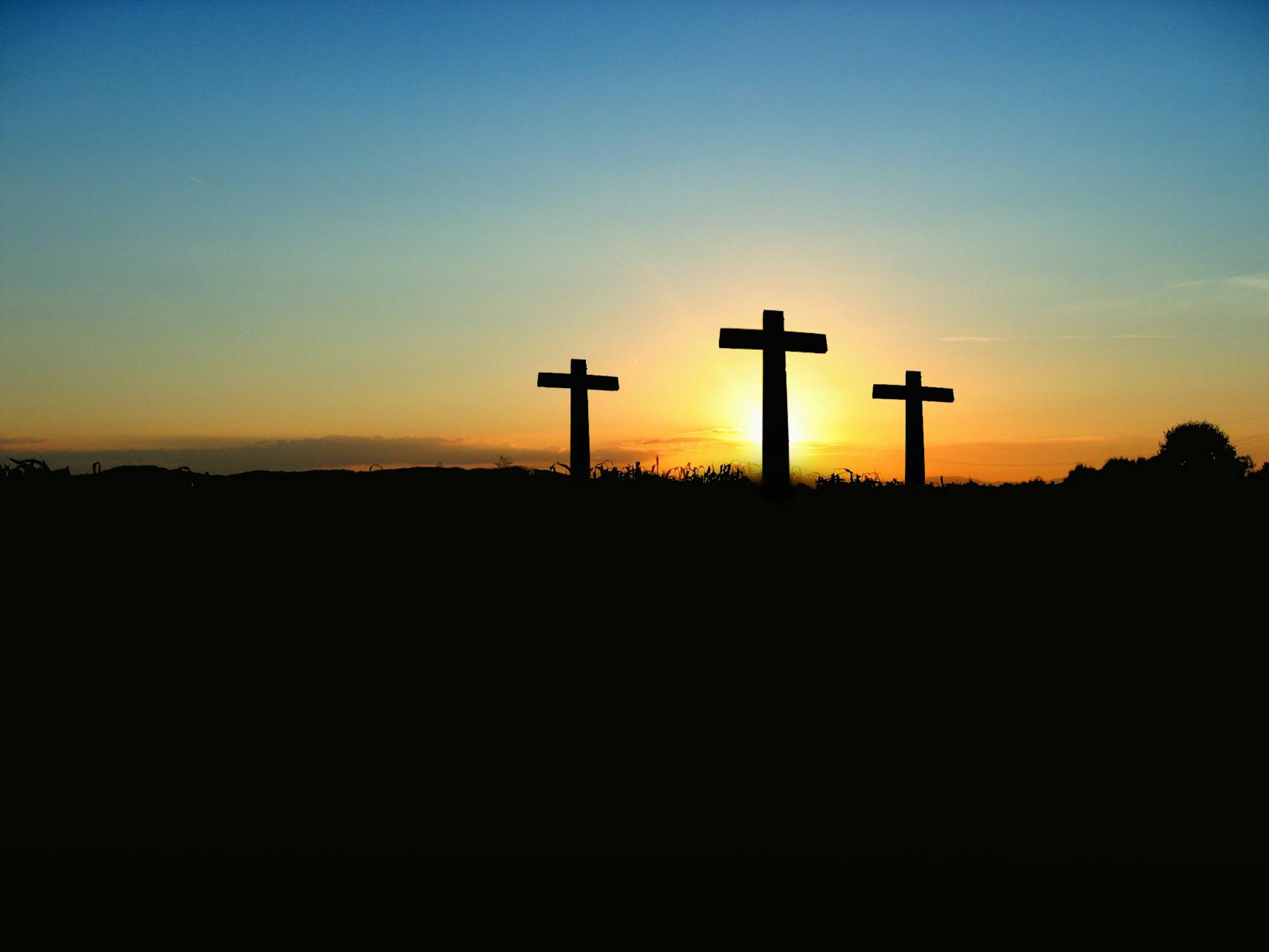
Extraordinary Love

Sabbath Day Thoughts — “Extraordinary Love” Luke 6:27-38

On June 17, 2015, twenty-one-year-old white supremacist Dylann Roof entered the Mother Emanuel African Methodist Episcopal Church and made his way to a basement classroom where Reverend Clementa Pinckney was leading the Wednesday night Bible Study. Dylann was warmly welcomed. He took a seat next to Rev. Pinckney and listened silently for forty-five minutes. As Bible Study participants rose to hold hands for a closing prayer, Dylann Roof pulled out a hand gun and opened fire, killing nine church members and wounding three others.

Dylann had been radicalized in a classroom of his own making, doom scrolling daily through white nationalist websites. He penned a manifesto that stated his belief that the white race was in danger and “no one [was] doing anything but talking on the internet.” In Dylann Roof’s mind, someone needed to take action, and he was the man to do it. When asked about his motive for the attack, Dylann Roof said that he had hoped to ignite a race war. He has never apologized or repented for his actions.

“Love your enemies, do what is good to those who hate you, bless those who curse you, pray for those who mistreat you. . . Be merciful, just as your Father also is merciful… Forgive, and you will be forgiven.” Jesus’ words from the Sermon on the Plain are among his most challenging and uncomfortable teachings. In the first century world, members of a community looked to their leaders to set the moral standard for their conduct—a synagogue leader, a wise rabbi, the family patriarch or matriarch, perhaps even Herod or the emperor set the moral tone for those who followed. But Jesus told his followers that they must look to God as their ethical guide and seek to release people from the retribution that they may deserve.

In November of 1957, when the Rev. Dr. Martin Luther King, Jr. reflected on Jesus’ words in his sermon, “Love Your Enemies,” he emphasized that love is the ethical choice that Christians must make in a world where we may not like our experience. King reminded his congregation that Christian love is agape, the selfless love of God working in the lives of men. Instead of retaliating when we are mistreated, we can choose to extend to others the love that God has for us. That divine love can live in us and enable us to reach out to others. Indeed, King wrote, you can love the enemy, even when you do not like what he is doing to you. You can love your enemy who denies your right to vote. You can love your enemy who refuses to pay you a living wage. You can love your enemy who threatens you with lynching. King believed that when we dare to put the selfless love of God to work in dealing with our opponents, we can wear out the hater, break down barriers, and redeem the enemy.

Long before June 17, 2015, the Mother Emanuel Church contended with hate. The church was founded in 1816 by free and enslaved Black people of Charleston who wished to worship together as a community of color. Six years later, church member Denmark Vesey, a freed slave who worked as a carpenter, planned and organized an uprising of city and plantation Blacks. Inspired by the successful revolt of Haitian slaves in 1790, Vesey called for rebels to attack guardhouses and arsenals, seize arms, and free the enslaved people. Authorities were tipped off on the eve of the insurrection, and Vesey with thirty-five of his conspirators, many of them members of Mother Emanuel Church, were hanged. The church was burned to the ground and Black houses of worship were banned. The congregation of Mother Emanuel met in secret from 1822 until 1865, after the Civil War. Later, in the 20th century, Mother Emanuel faced threats of violence for hosting prominent Black leaders, like Booker T. Washington and Martin Luther King Jr., and organizing significant civil rights events, like Coretta Scott King’s march for local hospital workers in 1966. Rev. Clementa Pinckney, who was killed by Dylann Roof, taught that despite a history of suffering, Mother Emanuel was a place that sought to continue to “work on the hearts, minds, and spirits of all people.”

“Love your enemies, do what is good to those who hate you, bless those who curse you, pray for those who mistreat you. . . Be merciful, just as your Father also is merciful… Forgive, and you will be forgiven.” Our world today works in transactional and reciprocal ways. You scratch my back and I’ll scratch yours. We don’t get mad; we just get even. Payback time is gonna’ come. What we experience dictates how we will respond. It’s an escalating pattern of retribution that seems to never end. We find it hard to make different choices. And if we were to look to national leaders to set the moral tone for our conduct, then we would hate our opponents, and we wouldn’t want the best for them.

Truly, the only way to step out of the spiral of vengeance and hate is to consider the mercy of God to us. Though we are sinners, deserving of judgment, God chose to become flesh and enter the world’s darkness. In Jesus, God chose to live for us and show to us the way of agape. In the ultimate act of self-giving love, on a merciless cross, flanked by common criminals, Jesus revealed that God loves us enough to die for us. In the enormity of God’s costly love for us, we begin to see another way. We begin to see that only love can heal hearts, transform an enemy into a friend, and make a changed future possible.

48 hours after having lost mothers, sisters, sons, husbands, and wives, members of the Mother Emanuel Church appeared in court for Dylann Roof’s bond hearing. It was the first time any of them would come face to face with the perpetrator of the hate crime that had robbed them of their beloved ones. The judge presiding over the hearing invited them to make a statement, should they wish. First to speak was Nadine Collier, who lost her mother Ethel Lance. Fighting back tears, Nadine said, “I forgive you … You took something really precious from me. I will never talk to her ever again, I will never be able to hold her again, but I forgive you and have mercy on your soul.” Other church members followed suit and said that they, too, forgave the gunman.

Chris Singleton, an eighteen-year-old who lost his Mom in the mass shooting, wasn’t in the courtroom on that day. He was playing minor league baseball for the Chicago Cubs. He wasn’t following the news and had no idea that the families had decided to issue statements of forgiveness at the hearing, but half a country away, Chris came to the same conclusion. He needed to forgive. Chris says he hopes that the choice for mercy has made a difference. Chris says, “After seeing what happened [at the church] and the reason why it happened, and after seeing how people could forgive, I truly hope that people will see that it wasn’t just us saying words. I know, for a fact, that it was something greater than us, using us to bring our city together.”

Ronald J. Allen, who taught preaching and New Testament at the Christian Theological Seminary in Indianapolis for many years, taught that putting Jesus’ ethical teaching into action can have powerful consequences for our oppressor, ourselves, and our world. In extending love and mercy to those who have wronged us, we open the door to their repentance. As Rev. Pinckney said, our mercy “works on the heart, mind, and spirit” of the other and awakens the possibility for change. In extending God’s love and mercy to others, our personal experience of God’s mercy deepens. We understand that no matter how misdirected or lost we may become, there is always a way back for us, a second chance, a new beginning. Thank you, Lord. Beyond working out reconciliation between two people, when we put Jesus’ ethics into action, we embody the promise of the Kingdom of God. The world begins to imagine God’s realm where we “wear out the hater, break down barriers, and redeem the enemy.” What a wonderful world it will be.

This June marked the tenth anniversary of Dylann Roof’s assault on Mother Emanuel Church. Rev. Pinckney’s widow Jennifer says this was a tough year. Her oldest daughter graduated from college and her 16-year-old went to her first prom without her dad to see her off. The church is in the process of building a memorial to her husband and the other eight victims. They have also purchased a nearby house to serve as a museum for the outpouring of love that Mother Emanuel received from people all around the world in the wake of the shooting: quilts, prayer shawls, artwork, a hand embroidered chair, crosses, banners, music, and more. Asked what the world should take away from this tenth anniversary of Dylann Roof’s hateful act, Jennifer Pinckney said, “The world needs to remember, to come together. We got to love one another. We got to move forward and work together.” She sounded a lot like Jesus.

“Love your enemies, do what is good to those who hate you, bless those who curse you, pray for those who mistreat you. . . Be merciful, just as your Father also is merciful… Forgive, and you will be forgiven.”

Resources

US Justice Department. UNITED STATES OF AMERICA V. DYLANN STORM ROOF in the United States District Court for the District of South Carolina, Charleston Division. July 20, 2015

The Editors of Encyclopedia Britannica. “Denmark Vesey”. Encyclopedia Britannica, 28 Jun. 2025, https://www.britannica.com/biography/Denmark-Vesey. Accessed 4 October 2025

Cory Collins. “The Miseducation of Dylann Roof” in Learning for Justice, Issue 57, Fall 2017. Southern Poverty Law Center. Accessed online at The Miseducation of Dylann Roof | Learning for Justice

Rasha Ali. “Five years after Charleston church massacre: How ‘Emanuel’ reveals the power of forgiveness” in USA Today, June 17, 2019. Charleston church attack and the power of forgiveness in ‘Emanuel’

Claude Atcho. “Mother Emanuel and the Witness of Black Christian Faith” in Christianity Today, June 5, 2025. Accessed online at Mother Emanuel and the Witness of Black Christian Faith – Christianity Today

Billie Jean Shaw. “‘Stronger than hate’: How the son of a Mother Emanuel victim chose to embrace forgiveness” on WIS10 TV, June 16, 2025. Accessed online at ‘Stronger than hate’: How the son of a Mother Emanuel victim chose to embrace forgiveness

Ronald Allen. “Commentary on Luke 6:27-38” in Preaching This Week, Feb. 24, 2019.  Accessed online at workingpreacher.com.

Sarah Henrick. “Commentary on Luke 6:27-38” in Preaching This Week, Feb. 20, 2022.  Accessed online at workingpreacher.com.

Mary Hinkle Shore. “Commentary on Luke 6:27-38” in Preaching This Week, Feb. 23, 2025.  Accessed online at workingpreacher.com.


Luke 6:27-38

27 “But I say to you who are listening: Love your enemies; do good to those who hate you; 28 bless those who curse you; pray for those who mistreat you. 29 If anyone strikes you on the cheek, offer the other also, and from anyone who takes away your coat do not withhold even your shirt. 30 Give to everyone who asks of you, and if anyone takes away what is yours, do not ask for it back again. 31 Do to others as you would have them do to you. 32 “If you love those who love you, what credit is that to you? For even sinners love those who love them. 33 If you do good to those who do good to you, what credit is that to you? For even sinners do the same. 34 If you lend to those from whom you expect to receive payment, what credit is that to you? Even sinners lend to sinners, to receive as much again. 35 Instead, love your enemies, do good, and lend, expecting nothing in return. Your reward will be great, and you will be children of the Most High, for he himself is kind to the ungrateful and the wicked. 36 Be merciful, just as your Father is merciful. 37 “Do not judge, and you will not be judged; do not condemn, and you will not be condemned. Forgive, and you will be forgiven; 38 give, and it will be given to you. A good measure, pressed down, shaken together, running over, will be put into your lap, for the measure you give will be the measure you get back.”


Image source: https://religionnews.com/2019/06/06/mother-emanuels-forgiveness-narrative-is-complicated-says-reporter-turned-author/

Repent

Sabbath Day Thoughts — “Repent” Luke 15:11-32

Near the end of his life, the Dutch Master Rembrandt completed “The Return of the Prodigal,” a painting considered by some to be his master work. The artist captured the moment of the Prodigal Son’s homecoming. The repentant young man kneels at his father’s feet. His clothing hangs in filthy rags. His shoes are so tattered that they fall from his feet. He buries his face in his father’s middle. Like a small child, his arms reach around to cling to the father, who leans forward to pull his lost son to his chest and kiss the top of his head. The father’s hands, strong but gentle, rest on the Prodigal’s back. The father’s face is soft and open. His mouth is slack, as if caught between the impossible joy of welcoming his lost child and the heartrending shock of seeing his son’s degradation. To the side of the painting, half in darkness, the elder son looks on, clothed in a fine scarlet cloak and elaborate turban. His hands are clenched before him. His brow is furrowed with anger, disbelief, and judgment. The distance between the elder son and his compassionate father and profligate brother leaps off the canvas.

Jesus told his Parable of the Prodigal Son to a mixed audience of wayward sons and righteous older brothers. The Lord was welcoming sinners and tax collectors. He even broke bread with them, and that was a source of scandal for the scribes and Pharisees, the most righteous people of their day, who faithfully observed all 613 requirements of the Torah.

The young son of Jesus’ story demonstrated the most profound disrespect. He treated his father as if he were as good as dead, demanding his portion of the inheritance, which he promptly liquidated. Forsaking his father’s house, he traveled to Gentile lands and blew his small fortune in wild living. Times were so desperate that he became a swineherd, even though the Torah taught, “The pig . . . is unclean for you.  You shall not eat their meat, and you shall not touch their carcasses” (Deut. 14:8). Only when the young son had hit rock bottom, did he resolve to go home and throw himself upon the mercy of his father. He gathered his rags and returned, rehearsing along the way just what he would say. But as the lost son drew close to home, he learned that the Father had been looking and longing for his return. The patriarch ran down the road, welcomed him with open arms, and threw a party to restore the prodigal to both family and community. Who could blame the older son, who had spent years faithfully serving, working and obeying, who could blame him for his moral outrage and hurt?

When Jesus told his extended metaphor about the shocking mercy of God and the sinfulness of humanity, he probably offended all his listeners. Those tax collectors and sinners would have bristled at their depiction as degenerate scofflaws who wander far from God in profligate living. Those scribes and Pharisees would have been challenged to envision themselves as harsh, self-righteous, older brothers, who, in their own way, were just as disrespectful to the Father as the young son they condemned. These two lost sons were held together by a merciful Father, who would do anything to be reconciled to them and reconcile them to one another, whether running down the road to embrace them or leaving a party to seek them as they sulked outside in the dark. Both sons were sinners. Both were in need of repentance and love.

Repentance is one of the most essential teachings of Judaism. According to the tradition of the elders, God created repentance before God created the universe. God anticipated that, even though God would love us and provide for us all that was needed for abundant life, we would turn our back on God and work to the detriment of our neighbor. Repentance would be needed. The word repentance in Hebrew is teshuvah, which means to turn. In the ongoing journey of God and our ancestors in the faith, we would often choose to walk apart from God, yet repentance would allow us to return. According to the prophets, repentance was an act of the heart, an inner turning to God that resulted in outward actions of justice, mercy, and faithfulness. This inner transformation was displayed in rending garments, tossing ashes, wearing sackcloth, and offering sacrifices to God.

Repentance is one of the most essential teachings of Christianity. Indeed, the first words that Jesus uttered in his public ministry were, “Repent for the Kingdom of God is near” (Matthew 4:17), and among the last words of his public ministry, spoken from the cross, are the assurance of paradise for the repentant thief who was dying at his side. Jesus himself was the revelation of God’s profound longing to be reconciled to us. In Jesus, God chose to become man, to enter fully into our experience, and to stop at nothing—not even death on a cross—to reveal God’s love and mercy for us. As we repent and return to God, we find that God has already run down the road to greet us. Prodigal sons and judgmental older brothers, we all find a place in the Father’s mercy through Christ our Lord.

Few doctrines have been as hotly contested in the Christian tradition as repentance. The explosive growth of the early church was driven by welcome for those who had been deemed outside the community of faith, from sinners to pagans. Yet by the fourth century, it wasn’t enough to return to God and confess your sins. You needed the church, which church stood in the middle to mediate God’s grace. Repentance had to be made to a priest and accompanied by works of penance, like special prayers, fasting, almsgiving, or mortification of the flesh. Our absolution (forgiveness) was granted by the church once our works were done. This practice of treating forgiveness like a commodity to be doled out to penitents from the church’s limitless treasury of grace hit a high—or is that low—by the 16th century, when Pope Sixtus IV determined that souls of the dead in purgatory could benefit from a papal indulgence, a certificate of absolution that could be conveniently acquired for the right price. When the coin in the coffer rings, the soul from purgatory springs. How far we had wandered from the beautiful story of the loving father and his two lost sons!

On a December evening in 1516, Martin Luther paced the floor of his study. The Augustinian priest and Bible scholar was troubled by the church’s sacrament of penance and the selling of indulgences. Was grace for sale? Could sinners earn their salvation through works? In his studies of the New Testament, Luther had come to the conclusion that Jesus never commodified his grace. It was abundantly and freely given. That night, Luther read the Letter to the Ephesians, “By grace you have been saved through faith and that not of yourselves—it is the gift of God, not works, lest any man should boast.” It hit Luther like a thunderclap. He picked up his pen and wrote, “Ergo sola gratia justificat,” justified by faith alone. Luther remembered the moment, saying, “Thereupon, I felt myself to be reborn and to have gone through open doors into paradise.” The following year, Luther posted his 95 Theses, launching a religious revolution by calling into question the church’s practice of commodifying grace.

What does repentance look like for us? Two decades after Luther’s realization about the freely given gift of God’s grace, John Calvin in his church in Geneva developed a rite of repentance that we continue to practice each week in worship, 500 years later. We stand together as a community of faith and return to God, confessing the ways that we have turned from God and brought injury to our neighbors. As we turn toward God, we find that God has already turned to us, like the Prodigal’s father, awaiting his lost sons with open arms. For the sake of Jesus Christ, we are assured of our pardon, a fact so amazing that we have to celebrate with an “Alleluia! Amen.”

Calvin further encouraged his parishioners to make a practice of regular self-examination, reflecting upon our lives and noting the ways that we have turned away from the right and righteous path. With humility and honesty, we can return to God, trusting that we are welcomed home and deeply loved. Calvin did not believe that we would ever get it truly right, but by making a daily discipline of returning to God, we could grow in God’s purpose over the course of a lifetime through the work of the Holy Spirit within us. Our practice of repentance could be as simple as an evening time of reflection upon our day to celebrate the ways that we felt blessed by God and the moments we felt far from God, and then concluding our reflection with the Lord’s Prayer.

In 1986, author and clergyman Henri Nouwen traveled to St. Petersburg, Russia, where Rembrandt’s painting “The Prodigal Son Returns” hangs in the Hermitage. Nouwen was allowed to observe the painting alone for hours. As he sat before Rembrandt’s masterwork, Henri began to see the painting as a metaphor for humanity. In his 1992 book, The Return of the Prodigal Son: A Story of Homecoming, Nouwen noted that Rembrandt himself had been both sons. Rembrandt had been the dutiful older brother, an earnest churchgoer, married to a devout wife, and a loving father of three children. But the untimely death of his wife and children sent Rembrandt down the road of profligacy. He drank his fill in taverns, frequented prostitutes, and nearly bankrupted himself. Nouwen wrote, “Rembrandt had lived a life in which neither the lostness of the younger son nor the lostness of the elder son was alien to him. Both needed healing and forgiveness. Both needed to come home. Both needed the embrace of a forgiving father.”

The same, of course, can be said for us all. Let us return to God.

Resources

J. William Harkins. “Theological Perspective on Luke 15:11-32” in Feasting on the Gospels: Luke, vol. 2. Westminster John Knox Press, 2014.

Rodney J. Hunter. “Pastoral Perspective on Luke 15:11-32” in Feasting on the Gospels: Luke, vol. 2. Westminster John Knox Press, 2014.

Raj Nadella. “Exegetical Perspective on Luke 15:11-32” in Feasting on the Gospels: Luke, vol. 2. Westminster John Knox Press, 2014.

Jos. P. Healey. “Repentance: Old Testament” in The Anchor Bible Dictionary, vol. 5, O-Sh. Doubleday, 1992.

Charles Hech. “Martin Luther: His Confessions and Battle against Sin” in Worldly Saints, blog, Jan. 4, 2017.

John Calvin. Institutes of the Christian Religion, Book 3, Chapter III. The Westminster Press, 1977.

Hans Vorschezung. “A Lightning Strike, Which Changed History” in Faith in Focus, 2006. Accessed online at christianstudylibrary.org.

Henri Nouwen. The Return of the Prodigal Son: A Story of Homecoming. Image Press, 1994.


Luke 15:11-32

11 Then Jesus said, “There was a man who had two sons. 12 The younger of them said to his father, ‘Father, give me the share of the wealth that will belong to me.’ So he divided his assets between them. 13 A few days later the younger son gathered all he had and traveled to a distant region, and there he squandered his wealth in dissolute living. 14 When he had spent everything, a severe famine took place throughout that region, and he began to be in need. 15 So he went and hired himself out to one of the citizens of that region, who sent him to his fields to feed the pigs. 16 He would gladly have filled his stomach with the pods that the pigs were eating, and no one gave him anything. 17 But when he came to his senses he said, ‘How many of my father’s hired hands have bread enough and to spare, but here I am dying of hunger! 18 I will get up and go to my father, and I will say to him, “Father, I have sinned against heaven and before you; 19 I am no longer worthy to be called your son; treat me like one of your hired hands.”’ 20 So he set off and went to his father. But while he was still far off, his father saw him and was filled with compassion; he ran and put his arms around him and kissed him. 21 Then the son said to him, ‘Father, I have sinned against heaven and before you; I am no longer worthy to be called your son.’ 22 But the father said to his slaves, ‘Quickly, bring out a robe—the best one—and put it on him; put a ring on his finger and sandals on his feet. 23 And get the fatted calf and kill it, and let us eat and celebrate, 24 for this son of mine was dead and is alive again; he was lost and is found!’ And they began to celebrate.

25 “Now his elder son was in the field, and as he came and approached the house, he heard music and dancing. 26 He called one of the slaves and asked what was going on. 27 He replied, ‘Your brother has come, and your father has killed the fatted calf because he has got him back safe and sound.’ 28 Then he became angry and refused to go in. His father came out and began to plead with him. 29 But he answered his father, ‘Listen! For all these years I have been working like a slave for you, and I have never disobeyed your command, yet you have never given me even a young goat so that I might celebrate with my friends. 30 But when this son of yours came back, who has devoured your assets with prostitutes, you killed the fatted calf for him!’ 31 Then the father said to him, ‘Son, you are always with me, and all that is mine is yours. 32 But we had to celebrate and rejoice, because this brother of yours was dead and has come to life; he was lost and has been found.’”


Accessed online at https://upload.wikimedia.org/wikipedia/commons/thumb/9/93/Rembrandt_Harmensz_van_Rijn_-_Return_of_the_Prodigal_Son_-_Google_Art_Project.jpg/1569px-Rembrandt_Harmensz_van_Rijn_-_Return_of_the_Prodigal_Son_-_Google_Art_Project.jpg