Be Loved

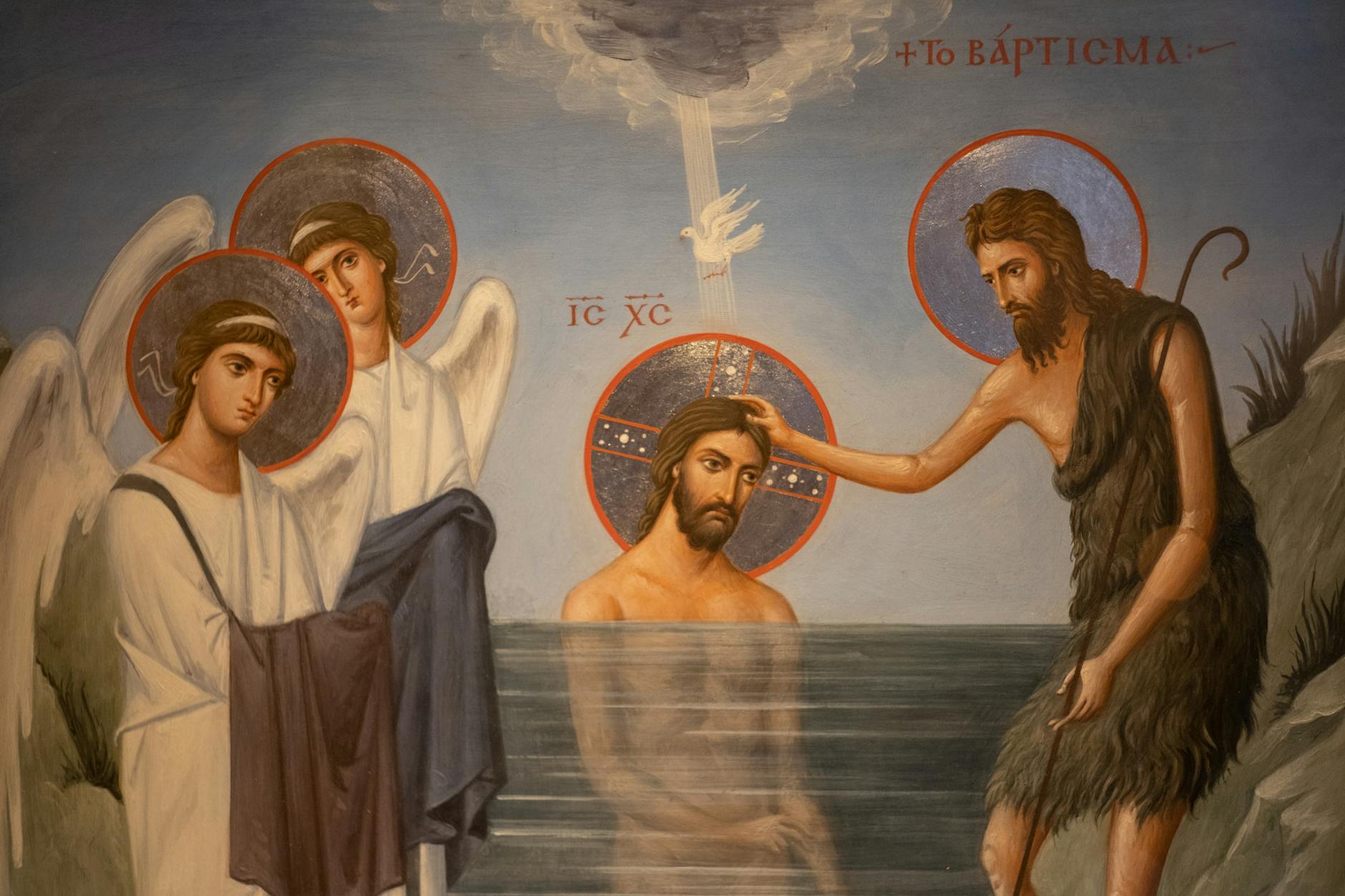
Sabbath Day Thoughts — “Be Loved” Matthew 3:13-17

Baptism of the Lord Sunday often gets ministers thinking about baptisms they have been involved with over the years. One of my most memorable baptisms was during the height of the pandemic. A local neighbor, who was often down on his luck and suffered from serious mental illness, stopped by my office regularly for pastoral care or help from the deacons’ fund. I’ll call him Fred (not his real name). As the COVID lockdown ground on and Fred became increasingly isolated, he asked if I would baptize him.

In our tradition, baptism is typically done in the midst of Sunday worship with the pastor, the person being baptized, and the whole congregation participating in the rite. Could we baptize when we couldn’t even gather for worship? Could I welcome Fred into a congregation that had never met him face-to-face or contended with his odd behaviors? I also suspected that Fred had been baptized before and, for church purposes, he didn’t need any further sprinkling. Yet I also recognized that Fred’s baptismal request was about more than a sacramental action.

I said, “Yes,” and the session approved. We livestreamed the service so that anyone who wished could join us virtually. There were only 4 of us in the Great Hall of the church for the baptism: me, Fred, Duane, and one of Fred’s friends, who responded to every element of the brief baptismal service with loud choruses of “Praise the Lord!” and “Thank you, Jesus!” and “Hallelujah!” It was memorable. Perhaps more than any other baptism, I was keenly aware that this baptism was about love. Fred, who struggled and suffered so profoundly with mental illness, needed to know that God loved him.

In our gospel lesson today, we heard the voice of God, thundering from the heavens as Jesus emerged from the waters of his baptism. God said, “This is my Son, the Beloved, with whom I am well pleased.” We’ve heard this story so often that we never stop to think that as Jesus emerged from the muddy Jordan, he hadn’t even begun his ministry. He hadn’t preached a single sermon. He hadn’t cleansed any lepers or healed any paralytics. He hadn’t cast out any demons or restored sight to blind eyes. He hadn’t changed the water to wine or multiplied the loaves and the fish. All those praiseworthy actions were yet to unfold. 

In the eyes of the world, Jesus hadn’t done a darn thing to deserve God’s love. He was just a poor, pious carpenter from a backwater town in Galilee. But Jesus didn’t have to do a single thing to earn God’s love. God’s love was simply there, in abundance, sailing down from the heavens, thundering over the waters. As the newly baptized Jesus basked in that holy love, he was filled with love. He longed for his neighbors to know their belovedness and to live as God’s beloved people.

The love that God pronounced over Jesus in his baptism became the driving force of his ministry. Rabbi Jesus taught that faithful living is really all about love, saying, “Love the Lord your God with all your heart, mind, soul, and strength; and love your neighbor as yourself.”  Jesus instructed his disciples that they must love one another as he had loved them. Jesus reached out to the world with God’s love, his every act a miracle of love: healing the sick, forgiving the sinner, welcoming outcasts, teaching women, blessing children, speaking tough truth to power, and raising the dead to new life. Jesus poured himself out in love.

Indeed, the beloved son gave his life, so that we might know that we are all God’s beloved children. We don’t have to do a darn thing to earn God’s love. It’s simply there for us, in abundance, sailing down from the heavens, thundering over the waters of our own baptisms, living and breathing in Jesus Christ.

Many of us go through life out of touch with our belovedness. At times, it is because we are not loved very well by others. We grow up in families where love is conditional. It all depends on how attractive we are, how neat we keep our room, how good our report card is, or how well we perform on the athletic field. Sometimes we have personal experiences where our love and trust are ill-used. Those entrusted with our care abuse us. The one to whom we gave our heart breaks it. The friend who held our confidence betrays it. At other times, we forget our belovedness because we live in a society where the measure of our worth isn’t determined by how God sees us, but by the size of our paycheck, the car we drive, the title we bear, the color of our skin, our gender, or our convictions. And then there are the times when we lose our sense of being beloved because we haven’t been very loving.  We’ve hurt others; we’ve committed sins; we’ve rejected God’s love. Life and personal experience wear us down, leaving us alienated and estranged, forgetful that we are beloved. We fail to realize that God’s love is simply there for us, always there for us. God whispers to each of us, “You are my beloved child. With you I am well pleased.”

The late Henri Nouwen spent much of his life as an educator, teaching at Notre Dame, Yale, and Harvard, but Nouwen eventually left his vocation as an educator to share his life with people who lived with intellectual and physical disabilities at the L’Arche Daybreak Community in Toronto. In his book The Life of the Beloved, Nouwen described his encounter with Janet, a developmentally disabled woman who struggled to know her belovedness. One day, Janet came to Nouwen, saying, “Henri, can you bless me?” He responded by making a little cross on her forehead. She said, “Henri, it doesn’t work. No, that is not what I mean.” Embarrassed, Nouwen said, “I gave you a blessing.” She said, “No, I want to be blessed.” Nouwen kept thinking, “What does she mean?”

They had a little worship service at the Daybreak Community. All the residents were gathered there. After the service Henri told his little congregation, “Janet wants a blessing.” He was wearing his alb, a white robe with long sleeves, and Janet came forward and said, “I want to be blessed.” Janet put her head against Henri’s chest, and he spontaneously put his arms around her and held her. Looking right into Janet’s eyes, Henri said, “Blessed are you, Janet. You know how much we love you. You know how important you are. You know what a good woman you are.”  Janet looked back and said, “Yes, yes, yes, I know,” and suddenly all sorts of energy seemed to return to her as feelings of alienation and sadness left her. She realized that she was beloved and blessed.

When Janet went back to her seat, others said, “I want that kind of blessing, too.”  The residents, one by one, came to Father Nouwen and he embraced and blessed them. John, a big, burly, able-bodied staff member said, “Henri, can I have a blessing, too?” Nouwen put his hands on John’s shoulders and said, “John, you are blessed. You are a good person. God loves you. We love you. You are important.”

Henri Nouwen learned from his neighbors at L’Arche that we all need to be loved. We all need to be assured of our belovedness. As followers of Christ, we are called to remind others that they are precious and beloved. We share God’s love with one another, and that holy love becomes the driving force of our life’s ministry. We become a blessing for our families, our church, and our community. The love of God that surrounds us in our baptisms is meant to move through us. Our every act can become a small miracle of love that brings healing, welcome, forgiveness, good news, and new life to our broken world.

My buddy Fred, whom I baptized in that unorthodox-pandemic-livestreamed sacrament, seemed happier and more at peace after his baptism. Aware of his isolation, I would pick up Chinese food from time to time and walk up to Fred’s apartment for lunch with him. We talked a lot about Jesus and what it means to be loved and how hard it is to live with mental illness. About a year after his baptism, Fred suffered a grand mal seizure and died alone in his apartment. I am confident that he knew that he was loved and that he was welcomed home with the words, “You are my beloved Son.”

My friends, we are beloved, and we don’t have to do a darn thing to earn that love.  God’s love is simply there for us, a holy blessing that surrounds us, sailing down from the heavens, thundering in the waters of our baptism, echoed in the voice of the beloved community.  May we go forth in love to be a blessing to others.

Resources:

Eric Barreto. “Commentary on Matthew 3:13-17” in Preaching This Week, Jan. 9, 2011. Accessed online at https://www.workingpreacher.org/commentaries/revised-common-lectionary/baptism-of-our-lord/commentary-on-matthew-313-17-7

Diane Chen. “Commentary on Matthew 3:13-17” in Preaching This Week, Jan. 8, 2023. Accessed online at https://www.workingpreacher.org/commentaries/revised-common-lectionary/baptism-of-our-lord/commentary-on-matthew-313-17-6

Kari Alldredge. “Commentary on Matthew 3:13-17” in Preaching This Week, Jan. 11, 2026. Accessed online at https://www.workingpreacher.org/commentaries/revised-common-lectionary/baptism-of-our-lord/commentary-on-matthew-313-17-7

Henri Nouwen. The Life of the Beloved. Crossroad Publishing Company, 1992.


Matthew 3:13-17

13 Then Jesus came from Galilee to John at the Jordan, to be baptized by him. 14 John would have prevented him, saying, “I need to be baptized by you, and do you come to me?” 15 But Jesus answered him, “Let it be so now, for it is proper for us in this way to fulfill all righteousness.” Then he consented. 16 And when Jesus had been baptized, just as he came up from the water, suddenly the heavens were opened to him and he saw God’s Spirit descending like a dove and alighting on him. 17 And a voice from the heavens said, “This is my Son, the Beloved, with whom I am well pleased.”


Photo by Ron Lach on Pexels.com

Repent

Sabbath Day Thoughts — “Repent” Luke 15:11-32

Near the end of his life, the Dutch Master Rembrandt completed “The Return of the Prodigal,” a painting considered by some to be his master work. The artist captured the moment of the Prodigal Son’s homecoming. The repentant young man kneels at his father’s feet. His clothing hangs in filthy rags. His shoes are so tattered that they fall from his feet. He buries his face in his father’s middle. Like a small child, his arms reach around to cling to the father, who leans forward to pull his lost son to his chest and kiss the top of his head. The father’s hands, strong but gentle, rest on the Prodigal’s back. The father’s face is soft and open. His mouth is slack, as if caught between the impossible joy of welcoming his lost child and the heartrending shock of seeing his son’s degradation. To the side of the painting, half in darkness, the elder son looks on, clothed in a fine scarlet cloak and elaborate turban. His hands are clenched before him. His brow is furrowed with anger, disbelief, and judgment. The distance between the elder son and his compassionate father and profligate brother leaps off the canvas.

Jesus told his Parable of the Prodigal Son to a mixed audience of wayward sons and righteous older brothers. The Lord was welcoming sinners and tax collectors. He even broke bread with them, and that was a source of scandal for the scribes and Pharisees, the most righteous people of their day, who faithfully observed all 613 requirements of the Torah.

The young son of Jesus’ story demonstrated the most profound disrespect. He treated his father as if he were as good as dead, demanding his portion of the inheritance, which he promptly liquidated. Forsaking his father’s house, he traveled to Gentile lands and blew his small fortune in wild living. Times were so desperate that he became a swineherd, even though the Torah taught, “The pig . . . is unclean for you.  You shall not eat their meat, and you shall not touch their carcasses” (Deut. 14:8). Only when the young son had hit rock bottom, did he resolve to go home and throw himself upon the mercy of his father. He gathered his rags and returned, rehearsing along the way just what he would say. But as the lost son drew close to home, he learned that the Father had been looking and longing for his return. The patriarch ran down the road, welcomed him with open arms, and threw a party to restore the prodigal to both family and community. Who could blame the older son, who had spent years faithfully serving, working and obeying, who could blame him for his moral outrage and hurt?

When Jesus told his extended metaphor about the shocking mercy of God and the sinfulness of humanity, he probably offended all his listeners. Those tax collectors and sinners would have bristled at their depiction as degenerate scofflaws who wander far from God in profligate living. Those scribes and Pharisees would have been challenged to envision themselves as harsh, self-righteous, older brothers, who, in their own way, were just as disrespectful to the Father as the young son they condemned. These two lost sons were held together by a merciful Father, who would do anything to be reconciled to them and reconcile them to one another, whether running down the road to embrace them or leaving a party to seek them as they sulked outside in the dark. Both sons were sinners. Both were in need of repentance and love.

Repentance is one of the most essential teachings of Judaism. According to the tradition of the elders, God created repentance before God created the universe. God anticipated that, even though God would love us and provide for us all that was needed for abundant life, we would turn our back on God and work to the detriment of our neighbor. Repentance would be needed. The word repentance in Hebrew is teshuvah, which means to turn. In the ongoing journey of God and our ancestors in the faith, we would often choose to walk apart from God, yet repentance would allow us to return. According to the prophets, repentance was an act of the heart, an inner turning to God that resulted in outward actions of justice, mercy, and faithfulness. This inner transformation was displayed in rending garments, tossing ashes, wearing sackcloth, and offering sacrifices to God.

Repentance is one of the most essential teachings of Christianity. Indeed, the first words that Jesus uttered in his public ministry were, “Repent for the Kingdom of God is near” (Matthew 4:17), and among the last words of his public ministry, spoken from the cross, are the assurance of paradise for the repentant thief who was dying at his side. Jesus himself was the revelation of God’s profound longing to be reconciled to us. In Jesus, God chose to become man, to enter fully into our experience, and to stop at nothing—not even death on a cross—to reveal God’s love and mercy for us. As we repent and return to God, we find that God has already run down the road to greet us. Prodigal sons and judgmental older brothers, we all find a place in the Father’s mercy through Christ our Lord.

Few doctrines have been as hotly contested in the Christian tradition as repentance. The explosive growth of the early church was driven by welcome for those who had been deemed outside the community of faith, from sinners to pagans. Yet by the fourth century, it wasn’t enough to return to God and confess your sins. You needed the church, which church stood in the middle to mediate God’s grace. Repentance had to be made to a priest and accompanied by works of penance, like special prayers, fasting, almsgiving, or mortification of the flesh. Our absolution (forgiveness) was granted by the church once our works were done. This practice of treating forgiveness like a commodity to be doled out to penitents from the church’s limitless treasury of grace hit a high—or is that low—by the 16th century, when Pope Sixtus IV determined that souls of the dead in purgatory could benefit from a papal indulgence, a certificate of absolution that could be conveniently acquired for the right price. When the coin in the coffer rings, the soul from purgatory springs. How far we had wandered from the beautiful story of the loving father and his two lost sons!

On a December evening in 1516, Martin Luther paced the floor of his study. The Augustinian priest and Bible scholar was troubled by the church’s sacrament of penance and the selling of indulgences. Was grace for sale? Could sinners earn their salvation through works? In his studies of the New Testament, Luther had come to the conclusion that Jesus never commodified his grace. It was abundantly and freely given. That night, Luther read the Letter to the Ephesians, “By grace you have been saved through faith and that not of yourselves—it is the gift of God, not works, lest any man should boast.” It hit Luther like a thunderclap. He picked up his pen and wrote, “Ergo sola gratia justificat,” justified by faith alone. Luther remembered the moment, saying, “Thereupon, I felt myself to be reborn and to have gone through open doors into paradise.” The following year, Luther posted his 95 Theses, launching a religious revolution by calling into question the church’s practice of commodifying grace.

What does repentance look like for us? Two decades after Luther’s realization about the freely given gift of God’s grace, John Calvin in his church in Geneva developed a rite of repentance that we continue to practice each week in worship, 500 years later. We stand together as a community of faith and return to God, confessing the ways that we have turned from God and brought injury to our neighbors. As we turn toward God, we find that God has already turned to us, like the Prodigal’s father, awaiting his lost sons with open arms. For the sake of Jesus Christ, we are assured of our pardon, a fact so amazing that we have to celebrate with an “Alleluia! Amen.”

Calvin further encouraged his parishioners to make a practice of regular self-examination, reflecting upon our lives and noting the ways that we have turned away from the right and righteous path. With humility and honesty, we can return to God, trusting that we are welcomed home and deeply loved. Calvin did not believe that we would ever get it truly right, but by making a daily discipline of returning to God, we could grow in God’s purpose over the course of a lifetime through the work of the Holy Spirit within us. Our practice of repentance could be as simple as an evening time of reflection upon our day to celebrate the ways that we felt blessed by God and the moments we felt far from God, and then concluding our reflection with the Lord’s Prayer.

In 1986, author and clergyman Henri Nouwen traveled to St. Petersburg, Russia, where Rembrandt’s painting “The Prodigal Son Returns” hangs in the Hermitage. Nouwen was allowed to observe the painting alone for hours. As he sat before Rembrandt’s masterwork, Henri began to see the painting as a metaphor for humanity. In his 1992 book, The Return of the Prodigal Son: A Story of Homecoming, Nouwen noted that Rembrandt himself had been both sons. Rembrandt had been the dutiful older brother, an earnest churchgoer, married to a devout wife, and a loving father of three children. But the untimely death of his wife and children sent Rembrandt down the road of profligacy. He drank his fill in taverns, frequented prostitutes, and nearly bankrupted himself. Nouwen wrote, “Rembrandt had lived a life in which neither the lostness of the younger son nor the lostness of the elder son was alien to him. Both needed healing and forgiveness. Both needed to come home. Both needed the embrace of a forgiving father.”

The same, of course, can be said for us all. Let us return to God.

Resources

J. William Harkins. “Theological Perspective on Luke 15:11-32” in Feasting on the Gospels: Luke, vol. 2. Westminster John Knox Press, 2014.

Rodney J. Hunter. “Pastoral Perspective on Luke 15:11-32” in Feasting on the Gospels: Luke, vol. 2. Westminster John Knox Press, 2014.

Raj Nadella. “Exegetical Perspective on Luke 15:11-32” in Feasting on the Gospels: Luke, vol. 2. Westminster John Knox Press, 2014.

Jos. P. Healey. “Repentance: Old Testament” in The Anchor Bible Dictionary, vol. 5, O-Sh. Doubleday, 1992.

Charles Hech. “Martin Luther: His Confessions and Battle against Sin” in Worldly Saints, blog, Jan. 4, 2017.

John Calvin. Institutes of the Christian Religion, Book 3, Chapter III. The Westminster Press, 1977.

Hans Vorschezung. “A Lightning Strike, Which Changed History” in Faith in Focus, 2006. Accessed online at christianstudylibrary.org.

Henri Nouwen. The Return of the Prodigal Son: A Story of Homecoming. Image Press, 1994.


Luke 15:11-32

11 Then Jesus said, “There was a man who had two sons. 12 The younger of them said to his father, ‘Father, give me the share of the wealth that will belong to me.’ So he divided his assets between them. 13 A few days later the younger son gathered all he had and traveled to a distant region, and there he squandered his wealth in dissolute living. 14 When he had spent everything, a severe famine took place throughout that region, and he began to be in need. 15 So he went and hired himself out to one of the citizens of that region, who sent him to his fields to feed the pigs. 16 He would gladly have filled his stomach with the pods that the pigs were eating, and no one gave him anything. 17 But when he came to his senses he said, ‘How many of my father’s hired hands have bread enough and to spare, but here I am dying of hunger! 18 I will get up and go to my father, and I will say to him, “Father, I have sinned against heaven and before you; 19 I am no longer worthy to be called your son; treat me like one of your hired hands.”’ 20 So he set off and went to his father. But while he was still far off, his father saw him and was filled with compassion; he ran and put his arms around him and kissed him. 21 Then the son said to him, ‘Father, I have sinned against heaven and before you; I am no longer worthy to be called your son.’ 22 But the father said to his slaves, ‘Quickly, bring out a robe—the best one—and put it on him; put a ring on his finger and sandals on his feet. 23 And get the fatted calf and kill it, and let us eat and celebrate, 24 for this son of mine was dead and is alive again; he was lost and is found!’ And they began to celebrate.

25 “Now his elder son was in the field, and as he came and approached the house, he heard music and dancing. 26 He called one of the slaves and asked what was going on. 27 He replied, ‘Your brother has come, and your father has killed the fatted calf because he has got him back safe and sound.’ 28 Then he became angry and refused to go in. His father came out and began to plead with him. 29 But he answered his father, ‘Listen! For all these years I have been working like a slave for you, and I have never disobeyed your command, yet you have never given me even a young goat so that I might celebrate with my friends. 30 But when this son of yours came back, who has devoured your assets with prostitutes, you killed the fatted calf for him!’ 31 Then the father said to him, ‘Son, you are always with me, and all that is mine is yours. 32 But we had to celebrate and rejoice, because this brother of yours was dead and has come to life; he was lost and has been found.’”


Accessed online at https://upload.wikimedia.org/wikipedia/commons/thumb/9/93/Rembrandt_Harmensz_van_Rijn_-_Return_of_the_Prodigal_Son_-_Google_Art_Project.jpg/1569px-Rembrandt_Harmensz_van_Rijn_-_Return_of_the_Prodigal_Son_-_Google_Art_Project.jpg

Mercy, Me!

Sabbath Day Thoughts — “Mercy, Me!” 1 Tim. 1:12-17

Oren Kalisman grew up with Muslim neighbors he never met.  In fact, as a Jewish child growing up in the Galilee, Oren’s only childhood memory of interacting with a Muslim neighbor was when his mother stopped to give a ride to an old man, hitchhiking on the road to the next village.  At eighteen, Oren, like his parents before him, began compulsory military service with the Israeli Defense Forces. He was selected for an elite squad of paratroopers with twenty soldiers under his command.

When the second intifada began in 2000, Oren and his unit were deployed outside a refugee camp. There they used snipers to pick off alarmed Palestinians who emerged to defend their homes with rocks and Molotov cocktails.  In 2002, a solo Palestinian attack at an Israeli checkpoint killed six Jewish soldiers.  Orders came from Oren’s commanding officers: the Muslim policemen manning Palestinian check points in the West Bank were to be killed in retaliation.  Fifteen officers were executed.

Oren justified the violence that he and his men perpetrated. If someone was throwing a Molotov cocktail at you, they should be killed.  Likewise, someone had to pay for the murder of six Israeli soldiers, even if those killed had nothing to do with the attack.  Oren was just doing his job.  He was following orders.

In our reading from 1 Timothy, the Apostle Paul alludes to his track record as a man of violence and a persecutor of Christians.  As a devout youth, Paul had studied with the esteemed rabbi Gamaliel in Jerusalem and become an expert in the Torah.  Paul practiced Pharisaic teachings, which touted an extreme piety and devotion as the best way to please God.  In his zeal as a young Pharisee, Paul had endorsed the stoning of the deacon Stephen, the first martyr among Jesus’ followers.  Paul had also harassed the church in Jerusalem, and when many fled to Syria, Paul sought special permission to take his violence on the road, to arrest and return to Jerusalem for punishment all who believed that Jesus was the Messiah.  Paul justified his violent behavior, believing that he was rooting out a dangerous sect that defiled Judaism with the news of a false Messiah. 

We may not be members of the Israeli Defense Forces or Pharisees censuring blasphemers, but we know how it feels to be troubled by our pasts, even when we believed that what we were doing was true and righteous.  In fact, our past may continue to haunt our present and trouble our thoughts about the future.

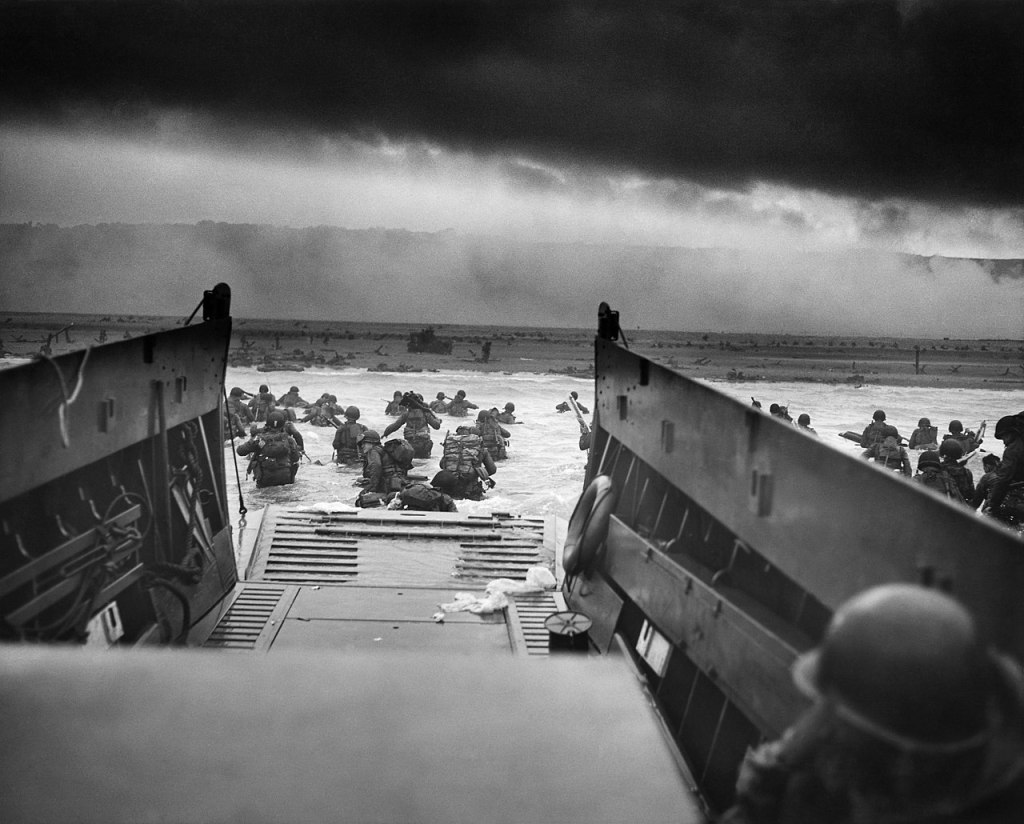
Before coming to Saranac Lake, I enjoyed being a youth pastor in Morton Grove, Illinois.  I like to think that I did some good ministry among the young people of the church, but I think some of my best service was in providing caring presence and compassionate listening for some of the church’s oldest members, our World War II veterans.  They were troubled by remembrance of the friends they left behind on the beaches of Normandy.  They were disturbed by memories of the hate and violence they had directed toward Japanese enemies in the South Pacific.  They realized that they had brought the war home with them after it was over.  They kept secrets from their wives.  They had been emotionally distant with their children.  As Morton Grove welcomed an increasing number of Asian immigrants, they struggled to let go of their painful memories and love their new neighbors.  There were any number of ways that they could reasonably justify their past actions, but their violent pasts still troubled them.

In my twenty-two years of serving churches, I have learned that we can all be troubled by our pasts, whether we have embraced violence and persecution or we have simply engaged in practices that wound the spirit or brought injury to others.  We regret the harm we have caused our families: our impatience and harshness with our children, our failures to care for aging parents, or the too little love that we have shown to our spouse.  We regret the harm we have worked against the human family: our gender bias, our racial hate, our prejudice toward those whose ethnicity, social class, or political views are unlike our own.  We can be adept at justifying our actions and rationalizing our bad behavior, but when we are truly and deeply honest, we know our need for grace.  We know the late-night hours when we pray, “Lord, have mercy upon me, a sinner.”

Paul’s past caught up with him as he hurried down the Damascus Road, intent on arresting those who knew Christ as Lord.  According to the Acts of the Apostles, Paul was stopped dead, blinded by a heavenly light, and accused by the aggrieved Jesus, “Saul, Saul, why do you persecute me?”  Struck blind and powerless, the incapacitated Paul was taken to Damascus, where he spent three days without sight, neither eating nor drinking, pondering how he had gotten things so wrong.

Oren Kalisman’s turn around came during the Passover in April 2002.  In response to a terror attack in Netanya, Oren and his men were sent into the West Bank with orders to occupy Nablus, using whatever means were necessary.  From the second floor of a home that they had occupied, Oren heard gunfire from the room next door.  There, one of his men, a sniper, was firing at an unarmed old man who was seeking to recover the body of a boy, dead in the street below.  When Oren ordered his soldier to stop firing, he learned of orders from their commanding officer to kill with impunity.  Shocked at the inhumanity they had resorted to, Oren realized the moral quandary he was in.  Remembering that moment, the Israeli says, “We were surrounded by Palestinians who were fighting very bravely and who I realized, like ourselves sixty years ago, were fighting out of desperation for their very homes.”  At the end of the operation, Oren voiced his moral concerns and asked to be replaced.

We all have our Damascus Road moments when we are convicted of the harsh truth of sin.  Sin confronts us in the dysfunction that we instill in our families.  Sin shouts at us from the evening news as the murder of George Floyd, the shooting of Breonna Taylor, or the lead in Jackson, MI drinking water remind us of that racism is part of the fabric of our society.  If we are at all self-aware, we will admit the sin of writing off relationships, doing the wrong thing because it is the easy thing, and allowing ourselves to hate others because their political views are unlike our own.  When we sin against our neighbors, we sin against God.  We sin against Jesus, who asks why we are persecuting him. Lord, have mercy upon us.

Paul tells us good news. Although we act in ignorance and unbelief, the grace of God overflows for us.  Jesus came into the world to save sinners—of whom Paul deemed himself to be foremost. We are loved and forgiven.  And in the greatness of Christ’s mercy for us, we find a new purpose in service to God and neighbor.  Jesus would use Paul’s zeal to serve God’s Kingdom.  The former persecutor and newly Christened apostle would make multiple missionary journeys, plant countless churches, and touch many lives with the good news of God’s amazing grace that seeks and saves us when we are lost.

Oren Kalisman has found a new purpose.  He has established a chapter of Combatants for Peace in the West Bank community of Nablus where he once was an occupier.  Combatants for Peace brings together former members of the Israeli Defense Forces and former Palestinian combatants.  They share their stories, build relationships, and learn principles of non-violent conflict resolution.  Their goal is nothing less than building a foundation for Israelis and Palestinians that will bring lasting peace to the land.

My wise World War II friends knew that the only way forward from a war to end all wars was through the love and grace of God in Jesus Christ.  They trusted that, even though they might always be troubled by their war experiences, the grace of God overflowed for them.  They poured out their lives in God’s service in simple heartfelt ways. They attended church every Sunday. They shared their skills and abilities for God’s glory: founding a church, building a manse, tending the church gardens, serving on session. They kept God at the heart of their families with Sunday School and table graces, mission trips and church potlucks.  They knew their weakness and trusted that the Lord could do what they could not.  In the eighteen years since I served as one of their pastors, those men have all died.  I have no doubts that grace led each of them home.

The grace of Jesus Christ overflows for us this morning.  We are loved and God is faithful, even if we are, like Paul, the foremost of sinners.  Our immortal, invisible, only-wise God redeems us with a love that is stronger than the persecution of Pharisees or the intractable violence between Israelis and Palestinians.  God’s mercy for us is bigger than the legacy of war or all the ways that we can get things so wrong in our families and the human family. The mercy of God abounds for us and claims us for God’s purpose.  Lord, have mercy!

Resources:

The story of Oren Kalisman was recorded for The Forgiveness Project and may be read at https://www.theforgivenessproject.com/stories-library/oren-kalisman/

If you would like to learn more about Combatants for Peace, you can at this link: https://cfpeace.org/

Eric Barreto. “Commentary on 1 Tim. 1:12-17” in Preaching This Week, Sept. 11, 2016. Accessed online at workingpreacher.org

Benjamin Fiore. “Commentary on 1 Tim. 1:12-17” in Preaching This Week, Sept. 15, 2019. Accessed online at workingpreacher.org

Christian Eberhart. “Commentary on 1 Tim. 1:12-17” in Preaching This Week, Sept. 15, 2013. Accessed online at workingpreacher.org

A.K.M. Adam. “Commentary on 1 Tim. 1:12-17” in Preaching This Week, Sept. 12, 2010. Accessed online at workingpreacher.org


1 Timothy 1:12-17

12 I am grateful to Christ Jesus our Lord, who has strengthened me, because he considered me faithful and appointed me to his service, 13 even though I was formerly a blasphemer, a persecutor, and a man of violence. But I received mercy because I had acted ignorantly in unbelief, 14 and the grace of our Lord overflowed for me with the faith and love that are in Christ Jesus. 15 The saying is sure and worthy of full acceptance: that Christ Jesus came into the world to save sinners—of whom I am the foremost. 16 But for that very reason I received mercy, so that in me, as the foremost, Jesus Christ might display the utmost patience as an example to those who would come to believe in him for eternal life. 17 To the King of the ages, immortal, invisible, the only God, be honor and glory forever and ever. Amen.


By Chief Photographer’s Mate (CPHoM) Robert F. Sargent, Public Domain, https://commons.wikimedia.org/w/index.php?curid=17040973