Guess Who’s Coming to Dinner

Sabbath Day Thoughts — “Guess Who’s Coming to Dinner” Luke 19:1-10

Americans are worried about income inequality, the disparity of wealth between the rich and poor in our country. In the lead up to the 2024 election, 71% of Americans said that the growing gap between rich and poor would be a crucial factor in how they cast their votes. America’s 806 billionaires control more wealth than the 65 million families that make up the lower earning half of our population. That wealth gap has grown dramatically since the onset of the pandemic with the combined fortunes of America’s top twelve billionaires jumping from $1.3 trillion dollars in March of 2020 to more than $2 trillion dollars today.  Those in the middle and lower classes have not similarly benefited. In looking at just financial assets like savings or stocks and bonds, the typical American has added no wealth in the past thirty years. The median retirement savings for the bottom half of Americans is zero. 52% of Americans have no emergency savings; they are one economic setback away from financial hardship. 23% of Americans aged sixty-six and older face poverty. When compared to the rest of the world, we have greater disparity between rich and poor than any other nation in the G7.

The government shutdown shines an uncomfortable spotlight on our economic disparity. If you are like me, you were shocked to learn that 42 million Americans receive SNAP benefits, food assistance from the federal government. That’s about 12% of our population. 38% of SNAP benefits help children, and 20% assists the elderly. Depending on whose statistics you use, between 40% and 85% of households that receive SNAP work, but their low-wage jobs don’t bring in enough income to put food on the table. The shutdown affects more than SNAP. It compromises WIC—Women, Infants & Children, a USDA nutrition program for children under five which helps 41% of our nation’s infants. It also burdens the national school lunch program, which serves up 4.8 billion meals a year to school-aged children. Lord, have mercy.

Jesus lived in a time of shocking income inequality. A small minority, like King Herod, the emperor, and the Temple elite, possessed vast wealth while the majority struggled to meet their basic needs. Property ownership and access to resources were concentrated in the hands of a powerful few, creating an economy where the privileged accumulated more and more wealth while the lower classes remained trapped in generational poverty and want. The bible weighed in on the personal responsibility of faithful people in a world plagued by poverty; Deuteronomy 15:11 taught, “There will always be poor people in the land. Therefore, I command you to be openhanded toward your fellow Israelites who are poor and needy in your land.”

In this world of vast economic differences, Zacchaeus was a rich man. He had amassed his wealth as the Chief Tax Collector for the Jericho region. Rather than collecting the imperial taxes themselves, the Romans farmed out the debt.  Zacchaeus personally paid the taxes of the entire Jericho region. Then, he set about making his money back, hiring lesser tax collectors to collect debt—with a comfortable commission tacked on to cover his expenses and make a tidy profit. It was a system rife with greed and corruption, with Zacchaeus turning a blind eye to the heavy-handed collection efforts of his minions while his personal wealth grew and grew, year after year, and his neighbors lived in poverty.

Zacchaeus was not only the wealthiest man in town; he was also one of the most unpopular.  His neighbors saw him as a Roman collaborator, a traitor to his people, growing ever richer at their expense. Zacchaeus’ ongoing contact with foreign money and Gentiles rendered him “unclean”—someone who was ritually impure and separated from God. Anyone concerned about holiness would have avoided Zacchaeus. The man did not receive a lot of dinner invitations.

Who can blame the neighbors for getting a little uppity at the gracious welcome that Jesus shared with Zaccchaeus? The man was a reprobate, but there stood Jesus, looking up into the sycamore tree and insisting that the tax collector come down and share a little Jericho-style hospitality with him. More than a few righteous families had hoped to host Jesus, but he chose to honor the wealthiest, least loved, and shortest resident of Jericho. Jesus chose to remind Zacchaeus that he was still a child of Abraham, even if he had gotten terribly lost somewhere along the way.

It was then that the miracle happened. When those neighbors started to grumble about Jesus’ choice of dinner companions, Zacchaeus promised to do something about the economic inequality in Jericho. He would give half his possessions to the poor and make 4-fold restitution—that’s 400%—to those neighbors he had defrauded.  When we consider that the Torah required restitution of only 120%, we see that Zacchaeus’ encounter with Jesus rendered him radically generous and righteous. It was a miracle, indeed.

Meanwhile in America, income inequality grows. Federal workers are furloughed, some working without pay. Fifty-two million of our neighbors wonder how they will put food on the table. It feels like a Zacchaeus moment. It feels like Jesus is standing at the foot of the American sycamore tree and inviting himself to dinner—he wants to bring some guests who are every bit as poor as he was. He knows there is enough for all if we will only open our hands and hearts. Jesus wants a miracle of us. The jury is out on whether or not he will get it.

Given the income disparities of our nation and the economic challenge of this moment in time, preaching on stewardship isn’t easy. I can confidently say that not one of us is among America’s 806 billionaires. We are among those 65 million families whose resources would need to be combined to equal the wealth of those 806 richest Americans. We know people with more month than money—our college grads who can’t get a decent job, our senior citizen friends surviving on social security, people bankrupted by health crisis, young families who fear they will never buy a home. We want a miracle for them. We want the world that Jesus envisioned, where the hungry are fed, the sick are healed, and there is enough.

Perhaps the greatest reason that we pledge to this church is because this is a place that has heard Jesus calling to us from the base of the sycamore tree. We are out of the tree. We are doing our best to stand on Jesus’ level. We want a world table where everyone has a place, the plates are full, all are satisfied, and joy abounds. That’s why we partner with the Food Pantry to feed hungry neighbors. We house the homeless at Samaritan House and have rolled up our sleeves to renovate Beacon House. We befriend refugees and advocate for our immigrant neighbors. Our Deacons Fund helps out people in crisis, whether they struggle with rent or healthcare costs, car repairs or utility bills. That’s why we dare to be provoked by sermons that wrestle with big, uncomfortable questions of faith—like “How do we love Jesus and love our neighbors in a world where income inequality abounds and the rich get richer while the poor get poorer?” We trust that our gifts to this church make a difference and move this world closer to the Kingdom.

We don’t know what happened to Zacchaeus after Jesus went on up the road to Jerusalem. I like to imagine that he went home and looked at his fine house, abundant flocks, and big bank account. Instead of seeing them through his eyes, he saw them through Jesus’ eyes. He began to make some different choices. He refused to defraud his neighbors and cracked down on the collectors in his employ. He lived generously, paying the dowries of the poor women of Jericho and offering micro-loans to help families launch small businesses. He took up bread baking and gave away all that homemade goodness. He opened a soup kitchen and took regular turns dining with his impoverished guests. He imagined that Jesus was his guest, always his guest. Local folks even began to grudgingly like him and accept him as a brother, a child of Abraham. The more Zacchaeus shared, the greater his joy.

I trust that the government shutdown will come to an end when our politicians can no longer make political hay from it—or it somehow pricks the conscience of our 806 billionaires. But the Zacchaeus moment won’t pass. As the Deuteronomist warned, “There will always be poor people in the land.” Will we give them a seat at the table? Jesus stands at the foot of our national sycamore tree. Will we come down?

Resources

Sarah Anderson. “Ten facts about wealth inequality in the USA” in the blog of the London School of Economics, Jan. 1, 2025. Accessed online at Ten facts about wealth inequality in the USA – LSE Inequalities

Teresa Ghilarducci. “7 alarming facts about wealth inequality” in Forbes Magazine, April 18, 2025. Accessed online at 7 Alarming Facts About Wealth Inequality: Bring On the Pitchforks?

American Compass. “A Guide to Income Inequality,” April 27, 2021. Accessed online at A Guide to U.S. Economic Inequality | American Compass

Factually. “Fact check: What is the average employment rate of food stamp recipients in the United States as of 2025?” October 29, 2025. Accessed online at Fact Check: What is the average employment rate of food stamp reci…

Barbara Hartshorn. “Economic Disparities in Biblical Society: An In-Depth Examination” in Bible Journal, Dec. 4, 2023. Accessed online at Economic Disparities in Biblical Society: An In-Depth Examination

Eric Barreto. “Commentary on Luke 19:1-10” in Preaching This Week, Nov. 2, 2025. Accessed online at Commentary on Luke 19:1-10 – Working Preacher from Luther Seminary

Lis Valle-Ruiz. “Commentary on Luke 19:1-10” in Preaching This Week, Oct. 30, 2022. Accessed online at Commentary on Luke 19:1-10 – Working Preacher from Luther Seminary

David Lose. “Commentary on Luke 19:1-10” in Preaching This Week, Oct. 30, 2022. Accessed online at Commentary on Luke 19:1-10 – Working Preacher from Luther Seminary


Luke 19:1-10

19 He entered Jericho and was passing through it. A man was there named Zacchaeus; he was a chief tax collector and was rich. He was trying to see who Jesus was, but on account of the crowd he could not, because he was short in stature. So he ran ahead and climbed a sycamore tree to see him, because he was going to pass that way. When Jesus came to the place, he looked up and said to him, “Zacchaeus, hurry and come down, for I must stay at your house today.” So he hurried down and was happy to welcome him. All who saw it began to grumble and said, “He has gone to be the guest of one who is a sinner.” Zacchaeus stood there and said to the Lord, “Look, half of my possessions, Lord, I will give to the poor, and if I have defrauded anyone of anything, I will pay back four times as much.” Then Jesus said to him, “Today salvation has come to this house, because he, too, is a son of Abraham. 10 For the Son of Man came to seek out and to save the lost.”
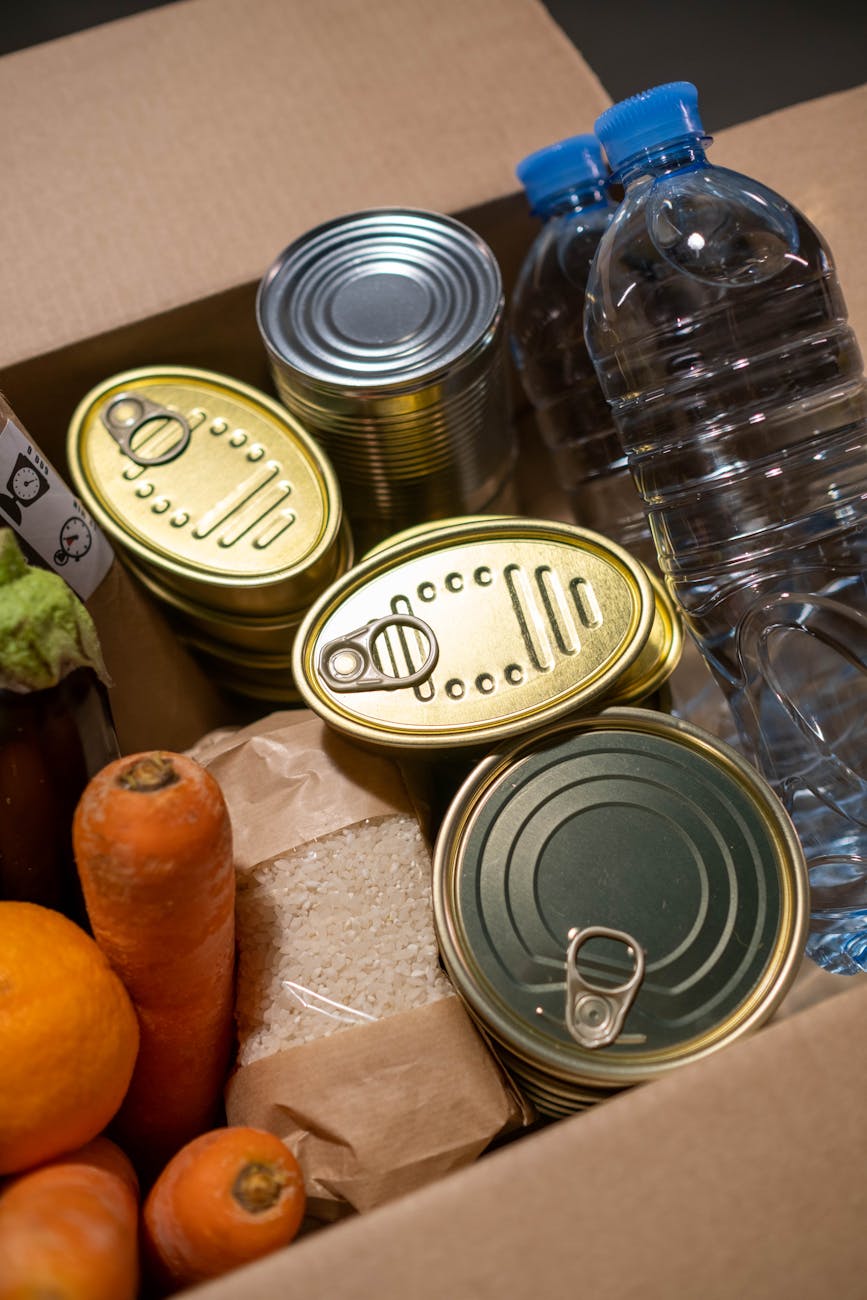

Photo by cottonbro studio on Pexels.com

Joseph’s Dream

Sabbath Day Thoughts — “Joseph’s Dream” Genesis 41:14-36

This summer, the Seed Saver’s Exchange in Decorah, Iowa celebrated its 50th anniversary with a national seed swap day, lessons in grafting apple trees, an heirloom plant sale, tomato tasting, and orchard tours. It all got started in 1975 when Diane Wheatley was entrusted with two heirloom seed varieties, Grandpa Ott’s Blue Morning Glories and German Pink Tomatoes. Diane’s great-grandparents brought the seeds to the US when they immigrated from Bavaria in 1884.

Diane and her husband Kent knew other families who preserved family seeds and stories. They reached out to form a network of gardeners interested in preserving biodiversity by growing heirloom seeds in their gardens and farms. Today, on their 890-acre farm in Winneshiek County, the Wheatley’s have the nation’s largest nongovernmental seed bank with more than 20,000 varieties of seed that they store and grow.

It’s a good thing that people like the Wheatleys are so committed to saving seeds and their stories. In the last century, the world has lost 75% of its edible plant varieties. Nowadays, roughly half of America’s cropland—170 million acres—is planted with genetically engineered crops with seeds that can’t be saved and replanted. That lack of biodiversity makes for a fragile agricultural system. Genetically modified crops are more vulnerable to changing climate, as well as certain pests and diseases. Agricultural experts are sounding the alarm that we need the biodiversity of heirloom plants to safeguard our food supply.

In our reading from Genesis, Pharoah had two disturbing dreams that sprang from the world of ancient Egyptian agriculture. At the center of Pharoah’s dream was the Nile. Ancient Egyptians called the Nile “Ar,” meaning “black,” a reference to the rich, dark sediment that the Nile’s waters carried from the Horn of Africa northward and deposited in Egypt when the river flooded its banks each year in late summer. That surge of water and nutrients turned the Nile Valley into productive farmland, and made it possible for Egyptian civilization to develop in the midst of a desert. In fact, the Egyptians were the first to practice agriculture on a large scale, growing wheat, barley, and flax. Ancient Egyptian farmers developed a system called basin irrigation, digging channels and filling fields with flood water. There it would sit for a month until the soil was saturated and ready for planting to grow the abundance that would sustain people and livestock.

But in Pharoah’s dream, trouble was brewing along the Nile. The king’s late-night vision of ugly, skinny cows devouring fat, sleek cows and withered, blighted grain consuming plump, good grain so troubled Pharoah that he summoned all the Magi of Egypt to interpret his dream. When they failed to discern the meaning, the king sent for a Hebrew prisoner, Joseph, who had a reputation for wise interpretation. With God’s help, Joseph listened to Pharaoh’s dream and anticipated catastrophe for Egypt’s economy and people: seven years of plenty would be followed by seven years of drought and starvation. There was no escaping it. The nation and the people would suffer.

Around the world this morning, millions of people face the sort of agricultural crisis and food scarcity anticipated by Pharaoh’s dream. The World Food Programme reports that we are in a world food crisis. 319 million people in 67 countries face acute hunger. The world’s largest hunger crisis is in the Democratic Republic of Congo, where 23.4 million people are severely hungry and over 6 million people have been displaced by civil war. Somalia is on the brink of famine with 10 million people in crisis. In Gaza, over half a million people are facing catastrophic famine. With acute malnutrition worsening rapidly, an estimated 132,000 of Gaza’s children under 5 are at risk of death. Pharaoh’s dream is our world’s nightmare in which war, climate change, a sluggish global economy, and a worldwide surge in refugees are fueling the global food crisis.

In response to Pharoah’s nightmares, Joseph began to do his own dreaming. He cast the vision of a future for Egypt in which the catastrophe of drought and starvation could be alleviated by careful planning. For Joseph’s plan to work, Pharaoh would need to take immediate action. One fifth of all grain harvested for the next seven years must be saved and safeguarded, creating an abundance that could feed the people and their livestock through the climate crisis to come. Most leaders would reject a seven-year 20% cut to their nation’s bottom line, but the frightening portent of Pharoah’s dream opened his ears. The king saw that careful planning for the future was needed, and Joseph was the man to do it. The king freed him from prison and appointed him chief overseer of the nation with authority to put his grain saving plan into action. If we were to continue to read in Genesis, we would learn that Joesph’s dream saved not only Egypt but also Israel as Joseph’s Hebrew brothers came to Egypt in search of grain.

The world needs people like Joseph. They look at the global reality of hunger, and they act wisely to avert catastrophe. For more than forty years, this church has partnered with Church World Service to help hungry neighbors here in the US and all around the world. Like Joseph, Church World Service has a goal of building a world where there is enough for all. One of the ways Church World Service does this is through the Seeds of Hope program. In Guatemala they are helping families in Quiché and Quetzaltenango grow and care for their own gardens. They have provided a variety of vegetable seeds, like coriander, radish, beets, chard, and spinach. They have also helped 590 families build gardens and 30 to build greenhouses. The garden program has been so successful, that Church World Service has worked with villages to develop community markets, where neighbors buy and sell their products to one other. Seeds of hope has allowed communities to grow and flourish together.

Church World Service is also working with global neighbors to adapt to a warming climate, which has led to droughts, floods, and unpredictable weather patterns. Farming practices that were once stable are no longer effective and smaller harvests have left families with less to eat and sell. In Tanzania, CWS is working with farmers to boost productivity and profits. Charles Dzombo participated in a program that taught him to grow sweet potatoes to supplement the grain, mangos, and maize that he already grew. The sweet potato vines thrived. In fact, Charles made a profit of three times his investment and did so in half the time of other crops. The extra money has allowed him to meet his household needs, maintain a stable food supply, and even purchase a goat. Charles now trains 25 other local farmers. He says, “Now that I have tasted the goodness of planting sweet potatoes, I am going to make it a priority.”

The world needs people like Joseph, who look at the global reality of hunger and act wisely to avert catastrophe. Half a world away from the 319 million people who experience acute hunger, we may feel powerless to make a helping, healing difference. But we can. Just think of Diane Wheatley who held in her hand two heirloom seeds from her Grandpa Ott and dreamed of the Seed Savers Exchange which, fifty years later, preserves the biodiversity of our farms for the generations to come.

What would it look like for us to be a Joseph? We begin local, right here in our basement. We can volunteer to help neighbors with more month than money through the Food Pantry. If we like to get our hands dirty, and maybe try growing some heirloom seeds, we can help in the Church’s Jubilee Garden. Last weekend, Ann and John harvested a bumper crop of potatoes, squash, Swiss chard, tomatoes, hot peppers, and more to the delight of our food pantry neighbors. There was even a little left over for us. If we aren’t into gardening, there is always the opportunity to make monthly food offerings, like soup and crackers or peanut butter and jelly, to stock the Pantry’s shelves. And don’t forget two-cents-a-meal on communion Sundays. That spare change adds up with half staying local with the food pantry and half going to the Presbyterian Hunger Program for hungry people across the nation.

If we want to be Joseph for the world, we have the perfect opportunity on October 19 when our church will host the Saranac Lake CROP Walk. We pledge our support, lace up our sneakers, and hit the streets to raise funds and awareness about hunger. Last year, CROP Walk raised more than $6,000 for the work of Church World Service, supporting their innovative agriculture programs around the world. Who plans to walk this year? Who plans to pledge?

The world needs more Joseph’s this morning, my friends. The world needs more Josephs who will save seeds to preserve biodiversity and roll up their sleeves to feed hungry neighbors. The world needs more Josephs who will mentor Guatemalan gardeners and teach Tanzanians the profitable art of planting sweet potatoes. The world needs more Josephs who care about the 319 million acutely hungry people in this world and are willing to make a difference. How about it?

Resources

Patrick J. Kiger. “Why the Nile River Was So Important to Ancient Egypt” in History, July 12, 2021. Accessed online at https://www.history.com/articles/ancient-egypt-nile-river

Church World Service. “A Sweet Investment Brings Success” and “Seeds of Hope for Nutritional Food Security Program in Guatemala” in Stories of Change. Accessed online at https://cwsglobal.org/our-work

World Food Programme. A global food crisis. Accessed online at https://www.wfp.org/global-hunger-crisis

–. “Seed Savers Exchange Celebrates 50 Years.” Accessed online at https://seedsavers.org/sse-50th-anniversary/

Von Rad, Gerhard. Genesis. Philadelphia: Westminster Press, 1972.

Brueggemann, Walter. Genesis. Interpreter Commentary Series. Atlanta: John Knox Press, 1982.

Creation Justice Ministries. “Sowing Seeds: Prophetic Action to Climate-Changed Lands,” 2023.


Genesis 41:14-36

14 Then Pharaoh sent for Joseph, and he was hurriedly brought out of the dungeon. When he had shaved himself and changed his clothes, he came in before Pharaoh. 15 And Pharaoh said to Joseph, “I had a dream, and there is no one who can interpret it. I have heard it said of you that when you hear a dream you can interpret it.” 16 Joseph answered Pharaoh, “It is not I; God will give Pharaoh a favorable answer.” 17 Then Pharaoh said to Joseph, “In my dream I was standing on the banks of the Nile, 18 and seven cows, fat and sleek, came up out of the Nile and fed in the reed grass. 19 Then seven other cows came up after them, poor, very ugly, and thin. Never had I seen such ugly ones in all the land of Egypt. 20 The thin and ugly cows ate up the first seven fat cows, 21 but when they had eaten them no one would have known that they had done so, for they were still as ugly as before. Then I awoke. 22 I fell asleep a second time,[a] and I saw in my dream seven ears of grain, full and good, growing on one stalk, 23 and seven ears, withered, thin, and blighted by the east wind, sprouting after them, 24 and the thin ears swallowed up the seven good ears. But when I told it to the magicians, there was no one who could explain it to me.”

25 Then Joseph said to Pharaoh, “Pharaoh’s dreams are one and the same; God has revealed to Pharaoh what he is about to do. 26 The seven good cows are seven years, and the seven good ears are seven years; the dreams are one. 27 The seven lean and ugly cows that came up after them are seven years, as are the seven empty ears blighted by the east wind. They are seven years of famine. 28 It is as I told Pharaoh; God has shown to Pharaoh what he is about to do. 29 There will come seven years of great plenty throughout all the land of Egypt. 30 After them there will arise seven years of famine, and all the plenty will be forgotten in the land of Egypt; the famine will consume the land. 31 The plenty will no longer be known in the land because of the famine that will follow, for it will be very grievous. 32 And the doubling of Pharaoh’s dream means that the thing is fixed by God, and God will shortly bring it about. 33 Now therefore let Pharaoh select a man who is discerning and wise and set him over the land of Egypt. 34 Let Pharaoh proceed to appoint overseers over the land and take one-fifth of the produce of the land of Egypt during the seven plenteous years. 35 Let them gather all the food of these good years that are coming and lay up grain under the authority of Pharaoh for food in the cities, and let them keep it. 36 That food shall be a reserve for the land against the seven years of famine that are to befall the land of Egypt, so that the land may not perish through the famine.”


Photo by RDNE Stock project on Pexels.com

Threading the Needle

Sabbath Day Thoughts — “Threading the Needle” Mark 10:17-31

Next Saturday, walkers from this church will join our ecumenical neighbors in the annual Saranac Lake CROP Walk. We’ll be raising funds for the international hunger programs of Church World Service and the Interfaith Food Pantry here at home. CROP walkers say, “We walk because they walk.” It’s an acknowledgment of our solidarity with global neighbors who daily walk for food, water, work, school, and firewood.  The average distance that women in the developing world walk every day for water for their families is 3.4 miles. Elma Kassa of Ethiopia walks for water. Although Elma would like to go to school, she cannot because she helps her mother wash clothes to support the family.  Four times every day, Elma collects water, using a five-gallon clay jar.  Perhaps next Saturday as walkers stride down LaPan Highway from the Alliance Church to our church, they can think of Elma, with her heavy clay jar atop her head.

CROP Walks seek to eradicate hunger.  That’s a formidable task.  The Global Hunger Index tracks the state of hunger worldwide, country by country. Their 2024 report shows that little progress has been made in reducing hunger since 2016. Forty-two countries still experiencing alarming or serious hunger. Globally, 733 million people lack access to sufficient calories, and 2.8 billion people cannot afford a healthy diet. Acute food insecurity and the risk of famine are on the rise, and starvation is proliferating as a weapon of war. Worldwide, 148 million children are stunted, 45 million children are wasted, and almost 5 million children die before age five from hunger-related causes. The situation is most severe in Burundi, Yemen, and Niger—and it is on the rise in Afghanistan, Argentina, and Mongolia. Hunger kills more than nine million people each year, more than AIDs, malaria, and tuberculosis combined. 3.1 million of those deaths are children. 

People are hungry in the United States. The USDA estimates that 44.2 million Americans nationwide live in food insecure households. These are homes where meals are skipped or kids are sent to school without breakfast because there aren’t sufficient resources to put food on the table. 28% of households with children indicate that kids were not eating enough because families could not afford food, thanks to inflated prices and the end of federal pandemic relief support. Feeding America reports that more than 53 million people turn to food banks, food pantries, and meal programs for help. That’s one-third more than prior to the pandemic. Our food pantry volunteers will tell you that the Saranac Lake pantry downstairs is a busy place on Saturday mornings, serving all kinds of neighbors—seniors, single moms, traditional families, and people living with homelessness, mental illness, developmental disabilities, or physical handicaps.

Jesus’ encounter with the rich man invites us to consider the responsibilities of our relative affluence in a world plagued by persistent hunger.  Breathless after his run, kneeling in the dust of the road at Jesus’ feet, the rich man wanted to know what he must do to inherit eternal life. This righteous man was relieved to hear Jesus reciting the instructions of the Torah—no murder, adultery, stealing, lying, or defrauding. Be sure to honor your parents. The man had kept all these commandments from his youth, and he must have done so with great earnestness and integrity, because Jesus loved him for it and invited him to become a disciple.

There was only one thing lacking. Although the man was expert in keeping the Torah, he seemed to have fallen short in tzedakah or almsgiving, one of the most essential principles of Jewish piety.  Our Jewish ancestors believed that, ultimately, everything belongs to God.  While God could have created a world where everyone had exactly the same distribution of God’s bounty, God chose not to do so. Instead, some, like the rich man, were given much, while others had little. This uneven distribution of resources was how God invited faithful people to join their purpose to God’s purpose, to live lovingly and generously so that God’s goodness could abound for all. Faced with Jesus’ invitation to sell what he owned for the blessing of his impoverished neighbors, the rich man turned his back on a life with Jesus and went away grieving.

When it comes to wealth, we don’t consider ourselves rich, certainly not rich enough to be labeled “the rich man” or “the rich woman.” But when we see ourselves through the eyes of the world, we are more than blessed. The average daily wage in the United States is about $162. Developing countries with unstable political and economic conditions do not fare nearly so well. In Nepal, the average daily wage is $3.75; in Sudan, it’s $2.71; and in Afghanistan, people try to survive on less than a dollar a day. I have said it before, and I suspect that I will say it again, my friends. We are blessed—we are rich.

I’m not saying that we don’t work hard to earn what we have. We may spend long years striving in tough jobs to give our families the sort of home life and advantages that we wish them to have. I see a lot of hard workers when I look out at our pews on Sunday mornings. But I wonder if we see our relative wealth in the same way that Jesus invited the rich man to think of his money. Our relative affluence is a generous gift from God to bless our lives and to bless the lives of our impoverished neighbors. I wonder what our household expenditures might look like if Jesus were writing the checks. Today Jesus gives the rich man—and us—an uncomfortable reminder that we are meant to share God’s blessing with others.  When we do so, we get a foretaste of God’s Kingdom, where all are welcomed to the bountiful feast that Jesus has prepared.

I want to share how our participation in the CROP Walk can allow us to be a blessing to our neighbors, near and far. Our CROP dollars will help world neighbors like Moize Munenwa Joseph, one of over 800 people in Tanzania who participated in a CWS-sponsored vegetable farming program. Moize learned valuable farming skills like seed selection, pest control, and farm cleanliness. This helped him to improve his harvest and increase his income. Now Moize is sharing what he learned with others in his community. Moize says, “I can take care of my family and ensure we consume healthy food.”

Our CROP dollars can help world neighbors like Hak Nhy in Cambodia. For generations, her family has lived off crops from their vegetable farm. Challenges from climate change and the pandemic affected their harvest, leaving Hak and her family with barely enough to eat or sell. Hak enrolled in a Church World Service gardening program that taught her how to plant a more productive and nutritious garden. Hak says, “I have [gained] skills and knowledge on vegetable gardening, adapting to the changing weather conditions, and compost making.” Her family now has a better diet and her garden’s increased harvest allows her to sell surplus vegetables.

Our CROP dollars also help world neighbors like Alodia González, who lives in rural Paraguay. Alodia’s family struggled to have a stable income until she participated in a CWS training that focused on planting seeds and food production. Alodia learned about beekeeping and making honey. She also learned to organize and launch a community garden. Alodia says, “With a good production of honey, we are generating significant income to support our families. With the garden, we are able to eat lettuce and other vegetables produced by us.”

Our CROP dollars can be the kind of blessing that Jesus had hoped the rich man might share with his impoverished neighbors. I’m not talking about selling everything we have and giving it all away this morning. The good news for us is that even a modest gift that is well within our budgets can make a big difference in the lives of our needy neighbors.  A $20 pledge can provide chickens for a family—chickens are a lasting resource for eggs and meat. $60 is enough to help three families with seeds and training for home gardening. They’ll have better nutrition and the extra income that comes with plenty of veggies. A $161 pledge would be enough to enable a farmer to plant an acre of sweet potatoes, to provide both food and income. Are we feeling especially generous? $1,499 buys the whole farm—seeds, meat animals, and training to provide a family with reliable sources of food and income to meet their needs for years to come.

The rich man may have turned away from Jesus, saddened by the invitation to discipleship that Jesus shared with him. But I suspect that this morning, as we consider the call to discipleship and the impact of CROP Walk, we are getting inspired, eager even, to make a difference in the lives of hungry neighbors.  We are blessed, my friends, so that we might be a blessing to others. May we go forth to follow Jesus, sharing generously of our abundance to make a difference in the lives of our hungry neighbors.

Resources

Concern Worldwide. “Global Hunger Index 2024.” Accessed online at 2017 Global Hunger Index: The Inequalities of Hunger (concern.net)

Mehdi Punjwani. “Average salary in the U.S. in 2024” in USA Today, Sept. 26, 2024. Accessed online at Average Salary in the U.S. in 2024 (usatoday.com)

World Data. “Average income around the world” October 2024. Accessed online at https://www.worlddata.info/average-income.php

Church World Service. CWS (cwsglobal.org)

Mark G. Vitalis-Hoffman. “Commentary on Mark 10:17-31” in Preaching This Week, Oct. 11, 2015. Accessed online at Commentary on Mark 10:17-31  – Working Preacher from Luther Seminary

David Lose. “Commentary on Mark 10:17-31” in Preaching This Week, Oct. 14, 2012. Accessed online at Commentary on Mark 10:17-31  – Working Preacher from Luther Seminary

Matt Skinner. “Commentary on Mark 10:17-31” in Preaching This Week, Oct. 11, 2009. Accessed online at Commentary on Mark 10:17-31  – Working Preacher from Luther Seminary

To make a donation: https://events.crophungerwalk.org/cropwalks/event/saranaclakeny


Mark 10:17-31

17 As he was setting out on a journey, a man ran up and knelt before him and asked him, “Good Teacher, what must I do to inherit eternal life?” 18 Jesus said to him, “Why do you call me good? No one is good but God alone. 19 You know the commandments: ‘You shall not murder. You shall not commit adultery. You shall not steal. You shall not bear false witness. You shall not defraud. Honor your father and mother.’ ” 20 He said to him, “Teacher, I have kept all these since my youth.” 21 Jesus, looking at him, loved him and said, “You lack one thing; go, sell what you own, and give the money to the poor, and you will have treasure in heaven; then come, follow me.” 22 When he heard this, he was shocked and went away grieving, for he had many possessions.

23 Then Jesus looked around and said to his disciples, “How hard it will be for those who have wealth to enter the kingdom of God!” 24 And the disciples were perplexed at these words. But Jesus said to them again, “Children, how hard it is to enter the kingdom of God! 25 It is easier for a camel to go through the eye of a needle than for someone who is rich to enter the kingdom of God.” 26 They were greatly astounded and said to one another, “Then who can be saved?” 27 Jesus looked at them and said, “For mortals it is impossible, but not for God; for God all things are possible.”

28 Peter began to say to him, “Look, we have left everything and followed you.” 29 Jesus said, “Truly I tell you, there is no one who has left house or brothers or sisters or mother or father or children or fields for my sake and for the sake of the good news 30 who will not receive a hundredfold now in this age—houses, brothers and sisters, mothers and children, and fields, with persecutions—and in the age to come eternal life. 31 But many who are first will be last, and the last will be first.”


Come to the Table

Sabbath Day Thoughts — “Come to the Table” Matthew 14:13-21

On July seventeenth, Russia withdrew from the Black Sea Grain Deal, which safeguarded Ukraine’s export of wheat, corn, barley, and sunflower oil. The Russians have launched a series of subsequent attacks on grain supplies in key Ukrainian cities, like the July 21st bombing in Odessa that destroyed 60,000 tons of grain, enough to feed 270,000 people for a year. Ukrainian farmers grow 10% of the world’s wheat exports, 15% of the corn, 13% of the barley, and more than 50% of the world’s sunflower oil.  57% of those exports go to developing countries in Africa and Asia. Secretary of State Antony Blinken says that Russia is doing something unconscionable: weaponizing food. Beyond the violence and politics, concern looms of a global food crisis spurred by the cut in exports and the consequent surge in grain prices.

Hunger is on the rise around the world after a decade of decline. There are 783 million hungry people in our world.  Between 2019 and 2022, the number of undernourished people grew by 150 million. 14 million children suffer from severe acute malnutrition. They experience stunted growth, cognitive impairment, and a host of other hunger-related crises. The hungriest place on the planet today is Afghanistan, where 90% of the people live in poverty and six million are starving.

Hunger is on the rise in our country. With the end of the COVID-19 pandemic, food supports like free school lunches for children and increased SNAP benefits for families have ended. Add to those diminished benefits the rapid inflation of food prices and the result is more hungry neighbors. The most recent Household Pulse Survey by the Census Department found that in June 26.5 million Americans were living in food-insecure households. That means that meals were skipped or skimpy because the cupboard was bare. That poll reflects a 12% increase from a year ago. Nationwide, use of food pantries is up 22%. If you talk to any of our Food Pantry volunteers, they’ll tell you that the number of local households needing emergency help is also on the rise.

Our reading from Matthew’s gospel is all about feeding hungry people. Jesus had retreated to a wilderness place to mourn the death of his cousin John the Baptist, but the crowds followed him. Moved with compassion by their need for his help, Jesus jettisoned his plans for quiet prayer time and spent the day healing his neighbors. As the day drew to a close, the disciples saw a looming crisis: hungry people. With only enough resources to barely feed themselves, the disciples resolved to send the crowd away. Let them go to the neighboring towns, they implored Jesus, so that they can find food.

With two millennia of insight, it’s tempting for us to roll our eyes at those disciples, who never seem to truly understand what Jesus is trying to teach them. But the hunger of our local and global neighbors can feel as daunting for us as that hungry crowd was for Jesus’ friends. We read the headlines about Ukrainian grain stores bombed into oblivion and we feel shocked and powerless. We hear those statistics about growing world hunger and starving Afghanis, and we feel overwhelmed. We read about inflation and rising food prices and we say, “Tell me about it. Have you seen what has happened to our household budget?” World hunger is demoralizing. Our resources are too meager. Our vision is too limited. Wouldn’t it be easier to send everyone away? Or wouldn’t it be great if someone else stepped up to deal with this mess?

Jesus reminded his friends that the buck stopped there when it came to hungry people. After all, God was passionate about feeding the hungry. God had rained bread from heaven, brought forth water from the rock, and sent quails into the camp to sustain the hungry Israelites in the wilderness. Later, through the Prophet Ezekiel, God had condemned as bad shepherds the selfish leaders who live in abundance but failed to nurture and nourish their human flocks. According to God through the words of the Prophet Isaiah (58:7), sharing our bread with the hungry is an act of worship, a sign of our devotion to the Almighty. In feeding the hungry, those who dare to keep the faith are pursuing the passion of God, even as they anticipate the coming of God’s Kingdom.  “You feed them,” Jesus told his friends.

This church has long understood that to be a child of God and a follower of Jesus summons us to engage the hunger of our world head-on. When we bring monthly food contributions to the pack basket at the side entrance or share our spare change in the 2-cents-a-meal offering, we are pursuing God’s passion. When we grow healthy vegetables and beautiful flowers in the church garden and when we lace up our sneakers to walk and raise funds in the CROP Walk, we are engaging in acts of worship that are pleasing to God. When we open our church doors to provide a home for the Saranac Lake Interfaith Food Pantry, we are honoring Jesus’ command. We are living into those words that Jesus spoke to fearful and overwhelmed disciples in the wilderness, “You feed them.”

The disciples didn’t have enough. Five paltry barley loaves. Two small dried fish. It was a meager meal for one humble family at best.  It was against their better judgment—and in spite of their growling bellies—to place that inadequate fare in the hands of Jesus. I suspect that it took a leap of faith. It demanded the acknowledgment that although they couldn’t see the vision or imagine a changed future, Jesus could—and they could trust in that. Filled with questions and worry, they gave what they had to Jesus. Lo and behold! As the bread was blessed and broken and shared, the unimaginable happened. Truly and impossibly, everyone ate. There was more than enough.

I don’t have a solution for the broken Black Sea Grain Deal. I can’t end the war and drought in Ethiopia that have unleashed the specter of famine. I can’t oust the Taliban and reverse the economic catastrophe that is Afghanistan. But I trust that when we place our limited resources in the hands of Jesus, something improbable and life-changing happens. All our little bits make a big difference when they are blessed and shared in pursuit of God’s passion. The hungry are fed. There can be more than enough.

This morning, we share a simple meal together. We feast at the Lord’s Table. Bread will be broken. The cup will be blessed. This communion remembers the Lord who fed hungry people with a miracle of multiplied loaves and fish. This communion remembers the Lord who did not count the cost in giving of himself for the salvation of God’s people. This communion also looks ahead to that bountiful feast in the Kingdom of God, when all will be fed and satisfied. This communion is a call to action, here and now, so that the hungry and hungry of heart may be fed.

“You feed them,” the Lord instructs disciples who feel short on both resources and inspiration. May we have the courage to place ourselves in Jesus’ hands and go forth to be bread for this hungry world.

Resources

Jennifer Kaalund. “Commentary on Matthew 14:13-21” in Preaching This Week, Aug. 6, 2017. Accessed online at https://www.workingpreacher.org/commentaries/revised-common-lectionary/ordinary-18/commentary-on-matthew-1413-21-6

Warren Carter. “Commentary on Matthew 14:13-21” in Preaching This Week, Aug. 6, 2017. Accessed online at https://www.workingpreacher.org/commentaries/revised-common-lectionary/ordinary-18/commentary-on-matthew-1413-21-6

Jennifer Hansler. “Concerns Mount Over Potential for Food Crisis Amid Russian Moves to Cripple Ukrainian Grain Exports” in CNN Politics, July 27, 2023. Accessed online at www.cnn.com.

Leah Douglas. “US Hunger Rates Rise as Pandemic Aid Ends, Data Shows” in Reuters US News, June 28, 2023. Accessed online at ww.reuters.com/world/us.

World hunger facts are from Action Against Hunger. Accessed online, July 28, 2023 at actionagainsthunger.org.


Matthew 14:13-21

13Now when Jesus heard this, he withdrew from there in a boat to a deserted place by himself. But when the crowds heard it, they followed him on foot from the towns. 14When he went ashore, he saw a great crowd; and he had compassion for them and cured their sick. 15When it was evening, the disciples came to him and said, “This is a deserted place, and the hour is now late; send the crowds away so that they may go into the villages and buy food for themselves.” 16Jesus said to them, “They need not go away; you give them something to eat.” 17They replied, “We have nothing here but five loaves and two fish.” 18And he said, “Bring them here to me.” 19Then he ordered the crowds to sit down on the grass. Taking the five loaves and the two fish, he looked up to heaven, and blessed and broke the loaves, and gave them to the disciples, and the disciples gave them to the crowds. 20And all ate and were filled; and they took up what was left over of the broken pieces, twelve baskets full. 21And those who ate were about five thousand men, besides women and children.


Photo by Silvanus Solomon on Pexels.com

You Feed Them

Throughout Lent, I’ll be sharing a weekly devotion that draws on my travels to the middle east. Here is the second.

“Late in the day, the Twelve approached and said to Jesus, ‘Send the crowd away, so they can go into the surrounding villages and countryside to find food and lodging, because we are in a deserted place here.’ 

He told them, ‘You give them something to eat.’”—Luke 9:12-13

Tabgha, on the shores of the Sea of Galilee, is the traditional site of the feeding of the 5,000. The location was originally known as Heptapegon, meaning “the place of the seven springs.” Its lush gardens are an inviting place for a picnic or a service of worship. From the fourth century, Byzantine Christians were making pilgrimage to the site. Egeria, a Western European Christian woman and author of a detailed account of a pilgrimage to the Holy Land about 381/2–386, described her visit to Tabgha. She wrote, “By the sea is a grassy field with plenty of hay and many palm trees. By them are seven springs, each flowing strongly. And this is the field where the Lord fed the people with the five loaves and the two fishes. In fact, the stone on which the Lord placed the bread has now been made into an altar. People who go there take away small pieces of the stone to bring them prosperity and they are very effective.” Today the Church of the Multiplication of the Loaves and Fishes has replaced the original Byzantine church. It features the remains of the stone table as well as a splendid early figured pavement (mosaic floor), depicting flora and fauna of the lakeside.

The miracle that Jesus worked at Tabgha began with two facts: hungry people and the reluctance of the disciples to do anything about it.  Jesus was clear with his friends: it was their responsibility to meet the hunger of their neighbors.  The disciples gathered their little bits: just a few barley loaves and some small, dried fish, the lunch of peasants.  But those little bits went a long way.  Some say it was a miracle of multiplication.  Some say it was a miracle of the Spirit, a satisfying “spiritual” meal.  Still others suggest that the willingness of the disciples to share inspired a miracle of sharing in others who opened their packs and passed around provisions. The outcome was a blessing for all and a bold precedent that faithful people have been following ever since. 

Questions for reflection: How do you need Jesus to feed you today?

How will you feed others?

Please join me in prayer . . .

Generous and provident God, you make abundance of the most meager beginnings.  Grant us the grace to know that you can feed us and satisfy our deepest hunger, today and every day. Renew us in the way of discipleship that notices and cares, feeds and shares. We pray in the name of Jesus, the Lord of abundance. Amen.


He Himself is the fuel our spirits were designed to burn, or the food our spirits were designed to feed on. There is no other. — C.S. Lewis

“There are people in the world so hungry, that God cannot appear to them except in the form of bread.” — Mahatma Gandhi

“I hunger for filling in a world that is starved.” — Ann Voskamp


Figured pavement, Church of the Multiplication of the Loaves and Fishes, Tabgha on the Sea of Galilee

To Satisfy the World’s Hunger

Sabbath Day Thoughts — Luke 16:19-31

October sixteenth is World Food Day, an international day of awareness celebrated every year to commemorate the founding of the United Nations’ Food and Agriculture Organization in 1945. We remember those who died on the battlefield during the second world war, but we do not always realize that many people lost their lives to famine. In 1943, famine in the Bengal Province of British India killed an estimated 3.8 million Bengalis.  During the winter of 1944-1945 in the Netherlands, a German blockade cut off food and fuel shipments from farm towns, threatening 4.5 million people with starvation. In the far east, great famines occurred in Vietnam and Java in 1944–1945, claiming the lives of some 3.4 million people. To address the crisis of a hungry, war-weary world, the United Nations’ Food and Agriculture Organization was formed to address the root causes of hunger and improve and develop agriculture, forestry, fisheries, and land and water resources around the globe. On World Food Day, we acknowledge that we are a global community of neighbors, called to alleviate the suffering of those who hunger.

Despite the efforts of the UN Food and Agriculture Organization, hunger is again on the rise globally, thanks to the COVID-19 pandemic, war, and soaring inflation.  Although there is more than enough food produced in the world to feed everyone, hunger affects about ten percent of the world’s population. What does that look like? 829 million people go to bed hungry every night. Since 2019, the number of people with acute food insecurity (who are malnourished and wasting) has surged from 135 million people to 345 million. 14 million children under the age of five suffer from acute malnutrition, think of the ashy skin, dull eyes, and bloated bellies of famine’s children in sub-Saharan Africa. Here in the United States, one in five children live in households that struggle to put food on the table.  Here among our North Country neighbors, those numbers are higher.  One quarter of our children in Franklin County live in food insecure households, where families have more month than money.  On World Food Day, we are challenged to consider what we will do in response to hungry neighbors, near and far.

In our lesson from Luke’s gospel, Jesus shares a parable about a rich man with a poor neighbor.  It’s a study in contrasts.  The Greek word for “rich man” is plousios, and it means a wealthy landowner who does not labor for a living.  Lazarus, on the other hand, is ptoxos, the poorest of the poor, a beggar without the stabilizing resources of property, friends, or family.  The rich man lives behind the gate in a lavish home while the poor man Lazarus has fallen down or been left outside the gate. There he relies on the charity of those who pass him by. The rich man is clothed in a splendid robe of purple cloth and a fine inner garment of the purest linen. Lazarus is clothed in filthy rags and festering sores. The rich man rejoices in feasting sumptuously every day, yet Lazarus is hungry, longing to eat his fill from the refuse that falls beneath the table. The rich man would be respected by all. Lazarus is so powerless that he cannot even prevent the dogs from licking his scabby wounds.

As Jesus tells the story, death brings a great reversal. Lazarus finds himself seated at the heavenly banquet in the place of honored, next to his patriarch Abraham, who comforts and encourages him, while the rich man is endlessly tormented by flames in a shadowy underworld.  Even in Hades, the rich man presumes that he can command Abraham and be served by Lazarus.  The parable gets really uncomfortable when we hear that the rich man’s suffering cannot be relieved because it is a consequence of the choices he has made in life. With his indifference to his suffering neighbor, the rich man dug a great chasm that separated him from God and his neighbor.  Lazarus had been at the gate, entrusted by the circumstances of his life to the care of his affluent neighbor, and the rich man never even noticed. Lazarus at the gate had been an opportunity to love generously and provide for the common good from the bounty with which God had blessed him, but the rich man could not be bothered. 

The Bible scholars tell us that Jesus’s story about the rich man and Lazars is an apocalyptic parable, a vivid description of the afterlife that is intended to change our behavior, here and now.  It’s a wake-up call that reveals a truth that Jesus wants us to see.  Our failure to heed the warning can have the direst of outcomes.  Jesus reminds us that Lazarus is at our gate, but we must open our eyes to see him, and we must be ready to love him. Our failure to engage the suffering of others has terrible consequences for our at-risk neighbors—and, according to Jesus, it has terrible consequences for us.

On World Food Day, we acknowledge that in the grand scheme of things, we may not be Jeff Bezos or Bill Gates, but we are the rich man. Lazarus is at our gate. Our hungry neighbors need our care and compassion. For about forty years, we have shown our passion for feeding hungry people with the CROP Walk, taking to the streets to raise awareness and funds to address the reality of hunger around the world and right here in Saranac Lake.  CROP Walk is an initiative of Church World Service, which seeks to address the root causes of hunger by enhancing the capacity of people to feed themselves. I’ll share a couple of examples.

In Honduras, the Miguel family has been subsistence farmers for generations, growing three crops: rice, beans, and coffee.  But then they enrolled in a program through Church World Service and learned how to diversify and grow new crops. The program transformed their small farm as they added vegetables, fruit trees, and grain. Next, they were taught how to raise barnyard animals like chickens and rabbits. Most recently, they have created a pond on their land to farm tilapia. Over the years, the Miguel family has been able to cultivate more land and add corn, squash, bananas, onions, cabbage and tomatoes to their fields. In fact, they have become so successful at growing produce and raising animals that they have been able to sell their surplus at market and put money in the bank. Their daughter Lesly is the first person in the family to attend school. This fall, they sent Lesly to university where she is studying to be a social worker.

In West Timor, Indonesia, Church World Service has launched a Zero Hunger Initiative that seeks to provide seeds, tools, chickens, and clean water access for all. One beneficiary of the program is Yabes.  Her daughter Sifrallili was chronically sick and malnourished, due to contaminated water and lack of fresh fruits and vegetables. CWS helped Yabes with a protected source of clean water and provided seeds and training to help her start a home garden. Things really turned the corner for Yabes and Sifrallili when they were given the gift of a rooster and three hens. Now they are collecting eggs and raising enough chickens to turn a profit. The chicken manure is used, too, to fertilize the garden and boost their veggie crop. Yabes reports that she has saved almost enough money to build a latrine for her family.

When we raise funds through CROP Walk, we are helping global neighbors like the Miguel family and Yabes to feed themselves and escape the cycle of hunger and poverty. Yet when we participate in CROP Walk, we are also taking a bite out of hunger right here in Saranac Lake. One quarter of the money that we raise returns to the community.  This year, we have designated the Wednesday evening Community Supper as the local beneficiary of the walk. The supper offers the opportunity for neighbors who are hungry or hungry-of-heart to gather weekly for a hot, nutritious meal.  Families with children, single folks, seniors from the DeChantal, and more are served, free of charge.  The supper provided meals throughout the COVID pandemic with a team of volunteers delivering take-out to people in their homes.

On World Food Day, we remember that our care for vulnerable neighbors is good for them, but according to Jesus, it’s a moral imperative that is also good for us.  We dream of the day when Lazarus no longer languishes at the gate, a day when all truly have enough.  Let’s lace up our walking shoes and make it happen. Amen.

Resources:

Barbara Rossing. “Commentary on Luke 16:19-31” in Preaching This Week, Sept. 25, 2016.  Accessed online at workingpreacher,org

Lois Malcolm. “Commentary on Luke 16:19-31” in Preaching This Week, Sept. 29, 2013.  Accessed online at workingpreacher,org

Church World Service. CROP Walk 2022 Resources and Activity Guide. Accessed online at CROP Hunger Walk Resources

Food and Agriculture Organization of the United Nations. Home | Food and Agriculture Organization of the United Nations (fao.org)


Luke 16:19-31

19 ‘There was a rich man who was dressed in purple and fine linen and who feasted sumptuously every day. 20 And at his gate lay a poor man named Lazarus, covered with sores, 21 who longed to satisfy his hunger with what fell from the rich man’s table; even the dogs would come and lick his sores. 22 The poor man died and was carried away by the angels to be with Abraham. The rich man also died and was buried. 23 In Hades, where he was being tormented, he looked up and saw Abraham far away with Lazarus by his side. 24 He called out, “Father Abraham, have mercy on me, and send Lazarus to dip the tip of his finger in water and cool my tongue; for I am in agony in these flames.” 25 But Abraham said, “Child, remember that during your lifetime you received your good things, and Lazarus in like manner evil things; but now he is comforted here, and you are in agony. 26 Besides all this, between you and us a great chasm has been fixed, so that those who might want to pass from here to you cannot do so, and no one can cross from there to us.” 27 He said, “Then, father, I beg you to send him to my father’s house— 28 for I have five brothers—that he may warn them, so that they will not also come into this place of torment.” 29 Abraham replied, “They have Moses and the prophets; they should listen to them.” 30 He said, “No, father Abraham; but if someone goes to them from the dead, they will repent.” 31 He said to him, “If they do not listen to Moses and the prophets, neither will they be convinced even if someone rises from the dead.”’


CROP Walkers head out for the Saranac Lake CROP Walk.

Gluttony

Sabbath Day Thoughts — Luke 16:19-31 “Gluttony”

This is the fifth in a series on the Seven Deadly Sins.

For many people, an unexpected consequence of the pandemic has been unwanted weight gain.  42% of US adults have reported gaining an average of 29 pounds.  What did we expect?  We were homebound and stressed out. The gyms were closed, yoga and dance classes cancelled, and we stopped jogging with our buddy.  We were ordering take-out and having groceries delivered.  If only we hadn’t started baking sourdough bread and discovered the recipe for the Cheesecake Factory’s original cheesecake.

Obesity has been on the rise in the US for decades.  In the year 2000, 30.5% of us were obese.  By 2021, that statistic had swelled to 42.4% of us.  All that weight puts us at increased risk for diabetes, stroke, heart attack, and cancer.  The annual cost of obesity to our health care system is $147 billion.  Weight loss is a growth industry, raking in $253 billion in 2021.  According to a report in the New England Journal of Medicine, our weight problems won’t be improving any time soon. Unless we change, half of all Americans will be obese by 2029.  One in four Americans will be severely obese, that’s more than 100 pounds overweight.

A parallel consequence of the pandemic has been an increase in world hunger.  In 2021, 957 million people across 93 countries did not have enough to eat, a jump of 161 million people from before the advent of COVID-19.  239 million people are in need of life-saving humanitarian action.  21.3% of the world’s children suffer from stunted growth, due to chronic malnutrition.  Hunger is a problem that cannot be solved by emergency food aid alone.  We need a concerted global effort to develop sustainable food systems.  There is more than enough food produced to feed everyone on the planet, but we have lacked the global will to ensure that everyone has enough.

Our Lenten consideration of the Seven Deadly Sins continues this morning with gluttony, from the Latin gluttire, to gulp down or swallow. Aristotle, in his Nicomachean Ethics, taught that gluttony is the unrestrained desire for food that harms the individual and prevents human flourishing.  The Roman philosopher Cicero saw gluttony as a matter of wrong priorities, saying, “It is necessary to eat in order to live, not to live in order to eat.”  The influential medieval theologian Thomas Aquinas saw gluttony as a moral wrong, an inordinate desire for food that adversely affects our spiritual life. Aquinas cast gluttony as a form of idolatry in which our god is the belly.  Within the Christian tradition, we have seen over-indulgence in food as particularly egregious when it exists side-by-side with the hunger of our neighbors.  Dante envisioned a special Hell for gluttons, lying in filthy, cold slush amid a never-ending icy rain while watched over by a giant stomach with three worm-like heads.  Eeeew!

Contemporary thinking on gluttony invites us to consider the social, psychological, and spiritual context of the sin.  In her book Glittering Vices, Prof. Rebecca DeYoung of Calvin College casts gluttony as a sin of self-gratification, an ultimate expression of “Me” culture in which it is all about us.  The social sciences invite us to see how our human relationship with food has shifted over the course of centuries.  Once upon a time, only the elite could over-indulge in food, but with the rise of the middle class, a well-stocked table was seen as a sign of vitality, prosperity, and success. Somewhere along the way, that sign of prosperity and success went off the rails.  We eat for any number of reasons other than necessity.  We eat out of boredom, stress, tiredness, and anger. Overeating can just be a habit.  Or, we may have never learned proper portion sizes.  Who belonged to the “Clean Plate Club” as a child or was told that there were starving children in India or China or Africa who would love to have our dinner?  Professor Graham Tomlin of Oxford University suggests that beneath those social and psychological forces that promote gluttony, there is a deep spiritual need.  We mistakenly use food to try to satisfy the deeper craving within us.  The craving for God.  What a poor, dissatisfying substitute.

Our biblical paradigm of gluttony is Jesus’ story of the Rich Man and Lazarus. The rich man feasts sumptuously every day, seemingly oblivious to the suffering of the neighbor who begs at his gate.  Lazarus is poignantly described: starving, sick, too weak to keep the dogs from licking his festering sores.  Death brings a great reversal.  While the rich man suffers eternal torment, Lazarus is welcomed and comforted like a beloved child. We learn that the rich man was not unaware of his neighbor’s suffering—he recognizes Lazarus and knows his name.  In life, the rich man simply chose to not see or assist his starving neighbor.  Instead, he indulged his own lavish appetite.  Jesus suggests that our unbridled consumption and our choice to be blind to the need of our neighbors creates a willful gap that allows suffering to flourish in this world, a gap that has eternal consequences for the life to come.

The remedy for gluttony is found in the virtue of temperance. Temperance is an antiquated word with negative connotations that spring from America’s failed experiment with Prohibition.  Perhaps better words for temperance these days are moderation or self-discipline.  Aristotle characterized temperance as finding the “Golden Mean”—doing the right thing in the right amount in the right way.  Aquinas believed that we don’t need to abstain from the pleasure of good food, but we do need to make discerning choices about what and how we eat, shunning those pleasures that are “immoderate and contrary to reason.”  In Paradise Lost, 17th century poet John Milton had the archangel Michael extoll the virtue of temperance which leads to a long and happy life.

“There is, said Michael, if thou will observe

The rule of not too much, by temperance taught

In what thou eat’st and drink’st, seeking from thence

Due nourishment, not gluttonous delight,

Till many years over thy head return:

So mai’st thou live, till like ripe Fruit thou drop

Into thy Mother’s lap, or be with ease

Gather’d, not harshly pluck’t, for death mature.”

Nowadays, advocates of Positive Psychology, which focuses on individual and societal well-being, teach that temperance is one of six core virtues that increase happiness when we build upon them.  Temperate people develop the capacity to handle the complexity of life. They choose to face things calmly and insightfully. Temperance allows us to control our impulses and delay our gratification in pursuit of future goals.  For Christians, temperance equips us to weather difficult times with grace, because we see the long view and trust that God is with us and change can come. Temperance finds its expression in us when we find a healthy moderation and balance in life, creating the right environment for us—and our neighbors—to thrive. 

Our biblical model for temperance is Jesus.  His critics may have alleged that he was a glutton and a drunkard, but Jesus made choices about food to serve the Kingdom of God. Jesus chose fasting in the wilderness as an act of spiritual preparation.  Yet, the first miracle of his ministry was one of feasting.  In Cana, the Lord turned water into wine to save the day at a wedding banquet.  Jesus used meals to build community. He welcomed to the table outsiders, like sinners and tax collectors, and insiders, like Pharisees and disciples.  Jesus was concerned about hungry people.  He fed multitudes with meager resources and miracles of multiplication.  Jesus gave us a holy meal, the Lord’s Supper, to remind us of his great love for us and the ultimate sacrifice that he would make for our sake on the cross.  Jesus liked to eat, just like the rest of us, but he made intentional choices about where, when, and how he ate in order to achieve his mission and give glory to God.  Now that’s temperance.

How might we follow Jesus in practicing temperance?  We can be informed by scripture.  The psalmist affirms that food is God’s good and generous providence: all creation looks to God “to give them their food in due season.” By God’s generous hand we “are filled with good things” (Psalm 104:27-28).  We have a role to play as stewards of that generous providence of God, not only for ourselves, but also for the world around us.  We remember that when the disciples wanted to send away hungry people, Jesus stopped them with the words, “You feed them” (Mark 6:37).  Our personal concern with food needs to be a global concern for feeding a hungry world, for ensuring that Lazarus does not languish at our gate while we feast sumptuously.  Changing our thinking about food can draw us closer to God and closer to our most vulnerable neighbors.

Changing our thinking about food can also change how we understand ourselves.  Learning and implementing temperance in our personal relationship with food may feel harder, but the behavioral science surrounding weight loss tells us there is hope.  We can set dietary goals and be accountable, even if that means keeping a food journal or finding a trusted friend to encourage us.  We can be aware of what tempts us most and take time to notice when the craving kicks in.  We can practice some selective abstinence from foods that are most likely to sabotage us, whether we stop buying the potato chips or we take a break from sugar during Lent.  We can make better choices, cultivating an appetite for healthier foods.  We can also look to things other than food for our personal satisfaction, like a good book, music, fellowship, scripture, nature, creativity, learning, prayer, or exercise.  Healthy change is possible with the help of temperance, the Holy Spirt, and some hard work.

So, let’s give temperance a try.  What do we have to lose other than the 29 pounds we gained during the pandemic and the hunger of 957 million of our world neighbors? 


Resources

Valeria Sabater. “Temperance is Key to Your Psychological Well-Being” in Exploring Your Mind, Nov. 15, 2021.  Accessed online at https://exploringyourmind.com/temperance-is-key-to-your-psychological-well-being/

Lesley Lyle. “Developing Temperance” in Positive Psychology, March 2013. Accessed online at thepositivepsychologypeople.com.

Gernot Laganda. “2021 Is Going to Be a Bad Year for World Hunger” in Food Systems Summit. Accessed online at un.org

Kaia Hubbard. “The Pandemic Has Worsened the US Obesity Epidemic” in US News and World Report, Sept. 15, 2021. Accessed online at usnews.com

Aristotle. Nicomachean Ethics. Accessed online at virtuescience.com.

Thomas Aquinas. Summa Theologica. Accessed online at newadvent.org.

Francine Prose. “Seven Deadly Sins: Gluttony” from Gluttony (Oxford: Oxford U. Press, 2006). Accessed online at blog.oup.com.

CNN Staff. “Obesity in the US Fast Facts,” May 27, 2021. Accessed online at cnn.com.

Graham Tomlin. “Gluttony” in The Seven Deadly Sins (Oxford: Lion Hudson, 2014).

Kimberly Winston, “Gluttony and the Seven Deadly Sins” in Religion News Service, Nov. 22, 2016.  Accessed online at religion news.com.


Luk 16:19-31

19 “There was a rich man who was dressed in purple and fine linen and who feasted sumptuously every day. 20 And at his gate lay a poor man named Lazarus, covered with sores, 21 who longed to satisfy his hunger with what fell from the rich man’s table; even the dogs would come and lick his sores. 22 The poor man died and was carried away by the angels to be with Abraham. The rich man also died and was buried. 23 In Hades, where he was being tormented, he looked up and saw Abraham far away with Lazarus by his side. 24 He called out, ‘Father Abraham, have mercy on me, and send Lazarus to dip the tip of his finger in water and cool my tongue; for I am in agony in these flames.’ 25 But Abraham said, ‘Child, remember that during your lifetime you received your good things, and Lazarus in like manner evil things; but now he is comforted here, and you are in agony. 26 Besides all this, between you and us a great chasm has been fixed, so that those who might want to pass from here to you cannot do so, and no one can cross from there to us.’ 27 He said, ‘Then, father, I beg you to send him to my father’s house— 28 for I have five brothers—that he may warn them, so that they will not also come into this place of torment.’ 29 Abraham replied, ‘They have Moses and the prophets; they should listen to them.’ 30 He said, ‘No, father Abraham; but if someone goes to them from the dead, they will repent.’ 31 He said to him, ‘If they do not listen to Moses and the prophets, neither will they be convinced even if someone rises from the dead.’”


Photo by Jonathan Borba on Pexels.com