Repair and Restore

Sabbath Day Thoughts — “Repair and Restore” Isaiah 58:1-12

On December 4, 1967, Martin Luther King was in Atlanta for a press conference. Dr. King had come to Georgia to announce his newest initiative in the pursuit of American social justice, The Poor People’s Campaign. In recent years, his activism had taken him north to tackle the problems of racism and poverty endemic in our cities. He chose to live in solidarity with the poor, moving Coretta and their four children to a tiny walk-up apartment in the Lawndale neighborhood on the West-side of Chicago, a community better known by its local nickname “Slumdale.”  The entryway of the building where the Kings lived was used as a public toilet, and a hastily applied coat of paint couldn’t hide years of neglect that are the hallmark of low income, substandard housing. In Chicago, while peacefully demonstrating with an interracial group in Marquette Park, Dr. King was hit by a stone, hurled by an anonymous hate-filled hand. He had fewer friends in those days. Malcolm X had rejected his non-violent ethic as too soft and slow to wrest change from white oppressors. One-time white political allies, like LBJ, had come to see King’s radical commitment to the poor and his call for economic change as dangerous. When he stepped up to the microphone that night in Ebenezer Baptist Church, Dr. King looked tired and in need of a friend as he called the nation to “the total, direct, and immediate abolition of poverty.”

Dr. King, in his justice work across the United States, had come to understand that the problem of inequality and injustice is not just about race. It’s about economics. Even as visible lines of color were being crossed and overcome, invisible lines of hopelessness and want kept generations of Americans of all races bound in poverty and need. King saw neighbors “locked inside ghettos of material privation and spiritual debilitation” in urban ghettos, in southern shanties, in rural small towns. Everywhere there was a yawning chasm between prosperity’s children and those for whom the American Dream was unfulfilled, whose lives were defined by hunger, low wages, and substandard housing. 

With his Poor People’s Campaign, King resolved to bring Americans together across dividing lines of race to change the plight of the poor. He envisioned a massive, widespread campaign of civil disobedience aimed at the federal government. The poor and disenfranchised of our nation, and those who stood in solidarity with them, would march on Washington, DC, beginning in ten key cities and five rural areas. They would make a cross-country pilgrimage to the very seat of national power.  Once there, poor folk would peacefully demonstrate for economic reform by day and camp out in a massive tent city by night.  They would stay, as a visible witness to the breach in America’s social fabric, until change was enacted and the promise of dignity was made real for all. Dr. King saw this movement as a direct response to God’s challenge to care for poor and vulnerable neighbors. “It must not be just black people,” King told the press in December 1967, “it must be all poor people.  We must include American Indians, Puerto Ricans, Mexicans, and even poor whites.”

The plight of the poor and oppressed is nothing new. In our reading from the Hebrew Bible, God through the prophet Isaiah took Israel to task for their neglect of the poor.  “Is not this the fast that I choose: to loose the bonds of injustice, to undo the thongs of the yoke, to let the oppressed go free, and to break every yoke? Is it not to share your bread with the hungry, and bring the homeless poor into your house; when you see the naked, to cover them, and not to hide yourself from your own kin?”

Isaiah’s bold words were addressed to good church folks, Israelites who had returned from exile in Babylon. God the great liberator, who had long ago freed the people from Pharaoh’s yoke and led them through the Sinai wilderness into a land flowing with milk and honey, God had again been at work to free Israel from captivity. God had raised up Cyrus of Persia to topple the Babylonian empire and release Israel from bondage. A hurting people had crossed desert sands and through the Jordan’s muddy waters, returning home to their Promised Land. There, they began to repair the walls and repave the streets. Their rebuilding efforts were only outmatched by their piety. They worshipped and fasted, in penance and thanksgiving, seeking to be holy as God is holy. 

Yet as God looked at our Israelite ancestors, God saw something terribly wrong with the community. While some in Israel returned from exile to find prosperity and a promising future, others had found only want and privation. God brought liberation to Israel, yet there in the very land meant to be a blessing for all its citizens there was hunger, poverty, and oppression. Children went to bed hungry. Widows had no place to call home. People with disabilities begged in the streets. Despite their fasting and outward signs of piety, the Israelites had missed the point of what it really means to be a faithful people. They could not love God with worship and fasting if they did not love their neighbors, especially their hurting and at-risk neighbors.

Isaiah teaches us that it is only when we choose the fast of righteous living that we can be healed. It is only through care, compassion, and justice that a nation may mend the gaping holes in the fabric of society.  It is only by knowing that our well-being is inseparably bound to the well-being of all our neighbors that we begin to understand God’s vision for our world. As long as Israel endured as a land where want co-existed with plenty, the promise of the land would remain unfulfilled.  Sabbath day piety must be matched by week day action that feeds the hungry, houses the homeless, clothes the naked, and welcomes all God’s children into the bounty of the Promised Land. It is only then that we become repairers of the breach and restorers of the streets to live in. It is only then that our light shines.

58 years after Dr. King’s insistence that the breach in American society be healed, the chasm between rich and poor gapes wider than ever in our nation.  Nowhere is that more apparent than right here in the North Country where multi-million-dollar camps coexist with rusted out trailers, dirt-floored cabins, and substandard, tumble-down housing. In Franklin County, 23% of our children and 13% of our seniors live in poverty.  9,870 people in Franklin County live with food insecurity.  That means 9,870 people don’t have the economic resources to put enough food on the table each month to meet their basic nutritional needs. Those numbers do not include the recent cuts to SNAP benefits. Even families who live above the poverty line struggle. 80% of our children are eligible for federal nutrition programs.

We know the two Americas that Dr. King described, and we are challenged today to be repairers of the breach and restorers of the streets to live in. We are needed to stand in solidarity with the poor and oppressed and to share the time, talents, and wealth entrusted to us for the benefit of all God’s children. We may worship God on Sunday, but we also worship God on Monday and Tuesday and Wednesday and more when we reach out to care and make a helping difference in the lives of our at-risk neighbors. We are called to join God’s work of healing and transformation for our community, our nation, and our world.

We will never know how Dr. King’s Poor People’s Campaign would have changed of our nation. One month before the campaign was to be unleashed, five months after that press conference in Atlanta, an assassin’s bullet found Dr. King on the balcony of a Memphis motel, ending his life and cutting the Poor People’s Movement off at the knees.  Under the leadership of King’s old friend Ralph Abernethy, the Southern Christian Leadership Conference orchestrated a Poor People’s demonstration in Washington, DC. A tent city, Resurrection City, sprang up on the green lawn of the Lincoln Memorial. But after 40 days and 40 nights of non-violent direct action against a recalcitrant government, the movement crumbled, and the poor returned to their slums and tumble-down cabins, hopeless, silenced, and rejected. Dr. King’s great second phase in the Civil Rights Movement remained unfulfilled. The gap between rich and poor stood as a seemingly irreparable breach.

But the story doesn’t have to end there. Does it? Help and healing are more needed now than perhaps any time since Dr. King stood at the microphone in the Ebenezer Baptist Church. Over the last three and a half decades, the richest 1% of households in the United States have accumulated almost 1,000 times more wealth than the poorest 20% of Americans, and economic inequality is getting worse at a rapid pace. Our nation needs people of faith that love God and stand in solidarity with those who still wait for a seat at prosperity’s table. Are we with Dr. King? Are you with me? May we go forth to be repairers of the breach and restorers of the streets to live in.

Resources

Jonathan Alther, “King’s Final Years,” in Newsweek, Jan. 9, 2006

Josie Cox. “Income Inequality Is Surging In The U.S., New Oxfam Report Shows” in Forbes, Nov. 3, 2025. Accessed online at https://www.forbes.com/sites/josiecox/2025/11/03/income-inequality-is-surging-in-the-us-new-oxfam-report-shows/

Kevin Thurun, “On the Shoulders of King,” an editorial, in The Other Side, Jan-Feb 2003.

Martin Luther King, Jr.  The Papers of Martin Luther King, Jr., “Press Conference Announcing the Poor People’s Campaign,” Atlanta, GA, Dec. 4, 1967.

Statistics for Franklin County were obtained from Census Reporter and Feeding America online at https://censusreporter.org/profiles/05000US36033-franklin-county-ny/ and https://map.feedingamerica.org/county/2019/overall/new-york/county/franklin

Amy G. Oden. “Commentary on Isaiah 58:1-9a (9b-12)” in Preaching This Week, Feb. 9, 2014. Accessed online at https://www.workingpreacher.org/commentaries/revised-common-lectionary/fifth-sunday-after-epiphany/commentary-on-isaiah-581-9-10-12

Gregory Cuellar. “Commentary on Isaiah 58:1-9a (9b-12)” in Preaching This Week, Feb. 9, 2014. Accessed online at https://www.workingpreacher.org/commentaries/revised-common-lectionary/fifth-sunday-after-epiphany/commentary-on-isaiah-581-9a-9b-12-2
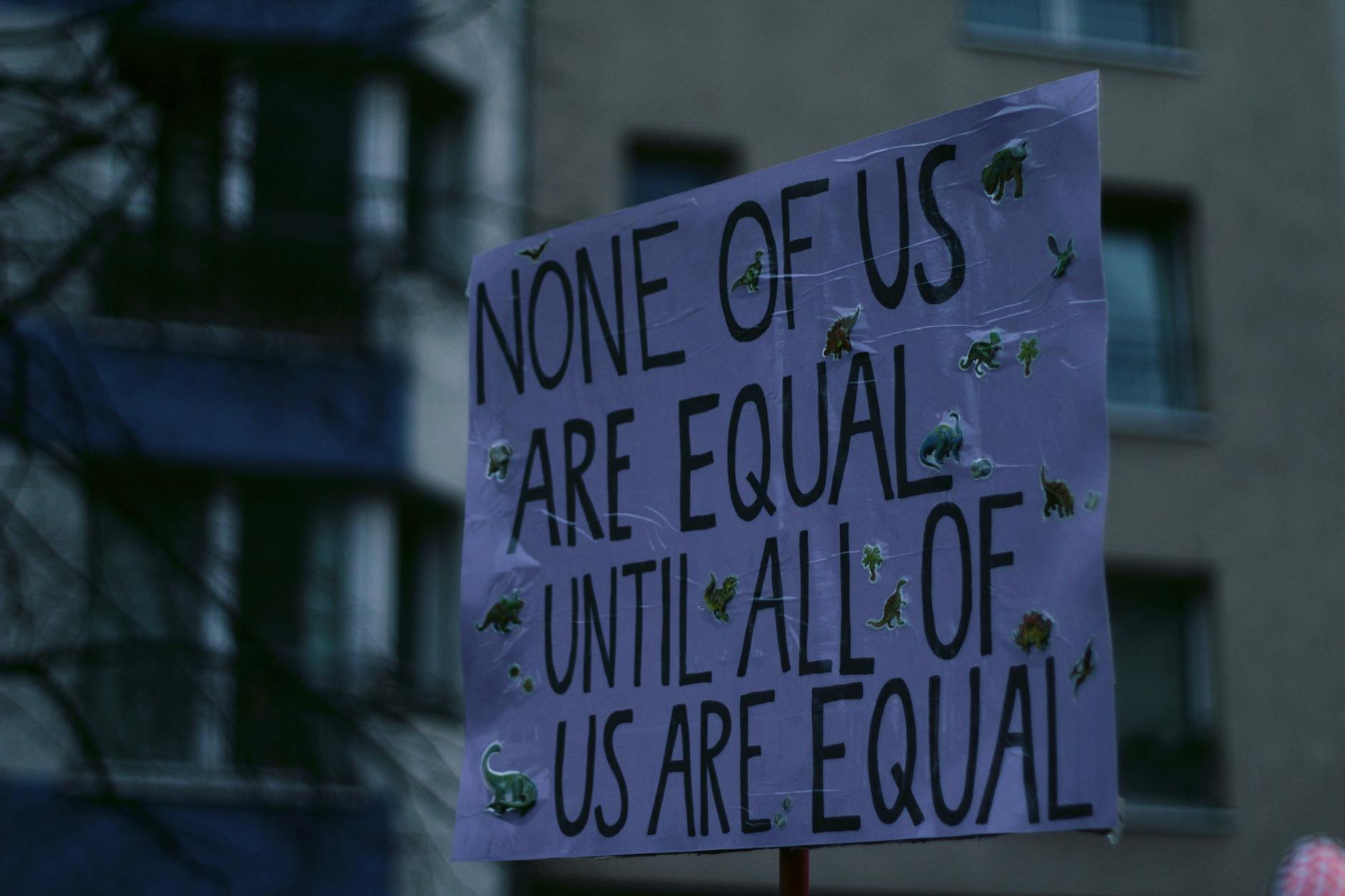
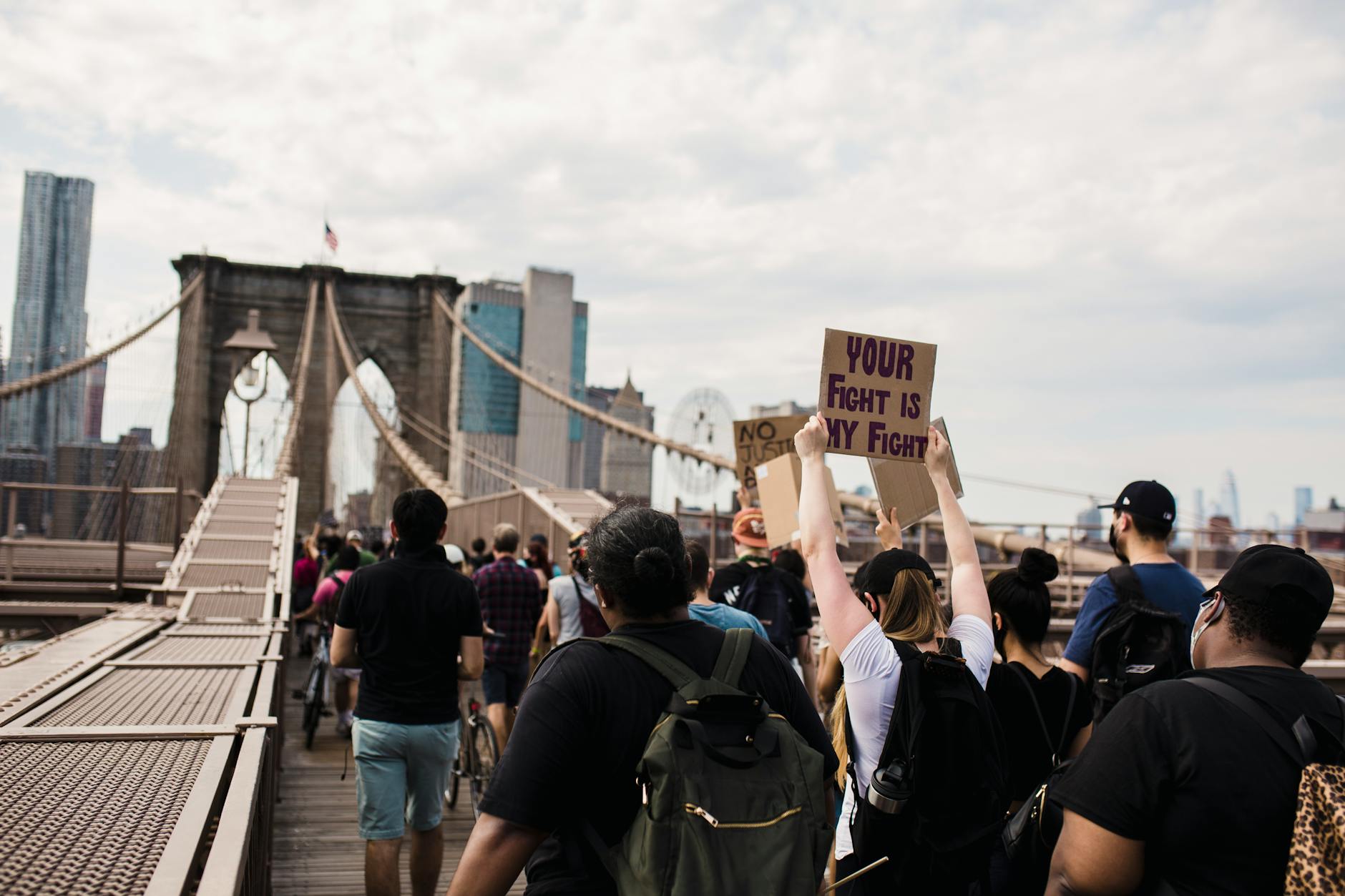
Photo by Flavia Jacquier on Pexels.com

Give Us Justice

Sabbath Day Thoughts — “Give Us Justice” Luke 18:1-8

Americans are fascinated with the world of “Law and Order.” We’ve been watching it on television since 1990. The series follows crime as it moves from law enforcement, where tough-minded detectives make their case, to the courtroom, where idealistic district attorneys present the evidence to judge and jury. With stories that are often ripped from the headlines, the show has been television gold, spawning a number of spin-offs over the years: “Law and Order: Criminal Intent,” “Law and Order: Trial by Jury,” “Law and Order: LA,” “Law and Order: Special Victims Unit,” and “Law and Order: Organized Crime.” Even when the original series was canceled after 20 years in 2010, we wanted more. It returned from beyond the television grave in 2022 and can still be watched on Thursday nights at 9pm. We like it when justice is served.

The Bible tells us that God is our ultimate judge, and one day, we will all face judgment. The Prophet Isaiah instructed, “the Lord is our judge, the Lord is our lawgiver, the Lord is our king; He will save us” (Is. 33:22). As Judge, God has particular interest in justice for the most vulnerable of God’s people. In fact, in reading the Hebrew Bible, you’ll find that God mentions the need to ensure justice for the widow, orphan, and resident alien about ninety times. Without a male head of household to protect them in those deeply patriarchal times, widows, orphans, and guest workers had to find justice in the courts.

Scripture also tells us that God appointed judges as earthly agents of God’s justice. Indeed, long before there were kings in Israel, there were judges, who played a special role in ensuring the peace and wholeness of the community. Judges were chosen from among the people and were known for their wisdom, compassion, and deep understanding of God’s law. The first judges included both women and men.

Justice in the ancient Near East was dispensed at the city gate, before the eyes of the community. In Jesus’ day, you couldn’t enter a city without walking by both the Seat of Judgment and the judge. If you felt a merchant had cheated you with false weights and measure or if a family member had deprived you of a rightful inheritance, then you took it to the Seat of Judgment and trusted that the judge would bring justice and restore peace to the community.

This traditional system of judgment is the setting for Jesus’ story of the persistent widow and the unjust judge. Jesus didn’t give his listeners the back story to his widow, but we can trust that she was mourning the death of her husband and that she had suffered an injustice. Without inheritance rights to protect her, we presume that her late husband’s nearest male relative had helped himself to all that his kinsman left behind and failed to honor his obligation to care well for the widow. So, she turned to the legal system to right the wrong that had been perpetrated against her.

There’s only one problem in Jesus’ story. The judge is corrupt. In a tradition which teaches that the fear of the Lord is the beginning of wisdom, this man doesn’t fear God. In a community where your good reputation is more valuable than gold, this man doesn’t care what his neighbors think. Most likely, he was what was popularly called a “Robber Judge” in first-century Israel; someone who had bought his office by greasing the palm of Herod or a Roman overlord, who dispensed favorable judgments to the highest bidder and would reportedly “pervert justice for a dish of meat.” Every morning, the poor widow in Jesus’ story would go to the city gate and wait at the seat of judgment, but she couldn’t even get on the docket.

The least explored aspect of this parable is the role of the community. I’ve never heard a sermon preached on it or read a scholarly article about it. The action of Jesus’ parable unfolds in the eyes of the community. Remember, justice was dispensed at the city gate. Everyone in Jesus’ fictional community would have known the widow, heard her case, and seen her persistence—day after day crying out for justice. Everyone in Jesus’ community would have known the teachings of the Torah, especially God’s expectation that the widow, orphan, and stranger be guaranteed justice and mercy. But the community in Jesus’ story is silent. No one stands with the widow. No one pleads her case. No patriarch takes her into his household and demands justice on her behalf. Jesus described a woman alone in the struggle, who eventually was granted the just ruling she deserved, not because she changed the mind of a corrupt judge, but because she simply wore him down.

Perhaps when Jesus told his story, he was thinking about his own, fast-approaching day in court. Soon Jesus and his friends would be on their way to Jerusalem for the Passover. Soon Jesus would stand before the judgment seat of Pilate. Soon, Pilate would ask the crowd to cry out in support of Jesus, to call for his release. No one did. Instead, they shouted, “Away with this man! Send out Barabbas for us, but this man, crucify him!”

In Jesus’ parable, no one advocated for the widow’s justice, and when Jesus stood before the seat of judgment, the crowd cried out for an injustice. When the parable and Jesus’ experience are held in tension, we see the power of community to ensure or deny justice. God may be the ultimate judge. Our courts may serve as earthly advocates to arbitrate and rule upon the law. But we all have an indispensable role to play in ensuring that justice prevails.

On March 9, the United States was added to the Global Human Rights Watchlist over declining civil liberties. The watchlist is maintained by CIVICUS—a global alliance and network of civil society groups, including Amnesty International, that advocates for greater citizen action in areas where civil liberties are limited. The watchdog group notes whether nations are open, narrowed, obstructed, repressed, or closed, with regard to civil rights. “Open” is the highest ranking, meaning all people are able to practice liberties such as free speech, while the lowest ranking is, of course, “closed.” We have long cherished our status as an open nation, but last month, we were downgraded to narrowed. In justifying that change, CIVICUS cites the cut of more than 90% of our foreign aid contracts; the elimination of diversity, equity, and inclusion programs; and the denial of due process for immigrants whose legal status is questionable. Since that March ninth report, we’ve seen further challenges to justice, like detention and deportation of those who are in the United States legally, threats to our freedom of assembly, threats to the freedom of the press, the rollback of legal protections for our LGBTQ+ neighbors, efforts to buy votes, and more. The widow is crying out against the unjust judges of our world, and she still can’t get her day in court.

If we page ahead in scripture to the Book of Revelation (Rev. 20:11-12), John of Patmos gives us an unsettling vision of the last days. Seated upon a great white throne is our ultimate judge—and it is Jesus. All humanity stands before the throne and the Book of Life is opened. One by one, we all face judgment according to our deeds.

When Jesus wrapped up his parable of the persistent widow, he alluded to this coming Day of Judgment. He said, “And yet, when the Son of Man comes, will he find faith upon the earth?” It’s a question about our belief and trust in him. But it is also a question about our faithfulness to his ways and our commitment to his justice. We all have an indispensable role to play in ensuring that justice prevails. We know what the Lord requires of us, but will we keep the faith? Will we advocate for the vulnerable? Or, will we stand by as justice is perverted and our vulnerable neighbors struggle alone?

The jury is out, my friends. We can stand up for justice, or we can turn our heads, sit back, and watch a fictionalized “Law and Order” version of it on television every Thursday night at nine. It’s up to us. Amen.

Resources

Solcyré Burga. “U.S. Added to Global Human Rights Watchlist Over Declining Civil Liberties” in Time Magazine, March 13, 2025. Accessed online at https://time.com/7266334/us-human-rights-watchlist-civil-liberties/

Miguel A. De la Torre. “Theological Perspective on Luke 18:1-8” in Feasting on the Gospels: Luke, vol. 2. Westminster John Knox Press, 2014.

Gregory Alan Robbins. “Exegetical Perspective on Luke 18:1-8” in Feasting on the Gospels: Luke, vol. 2. Westminster John Knox Press, 2014.

J.S. Randolph Harris. “Homiletical Perspective on Luke 18:1-8” in Feasting on the Gospels: Luke, vol. 2. Westminster John Knox Press, 2014.

Tembah J. Mafico. “Judge, Judging” in The Anchor Bible Dictionary, vol. 3, H-J. Doubleday, 1992.


Luke 18:1-8

Then Jesus told them a parable about their need to pray always and not to lose heart. 2 He said, “In a certain city there was a judge who neither feared God nor had respect for people. 3 In that city there was a widow who kept coming to him and saying, ‘Grant me justice against my accuser.’ 4 For a while he refused, but later he said to himself, ‘Though I have no fear of God and no respect for anyone, 5 yet because this widow keeps bothering me, I will grant her justice, so that she may not wear me out by continually coming.’” 6 And the Lord said, “Listen to what the unjust judge says. 7 And will not God grant justice to his chosen ones who cry to him day and night? Will he delay long in helping them? 8 I tell you, he will quickly grant justice to them. And yet, when the Son of Man comes, will he find faith on earth?”


Photo by Life Matters on Pexels.com

Poem for a Tuesday

“The low road” by Marge Piercy

“What can they do
to you? Whatever they want.
They can set you up, they can
bust you, they can break
your fingers, they can
burn your brain with electricity,
blur you with drugs till you
can’t walk, can’t remember, they can
take your child, wall up
your lover. They can do anything
you can’t stop them
from doing. How can you stop
them? Alone, you can fight,
you can refuse, you can
take what revenge you can
but they roll over you.

But two people fighting
back to back can cut through
a mob, a snake-dancing file
can break a cordon, an army
can meet an army.

Two people can keep each other
sane, can give support, conviction,
love, massage, hope, sex.
Three people are a delegation,
a committee, a wedge. With four
you can play bridge and start
an organization. With six
you can rent a whole house,
eat pie for dinner with no
seconds, and hold a fund raising party.
A dozen make a demonstration.
A hundred fill a hall.
A thousand have solidarity and your own newsletter;
ten thousand, power and your own paper;
a hundred thousand, your own media;
ten million, your own country.

It goes on one at a time,
it starts when you care
to act, it starts when you do
it again and they said no,
it starts when you say We
and know you who you mean, and each
day you mean one more.”


in Cries of the Spirit, ed. Marilyn Sewell. Beacon Press: Boston, 1991.


Photo by Kelly Lacy on Pexels.com