Stronger Than Lions

Sabbath Day Thoughts — “Stronger Than Lions” 2 Sam. 1:1, 17-27

What do you have to say about your enemy?

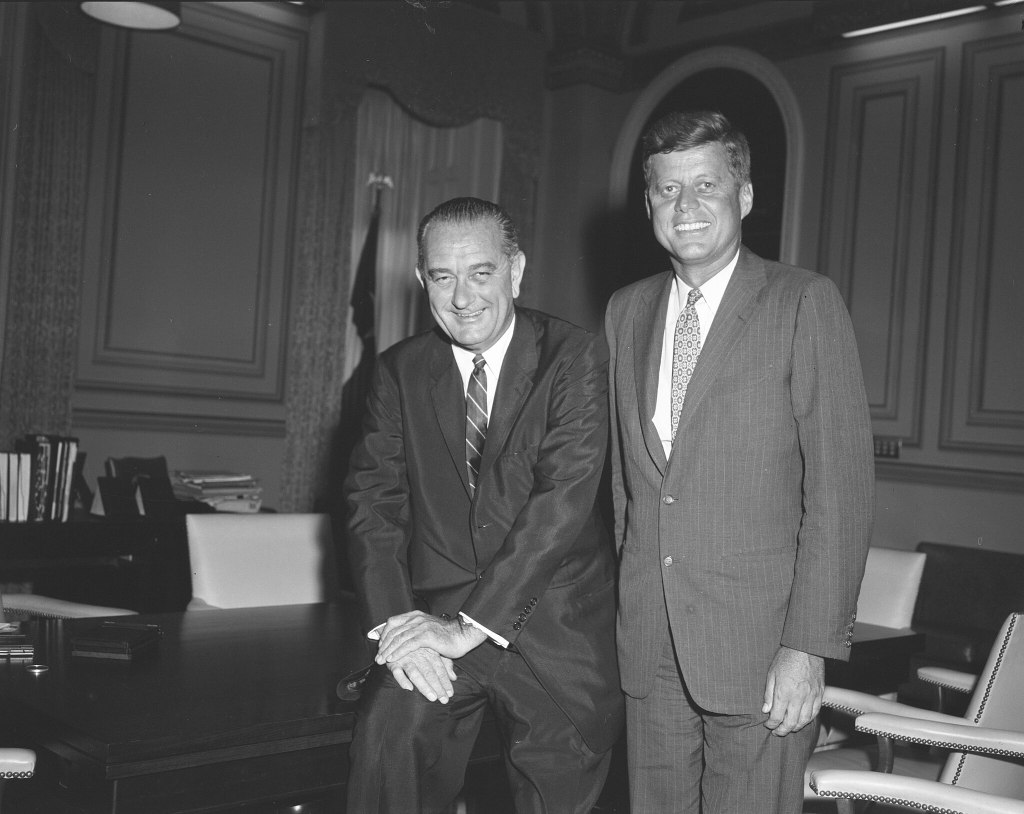
The relationship between President John F. Kennedy and his Vice President Lyndon Johnson was notoriously tense. Kennedy’s liberal supporters were shocked when their candidate announced LBJ would be his running mate. Compared to Kennedy and his crew of Ivy League-educated youngsters, LBJ was an old-school street-brawler, a plain-speaking deal-maker who took calculated risks to push his political agenda. Johnson, generally, got what he wanted, giving anyone who stood in his way what journalists would call “the treatment.” This was a one-on-one verbal offensive that employed “supplication, accusation, cajolery, exuberance, scorn, tears, complaint, and the hint of threat”—sometimes all of these together— to win someone to his cause.

In the White House, Kennedy’s staff were at times openly contemptuous of Johnson, especially the president’s brother, Attorney General Robert F. Kennedy. They made fun of LBJ’s down-home, earthy manner. Congressman Tip O’Neill recalled that the Kennedy brothers “had a disdain for Johnson that they didn’t even try to hide…. They actually took pride in snubbing him.” First Lady Jackie Kennedy would later state that, shortly after winning the White House, her husband and his brother conspired to scuttle Johnson’s political future and keep him out of any future run for the presidency.

For his part, Johnson bridled at being sidelined by the President, who denied his requests for workspace adjacent to the oval office and oversight on national security matters. Johnson saw himself as the far-superior politician, unfairly characterized as an illiterate, rude, crude bumpkin. He got even by telling tales about the Kennedy’s checkered political past, including the evening that he sat in on the phone call that President Franklin Roosevelt made to JFK’s father Joe, firing him from his appointment as Ambassador to the United Kingdom. Later, when President, Johnson would pass a law forbidding the appointment of family members to cabinet level positions, known as the nepotism provision; Johnson called it the “Bobby Kennedy law.” Ouch.

Our scripture reading this morning has David singing the praises of his political rival King Saul. It’s one of the earliest psalms of the Bible and would have originally been set to music and sung with accompaniment, perhaps with the harp or horns or percussion.  David celebrated the skill of Saul and his son Jonathan in battle, remembering how they worked to unite Israel and transform it from a weak tribal confederacy to a national power to be reckoned with.  Until their tragic deaths on Mt. Gilboa, their weapons of war—Saul’s sword and Jonathan’s bow—were ever at work against Israel’s powerful enemies like the Philistines.  David celebrated the prosperity that Saul brought to Israel—the thriving trade that clothed Israel’s women with crimson and decked them out with gold jewelry.  Saul had given everything for his nation, three of his beloved sons and even his life. David wove all that praise together, uniting it with the repeated refrain, “How the mighty have fallen.”

To write those words of praise, David had to rise above his complex relationship with Saul.  David served as Saul’s champion against Goliath; he had been a soldier in Saul’s army.  David had lived at Saul’s royal court, under his protection.  Saul had even made David family by marrying David to his daughter, the Princess Michal.  Saul had been David’s king and mentor, yet Saul had also been David’s rival and enemy.  Like Saul, David had been anointed by the Prophet Samuel as Israel’s messiah.  As David’s star was rising in Israel, Saul’s star was setting—and Saul knew it.  David’s success inspired Saul’s jealousy, paranoia, rage, and death threats.  By the time David sang, “O, how the mighty have fallen,” he had been on the outs with Saul for decades. David, the once-trusted champion, had become public enemy number one. That’s a lot to rise above when it’s time to write a memorial.

Centuries later, Jesus, known as the Son of David, challenged his followers to love their enemies and pray for those who persecuted them (Matt. 5:44). Anyone, even a tax collector or Gentile, can love the people who love them. Yet Jesus taught that when we love our enemies, we truly become children of our Father in heaven. In our choice for love, we embody the God who loves us on our worst day and chooses to forgive in us what we label unforgiveable in others. This mind-blowing, humbling choice for love was, of course, best revealed in Jesus, who prayed for the forgiveness of his executioners, welcomed a thief to join him in paradise, and called to discipleship followers who would fail him miserably when he needed them most. Jesus knew, God knows, that when we choose to practice this sort of selfless love, we make a changed future possible, a future where enemies become friends.

Perhaps in David’s words of praise, we have a foretaste of what Jesus would embody. David could have skipped the praise, seized power, and erased the memory of Saul.  Instead, he got out his harp and wrote those lovely verses of homage and celebration.  He ordered the psalm to be taught to the people of Judah and included in the Book of Jashar – a collection of national songs.  In rising above the mixed-feelings he had for Saul and writing a fitting lament for the loss of a gifted but troubled king, David called his fledgling nation to unity, holding together those fragile tribal alliances.  David allowed the example of Saul and Jonathan, stronger than lions, to call the people of Israel to heroic deeds in fighting outside enemies.  David used the self-sacrifice of Saul and Jonathan to promote self-sacrifice on behalf of the nation.  The friendship of David and Jonathan—across dividing lines of national politics—served as a role model for collaboration and bridge building. David’s memorial held Israel together and challenged them to grow into the nation that God had created them to be. 

On November 22, 1963, when President Kennedy was assassinated by Lee Harvey Oswald in Dallas, Texas, Vice President Johnson was sworn in as the nation’s 36th president, aboard Air Force One at Dallas Love Field. A shell-shocked Jackie Kennedy stood at his side. Five days later, on November 27, Johnson addressed a joint session of Congress, a speech that was broadcast on national television. His words, part-eulogy, part-call-to-action, were later named the “Let Us Continue” address. It wasn’t easy to write—it took nine drafts. LBJ called Kennedy the “greatest leader of our time,” and said that American dreams had been vitalized by his drive and dedication. He called Americans to unity and the pursuit of our best ideals. Johnsons said no eulogy could more eloquently honor the President’s legacy than to pass the Civil Rights bill for which Kennedy had fought. “We have talked long enough in this country about equal rights,” Johnson said, “We have talked for 100 years or more. Yes, it’s time to write the next chapter—and to write it in the book of law.”

Like David, like Jesus’s instruction to love our enemies, Johnson’s words created the graced space for a nation to find unity and healing.  Johnson asked all Americans for their help, saying: “An assassin’s bullet has thrust upon me the awesome burden of the Presidency. I am here today to say I need your help; I cannot bear this burden alone.” Johnson’s “Let Us Continue” speech was interrupted by applause thirty-four times. The newly-sworn-in President closed his remarks with words from “America the Beautiful,” “America, America, God shed His grace on thee, and crown thy good with brotherhood from sea to shining sea.” Immediately thereafter, efforts began to push through the Civil Rights Act, which succeeded, despite considerable resistance from Southern politicians, in July 1964.

What do we have to say about our enemies? We live in an age when it is all too common to shun, criticize, shame, or belittle those whose opinions and convictions differ from our own. Yet history, scripture, and the rule of love suggest that we can make different choices. May we, like David, rise above our mixed and hurt feelings to choose a better way. May we dare to cast the vision for a future where enemies become friends, love prospers, and we grow into the nation that God calls us to become.

Resources

ABC News. “Jacqueline Kennedy Reveals That JFK Feared an LBJ Presidency” in ABCNews: Politics, Sept. 8, 2011. Accessed online at https://abcnews.go.com/Politics/Jacqueline_Kennedy/jacqueline-kennedy-reveals-jfk-feared-lbj-presidency/story?id=14477930

JONATHAN MARTIN and JOHN F. HARRIS. “Caro revives Kennedy-Johnson feud” in Politico, May 13, 2012. Accessed online at https://www.politico.com/story/2012/05/caro-revives-kennedy-johnson-feud-076234.

ALLEN MCDUFFEE. “WHY THE KENNEDYS COULDN’T STAND LYNDON B. JOHNSON” in Grunge, January 11, 2021. Accessed online at https://www.grunge.com/310120/why-the-kennedys-couldnt-stand-lyndon-b-johnson/

Andrew Glass. “LBJ calls on Congress to pass civil rights legislation, Nov. 27, 1963” in Politico, Nov. 27, 2018. Accessed online at https://www.politico.com/story/2018/11/27/lbj-calls-on-congress-to-pass-civil-rights-legislation-nov-27-1963-1012624

Lyndon B. Johnson. (November 27, 1963). Peters, Gerhard; Woolley, John T. (eds.). “Address Before a Joint Session of the Congress”. Lyndon Baines Johnson Library and Museum. The American Presidency Project. Retrieved June 29, 2024.

Roger Nam. “Commentary on 2 Samuel 1:1, 17-27” in Preaching This Week, June 30, 2024. Accessed online at Commentary on 2 Samuel 1:1, 17-27 – Working Preacher from Luther Seminary

David G. Garber, Jr. “Commentary on 2 Samuel 1:1, 17-27” in Preaching This Week, June 28, 2015. Accessed online at Commentary on 2 Samuel 1:1, 17-27 – Working Preacher from Luther Seminary

Samuel Giere. “Commentary on 2 Samuel 1:1, 17-27” in Preaching This Week, July 1, 2012. Accessed online at Commentary on 2 Samuel 1:1, 17-27 – Working Preacher from Luther Seminary


2 Samuel 1:1, 17-27

1After the death of Saul, when David had returned from defeating the Amalekites, David remained two days in Ziklag.

17David intoned this lamentation over Saul and his son Jonathan. 18(He ordered that The Song of the Bow be taught to the people of Judah; it is written in the Book of Jashar.) He said: 19Your glory, O Israel, lies slain upon your high places! How the mighty have fallen! 20Tell it not in Gath, proclaim it not in the streets of Ashkelon; or the daughters of the Philistines will rejoice, the daughters of the uncircumcised will exult. 21You mountains of Gilboa, let there be no dew or rain upon you, nor bounteous fields! For there the shield of the mighty was defiled, the shield of Saul, anointed with oil no more. 22From the blood of the slain, from the fat of the mighty, the bow of Jonathan did not turn back, nor the sword of Saul return empty. 23Saul and Jonathan, beloved and lovely! In life and in death they were not divided; they were swifter than eagles, they were stronger than lions. 24O daughters of Israel, weep over Saul, who clothed you with crimson, in luxury, who put ornaments of gold on your apparel. 25How the mighty have fallen in the midst of the battle! Jonathan lies slain upon your high places. 26I am distressed for you, my brother Jonathan; greatly beloved were you to me; your love to me was wonderful, passing the love of women. 27How the mighty have fallen, and the weapons of war perished!

Frank Muto, Public domain, via Wikimedia Commons

A Heart for the Lord

Sabbath Day Thoughts — “A Heart for the Lord” 1 Samuel 15:34-6:13

I’ve presided at more than 120 funerals since coming to Saranac Lake in 2005. That averages out to half-a-dozen or so each year. Some of those services have been for church members or friends of the church. Some have been for community members who have come to see me as their pastor. Some have been for complete strangers. All have felt the need for Christian burial and a celebration of life before the Lord.

In obituaries, eulogies, or the sort of spontaneous sharing that often accompanies the time of death, many things are celebrated about the loved one who has died. We hear stories about athletic achievement, workplace accomplishments, good grades, and advanced degrees. We praise intelligence, ingenuity, and special talents. We are certain to note titles earned, awards and prizes garnered, and times of leadership in the community. We celebrate a host of children and grandchildren, beauty, great smiles, and even good hair. For us, these are the marks of a blessed and well-lived life.

Our reading from First Samuel suggests that God may see things a little differently. It was the earliest days of the Israelite monarchy. The Prophet Samuel had advocated for God to anoint a king to gather together the twelve tribes of Israel and shape them into a powerful nation. God Almighty had resisted at first. After all, wasn’t God alone king over the people (1 Sam. 8:7)? But God relented, and the oil of blessing had been poured out upon Saul, a son of an influential family of the northern tribe of Benjamin. Saul looked the part: handsome, prophetic, a head taller than anyone else. People looked at Saul and said, “That boy! He is one impressive young man!”

But over Saul’s forty-two years of kingship, God ultimately saw things differently. It all came to a crisis over their neighbors the Amalekites. God had instructed Saul to wage holy war, utterly destroying the Amalekites, just as the Amalekites had tried to destroy the Hebrew people during their vulnerable years as wilderness wanderers. Yet, Saul preserved the life of the Amalekite king, saved the choicest livestock and best plunder, and then erected a monument to himself atop Mt. Carmel. When confronted with his pride and disobedience, Saul lied. It was time for a new leader.

The reluctant Samuel was dispatched to the household of Jesse of Bethlehem, who had an abundance of sons. What followed sounds a little like an Ancient Near East beauty contest. A parade of seven eligible sons was brought before the prophet. Eliab, the oldest, was tall and handsome, like Saul. Abindadab came next, perhaps a great huntsman and provider, followed by Shamah, perhaps the smartest man in all of Bethlehem. Each of the seven sons was impressive; each had the prophet reaching for his flask of anointing oil. But God said “No.”

God had different priorities for leadership, qualities not necessarily revealed in external beauty, strength, or intelligence. God saw the heart (lev). In the Hebrew understanding, the heart embodied and directed the whole person. Our soul, mind, body, feelings, will, conscience, and character were all believed to originate in the heart. God wanted a king with a heart for God. Regardless of their accomplishments, those first seven sons didn’t have what it would take.

David was considered so inconsequential that he wasn’t even invited to the party that day. Instead, he was off in the fields, tending his father’s sheep. When David arrived, he must have looked unlikely—just a ruddy shepherd boy, small and insignificant, in a dirty tunic and bare feet. As soon as Samuel laid eyes on David, the Lord spoke, “Get up, Samuel! This is the one. Anoint him.” At last, here was the son who would have a heart for God.

It’s a story that gets us thinking about our own hearts. We no longer attribute to the heart the qualities and abilities that our ancestors in the faith did, but I think we can surmise what God was looking for in David.

When we have a heart for God, we don’t get caught up in the externals. We’re not worried about being the most beautiful or popular. We’re not preoccupied with being the best athlete, the top of the class, or the person who dies with the biggest bank account. We aren’t driven by pride, the compulsion to please others, or an appetite for the limelight.

When we have a heart for God, we listen for God’s wisdom and leading. We take it to the Lord in prayer. We feast upon God’s word. We praise God in worship. We prioritize God in our lives, making the Lord the center of our professional identity, our families, even our civic engagement.

When we have a heart for God, we become obedient, even when the ways of God are at odds with the siren call of the world. It’s an ethical commitment to honesty—no cutting corners. It’s a moral call to integrity in our relationships. It’s the willingness to surrender our purpose to God’s purpose, to know that it isn’t always about us, and we won’t always get what we want. Instead, we choose to love God and love neighbor with all our heart, mind, soul and strength.

When we have a heart for God, we find our pattern, our role model, in Jesus of Nazareth, the Son of David. From the world’s perspective, Jesus didn’t have what it took to be God’s anointed one. He was from a humble community and of questionable birth. He labored long years as a carpenter, not a Torah scholar. He didn’t have a home, a college degree, a big bank account, or a mega-church. He was an itinerant preacher, who identified with the last, the least, the hungry, the vulnerable, the demon-possessed, the child. Yet the very heart of God beat within his chest, calling us to lives of love and humble service.

On February 4, 1968, Martin Luther King preached the message “Drum Major Instinct” from the pulpit of the Ebenezer Baptist Church in Atlanta, GA. Looking at the life of Christ, King concluded that everyone can be great, not through outstanding natural abilities or our impressive accomplishments but rather through our capacity to follow Jesus. King said, “Everybody can be great, because everybody can serve. You don’t have to have a college degree to serve. You don’t have to make your subject and your verb agree to serve. You don’t have to know about Plato and Aristotle to serve. You don’t have to know Einstein’s theory of relativity to serve. You don’t have to know the second theory of thermodynamics in physics to serve. You only need a heart full of grace, a soul generated by love.”

We only need a heart like David’s, a heart like Jesus’, a heart like Dr. King’s: a heart for God.

It’s important to note that having a heart for God doesn’t mean we are perfect, impeccable paragons of virtue who never stray from righteousness. David notoriously abused power and failed as a father. Dr. King was accused of plagiarism and strayed from his marriage. But their hearts for God brought them around to the humility that saw themselves for what they were, sought forgiveness, and did what was needed to begin again. We aren’t perfect, either, but we have the good sense to grab onto God’s good grace and hold tight. Don’t we?

At the conclusion of King’s sermon, given only two months before his assassination in April 1968, Dr. King imagined his funeral and what he hoped people would say about him. He didn’t name his doctoral degree, his pivotal role in the Montgomery bus boycott, his founding of the Student Non-violent Coordinating Committee, his march on Selma, his Poor People’s Campaign, or even his Nobel Peace Prize. On the contrary, King hoped that someone would mention his efforts to serve others, to love people—even when they were hate-filled, to feed hungry people, to minister to fundamental human needs, to visit those in prison, to be alongside Jesus in in love, justice, truth, and commitment to others.

This morning, as the Prophet Samuel pours out the oil of anointing upon a ragamuffin shepherd boy who would one day be Israel’s greatest king, we are invited to imagine what God sees in us. What would we like people to say about us at our funerals? We don’t have to be head and shoulders above the rest. We don’t have to be the oldest son or the brainiest daughter. We don’t need to be a hero on the gridiron or a flash of brilliance on the ice. We don’t need to be homecoming queen or carnival king. All we need is a heart for God.

Resources

Martin Luther King. “Drum Major Instinct” delivered February 4, 1968 at the Ebenezer Baptist Church, Atlanta, GA. Stanford: The Martin Luther King, Jr. Research and Education Institute. Accessed online at “Drum Major Instinct” | The Martin Luther King, Jr. Research and Education Institute (stanford.edu)

Beth E. Elness-Hanson. “Commentary on 1 Samuel 15:34-6:13” in Preaching This Week, June 16, 2024. Accessed online at Commentary on 1 Samuel 15:34—16:13 – Working Preacher from Luther Seminary

Roger Nam. “Commentary on 1 Samuel 15:34-6:13” in Preaching This Week, June 14, 2015. Accessed online at Commentary on 1 Samuel 15:34—16:13 – Working Preacher from Luther Seminary

Klaus-Peter Adam. “Commentary on 1 Samuel 15:34-6:13” in Preaching This Week, June 13, 2021. Accessed online at Commentary on 1 Samuel 15:34—16:13 – Working Preacher from Luther Seminary

Ralph w. Klein. “Commentary on 1 Samuel 15:34-6:13” in Preaching This Week, June 14, 2009. Accessed online atCommentary on 1 Samuel 15:34—16:13 – Working Preacher from Luther Seminary


1 Samuel 15:34—16:13

34Then Samuel went to Ramah; and Saul went up to his house in Gibeah of Saul. 35Samuel did not see Saul again until the day of his death, but Samuel grieved over Saul. And the Lord was sorry that he had made Saul king over Israel.

16The Lord said to Samuel, “How long will you grieve over Saul? I have rejected him from being king over Israel. Fill your horn with oil and set out; I will send you to Jesse the Bethlehemite, for I have provided for myself a king among his sons.” 2Samuel said, “How can I go? If Saul hears of it, he will kill me.” And the Lord said, “Take a heifer with you, and say, ‘I have come to sacrifice to the Lord.’ 3Invite Jesse to the sacrifice, and I will show you what you shall do; and you shall anoint for me the one whom I name to you.” 4Samuel did what the Lord commanded, and came to Bethlehem. The elders of the city came to meet him trembling, and said, “Do you come peaceably?” 5He said, “Peaceably; I have come to sacrifice to the Lord; sanctify yourselves and come with me to the sacrifice.” And he sanctified Jesse and his sons and invited them to the sacrifice.

6When they came, he looked on Eliab and thought, “Surely the Lord’s anointed is now before the Lord.” 7But the Lord said to Samuel, “Do not look on his appearance or on the height of his stature, because I have rejected him; for the Lord does not see as mortals see; they look on the outward appearance, but the Lord looks on the heart.” 8Then Jesse called Abinadab, and made him pass before Samuel. He said, “Neither has the Lord chosen this one.” 9Then Jesse made Shammah pass by. And he said, “Neither has the Lord chosen this one.” 10Jesse made seven of his sons pass before Samuel, and Samuel said to Jesse, “The Lord has not chosen any of these.” 11Samuel said to Jesse, “Are all your sons here?” And he said, “There remains yet the youngest, but he is keeping the sheep.” And Samuel said to Jesse, “Send and bring him; for we will not sit down until he comes here.” 12He sent and brought him in. Now he was ruddy, and had beautiful eyes, and was handsome. The Lord said, “Rise and anoint him; for this is the one.” 13Then Samuel took the horn of oil, and anointed him in the presence of his brothers; and the spirit of the Lord came mightily upon David from that day forward. Samuel then set out and went to Ramah.


Photo by cottonbro studio on Pexels.com