Beyond Measure

Sabbath Day Thoughts — “Beyond Measure” Luke 6:27-38

Claiborne “CP” Ellis grew up in poverty in Durham, NC, the son of a mill worker. He married at seventeen and quickly fathered three children. The youngest was born blind and developmentally disabled. Despite working two jobs, he could rarely pay his bills. In an interview with journalist Studs Terkel, CP remembered, “I worked my butt off and never seemed to break even. They say abide by the law, go to church, do right and live for the Lord and everything will work out. It didn’t work out. It kept gettin’ worse and worse. I began to get bitter.”

CP joined the Ku Klux Klan. His father told him it was the savior of the white race. The night he first put on the white robe and hood, was led through a crowd of fellow clansmen, and knelt before an illuminated cross, CP felt that he finally belonged. He rose through the ranks, eventually becoming the Grand Exalted Cyclops.

Ann Atwater was one of nine children born to a Black sharecropping family in rural North Carolina. Her mother died when she was six. Her father earned five cents an hour in the fields, all the children working right alongside him. As a child laborer on a white owner’s farm, Ann recalled her family being given food only through the back door, after white workers had already eaten. She was taught that White people were better and that their needs came before hers.

That changed when Ann moved to Durham as a young mother with two daughters. There she became a community organizer with Operation Breakthrough, a program to help Black people escape generational poverty. Ann’s deep, powerful voice could energize a crowd, and she wasn’t afraid to share her opinions loudly and proudly. She concluded that the most effective method of getting people to listen to her was to “holler at them.” When she called a meeting, she meant business.

It should come as no surprise that CP Ellis and Ann Atwater were enemies. At town council meetings, Ann passionately advocated before the all-White board for her Black neighbors. She called for housing improvements and better schools. At the same meetings, CP made provocative and inaccurate statements, expressing his fear and resentment of Black people. “Blacks are taking over the city. They got all the good jobs, and you’re all sittin’ here letting ‘em do it.” Ann and CP were such bitter foes that she once almost pulled the penknife she kept in her purse on him at a Durham City Council meeting when he proposed Apartheid-like restrictions for Blacks. Ann remembered, “As soon as he got close to me, I was going to grab his head from behind and cut him from ear to ear.” But her pastor grabbed her hand and said, “Don’t give them the satisfaction.”

We all have enemies: those who have hurt us, worked against us, and made our lives hard. We all have enemies, those who have talked us down, disrespected our gender, or laughed at our best efforts. In this desperately partisan time, we all have enemies, who label us as “them,” advocate for candidates we can’t abide, envision an America where we are left behind or the vulnerable are victimized. We all have enemies.

In today’s reading from the Sermon on the Plain, Jesus gave his friends guidance on how to relate to enemies. The Ancient Near East was a world driven by retributive violence. An accidental death could readily explode into the murder of an entire family. Blood feuds pit neighbor against neighbor and nation against nation for generations. Jewish law tried to limit this escalating cycle of bloody revenge by teaching a tit-for-tat justice—“life for life, eye for eye, tooth for tooth, hand for hand, foot for foot, burn for burn, wound for wound, stripe for stripe (Exodus 21:23-25). Yet Jesus broke even with this moderate teaching of measured retaliation. Jesus insisted that his followers exceed the righteousness of the Torah. Instead of pulling out their opponent’s teeth and blacking their eyes, Jesus’ followers were to love.

Jesus taught that we love our enemies by praying for them. That doesn’t mean we are to pray, “Lord, remove my enemy from my life.” Or, “Lord, give my enemy the comeuppance that he deserves!” Rather, we are to prayerfully bring our enemy before the Lord with the intention of agape love—the sort of unselfish love that impartially wishes the best for others. Agape for our enemies? Really Jesus? If you expect that, we may need to begin by praying for ourselves. We may need to ask God to soften the hardness of our hearts and help us with our anger, vulnerability, and hurt feelings. Once we have made the choice for agape instead of retribution and asked the Lord for the help we need, we can begin to imagine our enemy in the circle of God’s love. We can begin to pray for an enemy who is transformed by love.

I suspect that Jesus taught his followers to pray for their enemies because he knew that prayer would change them. When we turn to God in prayer, we acknowledge our powerlessness. We accept that we cannot change what others feel or do. We begin to see that we can only control ourselves, and we can choose to not fuel that endless cycle of retribution. As we pray, we find healing for our pain, our hard hearts soften, and we cultivate compassion and empathy. By bringing our enemy into God’s loving regard in prayer, we participate in God’s mercy.  We move beyond measuring who deserves what. We learn to be merciful as God is merciful.  In praying for those who have wronged us, we join God in the healing and redemption of our world, one enemy at a time.

Imagine the animosity that Ann Atwater and CP Ellis felt for one another in 1971 when a court order finally forced the city of Durham to integrate its public schools. Many in the community vehemently opposed desegregation. Racial tensions among students ran high. Fights broke out in classrooms and hallways. In an effort to forestall more school violence, the town council called for a charette, an intense collaborative process to come up with new school policies. For ten days community members would meet twelve-hours-a-day to find a way forward. The council appointed two community members to chair the process: Ann Atwater and CP Ellis. Neither liked the idea. CP said, “It was impossible. How could I work with her? Her and I, up to that point, cussed each other, bawled each other [out], we hated each other.” Things got off to a rough start when CP brought a machine gun to the first meeting. He was dead set on sabotaging any progress that the charette might make.

According to Ann, the first breakthrough with CP happened when a gospel choir came in to sing for the charette. CP, who had never attended a black church, was unfamiliar with the lively music, but he liked it. He started clapping to the wrong beat. Ann looked over, grabbed his hands, and in her words “learned him how to clap.”

As Ann and CP worked together, they began to see that they had much in common. They both had endured terrible poverty, withering hardship, and limited opportunity. They both loved their children and wanted them to have possibilities for the future that they had been denied. They wanted their kids to attend schools free of violence. CP later said, “Here we are, two people from the far end of the fence, having identical problems, except her being black and me being white…The amazing thing about it, her and I, up to that point, we hated each other. Up to that point, we didn’t know each other. We didn’t know we had things in common.” Ann and CP realized that if they didn’t overcome their animosity, they would ruin the possibility of helping any children. They cried together and set aside their differences.

At the conclusion of the charette, CP and Ann presented the School Board with a list of recommendations, including giving students a larger say on education issues by expanding the board to include two students, one Black, one White. They also proposed major changes in the school curriculum, like more instruction on dealing with racial violence, creation of a group to discuss and resolve problems before they escalated, and expansion in choices of textbooks to include African-American authors.

After their work together, CP stepped down from his position as Exalted Grand Cyclops and left the KKK. He and Ann worked to desegregate the Durham school system and continued to speak jointly at civil rights seminars and meetings for three decades. CP went back to school, earned his High School diploma, and became a successful union organizer in an AFL-CIO chapter with a majority of black members. CP said of the experience, “When you walk into a plant with those Black women and butt heads with professional union busters, college men. And we hold our own against them. Now I feel like somebody for real.”

At CP’s funeral in 2005, Ann sat with family. She had come to see CP as her friend and brother. She was invited to share the eulogy. In her deep, powerful voice, Ann Atwater said of her thirty-year friendship with CP, “God had a plan for both of us, for us to get together.”

May we go forth to love our enemies.

Ann and CP’s story has been told in the 1996 book and 2016 film, both entitled “Best of Enemies,”

as well as the PBS documentary “An Unlikely Friendship.”

Resources:

Virginia Bridges. “Durham civil rights activist Ann Atwater dies at 80” in The News & Observer, April 4, 2019.

Myrna Oliver. “C.P. Ellis, 78; Once a Ku Klux Klan Leader, He Became a Civil Rights Activist” in The Los Angeles Times, Nov. 9, 2005.

Facing History & Ourselves, “Breaking Isolation”, last updated August 2, 2016. Accessed online at https://www.facinghistory.org/resource-library/breaking-isolation

Sarah Henrich. “Commentary on Luke 6:27-38” in Preaching this Week, Feb. 20, 2022. Accessed online at https://www.workingpreacher.org/commentaries/revised-common-lectionary/seventh-sunday-after-epiphany-3/commentary-on-luke-627-38-2

Mary Hinkle Shore. “Commentary on Luke 6:27-38” in Preaching this Week, Feb. 23, 2025. Accessed online at https://www.workingpreacher.org/commentaries/revised-common-lectionary/seventh-sunday-after-epiphany-3/commentary-on-luke-627-38-3

William Loyd Allen. “Theological Perspective on Luke 6:27-38” in Feasting on the Word: Luke, Volume 1. Westminster John Knox Press, 2014.

Charon Ringe. “Exegetical Perspective on Luke 6:27-38” in Feasting on the Word: Luke, Volume 1. Westminster John Knox Press, 2014.


Luke 6:27-38

27 “But I say to you who are listening: Love your enemies; do good to those who hate you; 28 bless those who curse you; pray for those who mistreat you. 29 If anyone strikes you on the cheek, offer the other also, and from anyone who takes away your coat do not withhold even your shirt. 30 Give to everyone who asks of you, and if anyone takes away what is yours, do not ask for it back again. 31 Do to others as you would have them do to you.

32 “If you love those who love you, what credit is that to you? For even sinners love those who love them. 33 If you do good to those who do good to you, what credit is that to you? For even sinners do the same. 34 If you lend to those from whom you expect to receive payment, what credit is that to you? Even sinners lend to sinners, to receive as much again. 35 Instead, love your enemies, do good, and lend, expecting nothing in return. Your reward will be great, and you will be children of the Most High, for he himself is kind to the ungrateful and the wicked. 36 Be merciful, just as your Father is merciful.

37 “Do not judge, and you will not be judged; do not condemn, and you will not be condemned. Forgive, and you will be forgiven; 38 give, and it will be given to you. A good measure, pressed down, shaken together, running over, will be put into your lap, for the measure you give will be the measure you get back.”


Photo source: https://www.dncr.nc.gov/blog/2020/01/28/activist-ann-atwater
Stronger Than Lions

Sabbath Day Thoughts — “Stronger Than Lions” 2 Sam. 1:1, 17-27

What do you have to say about your enemy?

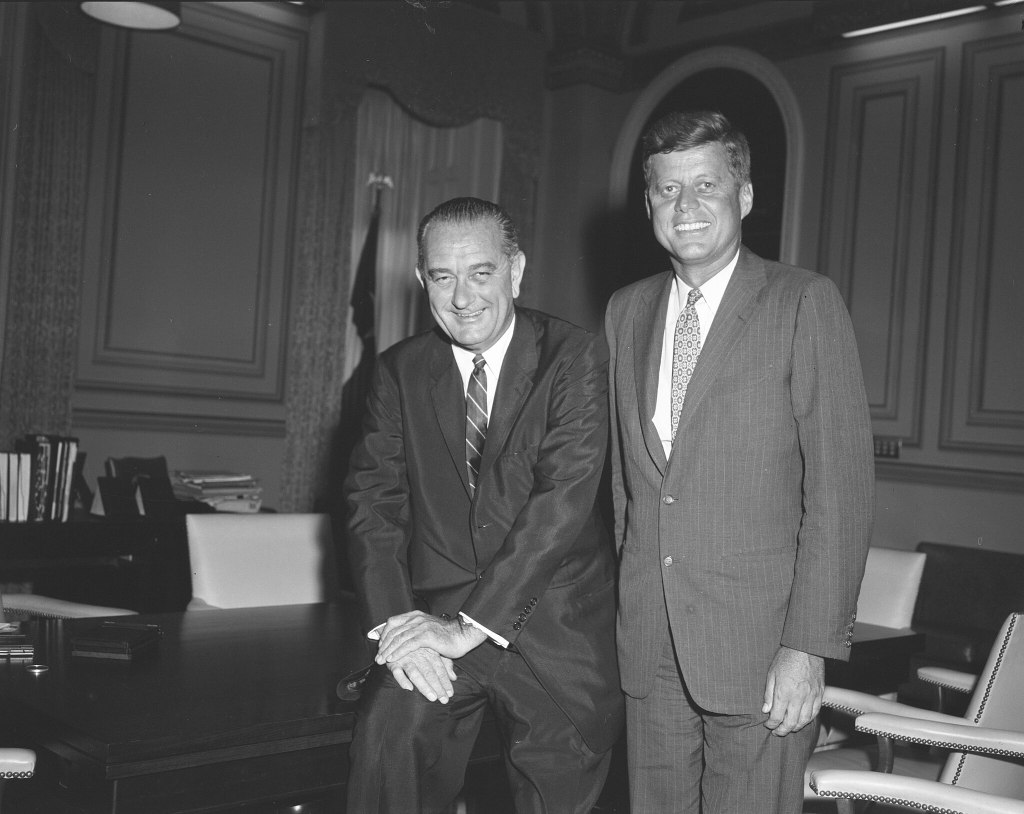
The relationship between President John F. Kennedy and his Vice President Lyndon Johnson was notoriously tense. Kennedy’s liberal supporters were shocked when their candidate announced LBJ would be his running mate. Compared to Kennedy and his crew of Ivy League-educated youngsters, LBJ was an old-school street-brawler, a plain-speaking deal-maker who took calculated risks to push his political agenda. Johnson, generally, got what he wanted, giving anyone who stood in his way what journalists would call “the treatment.” This was a one-on-one verbal offensive that employed “supplication, accusation, cajolery, exuberance, scorn, tears, complaint, and the hint of threat”—sometimes all of these together— to win someone to his cause.

In the White House, Kennedy’s staff were at times openly contemptuous of Johnson, especially the president’s brother, Attorney General Robert F. Kennedy. They made fun of LBJ’s down-home, earthy manner. Congressman Tip O’Neill recalled that the Kennedy brothers “had a disdain for Johnson that they didn’t even try to hide…. They actually took pride in snubbing him.” First Lady Jackie Kennedy would later state that, shortly after winning the White House, her husband and his brother conspired to scuttle Johnson’s political future and keep him out of any future run for the presidency.

For his part, Johnson bridled at being sidelined by the President, who denied his requests for workspace adjacent to the oval office and oversight on national security matters. Johnson saw himself as the far-superior politician, unfairly characterized as an illiterate, rude, crude bumpkin. He got even by telling tales about the Kennedy’s checkered political past, including the evening that he sat in on the phone call that President Franklin Roosevelt made to JFK’s father Joe, firing him from his appointment as Ambassador to the United Kingdom. Later, when President, Johnson would pass a law forbidding the appointment of family members to cabinet level positions, known as the nepotism provision; Johnson called it the “Bobby Kennedy law.” Ouch.

Our scripture reading this morning has David singing the praises of his political rival King Saul. It’s one of the earliest psalms of the Bible and would have originally been set to music and sung with accompaniment, perhaps with the harp or horns or percussion.  David celebrated the skill of Saul and his son Jonathan in battle, remembering how they worked to unite Israel and transform it from a weak tribal confederacy to a national power to be reckoned with.  Until their tragic deaths on Mt. Gilboa, their weapons of war—Saul’s sword and Jonathan’s bow—were ever at work against Israel’s powerful enemies like the Philistines.  David celebrated the prosperity that Saul brought to Israel—the thriving trade that clothed Israel’s women with crimson and decked them out with gold jewelry.  Saul had given everything for his nation, three of his beloved sons and even his life. David wove all that praise together, uniting it with the repeated refrain, “How the mighty have fallen.”

To write those words of praise, David had to rise above his complex relationship with Saul.  David served as Saul’s champion against Goliath; he had been a soldier in Saul’s army.  David had lived at Saul’s royal court, under his protection.  Saul had even made David family by marrying David to his daughter, the Princess Michal.  Saul had been David’s king and mentor, yet Saul had also been David’s rival and enemy.  Like Saul, David had been anointed by the Prophet Samuel as Israel’s messiah.  As David’s star was rising in Israel, Saul’s star was setting—and Saul knew it.  David’s success inspired Saul’s jealousy, paranoia, rage, and death threats.  By the time David sang, “O, how the mighty have fallen,” he had been on the outs with Saul for decades. David, the once-trusted champion, had become public enemy number one. That’s a lot to rise above when it’s time to write a memorial.

Centuries later, Jesus, known as the Son of David, challenged his followers to love their enemies and pray for those who persecuted them (Matt. 5:44). Anyone, even a tax collector or Gentile, can love the people who love them. Yet Jesus taught that when we love our enemies, we truly become children of our Father in heaven. In our choice for love, we embody the God who loves us on our worst day and chooses to forgive in us what we label unforgiveable in others. This mind-blowing, humbling choice for love was, of course, best revealed in Jesus, who prayed for the forgiveness of his executioners, welcomed a thief to join him in paradise, and called to discipleship followers who would fail him miserably when he needed them most. Jesus knew, God knows, that when we choose to practice this sort of selfless love, we make a changed future possible, a future where enemies become friends.

Perhaps in David’s words of praise, we have a foretaste of what Jesus would embody. David could have skipped the praise, seized power, and erased the memory of Saul.  Instead, he got out his harp and wrote those lovely verses of homage and celebration.  He ordered the psalm to be taught to the people of Judah and included in the Book of Jashar – a collection of national songs.  In rising above the mixed-feelings he had for Saul and writing a fitting lament for the loss of a gifted but troubled king, David called his fledgling nation to unity, holding together those fragile tribal alliances.  David allowed the example of Saul and Jonathan, stronger than lions, to call the people of Israel to heroic deeds in fighting outside enemies.  David used the self-sacrifice of Saul and Jonathan to promote self-sacrifice on behalf of the nation.  The friendship of David and Jonathan—across dividing lines of national politics—served as a role model for collaboration and bridge building. David’s memorial held Israel together and challenged them to grow into the nation that God had created them to be. 

On November 22, 1963, when President Kennedy was assassinated by Lee Harvey Oswald in Dallas, Texas, Vice President Johnson was sworn in as the nation’s 36th president, aboard Air Force One at Dallas Love Field. A shell-shocked Jackie Kennedy stood at his side. Five days later, on November 27, Johnson addressed a joint session of Congress, a speech that was broadcast on national television. His words, part-eulogy, part-call-to-action, were later named the “Let Us Continue” address. It wasn’t easy to write—it took nine drafts. LBJ called Kennedy the “greatest leader of our time,” and said that American dreams had been vitalized by his drive and dedication. He called Americans to unity and the pursuit of our best ideals. Johnsons said no eulogy could more eloquently honor the President’s legacy than to pass the Civil Rights bill for which Kennedy had fought. “We have talked long enough in this country about equal rights,” Johnson said, “We have talked for 100 years or more. Yes, it’s time to write the next chapter—and to write it in the book of law.”

Like David, like Jesus’s instruction to love our enemies, Johnson’s words created the graced space for a nation to find unity and healing.  Johnson asked all Americans for their help, saying: “An assassin’s bullet has thrust upon me the awesome burden of the Presidency. I am here today to say I need your help; I cannot bear this burden alone.” Johnson’s “Let Us Continue” speech was interrupted by applause thirty-four times. The newly-sworn-in President closed his remarks with words from “America the Beautiful,” “America, America, God shed His grace on thee, and crown thy good with brotherhood from sea to shining sea.” Immediately thereafter, efforts began to push through the Civil Rights Act, which succeeded, despite considerable resistance from Southern politicians, in July 1964.

What do we have to say about our enemies? We live in an age when it is all too common to shun, criticize, shame, or belittle those whose opinions and convictions differ from our own. Yet history, scripture, and the rule of love suggest that we can make different choices. May we, like David, rise above our mixed and hurt feelings to choose a better way. May we dare to cast the vision for a future where enemies become friends, love prospers, and we grow into the nation that God calls us to become.

Resources

ABC News. “Jacqueline Kennedy Reveals That JFK Feared an LBJ Presidency” in ABCNews: Politics, Sept. 8, 2011. Accessed online at https://abcnews.go.com/Politics/Jacqueline_Kennedy/jacqueline-kennedy-reveals-jfk-feared-lbj-presidency/story?id=14477930

JONATHAN MARTIN and JOHN F. HARRIS. “Caro revives Kennedy-Johnson feud” in Politico, May 13, 2012. Accessed online at https://www.politico.com/story/2012/05/caro-revives-kennedy-johnson-feud-076234.

ALLEN MCDUFFEE. “WHY THE KENNEDYS COULDN’T STAND LYNDON B. JOHNSON” in Grunge, January 11, 2021. Accessed online at https://www.grunge.com/310120/why-the-kennedys-couldnt-stand-lyndon-b-johnson/

Andrew Glass. “LBJ calls on Congress to pass civil rights legislation, Nov. 27, 1963” in Politico, Nov. 27, 2018. Accessed online at https://www.politico.com/story/2018/11/27/lbj-calls-on-congress-to-pass-civil-rights-legislation-nov-27-1963-1012624

Lyndon B. Johnson. (November 27, 1963). Peters, Gerhard; Woolley, John T. (eds.). “Address Before a Joint Session of the Congress”. Lyndon Baines Johnson Library and Museum. The American Presidency Project. Retrieved June 29, 2024.

Roger Nam. “Commentary on 2 Samuel 1:1, 17-27” in Preaching This Week, June 30, 2024. Accessed online at Commentary on 2 Samuel 1:1, 17-27 – Working Preacher from Luther Seminary

David G. Garber, Jr. “Commentary on 2 Samuel 1:1, 17-27” in Preaching This Week, June 28, 2015. Accessed online at Commentary on 2 Samuel 1:1, 17-27 – Working Preacher from Luther Seminary

Samuel Giere. “Commentary on 2 Samuel 1:1, 17-27” in Preaching This Week, July 1, 2012. Accessed online at Commentary on 2 Samuel 1:1, 17-27 – Working Preacher from Luther Seminary


2 Samuel 1:1, 17-27

1After the death of Saul, when David had returned from defeating the Amalekites, David remained two days in Ziklag.

17David intoned this lamentation over Saul and his son Jonathan. 18(He ordered that The Song of the Bow be taught to the people of Judah; it is written in the Book of Jashar.) He said: 19Your glory, O Israel, lies slain upon your high places! How the mighty have fallen! 20Tell it not in Gath, proclaim it not in the streets of Ashkelon; or the daughters of the Philistines will rejoice, the daughters of the uncircumcised will exult. 21You mountains of Gilboa, let there be no dew or rain upon you, nor bounteous fields! For there the shield of the mighty was defiled, the shield of Saul, anointed with oil no more. 22From the blood of the slain, from the fat of the mighty, the bow of Jonathan did not turn back, nor the sword of Saul return empty. 23Saul and Jonathan, beloved and lovely! In life and in death they were not divided; they were swifter than eagles, they were stronger than lions. 24O daughters of Israel, weep over Saul, who clothed you with crimson, in luxury, who put ornaments of gold on your apparel. 25How the mighty have fallen in the midst of the battle! Jonathan lies slain upon your high places. 26I am distressed for you, my brother Jonathan; greatly beloved were you to me; your love to me was wonderful, passing the love of women. 27How the mighty have fallen, and the weapons of war perished!


Frank Muto, Public domain, via Wikimedia Commons

Weeds among the Wheat

Sabbath Day Thoughts — “Weeds among the Wheat” Matthew 13:24-30, 36-43

Christians have an image problem.  87% of young people (aged 16-29) say that we are judgmental. 85% believe that we are hypocrites. A survey undertaken last year, “Jesus in America,” determined that while Christians describe themselves as giving, compassionate, loving, respectful, and friendly, non-Christians disagree. They say we are hypocritical, judgmental, self-righteous, and arrogant.

While it is tempting to blame those sentiments on the latest televangelist scandal, I suspect that there are hurtful and hateful everyday experiences behind those conclusions. Like the neighbor who insists we’ll burn in Hell if Jesus isn’t our Lord and savior. Like the working woman who was told that Jesus says her rightful place is in the home. Like the kid with the blue hair, tattoo, and the nose ring who is called an abomination. There is nothing like the self-righteous judgment of others to make us feel unwelcome and unworthy.

In today’s reading from Matthew’s gospel, Jesus shares a parable of judgment that draws upon everyday agricultural images that would have been familiar to his listeners. Jesus described a problem with a wealthy landowner’s field. An enemy had sown weeds amid the wheat. This weed, darnel, sure looked a lot like wheat, but it bore dark seeds that, if ingested, could cause hallucinations, torpor, and even death. The darnel was typically weeded, but this crazy landowner surprised his fieldworkers by instructing them to allow the weeds to grow. At harvest time, everything would get sorted out – weeds bound into bundles and burned, wheat gathered into the barn.

Later, as Jesus explained his confusing story to his friends, they learned that it is an allegory. The darnel represents sinners and evil doers. The disciples are the field hands. Jesus is both the landowner and the judge who, with the help of the heavenly host, will sort it all out on Judgment Day.  As an agricultural practice, Jesus’ parable doesn’t make sense. What landowner would allow weeds to multiply in his fields? The absurdity of this is heightened because while wheat becomes the bread of life, the darnel may be the kiss of death. No wonder Jesus’s friends needed a private explanation.

Behind Jesus’ agricultural parable was a world of judgment. Insiders, like the scribes and Pharisees scrupulously observed the requirements of the Torah and then condemned outsiders, like sinners, tax collectors, the sick, demoniacs, the disabled, and foreigners.  They labeled them unholy, separated from God, and best to be avoided. Jesus was an outsider. After all, he sought out sinners and was labeled a glutton and drunkard. The disciples were outsiders, too. They had the bad sense to follow Jesus, they ate with unwashed hands, and they gleaned wheat on the sabbath. Given the dualistic reality of this first century world, Jesus’ parable is an instruction to suspend judgment. Labeling people as “weeds” or sinners denies their full humanity and ignores the image of God that they bear. Judgment creates a harsh world of us and them, insiders and outsiders.

Don’t judge. It all sounds good on paper, but living in a morally complex and sometimes ambiguous world isn’t easy. We like things to be black and white, right and wrong. Come on, Jesus. Do you really expect us to not judge the brother-in-law who cheats on our sister? How about the addict who betrays her parent’s trust and robs them blind?  And then there is the neighbor who is so sweet to our face but slanders us with malicious gossip behind our back. Don’t even get us started on the teacher who shames and belittles our child. Can’t we just let justice roll down like mighty waters and righteousness like an ever-flowing stream? It feels pretty good to judge and holding off on the weeding feels like we are enabling deeply sinful people in some very bad behaviors. That can’t be right. Can it?

I think it wasn’t any easier for Jesus than it is for us. The Lord had harsh words for pious insiders who exploited their religious standing to lord it over others. He called scribes and Pharisees whitewashed tombs and hypocrites. Yet Jesus also knew that even the most loyal and trusted of friends could speak for the devil. Just ask Peter, who earned the name Satan for trying to talk Jesus out of the cross. This world isn’t black and white. It’s more one big mixed bag in which we can sometimes be wheaty and sometimes be weedy.

Instead of judging enemies, Jesus reminded his followers that God causes the sun to rise on the good and evil alike (5:45). He taught that enemies are to be loved and prayed for (5:43-44). Even a thief, condemned by this world to death on a cross, could find his way to paradise with Jesus’s help. The bad thing about judgment is that it makes any sort of meaningful relationship virtually impossible. Just ask those sinners and tax collectors who would always be alienated outsiders in a world run by Pharisees. Just ask those 87% of young people who think we are judgmental.  Over and against judgment, the willingness to love, to listen, to break bread, to be in relationship, makes change possible.

This is the hard stuff, my friends. The choice to love instead of judge confronts us with our hurt and vulnerability, our moral outrage. In the wealthy landowner’s field, in our Father’s world, there are weeds among the wheat. When we face that fact head on and learn to live with the love and mercy of Jesus, we grow, and we hold out to others the possibility for growth and change.

Many of us are familiar with the story of Cornelia Arnolda Johanna ten Boom. Corrie’s memoir The Hiding Place tells the story of her efforts to shelter Jews from the Nazis during the occupation of Holland in World War II. Corrie was ultimately arrested and sent with her sister Betsie to Ravensbrück Concentration Camp, a women’s work camp in Germany. There the sisters encouraged others with prayer and worship after the long, hard days of work, using a Bible that they had smuggled into the camp. Betsie died in Ravensbrück from disease and starvation. Twelve days later, Corrie was released, thanks to a clerical error, right before all the women of her age group were gassed. It’s an inspiring and well-known story of love and mercy amid the world’s overwhelming evil.

We are less familiar with a later story that Corrie told in 1972. It took place after the war as Corrie spoke at a local church in Munich. After her presentation, she spotted him, standing in the back, a balding heavyset man in a gray overcoat with a brown felt hat clutched in his hands. Corrie wrote, “It came back with a rush: the huge room with its harsh overhead lights, the pathetic pile of dresses and shoes in the center of the floor, the shame of walking naked past this man. I could see my sister’s frail form ahead of me, ribs sharp beneath the parchment skin.” He had been a guard at Ravensbrück, where Betsie had died. If anyone deserved her judgment, this man did.

Perhaps we can imagine how Corrie felt when this man approached her, asking for her forgiveness. It was impossible. She pondered what Jesus had said about mercy and woodenly stuck out her hand to shake, knowing it was what the Lord required of her. As she did, something remarkable happened. In Corrie’s own words, “The current started in my shoulder, raced down my arm, sprang into our joined hands. And then this healing warmth seemed to flood my whole being, bringing tears to my eyes. For a long moment we grasped each other’s hands, the former guard and the former prisoner. I had never known God’s love so intensely as I did then.”

We are never so near to the Lord as we are when we follow him in the way of love and mercy for this sinful and broken world, for these sinful and broken people, for these “evil ones” who sow hate, do harm, and seem to bear little consequence for their bad, bad behavior. God is there in the clasped hand and the willingness to do, for Jesus’s sake, what we cannot do for ourselves. Sinner and saint are so deeply entangled by the circumstances of our daily living. We can work one another terrible harm, yet in the choice to forego judgment, in the choice for grace, there is the abundance of God’s love and the possibility for change.

Undoubtedly this week there will be the temptation to judge. A loved one will make some poor decisions, and we’ll just know that the consequences will not be good. We’ll catch a colleague cutting ethical corners. Another indictment will be handed down. There will always be weeds among the wheat, my friends. May the love and mercy we practice create the graced space where change happens. And if we are very, very diligent, we may even begin to change people’s opinions, like that 87% of young adults who say we are judgmental.

Resources:

Corrie ten Boom. “Corrie ten Boom on Forgiveness” in Guideposts, 1972. Accessed online at https://guideposts.org/positive-living/guideposts-classics-corrie-ten-boom-forgiveness/

Adelle M. Banks. “Study Views Christians as Judgmental” in The Oklahoman, Oct. 27, 2007. Accessed online at oklahoman.com.

Ipsos. “Episcopal Church Jesus in America Public Poll” in Ipsos News and Events, March 10, 2022. Accessed online at https://www.ipsos.com/en-us/episcopal-church-jesus-america-public-poll

Warren Carter. “Commentary on Matthew 13:24-30, 36-43” in Preaching This Week, July 20, 2014. Accessed online at workingpreacher.org.

Holly Hearon. “Commentary on Matthew 13:24-30, 36-43” in Preaching This Week, July 19, 2020. Accessed online at workingpreacher.org.

John T. Carroll. “Commentary on Matthew 13:24-30, 36-43” in Preaching This Week, July 23, 2023. Accessed online at workingpreacher.org.

Carey Nieuwhof. “5 Ways Judgmental Christians Are Killing Your Church,” in Carey Nieuwhof Blog. Accessed online at careynieuwhof.com.


Matthew 13:24-30, 36-43

24He put before them another parable: “The kingdom of heaven may be compared to someone who sowed good seed in his field; 25but while everybody was asleep, an enemy came and sowed weeds among the wheat, and then went away. 26So when the plants came up and bore grain, then the weeds appeared as well. 27And the slaves of the householder came and said to him, ‘Master, did you not sow good seed in your field? Where, then, did these weeds come from?’ 28He answered, ‘An enemy has done this.’ The slaves said to him, ‘Then do you want us to go and gather them?’ 29But he replied, ‘No; for in gathering the weeds you would uproot the wheat along with them. 30Let both of them grow together until the harvest; and at harvest time I will tell the reapers, Collect the weeds first and bind them in bundles to be burned, but gather the wheat into my barn.’” 36Then he left the crowds and went into the house. And his disciples approached him, saying, “Explain to us the parable of the weeds of the field.” 37He answered, “The one who sows the good seed is the Son of Man; 38the field is the world, and the good seed are the children of the kingdom; the weeds are the children of the evil one, 39and the enemy who sowed them is the devil; the harvest is the end of the age, and the reapers are angels. 40Just as the weeds are collected and burned up with fire, so will it be at the end of the age. 41The Son of Man will send his angels, and they will collect out of his kingdom all causes of sin and all evildoers, 42and they will throw them into the furnace of fire, where there will be weeping and gnashing of teeth. 43Then the righteous will shine like the sun in the kingdom of their Father. Let anyone with ears listen!


Photo by Deneen LT on Pexels.com

The Good Measure

Sabbath Day Thoughts — Luke 6:27-38 “The Good Measure”

On October 2, 2006, milk truck driver Charles Carl Roberts IV barricaded himself inside the one-room West Nickel Mines School in Lancaster County, PA.  He had taken ten Amish girls, aged 6-13, hostage.  He lined them up and bound their feet.  As police sought to breach the schoolhouse, Roberts opened fire, killing five children and wounding five others before taking his own life.  Later that day, when the parents of Charles Carl Roberts learned that their son had been the shooter, they were shocked.  The husband Charlie turned to his wife Terri and said, “I will never face my Amish neighbors again.” 

But face them he did.  After the private funeral that the Roberts family held for their son, their Amish neighbors surprised them at the gravesite.  About thirty Amish, some of whom had buried their daughters the day before, showed up, arriving in their buggies and walking across the fields.  They surrounded the Roberts family in a crescent, as a sign of forgiveness and love.  Charlie Roberts’s Amish neighbor came to his home and spent an hour with his arm around him, offering comfort.  Ten months after the tragic attack, the Amish shocked the Roberts and the world again.  Community members had contributed money to create the Roberts Family Fund to support the widow and three young children of the man who had taken the lives of five of their own.

Those gestures of mercy from the Amish may have humbled, puzzled, or even outraged us.  We may have shaken our heads and thought, “Those people are better than I am.  There’s no way I could have put myself at that gravesite.”  Or we could have asked ourselves, “What’s up with that?  How could you hold in your heart both the anguish of untimely, tragic grief and the possibility of compassion for a stone-cold killer?”  Or we may just not have believed it.  Vocal critics at the time argued that the Amish didn’t forgive.  They simply went through the motions of mercy that had been imprinted upon them by their culture.  Yet on the day of the shooting, a grandfather of one of the Amish girls turned his family away from hate, saying, “We must not think evil of this man.”  Another father said, “He had a mother and a wife and a soul and now he is standing before a just God.”

“Love your enemies, do what is good to those who hate you, bless those who curse you, pray for those who mistreat you. . . Be merciful, just as your Father also is merciful.”  The forgiveness and mercy of the Amish in the wake of the West Nickel Mines school shooting put hands and feet and hearts to those tough words that Jesus spoke to listeners when he delivered that Sermon on the Plain.  For the disciples and others who had gathered to hear Jesus preach, those words would have felt impractical and unthinkable. 

The Ancient Near East was a world driven by retributive violence.  An accidental death could readily explode into the murder of an entire family.  Blood feuds pitted neighbor against neighbor and nation against nation for generations.  If you’d like to read a story of this sort of explosive, escalating, unstoppable violence, take some time to read Genesis 34.  The sons of Jacob took retribution against Shechem, who had sexually assaulted and married their sister Dinah.  To exact revenge, Levi and Simon came upon Shechem and his kin unawares and slaughtered all the men.  Then, Jacob’s other ten sons plundered the community, taking for themselves all the valuables, livestock, children, and wives.

The covenant of the Torah, the Jewish law, tried to limit this escalating cycle of blood violence by teaching a tit-for-tat justice.  Exodus 21 instructs that vengeance must be measured and reciprocal, “If there is an injury, then you must give life for life, eye for eye, tooth for tooth, hand for hand, foot for foot, burn for burn, bruise for bruise, wound for wound.”  To help the people move away from blood vengeance, six cities of refuge were designated in Israel. There the perpetrators of accidental manslaughter could claim the right of asylum and await appropriate justice.

Yet Jesus broke even with this moderate teaching of measured retaliation by insisting that his followers exceed the standards of the Torah.  Instead of pulling out their opponent’s teeth and blacking their eyes, Jesus’s friends were to love, do good for, bless, and pray for their enemies.  It was a completely new ethic that flew in the face of everything that his followers knew and experienced.  The love that Jesus enjoined his disciples to practice is agape, the love that God practices.  Agape chooses to act for the good of the other, regardless of what our hearts might be telling us. 

Love your enemies?  Love / agape is a tough choice that we learn to make.  We can only find the ability to practice agape when we consider the mercy of God to us.  Those of you who studied the ten commandments with me a number of years ago will remember that disobeying the moral code that Moses imparted to us carries a death penalty.  We are all deserving of Yahweh’s judgment, and yet God is shockingly merciful.  Instead of judgment and death, God became flesh and entered into this world’s darkness.  In Jesus, God chose to live for us and show to us the way of agape.  Traditional enemies like Romans, Samaritans, and Canaanites were welcomed, helped, and healed.  Clueless, fickle disciples and merciless executioners were prayed for and forgiven.  In the ultimate act of agape, on a merciless cross, flanked by common criminals, Jesus revealed that God loves us enough to die for us.

It is in the enormity of God’s costly love for us that we begin to see another way.  We begin to think that maybe we can move away from demanding an eye for an eye and a tooth for a tooth.  We begin to see that only love can heal hearts, transform an enemy into a friend, and make a changed future possible.  With frail and feeble efforts, we begin to choose love.  We fail often.  And yet, we trust that God’s mercy is there to catch us when we fall.  The grace of Christ is sufficient for us. 

What might this transformational ethic of agape look like for us?  It might be letting go of a long-held grudge.  It could be letting bygones be bygones in a family feud.  It might be giving a second chance to a friend who betrayed a confidence.  It could be working hard together to mend a marriage that has endured infidelity.  It is choosing to act always in the best interest of the other and knowing that we can borrow some of God’s love when ours is in short supply.

Jesus described the fruit of a life lived in agape.  He called it the “good measure.”  When you went to a first century marketplace for grain, the merchant filled a measure to the brim and then gave it a good shake to ensure that every nook and cranny was filled.  The merchant then poured that overflowing measure into your apron to carry home.  It’s a beautiful earthy metaphor for a life that abounds with goodness.  When we practice and experience agape, the world gets blessed and so do we.  As we haltingly live into agape, we show God’s Kingdom to the world and in some immeasurable and hopeful way, that Kingdom comes.

In the days following the terrible events at the West Nickel Mines School, Terri and Charlie Roberts, the parents of the shooter, considered leaving the area.  Their grief, shame, and pain were so immense that they couldn’t imagine a way forward, but the Amish did more than forgive the couple, they embraced them as part of the community.  That generous agape prompted the Roberts to host a summer picnic in their backyard for their Amish neighbors, nine months after the attack.  They all came, including a little girl named Rosanna King, wheelchair bound, unable to speak or feed herself, the youngest of their son’s victims. 

A few months later, Terri Roberts asked Rosanna’s mother if she could help with the girl’s care.  Until her death from breast cancer in 2017, Terri spent nearly every Thursday evening at the King Family farm, bathing, reading, and attending to Rosanna until her bedtime.  Terri Roberts remembered the evening that a father said to her, ‘None of us would have ever chosen this.  But the relationships that we have built through it, you cannot put a price on that.”  Terri believed that the Amish choice for agape, the decision to allow life to move forward with love, was profoundly healing for her and her family.  Terri said that is “a message the world needs.” 

“Love your enemies, do what is good to those who hate you, bless those who curse you, pray for those who mistreat you. . .  Be merciful, just as your Father also is merciful.”


Resources:

Colby Itkowitz. “Her Son Shot Their Daughters 10 Years Ago, Then These Amish Families Embraced Her as a Friend” in The Washington Post, October 1, 2016.  Accessed online at washingtonpost.com.

Story Corps. “A Decade After Amish School Shooting, Gunman’s Mother Talks of Forgiveness” in Morning Edition, Sept. 20, 2016.  Accessed online at npr.org.

Sarah Henrick. “Commentary on Luke 6:27-38” in Preaching This Week, Feb. 20, 2022.  Accessed online at workingpreacher.com.

Ronald Allen. “Commentary on Luke 6:27-38” in Preaching This Week, Feb. 24, 2019.  Accessed online at workingpreacher.com.

Susan E. Hylen. “Theological Perspective on Luke 6:27-38” in Feasting on the Word, Year C, vol. 1. Louisville: Westminster John Knox Press, 2009.

Charles Bugg. “Pastoral Perspective on Luke 6:27-38” in Feasting on the Word, Year C, vol. 1. Louisville: Westminster John Knox Press, 2009.


Luke 6:27-38

27“But I say to you that listen, Love your enemies, do good to those who hate you, 28bless those who curse you, pray for those who abuse you. 29If anyone strikes you on the cheek, offer the other also; and from anyone who takes away your coat do not withhold even your shirt. 30Give to everyone who begs from you; and if anyone takes away your goods, do not ask for them again. 31Do to others as you would have them do to you. 32“If you love those who love you, what credit is that to you? For even sinners love those who love them. 33If you do good to those who do good to you, what credit is that to you? For even sinners do the same. 34If you lend to those from whom you hope to receive, what credit is that to you? Even sinners lend to sinners, to receive as much again. 35But love your enemies, do good, and lend, expecting nothing in return. Your reward will be great, and you will be children of the Most High; for he is kind to the ungrateful and the wicked. 36Be merciful, just as your Father is merciful.

37“Do not judge, and you will not be judged; do not condemn, and you will not be condemned. Forgive, and you will be forgiven; 38give, and it will be given to you. A good measure, pressed down, shaken together, running over, will be put into your lap; for the measure you give will be the measure you get back.”


Image source: https://www.nytimes.com/2006/10/03/us/03amish.html