Be Loved

Sabbath Day Thoughts — “Be Loved” Matthew 3:13-17

Baptism of the Lord Sunday often gets ministers thinking about baptisms they have been involved with over the years. One of my most memorable baptisms was during the height of the pandemic. A local neighbor, who was often down on his luck and suffered from serious mental illness, stopped by my office regularly for pastoral care or help from the deacons’ fund. I’ll call him Fred (not his real name). As the COVID lockdown ground on and Fred became increasingly isolated, he asked if I would baptize him.

In our tradition, baptism is typically done in the midst of Sunday worship with the pastor, the person being baptized, and the whole congregation participating in the rite. Could we baptize when we couldn’t even gather for worship? Could I welcome Fred into a congregation that had never met him face-to-face or contended with his odd behaviors? I also suspected that Fred had been baptized before and, for church purposes, he didn’t need any further sprinkling. Yet I also recognized that Fred’s baptismal request was about more than a sacramental action.

I said, “Yes,” and the session approved. We livestreamed the service so that anyone who wished could join us virtually. There were only 4 of us in the Great Hall of the church for the baptism: me, Fred, Duane, and one of Fred’s friends, who responded to every element of the brief baptismal service with loud choruses of “Praise the Lord!” and “Thank you, Jesus!” and “Hallelujah!” It was memorable. Perhaps more than any other baptism, I was keenly aware that this baptism was about love. Fred, who struggled and suffered so profoundly with mental illness, needed to know that God loved him.

In our gospel lesson today, we heard the voice of God, thundering from the heavens as Jesus emerged from the waters of his baptism. God said, “This is my Son, the Beloved, with whom I am well pleased.” We’ve heard this story so often that we never stop to think that as Jesus emerged from the muddy Jordan, he hadn’t even begun his ministry. He hadn’t preached a single sermon. He hadn’t cleansed any lepers or healed any paralytics. He hadn’t cast out any demons or restored sight to blind eyes. He hadn’t changed the water to wine or multiplied the loaves and the fish. All those praiseworthy actions were yet to unfold. 

In the eyes of the world, Jesus hadn’t done a darn thing to deserve God’s love. He was just a poor, pious carpenter from a backwater town in Galilee. But Jesus didn’t have to do a single thing to earn God’s love. God’s love was simply there, in abundance, sailing down from the heavens, thundering over the waters. As the newly baptized Jesus basked in that holy love, he was filled with love. He longed for his neighbors to know their belovedness and to live as God’s beloved people.

The love that God pronounced over Jesus in his baptism became the driving force of his ministry. Rabbi Jesus taught that faithful living is really all about love, saying, “Love the Lord your God with all your heart, mind, soul, and strength; and love your neighbor as yourself.”  Jesus instructed his disciples that they must love one another as he had loved them. Jesus reached out to the world with God’s love, his every act a miracle of love: healing the sick, forgiving the sinner, welcoming outcasts, teaching women, blessing children, speaking tough truth to power, and raising the dead to new life. Jesus poured himself out in love.

Indeed, the beloved son gave his life, so that we might know that we are all God’s beloved children. We don’t have to do a darn thing to earn God’s love. It’s simply there for us, in abundance, sailing down from the heavens, thundering over the waters of our own baptisms, living and breathing in Jesus Christ.

Many of us go through life out of touch with our belovedness. At times, it is because we are not loved very well by others. We grow up in families where love is conditional. It all depends on how attractive we are, how neat we keep our room, how good our report card is, or how well we perform on the athletic field. Sometimes we have personal experiences where our love and trust are ill-used. Those entrusted with our care abuse us. The one to whom we gave our heart breaks it. The friend who held our confidence betrays it. At other times, we forget our belovedness because we live in a society where the measure of our worth isn’t determined by how God sees us, but by the size of our paycheck, the car we drive, the title we bear, the color of our skin, our gender, or our convictions. And then there are the times when we lose our sense of being beloved because we haven’t been very loving.  We’ve hurt others; we’ve committed sins; we’ve rejected God’s love. Life and personal experience wear us down, leaving us alienated and estranged, forgetful that we are beloved. We fail to realize that God’s love is simply there for us, always there for us. God whispers to each of us, “You are my beloved child. With you I am well pleased.”

The late Henri Nouwen spent much of his life as an educator, teaching at Notre Dame, Yale, and Harvard, but Nouwen eventually left his vocation as an educator to share his life with people who lived with intellectual and physical disabilities at the L’Arche Daybreak Community in Toronto. In his book The Life of the Beloved, Nouwen described his encounter with Janet, a developmentally disabled woman who struggled to know her belovedness. One day, Janet came to Nouwen, saying, “Henri, can you bless me?” He responded by making a little cross on her forehead. She said, “Henri, it doesn’t work. No, that is not what I mean.” Embarrassed, Nouwen said, “I gave you a blessing.” She said, “No, I want to be blessed.” Nouwen kept thinking, “What does she mean?”

They had a little worship service at the Daybreak Community. All the residents were gathered there. After the service Henri told his little congregation, “Janet wants a blessing.” He was wearing his alb, a white robe with long sleeves, and Janet came forward and said, “I want to be blessed.” Janet put her head against Henri’s chest, and he spontaneously put his arms around her and held her. Looking right into Janet’s eyes, Henri said, “Blessed are you, Janet. You know how much we love you. You know how important you are. You know what a good woman you are.”  Janet looked back and said, “Yes, yes, yes, I know,” and suddenly all sorts of energy seemed to return to her as feelings of alienation and sadness left her. She realized that she was beloved and blessed.

When Janet went back to her seat, others said, “I want that kind of blessing, too.”  The residents, one by one, came to Father Nouwen and he embraced and blessed them. John, a big, burly, able-bodied staff member said, “Henri, can I have a blessing, too?” Nouwen put his hands on John’s shoulders and said, “John, you are blessed. You are a good person. God loves you. We love you. You are important.”

Henri Nouwen learned from his neighbors at L’Arche that we all need to be loved. We all need to be assured of our belovedness. As followers of Christ, we are called to remind others that they are precious and beloved. We share God’s love with one another, and that holy love becomes the driving force of our life’s ministry. We become a blessing for our families, our church, and our community. The love of God that surrounds us in our baptisms is meant to move through us. Our every act can become a small miracle of love that brings healing, welcome, forgiveness, good news, and new life to our broken world.

My buddy Fred, whom I baptized in that unorthodox-pandemic-livestreamed sacrament, seemed happier and more at peace after his baptism. Aware of his isolation, I would pick up Chinese food from time to time and walk up to Fred’s apartment for lunch with him. We talked a lot about Jesus and what it means to be loved and how hard it is to live with mental illness. About a year after his baptism, Fred suffered a grand mal seizure and died alone in his apartment. I am confident that he knew that he was loved and that he was welcomed home with the words, “You are my beloved Son.”

My friends, we are beloved, and we don’t have to do a darn thing to earn that love.  God’s love is simply there for us, a holy blessing that surrounds us, sailing down from the heavens, thundering in the waters of our baptism, echoed in the voice of the beloved community.  May we go forth in love to be a blessing to others.

Resources:

Eric Barreto. “Commentary on Matthew 3:13-17” in Preaching This Week, Jan. 9, 2011. Accessed online at https://www.workingpreacher.org/commentaries/revised-common-lectionary/baptism-of-our-lord/commentary-on-matthew-313-17-7

Diane Chen. “Commentary on Matthew 3:13-17” in Preaching This Week, Jan. 8, 2023. Accessed online at https://www.workingpreacher.org/commentaries/revised-common-lectionary/baptism-of-our-lord/commentary-on-matthew-313-17-6

Kari Alldredge. “Commentary on Matthew 3:13-17” in Preaching This Week, Jan. 11, 2026. Accessed online at https://www.workingpreacher.org/commentaries/revised-common-lectionary/baptism-of-our-lord/commentary-on-matthew-313-17-7

Henri Nouwen. The Life of the Beloved. Crossroad Publishing Company, 1992.


Matthew 3:13-17

13 Then Jesus came from Galilee to John at the Jordan, to be baptized by him. 14 John would have prevented him, saying, “I need to be baptized by you, and do you come to me?” 15 But Jesus answered him, “Let it be so now, for it is proper for us in this way to fulfill all righteousness.” Then he consented. 16 And when Jesus had been baptized, just as he came up from the water, suddenly the heavens were opened to him and he saw God’s Spirit descending like a dove and alighting on him. 17 And a voice from the heavens said, “This is my Son, the Beloved, with whom I am well pleased.”
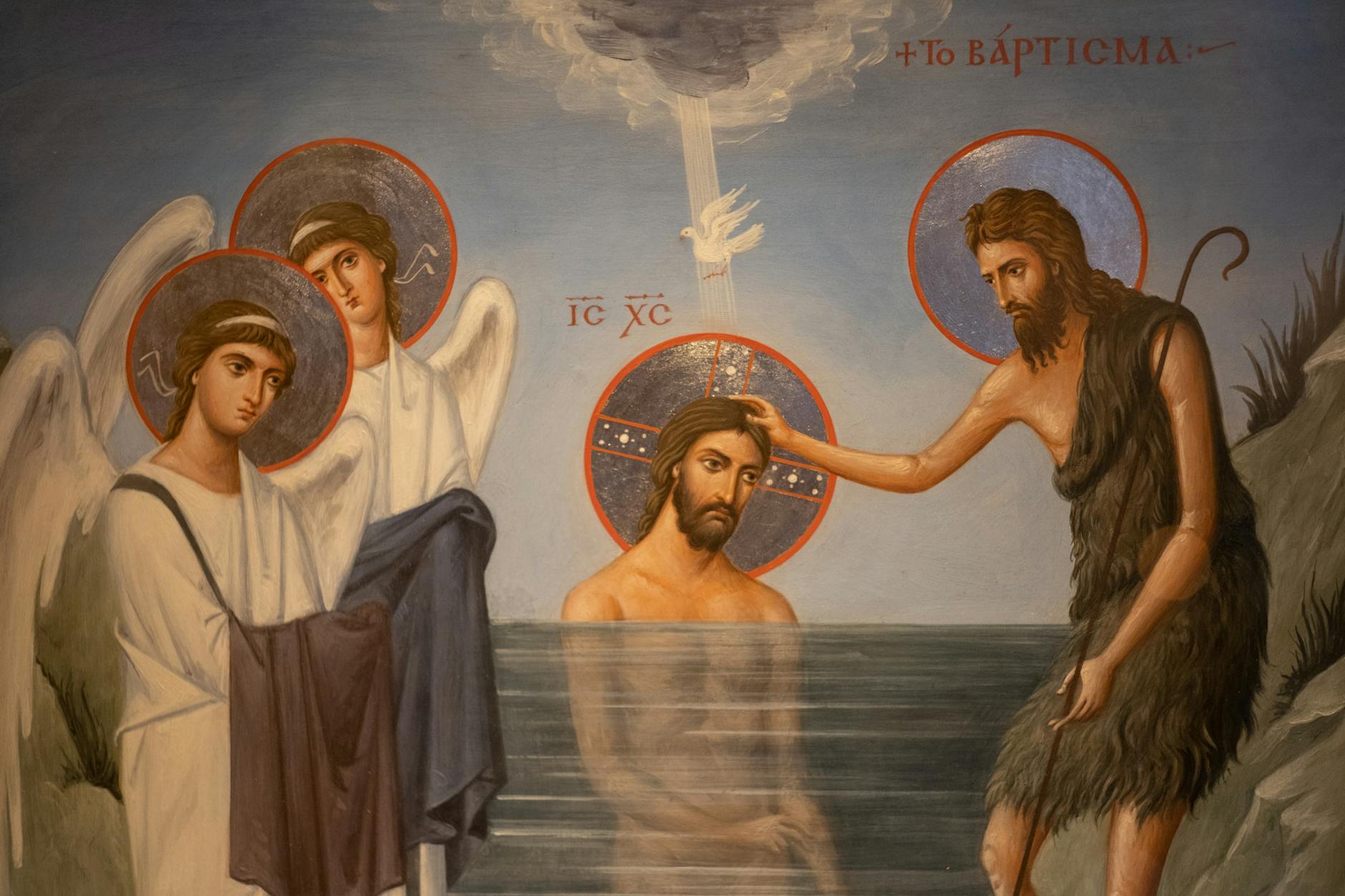

Photo by Ron Lach on Pexels.com

Blind

Sabbath Day Thoughts – Mark 10:46-52

The girl was so wild that they kept her in a cage.  She bit and scratched, screamed and spit.  They didn’t know what was wrong with her, but the Tewksbury State Poorhouse was the end of the line for the orphaned and the indigent.  There was no place else to send her.  She was eight-years-old.  Her mother had died of tuberculosis.  Her father, overwhelmed and unable to cope, had surrendered her and younger brother Jimmie to the state.  Jimmie had died within months of their arrival at Tewksbury.

If it hadn’t been for the kindness of an elderly maid, Annie might have stayed in the cage.  Seeing the little girl so cruelly confined, the older woman felt compassion.  It didn’t seem right that a child should live like that, even if she was disturbed.  The maid baked a little cake.  She left it outside the cage, just within Annie’s reach.  The suspicious child devoured the cake and a bond was forged between the little girl and the old woman.

With the calming influence of the maid, doctors examined Annie.  They learned that she suffered from trachoma, an eye disease that had left her almost totally blind.  All at once, Annie’s behavior made sense.  She was a terrified, grieving eight-year-old, unable to cope with the death of her mother, the abandonment of her father, and the loss of her brother.  The doctors treated Annie’s trachoma and operated on her eyes, restoring some of her vision.

We don’t know how Bartimaeus lost his vision.  Perhaps it was gradual, the world dissolving bit by bit into shadows and darkness.  Perhaps it was all at once – a blow to the head or a workplace accident that robbed him instantly of his sight.  We don’t know how long Bartimaeus had sat roadside, earning his living in the only way left to a first century blind man: wrapped in his cloak and begging, depending upon the kindness of neighbors who might share a few alms.

We do know that Bartimaeus had heard of Jesus.  Maybe, one day a leper had come through the Jericho gates, boasting of the healing he had known at the hands of the Lord.  Perhaps disciples, who had once followed John the Baptist, had hurried past Bartimaeus on their way to Galilee, whispering that the Messiah had come at last.  One day, news had come to Bartimaeus that Jesus had healed a blind man in Bethsaida.  Jesus had spat into his hands, rubbed the blind man’s eyes, prayed powerfully, and the man had then seen everything clearly.

As the Passover drew near, a rumor came to Bartimaeus from pilgrims traveling down the Jordan Valley.  Jesus was coming to Jericho.  Jesus and his followers were going up to Jerusalem for the Passover.  From his seat on the Jericho Road, Bartimaeus, who had long ago given up hope, began to imagine that his life could change if only Jesus would pass by.

We tend not to see them until they trouble us.  Dressed all in black with big boots and a leather jacket, she shouts obscenities into her phone non-stop while her dog poops on our front lawn. 

In Kinney Drug—or was that Stewarts, he stands in front of us in his grimy jeans with a mask pulled down below his nose.  We look at our watch while he buys about a billion lottery tickets and some smokes. 

She hasn’t left her house in years.  Her son brings her the essentials and Meals-on-Wheels makes weekday deliveries.  I hear she has cats—lots.  Sometimes you see her scowling from the porch, turning away when you say, “Hi.”

He squats in a doorway with unkempt hair and a wild beard.  He’s always having an argument in a garbled voice with someone who isn’t there.  They’re everywhere.

She might have been legally blind, but Annie could see that the Tewksbury State Poorhouse was a one-way ticket to a life of poverty and misery.  Occasionally, children left.  Those who showed promising intelligence were sent away to school, but Annie was legally blind.  Where was the promise in that?  When the State Board of Charities sent a commission to investigate the awful conditions of the poorhouse, Annie saw her chance.  She told the commission that she wanted to go to school.

As an illiterate fourteen-year-old, Annie was sent to the Perkins Institution for the Blind in Boston.  There Annie found that her struggles would be greater than her visual impairment.  Institutionalized from the age of eight, Annie lacked social skills, table manners, and appropriate hygiene.  She alienated her fellow students, and her quick temper put her at odds with her teachers.  Despite her difficulties, Annie was tremendously bright and hard working.  She put her prodigious gifts to work and excelled.  Six years later in 1887, Annie took top honors as valedictorian upon graduation from the Perkins Institute.

When Jesus and his friends passed Bartimaeus on the Jericho Road, the blind man knew that this was his big shot.  Jesus was going up to Jerusalem, and odds were good that he wasn’t coming back.  If healing was going to happen, it had to be now.  So, Bartimaeus began to shout, “Jesus, Son of David, have mercy on me!  Hey, you!  Jesus, Son of David, have mercy on me!” 

Bartimaeus made the biggest scene imaginable.  It was embarrassing.  The neighbors told him to pipe down, but the more they told him to stop, the more he yelled.  Folks began to look away.  They turned to one another and shook their heads and shrugged their shoulders as if to say, “Can you believe this, guy?”  If the neighbors had had their way, Jesus wouldn’t have stopped.  Instead, the good people of Jericho would have cheered Jesus on and sent him up to the Holy City where meaningful and important things were surely waiting.

We don’t know if it was the “Hey, you!” or the “Son of David” or the “Have mercy on me,” but I’m sure everyone was surprised when Jesus stopped.  As Jesus called Bartimaeus over, the neighbors, who had been so anxious to silence Bartimaeus, had a change of heart.  Suddenly, they were all help and smiles.  “He’s calling you!  ‘Atta boy!  Get up there!”  For his part, the blind man was so confident of his impending healing that he leapt up and left behind the tools of his trade.  His cloak and begging bowl were forgotten on the roadside.

One day, we suddenly knew we were blind.  We were volunteering at the Food Pantry when she came in with her dog in a stroller.  We cried when we heard that her folks had put her out and her dog was sick and she couldn’t afford the vet bills. 

One day, we had a flat tire and he pulled over to help us.  He got out of his rusted-out pick-up, followed by the miasma of cigarette smoke and unwashed hair.  While he helped change the tire, he told us how his grandparents raised him after his Dad ran out, and he never really learned to read, and he does odd jobs to make ends meet, and that’s ok.

One day, we saw the police and paramedics go in after the ambulance arrived without any siren.  Later, we saw the stretcher come out with its quiet, shrouded contents.  The EMTs talked to the cops while the cats cried piteously.  Last spring, the house sold, but they say it was a nightmare to clean out.

One day, we read an article in the paper about mental illness. and we realized how impossible it is to find decent care for big-time disorders in the North Country.  Folks just flail until they become a danger to themselves and others and the police get involved, which may get them off the streets for a couple of weeks, but healing never happens.

One day, we opened our eyes.  One day, we knew that we had been blind to the hidden world of need all around us.

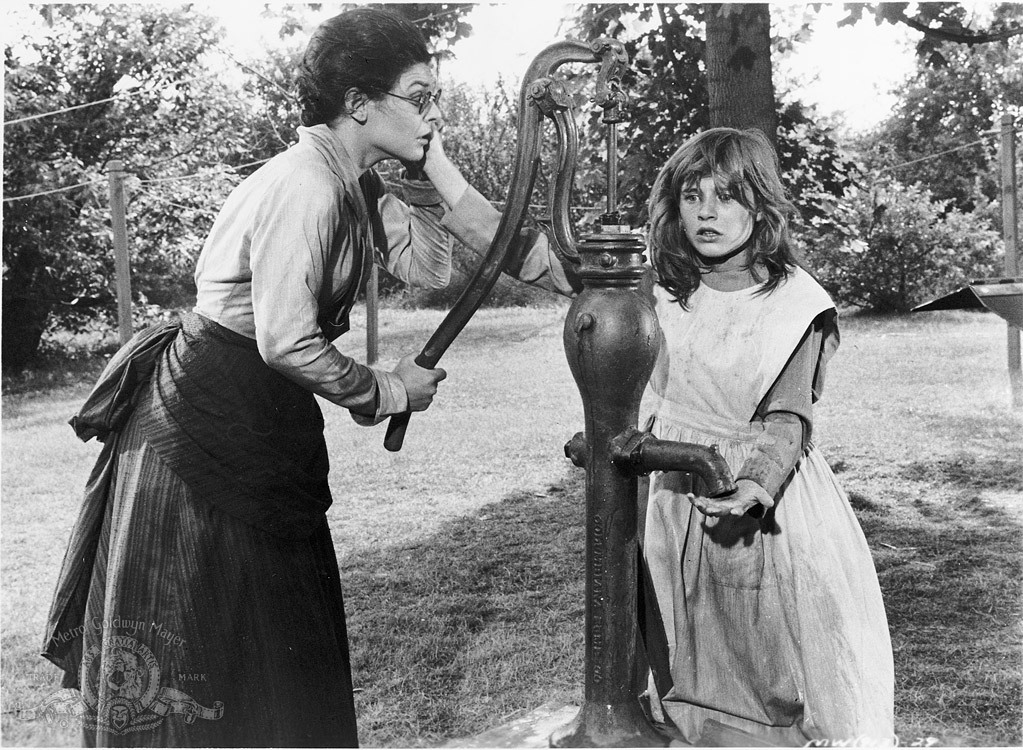
The head of the Perkins School helped Annie find a job after graduation.  The Keller family of Tuscumbia, Alabama had written, looking for a governess who could help with their daughter Helen.  A high fever at the age of eighteen months had robbed Helen of both vision and hearing.  Helen was every bit as wild as Annie herself had once been.  No one knew how reach the child, how to help her communicate with the outside world.  Annie Sullivan went to Tuscumbia.  With patience and persistence, she taught Helen Keller.  Most of us may remember the powerful scene in the award-winning play and film The Miracle Worker when Annie signed “water” into Helen’s left hand while holding Helen’s right hand beneath the bright, wet flow gushing from a hand pump.  Suddenly, a light turned on and Helen Keller, who would never see, finally saw what Annie was doing, and the world opened up for her.

We don’t know how Bartimaeus’ eyesight returned.  It could have taken a few minutes, like a darkened theatre that slowly brightens as the audience rises to leave.  It could have come back all at once—a bright, mind-blowing flash of sun and sky, landscape and people.  It could have started with a bright point of light that grew until the whole world was illuminated like a kaleidoscope shining all about.  Afterward, Bartimaeus, who was no longer blind, saw everything clearly.  So clearly in fact, that when Jesus told him to “go,” he knew he had to come.  He knew he had to follow Jesus, even if suffering and death awaited them in Jerusalem.

Maybe someday we’ll see what Jesus saw all those years ago on the Jericho Road.  Maybe someday we’ll know what Annie Sullivan knew when she walked into the Keller home in Tuscumbia, Alabama.  A hidden world of need is all around us—all the time.  We can be blind, or we can choose to make a healing difference.  Can we see? Jesus, Son of David, have mercy on us.  Amen.


Resources

Jarvis, Cynthia. “Pastoral Perspective on Mark 10:46-52” in Feasting on the Word, Year B, vol. 4. Louisville: Westminster John Knox Press, 2009.

Galloway, Lincoln E. “Homiletical Perspective on Mark 10:46-52” in Feasting on the Word, Year B, vol. 4. Louisville: Westminster John Knox Press, 2009.

–. “The Story of Helen Keller & Anne Sullivan” in The Helen Keller Society.  Accessed online at http://helenkeller.org.za/HK1/index.php/about-us/the-miracle-and-miracle-worker

Biography.com editors. “Anne Sullivan Biography” in Biography, April 2, 2014.  Accessed online at https://www.biography.com/activist/anne-sullivan


See the source image
Anne Bancroft and Patty Duke in The Miracle Worker (1962) from Metro Goldwyn Mayer. Image accessed online at https://www.imdb.com/title/tt0056241/mediaviewer/rm4062820864/