Sabbath Day Thoughts — “A Hopeful Beginning” Luke 19:28-40
On Ash Wednesday, more than 300 prominent Christian leaders, including Presbyterians, released “A Call to Christians in a Crisis of Faith and Democracy.” It’s a boldly worded statement that characterizes this moment in history as a time of spiritual crisis in which we must affirm what we believe and whom we will serve. They are concerned about the conflation of church and state, the rise in racism, the targeting of immigrants, and the erosion of constitutional rights.
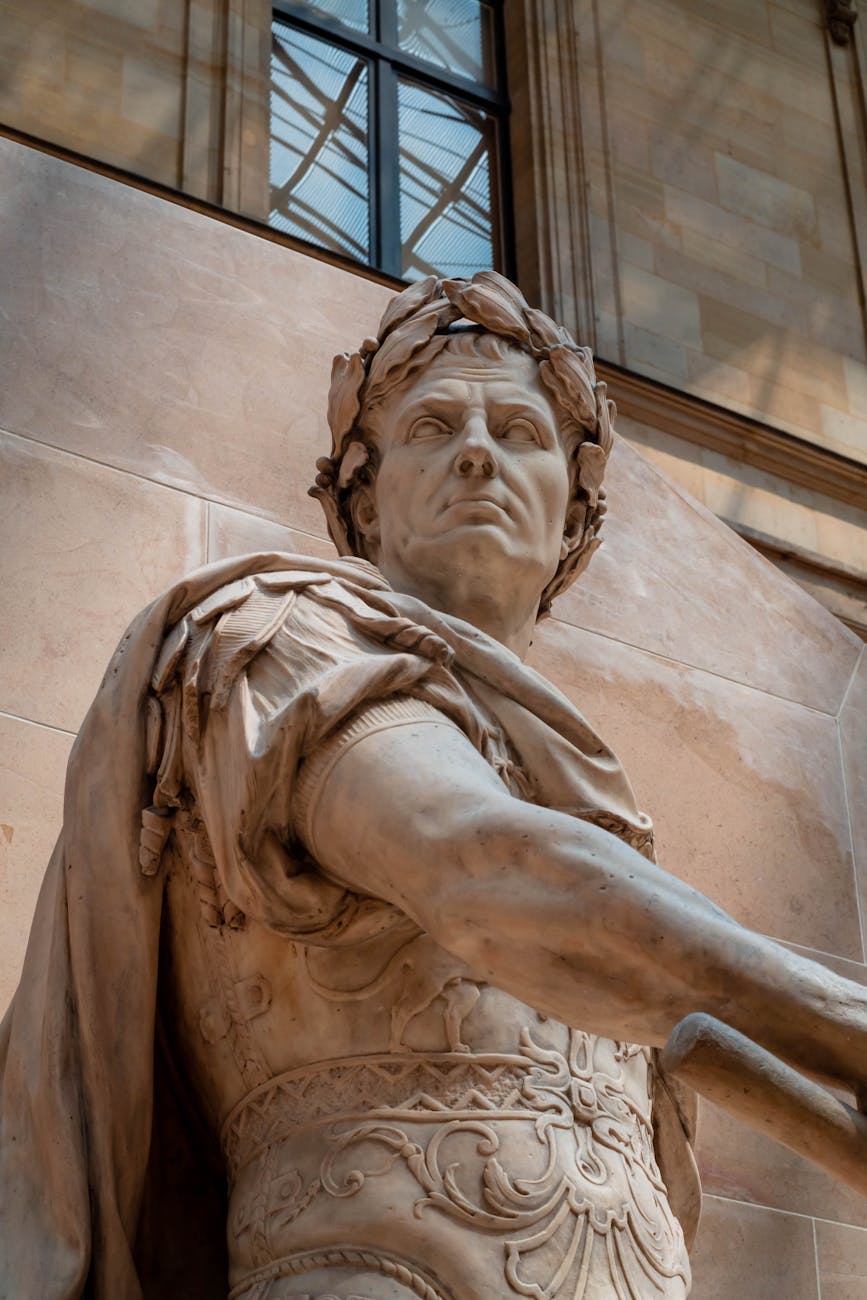
The Call to Christians insists that our allegiance as followers of Jesus must be to God—above any earthly kingdom or principality. It confronts the heretical beliefs of white Christian nationalism—the belief that America is a nation intended only for white Christians, whose beliefs and practices must be privileged. Instead, the statement asserts that the teachings of Jesus summon us to love all our neighbors and see in them the image of God. “As Christians,” the call reads, “We must never preach nationalism as discipleship, confuse American and Christian identities with whiteness, or mistake allegiance to modern-day Caesars for faithfulness to Christ.”
The “Call to Christians in a Crisis of Faith and Democracy” was not headline news on Wednesday. Top billing went to the movement of US military resources to the Middle East, and the Epstein files, and The Board of Peace and its plans for Gaza, and the President’s contention that he is not a racist, just ask Mike Tyson. Undoubtedly, some will embrace the call and feel it is about time that mainline faith leaders spoke up. Others will reject the call as a showy political act made by insignificant churches of declining influence. For those bold leaders, though, it was a clarifying statement in a time when there are harshly diverging beliefs about what it means to be Christian and how we are to relate to both empire and neighbor, especially our most vulnerable neighbors.
Our gospel reading today typically concludes the season of Lent, but this year, it gets our Lent started as I consider in the coming Sundays Jesus’ final week in Jerusalem. Often called the “Triumphal Entry” the Palm Sunday story usually starts Holy Week. It reflects tensions about what it means to be a person of faith and how we are to relate to earthly regimes and powerful institutions.
That first Palm Sunday was a collision of two kingdoms. The Passover Festival brought pilgrims from across Israel and around the empire to Jerusalem to remember God’s long-ago deliverance from bondage in Egypt. It was a time when Messianic expectations ran high. After all, if God could raise up Moses to lead the people to freedom, then even now God could be raising up a leader to face Rome head on and shape a changed future for the people. For the Romans, Passover was an inconvenience, a time to be on guard, prepared to quash any hint of rebellion.
In their book The Last Week: A Day-by-Day Account of Jesus’s Final Week in Jerusalem, New Testament scholars J.D. Crossan and Marcus Borg teach that Jesus’s Palm Sunday processional wasn’t the only parade that Sunday. The Roman procurator Pontius Pilate was on the road that day, too. Pilate and his followers streamed into the city from the east as Jesus and his followers came from the west. As he did each year at the Passover, Pilate left his seaside base in Caesarea Maritima and marched to Jerusalem to ensure peace.
Pilate was there at the behest of the emperor. He rode a war horse, decked out in royal livery. He was flanked by imperial standards that whipped and snapped in the wind. He led a legion of Roman soldiers, the finest fighting force in the world. Bright helmets glinted in the sun. Hobnailed sandals marched in cadence. Shields were strapped to left arms while swords hung from every belt. The message of Pilate’s parade was clear. Caesar ruled and there would be no resistance.
Jesus’ parade was different. His faith had called him to Jerusalem, even though he knew his entry to the Holy City would put him in peril. He came to fulfil the requirements of righteousness: to remember and give thanks for God’s Passover miracle. Instead of a war horse, Jesus rode a colt, the foal of a donkey, decked out in the homespun linen of a disciple’s robe. Instead of an army, Jesus was surrounded by peasants—farmers, fishermen, tradespeople, shopkeepers. Instead of the sound of marching feet and shouted commands, there was the singing of ancient pilgrim songs and the sounds of joy. “Blessed is the king who comes in the name of the Lord! Peace in heaven and glory in the highest!” Instead of an homage to Caesar, this was a celebration of another Kingdom, God’s Kingdom.
In Caesar’s kingdom, dominion was established through military conquest. A privileged few benefited at the expense of the many. Power was ensured with brute force, occupation, and crucifixion. In Caesar’s Kingdom, peace was achieved at any price—with widespread fear and deadly violence.
Jesus taught that God’s Kingdom, the Kingdom that he served, was always all around us, growing quietly in the midst of the world’s sorrow and celebration. His every action proclaimed that Kingdom. God’s Kingdom is revealed when hungry neighbors are fed, outsiders are accepted and welcomed, healing is available for all, and sinners find forgiveness. Peace is achieved when the other cheek is turned, enemies are loved, and the path of non-violence is chosen, even at great personal cost.
Two kingdoms collided on that first Palm Sunday. Those kingdoms would continue to be in terrible tension throughout that final week of Jesus’ earthly ministry. It was a hopeful beginning as pilgrims sang and proclaimed Jesus their messianic king. Yet that week would have a terrible end as Jesus hung upon a cross, murdered by the state, taunted by crowds who once sang his praises, shamed with the sign “King of the Jews.”
Two kingdoms stand in tension, just ask those 300 faith leaders who signed on to the “Call to Christians in a Crisis of Faith and Democracy.” It is tempting to serve the empire. Who doesn’t want to call the shots? Who doesn’t want power? Who wouldn’t like to silence their enemies? Who isn’t tempted by the big promises of lasting peace and prosperity. Does it really matter if the price of peace is the exploitation of the vulnerable, the exclusion of the stranger, the acceptance of the status quo, the death of the innocent? Does it truly matter if the super wealthy get even wealthier while others languish in generational poverty? The siren-song of the empire can be hard to resist, especially when the price of opposition may cost you everything, even your life.
The way of God’s Kingdom is hard, my friends. Jesus knew that. Retired Presbyterian minister David Bales argues that Jesus would never get elected today. Who would vote for someone who pronounced woes on the rich and expects us to love our enemies? Who would follow someone who believed power and resources should be freely shared, even with the powerless? It is hard to accept a king who willingly suffers and serves. It is very hard to follow a king who expects us to do the same. The way of God’s Kingdom is hard, indeed.
Caesar’s Kingdom can leave us feeling hopeless and paralyzed, my friends. We stop following the Way of Jesus and we fail to resist the siren call of the empire because we fear that we make no difference. Prof. Insook Lee of New York Theological Seminary reminds us that a handful of well-intended people can create life-saving change. She tells the Legend of the Hundredth Monkey. Researchers used 10,000 monkeys to repopulate a remote island that had been used for nuclear testing. Everything seemed to be safe on the island, but coconut husks still bore traces of radioactivity. The scientists taught ten monkeys to wash their coconuts in a stream of fresh water and then released them on the island. Soon twelve monkeys were washing their coconuts, then twenty monkeys, next forty-seven. Something surprising happened. When the hundredth monkey began to wash his coconut, all ten thousand started washing their coconuts. That healthy intervention of washing coconuts proved to be infectious. The Kingdom that Jesus heralded can come. All we need are ten faithful people or 300 concerned clergy to call for change and believe it is possible.
In the coming weeks of Lent, we will follow Jesus through his final week in Jerusalem. He’ll be making his case for the Kingdom of God, even as the powers of Temple and empire conspire to bring him down. May we have ears to hear and the courage to take action. May we choose to serve Christ’s Kingdom.
Resources
“A Call to Christians in a Crisis of Faith and Democracy,” Feb. 18, 2026. Accessed online at https://acalltochristians.org/
Jim Wallis. “Faith and Freedom” in God’s Politics with Jim Wallis, Feb. 18, 2026. Accessed online at https://jimwallis.substack.com/p/faith-and-freedom
Eric Barreto. “Commentary on Luke 19:28-40” in Preaching This Week, Jan. 22, 2026. Accessed online at https://www.workingpreacher.org/preaching-series/sermon-series-jesuss-triumphal-entry-lukes-version
Insook Lee. “Pastoral Perspective on Luke 19:28-40” in Feasting on the Gospels, Luke, vol. 2. WJKP: Louisville, 2014.
David Bales. “Homiletical Perspective on Luke 19:28-40” in Feasting on the Gospels, Luke, vol. 2. WJKP: Louisville, 2014.
Matt Skinner. “Walking the Palm Sunday Path: A Lenten Sermon Series for 2026” in Preaching Series, January 21, 2026. Accessed online at https://www.workingpreacher.org/preaching-series/walking-the-palm-sunday-path-in-lent-a-sermon-series-for-2026
Luke 19:28-40
28 After Jesus had said this, he went on ahead, going up to Jerusalem. 29 As he approached Bethphage and Bethany at the hill called the Mount of Olives, he sent two of his disciples, saying to them, 30 “Go to the village ahead of you, and as you enter it, you will find a colt tied there, which no one has ever ridden. Untie it and bring it here. 31 If anyone asks you, ‘Why are you untying it?’ say, ‘The Lord needs it.’”
32 Those who were sent ahead went and found it just as he had told them. 33 As they were untying the colt, its owners asked them, “Why are you untying the colt?”
34 They replied, “The Lord needs it.”
35 They brought it to Jesus, threw their cloaks on the colt and put Jesus on it. 36 As he went along, people spread their cloaks on the road.
37 When he came near the place where the road goes down the Mount of Olives, the whole crowd of disciples began joyfully to praise God in loud voices for all the miracles they had seen:
38 “Blessed is the king who comes in the name of the Lord!”
“Peace in heaven and glory in the highest!”
39 Some of the Pharisees in the crowd said to Jesus, “Teacher, rebuke your disciples!”
40 “I tell you,” he replied, “if they keep quiet, the stones will cry out.”


 Joann White