Lazarus, Then and Now

Sabbath Day Thoughts — “Lazareth, Then and Now” Luke 16:19-31

Imagine Saranac Lake on July 25, 1890 when an organizing service of worship took place right here, the sanctuary so new that it lacked windows and seats. Rough wooden benches held worshipers, and hymns were sung a cappella, the sounds of Presbyterian harmonies gently drifting across the village. Church Street was unpaved, the street alternately dusty or muddy, dotted with riders and horse-drawn wagons. The village’s ten-block commercial district was two years away from its first phase of construction. The surrounding hills of Pisgah, Dewey, and Baker were clear cut, the trees sent down the Hudson to build New York City. Helen Hill was a grassy knoll called the Sheep Meadow, but it would soon undergo a residential building boom. The local population had swelled to 1,582 permanent residents, tripling in size over the past few years. In the next decade, it would quadruple.

Everywhere, the sounds of construction rang out. That summer, the Adirondack Cottage Sanitarium built three cure cottages and a large open-air amusement pavilion. Local residents were adding additions to their homes, tacking on porches, and taking in borders. New homes were rented at a premium that enabled owners to pay off their building debt within two years. With our short Adirondack building season, even Sunday mornings would have been punctuated by the sounds of hammers and saws, workman’s shouts and teams of horses hauling wagons.

We were booming, thanks to the “White Plague” of tuberculosis.  The crowded living conditions, poor air quality, and squalid poverty of American cities were a breeding ground for the disease. In those days before antibiotics, a tuberculosis diagnosis felt like a death sentence. It started with coughing, night sweats, fever, weight loss, and bloody sputum.  It progressed to organ failure and death. By 1907, 400 Americans were dying of tuberculosis every day. Dr. E.L. Trudeau spurred the hopes of patients everywhere that a miracle cure had been found in Saranac Lake when he publicized that the cold air, rest, good food, and leisure of the Adirondacks had put his TB into remission. Hurting people from across the nation and around the world, desperate for healing, rode the new railroad to the village looking for renewed health. These TB patients, desperate, sick, and far from home, would have been among the most isolated and vulnerable people that we could possibly imagine.

In our reading from Luke’s gospel, Jesus told a story about a rich man and the desperately ill neighbor who languished at his gate. Jesus used the Greek word plousios to describe the rich man, meaning a wealthy landowner who did not labor for a living. He lived large, clotheded in royal purple and fine linen, feasting on sumptuous food, and hosting lavish parties. Jesus described the sick man, Lazarus, with the Greek word ptoxos, meaning the abject poor, a homeless beggar without the support of property, friends, or family. He was so weakened that he couldn’t even shoo away the dogs drawn to his festering wounds. Although they were neighbors, the rich man didn’t seem to see Lazarus, while the sick man dreamt of eating the crumbs that fell from his rich neighbor’s table. Jesus painted a stark and uncomfortable picture of the extremes of our human condition.

According to Jesus’ parable, death brought a great reversal. Lazarus, who suffered so in life, found a privileged position in death, seated by the Patriarch Abraham at the heavenly banquet. The rich man, on the other hand, was in Hades, tormented by flames and an unquenchable thirst. It comes as a surprise to hear that the rich man not only knew Lazarus, he also felt he could order him around: come and relieve my thirst with a glass of cold water; go and tell my brothers to change their ways. We can imagine the shock that the rich man felt when he learned that his indifference to the suffering of his neighbor, his flagrant disregard for the requirements of scripture, had built a great chasm, not only between himself and Lazarus, but also between himself and God.

When our seventeen original members signed their names to the church’s brand-new, leather-bound session ledger on July 25, 1890, they made a bold commitment to love and worship God right here. They also made a sincere commitment to their vulnerable neighbors whom they knew to be at their gate. Jane “Jennie” Conklin came to Saranac Lake from Rochester in the spring of 1890 with her husband John as he sought the cold air cure for tuberculosis. By year’s end, John was dead, leaving Jennie with three young children and a small sum that she used to build the Conklin Cottage at the corner of Main and Church Streets. There she tended patients in need of compassion and care, much as she had tended her husband. Likewise, the Podmore and Lattrell families, who were also among our founding members, were proprietors of cure cottages.

By 1893, the church had created what was known as the Fellowship Fund, which benefited neighbors in need through personal pledges. Poor boxes to receive donations for the relief of the “sick poor” were installed inside the church door. The church welcomed tubercular patients that never entered this sanctuary and certainly never made a pledge to the church, like Miss Fletcher, who was received into the membership of the church by two elders, dispatched to her bedside at the O’Malley Cottage. Our third pastor, the Rev. Armitage Beardsley, came to us in 1895 fresh from seminary. He saw the sanitoriums and cure cottages of the village as his mission field. He soon contracted TB, and by September 1897 was so ill that he was forced to resign. His touching letter of farewell is pasted into the session minutes of the time. News of his death followed within weeks.

Without question, our most dedicated advocate of the “sick poor” was Rev. Hiram Lyon, who served the church from 1927 to 1937. He came to Saranac Lake in 1925 in need of the cold air cure, following his graduation from Union Seminary in New York City. When our pastor Rev. George Kennedy Newell died of pneumonia shortly before Christmas in 1926, the church looked to young Hiram to fill the pulpit. Afraid that his newfound health wouldn’t last, he agreed to serve for a one-year trial period, and against all odds, he thrived. Hiram believed that God had placed this congregation in a unique position to care for vulnerable neighbors with tuberculosis. He cast the vision for the church to hire a Parish Visitor, who would travel to cure cottages, sanitoriums, and local hospitals to bring patients hope, cheer, and the love of Christ.  In October 1928, the job went to Miss Christine Burdick a recent graduate of the Boston University School of Religious Education and Social Service. Christine made as many as 2,000 visits in a year, offering compassionate listening, caring presence, and fervent prayers. Walls of loneliness, isolation, and fear came tumbling down as Christine shared the love of Christ with neighbors who must have felt every bit as vulnerable as Lazarus at the gate.

Jesus’ parable of the rich man and his desperate neighbor is a story about a failure to love. The rich man failed to love God with all his heart and mind and soul and strength. He also failed to love his neighbors as himself. The rich man saw Lazarus as a blight on his landscape, not as a brother, a fellow child of Abraham, deserving of love and compassion, mercy and care. It never occurred to the rich man that his abundance was a gift from God, meant to be shared for the common good and the particular care of his vulnerable neighbor. Today as we commemorate our anniversary, we celebrate our ancestors in the faith, those saints who gathered on Sunday mornings to express their heartfelt love for God and then went forth into the week to love their neighbors, especially the most vulnerable ones.

Today, we are called to claim that legacy for ourselves. We honor Jane Conklin and Armitage Beardsley, Hiram Lyon and Christine Burdick when we dare to go forth and do likewise, expressing our love for God with our worship and music, and opening our hearts and hands to care for those who need it most.

I want to wrap up my message by naming some of the ways that we bless neighbors in times of vulnerability. Now, if you have ever participated in any of these ministries or perhaps been blessed by these ministries, let me know with an “Uh-huh,” an “Amen,” or perhaps a clap offering. Ready?

We knit prayer shawls, lap robes, and baby blankets to bless those in need of blessing.

We give generously to our Deacons Fund, to help neighbors pay rent or make car repairs, cover medical bills or make essential purchases.

We visit folks who are hospitalized, homebound, or live at Will Rogers and Elderwood, sharing love and communion.

We cook delicious meals and deliver them to those who are bouncing back from surgery, illness, or grief.

We grow beautiful produce to feed our Food Pantry friends, and we bring in paper goods for neighbors at Grace Pantry.

We raise funds and awareness about hunger in the CROP Walk.

We partner with our ecumenical friends to house the homeless and help them transition to independent living.

We pray our hearts out on the prayer chain.

We love and welcome immigrants and refugees.

I could say more, but brunch is waiting. Thank you to those bold seventeen original members who launched this great endeavor to love. Thank you to all of you, who so boldly claim that legacy with care and compassion, near and far. Lazarus is at the gate, my friends. May we go forth to love.


Luke 16:19-31

19 “There was a rich man who was dressed in purple and fine linen and who feasted sumptuously every day. 20 And at his gate lay a poor man named Lazarus, covered with sores, 21 who longed to satisfy his hunger with what fell from the rich man’s table; even the dogs would come and lick his sores. 22 The poor man died and was carried away by the angels to be with Abraham. The rich man also died and was buried. 23 In Hades, where he was being tormented, he lifted up his eyes and saw Abraham far away with Lazarus by his side. 24 He called out, ‘Father Abraham, have mercy on me, and send Lazarus to dip the tip of his finger in water and cool my tongue, for I am in agony in these flames.’ 25 But Abraham said, ‘Child, remember that during your lifetime you received your good things and Lazarus in like manner evil things, but now he is comforted here, and you are in agony. 26 Besides all this, between you and us a great chasm has been fixed, so that those who might want to pass from here to you cannot do so, and no one can cross from there to us.’ 27 He said, ‘Then I beg you, father, to send him to my father’s house— 28 for I have five brothers—that he may warn them, so that they will not also come into this place of torment.’ 29 Abraham replied, ‘They have Moses and the prophets; they should listen to them.’ 30 He said, ‘No, father Abraham, but if someone from the dead goes to them, they will repent.’ 31 He said to him, ‘If they do not listen to Moses and the prophets, neither will they be convinced even if someone rises from the dead.’ ”


First Presbyterian Church of Saranac Lake

Limitless Compassion

Sabbath Day Thoughts — “Limitless Compassion” Luke 13:10-17

Jimmy has spent most of his life feeling invisible. Born with developmental disability and a host of physical issues, he spent most of his childhood in foster care. He attended school, riding in a special bus and learning in special classrooms. Other kids called him names: retard, freak, spazz, dumbo. Nowadays, Jimmy is largely ignored as he stands outside his group home to watch the cars drive past. Eyes look past him as if he isn’t even there.

Heather feels invisible. Every day at lunch she sits in the corner of the cafeteria by herself. She wears outdated hand-me-downs and packs her lunch in a re-used brown paper bag. In gym class, no one picks her for their team. When it’s time for group projects, no one wants to work with her. She sees cliques of friends laughing in the hallways and wishes she were part of that. Eyes look past or around her as if she isn’t even there.

Bert and Jean feel invisible. They had been retired for a number of years when the pandemic forced them to also step back from their civic commitments. Their phone used to ring off the hook. But now, not so much. Many of their friends have passed on. Their kids and grandkids are just so busy. Some weeks, the Meals on Wheels driver is their only conversation partner. They don’t get out much, but when they do, eyes look past or around them as if they aren’t even there.

The world is filled with neighbors who feel alienated, invisible, and alone. You might think that would awaken a mass wave of empathetic outreach, but it doesn’t. Social scientists say our disregard for vulnerable others is a psychological phenomenon known as “compassion collapse.” Dr. Caryl Cameron, director of the Empathy and Moral Psychology Lab at Penn State University, writes that “People tend to feel and act less compassionately for multiple suffering victims than for a single suffering victim…. Precisely when it seems to be needed the most, compassion is felt the least.”

There are reasons for that. We are finite beings with limited resources. We may feel that our action (or inaction) doesn’t make a difference, so we withdraw. Or, we sometimes don’t get involved to protect ourselves. In the face of widespread tragedy and need, it becomes crushing to take on the pain of others. We grow numb and feel powerless.

The bent over woman was invisible to her neighbors. She had felt alone and unseen for eighteen years. In the world of the first century, she was a marginalized person—someone who lived outside the community of the righteous because she was physically deformed, spirit-possessed, and a woman. Anyone who has ever had a bad back can imagine the terrible discomfort that she must have felt: muscle spasms; neck pain; difficulty in rising, standing, or walking; the inability to look up and out at the world around her. At some point in her long years of suffering, compassion collapse kicked in for her community. She stopped being a neighbor and simply become the “bent over woman.” She would not have been seated in church on the day that Jesus preached. Instead, she would have been excluded, waiting at the entrance, hoping that someone would see her and speak a kind word into her life of suffering.

Only one person in the synagogue saw the bent over woman. It was Jesus. As only Jesus could, he instantly knew her suffering and need, and his heart went out to her with a limitless compassion that stretched the bounds of what was socially and religiously acceptable in his day. Carolyn Sharp, who teaches Hebrew Bible at Yale, notes that what one could or couldn’t do on the sabbath day was hotly contested in the first century. In fact, the Mishnah Shabbat, a collection of rabbinic teachings, forbade 39 different kinds of labor on the sabbath: sowing fields, baking, building, traveling, and more. It did not forbid healing. In fact, rabbis generally agreed that in life threatening situations, it was acceptable to heal. The rabbis divided, though, over whether healing for non-critical conditions, like being bent over, was permitted.

That’s a long walk to say that Jesus saw the woman and chose to act in controversial, even scandalous, ways. First, he invited her into the sanctuary, into the community of the righteous—to the Moses Seat—where he had been teaching. Then, Jesus did something even more provocative. He laid his hands on her bent over back and raised her up straight, freeing her from the disability that had long held her in bondage. Jesus next concluded his sermon for the day with an interpretation of scripture that silenced the critics. If God would permit a farmer to unbind, water, and feed livestock on the sabbath day, then surely it was permitted to free a woman from the spirit that had long bound her. Jesus gave the bent over woman a proper name, “Daughter of Abraham,” a sister to all the worshipers that day.

The world is filled with invisible people. Like Jimmy, they live with disability. Like Heather, they are friendless school-aged kids. Like Bert and Jean, they are elderly and alone. They are the non-English speaking workers who clean our hotel rooms or pick our crops. They are the economically challenged neighbors who frequent the Food Pantry or collect the empty cans and bottles after rugby weekend. They’d like to be seen, but eyes look past or around them as if they aren’t even there.

Jesus’ scandalous actions in a crowded synagogue one sabbath morning call us to see our invisible neighbors, to welcome them into the heart of the community, to make a caring and healing difference in their lives. Thomas Merton wrote that compassion is the keen awareness of the interdependence of all things. We cannot find wholeness—shalom—apart from community, and communities cannot be whole until the outsider, the excluded, and the marginalized are welcomed, accepted, valued, and included. In a world where some characterize compassion and empathy as weakness, today’s teaching from Jesus is a bold contradiction and a call to action.

Of course, there’s only one problem: compassion collapse. In a world where need can be ubiquitous, our compassion can be overwhelmed. We say, what can one person do in the face of such large-scale pain? We grow numb. We close our eyes. People become invisible. What are we to do?

Peter W. Marty, editor of the Christian Century, says that he builds compassion for those who live in difficult circumstances through the simple practice of imagining what it’s like to walk in their shoes. He does this when he encounters people in daily life who perform jobs that he’s not sure he could manage or tolerate for even a day. Whether it’s an individual enduring dangerous work conditions, tedious assignments, a hostile environment, or depressingly low wages, Marty tries to picture trading his life for theirs. It quickly his alters perspective and shifts his assumptions about how easy or hard life can be for those who undertake hazardous or dispiriting work that often goes unnoticed, work for which we typically feel indifference.

Researchers David DeSteno and Daniel Lim have conducted research to learn how we can have more resilient compassion. Through a series of studies, Lim and DeSteno identified a few factors that enliven our compassion and enhance our capacity to act. It begins with the belief that small steps can make a difference. We can’t solve all the problems of the world, but we can make a simple difference in the life of someone who needs our encouragement and support. It also helps to remember our own experiences of adversity. Remembering our past challenges, suffering, or need motivates us to accompany others. Finally, our personal practice of prayer and meditation can help us to be present to those invisible neighbors. Taking the time to pray and reflect allows us to trust that our actions serve a holy purpose and God is with us. When we are clean out of compassion, we can borrow some of the limitless compassion of Jesus. The world may be filled with invisible people, but it doesn’t have to be. Jesus believes we can make a difference in the lives of those who feel that they are on the outside looking in, longing for care, connection, and community.  

This week, we’ll encounter them, those invisible neighbors. They’ll be sitting alone in Stewarts. They’ll be smoking outside their group home. They’ll be struggling to carry groceries to the car. They’ll fear they will miss that important doctor’s appointment because they don’t have a ride.

Let’s open our eyes and hearts. Take the time to see your invisible neighbor. Imagine what it’s like to walk in their shoes. Let’s remember our own experiences of adversity and isolation: that bitter break-up, the boss who bullied us, the health crisis we endured, the time we went broke. Let’s allow those suffering times to awaken our empathy for others and build our resolve to act. Undertake small compassionate acts and trust that they make a difference. Smile. Listen. Share a meal. Offer a ride. Bring someone to church. Finally, let’s ground our action in reflection and prayer. Remember Jesus, who healed a bent-over woman on the sabbath day and continues to long for the wholeness and redemption of our world.

Resources

Jared E. Alcantara. “Commentary on Luke 13:10-17” in Preaching This Week, August 24, 2025. Accessed online at https://www.workingpreacher.org/commentaries/revised-common-lectionary/ordinary-21-3/commentary-on-luke-1310-17-6

Jeannine K. Brown. “Commentary on Luke 13:10-17” in Preaching This Week, August 22, 2010. Accessed online at https://www.workingpreacher.org/commentaries/revised-common-lectionary/ordinary-21-3/commentary-on-luke-1310-17

Ira Brent Driggers. “Commentary on Luke 13:10-17” in Preaching This Week, August 25, 2019. Accessed online at https://www.workingpreacher.org/commentaries/revised-common-lectionary/ordinary-21-3/commentary-on-luke-1310-17-4

Annelise Jolley. “The Paradox of Our Collapsing Compassion” in John Templeton Foundation News, Nov. 20,2024. Accessed online at https://www.templeton.org/news/the-paradox-of-our-collapsing-compassion

Peter W. Marty. “A Failure of Compassion” in The Christian Century, June 2024. Accessed online at https://www.christiancentury.org/first-words/failure-compassion

Carolyn J. Sharp. “Commentary on Luke 13:10-17” in Preaching This Week, August 21, 2022. Accessed online at https://www.workingpreacher.org/commentaries/revised-common-lectionary/ordinary-21-3/commentary-on-luke-1310-17-5


Luke 13:10-17

10 Now he was teaching in one of the synagogues on the Sabbath. 11 And just then there appeared a woman with a spirit that had crippled her for eighteen years. She was bent over and was quite unable to stand up straight. 12 When Jesus saw her, he called her over and said, “Woman, you are set free from your ailment.” 13 When he laid his hands on her, immediately she stood up straight and began praising God. 14 But the leader of the synagogue, indignant because Jesus had cured on the Sabbath, kept saying to the crowd, “There are six days on which work ought to be done; come on those days and be cured and not on the Sabbath day.” 15 But the Lord answered him and said, “You hypocrites! Does not each of you on the Sabbath untie his ox or his donkey from the manger and lead it to water? 16 And ought not this woman, a daughter of Abraham whom Satan bound for eighteen long years, be set free from this bondage on the Sabbath day?” 17 When he said this, all his opponents were put to shame, and the entire crowd was rejoicing at all the wonderful things being done by him.


Photo by Chris F on Pexels.com

Blessing or Woe?

Sabbath Day Thoughts — “Blessing or Woe?” Luke 6:17-26

Wednesday afternoons are busy at Baldwin House. That’s when our neighbors with more month than money head to Grace Pantry. The pantry provides them with non-food necessities free of charge, items that we find essential that can’t be purchased with SNAP benefits. At Grace Pantry, new Moms pick up diapers and baby wipes. Other folks may need shampoo, toothpaste, or bath soap. Everyone needs toilet paper and paper towels. The volunteers at Grace Pantry report that both demand and costs have been on the rise, due to inflation, rent increases, and an economic recovery that hasn’t truly trickled down to the poor.

Two days a week, the Clint McCoy Feeding Center in Mzuzu, Malawi serves eighty local children a warm meal, meeting the nutritional need of kids who are malnourished. Lengthy droughts, followed by flooding rains, have caused food shortages in Malawi, and the AIDS epidemic has created a generation of orphans whose needs are too much for local villages. The feeding center provides a modest meal of fortified porridge and tea to youngsters who would otherwise not eat that day. As the meal is shared, the center rings with the laughter and joy of happy young voices. They sing songs, play simple games, and eat their fill.

Marge likes Tuesdays best because that’s the day her Meals on Wheels volunteer comes to visit. Marge isn’t hungry, but after her husband died, she stopped cooking. It’s a lot of work and it hardly seems worthwhile cooking for just one. Marge sits by the window alone and waits. She turns down the tv because she wants to be sure she hears the knock. A kind-hearted volunteer arrives with a big smile and takes time to share some sweet chitchat about the weather, family, and community news. When Marge tucks in to her dinner later, she is thankful for the food and even more so for her Meals on Wheels friend.

In our gospel lesson, Jesus descended the mountain and waded into the crowd that awaited him on the plain. There, he intentionally entered into the need and suffering of his world with healing and bold words of comfort. Jesus blessed the poor, hungry, grieving, and hated people of the community. In a first century world where affliction was typically attributed to sinfulness or a sign of affliction by God, Jesus’ words must have left the disciples scratching their heads. But for those who suffered, Jesus’ words were an assurance that God saw them, loved them, and longed for them to thrive.

If Jesus’ words of blessing stunned his followers, then his words of woe might have made them wonder what in the world Jesus was talking about. In those days, to be rich, filled with good things, joyful, and well-respected was a blessing not a woe. Your abundance and status were sure signs of a healthy relationship with God and a guarantee that you deserved every accolade that came your way. I suspect that we don’t like Jesus’ woes any more than his disciples did. After all, we may not be rich, but even the poorest people among us are comfortable and well-fed. We have plenty to laugh about. We can congratulate ourselves on our accomplishments and thank God for life’s sweetness. Where’s the harm in that?

In his paraphrase of the Bible, The Message, the late Rev. Dr. Eugene Peterson translated Jesus’ woes like this:

“It’s trouble ahead if you think you have it made. What you have is all you’ll ever get.

And it’s trouble ahead if you’re satisfied with yourself. Your self will not satisfy you for long.

And it’s trouble ahead if you think life’s all fun and games. There’s suffering to be met, and you’re going to meet it.

There’s trouble ahead when you live only for the approval of others, saying what flatters them, doing what indulges them. Popularity contests are not truth contests—look how many scoundrel preachers were approved by your ancestors! Your task is to be true, not popular.”

The trouble with our affluence, the trouble with our plenty, the trouble with our non-stop laughter, the trouble with our playing for the court of public opinion is that we can lose all perspective.  Instead of acknowledging our utter dependence upon God, we trust in our bank accounts, our stockpile of possessions, and all that good press we get. Woe to us when we believe money or things can solve all our problems.  Woe to us when we laugh while the world wails.  Woe to us when we find ourselves saying and doing unconscionable things to please the court of public opinion.

Historian and Bible scholar Justo Gonzalez read Jesus’ Sermon on the Plain and said, this is the “hard-hitting gospel.” This is the gospel that 2,000 years later still rings out as an urgent wake-up call. This is the gospel that makes us uncomfortable and calls us to change our ways if we wish to truly be part of God’s Kingdom. When Jesus comes to the plain, he levels with us, delivering a sucker punch that undermines everything that we think is right with the world.

Throughout his ministry, Jesus made the assurance of God’s love and presence a reality for those who were poor, hungry, grieving, and hated. From providing free healthcare to all comers to feeding the 5,000 with a marvelous multiplication of bread and fish, from restoring a widow’s only son to life to welcoming tax collectors, lepers, and demoniacs, Jesus was all about blessing the vulnerable people of his day. In those intentional actions, in that three-year object lesson of ministry, Jesus hoped that his disciples would begin to understand the beautiful topsy-turvy world that he longed to forge. Jesus believed we could make on earth a world that anticipates God’s Kingdom where blessing abounds for those who suffer and everybody is a neighbor, deserving of our care, time, love, and respect.

The disciples understood the values that Jesus hoped to impart in his blessings and woes. That’s why they chose to enter into the suffering of their world. We shouldn’t forget that the first office of the church—the role of deacon—was created to feed hungry widows. And the Apostle Paul solicited generous donations from his Gentile churches to feed the victims of famine in Judea. And Peter worked a miracle of resurrection, raising the Disciple Dorcas, so that she could resume her love and care for the impoverished widows of Joppa. In countless acts of care and generosity, those first Christians put God first and used the resources and authority at their disposal to be a blessing to those who needed it most.

More than any other gospel, Luke warns us of the dangers of our relative affluence, highlighting hard-hitting teachings from Jesus like the Sermon on the Plain. It’s tempting to turn the page and disregard what Jesus had to say, but the Lord had hope for we who have plenty. Jesus trusted that we would know what truly matters most. Jesus hoped we would follow him and those first disciples. We would put our resources to work in His purpose. We would dare to enter into the suffering of others and seek to build that world where everyone gets blessed. Lord, hasten the day.

This year, we will have three special offerings to benefit Grace Pantry, where our neighbors with more month than money pick up essential items, free of charge. In March, we’ll be collecting toothpaste and toothbrushes. In August, we’ll be looking for paper goods: toilet paper, paper towels, and napkins. In November, we’ll ask for donations of socks, which are one of the most sought-after resources at the pantry. Watch for the offering boxes at the side entrance and some Minutes for Mission from Pam Martin. Let’s bless our neighbors.

In May, we’ll remember the Women of Grace, whose ministries support the most vulnerable residents of Malawi, its impoverished widows and orphans. Their diverse efforts serve widows with cook stoves, metal roofs, sanitary outhouses, micro loans for small businesses, and sewing skills and supplies to supplement income. Their diverse efforts also serve orphans with literacy programs, books, and, of course, the Clint McCoy Feeding Cener, where 80 hungry children are fed twice weekly at the cost of about $250-a-month. Let’s bless our neighbors.

Every day, people who are grieving and lonely cross our paths. They live across the street in the DeChantal or up at Will Rogers. They need the skilled nursing of Elderwood or Mercy Care. They wait at home for Meals on Wheels delivery, cherishing the social interaction even more than the food. They are our family members: the aging aunt who never married, the grandpa who never recovered from the death of grandma, the college student who feels far from home. They may even come to church. Let’s open our eyes and bless our neighbors.

When the poor, hungry, grieving, and hated neighbors of our world get blessed, the transformation begins. Wool socks warm cold feet. African orphans rejoice. No one feels alone and unloved. The hard-hitting gospel becomes a call to action. As we dare to care and share and get involved, we remind our vulnerable neighbors that God sees them, loves them, and longs for them to thrive. As blessings abound, this world begins to look like the Kingdom that Jesus would have us serve. May it be so.

Resources

Susan Henrich. “Commentary on Luke 6:17-26” in Preaching This Week, Feb. 13, 2022. Accessed online at https://www.workingpreacher.org/commentaries/revised-common-lectionary/sixth-sunday-after-epiphany-3/commentary-on-luke-617-26-2

Mary Hinkle Shore. “Commentary on Luke 6:17-26” in Preaching This Week, Feb. 16, 2025. Accessed online at https://www.workingpreacher.org/commentaries/revised-common-lectionary/sixth-sunday-after-epiphany-3/commentary-on-luke-617-26-3

Keith Erickson. Theological Perspective on Luke 6:17-26 in Feasting on the Gospels, Luke. Vol. 1. Westminster John Knox Press, 2014.

Thomas Edward Frank. Pastoral Perspective on Luke 6:17-26 in Feasting on the Gospels, Luke. Vol. 1. Westminster John Knox Press, 2014.


Luke 6:17-26

17 He came down with them and stood on a level place with a great crowd of his disciples and a great multitude of people from all Judea, Jerusalem, and the coast of Tyre and Sidon. 18 They had come to hear him and to be healed of their diseases, and those who were troubled with unclean spirits were cured. 19 And everyone in the crowd was trying to touch him, for power came out from him and healed all of them.

Blessings and Woes

20 Then he looked up at his disciples and said:

“Blessed are you who are poor,
    for yours is the kingdom of God.
21 “Blessed are you who are hungry now,
    for you will be filled.
“Blessed are you who weep now,
    for you will laugh.

22 “Blessed are you when people hate you and when they exclude you, revile you, and defame you[a] on account of the Son of Man. 23 Rejoice on that day and leap for joy, for surely your reward is great in heaven, for that is how their ancestors treated the prophets.

24 “But woe to you who are rich,
    for you have received your consolation.
25 “Woe to you who are full now,
    for you will be hungry.
“Woe to you who are laughing now,
    for you will mourn and weep.

26 “Woe to you when all speak well of you, for that is how their ancestors treated the false prophets.


Photo by Kindel Media on Pexels.com

Threading the Needle

Sabbath Day Thoughts — “Threading the Needle” Mark 10:17-31

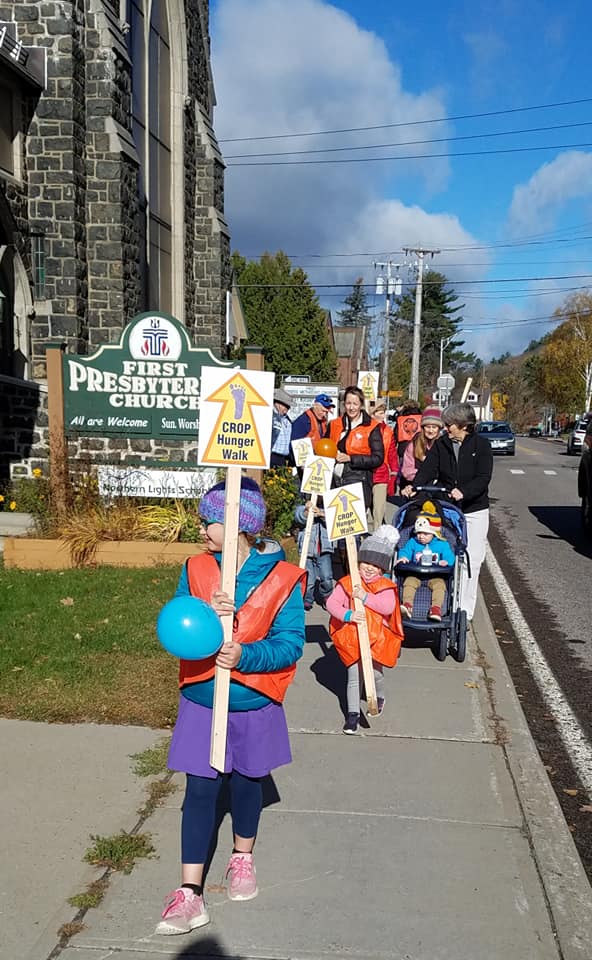
Next Saturday, walkers from this church will join our ecumenical neighbors in the annual Saranac Lake CROP Walk. We’ll be raising funds for the international hunger programs of Church World Service and the Interfaith Food Pantry here at home. CROP walkers say, “We walk because they walk.” It’s an acknowledgment of our solidarity with global neighbors who daily walk for food, water, work, school, and firewood.  The average distance that women in the developing world walk every day for water for their families is 3.4 miles. Elma Kassa of Ethiopia walks for water. Although Elma would like to go to school, she cannot because she helps her mother wash clothes to support the family.  Four times every day, Elma collects water, using a five-gallon clay jar.  Perhaps next Saturday as walkers stride down LaPan Highway from the Alliance Church to our church, they can think of Elma, with her heavy clay jar atop her head.

CROP Walks seek to eradicate hunger.  That’s a formidable task.  The Global Hunger Index tracks the state of hunger worldwide, country by country. Their 2024 report shows that little progress has been made in reducing hunger since 2016. Forty-two countries still experiencing alarming or serious hunger. Globally, 733 million people lack access to sufficient calories, and 2.8 billion people cannot afford a healthy diet. Acute food insecurity and the risk of famine are on the rise, and starvation is proliferating as a weapon of war. Worldwide, 148 million children are stunted, 45 million children are wasted, and almost 5 million children die before age five from hunger-related causes. The situation is most severe in Burundi, Yemen, and Niger—and it is on the rise in Afghanistan, Argentina, and Mongolia. Hunger kills more than nine million people each year, more than AIDs, malaria, and tuberculosis combined. 3.1 million of those deaths are children. 

People are hungry in the United States. The USDA estimates that 44.2 million Americans nationwide live in food insecure households. These are homes where meals are skipped or kids are sent to school without breakfast because there aren’t sufficient resources to put food on the table. 28% of households with children indicate that kids were not eating enough because families could not afford food, thanks to inflated prices and the end of federal pandemic relief support. Feeding America reports that more than 53 million people turn to food banks, food pantries, and meal programs for help. That’s one-third more than prior to the pandemic. Our food pantry volunteers will tell you that the Saranac Lake pantry downstairs is a busy place on Saturday mornings, serving all kinds of neighbors—seniors, single moms, traditional families, and people living with homelessness, mental illness, developmental disabilities, or physical handicaps.

Jesus’ encounter with the rich man invites us to consider the responsibilities of our relative affluence in a world plagued by persistent hunger.  Breathless after his run, kneeling in the dust of the road at Jesus’ feet, the rich man wanted to know what he must do to inherit eternal life. This righteous man was relieved to hear Jesus reciting the instructions of the Torah—no murder, adultery, stealing, lying, or defrauding. Be sure to honor your parents. The man had kept all these commandments from his youth, and he must have done so with great earnestness and integrity, because Jesus loved him for it and invited him to become a disciple.

There was only one thing lacking. Although the man was expert in keeping the Torah, he seemed to have fallen short in tzedakah or almsgiving, one of the most essential principles of Jewish piety.  Our Jewish ancestors believed that, ultimately, everything belongs to God.  While God could have created a world where everyone had exactly the same distribution of God’s bounty, God chose not to do so. Instead, some, like the rich man, were given much, while others had little. This uneven distribution of resources was how God invited faithful people to join their purpose to God’s purpose, to live lovingly and generously so that God’s goodness could abound for all. Faced with Jesus’ invitation to sell what he owned for the blessing of his impoverished neighbors, the rich man turned his back on a life with Jesus and went away grieving.

When it comes to wealth, we don’t consider ourselves rich, certainly not rich enough to be labeled “the rich man” or “the rich woman.” But when we see ourselves through the eyes of the world, we are more than blessed. The average daily wage in the United States is about $162. Developing countries with unstable political and economic conditions do not fare nearly so well. In Nepal, the average daily wage is $3.75; in Sudan, it’s $2.71; and in Afghanistan, people try to survive on less than a dollar a day. I have said it before, and I suspect that I will say it again, my friends. We are blessed—we are rich.

I’m not saying that we don’t work hard to earn what we have. We may spend long years striving in tough jobs to give our families the sort of home life and advantages that we wish them to have. I see a lot of hard workers when I look out at our pews on Sunday mornings. But I wonder if we see our relative wealth in the same way that Jesus invited the rich man to think of his money. Our relative affluence is a generous gift from God to bless our lives and to bless the lives of our impoverished neighbors. I wonder what our household expenditures might look like if Jesus were writing the checks. Today Jesus gives the rich man—and us—an uncomfortable reminder that we are meant to share God’s blessing with others.  When we do so, we get a foretaste of God’s Kingdom, where all are welcomed to the bountiful feast that Jesus has prepared.

I want to share how our participation in the CROP Walk can allow us to be a blessing to our neighbors, near and far. Our CROP dollars will help world neighbors like Moize Munenwa Joseph, one of over 800 people in Tanzania who participated in a CWS-sponsored vegetable farming program. Moize learned valuable farming skills like seed selection, pest control, and farm cleanliness. This helped him to improve his harvest and increase his income. Now Moize is sharing what he learned with others in his community. Moize says, “I can take care of my family and ensure we consume healthy food.”

Our CROP dollars can help world neighbors like Hak Nhy in Cambodia. For generations, her family has lived off crops from their vegetable farm. Challenges from climate change and the pandemic affected their harvest, leaving Hak and her family with barely enough to eat or sell. Hak enrolled in a Church World Service gardening program that taught her how to plant a more productive and nutritious garden. Hak says, “I have [gained] skills and knowledge on vegetable gardening, adapting to the changing weather conditions, and compost making.” Her family now has a better diet and her garden’s increased harvest allows her to sell surplus vegetables.

Our CROP dollars also help world neighbors like Alodia González, who lives in rural Paraguay. Alodia’s family struggled to have a stable income until she participated in a CWS training that focused on planting seeds and food production. Alodia learned about beekeeping and making honey. She also learned to organize and launch a community garden. Alodia says, “With a good production of honey, we are generating significant income to support our families. With the garden, we are able to eat lettuce and other vegetables produced by us.”

Our CROP dollars can be the kind of blessing that Jesus had hoped the rich man might share with his impoverished neighbors. I’m not talking about selling everything we have and giving it all away this morning. The good news for us is that even a modest gift that is well within our budgets can make a big difference in the lives of our needy neighbors.  A $20 pledge can provide chickens for a family—chickens are a lasting resource for eggs and meat. $60 is enough to help three families with seeds and training for home gardening. They’ll have better nutrition and the extra income that comes with plenty of veggies. A $161 pledge would be enough to enable a farmer to plant an acre of sweet potatoes, to provide both food and income. Are we feeling especially generous? $1,499 buys the whole farm—seeds, meat animals, and training to provide a family with reliable sources of food and income to meet their needs for years to come.

The rich man may have turned away from Jesus, saddened by the invitation to discipleship that Jesus shared with him. But I suspect that this morning, as we consider the call to discipleship and the impact of CROP Walk, we are getting inspired, eager even, to make a difference in the lives of hungry neighbors.  We are blessed, my friends, so that we might be a blessing to others. May we go forth to follow Jesus, sharing generously of our abundance to make a difference in the lives of our hungry neighbors.

Resources

Concern Worldwide. “Global Hunger Index 2024.” Accessed online at 2017 Global Hunger Index: The Inequalities of Hunger (concern.net)

Mehdi Punjwani. “Average salary in the U.S. in 2024” in USA Today, Sept. 26, 2024. Accessed online at Average Salary in the U.S. in 2024 (usatoday.com)

World Data. “Average income around the world” October 2024. Accessed online at https://www.worlddata.info/average-income.php

Church World Service. CWS (cwsglobal.org)

Mark G. Vitalis-Hoffman. “Commentary on Mark 10:17-31” in Preaching This Week, Oct. 11, 2015. Accessed online at Commentary on Mark 10:17-31  – Working Preacher from Luther Seminary

David Lose. “Commentary on Mark 10:17-31” in Preaching This Week, Oct. 14, 2012. Accessed online at Commentary on Mark 10:17-31  – Working Preacher from Luther Seminary

Matt Skinner. “Commentary on Mark 10:17-31” in Preaching This Week, Oct. 11, 2009. Accessed online at Commentary on Mark 10:17-31  – Working Preacher from Luther Seminary

To make a donation: https://events.crophungerwalk.org/cropwalks/event/saranaclakeny


Mark 10:17-31

17 As he was setting out on a journey, a man ran up and knelt before him and asked him, “Good Teacher, what must I do to inherit eternal life?” 18 Jesus said to him, “Why do you call me good? No one is good but God alone. 19 You know the commandments: ‘You shall not murder. You shall not commit adultery. You shall not steal. You shall not bear false witness. You shall not defraud. Honor your father and mother.’ ” 20 He said to him, “Teacher, I have kept all these since my youth.” 21 Jesus, looking at him, loved him and said, “You lack one thing; go, sell what you own, and give the money to the poor, and you will have treasure in heaven; then come, follow me.” 22 When he heard this, he was shocked and went away grieving, for he had many possessions.

23 Then Jesus looked around and said to his disciples, “How hard it will be for those who have wealth to enter the kingdom of God!” 24 And the disciples were perplexed at these words. But Jesus said to them again, “Children, how hard it is to enter the kingdom of God! 25 It is easier for a camel to go through the eye of a needle than for someone who is rich to enter the kingdom of God.” 26 They were greatly astounded and said to one another, “Then who can be saved?” 27 Jesus looked at them and said, “For mortals it is impossible, but not for God; for God all things are possible.”

28 Peter began to say to him, “Look, we have left everything and followed you.” 29 Jesus said, “Truly I tell you, there is no one who has left house or brothers or sisters or mother or father or children or fields for my sake and for the sake of the good news 30 who will not receive a hundredfold now in this age—houses, brothers and sisters, mothers and children, and fields, with persecutions—and in the age to come eternal life. 31 But many who are first will be last, and the last will be first.”


Heart Trouble

Sabbath Day Thoughts — “Heart Trouble” Mark 2:23-3:6

Sunday mornings at the New York Avenue Presbyterian Church in Washington, DC can feel like a curious collision of reverent worship and human need. The church, just a couple of blocks from the White House, is in an area of the city with a burgeoning homeless population. The benches in the tiny triangle park outside the church are a favorite overnight sleeping spot. A mentally ill woman pushing a shopping cart inspects the trash for thrown away treasures. A down and out neighbor scrounges for cigarette butts on the sidewalk.

Before I went to seminary, when I was a young adult member of the church, I was often panhandled on my way into worship, “Sister, can you give a man a little help?” During worship, when the children and those feeling a little childlike were invited to the front of the sanctuary, there would always be at least one adult participant—Larry, a developmentally disabled man from a local residence who lived with mental illness. One Sunday, during Dr. Craig’s sermon, someone was snoring. It was loud—so loud that those of us in the pews spent the better part of the message craning our necks to see one of our homeless brothers, stretched out in a side pew. On another day, Dr. Craig told us that as he was locking up the church to head home, he fell, tripping over a homeless man who was sleeping in a corner of the doorway.

Churches are sacred places, built to glorify God with our worship and praise. Churches are serving places, where neighbors in need find “a little help.” Sometimes finding that right balance of worship and service can be tough.

Our reading from Mark’s gospel tells of two Sabbath controversies. First, Jesus was challenged by the Pharisees for the Sabbath day behavior of his disciples. As Jesus’s hungry friends walked through the fields, they plucked ears of barley, rolled them between their hands to remove the chaff, and ate the ripe grain. Next, Jesus was in the synagogue on the sabbath day when he noticed a man with a helpless, withered hand. Jesus provocatively asked his critics, “Is it lawful to do good on the sabbath?” Then, answering his own question, Jesus healed. The useless hand grew hale and able.

Jesus and the Pharisees clearly had a difference of opinion when it came to interpreting what scripture had to say about sabbath observance. We tend to poke fun at the Pharisees, but Prof. Clif Black, who teaches at Princeton Seminary, reminds us that the Pharisees, a reform movement in first century Judaism, were well-regarded as upstanding and devout people. They were dedicated to “superlative” obedience to scripture in all walks of life. They liked things done decently and in order—that sounds downright Presbyterian.

The Pharisees had two problems with Jesus’s friends in the grain field. For one, they were traveling on the sabbath. For another, it was a slippery slope from gleaning to harvesting – if you let people glean on the sabbath, who knows what sort of work could happen next. And that man with the problem hand? More work. The man and Jesus should have had the good sense to wait until the sabbath was over to get their healing on. Jesus, with his disregard for their sabbath piety, put the whole community at risk. They needed to be holy as God is holy, and that meant their strict observance of the Torah.

Jesus disagreed. He looked at the big picture. Jesus considered God’s intent in instituting the sabbath as part of the rhythm of creation. God certainly didn’t need to rest after bringing the world into being, but humanity? We would need rest. In imparting the ten commandments, God mandated sabbath so that the people might be gratefully reoriented in God, might deepen their relationship with the one who created us—and deepen our connection to one another. What a radical gift for former slaves, who had never known the blessing of unfettered leisure! Sabbath should inspire our profound gratitude and reverence, yet it also helps and heals us. It promotes our wholeness. We might even say that on the sabbath day we are re-created.

“The sabbath was made for humankind, and not humankind for the sabbath,” Jesus taught. The choice to relieve someone’s hunger, the choice to end the suffering and disability of a neighbor, these beautiful, compassionate acts honored God’s original intent for the sabbath, every bit as much as the reverent worship of the Pharisees. Unfortunately, Jesus’s opponents were so invested in their own perspective that they could not hear Jesus or allow their hard hearts to be moved with compassion. Instead, only 79 verses into Mark’s gospel, Jesus’s adversaries began to conspire to discredit and silence him.

I am told that the New York Avenue Presbyterian Church struggled to find that right balance between sabbath day reverence and sabbath day service. In the early 80’s federal funding for mental health services saw big cuts, transferring responsibility for formerly institutionalized people to states that just weren’t ready.  The streets of cities like Washington soon teemed with folks who could not care for themselves. As the church’s triangle park became a de facto mini homeless settlement, they wondered, what do we do? Close the park? Work with law enforcement to encourage homeless neighbors to find someplace else to be on Sunday morning? Open up the church’s Lincoln Room for bagels and a gospel hymn sing?

The hymn sing won out, but still there was a weekly struggle to find enough volunteers to handle the loud, needy, and stinky mess that comes along with homeless neighbors. Members left the church. Those who stayed wondered if new people, who weren’t homeless, would ever come, would ever labor alongside them. They weren’t Pharisees, but they were Presbyterians with a longing for order and a good uninterrupted Sunday sermon. It wasn’t easy.

I think Jesus knew that faithful people would always live with this tension between our desire for holiness and the calling to meet the needs of our neighbors. That’s why his great command is an imperative to do both – love God and love neighbor. God is glorified by our overflowing love and heartfelt worship. Yet God is also glorified when we open our hearts and turn to the world with compassion, when we seek to make a helping, healing difference in the lives of those who need it most. We need both – worship and service. When we get it right, we are drawn ever deeper into the beauty of God and into the spirit of Jesus, who challenged his followers to see him in our neighbors who most need our love and care, every day of the week.

Sundays at this church aren’t quite like Sunday mornings in downtown Washington. I bet no one panhandled you on the way in. My old friend Larry doesn’t sit on the chancel with me for children’s time. While someone may fall asleep during the service, it won’t be because they spent last night sleeping on a subway grate. Yet we are mindful this morning of the need of our world. If you came in the side entrance, you saw the overflowing donation of paper goods for families that depend on Grace Pantry. You saw the pack basket that collects our Food Pantry gifts for hungry neighbors. You may have even noticed the learning stations in the sanctuary and Great Hall about the work of the Holm family to bring the gospel and sanitation to our Malawi neighbors. They may not be sleeping in the pews, but our vulnerable neighbors are with us this morning, and we can choose to make a helping difference. Today, we glorify God with our worship—and God will be glorified, too, as we love those who hunger and thirst for wholeness, good news, and good food.

If those Pharisees and Herodians had only wrapped their hearts around what Jesus was trying to teach them about the sabbath, they would have gotten blessed. So blessed! On that Sunday morning at the New York Avenue Presbyterian Church, when the homeless brother was snoring loudly through Dr. Craig’s sermon, the ushers in their blue blazers and ties marshalled forces in the narthex, devising a plan to wake the guy up. The very wise Dr. Craig stopped preaching and he waylaid their efforts. “Please, folks,” he said from the pulpit, “I’m sure it is the safest and warmest that the man has been all week.” As Dr. Craig’s words sank in, we realized that we had just heard the real sermon for that Sunday. We all thought about how truly blessed we were, to have homes and a church home, to have more than enough, to have people who love us, to have a wise pastor who called us to our better selves. It was one of those graced moments when we found the right balance between worship and service. It was one of those graced moments when we glimpsed Jesus, who told us he would come to us in our vulnerable neighbors. I can’t say for sure, but I suspect that God was, indeed, glorified.

Resources:

C. Clifton Black. “Commentary on Mark 2:23-3:6” in Preaching This Week, June 2, 2024. Accessed online at Commentary on Mark 2:23—3:6 – Working Preacher from Luther Seminary

Matt Skinner. “Commentary on Mark 2:23-3:6” in Preaching This Week, June 3, 2018. Accessed online at Commentary on Mark 2:23—3:6 – Working Preacher from Luther Seminary

John Wilkinson. “Theological Perspective on Mark 3:1-6” in Feasting of the Gospels: Mark. Louisville: Westminster John Knox Press, 2014.

William R. Herzog II. “Homiletical Perspective on Mark 3:1-6” in Feasting of the Gospels: Mark. Louisville: Westminster John Knox Press, 2014.


Mark 2:23—3:6

23One sabbath he was going through the grainfields; and as they made their way his disciples began to pluck heads of grain. 24The Pharisees said to him, “Look, why are they doing what is not lawful on the sabbath?” 25And he said to them, “Have you never read what David did when he and his companions were hungry and in need of food? 26He entered the house of God, when Abiathar was high priest, and ate the bread of the Presence, which it is not lawful for any but the priests to eat, and he gave some to his companions.” 27Then he said to them, “The sabbath was made for humankind, and not humankind for the sabbath; 28so the Son of Man is lord even of the sabbath.”

3Again he entered the synagogue, and a man was there who had a withered hand. 2They watched him to see whether he would cure him on the sabbath, so that they might accuse him. 3And he said to the man who had the withered hand, “Come forward.” 4Then he said to them, “Is it lawful to do good or to do harm on the sabbath, to save life or to kill?” But they were silent. 5He looked around at them with anger; he was grieved at their hardness of heart and said to the man, “Stretch out your hand.” He stretched it out, and his hand was restored. 6The Pharisees went out and immediately conspired with the Herodians against him, how to destroy him.


In the Power of the Spirit

Sabbath Day Thoughts — “In the Power of the Spirit” Acts 2:1-13

The Adirondack spring has pounced upon us. After months of grey skies and mixed precipitation, the ice is out, the earth has thawed, and for some of us, our thoughts turn to gardening. Here at the church, our Jubilee Gardeners are thinking about the fresh vegetables that we’ll grow for the Food Pantry this summer. Yesterday morning, six of us gathered at the Community Garden to prepare the church’s beds for planting. There were weeds to pull and compost to spread. There were pole bean towers to string and a snow pea trellis to set up. We even sowed a few cold-hardy seeds.

Fourteen years ago this month, we had the organizing meeting for our Jubilee Garden project. It started with a fall book group. We read Shane Claiborne’s inspiring first book Irresistible Revolution, which tells the compelling story of Shane’s community The Simple Way. Inspired by a stint as a volunteer in Calcutta with Mother Teresa, Shane decided to try life in a blighted neighborhood in Northeast Philadelphia, living among the poor and working at the grassroots to meet community needs. Shane challenges Christians to find an impossible dream, to consider how the Spirit may be calling them to come alongside hurting neighbors in ways that make a difference. We wondered how God wanted to use us right here in Saranac Lake. We prayed about it.

By the spring, several of us felt that the Spirit was calling us to garden. Jan and Ted Gaylord had learned about organic gardening while they served at Jubilee Partners, and others among us were avid home gardeners, ever on the quest for the elusive Adirondack tomato. Our timing was perfect. A new community garden was starting on Old Lake Colby Road, where we secured two big plots. Our mission would be to grow fresh vegetables and bright flowers for the hungry and the hungry-of-heart. Soon, we had dirt beneath our fingernails and plenty of blackfly bites. We built raised beds and filled them with a fertile mix of topsoil and composted chicken manure. We planted, watered, weeded, and waited for the harvest.

In our reading from the Acts of the Apostles, the disciples were waiting and praying for the vision and power to launch an impossible dream. Then, on Pentecost, ten days after Jesus’ Ascension, came the rush of a violent wind. It filled the entire house where they waited. Tongues of holy fire flickered and danced among the people, resting upon each of them. As the Spirit filled them, they began to preach, all at once, in every language under the sun—speaking with boldness and joy about God’s deeds of awesome power. Before they knew it, the Spirit drove them out into the street, where pilgrims from every corner of the empire listened in bewilderment, wondering how a bunch of backwater Galileans could suddenly become such gifted cross-cultural communicators. Those who heard the Spirit-filled Apostles didn’t know whether to marvel or sneer, to shout “Alleluia!” or say, “Get lost!” But if we were to keep reading, past the end of our lection, we would see that the “Alleluias” won the day.  3,000 people were baptized and welcomed to the church.

When we hear the very familiar story of Pentecost, we like to focus on the sensational details: violent wind, tongues of flame, the sound of many languages, the astonishment of the crowd. But this year, I’ve been thinking less about the special effects and more about the disciples. Ten days earlier, they were anxious and visionless, waiting in Jerusalem to find out what was next. They hadn’t always excelled in their discipleship. They longed for greatness, expressed big doubts, and were generally cluelessness. They slept when they should have been praying. They ran away when the guards came to take Jesus into custody. Don’t forget Peter’s three denials. But when the Holy Spirit filled the disciples on Pentecost, they were galvanized in Christ’s purpose. On Pentecost, the disciples went from fearful failed followers to a dynamic force for good, propelled in God’s purpose by the power of the Holy Spirit.

In her book Sailboat Church: Helping Your Church Rethink Its Mission and Practice, former moderator of the General Assembly Joan Gray points out that the boat was the earliest symbol for the church. In the first century, there were two types of boats: rowboats and sailboats. Rowboats are driven by human power. Sailboats harness wind power. Joan Gray says that on Pentecost the Holy Spirit moved the disciples along as the wind moves a sailboat. The Spirit drew together a diverse group of men and women into a strong, unified community, capable of unexpected good. If the disciples had trusted in their own limited power to bring about God’s purpose, it would have been a recipe for failure; there would be no church. But with the Spirit’s help, great things could unfold.

Presbyterians tend to think that the Spirit doesn’t work with the bold force of Pentecost anymore, but Joan Gray says it does. The question facing every congregation is, “Will we row or will we sail?” If we row, we trust in our own strength, wisdom, and abilities to achieve our ministry. That’s a recipe for burnout and dwindling resources. I suspect that some of us, over the years, have known how that feels. But if we choose to be a sailboat church, if we trust that God’s Spirit can guide and empower us, then we find that we are able to do more than we ever could have dreamed. Pentecost begs the question, “Keep rowing or let the wind fill your sails?” I don’t know about you, but I’d much rather hoist the sail than man the oars.

What does sailboat ministry look like? I think our garden project is a good example. Fourteen years ago, the Holy Spirit took our prayer and discernment and launched us on a continuing adventure that has blessed us and our neighbors. A little like those who sneered at the disciples on Pentecost, not everyone thought our impossible dream was a good idea. In fact, when I approached the board of the Food Pantry, they said no one who comes to the pantry would eat our vegetables. Then, they told us that they wouldn’t distribute what we grew because they would just be throwing out a lot of rotting produce, week after week. If our impossible dream was going to happen, we would have to host our own free farm stand, outside the food pantry, on Saturday mornings. It was disappointing, but we didn’t let that dump the wind from our sails.

As we got underway, there were blessings that told us we were on the right path. It was a hot, sunny summer, and the harvest was wildly abundant. Those food pantry patrons loved the fresh produce. On most mornings, we ran out, and when we didn’t, folks at church on Sunday were eager to relieve us of our abundance. Some weeks, we even had extra to share at the DeChantal or Lake Flower Apartments. Hosting our own farm stand was the biggest blessing of all. We made new friends. Some came to the pantry week in and week out. They told us their stories. Others came in times of crisis. They told us their stories, too. All expressed appreciation for our care and concern, our willingness to meet them where they were at with the good news of fresh produce, God’s love, and an occasional fervent prayer.

Over the past fourteen years of gardening, the Spirit has continued to fill our sails in ways that we never could have imagined. We developed a close relationship with the Food Pantry, those same people who sneered at our impossible dream. In fact, a number of our members now serve on the board of directors. That growing bond found fresh expression as we welcomed the pantry to a beautiful new space in our building, where the number of people who are served has doubled. Beyond the Food Pantry, we’ve connected with local gardeners and commercial growers who sometimes contribute their own veggies to our efforts. The latest dynamic of our garden mission isn’t about the veg. It’s the flowers. Last summer, we sent an abundance of bouquets out into the community every Sunday to bless our homes and our neighbors. 

I’m not saying that the garden isn’t hard work. We’ve had aching backs. We’ve been bitten by bugs. We’ve struggled with slugs. But by the power of the Holy Spirit, we have been blessed and been a blessing, more than we ever could have imagined when we first dreamed our impossible dream.

Shane Claiborne, who wrote The Irresistible Revolution and inspired our gardening efforts, says that the Spirit is always calling Christians to new dreams. Beyond his community organizing in NE Philly, Shane has launched initiatives that address some of the most significant moral issues of our time: toxically partisan politics, gun violence, Christian nationalism, and the death penalty. If Shane were with us this Pentecost, he might ask us, “What’s next?” How does the Spirit continue to call us to come alongside hurting neighbors in ways that make a difference?

Come, Holy Spirit, come! Fill our sails, and send us forth in your purpose.

Resources:

Joan Gray. Sailboat Church: Helping Your Church Rethink Its Mission and Practice. Louisville: Westminster John Knox Press, 2014.

Shane Claiborne. The Irresistible Revolution: Living as an Ordinary Radical. New York: Harper Collins, 2006.

Frank L. Crouch. “Commentary on Acts 2:1-21” in Preaching This Week, May 24, 2015. Accessed online at Commentary on Acts 2:1-21 – Working Preacher from Luther Seminary

Amy G. Oden. “Commentary on Acts 2:1-21” in Preaching This Week, June 9, 2019. Accessed online at Commentary on Acts 2:1-21 – Working Preacher from Luther Seminary

Debra J. Mumford. “Commentary on Acts 2:1-21” in Preaching This Week, May 31, 2020. Accessed online at Commentary on Acts 2:1-21 – Working Preacher from Luther Seminary


Acts 2:1-13

2When the day of Pentecost had come, they were all together in one place. 2And suddenly from heaven there came a sound like the rush of a violent wind, and it filled the entire house where they were sitting. 3Divided tongues, as of fire, appeared among them, and a tongue rested on each of them. 4All of them were filled with the Holy Spirit and began to speak in other languages, as the Spirit gave them ability.

5Now there were devout Jews from every nation under heaven living in Jerusalem. 6And at this sound the crowd gathered and was bewildered, because each one heard them speaking in the native language of each. 7Amazed and astonished, they asked, “Are not all these who are speaking Galileans? 8And how is it that we hear, each of us, in our own native language? 9Parthians, Medes, Elamites, and residents of Mesopotamia, Judea and Cappadocia, Pontus and Asia, 10Phrygia and Pamphylia, Egypt and the parts of Libya belonging to Cyrene, and visitors from Rome, both Jews and proselytes, 11Cretans and Arabs—in our own languages we hear them speaking about God’s deeds of power.” 12All were amazed and perplexed, saying to one another, “What does this mean?” 13But others sneered and said, “They are filled with new wine.”


Photo by Pixabay on Pexels.com

Start Where You Are At

Sabbath Day Thoughts — “Start Where You Are At” Luke 24:36b-48

Krista comes to church on Sunday mornings feeling worn out. She works full-time. She and her husband are raising three very busy school-age children. Last year, Krista’s Mom died unexpectedly. Krista has been helping her father prepare to sell their family home. Krista is constantly on the move. Working, grocery shopping, cooking, and taxying children to extra-curricular activities. Cleaning out the attic at her Dad’s place, running a yard sale, and making many runs to the dump. She misses her Mom.

Charlie comes to church on Sunday mornings feeling stressed out. It’s his only day off from a job that gets bigger every year. So many people depend upon him. His boss expects him to work miracles of productivity and profit, even when he is desperately short-staffed. His colleagues count on him to cast the vision and manage the team. With a big mortgage and kids soon headed to college, his family needs the substantial paycheck. At some point, a job that once felt interesting and fulfilling began to feel like a recipe for burnout, and there doesn’t seem to be much that he can do about it.

Rita and Nate come to church on Sunday morning feeling worried and afraid. Retired now, they are committed to a legion of community concerns: volunteering at the soup kitchen, caring for pets at the animal shelter, helping out for Winter Carnival, and more. Being retired, they spend a LOT of time together, more than ever before in the course of their long marriage. Between annoying habits and differing opinions, it isn’t always easy. Now, one of them has a health crisis. They are on a long journey through the scary, inhospitable realm of healthcare. It feels overwhelming.

Luke tells us how the disciples felt on Easter evening: filled with fear and doubt. They had made a Passover journey to Jerusalem with their friend and rabbi Jesus, whom they believed to be the Messiah. They entered the city feeling hopeful, triumphant even. Yet, their week had taken a foreboding and sinister turn. Tension mounted, day by day.  Powerful opponents waited in the Temple courts to challenge Jesus’ authority, seeking to entrap and discredit him. When they could not best Jesus with deceitful words, they put a price on his head. For thirty pieces of silver, one of them had betrayed him. A kiss sent Jesus to the cross while everyone ran for their lives, all love and loyalty forgotten. Beyond fear and doubt, Jesus’ friends were filled with despair, grief, and the bitter self-recrimination that comes when we know that we have failed those whom we love most.

They were ready to give up and go home, slipping out of the city in anonymous pairs as soon as the time was right. But Easter morning brought confusion and anxiety. Some of the women returned from the gravesite, telling a curious tale of an empty tomb and heavenly messengers. “He is risen!” cried Mary Magdalene, trying to shake them from the stupor of grief, but they could not listen and did not believe. Later, Cleopas and his companion returned with an equally implausible story of Jesus on the road, opening the scriptures to them and sharing an evening meal. In our reading from Luke’s gospel, the disciples had their own terrifying encounter with the risen Lord. Despite the locked door and the secrecy of their location, Jesus found them and stood among them with the greeting of peace.

When Lucy Lind Hogan, who taught at Wesley Seminary in Washington for many years, teaches about today’s scripture reading, she likes to use five “e” words: encounter, explanation, eating, enlightenment, and exit. It begins with encounter, that sudden appearance and shocking greeting of peace in the upper room. Then there is an explanation: visible wounds are shown and touched to assuage fear and doubt. Next comes the eating; after all, Jesus loved to break bread with all kinds of people, even fearful, failed disciples. As Jesus patiently used the Hebrew scripture to reveal that his suffering, death, and resurrection were all part of God’s plan for the Messiah and the salvation of the world, the disciples found enlightenment. Their minds were opened and they understood. Lastly, Jesus vanished, making an exit, but not before giving his friends a mission that would bring meaning and purpose to their lives.

When we come to church on Sunday mornings, our experience is a lot like the disciples on that first Easter evening. We come filled with a weight of experience and feeling. Like Krista, we may be worn-out, stretched thin, and grieved. Like Charlie, we may be stressed-out, over-worked, and under-supported. Like Rita and Nate, we may feel worried and afraid, ill-equipped to face the crises that come, especially as we age. Take a look around. There’s a lot going on inside us on Sunday mornings. We come to church hoping for whatever it may be that we need to send us back out there into a new week.

Somehow on Sunday mornings at church, we find those five “e’s” of Easter evening. We encounter Jesus. He’s here in the smiles, handshakes, and hugs of those who worship alongside us. We feel his mercy and grace as we confess our sins and know that we are forgiven. Through scripture read, the word proclaimed, and the sharing or prayers, we find our explanation and grow in understanding. At least once a month, we eat with Jesus, breaking the bread and lifting the cup that are his body and blood for us. As worship ends, we go forth enlightened. Even though we arrive feeling worn-out, burned-out, or down and out, we trust that we are loved and we are not alone. As we make our exit, the risen Christ walks with us into a new week, and we find what is needed to begin again. Thanks be to God.

Jesus hoped that his friends would go forth from Easter evening with the willingness to do for others what he had done for them. There was a world of people out there who needed his mission, and the Lord trusted that the men and women who followed him would go forth in his purpose. There were outsiders who needed to be welcomed and children who could use a blessing. There were sick people longing for healing. There were sinners who dreamed of forgiveness, and everywhere so many people needed to know that God loved and accepted them in all their frailty. The disciples could handle that mission. They could simply start where they were at, right there in Jerusalem, extending to one another the mercy that Jesus had extended to them and trusting that Jesus would be known through their witness.

Perhaps we can follow in the footsteps of the disciples this morning. Redeemed and renewed by the risen Lord, we can start where we are at, simply carrying the love, grace, and peace that we find on Sunday mornings out there, to a world that is worn-out, stressed-out, and down and out. For us, taking the love of Christ and the good news of repentance and forgiveness to all nations might look like sharing the faith with Bible stories for our children and grandchildren or inviting a neighbor to come to church.  We can tell the story with more than words. We can share it with helping hands and caring thoughts, inviting someone who struggles to join us for a home-cooked meal or meet us for a cup of coffee.  We can sow the seeds of Christ’s love by choosing to love our hard to love neighbors with patience and compassion. We can bear witness that healing and forgiveness are always possible with God, when we dare to let go of old hurts and allow the past to be the past. We share the hope of new life and the life eternal as we help others begin again – whether that new beginning comes after divorce, or as a new career path is undertaken, or as the slow tide of grief that comes with loss ebbs and flows.  How will we start where we are at? How will we pursue Christ’s mission this week?

I trust that as we go forth in Jesus’s purpose, the world will begin to feel a little less burned-out, stressed-out, down and out — and so will we. People like Krista, who are stretched thin and weighed down by grief, will find helping hands and solace for sadness. People like Charlie, caught in big workplace commitments, will find conversation partners who listen, encourage, and help them to set healthier boundaries. Friends who are struggling, like Rita and Nate, will find caring presence, good advice, and timely help with healthcare and counseling resources. As we pray alongside others and remind them that God is powerful when we are not, we can trust that Christ’s mission continues. The world will know those five “e’s” of Easter evening and experience the blessing we find on Sunday mornings. May it be so.

Resources

Michael Joseph Brown. “Commentary on Luke 24:36b-48” in Preaching This Week, April 14, 2024. Accessed online at Commentary on Luke 24:36b-48 – Working Preacher from Luther Seminary

Lucy Lind Hogan. “Commentary on Luke 24:36b-48” in Preaching This Week, April 22, 2012. Accessed online at Commentary on Luke 24:36b-48 – Working Preacher from Luther Seminary

Jacob Myers. “Commentary on Luke 24:36b-48” in Preaching This Week, April 19, 2015. Accessed online at Commentary on Luke 24:36b-48 – Working Preacher from Luther Seminary


Luke 24:36b-48

36While they were talking about this, Jesus himself stood among them and said to them, “Peace be with you.” 37They were startled and terrified, and thought that they were seeing a ghost. 38He said to them, “Why are you frightened, and why do doubts arise in your hearts? 39Look at my hands and my feet; see that it is I myself. Touch me and see; for a ghost does not have flesh and bones as you see that I have.” 40And when he had said this, he showed them his hands and his feet. 41While in their joy they were disbelieving and still wondering, he said to them, “Have you anything here to eat?” 42They gave him a piece of broiled fish, 43and he took it and ate in their presence. 44Then he said to them, “These are my words that I spoke to you while I was still with you—that everything written about me in the law of Moses, the prophets, and the psalms must be fulfilled.” 45Then he opened their minds to understand the scriptures, 46and he said to them, “Thus it is written, that the Messiah is to suffer and to rise from the dead on the third day, 47and that repentance and forgiveness of sins is to be proclaimed in his name to all nations, beginning from Jerusalem. 48You are witnesses of these things.


Photo by Brett Sayles on Pexels.com

Give It Your All

Sabbath Day Thoughts — “Give It Your All” Mark 10:17-31

Our mission focus during the season of Lent turns to One Great Hour of Sharing. This ecumenical offering was first observed in 1946. In the wake of World War II, the world was hungry and displaced. War had devastated farmland and disrupted supply chains. Hunger had been used as a weapon of war with German occupied lands from Holland to Russia experiencing mass starvation. There were fifty-five million refugees in Europe alone. In response to the global humanitarian crisis, the first One Great Hour of Sharing offering was received in 1946 with a goal of raising $1 million in the one hour, from 11AM until noon, when most American churches gathered for worship.

In 1949, a national radio broadcast on the Saturday evening before Easter promoted One Great Hour of Sharing.  A host of famous people appeared on the program, including President Harry Truman and actors Gregory Peck and Ida Lupino. In his radio address, Truman tugged at the nation’s heartstrings saying, “There are thousands of children in foreign lands today who have no memory of their parents, no knowledge of the meaning of the words ‘home and family,’ and who have forgotten what it feels like to have enough to eat. There are hopeless thousands who wander among the shattered towns seeking a place to rest, seeking security and a chance to begin their lives anew. There are many who pray to God only in secret, fearing persecution if they profess their beliefs openly. It is hard for us to comprehend grief and distress such as this, because we in America are so much more fortunate.” This church participated in that 1949 offering. Members were invited to listen to their radios from 8-9PM on Holy Saturday and come to church to celebrate Easter and make a contribution the following morning.

Seventy-five years later, One Great Hour of Sharing is still going strong. The offering that we collect on Easter will benefit three programs of the denomination—Presbyterian Disaster Assistance, the Presbyterian Hunger Program, and Self-Development of People, initiatives that make a difference in the lives of vulnerable neighbors in the United States and around the world. Nowadays, we don’t have the President, or the likes of Gregory Peck, encouraging us to give. Instead, we have fish banks that the children, and those of us who feel a little childlike, will fill in the coming weeks to remember our at-risk global neighbors throughout the Lenten season.

In our lesson from Mark’s gospel, Jesus encouraged a “rich man” to consider parting with his affluence to help his hurting neighbors.  We can imagine it. Breathless after his run, kneeling in the dust of the road at Jesus’ feet, the rich man wanted to know what he must do to inherit eternal life.  I bet he was relieved to hear Jesus recite the instructions of the Torah – no murder, adultery, stealing, lying, or defrauding.  Be sure to honor your parents.  This man had been observing all those commandments from his youth, and he must have done so with great earnestness and integrity, because Jesus loved him for it.

There was only one thing lacking.  Although the man was expert in keeping the Torah, he seemed to have fallen short in tzedakah or almsgiving, one of the most essential principles of Jewish piety.  Our Jewish ancestors believed that, ultimately, everything belongs to God.  While God could have created a world where everyone had exactly the same distribution of God’s bounty, God chose not to do so.  Instead, some, like the rich man, were given much, while others had little.  This uneven distribution of resources was how God invited faithful people to join their purpose to God’s purpose. They could live lovingly and generously so that God’s goodness could abound for all.  Faced with Jesus’ invitation to sell what he owned for the blessing of his impoverished neighbors, the rich man balked.  He turned his back on a life with Jesus and went away grieving.

I don’t know if many of us would consider ourselves rich, certainly not rich enough to be labeled by our neighbors “the rich man” or “the rich woman.”  But when we see ourselves through the eyes of the world, we are truly blessed.  The average daily wage for New York state is about $202.  Compare that to the average global daily wage of $7.56.  We earn twenty-seven times what our global neighbors earn. Those who live in the five poorest nations—Burundi, Afghanistan, Somalia, South Sudan, and Mozambique—survive on less than $1 a day. We earn two-hundred times what the world’s poorest neighbors are able to earn. We are rich!

 Each day we make choices about how we are going to spend our relative affluence.  I’ll share some examples from the Department of Labor’s latest report on consumer expenditures.  The average gross household income in our country for 2022 was $72,961.  We dedicated about 33% of that household income to shelter—paying the mortgage or rent, utilities, home improvements, and furnishings.  We spent about 17% of our household income on transportation—car payments, maintenance, fuel, and insurance. Those seem like pretty essential expenditures to me. We are blessed to have homes and cars.  Aren’t we?

We also choose to spend our household income on some less essential things. Our average household expense for eating meals out was $3,639. That was followed closely by our average annual household expense for entertainment—$3,429 for things like music, movies, apps, games, vacations, and sporting events. We like to look sharp while we are being entertained and eating out because the average household spent $1,970 on clothes, which far outpaced what we spent on reading $117.  How fortunate we are to not only cover our basic expenses but to enrich our lives with vacations, special meals, new clothes, and good books.

We work hard to earn what we have. We may spend long years striving in tough jobs to give our families the sort of home life that we wish them to have.  But I wonder if our spending patterns, especially for discretionary income, might shift if we thought of our relative wealth in the same way that Jesus invited the rich man to think of his money.  Our relative affluence is a generous gift from God to bless our lives and to bless the lives of our impoverished neighbors. I wonder if our spending patterns might alter if we thought it was just as important to care for the well-being of our needy neighbor as it is to honor our fathers and mothers and to keep all those other commandments.  I wonder what our household expenditures might look like if Jesus were writing the checks. 

I think that Jesus would approve of the way our One Great Hour of Sharing Offering was used last year to help those who aren’t quite as blessed as we are. Presbyterian Disaster Assistance provided $3.1 million in grants to twenty-seven communities in the US and thirty-five countries around the world. We helped people like Bernadette, whose home began to crumble beneath her very feet when a 7.8 magnitude earthquake hit Aleppo, Syria a year ago. With help from PDA, her home was stabilized and rehabilitated. Bernadette says, “We offer our thanks to all who have given so generously. Our prayers likewise go out to all who stand by us and receive the Offering to ease our economic burdens and encourage us to stay in our country and continue witnessing to our Christian faith.”

That isn’t the only way our gifts made a difference. Through the Presbyterian Hunger Program, 525,000 pounds of seeds and seedlings were distributed to farmers around the globe. 875 chickens went to households in Guatemala and Colombia to provide an ongoing resource for eggs and meat. 105 women became self-employed in Malawi as they developed a bakery to serve rural communities. One Great Hour of Sharing doesn’t ask us to sell all we have and give the money to the poor, but it does invite us to consider how our thoughtful gifts can make a world-changing difference for our local and global neighbors.

In the last image that Mark’s gospel grants us of the “rich man,” he was shocked. Reeling from what Jesus had asked of him, he turned his back and walked away. We don’t know what happened after that. But I like to imagine that the rich man spent some time thinking about what he possessed, and he began to wonder if what he owned really owned him. He began to notice his neighbors more, especially the ones who suffered, who didn’t have enough food, who couldn’t afford to pay a daughter’s dowry, whose disability forced them to beg, whose hearts trembled every time the tax collector knocked at their door. As the rich man opened his heart to those in need, he saw that Jesus was right. He could help. He opened his hands, he loosened his purse strings, and everyone got blessed.

Resources:

Bureau of Labor and Statistics. “Consumer Expenditures—2022,” USDL-23-1943, September 8, 2023. Accessed online at https://www.bls.gov/cex

Claudio Carvalhaes, “Commentary on Mark 10:17-31” in Preaching This Week, Feb. 18, 2024. Accessed online at Commentary on Mark 10:17-31 – Working Preacher from Luther Seminary

Pat Cole. “Presbyterians celebrate 70 years of One Great Hour of Sharing” in Presbyterian News Service, March 6, 2019. Accessed online at https://www.presbyterianmission.org/story/presbyterians-celebrate-70-years-of-one-great-hour-of-sharing/

Jack Flynn. “Average Global Income [2023]: What Is the Median Income Worldwide?” in Zippia, April 13, 2023. Accessed online at https://ww.zippia.com.

Gloria Guzman and Melissa Kolar. “Income in the U.S.: 2022.” US Census Bureau, Sept. 12, 2023.

Raquel Lettsome. “Commentary on Mark 10:17-31” in Preaching This Week, Feb. 14, 2016. Accessed online at Commentary on Mark 10:17-31  – Working Preacher from Luther Seminary

–. “Living on the Brink of Disaster” in Presbyterian News Service, February 13, 2024. Accessed online at https://www.presbyterianmission.org/weekly-offerings/2024/02/13/oghs-presbyterian-disaster-assistance/

Harry Truman. “Radio Address as Part of Interdenominational Program, ‘One Great Hour’” in the National Archives: Harry S. Truman Library Museum, March 26, 1949. Accessed online at https://www.trumanlibrary.gov/library/public-papers/62/radio-address-part-interdenominational-program-one-great-hour


Mark 10:17-31

17As he was setting out on a journey, a man ran up and knelt before him, and asked him, “Good Teacher, what must I do to inherit eternal life?” 18Jesus said to him, “Why do you call me good? No one is good but God alone. 19You know the commandments: ‘You shall not murder; You shall not commit adultery; You shall not steal; You shall not bear false witness; You shall not defraud; Honor your father and mother.’” 20He said to him, “Teacher, I have kept all these since my youth.” 21Jesus, looking at him, loved him and said, “You lack one thing; go, sell what you own, and give the money to the poor, and you will have treasure in heaven; then come, follow me.” 22When he heard this, he was shocked and went away grieving, for he had many possessions.

23Then Jesus looked around and said to his disciples, “How hard it will be for those who have wealth to enter the kingdom of God!” 24And the disciples were perplexed at these words. But Jesus said to them again, “Children, how hard it is to enter the kingdom of God! 25It is easier for a camel to go through the eye of a needle than for someone who is rich to enter the kingdom of God.” 26They were greatly astounded and said to one another, “Then who can be saved?” 27Jesus looked at them and said, “For mortals it is impossible, but not for God; for God all things are possible.”

28Peter began to say to him, “Look, we have left everything and followed you.” 29Jesus said, “Truly I tell you, there is no one who has left house or brothers or sisters or mother or father or children or fields, for my sake and for the sake of the good news, 30who will not receive a hundredfold now in this age—houses, brothers and sisters, mothers and children, and fields with persecutions—and in the age to come eternal life. 31But many who are first will be last, and the last will be first.”


By Heinrich Hofmann – Purchased by John D Rockefeller Jr, now residing at Riverside Church, New York, Public Domain, https://commons.wikimedia.org/w/index.php?curid=14265296

Blessing and Woe

Sabbath Day Thoughts — “Blessing and Woe” Luke 6:17-26

They weren’t sure what to do with a female minister, so it was decided that I could make some pastoral calls.  My first visit was to the oldest couple in the village of El Estor.  “Just how old are they?” I wanted to know.  My interpreter shrugged.  She looked at her hands as if considering counting the years, but gave up.  “Old” she said, “At least 100.  Maybe more.”

Their home was tiny, a 10- by 15-foot wooden frame.  Dried cornstalks had been woven into mats for the exterior walls.  The roof was a thatch of palm fronds, grass, and more corn stalks.  Blue sky shone through in spots.  There was no door, no glass for windows, no electricity, no bathroom, no kitchen.  The only furnishings were two plastic mesh hammocks, where my hosts clearly spent their nights, and two plastic chairs, the cheap patio kind, where they clearly spent their days.  A round plastic wall clock with a long-dead battery proclaimed that it was always 11:15.  A few long-outdated calendars with bright pictures of kittens and flowers adorned the walls.

My hosts were white haired and wizened.  When they smiled, which was pretty much all the time, I could see they had about three teeth between the two of them.  I thought my visit was going to be bleak, but they regaled me with an hour’s-worth of stories about how God had blessed them with children and grandchildren, a home of their own, and long life.  When I offered to pray with them as I prepared to leave, they asked if they could pray for me.

My next stop was a fifteen-minute walk away, down a rutted dirt road.  Pigs and hens rooted and scratched in the yard.  Children in various states of cleanliness and clothedness spied from the edge of the wood.  A naked toddler squatted to relieve herself in the dust.  This house had a kitchen.  In the middle of the single room, an earthen platform smoldered with the remains of the morning cookfire.  Overhead, a big hole in the thatch allowed smoke to escape. 

My host, a stick-thin man of indeterminate age, could barely walk, due to neuropathy in his feet from uncontrolled diabetes.  His vision was failing, so he came up close to greet me and peer into my face.  He had been widowed about a year ago and in that macho culture was still trying to figure out how to be mother and father to his children.  I expected to hear the lamentation of mourning and the heavy burdens of failing health and single parenting, but that isn’t what I heard.  I learned what was special about each of his children.  I discovered how generous and kind his equally impoverished neighbors were.  I heard about the promised miracle of healing with the help of medication that the pastor had procured.  He felt blessed.

In our reading from Luke’s gospel, Jesus challenges us to see the blessedness of those who are poor, hungry, weeping, and persecuted.  Jesus paired those four blessings with four woes, four matching statements of prophetic judgment, that targeted the rich, the satisfied, the laughing, and those who are the object of public admiration.  Jesus’s words are hard for us to hear because, let’s face it, compared to places like El Estor, Guatemala, even the poorest people among us are comfortable and well-fed.  We have plenty to laugh about.  We receive our “atta’ boys” and accolades.  We can congratulate ourselves on our accomplishments and thank God for life’s sweetness.

Jesus’s uncomfortable statements of blessing and woe were just as disturbing for his first audience as they are for us.  In Jesus’s day, suffering and affliction were often seen as a sign of God’s punishment.  To be poor, hungry, mourning, and persecuted suggested that something had gone terribly wrong in your relationship with God.  Remember when Jesus healed the blind man outside the Temple (John 9)?  The disciples wanted to know who had sinned to cause that blindness in the first place—the man or his parents.  Likewise, material wealth was seen as a sign of divine favor.  That’s why it was so scandalous of Jesus to praise the miniscule offering that a poor widow brought to the Temple, just a couple of small copper coins (Matt. 12:41-44).  Those people in the crowd who came to Jesus for healing, they were the most marginal, vulnerable neighbors in the Galilee.  The disciples, who were right there watching Jesus at work, might have thought a lot of things about that crowd, but they would not have called them blessed as Jesus did.

When New Testament scholar John Dominic Crossan teaches about Luke’s beatitudes, he likes to point out who the “poor” are.  Jesus used the Greek word ptoxoi.  The ptoxoi are those who are reduced to begging because they have no other resources.  The ptoxoi are the lepers, the lame, the childless widows who must either sell themselves or beg.  In Crossan’s words, the ptoxoi are “the utterly reviled and expendable of the human family, the wretched of the earth.”

In today’s parlance, the ptoxoi are persecuted Rohingya refugees, who languish in the no-mans-land of camps, hoping for a home.  The ptoxoi are the starving people of drought-stricken Somalia, with the bloated bellies, ashy skin, and dull hair of malnutrition.  The ptoxoi are unaccompanied child migrants, maimed, molested, and enslaved by traffickers.  The ptoxoi are the people of El Estor.  The ptoxoi are blessed because they see things as they truly are.  The abject, destitute poor know they are utterly reliant upon God.  To be the blessed of God is to accept the stark reality that in the end we have absolutely nothing but God.  This is the hard truth, whether we come from El Estor, Guatemala or Saranac Lake, New York.

The trouble with our affluence, the trouble with our plenty, the trouble with our non-stop laughter, the trouble with our playing for the court of public opinion is that we can lose all perspective.  Instead of acknowledging our utter dependence upon God, we trust in our bank accounts, our stockpile of possessions, and all that good press we get. Woe to us when we believe money or things can solve all our problems.  Woe to us when we laugh while the world wails.  Woe to us when we find ourselves saying and doing unconscionable things to please the court of public opinion.

Back in Guatemala, I worshipped that evening with my new friends in their cinderblock church.  It was floored with a slab of unfinished concrete and topped with corrugated tin.  There were no stained-glass windows, just open holes where the wind blew through.  In place of pews, we sat on simple benches.  The walls were painted a bright, watery, turquoise blue.  A primitive mural of Noah, his ark, the dove, and the rainbow spanned the chancel.  There was no pipe organ, no choir.  Instead, a small praise band, powered by a noisy generator, played hymns at ear-ringing volume on well-weathered instruments.  Worshippers sang along with a wholehearted joy that I have never seen in any American Presbyterian church—and they did that whether they could or couldn’t carry a tune.

Next to me in worship, a young mother in flipflops, threadbare jeans, and a brightly embroidered huipil sang her heart out.  The little boy bouncing on her hip, flirted with me, batting his big brown eyes and then shyly hiding his face in his mother’s neck.  When I was invited forward to lead the church in prayer, every head bowed in humility and every voice echoed my words with the utter conviction that God was listening and Jesus was right there among us.  Those people were dirt poor, but as they lived and worshipped with such fervent, heartfelt faith, I saw they were blessed in ways that my affluent congregation at the time, back in Wilmington, Delaware, probably couldn’t imagine.

After worship, my supervising pastor, the mission team, and I were invited to share a celebratory meal.  The table was decked with more food than most of our hosts saw in a month: whole fish cooked on a charcoal fire, freshly made corn tortillas, a scrawny chicken stewed with savory spices, a salad of shredded lettuce, tomatoes, and onions dressed with lemon juice, sticky-sweet mangoes split with a machete; cups of syrupy sweet home-made lemonade.  Our translator told us not to eat it, cautioning that the food would make us sick.  Most of my fellow travelers looked panicked and just pushed the food around their plates.

After dinner, we visited with our hosts and asked how we could grow the partnership between the El Estor Church and our home church in Delaware.  We were ready to write a big check.  But our new friends surprised us.  “Come be with us,” they said.  “Move to El Estor for a little while.  Be our neighbor.  Worship with us.  Know us.”  It was a surprising invitation.  We needed time to think about it.  We said our goodnights and wandered back to our inn.

We talked about it a lot.  We imagined what it would be like to live there, to rough it without reliable electricity, without internet, without hot showers, without Starbucks.  We wondered which one of us would be the best to stay—a teenager taking a gap year before college, a pastor to minister to the spiritual needs, a nurse to tend their everyday illnesses?  In the end, it felt impossible.  We were too important, too responsible, too committed.  Their request, it was too hard, too much to ask.  No one stayed.

Woe to us.


Resources:

Gay L. Byron. “Exegetical Perspective on Luke 4:21-30” in Feasting on the Word, Year C. vol. 1.  Louisville: Westminster John Knox Press, 2009.

Peter Eaton. “Homiletical Perspective on Luke 4:21-30” in Feasting on the Word, Year C. vol. 1.  Louisville: Westminster John Knox Press, 2009.

Howard K. Gregory. “Pastoral Perspective on Luke 4:21-30” in Feasting on the Word, Year C. vol. 1.  Louisville: Westminster John Knox Press, 2009.


Luke 6:17-26

17 After coming down with them, He stood on a level place with a large crowd of His disciples and a great number of people from all Judea and Jerusalem and from the seacoast of Tyre and Sidon. 18 They came to hear Him and to be healed of their diseases; and those tormented by unclean spirits were made well. 19 The whole crowd was trying to touch Him, because power was coming out from Him and healing them all.

20 Then looking up at His disciples, He said:

You who are poor are blessed,
because the kingdom of God is yours.
21 You who are now hungry are blessed,
because you will be filled.
You who now weep are blessed,
because you will laugh.
22 You are blessed when people hate you,
when they exclude you, insult you,
and slander your name as evil
because of the Son of Man.

23 “Rejoice in that day and leap for joy! Take note—your reward is great in heaven, for this is the way their ancestors used to treat the prophets.

24 But woe to you who are rich,
for you have received your comfort.
25 Woe to you who are now full,
for you will be hungry.
Woe to you who are now laughing,
for you will mourn and weep.
26 Woe to you
when all people speak well of you,
for this is the way their ancestors
used to treat the false prophets.


Monumento Emblematico, El Estor, Guatemala

“Entering the Mission Field”

Sabbath Day Thoughts — “Entering the Mission Field Luke 4:14-21

Before coming to Saranac Lake, I served as an Associate Pastor in Morton Grove, IL.  Each Sunday following the service, my colleague Pastor Michael would stand at the back of the sanctuary and greet worshippers as they ventured forth.  Above the door to the Narthex of the Morton Grove Church, a banner is hung.  It says, “You are entering the mission field.”  Exiting beneath that banner was a weekly reminder that the life of faith doesn’t stop when we leave the sanctuary behind on Sunday mornings.  In fact, our work is just beginning as we go forth with love for God and neighbor to pursue our mission as Christians.

I expect that Jesus is especially fond of that banner.  Luke’s gospel tells us that as Jesus traveled the Galilean countryside, he visited his hometown Nazareth.  There, he returned to the rhythms of his growing years, worshipping in the local synagogue on the sabbath day.  In an act of respect for his growing reputation, Jesus was invited to read and teach from the Torah.  He chose to read from the Prophet Isaiah and then sat down to interpret and teach.  We didn’t get to listen in on Jesus’ whole sermon, but Luke preserved the heart of his message.  Jesus believed that Isaiah’s prophecy had been fulfilled in him.  He was the long-awaited Messiah, who was bringing good news to the poor, sight for the blind, release for captives, and freedom for folks who lived amid oppression.

Bible scholars like to suggest that Jesus specially chose these words from Isaiah as a sort of personal mission statement.  Afterall, that reading from the prophet captures the values and intentions that Jesus would make a priority in his mission.  Jesus reminded his vulnerable neighbors that God loved them and was with them—that’s good news for the poor.  He restored sight to the local blindman in Bethsaida and shocked the Temple by healing a blind beggar, who had sought alms at the side door.  Jesus set free the Gerasene demoniac, long captivated by a legion of dark spirits.  Jesus reminded his neighbors that, although they resided in the tetrarchy of Herod and were a vassal state of the Roman Empire, they belonged to a Holy Kingdom that always prevailed.

Jesus held onto that vision and purpose that he announced in Nazareth, even when it got costly.  He held to his purpose despite hostile questions from the Pharisees and open criticism from the scribes.  He stayed the course, despite coming into the crosshairs of the religious powers of the Temple and the political power of Herod.  He stuck to his mission, even in the judgment hall of Pilate.  In fact, Jesus’ mission was greeted with criticism and opposition from the start.  If I had read a few more verses, we would have heard how those Nazareth neighbors got so angry at Jesus that they drove him out of town with the intention to throw him down from a high place.  You might even say that Jesus narrowly escaped a lynching.  How is that for commitment to purpose?

This church has a mission statement.  Early in my tenure here, I resolved to read it for you each Sunday as a reminder of who we are and the holy purpose that God calls us to serve.  Some of you know it by heart.  “God, our Creator, Redeemer, and Sustainer calls the First Presbyterian Church of Saranac Lake to love and serve one another and the world around us with joy and thanksgiving.  We are a congregation that prays and supports each other and seeks to forgive and be forgiven.  We aim to share the Good News and to do God’s mission with love and compassion, both near and far.”

It’s a clarifying statement of our identity, values, and vocation.  We developed and adopted this mission as we emerged from a time of deep division and spiritual crisis.  Over the years, it has served us well by reminding us each week of the centrality not only of the Triune God but also of love, compassion, forgiveness, prayer, and care for vulnerable people.  That vision for mission has allowed us to welcome new purposes over the years.  It has inspired us to care for those tiny, vulnerable infants of the Mzuzu Crisis Care Nursery.  It has engaged us in supporting Malawi’s widows with microloans, the Clint McCoy Feeding Station, and the sewing project.  It has prompted us to feed hungry neighbors with the produce of our Jubilee Garden, our monthly food offering, 2-cents-a-meal, and the Souper Bowl of Caring.  All this outreach and more may be an expression of our mission, but we trust that it is also God’s mission, an expression of our love for Jesus, and a hopeful anticipation of his coming Kingdom.

Of course, we aren’t the only institution with a mission statement.  Here is the statement for the Marion Medical Mission: “Marion Medical Mission seeks to share the love of Christ with the extreme poor in Africa by providing all in need with a sustainable source of clean, safe drinking water.”  The mission of the Women of Grace Widows Fund is to “alleviate the extreme poverty of Malawi’s widows with food, shelter, and safety and to empower self-sufficiency and independence.”  Even the Souper Bowl of Caring has a mission: their mission is to “unite all communities to tackle hunger.”  Faithful organizations and people make it a practice to ground their service to God in a pithy statement that guides their purpose and brings them closer to Jesus.

What is your mission?  Do you have a pithy statement of faithful purpose that guides your life and directs your actions?  I invite us to allow Jesus’ mission statement to inspire us to think about developing our own personal statements.  To get us started, I’ll suggest three principles that should guide and shape our individual purposes.

The first principle is that your mission must give glory to God.  Anyone can have a mission that enlarges their bank account, pads their resume, or adds to their personal power or prestige, but as people of faith we seek first the Kingdom of God.  That means that our actions and outcomes are meant to praise and honor God.  For example, when Marion Medical Mission partners with African villages to install shallow wells, they bless and seal each well with an inscription in both English and the local language. That inscription reads: “To the glory of God.”  That well, which will bless the community for generations to come, is a perpetual reminder of the Holy One who satisfies our deepest thirst.

The second principle for your mission statement is that it must follow in the way of Jesus, in keeping with those actions and values that Jesus claimed as his own when he read the scroll of the Prophet Isaiah, long ago in the Nazareth synagogue.  Does it bring good news to poor and vulnerable neighbors?  Does it offer help and healing?  Does it free us and others from our captivity – to poverty, addiction, shame, sin, anger, unforgiveness?  In pursuing our mission, would Jesus say to us, “Well done, good and faithful servant?

There is a final principle for our mission statements.  We must be guided by the ethic of agape.  Agape is the choice to love others, regardless of kinship, affiliation, or interest.  Agape seeks the best for others, even when we don’t know them, even if we dislike or fear them.  This is the love that the Apostle Paul encouraged his friends in Corinth to pursue: love that is patient, kind, forbearing, accepting, and forgiving.  It’s the sort of love that Jesus practiced, allowing him to bear with those dense disciples, care for those on the margins of society, and forgive his executioners.

What is your mission?  I invite us to take some time this week to listen, pray, reflect, and begin to develop our personal mission statements, statements that give glory to God, follow Jesus, and make the world a more loving place.  You don’t have to proclaim your mission from the pulpit like Jesus did, but you might like to share it with me, or with your beloved ones, or with a friend in the faith.  If you show me yours, I’ll show you mine.  A mission statement envisioned and articulated is a promise of action that can make this world a more loving, just, and holy place.  I look forward to hearing your mission-minded musings.

This church may not have the words, “You are entering the mission field” hanging above the sanctuary exit, but we can trust as we go forth this morning, whether we are worshipping here in church or we are worshipping online, that the mission field awaits.  There’s work to be done.  What’s your mission?

Resources:

Carol Lakey Hess. “Theological Perspective on Luke 4:14-21” in Feasting on the Word, Year C, vol. 1. Louisville: Westminster John Knox Press, 2009.

Ernest Hess. “Homiletical Perspective on Luke 4:14-21” in Feasting on the Word, Year C, vol. 1. Louisville: Westminster John Knox Press, 2009.

Linda McKinnis Bridges. “Exegetical Perspective on Luke 4:14-21” in Feasting on the Word, Year C, vol. 1. Louisville: Westminster John Knox Press, 2009.

Elisabeth Johnson. “Commentary on Luke 4:14-21” in Preaching This Week, Jan. 23, 2022.  Accessed online at workingpreacher.org.


Luke 4:14-21

14Then Jesus, filled with the power of the Spirit, returned to Galilee, and a report about him spread through all the surrounding country. 15He began to teach in their synagogues and was praised by everyone. 16When he came to Nazareth, where he had been brought up, he went to the synagogue on the sabbath day, as was his custom. He stood up to read, 17and the scroll of the prophet Isaiah was given to him. He unrolled the scroll and found the place where it was written: 18“The Spirit of the Lord is upon me, because he has anointed me to bring good news to the poor. He has sent me to proclaim release to the captives and recovery of sight to the blind, to let the oppressed go free, 19to proclaim the year of the Lord’s favor.” 20And he rolled up the scroll, gave it back to the attendant, and sat down. The eyes of all in the synagogue were fixed on him. 21Then he began to say to them, “Today this scripture has been fulfilled in your hearing.”


Image source: Marion Medical Mission https://www.mmmwater.org/