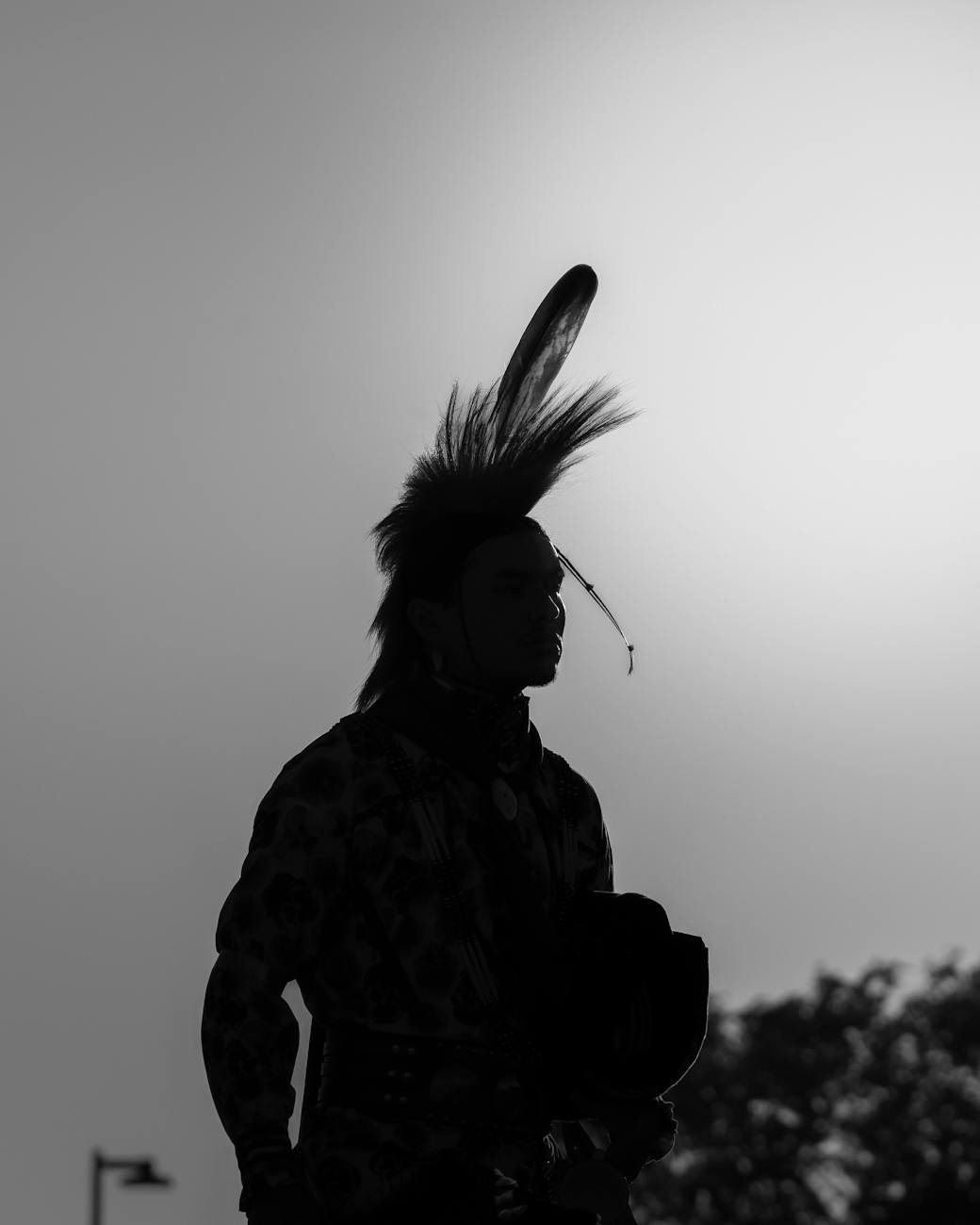
Jackie Carl Gets a New Name

Sabbath Day Thoughts — “Jackie Carl Gets a New Name” Isaiah 9:2-7 and Psalm 22:9-10

for Tillie Blackbear

“Jeezum Crow! That boy has gotten up to a lot of mischief over the years, but this takes the cake.” It was Ruth Underhill. Pastor Bob had gotten an emergency call, summoning him to Ruth’s farm, and it hadn’t taken much imagination to surmise that the “emergency” was related to Ruth’s grandson Jackie Carl. The boy just seemed to be made for trouble.

At the farm, Bob wasn’t surprised to see that Tubby Mitchell had also been summoned to respond to the crisis. Tubby sat at the kitchen table, studying his cup of black coffee, and while Ruth poured Bob his own cup, she launched into Jackie Carl’s latest escapade. It had involved the outside brick wall of the high school gym and a lot of spray paint. To Jackie Carl’s credit, the graffiti was not profane, just rude and wildly inappropriate.

“You name it, I’ve tried it,” Ruth continued, “Counseling, tough love, heart-to-hearts, prayer, bribery.” She threw up her hands. “Nothing works. Nothing!”

Now Bob was studying his coffee cup as assiduously as Tubby was. In the silence that followed, Bob could hear the kitchen clock ticking. Bob thought about all the trouble that Jackie Carl had gotten into over the years. When the boy was only in second grade, Bob suspected him of swiping the special comb that Eugenia Bergstrom used every Sunday to straighten the fringe on the altar cloth. An exhaustive search had eventually found it, tangled in the mane of a stuffed lion down in the Sunday school room. Then, there had been the time in middle school when Jackie Carl had blown out the exhaust system in his school bus by wedging an enormous potato into the tailpipe. Lately, Bob had heard about fights—two black eyes for the boy who had called Jackie Carl a red-headed loser. When Bob thought about it, the only time he’d seen Jackie Carl truly happy in the past year had been on the lacrosse field, the teenager’s lanky, freckled legs dashing down the field at a blistering pace, cradling the ball, dodging defenders, and launching a shot with a fierce intensity that made even the most steadfast of keepers shrink in fear.

Ruth wasn’t done. “I blame it on his father. We haven’t seen hide nor hair of him in five years. Five years! At least when he was in prison, we knew where he was. Why my daughter took up with him I’ll never understand. You know, the one time he did visit, he spent the whole time smoking cigarettes on the front porch and staring at his phone. He may have named the boy after himself, but he has never shown a lick of interest in the child.”

Tubby sadly nodded along. Tubby had been thinking, too. He remembered meeting the six-year-old Jackie Carl, all knobby knees, freckles, and carroty hair. The boy had called Tubby out of his grief for his dead son, and the two had forged a special bond as the boy tagged along to fish, camp, and hunt. Each morning of those trips, Tubby and Jackie Carl would begin the day by praying together the Haudenosaunee prayer of thanksgiving with its beautiful celebration of the unity of creation, “Now our minds are one.” For Tubby and his wife Irene, the boy had helped to heal the hole left in their hearts when Todd died in Iraq.

Tubby thought about himself, too, he’d lost his parents at a young age in a car accident, casualties of those days when addiction had been so prevalent on the reservation. Tubby knew there was a good chance that he would have ended up as wild and unsettled as Jackie Carl if it hadn’t been for his grandfather. The legendary wilderness guide had driven north to the reservation from his cabin outside the village and taken Tubby home with him. Tubby’s grandfather had always made sure that Tubby knew who he was, Tionatakwente of the Kanien’kehaka people, the great eastern door of the Iroquois confederacy, but Tubby suspected that Jackie Carl had no idea who he was. Tubby and Bob locked eyes across the table and an unspoken agreement passed between the two men.

Bob leaned forward, “How can we help, Ruth?”

This unlocked a shower of tears from Ruth, who could run her dairy farm with an iron fist but couldn’t tame her grandson. Between sobs, Ruth stammered, “I don’t know I don’t I don’t I don’t know.”

Tubby sighed and reached across the table to lay his hand on Ruth’s, “I’ve got an idea, Ruth. Let me talk to Irene about it.”

When Tubby opened the door to the cabin, he was greeted by the scent of balsam and baking. He had cut a six-foot Christmas tree and brought it home where Irene had worked her magic, winding it with lights, hanging ornaments, and topping it with an enormous God’s Eye that their son Tod had long ago made in Sunday school—bright yarn was woven around crossed sticks to remind them of God’s watchful care and protection. Irene was pulling a tray of Christmas cookies from the oven. Her cheeks were flushed and her long hair, bound by a red ribbon the nape of her neck, was shot through with gray.

Tubby leaned in to steal a too-hot cookie. He remembered the first time he saw Irene up on the reservation. He had known immediately that she would be his wife. Tubby wasn’t sure what his grandfather had said to the Clan Mother to convince her it would be ok for Irene to marry his grandson, but it worked. Their wedding day, when he had seen her in her ribbon skirt, shawl, and beaded moccasins, had been one of the happiest moments of his life. Tubby blew on his cookie.

“I’ve been thinking,” he said, venturing a cautious bite.

Irene raised her eyebrows. “Thinking? That’s always trouble.”

Tubby nodded, “It’s about Jackie Carl.”

Irene smiled indulgently. “Ah. More trouble.”

Tubby started again, “Well, it’s not just about Jackie Carl. It’s about Todd, too.” Irene’s brow creased, thinking about the beautiful son they had lost in Iraq. She waited for her husband to continue.

Tubby searched for the right words. “Irene, maybe kinship isn’t just about blood. Jackie Carl needs us. Maybe in ways that Todd never did. Ruth Underhill, she needs our help. Maybe God is calling us to something new.”

One by one, Irene transferred cookies to the cooling rack, plying her spatula until the baking sheet was empty. Christmas always made Irene think of Todd. Could there be that kind of space in her heart for someone else, especially someone who was so troubled? She thought of her own parents and elders on the reservation. They told long ago stories of the healing of families that followed times of war. Beloved ones lost in battle left a hole that was sometimes filled by others—even prisoners of war—who were adopted into the clan. Still today, it wasn’t unusual to expand families in unexpected ways.

Irene turned the thought over in her mind and picked up a cookie. She took a bite. Maybe the question shouldn’t be why but why not. Why not a hot-headed teen with fiery red hair? Irene put down her spatula, “Tionatakwente, are you asking if we should adopt Jackie Carl into the clan?”

Tubby looked expectant.

Irene nodded, “Well, I’d better call my Auntie. Lord knows, that boy sure could use a new name.”

Jackie Carl was no stranger to the res. As a boy at the Powwow, he had relished eating stew with thick chunks of venison, made tender by slow cooking. His small feet had shuffled along with the men as they moved to the rhythm of the Thunder Dance. Each year right after school let out, Tubby would drive them north to the St. Lawrence to fish for enormous Muskies that lurked in weeds and promised the fight of a lifetime. Jackie Carl had learned to love lacrosse on the res, the beauty of precision passing, the crack of stick against stick, the cry of “Aho!” when the ball swished into the back of the net. Last summer, Jackie Carl had helped Tubby as the firekeeper at the sweat, carefully passing super-heated rocks with a pitchfork from the fire to the pit at the center of the lodge.

Sometimes on the reservation, Jackie Carl forgot. He forgot that his father didn’t love him. He forgot that his mother had left him. He forgot that he felt angry and rootless on most days, despite his grandmother’s efforts to provide what his parents could not.

Jackie Carl had never been on the reservation for the Midwinter Ceremony. The five days of praying, eating, dancing, and games conflicted with school, but this year, Ruth Underhill made an exception, sending him north in the back seat of Tubby’s Kingcab. Irene had been cooking for the feast for days: golden rounds of Bannock, sweet cornmeal pudding, roasted squash mixed with butter and maple syrup, and vats of potato and macaroni salad. Just thinking about it made Jackie Carl’s stomach growl. On that first day, they had pulled up in front of an inauspicious looking ranch house. Tubby put the car in park, and Irene turned to the boy. “This is my Auntie’s house. She’s the Clan Mother. Are you ready?” Jackie Carl nodded, “Yep,” and they went inside.

A teen about Jackie Carl’s age answered the door, showed them where to leave their shoes, and pointed them toward a closed door, saying only, “They’re waiting.” Inside, it took Jackie Carl’s eyes a minute to adjust to the dark. Windows had been covered with blankets and the only light came from a low fire that burned in the fireplace. This must have been what it felt like in the longhouse, Jackie Carl thought. A circle of Kanien’kehaka people sat on the floor, but just enough room had been left for the three of them. Jackie Carl, Tubby, and Irene took a seat.

 At the head of the circle sat the oldest woman that Jackie Carl had ever seen. “Auntie,” Irene spoke up, “we bring you a gift.” She held out a pouch of tobacco, which was passed around the circle to the waiting matriarch. She gave it an appreciative sniff before mixing it with red willow bark and packing it into the bowl of a medicine pipe. The lit pipe slowly passed from neighbor to neighbor around the circle. To Jackie Carl, the silence of that room felt like an eternity, but for Tubby and Irene it felt like they were settling back into the ancient rhythms of their ancestors.

Finally, the Auntie spoke in Mohawk, then in English for Jackie Carl’s benefit. “What is it you seek, my children?”

Irene answered, “We’ve come to claim the right of adoption. The hole that was left in our clan when Todd was killed needs to be filled. We claim Jackie Carl, that he might have all the rights and status that would have been Todd’s.” There were sounds of affirmation around the circle, followed again by an appreciative silence.

At last, with what might have been a twinkle in her eye, the Auntie said, “It’s about time, Irene. What took you so long?”

The Auntie turned her bright eyes on Jackie Carl, “And what do you have to say about it, young man?”

Before she had even finished speaking, Jackie Carl was nodding, “Yes,” so filled with feeling that he could not find the words or trust his voice. Jackie Carl looked to Tubby and Irene, their faces filled with love, their eyes brimming with tears. Tubby placed a hand on Jackie Carl’s shoulder and for the first time in his life, the boy felt like he had a Dad.

“Very well!” the Auntie continued, “You need a name. A real name.” As if the name Jackie Carl had only been a placeholder for the true life that was about to unfold.

They sat once more in silence. The pipe was filled and passed around the circle again. After a long while, the Auntie spoke. Pointing first to the orange glow of the coals on the hearth and then to the carroty color of Jackie Carl’s hair, she said. “You, my child, are Atsila. That means fire.”

An appreciative chorus of “Aho” and laughter greeted her proclamation. “Atsila,” Jackie Carl tried the sound of his new name. It felt like the moment when the Muskie hits your line and you know you’ve hooked a big one. “Atsila.” It felt like the instant your lacrosse shot slips past the keeper and into the cage. “Atsila.” It felt like the sleepy peace that comes when your belly is full of Bannock, venison stew, and cornmeal pudding. “Atsila.” It felt like home.


Isaiah 9:2-7

The people who walked in darkness
    have seen a great light;
those who lived in a land of deep darkness—
    on them light has shined.
You have multiplied exultation;
    you have increased its joy;
they rejoice before you
    as with joy at the harvest,
    as people exult when dividing plunder.
For the yoke of their burden
    and the bar across their shoulders,
    the rod of their oppressor,
    you have broken as on the day of Midian.
For all the boots of the tramping warriors
    and all the garments rolled in blood
    shall be burned as fuel for the fire.
For a child has been born for us,
    a son given to us;
authority rests upon his shoulders,
    and he is named
Wonderful Counselor, Mighty God,
    Everlasting Father, Prince of Peace.
Great will be his authority,
    and there shall be endless peace
for the throne of David and his kingdom.
    He will establish and uphold it
with justice and with righteousness
    from this time onward and forevermore.
The zeal of the Lord of hosts will do this.

Psalm 22:9-10

Yet it was you who took me from the womb;
    you kept me safe on my mother’s breast.
10 On you I was cast from my birth,
    and since my mother bore me you have been my God.


Photo by Cody Hammer on Pexels.com

The Least of These

Sabbath Day Thoughts — “The Least of These” Matthew 25:31-46

Bob stopped typing. There it was again, an insistent knocking, down at the front door. It was Saturday morning. Marge and Paul had driven south for a weekend of Christmas shopping with her sister in Albany. Bob was working on his sermon, but he had deleted more than he had written. He pushed back his desk chair and ventured downstairs.

There on the doorstep was the short, round form of Junior Miller. Bob remembered the Christmas Eve that Junior had been born, more than twenty years ago, now. Bob had been called to the hospital to visit the newest member of his flock. Junior’s almond-shaped eyes and rosebud mouth confirmed what his parents had learned: Down Syndrome. But the boy had been a delight. Sure, he struggled with school. Sure, he took some bullying. But his kind nature was unstoppable. This morning, Junior looked extra round. A down jacket stretched across his belly, snow boots reached almost to his knees, a bright wool handknit hat and matching scarf and mittens were keeping out the cold.

“Why Junior! What brings you to my door so bright and early?”

Junior pulled down the scarf to free his mouth and leaned in, “Pastor Bob, I had a dream.”

Bob’s eyebrows shot up, like they do when he is intrigued. “A dream. You don’t say. You want to come in and tell me about it?”

Junior shook his head emphatically, no! “Pastor Bob! It was God, he said he was going to see me today. I don’t have time to visit with you.”

Bob nodded appreciatively. “Hmm. Well, where do you think you’ll find God?”

Junior pushed back his knit cap and looked up and down the street. “God didn’t say. Any ideas?”

Bob looked left and right. It had snowed a lot overnight. The plows had been out to clear the lane, but the trees were bowed beneath the wintry weight. Bob squinted against the snowy glare, “Well, Junior. I’m not sure where you’ll find Jesus, but I’m certain he’s out there. Be sure to send him my way. I could use some help with my sermon.”

Junior nodded, turned around, and marched off in search of Jesus.

Junior had only gone a few blocks when he saw old Mrs. Trombley. Every week she came to the dairy where Junior worked and bought the same thing:  a dozen eggs, a half-gallon of milk, and one of Mrs. Underhill’s freshly-baked bear claw pastries. This morning, Mrs. Trombly was shoveling snow. A wall of the white stuff had drifted against the back of her car. You could barely make out the bumper.

“Hi, Mrs. Trombly! It’s me, Junior.”

Mrs. Trombley leaned on her shovel to catch her breath. Her cheeks were bright red and she looked kind of sweaty. Junior hadn’t noticed before, but Mrs. Trombley seemed to be shrinking. Her back curved inside her old winter coat. She had to look up to see his face. “Why Junior, good morning! How do you like all this snow?”

Junior took her question seriously. “Pretty nice, I guess.”

Mrs. Trombley looked at the big drift behind her car. “Lots of work if you ask me. Burt always does this, but he had surgery last week. That means I’m on deck.”

Junior nodded. He really needed to get going if he was going to see Jesus, but he stopped. “Here, Mrs. Trombley. Give me that.” Junior took the snow shovel. It took a while to dig out the car and shovel the walk while Mrs. Trombley went back inside to tend Burt. Junior left the snow shovel next to the front door and hurried off to continue his search.

Outside the church, Junior saw Christine Lebowski. She had been the prettiest girl in his high school class. A cheerleader, too. She had married the captain of the football team, but Junior wasn’t invited to the wedding. In fact, Christine and her friends had sometimes made fun of Junior. They called him the ‘tard and poked fun at his round belly which, as a child, bore a striking resemblance to Winnie the Pooh’s.

Christine was pushing a stroller, the lightweight, folding kind that you use in the summer months. There was a chubby baby inside that was every bit as blonde and blue-eyed as Christine. The baby looked happy, but Christine did not. In fact, she looked like she had been crying. Her eyes were red and swollen. She had a soggy Kleenex clenched in one hand. Junior had never seen Christine cry.

Junior followed Christine into the church. There she turned right, into the food pantry. Junior really needed to look for Jesus, but the fact that Christine Lebowski was crying tugged at his tender heart. He watched out of the corner of his eye while Christine took the baby out of the stroller and strapped it across her chest into one of those Snugli carriers while the food pantry volunteers loaded up her stroller with bags of food. As Christine shoved the overloaded stroller over the threshold and back outside, Junior heard an alarming, “Crack!” The stroller collapsed, sending groceries everywhere. Christine was really crying now.

Junior stepped up. “Hey, Christine.”

The sad woman looked around, noticing for the first time that Junior was there. “Uh, Junior. Sorry, I’ve made a big mess.”

Junior bent down and gathered the groceries back into their shopping bags. The bags were heavy and Christine with her baby didn’t look like any match for the load.

“I can help.” Junior said. That made Christine cry even more. He walked them home. Junior was surprisingly strong from his work at the dairy, but even he had to stop a few times to rebalance the load.

 Along the way, Christine told him that she was alone now. Her husband said he didn’t want to be tied down with a baby. She was working at the Ron Dack Market when her Mom could watch the baby, but some months that just wasn’t enough. Junior just listened. At the door to her apartment, Christine said, “Gee, Junior. You are my knight in shining armor today.” This made Junior blush.

It was already early afternoon, but if Junior hurried, he could make it for the free lunch at the Good News Café. He arrived just as Tubby Mitchell was locking up.

“Junior!” the older man said, “You are my last customer today.” Tubby loaded up a plate with mashed potatoes, ham, green beans, and a generous slab of sheet cake.  Junior ate with gusto, telling Tubby between bites all about his dream.

“Have you seen Jesus, Tubby?” Junior wanted to know.

Tubby looked out the window with a far away look in his eyes and sighed. “You know, Junior, I see him most days.”

This amazed Junior. “Jeezum Crow, Tubby! Really?”

Tubby smiled sadly, “Yup. I think I served him lunch about twenty minutes ago. If you hurry, you might catch him.” He nodded up the street, toward the center of town.

Junior pushed most of his cake into his mouth then pulled on his down coat and woolen cap. Tubby wound Junior’s scarf around his short neck while Junior jammed his hands into his mittens. “Oh boy! Thanks, Tubby!” Junior shouted over his shoulder as he dashed off up the street.

But Junior didn’t see Jesus or God almighty or even an angel. Dejected, he sat on a bench at the busy intersection in the center of town. Junior watched every car and inspected every pedestrian, hoping for a glimpse of the Lord.

The only thing of interest was Hank Tebow, who was always interesting. In the summer months, Hank wielded a spray bottle of Windex and a squeegee to make some easy money by washing the windshields of tourists while they idled at the light. In winter months, Hank wore big insulated coveralls and mostly just watched what passed for traffic in the village. Some days were bad, and he would yell at the cars until the police moved him along. Other days, like today, Hank dispensed jokes, the kind a six-year-old might tell.

“Hey, Junior! Knock, knock!”

Junior generally like this kind of joke, “Who’s there?”

“Snow.”

“Snow who?”

“Snow use. I forgot my name again!”

Junior laughed, “Good one, Hank.”

Junior resumed his search for Jesus while Hank scrounged a few cigarette butts from the sidewalk and tried unsuccessfully to share his jokes with pedestrians hurrying past. Junior noticed that Hank didn’t have any gloves or mittens. His hands were stained with nicotine and his nails were grimy, like Junior’s after a morning of work with the animals at the dairy. Hank’s bald head was hatless and his wispy beard didn’t seem to offer much protection for his face. Already the shadows were getting long. Junior would go to his parents for dinner, but Hank would probably be out there for hours. Junior stood up. He unwound the scarf, pulled the hat from his head, and yanked off his mittens. He tugged his coat sleeves down to cover his bare hands.

“Hey, Hank!” He yelled, “Knock, knock!”

Delighted that someone would join him in a little fun, Hank hurried over, “Who’s there?”

“Tank.”

“Tank who?”

“You’re welcome!” Junior said as he pushed his warm knitwear into Hank’s hands. They did some more laughing and Junior left. It was starting to get dark as Junior walked to his parents’ house. He had seen plenty of people that day, but where was Jesus?

The next morning, Junior arrived early at church. He knocked on Pastor Bob’s study door, then let himself in. He took a dejected seat on the couch. Bob stopped what he was doing.

“So, how did the Jesus hunt go, Junior?”

“Not so good.” Looking disappointed, Junior told Bob all about his day.

Bob listened and then chose his words carefully, “You know, Junior, I suspect that you saw plenty of Jesus yesterday.”

“Huh?”

“And Junior, I suspect that all those people you helped, they saw Jesus, too.”

Junior’s brow creased in concentration. “I need to think about that,” he said, rising from his seat and venturing out into the hallway.

At the door, Junior turned back, “How about you, Pastor Bob? Did Jesus help you with your sermon?”

Bob laughed, “Well, he sent his Holy Spirit to help me out. I expect we’ll do just fine.”

While Bob finished up his prayers of the people, Junior Miller found a quiet place to think.

This story was inspired by Leo Tolstoy’s classic work of short fiction, “Where Love Is, There God Is Also.”


Matthew 25:31-46

31“When the Son of Man comes in his glory, and all the angels with him, then he will sit on the throne of his glory. 32All the nations will be gathered before him, and he will separate people one from another as a shepherd separates the sheep from the goats, 33and he will put the sheep at his right hand and the goats at the left. 34Then the king will say to those at his right hand, ‘Come, you that are blessed by my Father, inherit the kingdom prepared for you from the foundation of the world; 35for I was hungry and you gave me food, I was thirsty and you gave me something to drink, I was a stranger and you welcomed me, 36I was naked and you gave me clothing, I was sick and you took care of me, I was in prison and you visited me.’ 37Then the righteous will answer him, ‘Lord, when was it that we saw you hungry and gave you food, or thirsty and gave you something to drink? 38And when was it that we saw you a stranger and welcomed you, or naked and gave you clothing? 39And when was it that we saw you sick or in prison and visited you?’ 40And the king will answer them, ‘Truly I tell you, just as you did it to one of the least of these who are members of my family, you did it to me.’ 41Then he will say to those at his left hand, ‘You that are accursed, depart from me into the eternal fire prepared for the devil and his angels; 42for I was hungry and you gave me no food, I was thirsty and you gave me nothing to drink, 43I was a stranger and you did not welcome me, naked and you did not give me clothing, sick and in prison and you did not visit me.’ 44Then they also will answer, ‘Lord, when was it that we saw you hungry or thirsty or a stranger or naked or sick or in prison, and did not take care of you?’ 45Then he will answer them, ‘Truly I tell you, just as you did not do it to one of the least of these, you did not do it to me.’ 46And these will go away into eternal punishment, but the righteous into eternal life.”


Photo by Karolina Grabowska on Pexels.com