A Peaceable Kingdom

Sabbath Day Thoughts — “A Peaceable Kingdom” Isaiah 65:17-25

Edward Hicks was a Quaker sign painter born in Pennsylvania in 1780. He is acknowledged as one of America’s greatest folk artists. In 1820, when Edward was forty years old, he painted Isaiah’s vision of “The Peaceable Kingdom.” Against a green landscape and blue skies, a primitive looking infant, swaddled in gauzy cloth, sits between a pointy-horned ox and a lounging lion. The ox and the lion munch on hay. Nearby, a wooly lamb cozies up to a placid wolf. Two goats and a leopard look like best friends. It’s a wistful vision of a new creation, a world where violence has come to an end, where all God’s creatures live in peace, abundance, and safety.

This morning, the world is far from that bucolic vision of the peaceable kingdom. It’s day 1,361 of the war in Ukraine. Fierce fighting is ongoing in Zaporizihia, amid adverse weather conditions. In response to ongoing Russian aggression, Ukraine has targeted drone and missile strikes on key Russian oil facilities to disrupt Russian supply lines and military operations. On Friday night, Russia launched a blistering assault on Ukraine, killing at least six people and injuring 35 as 430 drones and 18 missiles rained down through the night sky. It’s estimated that Russian military casualties in the war have topped 1,000,000 personnel while Ukraine’s deaths and injuries are near 450,000. An estimated 45,000 Ukrainian civilians have been caught in the crossfire, about 3,000 of those children. We long for a peaceable kingdom.

Yemen has been locked in civil war for more than a decade. In September 2014, Houthi forces took control of the capital, Sanaa, following widespread discontent with the Saudi-backed government. A coalition, led by Saudi Arabia, stepped in, using air strikes to try to restore the former Yemeni government. Al Qaeda and ISIS fighters soon saw the conflict as a way to advance their regional ambitions, so they have carried out attacks against both factions. In the shadows, the Iranians pull the strings. Israel has been drawn into the conflict, killing the Yemeni Prime Minister in an August airstrike. In just the first three years of the war, more than 85,000 children died of starvation. A decade of war has left Yemen’s infrastructure in ruins and its people exhausted. Close to 20 million people in Yemen depend on aid simply to survive. Nearly five million are homeless, pushed from one place to another by violence and disaster. We long for a peaceable kingdom.

In our reading from the Prophet Isaiah, we hear God’s promise of a peaceable kingdom. The Israelites had returned to Jerusalem after fifty years of exile in Babylon. They were refugees returning to a homeland that was broken and scarred by war. Ancestral property rights were gone. Vineyards and fields had gone wild. Food was scarce. Disease was rampant. Neighbors, who had not gone into exile, were hostile and suspicious. Roads were unsafe. The Temple was in ruins. In a devastated land that once flowed with milk and honey, the people’s safety and security hung upon the mercy of a foreign king. A foreign-appointed government had replaced the once mighty kingship of David. The lives of the remnant of Israel were so filled with death, grief, hunger, and despair that they began to wonder. Is God with us? Has God forsaken us and sent us home to live as a broken people in a broken land?

Into this time of uncertainty and fear, Isaiah spoke words of prophetic promise, a beautiful vision of a fresh start in a new Jerusalem where weeping will cease and children will thrive. It was a bold vision of long life, good homes, and abundant harvests. It was a faithful promise of abiding love and prayers answered from generation to generation.  It was a holy vision of peace for all creation, of a new Eden where the wolf and the lamb shall feed together, the lion shall eat straw like the ox, and God’s holy mountain will be free of hurt and destruction. God promised the people an everlasting shalom, the peace and wholeness that we find when we are in right relationship with God, neighbor, and even within ourselves.

I imagine that as the people listened, their eyes filled with tears and their hearts with longing. They remembered that God is with them, always with them. They found the courage to persevere and seek the future that God held ready for them. They rolled up their sleeves and worked the fallow fields. They shared what little they had, so that everyone had enough. They gathered at the Temple, worshipped amid the ruins, and dreamed of a new sanctuary. They reached out to their suspicious neighbors with kindness and patience, setting aside their tribalism to work toward a shared future. It wasn’t exactly the peaceable kingdom, but it held the promise of it.

This morning, we may not be caught up in the ground-shaking artillery fire of Zaporizihia, or the mass homelessness and hunger of Yemen, or the despair of Israelite refugees returning to a broken land, but we, too, long for a peaceable kingdom. We mourn the casualties in Ukraine, the devastation of Gaza, and the threat of war with Venezuela. We are grieved by the fracture of longstanding alliances and friendships between nations. We are frightened by the seemingly intractable polarization of our political landscape. We despair over the lack of respect or even common courtesy in our public discourse. In this land of plenty, we are shocked by widespread food insecurity and the millions of neighbors who teeter on the brink of economic crisis. We long for a peaceable kingdom.

As the holidays draw near, we acknowledge that we long for peace closer to home. We want peace for our families; we dream of a holiday table where every place is occupied, every tummy is full, the conversation is merry, and the love abounds. We need God’s peace to find a spirit of tolerance and acceptance, to heal our hardheartedness and unwillingness to accept one another as we are. We long for God’s forgiveness that will be a balm for old wounds and long-held grudges. We pray for God’s courage and grace to name and heal from incidents of abuse. And when we take the time to be quiet, to go deeper, we admit that we need God’s peace in our hearts, so that we may forgive ourselves as we have forgiven others, love without strings attached, and accept what cannot be changed. We long for a peaceable kingdom.

This morning, may we hear anew God’s promise through the Prophet Isaiah of the new heavens and new earth, of the peaceable kingdom where ancient enmities come to an end, where the lion lies down with the lamb. May we remember that God is with us, always with them. We may make a mess of our world, but future is always in God’s hands, and the vision is one of peace.

If we listen with the ears of our hearts, we may even hear God’s vision that peace begins with us. We are not the architects of the peaceable kingdom, but we can be the artists, painting peace with the brushstrokes of lives lived in faith and love. Let’s roll up our sleeves and join God in the work of shalom. We cannot arbitrate ceasefires for Ukraine and Yemen, yet we can pray for their peace. We can demand better and more peaceful ways for those who govern. We can reach out to neighbors with kindness and patience, setting aside tribalism to work toward a shared future. We can share what we have, so that everyone has enough. We can dare to heal our families, reaching out with love, even if our best efforts fall short. Let’s extend to others and to ourselves the grace that has been so freely shared with us in Jesus. It won’t be the peaceable kingdom, but with God’s help our lives may begin to hold the promise of it. Let’s take a moment to commit ourselves to take one action in the coming week that can prosper peace.

The Quaker painter Edward Hicks painted “The Peaceable Kingdom” more than a hundred times in the last twenty years of his life, as if by repeatedly painting the promise of the kingdom he could hasten its coming. Over the years, Hicks’ Bucks County surroundings began to be represented in his paintings. The Delaware River wound through the background. Little girls entered the picture, breaking the gender barrier and joining the Christ child in his peaceful romp with the wild beasts. In the distance, William Penn and his Quaker friends, clad in somber shades of gray and black, passed a peace pipe with Lenni Lenape tribesmen in bright blankets, feathers, and wampum. Hicks painted to cast a prophetic vision of harmony and plenty, an end to violence and bloodshed, a setting aside of oppression for women and people of color. It’s as if Hicks trusted that if he could share Isaiah’s vision in ways that spoke to his world, folks would understand and change would come. It wouldn’t be the peaceable kingdom, but with God’s help there would be the promise of it.

We may not be America’s greatest folk artists, but Isaiah’s vision of the peaceable kingdom still sparks the imagination of God’s people. May we go forth to seek that kingdom with the broad brushstrokes of lives lived in pursuit of peace.

Resources

Carolyn J. Sharp. “Commentary on Isaiah 65:17-25” in Preaching This Week, Nov. 14, 2010. Accessed online at Commentary on Isaiah 65:17-25 – Working Preacher from Luther Seminary

Garrett Galvin. “Commentary on Isaiah 65:17-25” in Preaching This Week, Nov. 14, 2010. Accessed online at Commentary on Isaiah 65:17-25 – Working Preacher from Luther Seminary

John Braostoski. “Hicks’s Peaceable Kingdom,” Friends Journal, February 2000. Hicks’s Peaceable Kingdom – Friends Journal

James C. Reynolds and Steffie Banatvala. “Inside Putin’s campaign of terror in Kyiv: Why Russia keeps bombarding the capital” In The Independent, Nov. 14, 2025. Accessed online at Inside Putin’s campaign of terror in Kyiv: Why Russia keeps bombarding the capital | The Independent

Lyndal Rowlands and News Agencies. “Russia-Ukraine war: List of key events, day 1,357” in Aljazeera, Nove. 12, 2025. Accessed online at Russia-Ukraine war: List of key events, day 1,357 | Russia-Ukraine war News | Al Jazeera

Statista Research Department. “Number of civilian casualties in Ukraine during Russia’s invasion verified by OHCHR from February 24, 2022 to July 31, 2025,” Statista, Sept. 25, 2025. Accessed online at Ukraine civilian war casualties 2025| Statista

Othman Belbeisi. “Yemen: Ten Years of War, a Lifetime of Loss” in UN News, March 26, 2025. Accessed online at Yemen: Ten Years of War, a Lifetime of Loss | UN News


Isaiah 65:17-25

For I am about to create new heavens
    and a new earth;
the former things shall not be remembered
    or come to mind.
18 But be glad and rejoice forever
    in what I am creating,
for I am about to create Jerusalem as a joy
    and its people as a delight.
19 I will rejoice in Jerusalem
    and delight in my people;
no more shall the sound of weeping be heard in it
    or the cry of distress.
20 No more shall there be in it
    an infant who lives but a few days
    or an old person who does not live out a lifetime,
for one who dies at a hundred years will be considered a youth,
    and one who falls short of a hundred will be considered accursed.
21 They shall build houses and inhabit them;
    they shall plant vineyards and eat their fruit.
22 They shall not build and another inhabit;
    they shall not plant and another eat,
for like the days of a tree shall the days of my people be,
    and my chosen shall long enjoy the work of their hands.
23 They shall not labor in vain
    or bear children for calamity,[a]
for they shall be offspring blessed by the Lord—
    and their descendants as well.
24 Before they call I will answer,
    while they are yet speaking I will hear.
25 The wolf and the lamb shall feed together;
    the lion shall eat straw like the ox,
    but the serpent—its food shall be dust!
They shall not hurt or destroy
    on all my holy mountain,
            says the Lord.
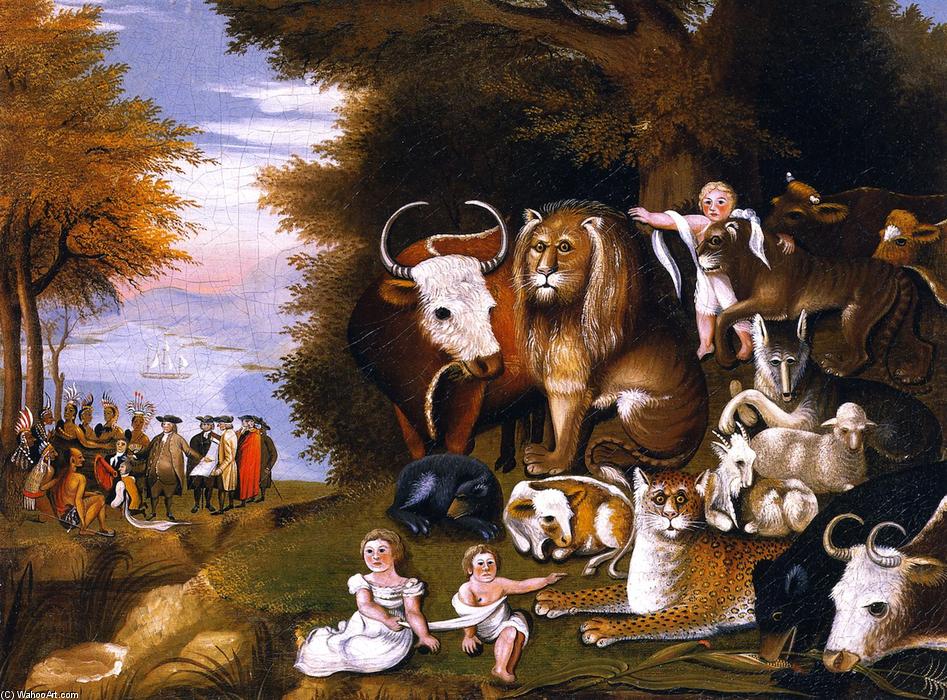

“The Peaceable Kingdom” Edward Hicks, 1832. From the collection of the Abby Aldrich Rockefeller Folk Art Center (United States)
God’s Wide Welcome

Sabbath Day Thoughts — “God’s Wide Welcome” Acts 8:4-8, 12, 14-17

On Thursday, the nation said goodbye to our 39th President, Jimmy Carter. The Carter Family was joined at the National Cathedral in Washington by the five living Presidents and dignitaries from around the world. The former peanut farmer and Navy nuclear engineer had started small, serving on the local school board and in the state legislature before rising to national prominence as the Georgia governor.  When the shadow of Watergate left Americans disillusioned with Washington insiders, we turned to Carter, the deeply ethical outsider, to reorient our political landscape.

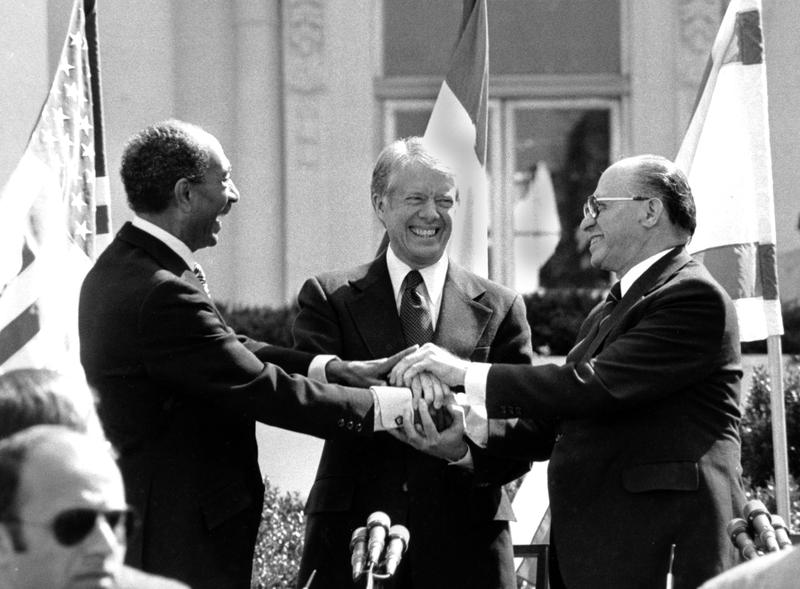
The diplomatic highlight of Jimmy Carter’s presidency was his effort to achieve peace between Israel and Egypt. In twelve days of secret negotiations at Camp David in September 1978, Carter met with Israeli Prime Minister Menachim Begin and Egyptian President Anwar Sedat. The terms reached between the two nations, called the Camp David Accords, laid the groundwork for the Egypt-Israel Peace Treaty, which Carter witnessed in Washington the following March. The treaty notably made Egypt the first Arab country to officially recognize Israel. More than forty-five years later, the peace agreement between Egypt and Israel is still in effect.

Carter’s initiative in seeking peace was prompted, in part, by his faith. A staunch Christian, Carter saw in Begin and Sadat his brothers, all sons of a common ancestor, the biblical patriarch Abraham. If only their divides could be bridged, the world would be blessed by their kinship, and there would be hope for Middle East peace. Newspapers captured that beautiful promise of peace in a remarkable photo after the signing of the treaty. Begin, Carter, and Sadat stand facing one another, their hands extended to clasp across the circle, kind of like a Little League Team prepping for the big game with a hand sandwich and the cry, “Go team!” The joy on the three men’s faces is still palpable across the years.

When the evangelist Philip went down to Samaria, he may have felt a little like Jimmy Carter trying to bring Arabs and Israelis to the table of peace. When persecution against the early church surged in Jerusalem, Philip and his friends were forced to flee the city and seek another place to share their gospel. By any stretch of the imagination, though, Samaria was an unlikely location to start. Samaritans and Jews had been at odds for centuries. It had started more than a thousand years before when the Hebrew people split into the northern Kingdom of Israel and the southern kingdom of Judah. Samaritans traced their ancestry to the north while Jews looked to south. Both nations worshiped Yahweh and observed the teachings of the Torah, but the Samaritans worshiped God on their holy mountain Gerizim while the Jews believed that God could only be worshiped in the Temple in Jerusalem.

Relations between the neighbors hit a low point during the rule of the Maccabees. In the year 110BCE, the troops of the Jewish King and High Priest John Hyrcanus invaded Samaria, ascended Mt. Gerizim, and destroyed the Samaritan Temple. Later, around the time Jesus was born, Samaritans sneaked into the Jerusalem Temple and scattered human bones, desecrating the space. By the time of Jesus’ ministry, if you wanted to really insult someone, you would call them a Samaritan. That’s what Jesus’ opponents did in John 8:48, saying to the Lord, “You are a Samaritan and have a demon!” That’s some serious biblical trash talk.

Philip the evangelist must have been surprisingly openminded and wildly hopeful to want to test the Samaritan waters. Yet as he shared the good news of God’s love for all people, a love that was revealed in Jesus, something remarkable happened. The Book of Acts tells us that there was healing and joy. The dividing line between Jew and Samaritan vanished. Enemies became friends. Jewish and Samaritan sons and daughters of Abraham, who had long been estranged, found common ground. In the waters of baptism, they became a new sort of family, brothers and sisters, whose eyes had been opened to see that God’s love is big enough to welcome Jews and Samaritans. When the apostles in Jerusalem heard about it, they couldn’t believe it. They had to send Peter and John on a snoop mission to check it out. As the apostles laid hands upon the Samaritans and prayed, the Holy Spirit confirmed that the impossible was true. In Jesus Christ, all divisions had come to an end. Alleluia!

Our world continues to struggle with the sort of deep-seated division that plagued the Jews and Samaritans. We see it on the international stage, where Israeli bombs fall on Gaza and Lebanon, and Hezbollah and Houthi rockets seek to break through Israel’s Iron Dome. We see it in Ukraine, where this week Russian missiles killed at least 13 civilians in the southern city of Zaporizhzhia, and an increasingly beleaguered Ukrainian military lobs longer range rockets into Russia.

We see those deep-seated divisions on our national stage as we characterize one another as red states and blue states, and we have a hard time listening to our differing perspectives. We see it as those who are generational Americans look with suspicion on immigrants, questioning their work ethic, their values, and even their diets.

We have known deep-seated divisions in our personal lives. We like to put a lot of emotional and physical distance between ourselves and those who hurt us. We don’t like to hang out with folks when we find that their core beliefs are different from our own. We tend to avoid those who look different, whether they are covered with a landscape of tattoos or punctuated by multiple piercings, sporting the shaved head and jackboots of the neo-Nazi or wearing the bling-bling of the HipHop gangsta’.

The dividing lines are everywhere. Maintaining them is easy. We don’t have to destroy any sacred sites or scatter any bones to keep the walls up. All we have to do is accept the divisive narrative that is handed to us. All we have to do is harden our hearts and perpetuate the status quo. All we have to do is wash our hands of personal responsibility and forge a world of us and them.

I suspect that the reason that Philip could bridge the divide with the Samaritans was because Jesus did it first. When a Samaritan village refused to welcome Jesus, the disciples implored the Lord to call down fire from heaven to obliterate the community, but Jesus wouldn’t do it. Instead, as we read the gospels, we find Jesus healing a thankful Samaritan leper (Luke 17), offering the water of life to a marginal Samaritan woman (John 4), and shocking everybody by casting the hero of his most beloved parable as a Good Samaritan (Luke 10). Jesus, in his longing to restore the lost sheep of Israel, held out hope for the Samaritans. Perhaps he knew that through a shared trust in him the thousand-year divide between Jew and Samaritan could come to an end. Philip saw that, too. His willingness to step out in the footsteps of Jesus made a world-altering difference.

Jesus is always out ahead of us, my friends, bridging the divides. The question for those of us who call Jesus Lord is, “Do we have the courage to follow him?”

Our scripture reading today suggests that we can. If Philip could go to the Samaritans, if Jimmy Carter could prevail with Israel and Egypt, there is hope for us yet. God’s love is big enough for Jews and Samaritans. God’s love is big enough for Israel and Hezbollah, Russia and Ukraine, red states and blue states, native born and immigrant. God’s love is wide enough to overcome all those deep-seated divisions that mar our own lives. The enemy can become an ally. The differences can be overcome. The hurt can be healed. The stranger may even become a friend. But it won’t happen unless we take the risk: to step out in faith, trusting that Jesus is already there. Are you with Jesus? Are you with me?

At the Carter funeral on Thursday, Steve Ford, the son of former President Gerald Ford, was an unexpected eulogist. Jimmy Carter defeated Gerald Ford in the 1976 presidential election. Their political differences and the outcome of the election should have put an end to the relationship between the two men. It didn’t. In 1981, after Carter’s term in office had ended, Jimmy and Gerald traveled together to attend the funeral of assassinated Egyptian President Anwar Sadat. The two men bonded during the long plane trips, and their professional relationship grew into an enduring friendship. They were both Navy men, had three sons, and a strong faith that Ford was quieter about than Carter was. After that, Jimmy and Gerald spoke regularly, teamed up as co-leaders on dozens of projects, and decided together which events they’d attend and skip in tandem.

The two men made a pact: whoever lived the longest would speak at the other’s funeral. Carter kept his end of the bargain at Ford’s funeral in 2007. On Thursday, from beyond the grave, as Steve Ford read his father’s eulogy for his friend Jimmy, Gerald Ford kept his. Ford spoke about their ability to bridge the divide that once had separated them, saying, “According to a map, it’s a long way between Grand Rapids, Michigan and Plains, Georgia. But distances have a way of vanishing when measured in values rather than miles, and it was because of our shared values that Jimmy and I respected each other as adversaries even before we cherished one another as dear friends.”

May we, too, go forth to follow Jesus, Philip, Jimmy, and Gerald. Let us go forth to bridge those divides.

Resources

Jimmy Carter. The Blood of Abraham. University of Arkansas Press, 1985 (3rd ed. 2007).

Kayla Epstein. “In pictures: Handshakes, smiles and stares as five presidents meet at Carter’s funeral” in BBC News, January 9, 2025. Accessed online at https://www.bbc.com/news/articles/czjdjz3pdd0o.

Calvin Woodward. “Jimmy Carter had little use for the presidents club but formed a friendship for the ages with Ford” in The Associated Press, January 6, 2025. Accessed online at https://www.ap.org/news-highlights/spotlights/2025/jimmy-carter-had-little-use-for-the-presidents-club-but-formed-a-friendship-for-the-ages-with-ford/

Robert W. Wall. “Acts” in The New Interpreter’s Bible, vol. X. Nashville: Abingdon Press, 2002.

Pat McCloskey. “The Rift between Jews and Samaritans” in Ask a Franciscan, May 16, 2020. Accessed online at www.franciscanmedia.org

William Willimon. Acts, Interpretation Bible Commentary. Atlanta: John Knox Press, 1988.


Acts 8:4-8, 12, 14-17

Now those who were scattered went from place to place proclaiming the word. Philip went down to the city of Samaria and proclaimed the Messiah to them. The crowds with one accord listened eagerly to what was said by Philip, hearing and seeing the signs that he did, for unclean spirits, crying with loud shrieks, came out of many who were possessed, and many others who were paralyzed or lame were cured. So there was great joy in that city.

12 But when they believed Philip, who was proclaiming the good news about the kingdom of God and the name of Jesus Christ, they were baptized, both men and women. 

14 Now when the apostles at Jerusalem heard that Samaria had accepted the word of God, they sent Peter and John to them. 15 The two went down and prayed for them that they might receive the Holy Spirit 16 (for as yet the Spirit had not come[c] upon any of them; they had only been baptized in the name of the Lord Jesus). 17 Then Peter and John[d] laid their hands on them, and they received the Holy Spirit.


Photo credit: https://www.britannica.com/event/Camp-David-Accords#/media/1/91061/9162

Sowing the Seeds of Peace

Sabbath Day Thoughts — “Sowing the Seeds of Peace” Zech. 8:3-17

Since 1940, churches have observed a world-wide communion on this first Sunday of October. It’s a sign of our unity in Christ. As we gather at the table, we remember that we are made one in Christ. And as we go forth from worship, we resolve to take the unity, peace, and love of Christ with us, so that our actions in our families, communities, and beyond might anticipate and promote the unity that God longs to see for our world.

That first World Communion Sunday was a prophetic act, undertaken in a time that was descending into worldwide violence. In October 1940, France had fallen to Hitler’s invading army. The Vichy government had just proclaimed the end of Jewish status, denying their Jewish citizens the most essential of rights and freedoms. Concentration camps across German-occupied Europe were filled with men and women, conscripted into forced labor in inhuman conditions. Hitler was meeting with Mussolini at the Brenner Pass in the Alps, where they devised plans for world domination. Within days, the Blitz would rain bombs on the streets of London, Bristol, and Coventry, England.

World Communion this year coincides with the anniversary of the Hamas terror attack on southern Israel. On October 7, 2023, 1,195 Israeli civilians were killed and more than 200 were taken hostage. In response, the Israeli Defense Forces launched a war against Hamas in Gaza. 41,431 Palestinians have been killed, more than half of them women and children. 1,706 Israeli soldiers have died. About 120 journalists, reporting on the war, have lost their lives, as have 224 humanitarian aid workers and 179 United Nations Relief Workers (UNRWA). 60% of the people in Gaza have lost a family member this past year. This week, we held our breath while Israel took the fight to Lebanon, targeting Hamas and the anti-Israeli militant group Hezbollah, which is equipped by Iran. Predictably, the Iranian response launched 180 missiles into Israel’s airspace. It is estimated that 1.2 million people were displaced in Lebanon this week, fleeing the escalating violence.

We do not know what will happen in the coming year as Israel continues their offensive and Iran responds. We do not know what will happen as Vladimir Putin pursues his grievous war against the people of Ukraine. We do not know what will happen as Yemen’s Houthi rebels launch missiles at passing cargo ships. We do not know what the future holds for the civil war in famine-ridden Sudan. We do know that we need World Communion today every bit as much as we did when it was initiated in 1940.

Our reading from the Prophet Zechariah promises peace and abundant life for people in a time of struggle and wavering hope. Written in the year 522BCE, the Israelite people lived in a landscape that had been scarred by war. Some of the people were newly returned from years of exile in Babylon. Clans that had been separated by more than half a century of captivity were learning how to be family again. And they were seeking to do so amid trying circumstances. Fields and orchards had gone fallow. Trade routes were disrupted. The city of Jerusalem lay in ruins—its walls breached and the temple burned to the ground. When the Persian Empire defeated Babylon, the people had rejoiced as they were sent home to their Promised Land with resources and the blessing to rebuild. But where would they start? Who could do the work? Would the land ever again flow with milk and honey?

Into this trying time, God spoke a word of encouragement and hope through the Prophet Zechariah. God promised a rebuilt Jerusalem, where the streets would be filled with blessing: everyone would live to a ripe old age and the sounds of children laughing and playing would ring out. God would sow the seeds of peace, and there would be a harvest of abundance: grape vines heavy with ripe fruit, golden fields waving with ripe grain, rain falling to water the land, a people living as a blessing to the nations. Can we imagine how good those words sounded to the people who heard Zechariah speak?

The people would play their own part in bringing that peaceful abundance to pass. There would be the hard physical work of tending fields and flocks, raising up the walls, and rebuilding the Temple. And, according to Zechariah, there would be some demanding personal work. The people would need to sow their own seeds of peace. They would need to speak truth and ensure that justice was passed at the court of the city gate. They would need to turn from evil and work for the good of all their neighbors. They would need to put an end to the lies that divided communities and prevented justice in the land. God would plant seeds of peace, and so must God’s people, sowing peace and justice one household, one neighborhood, one city at a time. This was the Lord’s vision, God’s best hope for God’s people.

It’s a beautiful vision that God continues to hold out to faithful people all around the world this morning. Even now, God is sowing seeds of peace. God envisions a world where Israel, Hamas, Hezbollah, and Iran will come to the table of peace. God sees a time when the people of Ukraine and Russia will beat their weapons of war into plowshares and pruning hooks. God dreams of the time when famine-stricken and civil-war-torn places like Yemen and Sudan will end their strife and the people will eat the bread of peace. The seeds of peace will grow and flourish in a world-wide harvest, the lion shall lie down with the lamb, and the people will know war no more. Lord, hasten the day!

We do not know what will happen this year in all those conflict-ridden, war-torn, frightening places, but this morning we do know that there is work for us to do. God’s people always have a role to play in bringing God’s hopeful sowing of the seeds of peace to an abundant harvest. Zechariah told us so. It starts here with our personal resolve to do the things that make for peace. Are we ready?

First, we are to speak truthfully to one another, not only expressing what is true, factual, and responsible but also listening to the truths of others. As truth is spoken and ears are opened. We find a way to move forward, past times of division and misunderstanding.

Next, we are to ensure justice for all people, whether it is the court of public opinion, our local town courts, or our broader legal system. In the words of the late Rev. Dr. Martin Luther King, jr., “No justice, no peace.” We all, especially those among us who are marginalized, impoverished, and at-risk, deserve our day in court and justice for all.

We also need to rethink our definition of neighbor. If we accord the honor and care of “neighbor” only to those who look like us, think like us, and act like us, then we are doomed to always live in the land of “us and them.” Can we instead dare to find common ground and work together for a world community where everyone is a neighbor and a beloved child of God?

Finally, we cannot honor lies as truth, or as Zechariah puts it, we cannot “love perjury.” That calls for personal vigilance that calls out old family stories that perpetuate division and misunderstanding. That calls for communities that refuse to scapegoat vulnerable people, like immigrants or minorities, blaming them for all our social, civic, and economic ills. That calls for doing our due diligence to ensure that we do not repeat stories that are not factual, whether we heard it on the street, saw it on social media, or watched it on television. As long as we accept lies as truth, we cannot live in peace. Can I get an amen?

This morning, the Prophet Zechariah reminds us that God has sown the seeds of peace. The Lord, through the Prophet Zechariah, has even given us a roadmap to the things that make for peace. It starts with us, my friends. The only question remaining on this World Communion Sunday is, “Will we do our part in bringing God’s generous sowing of peace to a full and abundant harvest that is a blessing to all?”  Zechariah–and the Lord–hope that our answer is a resounding, “Yes!”

Resources:

PCUSA. “A Sowing of Peace” Presbyterian Peacemaking Program. Louisville: PCUSA, 2024.

David Petersen. Haggai and Zechariah 1-8. Philadelphia: Westminster Press, 1984.

Peter C. Craigie. Twelve Prophets, vol. 2. Philadelphia: Westminster Press, 1985.

AP News. “What to know about fighting in Lebanon and Gaza” in The Associated Press, October 5, 2024. Accessed online at https://apnews.com/article/israel-lebanon-what-to-know-hezbollah-incursion-c44358cb4c70db69bdab4b254cb2ed76

–. “Casualties of the Israel–Hamas war” in Wikipedia, the online encyclopedia, October 4, 2024. Accessed online at Casualties of the Israel–Hamas war – Wikipedia


Zechariah 8:3-17 (HCSB)

The Lord says this: “I will return to Zion and live in Jerusalem. Then Jerusalem will be called the Faithful City, the mountain of the Lord of Hosts, and the Holy Mountain.” The Lord of Hosts says this: “Old men and women will again sit along the streets of Jerusalem, each with a staff in hand because of advanced age. The streets of the city will be filled with boys and girls playing in them.” The Lord of Hosts says this: “Though it may seem incredible to the remnant of this people in those days, should it also seem incredible to Me?”—this is the declaration of the Lord of Hosts. The Lord of Hosts says this: “I will save My people from the land of the east and the land of the west. I will bring them back to live in Jerusalem. They will be My people, and I will be their faithful and righteous God.” The Lord of Hosts says this: “Let your hands be strong, you who now hear these words that the prophets spoke when the foundations were laid for the rebuilding of the temple, the house of the Lord of Hosts. 10 For prior to those days neither man nor beast had wages. There was no safety from the enemy for anyone who came or went, for I turned everyone against his neighbor. 11 But now, I will not treat the remnant of this people as in the former days”—this is the declaration of the Lord of Hosts. 12 “For they will sow in peace: the vine will yield its fruit, the land will yield its produce, and the skies will yield their dew. I will give the remnant of this people all these things as an inheritance. 13 As you have been a curse among the nations, house of Judah and house of Israel, so I will save you, and you will be a blessing. Don’t be afraid; let your hands be strong.” 14 For the Lord of Hosts says this: “As I resolved to treat you badly when your fathers provoked Me to anger, and I did not relent,” says the Lord of Hosts, 15 “so I have resolved again in these days to do what is good to Jerusalem and the house of Judah. Don’t be afraid. 16 These are the things you must do: Speak truth to one another; make true and sound decisions within your gates. 17 Do not plot evil in your hearts against your neighbor, and do not love perjury, for I hate all this”—this is the Lord’s declaration.


Photo by Binyamin Mellish on Pexels.com

I Am with You

Sabbath Day Thoughts — “I Am with You” Matthew 28:16-20

The world longs for peace.

It’s been 100 days since the outbreak of the Israel-Hamas War. On October seventh, Hamas militants swept out of Gaza and into southern Israel, leaving behind a trail of death and destruction. 1,200 people were killed and 250 hostages abducted. In response, Prime Minister Netanyahu declared war. With heavy bombardment and a ground invasion of Gaza, the Israeli Defense Force seeks to root out the Hamas threat and keep Israel safe.

Caught in the crossfire are civilians. Experts say the Israeli bombing of Gaza is among the most intense in modern history. More than 23,000 Palestinians have been killed. Two-thirds of those casualties have been women and children. Thousands more remain missing or badly wounded. Half of Gaza’s buildings have been damaged or destroyed. 80% of the population is displaced. Schools are closed. The healthcare system is near collapse, with only 15 of 36 hospitals still functioning.  One quarter of the people are starving. Halima Abu Daqa, a displaced Palestinian woman, sheltering with her family in a tent camp near the border with Egypt laments, “We have been deprived of everything. Everything has changed and nothing remains.”

On the Israeli side, civilians have contended with 14,000 Hamas missiles lunched against southern cities. Confidence in the Israeli government, which failed to act on a warning about the coming attack, has plummeted. Men and women have been called up to active military duty. 314 soldiers have been killed. Skepticism is growing in Israel about the kind of military victory that can really be achieved. Vigils and public outcry call for action to free the 130 Israelis who remain prisoners of Hamas. Families of hostages are among the voices calling to put combat on hold and strike an immediate deal with Hamas to free the hostages. Udi Goren, whose cousin was killed on October seventh, says, “We’re talking about a war that’s now going on in an urban area that has about 2 million refugees and hostages. The [Israeli military] is fighting with [its] hand tied behind its back. It’s very clear that we need to find a ladder to climb down.”

The world longs for peace this morning. In the face of the world’s warring madness, we have the audacity to celebrate a Sunday that is dedicated to the making of peace. Since 1983, the Presbyterian Peacemaking Program has been working with partners around the world to provide humanitarian support and disaster assistance to war plagued people and places. Beyond the war zone, Presbyterian Peacemakers seek an end to human trafficking, racism, and the tragedy of displacement and economic crisis driven by climate change.

This church’s commitment to peacemaking began more than thirty years ago. In 1990, the late Rev. Dick Stone led a Bible Study on peacemaking with this congregation. Dick and the participants in that study convinced the session to make the commitment to peacemaking, inviting us to work for peace in our families, communities, and even in the international arena. The elders voted and made it official. We are peacemakers.

Our calling to be peacemakers is grounded in the teachings of Jesus. Reading Matthew’s gospel is like a master class in peacemaking. Love the Lord your God with all your heart, mind, soul, and strength, and love your neighbor as yourself. Love your enemies and pray for those who persecute you. Turn the other cheek. Before you do anything else, go to your alienated neighbor and be reconciled. Forgive seventy times seven, which basically means forgive others without limits. These are the words of Jesus. They are a clear call to peacemaking and an anticipation of the peaceable kingdom that the Lord would have us forge on earth as it is in heaven.

Living into those words isn’t easy. Our whole-hearted commitment to God can get pushed to the margins by the demands of family, work, and civic engagement. In this politically fraught climate, it feels tough to trust our neighbors and love them as ourselves. Do we really have to love our enemies? Jesus, you must not have met them. Be reconciled? We would rather steer clear of our alienated neighbors, friends, or family members and pretend they don’t exist. Limitless forgiveness? It’s a whole lot easier to forgive when we get a public apology, so that the world can know that we are right. Jesus may have taught us the things that make for peace, but putting them into practice, embracing that radical ethic of peacemaking, can feel easier said than done. Help us, Jesus.

In our reading from Matthew’s gospel, the risen Lord gave his friends an assignment that must have felt just as daunting as our calling to be peacemakers. Jesus sent his friends out into the world, not just to their Jewish neighbors but to all the nations—that means gentiles. The gospel of God’s great love for all people needed to be shared and the disciples were the people to do it. They would need to talk about their experience and belief with complete strangers who seemed likely to reject them as religious fanatics. Then, through baptism the disciples were to welcome a growing crowd of people who never mixed into the family of God. I imagine the disciples, especially those who struggled with doubt, found themselves thinking as we might: that great commission sounds easier said than done, Jesus.

Jesus assured his friends that they were more than enough to meet the challenge. It wasn’t that they were gifted public speakers or had access to the halls of power. It wasn’t that they had charismatic personalities or had spent their lives studying the Torah. Rather, Jesus’ friends would be fine because Jesus would be with them always. By the power of the Holy Spirit, Jesus would meet them where they were and as they were. His great love for them would follow them, even to the end of the age. Bible scholars like to call these words of Jesus the “promise of eschatological presence.” Jesus is with us always.

The “promise of eschatological presence”? Those are some fancy theological words, but when we think about it, we know the nearness of Jesus. We feel his presence in times of prayer and contemplation. We sense his wonder in our forays into the beauty of God’s creation. We know he is with us on Sunday mornings as scripture is proclaimed and the Lord’s Supper is shared. We feel Jesus’s love when others love us at our most unlovable. Jesus is there when someone turns the other cheek to our bad behavior. Jesus is there when we find common ground with our alienated friend. Jesus taps us on the shoulder when we find the courage to seek forgiveness and accept the grace of others. The presence of Jesus equipped his disciples to go forth with God’s love; the presence of Jesus equips us to go forth as peacemakers.

Just as we trust that Jesus is with us, the Presbyterian Peacemaking Program allows us to be with others around the world who are desperately in need of peace, safety, and love. In November, Presbyterian Peacemaking and Presbyterian Disaster Assistance reported that they were partnering with the Middle East Council of Churches to provide humanitarian assistance amid the Israel-Hamas War. Emergency food and hygiene kits have been distributed to displaced people. Damaged housing is being repaired. Churches and community centers, that have been hosting homeless families, are receiving much-needed support. Medical and hospital supplies have been shared. Counseling help has supported those traumatized by the conflict.

For 2024, the PCUSA is teaming with the ACT Alliance to continue this work on a broader scale. ACT stands for Actions by Churches Together. It is a partnership of 145 church groups in 127 countries who are committed to peace and human security. With ACT, we have pledged $5 million in humanitarian assistance to the conflict in the Middle East with a goal of improving the lives of 50,000 individuals. Our contributions to Peacemaking are a visionary statement that, like Jesus, we are committed to being with others, even when life feels overwhelming and the way forward is hard to see.

The world longs for peace this morning. Jesus has hope for us. He has taught us the things that make for peace and promised to be with us. I trust that the Lord can even be at work in the chaos and pain of the Israel-Hamas War. Jesus is with displaced people, like Halima Abu Daqa, who have lost everything. Jesus is with concerned Israelis, like Udi Goren, who seek a way forward to end the violence. May we be a part of the peace.

Resources

Ephrain Agosto. “Exegetical Perspective on Matthew 28:16-20” in Feasting on the Gospels: Matthew, vol. 2, (Louisville: Westminster John Knox Press), 2013.

Daniel Estrin. “Israelis are increasingly questioning what war in Gaza can achieve” in NPR Special Series: Middle East Crisis Explained, January 11, 2024. Accessed online at https://www.npr.org/2024/01/11/1223636086/israel-hamas-war-gaza-victory

Josel Federman. “In 100 days, the Israel-Hamas war has transformed the region. The fighting shows no signs of ending” in the Associated Press World News, January 13, 2024. Accessed online at https://apnews.com/article/israel-hamas-war-100-days-palestinians-takeaways-05422978a87ab52d51df152bc9248a7f

Julia Frankel. “As Israel-Hamas war reaches 100-day mark, here’s the conflict by numbers” in the Associated Press World News, January 13, 2024. Accessed online at https://apnews.com/article/war-gaza-israel-hamas-100-numbers-death-c4d6d42269c3cd6bf74d4e6fc612114e

Martha Moore-Keish. “Theological Perspective on Matthew 28:16-20” in Feasting on the Gospels: Matthew, vol. 2, (Louisville: Westminster John Knox Press), 2013.

Scott O’Neal.  “Presbyterian Mission Agency ministries authorize funds to support relief efforts in Israel-Palestine” in Presbyterian News Service, Nov. 8, 2023. Accessed online at https://www.presbyterianmission.org/

William H. Willimon. “Pastoral Perspective on Matthew 28:16-20” in Feasting on the Gospels: Matthew, vol. 2, (Louisville: Westminster John Knox Press), 2013.


Matthew 28:16-20

16Now the eleven disciples went to Galilee, to the mountain to which Jesus had directed them. 17When they saw him, they worshiped him; but some doubted. 18And Jesus came and said to them, “All authority in heaven and on earth has been given to me. 19Go therefore and make disciples of all nations, baptizing them in the name of the Father and of the Son and of the Holy Spirit, 20and teaching them to obey everything that I have commanded you. And remember, I am with you always, to the end of the age.”


attribution: AP Photo, Hatern Ali, accessed online at https://apnews.com/article/israel-hamas-war-100-days-palestinians-takeaways-05422978a87ab52d51df152bc9248a7f

Christmas Bells

Poem for a Tuesday — “Christmas Bells” by Henry Wadsworth Longfellow

I heard the bells on Christmas Day
Their old, familiar carols play,
    And wild and sweet
    The words repeat
Of peace on earth, good-will to men!

And thought how, as the day had come,
The belfries of all Christendom
    Had rolled along
    The unbroken song
Of peace on earth, good-will to men!

Till ringing, singing on its way,
The world revolved from night to day,
    A voice, a chime,
    A chant sublime
Of peace on earth, good-will to men!

Then from each black, accursed mouth
The cannon thundered in the South,
    And with the sound
    The carols drowned
Of peace on earth, good-will to men!

It was as if an earthquake rent
The hearth-stones of a continent,
    And made forlorn
    The households born
Of peace on earth, good-will to men!

And in despair I bowed my head;
“There is no peace on earth,” I said;
    “For hate is strong,
    And mocks the song
Of peace on earth, good-will to men!”

Then pealed the bells more loud and deep:
“God is not dead, nor doth He sleep;
    The Wrong shall fail,
    The Right prevail,
With peace on earth, good-will to men.”

in A Christmas Treasury of Yuletide Stories and Poems, ed. James Charlton and Barbara Gilson (New York: Guild America Books, 1976), pp. 302-303.


Luke 2:14

“Glory to God in the highest,
And on earth peace, goodwill toward men!”


Henry Wadsworth Longfellow was the most popular poet of his day. Born in Portland in 1807, his grandfather was the congressman and Revolutionary War hero General Peleg Wadsworth. His father Stephen Longfellow was a lawyer and founder of Bowdoin College, where Henry studied, met his lifelong friend Nathaniel Hawthorn, and graduated in 1825. Henry taught at Bowdoin and later at Harvard College. He was such an admired figure during his life that his seventieth birthday in 1877 was celebrated across the nation with parades, speeches, and the reading of his poetry. “Christmas Bells,” written in 1863, reflects Longfellow’s grief over the Civil War and the death of his wife Frances “Fanny” Appleton.


Photo by u0420u043eu043cu0430u043du043eu0432 u0412u043bu0430u0434u0438u043cu0438u0440 on Pexels.com