Sorrow Song

Poem for a Tuesday — “Sorrow Song” by Lucille Clifton

for the eyes of the children,
the last to melt,
the last to vaporize,
for the lingering
eyes of the children, staring,
the eyes of the children of
buchenwald,
of viet nam and johannesburg,
for the eyes of the children
of nagasaki,
for the eyes of the children
of middle passage,
for cherokee eyes, ethiopian eyes,
russian eyes, american eyes,
for all that remains of the children,
their eyes,
staring at us, amazed to see
the extraordinary evil in
ordinary men.

in Blessing the Boats, Rochester: BOA Editions, 2000, p. 39.


Lucille Clifton grew up in Buffalo, before attending Howard University and SUNY Fredonia. Her spare poems capture human experience in deeply revelatory ways, with hopeful focus on the enduring strength of the African American experience and family life. She wrote ten books of poetry and seventeen books for children, racking up a number of honors and awards, including the National Book Award for Blessing the Boats. Clifton was the Maryland Poet Laureate from 1974-1985 and served as the Distinguished Professor of Humanities at St. Mary’s College in Columbia, Maryland. Asked once how she wished to be remembered, Clifton said, “I would like to be seen as a woman whose roots go back to Africa, who tried to honor being human. My inclination is to try to help.”


Photo by omar alnahi on Pexels.com

Nat Turner in the Clearing

Poem for a Tuesday — “Nat Tuner in the Clearing” by Alvin Aubert

Ashes, Lord–

But warm still from the fire that cheered us,
Lighted us in this clearing where it seems
Scarcely an hour ago we feasted on
Burnt pig from our tormentors’ unwilling
Bounty and charted the high purpose your
Word had launched us on, And now, my comrades
Dead, or taken; your servant, pressed by the
Bloody yelps of hounds, forsaken, save for
The stillness of the word that persists quivering
And breath-moist on his tongue; and these faint coals
Soon to be rushed to dying glow by the
Indifferent winds of miscarriage-What now,
My Lord? A priestess once, they say, could write
On leaves, unlock the time-bound spell of deeds
Undone. I let fall upon these pale remains
Your breath-moist word, preempt the winds, and give
Them now their one last glow, that some dark child
In time to come might pass this way and, in
This clearing, read and know….

In Furious Flower. Charlottesville: University of Virginia Press, 2004, p. 46.


Alvin Aubert was a scholar, poet, and editor, shaped by the African American culture and rural life of his childhood along the Mississippi River. He left school early to work, joined the Army, and earned his GED. After his service, Aubert returned to school, earning a Master’s degree from the University of Michigan, where he was a Woodrow Wilson National Fellow. His writing was strongly influenced by the blues tradition. In addition to his six books of poetry, Aubert was a gifted educator. He taught at Southern University, SUNY Fredonia, and Wayne State University. He founded and edited the award-winning journal Obsidian, noted for publishing works in English by writers of African descent worldwide. “Nat Turner in the Clearing,” written about the 1831 slave rebellion in Southampton, Virginia, was Aubert’s first published poem. On a hot summer day in his office at Southern University, Aubert had just finished reading “The Confession of Nat Turner” when he felt the presence of Turner there in the room with him. He picked up the pen and began to write, casting the poem in the form of a prayer.


Two Bikers Embrace on Broad Street

Poem for a Tuesday — “Two Bikers Embrace on Broad Street” by Ross Gay

Maybe, since you’re something like me,
you, too, would’ve nearly driven into oncoming traffic
for gawking at the clutch between the two men
on Broad Street, in front of the hospital,
which would not stop, each man’s face
so deeply buried in the other’s neck—these men
not, my guess, to be fucked with—squeezing through
that first, porous layer of the body into the heat beneath;
maybe you, too, would’ve nearly driven over three pedestrians

          as your head
swiveled to lock on their lock,
their burly fingers squeezing the air from the angels
on the backs of their denim jackets
which reminds you the million and one secrets exchanged
in nearly the last clasp between your father
and his brother, during which the hospital’s chatter and rattle
somehow fell silent in deference to the untranslatable
song between them, and just as that clasp endured through
what felt like the gradual lengthening of shadows and the emergence
of once cocooned things, and continues to this day, so, too,
did I float unaware of the 3000 lb machine
in my hands drifting through a stop light while I gawked
at their ceaseless cleave going deeper,
and deeper still, so that Broad Street from Fairmount
to the Parkway reeked of the honey-scented wind
pushed from the hummingbirds now hovering above these two men,
sweetening, somehow, the air until nectar,
yes, nectar gathered at the corners of my mouth

           like sun-colored spittle,
the steel vehicle now a lost memory
as I joined the fire-breasted birds in listening
to air exchanged between these two men, who are, themselves,
listening, forever, to the muscled contours of the other’s neck, all of us
still, and listening, as if we had nothing
to blow up, as if we had nothing to kill.

in The American Poetry Review, vol. 35, no. 5. Accessed online at aprweb.org.


Ross Gay

Poet, professor, and essayist Ross Gay is all about joy. His four books of poetry include Be Holding, winner of the PEN American Literary Jean Stein Award; and Catalog of Unabashed Gratitude, winner of the 2015 National Book Critics Circle Award and the 2016 Kingsley Tufts Poetry Award. His first collection of essays – The Book of Delights – was a New York Times bestseller. His current work Inciting Joy is a Publisher’s Weekly best book of 2022. Editor John Freeman says Ross’s work, “throws off so much light, I’ve often wondered if it was powered by a superior energy source.” Ross Gay teaches at Indiana University, where he gives out lots of “A” grades and invites students to wonder with him.


Photo by Trev Adams on Pexels.com

Cathedral Kitsch

for Black History Month, I’ll be featuring the work of some of my favorite African American poets. We begin with the sublime

Tracy K. Smith

Does God love gold?

Does He shine back

At Himself from walls

Like these, leafed

In the earth’s softest wealth?

Women light candles,

Pray into their fistful of beads.

Cameras spit human light

Into the vast holy dark,

And what glistens back

Is high up and cold. I feel

Man here. The same wish

That named the planets.

Man with his shoes and tools,

His insistence to prove we exist

Just like God, in the large

And the small, the great

And the frayed. In the chords

That rise from the tall brass pipes,

And the chorus of crushed cans

Someone drags over cobbles

In the secular street.

from Life on Mars, Minneapolis: Grey Wolf Press, 2011


Tracy K. Smith

is an American author, poet, and educator. She grew up in Northern California, where she began writing poetry at an early age, encouraged by her mother, a teacher, and her father, an aerospace engineer who worked on the Hubble Space Telescope. After completing an MFA at Columbia University, Tracy was a Wallace Stegner Fellow in Poetry at Stanford University. She teaches at Princeton, where she chairs the Lewis Center for the Arts. She has written four volumes of poetry, including Life on Mars, which was awarded the Pulitzer Prize in 2011. Her book Ordinary Light: A Memoir, about race, faith, and the dawning of her poetic vocation, was a finalist for the National Book Award for Nonfiction in 2015. Elizabeth Alexander has written of Tracy Smith, “Her poems are mysterious but utterly lucid and write a history that is sub-rosa yet fully within her vision. They are deeply satisfying and necessarily inconclusive. And they are pristinely beautiful without ever being precious.” Tracy Smith is currently writing two operas.


Photo by Tomas Anunziata on Pexels.com

“To the Fig Tree on 9th and Christian”

Poem for a Tuesday — Ross Gay “To the Fig Tree on 9th and Christian”

Tumbling through the
city in my
mind without once
looking up
the racket in
the lugwork probably
rehearsing some
stupid thing I
said or did
some crime or
other the city they
say is a lonely
place until yes
the sound of sweeping
and a woman
yes with a
broom beneath
which you are now
too the canopy
of a fig its
arms pulling the
September sun to it
and she
has a hose too
and so works hard
rinsing and scrubbing
the walk
lest some poor sod
slip on the silk
of a fig
and break his hip
and not probably
reach over to gobble up
the perpetrator
the light catches
the veins in her hands
when I ask about
the tree they
flutter in the air and
she says take
as much as
you can
help me
so I load my
pockets and mouth
and she points
to the step-ladder against
the wall to
mean more but
I was without a
sack so my meager
plunder would have to
suffice and an old woman
whom gravity
was pulling into
the earth loosed one
from a low slung
branch and its eye
wept like hers
which she dabbed
with a kerchief as she
cleaved the fig with
what remained of her
teeth and soon there were
eight or nine
people gathered beneath
the tree looking into
it like a constellation pointing
do you see it
and I am tall and so
good for these things
and a bald man even
told me so
when I grabbed three
or four for
him reaching into the
giddy throngs of
wasps sugar
stoned which he only
pointed to smiling and
rubbing his stomach
I mean he was really rubbing his stomach
it was hot his
head shone while he
offered recipes to the
group using words which
I couldn’t understand and besides
I was a little
tipsy on the dance
of the velvety heart rolling
in my mouth
pulling me down and
down into the
oldest countries of my
body where I ate my first fig
from the hand of a man who escaped his country
by swimming through the night
and maybe
never said more than
five words to me
at once but gave me
figs and a man on his way
to work hops twice
to reach at last his
fig which he smiles at and calls
baby, c’mere baby,
he says and blows a kiss
to the tree which everyone knows
cannot grow this far north
being Mediterranean
and favoring the rocky, sun-baked soils
of Jordan and Sicily
but no one told the fig tree
or the immigrants
there is a way
the fig tree grows
in groves it wants,
it seems, to hold us,
yes I am anthropomorphizing
goddammit I have twice
in the last thirty seconds
rubbed my sweaty
forearm into someone else’s
sweaty shoulder
gleeful eating out of each other’s hands
on Christian St.
in Philadelphia a city like most
which has murdered its own
people
this is true
we are feeding each other
from a tree
at the corner of Christian and 9th
strangers maybe
never again.

in The American Poetry Review, vol. 42, no. 3.

Poet, professor, and essayist Ross Gay is all about joy. His four books of poetry include Be Holding, winner of the PEN American Literary Jean Stein Award; and Catalog of Unabashed Gratitude, winner of the 2015 National Book Critics Circle Award and the 2016 Kingsley Tufts Poetry Award. His first collection of essays – The Book of Delights – was a New York Times bestseller. His current work Inciting Joy is a Publisher’s Weekly best book of 2022. Editor John Freeman says Ross’s work, “throws off so much light, I’ve often wondered if it was powered by a superior energy source.” Ross Gay teaches at Indiana University, where he gives out lots of “A” grades and invites students to wonder with him.

Photo by Zaid Ahmed on Pexels.com

December Moon

Poem for a Tuesday — “December Moon” by May Sarton

Before going to bed
After a fall of snow
I look out on the field
Shining there in the moonlight
So calm, untouched and white
Snow silence fills my head
After I leave the window.

Hours later near dawn
When I look down again
The whole landscape has changed
The perfect surface gone
Criss-crossed and written on
Where the wild creatures ranged
While the moon rose and shone.

Why did my dog not bark?
Why did I hear no sound
There on the snow-locked ground
In the tumultuous dark?

How much can come, how much can go
When the December moon is bright,
What worlds of play we’ll never know
Sleeping away the cold white night
After a fall of snow.

in Good Poems, New York: Penguin Books, 2002, p. 306.


Born in Belgium, May Sarton emigrated with her family to the United States as a small child at the outbreak of the First World War. Her father, a science historian, taught at Harvard. Sarton returned to Europe as a young adult and traveled in literary circles, meeting Virginia Woolf, Elizabeth Bowen, and Julian and Juliette Huxley. Her extensive body of work, which included poetry, novels, journals, and essays, was controversial for the time, exploring themes of feminism and sexuality. Linda Barrett Osborne, critic for the Washington Post Book World, once noted that “in whatever May Sarton writes one can hear the human heart pulsing just below the surface.”


Photo by Simon Berger on Pexels.com

Testimony

Poem for a Tuesday — “Testimony” by Jane Flanders

This is how death

came to the old tree:

in a cold bolt, a single

thrust from a cloud,

in a tearing away of bark

and limbs, a piercing

of much that was necessary.

We had no choice then

but to cut it down–a pine

of great height, that knew much

about weather and small life.

It had been here longer

than any of us. And now

there is a hole in the sky.

In Cries of the Spirit, ed. Marilyn Sewell. Boston: Beacon Press, 1991. P. 126.


Jane Flanders was a poet, musician, and gardener. A three-time recipient of the Pushcart Prize, Flanders was the author of three volumes of poetry at the time of her death from cancer in 2001. Not long afterward, her husband Steve discovered more than 700 of her uncollected, unpublished poems, a number of which were subsequently published in three posthumous volumes. Reviewer Andrew Hudgins wrote that “Flanders constantly probes the commonplace, seeking what message it has to reveal about the infinite or to discover in what way a particular moment contains the eternal” (Hudson Review).


Photo by Tanya Gorelova on Pexels.com

The Sacred

Poem for a Tuesday — “The Sacred” by Stephen Dunn

After the teacher asked if anyone had
a sacred place
and the students fidgeted and shrank

in their chairs, the most serious of them all
said it was his car,
being in it alone, his tape deck playing

things he’d chosen, and others knew the truth
had been spoken
and began speaking about their rooms,

their hiding places, but the car kept coming up,
the car in motion,
music filling it, and sometimes one other person

who understood the bright altar of the dashboard
and how far away
a car could take him from the need

to speak, or to answer, the key
in having a key
and putting it in, and going.

in Songs for the Open Road. Mineola: Dover Publications, 1999, p. 12.


Pulitzer Prize-winner Stephen Dunn once said he was an unlikely poet. The first in his family to earn a college degree, he attended school on a basketball scholarship, worked writing copy for Nabisco, and quit it all to travel to Spain and pen a failed novel. He found his calling as a writer when his purpose shifted from prose to poetry. The author of twenty-one collections of poetry, Dunn was hailed for his ability to explore the complexity of life by attending to the mundane. Rita Dove once wrote that Dunn was “a poet who time and again achieves that most difficult magic of the ordinary. He can take you by the hand and lead you along a street you may have passed through every day without much notice, and suddenly, at this new angle, the ordinary reveals in itself all the splendor and terror of existence.” He served as a distinguished professor of creative writing at Richard Stockton College before his death in 2021.


Photo by Tobi on Pexels.com

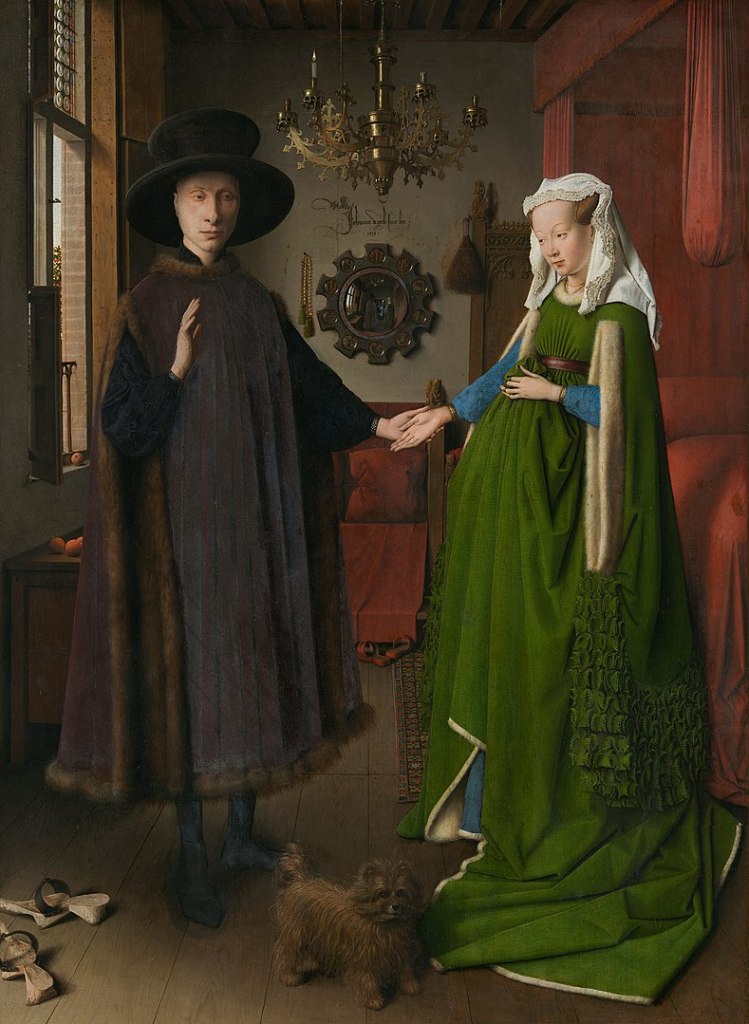
The Dogs in Dutch Paintings

Poem for a Tuesday — “The Dogs in Dutch Paintings” by David Graham

How shall I not love them, snoozing

right through the Annunciation?  They inhabit

the outskirts of every importance, sprawl

dead center in each oblivious household.

They’re digging at fleas or snapping at scraps,

dozing with noble abandon while a boy

bells their tails.  Often they present their rumps

in the foreground of some martyrdom.

What Christ could lean so unconcernedly

against a table leg, the feast above continuing?

Could the Virgin in her joy match this grace

as a hound sagely ponders an upturned turtle?

No scholar at his huge book will capture

my eye so well as the skinny haunches,

the frazzled tails and serene optimism

of the least of these mutts, curled

in the corners of the world’s dazzlement.

— in 180 More Extraordinary Poems for Every Day, ed. Billy Collins. New York: Random House, 2005, p. 160.


David Graham is a teacher, writer, and poet. For twenty-eight years, he taught English literature and writing for Ripon College in Wisconsin. He was selected to serve as Resident Poet, as well as faculty member, at The Frost Place, a nonprofit educational center for poetry and the arts based at Robert Frost’s old homestead in Franconia, New Hampshire. Retired now, Graham lives on the southern edge of the Adirondack Park in Glens Falls, New York. He writes a monthly column, “Poetic License,” on poetry and poets for Verse-Virtual, an online community journal of poetry. He has written nine books of poetry. The most recent The Honey of Earth is available now from Terrapin Books.


“The Arnolfini Portrait” by Jan Vam Eyck, 1434.

Pennsylvania Station

Poem for a Tuesday — “Pennsylvania Station” by Langston Hughes

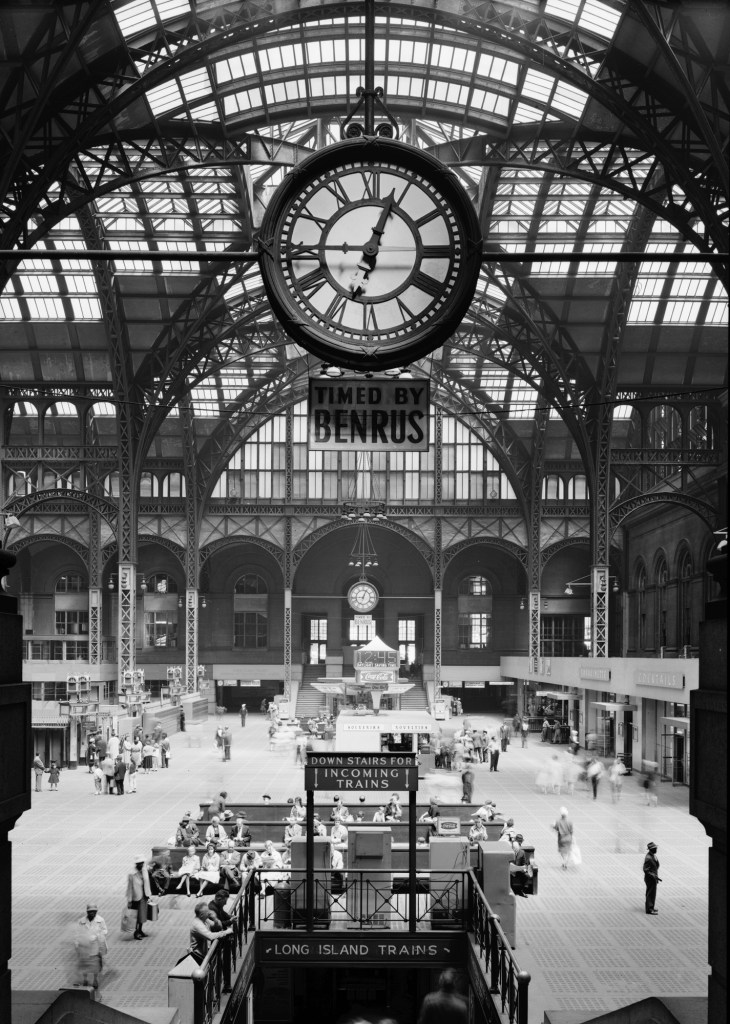
The Pennsylvania Station in New York
Is like some vast basilica of old
That towers above the terror of the dark
As bulwark and protection to the soul.
Now people who are hurrying alone
And those who come in crowds from far away
Pass through this great concourse of steel and stone
To trains, or else from trains out into day.
And as in great basilicas of old
The search was ever for a dream of God,
So here the search is still within each soul
Some seed to find to root in earthly sod,
Some seed to find that sprouts a holy tree
To glorify the earth—and you—and me.

In Songs for the Open Road, Mineola: Dover Publications, 1999, p. 38.


Langston Hughes was an innovator of jazz poetry and one of the foremost poets of the Harlem Rennaissance. He was a descendant of the elite, politically active Langston family, free people of color who worked for the abolitionist cause and helped lead the Ohio Anti-Slavery Society in 1858. Hughes wrote from an early age, moving to New York City as a teen to attend Columbia University. In addition to poetry, Hughes wrote plays, short stories, essays, and non-fiction. From 1942 to 1962, he wrote an in-depth weekly column in a leading black newspaper, The Chicago Defender. In 1960, the NAACP presented Hughes with the Spingarn Medal for distinguished achievements by an African American. In 2002, his image was added to The United States Postal Service’s Black Heritage series of postage stamps.


A southward view of the concourse and its famous clock as seen on April 24, 1962. Cervin Robinson photo. Accessed online at https://www.american-rails.com/pnstn.html