Full Scottish Breakfast

Poem for a Tuesday — “Full Scottish Breakfast” by Joann White

Lord, you are my portion and my cup of blessing; you hold my future. — Psalm 16:5

Below the thatched

roof in Fortingall

our eyes meet

above the table.

It’s too much.

Tattie scones dipped

in sunny yolks

milky black tea

crispy streaky bacon

black pudding more

than we want

or need and

who eats beans

for breakfast anyway?

We push our

food around the

plate, lace up

our boots, and

step out to

be fed by this glorious day.


This is the initial poem — a prelude — to a series that I wrote in response to Kore-ada Hirokazu’s stunning film after life. It explores the memory that I might choose to live in for eternity, a day of rough hill walking through the heart of Scotland and over the shoulder of Schiehallion. I’ll share the subsequent poems on the next three Tuesdays.

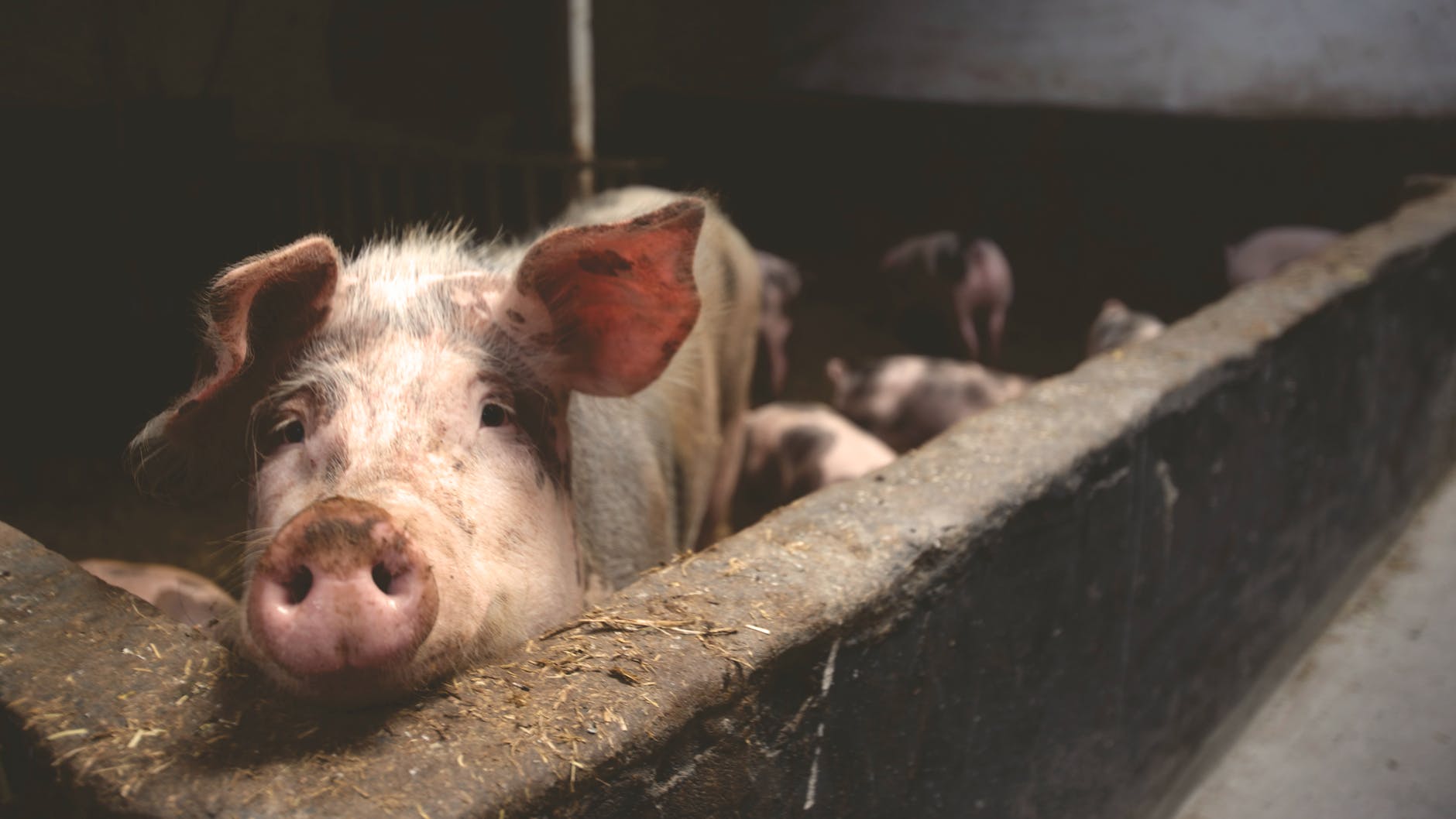

Image credit: https://scottishscran.com/what-is-a-full-scottish-breakfast/

St. Francis and the Sow

Poem for a Friday — “St. Francis and the Sow” by Galway Kinnell

“The bud

stands for all things,

even for those things that don’t flower,

for everything flowers, from within, of self-blessing;   

though sometimes it is necessary

to reteach a thing its loveliness,

to put a hand on its brow

of the flower

and retell it in words and in touch

it is lovely

until it flowers again from within, of self-blessing;   

as Saint Francis

put his hand on the creased forehead

of the sow, and told her in words and in touch   

blessings of earth on the sow, and the sow   

began remembering all down her thick length,   

from the earthen snout all the way

through the fodder and slops to the spiritual curl of the tail,   

from the hard spininess spiked out from the spine   

down through the great broken heart

to the sheer blue milken dreaminess spurting and shuddering   

from the fourteen teats into the fourteen mouths sucking and blowing beneath them:

the long, perfect loveliness of sow.”

in Americans’ Favorite Poems, ed. Robert Pinsky and Maggie Dietz. New York: W.W. Norton & Co., 2000.

From the Poetry Foundation: “Galway Kinnell was an award-winning poet best known for poetry that connects the experiences of daily life to much larger poetic, spiritual, and cultural forces. Often focusing on the claims of nature and society on the individual, Kinnell’s poems explore psychological states in precise and sonorous free verse. Critic Morris Dickstein called Kinnell ‘one of the true master poets of his generation.”’ Kinnell’s Collected Poems was awarded the Pulitzer Prize and the National Book Award.

Photo by Matthias Zomer on Pexels.com

Rushing at Times Like Flames

Poem for a Tuesday — “Rushing at Times Like Flames” by Nelly Sachs

“Rushing at times

like flames through our bodies —

as if they were still woven with the beginning

of the stars.

How slowly we flash up in clarity —

Oh, after how many lightyears have our hands

folded in supplication —

our knees bent —

and our souls opened

in thanks?”

— in Women in Praise of the Sacred, ed. Jane Hirshfield. New York: Harper Collins, 1994, p. 222.


Nelly Sachs was born to a secular Jewish family in Berlin in 1891. With the rise of the National Socialist Party, she became aware of her Jewish heritage and faith. She narrowly escaped deportation to a concentration camp in 1940 by fleeing to Sweden through the intercession of the royal family. For the rest of her life, the Holocaust was a central theme of her work. She shared the 1966 Nobel Prize in Literature with Israeli novelist S.I. Agnon. Sachs wrote of forgiveness, deliverance, peace, and a God who is present in terror, suffering, absence, and death.


Photo by Pixabay on Pexels.com

The Same Inside

Poem for a Tuesday — “The Same Inside” by Anna Swir

“Walking to your place for a love feast
I saw at a street corner
an old beggar woman.
I took her hand,
kissed her delicate cheek,
we talked, she was
the same inside as I am,
from the same kind,
I sensed this instantly
as a dog knows by scent
another dog.
I gave her money,
I could not part from her.
After all, one needs
someone who is close.
And then I no longer knew
why I was walking to your place.”

— from A Book of Luminous Things, ed. Czeslaw Milosz. New York: Harcourt Brace, 1996, p. 200.


Anna Swir (Anna Świrszczyńska) emerged from humble origins to become one of the most respected Polish poets of the twentieth century. She served in the Resistance during World War II and worked as a military nurse in the Warsaw Uprising. She wrote frankly about death, war, and the female body. She published nine collections of poetry, as well as plays and stories for children. She received a number of literary awards in her native Poland. She died in Krakow in 1984.


image source https://www.freeimages.com/photo/poor-beggar-woman-1440739

Daybreak

Poem for a Tuesday — “Daybreak” by Galway Kinnell

“On the tidal mud, just before sunset,
dozens of starfishes
were creeping. It was
as though the mud were a sky
and enormous, imperfect stars
moved across it as slowly
as the actual stars cross heaven.
All at once they stopped,
and, as if they had simply
increased their receptivity
to gravity, they sank down
into the mud, faded down
into it and lay still, and by the time
pink of sunset broke across them
they were as invisible
as the true stars at daybreak.”

from A Book of Luminous Things, ed. Czeslaw Milosz. New York: Harcourt Brace, 1996, p. 35


Born in Rhode Island, Galway Kinnell studied at Princeton University and traveled to Paris with a Fulbright Fellowship. He was committed to the cause of civil rights, serving with the Congress of Racial Equality and registering voters in Louisiana, where he was arrested for his efforts. Hudson Review contributor Vernon Young described Kinnell as “a poet of the landscape, a poet of soliloquy, a poet of the city’s underside and a poet who speaks for thieves, pushcart vendors and lumberjacks with an unforced simulation of the vernacular.” His collection Selected Poems (1980) was awarded the Pulitzer Prize and National Book Award. From 1989 to 1993, he was the Poet Laureate for the state of Vermont.


Photo by Pixabay on Pexels.com

How I Came to Have a Man’s Name

Poem for a Tuesday — “How I Came to Have a Man’s Name”

by Emma Lee Warrior

“Before a January dawn, under a moondog sky,
Yellow Dust hitched up a team to a straw-filled sleigh.
Snow squeaked against the runners
in reply to the crisp crackling cottonwoods.
They bundled up bravely in buffalo robes,
their figures pronounced by the white of night;
the still distance of the Wolf Trail [Milky Way] greeted them,
and Ipisowahs, the boy child of Natosi [the sun],
and Kokomiikiisom [the moon], watched their hurry.
My momma’s body was bent with pain.
Otohkostskaksin [Yellow Dust] sensed the Morning Star’s
presence so he beseeched him:

‘Aayo, Ipisowahs, you see us now,
pitiful creatures.
We are thankful there is no wind.
We are thankful for your light.
Guide us safely to our destination.
May my daughter give birth in a warm place.
May her baby be a boy; may he have your name.
May he be fortunate because of your name.
May he live long and be happy.
Bestow your name upon him, Ipisowahs.
His name will be Ipisowahs.
Aayo, help us, we are pitiful.’

And Ipisowahs led them that icy night
through the Old Man River Valley
and out onto the frozen prairie.
They made it to the hospital
where my mother pushed me into the world
and nobody bothered to change my name.”

in Reinventing the Enemy’s Language, ed. Joy Harjo and Gloria Bird. W.W. Norton: New York, 1997, p.73.


Emma Lee Warrior is Blackfoot. She was born in Brocket, Alberta and raised on the Peigan Reserve. Her grandparents were keepers of the Blackfoot traditions and language. Warrior remembers, “The main thing I learned from them was to be good to people and animals and to look forward to summer. Animals are our relations. People, animals, and nature were given to us by the Giver of Life.” She survived ten years at a residential boarding school.


Photo by Felix Mittermeier on Pexels.com

Happiness

Poem for a Tuesday — “Happiness” by Jane Kenyon

“There’s just no accounting for happiness,
or the way it turns up like a prodigal
who comes back to the dust at your feet
having squandered a fortune far away.

And how can you not forgive?
You make a feast in honor of what
was lost, and take from its place the finest
garment, which you saved for an occasion
you could not imagine, and you weep night and day
to know that you were not abandoned,
that happiness saved its most extreme form
for you alone.

No, happiness is the uncle you never
knew about, who flies a single-engine plane
onto the grassy landing strip, hitchhikes
into town, and inquires at every door
until he finds you asleep midafternoon
as you so often are during the unmerciful
hours of your despair.

It comes to the monk in his cell.
It comes to the woman sweeping the street
with a birch broom, to the child
whose mother has passed out from drink.
It comes to the lover, to the dog chewing
a sock, to the pusher, to the basketmaker,
and to the clerk stacking cans of carrots
in the night.
It even comes to the boulder
in the perpetual shade of pine barrens,
to rain falling on the open sea,
to the wineglass, weary of holding wine.”

in Claiming the Spirit Within, ed. Marilyn Sewell (Boston: Beacon Press, 1996). p. 119.


Jane Kenyon (1947-1995) grew up in Michigan but settled as a young adult in New Hampshire at the family farm of her husband, the poet and academic Donald Hall. Jane published four books of poetry in her too-short life. Her work is celebrated for her exploration of rural life, nature, and living with depression. She received the prestigious Hopwood Award at the University of Michigan and the PEN/Voelcker Award for Poetry. At the time of her death from leukemia in 1995, Kenyon was the Poet Laureate of New Hampshire.


“So he set off and went to his father. But while he was still far off, his father saw him and was filled with compassion; he ran and put his arms around him and kissed him.” — Luke 15:20


Photo by Johannes Plenio on Pexels.com

The new song

Poem for a Tuesday — “The new song” by Sydney Carter

“Be faithful to the new song

thrusting through your

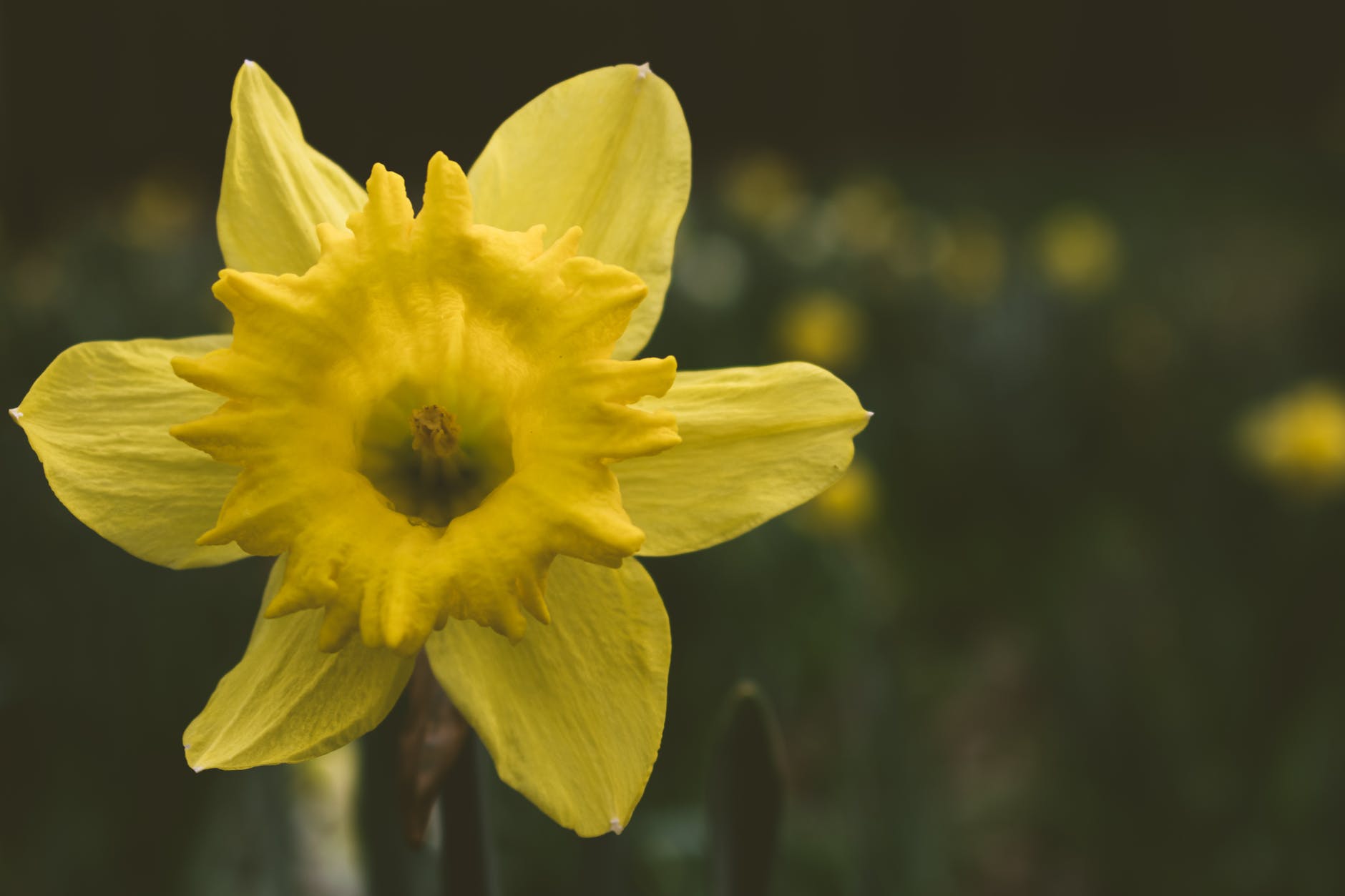
earth like a daffodil.

Be flexible

and travel with the rhythm.

Let your mind

be bent by what is coming:

making is

a way of being made

and giving birth

a way of being born.

You are the child

and father of a carol,

you are not

the only maker present.

How you make

is how you will be made.

Be gentle to

the otherness you carry,

broken by

the truth you cannot tell yet.

Mother and be

mothered by your burden.

Trust, and learn

to travel with the music.

in Sydney Carter. The Two-Way Clock: Poems (London: Stainer & Bell, 2000).

Sydney Carter (1915-2004) was an English poet, writer, and musician. He graduated from Balliol College, Oxford, in 1936. Carter’s commitment to pacifism led to his controversial stance as a conscientious objector during World War II. He was among 1,300 Quaker volunteers who served as drivers in the Friends’ Ambulance Unit, spending his war years in Greece, Palestine, and Egypt. Sydney Carter was best known for writing Lord Of The Dance in 1963, as an adaptation of the Shaker hymn Simple Gifts. He once said that he saw Christ as “the incarnation of the piper who is calling us. He dances that shape and pattern which is at the heart of our reality. By Christ, I mean not only Jesus; in other times and places, other planets, there may be other lords of the dance. But Jesus is the one I know of first and best. I sing of the dancing pattern in the life and words of Jesus.”

(quote from Carter’s obituary in The Guardian, March 16, 2004)

Photo by Travis Saylor on Pexels.com

Unexpected Manna

Poem for a Tuesday — “Unexpected Manna” by Gary H. Holthaus

“Those ancient Greeks

Who had a word for everything

Were more articulate than I.

Those Israelites

Who could not spell

The name of God

Are closer kin to me.

Some thing too highly prized

Or close; those that skirt

The edge of pain

Will always be unnamed.

So you,

Falling on my days

Like unexpected manna,

Alter every image

And rearrange my mind

So wholly

I am rendered silent

Gathering in my self

So quietly

That what you do for me

Remains unnamed.”

in The Gift of Tongues, ed. Sam Hamill. Port Townsend: Copper Canyon Press, 1996. p. 129.


Gary H. Holthaus has been one of Alaska’s most important thinkers and writers. He came to Alaska in 1964 to teach in Naknek with a special interest in helping Alaska Native students remain in school. He was the first director of the state’s bilingual education program. The Founding Director of the Alaska Humanities Forum, Holthaus spent nearly twenty years developing programs, including The Alaska Quarterly Review, one of America’s premier literary magazines and a source of powerful new voices. He is a past recipient of a National Endowment for the Arts Fellowship, the author of eight books of poetry and three works of narrative non-fiction, and a Unitarian Universalist Minister.


Photo by Pixabay on Pexels.com

God speaks to each

Poem for a Tuesday — “Gott spricht zu jedem” by Rainer Maria Rilke

God speaks to each of us as he makes us,

then walks with us silently out of the night.

These are the words we dimly hear:

You, sent out beyond your recall,

got to the limits of your longing.

Embody me.

Flare up like flame

and make big shadows I can move in.

Let everything happen to you: beauty and terror.

Just keep going. No feeling is final.

Don’t let yourself lose me.

Nearby is the country they call life.

You will know it by its seriousness.

Give me your hand.

/

Rainer Maria Rilke (1875-1926) was a Bohemian-Austrian poet and novelist. He was the only son of an unhappy marriage. His mother mourned the death of an earlier daughter. During Rilke’s early years, she sought to recover the lost girl through the boy. According to Rilke, he had to wear “fine clothes” and “was a plaything [for his mother], like a big doll.” He attended military school and trade school before studying literature, art history, and philosophy in Prague and Munich. He was a mystic, proto-modernist, and early proponent of psychoanalysis. He traveled extensively throughout Europe and Russia before settling in Switzerland. At the time of his death from leukemia, his work was largely unknown to the reading public, but his posthumous followers have been many. He is now considered the most lyrical and influential of the German early modernists.

=

Photo by lalesh aldarwish on Pexels.com