In the Bleak Midwinter

Poem for a Tuesday — “In the Bleak Midwinter”

by Christina Rossetti

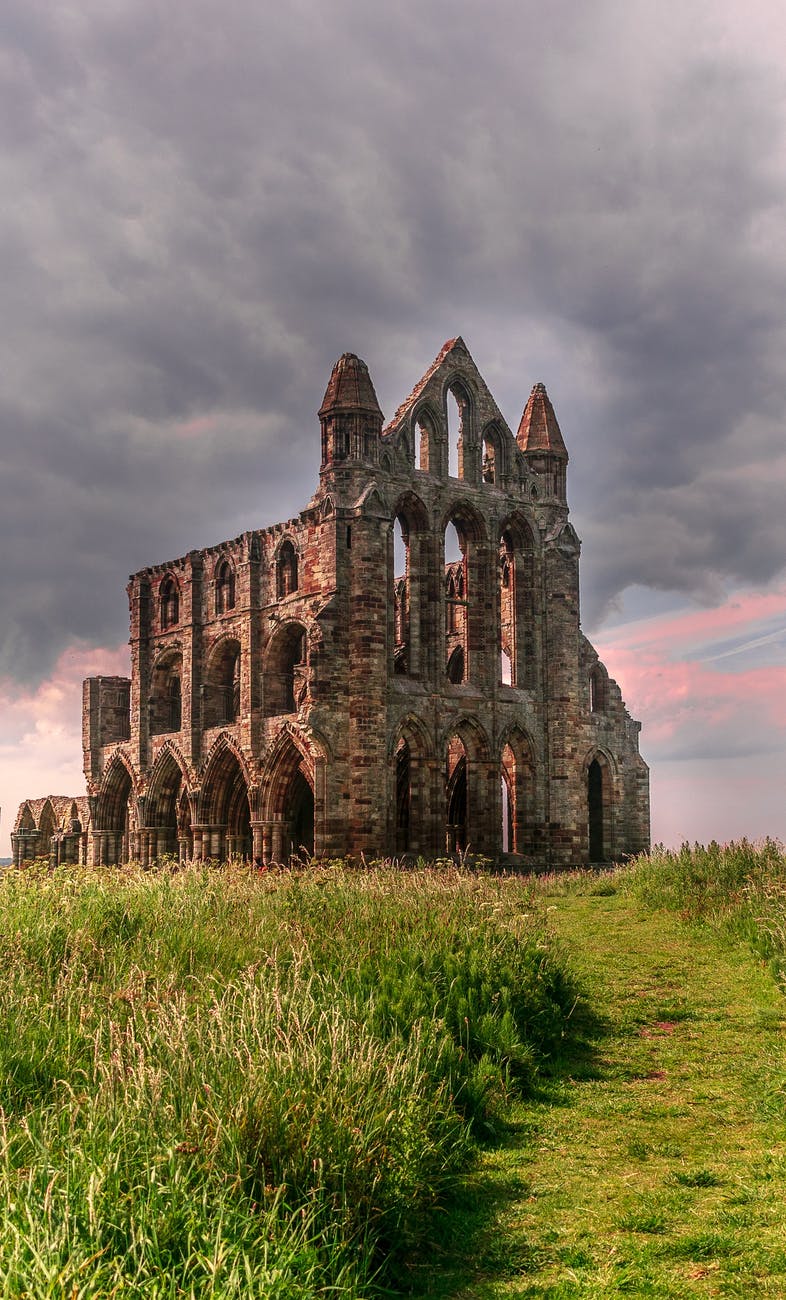
In the bleak midwinter, frosty wind made moan,
Earth stood hard as iron, water like a stone;
Snow had fallen, snow on snow, snow on snow,
In the bleak midwinter, long ago.

Our God, Heaven cannot hold Him, nor earth sustain;
Heaven and earth shall flee away when He comes to reign.
In the bleak midwinter a stable place sufficed
The Lord God Almighty, Jesus Christ.

Enough for Him, whom cherubim, worship night and day,
Breastful of milk, and a mangerful of hay;
Enough for Him, whom angels fall before,
The ox and ass and camel which adore.

Angels and archangels may have gathered there,
Cherubim and seraphim thronged the air;
But His mother only, in her maiden bliss,
Worshipped the beloved with a kiss.

What can I give Him, poor as I am?
If I were a shepherd, I would bring a lamb;
If I were a Wise Man, I would do my part;
Yet what I can I give Him: give my heart.


Christina Georgina Rossetti is considered one of the finest female poets of the Victorian era. Born to Italian political refugees and classics scholars, she lived in London and was homeschooled. She began writing poetry by age 12. She suffered from bouts of depression which she soothed with religious devotion. A noted beauty, Rosetti never married but was engaged three times. She wrote sonnets, ballads, narrative poems, and lyrics. Remarkably prolific, Rosetti’s complete poems run to well over 1,000 pages. Her poem, “In the Bleak Midwinter,” was adapted as a Christmas carol by another child of refugees Gustav Holst.


Photo by Oleg Magni on Pexels.com

I Am Going to Start Living Like a Mystic

Poem for a Tuesday — “I Am Going to Start Living Like a Mystic” by Edward Hirsch

Today I am pulling on a green wool sweater
and walking across the park in a dusky snowfall.

The trees stand like twenty-seven prophets in a field,
each a station in a pilgrimage—silent, pondering.

Blue flakes of light falling across their bodies
are the ciphers of a secret, an occultation.

I will examine their leaves as pages in a text
and consider the bookish pigeons, students of winter.

I will kneel on the track of a vanquished squirrel
and stare into a blank pond for the figure of Sophia.

I shall begin scouring the sky for signs
as if my whole future were constellated upon it.

I will walk home alone with the deep alone,
a disciple of shadows, in praise of the mysteries.


in 180 More Extraordinary Poems for Every Day, ed. Billy Collins. New York: Random House, 2005, p. 110.


from his website edwardhirsch.com . . . “Edward Hirsch is a celebrated poet and tireless advocate for poetry. He was born in Chicago in 1950—his accent makes it impossible for him to hide his origins—and educated at Grinnell College and the University of Pennsylvania, where he received a Ph.D. in Folklore. His devotion to poetry is lifelong. He has received numerous awards and fellowships, including a MacArthur Fellowship, a Guggenheim Fellowship, an Ingram Merrill Foundation Award, a Pablo Neruda Presidential Medal of Honor, the Prix de Rome, and an Academy of Arts and Letters Award. In 2008, he was elected a Chancellor of the Academy of American Poets.”


Photo by Anthony on Pexels.com

Growing Light

Poem for a Tuesday — “Growing Light” by George Ella Lyon

I write this poem
out of darkness
to you
who are also in darkness
because our lives demand it.

This poem is a hand on your shoulder
a bone touch to go with you
through the hard birth of vision.
In other words, love
shapes this poem
is the fist that holds the chisel,
muscle that drags marble
and burns with the weight
of believing a face
lives in the stone
a breathing word in the body.

I tell you
though the darkness
has been ours
words will give us
give our eyes, opened in promise
a growing light.

from Claiming the Spirit Within, ed. Marilyn Sewell. Boston: Beacon Press, 1996. P. 318.


Photo by Gantas Vaiu010diulu0117nas on Pexels.com

A Hardware Store as Proof of the Existence of God

Poem for a Tuesday — “A Hardware Store as Proof of the Existence of God” by Nancy Willard

I praise the brightness of hammers pointing east
like the steel woodpeckers of the future,
and dozens of hinges opening brass wings,
and six new rakes shyly fanning their toes,
and bins of hooks glittering into bees,

and a rack of wrenches like the long bones of horses,
and mailboxes sowing rows of silver chapels,
and a company of plungers waiting for God
to claim their thin legs in their big shoes
and put them on and walk away laughing.

In a world not perfect but not bad either
let there be glue, glaze, gum, and grabs,
caulk also, and hooks, shackles, cables, and slips,
and signs so spare a child may read them,
Men, Women, In, Out, No Parking, Beware the Dog.

In the right hands, they can work wonders.


From the Kenyon Review, New Series, Spring 1989, Volume XI, No. 2


Part of Eve’s Discussion

Poem for a Tuesday

“When the woman saw that the fruit of the tree was good for food and pleasing to the eye, and also desirable for gaining wisdom, she took some and ate it. She also gave some to her husband, who was with her, and he ate it.” — Genesis 3:6


“Part of Eve’s Discussion” by Marie Howe

It was like the moment when a bird decides not to eat from your hand,
and flies, just before it flies, the moment the rivers seem to still
and stop because a storm is coming, but there is no storm, as when
a hundred starlings lift and bank together before they wheel and drop,
very much like the moment, driving on bad ice, when it occurs to you
your car could spin, just before it slowly begins to spin, like
the moment just before you forgot what it was you were about to say,
it was like that, and after that, it was still like that, only
all the time.

from New American Poets, ed. Myers & Weingarten. Boston: David R. Godine Publisher, 1991


Merritt Anna Lea Eve 1885 Oil On Canvas-large
“Eve in the Garden” by Anna Lea Merritt, Public domain, via Wikimedia Commons

A Blessing

Poem for a Tuesday

“A Blessing” by James Wright

Just off the highway to Rochester, Minnesota,
Twilight bounds softly forth on the grass.
And the eyes of those two Indian ponies
Darken with kindness.
They have come gladly out of the willows
To welcome my friend and me.
We step over the barbed wire into the pasture
Where they have been grazing all day, alone.
They ripple tensely, they can hardly contain their happiness   
That we have come.
They bow shyly as wet swans. They love each other.
There is no loneliness like theirs.   
At home once more,
They begin munching the young tufts of spring in the darkness.   
I would like to hold the slenderer one in my arms,
For she has walked over to me   
And nuzzled my left hand.   
She is black and white,
Her mane falls wild on her forehead,
And the light breeze moves me to caress her long ear
That is delicate as the skin over a girl’s wrist.
Suddenly I realize
That if I stepped out of my body I would break
Into blossom.

from James Wright, The Branch Will Not Break, Middletown, CT: Wesleyan University Press, 1963.

Photo by Boys in Bristol on Pexels.com

The Cathedral Builders

Poem for a Tuesday — “The Cathedral Builders” by John Ormond

They climbed on sketchy ladders towards God,

With winch and pulley hoisted hewn rock into heaven,

Inhabited the sky with hammers, defied gravity,

Deified stone, took up God’s house to meet Him,

And came down to their suppers and small beer,

Every night slept, lay with their smelly wives,

Quarrelled and cuffed the children, lied,

Spat, sang, were happy, or unhappy,

And every day took to the ladders again,

Impeded the rights of way of another summer’s

Swallows, grew greyer, shakier, became less inclined

To fix a neighbour’s roof of a fine evening,

Saw naves sprout arches, clerestories soar,

Cursed the loud fancy glaziers for their luck,

Somehow escaped the plague, got rheumatism,

Decided it was time to give it up,

To leave the spire to others, stood in the crowd,

Well back from the vestments at the consecration,

Envied the fat bishop his warm boots,

Cocked a squint eye aloft and said, ‘I bloody did that.’

from Cathedral Builders and Other Poems, Newtown, Powys: Gwasg Gregynog, 1991.


Photo by Harry Smith on Pexels.com

“Chicken”

Poem for a Tuesday — “Chicken” by Kim Addonizio

Why did she cross the road?
She should have stayed in her little cage,
shat upon by her sisters above her,
shitting on her sisters below her.

God knows how she got out.
God sees everything. God has his eye
on the chicken, making her break
like the convict headed for the river,

sloshing his way through the water
to throw off the dogs, raising
his arms to starlight to praise
whatever isn’t locked in a cell.

He’ll make it to a farmhouse
where kind people will feed him.
They’ll bring green beans and bread,
home-brewed hops. They’ll bring

the chicken the farmer found
by the side of the road, dazed
from being clipped by a pickup,
whose delicate brain stem

he snapped with a twist,
whose asshole his wife stuffed
with rosemary and a lemon wedge.
Everything has its fate,

but only God knows what that is.
The spirit of the chicken will enter the convict.
Sometimes, in his boxy apartment,
listening to his neighbors above him,

annoying his neighbors below him,
he’ll feel a terrible hunger
and an overwhelming urge
to jab his head at the television over and over.


In 180 More Extraordinary Poems for Every Day, ed. Billy Collins. New York: Random House, 2005.


Photo by cottonbro on Pexels.com

Poem for a Tuesday

“Prayer in My Boot” by Naomi Shihab Nye

For the wind no one expected

For the boy who does not know the answer

For the graceful handle I found in a field
attached to nothing
pray it is universally applicable

For our tracks which disappear
the moment we leave them

For the face peering through the cafe window
as we sip our soup

For cheerful American classrooms sparkling
with crisp colored alphabets
happy cat posters
the cage of the guinea pig
the dog with division flying out of his tail
and the classrooms of our cousins
on the other side of the earth
how solemn they are
how gray or green or plain
how there is nothing dangling
nothing striped or polka-dotted or cheery
no self-portraits or visions of cupids
and in these rooms the students raise their hands
and learn the stories of the world

For library books in alphabetical order
and family businesses that failed
and the house with the boarded windows
and the gap in the middle of a sentence
and the envelope we keep mailing ourselves

For every hopeful morning given and given
and every future rough edge
and every afternoon
turning over in its sleep

Published in 180 More Extraordinary Poems for Every Day, ed. Billy Collins. New York: Random House, 2005.

“Risk”

Poem for a Tuesday — “Risk” by Lisa Colt

“My teacher says,

You’ve got to stink first.

I tell her, I don’t have time to stink–

at 64 years old

I go directly to perfection

or I go nowhere.

Perfection is nowhere,

she says, So stink.

Stink like a beginner,

stink like decaying flesh,

old blood,

cold sweat,

she says,

I know a woman who’s eighty-six,

last year she learned to dive.

Published in Claiming the Spirit Within: A Sourcebook of Women’s Poetry, ed. Marilyn Sewell. Boston: Beacon Press, 1996.


Photo by Pixabay on Pexels.com