Many Names

When he entered Jerusalem, the whole city was shaken, saying. “Who is this?”—Matthew 21:10

All: We called him by many names.

First Voice: Spring rains blew in from the Great Sea. The hills of Judah traded drab winter browns for green—in some places, lush and deep, in others, bright and glowing. The sheep lambed. Little ones nursed greedily with wagging tails from weary ewes. East of the city, the wilderness bloomed. Delicate blossoms danced fleetingly above rocky, red soil. Wadis, that by mid-summer would be dry as dust, filled with water. The Jordan was swollen with snowmelt rushing down from the slopes of Mt. Hermon. From marshy riversides, clouds of storks rose to whirl across the sky, their long legs trailing and harsh voices calling as they journeyed from Cush to the lands beyond the sea. At night, our breath hung in clouds, so we drew close to the fire and pulled our cloaks snug to guard against the cold. During the day, the sun shone bright in a deep blue sky, tempered by fine white clouds.

All: We called him by many names.

Second Voice: The Passover was near. We turned our hearts and feet to Jerusalem. Once we were slaves in Egypt. We groaned hopeless beneath Pharaoh’s iron yoke; yet, God heard our cries and called Moses to lead us to freedom, a task that proved easier said than done. God sent nine waves of plague and pestilence to soften Pharaoh’s hard heart: blood and frogs, gnats and flies, disease and boils, hail, locusts, and darkness. Just when we thought that Pharaoh would never relent, God sent the tenth and most terrible plague. To shield us, the Lord told us to slaughter a lamb and paint the door posts of our dwellings red with blood. That night, while we roasted the lamb and dressed for travel in silence, the night was filled with screams as the angel of death passed over our homes but took the lives of the firstborn of all Egypt. The next morning, while Pharaoh wept, we made our exodus, bound for a land that flowed with milk, honey, and freedom.  Every year as the Passover drew near, we remembered what God had done for us, and we dreamed of what God might do next.

All: We called him by many names.

Third Voice: Passover pilgrims filled the roads and flowed up to the Holy City. From the East, merchants to the Gentiles sailed home across the Great Sea and walked the Roman Road from Caesarea, alongside centurions sent to Jerusalem to keep the Pax Romana. From the South, caravans converged in Beersheba, bringing beautiful, dark-skinned cousins from the source of the Nile and the jungles of Ethiopia. From the West, fierce nomads with camels and veiled women traded their desert camps for pilgrim paths. From the North, farmers left the soft hills of Galilee, followed the Jordan south to Jericho, and climbed up through the Valley of the Shadow of Death—4,000 feet in fifteen miles.

All: We called him by many names.

First Voice: Atop the Mount of Olives we paused, looking out across the Kidron Valley. Our breath caught and hearts raced to see that most precious and sacred of sights: the Temple crowning Jerusalem in the morning light. In the midst of our multitude, one pilgrim rode a donkey colt, like the Prince of Peace, promised long ago by the Prophet Zechariah. We waved palms and surrounded him with our songs. 

All: We called him by many names.

Second Voice: We called him teacher. He taught with parables and proverbs, drawing sacred truth from everyday life: lilies of the field, birds of the air, a sower planting seed, a woman making bread.  To hear his bold teaching, listeners filled the synagogues of Galilee to overflowing. When they became too numerous, he taught on the lakeshore, speaking from a boat moored in the shallows. He taught on the mountainside to vast crowds who feasted on his words and then feasted on miraculous meals of fish and loaves. As he read from the scroll of the Prophet Isaiah, we saw him as the fulfillment of ancient promises to bring sight to the blind, mobility to the lame, and freedom to the prisoner. So, we called him Teacher and followed on his heels, eager to hear the words he spoke.

All: We called him by many names.

Third Voice: We called him king. His father was a Bethlehem boy of the line of David. Hadn’t God promised to send a king like David to restore the fortunes of Israel? That morning, on the pilgrim way down the Mount of Olives, he looked like a peasant king. He looked like Judas Maccabeus, who, two centuries before, had led a grassroots revolution to rid the land of the Greeks and purify the Temple. Between the distant memory of Passover and the near history of the Maccabees, we dared to hope for change. So, we welcomed him with the Hallel Psalms[1] of pilgrims. We called him king and spread our cloaks upon the road as a sign of our allegiance.

All: We called him by many names.

First Voice: We called him Lord.  He called us away from our fishing nets, plows, and tax booths with an authority that made us see that he was special. Then, as we followed him throughout the Galilee, we saw things that had first made us question our sanity, and then made us rethink God’s plan for the salvation of our people. With a power that could only come from God, he cleansed lepers, cast out demons, stilled storms, and walked on water. We began to wonder where he ended and God began—or if God could somehow have been in the man from the very beginning.  So, we called him Lord to let him know that we alone knew who he truly was.

All: We called him by many names

Second Voice: We called him a heretic, a teacher of lies. We noticed he was less than scrupulous in observing the Torah. He ate with sinners and healed on the Sabbath day. He welcomed tax collectors and taught women. He called our scribes and Pharisees white-washed tombs and blind guides. How could such a man be holy as God is holy? We saw that he was a threat to tradition and a danger to the people, and so we challenged him in the Temple. With our word games and rhetorical tricks, we sought to shame him and condemn him for blasphemy. When this failed, we plotted to bring about his death. We justified our lust for his blood, claiming that the death of the one man was a small price to pay to safeguard the holiness and peace of the many.

All: We called him by many names.

Third Voice: We called him a criminal and said he was no king at all. He had no taste for violence. He exhorted his followers to put down their weapons, saying that to live by the sword was to die by the sword. He lacked the will and the political ambition for regime change. He was less a king like David, ready to wage war and seize power, and more a Passover lamb, fit only for the slaughter. By Friday morning, we traded the song of “Blessed is the king” for the cry of “Crucify him.” Then, with mixed contempt and indifference, we watched a very different parade. Beaten, bloody, and broken, he dragged his cross through the city streets to the place we called The Skull.

All: We called him by many names.

First Voice: We called him a stranger. The mood turned murderously dark in the Holy City, and the adoration that had prompted us to call him, “Lord,” turned to fear, terrible fear. It was the kind of fear that makes you look over your shoulder, robs you of sleep, and loosens your bowels. It was the kind of fear that makes you weep like a lost child or a cuckolded husband. It was a fear that overwhelmed and unmanned us. While he prayed with bitter tears of anguish, we slept.  When the betrayer came with the Temple guards to arrest him, we ran. While he was tried before the Council, we denied him. As he suffered on the cross, we left the women to bear witness.  When they laid him in the tomb, we hid.

All: We called him by many names.

Second Voice: Teacher.

Third Voice: King.

First Voice: Lord.

Second Voice: Heretic.

Third Voice: Criminal.

All: Stranger.


[1] Psalms 113—118 are known as the Hallel Psalms, or simply the Hallel (Hallel means praise in Hebrew). While many psalms praise God, this set of psalms became associated with Passover, due the mention of the deliverance from Egypt in Psalm 114.
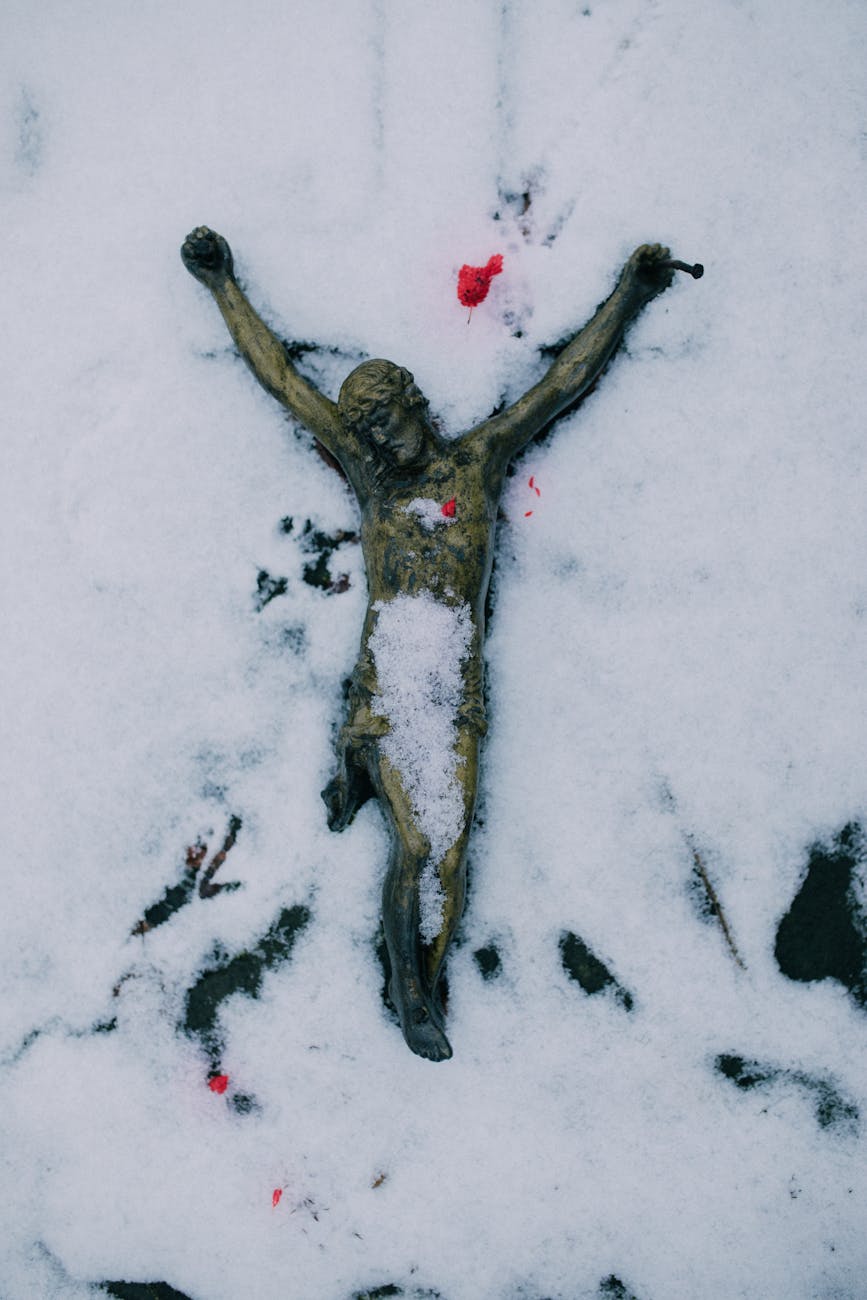

Photo by KoolShooters on Pexels.com

Poems for the Season of Christmas

Sabbath Day Thoughts — Verse for the First Sunday in Christmas

“O Lord, You Were Born” 

— Ann Weems 

Each year about this time I try to be sophisticated 

and pretend I understand the bored expressions 

relating to the “Christmas spirit.” 

I nod when they say “Put the Christ back in Christmas.” 

I say yes, yes, when they shout “Commercial” and 

“Hectic, hectic, hectic.” 

After all, I’m getting older, 

and I’ve heard it said, “Christmas is for children.” 

But somehow a fa-la-la keeps creeping out…. 

So I’ll say it: 

I love Christmas tinsel 

and angel voices that come from the beds upstairs 

and the Salvation Army bucket 

and all the wrappings and festivities and special warm feelings. 

I say it is good, 

giving, 

praising, 

celebrating. 

So hooray for Christmas trees 

and candlelight 

and the good old church pageant. 

Hooray for shepherd boys who forget their lines 

and Wise Men whose beards fall off 

and Mary who giggles. 

O Lord, you were born! 

O Lord, you were born! 

And that breaks in upon my ordered life like bugles blaring. 

and I sing “Hark, the Herald Angels” 

in the most unlikely places. 

You were born 

and I will celebrate! 

I rejoice for the carnival of Christmas! 

I clap for the pajama-clad cherubs 

and the Christmas cards jammed in the mail slot. 

I o-o-o-oh for the turkey 

and ah-h-h-h for the Christmas pudding 

and thank God for the alleluias I see in the faces of people 

I don’t know 

and yet know very well. 

O Lord, there just aren’t enough choirboys to sing what I feel. 

There aren’t enough trumpets to blow. 

O Lord, I want bells to peal! 

I want to dance in the streets of Bethlehem! 

I want to sing with the heavenly host! 

For unto us a Son was given 

and he was called God with Us. 

For those of us who believe, 

the whole world is decorated in love! 


“Christmas at Sea” 

—Robert Louis Stevenson 

The sheets were frozen hard, and they cut the naked hand; 

The decks were like a slide, where a seaman scarce could stand; 

The wind was a nor’wester, blowing squally off the sea; 

And cliffs and spouting breakers were the only things a-lee. 

They heard the surf a-roaring before the break of day; 

But ’twas only with the peep of light we saw how ill we lay. 

We tumbled every hand on deck instanter, with a shout, 

And we gave her the maintops’l, and stood by to go about. 

All day we tacked and tacked between the South Head and the North; 

All day we hauled the frozen sheets, and got no further forth; 

All day as cold as charity, in bitter pain and dread, 

For very life and nature we tacked from head to head. 

We gave the South a wider berth, for there the tide-race roared; 

But every tack we made we brought the North Head close aboard: 

So’s we saw the cliffs and houses, and the breakers running high, 

And the coastguard in his garden, with his glass against his eye. 

The frost was on the village roofs as white as ocean foam; 

The good red fires were burning bright in every ‘long-shore home; 

The windows sparkled clear, and the chimneys volleyed out; 

And I vow we sniffed the victuals as the vessel went about. 

The bells upon the church were rung with a mighty jovial cheer; 

For it’s just that I should tell you how (of all days in the year) 

This day of our adversity was blessed Christmas morn, 

And the house above the coastguard’s was the house where I was born. 

O well I saw the pleasant room, the pleasant faces there, 

My mother’s silver spectacles, my father’s silver hair; 

And well I saw the firelight, like a flight of homely elves, 

Go dancing round the china-plates that stand upon the shelves. 

And well I knew the talk they had, the talk that was of me, 

Of the shadow on the household and the son that went to sea; 

And O the wicked fool I seemed, in every kind of way, 

To be here and hauling frozen ropes on blessed Christmas Day. 

They lit the high sea-light, and the dark began to fall. 

“All hands to loose topgallant sails,” I heard the captain call. 

“By the Lord, she’ll never stand it,” our first mate Jackson, cried. 

…”It’s the one way or the other, Mr. Jackson,” he replied. 

She staggered to her bearings, but the sails were new and good, 

And the ship smelt up to windward just as though she understood. 

As the winter’s day was ending, in the entry of the night, 

We cleared the weary headland, and passed below the light. 

And they heaved a mighty breath, every soul on board but me, 

As they saw her nose again pointing handsome out to sea; 

But all that I could think of, in the darkness and the cold, 

Was just that I was leaving home and my folks were growing old. 


“The Sheep Herd” 

—Sister Mariella 

I am a shepherd—I have hated 

The smell of damp sheep in the rain, 

The pain 

Of clouted shoes on weary feet, 

The silly barking of watchdogs in the night, 

The blinding light 

Of summer suns on hillsides without shade. 

Nor anything I did not wish was not 

From hoar-frost on the meadow grass 

To dizzy stars that blinked on stupidly and bright. 

Last night 

I went with other men who tended sheep 

Over to Bethlehem to see— 

We did not know just what we’d come to see 

Who’d followed up a cloud of singing wings. 

Until we came to where a young girl held 

A little baby on her lap and smiled. 

She made me think of flowers, 

White flowers on long stems and blue night skies. 

Nothing happened— 

But today 

I have been shaken with the joy 

Of seeing hoar-frost wings 

Atilt upon tall grasses; the sun 

Upon the sheep, making their gray backs white 

And silvery 

Has hurt me with its beauty, and I heard 

The sound of the barking watchdogs break 

The tolling bells against the quiet hills. 


“Boxed” 

—Ann Weems 

I must admit to a certain guilt 

about stuffing the Holy Family into a box 

in the aftermath of Christmas. 

It’s frankly a time of personal triumph when, 

each Advent’s eve, I free them (and the others) 

from a year’s imprisonment 

boxed in the dark of our basement. 

Out they come, one by one, 

struggling through the straw, 

last year’s tinsel still clinging to their robes. 

Nevertheless, they appear, 

ready to take their place again 

in the light of another Christmas. 

The Child is first 

because he’s the one I’m most reluctant to box. 

Attached forever to his cradle, he emerges, 

apparently unscathed from the time spent upside down 

to avoid the crush of the lid. 

His mother, dressed eternally in blue, 

still gazes adoringly, 

in spite of the fact that 

her features are somewhat smudged. 

Joseph has stood for eleven months, 

holding valiantly what’s left of his staff, 

broken twenty Christmases ago 

by a child who hugged a little too tightly. 

The Wise Ones still travel, 

though not quite so elegantly, 

the standing camel having lost its back leg 

and the sitting camel having lost one ear. 

However, gifts intact, they are ready to move. 

The shepherds, walking or kneeling, 

sometimes confused with Joseph 

(who wears the same dull brown), 

tumble forth, followed by three sheep 

in very bad repair. 

There they are again, 

not a grand set surely, 

but one the children (and now the grandchildren) 

can touch and move about to reenact that silent night. 

When the others return, 

we will wind the music box on the back of the stable 

and light the Advent candles 

and go once more to Bethlehem. 

And this year, when it’s time to pack the figures away, 

we’ll be more careful that the Peace and Goodwill 

are not also boxed for another year! 


Ann Barr Weems was the daughter or a Presbyterian minister and the wife of a Presbyterian minister. She served as an elder with the Trinity Presbyterian Church in St. Louis. Ann was a noted writer, speaker, liturgist and worship leader. Among her seven published books or collections of poems, meant to be used in worship, in personal devotions, and in discussions, are Kneeling in Jerusalem, Kneeling in Bethlehem and the best-selling Psalms of Lament. She is also the author of the critically-acclaimed poem, “Balloons Belong in Church,” about her then four-year old son, Todd, who brought an orange balloon with pink stripes to church school one Sunday morning. Both poems shared here are from Kneeling in Bethlehem.

Robert Louis Stevenson was a Scottish novelist, essayist, poet, and travel writer. He spent time in Saranac Lake in pursuit of a cold air cure for tuberculosis. Lighthouse design was the family’s profession; Robert’s grandfather and uncles were all in the same field. His maternal grandfather, with whom he was quite close, was a Presbyterian minister. Stevenson once wrote, “Now I often wonder what I inherited from this old minister. I must suppose, indeed, that he was fond of preaching sermons, and so am I, though I never heard it maintained that either of us loved to hear them. Stevenson’s Christmas poem was first published in the Scots Observer, 1888.

Sister Mariella Gable was a Benedictine sister and an English professor at the College of Saint Benedict from 1928-73. She was also a Dante scholar, poet, editor and writer. She tirelessly promoted the cause of two then little-known authors, Flannery O’Connor and J.F. Powers, and introduced audiences in the United States to such Irish writers as Frank O’Connor, Sean O’Faolain, Mary Lavin, and Bryan MacMahon through her many essays and anthologies. “The Sheep Herd” was first published in 1946.


Photo by Elina Fairytale on Pexels.com

Christmas Bells

Poem for a Tuesday — “Christmas Bells” by Henry Wadsworth Longfellow

I heard the bells on Christmas Day
Their old, familiar carols play,
    And wild and sweet
    The words repeat
Of peace on earth, good-will to men!

And thought how, as the day had come,
The belfries of all Christendom
    Had rolled along
    The unbroken song
Of peace on earth, good-will to men!

Till ringing, singing on its way,
The world revolved from night to day,
    A voice, a chime,
    A chant sublime
Of peace on earth, good-will to men!

Then from each black, accursed mouth
The cannon thundered in the South,
    And with the sound
    The carols drowned
Of peace on earth, good-will to men!

It was as if an earthquake rent
The hearth-stones of a continent,
    And made forlorn
    The households born
Of peace on earth, good-will to men!

And in despair I bowed my head;
“There is no peace on earth,” I said;
    “For hate is strong,
    And mocks the song
Of peace on earth, good-will to men!”

Then pealed the bells more loud and deep:
“God is not dead, nor doth He sleep;
    The Wrong shall fail,
    The Right prevail,
With peace on earth, good-will to men.”

in A Christmas Treasury of Yuletide Stories and Poems, ed. James Charlton and Barbara Gilson (New York: Guild America Books, 1976), pp. 302-303.


Luke 2:14

“Glory to God in the highest,
And on earth peace, goodwill toward men!”


Henry Wadsworth Longfellow was the most popular poet of his day. Born in Portland in 1807, his grandfather was the congressman and Revolutionary War hero General Peleg Wadsworth. His father Stephen Longfellow was a lawyer and founder of Bowdoin College, where Henry studied, met his lifelong friend Nathaniel Hawthorn, and graduated in 1825. Henry taught at Bowdoin and later at Harvard College. He was such an admired figure during his life that his seventieth birthday in 1877 was celebrated across the nation with parades, speeches, and the reading of his poetry. “Christmas Bells,” written in 1863, reflects Longfellow’s grief over the Civil War and the death of his wife Frances “Fanny” Appleton.


Photo by u0420u043eu043cu0430u043du043eu0432 u0412u043bu0430u0434u0438u043cu0438u0440 on Pexels.com

Not Only the Eskimos

Poem for a Tuesday — “Not Only the Eskimos” by Lisel Mueller

We have only one noun

but as many different kinds:

the grainy snow of the Puritans

and snow of soft, fat flakes,

guerrilla snow, which comes in the night

and changes the world by morning,

rabbinical snow, a permanent skullcap

on the highest mountains,

snow that blows in like the Lone Ranger,

riding hard from out of the West,

surreal snow in the Dakotas,

when you can’t find your house, your street,

though you are not in a dream

or a science-fiction movie,

snow that tastes good to the sun

when it licks black tree limbs,

leaving us only one white stripe,

a replica of a skunk,

unbelievable snows:

the blizzard that strikes on the tenth of April,

the false snow before Indian summer,

the Big Snow on Mozart’s birthday,

when Chicago became the Elysian Fields

and strangers spoke to each other,

paper snow, cut and taped,

to the inside of grade-school windows,

in an old tale, the snow

that covers a nest of strawberries,

small hearts, ripe and sweet,

the special snow that goes with Christmas,

whether it falls or not,

the Russian snow we remember

along with the warmth and smell of furs,

though we have never traveled

to Russia or worn furs,

Villon’s snows of yesteryear,

lost with ladies gone out like matches,

the snow in Joyce’s “The Dead,”

the silent, secret snow

in a story by Conrad Aiken,

which is the snow of first love,

the snowfall between the child

and the spacewoman on TV,

snow as idea of whiteness,

as in snowdrop, snow goose, snowball bush,

the snow that puts stars in your hair,

and your hair, which has turned to snow,

the snow Elinor Wylie walked

in in velvet shoes,

the snow before her footprints

and the snow after,

the snow in the back of our heads,

whiter than white, which has to do

with childhood again each year.


Lisel Mueller emigrated to the United States from Germany in 1939 at the age of fifteen. Her father Fritz C. Neumann was an early, outspoken critic of the National Socialist Party. Arrested and interrogated by the Gestapo in 1935, he fled to Italy before being granted asylum in America. Lisel began writing poetry following her mother’s death in 1953. She received the National Book Award for Poetry in 1981 for The Need to Hold Still and the Pulitzer Prize in 1997 for Alive Together: New & Selected Poems. Lisel’s work probed questions of history and identity, sometimes with a lyrical – or even humorous – sensibility. She once said of her craft, “I write a lot of poems that have tension between what is going on now in society and what has always been there. My poems are much concerned with history. The message is obvious. My family went through terrible times. In Europe no one has had a private life not affected by history. I’m constantly aware of how privileged we (Americans) are.”


Photo by Egor Kamelev on Pexels.com

The Hermit

Poem for a Tuesday — “The Hermit” by Jane Kenyon

The meeting ran needlessly late,
and while yawns were suppressed around the room
the river swelled until it spilled.
When the speaker finished, I made for the car
and home as fast as fog would allow —
until I came upon a barricade: beyond,
black pools eddied over the road. Detour.
The last familiar thing I saw: the steaming
heaps of bark beside the lumber mill.

No other cars on the narrow, icy lane; no house
or barn for miles, until the lights of a Christmas tree
shone from the small windows of a trailer.
And then I knew I couldn’t be far
from the East Village and the main road.
I was terribly wide awake. . . .

To calm myself I thought of drinking water
at the kitchen sink, in the circle of light
the little red lamp makes in the evening. . .
of half-filling a second glass
and splashing it into the dish of white narcissus
growing on the sill. In China
this flower is called the hermit,
and people greet the turning of the year
with bowls of freshly-opened blossoms.


in Claiming the Spirit Within, ed. Marilyn Sewell. (Boston: Beacon Press, 1996) p. 312.


Jane Kenyon (1947-1995) grew up in Michigan but settled as a young adult in New Hampshire at the family farm of her husband, the poet and academic Donald Hall. Jane published four books of poetry in her too-short life. Her work is celebrated for her exploration of rural life, nature, and living with depression. She received the prestigious Hopwood Award at the University of Michigan and the PEN/Voelcker Award for Poetry. At the time of her death from leukemia in 1995, Kenyon was the Poet Laureate of New Hampshire.


Photo by Karolina Grabowska on Pexels.com

Thanksgiving

by Ella Wheeler Wilcox

We walk on starry fields of white
   And do not see the daisies;
For blessings common in our sight
   We rarely offer praises.
We sigh for some supreme delight
   To crown our lives with splendor,
And quite ignore our daily store
   Of pleasures sweet and tender.

Our cares are bold and push their way
   Upon our thought and feeling.
They hand about us all the day,
   Our time from pleasure stealing.
So unobtrusive many a joy
   We pass by and forget it,
But worry strives to own our lives,
   And conquers if we let it.

There’s not a day in all the year
   But holds some hidden pleasure,
And looking back, joys oft appear
   To brim the past’s wide measure.
But blessings are like friends, I hold,
   Who love and labor near us.
We ought to raise our notes of praise
   While living hearts can hear us.

Full many a blessing wears the guise
   Of worry or of trouble;
Far-seeing is the soul, and wise,
   Who knows the mask is double.
But he who has the faith and strength
   To thank his God for sorrow
Has found a joy without alloy
   To gladden every morrow.

We ought to make the moments notes
   Of happy, glad Thanksgiving;
The hours and days a silent phrase
   Of music we are living.
And so the theme should swell and grow
   As weeks and months pass o’er us,
And rise sublime at this good time,
   A grand Thanksgiving chorus.


Ella Wheeler Wilcox (1850-1919) began writing poetry at age eight. Her first published work appeared when she was fourteen years old in the New York Mercury. She devoted herself to a life of writing and hosted a literary circle at her home on the Connecticut Sound, Bungalow Court. Her work was at times scandalous for her day. Her collection of love poems was rejected by a Chicago publisher on grounds that it was immoral. It was later published in 1883 with the racy title Poems of Passion. When her poems sold 60,000 copies in two years, her reputation was established as a bestselling writer, even if critics disparaged her work. A natural advocate and enthusiast, Ella was an early spokesperson for animal rights and practiced vegetarianism. In 1918, she traveled to France in support of the war effort to read and lecture for soldiers in the Allied camps.


Photo by fauxels on Pexels.com

This Morning

Poem for a Tuesday — “This Morning” Raymond Carver

This morning was something. A little snow
lay on the ground. The sun floated in a clear
blue sky. The sea was blue, and blue-green,
as far as the eye could see.
Scarcely a ripple. Calm. I dressed and went
for a walk — determined not to return
until I took in what Nature had to offer.
I passed close to some old, bent-over trees.
Crossed a field strewn with rocks
where snow had drifted. Kept going
until I reached the bluff.
Where I gazed at the sea, and the sky, and
the gulls wheeling over the white beach
far below. All lovely. All bathed in a pure
cold light. But, as usual, my thoughts
began to wander. I had to will
myself to see what I was seeing
and nothing else. I had to tell myself this is what
mattered, not the other. (And I did see it,
for a minute or two!) For a minute or two
it crowded out the usual musings on
what was right, and what was wrong — duty,
tender memories, thoughts of death, how I should treat
with my former wife. All the things
I hoped would go away this morning.
The stuff I live with every day. What
I’ve trampled on in order to stay alive.
But for a minute or two I did forget
myself and everything else. I know I did.
For when I turned back i didn’t know
where I was. Until some birds rose up
from the gnarled trees. And flew
in the direction I needed to be going.

in Ploughshares, vol. 11, no. 4, 1985.


Raymond Carver was best known for his sublime short stories. He had working class roots, growing up in rural Washington where his hard-drinking father worked in a sawmill and his mother waited tables. At age nineteen, while working in a California sawmill, he met and married sixteen-year-old Maryann Burk. His interest in writing was stoked by undergraduate work at Chico State University, where he was mentored by John Gardner and Richard Cortez Day. Carver supported his family as a delivery man, janitor, and library assistant, often rushing to complete his tasks so that he could spend time writing. Carver struggled with alcohol addiction, quipping once that he gave up writing and took to full-time drinking. He mastered his addiction with the help of Alcoholics Anonymous. His first short story collection, Will You Please Be Quiet, Please?, was published in 1976. It was shortlisted for the National Book Award. He died of lung cancer at the age of fifty.


Photo by Yaroslav Shuraev on Pexels.com

Applesauce

Poem for a Tuesday — “Applesauce” by Ted Kooser

I liked how the starry blue lid

of that saucepan lifted and puffed,

then settled back on a thin

hotpad of steam, and the way

her kitchen filled with the warm,

wet breath of apples, as if all

the apples were talking at once,

as if they’d come cold and sour

from chores in the orchard,

and were trying to shoulder in

close to the fire. She was too busy

to put in her two cents’ worth

talking to apples. Squeezing

her dentures with wrinkly lips,

she had to jingle and stack

the bright brass coins of the lids

and thoughtfully count out

the red rubber rings, then hold

each jar, to see if it was clean,

to a window that looked out

through her back yard into Iowa.

And with every third or fourth jar

she wiped steam from her glasses,

using the hem of her apron,

printed with tiny red sailboats

that dipped along with leaf-green

banners snapping, under puffs

or pale applesauce clouds

scented with cinnamon and cloves,

the only boats under sail

for at least two thousand miles.

in Ted Kooser, Delights and Shadows, Port Townsend: Copper Canyon Press, 2004.


Ted Kooser is a poet, editor, publisher, and winner of the Pulitzer Prize for Poetry. He depicts everyday images from rural life that serve as extended metaphors for the human condition. Kooser taught high school English before pursuing a career in insurance. He wrote for an hour and a half before work every morning. By the time he retired, he had published seven books of poetry. Poet Edward Hirsch once wrote, “There is a sense of quiet amazement at the core of all Kooser’s work.”


Photo by Pixabay on Pexels.com

All Hallows

Poem for a Tuesday — “All Hallows” by Louise Gluck

Even now this landscape is assembling.

The hills darken. The oxen

sleep in their blue yoke,

the fields having been

picked clean, the sheaves

bound evenly and piled at the roadside

among cinquefoil, as the toothed moon rises:

This is the barrenness

of harvest or pestilence.

And the wife leaning out the window

with her hand extended, as in payment,

and the seeds

distinct, gold, calling

Come here

Come here, little one

And the soul creeps out of the tree.

in Louise Gluck. The First Four Books of Poems. (New York: Harper Collins, 1995).


Poet and essayist Louise Gluck was born in New York City in 1943. She suffered from anorexia nervosa as a girl and her early work lyrically reflected the struggle to live with trauma, failed love, family dysfunction, and despair. She graduated from Columbia University and supported herself as a secretary until the publication of her critically acclaimed first collection of poems Firstborn. She went on to publish eleven more works of poetry and three collections of essays. Gluck taught at Goddard College, Williams College, and served as the Rosencrantz Writer in Residence at Yale University. In 2003, she was named the twelfth US Poet Laureate. In 2020, she became the first American woman poet to win the Nobel Literature Prize for her overall contribution to literature. Louise Gluck died earlier this month at her home in Cambridge at the age of eighty.


Photo by Brett Sayles on Pexels.com

Morning Poem

Poem for a Tuesday — “Morning Poem” by Mary Oliver

Every morning

the world

is created.

Under the orange

sticks of the sun

the heaped

ashes of the night

turn into leaves again

and fasten themselves to the high branches–

and the ponds appear

like black cloth

on which are painted islands

of summer lilies.

If it is your nature

to be happy

you will swim away along the soft trails

for hours, your imagination

alighting everywhere.

And if your spirit

carries within it

the thorn

that is heavier than lead–

if it’s all you can do

to keep on trudging–

there is still

somewhere deep within you

a beast shouting that the earth

is exactly what it wanted–

each pond with its blazing lilies

is a prayer heard and answered

lavishly,

every morning,

whether or not

you have ever dared to be happy,

whether or not

you have ever dared to pray.

in Mary Oliver, New and Selected Poems. Boston: Beacon Press, 1992, pp. 106-107


The late Mary Oliver had a singular ability to attend to the natural world and, with the sparest of words, plumb truths that speak to the heart. She won the Pulitzer Prize and the National Book Award. Raised in a midwestern Christian home, she attended Sunday school but struggled to accept the doctrine of the resurrection and opted out of confirmation. She was deeply spiritual and spent a lifetime in pursuit of the holy. Oliver said, “I know that a life is much richer with a spiritual part to it. And I also think nothing is more interesting. So I cling to it.”


Photo by Johannes Plenio on Pexels.com