The Dogs in Dutch Paintings

Poem for a Tuesday — “The Dogs in Dutch Paintings” by David Graham

How shall I not love them, snoozing

right through the Annunciation?  They inhabit

the outskirts of every importance, sprawl

dead center in each oblivious household.

They’re digging at fleas or snapping at scraps,

dozing with noble abandon while a boy

bells their tails.  Often they present their rumps

in the foreground of some martyrdom.

What Christ could lean so unconcernedly

against a table leg, the feast above continuing?

Could the Virgin in her joy match this grace

as a hound sagely ponders an upturned turtle?

No scholar at his huge book will capture

my eye so well as the skinny haunches,

the frazzled tails and serene optimism

of the least of these mutts, curled

in the corners of the world’s dazzlement.

— in 180 More Extraordinary Poems for Every Day, ed. Billy Collins. New York: Random House, 2005, p. 160.


David Graham is a teacher, writer, and poet. For twenty-eight years, he taught English literature and writing for Ripon College in Wisconsin. He was selected to serve as Resident Poet, as well as faculty member, at The Frost Place, a nonprofit educational center for poetry and the arts based at Robert Frost’s old homestead in Franconia, New Hampshire. Retired now, Graham lives on the southern edge of the Adirondack Park in Glens Falls, New York. He writes a monthly column, “Poetic License,” on poetry and poets for Verse-Virtual, an online community journal of poetry. He has written nine books of poetry. The most recent The Honey of Earth is available now from Terrapin Books.


“The Arnolfini Portrait” by Jan Vam Eyck, 1434.

To a Milkweed

Poem for a Thursday — “To a Milkweed” by Deborah Digges

Teach me to love what I’ve made and judgment

in that love.

Teach me your arrogance.

With each five-petaled horned flower teach me

how much blossoming matters

along roadsides, dry-

beds, these fields no longer cleared.

Teach me such patience at each turning, how

to live on nothing but will, its milky

juices, poison

to the others, though when its stem is broken,

bleeds. Teach me to

need the future,

and the past, that Indian summer.

Let me be tricked into believing

that by what moves in me I might be saved,

and hold to this. Hold

onto this until there’s wind enough.

in Cries of the Spirit, ed. Marilyn Sewell. Boston: Beacon Press, 1991, p. 159.


Deborah Digges grew up in Jefferson City, Missouri, the sixth of ten children. Her poetry explores themes of family, nature, gender roles, and the complexities of being human. She taught for a number of years at Tuft’s University outside Boston. Digges authored four acclaimed volumes of poetry, including Vesper Sparrows (1986), which won the Delmore Schwartz Memorial Prize for a best first book of poetry. Her death by suicide in 2009 at the age of 59 deprived the world of a gifted voice. John Michaud of The New Yorker wrote, “She was the kind of writer whose work went deep into the lives of her readers.”


Image source https://www.britannica.com/plant/common-milkweed

Before Dark

Poem for a Tuesday — “Before Dark” by Wendell Berry

“From the porch at dusk I watched

a kingfisher wild in flight

he could only have made for joy.

He came down the river, splashing

against the water’s dimming face

like a skipped rock, passing

on down out of sight. And still

I could hear the splashes

farther and farther away

as it grew darker. He came back

the same way, dusky as his shadow,

sudden beyond the willows.

The splashes went on out of hearing.

It was dark then. Somewhere

the night had accommodated him

—at the place he was headed for

or where, led by his delight,

he came.”

In Collected Poems: 1957-1982. San Francisco: North Point Press, 1984. P. 63.


Wendell Berry is a farmer, author, and poet. For more than forty years, he has sustainably worked the land in eastern Kentucky that his ancestors first settled in the early 19th century. His writing embodies a deep reverence for the land and its wild creatures. He believes that we must learn to live in harmony with the natural rhythms of the earth or perish. Berry was awarded a National Humanities Medal in 2010 and a Lifetime Achievement Award by the National Books Critics Circle in 2016.


Photo by Monique Laats on Pexels.com

To the Dust of the Road

Poem for a Tuesday — W.S. Merwin

“And in the morning you are up again
with the way leading through you for a while
longer if the wind is motionless when
the cars reach where the asphalt ends a mile
or so below the main road and the wave
you rise into is different every time
and you are one with it until you have
made your way up to the top of your climb
and brightened in that moment of that day
and then you turn as when you rose before
in fire or wind from the ends of the earth
to pause here and you seem to drift away
on into nothing to lie down once more
until another breath brings you to birth”

in 180 More Extraordinary Poems for Every Day, ed. Billy Collins. New York: Random House, 2005. P. 8.


W.S. Merwin

William Stanley Merwin was the son of a Presbyterian Minister. His first foray into poetry came as a boy: writing and illustrating hymns for his father, almost as soon as he could hold a pencil. Strongly rooted in classical studies, his translation of Dante’s Purgatorio and the Middle English epic Sir Gawain and the Green Knight were heralded for their “graceful, accessible language,” and his Selected Translations won the Harold Morton Landon Translation Award. Merwin was a staunch pacifist and proponent of deep ecology. In 1976, he moved to Hawaii to study Zen Buddhism and remained there for the rest of his life, buying an old pineapple plantation and carefully restoring the native habitat. One of the most highly decorated poets in American literature, Merwin was the recipient of two Pulitzer Prizes and served twice as the U.S. Poet Laureate from 1999-2000 and 2010-2011.


Photo by Ivy Son on Pexels.com

Blue Morning Glory

Poem for a Tuesday — “Blue Morning Glory” by Anne Pitkin

“Voracious, yes. But when you see it,
shy blue flowers blaring like trumpets in spite of themselves,
center star shaped and yellow; when it startles you,
early in the morning, all over a white picket fence, say,
in Massachusetts, you might think ‘triumphal,’ ‘prodigal,’
‘awake.’

Of course you don’t want it in your rose garden
among all the pruned, the decorous bushes. You don’t want it
in the vegetables, for it will romp through the tomatoes,
beans and peas, will leave no room on the ground, or even
in the air, for the leafy lettuces and cabbages soberly
queueing up in their furrows. It will hog all the sky it can get
knowing as it does what enormous thirst is satisfied by blue.

Father Michael says Follow the God of abundance
Says we hurry from the moment’s wealth
for fear it will be taken. Think of this:

the morning glory has been blossoming for so long
without permission that in some gardens it is no longer censored.
What does that tell you? See how it opens its tender throats
to a world that can sting it, how, without apology for its excess,
it blooms and blooms, though even yet
it seems surprised.”

in Cries of the Spirit Within, ed. Marilyn Sewell. Boston: Beacon Press, 1991, pp. 33-34.


Poet Anne Pitkin was born and raised in Clarksville, TN. Her poetry collections include Yellow and Winter Arguments. Her newest volume But Still, Music will be published by Pleasure Boat Studio in September. Pitkin’s work explores nature, family, and the tensions of growing up in the Jim Crow South. With regard to her craft, Pitkin has said, “I cannot say just when or why I started writing poetry. I read a lot of it during and after college, and I responded, I guess, by trying to write it, initially piqued by the tensions between words” (from Rattle #27, summer 2007).


Photo by Barbara Webb on Pexels.com

Theophany

Poem for a Tuesday — “Theophany” by Joann White

“Theophany”

My eyes have seen the King, the Lord of Hosts. — Isaiah 6:5c

You lay hidden all day, capped

by low-slung cloud and wrapped in

mist.  Standing stones, carved with cups

and rings, pointed your way, surrounded

by the worship of lesser gods,

piled high by pilgrims, gravity, and

druids. Near Uam Tom a Mhor-fir,

we looked for you in the

old ways, but no fae-folk

made merry for your pleasure, only

a chorus of snowmelt played the

melody of lengthening days. No whirlwind,

fire, or earthquake heralded your presence,

and so, with thoughts turned to

rest, we walked into the quotidian.

Sheep in woolen tutus balanced on

graceful black legs. Bò Ghàidhealach with

nose ring and rakish fringe marked

our passage. Then, as the spring

sun slanted low above Kinnloch Rannoch,

the veil lifted. Tugged by your

hand upon our heartstrings, we turned

to see Schiehallion’s bare granite slabs

gleaming with glory, the Lord God

seated on a high and lofty

throne, and so, like grounded seraphim,

we pulled out our cameras to

capture what cannot be caught and

sang the doxology of the wanderer,

Holy, holy, holy Lord! Would you

take a look at that!


This is the fourth and final poem in a series that I wrote in response to Kore-ada Hirokazu’s stunning film after life. It explores the memory that I might choose to live in for eternity, a day of rough hill walking through the heart of Scotland and over the shoulder of Schiehallion. This poem responds to the question, “When did you feel closest to God?”


Seasoned

Poem for a Tuesday — “Seasoned” by Joann White

Who is coming up from the wilderness, leaning on the one she loves? — Song of Songs 8:5

This old love is different,

not like the fire that

once brought us together. It

is in the shared delight

of bodies in motion, stiff

joints easing, legs finding the

right rhythm to fall in

step. It is in the

thrill of winter snow under

June boots and the soft

whomp of a well-aimed snowball.

I’ve learned it is in

the painstaking quest for the

perfect path, the testing of

rocks to ford a stream,

the map and compass ramble

to plot our course, the

patient return, this way you

say, certain and vulnerable, pointing

to contour lines threaded with

tenuous tracks. It is in

the trust to follow, despite

fear. It is in companionable

silence, sheltering from rain in

a shepherd’s bothy reeking of

coal fires spent and inked

with graffiti of hikers past.

Rising together to descend, hand

reaches for hand, palm against

palm, warm hearts slowly beat

the tempo that lasts.


This is the third poem in a series that I wrote in response to Kore-ada Hirokazu’s stunning film after life. It explores the memory that I might choose to live in for eternity, a day of rough hill walking through the heart of Scotland and over the shoulder of Schiehallion. This poem responds to the question, “When did you give or receive the most love?” I’ll share the last poem in the series next Tuesday.


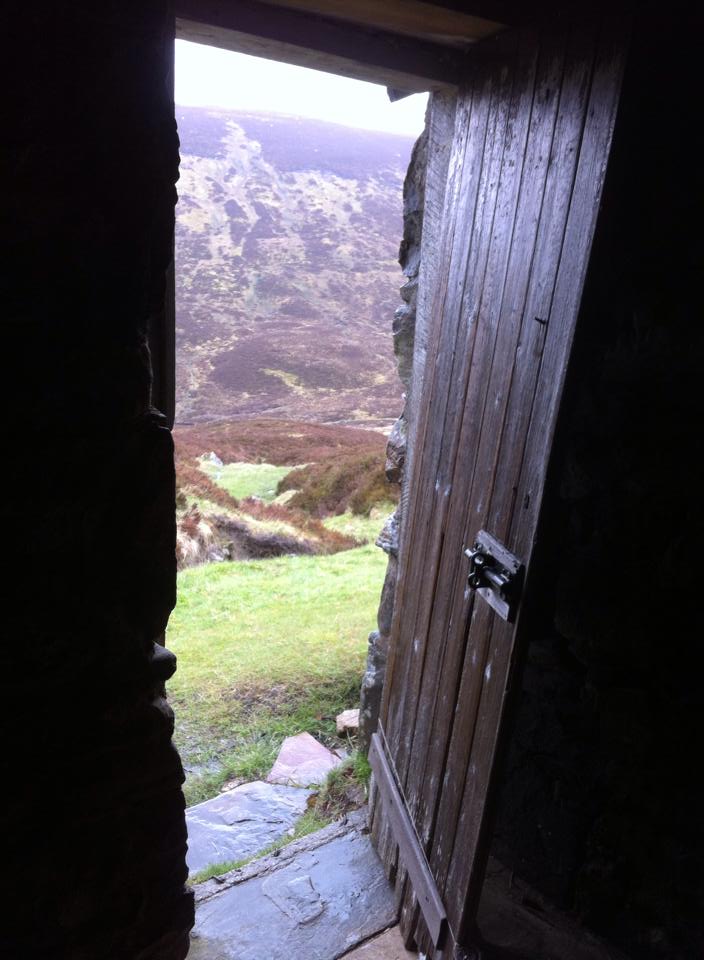
The view from Hendrick’s Bothy.

St. Francis and the Sow

Poem for a Friday — “St. Francis and the Sow” by Galway Kinnell

“The bud

stands for all things,

even for those things that don’t flower,

for everything flowers, from within, of self-blessing;   

though sometimes it is necessary

to reteach a thing its loveliness,

to put a hand on its brow

of the flower

and retell it in words and in touch

it is lovely

until it flowers again from within, of self-blessing;   

as Saint Francis

put his hand on the creased forehead

of the sow, and told her in words and in touch   

blessings of earth on the sow, and the sow   

began remembering all down her thick length,   

from the earthen snout all the way

through the fodder and slops to the spiritual curl of the tail,   

from the hard spininess spiked out from the spine   

down through the great broken heart

to the sheer blue milken dreaminess spurting and shuddering   

from the fourteen teats into the fourteen mouths sucking and blowing beneath them:

the long, perfect loveliness of sow.”

in Americans’ Favorite Poems, ed. Robert Pinsky and Maggie Dietz. New York: W.W. Norton & Co., 2000.

From the Poetry Foundation: “Galway Kinnell was an award-winning poet best known for poetry that connects the experiences of daily life to much larger poetic, spiritual, and cultural forces. Often focusing on the claims of nature and society on the individual, Kinnell’s poems explore psychological states in precise and sonorous free verse. Critic Morris Dickstein called Kinnell ‘one of the true master poets of his generation.”’ Kinnell’s Collected Poems was awarded the Pulitzer Prize and the National Book Award.

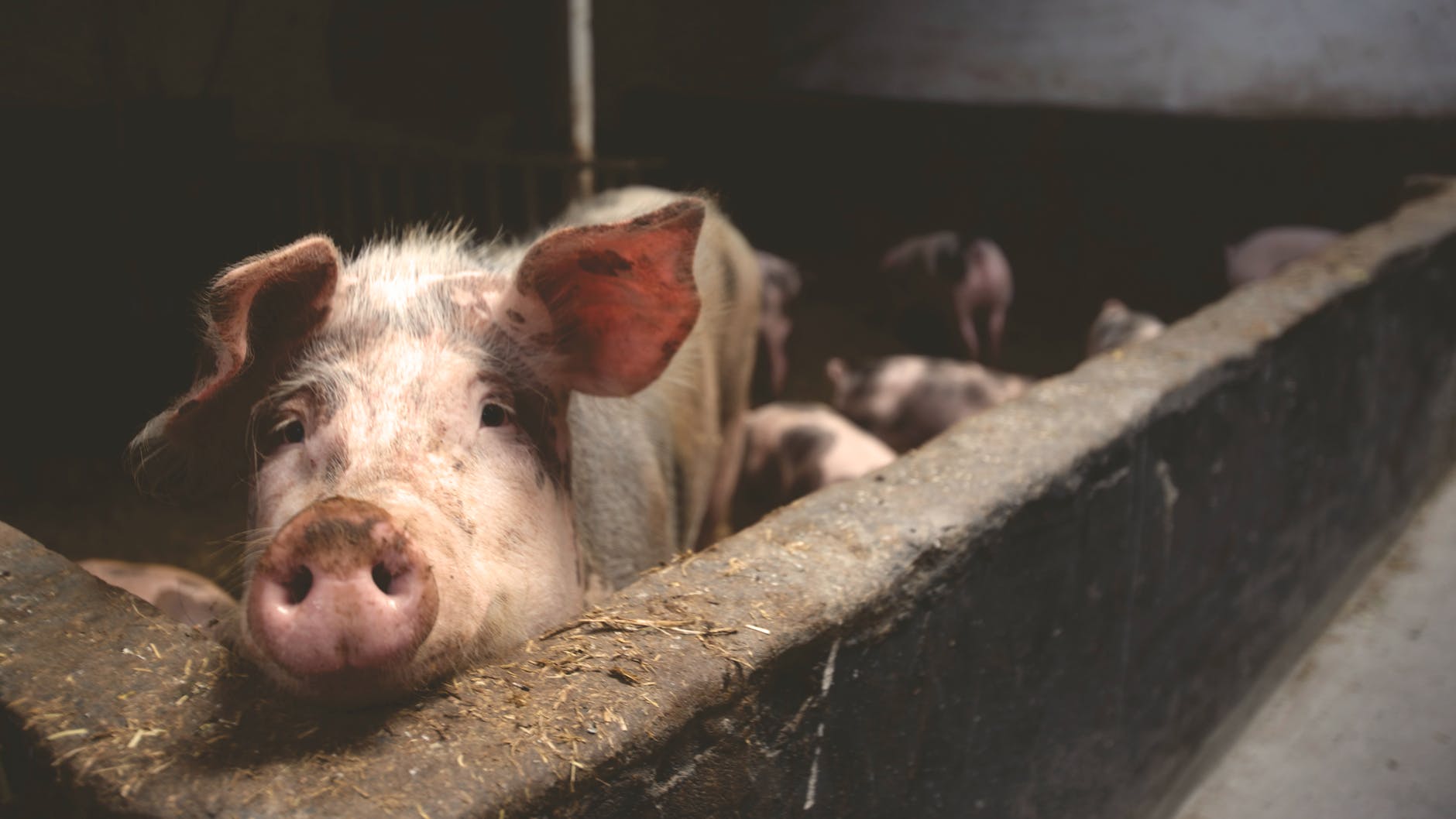
Photo by Matthias Zomer on Pexels.com

Rushing at Times Like Flames

Poem for a Tuesday — “Rushing at Times Like Flames” by Nelly Sachs

“Rushing at times

like flames through our bodies —

as if they were still woven with the beginning

of the stars.

How slowly we flash up in clarity —

Oh, after how many lightyears have our hands

folded in supplication —

our knees bent —

and our souls opened

in thanks?”

— in Women in Praise of the Sacred, ed. Jane Hirshfield. New York: Harper Collins, 1994, p. 222.


Nelly Sachs was born to a secular Jewish family in Berlin in 1891. With the rise of the National Socialist Party, she became aware of her Jewish heritage and faith. She narrowly escaped deportation to a concentration camp in 1940 by fleeing to Sweden through the intercession of the royal family. For the rest of her life, the Holocaust was a central theme of her work. She shared the 1966 Nobel Prize in Literature with Israeli novelist S.I. Agnon. Sachs wrote of forgiveness, deliverance, peace, and a God who is present in terror, suffering, absence, and death.


Photo by Pixabay on Pexels.com

The Same Inside

Poem for a Tuesday — “The Same Inside” by Anna Swir

“Walking to your place for a love feast
I saw at a street corner
an old beggar woman.
I took her hand,
kissed her delicate cheek,
we talked, she was
the same inside as I am,
from the same kind,
I sensed this instantly
as a dog knows by scent
another dog.
I gave her money,
I could not part from her.
After all, one needs
someone who is close.
And then I no longer knew
why I was walking to your place.”

— from A Book of Luminous Things, ed. Czeslaw Milosz. New York: Harcourt Brace, 1996, p. 200.


Anna Swir (Anna Świrszczyńska) emerged from humble origins to become one of the most respected Polish poets of the twentieth century. She served in the Resistance during World War II and worked as a military nurse in the Warsaw Uprising. She wrote frankly about death, war, and the female body. She published nine collections of poetry, as well as plays and stories for children. She received a number of literary awards in her native Poland. She died in Krakow in 1984.


image source https://www.freeimages.com/photo/poor-beggar-woman-1440739