A Hopeful Beginning

Sabbath Day Thoughts — “A Hopeful Beginning” Luke 19:28-40

On Ash Wednesday, more than 300 prominent Christian leaders, including Presbyterians, released “A Call to Christians in a Crisis of Faith and Democracy.” It’s a boldly worded statement that characterizes this moment in history as a time of spiritual crisis in which we must affirm what we believe and whom we will serve. They are concerned about the conflation of church and state, the rise in racism, the targeting of immigrants, and the erosion of constitutional rights.

The Call to Christians insists that our allegiance as followers of Jesus must be to God—above any earthly kingdom or principality. It confronts the heretical beliefs of white Christian nationalism—the belief that America is a nation intended only for white Christians, whose beliefs and practices must be privileged. Instead, the statement asserts that the teachings of Jesus summon us to love all our neighbors and see in them the image of God. “As Christians,” the call reads, “We must never preach nationalism as discipleship, confuse American and Christian identities with whiteness, or mistake allegiance to modern-day Caesars for faithfulness to Christ.”

The “Call to Christians in a Crisis of Faith and Democracy” was not headline news on Wednesday. Top billing went to the movement of US military resources to the Middle East, and the Epstein files, and The Board of Peace and its plans for Gaza, and the President’s contention that he is not a racist, just ask Mike Tyson. Undoubtedly, some will embrace the call and feel it is about time that mainline faith leaders spoke up. Others will reject the call as a showy political act made by insignificant churches of declining influence. For those bold leaders, though, it was a clarifying statement in a time when there are harshly diverging beliefs about what it means to be Christian and how we are to relate to both empire and neighbor, especially our most vulnerable neighbors.

Our gospel reading today typically concludes the season of Lent, but this year, it gets our Lent started as I consider in the coming Sundays Jesus’ final week in Jerusalem. Often called the “Triumphal Entry” the Palm Sunday story usually starts Holy Week. It reflects tensions about what it means to be a person of faith and how we are to relate to earthly regimes and powerful institutions.

That first Palm Sunday was a collision of two kingdoms. The Passover Festival brought pilgrims from across Israel and around the empire to Jerusalem to remember God’s long-ago deliverance from bondage in Egypt. It was a time when Messianic expectations ran high. After all, if God could raise up Moses to lead the people to freedom, then even now God could be raising up a leader to face Rome head on and shape a changed future for the people. For the Romans, Passover was an inconvenience, a time to be on guard, prepared to quash any hint of rebellion.

In their book The Last Week: A Day-by-Day Account of Jesus’s Final Week in Jerusalem, New Testament scholars J.D. Crossan and Marcus Borg teach that Jesus’s Palm Sunday processional wasn’t the only parade that Sunday. The Roman procurator Pontius Pilate was on the road that day, too. Pilate and his followers streamed into the city from the east as Jesus and his followers came from the west. As he did each year at the Passover, Pilate left his seaside base in Caesarea Maritima and marched to Jerusalem to ensure peace.

Pilate was there at the behest of the emperor. He rode a war horse, decked out in royal livery. He was flanked by imperial standards that whipped and snapped in the wind. He led a legion of Roman soldiers, the finest fighting force in the world. Bright helmets glinted in the sun. Hobnailed sandals marched in cadence. Shields were strapped to left arms while swords hung from every belt. The message of Pilate’s parade was clear. Caesar ruled and there would be no resistance.

Jesus’ parade was different. His faith had called him to Jerusalem, even though he knew his entry to the Holy City would put him in peril. He came to fulfil the requirements of righteousness: to remember and give thanks for God’s Passover miracle. Instead of a war horse, Jesus rode a colt, the foal of a donkey, decked out in the homespun linen of a disciple’s robe. Instead of an army, Jesus was surrounded by peasants—farmers, fishermen, tradespeople, shopkeepers. Instead of the sound of marching feet and shouted commands, there was the singing of ancient pilgrim songs and the sounds of joy. “Blessed is the king who comes in the name of the Lord! Peace in heaven and glory in the highest!” Instead of an homage to Caesar, this was a celebration of another Kingdom, God’s Kingdom.

In Caesar’s kingdom, dominion was established through military conquest. A privileged few benefited at the expense of the many. Power was ensured with brute force, occupation, and crucifixion. In Caesar’s Kingdom, peace was achieved at any price—with widespread fear and deadly violence.

Jesus taught that God’s Kingdom, the Kingdom that he served, was always all around us, growing quietly in the midst of the world’s sorrow and celebration. His every action proclaimed that Kingdom. God’s Kingdom is revealed when hungry neighbors are fed, outsiders are accepted and welcomed, healing is available for all, and sinners find forgiveness. Peace is achieved when the other cheek is turned, enemies are loved, and the path of non-violence is chosen, even at great personal cost.

Two kingdoms collided on that first Palm Sunday. Those kingdoms would continue to be in terrible tension throughout that final week of Jesus’ earthly ministry. It was a hopeful beginning as pilgrims sang and proclaimed Jesus their messianic king. Yet that week would have a terrible end as Jesus hung upon a cross, murdered by the state, taunted by crowds who once sang his praises, shamed with the sign “King of the Jews.”

Two kingdoms stand in tension, just ask those 300 faith leaders who signed on to the “Call to Christians in a Crisis of Faith and Democracy.” It is tempting to serve the empire. Who doesn’t want to call the shots? Who doesn’t want power? Who wouldn’t like to silence their enemies? Who isn’t tempted by the big promises of lasting peace and prosperity. Does it really matter if the price of peace is the exploitation of the vulnerable, the exclusion of the stranger, the acceptance of the status quo, the death of the innocent? Does it truly matter if the super wealthy get even wealthier while others languish in generational poverty? The siren-song of the empire can be hard to resist, especially when the price of opposition may cost you everything, even your life.

The way of God’s Kingdom is hard, my friends. Jesus knew that. Retired Presbyterian minister David Bales argues that Jesus would never get elected today. Who would vote for someone who pronounced woes on the rich and expects us to love our enemies?  Who would follow someone who believed power and resources should be freely shared, even with the powerless? It is hard to accept a king who willingly suffers and serves. It is very hard to follow a king who expects us to do the same. The way of God’s Kingdom is hard, indeed.

Caesar’s Kingdom can leave us feeling hopeless and paralyzed, my friends. We stop following the Way of Jesus and we fail to resist the siren call of the empire because we fear that we make no difference. Prof. Insook Lee of New York Theological Seminary reminds us that a handful of well-intended people can create life-saving change. She tells the Legend of the Hundredth Monkey. Researchers used 10,000 monkeys to repopulate a remote island that had been used for nuclear testing. Everything seemed to be safe on the island, but coconut husks still bore traces of radioactivity. The scientists taught ten monkeys to wash their coconuts in a stream of fresh water and then released them on the island. Soon twelve monkeys were washing their coconuts, then twenty monkeys, next forty-seven. Something surprising happened. When the hundredth monkey began to wash his coconut, all ten thousand started washing their coconuts. That healthy intervention of washing coconuts proved to be infectious. The Kingdom that Jesus heralded can come. All we need are ten faithful people or 300 concerned clergy to call for change and believe it is possible.

In the coming weeks of Lent, we will follow Jesus through his final week in Jerusalem. He’ll be making his case for the Kingdom of God, even as the powers of Temple and empire conspire to bring him down. May we have ears to hear and the courage to take action. May we choose to serve Christ’s Kingdom.

Resources

“A Call to Christians in a Crisis of Faith and Democracy,” Feb. 18, 2026. Accessed online at https://acalltochristians.org/

Jim Wallis. “Faith and Freedom” in God’s Politics with Jim Wallis, Feb. 18, 2026. Accessed online at https://jimwallis.substack.com/p/faith-and-freedom

Eric Barreto. “Commentary on Luke 19:28-40” in Preaching This Week, Jan. 22, 2026. Accessed online at https://www.workingpreacher.org/preaching-series/sermon-series-jesuss-triumphal-entry-lukes-version

Insook Lee. “Pastoral Perspective on Luke 19:28-40” in Feasting on the Gospels, Luke, vol. 2. WJKP: Louisville, 2014.

David Bales. “Homiletical Perspective on Luke 19:28-40” in Feasting on the Gospels, Luke, vol. 2. WJKP: Louisville, 2014.

Matt Skinner. “Walking the Palm Sunday Path: A Lenten Sermon Series for 2026” in Preaching Series, January 21, 2026. Accessed online at https://www.workingpreacher.org/preaching-series/walking-the-palm-sunday-path-in-lent-a-sermon-series-for-2026


Luke 19:28-40

28 After Jesus had said this, he went on ahead, going up to Jerusalem. 29 As he approached Bethphage and Bethany at the hill called the Mount of Olives, he sent two of his disciples, saying to them, 30 “Go to the village ahead of you, and as you enter it, you will find a colt tied there, which no one has ever ridden. Untie it and bring it here. 31 If anyone asks you, ‘Why are you untying it?’ say, ‘The Lord needs it.’”

32 Those who were sent ahead went and found it just as he had told them. 33 As they were untying the colt, its owners asked them, “Why are you untying the colt?”

34 They replied, “The Lord needs it.”

35 They brought it to Jesus, threw their cloaks on the colt and put Jesus on it. 36 As he went along, people spread their cloaks on the road.

37 When he came near the place where the road goes down the Mount of Olives, the whole crowd of disciples began joyfully to praise God in loud voices for all the miracles they had seen:

38 “Blessed is the king who comes in the name of the Lord!”

“Peace in heaven and glory in the highest!”

39 Some of the Pharisees in the crowd said to Jesus, “Teacher, rebuke your disciples!”

40 “I tell you,” he replied, “if they keep quiet, the stones will cry out.”
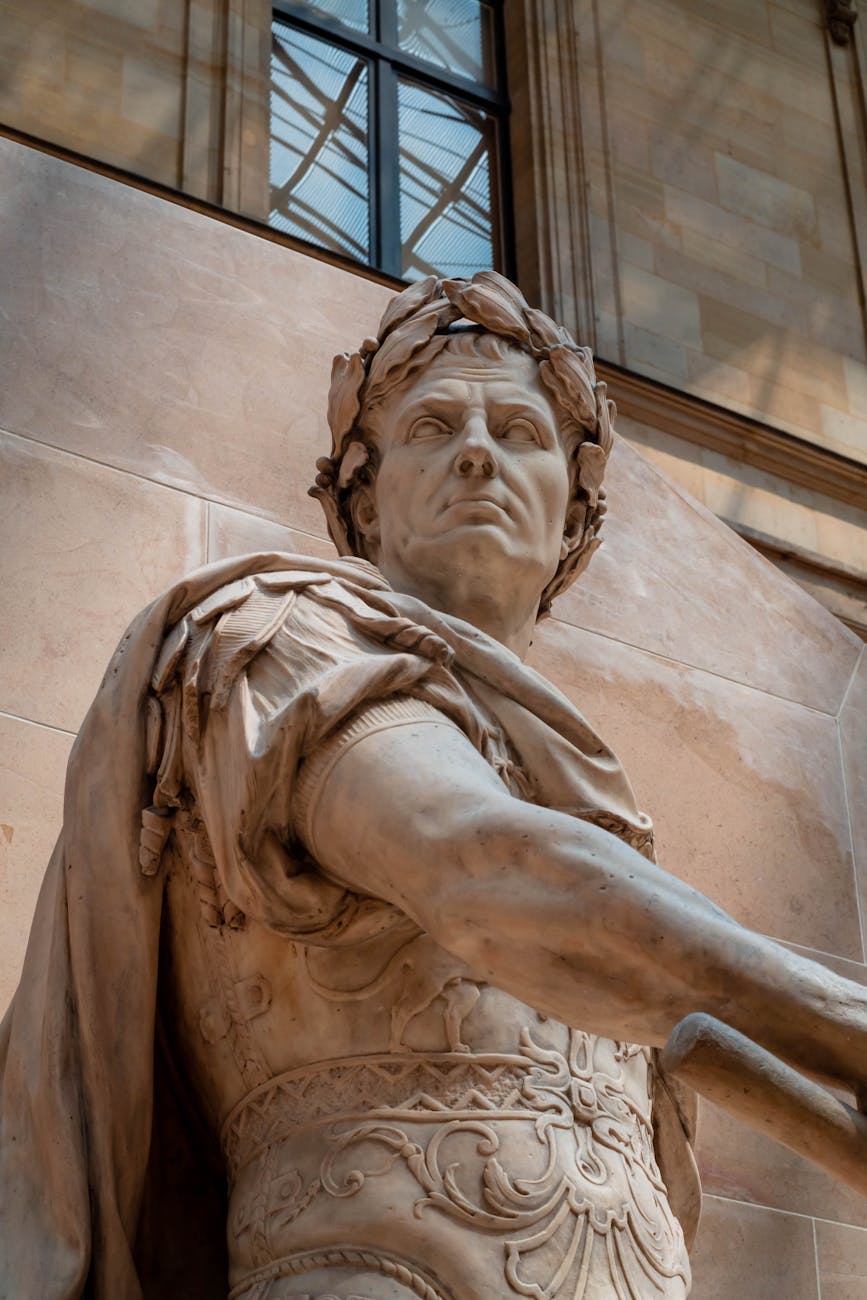

Photo by Alejandro Aznar on Pexels.com

King Jesus

Sabbath Day Thoughts — “King Jesus” John 18:33-38a

Who has authority?  When we are very little, our parents are the big authority figures. Even if our first word is “no,” the only “no” that truly matters is the one spoken by our mother or father. As we head into high school, we may find a teacher or coach whom we grant a place of special authority.  That science teacher who tutored us through our Advanced Placement exams or the track coach who brought out our athletic excellence may play an influential role in our development. In adulthood, our workplace often demands our allegiance.  We may put in long hours because we love and are fulfilled by what we do, and if we don’t love it, then we value that paycheck which covers the rent, puts food on the table, and keeps the car on the road. Family can take on ultimate authority for our lives. Devotion to a spouse, taxiing kids to extra-curricular activities, time with extended family, all can control our daily living. How many of us will be gathering with family (or those who are like family) for Thanksgiving this week?

As we age, our doctor is often the one who has an authoritative say. On doctor’s orders, we count our calories, cut out the sugar, avoid the saturated fats, and give up salt or caffeine. I’m from a long line of people with high cholesterol. A doctor once told my Mom that her body could make cholesterol out of spinach. Last year, on my doctor’s advice, I met with a dietician to see if we could tweak my diet to improve my elevated numbers. I used olive oil instead of butter and cut way back on eggs. We ate more fish, more fruit, more fiber. I was feeling pretty impressed with myself until I had new bloodwork done earlier this month. All that hard work reduced my cholesterol by a whopping nine points. Thanks a lot, doc!

In time, we come full circle. One day, we discern that the balance of power and authority has shifted. It falls to our adult children to now tell us the “no” that we don’t want to hear.  We find ourselves moving to a more manageable home, giving up our car, or foregoing the season pass for downhill skiing at Whiteface. 

Those to whom we grant authority shape our lives and influence the course of our daily living.  They have a lot to say about who we are and what our life looks like.  Who has the ultimate authority for our lives this morning?

Our gospel lesson tells of the face-off between Jesus of Nazareth and Pontius Pilate, two men of authority, who allowed very different forces to shape and direct their lives.  For Pontius Pilate, the Emperor Tiberias Augustus had ultimate authority.  Pilate was a career officer in the legions of Rome, a soldier who rose through the ranks, thanks to his political connections and his skill with the javelin. It was rumored that Pilate, married to the illegitimate daughter of Julia—the emperor’s second wife, was a particular favorite of Tiberias. The emperor dispatched Pilate to Judea to quell the chaos left behind when the corrupt King Herod Archelaus was deposed. 

For six years, Pilate had served as the procurator (or client king) of Judea.  He governed, not because he cared about the Israelite people, but because he was duty bound to protect the financial and political interests of his emperor.  Pilate had two key responsibilities as procurator: to ensure that taxes were collected and to keep the peace, the pax Romana, at any price.  Pilate’s chief weapons in achieving his purpose were fear and violence, and he used those weapons liberally. In his first six years as procurator, Pilate had ruthlessly crushed three rebellions. He crucified insurrectionists and slaughtered their followers.

More than any other time of year in this miserable backwater where the emperor had sent him, Pilate dreaded the Passover, which awakened within the Hebrew people the historic longing for liberation from foreign oppression. As Pilate was roused from his bed early on Friday of the Passover Festival, he was told that yet another political dissident was in custody, Jesus of Nazareth, whom the people heralded as King of the Jews.

When Pilate entered the courtyard of the Praetorium to interrogate his prisoner, he expected to find a man not unlike himself, a man with political ambitions who used violence to achieve power and authority over the people. Instead, Pilate found an impoverished, homeless rabbi, who sought not to build an earthly kingdom but to reveal a heavenly kingdom, where God holds ultimate authority.  The kingdom that Jesus served was unlike any that the procurator had ever imagined. It was not forged by fear and violence, rather it was revealed in love and justice.

Because God had ultimate authority in Jesus’ life, he had left his hometown, his kin, and his profession as a carpenter.  From Galilee to Jerusalem, Jesus poured out his life in love and justice. Jesus reached out with holy healing power that cleansed lepers, restored blind eyes, opened deaf ears, fed the hungry, and even raised the dead. He taught about God’s great love for all kinds of people, even those whom society labeled outcasts and sinners. If Pilate would give him half a chance, Jesus would even tell Pilate that God loved him and longed to put Pilate to work in another kingdom. But within hours, Jesus would be wearing a crown of thorns. Within hours, he would be enthroned upon a cross, beneath the title “King of the Jews.”

As Pilate confronted Jesus, two kingdoms stood in tension, two very different ways of exercising power and authority.  In Pilate’s kingdom, peace was secured with the sword and kept with the brutality of crucifixion.  In Christ’s kingdom, peace was proclaimed by meeting people in their places of greatest need with caring, compassion, and love.  In Pilate’s kingdom, soldiers were dispatched to inspire fear and maintain order. In Jesus’ kingdom, disciples were sent out to heal, teach, and transform the social order. In Pilate’s kingdom, oppressive taxes stole from the poor to line the pockets of the rich. In Jesus’ kingdom, the rich shared from their abundance to meet the needs of the poor. In Pilate’s kingdom, the emperor declared himself a God and demanded the tribute and sacrifice of the people. In Jesus’ kingdom, God chose to become a man who would sacrifice his very life to redeem the people. Pilate’s kingdom would rise and fall, but Jesus’ Kingdom would reign forever.

Christ the King Sunday was first commemorated in 1925 to assert the authority of God in a world that was increasingly secular. The fires of rabid nationalism were being stoked in Europe. That year, Benito Mussolini dismantled Italy’s democratic institutions and assumed his role as dictator, adopting the title Il Duce (“The Leader”). In Germany, Adolf Hitler, newly released from prison for his role in an attempted coup, had just published the first volume of Mein Kampf. That same year, he founded the SS—the violent political soldiers of the Nazi party—and he was maneuvering to assume leadership which would propel him into the role of German chancellor. In America, it was all about the money, money, money. The roaring twenties were in full swing. Prohibition filled Saranac Lake with speakeasies and bootleggers. The stock market had begun a period of explosive growth; its value would soar from $27 billion in 1925 to $87 billion in 1929, before the crash of the Great Depression. Whom would the world serve? Dictators, mad men pedaling hate, the unchecked forces of capitalism, or King Jesus? The world needed at least one Sunday to ponder who and what should have ultimate authority.

On Christ the King Sunday, we are asked to affirm whom we will ultimately serve—Jesus or the powers and principalities of this world.  Whom will we allow to hold authority for our daily living?  The way of the empire can bring personal rewards—power, wealth, and worldly prestige. Who doesn’t want that?  And yet, the price of our triumph is the oppression of the world around us, the exploitation of neighbors and nature, and the wounding of our world with violence and death. Just ask Pontius Pilate. 

Christ our King challenges us to choose another way, another kingdom. In Christ’s Kingdom, God has ultimate authority, and the driving ethic is one of love and justice. We serve that holy kingdom by choosing to live as Jesus did, reaching out to heal and to feed, to welcome and forgive. The reward for our service is peace, healing, and redemption, not only for ourselves but also for those around us—for family, friends, community, and ultimately our world. Who doesn’t want that? 

Those to whom we grant authority shape our lives and influence the course of our daily living.  They have a lot to say about who we are and what our life looks like. Above all earthly powers, the crucified and risen Lord alone claims our adoration and allegiance. May we go forth to follow King Jesus.

Resources

Paul S. Berge. “Commentary on John 18:33-37” in Preaching This Week, Nov. 22, 2009. Accessed online at https://www.workingpreacher.org/commentaries/revised-common-lectionary/christ-the-king-2/commentary-on-john-1833-37-6

Jaime Clark-Soles. “Commentary on John 18:33-37” in Preaching This Week, Nov. 25, 2012. Accessed online at https://www.workingpreacher.org/commentaries/revised-common-lectionary/christ-the-king-2/commentary-on-john-1833-37

Susan Hylen. “Commentary on John 18:33-37” in Preaching This Week, Nov. 25, 2012. Accessed online at https://www.workingpreacher.org/commentaries/revised-common-lectionary/christ-the-king-2/commentary-on-john-1833-37-3

PCUSA. “Christ the King/Reign of Christ” in Book of Common Worship. Louisville: Westminster John Knox Press, 2018.


John 18:33-38a

33 Then Pilate entered the headquarters again, summoned Jesus, and asked him, “Are you the King of the Jews?” 34 Jesus answered, “Do you ask this on your own, or did others tell you about me?” 35 Pilate replied, “I am not a Jew, am I? Your own nation and the chief priests have handed you over to me. What have you done?” 36 Jesus answered, “My kingdom does not belong to this world. If my kingdom belonged to this world, my followers would be fighting to keep me from being handed over to the Jews. But as it is, my kingdom is not from here.” 37 Pilate asked him, “So you are a king?” Jesus answered, “You say that I am a king. For this I was born, and for this I came into the world, to testify to the truth. Everyone who belongs to the truth listens to my voice.” 38 Pilate asked him, “What is truth?”


Caesarea Maritima

On this snowy North Country Friday, I thought you might enjoy a little Mediterranean sunshine. This is the view from the site of Pilate’s compound at Caesarea Maritima. It’s within eyeshot of the Hippodrome where troops drilled, around the corner from the amphitheater, and featured saltwater and freshwater pools for exercise and relaxation.

Caesarea Maritima National Park, Israel