Unprepared

Sabbath Day Thoughts — “Unprepared” Matthew 3:1-12

It was finals week. An entire semester’s worth of work depended upon some big tests. I was cramming for my exams, making the most of reading week. I felt good about my impending tests. Then, I suddenly realized that there was one exam that I was completely unprepared for. I don’t know how it escaped my attention, but there on my schedule was a course that I had overlooked for an entire semester. I hadn’t gone to class. I didn’t know the professor. I hadn’t read the books. How could I possibly pass that test? Like all college students, I began to panic. What if I stayed awake all night and skimmed the reading? I didn’t own the books! Could I borrow someone’s notes? I didn’t know who was in the class! It did not look good. I was unprepared.

Perhaps you have had that nightmare or something like it. I’m told that many professions are plagued by their version of the school dream. The contractor dreams of an overlooked job that must be done immediately. The caterer has a nightmare about a huge wedding that never made it onto their calendar. The business manager dreams of a surprise audit. I can testify that the pastor’s nightmare entails going to a new church on Sunday morning and discovering that you are expected to preach, and when you look down, you notice that you are naked.

Psychologists tell us that these dreams are typically provoked by unresolved anxiety or feelings of inadequacy. When we are stressed and overwhelmed, our brains work overtime to cope, even in our sleep. We awaken with our hearts pounding, feeling sweaty and gripped with self-critical worry. The experts say we should pay attention to dreams like this. It could be a wake-up call from our subconscious, telling us to attend to a particular issue, make a big decision, or change our course of action.

I bet John the Baptist had school dreams. He was born to prepare the way of the Lord, but the more John tried to live into his calling, the more he noticed that the folks who came out to the Judean Wilderness to hear him preach were totally unprepared. The messiah was coming with his baptism of fire and his winnowing fork in hand! God’s great redemption of humankind was about to unfold! But the people, they were eating, drinking and being merry, as if they had all the time in the world and could not be bothered to do their homework.

Even the piety experts, the Pharisees and Sadducees, were slackers. They may have been savants on the requirements of the Torah, but as far as John was concerned, they were a brood of vipers. They talked a good game about loving the Lord, but their actions spoke louder than words. The righteous deeds that were typically born of a transformed heart—like caring for vulnerable widows and orphans, feeding the hungry, and loving their neighbors—those deeds were nowhere to be seen. Where was the good fruit?! “Repent!” John cried, trying to infect his listeners with enough of his anxiety and urgency to inspire them to turn their lives around.

We aren’t strangers to anxiety in this Christmas season. No other time of the year is so steeped in preparation and timeworn tradition. There’s a lot to do, and we’ve got to get it done before Christmas Day. Our to-do list is as long as our arm: gifts to buy and the tree to decorate, cookies to bake and old family recipes to duplicate, packages to wrap and charitable giving to do, parties to attend and guests to host. Every year, right about this time, we wonder, “How will we ever get it all done?” As I talk about the Christmas juggernaut that is bearing down upon us, arriving in exactly eighteen days, perhaps you are feeling a little infected with John the Baptist’s anxiety, perhaps you are feeling like you just woke up from a bad school dream.

Our seasonal Study Group is reading Advent in Plain Sight by Jill Duffield. In our reading from Thursday, Dr. Duffield recounted attending a small group meeting at church a number of years ago when she was a young adult.  Their pastor asked them what they thought about Advent. The responses focused on the baby Jesus, the infant so tender and mild. Folks were thankful for the incarnation, the breaking of barriers between heaven and earth, the confidence that God is with us—Emmanuel! I’m sure everyone in the group had that good feeling you get when you know the answer to the question that the professor asks in class.

But right about then, the pastor went a little John-the-Baptist on them. He blurted out, “No one ever thinks of the Second Coming!” It’s true. In this Advent season, we look back, remembering and giving thanks for the baby Jesus. But Advent means coming. We are also called to look ahead, to anticipate the ultimate fulfillment of the great redemption that God has begun in Jesus. We are talking about End Times, Judgment Day, the Kingdom of God, the apocalypse. We’re talking about the inevitable fact that each of us, one day, will meet our maker. The ultimate final exam awaits us all—and we don’t have much say about when that will happen. Are our hearts pounding? Are we feeling a little sweaty and gripped with self-critical anxiety? Then John the Baptist and I have achieved our mission.

We are really good at preparing for the baby Jesus, aren’t we? Just look around the church—the purple paraments, the greens, the Advent Wreath, the Christmas tree in the Great Hall. But on the second Sunday of Advent, John the Baptist shows up, like a bad school dream, and he thinks we are unprepared. John wants us to temper our nostalgic looking back with some prophetic looking ahead. He calls us once again to prepare the way of the Lord, to live today as if Jesus were coming tomorrow, to bear fruit worthy of our repentance.

For John the Baptist’s listeners on the banks of the Jordan, all those years ago, preparing the way of the Lord began with a change of heart. They heard the truth of John’s words and knew they could do better. They returned to God, wading into the waters of the Jordan in an outward sign of their inward repentance. I like to think that their watery rite was followed by some fruitful living. They were kinder to their families. They prayed fervently, worshipped ardently, and feasted on God’s word. They lived with a renewed compassion, service, and love for the world around them that can only come from a life lived with God.

On this second Sunday of Advent, we, too, can have a change of heart. We can draw near to God even as God draws near to us. 18 days and counting. We won’t be wading in the Jordan, but amid all our Christmas preparations, I trust that we’ll find the quiet moment today to commit our purpose to God’s purpose. We’ll resolve to love the Lord our God with all our heart, mind, soul, and strength, and we’ll go forth to love our neighbors as ourselves. We’ll bear fruit worthy of that repentance. The basket at the side entrance will fill with cans of corn for the ecumenical holiday boxes for neighbors in need. Our shallow well gifts will provide clean drinking water for many villages in sub-Saharan Africa. We’ll invite a hurting friend to attend the Longest Night Service with us this Wednesday. We’ll set an extra place at the Christmas dinner table for someone who might otherwise be alone. When that final exam comes, we’ll be ready.

Prepare the way of the Lord, my friends, make his paths straight.

Resources:

Adam England. “What Does It Mean When You Dream about Being Back in School?” in Very Well Mind, Oct. 30, 2025. Accessed online at verywellmind.com.

Catherine Sider Hamilton. “Commentary on Matthew 3:1-12” in Preaching This Week, Dec. 7, 2025. Accessed online at https://www.workingpreacher.org/commentaries/revised-common-lectionary/second-sunday-of-advent/commentary-on-matthew-31-12-7

Arland J. Hultgren. “Commentary on Matthew 3:1-12” in Preaching This Week, Dec. 8, 2013. Accessed online at https://www.workingpreacher.org/commentaries/revised-common-lectionary/second-sunday-of-advent/commentary-on-matthew-31-12-3

Stanley Saunders. “Commentary on Matthew 3:1-12” in Preaching This Week, Dec. 9, 2007. Accessed online at https://www.workingpreacher.org/commentaries/revised-common-lectionary/second-sunday-of-advent/commentary-on-matthew-31-12-6

James Boyce. “Commentary on Matthew 3:1-12” in Preaching This Week, Dec. 4, 2022. Accessed online at https://www.workingpreacher.org/commentaries/revised-common-lectionary/second-sunday-of-advent/commentary-on-matthew-31-12-2


Matthew 3:1-12

1 In those days John the Baptist appeared in the wilderness of Judea, proclaiming, “Repent, for the kingdom of heaven has come near.” This is the one of whom the prophet Isaiah spoke when he said,

“The voice of one crying out in the wilderness:
‘Prepare the way of the Lord;
    make his paths straight.’ ”

Now John wore clothing of camel’s hair with a leather belt around his waist, and his food was locusts and wild honey. Then Jerusalem and all Judea and all the region around the Jordan were going out to him, and they were baptized by him in the River Jordan, confessing their sins.

But when he saw many of the Pharisees and Sadducees coming for his baptism, he said to them, “You brood of vipers! Who warned you to flee from the coming wrath? Therefore, bear fruit worthy of repentance, and do not presume to say to yourselves, ‘We have Abraham as our ancestor,’ for I tell you, God is able from these stones to raise up children to Abraham. 10 Even now the ax is lying at the root of the trees; therefore every tree that does not bear good fruit will be cut down and thrown into the fire.

11 “I baptize you with water for repentance, but the one who is coming after me is more powerful than I, and I am not worthy to carry his sandals. He will baptize you with the Holy Spirit and fire. 12 His winnowing fork is in his hand, and he will clear his threshing floor and will gather his wheat into the granary, but the chaff he will burn with unquenchable fire.”


Photo by Tara Winstead on Pexels.com

Come, Let Us Walk in the Light

Sabbath Day Thoughts — “Come, Let Us Walk in the Light” Isaiah 2:1-5

It was a tough Thanksgiving for Sharon and Tim. Family gathered from far and wide. The food was delicious. Laughter sounded around the table. Everyone cheered and jeered in goodhearted rivalry as the Detroit Lions took on the Green Bay Packers. It was a special day. But Sharon and Tim couldn’t help but think about who was not there. Kyle, their oldest son, doesn’t come to Thanksgiving or Christmas or any of those special family gatherings anymore. It started with a rift over Kyle’s decision to quit school and the division seems to grow wider with the years.

For Henry, the best part about the long Thanksgiving weekend is not going to the office. His workplace has become increasingly polarized along the dividing lines of our national political landscape. His MAGA colleagues rejoice in every tweet that emerges from the oval office while the progressives cheer for their champion from across Lake Champlain Bernie Sanders. Henry tries to stay out of it, but he has found that he has few friends. He’d quit, but he needs the paycheck, and good jobs are hard to find, especially in the Adirondacks.

Jen has been thinking about her former best friend Cynthia. Friends since high school, Jen and Cynthia had a Black Friday tradition. They would rise early, take the Northway south, and do their Christmas shopping at the Colonie Center. After crossing everyone off their gift list, they would enjoy an early dinner at the Cheesecake Factory before heading home, the car filled with presents and the Christmas music blaring on the stereo. But when Cynthia married someone whom Jen didn’t like, the two had a falling out that never healed. Jen misses their friendship and Black Friday tradition.

The Thanksgiving holiday makes us aware of the ways that we have been blessed. God has been so good to us. Yet Thanksgiving and the coming Christmas holiday also draw our attention to the painful holes, protracted conflicts, and disappointing absences in our lives. We long for wholeness, for the peace that only Jesus can bring. We long to walk in his light.

The Prophet Isaiah knew that sense of longing. In his decades-long ministry, Isaiah endured the turbulent rule of four kings: Uzziah, Jotham, Ahaz, and Hezekiah.  Judah’s leaders were a selfish and short-sighted lot, more concerned with preserving their personal power than honoring God or protecting the people. They failed to defend the orphan or hear the pleas of widows. They ground the face of the poor into the dust. God expected justice from Judah’s rulers, but saw only bloodshed. Judah’s kings played dangerous games of shifting alliances between the reigning superpowers of their day. First, King Ahaz conspired with the Assyrians to undermine and overthrow his kin in the Northern Kingdom. Then, Hezekiah formed a secret alliance with Egypt. When Hezekiah’s double dealing came to light, the Assyrian armies rolled over Judah. Forty-six fortified cities were destroyed, and Jerusalem was encircled. Hezekiah and his people were imprisoned within a city under siege.

Into this time of suffering and violence, Isaiah shared God’s radically hopeful vision of Jerusalem. Instead of laying siege to Jerusalem, the nations of the world made a holy pilgrimage to the city. The roads thronged with people: rich and poor, young and old, sinners and saints. They walked in worn sandals. They rode opulently saddled camels. They strode with the vigor of youth. They leaned on canes and limped with the creaky joints of age. They carried babies on their hips. They sang songs of peace, “I ain’t gonna study war no more” and “Imagine all the people living life in peace.” Sounds of excitement, laughter, and hope could be heard along the way. Neighbor called to neighbor, “Come, let us go up to Jerusalem! Let us learn from God.”

When they reached the holy city, the people found that it was not ruled by Uzziah, Jotham, Ahaz, or Hezekiah. On the contrary, God was sovereign there, and God was cleaning house, ending years of injustice and oppression, judging between the nations and arbitrating for the people. There was peace and a new beginning for all God’s children. Jerusalem’s center of industry was no longer the privileged elite who built fortunes on the backs of the poor. Now, the most sought-after tradespeople were the blacksmiths. Their forges glowed red-hot, night and day. Their hammers rang out and sparks rose up in fiery showers as they beat the instruments of death into the tools of life. Swords became plowshares, spears became pruning hooks. Tanks turned to combines. AK-47s, Kalashnikovs, and Uzis transformed to hoes, rakes, and cultivators. What a lovely luminous vision held out to people living in dark times! O house of Jacob!  Come, let us walk in the light of the Lord!

As we hear Isaiah’s prophecy, we feel a terrible tension between what is and what could be, between the corruption and political intrigue of ancient Judah and God’s holy hope for Jerusalem. We know, too, the tension of Isaiah’s vision for our own lives and times, the tension between the brokenness of our families, workplaces, and friendships and the ways that God would have us live. Isaiah’s vision is a powerful and enduring invitation to faithful people to be grounded in and directed by God, to choose once and for all to walk in God’s light, to live into God’s good vision for a healed world where differences are overcome by an irresistible, holy love.

This Sunday, as we remember Isaiah’s vision and begin the season of Advent, anticipating the light of Christ that shines in our world’s darkness, we are invited to be agents of Isaiah’s vision of peace and transformation in our own communities and within our own families. This is the really hard part. Change begins here, within our heart of hearts, as we allow God’s love and grace to heal old hurts and turn us to one another with a spirit of forgiveness and forbearance. To walk in the light, we must first allow it to shine within us and transform us. Then, we must be willing to allow that light to shine through us to our neighbors, knowing that we are one and all God’s beloved children. 

There is the famous story of a wise old Rabbi who taught his students by asking them questions.  “How can a person tell when the darkness ends and the day begins?” he asked. After thinking a moment, one student replied, “It is when there is enough light to see an animal in the distance and be able to tell if it is a sheep or a goat.” Another student ventured, “It is when there is enough light to see a tree and tell if it is a fig or an oak tree.” The old Rabbi smiled and gently said, “No. It is when you can look into a man’s face and recognize him as your brother. For if you cannot recognize in another’s face the face of your brother or sister, the darkness has not yet begun to lift, and the light has not yet come.”  Come, let us walk in the light.

On this first Sunday of Advent, perhaps we could follow in Isaiah’s footsteps and cast our own vision of the world that we can make if only we will choose to walk in the light. It will be a world where we love God and we love one another as we love ourselves. It will be a world where we will even dare to love our enemies and pray for those who have persecuted us. It will be a world where we will turn the other cheek, go the extra mile, and forgive as we have been forgiven. The sharp barbs of our personal criticisms will be transformed to words of encouragement and praise. The battle lines of our political landscape will unravel at the table of peace. The sticks of insults hurled and stones of promises broken will fall powerless at the feet of unstoppable love. We will truly see one another as brothers, sisters all.

It’s a world where family rifts will come to an end, and Sharon and Tim will share Thanksgiving dinner with Kyle. It’s a world where toxic politics are set aside in favor of the common good, and Henry will like his job again. It’s a world where friendships endure despite personal differences, and Jen and Cynthia will celebrate the conclusion of their Black Friday shopping over a piece of Godiva Chocolate Cheesecake. It’s a world where we put God at the center of it all, and we learn to live by the words that Jesus taught. Can we dare to dream it?

O house of Jacob!  Come, let us walk in the light of the Lord!

Resources

Corinne Carvalho. “Commentary on Isaiah 2:1-5” in Preaching This Week, Nov. 30, 2025. Accessed online at https://www.workingpreacher.org/commentaries/revised-common-lectionary/first-sunday-of-advent/commentary-on-isaiah-21-5-7

Joel Kemp. “Commentary on Isaiah 2:1-5” in Preaching This Week, Nov. 27, 2022. Accessed online at https://www.workingpreacher.org/commentaries/revised-common-lectionary/first-sunday-of-advent/commentary-on-isaiah-21-5-6

Anathea Portier-Young. “Commentary on Isaiah 2:1-5” in Preaching This Week, Nov. 28, 2010. Accessed online at https://www.workingpreacher.org/commentaries/revised-common-lectionary/first-sunday-of-advent/commentary-on-isaiah-21-5

Fred Gaiser. “Commentary on Isaiah 2:1-5” in Preaching This Week, Dec. 2, 2007. Accessed online at https://www.workingpreacher.org/commentaries/revised-common-lectionary/first-sunday-of-advent/commentary-on-isaiah-21-5-2

The traditional story of the wise rabbi is from Dennis Bratcher “Hope!” www.cresourcei.org


Isaiah 2:1-5

The word that Isaiah son of Amoz saw concerning Judah and Jerusalem.

In days to come
    the mountain of the Lord’s house
shall be established as the highest of the mountains
    and shall be raised above the hills;
all the nations shall stream to it.
    Many peoples shall come and say,
“Come, let us go up to the mountain of the Lord,
    to the house of the God of Jacob,
that he may teach us his ways
    and that we may walk in his paths.”
For out of Zion shall go forth instruction
    and the word of the Lord from Jerusalem.
He shall judge between the nations
    and shall arbitrate for many peoples;
they shall beat their swords into plowshares
    and their spears into pruning hooks;
nation shall not lift up sword against nation;
    neither shall they learn war any more.
O house of Jacob,
    come, let us walk
in the light of the Lord!


Photo by Thilipen Rave Kumar on Pexels.com

Jesus, Remember Us

Sabbath Day Thoughts — “Jesus, Remember Us” Luke 23:33-43

The world has known many kings.

During Jesus’ earthly ministry, the Roman Emperor was Tiberias Julius Caesar Augustus. Born to an ancient Roman noble family, Tiberias rose to power as a military man. Under his leadership, the Roman armies extended the boundaries of the empire north, conquering the Germanic tribes and pushing all the way to the North Sea. Tiberias’s personal life was scandalous, marked by stories of sexual misconduct and excessive drinking. He succeeded his father-in-law Julius Caesar, inheriting a significant portion of the vast imperial treasury, a fortune that he multiplied twenty times over in his 24-year-reign. He held onto power by executing political rivals. Despite his power and riches, Pliny the elder described Tiberias as “the gloomiest of men.”

Herod Antipas was the Roman-appointed king of Galilee and Perea, east of the Jordan. Herod built an impressive capital city on the Sea of Galilee and named it Tiberias after his friend the emperor. In a world where most people lived in tiny two-room dry stone huts, Herod had no fewer than five opulent royal residences from the Roman-style palace at Tiberias to the mountaintop desert fortress of Machaerus, where Herod had John the Baptist imprisoned and beheaded.  In a time when the average daily wage was one denarius, Herod was paid the imperial sum of 1,200,000 denarii-a-year to rule on behalf of the Romans, collect taxes, and ruthlessly keep the peace. Like his mentor Tiberias, Herod’s personal life was marked by lavish parties and excessive drinking, as well as an incestuous marriage to Herodias, who was both his niece and his brother’s wife.

Kings continue to rule around the world. This week, the White House played host to the Saudi Crown Prince Mohammad bin Salman, known to his friends as MBS. The Saudi crown prince is fabulously rich with a fortune estimated at $25 billion dollars, amassed from control of oil resources and a wide net of strategic investments. In a 2017 purge, MBS invited his political rivals to a lavish party at the Riyadh Ritz Carlton, where he arrested them all on charges of corruption. His luxury lifestyle includes a superyacht, the Serene, valued at $500 million and a French palace, the Chateau Louis IV, which rivals Versailles. It’s said that MBS has been an architect of the decade-long War in Yemen, which has left that nation in humanitarian crisis. He is also believed to have ordered the 2018 assassination of Washington Post journalist and Saudi dissident Jamal Khasoggi, who was detained, murdered, and dismembered with a bone saw at the king’s behest.

The watchwords of these earthly kings are power, wealth, and self-interest.

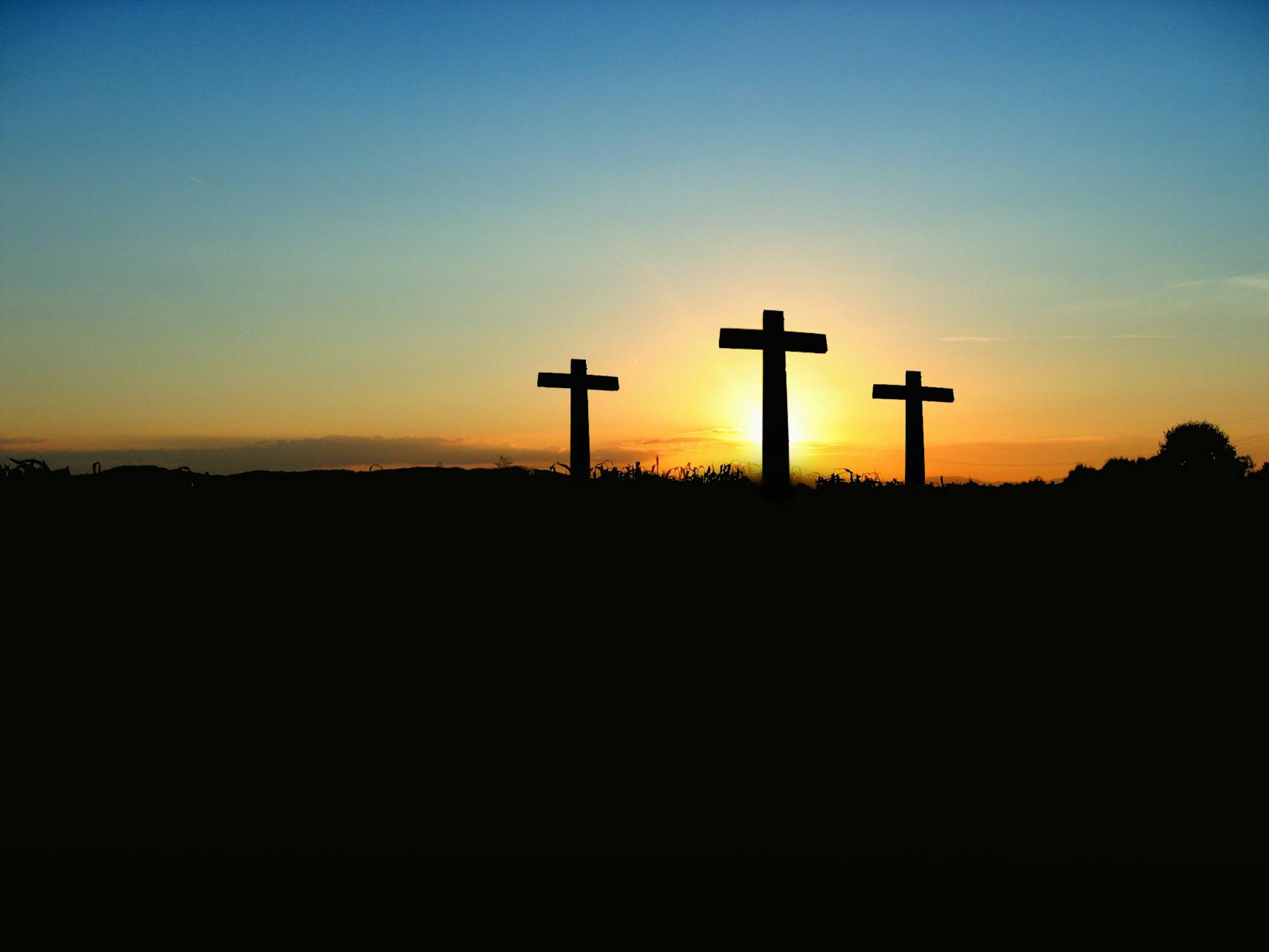
On this final Sunday of the church year, we are asked to ponder Christ the King. The Christ we encounter today has none of the absolute power of Tiberias or the imperial paycheck of Herod. He doesn’t own a superyacht or a French palace. Jesus was betrayed by one of his most trusted companions. His followers abandoned him. He was falsely accused and unjustly condemned of blasphemy and sedition. He was badly beaten and cruelly scourged. The bruised and bloody Jesus was paraded through the streets of the city behind a placard bearing the inscription “King of the Jews,” an example of what happens to those who threaten the authority of Tiberias and Herod. At the place they called The Skull, Jesus was stripped, nailed to a cross, and left to die as soldiers gambled and a crowd looked on. To ensure that Jesus was thoroughly humiliated, his executioners suspended him between two known criminals. And as Jesus hanged there, broken, bleeding, and dying, he was scoffed at, mocked, and derided. Even so, Jesus found the strength and the courage to rise above his pain, and seek a path that his royal contemporaries couldn’t begin to imagine. Jesus prayed for his executioners and persecutors, “Father, forgive them; for they do not know what they are doing.” The first watchword in the court of the crucified king is forgiveness.

Three times the dying Jesus was taunted by those around him. The leaders, who orchestrated his execution, scoffed, ““He saved others; let him save himself.” The soldiers mocked, “If you are the King of the Jews, save yourself!” Even one of the thieves repeatedly derided Jesus, “Are you not the Messiah? Save yourself and us!” But the salvation that Jesus offers our world takes place through the cross and not apart from it. Jesus chooses death on a cross because he would sooner save us than save himself. Jesus dies so that we might live, so that we might see that God would sooner die than be parted from us. The second watchword in the court of the crucified king is self-giving love.

Only one person on Golgotha that fateful day saw who Jesus truly was. Luke doesn’t give the repentant criminal dying on the cross next to Jesus a name, but tradition says that he was called Dismas. Although we don’t have a list of his criminal acts, in the 4th century, John Chrysostom taught that Dismas was a desert bandit, who robbed and killed unwary travelers. In the 5th century, Gregory the Great said that Dismas was both thief and murderer, guilty of killing his brother.  By his own admission, Dismas was no saint. “We have been condemned justly,” he called out to his criminal colleague who derided Jesus, “We are getting what we deserve for our deeds.” The dying Dismas saw his shattered life for what it was and knew that he was fast approaching an awful, irredeemable end. Even as his breath grew ragged and his vision dimmed, Dismas dared to hope that Jesus, this different kind of king, could work a miracle for him. Half prayer, half gallows plea, Dismas asked “Jesus, remember me, when you come into your kingdom.”

The dying king turned to his reprobate neighbor. Even though the selfish, sinful actions of Dismas’ long criminal career were abundantly self-evident, Jesus looked into all the broken bits of Dismas’ life and found the grace to love him and extend God’s mercy. “Truly, I tell you,” Jesus promised, “Today you will be with me in Paradise.”  I imagine that Dismas wept to learn that in Jesus’ kingdom no life is so broken that it cannot be held and healed, loved and redeemed. We are not desert bandits, but there is a little bit of Dismas in each of us. We know the broken bits of our life, the bad choices, the harsh words, the failures to love. In the mercy that Dismas finds, we dare to hope that there is mercy for us. The third watchword in the court of the crucified king is mercy.

The world has known many kings. On this final Sunday of the church year, we are challenged to affirm who our king is. Whose watchwords will we embrace and put into practice? Will we pursue the way of Tiberias, Herod, MBS, and much of the world, prioritizing power, wealth, and our own selfish interest? Or will we take our place in the court of the crucified king? Will we follow Jesus and practice forgiveness, self-giving love, and mercy?

After the death of his son Drusus under mysterious circumstances, Tiberias left Rome and reigned from the Isle of Capri. There he became increasingly depressed and paranoid. When Tiberius’s righthand man Sejanus was caught in a plot to usurp him, Tiberias cleaned house, executing many who were implicated in the scheme. According to Tacitus, “There lay, singly or in heaps, the unnumbered dead, of every age and sex, the illustrious with the obscure. Kinsfolk and friends were not allowed to be near them, to weep over them, or even to gaze on them too long.” Tiberius died in the year 37, at the age of 78. Seneca wrote that the emperor died of natural causes, but rumors flew that he had been poisoned by his successor Caligula, starved, and smothered with a pillow. Tiberias was so loathed by the people that, after his death, mobs filled the streets of Rome yelling, “To the Tiber with Tiberius!”— a fate reserved for criminals were thrown into the river and denied burial or cremation.

Herod Antipas’s hold on power began to slip in the year 36 after an expensive and failed war with the neighboring kingdom of the Nabateans. When his patron Tiberias died and Caligula rose to power, Herod found himself out of favor with the imperial family. Caligula accused Herod of plotting with the Persian King Artibanus to throw off the yoke of the empire. In the summer of the year 39, Herod Antipas was stripped of his title, wealth, and territory. He was exiled to Gaul on the western frontier where he died the same year. The historian Cassius Dio believed that Caligula had him killed.

We don’t know what the future holds for the Crown Prince Mohammad bin Salman. We can trust that if his political rivals or the abject poor of his kingdom or the Yemeni rebels or the Iranians have anything to do with it, it won’t be pretty.

On the third day, the crucified king rose from tomb. God’s love conquered the powers of sin and death. God’s Kingdom overcame the earthly principalities of Herod and Tiberias. Of Jesus’ reign, there shall be no end. He has 2.3 billion followers in the world today. His rule is honored and his name is glorified whenever we go forth to live by his watchwords of forgiveness, self-giving love, and mercy. Jesus, remember us.

Resources

Kendra A. Mohn. “Commentary on Luke 23:33-43” in Preach This Week, Nov. 23, 2025. Accessed online at https://www.workingpreacher.org/commentaries/revised-common-lectionary/christ-the-king-3/commentary-on-luke-2333-43-6

Gilberto Ruiz. “Commentary on Luke 23:33-43” in Preach This Week, Nov. 20, 2016. Accessed online at https://www.workingpreacher.org/commentaries/revised-common-lectionary/christ-the-king-3/commentary-on-luke-2333-43-2

Patrick J. Willson. “Homiletical Perspective on Luke 23:33-43” in Feasting on the Word, Year C, Vol. 4. Westminster John Knox Press, 2013.

Nancy Lynne Westfield. “Pastoral Perspective on Luke 23:33-43” in Feasting on the Word, Year C, Vol. 4. Westminster John Knox Press, 2013.

“Herod Antipas” in The Anchor Bible Dictionary, Vol. 3. New York: Doubleday, 1992.

“Tiberias” in The Anchor Bible Dictionary, Vol. 6. New York: Doubleday, 1992.

“Mohammad bin Salman: royal power, oil, money, and a controversial legacy” in Finance Monthly, https://www.finance-monthly.com/mohammed-bin-salmans-net-worth-2025-royal-power-oil-money-and-a-controversial-legacy/


Luke 23:33-43

33 When they came to the place that is called The Skull, they crucified Jesus there with the criminals, one on his right and one on his left. [[34 Then Jesus said, “Father, forgive them, for they do not know what they are doing.”]] And they cast lots to divide his clothing. 35 And the people stood by watching, but the leaders scoffed at him, saying, “He saved others; let him save himself if he is the Messiah of God, his chosen one!” 36 The soldiers also mocked him, coming up and offering him sour wine 37 and saying, “If you are the King of the Jews, save yourself!” 38 There was also an inscription over him, “This is the King of the Jews.” 39 One of the criminals who were hanged there kept deriding[e] him and saying, “Are you not the Messiah? Save yourself and us!” 40 But the other rebuked him, saying, “Do you not fear God, since you are under the same sentence of condemnation? 41 And we indeed have been condemned justly, for we are getting what we deserve for our deeds, but this man has done nothing wrong.” 42 Then he said, “Jesus, remember me when you come in[g] your kingdom.” 43 He replied, “Truly I tell you, today you will be with me in paradise.”


A Peaceable Kingdom

Sabbath Day Thoughts — “A Peaceable Kingdom” Isaiah 65:17-25

Edward Hicks was a Quaker sign painter born in Pennsylvania in 1780. He is acknowledged as one of America’s greatest folk artists. In 1820, when Edward was forty years old, he painted Isaiah’s vision of “The Peaceable Kingdom.” Against a green landscape and blue skies, a primitive looking infant, swaddled in gauzy cloth, sits between a pointy-horned ox and a lounging lion. The ox and the lion munch on hay. Nearby, a wooly lamb cozies up to a placid wolf. Two goats and a leopard look like best friends. It’s a wistful vision of a new creation, a world where violence has come to an end, where all God’s creatures live in peace, abundance, and safety.

This morning, the world is far from that bucolic vision of the peaceable kingdom. It’s day 1,361 of the war in Ukraine. Fierce fighting is ongoing in Zaporizihia, amid adverse weather conditions. In response to ongoing Russian aggression, Ukraine has targeted drone and missile strikes on key Russian oil facilities to disrupt Russian supply lines and military operations. On Friday night, Russia launched a blistering assault on Ukraine, killing at least six people and injuring 35 as 430 drones and 18 missiles rained down through the night sky. It’s estimated that Russian military casualties in the war have topped 1,000,000 personnel while Ukraine’s deaths and injuries are near 450,000. An estimated 45,000 Ukrainian civilians have been caught in the crossfire, about 3,000 of those children. We long for a peaceable kingdom.

Yemen has been locked in civil war for more than a decade. In September 2014, Houthi forces took control of the capital, Sanaa, following widespread discontent with the Saudi-backed government. A coalition, led by Saudi Arabia, stepped in, using air strikes to try to restore the former Yemeni government. Al Qaeda and ISIS fighters soon saw the conflict as a way to advance their regional ambitions, so they have carried out attacks against both factions. In the shadows, the Iranians pull the strings. Israel has been drawn into the conflict, killing the Yemeni Prime Minister in an August airstrike. In just the first three years of the war, more than 85,000 children died of starvation. A decade of war has left Yemen’s infrastructure in ruins and its people exhausted. Close to 20 million people in Yemen depend on aid simply to survive. Nearly five million are homeless, pushed from one place to another by violence and disaster. We long for a peaceable kingdom.

In our reading from the Prophet Isaiah, we hear God’s promise of a peaceable kingdom. The Israelites had returned to Jerusalem after fifty years of exile in Babylon. They were refugees returning to a homeland that was broken and scarred by war. Ancestral property rights were gone. Vineyards and fields had gone wild. Food was scarce. Disease was rampant. Neighbors, who had not gone into exile, were hostile and suspicious. Roads were unsafe. The Temple was in ruins. In a devastated land that once flowed with milk and honey, the people’s safety and security hung upon the mercy of a foreign king. A foreign-appointed government had replaced the once mighty kingship of David. The lives of the remnant of Israel were so filled with death, grief, hunger, and despair that they began to wonder. Is God with us? Has God forsaken us and sent us home to live as a broken people in a broken land?

Into this time of uncertainty and fear, Isaiah spoke words of prophetic promise, a beautiful vision of a fresh start in a new Jerusalem where weeping will cease and children will thrive. It was a bold vision of long life, good homes, and abundant harvests. It was a faithful promise of abiding love and prayers answered from generation to generation.  It was a holy vision of peace for all creation, of a new Eden where the wolf and the lamb shall feed together, the lion shall eat straw like the ox, and God’s holy mountain will be free of hurt and destruction. God promised the people an everlasting shalom, the peace and wholeness that we find when we are in right relationship with God, neighbor, and even within ourselves.

I imagine that as the people listened, their eyes filled with tears and their hearts with longing. They remembered that God is with them, always with them. They found the courage to persevere and seek the future that God held ready for them. They rolled up their sleeves and worked the fallow fields. They shared what little they had, so that everyone had enough. They gathered at the Temple, worshipped amid the ruins, and dreamed of a new sanctuary. They reached out to their suspicious neighbors with kindness and patience, setting aside their tribalism to work toward a shared future. It wasn’t exactly the peaceable kingdom, but it held the promise of it.

This morning, we may not be caught up in the ground-shaking artillery fire of Zaporizihia, or the mass homelessness and hunger of Yemen, or the despair of Israelite refugees returning to a broken land, but we, too, long for a peaceable kingdom. We mourn the casualties in Ukraine, the devastation of Gaza, and the threat of war with Venezuela. We are grieved by the fracture of longstanding alliances and friendships between nations. We are frightened by the seemingly intractable polarization of our political landscape. We despair over the lack of respect or even common courtesy in our public discourse. In this land of plenty, we are shocked by widespread food insecurity and the millions of neighbors who teeter on the brink of economic crisis. We long for a peaceable kingdom.

As the holidays draw near, we acknowledge that we long for peace closer to home. We want peace for our families; we dream of a holiday table where every place is occupied, every tummy is full, the conversation is merry, and the love abounds. We need God’s peace to find a spirit of tolerance and acceptance, to heal our hardheartedness and unwillingness to accept one another as we are. We long for God’s forgiveness that will be a balm for old wounds and long-held grudges. We pray for God’s courage and grace to name and heal from incidents of abuse. And when we take the time to be quiet, to go deeper, we admit that we need God’s peace in our hearts, so that we may forgive ourselves as we have forgiven others, love without strings attached, and accept what cannot be changed. We long for a peaceable kingdom.

This morning, may we hear anew God’s promise through the Prophet Isaiah of the new heavens and new earth, of the peaceable kingdom where ancient enmities come to an end, where the lion lies down with the lamb. May we remember that God is with us, always with them. We may make a mess of our world, but future is always in God’s hands, and the vision is one of peace.

If we listen with the ears of our hearts, we may even hear God’s vision that peace begins with us. We are not the architects of the peaceable kingdom, but we can be the artists, painting peace with the brushstrokes of lives lived in faith and love. Let’s roll up our sleeves and join God in the work of shalom. We cannot arbitrate ceasefires for Ukraine and Yemen, yet we can pray for their peace. We can demand better and more peaceful ways for those who govern. We can reach out to neighbors with kindness and patience, setting aside tribalism to work toward a shared future. We can share what we have, so that everyone has enough. We can dare to heal our families, reaching out with love, even if our best efforts fall short. Let’s extend to others and to ourselves the grace that has been so freely shared with us in Jesus. It won’t be the peaceable kingdom, but with God’s help our lives may begin to hold the promise of it. Let’s take a moment to commit ourselves to take one action in the coming week that can prosper peace.

The Quaker painter Edward Hicks painted “The Peaceable Kingdom” more than a hundred times in the last twenty years of his life, as if by repeatedly painting the promise of the kingdom he could hasten its coming. Over the years, Hicks’ Bucks County surroundings began to be represented in his paintings. The Delaware River wound through the background. Little girls entered the picture, breaking the gender barrier and joining the Christ child in his peaceful romp with the wild beasts. In the distance, William Penn and his Quaker friends, clad in somber shades of gray and black, passed a peace pipe with Lenni Lenape tribesmen in bright blankets, feathers, and wampum. Hicks painted to cast a prophetic vision of harmony and plenty, an end to violence and bloodshed, a setting aside of oppression for women and people of color. It’s as if Hicks trusted that if he could share Isaiah’s vision in ways that spoke to his world, folks would understand and change would come. It wouldn’t be the peaceable kingdom, but with God’s help there would be the promise of it.

We may not be America’s greatest folk artists, but Isaiah’s vision of the peaceable kingdom still sparks the imagination of God’s people. May we go forth to seek that kingdom with the broad brushstrokes of lives lived in pursuit of peace.

Resources

Carolyn J. Sharp. “Commentary on Isaiah 65:17-25” in Preaching This Week, Nov. 14, 2010. Accessed online at Commentary on Isaiah 65:17-25 – Working Preacher from Luther Seminary

Garrett Galvin. “Commentary on Isaiah 65:17-25” in Preaching This Week, Nov. 14, 2010. Accessed online at Commentary on Isaiah 65:17-25 – Working Preacher from Luther Seminary

John Braostoski. “Hicks’s Peaceable Kingdom,” Friends Journal, February 2000. Hicks’s Peaceable Kingdom – Friends Journal

James C. Reynolds and Steffie Banatvala. “Inside Putin’s campaign of terror in Kyiv: Why Russia keeps bombarding the capital” In The Independent, Nov. 14, 2025. Accessed online at Inside Putin’s campaign of terror in Kyiv: Why Russia keeps bombarding the capital | The Independent

Lyndal Rowlands and News Agencies. “Russia-Ukraine war: List of key events, day 1,357” in Aljazeera, Nove. 12, 2025. Accessed online at Russia-Ukraine war: List of key events, day 1,357 | Russia-Ukraine war News | Al Jazeera

Statista Research Department. “Number of civilian casualties in Ukraine during Russia’s invasion verified by OHCHR from February 24, 2022 to July 31, 2025,” Statista, Sept. 25, 2025. Accessed online at Ukraine civilian war casualties 2025| Statista

Othman Belbeisi. “Yemen: Ten Years of War, a Lifetime of Loss” in UN News, March 26, 2025. Accessed online at Yemen: Ten Years of War, a Lifetime of Loss | UN News


Isaiah 65:17-25

For I am about to create new heavens
    and a new earth;
the former things shall not be remembered
    or come to mind.
18 But be glad and rejoice forever
    in what I am creating,
for I am about to create Jerusalem as a joy
    and its people as a delight.
19 I will rejoice in Jerusalem
    and delight in my people;
no more shall the sound of weeping be heard in it
    or the cry of distress.
20 No more shall there be in it
    an infant who lives but a few days
    or an old person who does not live out a lifetime,
for one who dies at a hundred years will be considered a youth,
    and one who falls short of a hundred will be considered accursed.
21 They shall build houses and inhabit them;
    they shall plant vineyards and eat their fruit.
22 They shall not build and another inhabit;
    they shall not plant and another eat,
for like the days of a tree shall the days of my people be,
    and my chosen shall long enjoy the work of their hands.
23 They shall not labor in vain
    or bear children for calamity,[a]
for they shall be offspring blessed by the Lord—
    and their descendants as well.
24 Before they call I will answer,
    while they are yet speaking I will hear.
25 The wolf and the lamb shall feed together;
    the lion shall eat straw like the ox,
    but the serpent—its food shall be dust!
They shall not hurt or destroy
    on all my holy mountain,
            says the Lord.


“The Peaceable Kingdom” Edward Hicks, 1832. From the collection of the Abby Aldrich Rockefeller Folk Art Center (United States)

Because He Lives

Sabbath Day Thoughts — “Because He Lives” Luke 20:27-38

A very zealous, soul-winning, young preacher came upon a farmer working in his field. Being concerned about the farmer’s soul, the preacher asked, “Are you laboring in the vineyard of the Lord, my good man?”

Continuing his work, not even looking at the preacher, the farmer replied, “Naw, these are soybeans.”

“No, no, no. You don’t understand,” said the young man. “I’m asking are you a Christian?”

With the same amount of interest as his previous answer the farmer said, “Nope my name is Jones. You must be lookin’ for Jim Christian. He lives a mile south of here.”

The determined young preacher tried again, asking the farmer, “Are you lost?”

“Naw! I’ve lived here all my life,” answered the farmer.

Finally, the frustrated preacher threw up his hands, “Are you prepared for the resurrection?”

Now this caught the farmer’s attention, and he asked, “When’s it gonna’ be?”

Thinking he was finally making some headway, the young preacher replied, “It could be today, tomorrow, or the next day.”

The farmer stopped. He took a handkerchief from his back pocket and wiped his brow. “Well, don’t mention it to my wife. She don’t get out much, and she’ll wanna’ go all three days.”

The resurrection is a strange subject for a joke, but that’s exactly what the Sadducees were up to. As they challenged Jesus, he was teaching in the courts of the Temple. Earlier that week, Jesus made a triumphal entry to the city, surrounded by jubilant crowds who were captivated by his dynamic teaching. Jesus cleansed the Temple, turning the tables on money changers and driving out the animal vendors. Then, Jesus settled into a residency on the teaching steps, where his opponents tried their best to discredit him.

The Sadducees were the ruling elite of the temple, having controlled the religious practice of Israel for hundreds of years. The first century Jewish historian Josephus wrote that the Sadducees were filthy rich. They were little-loved by the people, but they preserved their power through wealth and collaboration with the Roman Empire. The Sadducees didn’t like Jesus. They questioned his lowly origins, they feared his appeal to the crowds, and they really didn’t like his disruption of the money changing and animal sales that enriched the Temple’s coffers. They needed to discredit Jesus quickly and embarrass him in front of his adoring crowds.

The question that the Sadducees posed for Rabbi Jesus sounds puzzling and archaic. Unlike Jesus, the Sadducees didn’t believe in the resurrection. They said it wasn’t mentioned in the Torah, thus it couldn’t be part of God’s plan for humanity.  So, the Sadducees turned to the traditional practice of levirate marriage to make a mockery of the very notion of the resurrection. In levirate marriage, a childless widow would be married to her late husband’s brother. The children, who were born of the levirate marriage, were considered the offspring of the late husband. This preserved the husband’s name and the right of inheritance for a future generation. Levirate marriage was also a protection for widows. It stopped the practice of discarding a childless widow, returning her to her father’s house or turning her out into the streets to fend for herself. According to the levirate tradition, the husband’s family must provide for childless widows, ensuring their safety and well-being. The Sadducees’ question imagines a woman who is widowed, time and time again, passed from brother to brother to brother to brother to brother to brother to brother. If there is, indeed a life eternal, the Sadducees ask, whose wife will she be? It’s a bawdy, lewd joke that imagines an infinitely grieving woman passed from brother to brother for all eternity.

Rabbi Jesus dismantled their rude joke in two simple moves. First, he pointed to the practice of levirate marriage. According to Jesus, in the resurrection (in the Kingdom to come), the entire patriarchal structure, which makes the possessing of women as property possible, would be set aside. Girl children won’t be the property of fathers to be traded away in an economic transaction. Women won’t be the sexual property of husbands. Childless widows won’t be at risk for homelessness and exploitation. In God’s Kingdom, our kinship, worth, and life is found in God. We are all God’s children, children of the resurrection, children of a Kingdom where there will no longer be the power of patriarchy. Then, to close his argument, Jesus referenced one of the most foundational stories of the Torah, Moses’ encounter with God at the burning bush. Quoting Exodus 3:6, Jesus noted that God Almighty “is” the God of Abraham, Isaac, and Jacob. God’s relationship with those patriarchs is living and eternal. Indeed, although we are mortal, we find eternal life in our infinite God. It was a microphone-drop-moment. The Sadducees left, bested on their home field. The questions stopped, but the plot to end Jesus’ life found new urgency.

The clash with the Sadducees might have gone undocumented if God hadn’t added a big exclamation point to Jesus’ argument. On Friday of that week, Jesus was arrested by the Temple guards—those minions of the Sadducees. The Chief Priests Annas and Caiaphas, both Sadducees, argued before the Sanhedrin that Jesus was a heretic, and it would be better for one man to die—putting an end to the Messianic rising that followed him—than for the nation to endure the wrath of Rome that was surely coming. We all know what happened next: torture, humiliation, the agony of the cross, and death. On Friday, it felt like the Sadducees had won the argument, after all. But on Sunday, there was a second microphone-drop-moment. God had the last word. God’s resurrection overcame the sin and death of this world. Jesus rose. Because he lives, we trust that we, too, shall live. Thanks be to God.

In light of that Easter morning resurrection miracle, today’s arcane reading from scripture finds deep meaning and powerful relevance for today’s world. It begins with the hope that we find in the resurrection. We choose to love and live in God. And there is nothing in this world that can separate us from the love of God that was made known to us in Jesus. Because God chose to send a son into the world to live and die and rise, we can trust that we are children of the resurrection. Because Jesus lives, we also shall live in that resurrection realm, the Kingdom to come.

Jesus also helps us to see that the Kingdom to come is good news for anyone who has ever been left out, made to feel “less than,” or suffered because of who they are. The sinful practices and oppressive traditions of this world will come to an end and have no place in God’s plans for our future. In the resurrection, there is no place for patriarchy. In the resurrection, there is no place for gender oppression. In the resurrection, there is no place for racial hate. In the resurrection, there is no fear of the foreigner. In the resurrection, there is no poverty or injustice. In the resurrection world to come, we will all be precious, beloved, children of the resurrection. And we will rejoice!

If we accept the promise of the resurrection and the vision that Jesus cast for the Kingdom to come, then today’s reading becomes a call to action. It’s a call to stand against the forces of this world that control, mock, and delight in the suffering of others. It’s a call to live in ways that begin to shape communities that feel like an anticipation of that coming Kingdom. We have hope. We love without limits. We seek justice. We serve our at-risk neighbors.  We follow in the footsteps of the risen Lord.

In 1971, Gloria and Bill Gaither wrote one of the most treasured gospel hymns, “Because He Lives.” The Gaithers were going through tough times. They had left their jobs as public school teachers to become music ministers. But Bill had been sick and depressed. Gloria was expecting their third child. The Vietnam War was underway. Assassination had taken the lives of Martin Luther King and Robert F. Kennedy. Drug abuse was on the rise. Racial injustice persisted. Riots had devastated vulnerable inner-city communities. The world felt chaotic. Gloria Gaither says that she struggled with bringing a third child into a world that felt far from God’s Kingdom. On New Years Eve in the darkness and quiet of their living room, Gloria suddenly felt released from it all as she sensed the reassuring presence of the risen Lord. Fear left. Joy returned. Gloria knew she could have that baby and face the future with trust because Jesus lives, and God can conquer the chaos that touches our days. In response, Gloria wrote the words of what would become the Gospel Song of the Year for 1974.

“Because He lives, I can face tomorrow,

Because He lives, all fear is gone;

Because I know, He holds the future.

And life is worth the living just

Because He lives.”

Gloria’s words and the promise of the resurrection still minister to people everywhere. Live in hope, my friends. Because he lives, we too shall live.


Resources:

David Lose. “Commentary on Luke 20:27-38” in Preaching This Week, Nov. 7, 2010. Accessed online at Commentary on Luke 20:27-38 – Working Preacher from Luther Seminary

Kendra A. Mohn. “Commentary on Luke 20:27-38” in Preaching This Week, Nov. 9, 2025. Accessed online at Commentary on Luke 20:27-38 – Working Preacher from Luther Seminary

Richard Swanson. “Commentary on Luke 20:27-38” in Preaching This Week, Nov. 10, 2013. Accessed online at Commentary on Luke 20:27-38 – Working Preacher from Luther Seminary

Nancy Lynne Westfield. “Pastoral Perspective on Luke 20:27-38” in Feasting on the Word, Year C, vol. 4. Louisville: Westminster John Knox Press, 2020.

Patrick J. Wilson. “Homiletical Perspective on Luke 20:27-38” in Feasting on the Word, Year C, vol. 4. Louisville: Westminster John Knox Press, 2020.

C. Michael Hawn. “History of Hymns: ‘Because He Lives.’” Discipleship Ministries, The United Methodist Church, June 20, 2013. Accessed online at Discipleship Ministries | History of Hymns: “Because He Lives”

Bill and Gloria Gaither. “Because He Lives.” Bing Videos

The opening joke about the resurrection is from Upjoke: Jokes for Every Topic. ↑UPJOKE↑ – Jokes For Every Topic


Luke 20:27-38

27 Some Sadducees, those who say there is no resurrection, came to him 28 and asked him a question: “Teacher, Moses wrote for us that if a man’s brother dies leaving a wife but no children, the man shall marry the widow and raise up children for his brother. 29 Now there were seven brothers; the first married a woman and died childless; 30 then the second 31 and the third married her, and so in the same way all seven died childless. 32 Finally the woman also died. 33 In the resurrection, therefore, whose wife will the woman be? For the seven had married her.”

34 Jesus said to them, “Those who belong to this age marry and are given in marriage, 35 but those who are considered worthy of a place in that age and in the resurrection from the dead neither marry nor are given in marriage. 36 Indeed, they cannot die anymore, because they are like angels and are children of God, being children of the resurrection. 37 And the fact that the dead are raised Moses himself showed, in the story about the bush, where he speaks of the Lord as the God of Abraham, the God of Isaac, and the God of Jacob. 38 Now he is God not of the dead but of the living, for to him all of them are alive.”


Image source: https://medium.com/@kipakcho/jesus-examined-29691938b718

Guess Who’s Coming to Dinner

Sabbath Day Thoughts — “Guess Who’s Coming to Dinner” Luke 19:1-10

Americans are worried about income inequality, the disparity of wealth between the rich and poor in our country. In the lead up to the 2024 election, 71% of Americans said that the growing gap between rich and poor would be a crucial factor in how they cast their votes. America’s 806 billionaires control more wealth than the 65 million families that make up the lower earning half of our population. That wealth gap has grown dramatically since the onset of the pandemic with the combined fortunes of America’s top twelve billionaires jumping from $1.3 trillion dollars in March of 2020 to more than $2 trillion dollars today.  Those in the middle and lower classes have not similarly benefited. In looking at just financial assets like savings or stocks and bonds, the typical American has added no wealth in the past thirty years. The median retirement savings for the bottom half of Americans is zero. 52% of Americans have no emergency savings; they are one economic setback away from financial hardship. 23% of Americans aged sixty-six and older face poverty. When compared to the rest of the world, we have greater disparity between rich and poor than any other nation in the G7.

The government shutdown shines an uncomfortable spotlight on our economic disparity. If you are like me, you were shocked to learn that 42 million Americans receive SNAP benefits, food assistance from the federal government. That’s about 12% of our population. 38% of SNAP benefits help children, and 20% assists the elderly. Depending on whose statistics you use, between 40% and 85% of households that receive SNAP work, but their low-wage jobs don’t bring in enough income to put food on the table. The shutdown affects more than SNAP. It compromises WIC—Women, Infants & Children, a USDA nutrition program for children under five which helps 41% of our nation’s infants. It also burdens the national school lunch program, which serves up 4.8 billion meals a year to school-aged children. Lord, have mercy.

Jesus lived in a time of shocking income inequality. A small minority, like King Herod, the emperor, and the Temple elite, possessed vast wealth while the majority struggled to meet their basic needs. Property ownership and access to resources were concentrated in the hands of a powerful few, creating an economy where the privileged accumulated more and more wealth while the lower classes remained trapped in generational poverty and want. The bible weighed in on the personal responsibility of faithful people in a world plagued by poverty; Deuteronomy 15:11 taught, “There will always be poor people in the land. Therefore, I command you to be openhanded toward your fellow Israelites who are poor and needy in your land.”

In this world of vast economic differences, Zacchaeus was a rich man. He had amassed his wealth as the Chief Tax Collector for the Jericho region. Rather than collecting the imperial taxes themselves, the Romans farmed out the debt.  Zacchaeus personally paid the taxes of the entire Jericho region. Then, he set about making his money back, hiring lesser tax collectors to collect debt—with a comfortable commission tacked on to cover his expenses and make a tidy profit. It was a system rife with greed and corruption, with Zacchaeus turning a blind eye to the heavy-handed collection efforts of his minions while his personal wealth grew and grew, year after year, and his neighbors lived in poverty.

Zacchaeus was not only the wealthiest man in town; he was also one of the most unpopular.  His neighbors saw him as a Roman collaborator, a traitor to his people, growing ever richer at their expense. Zacchaeus’ ongoing contact with foreign money and Gentiles rendered him “unclean”—someone who was ritually impure and separated from God. Anyone concerned about holiness would have avoided Zacchaeus. The man did not receive a lot of dinner invitations.

Who can blame the neighbors for getting a little uppity at the gracious welcome that Jesus shared with Zaccchaeus? The man was a reprobate, but there stood Jesus, looking up into the sycamore tree and insisting that the tax collector come down and share a little Jericho-style hospitality with him. More than a few righteous families had hoped to host Jesus, but he chose to honor the wealthiest, least loved, and shortest resident of Jericho. Jesus chose to remind Zacchaeus that he was still a child of Abraham, even if he had gotten terribly lost somewhere along the way.

It was then that the miracle happened. When those neighbors started to grumble about Jesus’ choice of dinner companions, Zacchaeus promised to do something about the economic inequality in Jericho. He would give half his possessions to the poor and make 4-fold restitution—that’s 400%—to those neighbors he had defrauded.  When we consider that the Torah required restitution of only 120%, we see that Zacchaeus’ encounter with Jesus rendered him radically generous and righteous. It was a miracle, indeed.

Meanwhile in America, income inequality grows. Federal workers are furloughed, some working without pay. Fifty-two million of our neighbors wonder how they will put food on the table. It feels like a Zacchaeus moment. It feels like Jesus is standing at the foot of the American sycamore tree and inviting himself to dinner—he wants to bring some guests who are every bit as poor as he was. He knows there is enough for all if we will only open our hands and hearts. Jesus wants a miracle of us. The jury is out on whether or not he will get it.

Given the income disparities of our nation and the economic challenge of this moment in time, preaching on stewardship isn’t easy. I can confidently say that not one of us is among America’s 806 billionaires. We are among those 65 million families whose resources would need to be combined to equal the wealth of those 806 richest Americans. We know people with more month than money—our college grads who can’t get a decent job, our senior citizen friends surviving on social security, people bankrupted by health crisis, young families who fear they will never buy a home. We want a miracle for them. We want the world that Jesus envisioned, where the hungry are fed, the sick are healed, and there is enough.

Perhaps the greatest reason that we pledge to this church is because this is a place that has heard Jesus calling to us from the base of the sycamore tree. We are out of the tree. We are doing our best to stand on Jesus’ level. We want a world table where everyone has a place, the plates are full, all are satisfied, and joy abounds. That’s why we partner with the Food Pantry to feed hungry neighbors. We house the homeless at Samaritan House and have rolled up our sleeves to renovate Beacon House. We befriend refugees and advocate for our immigrant neighbors. Our Deacons Fund helps out people in crisis, whether they struggle with rent or healthcare costs, car repairs or utility bills. That’s why we dare to be provoked by sermons that wrestle with big, uncomfortable questions of faith—like “How do we love Jesus and love our neighbors in a world where income inequality abounds and the rich get richer while the poor get poorer?” We trust that our gifts to this church make a difference and move this world closer to the Kingdom.

We don’t know what happened to Zacchaeus after Jesus went on up the road to Jerusalem. I like to imagine that he went home and looked at his fine house, abundant flocks, and big bank account. Instead of seeing them through his eyes, he saw them through Jesus’ eyes. He began to make some different choices. He refused to defraud his neighbors and cracked down on the collectors in his employ. He lived generously, paying the dowries of the poor women of Jericho and offering micro-loans to help families launch small businesses. He took up bread baking and gave away all that homemade goodness. He opened a soup kitchen and took regular turns dining with his impoverished guests. He imagined that Jesus was his guest, always his guest. Local folks even began to grudgingly like him and accept him as a brother, a child of Abraham. The more Zacchaeus shared, the greater his joy.

I trust that the government shutdown will come to an end when our politicians can no longer make political hay from it—or it somehow pricks the conscience of our 806 billionaires. But the Zacchaeus moment won’t pass. As the Deuteronomist warned, “There will always be poor people in the land.” Will we give them a seat at the table? Jesus stands at the foot of our national sycamore tree. Will we come down?

Resources

Sarah Anderson. “Ten facts about wealth inequality in the USA” in the blog of the London School of Economics, Jan. 1, 2025. Accessed online at Ten facts about wealth inequality in the USA – LSE Inequalities

Teresa Ghilarducci. “7 alarming facts about wealth inequality” in Forbes Magazine, April 18, 2025. Accessed online at 7 Alarming Facts About Wealth Inequality: Bring On the Pitchforks?

American Compass. “A Guide to Income Inequality,” April 27, 2021. Accessed online at A Guide to U.S. Economic Inequality | American Compass

Factually. “Fact check: What is the average employment rate of food stamp recipients in the United States as of 2025?” October 29, 2025. Accessed online at Fact Check: What is the average employment rate of food stamp reci…

Barbara Hartshorn. “Economic Disparities in Biblical Society: An In-Depth Examination” in Bible Journal, Dec. 4, 2023. Accessed online at Economic Disparities in Biblical Society: An In-Depth Examination

Eric Barreto. “Commentary on Luke 19:1-10” in Preaching This Week, Nov. 2, 2025. Accessed online at Commentary on Luke 19:1-10 – Working Preacher from Luther Seminary

Lis Valle-Ruiz. “Commentary on Luke 19:1-10” in Preaching This Week, Oct. 30, 2022. Accessed online at Commentary on Luke 19:1-10 – Working Preacher from Luther Seminary

David Lose. “Commentary on Luke 19:1-10” in Preaching This Week, Oct. 30, 2022. Accessed online at Commentary on Luke 19:1-10 – Working Preacher from Luther Seminary


Luke 19:1-10

19 He entered Jericho and was passing through it. A man was there named Zacchaeus; he was a chief tax collector and was rich. He was trying to see who Jesus was, but on account of the crowd he could not, because he was short in stature. So he ran ahead and climbed a sycamore tree to see him, because he was going to pass that way. When Jesus came to the place, he looked up and said to him, “Zacchaeus, hurry and come down, for I must stay at your house today.” So he hurried down and was happy to welcome him. All who saw it began to grumble and said, “He has gone to be the guest of one who is a sinner.” Zacchaeus stood there and said to the Lord, “Look, half of my possessions, Lord, I will give to the poor, and if I have defrauded anyone of anything, I will pay back four times as much.” Then Jesus said to him, “Today salvation has come to this house, because he, too, is a son of Abraham. 10 For the Son of Man came to seek out and to save the lost.”


Photo by cottonbro studio on Pexels.com

Blessed in the Struggle

Sabbath Day Thoughts — “Blessed in the Struggle” Gen. 32:22-31

At the age of two, doctors said that Temple had brain damage. She would never talk or be able to function in a home or school setting. “The best option is to institutionalize the child,” they told her parents. Temple’s father agreed, but her mother refused. Instead, she found a neurologist who provided Temple with speech therapy, and she hired a nanny to play games with the little girl. As she grew, school was an agony for Temple. She was ridiculed and taunted for being a nerdy kid with strange behaviors. She earned the nickname “human tape recorder” for perseverating, obsessively repeating word for word whatever was said to her.

Terry was a young athlete with a winning personality and a lot of heart. He played basketball and ran cross country in high school and was awarded the distinction of Athlete of the Year as a senior. He headed to college to study kinesiology with the hope of becoming a physical education teacher. That spring, growing pain in Terry’s right knee sent him to the doctor. Testing found that he had osteosarcoma, a form of cancer that often starts near the knees. Terry was told that his leg had to be amputated, and he would require extended chemotherapy. His odds of survival were only fifty percent.

Maya spent her childhood in and out of poverty, shuttled between the homes of her parents, grandparents, and divorced mother. As a little Black girl in the south, she had limited opportunity for school, but her teachers noticed from a young age that she had a gift for poetry. When Maya was seven, she was sent to live with her mother. There she was sexually abused by her mother’s boyfriend Freeman. She told her brother, who told the rest of the family. Freeman was found guilty but was jailed only one day for his crime. Four days after his release, Freeman was found dead, probably killed by Maya’s uncles. The little girl was so traumatized by her experience that she became mute for almost five years, believing she was to blame for the man’s death.

We all have endured struggle. Like Temple, we may contend with learning disabilities, school bias, and bullying. Like Terry, we grapple with devastating diagnoses and major health crises. Like Maya, we have known poverty and hardship, abuse and trauma. No life is without moments when we feel that we are fighting for our lives, in the struggle with everything we’ve got, hoping against hope for some sort of blessing.

Jacob knew all about struggle, but much of his battle was of his own making. Twenty years before the events of our reading from Genesis 32, Jacob fled his home in Canaan. He had tried to swindle his brother Esau out of his birthright as the firstborn, and then he duped his blind father into granting him the patriarchal blessing. When Jacob had left home, he was running for his life, one step ahead of Esau, who was ready to kill him. Now as Jacob returned to Canaan, he was again worried about brother Esau. Word had come that Esau was on his way to meet Jacob, accompanied by 400 men. Although Jacob had sent his wives and children and ample herds ahead to appease his brother, Jacob feared the worst.

Things shifted for Temple when she spent the summer before her senior year in high school on her aunt’s farm. There, Temple found that she had a special affinity for animals. If her schoolmates ridiculed her, animals were drawn to her. She understood their feelings and behavior in ways that others could not. Temple noticed that typical farming practices, from medical care to slaughter, panicked and traumatized animals. She began to imagine inventions that could make the treatment of animals more humane. When she returned to school for her senior year, she had a science teacher who was a former Nasa scientist Robert Carlock. He began mentoring Temple and encouraged her to build her first invention, the hugbox, which held animals firmly in place while they were tended.

With the help of a prosthetic limb, Terry Fox was walking three weeks after the amputation of his right leg. Terry had a positive outlook that impressed doctors. That summer, Rick Hansen of the Canadian Wheelchair Sports Association, invited Terry to try out for his wheelchair basketball team. Less than two months after learning how to play the sport, Terry became a member of the team. He would go on to win three national titles with the team, and was named an all-star by the North American Wheelchair Basketball Association.

Maya slowly found her voice through her love of poetry. One of her teachers, Mrs. Bertha Flowers, told the teenaged Maya who still struggled with mutism, “You do not love poetry, not until you speak it.” Mrs. Flowers encouraged Maya’s writing, introducing her to the work of William Shakespeare, James Weldon Johnson, and Black female artists like Frances Harper and Anne Spencer. Maya wrote. In her first book, I Know Why the Caged Bird Sings, Maya told the story of her life from the age of three to the age of sixteen. Maya described her transformation from a victim of racism to a self-possessed young woman capable of responding to prejudice. Her work was nominated for the National Book Award and remained on the New York Times bestseller list for two years.

Jacob spent a long night wrestling. In the Jewish tradition, they say that Jacob wrestled with an angel. Some modern interpreters say that Jacob wrestled with himself, with his deceitful past, with his need to seek reconciliation with his brother and make a fresh start as a patriarch and father of a nation. Jacob believed that he wrestled with God. All night long they grappled. As the sun rose, Jacob found he was alone, wounded but blessed, ready to meet his brother and start a new life.

We have all endured struggles. Sometimes, like Temple, Terry, Maya, and Jacob, we may even find that we are blessed in the struggle. We discover that we have unique abilities and a calling to use those gifts. We find the right attitude to meet the challenge and head off in a new direction. We rise above our trauma and see that we have a voice that can help and bless others who struggle. We grow, transforming in ways that we never expected. At some point in the struggle, we may even realize that we aren’t wrestling with God. Instead, God is on our side as we wrestle with the adversity that touches every life. We, too, emerge from our struggles wounded, but blessed.

Dr. Temple Grandin was one of the first adults to publicly disclose that she was autistic. Her work broke down years of shame and stigma. She is a prominent proponent of the humane treatment of livestock for slaughter, and the author of more than 60 scientific papers on animal behavior. Her research and inventions have revolutionized livestock handling, transport, and slaughter. In 2010, Temple was named in the Time Magazine list of the one hundred most influential people in the world.

In 1980, Terry Fox launched an epic attempt to run across Canada to raise funds and awareness for cancer research. He began in April, dipping his prosthetic leg into the Atlantic, and in the first days of his run was met by gale-force winds, heavy rain, and a snowstorm. As he racked up the miles, Terry’s fame spread and so did the donations to the Canadian Cancer Society. He was forced to end his run in Thuder Bay, Ontario, after 143 days and 3,339 miles when chest pain and coughing led to testing that determined that Terry’s cancer had returned. Terry’s run raised about $23 million for cancer research. He died in 1981, but an annual run in his honor is the world’s largest one-day fundraiser for cancer research, and over $900 million has been raised in his name.

May Angelou was a poet, playwright, director, actor, Civil Rights activist, and public speaker. In 1993, Angelou recited her poem “On the Pulse of Morning” at the first inauguration of President Bill Clinton. Maya was respected as a spokesperson for Black people and women, and her works have been considered a defense of Black culture. Her books are used in schools and universities worldwide, although attempts have been made to ban her books from some U.S. libraries. Maya received three Grammys for her spoken-word albums. She was awarded the Spingarn Medal, the National Medal of Arts, and the Presidential Medal of Freedom.

After his long night of wrestling, Jacob was finally reunited with his brother Esau. The two men embraced, Esau weeping to see Jacob after so many years of alienation and separation. They made peace and went their separate ways. Each man became the father of a nation.

We all have endured struggle. We all bear wounds. May we remember that God is with us, not against us, in the grappling. May we all be blessed.

Resources

Amy Merrill Willis. “Commentary on Genesis 32:22-31” in Preaching This Week, August 2, 2020. Accessed online at https://www.workingpreacher.org/commentaries/revised-common-lectionary/ordinary-18/commentary-on-genesis-3222-31

Mark S. Smith. “Commentary on Genesis 32:22-31” in Preaching This Week, August 6, 2023. Accessed online at https://www.workingpreacher.org/commentaries/revised-common-lectionary/ordinary-18/commentary-on-genesis-3222-31-13

Wil Gafney. “Commentary on Genesis 32:22-31” in Preaching This Week, July 31, 2011. Accessed online at https://www.workingpreacher.org/commentaries/revised-common-lectionary/ordinary-18/commentary-on-genesis-3222-31-2

Terry Fox Foundation. “A Dream as Big as Our Country.” https://terryfox.org/terrys-story/

“Terry Fox.” Encyclopedia Britannica, 17 Oct. 2025, https://www.britannica.com/facts/Terry-Fox. Accessed 17 October 2025.

Temple Grandin. “About Temple Grandin.”  Accessed online at https://www.templegrandin.com/

The Information Architects of Encyclopedia Britannica. “Temple Grandin”. Encyclopedia Britannica, 17 Oct. 2025, https://www.britannica.com/facts/Temple-Grandin. Accessed 17 October 2025.

Maya Angelou. “And Still I Rise,” documentary first aired winter 2017. BBC One Imagine. https://www.bing.com/videos/search?q=and+still+i+rise+documentary&view=detail&mid=653D576936E13F10B2B8653D576936E13F10B2B8&FORM=VIRE


Genesis 32:22-31

22 The same night he got up and took his two wives, his two maids, and his eleven children and crossed the ford of the Jabbok. 23 He took them and sent them across the stream, and likewise everything that he had. 24 Jacob was left alone, and a man wrestled with him until daybreak. 25 When the man saw that he did not prevail against Jacob, he struck him on the hip socket, and Jacob’s hip was put out of joint as he wrestled with him. 26 Then he said, “Let me go, for the day is breaking.” But Jacob said, “I will not let you go, unless you bless me.” 27 So he said to him, “What is your name?” And he said, “Jacob.” 28 Then the man said, “You shall no longer be called Jacob, but Israel, for you have striven with God and with humans and have prevailed.” 29 Then Jacob asked him, “Please tell me your name.” But he said, “Why is it that you ask my name?” And there he blessed him. 30 So Jacob called the place Peniel, saying, “For I have seen God face to face, yet my life is preserved.” 31 The sun rose upon him as he passed Penuel, limping because of his hip.


Photo by cottonbro studio on Pexels.com

Healing Help

Sabbath Day Thoughts — “Healing Help” 2 Kings 5:1-15

October is National Breast Cancer Awareness Month. It all got started in 1985 as a week-long awareness campaign by the American Cancer Society. Breast cancer is the most commonly diagnosed cancer for women, accounting for about 30% of cancer cases. One in eight women will be diagnosed with breast cancer in their lifetimes. This year, 316,950 American women and 2,800 men will be diagnosed with breast cancer. This year, two million women will be diagnosed around the world. There are about 4 million breast cancer survivors in the U.S., including women now receiving breast cancer treatment.

My experience with breast cancer began in May of 2023 when my annual screening turned up unusual findings that needed a biopsy. Although my sister was a breast cancer survivor, it never really occurred to me that I could have breast cancer. Our clean Adirondack living, active lifestyle, and healthy diet seemed the perfect antidote for health troubles, but my biopsy results said otherwise. Soon, I was undergoing more tests, choosing a surgeon and oncologist, and undergoing multiple operations. It was a dizzying, overwhelming experience. I would need help.

Naaman needed help. As commander of the Aramean army, Naaman was one of the most powerful men in the Ancient Near East. He was wealthy and well-connected. He owned slaves and property. He hobnobbed with kings. Naaman spoke and his soldiers listened, racing into battle to win victory against their Hebrew opponents. Yet despite his power and privilege, Naaman was unable to find healing for his leprosy, a progressively debilitating skin disease that carried social stigma. Naaman’s leprosy troubled him enough that he was willing to go to great lengths to seek a cure. Naaman’s disease troubled others, too. His household buzzed with concern and compassion for their powerful master who could vanquish Israel but couldn’t find the relief that he needed from his illness.

We have all had times when we, or our beloved ones, have needed help. The doctor calls with a scary diagnosis. A bad fall causes chronic pain or lasting disability. A case of COVID leads to life-limiting chronic fatigue. That breathlessness we experience when climbing the stairs turns out to be COPD or heart trouble. Our forgetfulness points to an underlying neurological issue. Our child’s school struggles get labeled with letters that we don’t understand or want to hear: ADHD, OCD, DCD, EFD or ODD, and it all feels like TMI. Whether we or our beloved ones suffer, sometimes we all need help.

Naaman’s help began with the least powerful and most vulnerable member of his household, a Hebrew slave girl. She remembered her life in Israel, before she became a war captive, and the story of a Hebrew prophet whose healing gifts came from God Almighty. Surely, this prophet could heal her master’s affliction. When Naaman’s wife took up the cause, urging her husband to seek the help of Aram’s enemy, the slave girl’s compassion launched an international healing expedition. The King of Aram got involved, writing a persuasive letter of introduction and sending Naaman to Israel with a king’s ransom: 750 pounds of silver, 6,000 pieces of gold, and ten costly, bespoke Armani suits. Naaman would need the help of the King of Israel, too, to find Elisha, the prophet whose reputation had started the healing quest.

Naaman’s healing journey almost came to a screeching halt when he arrived at the home of the prophet. It must have been an impressive entourage that rolled up to Elisha’s house: horses, chariots, a cartful of treasure, a retinue of servants. But the prophet wouldn’t come out. A servant informed the mighty Naaman that healing could be found in the muddy waters of the Jordan. All he had to do was get naked and immerse himself seven times. To the Aramean general, that sounded more like a recipe for public humiliation than healing.

When we or our beloved ones face those big health challenges, it can be hard to ask for or accept the help that is offered. As a seminarian, more than twenty-five years ago, I was taught that pastors had to have big boundaries with their people in the pews. Sharing a personal crisis or news of health worries was frowned upon. Clearly those academics had never lived in a small town, where we tend to know one another’s business, whether we want to or not. Clearly those experts had never served a church for more than a decade in which lives are closely interwoven through weddings, births, and deaths; health crises, major milestones, and joyous celebrations. All the same, Duane and I debated what to share. In the end, we decided to break the news of my breast cancer to the session and then share it with the whole congregation. It felt uncomfortable and vulnerable, but I trusted that it was best for me and best for the church, that I was modeling a healthy openness that I hoped others would practice, too.

It would take a final act of help to convince the general to peel off his clothes and enter the water. Using tender language that suggests real affection, the servants interceded, saying to Naaman, “Father, if the prophet had commanded you to do something difficult, you would have done it.  Why not try something simple?” Their master had come so far. He had endured so much. “Take the risk,” they urged, “Enter the water.” What did Naaman really have to lose, other than his leprosy?

Encouraged by their words and touched by their care, the mighty man of valor entered the Jordan. His feet sank into the mud and silt. The swirling, murky water rose to his ankles and knees. It surged above his waist and chest. Holding his breath, Naaman ducked beneath the watery darkness, seven times down and seven times up, hoping for a miracle. All the while, his retinue watched with hopeful hearts and fervent prayers.

When I shared the news of my cancer diagnosis, I didn’t realize that it would open the door to help that blessed my journey to healing. I heard from other women who I didn’t even know were breast cancer survivors. They reassured and encouraged me. Our church cooks hit the kitchen and dropped off tasty hot dishes that kept us well-fed. The Estlings took care of our corgi Gybi, who made a best friend forever in Mason’s dog York. Folks sent beautiful bouquets of flowers, and my food pantry friends surprised me with two enormous mums. The prayer chain bathed me in healing prayers, and my mailbox overflowed with cards and notes. A special offering even helped with the overwhelming costs of healthcare. I was wading in the waters of cancer treatment, and the church was right there, with hopeful hearts and good help for my healing journey. How blessed I was!

God healed Naaman’s leprosy, but the miracle would never have happened if the mighty man of valor hadn’t had a lot of help along the way. After his seventh time down into the murky waters, Naaman waded back to the river bank. Perhaps it felt like a holy tingle or a soothing tide of sudden warmth. Or, maybe it felt like an end to years of constant pain or a return of feeling to long dead flesh. The naked general stood on the banks of the Jordan and looked down at his body. He flexed his fingers and kicked up his heals. His disease was gone! Naaman rejoiced, and the community celebrated right along with him with shouts of “Alleluia!” and “Praise the Lord!” and “There is a God in Israel!”

Naaman’s story reminds us that healing is a communal journey. Our quest for wholeness finds unexpected blessing when we dare to share our news and accept the help of those we trust. As we accompany others through tough times, we find that we have gifts to share that make a healing difference. We may not be super-star surgeons, seasoned oncologists, or skilled physical therapists, but when we show up with simple kindness, encouragement takes root and hope abounds for those who may feel they walk alone. In reaching out with compassion, we follow in the footsteps of Jesus and the disciples he sent out before him to help and heal.

As Breast Cancer Awareness Month continues, there will be fundraising walks across the nation that unite communities in supporting the breast cancer cause. Survivors will lead the way in Survivor Celebration Walks. Memorial Miles will be dedicated to those who lost their breast cancer battle. Family Fun Walks will include shorter routes to inspire all ages. Workplaces will get in on the action, too. Offices will express solidarity with Pink Out Fridays or department fundraising competitions creating friendly rivalry between teams. Women will schedule their annual mammograms and encourage friends and family to do the same. Our thoughts will turn to someone we know who lives with breast cancer or has been affected by the disease. We’ll check in with them, ask how they are doing, and offer our healing help. Amen.

Resources

Julianna Claasens. “Commentary on 2 Kings 5:1-3, 7-15c” in Preaching This Week, Oct. 12, 2025. Accessed online at https://www.workingpreacher.org/commentaries/revised-common-lectionary/ordinary-28-3/commentary-on-2-kings-51-3-7-15c-6

Kathryn Schifferdecker. “Commentary on 2 Kings 5:1-3, 7-15c” in Preaching This Week, Oct. 9, 2016. Accessed online at https://www.workingpreacher.org/commentaries/revised-common-lectionary/ordinary-28-3/commentary-on-2-kings-51-3-7-15c-2

Rachel Wrenn. “Commentary on 2 Kings 5:1-3, 7-15c” in Preaching This Week, Oct. 9, 2022. Accessed online at https://www.workingpreacher.org/commentaries/revised-common-lectionary/ordinary-28-3/commentary-on-2-kings-51-3-7-15c-5

Roger Nam. “Commentary on 2 Kings 5:1-3, 7-15c” in Preaching This Week, Oct. 13, 2013. Accessed online at https://www.workingpreacher.org/commentaries/revised-common-lectionary/ordinary-28-3/commentary-on-2-kings-51-3-7-15c-3

American Cancer Society. Breast Cancer Facts & Figures 2024-2025. ACS: Atlanta, 2024.


2 Kings 5:1-15

Naaman, commander of the army of the king of Aram, was a great man and in high favor with his master because by him the Lord had given victory to Aram. The man, though a mighty warrior, suffered from a skin disease. Now the Arameans on one of their raids had taken a young girl captive from the land of Israel, and she served Naaman’s wife. She said to her mistress, “If only my lord were with the prophet who is in Samaria! He would cure him of his skin disease.” So Naaman went in and told his lord just what the girl from the land of Israel had said. And the king of Aram said, “Go, then, and I will send along a letter to the king of Israel.”

He went, taking with him ten talents of silver, six thousand shekels of gold, and ten sets of garments. He brought the letter to the king of Israel, which read, “When this letter reaches you, know that I have sent to you my servant Naaman, that you may cure him of his skin disease.” When the king of Israel read the letter, he tore his clothes and said, “Am I God, to give death or life, that this man sends word to me to cure a man of his skin disease? Just look and see how he is trying to pick a quarrel with me.”

But when Elisha the man of God heard that the king of Israel had torn his clothes, he sent a message to the king, “Why have you torn your clothes? Let him come to me, that he may learn that there is a prophet in Israel.” So Naaman came with his horses and chariots and halted at the entrance of Elisha’s house. 10 Elisha sent a messenger to him, saying, “Go, wash in the Jordan seven times, and your flesh shall be restored, and you shall be clean.” 11 But Naaman became angry and went away, saying, “I thought that for me he would surely come out and stand and call on the name of the Lord his God and would wave his hand over the spot and cure the skin disease! 12 Are not Abana and Pharpar, the rivers of Damascus, better than all the waters of Israel? Could I not wash in them and be clean?” He turned and went away in a rage. 13 But his servants approached and said to him, “Father, if the prophet had commanded you to do something difficult, would you not have done it? How much more, when all he said to you was, ‘Wash, and be clean’?” 14 So he went down and immersed himself seven times in the Jordan, according to the word of the man of God; his flesh was restored like the flesh of a young boy, and he was clean.

15 Then he returned to the man of God, he and all his company; he came and stood before him and said, “Now I know that there is no God in all the earth except in Israel; please accept a present from your servant.”


Extraordinary Love

Sabbath Day Thoughts — “Extraordinary Love” Luke 6:27-38

On June 17, 2015, twenty-one-year-old white supremacist Dylann Roof entered the Mother Emanuel African Methodist Episcopal Church and made his way to a basement classroom where Reverend Clementa Pinckney was leading the Wednesday night Bible Study. Dylann was warmly welcomed. He took a seat next to Rev. Pinckney and listened silently for forty-five minutes. As Bible Study participants rose to hold hands for a closing prayer, Dylann Roof pulled out a hand gun and opened fire, killing nine church members and wounding three others.

Dylann had been radicalized in a classroom of his own making, doom scrolling daily through white nationalist websites. He penned a manifesto that stated his belief that the white race was in danger and “no one [was] doing anything but talking on the internet.” In Dylann Roof’s mind, someone needed to take action, and he was the man to do it. When asked about his motive for the attack, Dylann Roof said that he had hoped to ignite a race war. He has never apologized or repented for his actions.

“Love your enemies, do what is good to those who hate you, bless those who curse you, pray for those who mistreat you. . . Be merciful, just as your Father also is merciful… Forgive, and you will be forgiven.” Jesus’ words from the Sermon on the Plain are among his most challenging and uncomfortable teachings. In the first century world, members of a community looked to their leaders to set the moral standard for their conduct—a synagogue leader, a wise rabbi, the family patriarch or matriarch, perhaps even Herod or the emperor set the moral tone for those who followed. But Jesus told his followers that they must look to God as their ethical guide and seek to release people from the retribution that they may deserve.

In November of 1957, when the Rev. Dr. Martin Luther King, Jr. reflected on Jesus’ words in his sermon, “Love Your Enemies,” he emphasized that love is the ethical choice that Christians must make in a world where we may not like our experience. King reminded his congregation that Christian love is agape, the selfless love of God working in the lives of men. Instead of retaliating when we are mistreated, we can choose to extend to others the love that God has for us. That divine love can live in us and enable us to reach out to others. Indeed, King wrote, you can love the enemy, even when you do not like what he is doing to you. You can love your enemy who denies your right to vote. You can love your enemy who refuses to pay you a living wage. You can love your enemy who threatens you with lynching. King believed that when we dare to put the selfless love of God to work in dealing with our opponents, we can wear out the hater, break down barriers, and redeem the enemy.

Long before June 17, 2015, the Mother Emanuel Church contended with hate. The church was founded in 1816 by free and enslaved Black people of Charleston who wished to worship together as a community of color. Six years later, church member Denmark Vesey, a freed slave who worked as a carpenter, planned and organized an uprising of city and plantation Blacks. Inspired by the successful revolt of Haitian slaves in 1790, Vesey called for rebels to attack guardhouses and arsenals, seize arms, and free the enslaved people. Authorities were tipped off on the eve of the insurrection, and Vesey with thirty-five of his conspirators, many of them members of Mother Emanuel Church, were hanged. The church was burned to the ground and Black houses of worship were banned. The congregation of Mother Emanuel met in secret from 1822 until 1865, after the Civil War. Later, in the 20th century, Mother Emanuel faced threats of violence for hosting prominent Black leaders, like Booker T. Washington and Martin Luther King Jr., and organizing significant civil rights events, like Coretta Scott King’s march for local hospital workers in 1966. Rev. Clementa Pinckney, who was killed by Dylann Roof, taught that despite a history of suffering, Mother Emanuel was a place that sought to continue to “work on the hearts, minds, and spirits of all people.”

“Love your enemies, do what is good to those who hate you, bless those who curse you, pray for those who mistreat you. . . Be merciful, just as your Father also is merciful… Forgive, and you will be forgiven.” Our world today works in transactional and reciprocal ways. You scratch my back and I’ll scratch yours. We don’t get mad; we just get even. Payback time is gonna’ come. What we experience dictates how we will respond. It’s an escalating pattern of retribution that seems to never end. We find it hard to make different choices. And if we were to look to national leaders to set the moral tone for our conduct, then we would hate our opponents, and we wouldn’t want the best for them.

Truly, the only way to step out of the spiral of vengeance and hate is to consider the mercy of God to us. Though we are sinners, deserving of judgment, God chose to become flesh and enter the world’s darkness. In Jesus, God chose to live for us and show to us the way of agape. In the ultimate act of self-giving love, on a merciless cross, flanked by common criminals, Jesus revealed that God loves us enough to die for us. In the enormity of God’s costly love for us, we begin to see another way. We begin to see that only love can heal hearts, transform an enemy into a friend, and make a changed future possible.

48 hours after having lost mothers, sisters, sons, husbands, and wives, members of the Mother Emanuel Church appeared in court for Dylann Roof’s bond hearing. It was the first time any of them would come face to face with the perpetrator of the hate crime that had robbed them of their beloved ones. The judge presiding over the hearing invited them to make a statement, should they wish. First to speak was Nadine Collier, who lost her mother Ethel Lance. Fighting back tears, Nadine said, “I forgive you … You took something really precious from me. I will never talk to her ever again, I will never be able to hold her again, but I forgive you and have mercy on your soul.” Other church members followed suit and said that they, too, forgave the gunman.

Chris Singleton, an eighteen-year-old who lost his Mom in the mass shooting, wasn’t in the courtroom on that day. He was playing minor league baseball for the Chicago Cubs. He wasn’t following the news and had no idea that the families had decided to issue statements of forgiveness at the hearing, but half a country away, Chris came to the same conclusion. He needed to forgive. Chris says he hopes that the choice for mercy has made a difference. Chris says, “After seeing what happened [at the church] and the reason why it happened, and after seeing how people could forgive, I truly hope that people will see that it wasn’t just us saying words. I know, for a fact, that it was something greater than us, using us to bring our city together.”

Ronald J. Allen, who taught preaching and New Testament at the Christian Theological Seminary in Indianapolis for many years, taught that putting Jesus’ ethical teaching into action can have powerful consequences for our oppressor, ourselves, and our world. In extending love and mercy to those who have wronged us, we open the door to their repentance. As Rev. Pinckney said, our mercy “works on the heart, mind, and spirit” of the other and awakens the possibility for change. In extending God’s love and mercy to others, our personal experience of God’s mercy deepens. We understand that no matter how misdirected or lost we may become, there is always a way back for us, a second chance, a new beginning. Thank you, Lord. Beyond working out reconciliation between two people, when we put Jesus’ ethics into action, we embody the promise of the Kingdom of God. The world begins to imagine God’s realm where we “wear out the hater, break down barriers, and redeem the enemy.” What a wonderful world it will be.

This June marked the tenth anniversary of Dylann Roof’s assault on Mother Emanuel Church. Rev. Pinckney’s widow Jennifer says this was a tough year. Her oldest daughter graduated from college and her 16-year-old went to her first prom without her dad to see her off. The church is in the process of building a memorial to her husband and the other eight victims. They have also purchased a nearby house to serve as a museum for the outpouring of love that Mother Emanuel received from people all around the world in the wake of the shooting: quilts, prayer shawls, artwork, a hand embroidered chair, crosses, banners, music, and more. Asked what the world should take away from this tenth anniversary of Dylann Roof’s hateful act, Jennifer Pinckney said, “The world needs to remember, to come together. We got to love one another. We got to move forward and work together.” She sounded a lot like Jesus.

“Love your enemies, do what is good to those who hate you, bless those who curse you, pray for those who mistreat you. . . Be merciful, just as your Father also is merciful… Forgive, and you will be forgiven.”

Resources

US Justice Department. UNITED STATES OF AMERICA V. DYLANN STORM ROOF in the United States District Court for the District of South Carolina, Charleston Division. July 20, 2015

The Editors of Encyclopedia Britannica. “Denmark Vesey”. Encyclopedia Britannica, 28 Jun. 2025, https://www.britannica.com/biography/Denmark-Vesey. Accessed 4 October 2025

Cory Collins. “The Miseducation of Dylann Roof” in Learning for Justice, Issue 57, Fall 2017. Southern Poverty Law Center. Accessed online at The Miseducation of Dylann Roof | Learning for Justice

Rasha Ali. “Five years after Charleston church massacre: How ‘Emanuel’ reveals the power of forgiveness” in USA Today, June 17, 2019. Charleston church attack and the power of forgiveness in ‘Emanuel’

Claude Atcho. “Mother Emanuel and the Witness of Black Christian Faith” in Christianity Today, June 5, 2025. Accessed online at Mother Emanuel and the Witness of Black Christian Faith – Christianity Today

Billie Jean Shaw. “‘Stronger than hate’: How the son of a Mother Emanuel victim chose to embrace forgiveness” on WIS10 TV, June 16, 2025. Accessed online at ‘Stronger than hate’: How the son of a Mother Emanuel victim chose to embrace forgiveness

Ronald Allen. “Commentary on Luke 6:27-38” in Preaching This Week, Feb. 24, 2019.  Accessed online at workingpreacher.com.

Sarah Henrick. “Commentary on Luke 6:27-38” in Preaching This Week, Feb. 20, 2022.  Accessed online at workingpreacher.com.

Mary Hinkle Shore. “Commentary on Luke 6:27-38” in Preaching This Week, Feb. 23, 2025.  Accessed online at workingpreacher.com.


Luke 6:27-38

27 “But I say to you who are listening: Love your enemies; do good to those who hate you; 28 bless those who curse you; pray for those who mistreat you. 29 If anyone strikes you on the cheek, offer the other also, and from anyone who takes away your coat do not withhold even your shirt. 30 Give to everyone who asks of you, and if anyone takes away what is yours, do not ask for it back again. 31 Do to others as you would have them do to you. 32 “If you love those who love you, what credit is that to you? For even sinners love those who love them. 33 If you do good to those who do good to you, what credit is that to you? For even sinners do the same. 34 If you lend to those from whom you expect to receive payment, what credit is that to you? Even sinners lend to sinners, to receive as much again. 35 Instead, love your enemies, do good, and lend, expecting nothing in return. Your reward will be great, and you will be children of the Most High, for he himself is kind to the ungrateful and the wicked. 36 Be merciful, just as your Father is merciful. 37 “Do not judge, and you will not be judged; do not condemn, and you will not be condemned. Forgive, and you will be forgiven; 38 give, and it will be given to you. A good measure, pressed down, shaken together, running over, will be put into your lap, for the measure you give will be the measure you get back.”


Image source: https://religionnews.com/2019/06/06/mother-emanuels-forgiveness-narrative-is-complicated-says-reporter-turned-author/

Lazarus, Then and Now

Sabbath Day Thoughts — “Lazareth, Then and Now” Luke 16:19-31

Imagine Saranac Lake on July 25, 1890 when an organizing service of worship took place right here, the sanctuary so new that it lacked windows and seats. Rough wooden benches held worshipers, and hymns were sung a cappella, the sounds of Presbyterian harmonies gently drifting across the village. Church Street was unpaved, the street alternately dusty or muddy, dotted with riders and horse-drawn wagons. The village’s ten-block commercial district was two years away from its first phase of construction. The surrounding hills of Pisgah, Dewey, and Baker were clear cut, the trees sent down the Hudson to build New York City. Helen Hill was a grassy knoll called the Sheep Meadow, but it would soon undergo a residential building boom. The local population had swelled to 1,582 permanent residents, tripling in size over the past few years. In the next decade, it would quadruple.

Everywhere, the sounds of construction rang out. That summer, the Adirondack Cottage Sanitarium built three cure cottages and a large open-air amusement pavilion. Local residents were adding additions to their homes, tacking on porches, and taking in borders. New homes were rented at a premium that enabled owners to pay off their building debt within two years. With our short Adirondack building season, even Sunday mornings would have been punctuated by the sounds of hammers and saws, workman’s shouts and teams of horses hauling wagons.

We were booming, thanks to the “White Plague” of tuberculosis.  The crowded living conditions, poor air quality, and squalid poverty of American cities were a breeding ground for the disease. In those days before antibiotics, a tuberculosis diagnosis felt like a death sentence. It started with coughing, night sweats, fever, weight loss, and bloody sputum.  It progressed to organ failure and death. By 1907, 400 Americans were dying of tuberculosis every day. Dr. E.L. Trudeau spurred the hopes of patients everywhere that a miracle cure had been found in Saranac Lake when he publicized that the cold air, rest, good food, and leisure of the Adirondacks had put his TB into remission. Hurting people from across the nation and around the world, desperate for healing, rode the new railroad to the village looking for renewed health. These TB patients, desperate, sick, and far from home, would have been among the most isolated and vulnerable people that we could possibly imagine.

In our reading from Luke’s gospel, Jesus told a story about a rich man and the desperately ill neighbor who languished at his gate. Jesus used the Greek word plousios to describe the rich man, meaning a wealthy landowner who did not labor for a living. He lived large, clotheded in royal purple and fine linen, feasting on sumptuous food, and hosting lavish parties. Jesus described the sick man, Lazarus, with the Greek word ptoxos, meaning the abject poor, a homeless beggar without the support of property, friends, or family. He was so weakened that he couldn’t even shoo away the dogs drawn to his festering wounds. Although they were neighbors, the rich man didn’t seem to see Lazarus, while the sick man dreamt of eating the crumbs that fell from his rich neighbor’s table. Jesus painted a stark and uncomfortable picture of the extremes of our human condition.

According to Jesus’ parable, death brought a great reversal. Lazarus, who suffered so in life, found a privileged position in death, seated by the Patriarch Abraham at the heavenly banquet. The rich man, on the other hand, was in Hades, tormented by flames and an unquenchable thirst. It comes as a surprise to hear that the rich man not only knew Lazarus, he also felt he could order him around: come and relieve my thirst with a glass of cold water; go and tell my brothers to change their ways. We can imagine the shock that the rich man felt when he learned that his indifference to the suffering of his neighbor, his flagrant disregard for the requirements of scripture, had built a great chasm, not only between himself and Lazarus, but also between himself and God.

When our seventeen original members signed their names to the church’s brand-new, leather-bound session ledger on July 25, 1890, they made a bold commitment to love and worship God right here. They also made a sincere commitment to their vulnerable neighbors whom they knew to be at their gate. Jane “Jennie” Conklin came to Saranac Lake from Rochester in the spring of 1890 with her husband John as he sought the cold air cure for tuberculosis. By year’s end, John was dead, leaving Jennie with three young children and a small sum that she used to build the Conklin Cottage at the corner of Main and Church Streets. There she tended patients in need of compassion and care, much as she had tended her husband. Likewise, the Podmore and Lattrell families, who were also among our founding members, were proprietors of cure cottages.

By 1893, the church had created what was known as the Fellowship Fund, which benefited neighbors in need through personal pledges. Poor boxes to receive donations for the relief of the “sick poor” were installed inside the church door. The church welcomed tubercular patients that never entered this sanctuary and certainly never made a pledge to the church, like Miss Fletcher, who was received into the membership of the church by two elders, dispatched to her bedside at the O’Malley Cottage. Our third pastor, the Rev. Armitage Beardsley, came to us in 1895 fresh from seminary. He saw the sanitoriums and cure cottages of the village as his mission field. He soon contracted TB, and by September 1897 was so ill that he was forced to resign. His touching letter of farewell is pasted into the session minutes of the time. News of his death followed within weeks.

Without question, our most dedicated advocate of the “sick poor” was Rev. Hiram Lyon, who served the church from 1927 to 1937. He came to Saranac Lake in 1925 in need of the cold air cure, following his graduation from Union Seminary in New York City. When our pastor Rev. George Kennedy Newell died of pneumonia shortly before Christmas in 1926, the church looked to young Hiram to fill the pulpit. Afraid that his newfound health wouldn’t last, he agreed to serve for a one-year trial period, and against all odds, he thrived. Hiram believed that God had placed this congregation in a unique position to care for vulnerable neighbors with tuberculosis. He cast the vision for the church to hire a Parish Visitor, who would travel to cure cottages, sanitoriums, and local hospitals to bring patients hope, cheer, and the love of Christ.  In October 1928, the job went to Miss Christine Burdick a recent graduate of the Boston University School of Religious Education and Social Service. Christine made as many as 2,000 visits in a year, offering compassionate listening, caring presence, and fervent prayers. Walls of loneliness, isolation, and fear came tumbling down as Christine shared the love of Christ with neighbors who must have felt every bit as vulnerable as Lazarus at the gate.

Jesus’ parable of the rich man and his desperate neighbor is a story about a failure to love. The rich man failed to love God with all his heart and mind and soul and strength. He also failed to love his neighbors as himself. The rich man saw Lazarus as a blight on his landscape, not as a brother, a fellow child of Abraham, deserving of love and compassion, mercy and care. It never occurred to the rich man that his abundance was a gift from God, meant to be shared for the common good and the particular care of his vulnerable neighbor. Today as we commemorate our anniversary, we celebrate our ancestors in the faith, those saints who gathered on Sunday mornings to express their heartfelt love for God and then went forth into the week to love their neighbors, especially the most vulnerable ones.

Today, we are called to claim that legacy for ourselves. We honor Jane Conklin and Armitage Beardsley, Hiram Lyon and Christine Burdick when we dare to go forth and do likewise, expressing our love for God with our worship and music, and opening our hearts and hands to care for those who need it most.

I want to wrap up my message by naming some of the ways that we bless neighbors in times of vulnerability. Now, if you have ever participated in any of these ministries or perhaps been blessed by these ministries, let me know with an “Uh-huh,” an “Amen,” or perhaps a clap offering. Ready?

We knit prayer shawls, lap robes, and baby blankets to bless those in need of blessing.

We give generously to our Deacons Fund, to help neighbors pay rent or make car repairs, cover medical bills or make essential purchases.

We visit folks who are hospitalized, homebound, or live at Will Rogers and Elderwood, sharing love and communion.

We cook delicious meals and deliver them to those who are bouncing back from surgery, illness, or grief.

We grow beautiful produce to feed our Food Pantry friends, and we bring in paper goods for neighbors at Grace Pantry.

We raise funds and awareness about hunger in the CROP Walk.

We partner with our ecumenical friends to house the homeless and help them transition to independent living.

We pray our hearts out on the prayer chain.

We love and welcome immigrants and refugees.

I could say more, but brunch is waiting. Thank you to those bold seventeen original members who launched this great endeavor to love. Thank you to all of you, who so boldly claim that legacy with care and compassion, near and far. Lazarus is at the gate, my friends. May we go forth to love.


Luke 16:19-31

19 “There was a rich man who was dressed in purple and fine linen and who feasted sumptuously every day. 20 And at his gate lay a poor man named Lazarus, covered with sores, 21 who longed to satisfy his hunger with what fell from the rich man’s table; even the dogs would come and lick his sores. 22 The poor man died and was carried away by the angels to be with Abraham. The rich man also died and was buried. 23 In Hades, where he was being tormented, he lifted up his eyes and saw Abraham far away with Lazarus by his side. 24 He called out, ‘Father Abraham, have mercy on me, and send Lazarus to dip the tip of his finger in water and cool my tongue, for I am in agony in these flames.’ 25 But Abraham said, ‘Child, remember that during your lifetime you received your good things and Lazarus in like manner evil things, but now he is comforted here, and you are in agony. 26 Besides all this, between you and us a great chasm has been fixed, so that those who might want to pass from here to you cannot do so, and no one can cross from there to us.’ 27 He said, ‘Then I beg you, father, to send him to my father’s house— 28 for I have five brothers—that he may warn them, so that they will not also come into this place of torment.’ 29 Abraham replied, ‘They have Moses and the prophets; they should listen to them.’ 30 He said, ‘No, father Abraham, but if someone from the dead goes to them, they will repent.’ 31 He said to him, ‘If they do not listen to Moses and the prophets, neither will they be convinced even if someone rises from the dead.’ ”


First Presbyterian Church of Saranac Lake