Jesus, Remember Us

Sabbath Day Thoughts — “Jesus, Remember Us” Luke 23:33-43

The world has known many kings.

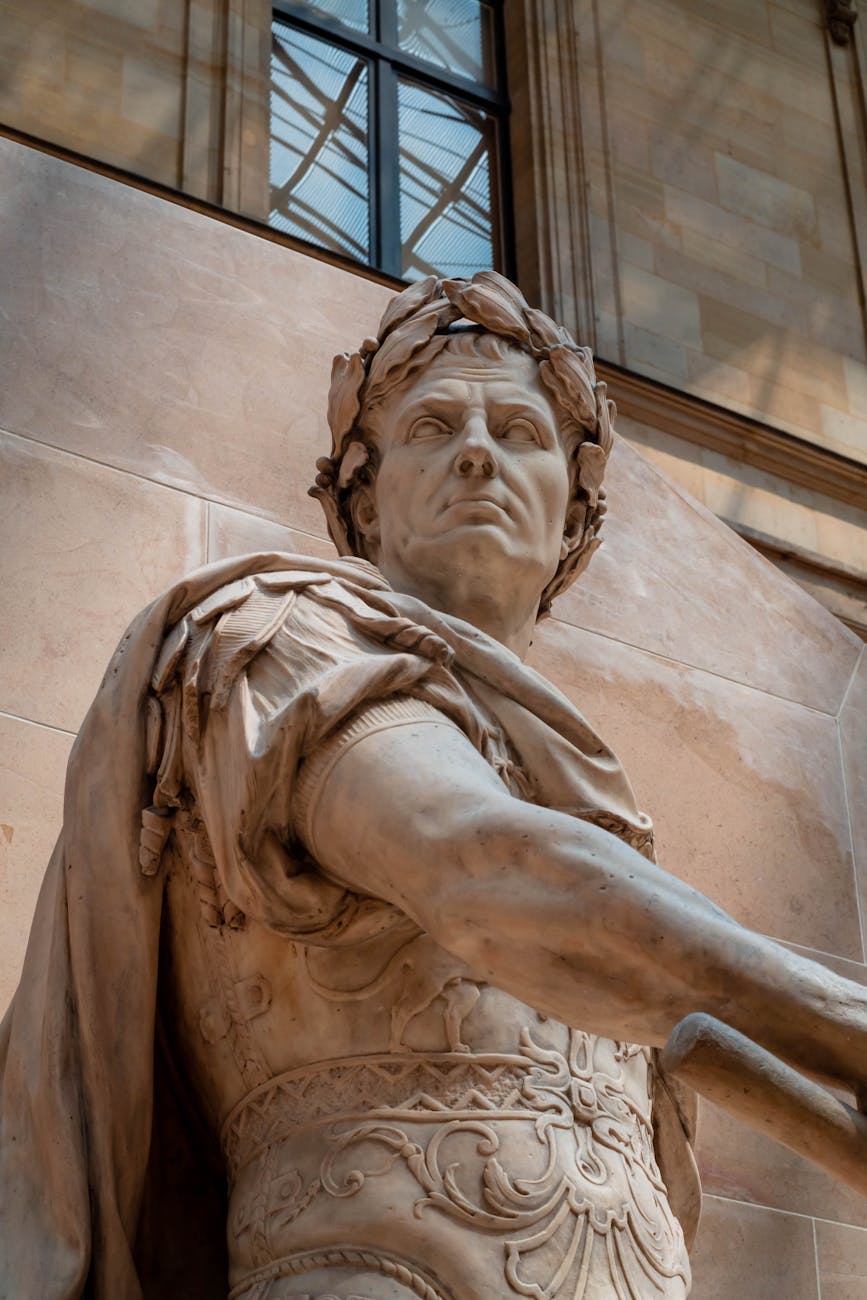
During Jesus’ earthly ministry, the Roman Emperor was Tiberias Julius Caesar Augustus. Born to an ancient Roman noble family, Tiberias rose to power as a military man. Under his leadership, the Roman armies extended the boundaries of the empire north, conquering the Germanic tribes and pushing all the way to the North Sea. Tiberias’s personal life was scandalous, marked by stories of sexual misconduct and excessive drinking. He succeeded his father-in-law Julius Caesar, inheriting a significant portion of the vast imperial treasury, a fortune that he multiplied twenty times over in his 24-year-reign. He held onto power by executing political rivals. Despite his power and riches, Pliny the elder described Tiberias as “the gloomiest of men.”

Herod Antipas was the Roman-appointed king of Galilee and Perea, east of the Jordan. Herod built an impressive capital city on the Sea of Galilee and named it Tiberias after his friend the emperor. In a world where most people lived in tiny two-room dry stone huts, Herod had no fewer than five opulent royal residences from the Roman-style palace at Tiberias to the mountaintop desert fortress of Machaerus, where Herod had John the Baptist imprisoned and beheaded.  In a time when the average daily wage was one denarius, Herod was paid the imperial sum of 1,200,000 denarii-a-year to rule on behalf of the Romans, collect taxes, and ruthlessly keep the peace. Like his mentor Tiberias, Herod’s personal life was marked by lavish parties and excessive drinking, as well as an incestuous marriage to Herodias, who was both his niece and his brother’s wife.

Kings continue to rule around the world. This week, the White House played host to the Saudi Crown Prince Mohammad bin Salman, known to his friends as MBS. The Saudi crown prince is fabulously rich with a fortune estimated at $25 billion dollars, amassed from control of oil resources and a wide net of strategic investments. In a 2017 purge, MBS invited his political rivals to a lavish party at the Riyadh Ritz Carlton, where he arrested them all on charges of corruption. His luxury lifestyle includes a superyacht, the Serene, valued at $500 million and a French palace, the Chateau Louis IV, which rivals Versailles. It’s said that MBS has been an architect of the decade-long War in Yemen, which has left that nation in humanitarian crisis. He is also believed to have ordered the 2018 assassination of Washington Post journalist and Saudi dissident Jamal Khasoggi, who was detained, murdered, and dismembered with a bone saw at the king’s behest.

The watchwords of these earthly kings are power, wealth, and self-interest.

On this final Sunday of the church year, we are asked to ponder Christ the King. The Christ we encounter today has none of the absolute power of Tiberias or the imperial paycheck of Herod. He doesn’t own a superyacht or a French palace. Jesus was betrayed by one of his most trusted companions. His followers abandoned him. He was falsely accused and unjustly condemned of blasphemy and sedition. He was badly beaten and cruelly scourged. The bruised and bloody Jesus was paraded through the streets of the city behind a placard bearing the inscription “King of the Jews,” an example of what happens to those who threaten the authority of Tiberias and Herod. At the place they called The Skull, Jesus was stripped, nailed to a cross, and left to die as soldiers gambled and a crowd looked on. To ensure that Jesus was thoroughly humiliated, his executioners suspended him between two known criminals. And as Jesus hanged there, broken, bleeding, and dying, he was scoffed at, mocked, and derided. Even so, Jesus found the strength and the courage to rise above his pain, and seek a path that his royal contemporaries couldn’t begin to imagine. Jesus prayed for his executioners and persecutors, “Father, forgive them; for they do not know what they are doing.” The first watchword in the court of the crucified king is forgiveness.

Three times the dying Jesus was taunted by those around him. The leaders, who orchestrated his execution, scoffed, ““He saved others; let him save himself.” The soldiers mocked, “If you are the King of the Jews, save yourself!” Even one of the thieves repeatedly derided Jesus, “Are you not the Messiah? Save yourself and us!” But the salvation that Jesus offers our world takes place through the cross and not apart from it. Jesus chooses death on a cross because he would sooner save us than save himself. Jesus dies so that we might live, so that we might see that God would sooner die than be parted from us. The second watchword in the court of the crucified king is self-giving love.

Only one person on Golgotha that fateful day saw who Jesus truly was. Luke doesn’t give the repentant criminal dying on the cross next to Jesus a name, but tradition says that he was called Dismas. Although we don’t have a list of his criminal acts, in the 4th century, John Chrysostom taught that Dismas was a desert bandit, who robbed and killed unwary travelers. In the 5th century, Gregory the Great said that Dismas was both thief and murderer, guilty of killing his brother.  By his own admission, Dismas was no saint. “We have been condemned justly,” he called out to his criminal colleague who derided Jesus, “We are getting what we deserve for our deeds.” The dying Dismas saw his shattered life for what it was and knew that he was fast approaching an awful, irredeemable end. Even as his breath grew ragged and his vision dimmed, Dismas dared to hope that Jesus, this different kind of king, could work a miracle for him. Half prayer, half gallows plea, Dismas asked “Jesus, remember me, when you come into your kingdom.”

The dying king turned to his reprobate neighbor. Even though the selfish, sinful actions of Dismas’ long criminal career were abundantly self-evident, Jesus looked into all the broken bits of Dismas’ life and found the grace to love him and extend God’s mercy. “Truly, I tell you,” Jesus promised, “Today you will be with me in Paradise.”  I imagine that Dismas wept to learn that in Jesus’ kingdom no life is so broken that it cannot be held and healed, loved and redeemed. We are not desert bandits, but there is a little bit of Dismas in each of us. We know the broken bits of our life, the bad choices, the harsh words, the failures to love. In the mercy that Dismas finds, we dare to hope that there is mercy for us. The third watchword in the court of the crucified king is mercy.

The world has known many kings. On this final Sunday of the church year, we are challenged to affirm who our king is. Whose watchwords will we embrace and put into practice? Will we pursue the way of Tiberias, Herod, MBS, and much of the world, prioritizing power, wealth, and our own selfish interest? Or will we take our place in the court of the crucified king? Will we follow Jesus and practice forgiveness, self-giving love, and mercy?

After the death of his son Drusus under mysterious circumstances, Tiberias left Rome and reigned from the Isle of Capri. There he became increasingly depressed and paranoid. When Tiberius’s righthand man Sejanus was caught in a plot to usurp him, Tiberias cleaned house, executing many who were implicated in the scheme. According to Tacitus, “There lay, singly or in heaps, the unnumbered dead, of every age and sex, the illustrious with the obscure. Kinsfolk and friends were not allowed to be near them, to weep over them, or even to gaze on them too long.” Tiberius died in the year 37, at the age of 78. Seneca wrote that the emperor died of natural causes, but rumors flew that he had been poisoned by his successor Caligula, starved, and smothered with a pillow. Tiberias was so loathed by the people that, after his death, mobs filled the streets of Rome yelling, “To the Tiber with Tiberius!”— a fate reserved for criminals were thrown into the river and denied burial or cremation.

Herod Antipas’s hold on power began to slip in the year 36 after an expensive and failed war with the neighboring kingdom of the Nabateans. When his patron Tiberias died and Caligula rose to power, Herod found himself out of favor with the imperial family. Caligula accused Herod of plotting with the Persian King Artibanus to throw off the yoke of the empire. In the summer of the year 39, Herod Antipas was stripped of his title, wealth, and territory. He was exiled to Gaul on the western frontier where he died the same year. The historian Cassius Dio believed that Caligula had him killed.

We don’t know what the future holds for the Crown Prince Mohammad bin Salman. We can trust that if his political rivals or the abject poor of his kingdom or the Yemeni rebels or the Iranians have anything to do with it, it won’t be pretty.

On the third day, the crucified king rose from tomb. God’s love conquered the powers of sin and death. God’s Kingdom overcame the earthly principalities of Herod and Tiberias. Of Jesus’ reign, there shall be no end. He has 2.3 billion followers in the world today. His rule is honored and his name is glorified whenever we go forth to live by his watchwords of forgiveness, self-giving love, and mercy. Jesus, remember us.

Resources

Kendra A. Mohn. “Commentary on Luke 23:33-43” in Preach This Week, Nov. 23, 2025. Accessed online at https://www.workingpreacher.org/commentaries/revised-common-lectionary/christ-the-king-3/commentary-on-luke-2333-43-6

Gilberto Ruiz. “Commentary on Luke 23:33-43” in Preach This Week, Nov. 20, 2016. Accessed online at https://www.workingpreacher.org/commentaries/revised-common-lectionary/christ-the-king-3/commentary-on-luke-2333-43-2

Patrick J. Willson. “Homiletical Perspective on Luke 23:33-43” in Feasting on the Word, Year C, Vol. 4. Westminster John Knox Press, 2013.

Nancy Lynne Westfield. “Pastoral Perspective on Luke 23:33-43” in Feasting on the Word, Year C, Vol. 4. Westminster John Knox Press, 2013.

“Herod Antipas” in The Anchor Bible Dictionary, Vol. 3. New York: Doubleday, 1992.

“Tiberias” in The Anchor Bible Dictionary, Vol. 6. New York: Doubleday, 1992.

“Mohammad bin Salman: royal power, oil, money, and a controversial legacy” in Finance Monthly, https://www.finance-monthly.com/mohammed-bin-salmans-net-worth-2025-royal-power-oil-money-and-a-controversial-legacy/


Luke 23:33-43

33 When they came to the place that is called The Skull, they crucified Jesus there with the criminals, one on his right and one on his left. [[34 Then Jesus said, “Father, forgive them, for they do not know what they are doing.”]] And they cast lots to divide his clothing. 35 And the people stood by watching, but the leaders scoffed at him, saying, “He saved others; let him save himself if he is the Messiah of God, his chosen one!” 36 The soldiers also mocked him, coming up and offering him sour wine 37 and saying, “If you are the King of the Jews, save yourself!” 38 There was also an inscription over him, “This is the King of the Jews.” 39 One of the criminals who were hanged there kept deriding[e] him and saying, “Are you not the Messiah? Save yourself and us!” 40 But the other rebuked him, saying, “Do you not fear God, since you are under the same sentence of condemnation? 41 And we indeed have been condemned justly, for we are getting what we deserve for our deeds, but this man has done nothing wrong.” 42 Then he said, “Jesus, remember me when you come in[g] your kingdom.” 43 He replied, “Truly I tell you, today you will be with me in paradise.”


A Peaceable Kingdom

Sabbath Day Thoughts — “A Peaceable Kingdom” Isaiah 65:17-25

Edward Hicks was a Quaker sign painter born in Pennsylvania in 1780. He is acknowledged as one of America’s greatest folk artists. In 1820, when Edward was forty years old, he painted Isaiah’s vision of “The Peaceable Kingdom.” Against a green landscape and blue skies, a primitive looking infant, swaddled in gauzy cloth, sits between a pointy-horned ox and a lounging lion. The ox and the lion munch on hay. Nearby, a wooly lamb cozies up to a placid wolf. Two goats and a leopard look like best friends. It’s a wistful vision of a new creation, a world where violence has come to an end, where all God’s creatures live in peace, abundance, and safety.

This morning, the world is far from that bucolic vision of the peaceable kingdom. It’s day 1,361 of the war in Ukraine. Fierce fighting is ongoing in Zaporizihia, amid adverse weather conditions. In response to ongoing Russian aggression, Ukraine has targeted drone and missile strikes on key Russian oil facilities to disrupt Russian supply lines and military operations. On Friday night, Russia launched a blistering assault on Ukraine, killing at least six people and injuring 35 as 430 drones and 18 missiles rained down through the night sky. It’s estimated that Russian military casualties in the war have topped 1,000,000 personnel while Ukraine’s deaths and injuries are near 450,000. An estimated 45,000 Ukrainian civilians have been caught in the crossfire, about 3,000 of those children. We long for a peaceable kingdom.

Yemen has been locked in civil war for more than a decade. In September 2014, Houthi forces took control of the capital, Sanaa, following widespread discontent with the Saudi-backed government. A coalition, led by Saudi Arabia, stepped in, using air strikes to try to restore the former Yemeni government. Al Qaeda and ISIS fighters soon saw the conflict as a way to advance their regional ambitions, so they have carried out attacks against both factions. In the shadows, the Iranians pull the strings. Israel has been drawn into the conflict, killing the Yemeni Prime Minister in an August airstrike. In just the first three years of the war, more than 85,000 children died of starvation. A decade of war has left Yemen’s infrastructure in ruins and its people exhausted. Close to 20 million people in Yemen depend on aid simply to survive. Nearly five million are homeless, pushed from one place to another by violence and disaster. We long for a peaceable kingdom.

In our reading from the Prophet Isaiah, we hear God’s promise of a peaceable kingdom. The Israelites had returned to Jerusalem after fifty years of exile in Babylon. They were refugees returning to a homeland that was broken and scarred by war. Ancestral property rights were gone. Vineyards and fields had gone wild. Food was scarce. Disease was rampant. Neighbors, who had not gone into exile, were hostile and suspicious. Roads were unsafe. The Temple was in ruins. In a devastated land that once flowed with milk and honey, the people’s safety and security hung upon the mercy of a foreign king. A foreign-appointed government had replaced the once mighty kingship of David. The lives of the remnant of Israel were so filled with death, grief, hunger, and despair that they began to wonder. Is God with us? Has God forsaken us and sent us home to live as a broken people in a broken land?

Into this time of uncertainty and fear, Isaiah spoke words of prophetic promise, a beautiful vision of a fresh start in a new Jerusalem where weeping will cease and children will thrive. It was a bold vision of long life, good homes, and abundant harvests. It was a faithful promise of abiding love and prayers answered from generation to generation.  It was a holy vision of peace for all creation, of a new Eden where the wolf and the lamb shall feed together, the lion shall eat straw like the ox, and God’s holy mountain will be free of hurt and destruction. God promised the people an everlasting shalom, the peace and wholeness that we find when we are in right relationship with God, neighbor, and even within ourselves.

I imagine that as the people listened, their eyes filled with tears and their hearts with longing. They remembered that God is with them, always with them. They found the courage to persevere and seek the future that God held ready for them. They rolled up their sleeves and worked the fallow fields. They shared what little they had, so that everyone had enough. They gathered at the Temple, worshipped amid the ruins, and dreamed of a new sanctuary. They reached out to their suspicious neighbors with kindness and patience, setting aside their tribalism to work toward a shared future. It wasn’t exactly the peaceable kingdom, but it held the promise of it.

This morning, we may not be caught up in the ground-shaking artillery fire of Zaporizihia, or the mass homelessness and hunger of Yemen, or the despair of Israelite refugees returning to a broken land, but we, too, long for a peaceable kingdom. We mourn the casualties in Ukraine, the devastation of Gaza, and the threat of war with Venezuela. We are grieved by the fracture of longstanding alliances and friendships between nations. We are frightened by the seemingly intractable polarization of our political landscape. We despair over the lack of respect or even common courtesy in our public discourse. In this land of plenty, we are shocked by widespread food insecurity and the millions of neighbors who teeter on the brink of economic crisis. We long for a peaceable kingdom.

As the holidays draw near, we acknowledge that we long for peace closer to home. We want peace for our families; we dream of a holiday table where every place is occupied, every tummy is full, the conversation is merry, and the love abounds. We need God’s peace to find a spirit of tolerance and acceptance, to heal our hardheartedness and unwillingness to accept one another as we are. We long for God’s forgiveness that will be a balm for old wounds and long-held grudges. We pray for God’s courage and grace to name and heal from incidents of abuse. And when we take the time to be quiet, to go deeper, we admit that we need God’s peace in our hearts, so that we may forgive ourselves as we have forgiven others, love without strings attached, and accept what cannot be changed. We long for a peaceable kingdom.

This morning, may we hear anew God’s promise through the Prophet Isaiah of the new heavens and new earth, of the peaceable kingdom where ancient enmities come to an end, where the lion lies down with the lamb. May we remember that God is with us, always with them. We may make a mess of our world, but future is always in God’s hands, and the vision is one of peace.

If we listen with the ears of our hearts, we may even hear God’s vision that peace begins with us. We are not the architects of the peaceable kingdom, but we can be the artists, painting peace with the brushstrokes of lives lived in faith and love. Let’s roll up our sleeves and join God in the work of shalom. We cannot arbitrate ceasefires for Ukraine and Yemen, yet we can pray for their peace. We can demand better and more peaceful ways for those who govern. We can reach out to neighbors with kindness and patience, setting aside tribalism to work toward a shared future. We can share what we have, so that everyone has enough. We can dare to heal our families, reaching out with love, even if our best efforts fall short. Let’s extend to others and to ourselves the grace that has been so freely shared with us in Jesus. It won’t be the peaceable kingdom, but with God’s help our lives may begin to hold the promise of it. Let’s take a moment to commit ourselves to take one action in the coming week that can prosper peace.

The Quaker painter Edward Hicks painted “The Peaceable Kingdom” more than a hundred times in the last twenty years of his life, as if by repeatedly painting the promise of the kingdom he could hasten its coming. Over the years, Hicks’ Bucks County surroundings began to be represented in his paintings. The Delaware River wound through the background. Little girls entered the picture, breaking the gender barrier and joining the Christ child in his peaceful romp with the wild beasts. In the distance, William Penn and his Quaker friends, clad in somber shades of gray and black, passed a peace pipe with Lenni Lenape tribesmen in bright blankets, feathers, and wampum. Hicks painted to cast a prophetic vision of harmony and plenty, an end to violence and bloodshed, a setting aside of oppression for women and people of color. It’s as if Hicks trusted that if he could share Isaiah’s vision in ways that spoke to his world, folks would understand and change would come. It wouldn’t be the peaceable kingdom, but with God’s help there would be the promise of it.

We may not be America’s greatest folk artists, but Isaiah’s vision of the peaceable kingdom still sparks the imagination of God’s people. May we go forth to seek that kingdom with the broad brushstrokes of lives lived in pursuit of peace.

Resources

Carolyn J. Sharp. “Commentary on Isaiah 65:17-25” in Preaching This Week, Nov. 14, 2010. Accessed online at Commentary on Isaiah 65:17-25 – Working Preacher from Luther Seminary

Garrett Galvin. “Commentary on Isaiah 65:17-25” in Preaching This Week, Nov. 14, 2010. Accessed online at Commentary on Isaiah 65:17-25 – Working Preacher from Luther Seminary

John Braostoski. “Hicks’s Peaceable Kingdom,” Friends Journal, February 2000. Hicks’s Peaceable Kingdom – Friends Journal

James C. Reynolds and Steffie Banatvala. “Inside Putin’s campaign of terror in Kyiv: Why Russia keeps bombarding the capital” In The Independent, Nov. 14, 2025. Accessed online at Inside Putin’s campaign of terror in Kyiv: Why Russia keeps bombarding the capital | The Independent

Lyndal Rowlands and News Agencies. “Russia-Ukraine war: List of key events, day 1,357” in Aljazeera, Nove. 12, 2025. Accessed online at Russia-Ukraine war: List of key events, day 1,357 | Russia-Ukraine war News | Al Jazeera

Statista Research Department. “Number of civilian casualties in Ukraine during Russia’s invasion verified by OHCHR from February 24, 2022 to July 31, 2025,” Statista, Sept. 25, 2025. Accessed online at Ukraine civilian war casualties 2025| Statista

Othman Belbeisi. “Yemen: Ten Years of War, a Lifetime of Loss” in UN News, March 26, 2025. Accessed online at Yemen: Ten Years of War, a Lifetime of Loss | UN News


Isaiah 65:17-25

For I am about to create new heavens
    and a new earth;
the former things shall not be remembered
    or come to mind.
18 But be glad and rejoice forever
    in what I am creating,
for I am about to create Jerusalem as a joy
    and its people as a delight.
19 I will rejoice in Jerusalem
    and delight in my people;
no more shall the sound of weeping be heard in it
    or the cry of distress.
20 No more shall there be in it
    an infant who lives but a few days
    or an old person who does not live out a lifetime,
for one who dies at a hundred years will be considered a youth,
    and one who falls short of a hundred will be considered accursed.
21 They shall build houses and inhabit them;
    they shall plant vineyards and eat their fruit.
22 They shall not build and another inhabit;
    they shall not plant and another eat,
for like the days of a tree shall the days of my people be,
    and my chosen shall long enjoy the work of their hands.
23 They shall not labor in vain
    or bear children for calamity,[a]
for they shall be offspring blessed by the Lord—
    and their descendants as well.
24 Before they call I will answer,
    while they are yet speaking I will hear.
25 The wolf and the lamb shall feed together;
    the lion shall eat straw like the ox,
    but the serpent—its food shall be dust!
They shall not hurt or destroy
    on all my holy mountain,
            says the Lord.


“The Peaceable Kingdom” Edward Hicks, 1832. From the collection of the Abby Aldrich Rockefeller Folk Art Center (United States)

Because He Lives

Sabbath Day Thoughts — “Because He Lives” Luke 20:27-38

A very zealous, soul-winning, young preacher came upon a farmer working in his field. Being concerned about the farmer’s soul, the preacher asked, “Are you laboring in the vineyard of the Lord, my good man?”

Continuing his work, not even looking at the preacher, the farmer replied, “Naw, these are soybeans.”

“No, no, no. You don’t understand,” said the young man. “I’m asking are you a Christian?”

With the same amount of interest as his previous answer the farmer said, “Nope my name is Jones. You must be lookin’ for Jim Christian. He lives a mile south of here.”

The determined young preacher tried again, asking the farmer, “Are you lost?”

“Naw! I’ve lived here all my life,” answered the farmer.

Finally, the frustrated preacher threw up his hands, “Are you prepared for the resurrection?”

Now this caught the farmer’s attention, and he asked, “When’s it gonna’ be?”

Thinking he was finally making some headway, the young preacher replied, “It could be today, tomorrow, or the next day.”

The farmer stopped. He took a handkerchief from his back pocket and wiped his brow. “Well, don’t mention it to my wife. She don’t get out much, and she’ll wanna’ go all three days.”

The resurrection is a strange subject for a joke, but that’s exactly what the Sadducees were up to. As they challenged Jesus, he was teaching in the courts of the Temple. Earlier that week, Jesus made a triumphal entry to the city, surrounded by jubilant crowds who were captivated by his dynamic teaching. Jesus cleansed the Temple, turning the tables on money changers and driving out the animal vendors. Then, Jesus settled into a residency on the teaching steps, where his opponents tried their best to discredit him.

The Sadducees were the ruling elite of the temple, having controlled the religious practice of Israel for hundreds of years. The first century Jewish historian Josephus wrote that the Sadducees were filthy rich. They were little-loved by the people, but they preserved their power through wealth and collaboration with the Roman Empire. The Sadducees didn’t like Jesus. They questioned his lowly origins, they feared his appeal to the crowds, and they really didn’t like his disruption of the money changing and animal sales that enriched the Temple’s coffers. They needed to discredit Jesus quickly and embarrass him in front of his adoring crowds.

The question that the Sadducees posed for Rabbi Jesus sounds puzzling and archaic. Unlike Jesus, the Sadducees didn’t believe in the resurrection. They said it wasn’t mentioned in the Torah, thus it couldn’t be part of God’s plan for humanity.  So, the Sadducees turned to the traditional practice of levirate marriage to make a mockery of the very notion of the resurrection. In levirate marriage, a childless widow would be married to her late husband’s brother. The children, who were born of the levirate marriage, were considered the offspring of the late husband. This preserved the husband’s name and the right of inheritance for a future generation. Levirate marriage was also a protection for widows. It stopped the practice of discarding a childless widow, returning her to her father’s house or turning her out into the streets to fend for herself. According to the levirate tradition, the husband’s family must provide for childless widows, ensuring their safety and well-being. The Sadducees’ question imagines a woman who is widowed, time and time again, passed from brother to brother to brother to brother to brother to brother to brother. If there is, indeed a life eternal, the Sadducees ask, whose wife will she be? It’s a bawdy, lewd joke that imagines an infinitely grieving woman passed from brother to brother for all eternity.

Rabbi Jesus dismantled their rude joke in two simple moves. First, he pointed to the practice of levirate marriage. According to Jesus, in the resurrection (in the Kingdom to come), the entire patriarchal structure, which makes the possessing of women as property possible, would be set aside. Girl children won’t be the property of fathers to be traded away in an economic transaction. Women won’t be the sexual property of husbands. Childless widows won’t be at risk for homelessness and exploitation. In God’s Kingdom, our kinship, worth, and life is found in God. We are all God’s children, children of the resurrection, children of a Kingdom where there will no longer be the power of patriarchy. Then, to close his argument, Jesus referenced one of the most foundational stories of the Torah, Moses’ encounter with God at the burning bush. Quoting Exodus 3:6, Jesus noted that God Almighty “is” the God of Abraham, Isaac, and Jacob. God’s relationship with those patriarchs is living and eternal. Indeed, although we are mortal, we find eternal life in our infinite God. It was a microphone-drop-moment. The Sadducees left, bested on their home field. The questions stopped, but the plot to end Jesus’ life found new urgency.

The clash with the Sadducees might have gone undocumented if God hadn’t added a big exclamation point to Jesus’ argument. On Friday of that week, Jesus was arrested by the Temple guards—those minions of the Sadducees. The Chief Priests Annas and Caiaphas, both Sadducees, argued before the Sanhedrin that Jesus was a heretic, and it would be better for one man to die—putting an end to the Messianic rising that followed him—than for the nation to endure the wrath of Rome that was surely coming. We all know what happened next: torture, humiliation, the agony of the cross, and death. On Friday, it felt like the Sadducees had won the argument, after all. But on Sunday, there was a second microphone-drop-moment. God had the last word. God’s resurrection overcame the sin and death of this world. Jesus rose. Because he lives, we trust that we, too, shall live. Thanks be to God.

In light of that Easter morning resurrection miracle, today’s arcane reading from scripture finds deep meaning and powerful relevance for today’s world. It begins with the hope that we find in the resurrection. We choose to love and live in God. And there is nothing in this world that can separate us from the love of God that was made known to us in Jesus. Because God chose to send a son into the world to live and die and rise, we can trust that we are children of the resurrection. Because Jesus lives, we also shall live in that resurrection realm, the Kingdom to come.

Jesus also helps us to see that the Kingdom to come is good news for anyone who has ever been left out, made to feel “less than,” or suffered because of who they are. The sinful practices and oppressive traditions of this world will come to an end and have no place in God’s plans for our future. In the resurrection, there is no place for patriarchy. In the resurrection, there is no place for gender oppression. In the resurrection, there is no place for racial hate. In the resurrection, there is no fear of the foreigner. In the resurrection, there is no poverty or injustice. In the resurrection world to come, we will all be precious, beloved, children of the resurrection. And we will rejoice!

If we accept the promise of the resurrection and the vision that Jesus cast for the Kingdom to come, then today’s reading becomes a call to action. It’s a call to stand against the forces of this world that control, mock, and delight in the suffering of others. It’s a call to live in ways that begin to shape communities that feel like an anticipation of that coming Kingdom. We have hope. We love without limits. We seek justice. We serve our at-risk neighbors.  We follow in the footsteps of the risen Lord.

In 1971, Gloria and Bill Gaither wrote one of the most treasured gospel hymns, “Because He Lives.” The Gaithers were going through tough times. They had left their jobs as public school teachers to become music ministers. But Bill had been sick and depressed. Gloria was expecting their third child. The Vietnam War was underway. Assassination had taken the lives of Martin Luther King and Robert F. Kennedy. Drug abuse was on the rise. Racial injustice persisted. Riots had devastated vulnerable inner-city communities. The world felt chaotic. Gloria Gaither says that she struggled with bringing a third child into a world that felt far from God’s Kingdom. On New Years Eve in the darkness and quiet of their living room, Gloria suddenly felt released from it all as she sensed the reassuring presence of the risen Lord. Fear left. Joy returned. Gloria knew she could have that baby and face the future with trust because Jesus lives, and God can conquer the chaos that touches our days. In response, Gloria wrote the words of what would become the Gospel Song of the Year for 1974.

“Because He lives, I can face tomorrow,

Because He lives, all fear is gone;

Because I know, He holds the future.

And life is worth the living just

Because He lives.”

Gloria’s words and the promise of the resurrection still minister to people everywhere. Live in hope, my friends. Because he lives, we too shall live.


Resources:

David Lose. “Commentary on Luke 20:27-38” in Preaching This Week, Nov. 7, 2010. Accessed online at Commentary on Luke 20:27-38 – Working Preacher from Luther Seminary

Kendra A. Mohn. “Commentary on Luke 20:27-38” in Preaching This Week, Nov. 9, 2025. Accessed online at Commentary on Luke 20:27-38 – Working Preacher from Luther Seminary

Richard Swanson. “Commentary on Luke 20:27-38” in Preaching This Week, Nov. 10, 2013. Accessed online at Commentary on Luke 20:27-38 – Working Preacher from Luther Seminary

Nancy Lynne Westfield. “Pastoral Perspective on Luke 20:27-38” in Feasting on the Word, Year C, vol. 4. Louisville: Westminster John Knox Press, 2020.

Patrick J. Wilson. “Homiletical Perspective on Luke 20:27-38” in Feasting on the Word, Year C, vol. 4. Louisville: Westminster John Knox Press, 2020.

C. Michael Hawn. “History of Hymns: ‘Because He Lives.’” Discipleship Ministries, The United Methodist Church, June 20, 2013. Accessed online at Discipleship Ministries | History of Hymns: “Because He Lives”

Bill and Gloria Gaither. “Because He Lives.” Bing Videos

The opening joke about the resurrection is from Upjoke: Jokes for Every Topic. ↑UPJOKE↑ – Jokes For Every Topic


Luke 20:27-38

27 Some Sadducees, those who say there is no resurrection, came to him 28 and asked him a question: “Teacher, Moses wrote for us that if a man’s brother dies leaving a wife but no children, the man shall marry the widow and raise up children for his brother. 29 Now there were seven brothers; the first married a woman and died childless; 30 then the second 31 and the third married her, and so in the same way all seven died childless. 32 Finally the woman also died. 33 In the resurrection, therefore, whose wife will the woman be? For the seven had married her.”

34 Jesus said to them, “Those who belong to this age marry and are given in marriage, 35 but those who are considered worthy of a place in that age and in the resurrection from the dead neither marry nor are given in marriage. 36 Indeed, they cannot die anymore, because they are like angels and are children of God, being children of the resurrection. 37 And the fact that the dead are raised Moses himself showed, in the story about the bush, where he speaks of the Lord as the God of Abraham, the God of Isaac, and the God of Jacob. 38 Now he is God not of the dead but of the living, for to him all of them are alive.”


Image source: https://medium.com/@kipakcho/jesus-examined-29691938b718

Guess Who’s Coming to Dinner

Sabbath Day Thoughts — “Guess Who’s Coming to Dinner” Luke 19:1-10

Americans are worried about income inequality, the disparity of wealth between the rich and poor in our country. In the lead up to the 2024 election, 71% of Americans said that the growing gap between rich and poor would be a crucial factor in how they cast their votes. America’s 806 billionaires control more wealth than the 65 million families that make up the lower earning half of our population. That wealth gap has grown dramatically since the onset of the pandemic with the combined fortunes of America’s top twelve billionaires jumping from $1.3 trillion dollars in March of 2020 to more than $2 trillion dollars today.  Those in the middle and lower classes have not similarly benefited. In looking at just financial assets like savings or stocks and bonds, the typical American has added no wealth in the past thirty years. The median retirement savings for the bottom half of Americans is zero. 52% of Americans have no emergency savings; they are one economic setback away from financial hardship. 23% of Americans aged sixty-six and older face poverty. When compared to the rest of the world, we have greater disparity between rich and poor than any other nation in the G7.

The government shutdown shines an uncomfortable spotlight on our economic disparity. If you are like me, you were shocked to learn that 42 million Americans receive SNAP benefits, food assistance from the federal government. That’s about 12% of our population. 38% of SNAP benefits help children, and 20% assists the elderly. Depending on whose statistics you use, between 40% and 85% of households that receive SNAP work, but their low-wage jobs don’t bring in enough income to put food on the table. The shutdown affects more than SNAP. It compromises WIC—Women, Infants & Children, a USDA nutrition program for children under five which helps 41% of our nation’s infants. It also burdens the national school lunch program, which serves up 4.8 billion meals a year to school-aged children. Lord, have mercy.

Jesus lived in a time of shocking income inequality. A small minority, like King Herod, the emperor, and the Temple elite, possessed vast wealth while the majority struggled to meet their basic needs. Property ownership and access to resources were concentrated in the hands of a powerful few, creating an economy where the privileged accumulated more and more wealth while the lower classes remained trapped in generational poverty and want. The bible weighed in on the personal responsibility of faithful people in a world plagued by poverty; Deuteronomy 15:11 taught, “There will always be poor people in the land. Therefore, I command you to be openhanded toward your fellow Israelites who are poor and needy in your land.”

In this world of vast economic differences, Zacchaeus was a rich man. He had amassed his wealth as the Chief Tax Collector for the Jericho region. Rather than collecting the imperial taxes themselves, the Romans farmed out the debt.  Zacchaeus personally paid the taxes of the entire Jericho region. Then, he set about making his money back, hiring lesser tax collectors to collect debt—with a comfortable commission tacked on to cover his expenses and make a tidy profit. It was a system rife with greed and corruption, with Zacchaeus turning a blind eye to the heavy-handed collection efforts of his minions while his personal wealth grew and grew, year after year, and his neighbors lived in poverty.

Zacchaeus was not only the wealthiest man in town; he was also one of the most unpopular.  His neighbors saw him as a Roman collaborator, a traitor to his people, growing ever richer at their expense. Zacchaeus’ ongoing contact with foreign money and Gentiles rendered him “unclean”—someone who was ritually impure and separated from God. Anyone concerned about holiness would have avoided Zacchaeus. The man did not receive a lot of dinner invitations.

Who can blame the neighbors for getting a little uppity at the gracious welcome that Jesus shared with Zaccchaeus? The man was a reprobate, but there stood Jesus, looking up into the sycamore tree and insisting that the tax collector come down and share a little Jericho-style hospitality with him. More than a few righteous families had hoped to host Jesus, but he chose to honor the wealthiest, least loved, and shortest resident of Jericho. Jesus chose to remind Zacchaeus that he was still a child of Abraham, even if he had gotten terribly lost somewhere along the way.

It was then that the miracle happened. When those neighbors started to grumble about Jesus’ choice of dinner companions, Zacchaeus promised to do something about the economic inequality in Jericho. He would give half his possessions to the poor and make 4-fold restitution—that’s 400%—to those neighbors he had defrauded.  When we consider that the Torah required restitution of only 120%, we see that Zacchaeus’ encounter with Jesus rendered him radically generous and righteous. It was a miracle, indeed.

Meanwhile in America, income inequality grows. Federal workers are furloughed, some working without pay. Fifty-two million of our neighbors wonder how they will put food on the table. It feels like a Zacchaeus moment. It feels like Jesus is standing at the foot of the American sycamore tree and inviting himself to dinner—he wants to bring some guests who are every bit as poor as he was. He knows there is enough for all if we will only open our hands and hearts. Jesus wants a miracle of us. The jury is out on whether or not he will get it.

Given the income disparities of our nation and the economic challenge of this moment in time, preaching on stewardship isn’t easy. I can confidently say that not one of us is among America’s 806 billionaires. We are among those 65 million families whose resources would need to be combined to equal the wealth of those 806 richest Americans. We know people with more month than money—our college grads who can’t get a decent job, our senior citizen friends surviving on social security, people bankrupted by health crisis, young families who fear they will never buy a home. We want a miracle for them. We want the world that Jesus envisioned, where the hungry are fed, the sick are healed, and there is enough.

Perhaps the greatest reason that we pledge to this church is because this is a place that has heard Jesus calling to us from the base of the sycamore tree. We are out of the tree. We are doing our best to stand on Jesus’ level. We want a world table where everyone has a place, the plates are full, all are satisfied, and joy abounds. That’s why we partner with the Food Pantry to feed hungry neighbors. We house the homeless at Samaritan House and have rolled up our sleeves to renovate Beacon House. We befriend refugees and advocate for our immigrant neighbors. Our Deacons Fund helps out people in crisis, whether they struggle with rent or healthcare costs, car repairs or utility bills. That’s why we dare to be provoked by sermons that wrestle with big, uncomfortable questions of faith—like “How do we love Jesus and love our neighbors in a world where income inequality abounds and the rich get richer while the poor get poorer?” We trust that our gifts to this church make a difference and move this world closer to the Kingdom.

We don’t know what happened to Zacchaeus after Jesus went on up the road to Jerusalem. I like to imagine that he went home and looked at his fine house, abundant flocks, and big bank account. Instead of seeing them through his eyes, he saw them through Jesus’ eyes. He began to make some different choices. He refused to defraud his neighbors and cracked down on the collectors in his employ. He lived generously, paying the dowries of the poor women of Jericho and offering micro-loans to help families launch small businesses. He took up bread baking and gave away all that homemade goodness. He opened a soup kitchen and took regular turns dining with his impoverished guests. He imagined that Jesus was his guest, always his guest. Local folks even began to grudgingly like him and accept him as a brother, a child of Abraham. The more Zacchaeus shared, the greater his joy.

I trust that the government shutdown will come to an end when our politicians can no longer make political hay from it—or it somehow pricks the conscience of our 806 billionaires. But the Zacchaeus moment won’t pass. As the Deuteronomist warned, “There will always be poor people in the land.” Will we give them a seat at the table? Jesus stands at the foot of our national sycamore tree. Will we come down?

Resources

Sarah Anderson. “Ten facts about wealth inequality in the USA” in the blog of the London School of Economics, Jan. 1, 2025. Accessed online at Ten facts about wealth inequality in the USA – LSE Inequalities

Teresa Ghilarducci. “7 alarming facts about wealth inequality” in Forbes Magazine, April 18, 2025. Accessed online at 7 Alarming Facts About Wealth Inequality: Bring On the Pitchforks?

American Compass. “A Guide to Income Inequality,” April 27, 2021. Accessed online at A Guide to U.S. Economic Inequality | American Compass

Factually. “Fact check: What is the average employment rate of food stamp recipients in the United States as of 2025?” October 29, 2025. Accessed online at Fact Check: What is the average employment rate of food stamp reci…

Barbara Hartshorn. “Economic Disparities in Biblical Society: An In-Depth Examination” in Bible Journal, Dec. 4, 2023. Accessed online at Economic Disparities in Biblical Society: An In-Depth Examination

Eric Barreto. “Commentary on Luke 19:1-10” in Preaching This Week, Nov. 2, 2025. Accessed online at Commentary on Luke 19:1-10 – Working Preacher from Luther Seminary

Lis Valle-Ruiz. “Commentary on Luke 19:1-10” in Preaching This Week, Oct. 30, 2022. Accessed online at Commentary on Luke 19:1-10 – Working Preacher from Luther Seminary

David Lose. “Commentary on Luke 19:1-10” in Preaching This Week, Oct. 30, 2022. Accessed online at Commentary on Luke 19:1-10 – Working Preacher from Luther Seminary


Luke 19:1-10

19 He entered Jericho and was passing through it. A man was there named Zacchaeus; he was a chief tax collector and was rich. He was trying to see who Jesus was, but on account of the crowd he could not, because he was short in stature. So he ran ahead and climbed a sycamore tree to see him, because he was going to pass that way. When Jesus came to the place, he looked up and said to him, “Zacchaeus, hurry and come down, for I must stay at your house today.” So he hurried down and was happy to welcome him. All who saw it began to grumble and said, “He has gone to be the guest of one who is a sinner.” Zacchaeus stood there and said to the Lord, “Look, half of my possessions, Lord, I will give to the poor, and if I have defrauded anyone of anything, I will pay back four times as much.” Then Jesus said to him, “Today salvation has come to this house, because he, too, is a son of Abraham. 10 For the Son of Man came to seek out and to save the lost.”


Photo by cottonbro studio on Pexels.com

Building Projects

Sabbath Day Thoughts — “Building Projects” Luke 14:25-32

The National Monument of Scotland was never completed. Plans for the memorial atop Carleton Hill in Edinburgh were drawn up more than 200 years ago with the intention of honoring Scotland’s fallen heroes of the Napoleonic War. A massive pillared court, like the Parthenon in Athens, would contain a church, as well as catacombs for the burial of the country’s most significant leaders. By 1822 a foundation was laid, but by 1829, construction ground to a halt, due to insufficient funds. An effort to revive the project in the 1850s likewise failed. The city council eventually became the owners of the partially-finished monument, known as “Edinburgh’s Disgrace.” All that survives of the original grand plans are an immense foundation and twelve colossal Doric columns.

The Cathedral of St. John the Divine in New York City was never completed. One of the largest churches in the world, St. John’s is perched at the top of a flight of wide steps atop one of the highest hills in Manhattan. Standing in front of the massive building, you’ll notice a squat, square, unfinished tower on the south side, but no matching tower on the north. Initial work on the cathedral proceeded from 1892 but competing architectural visions slowed construction. Building efforts stalled entirely at the beginning of World War II and the congregation’s priorities shifted. They saw growing social needs in their community, like poverty, homelessness, and hunger, and they questioned whether they should continue to pour funds into construction. Work resumed in 1979 but stalled in 1997. Today, building efforts focus on preservation and basic improvements at a cost of about $11 million dollars a year. The cathedral is known by the nickname “St. John the Unfinished.”

Closer to home, Boldt Castle, located on Heart Island in the St. Lawrence, was never completed. In 1900, George Boldt, the proprietor of the Waldorf Astoria Hotel, hired 300 laborers to construct a 120-room Rhineland-style castle for his beloved wife Louise. Four years after construction began, Louise suddenly died. The heartbroken husband abandoned the project and never set foot on the island again. For seventy-five years, the site sat abandoned and unfinished until in 1977 the Thousand Islands Bridge Authority acquired the property and opened it for visitors.

In our reading from Luke’s gospel, Jesus used hyperbole— a form of argument that embraces exaggeration—to make a point. Jesus cautioned his disciples about the cost of discipleship with dire-sounding words about family alienation, incomplete building projects, and unwinnable wars. The Lord was on his way to Jerusalem for that fateful final Passover. He was accompanied by large crowds of would-be disciples. The expectations of the crowd about what would go down in Jerusalem were radically different from what Jesus knew would unfold. The crowds thought they would have a ringside seat for healing miracles and earthshaking preaching. Many must have hoped that Jesus would bring change to the religious establishment ensconced in the Temple. Some were hoping for regime change, thinking that Jesus would be a militaristic Messiah, like the Maccabees, who could cast out their Roman overlords. No one wanted to hear that a cross awaited Jesus in Jerusalem. No one wanted to hear that crosses could await many who dared to follow the Lord.

All of Jesus’ apostles would know persecution and eleven of the twelve would face execution. James the Son of Zebedee would be the first, beheaded by the Romans in the year 44. Andrew was crucified on an x-shaped cross in the Greek city of Patras in the year 60. Peter was crucified upside down four years later during the persecution of Christians by the Emperor Nero. Jude was crucified in Persia. Thomas was run through with spears in India. Matthew was impaled and beheaded in Ethiopia. You see my point. The only apostle to die a natural death was John the Beloved, but he and his church were persecuted so harshly that they were forced to flee Israel for the far side of the Mediterranean in what is now western Turkey. Discipleship was costly, indeed, for Jesus’ followers.

It’s hard to know what to do with scripture readings like the one we have today. As first world Christians, not one of us is likely to be executed for our beliefs. Not one of us will be so persecuted for our love of Jesus that we will be forced to flee our homeland. Trey Clark, who teaches preaching at Fuller Seminary says that when we hear Jesus’ words about family alienation and impending oppression or victimization, we are more likely to say “Ouch” than “Amen.” So how do we make sense of it for people here and now?

The circumstances of our lives are very different from Jesus’ first century followers. Taking up our cross and losing our life for the sake of Jesus Christ may look more like death by a thousand paper cuts than a state sponsored execution. Losing our life for Christ involves recognizing that our true purpose and fulfillment are not found in worldly desires but in serving God and others. Authentic discipleship requires a willingness to deny ourselves and take up our cross daily. By embracing the Way of Jesus, we die to self, but we find true life and purpose. The Apostle Paul, who would lose his head for the sake of the gospel, put it this way, “I have been crucified with Christ and I no longer live, but Christ lives in me. The life I now live in the body, I live by faith in the Son of God, who loved me and gave himself for me.” There are millions of everyday folks out there, like you and me, who may not have literally died for Jesus’s sake, but they show singular commitment and deep allegiance by following the Lord in costly ways. Jesus lives in them.  

I would like to celebrate those thousand paper cuts, the everyday ways that I see people denying themselves and taking up their cross for the sake of the gospel. I’ll name just a few and you can respond with an “Amen!” or an “Ouch!”

We could spend our Sunday mornings paddling our canoe or hitting the trail, doing a home improvement project or having a second cup of coffee, but we choose to come to church and worship our awesome God, and we carry the cross.

We could spend our Wednesday evenings watching Jeopardy and Wheel of Fortune, but we make a joyful noise to the Lord with choir or meet with the deacons or come out for Committee Night, and we carry the cross.

In a world where income inequality is accepted, even as it grows and grows, we could ignore the need of our neighbors, but we share our food offerings and donate two cents a meal for hunger programs, we grow veggies in our Jubilee Garden to share at the Food Pantry and cook lunch for the Community Lunch Box, and we carry the cross.

Living in the remote beauty of the Adirondacks, we could close our eyes to the suffering and injustice of our world, but we advocate for the war weary people of Ukraine, and write letters for the starving children of Gaza, we accompany vulnerable refugees and support the widows and children of Mzuzu Malawi, and we carry the cross.

I could say more, but you see my point. We carry the cross. We die to self and live for Jesus, and when we follow the Lord, yielding our will to God’s will, Jesus lives in us.

Our deaths by a thousand paper cuts begin to build something. It isn’t the National Monument of Scotland, better known as Edinburgh’s disgrace. It isn’t the Cathedral of St. John the Divine, aka St. John the Unfinished. It isn’t even Boldt Castle, although New York State has poured millions of our tax dollars into making the castle an accessible tourist destination. Our deaths by a thousand papercuts build a world that looks like Christ’s Kingdom, where the stranger is welcomed, the hungry are fed, the sick and lonely are visited, and God is glorified. That’s a building project that I want to see through to completion. How about you?

Let’s pick up our crosses, my friends. There is building work to be done.

Resources

E. Trey Clark. “Commentary on Luke 14:25-33” in Preaching This Week, Sept. 7, 2025. Accessed online at https://www.workingpreacher.org/commentaries/revised-common-lectionary/ordinary-23-3/commentary-on-luke-1425-33-6

Radhika Jhamaria. “15 Famous Unfinished Projects in Architectural History” in Rethinking the Future. Accessed online at https://www.re-thinkingthefuture.com/architects-lounge/a1289-15-famous-unfinished-projects-in-architectural-history-2/

Ellen Newman. “New York City’s St. John the Unfinished” in Hidden in Plain Sight, July 11, 2019. Accessed online at https://hidden-insite.com/2019/07/08/new-york-citys-st-john-the-unfinished/

Jenna Intersemone. “Massive Building Projects That Were Never Finished” in House Digest, Dec. 7, 2021. Accessed online at https://www.housedigest.com/663379/massive-building-projects-that-were-never-finished/ Edinburgh

Jack Wellman. “How Did the 12 Apostles Die?” in What Christians Want to Know. https://www.whatchristianswanttoknow.com/how-did-the-12-apostles-die-a-bible-study/


Luke 14:25-32

25 Now large crowds were traveling with him, and he turned and said to them, 26 “Whoever comes to me and does not hate father and mother, wife and children, brothers and sisters, yes, and even life itself, cannot be my disciple. 27 Whoever does not carry the cross and follow me cannot be my disciple. 28 For which of you, intending to build a tower, does not first sit down and estimate the cost, to see whether he has enough to complete it? 29 Otherwise, when he has laid a foundation and is not able to finish, all who see it will begin to ridicule him, 30 saying, ‘This fellow began to build and was not able to finish.’ 31 Or what king, going out to wage war against another king, will not sit down first and consider whether he is able with ten thousand to oppose the one who comes against him with twenty thousand? 32 If he cannot, then while the other is still far away, he sends a delegation and asks for the terms of peace. 


Photo by Ron Lach on Pexels.com

Lamps Lit

Sabbath Day Thoughts — “Lamps Lit” Matthew 25:1-13

We don’t like to wait. It can make us feel grouchy, frustrated, annoyed, and bored. Americans spend an average of thirty-two minutes waiting at the doctor’s office, twenty-eight minutes waiting at airport security, and twenty-one minutes waiting for our significant other to get ready to go out. All that waiting adds up. As a nation, Americans spend thirty-seven billion hours waiting in line each year. The bad news is that New York state has the longest waiting times in the country. A survey of twenty-five New York communities found that our average wait time in stores is six minutes and fifty-one seconds. That sounds about right. The worse news is that our patience is growing shorter as digital technology, like smart phones and on-demand streaming services, lead us to expect instant gratification. The average person grows frustrated after waiting sixteen seconds for a webpage to load or twenty-five seconds for a traffic signal to change. Does any of this sound familiar?

Our gospel reading today reveals that the struggle to wait isn’t limited to twenty-first century New York. Jesus told this parable of the Ten Bridesmaids to his disciples as they gathered one evening on the Mt. of Olives, overlooking Jerusalem.  It was the final week of Jesus’ earthly life.  Powerful enemies in Jerusalem were conspiring to bring about his arrest and execution.  Jesus knew what awaited him at the end of the week, even if his friends were unwilling to accept it.  And so, he told a story of a wedding banquet too long in coming and bridesmaids who missed out on the celebration.

In Jesus’s day, when a young girl reached marriageable age, her parents would seek an appropriate bridegroom.  First, a contract, stating terms of the dowry, would be agreed upon.  Then, at the end of a year-long engagement, the bridegroom would collect his bride, paying her parents the bride price and bringing his new wife home to the house of his father.  On the blessed night of the wedding, bridesmaids waited at the father’s house.  With lamps lit, they would go forth singing and rejoicing, leading the couple to the marriage tent, where their wedding vows would be consecrated.  After the wedding, a festive weeklong party began.

In Jesus’ story, the wedding party didn’t go according to plan. The groom was delayed. As the long hours dragged on after dark and the bridesmaids waited, they fell asleep and their lamps burned low.  When the shout at last went up, “The bridegroom is near!”, the maids rose to tend their flames, but only half the girls had anticipated the wait and brought extra oil.  While five maids went out with glowing lamps to rejoice with the wedding party, the others ran off to bang on the door of the local oil merchant.  When they returned to the father’s house, it was too late. The door was closed and there would be no late entries.

This is not my favorite parable. For one thing, it takes a lot of explaining. For another, I’d like to soften its sharp edges.  Let there be a super-abundance of oil to share.  Let the bridegroom throw open the doors and welcome the latecomers to the party. But Jesus knew that his story required sharp and uncomfortable edges to get our attention. We can bet that every disciple who listened to Jesus on the Mt. of Olives sat up straight and opened their ears.

In Jesus’ day, the wedding feast was a common metaphor for the beautiful feast of the Kingdom of God that would come at the end times.  Jesus’s friends knew Jesus was the bridegroom, the Messiah, sent to usher in a new age of righteousness and holy living.  But there would be no wedding feast that week.  Instead of a wedding procession of joyful bridesmaids with lamps aglow, there would be a funeral procession.  Jesus, beaten, bloody, and broken, would be paraded through the streets to his brutal execution.

Jesus hoped that his friends would live with a sense of urgent patience, even after he would be taken from them. God’s Kingdom would come, even after long delay. Jesus hoped his friends would live like those five wise bridesmaids, well-equipped and ready to serve, even if the shout went up at midnight. The disciples, who listened to Jesus and looked out across the Kidron Valley to the holy city, glowing with the light of thousands of household lamps, would have heard Jesus’ story as a bold exhortation to wait with patience and vigilance through the long years to come.

One of the great challenges of preaching this parable is that people like us don’t have a sense of expectant urgency when it comes to Judgment Day. We leave that to the evangelicals, and even they don’t do it very well. We don’t wake up each morning, wondering if this is it, if the Lord will come in glory. We struggle to have a teaching like this feel relevant and useful for faithful living. We don’t like to wait six minutes and fifty-one seconds at the grocery. We can’t be bothered to waste our time looking at the apocalyptic clock, waiting for it to strike midnight.

But what if this parable isn’t just about Judgment Day? After all, in Matthew’s gospel, Jesus begins his ministry with the warning that the Kingdom of Heaven has come near. Professor Dirk Lange, who serves as assistant general secretary at the Lutheran World Federation, teaches that Jesus’s return is a “now” event. Let me explain. The appearance of the risen Lord on the Emmaus Road was a true experience of Christ’s return. Our monthly celebration of the Lord’s Supper is an ongoing wedding banquet with Jesus at the table. The vulnerable people whom we encounter—Jesus called them the least of these, his little brothers and sisters—they are an ongoing revelation of the Jesus who walks among us, inviting our compassion and help. Perhaps the question for our faithful waiting isn’t, “Is this the Day of Judgement?” Our question is better phrased, “How will I see Jesus today? Will I be ready to serve him? Will my lamp be lit?”

I’m going to suggest three ways that we can keep our lamps lit in this waiting time. Are you ready?

We begin by spending daily time with Jesus. We place him at the center of our lives with a faithful pattern of prayer and devotion. We deepen our understanding through reading scripture and spiritual writing. We praise him through worship and song. Those daily attentions in this waiting time assure us that the Lord is always with us, if only we will attend.

We can also take the time to see the Jesus who is revealed in vulnerability in the world around us. We see him at the Food Pantry picking up his monthly box. She awaits our visit in the corridors of assisted living and nursing homes.  He’s learning about Jesus in Sunday School.  She looks out her window and watches us head to church, wondering if we will ever invite her to join us. The bridegroom is near if we will only have eyes to see him.

Jesus’s parable suggests that it is not enough for us to patiently wait. We also need to be prepared for action. The wise bridesmaids heard the cry and leapt up to trim their wicks, fill their lamps, and greet the bridegroom. Will we shine our light before others (Mt. 5:16)? Carla Works, a New Testament scholar at Wesley Theological Seminary, says that, “To live in vigilance means for disciples to do the tasks that they have been appointed in preparation for the Master’s coming.” We know what we are called to do, but will we do it? Will we feed hungry people? Will we visit those who need our love? Will we teach Sunday School? Will we invite a friend or neighbor to church? Are our lamps lit? How will we greet the bridegroom?

I suspect that even if we heed Jesus’s difficult teaching, we still won’t like waiting. We’ll still grow grouchy, frustrated, annoyed, and bored as we wait in line at the grocery store. That’s because researchers say that the human attention span is a whopping eight seconds, one second shorter than that of a goldfish. But our waiting can be transformed as we pray for others and take time to attend to the hidden Jesus who walks among us still. Perhaps this world can look a little more like the promised Kingdom of Heaven if we keep our lamps lit and shine that light before others.

Resources

“How Much Time of an Average Life Is Spent Waiting?” in Reference, Science and Technology, April 3, 2020. Accessed online at https://www.reference.com/science-technology/much-time-average-life-spent-waiting-7b315c05172d2b4d

John Anderer. “Hurry up! Modern patience thresholds lower than ever before, technology to blame” in Study Finds, Sept. 3, 2019. Accessed online at https://studyfinds.org/hurry-up-modern-patience-thresholds-lower-than-ever-before-survey-finds/

Carla Works, “Commentary on Matthew 25:1-13” in Preaching This Week, Nov. 6, 2023. Accessed online at workingpreacher.org.

Dirk Lange, “Commentary on Matthew 25:1-13” in Preaching This Week, Nov. 9, 2008. Accessed online at workingpreacher.org. Greg Carey, “Commentary on Matthew 25:1-13” in Preaching This Week, Nov. 9, 2014. Accessed online at workingpreacher.org.


Matthew 25:1-13

“Then the kingdom of heaven will be like this. Ten bridesmaids took their lamps and went to meet the bridegroom. 2Five of them were foolish, and five were wise. 3When the foolish took their lamps, they took no oil with them; 4but the wise took flasks of oil with their lamps. 5As the bridegroom was delayed, all of them became drowsy and slept. 6But at midnight there was a shout, ‘Look! Here is the bridegroom! Come out to meet him.’ 7Then all those bridesmaids got up and trimmed their lamps. 8The foolish said to the wise, ‘Give us some of your oil, for our lamps are going out.’ 9But the wise replied, ‘No! there will not be enough for you and for us; you had better go to the dealers and buy some for yourselves.’ 10And while they went to buy it, the bridegroom came, and those who were ready went with him into the wedding banquet; and the door was shut. 11Later the other bridesmaids came also, saying, ‘Lord, lord, open to us.’ 12But he replied, ‘Truly I tell you, I do not know you.’ 13Keep awake therefore, for you know neither the day nor the hour.


Photo by Bhargava Marripati on Pexels.com

Cold Water

Sabbath Day Thoughts — “Cold Water” Matthew 10:40-42

“That’s some good ice tea.”  It was James, in his polyester sport coat, pointy collared shirt, and freshly shined spats.  James fancied himself to be the heir apparent to James Brown.  Every so often during our Wednesday evening gatherings at the New York Avenue church, James would break into song and share his funkiest moves, feet shuffling almost too fast to be seen, body spinning then dropping into a split before popping back up, like magic. 

James had offered his appreciation for the tea in the general direction of the tea makers, Connie and me.  I was filling cups with the sweet, lemony tea, while Connie was perched on a chair, working on her latest crochet creation. The week before, I had cleaned out my yarn stash and brought Connie a big bag of odds and ends and never completed projects. If James thought he could compete with that for Connie’s attention, he had another think coming. 

“Hey,” James ventured again, “Hey, Connie! I said that’s some good ice tea.” But Connie only rolled her eyes as if to say, “He’s crazy.”  And he was.  In fact, everyone was, in one way or another, both the guests and the hosts at the 729 Club where I volunteered. 

“Connie!” I chided.  She gave me a baleful look and put down her crochet hook. 

“You are welcome, James,” she smiled as sugary sweet as the tea.  That made James so happy that he did a little spin and bow, every bit as deft and debonair as the Godfather of Soul himself.

“And whoever gives even a cup of cold water to one of these little ones…”

“I’d like some of that brown stuff,” it was a softly spoken request.  I turned away from the sink where I had been washing dishes and peered into the dim light behind me.  I spied him near the open back door, swaying a little bit, looking like he was about to bolt off into the dark.  I was on the reservation for my cross-cultural quarter of seminary studies.  My host was Sally Big Bear, a local spiritual leader, and this was her youngest brother, Habob.  I’d seen him around the edges of things but had never heard him speak.  Like many of the young adults on Rosebud, he struggled with addiction.

“I’d like some of that brown stuff,” Habob repeated, no eye contact, but his body language told me he was talking about the sheet cakes that rested on the kitchen counter.  Earlier, after dinner, Sally had parceled out pieces of cake to the large extended family that had come for the meal – sons and daughters, children, grandchildren, aunties, uncles, neighbors, and even seminarians. 

“Brown stuff?” I puzzled, looking at the crumby remnants, and picking up a knife.  “Chocolate?”

Habob’s brow furrowed, “No, not chocolate. The brown stuff?” He asked again, hopeful. 

That’s when I saw it, more beige than brown, crowned with a frothy brown sugar and coconut icing.  “Ah!  Spice cake!”  I cut a large slab, balanced it on a paper plate and shrouded it in a cocoon of saran wrap.  “For you!” I said, holding it out with two hands, and Habob received it with the same sort of reverence that a child reserves for a favorite toy or stuffed animal. 

“Hmmm. Brown stuff!  Thanks!” he mumbled before slipping out into the South Dakota darkness with his treasure.

About three o’clock the next day we heard news that too many families get on the reservation.  Habob had been found dead in the abandoned house where he lived with other addicts.

“And whoever gives even a cup of cold water to one of these little ones….”

“Lady, can you help my dog?” It was Johnny Wayne, the seven-year-old grandson of Mr. Robert.  So far, Johnny Wayne had impressed us with his ability to cuss and cheat in bike races.  I was in eastern Kentucky with my Youth Group.  We were putting a new foundation under the back of Mr. Robert’s house. I’d spent most of the afternoon digging a ditch to lay drain tile to divert the water that would pour off Robert’s roof and under his home.  Now, I was drinking cold water, as much as I could get, and sitting on the front porch taking a break. 

“Lady, can you help my dog?” Johnny Wayne wanted to know.  She was a big red pit bull mix with a saggy belly that told me she had had more than one litter of pups. 

“What’s wrong?” I ventured warily. 

“She’s got ticks.”  Johnny Wayne wasn’t kidding.  From ears to tail, Rosie was littered with ticks, more than I had ever seen, little and big, making a meal of her. 

I confess that ticks repulse me.  They’re like little insect vampires, dropping from trees or jumping out of the grass to make our lives miserable.  And while I am a dog lover, I try to steer clear of anything that looks remotely like a pit bull.  My reluctance must have been written all over my face as I said, “Wow.  I’m not sure what you want me to do about that, Johnny Wayne.” 

The little boy tried again.  “C’mon, please!  Help her.  How would you like to be covered in ticks?”

I wouldn’t, and that’s when I realized that Johnny Wayne was good not only at swearing and cheating but also at getting grown-ups to do what he needed them to do. 

“Ok.” I relented and spent the next thirty minutes picking ticks off Rosie.  She rolled right over, as if she had known me all her life, while Johnny Wayne told me stories of all the good things that he was going to do with his father when he got out of prison.

“And whoever gives even a cup of cold water to one of these little ones….”

There was a big cardboard box, right on the stoop, blocking my way to the front door when I got home from work.  I’d had the “brilliant” idea to leave a well-paying job back east and test the waters of a career change by serving as a VISTA, Volunteer in Service to America.  Now, I was a volunteer coordinator and health educator, working out of the Jackson County, Oregon, Health Department.  That meant I spent all my time touting the benefits of WIC and the Oregon Health Plan while trying to convince women to get prenatal care and immunize their children, all for a princely monthly stipend of $600, which did not go far in a community where just renting a room cost about $350.  I ate a lot of rice and beans that year.

Taped to the top of the cardboard box was a note written in easily recognizable, large wobbly letters, “For Joann.”  The handwriting belonged to Ivan, a Vietnam vet who suffered from PTSD.  I’m not really sure how I had met Ivan.  He belonged to the Seventh Day Adventist Church in town, and sometimes he would join me on Sunday afternoons for hikes up in the mountains or drives down to the coast, activities which he felt a young woman should not be doing on her own. 

A box from Ivan could hold a lot of things – tracts touting the benefits of being an Adventist, pumice stones that he picked up along the banks of the Rogue River, or maybe some great thrift store find, like a Rubik’s Cube or a jigsaw puzzle, missing a few pieces.  But this night, when I dragged the box inside and popped it open, I found that it was full of vegetables.  There were cucumbers and tomatoes, big leafy collard greens, onions, and zucchini squash big enough to double for baseball bats.  Move over beans and rice, I had just hit the fresh produce jackpot!

When I called Ivan later to thank him for his kindness, I learned that he had grown the vegetables in a little garden plot that he had down at the Adventist church.  I could just picture him that summer, patiently pulling weeds, watering, and harvesting.  It was without question one of the kindest things that anyone had ever done for me.  But why me? I wanted to know. Ivan’s answer was heartwarming and humbling all at the same time, “Joann, the Lord would want me to do something good for you.”

“And whoever gives even a cup of cold water to one of these little ones in the name of a disciple – truly I tell you, none of these will lose their reward.”

Jesus taught his followers about the importance of simple acts of kindness that we can share in the course of our everyday living.  When Jesus sent his disciples out on their gospel mission, he knew that they would depend upon the kindness of strangers.  Jesus also taught that when we extend hospitality to our vulnerable neighbors, the little ones of our world, we are really caring for him.  Hospitality, given and received, grants us a foretaste of the world that God would have us forge.  It’s a kingdom where all are welcomed, loved, and cared for.  It’s a world where James will spin Connie around the dance floor, and Habob will tuck into a second slice of spice cake.  Johnny Wayne will play ball with his Daddy, Rosie will be free from ticks, and the tables of the poor will abound with fresh-picked produce.  I want to be a part of that world.  How about you?


Matthew 10:40-42

40 “Whoever welcomes you welcomes me, and whoever welcomes me welcomes the one who sent me. 41 Whoever welcomes a prophet in the name of a prophet will receive a prophet’s reward, and whoever welcomes a righteous person in the name of a righteous person will receive the reward of the righteous, 42 and whoever gives even a cup of cold water to one of these little ones in the name of a disciple—truly I tell you, none of these will lose their reward.”


Photo by Sohel Patel on Pexels.com