Sabbath Day Thoughts — “Sowing the Seeds of Peace” Zech. 8:3-17
Since 1940, churches have observed a world-wide communion on this first Sunday of October. It’s a sign of our unity in Christ. As we gather at the table, we remember that we are made one in Christ. And as we go forth from worship, we resolve to take the unity, peace, and love of Christ with us, so that our actions in our families, communities, and beyond might anticipate and promote the unity that God longs to see for our world.
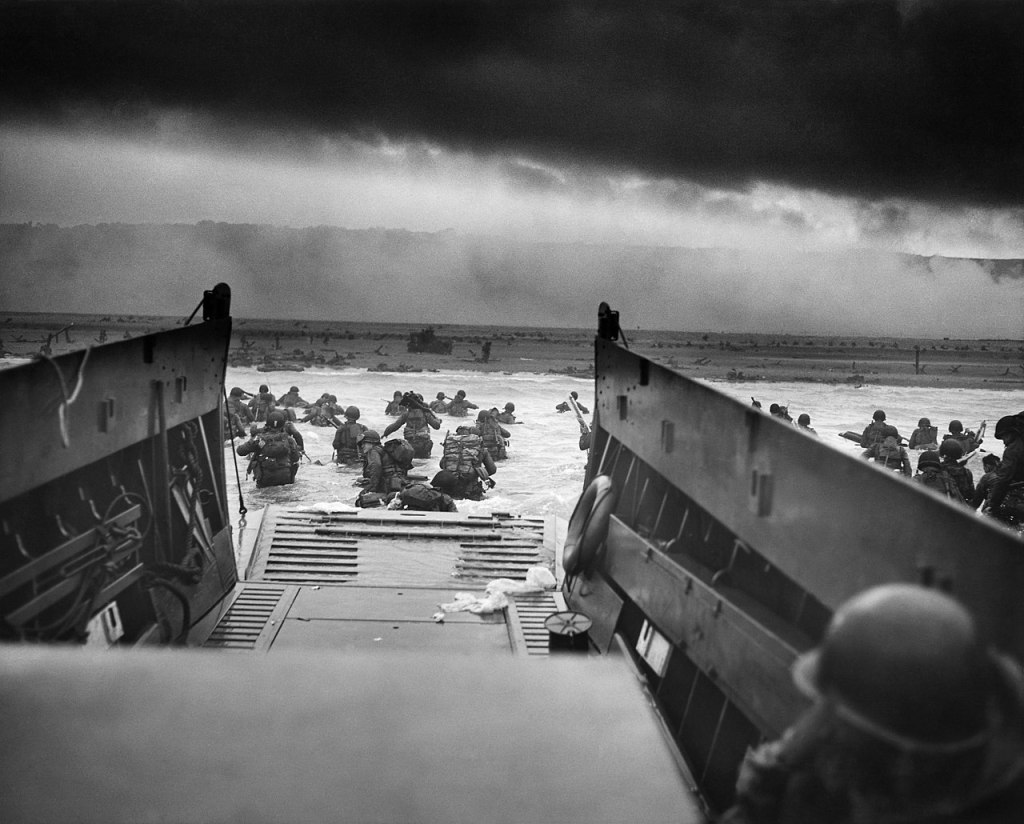
That first World Communion Sunday was a prophetic act, undertaken in a time that was descending into worldwide violence. In October 1940, France had fallen to Hitler’s invading army. The Vichy government had just proclaimed the end of Jewish status, denying their Jewish citizens the most essential of rights and freedoms. Concentration camps across German-occupied Europe were filled with men and women, conscripted into forced labor in inhuman conditions. Hitler was meeting with Mussolini at the Brenner Pass in the Alps, where they devised plans for world domination. Within days, the Blitz would rain bombs on the streets of London, Bristol, and Coventry, England.
World Communion this year coincides with the anniversary of the Hamas terror attack on southern Israel. On October 7, 2023, 1,195 Israeli civilians were killed and more than 200 were taken hostage. In response, the Israeli Defense Forces launched a war against Hamas in Gaza. 41,431 Palestinians have been killed, more than half of them women and children. 1,706 Israeli soldiers have died. About 120 journalists, reporting on the war, have lost their lives, as have 224 humanitarian aid workers and 179 United Nations Relief Workers (UNRWA). 60% of the people in Gaza have lost a family member this past year. This week, we held our breath while Israel took the fight to Lebanon, targeting Hamas and the anti-Israeli militant group Hezbollah, which is equipped by Iran. Predictably, the Iranian response launched 180 missiles into Israel’s airspace. It is estimated that 1.2 million people were displaced in Lebanon this week, fleeing the escalating violence.
We do not know what will happen in the coming year as Israel continues their offensive and Iran responds. We do not know what will happen as Vladimir Putin pursues his grievous war against the people of Ukraine. We do not know what will happen as Yemen’s Houthi rebels launch missiles at passing cargo ships. We do not know what the future holds for the civil war in famine-ridden Sudan. We do know that we need World Communion today every bit as much as we did when it was initiated in 1940.
Our reading from the Prophet Zechariah promises peace and abundant life for people in a time of struggle and wavering hope. Written in the year 522BCE, the Israelite people lived in a landscape that had been scarred by war. Some of the people were newly returned from years of exile in Babylon. Clans that had been separated by more than half a century of captivity were learning how to be family again. And they were seeking to do so amid trying circumstances. Fields and orchards had gone fallow. Trade routes were disrupted. The city of Jerusalem lay in ruins—its walls breached and the temple burned to the ground. When the Persian Empire defeated Babylon, the people had rejoiced as they were sent home to their Promised Land with resources and the blessing to rebuild. But where would they start? Who could do the work? Would the land ever again flow with milk and honey?
Into this trying time, God spoke a word of encouragement and hope through the Prophet Zechariah. God promised a rebuilt Jerusalem, where the streets would be filled with blessing: everyone would live to a ripe old age and the sounds of children laughing and playing would ring out. God would sow the seeds of peace, and there would be a harvest of abundance: grape vines heavy with ripe fruit, golden fields waving with ripe grain, rain falling to water the land, a people living as a blessing to the nations. Can we imagine how good those words sounded to the people who heard Zechariah speak?
The people would play their own part in bringing that peaceful abundance to pass. There would be the hard physical work of tending fields and flocks, raising up the walls, and rebuilding the Temple. And, according to Zechariah, there would be some demanding personal work. The people would need to sow their own seeds of peace. They would need to speak truth and ensure that justice was passed at the court of the city gate. They would need to turn from evil and work for the good of all their neighbors. They would need to put an end to the lies that divided communities and prevented justice in the land. God would plant seeds of peace, and so must God’s people, sowing peace and justice one household, one neighborhood, one city at a time. This was the Lord’s vision, God’s best hope for God’s people.
It’s a beautiful vision that God continues to hold out to faithful people all around the world this morning. Even now, God is sowing seeds of peace. God envisions a world where Israel, Hamas, Hezbollah, and Iran will come to the table of peace. God sees a time when the people of Ukraine and Russia will beat their weapons of war into plowshares and pruning hooks. God dreams of the time when famine-stricken and civil-war-torn places like Yemen and Sudan will end their strife and the people will eat the bread of peace. The seeds of peace will grow and flourish in a world-wide harvest, the lion shall lie down with the lamb, and the people will know war no more. Lord, hasten the day!
We do not know what will happen this year in all those conflict-ridden, war-torn, frightening places, but this morning we do know that there is work for us to do. God’s people always have a role to play in bringing God’s hopeful sowing of the seeds of peace to an abundant harvest. Zechariah told us so. It starts here with our personal resolve to do the things that make for peace. Are we ready?
First, we are to speak truthfully to one another, not only expressing what is true, factual, and responsible but also listening to the truths of others. As truth is spoken and ears are opened. We find a way to move forward, past times of division and misunderstanding.
Next, we are to ensure justice for all people, whether it is the court of public opinion, our local town courts, or our broader legal system. In the words of the late Rev. Dr. Martin Luther King, jr., “No justice, no peace.” We all, especially those among us who are marginalized, impoverished, and at-risk, deserve our day in court and justice for all.
We also need to rethink our definition of neighbor. If we accord the honor and care of “neighbor” only to those who look like us, think like us, and act like us, then we are doomed to always live in the land of “us and them.” Can we instead dare to find common ground and work together for a world community where everyone is a neighbor and a beloved child of God?
Finally, we cannot honor lies as truth, or as Zechariah puts it, we cannot “love perjury.” That calls for personal vigilance that calls out old family stories that perpetuate division and misunderstanding. That calls for communities that refuse to scapegoat vulnerable people, like immigrants or minorities, blaming them for all our social, civic, and economic ills. That calls for doing our due diligence to ensure that we do not repeat stories that are not factual, whether we heard it on the street, saw it on social media, or watched it on television. As long as we accept lies as truth, we cannot live in peace. Can I get an amen?
This morning, the Prophet Zechariah reminds us that God has sown the seeds of peace. The Lord, through the Prophet Zechariah, has even given us a roadmap to the things that make for peace. It starts with us, my friends. The only question remaining on this World Communion Sunday is, “Will we do our part in bringing God’s generous sowing of peace to a full and abundant harvest that is a blessing to all?” Zechariah–and the Lord–hope that our answer is a resounding, “Yes!”
Resources:
PCUSA. “A Sowing of Peace” Presbyterian Peacemaking Program. Louisville: PCUSA, 2024.
David Petersen. Haggai and Zechariah 1-8. Philadelphia: Westminster Press, 1984.
Peter C. Craigie. Twelve Prophets, vol. 2. Philadelphia: Westminster Press, 1985.
AP News. “What to know about fighting in Lebanon and Gaza” in The Associated Press, October 5, 2024. Accessed online at https://apnews.com/article/israel-lebanon-what-to-know-hezbollah-incursion-c44358cb4c70db69bdab4b254cb2ed76
–. “Casualties of the Israel–Hamas war” in Wikipedia, the online encyclopedia, October 4, 2024. Accessed online at Casualties of the Israel–Hamas war – Wikipedia
Zechariah 8:3-17 (HCSB)
3 The Lord says this: “I will return to Zion and live in Jerusalem. Then Jerusalem will be called the Faithful City, the mountain of the Lord of Hosts, and the Holy Mountain.” 4 The Lord of Hosts says this: “Old men and women will again sit along the streets of Jerusalem, each with a staff in hand because of advanced age. 5 The streets of the city will be filled with boys and girls playing in them.” 6 The Lord of Hosts says this: “Though it may seem incredible to the remnant of this people in those days, should it also seem incredible to Me?”—this is the declaration of the Lord of Hosts. 7 The Lord of Hosts says this: “I will save My people from the land of the east and the land of the west. 8 I will bring them back to live in Jerusalem. They will be My people, and I will be their faithful and righteous God.” 9 The Lord of Hosts says this: “Let your hands be strong, you who now hear these words that the prophets spoke when the foundations were laid for the rebuilding of the temple, the house of the Lord of Hosts. 10 For prior to those days neither man nor beast had wages. There was no safety from the enemy for anyone who came or went, for I turned everyone against his neighbor. 11 But now, I will not treat the remnant of this people as in the former days”—this is the declaration of the Lord of Hosts. 12 “For they will sow in peace: the vine will yield its fruit, the land will yield its produce, and the skies will yield their dew. I will give the remnant of this people all these things as an inheritance. 13 As you have been a curse among the nations, house of Judah and house of Israel, so I will save you, and you will be a blessing. Don’t be afraid; let your hands be strong.” 14 For the Lord of Hosts says this: “As I resolved to treat you badly when your fathers provoked Me to anger, and I did not relent,” says the Lord of Hosts, 15 “so I have resolved again in these days to do what is good to Jerusalem and the house of Judah. Don’t be afraid. 16 These are the things you must do: Speak truth to one another; make true and sound decisions within your gates. 17 Do not plot evil in your hearts against your neighbor, and do not love perjury, for I hate all this”—this is the Lord’s declaration.

 Joann White