It was eighteen below zero in Saranac Lake when I took the dog out on Tuesday morning. I hear that we are headed back into the deepfreeze for the weekend. What better time could there be to savor the beauty and goodness of wool socks?
Poem for a Thursday — “Ode to My Socks” by Pablo Neruda
“Maru Mori brought me a pair of socks which she knitted herself with her sheepherder’s hands, two socks as soft as rabbits. I slipped my feet into them as though into two cases knitted with threads of twilight and goatskin. Violent socks, my feet were two fish made of wool, two long sharks sea-blue, shot through by one golden thread, two immense blackbirds, two cannons: my feet were honored in this way by these heavenly socks. They were so handsome for the first time my feet seemed to me unacceptable like two decrepit firemen, firemen unworthy of that woven fire, of those glowing socks.
Nevertheless I resisted the sharp temptation to save them somewhere as schoolboys keep fireflies, as learned men collect sacred texts, I resisted the mad impulse to put them into a golden cage and each day give them birdseed and pieces of pink melon. Like explorers in the jungle who hand over the very rare green deer to the spit and eat it with remorse, I stretched out my feet and pulled on the magnificent socks and then my shoes.
The moral of my ode is this: beauty is twice beauty and what is good is doubly good when it is a matter of two socks made of wool in winter.”
in Neruda and Vallejo: Selected Poems. Boston: Beacon Press, 1993.
Chilean poet Pablo Neruda (1904-1973) had a long career in foreign service with posts as Consul in Burma, Argentina, Spain, and Mexico. He was elected to the senate in 1943 but was later forced out of office and into hiding for his communist views. When Chile’s government swung back to the center seven years later, Neruda again found favor. Neruda was awarded the International Peace Prize in 1950 and the Nobel Prize for Literature in 1971.
Curt lost his job on the assembly line, not long before the pandemic. His employer made a big investment in new technology, and Curt’s work went robotic. He found a new job, no problem, but it pays less, and the benefits aren’t as good. Curt has a good ten years until retirement, so he now has a second part-time job to help with bills. Curt always saw himself as a company man, but now he’s not sure who he is.
Monica was recently diagnosed with breast cancer. She’s a busy single parent with a full-time job and kids in middle school. She has surgery ahead, followed by chemo and radiation. Thankfully, her aging parents are on-hand to help out. Monica puts on a brave face, but when she is alone, she is filled with fear and doubt. Some days, it’s overwhelming.
George and Katherine met in their senior year of high school. George says it was love at first sight. Katherine said he wore her down. They married when they were only twenty. Over the years, they dreamed about one day being snowbirds, buying a little retirement place in Florida or Arizona. But then Katherine got COVID, early in the pandemic. George couldn’t even be with her when she died. Now George feels like his dreams died along with Katherine. The future feels uncertain, lonely, and scary.
We all have times when life serves up a double-helping of unwanted change, crisis, or tragedy. The proverbial rug is pulled out from under our feet. We wonder who we are now, how we will cope, and what the future will bring. We grieve and lament. We question and worry. We fear and doubt. We wrestle with big existential questions. We wonder, “Where are you God?” “Don’t you love me?” “How can I possibly go on?”
The people of Israel were well-versed in unwanted change, crisis, and tragedy. They were a conquered nation, living in exile in Babylon. They had seen the defeat of their army. They had watched as their city walls were breached. They had witnessed their fields and homes being burned. They had watched helplessly as their Temple was destroyed. They had endured the countless unspeakable tragedies that always accompany war, the things that no one wants to talk about or remember.
Cut off from the land that they had loved, exiled from a way of life that had brought them meaning and purpose, mourning untold death and destruction, the Israelites asked themselves big questions. Who are we? How can we cope? Do we have a future? Beneath those big questions were sacred and existential queries that kept them up at night, questions that we know well. Where is God? Does God love us? Can we be redeemed?
Our reading from the Prophet Isaiah allows us to listen in on a holy and intimate conversation. God almighty speaks to the people of Israel. God speaks to those exiles who feel they are going down for the third time amid a raging flood, who fear they are being consumed by unquenchable fires. God speaks words of promise and consolation, saying “I have redeemed you. I know you. You are mine. I will be with you. You are precious in my sight.” Those holy promises must have sounded to the exiles like water in the desert, a lifeline amid the raging seas, a healing balm for the gaping wounds of hardship and loss.
Scripture tells us that God kept those promises. God raised up King Cyrus of Persia. His armies toppled mighty Babylon. Then, Cyrus did the unthinkable. He set the people of Israel free and gave them the resources to go home and rebuild. From the north and the south, from the east and the west, God called the people home to the land that they loved. They endured 500 miles of desert heat. They forded the waters of the Jordan. They returned. Ruined homes were rebuilt. Fields choked with weeds and brambles were cleared. Neglected orchards were pruned and became fruitful. City walls rose again.
It wasn’t easy. It took time. It was hard work. But the people knew who they were and whose they were. They were precious and beloved children of the one true God. They found hope in the promises. They trusted that God was with them in all their hardship and heartache. One day, the people gathered to worship in the shadow of a new Temple and wept with gratitude and humility for all that God had done for them.
On Baptism of the Lord Sunday, we remember the promises of God. We remember the promises made long ago to those lonely and hurting exiles. We remember the promises of Jesus’ baptism. As our Lord emerged from the Rover Jordan, a voice from the heavens thundered, “This is my Beloved Son. I find in him my delight.”
Today we trust that those promises belong to us. The promises belong to those who were sprinkled as infants in the care of parents and congregation. The promises belong to those baptized as adolescents, who claimed Jesus as our Lord and savior as we were confirmed. The promises belong to those who came later to the fount of every blessing, who came to faith as adults and laid claim to their belonging and redemption. The promises belong to each of us.
If we listen with the ear of our heart, today our biggest questions find an answer. God says, “I have redeemed you. I know you. You are mine. I love you. You are precious in my sight.” God’s promises are for us, my friends. Can you hear it?
When we live with the assurance that we are welcomed, loved, and will never be alone, we find the wherewithal to stand amid the flood and come through the fiery trial. It isn’t easy. It doesn’t feel good. It takes time. It’s hard work. Somehow, like Curt, we are able to endure hard times at work. Like Monica, we find strength for those challenges to our health. Like George, we discover comfort in the midst of grief and unspeakable loss. We trust that there is redemption for us, even when we are exiled and cut off from our better selves.
We return today to the waters where it all began. We lay claim to those holy promises, and we find what is needed. We remember who we are and to whom we belong. Amid our worry and big questions, despite our fear and uncertainty, through the grief and anguish, hope is found and a way is made. We are precious in God’s sight, beloved sons and daughters of an infinite and intimate God.
Kathleen M. O’Connor. “Exegetical Perspective on Isaiah 43:1-7” in Feasting on the Word, year C, vol. 1. Louisville: Westminster John Knox Press, 2009.
Valerie Bridgeman Davis. “Homiletical Perspective on Isaiah 43:1-7” in Feasting on the Word, year C, vol. 1. Louisville: Westminster John Knox Press, 2009.
PCUSA Office of Theology and Worship. “Baptism of the Lord” in Book of Common Worship. Louisville: Westminster John Knox Press, 2018.
Isaiah 43:1-7
But now thus says the Lord, he who created you, O Jacob, he who formed you, O Israel: Do not fear, for I have redeemed you; I have called you by name, you are mine. When you pass through the waters, I will be with you; and through the rivers, they shall not overwhelm you; when you walk through fire you shall not be burned, and the flame shall not consume you. For I am the Lord your God, the Holy One of Israel, your Savior. I give Egypt as your ransom, Ethiopia and Seba in exchange for you. Because you are precious in my sight, and honored, and I love you, I give people in return for you, nations in exchange for your life. Do not fear, for I am with you; I will bring your offspring from the east, and from the west I will gather you; I will say to the north, “Give them up,” and to the south, “Do not withhold; bring my sons from far away and my daughters from the end of the earth— everyone who is called by my name, whom I created for my glory, whom I formed and made.”
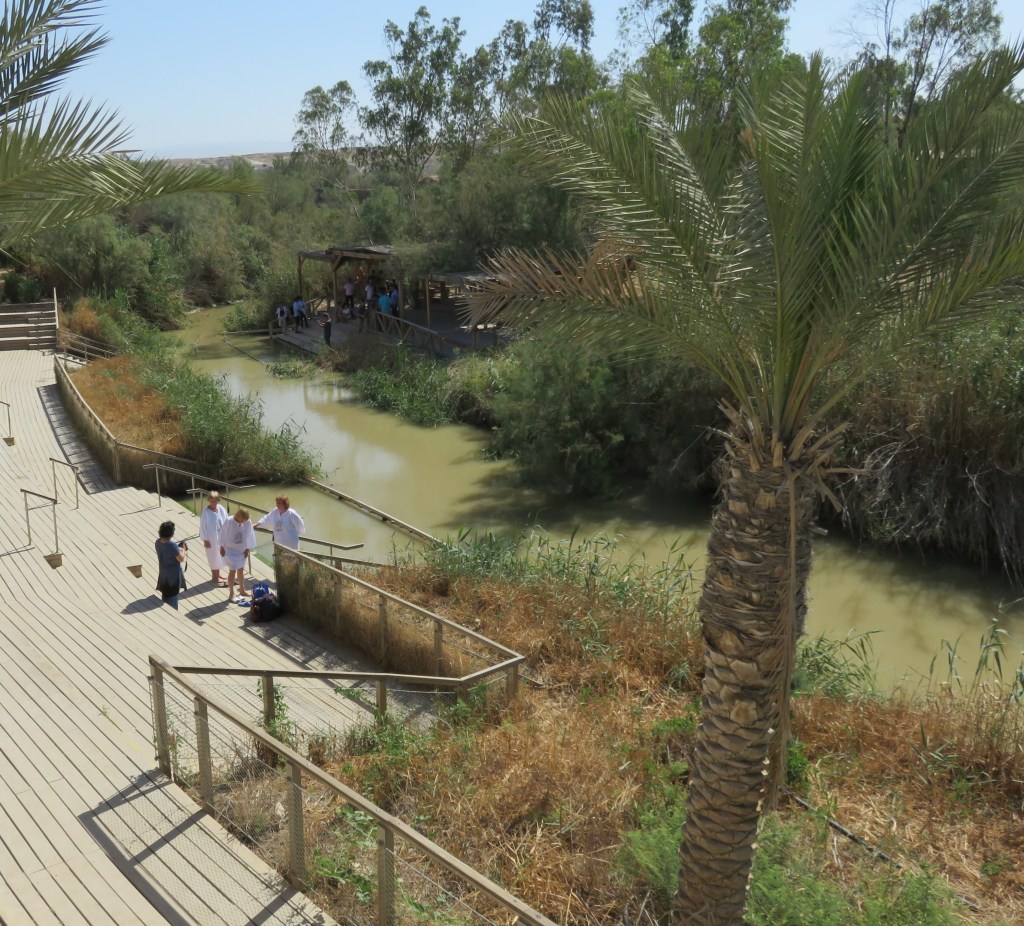
On the second Sunday in January, Christians remember Jesus’ baptism in the River Jordan. I’ve visited two baptismal sites in the Holy Land. Yardenit in the north, near the Sea of Galilee, has plentiful, clear water that invites the pilgrim to jump in for a rite of baptismal remembrance. Qasr el Yahud in the south, near the Dead Sea, isn’t nearly so inviting. By the time the Jordan reaches Qasr el Yahud, the river has been hard at work, irrigating fields and orchards. I’m told that, until a few years ago, raw sewage was sometimes pumped into the river, making your remembrance unsafe. Nowadays, the river is relatively clean, albeit muddy. The vegetation along the banks is thick and resounds with the twitter of birds. This photo was taken at the end of April on the Israeli side. It was a blisteringly hot morning. Three new Christians were preparing for baptism. Across the river, Jordanian worshipers also gathered for baptismal remembrance. Soldiers in uniform, on both sides of the Jordan, kept watch with rifles at the ready.
Now when all the people were baptized, and when Jesus also had been baptized and was praying, the heaven was opened, and the Holy Spirit descended upon him in bodily form like a dove. And a voice came from heaven, “You are my Son, the Beloved; with you I am well pleased.”–Luke 3:21-22
Poem for a Tuesday — “Boy at the Window” by Richard Wilbur
Seeing the snowman standing all alone In dusk and cold is more than he can bear. The small boy weeps to hear the wind prepare A night of gnashings and enormous moan. His tearful sight can hardly reach to where The pale-faced figure with bitumen eyes Returns him such a God-forsaken stare As outcast Adam gave to paradise.
The man of snow is, nonetheless, content, Having no wish to go inside and die. Still, he is moved to see the youngster cry. Though frozen water is his element, He melts enough to drop from one soft eye A trickle of the purest rain, a tear For the child at the bright pane surrounded by Such warmth, such light, such love, and so much fear.
in Good Poems, New York: Penguin Books, 2000. p. 319
Richard Purdy Wilbur published his first poem at age 8. He went on to win the Pulitzer Prize in poetry in 1957 and 1989. He served as the Poet Laureate of the United States in 1987. Wilbur was profoundly shaped by his experience in the Army during World War II. He once described how the war changed his writing, saying, “One does not use poetry for its major purposes, as a means to organize oneself and the world, until one’s world somehow gets out of hand.” He taught for decades at Amherst College and Wesleyan University. He died in 2017 in Belmont, Massachusetts.
I was walking in the neighborhood on the day after Christmas when I saw it: the first discarded Christmas tree of the season. Bushy and long-needled, it looked lonely curbside, stripped of its ornaments and lights. Some home owner, eager to restore their pre-holiday order, must have risen early and cleaned house.
Some of us may, likewise, already be parting with our signs of the season. The traditionalists among us will insist on keeping our trees until the sixth of January, the Feast of Epiphany. A few Christmas fanatics, you know who you are, will hold onto their trees until the dropping of needles becomes unbearable.
All of us in the coming days or weeks will say goodbye to our holiday decorations. We’ll box up the ornaments. We’ll carefully coil strands of lights. The nativity set will be shrouded in bubble wrap and sequestered in the attic. Eventually, even the evergreen wreath will disappear from the front door. Our thoughts will turn away from the season of Christmas and focus instead on the year ahead.
This Sunday, we celebrate the arrival of some final guests of the holiday season. Like family members who celebrate first at the in-law’s house, they arrived late. Although we like to welcome them on Christmas Eve, Matthew’s gospel tells us that the Magi arrived long after the shepherds had gone back to their flocks and the angels had stopped singing the “Hallelujah Chorus.” Royal astrologers who scanned the night sky for heavenly portents of earthly events, the wise ones had seen a singular star rising in the east. It was a star that heralded the birth of a Hebrew king. The magi compared notes, organized a caravan, and embarked on a long overland journey to Jerusalem in hopes of confirming their hypothesis.
They didn’t find exactly what they were looking for. Indeed, when they arrived at Herod’s palace in Jerusalem, there was no royal infant swathed in silks and surrounded by luxury. It must have felt like a disappointing end to their long travels. But then the guidance of scripture directed them onward, to the Judean hill country. As they turned their backs to Jerusalem, that portentous star that had risen in the east guided them to Bethlehem, like a big heavenly affirmation.
In the City of David, they found more than they had ever hoped or dreamed imaginable, a holy child, deserving of their reverence and awe. Matthew tells us that the Magi paid him homage. They fell to their knees in humility to worship the newborn king. They gave their costly gifts of gold, frankincense, and myrrh in response to the greater gift of the Christ-child himself. They knew that God’s priceless love had been made flesh in the guise of this tiny peasant babe.
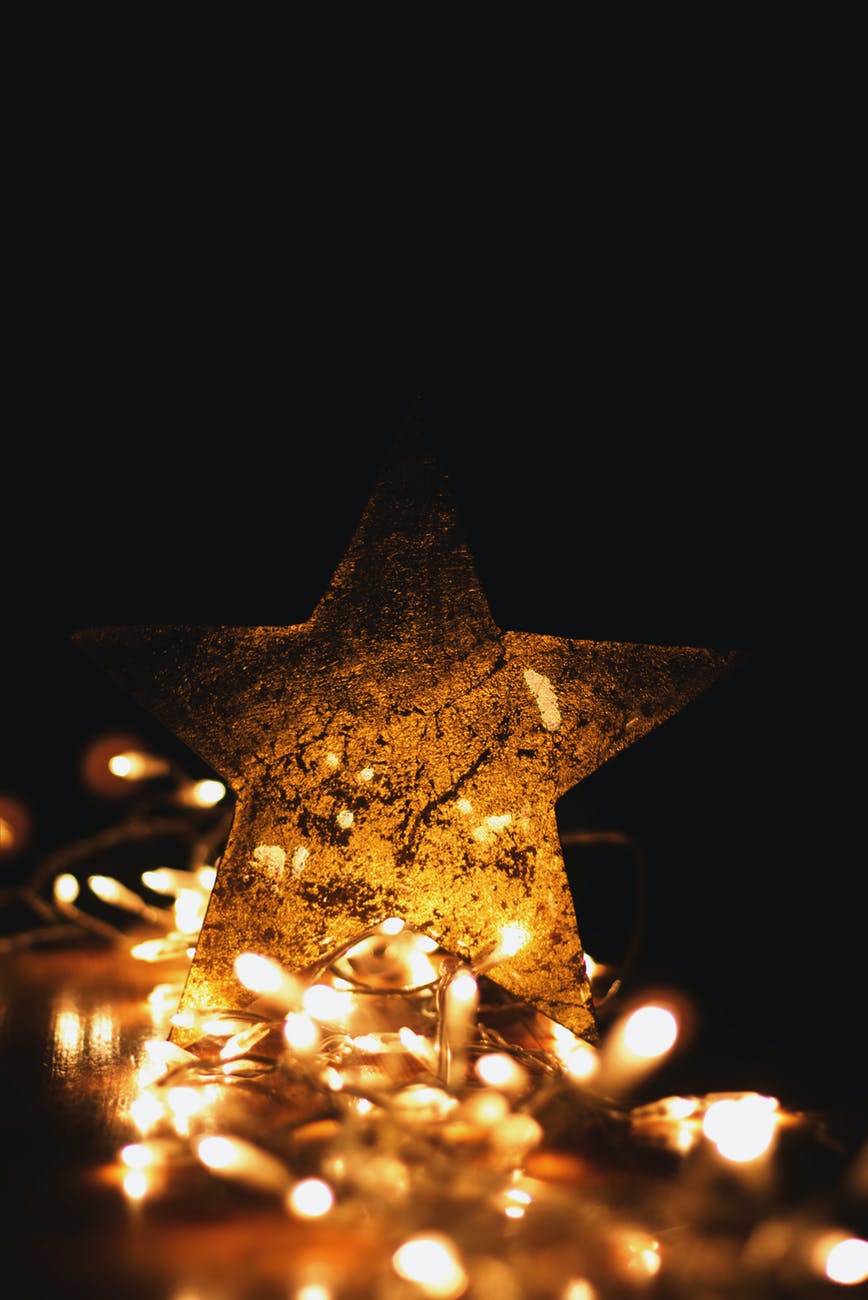
Christians have long called that eye-opening visit of the wise ones to the Christ-child Epiphany. That name was first mentioned by the Patriarch Clement around the year 200. The name Epiphany comes from the Greek word epiphaneia, which means revelation or manifestation. It had been revealed to the Magi that the star that they had seen at its rising was a heavenly sign of God’s new outpouring of light in Jesus. The wise ones took one look at the holy child and knew without question that the unstoppable light of God shone in the world’s darkness. William Danaker Jr., the Dean of Theology at Western Ontario University, teaches that on Epiphany Sunday we “raise our hearts to the shining beauty of eternal light.”
On this Epiphany Sunday, we especially remember that the beauty of God’s eternal light continues to shine in our world’s darkness. It cannot be quenched by COVID-19. It is not dimmed by the untimely death of our beloved ones. It is not deterred by Capitol Hill gridlock. It shines even above the threat of violence at the Ukrainian border. It outshines our mounting years, declining health, frayed marriages, and workplace worries. The light of Christ shines on in our darkness.
God’s great outshining love finds us where we least expect it and when we need it most. Light comes in the smile of an infant. Light comes in the sharing of communion together for the first time since March of 2020. Light comes in the sparse gathering of those who would worship on a low and snowy Sunday after the New Year. Light comes even as we worship virtually in the quiet of our own homes amid the post-Christmas clutter. Christ’s light shines in our darkness. Thanks be to God!
On this Epiphany Sunday, we recall that Jesus, who is light, saw his followers as light. He taught his disciples, “You are the light of the world. . . Let your light shine before others that they may see your good works and give glory to your Father in heaven” (Mt. 5:14, 16). The light of Epiphany shines in us whenever we go forth in Jesus’ purpose.
In our simple acts of kindness, light shines in the darkness.
As we share the good news by praying for others or inviting them to church or sharing a sermon, light shines in the darkness.
When we make a healing difference in our families, light shines in the darkness.
As we nurture our children in body, mind, and spirit, light shines in the darkness.
When we care for the least of these, our vulnerable neighbors, light shines in the darkness.
That holy light that brought the Magi to their knees on that distant night in Bethlehem continues to shine through us, if we will let it.
In the coming days, our Christmas clean-up will continue. We’ll see more trees curbside. Our holiday keepsakes will return to the safety of their attic cubbies. The last stale cookies will be nibbled or trashed. Our thoughts will turn away from shepherds and angels. The Magi will retreat to distant Persia until next Christmas.
As we turn away from Christmas and step into the New Year, don’t pack away the light, my friends. It longs to shine in you as it did in Bethlehem all those years ago; it longs to dispel the darkness that plagues humanity still. The stars sing on in the night. May the Christ-light that God shone at Epiphany kindle our hearts and send us forth to illumine our world. Amen.
In the time of King Herod, after Jesus was born in Bethlehem of Judea, wise men from the East came to Jerusalem, asking, “Where is the child who has been born king of the Jews? For we observed his star at its rising, and have come to pay him homage.” When King Herod heard this, he was frightened, and all Jerusalem with him; and calling together all the chief priests and scribes of the people, he inquired of them where the Messiah was to be born.They told him, “In Bethlehem of Judea; for so it has been written by the prophet: ‘And you, Bethlehem, in the land of Judah, are by no means least among the rulers of Judah; for from you shall come a ruler who is to shepherd my people Israel.’” When Herod secretly called for the wise men and learned from them the exact time when the star had appeared. Then he sent them to Bethlehem, saying, “Go and search diligently for the child; and when you have found him, bring me word so that I may also go and pay him homage.” When they had heard the king, they set out; and there, ahead of them, went the star that they had seen at its rising, until it stopped over the place where the child was. When they saw that the star had stopped, they were overwhelmed with joy. On entering the house, they saw the child with Mary his mother; and they knelt down and paid him homage. Then, opening their treasure chests, they offered him gifts of gold, frankincense, and myrrh. And having been warned in a dream not to return to Herod, they left for their own country by another road.
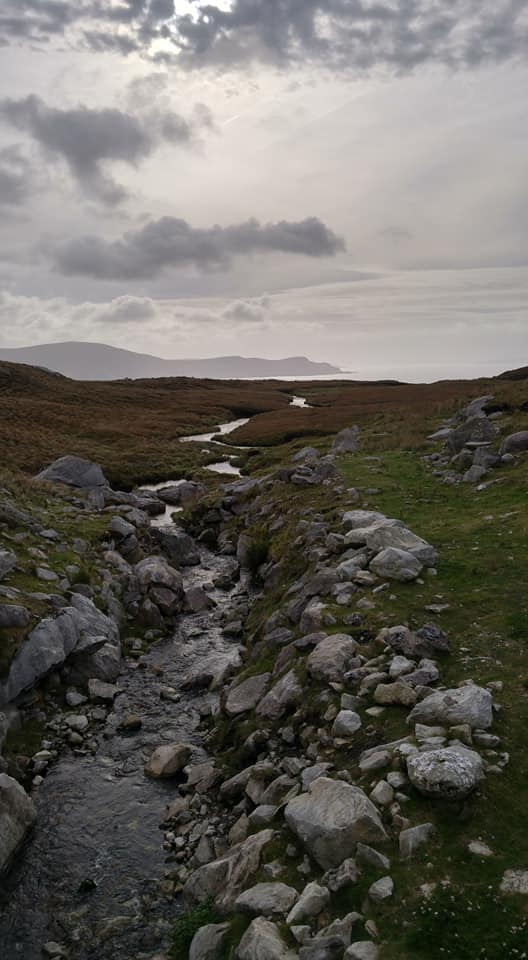
I lie and imagine a first light gleam in the bay After one more night of erosion and nearer the grave, Then stand and gaze from the window at break of day As a shearwater skims the ridge of an incoming wave; And I think of my son a dolphin in the Aegean, A sprite among sails knife-bright in a seasonal wind, And wish he were here where currachs walk on the ocean To ease with his talk the solitude locked in my mind.
I sit on a stone after lunch and consider the glow Of the sun through mist, a pearl bulb containèdly fierce; A rain-shower darkens the schist for a minute or so Then it drifts away and the sloe-black patches disperse. Croagh Patrick towers like Naxos over the water And I think of my daughter at work on her difficult art And wish she were with me now between thrush and plover, Wild thyme and sea-thrift, to lift the weight from my heart.
The young sit smoking and laughing on the bridge at evening Like birds on a telephone pole or notes on a score. A tin whistle squeals in the parlour, once more it is raining, Turf-smoke inclines and a wind whines under the door; And I lie and imagine the lights going on in the harbor Of white-housed Náousa, your clear definition at night, And wish you were here to upstage my disconsolate labour As I glance through a few thin pages and switch off the light.”
from Derek Mahon, Selected Poems, published by Viking Adult, 1991
Born in Belfast in 1941, Derek Mahon was one of the most highly respected poets of his generation. His 2008 book Life on Earth was awarded the “Poetry Now Award” by the Irish Times. Mahon was a master of capturing the Irish landscape and the gift of the moment. He died in 2020.
im chaonaí uaigneach nach mór go bhfeicim an lá translates from the Gaelic to English, “I am a lonely cry that must see the day.”
Poem for a Tuesday — “Journey of the Magi” by T.S. Eliot
A cold coming we had of it, Just the worst time of the year For a journey, and such a long journey: The ways deep and the weather sharp, The very dead of winter.’ And the camels galled, sorefooted, refractory, Lying down in the melting snow. There were times we regretted The summer palaces on slopes, the terraces, And the silken girls bringing sherbet. Then the camel men cursing and grumbling and running away, and wanting their liquor and women, And the night-fires going out, and the lack of shelters, And the cities hostile and the towns unfriendly And the villages dirty and charging high prices: A hard time we had of it. At the end we preferred to travel all night, Sleeping in snatches, With the voices singing in our ears, saying That this was all folly.
Then at dawn we came down to a temperate valley, Wet, below the snow line, smelling of vegetation; With a running stream and a water-mill beating the darkness, And three trees on the low sky, And an old white horse galloped away in the meadow. Then we came to a tavern with vine-leaves over the lintel, Six hands at an open door dicing for pieces of silver, And feet kicking the empty wine-skins. But there was no information, and so we continued And arriving at evening, not a moment too soon Finding the place; it was (you might say) satisfactory.
All this was a long time ago, I remember, And I would do it again, but set down This set down This: were we led all that way for Birth or Death? There was a Birth, certainly We had evidence and no doubt. I had seen birth and death, But had thought they were different; this Birth was Hard and bitter agony for us, like Death, our death. We returned to our places, these Kingdoms, But no longer at ease here, in the old dispensation, With an alien people clutching their gods. I should be glad of another death.
in T.S. Eliot Selected Poems, New York: Harcourt Brace Jovanovich, 1936.
After Jesus was born in Bethlehem in Judea, during the time of King Herod, Magi from the east came to Jerusalem and asked, “Where is the one who has been born king of the Jews? We saw his star when it rose and have come to worship him.”–Matthew 2:1-2
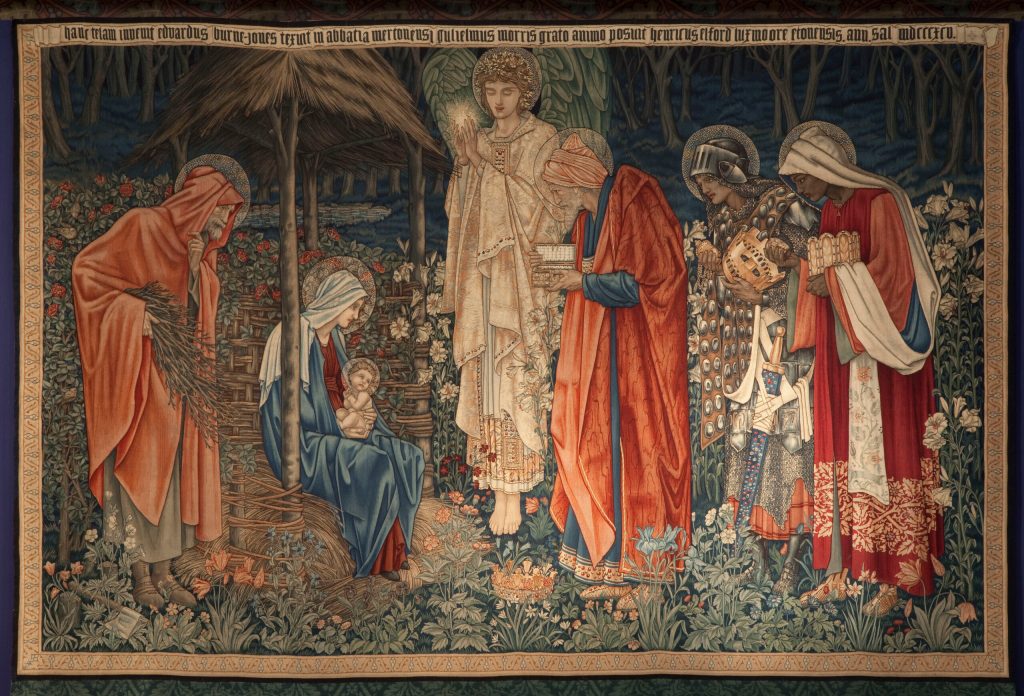
“Adoration of the Magi” Edward Burne-Jones, Musee d’Orsay Paris
I’ll share with you my first Christmas memory. It has nothing to do with Jesus, shepherds, or Magi – or even St. Nicholas. I was four years old. My father was working in sales for 3M, and he must have been doing well, because that year my family moved out of a cramped two-bedroom starter home into a brand-new home. A home with hardwood floors that we could slide on in our stockinged feet. A home with a stone and glass fireplace between the living room and family room, where our Christmas stockings could be hung, and Santa could squeeze down the chimney.
Christmastime in southeastern Pennsylvania seems to be infrequently white, but that Christmas it snowed, and snowed, and snowed some more. All day long, while my mother was busy in the kitchen whipping up a holiday feast and my Grandmommie White sat in front of the fire with her knitting, the snow fell, changing our neighborhood from a familiar suburban subdivision into a strange landscape of winter white.
My mother’s parents and grandmother (also known as Grammy, Pop, and Nana) were on their way to our new home for a Christmas visit. They were coming from rural New Jersey, where Grammy and Pop had been dairy farmers. They were literally traveling over the Delaware River and through Penn’s Woods. Pop was a Buick man. Although I have no recollection of the car he was driving that year, I’m sure it was enormous, boat-like, possibly with fins and bright silver hubcaps. This was, of course, before the day of all-season-radial tires and all-wheel-drive SUVs. I am certain that Pop’s Buick was a dream for a Sunday-after-church drive, but it was not a vehicle of choice for a long snowy journey.
All day long, we waited, and we waited, and we waited, for Grammy, Pop, and Nana to arrive as we watched the snow grow deeper. Although my Dad made a number of forays out to shovel the deepening snow, we didn’t see the snowplow. Nor did we see any cars venturing down the long hill that led from Route 202 to the new house on Buckingham Drive that we called home. I suspect my Mom was worried.
Pop, in the meantime, was intrepidly inching his Buick along the road to Doylestown. It was an impressive accomplishment, especially since he probably had plenty of backseat-driving-advice from Nana, by far the most formidable and opinionated member of the family. Born Anna Elisabeth Stelzenmuller to German immigrant parents in Flatbush Brooklyn, Nana had long ago ditched her German roots. She went instead by the Americanized name “Betty.” She was a hairdresser and fashion icon, in the days before anyone had ever heard of fashion icons. She always smelled of the exotic scent of Shalimar. Nana as hair stylist had spent many years on her feet – and she had the feet to prove it. They were all arthritic knobs and bunions, corns and tough callouses. Yet, somehow Nana packaged those beauties into the most fashionable of footwear – pointy-toed pumps of sumptuous suede or patent leather with kitten heels and bows or buckles.
Pop’s Buick made it all the way to Doylestown. At the top of the long, steep Berkshire Road that led down to our home, Pop took one look at the unplowed, snowy depths, pulled over, and ordered, “Everyone out. We walk from here.” They did just that. Pop was loaded down with presents. Grammy carried at least one pie and undoubtedly a Jello salad. And my Nana following in their wake in her fashionable shoes. I remember the knock on the door and my family gathering around to welcome them in from the cold. We were all full of laughter and tears and wonder.
I remember what happened next, too. My Grandmommie White had put down her knitting. She was a nurse by trade and knew exactly what was needed to thaw frozen feet. She filled the tea kettle to warm water on the stove. Once it was piping hot, she filled a basin, took a soft towel, and then she knelt at my Nana’s feet. She took off my Nana’s now ruined shoes, and then she began to massage and wash those terrible, ugly feet – bunions, bulges, callouses, and all. Most Christians practice the rite of footwashing at Easter, as they remember the Last Supper that Jesus shared with his friends. But that year, my Grandmommie washed feet at Christmas.
Thinking back to that Christmas many years ago, I’ll tell you what I learned: Christmas is about love. It’s about the kind of love that makes you inch your way through a snowstorm in a big old Buick. It’s about the kind of love that frets all day in the kitchen while you think about your kin, traveling hazardous roads. It’s about the kind of love that sends you walking through deep snow with a big white fuzzy dog with a pink bow clamped under your arm to give to your first granddaughter. It’s the kind of love that sends you to your knees to wash feet, even Nana’s feet.
Over the years, I’ve learned that all that love gives us a taste of the Holy Love that came down to us at Christmas. In our love for one another is the echo of God-made-flesh, of God born to poor peasant parents, of God who chose to draw first breath in the barnyard muck, surrounded by sheep and goats, donkeys and oxen, camels, hens and doves. Love came down at Christmas in a tiny babe, the Christ-child, who would one day teach the world what it truly means to love – big-hearted, open-armed, without limits.
May your Christmas be filled with love.
Luke 2:1-7
1 In those days a decree went out from Emperor Augustus that all the world should be registered. 2 This was the first registration and was taken while Quirinius was governor of Syria. 3 All went to their own towns to be registered. 4 Joseph also went from the town of Nazareth in Galilee to Judea, to the city of David called Bethlehem, because he was descended from the house and family of David. 5 He went to be registered with Mary, to whom he was engaged and who was expecting a child. 6 While they were there, the time came for her to deliver her child. 7 And she gave birth to her firstborn son and wrapped him in bands of cloth, and laid him in a manger, because there was no place for them in the inn.
I took this photo while snowshoeing with Duane last winter. We were bushwhacking when the draped curtain of snow, sagging off a fallen tree, caught my eye. I love the layers of successive snows — they look like pleats or fabric folds.
In the bleak midwinter, frosty wind made moan, Earth stood hard as iron, water like a stone; Snow had fallen, snow on snow, snow on snow, In the bleak midwinter, long ago.
Our God, Heaven cannot hold Him, nor earth sustain; Heaven and earth shall flee away when He comes to reign. In the bleak midwinter a stable place sufficed The Lord God Almighty, Jesus Christ.
Enough for Him, whom cherubim, worship night and day, Breastful of milk, and a mangerful of hay; Enough for Him, whom angels fall before, The ox and ass and camel which adore.
Angels and archangels may have gathered there, Cherubim and seraphim thronged the air; But His mother only, in her maiden bliss, Worshipped the beloved with a kiss.
What can I give Him, poor as I am? If I were a shepherd, I would bring a lamb; If I were a Wise Man, I would do my part; Yet what I can I give Him: give my heart.
Christina Georgina Rossetti is considered one of the finest female poets of the Victorian era. Born to Italian political refugees and classics scholars, she lived in London and was homeschooled. She began writing poetry by age 12. She suffered from bouts of depression which she soothed with religious devotion. A noted beauty, Rosetti never married but was engaged three times. She wrote sonnets, ballads, narrative poems, and lyrics. Remarkably prolific, Rosetti’s complete poems run to well over 1,000 pages. Her poem, “In the Bleak Midwinter,” was adapted as a Christmas carol by another child of refugees Gustav Holst.