With Glad and Generous Hearts

Sabbath Day Thoughts — “With Glad and Generous Hearts” Acts 2:42-47

She was just so darned cute. Strawberry-blonde curls, big blue eyes in a rounded heart-shaped face, a smattering of freckles strewn across her cheeks—what my Grandmommie referred to as the “Angel’s Kisses.” Strangers stopped in the grocery to pinch her cheeks. The batting of those big blue eyes earned her sips of other’s drinks or bites of their snacks. You know the kind of kid I am talking about. Irresistible!

We shared a room for years during which time I was the Felix to her Oscar. I lined my toys up in careful rows while hers were scattered about in joyful chaos. Science experiments of old food and medicine cabinet concoctions moldered beneath her bed while my floor might harbor a lonely dust bunny. My crayons were never broken and always carefully packed away in their original box after coloring. Her crayons were often where she left them: scattered across the table, kicked beneath the radiator, broken to bits and added to those aforementioned science experiments. My clothes were folded and tucked away in drawers. Hers lingered in wrinkled piles on the floor until our mother insisted that they go in the hamper where they belonged.

We resolved our differences by angling an imaginary line down the center of the room. Her side was a marvel of mayhem. My side was proto-Presbyterian—everything decent and in order. I silently rejoiced when our family moved to a larger home when I was nine and I got my own room that doubled as the guestroom. It was easier to share with visiting kin than it was with my sister. But even in my new space there were signs of little fingers constantly touching my stuff. Clothes with mysterious stains, toys askew, doors ajar. Sharing is not easy.

Our reading from the Acts of the Apostles reveals radical acts of generosity and sharing in the early church. It wasn’t long after Pentecost. God had poured out the Holy Spirit upon timid disciples, and before you could say lickety-split, they were preaching to complete strangers in ways that changed minds and prompted belief. That Pentecost Spirit must have also inspired their life in community: warm fellowship, homes opened for bountiful meals, dedicated times of prayer in the Temple, and radical sharing—possessions sold and proceeds distributed for the good of all. It was a community so remarkable, so appealing, that everyone wanted a piece of that. Day by day, the Lord added to their number.

It didn’t stop there, either. If we keep reading Acts, we learn about the Cypriot rabbi Barnabas, Paul’s friend. He saw the need in Jerusalem and sold everything he owned—that’s right everything—and gave it to the apostles. Then there was Lydia, the first Greek to accept the gospel. No sooner had she been baptized than she insisted that Paul and his friends stay with her in Philippi, a long friendship that would help fund much of Paul’s outreach to the Gentiles. And then Paul himself, when he learned that there was a famine in Jerusalem, barnstormed through his Gentile churches seeking financial gifts to relieve the pressing hunger of their Jewish Christian kin. That’s a lot of sharing.

According to Bible scholar and historian Rita Halteman Finger, for the past 500 years, since the Reformation, western Christians have played down the nature of the early Christian community and the importance of sharing. It’s been argued that the community described in Acts is symbolic and idealized. They say these practices were likely just short-lived and limited. It’s really not practical in today’s context or with today’s people. After all, we are a sinful lot, prone to self-interest. We may want this sort of community, but let’s get real. It’s pretty pie in the sky. Matthew Skinner, who teaches at Luther Seminary, uncomfortably points out that it is tempting for us to write off today’s scripture reading, because if we take it seriously, then it will cost us, and we are not sure we want to pay that price.

In some ways, Matt Skinner is right. Unbridled generosity, heartfelt sharing, isn’t easy. Let’s face it, every dollar in the offering plate is a dollar not squirreled way in our 401k or IRA for our retirement. Sure, we want to help the poor, but we also want to make sure our generosity is merited and well-spent. Is the recipient someone who will turn their life around and pay it forward to another? Is this someone who is truly deserving, who works hard but has more month than money? Or, maybe we feel that we have worked hard for what we have and others can do what we did—they can pull themselves up by their own bootstraps, too. Or, maybe we are burned out on giving in a world where the enormity of need is simply overwhelming.

We long for the beloved community. We want to live with glad and generous hearts. But some days, it is a whole lot easier to draw an imaginary line down the center of the room. Some days, it is easier to look the other way or close our eyes to our neighbor’s need, trusting that someone else will step up. Some days, it is easier to say, “America first,” gut our support of USAID, and shrug off the consequences for our global neighbors, from closure of medical clinics, to the end of life-saving immunizations and medications, to the spread of AIDS and tuberculosis. We long for the beloved community, but sharing is hard. Help us, Jesus.

Maybe that early Christian community in the Acts of the Apostles can help us, too. Those glad and generous hearts were nurtured in a fellowship that devoted themselves to the apostles’ teaching, to being together, to the breaking of bread, and to the prayers. They listened to stories of the life that the apostles shared with Jesus. They meditated upon the Lord’s Sermon on the Mount, and the parables, and the great commandment to love God and neighbor. They shared favorite recipes and laughed around the table. They watched one another’s children and celebrated the little joys—first tooth, first steps, first words. They broke the bread and lifted the cup, remembering how Jesus had done this in the Last Supper. They prayed hard, going to the Temple at the appointed times, praying for one another’s concerns, and listening for the leading of the Holy Spirit.

In that fertile mix of fellowship and spirituality, they began to change. They considered the limitless love of God for them and saw that all they had and all they were was God’s gracious gift. They pondered the generous love of Jesus, who welcomed strangers, taught unlikely disciples, included women, blessed children, forgave sinners, and poured out his very life to reconcile them to God and one another. As they came to understand God’s limitless love for them, a love that was revealed so completely in Jesus, their hearts softened. Their hands opened. They lived with glad and generous hearts.

So perhaps we can prove wrong that 500-year history of biblical interpretation that argues that the beloved community of the Acts of the Apostles is just an idealized, pie-in-the-sky, rose-colored-glasses kind of place. Perhaps we can prove that the beloved community is real and here and now. We can begin by devoting ourselves to the apostles’ teachings—feasting on the Word in worship and through the weekly Bible Study. We can forge fellowship with shared meals and shared lives, whether we are enjoying coffee hour hospitality or digging into the best potluck in town on Committee Night, whether we are cooking up a hot dish for someone laid up with illness or knitting and crocheting prayer shawls with Heart and Hands, whether we are getting our hands dirty in the church garden or singing together in the choir. We can pray hard, sharing our joys and concerns in worship, interceding for others with the prayer chain, or sharing those simple everyday invitations like, “May I pray for you?”

As we engage the Word, delight in our fellowship, and fervently pray, one thing will become abundantly clear to us. We’ll know God’s never-ending and overflowing love for us. We’ll see our lives for what they are—a blessing, an opportunity, an anticipation of the Kingdom of God. We’ll know that when we do our little bit, we make that Kingdom tangible for a world that desperately needs a love that is never-ending and overflowing.

We can trust that as we live into that beloved community, we will be changed. We’ll have a fresh appreciation for all the Lord has done for us. We’ll stop drawing those imaginary dividing lines. We’ll stop attaching strings. We’ll see our abundance as a blessing for our lives—and a blessing for the lives of others. Our hearts will soften. Our hands will open. We’ll live with glad and generous hearts, forging a blessed and irresistible community for all. May it be so.

Resources

Scott Shauf. “Commentary on Acts 2:42-47” in Preaching This Week, May 11, 2014. Accessed online at https://www.workingpreacher.org/commentaries/revised-common-lectionary/fourth-sunday-of-easter/commentary-on-acts-242-47-4

Sharon Betsworth. “Commentary on Acts 2:42-47” in Preaching This Week, April 30, 2023. Accessed online at https://www.workingpreacher.org/commentaries/revised-common-lectionary/fourth-sunday-of-easter/commentary-on-acts-242-47-6

Jeremy Williams. “Commentary on Acts 2:42-47” in Preaching This Week, April 26, 2026. Accessed online at https://www.workingpreacher.org/commentaries/revised-common-lectionary/fourth-sunday-of-easter/commentary-on-acts-242-47-7

Matt Skinner. “Commentary on Acts 2:42-47” in Preaching This Week, April 13, 2008. Accessed online at https://www.workingpreacher.org/commentaries/revised-common-lectionary/fourth-sunday-of-easter/commentary-on-acts-242-47-2


Acts 2:42-47

42 They devoted themselves to the apostles’ teaching and fellowship, to the breaking of bread and the prayers. 43 Awe came upon everyone because many wonders and signs were being done through the apostles. 44 All who believed were together and had all things in common; 45 they would sell their possessions and goods and distribute the proceeds to all, as any had need. 46 Day by day, as they spent much time together in the temple, they broke bread at home and ate their food with glad and generous hearts, 47 praising God and having the goodwill of all the people. And day by day the Lord added to their number those who were being saved.

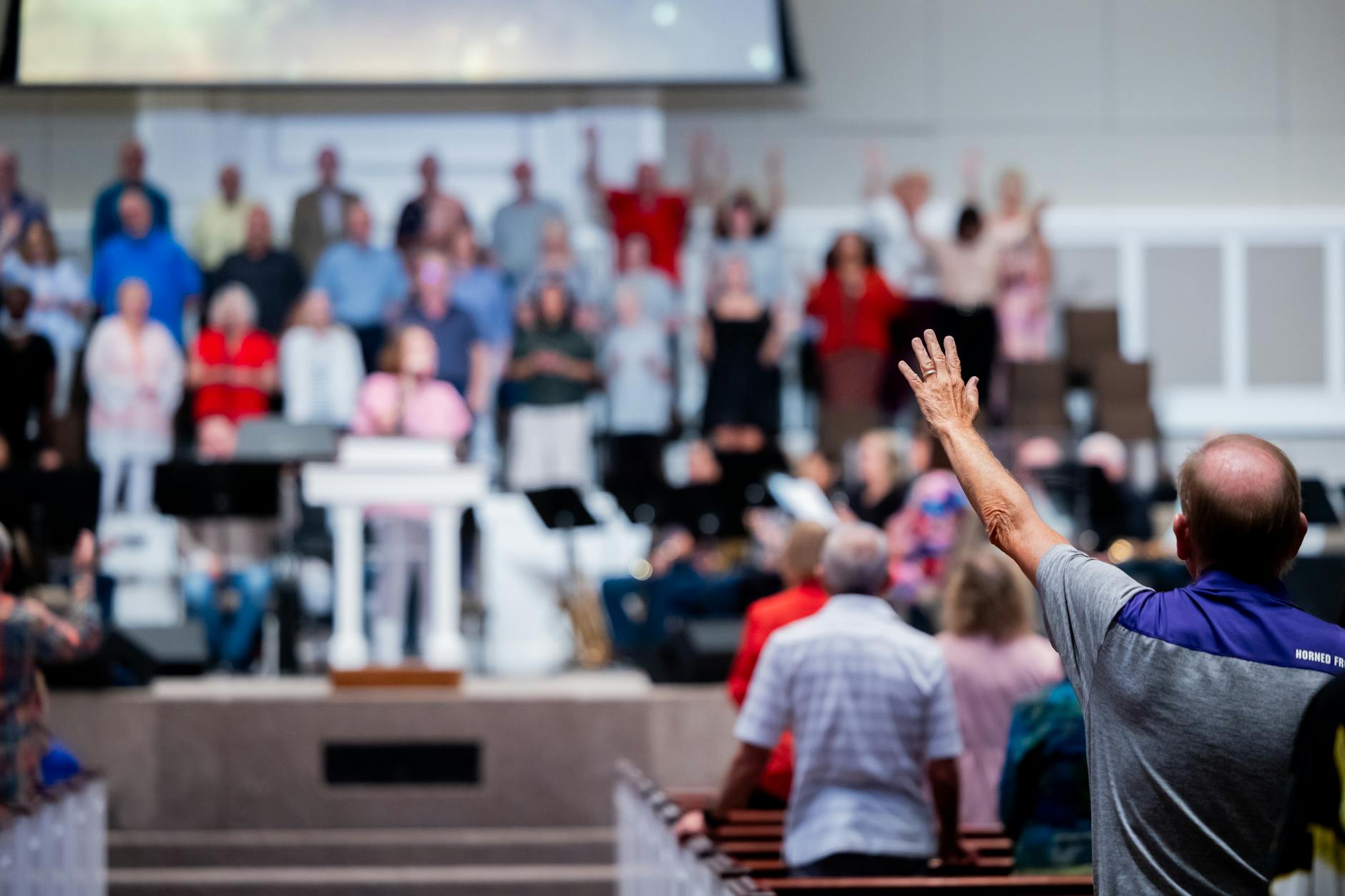
Photo by Engin Akyurt on Pexels.com

Songs and Stories for Eastertide

Sabbath Day Thoughts (and songs) — “Songs and Stories for Eastertide” John 20:19-29

This message includes hotlinks for each of the hymns. Click and sing along, if you wish!

Our first hymn features words originally written in Latin in the fifth century. These lyrics have been sung by Christians to celebrate the resurrection for more than 1,500 years! The Medieval melody was adapted by the German composer and organist Michael Praetorius in 1609. Praetorius was born Michael Schultze, the youngest son of a radical Lutheran pastor. Perhaps to distance himself from his father, Michael latinized his name from Schultze to Praetorius during his university studies.

We use the term “Renaissance man” to describe very versatile people with multiple specialties. By that definition, Praetorius certainly qualifies. He served as an organist, choirmaster, music theorist, and royal court official. As such, he composed a lot of music—and somehow found time to write an encyclopedic treatise on music that scholars have found very useful for more than 400 years.

Praetorious studied at Frankfurt and was organist and eventually court musician to Duke Heinrich Julius. After his patron’s death in 1613, Praetorius spent more than two years at Dresden, where he heard and was influenced by the intricate melodies and harmonies of the latest Italianate music. In his last years, he was asked to visit many German courts as a director, performer, and consultant. Zealous for the advancement of music, he had a predilection for rich and varied settings for voices and instruments. His musical encyclopedia was published in nine volumes between 1605 and 1611. It contains a whopping 1,244 chorale settings for sacred music. When he died in 1620, he was entombed beneath the pipe organ of his home church, the Marienkirche in Frankfurt. Let us sing “That Easter Day with Joy Was Bright.”

That Easter Day with Joy was Bright (PUER NOBIS NASCITUR)

Our next Easter hymn reflects the musical style of the 1970s charismatic church movement, which was heavily influenced by folk music.  The Charismatic movement emphasized baptism in the Holy Spirit and the active operation of spiritual gifts (charismata) among believers. These gifts include speaking in tongues, prophecy, healing, and discernment of spirits. Charismatic Christians believe these gifts are manifestations of the Holy Spirit’s presence and power in the lives of people today. The boom in charismatic hymns was prompted by the accessibility of the guitar and the sing-ability of the tunes, especially for those worshipers who were unaccustomed to choral singing or liturgical (service) music.

This hymn was composed by Donald Fishel. He joined the Word of God, a charismatic Catholic community based in Ann Arbor, MI, where he was the group’s music leader and orchestral conductor from 1969 to 1981. Fishel’s principal instrument is the flute. He has taught and performed in a number of settings, including serving as principal flutist with the Dexter Community Orchestra in Dexter, MI. “Alleluia, Alleluia! Give Thanks” was the first church music that Donald Fishel ever composed. According to Fishel, it came together very quickly – in about an hour! Let us sing “Alleluia, Alleluia! Give Thanks.”

Alleluia, Alleluia! Give Thanks

Our next hymn features the beautiful hymn tune Suo Gan, a traditional Welsh lullaby written by an anonymous composer. It was first recorded in print around 1800. The words of the hymn were written by John Bell and Graham Maule. Bell is a minister in the Church of Scotland, a fellow of the Royal School of Church Music, and a member of the Iona Community. He gives music workshops throughout the United Kingdom and the United States. Bell is passionate about the importance of congregational singing. He says that Christian singing should lead to Christian action. His words often express the thirst for social justice and the Kingdom of God.

Bell says, “My frustration is that the church’s singing is full of churchy words. We don’t have songs with a word like economics in them, or a word like kitchen. A substantial amount of biblical witness tells us God is interested in economics. We know that much of Jesus’ time was spent in kitchens. But we are disenfranchised from singing about some realities in his and our lives.” As you sing “Christ Has Risen While Earth Slumbers,” listen for ways that Bell expresses the real experience of people in the pews. 

Christ has risen while earth slumbers HD

Our next Easter carol uses the allegory of the dying and rising of grain to allude to Christ’s resurrection. The lyrics were written by Anglican clergyman, author, and hymnwriter John Macleod Campbell Crum. His grandfather was the Scottish minister and Reformed theologian John Macleod Campbell, who was controversial for his preaching of universal atonement – the belief that Christ died for all humankind. This view conflicted with the teachings of the Church of Scotland. His scandalous belief led to a “presbyterial visitation.” A representative group of the leaders from the Church of Scotland appeared at his church one Sunday morning to hear Rev. Campbell and examine him. They didn’t like what they heard. He was accused of heresy and forced to leave the Scottish church.

Influenced by his grandfather’s thought and experience, John Macleod Campbell Crum emphasized that the good news of Jesus Christ is for all people. As you sing the hymn, pay attention to verse four. It celebrates the power of God to raise hearts to new life, even when we feel dead and barren. The hymn has had great appeal in Great Britain where it is sung in churches and has been recorded by popular musicians like Steve Winwood, David Harbottle, Laura Wright, and the King’s College Choir. Let us sing “Now the Green Blade Rises.”

Laura Wright – Now The Green Blade Rises

Our next hymn, “The Day of Resurrection,” teams 8th century words by John of Damascus with a lively 19th century English tune. John of Damascus was an Arab Christian monk, priest, and defender of the faith. John was born to a prominent Syrian family. His father was intent upon John receiving a classical education, and so the boy’s tutor was a monk by the name of Cosmas, who was kidnapped by Arab slave-traders from his home in Sicily. Seeing the value of such a devout and learned slave, John’s father paid a great price for Cosmas.

John served as a civil servant for the Caliph in Damascus before his ordination. He then became a priest and monk at the Mar Saba monastery near Jerusalem. Perhaps his greatest service to the church was his defense of icons, holy images used to invite worshippers to prayer and reflection. John’s greatest opponent on the matter of icons was Emperor Leo III. In an effort to discredit John, Leo sent forged documents to the Caliph of Damascus which implicated John in a plot to attack the city. The Caliph was outraged and ordered John’s right hand be cut off and hung up in public view.

According to tradition, some days afterwards, John asked for his hand back. He prayed fervently to Mary the mother of our Lord before her icon, and his hand was said to have been miraculously restored. In gratitude for this healing, he attached a silver hand to the icon, which thereafter became known as the “Three-handed Mary” or Tricherousa. The icon can still be seen in the Hilandar monastery in Mount Athos, Greece. Let us sing “The Day of Resurrection.”

Hymn “The Day of Resurrection” | Lancashire

Our final hymn is “Woman, Weeping in the Garden.” The words tell the story of Mary Magdalene and her transformation from weeping to dancing as she encountered her risen Lord on Easter morning. The words were written by Daniel Charles Damon.

Daniel remembers that when he was in high school, he told his Grandpa Damon that he might want to become a minister. His Grandpa questioned whether young Daniel had the right stuff, “That’s the highest calling there is,” Grandpa said. Looking at his grandson’s long hair and bangs that hid much of his face, Grandpa said more, “You know, you can tell a man’s intelligence by the width of his forehead.” Clearly, Daniel’s conservative Free Methodist grandfather did not approve of his grandson’s church aspirations, so much for that idea.

After graduation from Greenville College, Daniel taught high school band and choir in South Dakota before moving to San Francisco to work full-time as a jazz musician. He found a job at a sing-along piano bar called the Curtain Call.

After a few years of making a living playing in hotels and restaurants, Daniel was burning out on the bar scene when a conversation with his pastor sent him back on a path to seminary at the Graduate Theological Union. There, Daniel discovered a deeper sense of calling to be a pastor and a hymnwriter. He served a number of small California churches where he preached, played the piano, led congregational singing, directed choirs, and even typed the bulletins.

Daniel often writes hymns on social justice themes. The way we treat people is very important to him. He has written hymns for children, women, the elderly, people living with disabilities, and for the poor and the oppressed. If his conservative Grandfather were still alive, he would undoubtedly not approve. That’s ok with Daniel. Let us sing “Woman, Weeping in the Garden.”

Woman Weeping in the Garden


John 20:19-29

19 When it was evening on that day, the first day of the week, and the doors were locked where the disciples were, for fear of the Jews, Jesus came and stood among them and said, “Peace be with you.” 20 After he said this, he showed them his hands and his side. Then the disciples rejoiced when they saw the Lord. 21 Jesus said to them again, “Peace be with you. As the Father has sent me, so I send you.” 22 When he had said this, he breathed on them and said to them, “Receive the Holy Spirit. 23 If you forgive the sins of any, they are forgiven them; if you retain the sins of any, they are retained.”

24 But Thomas (who was called the Twin), one of the twelve, was not with them when Jesus came. 25 So the other disciples told him, “We have seen the Lord.” But he said to them, “Unless I see the mark of the nails in his hands and put my finger in the mark of the nails and my hand in his side, I will not believe.”

26 A week later his disciples were again in the house, and Thomas was with them. Although the doors were shut, Jesus came and stood among them and said, “Peace be with you.” 27 Then he said to Thomas, “Put your finger here and see my hands. Reach out your hand and put it in my side. Do not doubt but believe.” 28 Thomas answered him, “My Lord and my God!” 29 Jesus said to him, “Have you believed because you have seen me? Blessed are those who have not seen and yet have come to believe.”

Photo by Caleb Oquendo on Pexels.com

Roll Back the Stone

Sabbath Day Thoughts — “Roll Back the Stone” Matthew 28:1-10

We all carry stones.

Almaza a-Sultan shoulders the stone of injustice in her life in a Gaza refugee camp. Although her family has no connection to Hamas, their home was destroyed by bombs early in the Israel-Hamas War. Life in the camp is tough. Almaza and her daughters cut their long hair because there were no cleaning products or shampoos, and lice are rampant in the filthy living conditions. The few hygiene products available on the market are exorbitantly priced, far beyond the means of homeless refugees. Sometimes Almaza’s husband goes to bombed homes to scavenge. When he returns with a leftover piece of soap, they rejoice because they can shower properly and feel as if they are born again.

Sharon carries the stone of failure and dashed dreams. She filed for divorce after eight years of marriage. She loves her husband. She remembers those hopeful early days they shared, but then his addictions and poor choices made life terribly hard: jobs lost, savings blown, erratic—sometimes frightening—behavior, promises broken, repeated attempts at rehab failed. One day, Sharon knew that for the sake of her children and her own well-being, they had to leave. She feels guilty and ashamed. She weeps for the sweet possibility that came to such a bitter end.

Ronnie is burdened by the stone of grief. Ronnie and his wife Jenny were high school sweethearts who raised a family and forged a happy life. A few years ago, Jenny was diagnosed with bone cancer. She underwent surgery which took her lower leg. Then, she went through chemo with its debilitating side effects. When the cancer came back after a brief remission, Jenny was admitted to a clinical trial for a new immunotherapy. It sounded promising, yet didn’t work. They decided to stop treatment, and within weeks, Jenny died. Ronnie is glad that his wife is free from pain and suffering. He believes in God and heaven. He just doesn’t know how to live without Jenny.

Matthew’s gospel tells us of the two Marys walking to the tomb in the pre-dawn darkness. Like Almaza a-Sultan, the Marys knew the stone of injustice. They had seen the Lord of love arrested in the deep of the night and marched off to a secret hearing at the home of Caiaphas. There he was beaten, convicted on false charges, and sentenced to death. The Marys saw Jesus handed over to the Romans, who charged the peaceful Jesus a second time, on charges of insurrection. Then the Romans did what empires do best: silenced opposition with brutality and death. The Marys saw the injustice of a good and innocent man crucified between two common thieves.

Like Sharon, the Marys knew the stone of failure and dashed dreams. They loved Jesus, had provided for him from their own purses. They had been filled with starry-eyed hope for a new world order where God ruled, the poor could be filled, those who weep would be comforted, the meek would inherit the earth, and love would prevail. But as they walked to the tomb on that terrible morning, their hopes had failed and the promise of possibility had been drowned out by mocking priests, gambling soldiers, and the crowd’s cries of, “Crucify! Crucify!” When the Lord breathed his last, only the women were there to weep at the foot of the cross. The Kingdom that Jesus promised seemed utterly defeated by the twin powers of Temple and empire.

On Easter morning, we all carry stones. We carry the stone of injustice, of a broken world torn apart by violence, greed, hate, and lust for power. We carry the stone of dashed dreams, of relationships begun in hope only to die at the hands of poor communication and indifference, hardened hearts and the inability to forgive. We bear the stone of failure—businesses closed, degrees never earned, opportunities missed, jobs lost. We carry the stone of grief: the loss of ability, the slow creep of age, the death of beloved ones who leave behind an unbearable hole in our hearts. We all carry stones. What is the stone that you bear this morning?

Every gospel writer remembers the story of the resurrection a little differently. In Mark’s original ending, the women flee the tomb in terror and silence. In Luke, the women come bearing spices to tend Jesus’ body. John remembers Mary Magdalene weeping alone in the garden. Matthew pays special attention to the stone. Indeed, in Matthew’s gospel, after the crucifixion, we are allowed to listen in on a meeting between Pilate, the chief priests, and Pharisees (MT 27:64-66). Afraid that Jesus’ body will disappear and the disciples will claim a resurrection miracle, Pilate takes special steps. The grooved track in front of the tomb is fitted with an enormous capstone to block the entrance. Next, an imperial seal is placed to secure the entrance and warn of the consequences of defying the emperor. Finally, two Roman guards are stationed to prevent any mischief. In Matthew’s gospel, the women do not carry spices or oil. In Matthew’s gospel, the women simply come to see the tomb, to weep and say goodbye, numbed by sorrow, disappointment, and the weight of the stones they bear.

On that first Easter morning, despite their burdens, the two Marys went to the tomb. There, as the dawn stretched above the horizon, roosters crowed to greet the dawn, the sleeping city began to awaken, and the women learned that God was at work to confound the death-dealing powers of this world. It would be God, who would have the last word. Like a flash of lightning, the barrier between heaven and earth was broken, the earth shook, the grave’s seal was broken, the stone rolled back and fell away, and God’s messenger took a victorious seat on that symbol of imperial power. Pilate’s intimidating guards were rendered powerless.

In the mystery of an empty tomb, Mary Magdalene and the other Mary learned that God had overcome the earthly powers of empire and Temple. In the mystery of an empty tomb, the women understood the limitless power of God’s love, which could face head-on the crushing stones of injustice and shame, dashed dreams, failure, and death and work from it all a miracle of life. The women’s stones were real and big, but God’s love was every bit as real and even bigger.

As the two Marys fled back into the sleeping city on a holy mission to share their good news, they encountered Jesus, who greeted them with words they needed to hear. “Do not be afraid.” Then the women did what the moment called for: they worshipped Jesus, falling at his feet with tears of joy and cries of “Alleluia!” Mary Magdalene and the other Mary realized that although life brought injustice and dashed dreams, failure, and death, they could bear all that would make their hearts tremble. They could rise and go forth with courage because they would not be alone. Jesus would be with them to roll back the stones that they could not.

The women were commissioned a second time by Jesus—to go and tell what they had seen. I like to imagine the two Marys holding hands and running through the streets of the waking city. They must have felt oddly light and hopeful, brimming over with the simple knowledge that although life brings heavy stones, love prevails. God had fought the battle and won the victory.  With news that good, they could face their stones and live with joy.

On this Easter morning, we come bearing stones—the stones of injustice and dashed dreams, failure, grief, and death. Yet, at the empty tomb, we remember that love prevails. The empire and the Temple, the cross and even death itself do not have the last word. God does. God can take the worst that this world has to offer and work from it a miracle of life. The stone rolls back and we see possibility. The stone rolls back and we find hope. The stone rolls back and we know that we are cherished beyond limits by God, who loves us enough to bear our stones, die for us, and rise for us.

So perhaps on this Easter morning, we can be a little like the Marys. We can go forth into the world with hope and joy. We can draw near to those who labor beneath the stones of all that holds us captive. We can bear the news of a holy love that is more than a match for this world’s pain, the love that is stronger than death. For the people of Gaza, like Almaza a-Sultan, we can remember them, seeking their safety and justice in a world that has already moved on to the latest catastrophe of war. For friends like Sharon, who struggles with the dashed dreams of a failed relationship, we can offer our compassion, encouragement, and hopes for a better tomorrow. For folks like Ronnie, who live with the heartbreak of grief, we can listen and simply walk with them through the Valley of the Shadow of Death. We can share the promise that on the far side of death waits the promise of eternal life.

It’s Easter morning, my friends. Christ is alive. Let us go forth to roll back the stone.

Resources

Almaza a-Sultan’s story of her life in Gaza is from Voices from Gaza, Feb. 25, 2026. Accessed online at btselem.org.

Martha Moore Keish. “Theological Perspective on Matthew 28:1-10” in Preaching on the Gospels, Matthew, vol. 2. WJK Press, 2013.

Ephraim Agosto. “Exegetical Perspective on Matthew 28:1-10” in Preaching on the Gospels, Matthew, vol. 2. WJK Press, 2013.

Barbara Brown Taylor. “Homiletical Perspective on Matthew 28:1-10” in Preaching on the Gospels, Matthew, vol. 2. WJK Press, 2013.

Matt Skinner. “Commentary on Matthew 28:1-10” in Preaching This Week, April 5, 2026. Accessed online at https://www.workingpreacher.org/commentaries/revised-common-lectionary/resurrection-of-our-lord/commentary-on-matthew-281-10-14

Judith Jones. “Commentary on Matthew 28:1-10” in Preaching This Week, April 5, 2026. Accessed online at https://www.workingpreacher.org/commentaries/revised-common-lectionary/resurrection-of-our-lord/commentary-on-matthew-281-10-9


Matthew 28:1-10

28 After the Sabbath, as the first day of the week was dawning, Mary Magdalene and the other Mary went to see the tomb. And suddenly there was a great earthquake, for an angel of the Lord, descending from heaven, came and rolled back the stone and sat on it. His appearance was like lightning and his clothing white as snow. For fear of him the guards shook and became like dead men. But the angel said to the women, “Do not be afraid, for I know that you are looking for Jesus who was crucified. He is not here, for he has been raised, as he said. Come, see the place where he lay. Then go quickly and tell his disciples, ‘He has been raised from the dead, and indeed he is going ahead of you to Galilee; there you will see him.’ This is my message for you.” So they left the tomb quickly with fear and great joy and ran to tell his disciples. Suddenly Jesus met them and said, “Greetings!” And they came to him, took hold of his feet, and worshiped him. 10 Then Jesus said to them, “Do not be afraid; go and tell my brothers and sisters to go to Galilee; there they will see me.”