Messengers

Sabbath Day Thoughts — “Messengers” Mark 1:1-8

When we want to send a message, we pick up our phones and tap out a text. We may even resort to a phone call. For longer messages, we’ll sit down at the computer to send an email. All those modes of communication get the message out instantaneously. If we are old school, we might pick up a pen and write a letter, carefully seal it in an envelope, apply a stamp, and drop it off at the post office, trusting that our snail mail will reach its destination across the country in a matter of days.

To send a message in the ancient near east, you needed a messenger, someone who would carry your words to their intended destination. Messengers traveled long distances on important purposes, sometimes at great risk.

There were royal messengers. In the fifth century BC, the Persian Emperor Darius developed the Royal Road, a network of mounted couriers called the Angarium. They efficiently transmitted imperial messages from Susa in modern-day Iran to Sardis in modern day Turkey. Like the pony express, the mounted messengers of the Angarium worked in relays. They reportedly could make the 1,677-mile journey in nine days, a journey that would take ninety days on foot. The Greek historian Herodotus was so impressed that he wrote, “There is nothing in the world that travels faster than these Persian couriers.” “Neither snow nor rain nor heat nor gloom of night stays these couriers from the swift completion of their appointed rounds.” If those words sound familiar, it is because they are sometimes quoted as the unofficial slogan of the United States Postal Service. 

The Romans expanded this early postal system with engineering work that forged lasting roadways along ancient trade routes that dated back thousands of years. The Romans employed military messengers who brought news to and from the battlefield. A messenger with good news carried a laurel wreath, heralding victory. A messenger with bad news attached a feather to his spear, indicating the need for haste. In the year four, when Gaius Caesar, the heir to the Roman throne, died in Lycia, a military messenger bore the news home. Bad weather forced the courier to travel the 1,345 miles overland. His journey took thirty-six days, averaging more than thirty-seven miles a day.

Of course, scripture tells us that there were religious messengers in the ancient world. When God’s word came to the prophets, they felt compelled to speak uncomfortable or surprising truths to humanity. God sent the reluctant Jonah to Nineveh to preach repentance. God sent the Prophet Elijah to trouble King Ahab and Queen Jezebel by denouncing their idolatry. Messengers from God never knew what to expect. In Jonah’s case, his tough message was welcomed and the whole city returned to right living. In Elijah’s case, he spent most of his life on the run or battling the prophets of Baal. It’s a whole lot easier to tap out a text, make a call, send an email, or resort to snail mail. Isn’t it?

Mark’s gospel bypasses our beloved stories of Jesus’s birth.  There is no babe in a manger. No shepherds guarding their flocks by night. No wise ones from the east bearing royal gifts. Instead, Mark gives us a messenger: John.

Like a royal messenger, John conveyed a message from the Kingdom of God to the people of occupied Israel. Mark introduces John with the words of the Prophet Isaiah, “The voice of one crying out in the wilderness: Prepare the way of the Lord, make his paths straight.” When Isaiah first spoke those words, they heralded coming liberation for the Hebrew people. God would soon bring Israel’s time of exile in Babylon to an end, and the Israelites would return to their promised land. It may be lost on us, but to the Israelites, John’s introduction sounded like a promise of coming freedom from Roman occupation.

John’s urgency was that of a military messenger. The battle between good and evil had been won in heaven, but the battle was coming to an earthly battlefield. The one coming after John would confront the forces of empire and temple. Those forces would send God’s champion to his death on a cross. But just when it seemed that the forces of darkness had won the battle, a resurrection miracle would win the victory for God and for us.

John was also a religious messenger. With a camel-hide tunic, unappetizing diet of locusts and honey, and tense message, John fit the description of an Old Testament Prophet, like Elijah, who was expected to return to herald the Messiah. John brought good and bad news, a laurel wreath and the feather. The good news was that the messiah was coming. The bad news was that the people weren’t ready. They needed to repent, to turn their lives around and return to God.

John visits us every Advent. He’s the messenger who stirs a little bah humbug into our Christmas cheer. God sends John into the midst of our shopping and baking, our parties and pageants. John reminds us that we are meant to serve another Kingdom. That Kingdom is coming, whether we are ready or not. John is a timely reminder that our holiday preparations are always best when tempered by our spiritual preparation. John invites us to turn things around, to be centered in God with worship, prayer, study and the desire to be good news for the world around us.

The Apostle Paul characterized Christians as messengers. Paul and his friends would make at least four missionary journeys across the Roman Empire, covering thousands of miles by foot or by sea. In the course of those travels, Paul suffered stoning, beatings, imprisonment, shipwreck, and rejection. In the course of those travels, Paul also established more than twenty churches and launched a tide of caring and good news that today spans the globe.  In his second letter to the church in Corinth, Paul wrote, “We are messengers for Christ. God is using us to call people. So, we are standing here for Christ and begging people, ‘Come back to God’” (2 Cor. 5:20-21). It’s a message worthy of John the Baptist. It’s a message worthy of the second Sunday of Advent.

What might it look like for us to be messengers? I’m not suggesting that we put on John’s camel pelt and dine on locusts and honey. I’m not recommending that we saddle up and ride the Royal Road from Susa to Sardis. We don’t need to tie a laurel wreath or a feather to our spear and rush off with news from the battlefield. But I do believe that the world needs messengers. The world needs faithful people who will listen for God’s voice and speak God’s word. I’d like to suggest three messages that the world needs to hear.

The first message is that we are loved. In this hectic holiday season, not everyone is merry. Christmas for some of us raises painful memories of holidays past. Or, it may make us mindful of who will not be at Christmas dinner: the beloved ones lost to death, the family scattered across the miles, the son deployed to the middle east. Some of us may not feel we have much to celebrate this year: we’re sick, we’re broke, we’re depressed, we’re alone. Amid the merry Christmases, there will be blue Christmases. We are called to bear the message that God chose to be born into our suffering with limitless love. We can share that message with cards and calls, dinner invitations and small gifts, or by welcoming a neighbor to our Longest Night Service on Friday.

The second message worth bearing this Christmas is that God longs for peace on earth. Amid the falling bombs in Gaza, as rebel fighting intensifies in Congo, and the war in Ukraine grinds on amid worsening humanitarian conditions, God longs for peace. The angels heralded Jesus’s birth with the words, “Peace on earth. Good will among all people.” The risen Lord greeted his grieving disciples with the word, “Peace.” The biblical understanding of peace, shalom, means wholeness in body, mind, and spirit. We are messengers of peace when reconciliation puts an end to our family feud, when we bridge divides in community conflicts, and when we walk the tough path of bi-partisan work. We share the message of peace by standing against hate, working to stem the tide of gun violence, and seeking equal justice for all.

The third message that God might have us bear this holiday season is that we are not alone. The heavenly kingdom comes in the midst of this troubled world. Jesus proclaimed that the Kingdom is all around us. God is here. Christ is alive and still at work in the life of the world. The Rev. Tracy Daub, author of our Advent Study Holy Disruption, reminds us that Jesus works within the world’s chaos. Daub uses the story of Jesus stilling the storm on the Sea of Galilee to remind us that amid the forces of chaos that disrupt our lives, Jesus is powerfully on our side. We remind those around us of the presence of Christ when we share an Advent devotional, or invite a friend to a worship service, or we serve Christ in our vulnerable neighbors.

On this second Sunday of Advent, John the Baptist strides out of the wilderness and reminds us that the world needs messengers. The world needs faithful people who will listen for God’s voice and speak God’s word. We are loved. God longs for peace. We are not alone. How will we share the message this Advent, my friends?

Resources

Paul S. Berge. “Commentary on Mark 1:1-8” in Preaching This Week, Dec. 7, 2008. Accessed online at workingpreacher.org.

Mark Alan Powell. “Commentary on Mark 1:1-8” in Preaching This Week, Dec. 7, 2014. Accessed online at workingpreacher.org.

Karoline Lewis. “Commentary on Mark 1:1-8” in Preaching This Week, Dec. 4, 2011. Accessed online at workingpreacher.org.

Barry J. Beitzel. “Travel and Communication” in The Anchor Bible Dictionary, ed. David Noel Friedman, vol. 6 (New York: Bantam, Doubleday, Dell, 1992).

Tracy S. Daub. Holy Disruption (Louisville: Westminster John Knox Press, 2022).


Mark 1:1-8

1The beginning of the good news of Jesus Christ, the Son of God.

2As it is written in the prophet Isaiah,

“See, I am sending my messenger ahead of you, who will prepare your way;
3the voice of one crying out in the wilderness:‘ Prepare the way of the Lord, make his paths straight,’”

4John the baptizer appeared in the wilderness, proclaiming a baptism of repentance for the forgiveness of sins. 5And people from the whole Judean countryside and all the people of Jerusalem were going out to him, and were baptized by him in the river Jordan, confessing their sins. 6Now John was clothed with camel’s hair, with a leather belt around his waist, and he ate locusts and wild honey. 7He proclaimed, “The one who is more powerful than I is coming after me; I am not worthy to stoop down and untie the thong of his sandals. 8I have baptized you with water; but he will baptize you with the Holy Spirit.”


Photo by Andrea Piacquadio on Pexels.com

No One Knows

Sabbath Day Thoughts — “No One Knows” Mark 13:24-37

Christians have been trying to determine the date of the second coming ever since the first coming.

Irenaeus, the second century Bishop of Lyon, was an influential leader of the early church.  He believed that the world was created 5,500 years before Christ, and creation would come to an end after 6,000 years. According to Irenaeus, the Son of Man would return with great power and glory in the year 500. He was wrong.

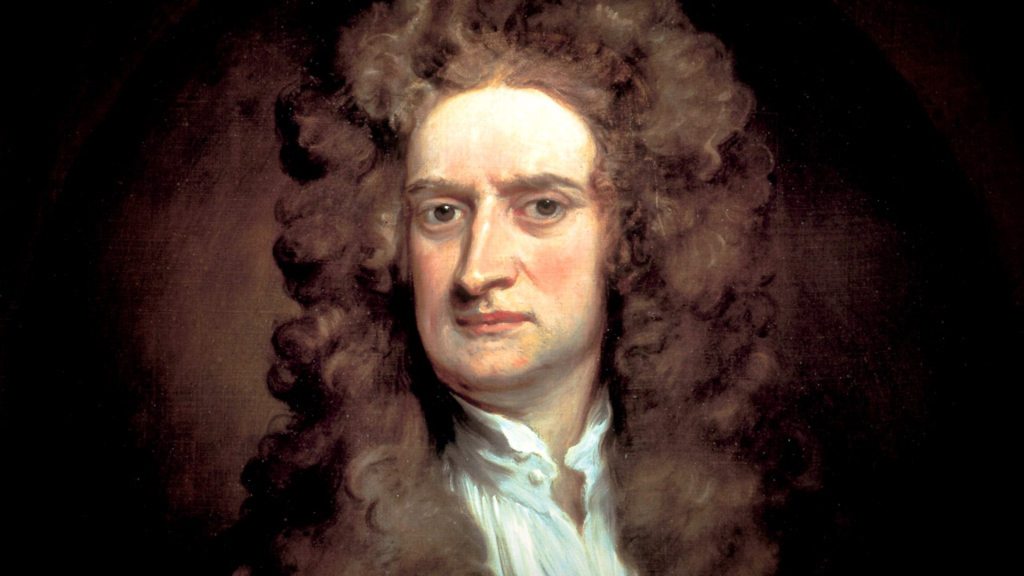
In the seventeenth century, the English mathematician, physicist, astronomer, alchemist, and theologian Sir Isaac Newton believed that the number “1260” had particular significance in the prophetic books of the Bible. Newton theorized that the world would come to an end in the year 2060; that’s 1,260 years after the creation of the Holy Roman Empire. Proponents of Newton’s theory abandoned his point of view in 1806 when the last Holy Roman Emperor, Francis II of the House of Habsburg-Lorraine, abdicated his title and released all Imperial states and officials from their oaths and obligations to the empire.

William Miller was a 19th century American Baptist minister. He proclaimed that the Lord would return on October 22, 1844. His teaching was wildly popular, launching a religious movement known as Millerism. When Miller’s world-ending prophecy failed, his followers called it the Great Disappointment. Hiram Edson, who would go on to establish the Seventh Day Adventist Church, said, “Our fondest hopes and expectations were blasted, and such a spirit of weeping came over us as I never experienced before… We wept, and wept, till the day dawn.”

Jesus warned his followers that “no one knows” when the fateful return of the Son of Man will come. Neither the angels in heaven, nor the Son, but only the Father knows. Bible scholars like to call today’s reading from the thirteenth chapter of Mark’s gospel the “Little Apocalypse.”  As Jesus spoke these scary words, he was surrounded by his disciples.  From the Mount of Olives, they looked across the Kidron Valley to the Holy City of Jerusalem and the splendor of the Temple.  Jesus anticipated the sack of the city and the destruction of the Holy of Holies by the Romans in just a few decades, during the Jewish Rebellion against the empire.  In a coming world that would feel like the heavens were falling and the very fabric of creation was coming apart at the seams, Jesus knew that his followers would need purpose and a long view of God’s work in the world if they were going to endure.

To guide his disciples through the dark days to come, Jesus told a parable. He described a wealthy landowner preparing to depart on a long journey. Before leaving, he entrusted the care of his property to his slaves, knowing that each would be busy with his work until the watchful doorkeeper heralded the master’s return. In the first century world of the Mediterranean, slaves were essential in managing estates.  Cleaning house, tending animals, working fields, preparing meals, nurturing children, keeping accounts, and producing wine and olive oil, all depended upon the work of slaves.  Slaves were considered a part of the landowner’s family. In fact, the Latin word for the extended household of landowners and slaves together was familias—family. The intimacy and affection of the familias is preserved to this day in the ruins of Pompeii, which was destroyed by the eruption of Mt. Vesuvius in the year seventy-nine.  There we can read the words of a prayer inscribed on the walls of a household shrine, asking God for the safe return of a beloved master from a journey.

When we consider that social and historical context of slaves, masters, and the familias, we see that in today’s reading, Jesus was characterizing himself as the landowner. His arrest and execution were imminent. Before the week was out, Jesus would be betrayed, convicted, tortured, and executed. Although Jesus would rise and promise to come again in glory, for the disciples it would feel as if Jesus had gone on a very long journey, with no end in sight. In the coming years of watching and waiting, Jesus hoped that his friends would continue to faithfully and conscientiously serve him.  Just as a familias anticipated a master’s impending return with loyalty and service, the disciples would need to keep the faith and keep up the good work.  He trusted his friends to preach the gospel, heal the sick, tend to the vulnerable, and pray always for his speedy return, saying, “Maranatha!”  Come soon, Lord!

Many of us struggle with today’s reading because it is apocalyptic in tone – there is a sense of the immediacy of the Day of Judgment and a nearness of the return of Jesus in glory. Let’s face it. Almost 2,000 years is a long wait. We’re not feeling especially vigilant this Advent. For most of us, we are pretty comfortable with the way things are here and now. We have three square meals a day. We have enough, maybe more than enough. We live in safety in a beautiful part of the world. It’s not a problem for us that the second coming seems to be slow in arriving.

That attitude shifts, though, when we stir some chaos and pain into the recipe of our lives. Just ask the Christians in Gaza and the West Bank. They are praying, “Come, Lord Jesus.” Just ask the neighbor whose spouse has died a few weeks before Christmas—they would like to tear open the heavens so that God might come down. Just ask the friend who is reeling with that unexpected, bleak diagnosis, she wouldn’t mind seeing the Son of Man coming in glory. While we wait for the Second Coming, there are plenty of little apocalypses. There is an abundance of those frightening and unwanted world-changing, life-threatening, perspective-altering events. Those little apocalypses leave us longing for the Lord to be here now.

The Rev. Tracy Daub, who wrote our book study for Advent Holy Disruption, reminds us that the world-changing work of the End Times has already begun. We saw it in Jesus, who showed us what it looks like to live with compassion, forgiveness, inclusion, and love. Jesus called for an essential reordering of our world, an in-breaking of God’s Kingdom, that is yet to be fully realized. That’s where we find ourselves, between the two Advents, the first and second coming. Our work as members of Jesus’ familias is to serve the Kingdom that is “already but not yet.”

What is the work that the Master would have us do in this waiting time? It looks a lot like what Jesus and his faithful servants did. It’s feeding the hungry and welcoming the outsider. It’s forgiving those who have wronged us and praying for those who feel short on hope. It’s sharing the good news with the everyday words and actions of our lives. It’s working for a world where Israelis and Palestinians break bread together. It’s inviting to supper that mournful neighbor who feels lost in grief. It’s holding the hand and walking alongside the friend who feels lousy. We live with bold hope and compassionate love. And if we are very faithful servants of the Master, this world may even sense the coming of the Son of Man as we work with hope and love amid the little apocalypses of our world.

Frank J. Tipler, who teaches math and physics at Tulane University, published a book in 2007 called The Physics of Christianity. In the first chapter, Tipler maintains that the Second Coming of Christ will occur within 50 years—by 2057. I suspect that Tipler, like Irenaeus, Sir Isaac Newton, and William Miller, will be proven wrong by the passage of time. After all, Jesus told us, we “do not know when the time will come.”

We do know that while we wait there is work to be done. Let’s get busy, my friends. Amen.

Resources

Buggs, Courtney.  “Commentary on Mark 13:24-37” in Preaching This Week, Nov. 29, 2020.  Accessed online at workingpreacher.org.

Daub, Tracy S. Holy Disruption: Discovering Advent in the Gospel of Mark, (Louisville: Westminster John Knox Press, 2002).

Siker, Judy Yates. “Exegetical Perspective on Mark 13:24-27” in Feasting on the Word, Year B, vol. 1. Louisville: Westminster John Knox Press, 2008.

Sheldon, Natasha. “Roman Domestic Slavery” accessed online at Ancient History and Archaeology.com.


Mark 13:24-37

24“But in those days, after that suffering,

the sun will be darkened,and the moon will not give its light,
25and the stars will be falling from heaven,and the powers in the heavens will be shaken.

26Then they will see ‘the Son of Man coming in clouds’ with great power and glory. 27Then he will send out the angels, and gather his elect from the four winds, from the ends of the earth to the ends of heaven.

28“From the fig tree learn its lesson: as soon as its branch becomes tender and puts forth its leaves, you know that summer is near. 29So also, when you see these things taking place, you know that he is near, at the very gates. 30Truly I tell you, this generation will not pass away until all these things have taken place. 31Heaven and earth will pass away, but my words will not pass away.

32“But about that day or hour no one knows, neither the angels in heaven, nor the Son, but only the Father. 33Beware, keep alert; for you do not know when the time will come. 34It is like a man going on a journey, when he leaves home and puts his slaves in charge, each with his work, and commands the doorkeeper to be on the watch. 35Therefore, keep awake—for you do not know when the master of the house will come, in the evening, or at midnight, or at cockcrow, or at dawn, 36or else he may find you asleep when he comes suddenly. 37And what I say to you I say to all: Keep awake.”


Portrait of Sir Isaac Newton by Godfrey Kneller, 1702. Public domain, via Wikimedia Commons.

Late Night Questions

Sabbath Day Thoughts — “Late Night Questions” John 3:1-17

We all have late-night questions.  They keep us from falling asleep and leave us tossing and turning for hours. They wake us from a sound sleep, with hearts drumming and thoughts racing. Late-night questions lead to bleary-eyed mornings when we feel sleep-deprived and irritable.

Our late-night questions may be about work. How do we handle our boss? How do we manage our workers? Is what we are doing meaningful, worthwhile, the best use of our abilities?

Our late-night questions may be about our loved ones. How do we heal the breach with our spouse or sibling or child? What can we do about that diagnosis? How do we respond to a loved one’s crisis? 

Our late-night questions may be about the world community. What about homelessness and hunger? Climate change? World peace? What happens if that Republican or Democrat or Libertarian or Progressive gets elected?

Our late-night questions can be existential. Does God love us? What happens when we die? How do we find forgiveness?

Does any of this sound familiar?

We aren’t the only ones with late-night questions. Our gospel reading relates the story of Nicodemus, who came to Jesus at night filled with big questions. Nicodemus was a Pharisee. He practiced an ultra-observant form of Judaism, which demanded of him the same requirements for holiness that were applied to priests during their active service in the Temple.  For a Pharisee like Nicodemus, careful observance of all 613 commandments of the Torah rendered him holy, as God is holy.  In fact, Nicodemus was an expert in the Torah, both a rabbi and an active elder serving on the Sanhedrin, which was a lot like Israel’s supreme court.  The seventy-one elders of the Sanhedrin came from families of priests, legal scholars, and the most politically powerful families in the land.  They met every day, except on the sabbath and the holy days, gathering in the Hall of Hewn Stones, a courtroom built into the outer wall of the Temple.  There they listened to cases referred to them from lower courts, determining righteous judgments based upon their understanding of the Torah. Nicodemus was respected, scholarly, influential, powerful, and wealthy.

But Nicodemus wasn’t feeling so comfortable in his role as elder, judge, and Torah-expert. He was troubled by Jesus.  This Jesus was neither priest nor scribe nor member of an elite family, but Jesus had worked miracles and taught with an authority that could only come from God. Jesus had blessed a poor family and saved their wedding feast from shame by changing the water into the finest wine.  Jesus had denounced the profiteering and exploitation of the poor that was going on in the Temple, turning over the tables of the money changers and driving out the animals and their vendors.  Jesus had been teaching and healing in the Temple, bringing life-changing understanding and wholeness to people. Nicodemus was no fool.  His gut told him that this Jesus was the real deal, sent by God to bless the people. But if Jesus had it right, then was it possible that he (Nicodemus) had it wrong? What if honoring God wasn’t about rote obedience to 613 commands?  What if God wasn’t an angry judge waiting to condemn Israel for the slightest infraction? What if God wanted something different from Israel? Nicodemus needed answers.

John’s gospel allows us to listen in on a snippet of what must have been a free-wheeling, intense, late-night conversation between Nicodemus and Jesus. Nicodemus had his rabbi’s hat on. He was parrying Jesus’s assertions with questions, in fine rabbinic form. “Can anyone truly be born anew, Jesus?  Are we talking about the physical or the spiritual realm? Give me the details, Jesus, how can this be?” It was a late-night disputation that ended with the best-known of Jesus’s words, “For God loved the world in this way: God gave God’s One and Only Son, so that everyone who believes in Him will not perish but have eternal life. For God did not send the Son into the world to condemn the world, but that the world might be saved through Him” (Holman translation).

Can you imagine it? Jesus and Nicodemus, sit with heads close in intense conversation in the warm glow of the oil lamp. The supreme court justice learns with a shock of deep knowing that God isn’t about judgment and condemnation.  God is all about love, mercy, life.  Jesus tells the Pharisee, “God wants to save you, not condemn you, Nicodemus. You are loved.”

As Jesus challenged Nicodemus to change, to be spiritually reborn into the Kingdom of God—the Kingdom of Love, Nicodemus struggled to imagine what that might mean. It would mean that God didn’t want his blind obedience; rather, God was looking for a relationship with him.  It meant the Torah should be read through the lens of love—love for God and love for neighbor. It would require him to love the petitioners who came through his high court, both vulnerable plaintiffs and ruthless scoundrels. If Nicodemus started to preach and teach like that, it could make him seventy powerful enemies on the Sanhedrin. It could threaten his standing, compromise his power, and even have a negative impact on his bottom line—his pocketbook.  We don’t get to hear Nicodemus’s response to Jesus. Nicodemus seems to slip back into the darkness, perhaps filled with more questions than when he knocked on Jesus’s door in search of easy answers.

We are a lot more like Nicodemus than we care to admit. We want easy answers to our late-night questions.  We want answers that will not challenge our assumptions or demand a change in our thinking or conduct. We want answers that won’t cost us anything—not a big commitment of our time, not a dent in our bottom line, not a hit to our reputation, not a rethinking of our self-understanding, not a revision of our world view.  We want Jesus to pitch us easy answers that make us feel good and assure us of a healthy seven to eight hours of sleep every night.  But what if the answer isn’t easy? What if Jesus’s answer will change us in ways that feel scary, new, and a little out-of-control. What if what we are always and ultimately called to do is love more, to love like God does—like Jesus does—wholeheartedly, without strings attached, for the good of this flawed and fallen world?

If the answer to our late-night questions is a spiritual rebirth to the Way of Love, then we will be changed and so will the way that we relate to our families. We’ll mend the breach of our broken relationships with the resolve to love, a love that listens and stays in relationship even when we want to walk away, a love that forgives and seeks to be forgiven. We’ll choose to face those difficult diagnoses with love that supports, encourages, and accompanies others in times of fear and uncertainty. We’ll stop trying to fix other people’s crises and simply commit to loving them through the mess.

If the answer to our late-night questions is a spiritual rebirth to the Way of Love, then we will be changed, and so will the ways that we relate to our workplace. We could resolve to love our boss, our colleagues, our workers, not with the mushy, entangled love that we feel for our families, but the sort of love that calls forth the best in one another.  It’s a love that trusts in the power of shared vision and teamwork, a love that believes that when we work well together, what we achieve is always better than what we do on our own. We could ask loving questions of our employers, like, “How can what we do better serve the common good?”

If the answer to our late-night questions is a spiritual rebirth to the Way of Love, then we will be changed, and so will the ways that we relate to the world around us. We’ll love our vulnerable neighbors with vital ministries like the Food Pantry, Samaritan House, and One Great Hour of Sharing.  We’ll love God’s good creation in ways that leave no trace and protect precious resources and creatures. We’ll advocate for peace, everywhere.  All that love might even send us to the ballot box, where we’ll cast our votes for those whom we perceive can best translate love into political action. Wouldn’t that shake things up?

In the end, because the answer to our late-night questions is a spiritual rebirth to the Way of Love, we will be changed, and so will the way that we relate to God. We will trust that God is love.  We’ll build our relationship with God on that rock.  We will know that we are loved in life and in death, even when we wrestle in the late, late hours with the big, big questions.

Our last glimpse of Nicodemus in John’s gospel is on Golgotha, the place of the crucifixion. There, Nicodemus with Joseph of Arimathea demanded the body of Jesus from his Roman executioners. Then, those powerful and influential elders of the Sanhedrin did women’s work. They anointed Jesus’s body with a king’s ransom in costly oils and aloes, wrapped him in linen, and laid him in the tomb. It was a bold and risky task.  It was quiet and humble evidence of that spiritual rebirth to the Way of Love.

Resources:

Robert Hoch. “Commentary on John 3:1-17” in Preaching This Week, March 16, 2014. Accessed online at workingpreacher.org.

Osvaldo Vena. “Commentary on John 3:1-17” in Preaching This Week, March 12, 2017. Accessed online at workingpreacher.org.

Ronald J. Allen. “Commentary on John 3:1-17” in Preaching This Week, March 5, 2023. Accessed online at workingpreacher.org.

Judith Jones. “Commentary on John 3:1-17” in Preaching This Week, May 27, 2018. Accessed online at workingpreacher.org.


John 3:1-17

1 Now there was a Pharisee named Nicodemus, a leader of the Jews. 2 He came to Jesus by night and said to him, “Rabbi, we know that you are a teacher who has come from God, for no one can do these signs that you do unless God is with that person.” 3 Jesus answered him, “Very truly, I tell you, no one can see the kingdom of God without being born from above.” 4 Nicodemus said to him, “How can anyone be born after having grown old? Can one enter a second time into the mother’s womb and be born?” 5 Jesus answered, “Very truly, I tell you, no one can enter the kingdom of God without being born of water and Spirit. 6 What is born of the flesh is flesh, and what is born of the Spirit is spirit. 7 Do not be astonished that I said to you, ‘You must be born from above.’ 8 The wind blows where it chooses, and you hear the sound of it, but you do not know where it comes from or where it goes. So it is with everyone who is born of the Spirit.” 9 Nicodemus said to him, “How can these things be?” 10 Jesus answered him, “Are you the teacher of Israel, and yet you do not understand these things?

11 “Very truly, I tell you, we speak of what we know and testify to what we have seen, yet you do not receive our testimony. 12 If I have told you about earthly things and you do not believe, how can you believe if I tell you about heavenly things? 13 No one has ascended into heaven except the one who descended from heaven, the Son of Man. 14 And just as Moses lifted up the serpent in the wilderness, so must the Son of Man be lifted up, 15 that whoever believes in him may have eternal life.

16 “For God so loved the world that he gave his only Son, so that everyone who believes in him may not perish but may have eternal life.

17 “Indeed, God did not send the Son into the world to condemn the world but in order that the world might be saved through him.


Photo by cottonbro studio on Pexels.com