Songs and Stories for Eastertide

Sabbath Day Thoughts (and songs) — “Songs and Stories for Eastertide” John 20:19-29

This message includes hotlinks for each of the hymns. Click and sing along, if you wish!

Our first hymn features words originally written in Latin in the fifth century. These lyrics have been sung by Christians to celebrate the resurrection for more than 1,500 years! The Medieval melody was adapted by the German composer and organist Michael Praetorius in 1609. Praetorius was born Michael Schultze, the youngest son of a radical Lutheran pastor. Perhaps to distance himself from his father, Michael latinized his name from Schultze to Praetorius during his university studies.

We use the term “Renaissance man” to describe very versatile people with multiple specialties. By that definition, Praetorius certainly qualifies. He served as an organist, choirmaster, music theorist, and royal court official. As such, he composed a lot of music—and somehow found time to write an encyclopedic treatise on music that scholars have found very useful for more than 400 years.

Praetorious studied at Frankfurt and was organist and eventually court musician to Duke Heinrich Julius. After his patron’s death in 1613, Praetorius spent more than two years at Dresden, where he heard and was influenced by the intricate melodies and harmonies of the latest Italianate music. In his last years, he was asked to visit many German courts as a director, performer, and consultant. Zealous for the advancement of music, he had a predilection for rich and varied settings for voices and instruments. His musical encyclopedia was published in nine volumes between 1605 and 1611. It contains a whopping 1,244 chorale settings for sacred music. When he died in 1620, he was entombed beneath the pipe organ of his home church, the Marienkirche in Frankfurt. Let us sing “That Easter Day with Joy Was Bright.”

That Easter Day with Joy was Bright (PUER NOBIS NASCITUR)

Our next Easter hymn reflects the musical style of the 1970s charismatic church movement, which was heavily influenced by folk music.  The Charismatic movement emphasized baptism in the Holy Spirit and the active operation of spiritual gifts (charismata) among believers. These gifts include speaking in tongues, prophecy, healing, and discernment of spirits. Charismatic Christians believe these gifts are manifestations of the Holy Spirit’s presence and power in the lives of people today. The boom in charismatic hymns was prompted by the accessibility of the guitar and the sing-ability of the tunes, especially for those worshipers who were unaccustomed to choral singing or liturgical (service) music.

This hymn was composed by Donald Fishel. He joined the Word of God, a charismatic Catholic community based in Ann Arbor, MI, where he was the group’s music leader and orchestral conductor from 1969 to 1981. Fishel’s principal instrument is the flute. He has taught and performed in a number of settings, including serving as principal flutist with the Dexter Community Orchestra in Dexter, MI. “Alleluia, Alleluia! Give Thanks” was the first church music that Donald Fishel ever composed. According to Fishel, it came together very quickly – in about an hour! Let us sing “Alleluia, Alleluia! Give Thanks.”

Alleluia, Alleluia! Give Thanks

Our next hymn features the beautiful hymn tune Suo Gan, a traditional Welsh lullaby written by an anonymous composer. It was first recorded in print around 1800. The words of the hymn were written by John Bell and Graham Maule. Bell is a minister in the Church of Scotland, a fellow of the Royal School of Church Music, and a member of the Iona Community. He gives music workshops throughout the United Kingdom and the United States. Bell is passionate about the importance of congregational singing. He says that Christian singing should lead to Christian action. His words often express the thirst for social justice and the Kingdom of God.

Bell says, “My frustration is that the church’s singing is full of churchy words. We don’t have songs with a word like economics in them, or a word like kitchen. A substantial amount of biblical witness tells us God is interested in economics. We know that much of Jesus’ time was spent in kitchens. But we are disenfranchised from singing about some realities in his and our lives.” As you sing “Christ Has Risen While Earth Slumbers,” listen for ways that Bell expresses the real experience of people in the pews. 

Christ has risen while earth slumbers HD

Our next Easter carol uses the allegory of the dying and rising of grain to allude to Christ’s resurrection. The lyrics were written by Anglican clergyman, author, and hymnwriter John Macleod Campbell Crum. His grandfather was the Scottish minister and Reformed theologian John Macleod Campbell, who was controversial for his preaching of universal atonement – the belief that Christ died for all humankind. This view conflicted with the teachings of the Church of Scotland. His scandalous belief led to a “presbyterial visitation.” A representative group of the leaders from the Church of Scotland appeared at his church one Sunday morning to hear Rev. Campbell and examine him. They didn’t like what they heard. He was accused of heresy and forced to leave the Scottish church.

Influenced by his grandfather’s thought and experience, John Macleod Campbell Crum emphasized that the good news of Jesus Christ is for all people. As you sing the hymn, pay attention to verse four. It celebrates the power of God to raise hearts to new life, even when we feel dead and barren. The hymn has had great appeal in Great Britain where it is sung in churches and has been recorded by popular musicians like Steve Winwood, David Harbottle, Laura Wright, and the King’s College Choir. Let us sing “Now the Green Blade Rises.”

Laura Wright – Now The Green Blade Rises

Our next hymn, “The Day of Resurrection,” teams 8th century words by John of Damascus with a lively 19th century English tune. John of Damascus was an Arab Christian monk, priest, and defender of the faith. John was born to a prominent Syrian family. His father was intent upon John receiving a classical education, and so the boy’s tutor was a monk by the name of Cosmas, who was kidnapped by Arab slave-traders from his home in Sicily. Seeing the value of such a devout and learned slave, John’s father paid a great price for Cosmas.

John served as a civil servant for the Caliph in Damascus before his ordination. He then became a priest and monk at the Mar Saba monastery near Jerusalem. Perhaps his greatest service to the church was his defense of icons, holy images used to invite worshippers to prayer and reflection. John’s greatest opponent on the matter of icons was Emperor Leo III. In an effort to discredit John, Leo sent forged documents to the Caliph of Damascus which implicated John in a plot to attack the city. The Caliph was outraged and ordered John’s right hand be cut off and hung up in public view.

According to tradition, some days afterwards, John asked for his hand back. He prayed fervently to Mary the mother of our Lord before her icon, and his hand was said to have been miraculously restored. In gratitude for this healing, he attached a silver hand to the icon, which thereafter became known as the “Three-handed Mary” or Tricherousa. The icon can still be seen in the Hilandar monastery in Mount Athos, Greece. Let us sing “The Day of Resurrection.”

Hymn “The Day of Resurrection” | Lancashire

Our final hymn is “Woman, Weeping in the Garden.” The words tell the story of Mary Magdalene and her transformation from weeping to dancing as she encountered her risen Lord on Easter morning. The words were written by Daniel Charles Damon.

Daniel remembers that when he was in high school, he told his Grandpa Damon that he might want to become a minister. His Grandpa questioned whether young Daniel had the right stuff, “That’s the highest calling there is,” Grandpa said. Looking at his grandson’s long hair and bangs that hid much of his face, Grandpa said more, “You know, you can tell a man’s intelligence by the width of his forehead.” Clearly, Daniel’s conservative Free Methodist grandfather did not approve of his grandson’s church aspirations, so much for that idea.

After graduation from Greenville College, Daniel taught high school band and choir in South Dakota before moving to San Francisco to work full-time as a jazz musician. He found a job at a sing-along piano bar called the Curtain Call.

After a few years of making a living playing in hotels and restaurants, Daniel was burning out on the bar scene when a conversation with his pastor sent him back on a path to seminary at the Graduate Theological Union. There, Daniel discovered a deeper sense of calling to be a pastor and a hymnwriter. He served a number of small California churches where he preached, played the piano, led congregational singing, directed choirs, and even typed the bulletins.

Daniel often writes hymns on social justice themes. The way we treat people is very important to him. He has written hymns for children, women, the elderly, people living with disabilities, and for the poor and the oppressed. If his conservative Grandfather were still alive, he would undoubtedly not approve. That’s ok with Daniel. Let us sing “Woman, Weeping in the Garden.”

Woman Weeping in the Garden


John 20:19-29

19 When it was evening on that day, the first day of the week, and the doors were locked where the disciples were, for fear of the Jews, Jesus came and stood among them and said, “Peace be with you.” 20 After he said this, he showed them his hands and his side. Then the disciples rejoiced when they saw the Lord. 21 Jesus said to them again, “Peace be with you. As the Father has sent me, so I send you.” 22 When he had said this, he breathed on them and said to them, “Receive the Holy Spirit. 23 If you forgive the sins of any, they are forgiven them; if you retain the sins of any, they are retained.”

24 But Thomas (who was called the Twin), one of the twelve, was not with them when Jesus came. 25 So the other disciples told him, “We have seen the Lord.” But he said to them, “Unless I see the mark of the nails in his hands and put my finger in the mark of the nails and my hand in his side, I will not believe.”

26 A week later his disciples were again in the house, and Thomas was with them. Although the doors were shut, Jesus came and stood among them and said, “Peace be with you.” 27 Then he said to Thomas, “Put your finger here and see my hands. Reach out your hand and put it in my side. Do not doubt but believe.” 28 Thomas answered him, “My Lord and my God!” 29 Jesus said to him, “Have you believed because you have seen me? Blessed are those who have not seen and yet have come to believe.”
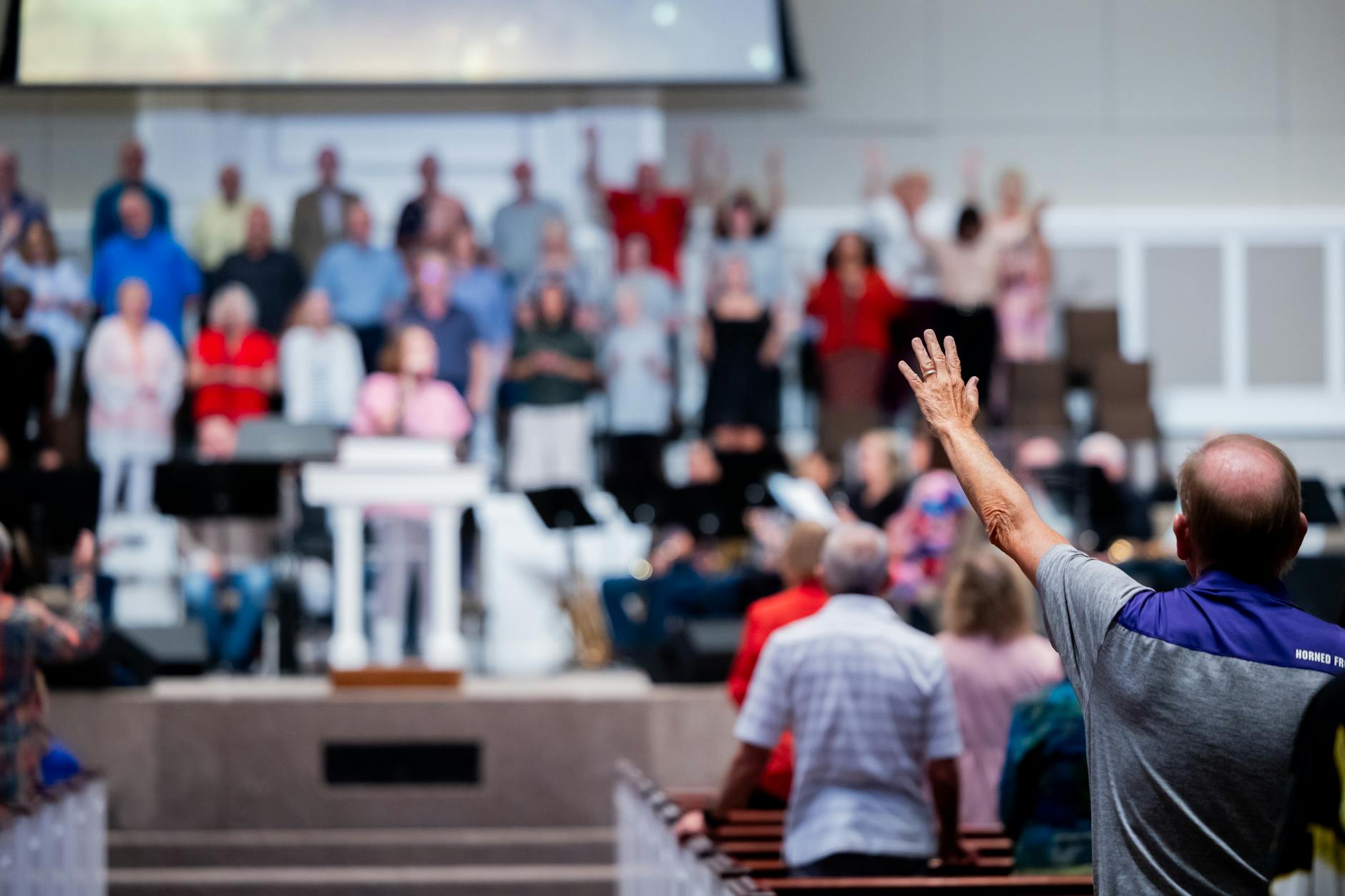
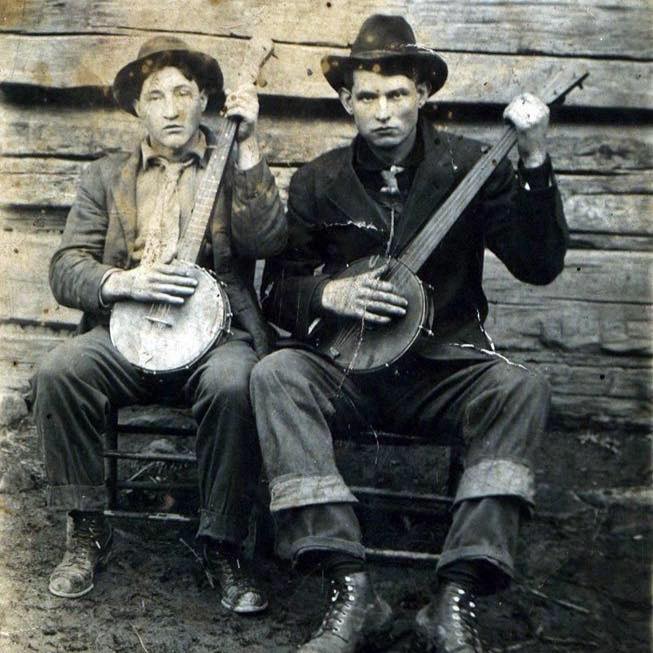
Photo by Caleb Oquendo on Pexels.com

Banjo Cheer

Sabbath Day Thoughts — “Banjo Cheer” by John Douglas

“Banjo Cheer”

by John Douglas

“Banjo Cheer” was written by John Douglas. It first appeared in the December 1911 issue of The Cadenza, a string instrument magazine of the time. This reading was shared by Dr. Joann with accompaniment on the banjo by Duane Keith Gould.

A banjo plays “Come, Thou Long-Expected Jesus.”

Christmas seems to be a good and appropriate time to discourse on banjo cheer, for of all the instruments, the banjo is par-excellence the one most strikingly adapted to moments of comfortable joviality. Happy is he who with the magic light of the open fire shining on his face, and the cracking of nuts sounding in his ears, can nurse his old “‘jo” and draw from its strings the lovely strains of “Come, Thou Long Expected Jesus.”

The banjo falls silent.

Talking about banjo cheer, my biggest experience of it happened some fifteen years ago in Northwest Canada, a few miles above Medicine Hat. As a solitary homesteader with only a horse for company and the nearest neighbor nine miles away, I set out one Christmas eve to visit the homestead of a friend, some good distance across the snow blanketed prairie. My horse, unfortunately, had gone lame, so I was forced to walk to my friend’s home, a decidedly foolish thing to do in the far North West in the dead of winter, with the skies portending snow. I had not traveled more than five miles when the wind began to rise. The thermometer stood, no doubt, at about nine below zero, and it was destined to go lower before the morning.

Soon, snow began to fall, and near my journey’s end, I found myself in as blinding a blizzard as ever struck the land. I felt the piercing cold all the more keenly on account of the storming wind, and I became afraid that I would never see the end of my trip. I staggered blindly forward in what I thought was the right direction, but at the end of an hour I had to acknowledge that I was hopelessly lost.

In the darkness, the raging blizzard, and the stinging cold, I began to feel stupid and tired. I began to long to take a rest that I knew would be dangerous to me when I suddenly ran head-first into what was clearly a straw stack. I was very thankful for this piece of luck, for I could burrow into the stack to windward and thus save my precious life.

The stack might be only fifty yards away from some settler’s cabin, or it might be half a mile away. The straw stacks are left wherever the threshing is done. I knew better than to go wandering in search of something I could not see, and it was not long before I had burrowed into the huge pile of straw—eight feet or more. Sheltered now completely from the wind, I lay and listened to the raging of the storm without. By kicking my feet together and beating my hands vigorously, I managed to keep from actually becoming frozen.

Banjo begins to play softly.

Towards morning, I must have slept. I dreamt I was at home with my old banjo on my knee, and somehow it seemed to be playing itself in a light ethereal tone. Then, I became aware of something pricking my face. It was the straw! I open my eyes and saw that the sun was shining brightly outside the stack, and yes, but no, I must be still dreaming. Was that a real banjo I heard?

Faintly to be sure, but a banjo never-the-less, it must be.

I scrambled out of the stack, and there but a few yards away, stood a sod shanty and a stable. And sure enough, as I stumbled forward through snowdrifts coming faintly to my ears, I heard the dear old melody of “O Come, All Ye Faithful.” It was a banjo, a good old banjo, a real one. Truly this was banjo cheer par excellence.

Banjo plays “O Come, All Ye Faithful.”

Yes, perhaps you can get good cheer out of other mediums, but for banjoists, it is a banjo every time. So saying, we wish everyone a right merry Christmas.


image source: https://www.facebook.com/photo/?fbid=550912380405435&set=a.550912360405437

Beloved Christmas Hymns and Their Stories

Sabbath Day Thoughts — “Beloved Christmas Hymns and Their Stories” Luke 2:22-40

In our scripture lesson this morning, the infant Jesus encounters two people who waited a very long time to greet the Messiah: Simeon and Anna. While Luke records their words, tradition tells us that the two sang their praises for the newborn king. How fitting, then, it is to celebrate this first Sunday of Christmastide with a celebration of some of our most loved Christmas hymns and their stories.

“Good Christian Friends, Rejoice” is one of our oldest Christmas hymns.  This medieval carol dates to the fourteenth century. The words are believed to have been written by Peter of Dresden, who served as the Rector of the Christian School in Dresden.  He may have written it for his students.  Peter was fired from his post and forced to flee to Prague in 1412 because of his religious convictions. He was a follower of the early church Reformer Johann (Jan) Huss, whose work anticipated the 16th century work of church leaders like Luther and Calvin. Huss, however, was burned at the stake for translating the Bible from Latin into the language of the people.  Peter of Dresden died in exile around 1440.  The first printed record of the hymn is found in the University of Leipzig library and dates to 1405. 

The sprightly music, IN DULCI JUBILO, is a German folk tune from the fourteenth century. It has long served as the setting for Peter’s words.

The words of “In the Bleak Midwinter” are a poem, written by Christina Rossetti. Christina (1830-1894) was born in London to an Italian exile family. Her father was a political refugee, classics scholar and poet, who taught at King’s College. She received her education at home with private tutors and her mother, who was also a classics scholar. Her sister and two brothers, like Christina, were poets and writers. Known as one of the great beauties of her day, Rosetti was a model for several artists.  Although admired and beloved by many, Rosetti’s first and lasting love was the Lord.  She rejected three proposals of marriage on religious grounds. She was an abolitionist, early advocate for animal rights, and volunteered for a number of years at the St. Mary Magdalene house of charity, a refuge for former prostitutes. Christina exerted influence and garnered praise from such literary notables as Gerard Manley Hopkins, Alfred Lord Tennyson, and Virgina Woolf.

The hymn tune we sing today, CRANHAM, was composed for Rosetti’s poem by Gustav Theodore Holst in 1906. Like Christina, Holst was the child of political refugees who found sanctuary in Britain. Holst is best known for his orchestral suite “The Planets.”

The words of “O Little Town of Bethlehem” were written by one of the most popular preachers of the 19th century Phillips Brooks. On Christmas Eve of 1865, Brooks traveled from Jerusalem to Bethlehem by horseback to attend worship at the Church of the Nativity, built at the site of Jesus’s birth.  Brooks recalled that inspiring evening, saying, “I remember standing in the old church in Bethlehem close to the spot where Jesus was born when the whole church was ringing hour after hour with splendid hymns of praise to God, how again and again it seemed as if I could hear voices I knew well, telling each other of the wonderful night of the Savior’s birth.” Three years later, as Brooks served a church in Philadelphia, he recalled his magical night and wrote these words.

The music was composed for these lyrics by the church organist, Lewis Redner. Brooks requested a new composition to match his lyrics, but Redner struggled to come up with a tune. On the night before the Christmas program, inspiration struck. Redner awoke with this music ringing in his ears.

The words to “Hark! the Herald Angels Sing” were written by that most prolific of 18th century British hymnwriters Charles Wesley. Tradition tells us that Wesley wrote constantly, even while riding on horseback. When inspiration struck, Wesley would stop his horse, run to the nearest house, and ask for pen and ink. He was said to have averaged ten poetic lines a day for fifty years. He wrote 8,989 hymns, ten times the number composed by the only other candidate (Isaac Watts) who could conceivably claim to be the world’s greatest hymn writer.

Wesley was notoriously intolerant of anyone changing his words. As originally written by Wesley in 1739, this hymn began, “Hark, how all the welkin rings.” Welkin?! “Welkin” is an Old English word for the firmament or vault of heaven. It was as unfamiliar to singers in the 18th century as it is to us today. Fourteen years later in 1753, Wesley’s friend George Whitefield overcame Wesley’s objections and changed the words to make them more accessible. People have been singing “Hark! The Herald Angels Sing” ever since.

Our next Christmas hymn, “The First Nowell,” originally had eleven verses!  Perhaps we are thankful that only six are preserved in our hymnal. This traditional English carol was first recorded in Cornwall and published in 1823. The carol is believed to be much older, with roots dating to the Middle Ages. 

“Nowell” is derived from the Old French word Nouel, which in turn comes from the Latin word natalis, which means birth.  Some say that there are also overtones of nouvelle (new) in Nowell, giving it a secondary meaning of declaring something newsworthy – like the Medieval version of “Extra!  Extra!  Read all about it!”

Regardless of its true origins, people have been saying and singing “Nowell” for a very long time.  In fact, according to the Oxford English Dictionary, the earliest recorded use of Nowell as a Christmas greeting dates to the year 1255 when Chaucer used it in his “Franklin’s Tale,” writing, “and Nowel crieth every lusty man.”

“Go, Tell It on the Mountain” comes to us from the tradition of African American spirituals. The words allude to Isaiah 52:7, “How beautiful upon the mountains are the feet of the messenger who announces peace, who brings good news, who announces salvation, who says to Zion, ‘Your God reigns.’”

The spiritual was first published by African American scholar and musicologist John Wesley Work.  The son of a church choir director, Work grew up in Nashville and taught Latin and music at the historic black college Fisk University. With his wife and his brother, Frederick Jerome Work, he began collecting slave songs and spirituals across the south in the late 19th century, publishing them in two volumes. The latter book, New Jubilee Songs and Folk Songs of the American Negro (1907), included the first publication of “Go Tell It on the Mountain.”

Work directed the “Jubilee Singers,” a select choir of the university which toured extensively, including travel to Europe where they were well received and raised significant funds for their school. Work was forced to resign from his post at Fisk in 1923. The traditional songs that he so loved were considered backwards and unpopular by academics on the Fisk faculty, who sought to leave behind the painful history of slavery. Undaunted by his departure from Fisk, Work then served as president of Roger Williams University in Nashville until his death in 1925.


Luke 2:22-40

22When the time came for their purification according to the law of Moses, they brought him up to Jerusalem to present him to the Lord 23(as it is written in the law of the Lord, “Every firstborn male shall be designated as holy to the Lord”), 24and they offered a sacrifice according to what is stated in the law of the Lord, “a pair of turtledoves or two young pigeons.”

25Now there was a man in Jerusalem whose name was Simeon; this man was righteous and devout, looking forward to the consolation of Israel, and the Holy Spirit rested on him. 26It had been revealed to him by the Holy Spirit that he would not see death before he had seen the Lord’s Messiah. 27Guided by the Spirit, Simeon came into the temple; and when the parents brought in the child Jesus, to do for him what was customary under the law, 28Simeon took him in his arms and praised God, saying, 29“Master, now you are dismissing your servant in peace, according to your word; 30for my eyes have seen your salvation, 31which you have prepared in the presence of all peoples, 32a light for revelation to the Gentiles and for glory to your people Israel.” 33And the child’s father and mother were amazed at what was being said about him. 34Then Simeon blessed them and said to his mother Mary, “This child is destined for the falling and the rising of many in Israel, and to be a sign that will be opposed 35so that the inner thoughts of many will be revealed—and a sword will pierce your own soul too.” 36There was also a prophet, Anna the daughter of Phanuel, of the tribe of Asher. She was of a great age, having lived with her husband seven years after her marriage, 37then as a widow to the age of eighty-four. She never left the temple but worshiped there with fasting and prayer night and day. 38At that moment she came, and began to praise God and to speak about the child to all who were looking for the redemption of Jerusalem. 39When they had finished everything required by the law of the Lord, they returned to Galilee, to their own town of Nazareth. 40The child grew and became strong, filled with wisdom; and the favor of God was upon him.


Photo by cottonbro studio on Pexels.com