The End Is the Beginning (Look out!)

Sabbath Day Thoughts — “The End Is the Beginning” Acts 1:1-11

Here in the United States, the Ascension of Jesus is perhaps the least celebrated of Christian Feast Days. That isn’t true around the world. From Indonesia to Ivory Coast to Iceland, Ascension is both a religious and a public holiday—no work, no school. In Germany, Jesus’ ascension to his heavenly Father has been a good reason to also celebrate earthly fathers since the 1700’s. Families enjoy outdoor events and picnics together. Teams of men push Böllerwagens through the streets, brightly painted carts that carry food, beer, and favorite sweet treats for all.

In Spain, Ascension is one of the most important festivals of the year. In Santiago de Compostela, where the Camino de Santiago ends at the burial site of the Apostle James, there is a weeklong celebration. Fields and cattle are blessed. There are parades. Cabezudos—figures clothed in bright costumes with huge papier mâché heads—dance through the city streets to the sound of the Galician bagpipes. Inside the cathedral, the monks fire up the Botafumeiro, a five-foot-tall, 176-pound incense burner that takes a team of 6 men to swing from the rafters.

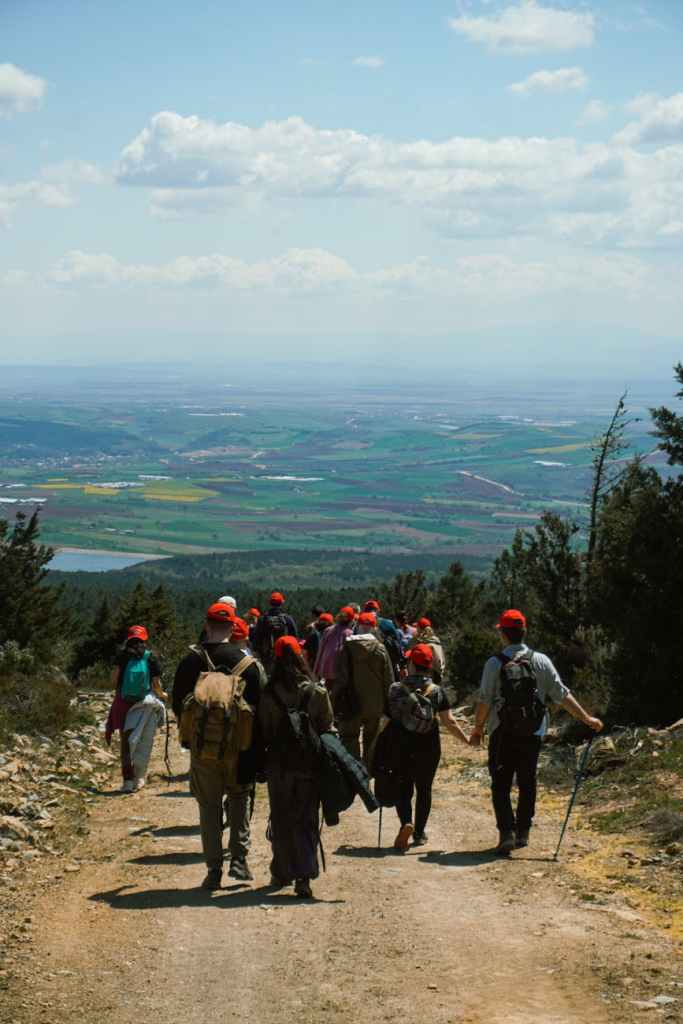
In Austria and Switzerland, the faithful like to go on hikes for Ascension. They climb hills or mountains in commemoration of Jesus going up. Then, they feast on pheasant, geese, quail, or chicken. The poultry dinner is a nod to Jesus flying to heaven, surrounded by the sacred cloud of divine presence. Traditionally, a new friend or neighbor is invited to join the celebration. If our neighbors around the world are right, then the Ascension is worth celebrating big time. Here in the US, we may be missing something.

Let’s talk about our reading from the Acts on the Apostles. For forty days, the risen Lord was with the disciples, encouraging them, teaching them, holding them together as a community of faithful people. As he prepared to return to his heavenly Father, Jesus had some parting instructions for his friends. Stay in Jerusalem. Wait for God’s promise. Prepare for a baptism in the Holy Spirit. Not a lot of details there. Can we blame the disciples for wanting to know more?

Perhaps it was Peter who spoke up and asked the question that was on everyone’s mind, “Lord, is this the time when you will restore the kingdom to Israel?” Despite everything that Jesus had shown them and taught them, the disciples were still holding onto old notions of the Messiah as a military hero like King David, who could vanquish their enemies and restore their political fortunes. Unable to imagine a future mission without Jesus at the helm, they hoped that God would step in. Why not conquer the Romans, bring down Herod and the Sadducees, restore the fortunes of Israel, and initiate the Kingdom of God? That sounded like a happy ending to the disciples, with ringside seats in Jerusalem for the Kingdom’s arrival.

Jesus didn’t leave the disciples with the neatly resolved ending that they wanted. Instead, he left them with a mission. He shared a vision of his friends as witnesses. They would start in their Jewish comfort zone—Jerusalem and Judea. Then, they would move into enemy territory, reaching out to their Samaritan neighbors. Eventually, they would go to a never-imagined mission field—the nations of the Gentile world. It was a daunting mission, especially since they knew that Jesus was leaving them. He wouldn’t be there to work miracles, feed the crowds, and preach those incredible sermons. Were they really up to the challenge? Jesus may have cast an inspiring vision for the future of his friends, but faced with his impending departure, the disciples felt frightened and overwhelmed, grieved and abandoned.

Endings and beginnings are hard. We mourn what is left behind and we worry about what lies ahead. We wonder if we are up to the challenge. We fear that we may fail. We may not even know where to start. We know all about that.

It’s graduation season. Yesterday morning, students of North Country Community College celebrated commencement in the Sparks Gymnasium. Last week, the Smitties graduated, outside along the lakeshore at Paul Smiths College. On June 26th, Saranac Lake High School seniors will likewise say farewell to a school that has felt familiar and become routine. Some students will step into jobs or commit to further studies. All will feel both the grief of an ending and the anxiety of a new beginning. Will they be enough? Will they have what it takes?

Endings and beginnings continue long past our school graduations. On average, a professional American works twelve jobs throughout their career. Long gone are the days of a single job that is worked across a lifetime. Each career move comes with its challenge. We say goodbye to workplace friends, mentors, and familiar tasks. We take a chance in a position of increased responsibility and pressure. We must learn new skills and adapt to different expectations. There is always a moment on the first day of a new job when we think, “What have I gotten myself into?”

I am told that even retirement bears the mixed feelings of grief and accomplishment, worry and anticipation. We bid farewell to our workplace identity and settle into a new and nebulous role that isn’t defined by our boss or our paycheck. We may miss the sense of purpose and daily routine of the workplace. We may feel the burden of time on our hands. We may wonder how many years we have left or if we have saved enough money. Or we may find a fresh purpose in volunteering, travel, or family that is gratifying and joyous.

Endings and beginnings are hard. We constantly face them. Graduations, new jobs, and retirement. Engagements, weddings, and relationships coming to an end. Births, illnesses, deaths. Something seems to always be coming to an end. Something is always bidding us to a new beginning. It was true for the disciples wondering how they would tackle a new mission without Jesus. It is true for folks like us, who navigate transitions and changes in our lives, mourning what is past, facing our fear, and stepping forward into the mysterious future that God holds ready.

When Jesus left the disciples, they stood looking up, caught in that tension between ending and beginning, wondering how they could go on. Maybe that’s why the Lord sent two messengers with a gentle nudge to move them from grief to action, saying, “Why do you stand looking up toward heaven?” It was time to redirect their gaze. They needed to stop looking up and start looking out. There was a wide world out there in need of the good news of God’s amazing love.

If we continue reading in the Acts of the Apostles, we discover that that the disciples found a way to make it through those ten long days of waiting for the arrival of the Holy Spirit. They gathered in the Upper Room. James and John set aside their rivalry about who was the greatest. Mother Mary and Jesus’ brothers got over their former misgivings about Jesus’ radical sense of family, and they joined the crowd of disciples. Even the women, who were once begrudged a place at Jesus’ feet, found that they were welcomed. Jesus’ friends came together in their brokenness, and they found community. 

In the sharing of their loss and fear, they found the courage to wait and wonder and trust. With one mind, they devoted themselves to prayer.  They got down on their knees, and they gave thanks for all that Jesus had done for them. They confessed their fears and worries and doubts.  And then they asked God to give them what they would need to set about this business of being Christ’s witnesses and sharing the good news from Jerusalem to the ends of the earth.  As they came together in prayer and mutual support, they realized that they weren’t alone—they had one another. They weren’t lost. God had a plan for their lives. They might be afraid, overwhelmed, and uncertain, but they trusted that God would provide what was needed when the time was right. There is wisdom there for us.

Endings and beginnings are hard, whether we are graduating or venturing into a new job or stepping out of the workforce and into retirement or managing the myriad curveballs that life brings our way. There is that tension between anxiety and excitement. There are big questions about whether we can handle the mystery of what is next. But it is in stepping into that mysterious future that we grow into the people whom God created us to be, just as the disciples grew into spiritual leaders and bold witnesses. It is in living faithfully through our big changes and in turning to one another in community, that we learn to trust that Jesus truly is with us. The end can be a beginning. With the Lord’s help we are, indeed, enough. We can stop looking up and longing for the past. We can start looking out in readiness for the future. There is a wide world out there still in need of the good news of God’s amazing love, still in need of disciples willing to step out in hope and faith.

So maybe all those countries that make a big deal out of the Ascension really do have something to teach us, after all. The end is often the beginning. That is a fact worth celebrating.

Resources

Mariana Manzanares. “5 Ascension Day Traditions” in CATHOLIC MASS TIMES. https://catholicmasstimes.com/5-ascension-day-traditions/

Brian Peterson. “Commentary on Acts 1:1-11” in Preaching This Week, May 12, 2013. Accessed online at https://www.workingpreacher.org/commentaries/revised-common-lectionary/ascension-of-our-lord/commentary-on-acts-11-11-2

Rebecca Dean. “Commentary on Acts 1:1-11” in Preaching This Week, May 14, 2026. Accessed online at https://www.workingpreacher.org/commentaries/revised-common-lectionary/ascension-of-our-lord/commentary-on-acts-11-11-11

Sharon Bettsworth. “Commentary on Acts 1:1-11” in Preaching This Week, May 18, 2022. Accessed online at https://www.workingpreacher.org/commentaries/revised-common-lectionary/ascension-of-our-lord/commentary-on-acts-11-11-8


Acts 1:1-11

1 In the first book, Theophilus, I wrote about all that Jesus began to do and teach 2 until the day when he was taken up to heaven, after giving instructions through the Holy Spirit to the apostles whom he had chosen. 3 After his suffering he presented himself alive to them by many convincing proofs, appearing to them during forty days and speaking about the kingdom of God. 4 While staying with them, he ordered them not to leave Jerusalem but to wait there for the promise of the Father. “This,” he said, “is what you have heard from me; 5 for John baptized with water, but you will be baptized with the Holy Spirit not many days from now.” 6 So when they had come together, they asked him, “Lord, is this the time when you will restore the kingdom to Israel?” 7 He replied, “It is not for you to know the times or periods that the Father has set by his own authority. 8 But you will receive power when the Holy Spirit has come upon you, and you will be my witnesses in Jerusalem, in all Judea and Samaria, and to the ends of the earth.” 9 When he had said this, as they were watching, he was lifted up, and a cloud took him out of their sight. 10 While he was going and they were gazing up toward heaven, suddenly two men in white robes stood by them. 11 They said, “Men of Galilee, why do you stand looking up toward heaven? This Jesus, who has been taken up from you into heaven, will come in the same way as you saw him go into heaven.”


Photo by Chris wade NTEZICIMPA on Pexels.com

You Are Welcome

Sabbath Day Thoughts — “You Are Welcome” Acts 8:26-38

Not everyone feels welcome in church.

Visitors or newcomers to churches can feel uncomfortable. On Sunday mornings as the church fills and old friends turn to one another in the pews to chat and catch up on the latest news, visitors may feel like socially awkward outsiders who have crashed a private party. A national survey found that over 70% of newcomers say that being singled out as a visitor in a church service is deeply uncomfortable. Asked to stand and introduce themselves or to turn and greet their neighbors with the peace of Christ, they feel the painful discomfort of public scrutiny as every eye checks them out or complete strangers want to shake their hands—or worse—hug them.

Lord, forbid that someone new sits in our pew. One Sunday a number of years ago, I spotted those golden girls Dot Shene and Norma Neese, sitting in a different place in the sanctuary. During the passing of the peace, I congratulated them on trying a seat near the front. Dot, clearly irritated, said, “We had to.” Then, Norma turned and pointed to a couple of guests, seated in their beloved back pew. “They took our seats!” she lamented loudly.

I thought that was pretty bad until I had a Sunday off and went to worship at the Tupper Lake church, where I have served as the moderator for many years. I arrived a little early and chose a seat. Then during the opening hymn, two late arrivers came and stood next to my pew. I smiled at them. “You’re in our seat,” I was told. Although I offered to move over or let them by, they weren’t happy until I had moved to a different pew.

It’s not unusual for church signs out front to bear the words, “All are welcome,” but are they really?

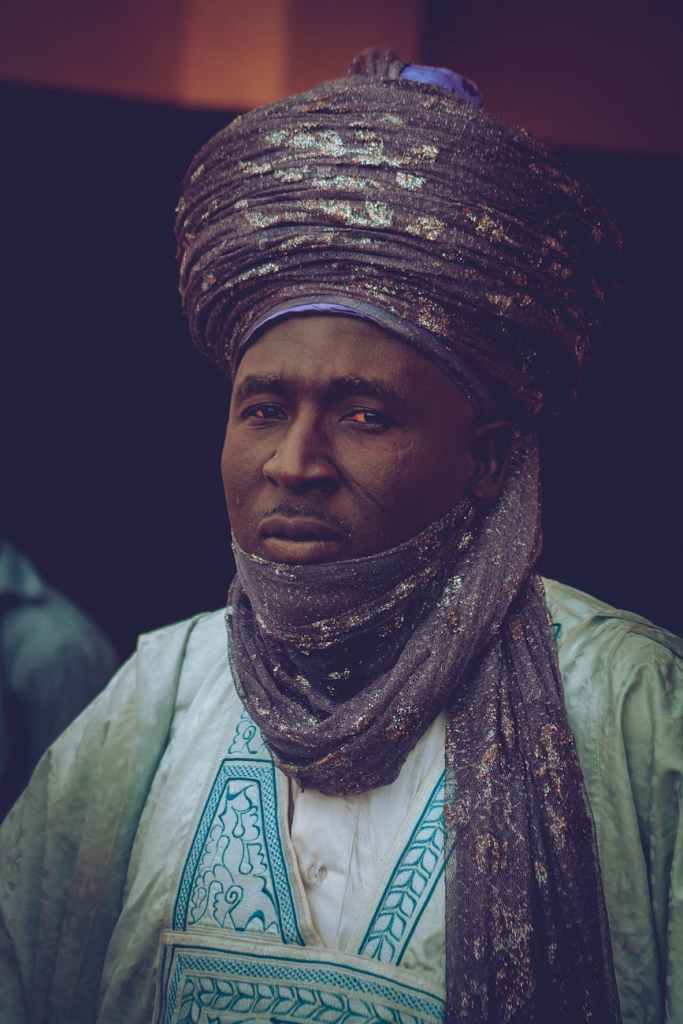
The Ethiopian Eunuch knew how it feels to be unwelcome in church. He was a man of status and power. In an ancient world that prized the beauty of black skin above all else, he was gorgeous. He served in the royal court of his homeland, managing the great wealth of his queen, the Candace. In a world where few people were literate, he was cultured, fluent in Greek, and a student of the Torah. He had spent a small fortune on the scroll of the Prophet Isaiah. He had come to Jerusalem on a great pilgrimage of many miles with a retinue of servants to worship and pray.

The Bible scholars point out that when the eunuch arrived at the Jerusalem Temple, he would have been denied entry. We don’t know how he came to be a eunuch, whether he was born that way, was injured in some horrible accident, or had to say goodbye to his “manhood” before he could become the Treasury Secretary, but it was who he was. He couldn’t do anything about it. He probably heard some less than welcoming scripture quoted to him in Jerusalem, like Deuteronomy 23 and Leviticus 21, which say that anyone with his “problem” cannot be admitted to the assembly or approach God with an offering because it would profane the sanctuary. 

I wonder if we can imagine what it would feel like to be the Ethiopian eunuch, to love God and fear that God did not love him, would never love him, no matter how many pilgrimages he made or prayers he said. As the Ethiopian Eunuch rattled home in his chariot, he read the words of Isaiah 53, which tell of God’s servant who silently suffers in humiliation. Those words must have tugged at his heartstrings, as if they were written about him.

Of course, we don’t have to be a church visitor sitting in the “wrong” pew or the Ethiopian eunuch to wonder if God loves us. Our feelings of welcome and acceptance are also shaped by who we are. The church universal has historically been less than hospitable to some people more than others. Many have had bad church experiences in which they feel judged and condemned. Those who have been divorced may not feel welcome. Those who choose to live together outside of marriage may not feel welcome. Those who are single parents may not feel welcome. My LGBTQ friends and family all have painful stories to share of leaving churches where they were not accepted unless they stayed in the closet. Young people with blue hair, plenty of piercings, or an abundance of tattoos describe the shocked stares and alienating whispers of people in the pews. Even when we look like everyone else, we may harbor secret hurts or shame or bad experiences that make us wonder along with the Ethiopian eunuch, “Is God’s love for me? Is God’s love for us?”

The Ethiopian Eunuch might have stayed an outsider if the Holy Spirit hadn’t stepped in and taken some bold action. The Spirit found the right man for the job, Philip. He wasn’t afraid of those who had been labeled outsiders. In fact, Philip got his start as an evangelist by taking the gospel to the Samaritans, traditional enemies of Israel. So, when the Holy Spirit sent him running down the Gaza Road, Philip was ready. He climbed into the Ethiopian man’s chariot, caught his breath, and began to tell his new friend about Jesus of Nazareth, the fulfillment of Isaiah’s prophecy about a holy servant who was rejected by those he was sent to redeem and suffered for the world’s sins.

As Philip told the good news of Jesus’ ministry, of how Jesus welcomed the outsider, healed the sick, blessed the children, and counted women among his disciples, his Ethiopian neighbor began to get excited.  Really excited. He imagined the possibility that if Jesus had anything to say about it, God might just welcome him, might welcome a person who looked and felt like he did. If the eunuch or Philip questioned what the Holy Spirit intended for them, those questions disappeared as a strange sight shimmered on the desert horizon: a pool of water, sparkling in the midday sun. It was unthinkable, impossible even, but there it was, a big baptismal pool in the middle of that dry and dusty landscape.

Finally, the Ethiopian Eunuch could contain himself no longer, this man who had been excluded from the Temple and made to feel unwelcome in God’s House dared to imagine that he, too, was loved. “Look, here is water!  What is to prevent me from being baptized?” And in response, Philip did not quote Deuteronomy 23 or Leviticus 21. Instead, by the power of the Holy Spirit that had sent him running down the Gaza Road, Philip knew that no one is ever beyond the limits of God’s unfathomably big love.  All were welcomed. All might be claimed in the waters of baptism as God’s beloved children. The driver reined in the horses. The chariot came to a halt. And Philip with his new Ethiopian friend waded into the waters of a love that would not let them go.

It’s a wild and scandalous story that tugs at our heartstrings. It tells the simple truth that God welcomes us when the world—or the church—will not. All are welcome to these waters and claimed as sons and daughters of a holy parent who has a place for us at the table and a home for us in the kingdom. It’s a story that invites us to know our belovedness. It’s a story that dares us to be a more loving people. The Holy Spirit calls to us, as the Spirit did to Philip, setting our feet on the path to welcome and inclusion, to meet people where they are at, to open our eyes and hearts to those who are new. The Spirit calls us to judge less and welcome more. Perhaps we’ll even loosen our death grip on that favorite pew. Perhaps one day all churches will be as welcoming as Jesus.

The freshly baptized Ethiopian Eunuch rode off down the Gaza Road, full of joy and alleluias.  They say that he became the great evangelist of Africa, telling the Candace—and anyone who would listen—all about a God who loves limitlessly, who became flesh, lived and taught, healed and suffered, died and rose again to make that limitless holy love known to all people—a God who is still trying to get that message out even now.

Resources

Matt Skinner. “Commentary on Acts 8:26-40” in Preaching This Week, May 2, 2021. Accessed online at https://www.workingpreacher.org/commentaries/revised-common-lectionary/fifth-sunday-of-easter-2/commentary-on-acts-826-40

Mitzi Smith. “Commentary on Acts 8:26-40” in Preaching This Week, May 6, 2012. Accessed online at https://www.workingpreacher.org/commentaries/revised-common-lectionary/fifth-sunday-of-easter-2/commentary-on-acts-826-40-2

Richard Jensen. “Commentary on Acts 8:26-40” in Preaching This Week, May 10, 2009. Accessed online at https://www.workingpreacher.org/commentaries/revised-common-lectionary/fifth-sunday-of-easter-2/commentary-on-acts-826-40-3

F. Scott Spencer. “Commentary on Acts 8:26-40” in Preaching This Week, April 28, 2024. Accessed online at https://www.workingpreacher.org/commentaries/revised-common-lectionary/fifth-sunday-of-easter-2/commentary-on-acts-826-40-5


Acts 8:26-38

26 Then an angel of the Lord said to Philip, “Get up and go toward the south to the road that goes down from Jerusalem to Gaza.” (This is a wilderness road.) 27 So he got up and went. Now there was an Ethiopian eunuch, a court official of the Candace, the queen of the Ethiopians, in charge of her entire treasury. He had come to Jerusalem to worship 28 and was returning home; seated in his chariot, he was reading the prophet Isaiah. 29 Then the Spirit said to Philip, “Go over to this chariot and join it.” 30 So Philip ran up to it and heard him reading the prophet Isaiah. He asked, “Do you understand what you are reading?” 31 He replied, “How can I, unless someone guides me?” And he invited Philip to get in and sit beside him. 32 Now the passage of the scripture that he was reading was this:

“Like a sheep he was led to the slaughter,
    and like a lamb silent before its shearer,
        so he does not open his mouth.
33 In his humiliation justice was denied him.
    Who can describe his generation?
        For his life is taken away from the earth.”

34 The eunuch asked Philip, “About whom, may I ask you, does the prophet say this, about himself or about someone else?” 35 Then Philip began to speak, and starting with this scripture he proclaimed to him the good news about Jesus. 36 As they were going along the road, they came to some water, and the eunuch said, “Look, here is water! What is to prevent me from being baptized?” 38 He commanded the chariot to stop, and both of them, Philip and the eunuch, went down into the water, and Philip baptized him.


The Rock of Refuge

Sabbath Day Thoughts — “The Rock of Refuge” Psalm 31:1-5, 15-16

There are 120 million people worldwide in need of refuge this morning. Some are refugees, forced to leave their homeland to seek the safety of another nation. Some are internally displaced people, still within their homeland but driven from their homes. Persecution, war, ethnic violence, human rights abuses, natural disaster, famine, and civil unrest ripple across the planet. One in sixty-seven world citizens needs a rock of refuge.

Hugo Carrasco is a Dreamer. His parents brought him from Mexico to the United States when he was a child. He didn’t know he was undocumented until high school when he wanted to get a driver’s license. Hugo volunteered for Young Life as a mentor for at-risk youth while working for a restaurant. He married Leslie, whom he met through church. They have two children. One day, he was arrested in an ICE raid. He learned that although he is married to a US citizen, he isn’t eligible for citizenship because he is “illegal,” and because he was arrested on a work violation, he is now ineligible for the work papers and path to citizenship offered by DACA—the Deferred Action for Childhood Arrivals program. Hugo needs a rock of refuge.

As college students in Venezuela, Mariana and Antonio took to the streets to protest the oppressive regime of Nicolas Maduro. When the military intervened, the protest descended into violence. As Mariana sought refuge, a man got out of his car and held a gun to her head. She kept running. Four years later, while visiting Venezuelan friends in Miami, Mariana and Antonio learned that they were eligible for Temporary Protected Status (TPS). The status was developed in 1990 as a way to protect individuals fleeing armed conflict, natural disasters, or other unlivable conditions in their home countries. Mariana and Antonio were awarded TPS. They moved to Miami and embarked on successful careers in finance until last April when the current administration cancelled protected status for Venezuelans. They need a rock of refuge.

Marceline Washikala is a third-generation refugee. Her family fled Congo for Tanzania when her grandfather was killed in the first civil war. Opportunities for school in refugee camps are limited, so Marceline only completed the third grade. When she was eighteen, the family was moved to Oregon for resettlement. Although her younger siblings were able to enroll in public school. Marceline was told she was too old and had too little education to join them. She had finally found a home, but adapting to a new culture and new language was hard.  Marceline needed a rock of refuge.

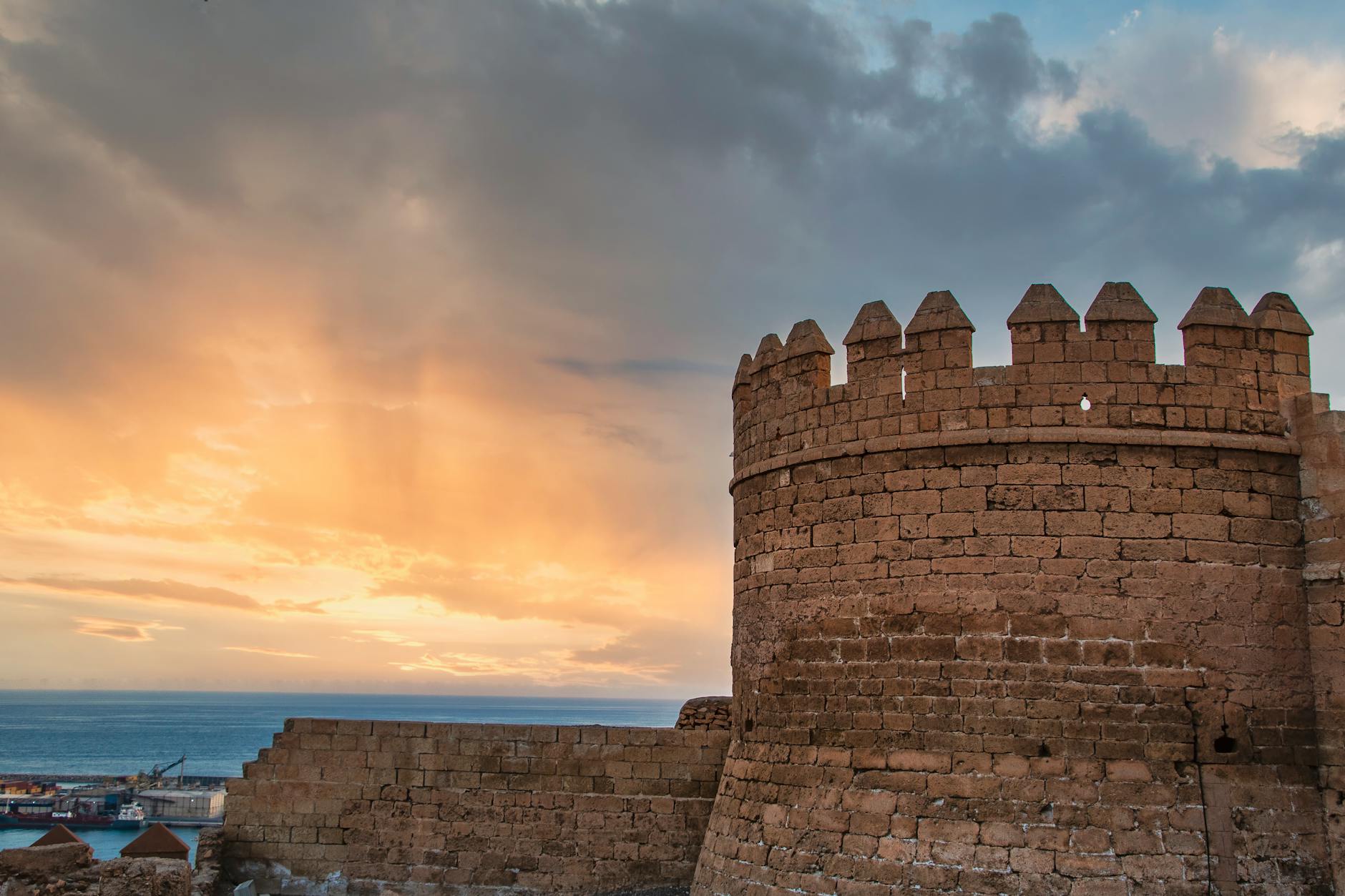
We are not refugees seeking a new home in the United States, yet I think we all know how it feels to need safety, strength, shelter, protection, and the promise of opportunity. Our declining health or the medical crisis of a loved one leaves us longing for a rock of refuge. The uncertainty of our personal economics, from the soaring cost of living to the dwindling of our retirement savings, leaves us longing for a rock of refuge. The fractures in our civil society which pit neighbor against neighbor, and the bitter differences that alienate us from our families leave us longing for a rock of refuge. We can pray along with the psalmist, “In you, O Lord, I seek refuge; do not let me ever be put to shame; in your righteousness deliver me. Incline your ear to me; rescue me speedily. Be a rock of refuge for me, a strong fortress to save me.”

Psalm 31 is attributed to King David. He needed refuge. Long before he rose to kingship in Israel, David was persecuted by powerful political enemies. As a young shepherd boy, David’s ability to soothe King Saul with music and his daring defeat of the giant Goliath landed him a spot in the royal court. Yet as David’s reputation as a leader on and off the battlefield grew, so did the jealousy of the king. In fact, David was forced into exile after Saul first tried to kill him and then attempted to arrest him on charges of sedition. David spent all of his young adult life on the run. Always one step ahead of Saul’s death squads, he sheltered with the King of Moab, sojourned with Philistine enemies in Gath, and lived in a cave in the harsh and unforgiving landscape of the Judean Wilderness.

David believed that God alone was his rock of refuge. In the seven short verses of today’s reading, David described God as the one who will not let us be disgraced, who saves us, listens to us, and rescues us. God leads and guides, frees us from the snares of enemies, redeems us, delivers us, shows us favor, and saves us with steadfast love. Who doesn’t need that? David’s word choice is telling. In Psalm 31, he repeatedly uses the Hebrew verb, ḥāsâ. It has a double meaning. It means to seek refuge or flee for protection, and it also means to put trust in someone, to confide in someone, to hope in someone. Despite his adversity, David knew that God alone was the one he could trust and hope in because God is our refuge. God had chosen him as a shepherd boy. God had battled with him against the mighty Goliath. God would deliver him from the persecution of Saul. God is a refuge because God’s love is faithful, trustworthy, and steadfast.

A number of years ago, one of my New Testament professors, David Cortez-Fuentes, pointed out that David wasn’t the only one to pray with Psalm 31. He called my attention to Jesus’ words from the cross in Luke 23:46. Crying out with a loud voice, Jesus said the words of the psalmist, “Father, into your hands I commend my spirit.” Having said this, he breathed his last. Jesus’ choice to pray with Psalm 31, even as he suffered and died, reflects his reliance on God as a refuge, his confidence in God’s love.

Jesus’ dying prayer reminds us that God is both refuge and refugee. In Jesus, God knows what it is to feel as we do—vulnerable and at-risk, embattled and under-supported, alienated and persecuted. In the midst of our powerlessness, we need a rock of refuge. Can we trust—as David did and as Jesus did—that God is both our promise of refuge and our hope for the future? The kingship awaited David. A resurrection miracle awaited Jesus. May we, too, dare to trust that our rock of refuge has goodness and mercy in store for us.

Perhaps we can even dare to share that trust with those who need it most right now, our vulnerable and embattled neighbors who desperately need the hope that is found in our rock of refuge. Hugo Carrasco, that dreamer who was scooped up in an ICE raid in Maricopa County Arizona, had strong support from his family, church, and Young Life community. He found a good lawyer who was able to have him released from detention after three months, but he is still “illegal.” His kids are teens now, but the immigration crack down underway across the nation leaves them in fear that their father could be taken away. Like others who were brought to this country illegally as children, Hugo lives with the constant threat of deportation to a land that is not his home. He is praying to his rock of refuge.

Mariana and Antonio, who lost their Temporary Protected Status as Venezuelans, face an uncertain future. Mariana says, “It has given me anxiety, a lot of sadness, a feeling of injustice.” Any day now, she or Antonio could be taken into custody and sent back to Venezuela where, although Nicolas Maduro is no longer in power, the government remains unchanged and the persecutors who once held a gun to her head have never faced consequences or checks. Mariana says, “I feel like my life is on hold.” She is praying to her rock of refuge.

Marceline Washikala, that Congolese refugee in Oregon, found an advocate in the school system who fought to enroll her in the 12th grade at North Salem High School where she had been denied status. She graduated and subsequently earned a degree in business administration from the local community college. She has helped her mother open a market for African food. She also works for the school district as a language specialist for families who speak Swahili. She dreams of getting a four-year degree and becoming a social worker, who can assist refugees and immigrants, like her. Marceline attends the First Free Methodist Church and directs the Uhuru Youth Choir, which is comprised of people from Congo, Tanzania, Mozambique, Egypt, and Kenya. They sing gospel music in various languages at churches, festivals, and hospitals in the Salem area. Marceline has finally found safety. She has finally found home. Marceline sings along with the psalmist, a song of praise for her rock of refuge. Amen.

Resources

–. “Conflict Between the Houses of David and Saul.” Bible Hub. https://biblehub.com/topical/c/conflict_between_the_houses_of_david_and_saul.htm

Brown-Driver-Briggs Lexicon. STRONGS H2620. “ḥāsâ.” Accessed online at https://www.blueletterbible.org/lexicon/h2620/rsv/wlc/0-1/

Hugo Carrasco. “I live in fear of deportation: My life as an undocumented worker” in Salon, May 17, 2014. Accessed online at https://www.salon.com/2014/05/17/i_live_in_fear_of_deportation_my_life_as_an_undocumented_worker/

Grace Berry and Abigail Wilt. “‘It is complete chaos’: TPS recipients search for solutions after protections end under Trump” in News 21, Sept. 4, 2025. Accessed online at https://upheaval.news21.com/stories/it-is-complete-chaos-temporary-protected-status-recipients-search-for-solutions-after-the-trump-administration-ends-protections/

Zachary Kasper. “Just Waiting for a Miracle” in The Immigrant Story, April 6, 2024. Accessed online at https://theimmigrantstory.org/waiting-for-a-miracle/

Danish Refugee Council. “How many refugees are there in the world?” Accessed online at https://help.refugees.now/en/news/how-many-refugees-are-there-in-the-world/

Joel LeMon. “Commentary on Psalm 31” in Preaching This Week, May 14, 2017. Accessed online at https://www.workingpreacher.org/commentaries/revised-common-lectionary/fifth-sunday-of-easter/commentary-on-psalm-311-5-15-16-3

J. Clinton McCann, Jr. “Commentary on Psalm 31” in Preaching This Week, May 18, 2014. Accessed online at https://www.workingpreacher.org/commentaries/revised-common-lectionary/fifth-sunday-of-easter/commentary-on-psalm-311-5-15-16-4

John E. White. “Homiletical Perspective on Psalm 31” in Feasting on the Word, Year A, vol. 2. Westminster John Knox Press, 2010.


Psalm 31:1-5, 15-16

To the leader. A Psalm of David.

In you, O Lord, I seek refuge;
    do not let me ever be put to shame;
    in your righteousness deliver me.
Incline your ear to me;
    rescue me speedily.
Be a rock of refuge for me,
    a strong fortress to save me.

You are indeed my rock and my fortress;
    for your name’s sake lead me and guide me;
take me out of the net that is hidden for me,
    for you are my refuge.
Into your hand I commit my spirit;
    you have redeemed me, O Lord, faithful God.

15 My times are in your hand;
    deliver me from the hand of my enemies and persecutors.
16 Let your face shine upon your servant;
    save me in your steadfast love.

Photo by Enrique on Pexels.com