Poem for a Tuesday — “Blue Morning Glory” by Anne Pitkin
“Voracious, yes. But when you see it, shy blue flowers blaring like trumpets in spite of themselves, center star shaped and yellow; when it startles you, early in the morning, all over a white picket fence, say, in Massachusetts, you might think ‘triumphal,’ ‘prodigal,’ ‘awake.’
Of course you don’t want it in your rose garden among all the pruned, the decorous bushes. You don’t want it in the vegetables, for it will romp through the tomatoes, beans and peas, will leave no room on the ground, or even in the air, for the leafy lettuces and cabbages soberly queueing up in their furrows. It will hog all the sky it can get knowing as it does what enormous thirst is satisfied by blue.
Father Michael says Follow the God of abundance Says we hurry from the moment’s wealth for fear it will be taken. Think of this:
the morning glory has been blossoming for so long without permission that in some gardens it is no longer censored. What does that tell you? See how it opens its tender throats to a world that can sting it, how, without apology for its excess, it blooms and blooms, though even yet it seems surprised.”
in Cries of the Spirit Within, ed. Marilyn Sewell. Boston: Beacon Press, 1991, pp. 33-34.
Poet Anne Pitkin was born and raised in Clarksville, TN. Her poetry collections include Yellow and Winter Arguments. Her newest volume But Still, Music will be published by Pleasure Boat Studio in September. Pitkin’s work explores nature, family, and the tensions of growing up in the Jim Crow South. With regard to her craft, Pitkin has said, “I cannot say just when or why I started writing poetry. I read a lot of it during and after college, and I responded, I guess, by trying to write it, initially piqued by the tensions between words” (from Rattle #27, summer 2007).
Sabbath Day Thoughts — “Property Problems” Luke 12:13-21
Rising inflation has us doing a double-take at the cost of groceries. The war in Ukraine has sent gas prices soaring and made it painful at the pump. Market volatility has not been kind to our 403-Bs and 401-Ks. Yet, despite the economic pinch that we are feeling, we live in the world’s most affluent society. The US has had the world’s largest economy since 1871. With a GDP of $25.3 trillion, we far outpace our nearest competitor, China, at $19.9 trillion. The US has the largest population of ultra-high net worth individuals in the world, including 724 billionaires. Even COVID-19 hasn’t put a dent in the lives of the super-wealthy. According to Forbes Magazine, the US added 98 new billionaires in 2020 and the net worth of America’s billionaires surged 62% during the pandemic to $4.7 trillion.
All that affluence may not always be good for us. Several studies have shown that wealth may be at odds with empathy and compassion. Research published in the journal Psychological Science found that people of lower economic status were better at reading others’ facial expressions—an important marker of empathy—than wealthier people. Having more resources can also cause bad behavior. In fact, UC Berkeley researchers found that even fake money could make people’s behavior rude and inappropriate. When two students played Monopoly, one having been given a great deal more Monopoly money than the other, the wealthier player expressed initial discomfort, but then went on to act aggressively, taking up more space and moving his pieces more loudly, and even taunting the player with less money. Wealth may also cause a sense of moral entitlement. Another UC Berkeley study found that in San Francisco—where the law requires cars to stop at crosswalks for pedestrians to pass—drivers of luxury cars were four times less likely than those in less expensive vehicles to stop and allow pedestrians the right of way. They were also more likely to cut off other drivers. Most troubling of all, children from affluent households are at significantly greater risk for depression, anxiety, and addiction, perhaps due to greater pressure to excel, succeed, and step into the big affluent shoes of their parents.
Today’s reading from Luke’s gospel presents us with one of Jesus’s toughest teachings about the dangers of affluence. Someone in the crowd asked Jesus to arbitrate a family dispute about wealth. The fact that the questioner asked Jesus to rule in his favor, “Tell my brother to share the inheritance with me,” tells us that something isn’t quite right here. Jesus’ warning, “Take care! Be on your guard against all kinds of greed” suggests that someone’s attitude toward the inheritance was dangerously close to idolatry. The Greek word here for greed, pleonexia, means an insatiable desire for more that spawns avarice.
Jesus next told the Parable of the Rich Fool, an exaggerated, cautionary tale about the danger that may accompany wealth. The rich man in the story had property problems. First, he had an inordinate love of stuff. When a windfall crop presented him with a surplus, he hatched a plan to build bigger barns rather than part with any of his abundance. It also seems that he loved his stuff more than he loved his neighbor. Tony Campolo, who taught for many years at Eastern College and Seminary, says that there are about 900 teachings in scripture about the importance of sharing our abundance. But the rich man didn’t see his bumper crop as a blessing for anyone but himself. What’s more, the man didn’t see God as the source of his windfall. His abundance was the blessed outcome of productive seed, fertile soil, ample rainfall, long days of sunshine, and shelter from pests and disease, all things beyond his power and control. Yet the man’s greatest mistake was his attitude about the future. He thought he had safeguarded his future by laying up his harvest. But the future belongs to God—all life comes from God and all life returns to God in God’s time. It’s no wonder that Jesus concluded his harsh and uncomfortable story with God calling the man a fool.
It’s hard to know what to do with Jesus’s tough teachings about the dangers of wealth. I don’t believe that Jesus thought that wealth is evil. Some of the people who surrounded and supported Jesus in his ministry were wealthy. Joanna the Myrrh-bearer, who waited at the foot of the cross and came to the empty tomb, was the wife of one of the most affluent and powerful men in Israel, Chuzza the steward of King Herod. Nicodemus was also wealthy and influential. In John’s gospel, Nicodemus brought 100 pounds of myrrh and aloes to prepare Jesus’s body for the grave. A one-pound jar of myrrh cost a year’s wages. Imagine the wealth that Nicodemus had to be able to purchase 100 pounds of the precious stuff. So, Jesus didn’t have it in for rich people. When we look at Joanna and Nicodemus, we see people who used their abundance in service to Jesus and in pursuit of the Kingdom of God. So perhaps this uncomfortable Parable of the Rich Fool isn’t a condemnation of wealth so much as it is fresh perspective for discipleship in a world that prizes affluence above all else.
The challenge for us is to redefine how we relate to our possessions. Jesus would first invite us to question how our society prizes possessions. We live in a culture that tells us that stuff can meet our deepest needs. Over the course of a lifetime, the average television viewer will spend a year watching commercials – that’s right, a year of our lives wasted on advertisements, designed to tempt us to go buy stuff. It’s no wonder that we can get caught up in a vicious cycle of consumption, buying to meet the needs that advertisers tell us we must fill. Social theorists call this relentless drive to consume affluenza, as if it’s a disease, “the bloated, sluggish, unfulfilled feeling that results from efforts to keep up with the Joneses.”
In a world dominated by affluenza, Jesus would stress that our deepest needs for meaning and purpose are never met by things. Those needs are only met by God. What really matters in life: love, acceptance, forgiveness, grace, salvation, relationship, and dignity, all are found in God—all free of charge. When we grasp this fact, life finds true meaning, and we are liberated from that vicious cycle of consumption. We begin to relate to our relative affluence in ways that allow us to make different choices.
Jesus would also have us consider how our relative affluence shapes how we relate to others. Augustine taught that God gives us possessions to use and people to love. Sin is when we get that the wrong way around. We use people and we love possessions. After all, Jesus taught that the greatest commandment is to love God and neighbor, not God and stuff. Our affluence, then, is meant to be a resource in expressing our love for God and neighbor. That’s where Tony Campolo’s 900 scripture references come in handy, inspiring us to share a tithe of our income, provide for the widow, care for the orphan, and shelter the refugee. Could we think about our relative affluence as a whole lot of love, ready to make a difference in the world? Now, that’s a paradigm shift. It’s the antithesis of affluenza and the heart of Christian discipleship. Here is more good news: one of the best ways to cut the risk of depression, anxiety, and addiction in affluent kids is to model for them this sort of compassionate neighborliness and to get them involved in serving others and connecting with all kinds of people.
Finally, Jesus would have us remember the true source of our affluence and blessing. The rich man thought he was the architect of his fortune and the guarantor of his future. But Jesus reminds us that God is the source of our blessing, and the future is held in God’s hands. That doesn’t mean that we don’t work hard for what we have, but ultimately all we have and all we are—the heart that beats, the air we breathe, the abilities that we parlay into achievement—all these are God-given gifts.
Imagine if we took a break from the commercials that cultivate our appetite for stuff and instead spent a few moments each day counting our blessings and acknowledging them as a gift from God. It would be a profoundly reorienting and life changing discipline. We would find fulfillment and delight in the everyday miracles of watching a child sleep, harvesting lettuce from the garden, or glimpsing a bass jump out of the water in pursuit of its dinner. If God graces our daily experience with such profound gifts, then we can trust that the future, which is beyond our grasp, will also contain good gifts, whether we are talking about this life or the next. We can be freed to live in gratitude and grace.
Two words that I hope to never hear coming out of the Lord’s mouth are, “You fool!” How about you? In the coming weeks, may Jesus and his parable of the rich fool inspire us to make some different choices when it comes to our affluence. May we find the cure for affluenza in the freely given gifts of God. May we dare to share our abundant blessings in love of God and neighbor. And may we trust that God’s future will abound with daily blessings.
Resources:
Richard Denniss. Curing Affluenza: How to Buy Less Stuff and Save the World. New York: Black Publishing, 2017.
Tony Campolo. Curing Affluenza. Video curriculum.
Scott Simon. Affluenza. KCTS Seattle: Oregon Public Broadcasting, 2014.
13 Someone in the crowd said to him, “Teacher, tell my brother to divide the family inheritance with me.” 14 But he said to him, “Friend, who set me to be a judge or arbitrator over you?” 15 And he said to them, “Take care! Be on your guard against all kinds of greed, for one’s life does not consist in the abundance of possessions.” 16 Then he told them a parable: “The land of a rich man produced abundantly. 17 And he thought to himself, ‘What should I do, for I have no place to store my crops?’ 18 Then he said, ‘I will do this: I will pull down my barns and build larger ones, and there I will store all my grain and my goods. 19 And I will say to my soul, Soul, you have ample goods laid up for many years; relax, eat, drink, be merry.’ 20 But God said to him, ‘You fool! This very night your life is being demanded of you. And the things you have prepared, whose will they be?’ 21 So it is with those who store up treasures for themselves but are not rich toward God.”
“When I know you are coming home I put on this necklace: glass beads on a silken thread, a blue that used to match my eyes. I like to think I am remembering you. I like to think you don’t forget.
The necklace lies heavy on my skin, it clatters when I reach down to lift my screaming child. I swing her, roll her in my arms until she forgets. The beads glitter in the flicker of a TV set as I sit her on my lap and wish away the afternoon.
I wait until I hear a gate latch lift the turn of key in lock. I sit amongst toys and unwashed clothes, I sit and she fingers the beads until you speak in a voice that no longer seems familiar, only strange. I turn as our child tugs at the string. I hear a snap and a sound like falling rain.”
in 180 More Extraordinary Poems for Every Day, ed. Billy Collins. New York: Random House, 2005, p. 28.
Kate Bass is a British poet who works as an illustrator. Her critically acclaimed collection of poems The Pasta Maker was published in 2003. Grounded in family and detailed observations of the everyday, Bush’s work captures the emotional undertones of relationship – often felt, rarely spoken, deeply true. She lives with her family in Cambridge.
Sabbath Day Thoughts — How’s Your Prayer Life? Luke 11:1-13
If you visit the John Wesley House in London, you will see that the 18th century father of Methodism had a small walk-in closet off his bedroom. This prayer room is sometimes called “The Powerhouse of Methodism” because Wesley believed that his prayerful efforts within the closet were key to the success of his mission to the world. Wesley began each day with two hours in his closet, praying with an open Bible and a fervent heart.
19th century Plymouth Brethren evangelist George Muller was the master of persistent prayer. By his own admission, the youthful Muller was a thief, liar, and gambler, but he attended a prayer meeting in 1825 that transformed his life. Muller committed to praying daily for five of his young friends who were far from Christ. A few months later, one of them had a conversion experience. Within two years, two more found Jesus. The fourth friend came to faith after twenty-five years. Muller died in 1898, having prayed for the fifth friend for sixty-three years and eight months. Before Muller was buried, his prayer was finally answered as the fifth friend finally committed his life to Christ.
Rosa Parks is best known as a Civil Rights activist with the courage to launch the Montgomery Bus Boycott in 1955 by refusing to move to the back of the bus. We are less likely to know that Rosa Parks was a person of profound faith who grounded her activism in prayer. In her book Quiet Strength, Parks writes that God assured her that she would not be alone on the bus on that fateful day. “I felt the Lord would give me the strength to endure whatever I had to face,” Parks stated, “God did away with all my fear . . . It was time for someone to stand up—or in my case, sit down.”
We all know prayer warriors, those folks who are ever eager to take it to the Lord in prayer. A trusted friend, a family member, a pastor, or a link in the local prayer chain, these are the people we turn to when we get that tough diagnosis, or there are problems on the home front, or our kids are in trouble. We trust that they will listen deeply and pray passionately, letting God know that help is needed.
Even though prayer is a cornerstone of the faithful life and we are well-acquainted with champions of prayer, we may struggle to have a meaningful, committed practice of prayer. Our calendars are so full that the only times left for prayer are those few minutes at the close of the day when we fall exhausted into bed, unable to keep our eyes open long enough to express the confessions and intercessions that we long to lift to God. When we do find the time to pray, we worry about what to say. What are the right words to get God’s attention? How specific do we need to get? How do we know that God is listening? Perhaps most daunting of all tasks is public prayer, praying out loud in a group. We might rather eat Brussels sprouts or take the garbage out than spontaneously pray in a roomful of strangers. If we were being deeply honest, we might admit that we place our trust in those prayer warriors because we believe that they have something that we don’t, as if when God was handing out the prayer power, some of us got a substandard quotient.
If it makes us feel any better, even the great Reformer Martin Luther sometimes fell short in prayer. Luther once infamously quipped, “I have so much to do today that I must spend the first three hours in prayer.” He notoriously was reported to have said that an exception should be made for those of us who struggle with prayer—we should begin our days with four hours of prayer. But in a letter to his friend Philip Melancthon, Luther confessed that he too fell short in prayer, “I sit here like a fool, and hardened in leisure, pray little, do not sigh for the church of God, yet burn in a big fire of my untamed body. In short, I should be ardent in spirit, but I am ardent in the flesh, in lust, in laziness, leisure, and sleepiness. … Already eight days have passed in which I have written nothing, in which I have not prayed or studied.”
Jesus’ disciples must have also struggled with prayer. That’s why they asked Jesus to give them a lesson on how to pray. They had noticed how vital prayer was for Jesus. The Lord seemed to find the fuel for his dynamic ministry in times of quiet communion with his heavenly Father. Before naming the twelve disciples, Jesus spent the night in prayer. While working wonders of healing or casting out demons, Jesus turned to prayer. To find the strength to endure his betrayal and execution, Jesus prayed in the Garden of Gethsemane. Jesus was a man steeped in prayer.
The pattern of prayer that Jesus taught his friends is surprisingly simple. In Luke’s gospel, the Lord’s Prayer is four terse sentences. Jesus tells us to begin with praise, acknowledging the holiness of God and our longing for the coming of God’s kingdom. Then, we pray for what we truly need: sustenance to fuel our bodies/, the healing of relationships through forgiveness and a willingness to be forgiven/, and lastly, protection from life’s temptations and difficulties. According to Jesus, all we really need to pray are four simple heartfelt sentences that envision God as the source of our world, our lives, our healing, and our protection. That’s it.
It must have sounded too good to be true to the disciples. I can imagine that they cast doubtful looks at one another as Jesus disclosed the secrets of being a real prayer warrior, because Jesus followed up his lesson on prayer with two playful, pointed teachings to bring his point on prayer home. The story of the friend who comes knocking at midnight assures us that God hears our prayers and responds. The example of a parent who lovingly provides good things for his children assures us that God, our heavenly parent, always provides what is good and right for us. Jesus makes it sound so easy.
And maybe that’s the real point to Jesus’ lesson. Prayer is meant to be easy. It’s meant to be as natural as the drawing of breath, the sympathy of a friend, or the care of a parent. Maybe the trouble is that we pray from the head, looking for those eloquent words, hoping to steer the course of the world, wanting to forge a future that meets our personal vision of how things ought to be. But Jesus teaches us to pray from the heart, to pray in ways that acknowledge the greatness of God and our personal vulnerability. When we pray from the head, we expect the world to change, which is often a recipe for disappointment, but when we pray from the heart, we can expect to be changed. Heartfelt prayer coaxes us to grow into the people God created us to be. Heartfelt prayer equips us to live to the best of our ability in a world that is less than perfect and sometimes bitterly disappointing.
So, I invite us to make a fresh start on prayer this morning, to keep things simple and heartfelt. Perhaps you might even allow me to help you, guiding you in praying the way that Jesus invited us to pray. I invite you to close your eyes and bow your head as I lead you in a prayer from the heart.
First, give silent praise for the holiness and majesty of God, who stretches the heavens like a tent and puffs into our lungs the breath of life . . . We praise and thank you, God.
Allow your heart to yearn for God’s kingdom, for a world where righteousness and peace will kiss each other . . . Thy Kingdom come.
Now think about your day ahead. Ask the Lord to provide what is needed, whether it is strength or love, kindness or patience, hope or help. Trust that what is truly needed will be provided . . . Give us this day our daily bread.
Now, think of a relationship that needs mending. Perhaps there are hurt feelings, hardness of heart, or weariness of soul. Ask God to bring healing to that relationship. Trust that the Lord is already at work . . . Forgive us, O Lord, and make us a forgiving people.
Finally, consider a place of difficulty or temptation in your life. Feel the weightiness and the challenge of it. Now, ask the Lord to be your safety and protection. Remember that although you may feel weak, God is strong and God is with you . . . Keep us safe from temptation, O God, and deliver us from evil.
As we finish, we might even resolve to try this again, to make a daily discipline of doing what Jesus did. May we find the strength and the vision to live fully and faithfully through simple, heartfelt prayer.
Resources:
David Lose. “Commentary on Luke 11:1-13” in Preaching This Week, July 25, 2010. Accessed online at https://www.workingpreacher.org/.
Elisabeth John. “Commentary on Luke 11:1-13” in Preaching This Week, July 28, 2013. Accessed online at https://www.workingpreacher.org/.
11 He was praying in a certain place, and after he had finished, one of his disciples said to him, “Lord, teach us to pray, as John taught his disciples.” 2 So he said to them, “When you pray, say:
Father, may your name be revered as holy. May your kingdom come. 3 Give us each day our daily bread. 4 And forgive us our sins, for we ourselves forgive everyone indebted to us. And do not bring us to the time of trial.”
5 And he said to them, “Suppose one of you has a friend, and you go to him at midnight and say to him, ‘Friend, lend me three loaves of bread, 6 for a friend of mine has arrived, and I have nothing to set before him.’ 7 And he answers from within, ‘Do not bother me; the door has already been locked, and my children are with me in bed; I cannot get up and give you anything.’ 8 I tell you, even though he will not get up and give him anything out of friendship, at least because of his persistence he will get up and give him whatever he needs.
9 “So I say to you, Ask, and it will be given to you; search, and you will find; knock, and the door will be opened for you. 10 For everyone who asks receives, and everyone who searches finds, and for everyone who knocks, the door will be opened. 11 Is there anyone among you who, if your child asked for[e] a fish, would give a snake instead of a fish? 12 Or if the child asked for an egg, would give a scorpion? 13 If you, then, who are evil, know how to give good gifts to your children, how much more will the heavenly Father give the Holy Spirit[f] to those who ask him!”
attending to the presence of the holy in the everyday
“Briefly It Enters, and Briefly Speaks” by Jane Kenyon
“I am the blossom pressed in a book and found again after 200 years . . . I am the maker, the lover, and the keeper . . . When the young girl who starves sits down to a table she will sit beside me . . . I am food on the prisoner’s plate . . . I am water rushing to the wellhead, filling the pitcher until it spills . . . I am the patient gardener of the dry and weedy garden . . . I am the stone step, the latch, and the working hinge . . . I am the heart contracted by joy . . . the longest hair, white before the rest . . . I am the basket of fruit presented to the widow . . . I am the musk rose opening unattended, the fern on the boggy summit . . . I am the one whose love overcomes you, already with you when you think to call my name . . . .”
in Cries of the Spirit, ed. Marilyn Sewell. Boston: Beacon Press, 1991. P. 239
When was the last time you saw God? Your answer to that question may depend on whether or not you were paying attention. The witness of scripture assures us that God is always with us.
Sometimes, especially during an Adirondack summer, we can’t miss God. We hear God in loon song, or see God stretched across the Milky Way. Our holy encounters leave us filled with peace and life. At other times, we can be so busy or distracted that we miss God entirely. We may go for days – or even weeks – without the awareness that God is with us. Our self-preoccupation and inattention to the holy can leave us feeling lonely and desolate.
Ignatius of Loyola, a leader of the Counter Reformation of the 16th century, developed a prayer practice that encourages us to spend time each day considering how we have felt close to or far away from God. He called it the Examen (don’t worry, no test will be given). Ignatius believed that, by attending to our daily encounters with the holy, we naturally grow more and more into the will of God for our lives.
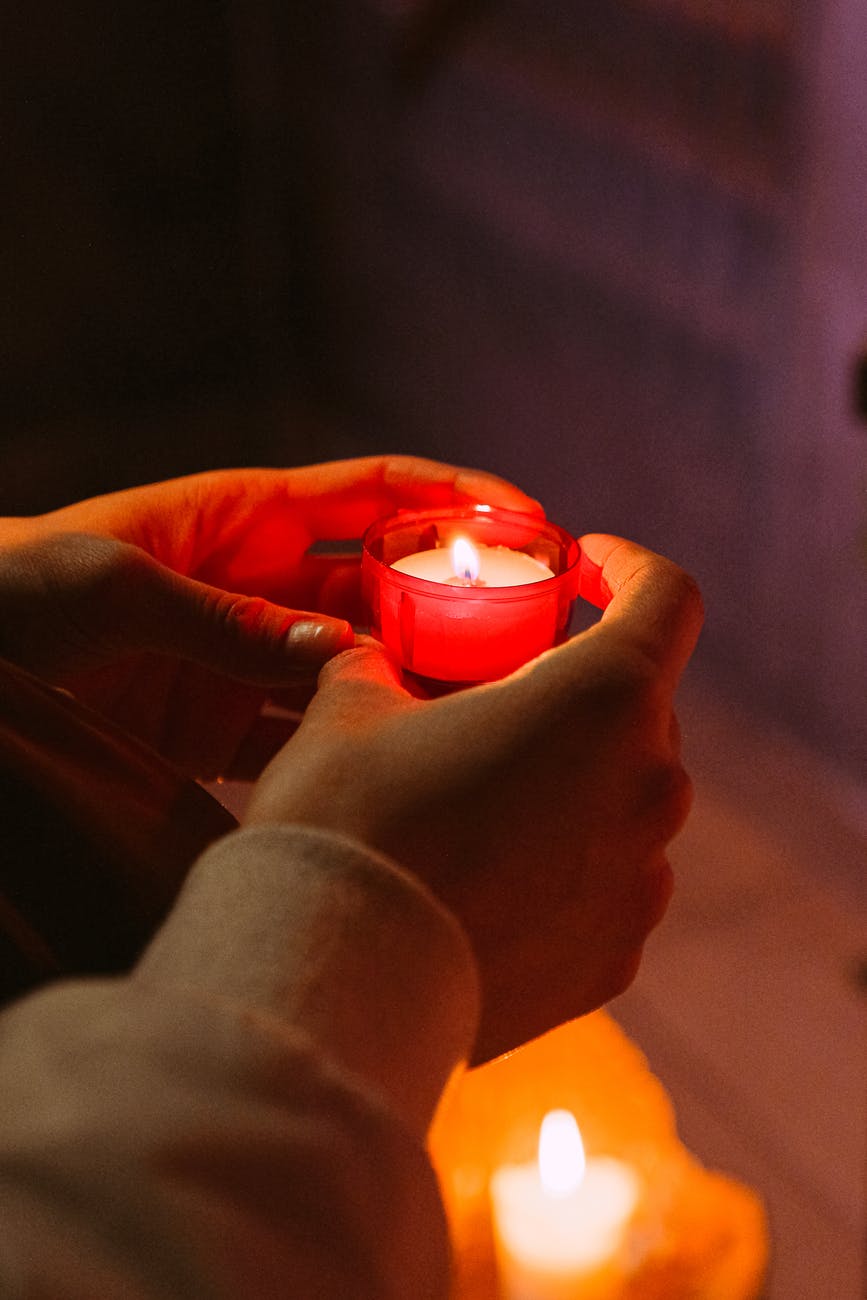
Would you like to give it a try? Set aside 15 to 20 minutes for your prayer time. Begin with a moment of silence, reminding yourself that God is with you. You may wish to light a candle or read a verse of scripture.
Silently and prayerfully reflect on your day from beginning to end. First, consider the ways that you have experienced God today. How has God blessed your day? For what are you most grateful today? Next, consider how you have turned away from God’s will for you today. For what are you least grateful this day?
You may wish to use a journal to record what you notice about your day. Or, you could share the Examen with a prayer partner, someone you love and trust. Don’t try to fix things or judge yourself. Just notice, and trust that the Holy Spirit will be at work to help you grow into the person whom God created you to be.
Now, take time to pray. Celebrate God’s blessings and ask for God’s pardon and encouragement.
Conclude your prayer time with a moment of silent thanksgiving for God’s abiding presence. Try doing this every day, if only for a week or two. I promise that you will feel closer to God and more deeply aware of the holiness that is already with us when we think to call God’s name.
Psalm 139:7-10
“Where can I go from your spirit? Or where can I flee from your presence? If I ascend to heaven, you are there; if I make my bed in Sheol, you are there. If I take the wings of the morning and settle at the farthest limits of the sea, even there your hand shall lead me, and your right hand shall hold me fast.”
My eyes have seen the King, the Lord of Hosts. — Isaiah 6:5c
You lay hidden all day, capped
by low-slung cloud and wrapped in
mist. Standing stones, carved with cups
and rings, pointed your way, surrounded
by the worship of lesser gods,
piled high by pilgrims, gravity, and
druids. Near Uam Tom a Mhor-fir,
we looked for you in the
old ways, but no fae-folk
made merry for your pleasure, only
a chorus of snowmelt played the
melody of lengthening days. No whirlwind,
fire, or earthquake heralded your presence,
and so, with thoughts turned to
rest, we walked into the quotidian.
Sheep in woolen tutus balanced on
graceful black legs. Bò Ghàidhealach with
nose ring and rakish fringe marked
our passage. Then, as the spring
sun slanted low above Kinnloch Rannoch,
the veil lifted. Tugged by your
hand upon our heartstrings, we turned
to see Schiehallion’s bare granite slabs
gleaming with glory, the Lord God
seated on a high and lofty
throne, and so, like grounded seraphim,
we pulled out our cameras to
capture what cannot be caught and
sang the doxology of the wanderer,
Holy, holy, holy Lord! Would you
take a look at that!
This is the fourth and final poem in a series that I wrote in response to Kore-ada Hirokazu’s stunning film after life. It explores the memory that I might choose to live in for eternity, a day of rough hill walking through the heart of Scotland and over the shoulder of Schiehallion. This poem responds to the question, “When did you feel closest to God?”
Sabbath Day Thoughts — “Cold Water” Matthew 10:40-42
“That’s some good ice tea.” It was James, in his polyester sport coat, pointy collared shirt, and freshly shined spats. James fancied himself to be the heir apparent to James Brown. Every so often during our Wednesday evening gatherings at the New York Avenue church, James would break into song and share his funkiest moves, feet shuffling almost too fast to be seen, body spinning then dropping into a split before popping back up, like magic.
James had offered his appreciation for the tea in the general direction of the tea makers, Connie and me. I was filling cups with the sweet, lemony tea, while Connie was perched on a chair, working on her latest crochet creation. The week before, I had cleaned out my yarn stash and brought Connie a big bag of odds and ends and never completed projects. If James thought he could compete with that for Connie’s attention, he had another think coming.
“Hey,” James ventured again, “Hey, Connie! I said that’s some good ice tea.” But Connie only rolled her eyes as if to say, “He’s crazy.” And he was. In fact, everyone was, in one way or another, both the guests and the hosts at the 729 Club where I volunteered.
“Connie!” I chided. She gave me a baleful look and put down her crochet hook.
“You are welcome, James,” she smiled as sugary sweet as the tea. That made James so happy that he did a little spin and bow, every bit as deft and debonair as the Godfather of Soul himself.
“And whoever gives even a cup of cold water to one of these little ones…”
“I’d like some of that brown stuff,” it was a softly spoken request. I turned away from the sink where I had been washing dishes and peered into the dim light behind me. I spied him near the open back door, swaying a little bit, looking like he was about to bolt off into the dark. I was on the reservation for my cross-cultural quarter of seminary studies. My host was Sally Big Bear, a local spiritual leader, and this was her youngest brother, Habob. I’d seen him around the edges of things but had never heard him speak. Like many of the young adults on Rosebud, he struggled with addiction.
“I’d like some of that brown stuff,” Habob repeated, no eye contact, but his body language told me he was talking about the sheet cakes that rested on the kitchen counter. Earlier, after dinner, Sally had parceled out pieces of cake to the large extended family that had come for the meal – sons and daughters, children, grandchildren, aunties, uncles, neighbors, and even seminarians.
“Brown stuff?” I puzzled, looking at the crumby remnants, and picking up a knife. “Chocolate?”
Habob’s brow furrowed, “No, not chocolate. The brown stuff?” He asked again, hopeful.
That’s when I saw it, more beige than brown, crowned with a frothy brown sugar and coconut icing. “Ah! Spice cake!” I cut a large slab, balanced it on a paper plate and shrouded it in a cocoon of saran wrap. “For you!” I said, holding it out with two hands, and Habob received it with the same sort of reverence that a child reserves for a favorite toy or stuffed animal.
“Hmmm. Brown stuff! Thanks!” he mumbled before slipping out into the South Dakota darkness with his treasure.
About three o’clock the next day we heard news that too many families get on the reservation. Habob had been found dead in the abandoned house where he lived with other addicts.
“And whoever gives even a cup of cold water to one of these little ones….”
“Lady, can you help my dog?” It was Johnny Wayne, the seven-year-old grandson of Mr. Robert. So far, Johnny Wayne had impressed us with his ability to cuss and cheat in bike races. I was in eastern Kentucky with my Youth Group. We were putting a new foundation under the back of Mr. Robert’s house. I’d spent most of the afternoon digging a ditch to lay drain tile to divert the water that would pour off Robert’s roof and under his home. Now, I was drinking cold water, as much as I could get, and sitting on the front porch taking a break.
“Lady, can you help my dog?” Johnny Wayne wanted to know. She was a big red pit bull mix with a saggy belly that told me she had had more than one litter of pups.
“What’s wrong?” I ventured warily.
“She’s got ticks.” Johnny Wayne wasn’t kidding. From ears to tail, Rosie was littered with ticks, more than I had ever seen, little and big, making a meal of her.
I confess that ticks repulse me. They’re like little insect vampires, dropping from trees or jumping out of the grass to make our lives miserable. And while I am a dog lover, I try to steer clear of anything that looks remotely like a pit bull. My reluctance must have been written all over my face as I said, “Wow. I’m not sure what you want me to do about that, Johnny Wayne.”
The little boy tried again. “C’mon, please! Help her. How would you like to be covered in ticks?”
I wouldn’t, and that’s when I realized that Johnny Wayne was good not only at swearing and cheating but also at getting grown-ups to do what he needed them to do.
“Ok.” I relented and spent the next thirty minutes picking ticks off Rosie. She rolled right over, as if she had known me all her life, while Johnny Wayne told me stories of all the good things that he was going to do with his father when he got out of prison.
“And whoever gives even a cup of cold water to one of these little ones….”
There was a big cardboard box, right on the stoop, blocking my way to the front door when I got home from work. I’d had the “brilliant” idea to leave a well-paying job back east and test the waters of a career change by serving as a VISTA, Volunteer in Service to America. Now, I was a volunteer coordinator and health educator, working out of the Jackson County, Oregon, Health Department. That meant I spent all my time touting the benefits of WIC and the Oregon Health Plan while trying to convince women to get prenatal care and immunize their children, all for a princely monthly stipend of $600, which did not go far in a community where just renting a room cost about $350. I ate a lot of rice and beans that year.
Taped to the top of the cardboard box was a note written in easily recognizable, large wobbly letters, “For Joann.” The handwriting belonged to Ivan, a Vietnam vet who suffered from PTSD. I’m not really sure how I had met Ivan. He belonged to the Seventh Day Adventist Church in town, and sometimes he would join me on Sunday afternoons for hikes up in the mountains or drives down to the coast, activities which he felt a young woman should not be doing on her own.
A box from Ivan could hold a lot of things – tracts touting the benefits of being an Adventist, pumice stones that he picked up along the banks of the Rogue River, or maybe some great thrift store find, like a Rubik’s Cube or a jigsaw puzzle, missing a few pieces. But this night, when I dragged the box inside and popped it open, I found that it was full of vegetables. There were cucumbers and tomatoes, big leafy collard greens, onions, and zucchini squash big enough to double for baseball bats. Move over beans and rice, I had just hit the fresh produce jackpot!
When I called Ivan later to thank him for his kindness, I learned that he had grown the vegetables in a little garden plot that he had down at the Adventist church. I could just picture him that summer, patiently pulling weeds, watering, and harvesting. It was without question one of the kindest things that anyone had ever done for me. But why me? I wanted to know. Ivan’s answer was heartwarming and humbling all at the same time, “Joann, the Lord would want me to do something good for you.”
“And whoever gives even a cup of cold water to one of these little ones in the name of a disciple – truly I tell you, none of these will lose their reward.”
Jesus taught his followers about the importance of simple acts of kindness that we can share in the course of our everyday living. When Jesus sent his disciples out on their gospel mission, he knew that they would depend upon the kindness of strangers. Jesus also taught that when we extend hospitality to our vulnerable neighbors, the little ones of our world, we are really caring for him. Hospitality, given and received, grants us a foretaste of the world that God would have us forge. It’s a kingdom where all are welcomed, loved, and cared for. It’s a world where James will spin Connie around the dance floor, and Habob will tuck into a second slice of spice cake. Johnny Wayne will play ball with his Daddy, Rosie will be free from ticks, and the tables of the poor will abound with fresh-picked produce. I want to be a part of that world. How about you?
Matthew 10:40-42
40 “Whoever welcomes you welcomes me, and whoever welcomes me welcomes the one who sent me. 41 Whoever welcomes a prophet in the name of a prophet will receive a prophet’s reward, and whoever welcomes a righteous person in the name of a righteous person will receive the reward of the righteous, 42 and whoever gives even a cup of cold water to one of these little ones in the name of a disciple—truly I tell you, none of these will lose their reward.”
Who is coming up from the wilderness, leaning on the one she loves? — Song of Songs 8:5
This old love is different,
not like the fire that
once brought us together. It
is in the shared delight
of bodies in motion, stiff
joints easing, legs finding the
right rhythm to fall in
step. It is in the
thrill of winter snow under
June boots and the soft
whomp of a well-aimed snowball.
I’ve learned it is in
the painstaking quest for the
perfect path, the testing of
rocks to ford a stream,
the map and compass ramble
to plot our course, the
patient return, this way you
say, certain and vulnerable, pointing
to contour lines threaded with
tenuous tracks. It is in
the trust to follow, despite
fear. It is in companionable
silence, sheltering from rain in
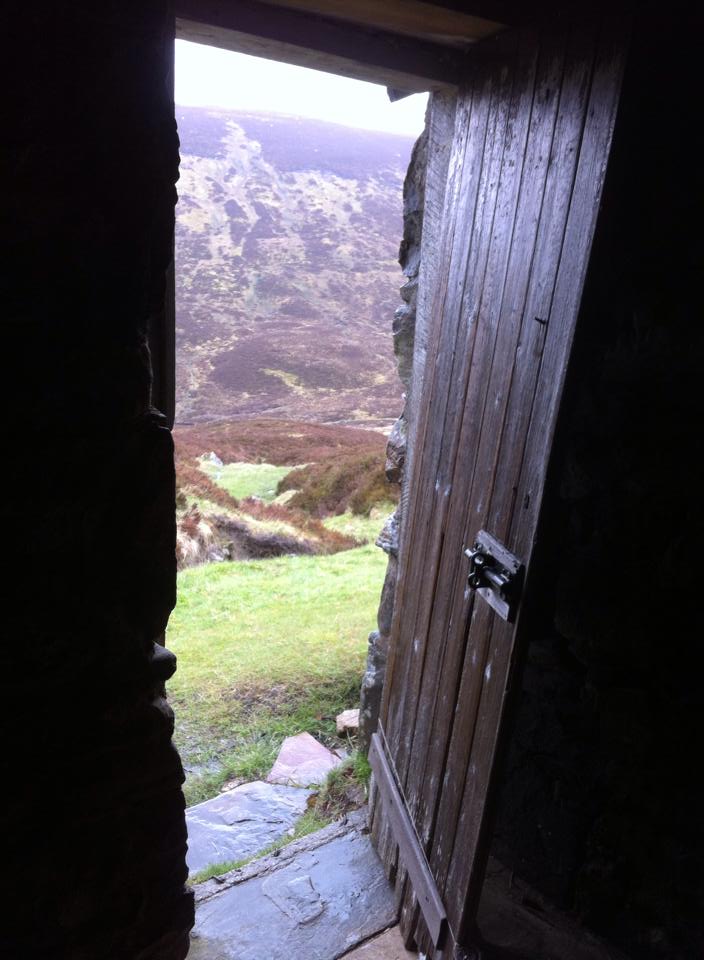
a shepherd’s bothy reeking of
coal fires spent and inked
with graffiti of hikers past.
Rising together to descend, hand
reaches for hand, palm against
palm, warm hearts slowly beat
the tempo that lasts.
This is the third poem in a series that I wrote in response to Kore-ada Hirokazu’s stunning film after life. It explores the memory that I might choose to live in for eternity, a day of rough hill walking through the heart of Scotland and over the shoulder of Schiehallion. This poem responds to the question, “When did you give or receive the most love?” I’ll share the last poem in the series next Tuesday.
Sabbath Day Thoughts — “The Unexpected Neighbor” Luke 10:25-37
Louella Fletcher could really tell a story, and she had been spinning them all afternoon. Bob said a prayer and bid her goodbye. Louella walked with him out to the porch. As the sun had dropped, afternoon flurries had intensified into huge, fast-falling flakes. A smooth blanket of snow surrounded the house, and Bob’s Subaru was shrouded in white.
“Say, Bob,” Louella said, holding onto his arm, “Maybe you should have dinner with us and spend the night. We’re awful remote, and I don’t like the look of this.”
Bob thought about Marge and Paul back home, waiting dinner for him. He remembered his meeting, first thing in the morning. “Thanks, Louella, but I’ll be ok. I’ve got all-wheel drive.”
Louella looked as if she was on the edge of another story or a word of warning, but she shrugged and gave Bob a hug, “You take care now, pastor. Be safe.”
Bob inched along, wipers thumping, defroster rushing, headlights barely making a dent in the snowy darkness. He hesitated at the pointy corner where the main road swept to the right and the seasonal road climbed to the left. The main road was likely to be better driving, but the seasonal road shaved a good ten miles off what was proving to be a long, slow trip. “O, what the hay,” Bob said, “I imagine the Subaru and I can handle a seasonal road.” The car slowly toiled up, up, up, to the top of Hotchkiss Hill.
At the summit, Bob felt a surge of relief that soon shifted to concern. He had never noticed how sharp the descent was, no switchbacks, no guardrails, and certainly no lights way out here. Feeling like a kid on a carnival ride, all fear, butterflies, and acid reflux, he steered the car onward. About half-way down the slope, building speed, deepening snow, and an unfortunate tap on the breaks got the rear end of the Subaru slaloming back and forth. “Sweet Jesus!” Bob prayed as the car spun out of control, down into the dark, headlights flashing past huge trees. With a grinding thump, the Subaru scooted off the road and into a ditch. The rear end settled against a big white pine with a bone-jarring crack. The wipers stopped, the defroster fell silent, and the headlights went dark.
Bob thanked the Lord he was still alive and fished out his cellphone. His joy at the digital glow gave way to disappointment—no signal. Bob fished a headlamp, two handwarmers, and a granola bar out of the glovebox. He opened the warmers, gave them a shake, and slipped them into his gloves. He strapped on the headlamp over his hat. Then, he turned up the collar on his coat and stepped out into more than a foot of snow. The temperature was dropping and the wind was picking up. He debated turning back to Louella’s, but if the Subaru couldn’t handle the snowy track, then his boots surely wouldn’t. It was miles and miles to town, but if he was lucky, someone might come along and help.
Petey Freudenberg was on his way home from a day of meetings at the DEC. The ranger was more at home in the woods than in an office. He resented days like this, hours spent listening to policy wonks who wouldn’t know a mink from a fisher. As Petey’s headlights swept the darkness ahead, he glumly thought that this would be the last day he could get away with taking the shortcut on the seasonal road. It would be impassable in a matter of hours.
Not too far from the bottom of Hotchkiss Hill, Petey saw the willow-the-wisp of a headlamp, dancing along the shoulder. “Durned yuppies,” he muttered under his breath, “Come up here from the city and think they’ll have a little fun snowshoeing through a blizzard.” This imbecile took the prize, even gave him a big wave and a yell before Petey dropped the truck into low and surged off up the hill and into the night.
By the time Rhonda LaMott came along in her rig, Bob’s headlamp had failed, first growing slowly dimmer and then blinking out entirely. His trail boots really weren’t meant for this sort of weather and his feet were wet and numb. He brushed the snow from his coat and hat and ducked his head against the weather.
Rhonda had just finished plowing at the QuikMart. Folks had been resistant to a woman clearing snow—said it wasn’t ladylike. But Rhonda was good and incredibly dependable. She was headed home for the evening, but she would be back in town first thing to clear away the drifts. Rhonda was thinking about hot chocolate when she caught a glimpse of something moving on the shoulder. It was big and lumbering through the snow. A moose? A man?
About fifty yards past it, Rhonda slowed to a standstill and eyed her rearview mirror. A woman on her own in the middle of the Hotchkiss bog wasn’t safe. She checked her door locks and peered into the dark. Whatever it was, it was bellowing now and running in her direction. “Jeezum Crow!” Rhonda cursed. With her heart rising into her throat, Rhoda slid the rig into gear and sent up a shower of snow as she floored it, not daring to look back.
Now Bob was really worried. His boots squelched with melted snow. At this rate, he might have to walk all night to make it to civilization. He quickened his pace, fished the granola bar from his pocket, and took an incredibly stale bite. At the top of a rise, Bob paused and patted his breast pocket for his phone. He never did find out if he was back in range. Bob turned out every pocket with the sickening realization that his cell must have fallen out when he ran after the plow. He squinted back down the road and cursed his stupidity. In Bob’s overactive imagination, he saw headlines, “Local pastor freezes to death in November blizzard” or “Winter storm claims victim” or “Local church mourns pastor.”
About a half mile down the road, Bob stopped, pushed his hat up, and cupped his hands behind his ears to listen. There it was—jingling, like Santa’s sleigh or something else, something that told him that he was out in the middle of a full-fledged snow emergency: tire chains. He strained his eyes in the dark and glimpsed two dim beams, slowly growing brighter behind him. He heard the chugga, chugga, chugga of a big diesel engine. It was now or never. Bob took a deep breath and stepped out in the middle of the road with his hands up.
Bob had never met Chester Perkins, but he had heard stories. No one was certain exactly where Chester lived, but he was definitely off the grid. Some said he was an anti-social hermit. Others thought he was related to Big Foot. Everyone agreed that he smelled bad. Chester had seen the reflective gleam of a tail light in an empty car in the ditch at the bottom of Hotchkiss Hill, and he’d been prowling up the seasonal road in his rusted-out F-350 ever since. Maybe someone hadn’t had the good sense to stay put and wait out the storm. Chester thought about the three toes he had lost to frostbite in the big storm of ‘93. Some poor fool might need help.
The F-350 creaked to a stop about a foot away from Bob, who wasn’t certain which would be worse, getting run over or dying from exposure. Chester opened the truck door and shouted through the gap, “What are you waiting for? Get in!” While Bob’s numb hands fumbled for a grip on the passenger door, Chester kicked it wide open. He reached out a strong arm and hauled Bob up onto the bench seat.
Bob didn’t know what the source of the odor was, but it smelled bad in the truck, like dead things, body odor, and bean burritos. As Bob gagged and struggled into the seat belt, Chester passed a jar. “Drink that up, son.” Something fiery and potent, maybe moonshine, blazed down Bob’s throat and kindled warmth in his chest.
Chester pointed to Bob’s sodden boots. “Get those off,” he ordered and then passed Bob a furry pelt that looked suspiciously like it had come from a large dog. “Wrap your feet in this.” Bob did, his feet looking white and waxy in the dashboard light.
“Alright then, eat this.” Chester handed Bob a tough, salty chunk of jerky. Bob briefly wondered what sort of meat it could be but figured it was safe when Chester broke off a big hunk and began gnawing on some himself.
Chester dropped the truck into first and they crept toward town. “Where to?” he wanted to know.
“If you could take me to the manse at the Presbyterian Church, I’d be so grateful,” Bob answered, still finding it hard to believe that he just might make it out of this alive. They rode on for a few miles in silence.
Chester gave Bob a sidelong glance, “Man of God, huh? I never been to church.” Bob wasn’t sure how to respond to that. Certainly, if Chester had ever come to church, it would have been an unforgettable occasion.
With a sweep of his arm that took in the wind, snow, night, forest, darkness, Chester said, “This is my god.”
Bob nodded, thinking that Chester’s god had almost gotten the better of him that evening.
Maybe it was the moonshine, or the warmth of the animal skin on his feet, or the chugging of the truck that did it. Bob’s head fell to his chest, and the next thing he knew, they were in town, parked in front of the manse. Every light in the house was on, and Bob could see into the kitchen, where Marge looked like she was shouting into the telephone.
Bob pulled on his boots and turned to Chester, “I think you saved my life. How can I ever repay you?”
“No trouble,” Chester answered, “but it wouldn’t hurt if you promised to never do that again.”
“I promise, I really do,” Bob answered, shaking Chester’s grimy hand and knowing the grace of miraculous second chances and improbable saviors.
Chester chugged off into the night while Bob waved from the top step. Marge opened the front door, “Thank God! You’re home, Bob! We’ve been worried sick. Who was that?”
Bob reached an arm around Marge and watched as taillights disappeared at the end of the block. “Marge, that was a neighbor, a true-blue neighbor. Thank God, indeed.”
Poem for a Tuesday — “A Wind from God” by Joann White
In the beginning God created the heavens and the earth. — Genesis 1:1
There comes a point
in every climb when
the need for breath
and the ache of
legs push aside every
unneeded thought. There is
no room for the
church I carry, the
mistakes I’ve made, the
lies I’ve told, the
truth I cannot speak,
the years of too
little love, the children
I never had, the
future I fear. Emptied,
I simply am rocks
beneath boots, snow reaching
down from Meall Liath,
lambs suckling with wagging
tails, the fairy mountain
hidden by mist, the
shielings of my ancestors,
red deer watching wary,
oily water oozing from
yards-deep peat. God breathes
in me and I
am recreated, a new
Eve, utterly insignificantly at
home in the web
that has been woven.
This is the second poem in a series that I wrote in response to Kore-ada Hirokazu’s stunning film after life. It explores the memory that I might choose to live in for eternity, a day of rough hill walking through the heart of Scotland and over the shoulder of Schiehallion. This poem responds to the question, “When did you best know your place amid creation?” I’ll share the subsequent poems on the next two Tuesdays.