You Are Welcome

Sabbath Day Thoughts — “You Are Welcome” Acts 8:26-38

Not everyone feels welcome in church.

Visitors or newcomers to churches can feel uncomfortable. On Sunday mornings as the church fills and old friends turn to one another in the pews to chat and catch up on the latest news, visitors may feel like socially awkward outsiders who have crashed a private party. A national survey found that over 70% of newcomers say that being singled out as a visitor in a church service is deeply uncomfortable. Asked to stand and introduce themselves or to turn and greet their neighbors with the peace of Christ, they feel the painful discomfort of public scrutiny as every eye checks them out or complete strangers want to shake their hands—or worse—hug them.

Lord, forbid that someone new sits in our pew. One Sunday a number of years ago, I spotted those golden girls Dot Shene and Norma Neese, sitting in a different place in the sanctuary. During the passing of the peace, I congratulated them on trying a seat near the front. Dot, clearly irritated, said, “We had to.” Then, Norma turned and pointed to a couple of guests, seated in their beloved back pew. “They took our seats!” she lamented loudly.

I thought that was pretty bad until I had a Sunday off and went to worship at the Tupper Lake church, where I have served as the moderator for many years. I arrived a little early and chose a seat. Then during the opening hymn, two late arrivers came and stood next to my pew. I smiled at them. “You’re in our seat,” I was told. Although I offered to move over or let them by, they weren’t happy until I had moved to a different pew.

It’s not unusual for church signs out front to bear the words, “All are welcome,” but are they really?

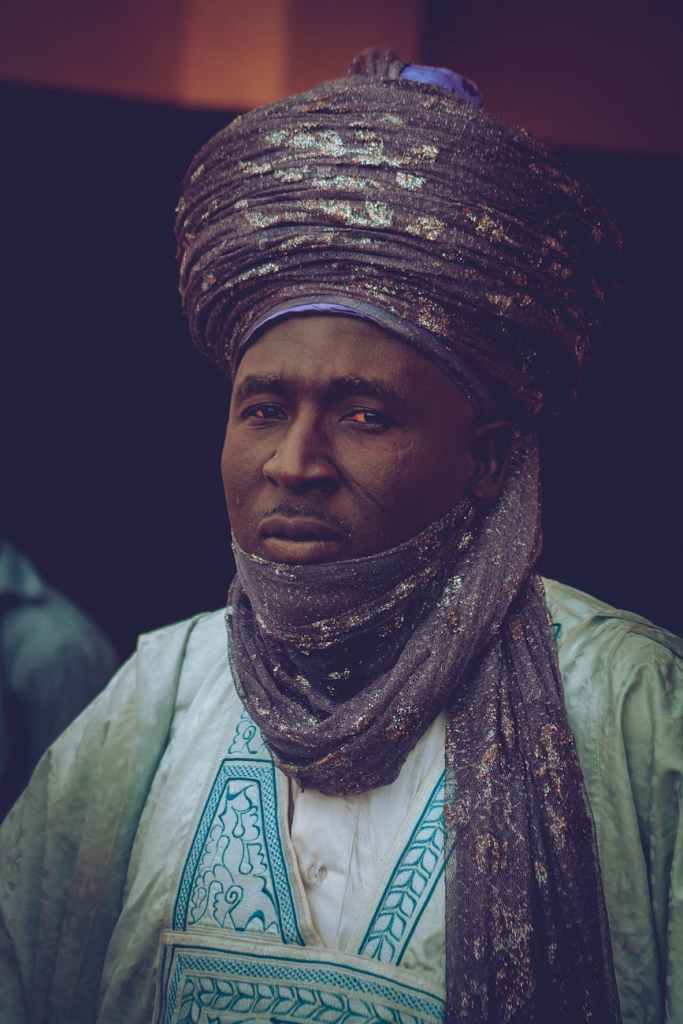
The Ethiopian Eunuch knew how it feels to be unwelcome in church. He was a man of status and power. In an ancient world that prized the beauty of black skin above all else, he was gorgeous. He served in the royal court of his homeland, managing the great wealth of his queen, the Candace. In a world where few people were literate, he was cultured, fluent in Greek, and a student of the Torah. He had spent a small fortune on the scroll of the Prophet Isaiah. He had come to Jerusalem on a great pilgrimage of many miles with a retinue of servants to worship and pray.

The Bible scholars point out that when the eunuch arrived at the Jerusalem Temple, he would have been denied entry. We don’t know how he came to be a eunuch, whether he was born that way, was injured in some horrible accident, or had to say goodbye to his “manhood” before he could become the Treasury Secretary, but it was who he was. He couldn’t do anything about it. He probably heard some less than welcoming scripture quoted to him in Jerusalem, like Deuteronomy 23 and Leviticus 21, which say that anyone with his “problem” cannot be admitted to the assembly or approach God with an offering because it would profane the sanctuary. 

I wonder if we can imagine what it would feel like to be the Ethiopian eunuch, to love God and fear that God did not love him, would never love him, no matter how many pilgrimages he made or prayers he said. As the Ethiopian Eunuch rattled home in his chariot, he read the words of Isaiah 53, which tell of God’s servant who silently suffers in humiliation. Those words must have tugged at his heartstrings, as if they were written about him.

Of course, we don’t have to be a church visitor sitting in the “wrong” pew or the Ethiopian eunuch to wonder if God loves us. Our feelings of welcome and acceptance are also shaped by who we are. The church universal has historically been less than hospitable to some people more than others. Many have had bad church experiences in which they feel judged and condemned. Those who have been divorced may not feel welcome. Those who choose to live together outside of marriage may not feel welcome. Those who are single parents may not feel welcome. My LGBTQ friends and family all have painful stories to share of leaving churches where they were not accepted unless they stayed in the closet. Young people with blue hair, plenty of piercings, or an abundance of tattoos describe the shocked stares and alienating whispers of people in the pews. Even when we look like everyone else, we may harbor secret hurts or shame or bad experiences that make us wonder along with the Ethiopian eunuch, “Is God’s love for me? Is God’s love for us?”

The Ethiopian Eunuch might have stayed an outsider if the Holy Spirit hadn’t stepped in and taken some bold action. The Spirit found the right man for the job, Philip. He wasn’t afraid of those who had been labeled outsiders. In fact, Philip got his start as an evangelist by taking the gospel to the Samaritans, traditional enemies of Israel. So, when the Holy Spirit sent him running down the Gaza Road, Philip was ready. He climbed into the Ethiopian man’s chariot, caught his breath, and began to tell his new friend about Jesus of Nazareth, the fulfillment of Isaiah’s prophecy about a holy servant who was rejected by those he was sent to redeem and suffered for the world’s sins.

As Philip told the good news of Jesus’ ministry, of how Jesus welcomed the outsider, healed the sick, blessed the children, and counted women among his disciples, his Ethiopian neighbor began to get excited.  Really excited. He imagined the possibility that if Jesus had anything to say about it, God might just welcome him, might welcome a person who looked and felt like he did. If the eunuch or Philip questioned what the Holy Spirit intended for them, those questions disappeared as a strange sight shimmered on the desert horizon: a pool of water, sparkling in the midday sun. It was unthinkable, impossible even, but there it was, a big baptismal pool in the middle of that dry and dusty landscape.

Finally, the Ethiopian Eunuch could contain himself no longer, this man who had been excluded from the Temple and made to feel unwelcome in God’s House dared to imagine that he, too, was loved. “Look, here is water!  What is to prevent me from being baptized?” And in response, Philip did not quote Deuteronomy 23 or Leviticus 21. Instead, by the power of the Holy Spirit that had sent him running down the Gaza Road, Philip knew that no one is ever beyond the limits of God’s unfathomably big love.  All were welcomed. All might be claimed in the waters of baptism as God’s beloved children. The driver reined in the horses. The chariot came to a halt. And Philip with his new Ethiopian friend waded into the waters of a love that would not let them go.

It’s a wild and scandalous story that tugs at our heartstrings. It tells the simple truth that God welcomes us when the world—or the church—will not. All are welcome to these waters and claimed as sons and daughters of a holy parent who has a place for us at the table and a home for us in the kingdom. It’s a story that invites us to know our belovedness. It’s a story that dares us to be a more loving people. The Holy Spirit calls to us, as the Spirit did to Philip, setting our feet on the path to welcome and inclusion, to meet people where they are at, to open our eyes and hearts to those who are new. The Spirit calls us to judge less and welcome more. Perhaps we’ll even loosen our death grip on that favorite pew. Perhaps one day all churches will be as welcoming as Jesus.

The freshly baptized Ethiopian Eunuch rode off down the Gaza Road, full of joy and alleluias.  They say that he became the great evangelist of Africa, telling the Candace—and anyone who would listen—all about a God who loves limitlessly, who became flesh, lived and taught, healed and suffered, died and rose again to make that limitless holy love known to all people—a God who is still trying to get that message out even now.

Resources

Matt Skinner. “Commentary on Acts 8:26-40” in Preaching This Week, May 2, 2021. Accessed online at https://www.workingpreacher.org/commentaries/revised-common-lectionary/fifth-sunday-of-easter-2/commentary-on-acts-826-40

Mitzi Smith. “Commentary on Acts 8:26-40” in Preaching This Week, May 6, 2012. Accessed online at https://www.workingpreacher.org/commentaries/revised-common-lectionary/fifth-sunday-of-easter-2/commentary-on-acts-826-40-2

Richard Jensen. “Commentary on Acts 8:26-40” in Preaching This Week, May 10, 2009. Accessed online at https://www.workingpreacher.org/commentaries/revised-common-lectionary/fifth-sunday-of-easter-2/commentary-on-acts-826-40-3

F. Scott Spencer. “Commentary on Acts 8:26-40” in Preaching This Week, April 28, 2024. Accessed online at https://www.workingpreacher.org/commentaries/revised-common-lectionary/fifth-sunday-of-easter-2/commentary-on-acts-826-40-5


Acts 8:26-38

26 Then an angel of the Lord said to Philip, “Get up and go toward the south to the road that goes down from Jerusalem to Gaza.” (This is a wilderness road.) 27 So he got up and went. Now there was an Ethiopian eunuch, a court official of the Candace, the queen of the Ethiopians, in charge of her entire treasury. He had come to Jerusalem to worship 28 and was returning home; seated in his chariot, he was reading the prophet Isaiah. 29 Then the Spirit said to Philip, “Go over to this chariot and join it.” 30 So Philip ran up to it and heard him reading the prophet Isaiah. He asked, “Do you understand what you are reading?” 31 He replied, “How can I, unless someone guides me?” And he invited Philip to get in and sit beside him. 32 Now the passage of the scripture that he was reading was this:

“Like a sheep he was led to the slaughter,
    and like a lamb silent before its shearer,
        so he does not open his mouth.
33 In his humiliation justice was denied him.
    Who can describe his generation?
        For his life is taken away from the earth.”

34 The eunuch asked Philip, “About whom, may I ask you, does the prophet say this, about himself or about someone else?” 35 Then Philip began to speak, and starting with this scripture he proclaimed to him the good news about Jesus. 36 As they were going along the road, they came to some water, and the eunuch said, “Look, here is water! What is to prevent me from being baptized?” 38 He commanded the chariot to stop, and both of them, Philip and the eunuch, went down into the water, and Philip baptized him.


Be Opened

Sabbath Day Thoughts — “Be Opened” Mark 7:24-37

When I came to Saranac Lake in January 2005, we needed a new sign for the church. The old sign was made many years ago by Skip’s Dad. The wooden boards were lovingly hand-routed and painted. But too many Adirondack winters had taken their toll. Session debated the size, shape, and color of the replacement sign. But what inspired most discussion was the message we included, which felt a little radical at the time, “All are welcome.”

When session decided to broadcast that message, we were remembering the years of conflict that we were leaving behind. We wanted to send a hopeful, healing message to the community, a message to inspire those who felt a little like outsiders to come on in. I know that it worked on at least one occasion. One Sunday, a couple of out-of-town visitors in full motorcycle gear joined us for worship. They wore black jackets, chaps, and big motorcycle boots. The back pew had never seen so much leather.  In visiting with them after the service, they said that they had wanted to go to church somewhere in Saranac Lake but felt a little uncomfortable about their appearance. They finally decided that any church that put “All are welcome” on the sign was their best bet for warm hospitality. I hope that we lived up to their expectations.

In Jesus’ day, religious traditionalists had strong opinions about who was and was not welcome, not only in church but also in God’s Kingdom. Mark’s seventh chapter explores this question of God’s acceptance and welcome. In the verses leading up to today’s reading, Jesus was under attack by the Pharisees and scribes. Those religious traditionalists looked at Jesus’ disciples, saw their failure to observe rituals of purity, like handwashing before eating, and decided that neither the disciples nor Jesus was holy enough. In their opinion, failure to keep the traditions of the elders rendered the disciples unclean and unwelcome in the eyes of God.

In some of the boldest teaching of his ministry, Jesus denounced this narrow-minded belief. Jesus argued that it is what comes out of a person that separates them from God and neighbor. God was less concerned about handwashing or a kosher diet and more concerned about idolatry, adultery, theft, hypocrisy, slander, and malice.

The two encounters in today’s gospel reading probably stretched even Jesus’ understanding of God’s welcome. After his clash with his opponents, Jesus withdrew to the seaside city of Tyre beyond the Galilee, seeking a quiet place to pray and find refreshment. But the word soon got out. It wasn’t long before there was a knock on the door. Jesus was beseeched for healing, and he wasn’t very happy about it.

The woman who implored Jesus to heal her child had three strikes against her.  She was a Gentile, outside the covenant between God and Israel. Not only was she a Gentile, she was the worst sort of Gentile—a Syro-Phoenician. The evilest woman in the Hebrew scriptures, Jezebel, was a Syro-Phoenician princess who brought idolatry and immorality to the reign of her Israelite husband King Ahab. What’s even worse, this woman was flouting the bounds of good behavior. In a time and place when women didn’t speak to men outside their family, she was on her knees, imploring a strange man to do her a favor. Utterly scandalous!  Jesus had every reason to say, “No.” Indeed, the Pharisees and scribes, with whom Jesus had recently argued, would have congratulated him on his good judgment. When Jesus called the woman a “dog,” he sounded a lot more like them than he did like the Jesus we know and love. Didn’t he?

The gospel might have stayed good news only for Jews if the Syro-Phoenician woman hadn’t challenged Jesus. She demanded just a few crumbs of God’s welcome for Gentile dogs, like her sick child. In response, we glimpse a shift in Jesus’ understanding. He sees that, in his Father’s Kingdom, this woman didn’t belong under the table, begging for table scraps. In his Father’s Kingdom, she had a place at the table, alongside the children of Israel. The proof of Jesus’ insight came immediately. Jesus blessed her for her bold speech, in Greek—her logos, her word, her wisdom—and he sent her home. There she found her child waiting, right as rain.

Perhaps Jesus struggled with the boldness of God’s welcome because he soon encountered another healing request that would have been out-of-bounds for scribes and Pharisees. As Jesus returned to Galilee, he traveled through the Decapolis, the ten city-states to the east of the sea.  These communities, planted three hundred years earlier when Alexander the Great claimed Israel for his empire, were largely Gentile and culturally Greek. When those Greek neighbors brought to Jesus a man who was hearing- and speech-impaired, Jesus didn’t rebuke them or call them dogs. Instead, the suffering man got a private audience. There was touching and spitting, speaking and sighing. Jesus’ word, “Ephphatha”—be opened—may have been part of the man’s healing experience, but perhaps it was also part of Jesus’ own healing experience—and a calling to all who would be his followers. “Ephphatha”—be opened. Don’t build fences or set limits on God’s love.

Mark’s seventh chapter is a great comfort to us. We, who have lived enough or have the depth of faith to acknowledge our personal sinfulness and brokenness, can rejoice in the promise that God loves and welcomes us, despite our painful pasts and our present mistakes. We are welcome, and there isn’t anything that we can do that will render us unlovable or irredeemable. Jesus has done the hard work on the cross so that even though our sins abound, his righteousness prevails. There is a place for us at the table. Thank you, Lord.

Yet Mark’s seventh chapter is a challenge to us. Part of our human sinfulness is that we always want to draw lines, create in-groups and out-groups. We see it in high school cliques. We see it in partisan politics. We even see it in our penchant to form factions within churches or denominations. There lurks within each of us the scribe or Pharisee, who keeps watch, rushes to judgment, and wants to limit God’s love. Today’s reading suggests that God invites us to get over ourselves and get out of God’s way so that healing may abound. God’s great longing is for a church and a world where no one feels like they have to beg for table scraps when it comes to God’s love and mercy.

I’m not sure that when session approved the words, “All are welcome,” for the sign out front that we thought we were making a bold theological statement, right out of the seventh chapter of Mark’s gospel. We just wanted folks to worship with us. We may have even wanted to send a friendly message to those who had left us, with whom we had quarreled so bitterly in the dark, divided days of our past. But perhaps when we chose that message, God was working on us. God was summoning us to open up, to see the immensity of God’s love and welcome.

I suspect that if Jesus were sitting in the back pew today, wearing his motorcycle leathers, he would remind us that God isn’t finished with us. There are other people out there whom God calls us to welcome, folks who will test our limits and make us feel uncomfortable. I bet they will have tattoos and body piercings. They’ll probably love people whom we don’t think they should love. I imagine that some of them will be developmentally disabled or mentally ill or physically impaired. They’ll probably have big, obnoxious placards in their front yards for candidates from that other political party. They’ll drive gas-guzzling Cadillac Escalades or energy-efficient Teslas. They’ll stand in line in front of us at Stewart’s and make us wait while they buy cigarettes and a billion lottery tickets. The’ll stumble up Broadway after a long night at the Rusty Nail.

Be opened, my friends. God’s love is bigger than we can imagine.

Resources

Alyce McKenzie. “Commentary on Mark 7:24-37” in Preaching This Week, Sept. 6, 2009. Accessed online at Commentary on Mark 7:24-37 – Working Preacher from Luther Seminary

Matt Skinner. “Commentary on Mark 7:24-37” in Preaching This Week, Sept. 9, 2012. Accessed online at Commentary on Mark 7:24-37 – Working Preacher from Luther Seminary

C. Clifton Black. “Commentary on Mark 7:24-37” in Preaching This Week, Sept. 5, 2012. Accessed online at Commentary on Mark 7:24-37 – Working Preacher from Luther Seminary

Courtney V. Buggs. “Commentary on Mark 7:24-37” in Preaching This Week, Sept. 8, 2024. Accessed online at Commentary on Mark 7:24-37 – Working Preacher from Luther Seminary

Joann White. “Everyone Gets Healed,” Sept. 9, 2012.


Mark 7:24-37

24 From there he set out and went away to the region of Tyre. He entered a house and did not want anyone to know he was there. Yet he could not escape notice, 25 but a woman whose little daughter had an unclean spirit immediately heard about him, and she came and bowed down at his feet. 26 Now the woman was a gentile, of Syrophoenician origin. She begged him to cast the demon out of her daughter. 27 He said to her, “Let the children be fed first, for it is not fair to take the children’s food and throw it to the dogs.” 28 But she answered him, “Sir, even the dogs under the table eat the children’s crumbs.” 29 Then he said to her, “For saying that, you may go—the demon has left your daughter.” 30 And when she went home, she found the child lying on the bed and the demon gone.

31 Then he returned from the region of Tyre and went by way of Sidon toward the Sea of Galilee, in the region of the Decapolis. 32 They brought to him a deaf man who had an impediment in his speech, and they begged him to lay his hand on him. 33 He took him aside in private, away from the crowd, and put his fingers into his ears, and he spat and touched his tongue. 34 Then looking up to heaven, he sighed and said to him, “Ephphatha,” that is, “Be opened.” 35 And his ears were opened, his tongue was released, and he spoke plainly. 36 Then Jesus ordered them to tell no one, but the more he ordered them, the more zealously they proclaimed it. 37 They were astounded beyond measure, saying, “He has done everything well; he even makes the deaf to hear and the mute to speak.”


Photo by Kevin Bidwell on Pexels.com