You Are Welcome

Sabbath Day Thoughts — “You Are Welcome” Acts 8:26-38

Not everyone feels welcome in church.

Visitors or newcomers to churches can feel uncomfortable. On Sunday mornings as the church fills and old friends turn to one another in the pews to chat and catch up on the latest news, visitors may feel like socially awkward outsiders who have crashed a private party. A national survey found that over 70% of newcomers say that being singled out as a visitor in a church service is deeply uncomfortable. Asked to stand and introduce themselves or to turn and greet their neighbors with the peace of Christ, they feel the painful discomfort of public scrutiny as every eye checks them out or complete strangers want to shake their hands—or worse—hug them.

Lord, forbid that someone new sits in our pew. One Sunday a number of years ago, I spotted those golden girls Dot Shene and Norma Neese, sitting in a different place in the sanctuary. During the passing of the peace, I congratulated them on trying a seat near the front. Dot, clearly irritated, said, “We had to.” Then, Norma turned and pointed to a couple of guests, seated in their beloved back pew. “They took our seats!” she lamented loudly.

I thought that was pretty bad until I had a Sunday off and went to worship at the Tupper Lake church, where I have served as the moderator for many years. I arrived a little early and chose a seat. Then during the opening hymn, two late arrivers came and stood next to my pew. I smiled at them. “You’re in our seat,” I was told. Although I offered to move over or let them by, they weren’t happy until I had moved to a different pew.

It’s not unusual for church signs out front to bear the words, “All are welcome,” but are they really?

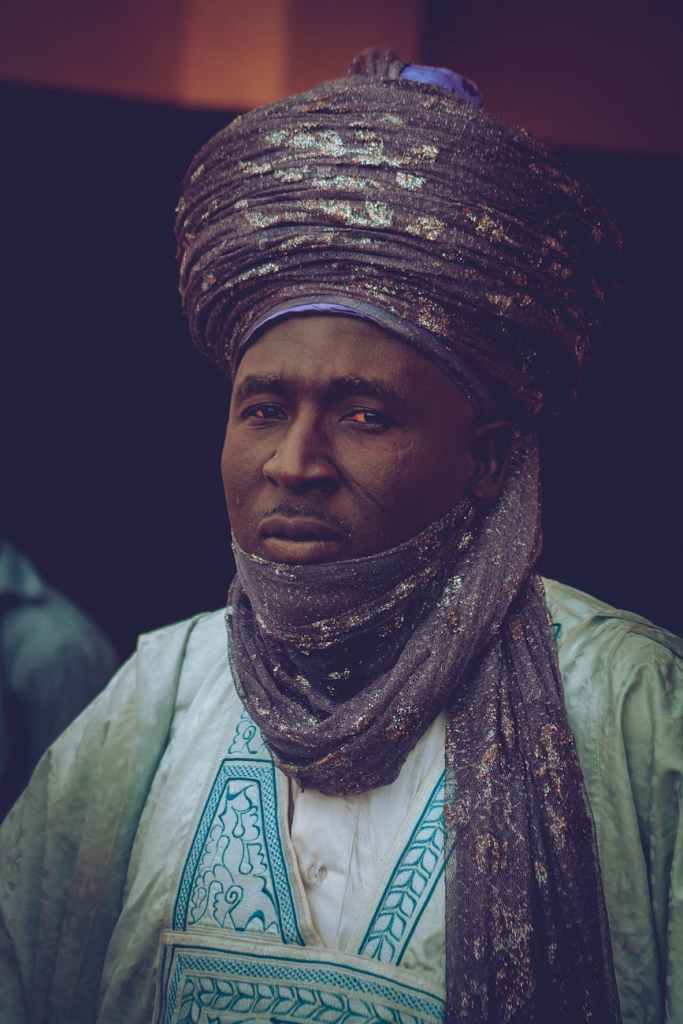
The Ethiopian Eunuch knew how it feels to be unwelcome in church. He was a man of status and power. In an ancient world that prized the beauty of black skin above all else, he was gorgeous. He served in the royal court of his homeland, managing the great wealth of his queen, the Candace. In a world where few people were literate, he was cultured, fluent in Greek, and a student of the Torah. He had spent a small fortune on the scroll of the Prophet Isaiah. He had come to Jerusalem on a great pilgrimage of many miles with a retinue of servants to worship and pray.

The Bible scholars point out that when the eunuch arrived at the Jerusalem Temple, he would have been denied entry. We don’t know how he came to be a eunuch, whether he was born that way, was injured in some horrible accident, or had to say goodbye to his “manhood” before he could become the Treasury Secretary, but it was who he was. He couldn’t do anything about it. He probably heard some less than welcoming scripture quoted to him in Jerusalem, like Deuteronomy 23 and Leviticus 21, which say that anyone with his “problem” cannot be admitted to the assembly or approach God with an offering because it would profane the sanctuary. 

I wonder if we can imagine what it would feel like to be the Ethiopian eunuch, to love God and fear that God did not love him, would never love him, no matter how many pilgrimages he made or prayers he said. As the Ethiopian Eunuch rattled home in his chariot, he read the words of Isaiah 53, which tell of God’s servant who silently suffers in humiliation. Those words must have tugged at his heartstrings, as if they were written about him.

Of course, we don’t have to be a church visitor sitting in the “wrong” pew or the Ethiopian eunuch to wonder if God loves us. Our feelings of welcome and acceptance are also shaped by who we are. The church universal has historically been less than hospitable to some people more than others. Many have had bad church experiences in which they feel judged and condemned. Those who have been divorced may not feel welcome. Those who choose to live together outside of marriage may not feel welcome. Those who are single parents may not feel welcome. My LGBTQ friends and family all have painful stories to share of leaving churches where they were not accepted unless they stayed in the closet. Young people with blue hair, plenty of piercings, or an abundance of tattoos describe the shocked stares and alienating whispers of people in the pews. Even when we look like everyone else, we may harbor secret hurts or shame or bad experiences that make us wonder along with the Ethiopian eunuch, “Is God’s love for me? Is God’s love for us?”

The Ethiopian Eunuch might have stayed an outsider if the Holy Spirit hadn’t stepped in and taken some bold action. The Spirit found the right man for the job, Philip. He wasn’t afraid of those who had been labeled outsiders. In fact, Philip got his start as an evangelist by taking the gospel to the Samaritans, traditional enemies of Israel. So, when the Holy Spirit sent him running down the Gaza Road, Philip was ready. He climbed into the Ethiopian man’s chariot, caught his breath, and began to tell his new friend about Jesus of Nazareth, the fulfillment of Isaiah’s prophecy about a holy servant who was rejected by those he was sent to redeem and suffered for the world’s sins.

As Philip told the good news of Jesus’ ministry, of how Jesus welcomed the outsider, healed the sick, blessed the children, and counted women among his disciples, his Ethiopian neighbor began to get excited.  Really excited. He imagined the possibility that if Jesus had anything to say about it, God might just welcome him, might welcome a person who looked and felt like he did. If the eunuch or Philip questioned what the Holy Spirit intended for them, those questions disappeared as a strange sight shimmered on the desert horizon: a pool of water, sparkling in the midday sun. It was unthinkable, impossible even, but there it was, a big baptismal pool in the middle of that dry and dusty landscape.

Finally, the Ethiopian Eunuch could contain himself no longer, this man who had been excluded from the Temple and made to feel unwelcome in God’s House dared to imagine that he, too, was loved. “Look, here is water!  What is to prevent me from being baptized?” And in response, Philip did not quote Deuteronomy 23 or Leviticus 21. Instead, by the power of the Holy Spirit that had sent him running down the Gaza Road, Philip knew that no one is ever beyond the limits of God’s unfathomably big love.  All were welcomed. All might be claimed in the waters of baptism as God’s beloved children. The driver reined in the horses. The chariot came to a halt. And Philip with his new Ethiopian friend waded into the waters of a love that would not let them go.

It’s a wild and scandalous story that tugs at our heartstrings. It tells the simple truth that God welcomes us when the world—or the church—will not. All are welcome to these waters and claimed as sons and daughters of a holy parent who has a place for us at the table and a home for us in the kingdom. It’s a story that invites us to know our belovedness. It’s a story that dares us to be a more loving people. The Holy Spirit calls to us, as the Spirit did to Philip, setting our feet on the path to welcome and inclusion, to meet people where they are at, to open our eyes and hearts to those who are new. The Spirit calls us to judge less and welcome more. Perhaps we’ll even loosen our death grip on that favorite pew. Perhaps one day all churches will be as welcoming as Jesus.

The freshly baptized Ethiopian Eunuch rode off down the Gaza Road, full of joy and alleluias.  They say that he became the great evangelist of Africa, telling the Candace—and anyone who would listen—all about a God who loves limitlessly, who became flesh, lived and taught, healed and suffered, died and rose again to make that limitless holy love known to all people—a God who is still trying to get that message out even now.

Resources

Matt Skinner. “Commentary on Acts 8:26-40” in Preaching This Week, May 2, 2021. Accessed online at https://www.workingpreacher.org/commentaries/revised-common-lectionary/fifth-sunday-of-easter-2/commentary-on-acts-826-40

Mitzi Smith. “Commentary on Acts 8:26-40” in Preaching This Week, May 6, 2012. Accessed online at https://www.workingpreacher.org/commentaries/revised-common-lectionary/fifth-sunday-of-easter-2/commentary-on-acts-826-40-2

Richard Jensen. “Commentary on Acts 8:26-40” in Preaching This Week, May 10, 2009. Accessed online at https://www.workingpreacher.org/commentaries/revised-common-lectionary/fifth-sunday-of-easter-2/commentary-on-acts-826-40-3

F. Scott Spencer. “Commentary on Acts 8:26-40” in Preaching This Week, April 28, 2024. Accessed online at https://www.workingpreacher.org/commentaries/revised-common-lectionary/fifth-sunday-of-easter-2/commentary-on-acts-826-40-5


Acts 8:26-38

26 Then an angel of the Lord said to Philip, “Get up and go toward the south to the road that goes down from Jerusalem to Gaza.” (This is a wilderness road.) 27 So he got up and went. Now there was an Ethiopian eunuch, a court official of the Candace, the queen of the Ethiopians, in charge of her entire treasury. He had come to Jerusalem to worship 28 and was returning home; seated in his chariot, he was reading the prophet Isaiah. 29 Then the Spirit said to Philip, “Go over to this chariot and join it.” 30 So Philip ran up to it and heard him reading the prophet Isaiah. He asked, “Do you understand what you are reading?” 31 He replied, “How can I, unless someone guides me?” And he invited Philip to get in and sit beside him. 32 Now the passage of the scripture that he was reading was this:

“Like a sheep he was led to the slaughter,
    and like a lamb silent before its shearer,
        so he does not open his mouth.
33 In his humiliation justice was denied him.
    Who can describe his generation?
        For his life is taken away from the earth.”

34 The eunuch asked Philip, “About whom, may I ask you, does the prophet say this, about himself or about someone else?” 35 Then Philip began to speak, and starting with this scripture he proclaimed to him the good news about Jesus. 36 As they were going along the road, they came to some water, and the eunuch said, “Look, here is water! What is to prevent me from being baptized?” 38 He commanded the chariot to stop, and both of them, Philip and the eunuch, went down into the water, and Philip baptized him.


With Glad and Generous Hearts

Sabbath Day Thoughts — “With Glad and Generous Hearts” Acts 2:42-47

She was just so darned cute. Strawberry-blonde curls, big blue eyes in a rounded heart-shaped face, a smattering of freckles strewn across her cheeks—what my Grandmommie referred to as the “Angel’s Kisses.” Strangers stopped in the grocery to pinch her cheeks. The batting of those big blue eyes earned her sips of other’s drinks or bites of their snacks. You know the kind of kid I am talking about. Irresistible!

We shared a room for years during which time I was the Felix to her Oscar. I lined my toys up in careful rows while hers were scattered about in joyful chaos. Science experiments of old food and medicine cabinet concoctions moldered beneath her bed while my floor might harbor a lonely dust bunny. My crayons were never broken and always carefully packed away in their original box after coloring. Her crayons were often where she left them: scattered across the table, kicked beneath the radiator, broken to bits and added to those aforementioned science experiments. My clothes were folded and tucked away in drawers. Hers lingered in wrinkled piles on the floor until our mother insisted that they go in the hamper where they belonged.

We resolved our differences by angling an imaginary line down the center of the room. Her side was a marvel of mayhem. My side was proto-Presbyterian—everything decent and in order. I silently rejoiced when our family moved to a larger home when I was nine and I got my own room that doubled as the guestroom. It was easier to share with visiting kin than it was with my sister. But even in my new space there were signs of little fingers constantly touching my stuff. Clothes with mysterious stains, toys askew, doors ajar. Sharing is not easy.

Our reading from the Acts of the Apostles reveals radical acts of generosity and sharing in the early church. It wasn’t long after Pentecost. God had poured out the Holy Spirit upon timid disciples, and before you could say lickety-split, they were preaching to complete strangers in ways that changed minds and prompted belief. That Pentecost Spirit must have also inspired their life in community: warm fellowship, homes opened for bountiful meals, dedicated times of prayer in the Temple, and radical sharing—possessions sold and proceeds distributed for the good of all. It was a community so remarkable, so appealing, that everyone wanted a piece of that. Day by day, the Lord added to their number.

It didn’t stop there, either. If we keep reading Acts, we learn about the Cypriot rabbi Barnabas, Paul’s friend. He saw the need in Jerusalem and sold everything he owned—that’s right everything—and gave it to the apostles. Then there was Lydia, the first Greek to accept the gospel. No sooner had she been baptized than she insisted that Paul and his friends stay with her in Philippi, a long friendship that would help fund much of Paul’s outreach to the Gentiles. And then Paul himself, when he learned that there was a famine in Jerusalem, barnstormed through his Gentile churches seeking financial gifts to relieve the pressing hunger of their Jewish Christian kin. That’s a lot of sharing.

According to Bible scholar and historian Rita Halteman Finger, for the past 500 years, since the Reformation, western Christians have played down the nature of the early Christian community and the importance of sharing. It’s been argued that the community described in Acts is symbolic and idealized. They say these practices were likely just short-lived and limited. It’s really not practical in today’s context or with today’s people. After all, we are a sinful lot, prone to self-interest. We may want this sort of community, but let’s get real. It’s pretty pie in the sky. Matthew Skinner, who teaches at Luther Seminary, uncomfortably points out that it is tempting for us to write off today’s scripture reading, because if we take it seriously, then it will cost us, and we are not sure we want to pay that price.

In some ways, Matt Skinner is right. Unbridled generosity, heartfelt sharing, isn’t easy. Let’s face it, every dollar in the offering plate is a dollar not squirreled way in our 401k or IRA for our retirement. Sure, we want to help the poor, but we also want to make sure our generosity is merited and well-spent. Is the recipient someone who will turn their life around and pay it forward to another? Is this someone who is truly deserving, who works hard but has more month than money? Or, maybe we feel that we have worked hard for what we have and others can do what we did—they can pull themselves up by their own bootstraps, too. Or, maybe we are burned out on giving in a world where the enormity of need is simply overwhelming.

We long for the beloved community. We want to live with glad and generous hearts. But some days, it is a whole lot easier to draw an imaginary line down the center of the room. Some days, it is easier to look the other way or close our eyes to our neighbor’s need, trusting that someone else will step up. Some days, it is easier to say, “America first,” gut our support of USAID, and shrug off the consequences for our global neighbors, from closure of medical clinics, to the end of life-saving immunizations and medications, to the spread of AIDS and tuberculosis. We long for the beloved community, but sharing is hard. Help us, Jesus.

Maybe that early Christian community in the Acts of the Apostles can help us, too. Those glad and generous hearts were nurtured in a fellowship that devoted themselves to the apostles’ teaching, to being together, to the breaking of bread, and to the prayers. They listened to stories of the life that the apostles shared with Jesus. They meditated upon the Lord’s Sermon on the Mount, and the parables, and the great commandment to love God and neighbor. They shared favorite recipes and laughed around the table. They watched one another’s children and celebrated the little joys—first tooth, first steps, first words. They broke the bread and lifted the cup, remembering how Jesus had done this in the Last Supper. They prayed hard, going to the Temple at the appointed times, praying for one another’s concerns, and listening for the leading of the Holy Spirit.

In that fertile mix of fellowship and spirituality, they began to change. They considered the limitless love of God for them and saw that all they had and all they were was God’s gracious gift. They pondered the generous love of Jesus, who welcomed strangers, taught unlikely disciples, included women, blessed children, forgave sinners, and poured out his very life to reconcile them to God and one another. As they came to understand God’s limitless love for them, a love that was revealed so completely in Jesus, their hearts softened. Their hands opened. They lived with glad and generous hearts.

So perhaps we can prove wrong that 500-year history of biblical interpretation that argues that the beloved community of the Acts of the Apostles is just an idealized, pie-in-the-sky, rose-colored-glasses kind of place. Perhaps we can prove that the beloved community is real and here and now. We can begin by devoting ourselves to the apostles’ teachings—feasting on the Word in worship and through the weekly Bible Study. We can forge fellowship with shared meals and shared lives, whether we are enjoying coffee hour hospitality or digging into the best potluck in town on Committee Night, whether we are cooking up a hot dish for someone laid up with illness or knitting and crocheting prayer shawls with Heart and Hands, whether we are getting our hands dirty in the church garden or singing together in the choir. We can pray hard, sharing our joys and concerns in worship, interceding for others with the prayer chain, or sharing those simple everyday invitations like, “May I pray for you?”

As we engage the Word, delight in our fellowship, and fervently pray, one thing will become abundantly clear to us. We’ll know God’s never-ending and overflowing love for us. We’ll see our lives for what they are—a blessing, an opportunity, an anticipation of the Kingdom of God. We’ll know that when we do our little bit, we make that Kingdom tangible for a world that desperately needs a love that is never-ending and overflowing.

We can trust that as we live into that beloved community, we will be changed. We’ll have a fresh appreciation for all the Lord has done for us. We’ll stop drawing those imaginary dividing lines. We’ll stop attaching strings. We’ll see our abundance as a blessing for our lives—and a blessing for the lives of others. Our hearts will soften. Our hands will open. We’ll live with glad and generous hearts, forging a blessed and irresistible community for all. May it be so.

Resources

Scott Shauf. “Commentary on Acts 2:42-47” in Preaching This Week, May 11, 2014. Accessed online at https://www.workingpreacher.org/commentaries/revised-common-lectionary/fourth-sunday-of-easter/commentary-on-acts-242-47-4

Sharon Betsworth. “Commentary on Acts 2:42-47” in Preaching This Week, April 30, 2023. Accessed online at https://www.workingpreacher.org/commentaries/revised-common-lectionary/fourth-sunday-of-easter/commentary-on-acts-242-47-6

Jeremy Williams. “Commentary on Acts 2:42-47” in Preaching This Week, April 26, 2026. Accessed online at https://www.workingpreacher.org/commentaries/revised-common-lectionary/fourth-sunday-of-easter/commentary-on-acts-242-47-7

Matt Skinner. “Commentary on Acts 2:42-47” in Preaching This Week, April 13, 2008. Accessed online at https://www.workingpreacher.org/commentaries/revised-common-lectionary/fourth-sunday-of-easter/commentary-on-acts-242-47-2


Acts 2:42-47

42 They devoted themselves to the apostles’ teaching and fellowship, to the breaking of bread and the prayers. 43 Awe came upon everyone because many wonders and signs were being done through the apostles. 44 All who believed were together and had all things in common; 45 they would sell their possessions and goods and distribute the proceeds to all, as any had need. 46 Day by day, as they spent much time together in the temple, they broke bread at home and ate their food with glad and generous hearts, 47 praising God and having the goodwill of all the people. And day by day the Lord added to their number those who were being saved.


Photo by Engin Akyurt on Pexels.com

Healing Help

Sabbath Day Thoughts — “Healing Help” 2 Kings 5:1-15

October is National Breast Cancer Awareness Month. It all got started in 1985 as a week-long awareness campaign by the American Cancer Society. Breast cancer is the most commonly diagnosed cancer for women, accounting for about 30% of cancer cases. One in eight women will be diagnosed with breast cancer in their lifetimes. This year, 316,950 American women and 2,800 men will be diagnosed with breast cancer. This year, two million women will be diagnosed around the world. There are about 4 million breast cancer survivors in the U.S., including women now receiving breast cancer treatment.

My experience with breast cancer began in May of 2023 when my annual screening turned up unusual findings that needed a biopsy. Although my sister was a breast cancer survivor, it never really occurred to me that I could have breast cancer. Our clean Adirondack living, active lifestyle, and healthy diet seemed the perfect antidote for health troubles, but my biopsy results said otherwise. Soon, I was undergoing more tests, choosing a surgeon and oncologist, and undergoing multiple operations. It was a dizzying, overwhelming experience. I would need help.

Naaman needed help. As commander of the Aramean army, Naaman was one of the most powerful men in the Ancient Near East. He was wealthy and well-connected. He owned slaves and property. He hobnobbed with kings. Naaman spoke and his soldiers listened, racing into battle to win victory against their Hebrew opponents. Yet despite his power and privilege, Naaman was unable to find healing for his leprosy, a progressively debilitating skin disease that carried social stigma. Naaman’s leprosy troubled him enough that he was willing to go to great lengths to seek a cure. Naaman’s disease troubled others, too. His household buzzed with concern and compassion for their powerful master who could vanquish Israel but couldn’t find the relief that he needed from his illness.

We have all had times when we, or our beloved ones, have needed help. The doctor calls with a scary diagnosis. A bad fall causes chronic pain or lasting disability. A case of COVID leads to life-limiting chronic fatigue. That breathlessness we experience when climbing the stairs turns out to be COPD or heart trouble. Our forgetfulness points to an underlying neurological issue. Our child’s school struggles get labeled with letters that we don’t understand or want to hear: ADHD, OCD, DCD, EFD or ODD, and it all feels like TMI. Whether we or our beloved ones suffer, sometimes we all need help.

Naaman’s help began with the least powerful and most vulnerable member of his household, a Hebrew slave girl. She remembered her life in Israel, before she became a war captive, and the story of a Hebrew prophet whose healing gifts came from God Almighty. Surely, this prophet could heal her master’s affliction. When Naaman’s wife took up the cause, urging her husband to seek the help of Aram’s enemy, the slave girl’s compassion launched an international healing expedition. The King of Aram got involved, writing a persuasive letter of introduction and sending Naaman to Israel with a king’s ransom: 750 pounds of silver, 6,000 pieces of gold, and ten costly, bespoke Armani suits. Naaman would need the help of the King of Israel, too, to find Elisha, the prophet whose reputation had started the healing quest.

Naaman’s healing journey almost came to a screeching halt when he arrived at the home of the prophet. It must have been an impressive entourage that rolled up to Elisha’s house: horses, chariots, a cartful of treasure, a retinue of servants. But the prophet wouldn’t come out. A servant informed the mighty Naaman that healing could be found in the muddy waters of the Jordan. All he had to do was get naked and immerse himself seven times. To the Aramean general, that sounded more like a recipe for public humiliation than healing.

When we or our beloved ones face those big health challenges, it can be hard to ask for or accept the help that is offered. As a seminarian, more than twenty-five years ago, I was taught that pastors had to have big boundaries with their people in the pews. Sharing a personal crisis or news of health worries was frowned upon. Clearly those academics had never lived in a small town, where we tend to know one another’s business, whether we want to or not. Clearly those experts had never served a church for more than a decade in which lives are closely interwoven through weddings, births, and deaths; health crises, major milestones, and joyous celebrations. All the same, Duane and I debated what to share. In the end, we decided to break the news of my breast cancer to the session and then share it with the whole congregation. It felt uncomfortable and vulnerable, but I trusted that it was best for me and best for the church, that I was modeling a healthy openness that I hoped others would practice, too.

It would take a final act of help to convince the general to peel off his clothes and enter the water. Using tender language that suggests real affection, the servants interceded, saying to Naaman, “Father, if the prophet had commanded you to do something difficult, you would have done it.  Why not try something simple?” Their master had come so far. He had endured so much. “Take the risk,” they urged, “Enter the water.” What did Naaman really have to lose, other than his leprosy?

Encouraged by their words and touched by their care, the mighty man of valor entered the Jordan. His feet sank into the mud and silt. The swirling, murky water rose to his ankles and knees. It surged above his waist and chest. Holding his breath, Naaman ducked beneath the watery darkness, seven times down and seven times up, hoping for a miracle. All the while, his retinue watched with hopeful hearts and fervent prayers.

When I shared the news of my cancer diagnosis, I didn’t realize that it would open the door to help that blessed my journey to healing. I heard from other women who I didn’t even know were breast cancer survivors. They reassured and encouraged me. Our church cooks hit the kitchen and dropped off tasty hot dishes that kept us well-fed. The Estlings took care of our corgi Gybi, who made a best friend forever in Mason’s dog York. Folks sent beautiful bouquets of flowers, and my food pantry friends surprised me with two enormous mums. The prayer chain bathed me in healing prayers, and my mailbox overflowed with cards and notes. A special offering even helped with the overwhelming costs of healthcare. I was wading in the waters of cancer treatment, and the church was right there, with hopeful hearts and good help for my healing journey. How blessed I was!

God healed Naaman’s leprosy, but the miracle would never have happened if the mighty man of valor hadn’t had a lot of help along the way. After his seventh time down into the murky waters, Naaman waded back to the river bank. Perhaps it felt like a holy tingle or a soothing tide of sudden warmth. Or, maybe it felt like an end to years of constant pain or a return of feeling to long dead flesh. The naked general stood on the banks of the Jordan and looked down at his body. He flexed his fingers and kicked up his heals. His disease was gone! Naaman rejoiced, and the community celebrated right along with him with shouts of “Alleluia!” and “Praise the Lord!” and “There is a God in Israel!”

Naaman’s story reminds us that healing is a communal journey. Our quest for wholeness finds unexpected blessing when we dare to share our news and accept the help of those we trust. As we accompany others through tough times, we find that we have gifts to share that make a healing difference. We may not be super-star surgeons, seasoned oncologists, or skilled physical therapists, but when we show up with simple kindness, encouragement takes root and hope abounds for those who may feel they walk alone. In reaching out with compassion, we follow in the footsteps of Jesus and the disciples he sent out before him to help and heal.

As Breast Cancer Awareness Month continues, there will be fundraising walks across the nation that unite communities in supporting the breast cancer cause. Survivors will lead the way in Survivor Celebration Walks. Memorial Miles will be dedicated to those who lost their breast cancer battle. Family Fun Walks will include shorter routes to inspire all ages. Workplaces will get in on the action, too. Offices will express solidarity with Pink Out Fridays or department fundraising competitions creating friendly rivalry between teams. Women will schedule their annual mammograms and encourage friends and family to do the same. Our thoughts will turn to someone we know who lives with breast cancer or has been affected by the disease. We’ll check in with them, ask how they are doing, and offer our healing help. Amen.

Resources

Julianna Claasens. “Commentary on 2 Kings 5:1-3, 7-15c” in Preaching This Week, Oct. 12, 2025. Accessed online at https://www.workingpreacher.org/commentaries/revised-common-lectionary/ordinary-28-3/commentary-on-2-kings-51-3-7-15c-6

Kathryn Schifferdecker. “Commentary on 2 Kings 5:1-3, 7-15c” in Preaching This Week, Oct. 9, 2016. Accessed online at https://www.workingpreacher.org/commentaries/revised-common-lectionary/ordinary-28-3/commentary-on-2-kings-51-3-7-15c-2

Rachel Wrenn. “Commentary on 2 Kings 5:1-3, 7-15c” in Preaching This Week, Oct. 9, 2022. Accessed online at https://www.workingpreacher.org/commentaries/revised-common-lectionary/ordinary-28-3/commentary-on-2-kings-51-3-7-15c-5

Roger Nam. “Commentary on 2 Kings 5:1-3, 7-15c” in Preaching This Week, Oct. 13, 2013. Accessed online at https://www.workingpreacher.org/commentaries/revised-common-lectionary/ordinary-28-3/commentary-on-2-kings-51-3-7-15c-3

American Cancer Society. Breast Cancer Facts & Figures 2024-2025. ACS: Atlanta, 2024.


2 Kings 5:1-15

Naaman, commander of the army of the king of Aram, was a great man and in high favor with his master because by him the Lord had given victory to Aram. The man, though a mighty warrior, suffered from a skin disease. Now the Arameans on one of their raids had taken a young girl captive from the land of Israel, and she served Naaman’s wife. She said to her mistress, “If only my lord were with the prophet who is in Samaria! He would cure him of his skin disease.” So Naaman went in and told his lord just what the girl from the land of Israel had said. And the king of Aram said, “Go, then, and I will send along a letter to the king of Israel.”

He went, taking with him ten talents of silver, six thousand shekels of gold, and ten sets of garments. He brought the letter to the king of Israel, which read, “When this letter reaches you, know that I have sent to you my servant Naaman, that you may cure him of his skin disease.” When the king of Israel read the letter, he tore his clothes and said, “Am I God, to give death or life, that this man sends word to me to cure a man of his skin disease? Just look and see how he is trying to pick a quarrel with me.”

But when Elisha the man of God heard that the king of Israel had torn his clothes, he sent a message to the king, “Why have you torn your clothes? Let him come to me, that he may learn that there is a prophet in Israel.” So Naaman came with his horses and chariots and halted at the entrance of Elisha’s house. 10 Elisha sent a messenger to him, saying, “Go, wash in the Jordan seven times, and your flesh shall be restored, and you shall be clean.” 11 But Naaman became angry and went away, saying, “I thought that for me he would surely come out and stand and call on the name of the Lord his God and would wave his hand over the spot and cure the skin disease! 12 Are not Abana and Pharpar, the rivers of Damascus, better than all the waters of Israel? Could I not wash in them and be clean?” He turned and went away in a rage. 13 But his servants approached and said to him, “Father, if the prophet had commanded you to do something difficult, would you not have done it? How much more, when all he said to you was, ‘Wash, and be clean’?” 14 So he went down and immersed himself seven times in the Jordan, according to the word of the man of God; his flesh was restored like the flesh of a young boy, and he was clean.

15 Then he returned to the man of God, he and all his company; he came and stood before him and said, “Now I know that there is no God in all the earth except in Israel; please accept a present from your servant.”


Unity with Diversity

Sabbath Day Thoughts — “Unity with Diversity” 1 Cor. 12:12-31a

Americans have long been at odds over the issue of immigration. Anti-immigration sentiment caused violence on the streets of New York City in the 1850s. Gang leader “Bill the Butcher” Poole formed the Know-Nothing Party to oppose immigration, particularly that of Irish Catholics. At their peak in 1855, the Know-Nothings claimed the allegiance of forty-three members of Congress. In 1853, “Bill the Butcher” died after being shot by gang (and political party) rival John Morrissey, who of course, was Irish Catholic.

In 1875, the country passed the Page Act to eliminate immigration of women from China in an effort to prevent the settlement of Chinese families in our country. Seven years later, in 1882, we implemented the Chinese Exclusion Act, which prevented the immigration of Chinese laborers for ten years. The ban was renewed in 1892, and in 1902, lawmakers decided to make it permanent. Anti-Chinese sentiment in the country was violent. In 1885, twenty-eight Chinese laborers were massacred by white miners in Rock Springs, Wyoming. Many of those Chinese workers were burned alive in their homes. Two years later, in 1887, thirty-four Chinese workers were beaten or shot to death in Hells Canyon on the Snake River.

During the Great Depression, from 1929 until 1939, we thought it would be a good idea to “repatriate” Mexican Americans, sending them south of the border to Mexico. One third of all Mexican Americans in the United States were repatriated, an estimated one to two million people. Forty to sixty percent of them were US citizens. The deportation effort was fueled in part by the words of President Herbert Hoover, who characterized Mexicans as “criminal aliens” who unfairly competed with true Americans for jobs and services.

A sad and shameful aspect of our country during World War II was the internment of Japanese Americans. Following the Japanese attack on Pearl Harbor, President Franklin Roosevelt issued Executive Order 9066 calling for all people of Japanese descent—anyone 1/16th Japanese or more including US citizens, to be incarcerated in isolated camps. In March 1942, Army-directed removals began. Japanese-Americans were given six days to dispose of their belongings other than what they could carry and report to War Relocation Centers. More than 100,000 people were detained throughout the war, often in poor conditions with inadequate food or sanitation.

If our history tells us anything, it is that we have strong opinions about who belongs and who does not. Who we need and who we do not. We find it hard to welcome, accept, and trust our neighbors, especially if their religious convictions, language, appearance, customs, or skin color are different from our own. We have a hard time finding unity in our American diversity.

The Apostle Paul’s congregation in Corinth struggled to find unity in their diversity. Corinth was one of the most racially, ethnically, religiously, and economically diverse communities on the Mediterranean with residents from every corner of the Roman Empire. In the Corinthian church, there were factions and seemingly endless quarrels that threatened to split the assembly. They quarreled about whether it was better to have been evangelized by Paul or Apollos or Peter. They disputed which spiritual gifts were best. They couldn’t agree if it was appropriate to eat meat that had been purchased in pagan meat markets. They argued about whether people should wear head coverings in worship. They brought civil lawsuits against one another. They challenged Paul’s apostolic authority, questioning whether he had the right credentials to lead the church. They even fought about what we might presume would be their rite of greatest unity—the Lord’s Supper. Did they really have to wait for slaves to finish their household chores so that the whole church could partake together?

Paul’s purpose in writing to his Corinthian friends was to put an end to all the wrangling by reminding them of the unity they were called to in Christ. In today’s reading, Paul playfully painted the picture of a human body at war with itself: eye alienated from ear, ear at odds with nose, head dead set against feet, all those parts clamoring that they don’t want to belong to the same body. Paul pointedly reminded his Corinthian friends that every member, even the most vulnerable and least respectable, was a valuable part of the body. Indeed, when one member of the body was ailing, the whole body suffered. Anyone who has ever had a toothache or a back spasm can testify to that fact. Paul capped his argument by saying that his friends were members of a very particular body—Christ’s body.  I’m certain that the Corinthians were grieved when they realized that their fractious and alienating behavior was wounding and tearing Christ, who had suffered so terribly on the cross for them.

Paul longed for the members of the Corinthian church to be in unity, to understand that all their spiritual gifts, ideas, and natural abilities were needed for the body to be whole. Indeed, their individual well-being depended upon the honoring and sharing of one another’s contributions. It was in coming together in all their differences that they would grow into God’s best hope for humanity. Paul envisioned that all those church members, working together under the direction of the Holy Spirit, could embody Jesus, could make Christ’s living presence known to their neighbors in Corinth. Imagine that—the healing, helping, wise, prophetic, prayerful Jesus walking the streets of the city! What a blessing!

If the immigration controversies that are presently swirling in our country teach us anything, it’s that we haven’t changed all that much as a nation. Anti-Irish gangs, the Chinese Exclusion Act, forced repatriation of Americans of Mexican descent, internment of Japanese-American citizens, this is part of who we are. I think we are all in agreement that we don’t want open borders and foreign criminals on our streets, any more than we want American criminals running our communities. But when we get right down to it, calls for mass deportation are an old screed, hauled out every few years to divide us, to pitch us into opposing camps, to find a scapegoat for our latest ill. We are just doing what we always do. That’s not my opinion; that’s our unfortunate history.

I’d like to think that we can do better. If the Apostle Paul were to pick up his pen this morning, he might remind us that what speaks to the church can speak to the nation. Those among us who are white Anglo-Saxon Protestants have need of our Irish Catholic brothers and sisters. And the Irish need the Chinese. The Chinese need their Mexican neighbors, just as the Mexican needs his Japanese acquaintance. Our efforts to deny, denigrate, and alienate one another are just as foolish as the eye saying, “Get rid of that ear.” Wholeness is found, not in our all being cut from the same cloth. Wholeness is found in knowing that we belong to one another. Wholeness flourishes when our spicy differences are accepted and stirred into this unfinished experiment in nationhood. Wholeness is found when there is unity that honors our diversity. When we dare to honor and accept others, Christ is embodied. He walks among us still.

There may be hope for us as a nation yet. Bias against the Irish is practically unheard of anymore, and let’s face it, on St. Patty’s Day, everyone is Irish. During World War II, China and the United States were allies, which led to the long-awaited repeal of the ban on Chinese immigration and naturalization. The passage of the Magnusson Act in 1943 allowed Chinese immigrants to apply for citizenship and register to vote. In 1976, President Gerald Ford officially repealed Executive Order 9066, which targeted Japanese-Americans. In 1988, Congress issued a formal apology and passed the Civil Liberties Act awarding $20,000 each to over 80,000 Japanese Americans as reparations for their internment. In 2005, the state of California apologized for the 1930’s Mexican Repatriation Program, for the fundamental violations of civil liberties and constitutional rights. In 2012, Los Angeles County also issued an apology and installed a memorial at the site of one of the city’s first immigration raids. Slowly, slowly, we grow. Slowly, slowly, we find healing for the body.

If I were to read for us Paul’s second letter to the Corinthians this morning, we would hear that Paul’s argument about the body of Christ was convincing. The Corinthians repented of their fractious ways. They found unity amid their diversity and a renewed zeal for the gospel that made Paul proud. May the same be said for us.

Resources

Frank L. Crouch. “Commentary on 1 Cor. 12:12-31a” in Preaching This Week, Jan. 26, 2025. Accessed online at https://www.workingpreacher.org/commentaries/revised-common-lectionary/third-sunday-after-epiphany-3/commentary-on-1-corinthians-1212-31a-

Brian Peterson. “Commentary on 1 Cor. 12:12-31a” in Preaching This Week, Jan. 24, 2016. Accessed online at https://www.workingpreacher.org/commentaries/revised-common-lectionary/third-sunday-after-epiphany-3/commentary-on-1-corinthians-1212-31a-3

Melanie A. Howard. “Commentary on 1 Cor. 12:12-31a” in Preaching This Week, Jan. 23, 2022. Accessed online at https://www.workingpreacher.org/commentaries/revised-common-lectionary/third-sunday-after-epiphany-3/commentary-on-1-corinthians-1212-31a-5

Michael A. Smith. “No, We Are Not More Divided Than Ever” in Midwest Political Science Association Blog, June 6, 2022. Accessed online at https://www.mpsanet.org/no-we-are-not-more-divided-than-ever/

Dennis Wagner. “Mexican Repatriation in the 1930s” in State of the Union History, Nov. 10, 2017. Accessed online at https://www.stateoftheunionhistory.com/2017/11/1930-herbert-hoover-mexican.html

History.com Staff. “Chinese Exclusion Act” in History, August 24, 2018. Accessed online at https://www.history.com/topics/immigration/chinese-exclusion-act-1882

Amanda Onion, Missy Sullivan, Matt Mullen and Christian Zapata. “Japanese Internment Camps” in History, April 17, 2024. Accessed online at https://www.history.com/topics/world-war-ii/japanese-american-relocation


1 Corinthians 12:12-31a

12 For just as the body is one and has many members, and all the members of the body, though many, are one body, so it is with Christ. 13 For in the one Spirit we were all baptized into one body—Jews or Greeks, slaves or free—and we were all made to drink of one Spirit.

14 Indeed, the body does not consist of one member but of many. 15 If the foot would say, “Because I am not a hand, I do not belong to the body,” that would not make it any less a part of the body. 16 And if the ear would say, “Because I am not an eye, I do not belong to the body,” that would not make it any less a part of the body. 17 If the whole body were an eye, where would the hearing be? If the whole body were hearing, where would the sense of smell be? 18 But as it is, God arranged the members in the body, each one of them, as he chose. 19 If all were a single member, where would the body be? 20 As it is, there are many members yet one body. 21 The eye cannot say to the hand, “I have no need of you,” nor again the head to the feet, “I have no need of you.” 22 On the contrary, the members of the body that seem to be weaker are indispensable, 23 and those members of the body that we think less honorable we clothe with greater honor, and our less respectable members are treated with greater respect, 24 whereas our more respectable members do not need this. But God has so arranged the body, giving the greater honor to the inferior member, 25 that there may be no dissension within the body, but the members may have the same care for one another. 26 If one member suffers, all suffer together with it; if one member is honored, all rejoice together with it.

27 Now you are the body of Christ and individually members of it. 28 And God has appointed in the church first apostles, second prophets, third teachers, then deeds of power, then gifts of healing, forms of assistance, forms of leadership, various kinds of tongues. 29 Are all apostles? Are all prophets? Are all teachers? Do all work powerful deeds? 30 Do all possess gifts of healing? Do all speak in tongues? Do all interpret? 31 But strive for the greater gifts. And I will show you a still more excellent way.


Photo by fauxels on Pexels.com

“To the Fig Tree on 9th and Christian”

Poem for a Tuesday — Ross Gay “To the Fig Tree on 9th and Christian”

Tumbling through the
city in my
mind without once
looking up
the racket in
the lugwork probably
rehearsing some
stupid thing I
said or did
some crime or
other the city they
say is a lonely
place until yes
the sound of sweeping
and a woman
yes with a
broom beneath
which you are now
too the canopy
of a fig its
arms pulling the
September sun to it
and she
has a hose too
and so works hard
rinsing and scrubbing
the walk
lest some poor sod
slip on the silk
of a fig
and break his hip
and not probably
reach over to gobble up
the perpetrator
the light catches
the veins in her hands
when I ask about
the tree they
flutter in the air and
she says take
as much as
you can
help me
so I load my
pockets and mouth
and she points
to the step-ladder against
the wall to
mean more but
I was without a
sack so my meager
plunder would have to
suffice and an old woman
whom gravity
was pulling into
the earth loosed one
from a low slung
branch and its eye
wept like hers
which she dabbed
with a kerchief as she
cleaved the fig with
what remained of her
teeth and soon there were
eight or nine
people gathered beneath
the tree looking into
it like a constellation pointing
do you see it
and I am tall and so
good for these things
and a bald man even
told me so
when I grabbed three
or four for
him reaching into the
giddy throngs of
wasps sugar
stoned which he only
pointed to smiling and
rubbing his stomach
I mean he was really rubbing his stomach
it was hot his
head shone while he
offered recipes to the
group using words which
I couldn’t understand and besides
I was a little
tipsy on the dance
of the velvety heart rolling
in my mouth
pulling me down and
down into the
oldest countries of my
body where I ate my first fig
from the hand of a man who escaped his country
by swimming through the night
and maybe
never said more than
five words to me
at once but gave me
figs and a man on his way
to work hops twice
to reach at last his
fig which he smiles at and calls
baby, c’mere baby,
he says and blows a kiss
to the tree which everyone knows
cannot grow this far north
being Mediterranean
and favoring the rocky, sun-baked soils
of Jordan and Sicily
but no one told the fig tree
or the immigrants
there is a way
the fig tree grows
in groves it wants,
it seems, to hold us,
yes I am anthropomorphizing
goddammit I have twice
in the last thirty seconds
rubbed my sweaty
forearm into someone else’s
sweaty shoulder
gleeful eating out of each other’s hands
on Christian St.
in Philadelphia a city like most
which has murdered its own
people
this is true
we are feeding each other
from a tree
at the corner of Christian and 9th
strangers maybe
never again.

in The American Poetry Review, vol. 42, no. 3.

Poet, professor, and essayist Ross Gay is all about joy. His four books of poetry include Be Holding, winner of the PEN American Literary Jean Stein Award; and Catalog of Unabashed Gratitude, winner of the 2015 National Book Critics Circle Award and the 2016 Kingsley Tufts Poetry Award. His first collection of essays – The Book of Delights – was a New York Times bestseller. His current work Inciting Joy is a Publisher’s Weekly best book of 2022. Editor John Freeman says Ross’s work, “throws off so much light, I’ve often wondered if it was powered by a superior energy source.” Ross Gay teaches at Indiana University, where he gives out lots of “A” grades and invites students to wonder with him.

Photo by Zaid Ahmed on Pexels.com

Perhaps the World Ends Here

Poem for a Tuesday — “Perhaps the World Ends Here” by Joy Harjo

“The world begins at a kitchen table. No matter what, we must eat to live.

The gifts of earth are brought and prepared, set on the table. So it has been since creation, and it will go on.

We chase chickens or dogs away from it. Babies teethe at the corners. They scrape their knees under it.

It is here that children are given instructions on what it means to be human. We make men at it, we make women.

At this table we gossip, recall enemies and the ghosts of lovers.

Our dreams drink coffee with us as they put their arms around our children. They laugh with us at our poor falling-down selves and as we put ourselves back together once again at the table.

This table has been a house in the rain, an umbrella in the sun.

Wars have begun and ended at this table. It is a place to hide in the shadow of terror. A place to celebrate the terrible victory.

We have given birth on this table, and have prepared our parents for burial here.

At this table we sing with joy, with sorrow. We pray of suffering and remorse. We give thanks.

Perhaps the world will end at the kitchen table, while we are laughing and crying, eating of the last sweet bite.”

— from the wonderful, gorgeously creative, and insightful book Reinventing the Enemy’s Language, ed. Joy Harjo and Gloria Bird. New York: W.W. Norton, 1997. p. 556.


Joy Harjo is a member of the Muscogee Nation. A gifted poet, memoirist, essayist, and musician, Harjo draws deeply from indigenous traditions of storytelling and oral history. She has a unique gift for capturing the moment, in all its emotional complexity, amid varied landscapes, both natural and human. She is a longtime friend of U.S. Secretary of Interior Deb Haalund (Laguna Pueblo); both see Native American poetry as an act of reclaiming, celebrating, and advocating for public lands and ancestral homes. Harjo has said “…most of what is created is beyond us, is from that source of utter creation, the Creator, or God. We are technicians here on Earth, but also co-creators. I’m still amazed. And I still say, after writing poetry for all this time, and now music, that ultimately humans have a small hand in it. We serve it. We have to put ourselves in the way of it and get out of the way of ourselves” (Contemporary Authors). Her memoir Crazy Brave was honored with the American Book Award. She served as the 23rd U.S. Poet Laureate from 2019-2022.


Photo by fauxels on Pexels.com