The Healing Trees

Sabbath Day Thoughts — “The Healing Trees” Ezekiel 47:6b-12 and Revelation 22:1-5

The Fortingall yew is the oldest tree in Scotland, and perhaps all of Europe. At 5,000 years old, the tree was already ancient when the Prophet Ezekiel languished in exile in Babylon and Jesus strode out of Galilee and shook things up in the Jerusalem Temple. The tree has long been considered a sacred place. Druids once worshipped beneath its branches. In the seventh century, Colomba sent monks from the Isle of Iona to preach the gospel in its shadow. In the 19th century, Presbyterians built a church there and have been caretaking the tree ever since. If you visit today, you’ll find that the Fortingall yew has been enclosed behind a stone wall for its own protection. Visitors, looking to capitalize on the tree’s longevity and notoriety, like to cut off large branches and pieces of the trunk to carve drinking-cups and other curiosities.

If you are looking to visit old trees closer to home, you could come with me to the Elder Grove in Paul Smiths. The trail is intentionally unmarked. Up a hill, under a power line, and through dense woodland, your boots rattle through inches of leaf litter and debris. The fifty or so Eastern White Pines of the Elder Grove germinated around 1665 when a fire or windstorm cleared the area and allowed the pines to out-compete other trees. Visiting the Elder Grove feels like an otherworldly pilgrimage. To be surrounded by those aging giants is a journey back in time to the virgin wilderness of pre-colonial America. It’s a master class in the epic scale of creation, taught by none other than the great Creator.

In our readings from Ezekiel and Revelation, God spoke through the prophets, revealing future plans for a renewed creation. The new Jerusalem descends from above as God Almighty comes to us. Heaven and earth become one, and all creation is renewed. It’s a return to the primeval paradise of Eden—with trees front and center. Fed by the river of the water of life, the trees bear fruit that will satisfy our deepest hunger and leaves that will bring healing to the nations. People of every ethnicity, speaking every language, representing every country will dwell together in peace and wholeness before the throne of God and the lamb.

It’s a beautiful vision granted to faithful people in times of crisis. When God spoke to the Prophet Ezekiel, he was in Babylon. Once a priest serving in the Jerusalem Temple, Ezekiel accompanied his people into exile. The Promised Land was lost, the Temple destroyed, their best hopes for tomorrow dashed. Similarly, when God spoke to John of Patmos, the seven churches of the Revelation teetered on the brink of extinction. Rejected and expelled by their Jewish kinfolk, persecuted by the Roman Empire, mistrusted by their pagan neighbors, those first Christians sought to hold fast to their faith despite hardship. They needed a Word from God. When things seem at their worst, God holds out a hopeful vision to God’s people and invites them to dream of that better tomorrow.

Dendrologists, scientists who study trees, affirm the healing power of trees that was promised by the prophets. Our forests are the great lungs of the earth. While we breathe in oxygen and breathe out carbon dioxide, God in God’s infinite wisdom created trees to breathe in carbon dioxide and breathe out oxygen. Trees are also natural air filters that absorb pollutants. Every year, US trees remove 17.4 million tons of pollutants from the air. Trees play a crucial role in preventing soil erosion, water pollution, and flooding. A single large tree can lift 100 gallons of water from the ground and discharge it into the air in just one day. Time in the woods has a big impact on our physical and mental well-being, too—reducing stress, lifting mood, and giving our immune system a boost.

Old growth forests, like the remnant of the Elder Grove, have a unique role to play in the help and healing of our world. A single old growth tree with deeply fissured bark, hollow cavities, dead branches, massive crown, and vast subterranean root system may harbor up to 2,300 species—plants, animals, birds, insects, fungi, mosses, lichen, and more. Those old trees play a key role in stemming climate change. They are far superior to second growth forests at storing carbon, sequestering it over centuries in massive trunks, branches, and roots. Old growth stands actually create their own microclimate where shade and cooler temperatures provide refuge for animals and plants in a warming world. The leaves of the trees are, indeed, for healing.

Dendrologists tell us that only one percent of the old growth forests in the eastern US remain. In the west, about five percent persist. Worldwide, only one-third of our virgin forests have escaped logging. Trees may be a renewable resource, but science shows that second-growth forests will take centuries to develop the carbon storage capacity of their elders. Young forests are more vulnerable to invasive pests and disease, like the Hemlock woolly adelgid, emerald ash borer, and beech-scale insect that plague our Adirondack woods. The science shows that climate change is having a disproportionate effect on our northern forests, with temperatures rising here much faster than the global average. Reduced snow cover, increases in extreme weather, and rising average temperatures are putting our forests at increased risk. The frequency and extent of forest fires have been higher in recent years than in any time in the last 10,000 years. The leaves of the trees may be for healing, but they face unprecedented challenge in a warming world.

When things seem at their worst, God holds out a hopeful vision to God’s people and invites them to dream of that better tomorrow. Botanists use the term refugia to describe the little pockets of plants and animals that repopulate areas after big changes in the environment, like after the last ice age when the glaciers receded and remaining animal and plant populations surged to fill new territory. In a warming world, those areas of refugia will be found in places like the Adirondacks, where the northern slopes of mountains and remnants of old growth forests will preserve habitat for threatened ecosystems. The possibility of a healed world on the far side of the climate crisis is right here. Like Ezekiel and John of Patmos, we are in the right place at the right time to speak God’s hopeful vision to the world.

We also have a role to play in safe-guarding and preserving those remnant places from which renewed life will spring to heal the planet. In her book Refugia Faith: Seeking Hidden Shelters, Ordinary Wonders, and the Healing of the Earth, professor, author, and speaker Debra Rienstra teaches that, in an age of climate change, Christians are called to be a refugia. Our churches are to be welcoming places that provide “life giving nourishment,” the spiritual water that can sustain us and allow us to thrive amid change. Together, we can lean into that vision of the Kingdom that God shared with Ezekiel and John the Revelator, the vision of a creation where the waters flow in abundance, the forests thrive, and the world is healed. As we lean into that vision, we can trust that God will be in our midst, working through community and inspiring our dreams. We are called to be a people and place of refuge in a warming world.

What does a refugia church look like? We put on the orange vests and do highway clean-up. We gather to read and reflect in the Earth Care Book Group. We improve the energy footprint of our building. We raise funds and awareness to protect our waterways through the Earth Care Coffee House. We get outdoors with picnics and Sermons on the Trail and paddles. We stand in places like the Elder Grove with awe and gratitude for God the Creator and Jesus Christ through whom all things came into being. Will you be a place of refuge with me?

Earlier this year, we had good news for our old growth forests. It has long been the common belief that perhaps only 50,000 acres of our 6.1-million-acre park have not been logged. But new researched, supported by a $1.3 million study by New York state, suggests that those numbers are wrong. We have more old growth trees, more refugia, than we thought—perhaps as many as 270,000 to 440,000 acres of forest that, like the Elder Grove, are hidden in plain sight. The study documented 500-year-old red spruce and eastern hemlocks, 400-year-old sugar maples and yellow birches, and forests with five species of trees older than 300 years. Much of that old growth remnant is in our backyard, like the woods around Polliwog Pond near Fish Creek Campground. That’s good news for us, our forests, and our efforts to mitigate climate change.

When things seem at their worst, God holds out a hopeful vision to God’s people and invites them to dream of that better tomorrow. Let’s dream together as a people and place of refuge.

Resources

Ella McKendrick. “The Fortingall Yew: A Complete Visitor’s Guide” June 4, 2025. Accessed online at https://ellamckendrick.com/fortingall-yew/

Amy Feiereisel. “Inside the 350-year-old ‘Elder Grove’ of Paul Smiths,” Sept. 1, 2023. Accessed online at https://www.northcountrypublicradio.org/news/story/48366/20230901/inside-the-350-year-old-elder-grove-of-paul-smiths

Dalia Kellou, Alexander Nauels, Uta Klönne. “Climate impacts in northern forests” in Climate Analytics, March 21, 2024. Accessed online at https://climateanalytics.org/publications/climate-impacts-in-northern-forests

Mike Lynch. “Study reveals 400K acres of old growth forest, hiding in plain sight” in Adirondack Explorer, March 15, 2026. Accessed online at https://www.adirondackexplorer.org/environment/natural-history/adirondack-old-growth-forest-in-the-adirondacks-more-than-expected/

Steven Bouma-Prediger. “The Leaves of the Trees Are for the Healing of the Nations,” in Reformed Journal, April 5, 2020.

Debra Rienstra, “Little Pockets: Refugia Basics” in Reformed Journal, August 17, 2019.

Melinda Baker. “Old Growth Forests nd Large Old Trees as Critical Organisms Connecting Ecosystems and Human Health” in Springer Nature, Jan. 5, 2022.

Chad Rimmer, Carol Marples, Pauline Mumia & Johanan Celine Valeriano. “Living Waters: Season of Creation 2026” in Season of Creation, Fall 2026.

Debra Rienstra. Refugia Faith: Seeking Hidden Shelters, Ordinary Wonders, and the Healing of the Earth, Tantor Media, 2022.


Ezekiel 47:6b-12

Then he led me back along the bank of the river. 7 As I came back, I saw on the bank of the river a great many trees on the one side and on the other. 8 He said to me, “This water flows toward the eastern region and goes down into the Arabah, and when it enters the sea, the sea of stagnant waters, the water will become fresh. 9 Wherever the river goes, every living creature that swarms will live, and there will be very many fish once these waters reach there. It will become fresh, and everything will live where the river goes. 10 People will stand fishing beside the sea from En-gedi to En-eglaim; it will be a place for the spreading of nets; its fish will be of a great many kinds, like the fish of the Great Sea. 11 But its swamps and marshes will not become fresh; they are to be left for salt. 12 On the banks, on both sides of the river, there will grow all kinds of trees for food. Their leaves will not wither nor their fruit fail, but they will bear fresh fruit every month, because the water for them flows from the sanctuary. Their fruit will be for food and their leaves for healing.”

Revelation 22:1-5

Then the angel showed me the river of the water of life, bright as crystal, flowing from the throne of God and of the Lamb 2 through the middle of the street of the city. On either side of the river is the tree of life with its twelve kinds of fruit, producing its fruit each month, and the leaves of the tree are for the healing of the nations. 3 Nothing accursed will be found there any more. But the throne of God and of the Lamb will be in it, and his servants will worship him; 4 they will see his face, and his name will be on their foreheads. 5 And there will be no more night; they need no light of lamp or sun, for the Lord God will be their light, and they will reign forever and ever.
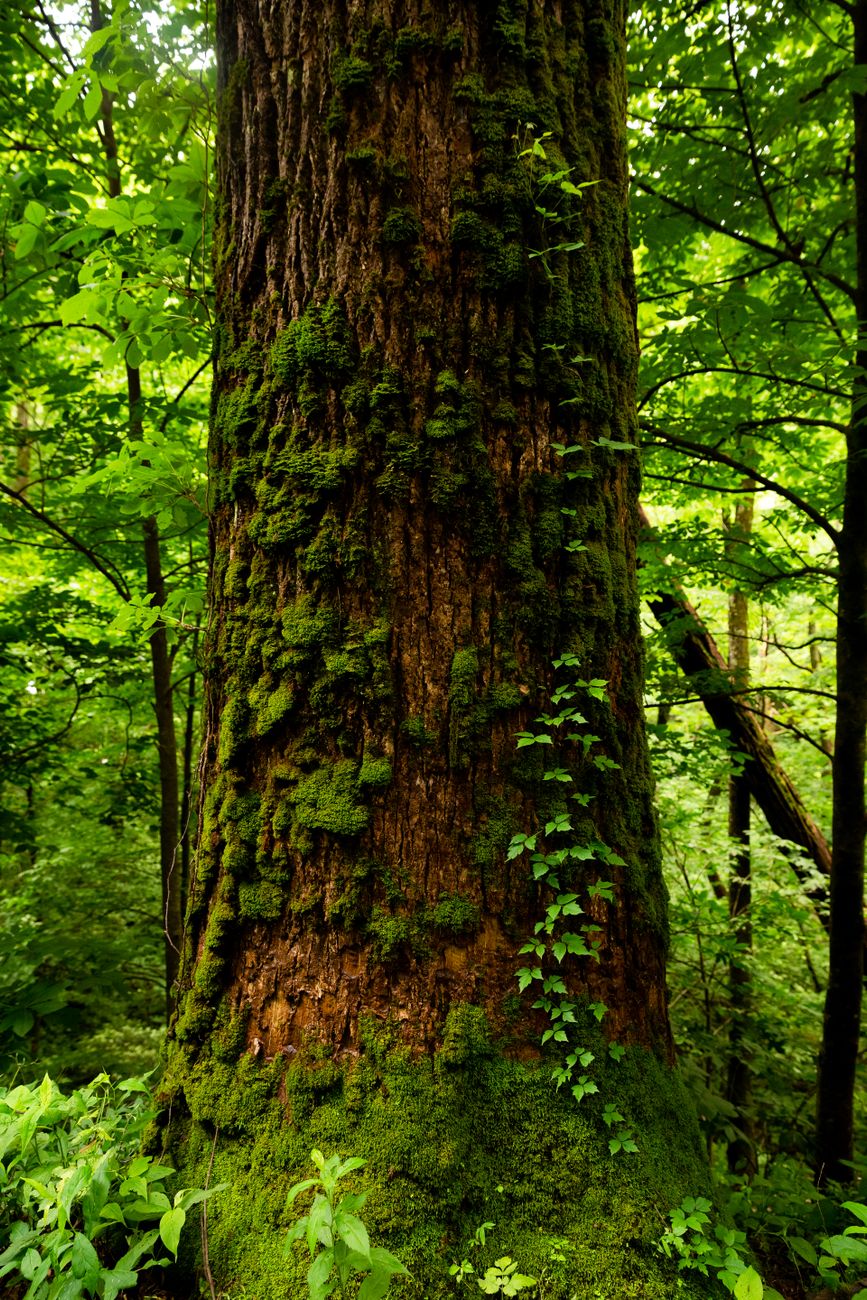

Photo by Mikhael Mayim on Pexels.com

Climate Change and the Cornerstone

Sabbath Day Thoughts -“Climate Change and the Cornerstone” Mark 12:1-12

The numbers are in. Worldwide, this February was the warmest February on record. Across Europe, ski resorts closed when snow melted to mud from France to Bosnia to Italy. Wildfires, spurred by record heat, killed 133 people in Chile. In Tokyo, the cherry blossoms were out a full month earlier. When the numbers are confirmed in a couple of weeks by the U.S. National Oceanic and Atmospheric Administration, this February will mark the ninth consecutive month in which the temperature record has been broken. The world is warming.

We don’t need to travel to Bosnia, Chile, or Tokyo, to affirm that climate change is real. Consider Lake Champlain. Matthew Vaughan, chief scientist with the Lake Champlain Basin Program, reports that from 1816 until 1950 the lake froze over almost every winter. Now, the lake freezes about once in four years. By 2050, we can expect the lake to freeze only once in a decade. The last time the lake froze was five years ago in March 2019. That’s bad news for our cold-water fish, like lake trout and Atlantic salmon. It’s bad news for swimmers, boaters, and wildlife, too, as toxic bacterial and algae blooms increase with the warming water.

Here in the Tri-Lakes we are feeling the changes. No snow meant no Winter Fun Day this year. How crummy is that?! Warming winters have brought a surge in ticks and tick-borne illness, like Lyme Disease and anaplasmosis. Heavy rain, characterized by a storm of two inches or more, is falling more frequently. Last year, we saw record-breaking rain in the summer and road closures from flooding in the winter. This past week, we saw hazy skies as smoke swept south from Canada, which in the past year has recorded record-setting wildfires fires in Alberta, British Columbia, the Northwest Territories, Nova Scotia, Ontario, and Quebec.

If you are like me, you live here because it is glorious. We love our little corner of God’s good earth. In fact, we feel amazingly close to God in all this beauty. But, let’s face it, the good earth is changing, and it has us worried.

Our reading from Mark’s gospel tells the worrisome story of some wicked tenants who occupy a vineyard and refuse to honor the claims of the vineyard owner. As Jesus related this story, he was in Jerusalem for the Passover. Things weren’t going so well. Sure, he had made a triumphal entry to the city, but it got complicated fast. Scandalized by the corruption and greed that he saw in the Temple courts, Jesus had turned over tables and disrupted business. That made him some powerful enemies. Chief priests, scribes, and elders confronted Jesus and challenged his authority. Soon the minions of Herod would try to entrap him with questions about paying taxes, and the religious and economic elite of Jerusalem—the Sadducees—would be in his face with questions about the resurrection.

Jesus answered his critics with this tough, exaggerated story of judgment. A landowner lovingly planted a beautiful vineyard and entrusted his good creation to tenants before going away on a long journey. From the start, there was trouble. The tenants held the absentee landlord in contempt and seemed to think the vineyard existed to serve their own economic interests. Any landowner in his right mind would have evicted the tenants and called in the law to teach them a painful, violent lesson. But Jesus described a landowner who didn’t know when to quit. Merciful to the point of foolishness, he repeatedly sent servants, prophets, messengers—even a beloved son—to confront the tenants with the truth and return them to the right path. But sending those messengers didn’t work in the story any more than it would work that Passover week in Jerusalem. As Jesus spoke about the violence that the beloved son encountered in the vineyard, Jesus was alluding to the violence that he soon would endure: Jesus himself outside the walls of the city, nailed to a cross, and breathing his last. As Jesus concluded his parable, he invited his critics to pass judgment. Mark says that they knew that Jesus was talking about them; they were behaving like wicked, greedy tenants, holding God in contempt, bent on rejecting and murdering the beloved son.

Eric Baretto, who teaches New Testament at Luther Seminary in St. Paul, teaches that parables, especially parables of judgment like this one, are meant to shock the conscience—kind of like when your parents used to give you the “Come to Jesus” talk. We listen to this parable and we side with the vineyard owner. We are outraged by the treatment of the messengers and the son. But the shock to our conscience is that we are actually the tenants, profiting from the vineyard, denying and abusing anyone who confronts us with uncomfortable truth, treating God with contempt.

Nowhere does this feel more uncomfortably true than when we consider our warming planet, this glorious vineyard that has been entrusted to our care. It is a scientific fact that we are the cause of the increased greenhouse gas emissions that are warming our planet. NASA reports that the four major gases that contribute to the Greenhouse Effect are all driven by human activity. Carbon dioxide is generated by burning fossil fuels and deforestation. Methane is emitted by the livestock we eat. It comprises seventy to ninety percent of the natural gas we burn, and it leaks from fossil fuel production and transportation. Nitrous oxide is released during fertilizer production and use, as well as in the burning of vegetation. Chlorofluorocarbons do not exist in nature—they are entirely of industrial origin: refrigerants, solvents, and spray-can propellants. We are the problem. We’ve been bad tenants, feeling entitled to profit from the planet. We don’t heed the warning cry of the prophetic voices that call for change. Jesus might caution us that Judgment Day is coming.

Jesus followed his tough parable by quoting Psalm 118: the stone that the builders rejected would become the cornerstone. In other words, even though all those powerful critics would reject Jesus, God would have the last word. The cornerstone is the first stone set during the building process. Every stone in a structure is set in relation to the cornerstone. In the ancient world, it was believed that the position of stars and planets regulated life, fortune, and success; therefore, cornerstones were commonly placed facing the Northeast because it was thought that this location would bring harmony and prosperity to the building and its owners. A ceremonial ritual marked the placement of the cornerstone. Builders would place a sacrifice, such as wine, grain, water, or even blood, atop the cornerstone and dedicate it to their gods. Jesus’ words about the cornerstone tell us that his death would be the offering that would mark the building of something new. He would be the cornerstone, because he had been and would always be aligned with God’s creative intention when the world was first spoken into being.

Jesus’ allusion to the cornerstone was a hard-to-hear invitation to critics to not be so hasty in their rejection of him. It was an uncomfortable reminder that God is the great architect and builder of their world. Not the chief priests, scribes, and elders, not the Herodians or even the Sadducees. God Almighty had a plan that they could either honor or reject, building their lives around the cornerstone or choosing to go their own way at great peril and impending judgment.

Perhaps this morning, Jesus’ words about the vineyard and the cornerstone can serve as an invitation to us. We can continue to exploit our planet for personal profit at great peril to ourselves and our children and grandchildren—and all creation. Or, we can be reoriented in our custody of the vineyard that God has entrusted to our care. We can trade our wicked tenancy for a faithful reverence. We can work to honor the beauty and balance, the vulnerability and limit, of a world created from the very stuff of God.

What might it look like for us to faithfully tend the Lord’s vineyard? Dr. Janel Hanrahan, associate professor of atmospheric sciences at Northern Vermont University, has devoted her professional life to studying the effects of our warming world on the Great Lakes and Lake Champlain. She says there is plenty to worry about out there. But “the best thing about climate change is that humans are the cause. So that means that we also have a huge role in what happens moving forward.”

Even simple measures taken in our own homes can reduce our greenhouse gas emissions and make us better stewards of the planet. Bring your own reusable cup or coffee mug instead of using single use plastics or disposable paper products. Change up the lighting by replacing inefficient bulbs with high quality LEDs that use a fraction of the energy. Turn down the thermostat by two degrees, cutting energy use and saving three to five percent on the heating bill. Wash clothes in cold water. Most of the energy used in doing a load of laundry comes from warming the water itself. Bike more, walk more, and drive less. Eat less meat and dairy. Use your voice. Write, call, or visit government representatives about environmental issues—like Caroline Dodd did this past week, participating in the Adirondack Park Lobby Day in Albany.

This vineyard we inhabit isn’t ours. It belongs to God, who shaped it with great patience and infinite love over billions of years. We can honor that—or reject it at great peril to the planet and all creation. We can choose to adopt simple everyday measures that tread lightly on the earth. We can model this good tenancy for our children. We can share it with our neighbors. We can demand it of our elected officials. We can lay the cornerstone for a future where we fulfill God’s expectation that we will care well for the vineyard. May it be so.

Resources:

Eric Baretto. “Exegetical Commentary on Mark 12:1-12” in Feasting on the Gospels: Mark. Louisville: Westminster John Knox Press, 2014.

Chloe Bennett. “First installment of state climate assessment points to a warming Adirondacks” in The Adirondack Explorer, Jan. 18, 2024. Accessed online at https://www.adirondackexplorer.org/stories/state-climate-report-adirondacks

Brianna Borghi. “Why Lake Champlain isn’t freezing over as often as it used to” in NBC 5 News, Feb. 23, 2024. Accessed online at https://www.mynbc5.com/article/why-lake-champlain-isnt-freezing-over-as-often-as-it-used-to/39194456

Jake Spring. “Spring came early: February likely warmest on record amid climate change” in Reuters, Feb. 29, 2024. Accessed online at https://www.reuters.com/business/environment/spring-came-early-february-likely-warmest-record-amid-climate-change-2024-02-29/

Kat Kerlin. “18 Simple Things You Can Do About Climate Change” in Climate Change, Jan. 8, 2019. Accessed online at https://climatechange.ucdavis.edu/climate/what-can-i-do/18-simple-things-you-can-do-about-climate-change

NASA. “The Causes of Climate Change: Human activities are driving the global warming trend observed since the mid-20th century.” Accessed online at  https://climate.nasa.gov/causes/#:~:text=Human%20Activity%20Is%20the%20Cause,air%20to%20make%20CO2.

Dean Thompson. “Homiletical Commentary on Mark 12:1-12” in Feasting on the Gospels: Mark. Louisville: Westminster John Knox Press, 2014.

Bill Whittaker. “The Little-Known Purpose of the Cornerstone,” July 24, 2019. Accessed online at https://www.billwarch.com/blog/the-little-known-purpose-of-the-cornerstone/


Mark 12:1-12 [13-17]

12Then he began to speak to them in parables. “A man planted a vineyard, put a fence around it, dug a pit for the wine press, and built a watchtower; then he leased it to tenants and went to another country. 2When the season came, he sent a slave to the tenants to collect from them his share of the produce of the vineyard. 3But they seized him, and beat him, and sent him away empty-handed. 4And again he sent another slave to them; this one they beat over the head and insulted. 5Then he sent another, and that one they killed. And so it was with many others; some they beat, and others they killed. 6He had still one other, a beloved son. Finally he sent him to them, saying, ‘They will respect my son.’ 7But those tenants said to one another, ‘This is the heir; come, let us kill him, and the inheritance will be ours.’ 8So they seized him, killed him, and threw him out of the vineyard. 9What then will the owner of the vineyard do? He will come and destroy the tenants and give the vineyard to others. 10Have you not read this scripture:

‘The stone that the builders rejectedhas become the cornerstone;
11this was the Lord’s doing,and it is amazing in our eyes’?”

12When they realized that he had told this parable against them, they wanted to arrest him, but they feared the crowd. So they left him and went away.


Photo by Centre for Ageing Better on Pexels.com

Walk Gently

“Consider the lilies of the field, how they grow; they neither toil nor spin, yet I tell you, even Solomon in all his glory was not clothed like one of these.” — Matt. 6:28-30

Earlier this year, we viewed “The Pollinators” at church. The documentary chronicles the lives of beekeepers who ensure that America’s orchards and fields are pollinated by trucking hives from Maine to California, timing their arrival to coincide with spring blooms. It was a fascinating look at the deft dance that makes our produce purchases possible. It was also scary. Prevalent use of pesticides and infestations of mites routinely cause the collapse of bee colonies. However, climate change is the biggest threat to bees. Heatwaves, floods, and hurricanes destroy hives, reduce food sources, and lower plant diversity.

Inspired by the film, Duane and I decided to join the “No Mow May” effort, letting our back lawn grow. The dandelions were prolific, the forget-me-nots abundant, and the grass grew long. These important early sources of pollen were a boon to bees, which happily buzzed from bloom to bloom.   As June arrived, we mowed portions of the back lawn and cut some paths through what we began to call “The Meadow.”  More beautiful wildflowers appeared: lupines, Queen Anne’s Lace, cardinal flower, evening primrose, and goldenrod.

Best of all, our meadow was a haven not only for bees but for other wildlife. Hummingbirds perched on our pole bean tower and skirmished over nectar. A fat and sassy groundhog appeared, munched on mallow, and ate up all my peas. One morning, part of the meadow lay flat where deer had bedded down for the night.

Our small effort to be hospitable to bees brought joy all summer. It also prompted reflection on the wonder and wisdom of God’s good work in creation. All creatures occupy a God-given niche on this planet. They do so with great elegance and sophistication. We can choose to live in ways that allow that great web of being to flourish as God intended. It can be as simple as skipping the May mowing and allowing an experiment in honey bee hospitality to bear witness to the infinite creativity and wisdom of the Holy One, who prizes the lilies of the field and loves us enough to die for us.

Let’s walk gently into the fall with great love for the world around us—and one another.


“Goldenrod” by Mary Oliver

 “On roadsides,

  in fall fields,

      in rumpy bunches,

          saffron and orange and pale gold,

in little towers,

  soft as mash,

      sneeze-bringers and seed-bearers,

          full of bees and yellow beads and perfect flowerlets

and orange butterflies.

  I don’t suppose

      much notice comes of it, except for honey,

           and how it heartens the heart with its

blank blaze.

  I don’t suppose anything loves it, except, perhaps,

      the rocky voids

          filled by its dumb dazzle.

For myself,

  I was just passing by, when the wind flared

      and the blossoms rustled,

          and the glittering pandemonium

leaned on me.

  I was just minding my own business

      when I found myself on their straw hillsides,

          citron and butter-colored,

and was happy, and why not?

  Are not the difficult labors of our lives

      full of dark hours?

          And what has consciousness come to anyway, so far,

that is better than these light-filled bodies?

  All day

       on their airy backbones

           they toss in the wind,

they bend as though it was natural and godly to bend,

  they rise in a stiff sweetness,

      in the pure peace of giving

           one’s gold away.”

in New and Selected Poems, Mary Oliver. Boston: Beacon Press, 1992, pg. 17.


Photo by Tina Nord on Pexels.com

The new song

Poem for a Tuesday — “The new song” by Sydney Carter

“Be faithful to the new song

thrusting through your

earth like a daffodil.

Be flexible

and travel with the rhythm.

Let your mind

be bent by what is coming:

making is

a way of being made

and giving birth

a way of being born.

You are the child

and father of a carol,

you are not

the only maker present.

How you make

is how you will be made.

Be gentle to

the otherness you carry,

broken by

the truth you cannot tell yet.

Mother and be

mothered by your burden.

Trust, and learn

to travel with the music.

in Sydney Carter. The Two-Way Clock: Poems (London: Stainer & Bell, 2000).

—

Sydney Carter (1915-2004) was an English poet, writer, and musician. He graduated from Balliol College, Oxford, in 1936. Carter’s commitment to pacifism led to his controversial stance as a conscientious objector during World War II. He was among 1,300 Quaker volunteers who served as drivers in the Friends’ Ambulance Unit, spending his war years in Greece, Palestine, and Egypt. Sydney Carter was best known for writing Lord Of The Dance in 1963, as an adaptation of the Shaker hymn Simple Gifts. He once said that he saw Christ as “the incarnation of the piper who is calling us. He dances that shape and pattern which is at the heart of our reality. By Christ, I mean not only Jesus; in other times and places, other planets, there may be other lords of the dance. But Jesus is the one I know of first and best. I sing of the dancing pattern in the life and words of Jesus.”

(quote from Carter’s obituary in The Guardian, March 16, 2004)

—

Photo by Travis Saylor on Pexels.com

God speaks to each

Poem for a Tuesday — “Gott spricht zu jedem” by Rainer Maria Rilke

God speaks to each of us as he makes us,

then walks with us silently out of the night.

These are the words we dimly hear:

You, sent out beyond your recall,

got to the limits of your longing.

Embody me.

Flare up like flame

and make big shadows I can move in.

Let everything happen to you: beauty and terror.

Just keep going. No feeling is final.

Don’t let yourself lose me.

Nearby is the country they call life.

You will know it by its seriousness.

Give me your hand.

/

Rainer Maria Rilke (1875-1926) was a Bohemian-Austrian poet and novelist. He was the only son of an unhappy marriage. His mother mourned the death of an earlier daughter. During Rilke’s early years, she sought to recover the lost girl through the boy. According to Rilke, he had to wear “fine clothes” and “was a plaything [for his mother], like a big doll.” He attended military school and trade school before studying literature, art history, and philosophy in Prague and Munich. He was a mystic, proto-modernist, and early proponent of psychoanalysis. He traveled extensively throughout Europe and Russia before settling in Switzerland. At the time of his death from leukemia, his work was largely unknown to the reading public, but his posthumous followers have been many. He is now considered the most lyrical and influential of the German early modernists.

=

Photo by lalesh aldarwish on Pexels.com